Showing posts with label Duniyadari. Show all posts
Showing posts with label Duniyadari. Show all posts
Box Office figures don’t matter, people’s reactions do-Riteish Deshmukh
8:31 AM
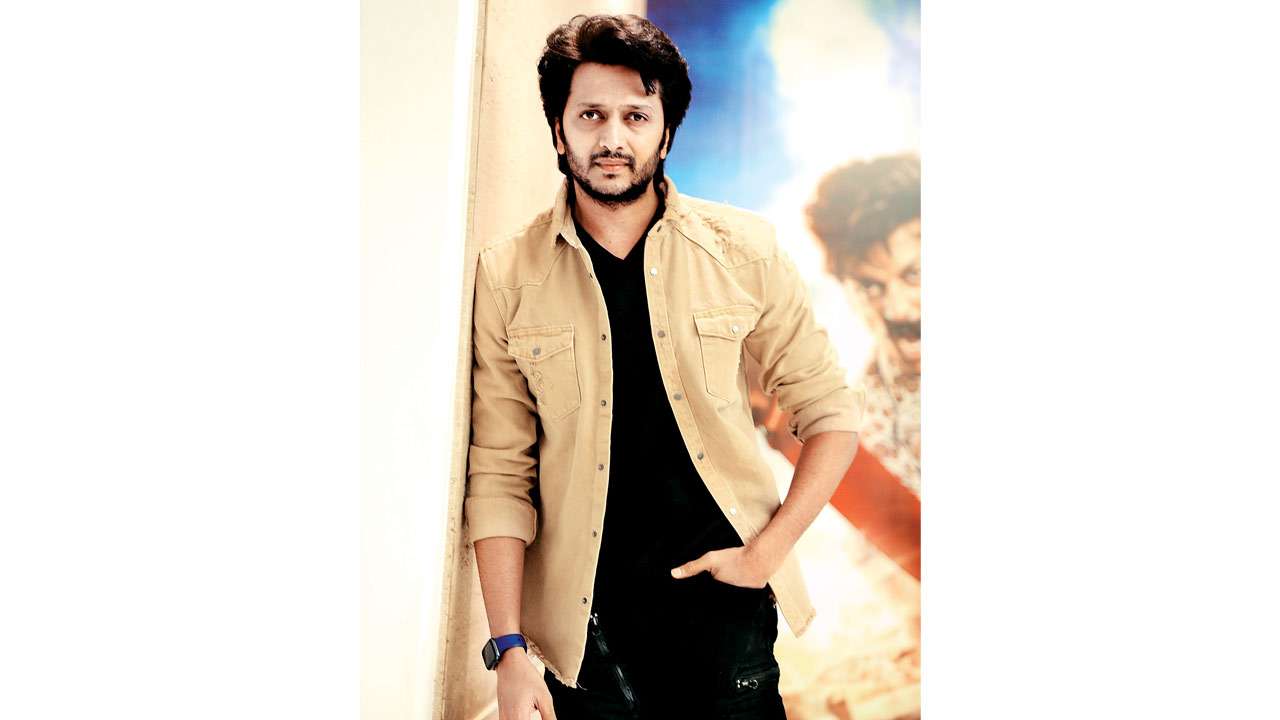
Nayandeep Rakshit (DNA; December 9, 2018)
Four years ago, Riteish Deshmukh made his debut in Marathi cinema as a producer with Lai Bhaari. His maiden venture went on to do over Rs 40 crore business at the box office. Proud of his Marathi legacy, the actor returns to the same space with Mauli. He tells After Hrs why there has been a long gap between both the movies, how he strikes a balance between regional and Hindi cinema as well as his learnings as a producer. Excerpts…
Would you say that Lai Bhaari is instrumental in changing people’s perception towards Marathi cinema?
Let’s not give Lai Bhaari that credit. It all started with films like Shwaas (2004) and Harishchandrachi Factory (2009), which won the National Award and were selected as India’s official entries to the Oscars. That’s when people started noticing the kind of content that was being generated in the Marathi industry. There are two parameters for films — content and commerce. But when the numbers started coming in, things changed. It began with Balak Palak (2013) which made Rs 12 crore. Then came Duniyadari that raked in Rs 25 crore. In 2015, Timepass 2 did around Rs 30 crore and after that, Lai Bhaari broke the Rs 40 crore mark as it had action and drama. So, Marathi industry was not only producing content but also making good numbers.
Natsamrat, which released in 2016, set the cash registers ringing with Rs 50 crore. Three months later, Sairat managed to cross the Rs 90 crore mark at the box office. Rs 90 crore in Marathi is almost like a Rs 300-400 crore film in Hindi. No Hindi movie, barring Baahubali, has done that much business in Maharashtra. Interestingly, all these flicks that have done these numbers opened in the same range of Rs 2-3 crore. So, now the aim is to increase the opening figures. But how do we do that? Do we increase shows? Because then, Hindi films will also take these shows up. So, it’s a double fight.
Regional and Hindi cinema fighting for screens has always been the case...
Yes, and it will continue to be so. There’s nothing bad with that. Everyone wants the best for their films. Now, it’s up to the audience to watch whatever they want to. But the only thing is that the other person should at least get a decent opportunity to showcase. Opportunity is an issue here.
You even moved your film, as a sign of love and respect for Shah Rukh Khan’s Zero...
Shah Rukh is doing the biggest movie of his career, in terms of production, and it’s an amazing film that he’s bringing to life. Mauli is the biggest film that my production house is making. The scales are completely different, and so are the budgets. I was releasing it on December 21 because it’s the holiday season. Initially, Total Dhamaal was supposed to open in cinemas on December 7. So, I wanted to keep a two-week gap between both my movies. With Total Dhamaal shifting to February 2019, I realised that if Mauli releases along with Zero, the business of both the movies would get affected. That’s when I decided that my Marathi movie should hit the marquee a week earlier. So, it has worked out well for Shah Rukh and me. And I’m glad we could do so for each other’s betterment.
What took you four years to come back with Mauli?
We were planning to release it sooner. We had developed it and announced it. However, later, we realised it’s not what it should be. After that, I got busy.
Does it become difficult to juggle between the two industries?
It is difficult but the responsibility I have for my Marathi films and productions is much more. I have to sit on everything — right from the font of the poster to whose name will be placed where. In the case of my Hindi films Housefull or Dhamaal franchise, I only have to do my photoshoots and promote the film. Life as a producer is challenging, engaging and extremely gratifying. It’s amazing to see how a script comes to fruition.
Is Mauli a takeaway from Lai Bhaari?
No, it’s not a part two. It’s a different story. But the essence and the premise remains the same.
People are increasingly remaking Marathi films in other languages…
There’s a certain sense of recognition today. Cinema and entertainment will soon be language agnostic. I’m watching a Spanish series with subtitles on my TV and enjoying it as it’s exciting. Mumbai is a true cosmopolitan city in the country where statistically 35 per cent of the population is Marashtrian while the remaining constitutes people from different corners. When a film becomes the talk-of-the-town, everyone gets excited to go and watch it. The non-Marathi speaking audience has also started watching our films, which is a great boon to our industry.
Have you ever thought of dubbing Mauli in Hindi and releasing it across India?
No, because if I had thought that way, I would have made it in Hindi. One should not confuse the basic core reason behind creating a movie. And that’s your audience. A Hindi version will take away a lot from the way I wanted to make the Marathi movie. Dubbing is an option. Mauli and Lai Bhaari both can be remade as great Hindi films too. But as of now, let’s see what happens.
Lai Bhaari was a huge success. So, the expectations from this film are quite high. Are you feeling the pressure?
No. Lai Bhaari, Sairat and other films were loved by the audience and that’s why they fared so well at the box office. If Mauli has to do the same business as Lai Bhaari, it has to be appreciated by viewers. Because of my debut Marathi film, I got the courage to make Mauli a bigger film in terms of budget, scale, action and songs. But if you think I’m looking at a business more than Lai Bhaari, then no, I can’t gauge that right now. Box office figures don’t matter, people’s reactions do. If people connect to the film, it will do good. Unfortunately, today we’re only discussing collections, which are immaterial. In recent times, smaller films have done Rs 100-crore business solely because of their strong connect.
Marathi hit Duniyadari will now be made in Gujarati
8:00 AM

BOMBAY TIMES (August 18, 2016)

Says the director, “Duniyadari is a universal subject because it deals with basic human emotions and cuts across all ages and classes. Even though it is set in the 1970s, it is culturally relevant even today. While it will require a lot of effort to get the retro effect, the fact that we can set something in a different era and still impact the current youth is tempting.“
She adds that though she had a horde of new scripts, she still chose to remake a well-known film because she intuitively fell in love with the story. “We want to bring an entertaining, beautiful story home for the Gujarati audience as well. Duniyadari is a story of friendship, love, relationships and destiny. Such stories always ring true, no matter how many years go by,“ she sums up.
Produced the Tajdar Amrohi and Riyaz Balooch, and distributed by Raksha Entertainment, the movie is slated to release in February 2017.
Shah Rukh Khan, Bhansali want Swapnil Joshi to spearhead their debut Marathi productions?
8:08 AM

Roshmila Bhattacharya (MUMBAI MIRROR; April 14, 2015)
 Last Saturday, Shah Rukh
Khan lauded the state government's diktat to multiplexes to
screen Marathi films between the 12 noon and 9 pm slot saying “its
wonderful timing“. The government had earlier demanded one screen in
the 6 pm to 9 pm slot for Marathi films but revised the decision
following a meeting between Cultural Affairs Minister Vinod Tawde and
representatives of multiplexes and Marathi film producers. SRK agreed
that allowing “freedom of 12 hours is good“ and admitted that he was
producing a couple of Marathi films.
Last Saturday, Shah Rukh
Khan lauded the state government's diktat to multiplexes to
screen Marathi films between the 12 noon and 9 pm slot saying “its
wonderful timing“. The government had earlier demanded one screen in
the 6 pm to 9 pm slot for Marathi films but revised the decision
following a meeting between Cultural Affairs Minister Vinod Tawde and
representatives of multiplexes and Marathi film producers. SRK agreed
that allowing “freedom of 12 hours is good“ and admitted that he was
producing a couple of Marathi films. Earlier in 2013, the star
producer had announced that Rohit Shetty had an idea for a Marathi film
which he would like to produce. Now, Mirror has learnt that Rohit and
SRK will jointly produce the film which will directed by Sanjay Jadhav
who will be reuniting in his Duniyadari cast.
Says a source close to the development, “It will have Swapnil Joshi and
Sai Tamhankar in the lead, along with Urmila Kanitkar and Ankush
Choudhary. However unlike Sanjay's 2013 emotional drama, this one will
be more of a masala action-comedy in Rohit Shetty mould. The story by
Sanjay immediately struck a chord with Rohit. They haven't
set a timeline yet but the project is definitely on.“
Earlier in 2013, the star
producer had announced that Rohit Shetty had an idea for a Marathi film
which he would like to produce. Now, Mirror has learnt that Rohit and
SRK will jointly produce the film which will directed by Sanjay Jadhav
who will be reuniting in his Duniyadari cast.
Says a source close to the development, “It will have Swapnil Joshi and
Sai Tamhankar in the lead, along with Urmila Kanitkar and Ankush
Choudhary. However unlike Sanjay's 2013 emotional drama, this one will
be more of a masala action-comedy in Rohit Shetty mould. The story by
Sanjay immediately struck a chord with Rohit. They haven't
set a timeline yet but the project is definitely on.“Earlier, SRK had said that he could make a guest appearance in the film if needed. When quizzed on this, the source added, “If SRK agrees to do the film I'm sure the writer-director and his co-producer will be more than happy to accommodate him.“
Meanwhile, Sanjay Leela Bhansali who is busy shooting Bajirao Mastani which will clash with SRK and Rohit's Dilwale this Christmas, is also gearing up to produce a Marathi film. And the connection doesn't end there. Apparently, SLB too wants Swapnil Joshi to spearhead the cast of his film.
Shobha Iyer Sant, the CEO of his production house, confirmed this, saying, “Yes, SLB Productions is definitely going to be exploring the regional space in a big way. And yes, we are in talks with Swapnil but it's too early to go into details.“
When we contacted the actor in demand, he wasn't willing to go beyond a “no comments“ but one could hear the smile in his voice.
Why Bollywood is jumping on the Marathi cinema bandwagon
9:57 AM

Sonali Joshi Pitale (MID-DAY; August 24, 2014)
Before his film Singham Returns released, director Rohit Shetty held a press conference along with the makers of the Marathi film Rege — director Abhijit Panse, co-producers Ravi Jadhav and actor Mahesh Manjrekar — to announce that they had decided to share theatre screens in Mumbai with Rege.
While Manjrekar feels that it was a nice gesture from Shetty, this is not for the first time that the director has gone ahead and accommodated a Marathi film.
While it was a smart move by the director, his lead actor Ajay Devgn has also declared that he is producing the upcoming Marathi movie Vitti Dandu. In fact, Devgn is the latest Bollywood star to join the bandwagon of actors who are attracted to Marathi cinema.

Regardless, Manjrekar (right) thinks it is definitely a positive sign as far as commercial sense is concerned. “I will not call it as competition because with the availability of many multiplexes, there is space for all types of cinema. However, because of the sudden boom in the business of Marathi films, Hindi film industry folk are showing interest. Earlier, we had only good subjects but no money to show. But now, with the kind of collection Lai Bhaari, Poshter Boyz and even Rege has got, I feel more and more cash flow will be in,” says Manjrekar.
 Shreyas Talpade (left) has turned producer with Poshter
Boyz (top pic). According to the actor-turned-producer, the movie is getting
good feedback on social media. Talpade admits that because of the
audience’s loyalty, Hindi filmmakers are taking notice of Marathi film
release dates and are avoiding clashes. “The audience is supporting
Marathi films like never before. With each passing day, the movies are
getting bigger and better. So you can see that excitement in the
audience — They are so loyal. If they come to know that Hindi filmmakers
have stopped the release of Marathi films, they boycott the former. There are no small or big films, it is just that they have different budgets and Hindi filmmakes have realised this truth.”
Shreyas Talpade (left) has turned producer with Poshter
Boyz (top pic). According to the actor-turned-producer, the movie is getting
good feedback on social media. Talpade admits that because of the
audience’s loyalty, Hindi filmmakers are taking notice of Marathi film
release dates and are avoiding clashes. “The audience is supporting
Marathi films like never before. With each passing day, the movies are
getting bigger and better. So you can see that excitement in the
audience — They are so loyal. If they come to know that Hindi filmmakers
have stopped the release of Marathi films, they boycott the former. There are no small or big films, it is just that they have different budgets and Hindi filmmakes have realised this truth.”How they co-exist
If one takes a look at Mumbai and Pune’s film distribution, around 70- 80 per cent people watch Hindi films while the rest watch Marathi movies. Vikas Kadam, who pinpoints this statistic, has been assisting Rohit Shetty for several years and is now all set to make his directorial debut with Vitti Dandu.
He believes that the two industries have been co- existing for many years and do not have an impact on each other. However, in the rest of Maharashtra, the ratio is quite the opposite. “Therefore, I don’t think that Marathi or Hindi cinema impact each other,” he says. “ A few years ago, Marathi films by the likes of Laxmikant Berde, Mahesh Kothare and Sachin Pilgaonkar used to do well. However, due to improved marketing techniques, now there are collection figures to refer to. I feel the money is coming, but the system should become clear so that we will know the real figures,” adds Kadam.
Unfair comparisons
Comparing Bollywood with Marathi film industry is unfair given the former’s reach on a global scale. But even a small dent in market share of a regional film is noted.
Anand Vishal, head of operations and sales at Fun Cinema admits that there is definitely a change in distribution of screens as demand for Marathi films is increasing. “Lai Bhaari has been one of the biggest grossers of the year in Marathi. It collected Rs 22 lakh on the opening day which was pretty good. Moreover, when Kick released, we still allotted four screens to Lai Bhaari and one screen to Kick as shows in some areas of Mumbai ran to packed houses. Theatres are also willing to give more screens to such films because it finally helps them earn revenue,” said Anand.
Marathi top grossers (In Rs)
Lai Bhaari
Released on July 11, 2014
33.74 crore (and still counting)
Poshter Boyz
Released on August 1, 2014
3.5 crore
Duniyadari
Released on July 19, 2013
23.1 crore
Timepass
Released on January 3, 2014
31.06 crore
Balak Palak (pic below)
Released on January 4, 2013
9 crore
Me Shivajiraje Bhosale Boltoy
Released on April 3, 2009
25.5 crore

Low-budget production, absence of star system doing wonders for Marathi cinema
8:50 AM

Urmimala Banerjee (MID-DAY; March 9, 2014)
It seems like a classic case of the tortoise and hare race. Even when Bollywood films are riding over claims of hundreds of crores, the Marathi film industry is quietly making quality films which are raking in substancial profits, thanks to relatively low cost of production. Marathi filmmaker Ravi Jadhav’s Timepass (above) raked in Rs 5 crore in its opening weekend.
Over a span of three weeks, it earned Rs 31 crore, breaking the Rs 25 crore record held by Duniyadari.
Close on the heels of Timepass came Fandry, a strikingly different film that grossed around Rs 2.25 crore in its first week. After wooing the regional audience, it’s the first Marathi film to be released across different Indian cities.
For the past two years, Marathi films have managed to catapault themselves to an enviable position, mainly due to their novel stories and engaging narratives. From social dramas to biopics and mass entertainers, creative ideas are blossoming. Young talented actors, directors and storytellers are finding the industry a great platform to showcase their talents. How is this transformation happening?
Cinematic renaissance
In the ’90s, the Marathi film industry was caught in a rut with every second film belonging to the slapstick comedy genre. It was Sandeep Sawant’s Shwaas that gave a new lease of life to the stagnating industry.
Filmmaker Mangesh Hadawale, who directed the critically acclaimed Tingya, explains, “ I found it tough to find a producer for my film till 2007. Umesh Kulkarni who made Deool is also greatly responsible for encouraging the new breed of directors. Marathi cinema had seen its heydays when filmmakers such as Amol Palekar and Dr Jabbar Patel made classics; this is the second innings.” Besides Shwaas, films like Deool and Shala also played a role in bringing about a transition. The period of 2009-2011 was a good one with films like Deool, Harishchandrachi Factory, Shala and Mi Shivajirao Bhosale Boltoy doing well at the ticket windows.
Director Sujay Dahake who is gearing up for the release of his film, Ajoba, made his directorial debut with Shala. He explains, “The film made on a budget of Rs 3 crore grossed around Rs 9 crore at the box office. It created a lot of buzz, as it starred rank newcomers and had foreign technicians. Plus, we got critical acclaim with the National Award.”
Culture comes to aid
Marathi literature has always been rich with its quota of amazing novels, short stories and poetry. The new generation of directors seems to be in sync with the cultural milieu and aspirations of the audience.
Jadhav says, “Our audience believes in a good story. This reflects in the casting as actors don’t choose films, it’s the films that choose them. Fandry is a prime example. It talks about the caste system through a love story. Marathi audience has a certain standard that comes with reading and watching theatre. When we made Balak Palak, we had to ensure that a family can watch it together without cringing. Even a commercial film like Timepass had a message that love is not a onquest or a matter of frivolity. The themes are universal, but our treatment is local.”
Dahake argues that the lack of content in Bollywood is helping Marathi films. He opines, “There is a huge revival in the art of story- telling. Modern directors want to explore new themes. Our audience has got a stimulation it missed sorely in the ’80s and ’90s.” Hadawale adds, “Our women love reading rather than attending kitty parties. We have to recognise their sensibilities.” It is this regard for content that has wowed the corporates as well.
Nitin Sane, head of the Marathi film division, Essel Vision says, “The content in Marathi film is better than Hindi ones. Also, our films are extremely rooted in our culture. Look at Kaksparsh, Natrang and now Fandry, all of them resonate with our people. As a corporate house, we believe in good subjects. While many producers would have avoided financing a project like Fandry after a superhit like Timepass, we thought otherwise. Our next film is a biopic on Yashwantrao Chavan, the first CM of Maharashtra.”
Zero star system
The absence of a star system in the industry is also being hailed as one of the reasons behind this renaissance.
Since there are no stars to take away a major chunk of the investment, films are made in much smaller budget. Since the budget is not much, many more risks are taken in terms of stories and scripts. Nagraj Popatrao Manjule, the director of Fandry says, “I did not have a target audience in mind before making the film. The idea was to tell a good story. When you have such a mindset, you don’t bother about stars or profitability. The focus is solely on correct casting.”
Unlike Bollywood, the Marathi film industry is devoid of camps, which makes it easier to take risks. “Present-day directors know their craft and are brave enough to experiment with what they think is right for their films. They have watched European and Iranian cinema and believe in good story- telling with everyday characters. The people who worked in the Laxmikant Berde-Ashok Saraf brand of cinema weren’t educated in the craft per se,” adds Hadawale.
However, Ravi Jadhav has a different take on this. “I think the commercial aspect is equally important as the creative one. I could make a film like Timepass without stars as it suited the subject. However, it was a good idea to cast Swapnil Joshi, Ankush Chaudhary and Sai Tamhankar in Duniyadari (below) as it was a mass youth-centric film. Tomorrow, if I make a big budget thriller, I will opt for a proper beefed-up hero. It’s too early to talk about a star system out here.”

Bollywood wakes up
A number of B-Town actors raved about Fandry after seeing the film. Riteish Deshmukh made profits as a producer after the success of Balak Palak. His next production venture is Yellow, the story of a swimming champion with Down’s Syndrome.
Akshay Kumar and Nikhil Advani too are producing Marathi films. Jadhav states, “I don’t think Bollywood stars think about profits when they invest in Marathi films. When they come here they want to promote stories they actually believe in. It’s nice to see people such as Akshay Kumar, Riteish and Nikhil investing in the industry. Their positive feedback is very crucial for us in reaching out to more people.” It is not just about production ventures, romantic films that are slowly disappearing from B-Town are finding their way in Marathi films
Dahake says, “Even two years earlier, the Marathi audience would prefer a Bollywood film over a Marathi one. I feel that the romantic films of the ’90s in Bollywood are making a comeback in Marathi with varied treatments. The young audience relates to the depiction of love in Hindi films. Perhaps, that’s why films on love and marriage are finding takers.”
Money matters
The minimum investment in a Marathi film is Rs 1 crore for a topnotch production. The minimum amount is Rs 60- 65 lakh. “The smaller films too have an audience in the rural areas. An amount invested in films is around Rs 2.5 crore which is just the production cost. The marketing costs an additional crore. Even if a film makes Rs 6-8 crore, it has recovered money,” states Dahake. When a Rs 2-3 crore film crosses Rs 30 crore, it’s great news for the industry. “A film like Fandry even if it does not do great business, is good as it brings appreciation for Marathi cinema. Out of 120 films it’s only 10 that do really well,” says Jadhav.
Nitin Datar, exhibitor and distributor says, “Out of the 80 films released last year, 95 per cent made losses. Only five per cent were successful. The minimum investment is Rs 40 lakh. There are some who make films just to get government subsidy. Many first-time producers have incurred greater costs due to inexperience.”
Marketing magic
According to Datar, the publicity costs have gone higher. Many spend more on artistes and less on the quality of films. “With promotions across TV channels and newspapers across 35 districts of Maharashtra, costs have shot up,” says Datar. Sane stresses, “We have tried our best to promote films like Fandry. As a channel, we like to encourage new and upcoming talent. In terms of marketing, we have a long way to go.”
Government support
Jadhav says, “I can’t speak much about subsidy. But it’s good that they are starting studios in Malvan and Kolhapur. State awards are very important for us. They also give Rs 1 lakh cash reward. The entertainment tax exemption is also important in bringing in more people to the theatres.”

A scene from Sujay Dahake’s upcoming film 'Ajoba' that talks about the journey of a leopard from Malshej Ghat to Mumbai - See more at: http://www.mid-day.com/articles/why-marathi-films-are-not-small-fry-anymore/15145060#sthash.SFlvasNz.dpuf
Mumbai moviegoers queing up for Marathi cinema at theatres
11:31 AM

From witnessing its best haul at the 59th National Awards to Fandry drawing in the crowds beyond traditional audiences, Marathi cinema is breaking barriers, especially in terms of language
Kanika Sharma (MID-DAY; March 5, 2014)
Marathi cinema has always had it heavy on its shoulders, especially when the precedent of such a legacy is Dadasaheb Phalke. Though decked with illustrious names, Marathi films have had it tough since the 1980s as Maharashtrian audiences were the only ones who turned up, despite government support. This wasn’t the case earlier, Kapil Bhopatkar, owner of Bharatmata Cinema, tells us, “Marathi cinema has had many downturns. First, with the arrival of the videocassette recorder (VCR), cinema hall audiences became uncertain. Then, satellite television, followed by local Marathi channels and Marathi theatre, posed problems.” Bharatmata Cinema, one of the last surviving single- screen cinema halls in Mumbai, established in 1941, serves as a reminder of the times when Marathi cinema had queues of cinegoers snaking pavements. Bhopatkar claims that even Gujaratis, Marwaris and Parsis would watch the cinema during those days.

Audience applause
“In the last two/two-and-a-half years, there has been an upsurge in the screening and success of Marathi films. We’ve had films that open with three shows on a Friday and midweek become nine to cater to the increasing interest,” informs Kamal Gianchandani, president of PVR Cinemas.
 Evident of a change, Nagraj Popatrao Manjule’s Fandry that won
the Grand Jury Prize at the Mumbai Film Festival was released in unusual
places such as Kolkata, Indore, Chennai and Baroda.
Evident of a change, Nagraj Popatrao Manjule’s Fandry that won
the Grand Jury Prize at the Mumbai Film Festival was released in unusual
places such as Kolkata, Indore, Chennai and Baroda.The actual game changer can be traced to 2004, in the film, Shwaas that triggered the dwindling number of films being made in the industry from 14 to 100 and more. “Marathi audiences have always been used to reading literature, so they appreciate quality,” maintains Bhopatkar.
Mixing it up
“Recently, I watched Duniyadari,” says 21-year-old Sachin Dhivar, who was not attracted to Marathi films as “there was no fun in them” till some time ago. Yet he regards the 2013 blockbuster as an eyeopener which he found as “ advanced”. Sachin Khedekar, a Marathi actor who has marked his presence in both Hindi and Marathi films, gives the expert’s lowdown on this recent development: “If you look at the last five years, none of the films can be said to belong to a single genre.” He adds, “They are all sorts — historical, comical and social.” Naming a few, he shares Kaksparsh, Duniyadari, and Balak Palak.
Raking in the moolah

Since Shwaas, which only had word-of- mouth publicity; Manjule’s Fandry is being promoted by the who’s who of Bollywood including Kiran Rao and Rakeysh Omprakash Mehra. As of today, an average Marathi film is being made for Rs 1.5 crore. Bhopatkar still feels that the market for Marathi cinema is almost unexplored and has the potential to give tough competition to Bollywood.

How Shwaas broke new ground
“The budget of Shwaas was only Rs 65 lakh,” reveals Sandeep Sawant, its director, adding that the idea was to take up a fresh subject and take the risk of making something different, as the film was based on a grandfather-grandson relationship. With Shwaas, after a long period, a good film was seen that led to more filmmakers making radical films. Shwaas indeed broke the ceiling, as it was not only India’s official entry to the Academy Awards but also the first Marathi film in 50 years to win a National Award. Since then, there has been a change in the subjects of the films and target audiences that now focus on the youth, shares Bharatmata Cinema owner, Kapil Bhopatkar.
>> Fandry’s net collection at the Box Office so far has been Rs 2.35 cr, according to its director Nagraj Manjule.
>> Duniyadari ran for 15 weeks superseding any Bollywood film’s record.
>> Duniyadari was viewed by 4.6 lakh people at PVR and did a business of Rs 3.6 crore while Timepass had about a 6-lakh viewership at PVR and raked in 5.04 crore at the same venue
Subscribe to:
Posts (Atom)