Showing posts with label Donald Trump. Show all posts
Showing posts with label Donald Trump. Show all posts
Neelira doesn’t stand with anyone. It’s humans against war-Rana Daggubati
10:51 AM

Mohar Basu (MID-DAY; April 7, 2026)
Today, when the world is witnessing the US and Israel’s war with Iran, Rana Daggubati’s production Neelira takes us back to another war — the Eelam conflict in Sri Lanka. What drew him to the Tamil release was how it zoomed in to examine the effects of a war on ordinary lives.
He shares, “You’ve seen so many films about war, but this one takes a human angle. Today, we’re constantly hearing what world leaders are saying — [Donald] Trump said this, someone else said that — but that’s a high-level view of what’s going on. Every place has people and their everyday life gets affected because of wars.”
That point is highlighted in Neelira. Set in 1988, Someetharan’s directorial venture tells the story of a family preparing for a wedding, only to get caught in crossfire between the Indian Peace Keeping Force (IPKF) and the Liberation Tigers of Tamil Eelam (LTTE).
Daggubati adds, “Most war films take sides. One side is good, the other is bad. That’s the usual narrative. This film throws that out; it doesn’t stand with anyone. It’s humans against war.”
According to him, such movies are a way of “recreating time” and understanding chapters of history. Yet, they are steadily shrinking in Indian cinema.
Daggubati reflects, “A lot of drama has moved to long-form series. People are also consuming short-form content. So, cinema is stuck in the middle, and it starts playing safe.”
However, as a producer, he is certain of the kind of stories he wants to tell. “Films like this age well. They’re not here for a three-week run. As long as war exists, there will be people dealing with its trauma. If we don’t tell these stories, we lose something much bigger than a film.”
Like India, Iran was diverse. It was never an Islamic country-Elnaaz Norouzi
4:27 PM

Elnaaz Norouzi shares her Iranian school pic (She is at the bottom right)
Renuka Vyavahare (BOMBAY TIMES; March 2, 2026)
On February 28, the United States and Israel launched a large-scale offensive against Iran after weeks of threats from President Trump. In a Truth Social post, Trump said the goal of the operation is to prevent Iran from obtaining a nuclear weapon and “to defend the American people by eliminating imminent threats from the Iranian regime.” Trump urged Iranians to capitalize on the attack as the “only chance for generations” to take over their government. Israeli officials later confirmed that these Israeli American strikes on Tehran for regime change killed their Supreme Leader Ayatollah Ali Khamenei. Iran has retaliated with strikes on US bases across the middle east.
Actress Elnaaz Norouzi was born in Iran and stayed there for eight years before moving to Germany and eventually India for work. Barring her parents, her other family members still stay in Iran. She last visited the country in 2018. The actress shares her views about the ongoing war, reflecting on the deep emotional toll it has taken on ordinary Iranians and urges the world to distinguish between the country’s people and its political regime.
Majority of Iranians do not support the opperessive Islamic Republic regime
Elnaaz, who was a part of the second season of Apple TV's much acclaimed show Tehran, explains, “The conflict has existed for over 40 years. I was born in Tehran. I spent the first eight years of my life in Iran. Barring my parents, many members of my family still live there. I remember everything. My show Tehran captured the Iran-Israel conflict. Iran is not Iraq. When we speak about Iran, I would like to differentiate between the Islamic Republic, which has occupied the country and the people of Iran. Majority of the Iranian people are smart and educated, and their beliefs are not the same as those of the Islamic Republic. At one point, Iran had a great relationship with Israel. If you see Cyrus the Great, the man who wrote the first human rights in the world ever, he was Persian and he freed the Jews from Babylon. We even had a great relationship with USA during the time of Shah (Mohammad Reza Pahlavi). It is just the Islamic Republic that is constantly saying that they want to wipe Israel off the map. A month ago, many Iranians who protested against this regime were killed.”
She adds, “Iran is complex. What the Islamic Republic has done in Iran is not just create one Nicolás Maduro or Saddam Hussein. There is the supreme leader, (the late Khamenei), there are people and parties under him - Hezbollah, there is the Islamic Revolutionary Guard Corps (IRGC), there is the Basij. They support and back the Houthis, Hamas. They are all intertwined. The Crown Prince Reza Pahlavi, his name is being chanted all over Iran. People want democracy in Iran. The Gen Z knows exactly what's right for them. The older generation, our grandparents say they made a mistake years ago by asking for a regime change. ‘We had it so good during the times of Shah. It was secular and diverse,” they say.
‘I am not allowed to set foot in Iran’
Elnaaz, who is vocal about her opposition to the Islamic Republic, claims that she would be killed if she went back to Iran under their rule. She says, “I can’t set foot in Iran. If I do, I think they will kill me. I couldn’t go to Iran because of what happened during the 2022 movement, where they killed Mahsa Amini (a 22-year-old Iranian Kurdish woman), whose death in police custody in September 2022, ignited widespread protests. Arrested by the morality police for allegedly wearing her hijab improperly, her death became a symbol of resistance against oppression. People went on the roads and said, we don't even want this f****** hijab, this is not ours. Back then, I spoke out against Khamenei and the regime, and my family got really worried for my safety. If people die in this war, I'm going to blame the Ayatollah because people have come out multiple times saying we do not want you and they did not leave. It is dictatorship. There are so many political prisoners who are people like you and me. If you speak up, they just put you in prison.”
‘There was a time when Iran was diverse’
While it would be naïve to believe that actions by the United States and Israel were carried out ‘in the interest of Iranians', the motivations behind these actions deserve critical examination. Elnaaz says, “For the past 40 years, a large population of Iranians go to sleep and wake up hoping that one day they are going to be freed from this regime. Just like in India, Iran had people from different religions, cultures and communities living there. It was diverse. Iran was never an Islamic country, it was largely Zoroastrian. Iran was Persia and Persia was Eurasian. Before the Arabs came in, Christians, Baha'is, and Russian expatriates lived in Iran. It wasn’t just for Muslims. You had the freedom to wear what you want to wear, say what you want to say. Iran needs democracy to go back to those times.”
‘Iranians have used cinema to speak about what is happening to them’
It’s a known fact that filmmakers are not allowed to shoot in Tehran, and Elnaaz hopes this changes. She states, “Of course, we have cinema in Tehran. Cinema has helped bring the truth and the voices of people to all over the world. And that has also been the medium that Iranians have used all over the years to speak about the atrocities that are happening in Iran. If you see there are multiple Iranian movies who have won Oscars, you know, and they are all about the terrible life that people are living in Iran. Look at Jafar Panahi, who was just nominated for an Oscar and the Golden Globes, he's not even allowed to film in Tehran anymore. Even our show Tehran was shot in Athens. Cinema can change the way you think so its considered a threat. Iranian people have no idea what freedom of speech is for the last 47 years. It's terrible. And it's so sad that the world has not taken as much notice as it should.”
'I hope my family is safe'
Elnaaz attributes her life and safety to her parents who chose to migrate to Germany years ago. The rest of her family however still stays in Iran. She says, “It’s a war situation so there’s an internet blackout and I haven't been able to reach my family since yesterday. I hope they are inside their homes and don’t get too excited because of Ayatollah Ali Khamenei’s death. Iranians are getting on roads to celebrate and it risks their life. So I hope they stay indoors.”
To those wondering why didn't they migrate as well, Elnaaz says its not easy. “Leaving your home behind is not easy. Not everyone has the means to move to another country. Filing for asylum is a complex, formal legal process that requires meeting specific criteria. Even the Iranians who have migrated are facing s*** in other countries. So uprooting an entire family from a country is not easy. If you can keep your mouth shut, you can live in Iran. It's still not as retarded as the Taliban. Women can open their businesses. Everyone’s educated but there are no jobs. The inflation is high. Some are taking loans to buy eggs. Survival is an issue unless you have ties with the IRGC or such."
Actresses are public personalities, not public property to be made fun of-Gouri Kishan
9:47 AM

At a recent press conference to promote a film, a YouTube vlogger asked Tamil–Malayalam actor Gouri G Kishan’s co-star whether he had difficulty lifting her in romantic scenes “because of her weight”. An irate Gouri cut in: “How does my weight concern you? How is that relevant to the film? My weight is my choice — it does not define my talent.” Her poised pushback, delivered even as the vlogger began shouting, went viral. In this interview with Alka Dhupkar, she explains why she pushed back, and what led to this moment
Alka Dhupkar (THE TIMES OF INDIA; November 30, 2025)
Your firm response to the body shaming has won praise, but were you disappointed that nobody on the dais or the journalists came to your rescue?
I was disappointed, but not because I expected someone to rescue me. I think I proved that we’re all capable of speaking for ourselves. But having said that, we are a team. My encounter went on for 10-12 minutes. As human beings we have a certain threshold, a limit to how much we can take. In the eighth or ninth minute, the victim mindset did kick in: why is nobody speaking in my support? Am I saying something wrong? It makes you question things. If the director and actor had taken a firm stand, it wouldn’t have escalated the way it did. I did speak to them later and they regretted not speaking up. I’m not someone who carries a grudge. But I think it’s a lesson. Sometimes, it’s better not to expect anything from anybody.
Why did you speak out?
We’ve grown up hearing such comments and it has become normalized in society. In our homes, in our workplaces... Just because we are in this industry does not give anybody the right to comment on anything and everything. This must change because it affects the recipient’s mental health, self-esteem, and self-identity. I wanted to create awareness that this can’t go on casually.
Have you faced this kind of casual misogyny in the film industry?
It’s not just in this industry. In school, I was shamed because I wore a ponytail. Teachers casually said things like, “Oh, you’re trying to seduce the boys.” It leaves you feeling terrible because you’re not doing anything wrong. At 13 or 14, you just want to dress up and look good, but they put these ideas in your head. If you’re always scared of being judged, where is the space to be yourself? Once I entered the industry, I was body-shamed by directors and producers. If a director says you need to look a certain way for a role, that’s fair, and as actors we work hard. But something like your face shape can’t be changed. I have a round face. Asking me to lose the roundness is impossible. It takes a lot of courage to be in this industry where you’re always judged for how you look or what you’re wearing. My reaction that day was a build-up of facing this for many years.
It all becomes tiring sometimes, right?
It is definitely tiring. Everywhere you go, you’re commented on, made fun of, judged. In my case, the question was asked on such a public forum with so many cameras, and still he felt entitled enough to put me down. That’s why I said, ‘This is not okay.’ But having to retaliate to each and everything would take up so much of my time – time that I should spend focusing on my work.
Do you think women in the industry get blacklisted for being too vocal?
Yes, I think so. (Singer and voice artist) Chinmayi Sripada, who’s my friend, is an example. She has been blacklisted from the industry only because she spoke up about #MeToo. Another example: after the case in Kerala involving the AMMA Association, the actress was kicked out, but the perpetrator stayed, at least at that time. (Actor) Parvathy Thiruvothu is another example. She speaks openly about issues, and I’ve heard that some filmmakers have labelled her “problematic”.
Are you worried about consequences too?
If you come in with the attitude of, “Oh, she’s too problematic,” or “She’s a drama queen,” or “She’s too feminist”, then I feel like I’ve done myself a favour. These are people I wouldn’t want to work with anyway.
Would a male actor ever face these things?
Whether in South or the rest of India, there isn’t a conventional standard set for men. Of course, there’s the six-pack and the very fit look. But even then, many successful and older actors look just the way they are, and no one questions them. Having said that, my colleague Pradeep Ranganathan, during promotions for his movie ‘Dude’, was told he doesn’t conventionally look like a hero. So, I wouldn’t say only women go through this, but women face it far more. This, however, is not about man-woman. People should stop judging others for their appearances. We are public personalities, but we are not public property.
How do you feel when women are mocked for taking everything seriously and such questions are dismissed as “just for fun”?
Oh, they call it light-hearted. In my case, they even said maybe I didn’t understand the question because I’m from Kerala, but I was brought up in Chennai and I speak fluent Tamil. When you don’t have valid points, you say things like, ‘You didn’t understand because you’re not from here.’ This is gaslighting. At one point, the vlogger even said, “The question was not to you, why are you reacting? Just calm down.” It was so patronizing. In fact, I even asked him, ‘Would you ask the hero this question? You’re asking the hero about my weight and you’re angry that I am responding.’
You haven’t asked me anything about my work, my preparation, my character, the challenges, nothing. You only asked about my weight, and that too to someone else, while I am sitting right there.’ He then said something like, “We can’t ask you (questions) about Donald Trump and Narendra Modi and politics, right? We can only ask you these kinds of things.” And I was like, what do you mean? I might know more than you. They assume women don’t read current affairs, that we’re just arm candy meant to look pretty.
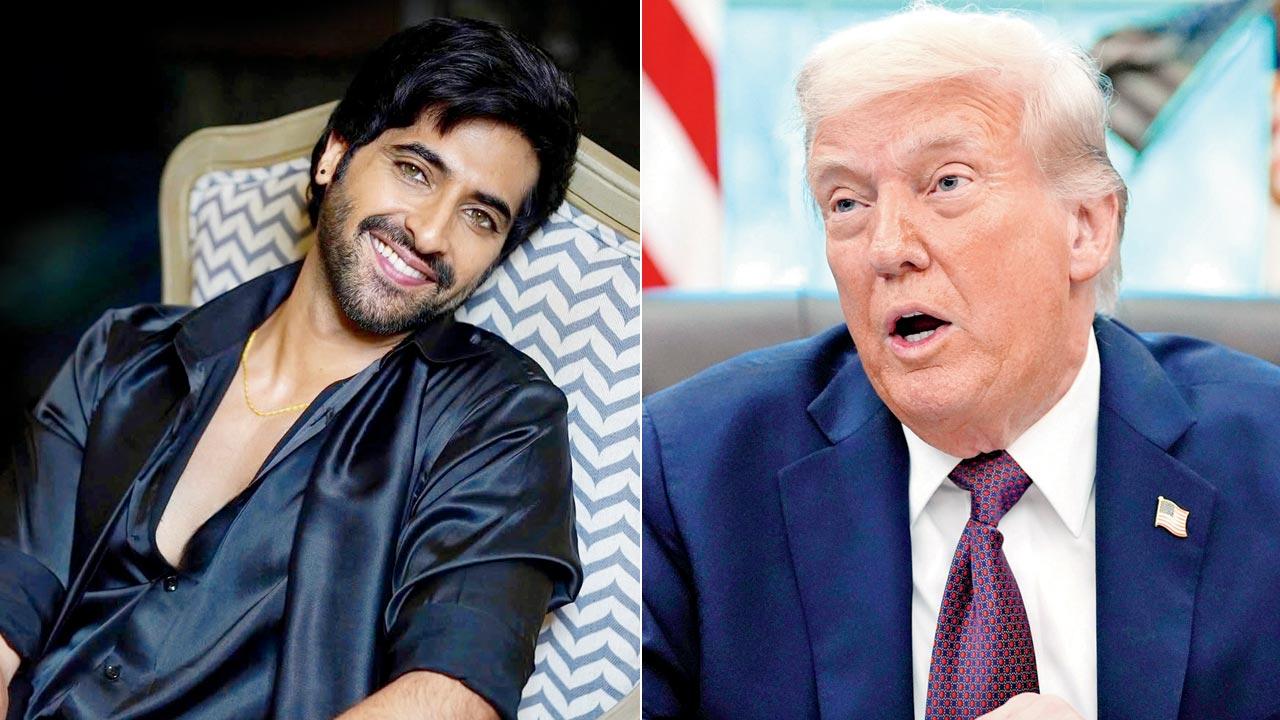
Akshay Oberoi sees silver lining in Donald Trump’s film tariff: "Maybe now we’ll return to entertaining the common man"
9:23 AM
Mohar Basu (MID-DAY; October 14, 2025)
In September, US President Donald Trump reiterated his plan to impose a 100 per cent tariff on all films made outside the US. Even as details about when the tariff will come into effect and how it will impact other film industries remain unclear, Akshay Oberoi — who grew up in the US before moving to India in 2008 to pursue acting — believes there may be a silver lining to it. “It will definitely take a toll, but it may also make us focus on satisfying our own audience instead of chasing global validation,” he says.
The actor, recently seen in Sunny Sanskari Ki Tulsi Kumari, has two projects lined up in Yash’s Toxic: A Fairytale for Grown-ups and Shah Rukh Khan’s King.
Point out that the tariffs may affect the global audience for such big films, and Oberoi analyses, “In Hindi cinema, I think we started losing our core audience. Hindi films were trying too hard to be Hollywood. Characters started feeling like they’d landed from New York instead of being desi. Maybe now we’ll return to entertaining the common man. Trump’s policies are unpredictable, but I’m trying to find a silver lining. Maybe this will push us to create stronger films for our audience.”
Oberoi will soon resume shooting for King. The actor says that director Siddharth Anand was his primary reason to say yes to the action thriller.
“Sid and his team have my loyalty. I didn’t ask any questions, I just showed up. They’ve not only helped my career with Fighter [2024], but are the nicest people in the business.”
VFX artists bring Hollywood dreams to life. Can tariffs be the kiss of death?
8:20 AM

For India’s invisible VFX army, the bigger worry is AI
Mohua Das (THE TIMES OF INDIA; October 11, 2025)
That jaw-dropping moment in ‘Mission: Impossible – The Final Reckoning’ of Tom Cruise trapped in a steel pod, watching nuclear missiles arc across the sky and cities vanish in fiery blasts was pieced together in a modest apartment in Bengaluru’s Whitefield.
“I was in my shorts, sipping chai, compositing the missile launches, the explosions and the whole sequence that was CGI,” says Mayank Tiwari, a mining-engineer-turned-VFX-compositor from Ranchi, laughing at the absurdity of working on the shot from his swivel chair.
Over the years, he’s cut out shoot plates for Hollywood films like ‘Cats & Dogs’, ‘Green Hornet’, ‘Gulliver’s Travels’, and ‘Clash of the Titans’, cleaned up skylines for ‘Tron: Legacy’, simulated a tsunami in ‘Hereafter’, and built royal banquets for ‘The Gilded Age’.
That, in a sense, is the story of India’s quiet, unseen rise as Hollywood’s visual-effects backroom, all bringing cinema’s grand illusions to life.
Today, Gaurav Choudhury in Patna who leads a 100-member team at Rotomaker, a self-described ‘offshore VFX partner’ for global studios, shows just how far this largely invisible workforce has spread. With branches in Pune, Chennai, Hyderabad, and Vijayawada, the studio brings high-end work closer to the small towns its artists come from.
“A lot of us are from Bihar, UP, and Bengal,” says Choudhury, who works on wire removal, cleanup, and frame restoration. “It lets me stay close to home and still earn almost twice what I would on an Indian project. We don’t always know which client we’re working for, but there’s a steady flow of international commercials and web series.”
Ganesh Papanna, vice-president of ABAI, a Karnataka-based non-profit for India’s animation, visual effects, gaming and comics (AVGC) industry, says Indian studios manage the nuts and bolts of high-volume, lower-cost work — while the creative design stays with Hollywood. The VFX supply chain runs like a global relay where a single shot can pass through half a dozen hands across three time zones.
Hollywood studios such as Disney or Paramount hire top vendors in the US or UK like ILM, MPC, Framestore who then send large portions of work to Indian production houses like Prime Focus, DNEG, or Prasad EFX. These major studios break down sequences into smaller tasks and pass them to mid-sized boutique studios that specialize in one or two skills. Those boutiques, in turn, rope in freelancers finishing individual shots from home.
That future, however, holds new uncertainties. There’s the spectre of Donald Trump’s proposed 100% tariff on foreign-made films. “I think the 100% tariff is on films entering America,” clarifies Papanna. But he’s confident that the industry can survive this.
“For work done outside the US, the surcharge is 25%. Even then, it’s cheaper to do it here.” The likely fallout, he says, will be leaner vendor rates. “A producer might say, ‘I can’t spend Rs 100, do it for Rs 70’ but somebody will take it.”
The math makes it obvious why India is the execution hub. “An average roto artist in India might earn around Rs 20,000-Rs 40,000 a month — roughly $3,000-$6,000 a year — for work that would cost $40,000-60,000 annually in the US.”
It’s this enormous cost gap, says Papanna, that keeps the world’s most spectacular explosions, creatures, and galaxies routed through Indian hands.
“If Hollywood is the interior designer, think of Indian VFX firms as painters and carpenters,” says Parthasarathy Iyer, who runs Andheri-based studio Katalyst Creates.
“I have about 25 artists when work comes in,” says Iyer. “They can be anywhere in Patna, Goa, or Mumbai. All they need is decent internet.”
Abhishek Prasad, director and chief technology officer of Prasad Studios including Prasad EFX, has been part of the invisible engine behind Hollywood spectacles like ‘Ben-Hur’, ‘Hercules’, ‘Hugo’ and ‘Maleficent’.
“We do a lot of detail-heavy work that may not carry our name in the end credits (due to non-disclosure agreements) but is essential for every frame to hold together,” he says. Studios, he adds, “know we understand workflows, quality check, and the discipline required.”
Scalability is key too. “We can ramp up hardware, software, and people in a month. That kind of agility isn’t easy elsewhere.”
Hollywood’s biggest VFX vendors set up shop in India in the mid-2010s. Technicolor — the French company behind the visual effects of countless Hollywood blockbusters — led the charge. Within months, they had snapped up nearly every skilled artist in the country.
“It was a gold rush,” recalls Tiwari, who rode that wave. “At first, they gave India the easy shots, but once we kept delivering smarter fixes, the trust grew. And if you were earning Rs 60,000 a month for Indian projects, you could suddenly make Rs 3-4 lakh doing the same job for a Hollywood project.”
For American studios, even that was roughly half of what they’d have paid a mid-level artist in the US. Then the bubble burst. In Feb 2025, Technicolor’s global operations went bankrupt, a casualty of the prolonged 2023 Hollywood strikes. “Overnight, over 3,000 artists in India lost jobs,” says Tiwari. But that’s also when the remote-freelance economy exploded.
Studios set up small India outposts or paid through partners. “Old colleagues from Los Angeles would message asking if I was free, had a software licence and we’d put together a team overnight. And it paid far better. What I made in a month as salary, I could now make in ten days,” says Tiwari. Day rates run anywhere from Rs 3,000 to Rs 30,000, depending on skill.
India’s main VFX hubs remain Bengaluru, Mumbai, Hyderabad, and Chennai, but mid-sized studios and freelancers can be based anywhere. “Freelancing has become very, very big,” says Papanna. "People work in a company by day and freelance at night. I’d say 35% of artists are freelance now.”
So, if tariffs aren’t the real threat, what is? “AI hasn’t fully entered VFX yet, but when it does, jobs will go,” says Iyer, who’s already adapting. “I don’t do heavy VFX now but focus on motion graphics and title montages, which I can now do myself on AI tools like Midjourney instead of hiring an artist.”
Tiwari says AI is already replacing some basic, labour-intensive tasks and cutting timelines. “But you still need a compositor’s eye so it’s not replacing my creative skills but helping me work faster.”
Prasad calls this the next upskilling wave. “Those who learn will survive,” he says. His bigger concern is elsewhere. “If international work slows, training and R&D investment could take a hit. You can lose a generation of skilled artists if opportunity dries up.”
Another reason for optimism is that Indian content is growing fast, says Prasad. “Budgets are better and the quality bar has gone up.” Iyer agrees that domestic boom — especially OTT series and CGI-heavy regional films — will keep smaller studios afloat even if Hollywood contracts shrink. “Ten years ago, there were hardly any Gujarati, Marathi, or Odia films. Now there’s one every week.”
Papanna too is upbeat. “After all, VFX in India isn’t just about Hollywood anymore,” he says. “Films like 'RRR’, ‘Brahmastra’, ‘Kalki 2898 AD’ show what’s possible here.”

Will US tariffs turn our silver screen grey or open new doors?
10:38 AM

The US plays an important character in Jaan-E-Mann, Kal Ho Naa Ho, and English Vinglish. PIC/PINTEREST@Sonika Kara; Pic/Dailymotion; Pic/Pinterest@Zofia Dycfeld
US President Donald Trump’s announcement of 100 per cent tariff on movies made outside the country is a wall between America and the rest of the film world. Will this mean roadblocks for Indian cinema, or open new doors?
Akshita Maheshwari (MID-DAY; October 5, 2025)
The American dream has lived as vividly in Indian cinema as it has in Hollywood itself. Bollywood has had its Swiss meadows and London skylines, but the United States has always represented something more aspirational. In Kal Ho Naa Ho (2003), New York’s skyline and lifestyle are inseparable from the storytelling. Kabhi Alvida Naa Kehna (2006) uses the city’s loneliness and urban pace to frame extra-marital relationships. Ta Ra Rum Pum (2007) is perhaps the ultimate representation of the American dream — fame, cars, and money, and what it means to lose it all.
My Name Is Khan (2010), New York (2009), and English Vinglish (2012), are stories that would make no sense if they were not set in the US, these cities almost becoming characters themselves. English Vinglish famously described Manhattan as aadmi, topi, dhoop ki chhaon (man, hat, tan). When he thinks of Times Square, film commentator Pulkit Kochar doesn’t picture the blinding lights or dazzling billboards. Instead, he remembers, “Salman [Khan] in the song Sau Dard [from Jaan-E-Mann (2006)] crying there.”
“My Name Is Khan encapsulates modern US [culture] like no other movie, with dark themes like racism and gun culture in schools,” says Kochar. “But beyond that also what comes to my mind is Rizwan [Shah Rukh Khan] showing a sunrise spot in San Francisco to Mandira [Kajol] and her immediately proposing marriage to him there,” a reminder of how deeply these cities are stitched into Bollywood’s imagination.
“The American dream’s kind of turned into a nightmare now, na?” laughs culture writer Sucheta Chakraborty, as the week brings a stunning new reality: US President Donald Trump has announced a 100 per cent tariff on all films made outside America. “Our movie-making business has been stolen from the United States of America, by other countries, just like stealing candy from a baby,” he wrote on Truth Social.
Every expert we spoke to admitted they are still unsure of how the policy would work in practice. “At this stage, there are more questions than answers. Would the tariff apply to licensing deals? If a US distributor buys rights from an Indian producer, would that distributor then pay tax on the value of the licensing agreement? Or would it be applied on the final product — the DCP, the digital cinema package [the encrypted exhibition copy sent to theatres]?” asks Chakraborty.
The scope is also unclear. Director of Academics at Whistling Woods International Rahul Puri asks, “Does this tariff apply to films shot abroad, or only to films whose production has taken place abroad? If it turns out to be an import tariff — a tariff on films being imported into the US — then yes, it will have a significant impact on Indian films.”
If the first interpretation is to be held true, the move could even hurt Hollywood itself. “About half of the $3.7 billion spent on making 40 of Hollywood’s biggest hits last year was spent outside of America,” says media and entertainment specialist Vanita Kohli-Khandekar. The US is a notoriously expensive shoot location, and recent box office successes like Dune (2021) and its sequel were filmed extensively abroad because of lucrative tax rebates offered by other countries. If the tariff is to take back Hollywood’s stolen candy, how come it hurts Hollywood the most?
“For India, the US is a secondary market. But it’s Hollywood’s primary market. This policy will hurt them more than us,” says Kohli-Khandekar, suggesting that domestic shooting should be incentivized if the goal is to promote the US as a shooting location.
The implications could be serious. Puri, who is also managing director of Mukta Arts, says, “The Hindi market alone makes around $100 to $150 million a year from the US; that’s what is at stake.”
Kalki 2898 AD (2024) earned US $18.57 million in North America, making it the second highest-grossing Indian film in the region, behind only Baahubali 2: The Conclusion (2017), which grossed at approximately US $20 million. Big budget blockbusters like Jawan (2023), Pathaan (2023), RRR (2022), and Pushpa (2021) also shone in American waters.
“Kalki perhaps did not do as well domestically. It relies on the diaspora audience for that extra bang,” says Puri. Big-ticket spectacles are increasingly struggling to resonate with Indian audiences but continue to draw NRIs to theatres, fuelled by nostalgia.
“The average ticket price in India is about Rs 120, whereas in the US it’s $15 to $20 (Rs 1300 to Rs 1700 approximately). So the overseas market offers a much higher bang for the buck,” Puri explains. “For producers, it’s almost pure profit, with costs mainly for marketing and distribution — not production. That profitability will suddenly be eaten away if such a tariff is applied.”
The US is considered the halo market — the one every film aspires to crack. China is the only other territory that compares in scale. “China allows about 32 foreign-language films a year. Around 18 of those slots are for US films; the rest are shared worldwide,” says Puri.
If America closes its doors, India could pivot harder toward China, where stars like Aamir Khan already enjoy massive followings. “The Indian government has already signalled a thaw in certain areas of its relationship with China,” Puri notes, “There’s no doubt we’ll need to push harder there.” According to him, Trump’s move is “yet another way to squeeze the diaspora”.
Culture wars increasingly blur into political ones under the Trump administration. In 2020, when Parasite won the Oscar, Trump mocked the decision: “What the hell was that all about? We got enough problems with South Korea with trade. On top of that they give them best movie of the year? Was it good? I don’t know. Let’s get Gone With the Wind. Can we get Gone With the Wind back please?”
The prestigious EGOTs (Emmy, Grammys, Oscar, and Tony Awards) are all American. If all high honours remain American and Trump remains hell-bent on only letting American art win them, it may spell doom for the Indian Oscar dream.
The policy is especially bad news for Indian indie cinema. These films rarely thrive at home and rely heavily on US screenings to recover costs. In 2023, Kill completed a long festival run before its India release, even premiering in the US first. Mira Nair’s Monsoon Wedding (2001) became a global phenomenon through festivals before gaining distribution. Neeraj Ghaywan’s Homebound (2025) created a name for itself through festival runs.
Without the US festival-to-distribution pipeline, many such projects could struggle to exist. “If we won’t get picked up there, maybe indie films will stop going to Sundance, Tribeca, SXSW,” speculates Chakraborty.
She also points to the deeper cultural loss. “Roger Ebert once called cinema an ‘empathy machine’ — a way to step into someone else’s shoes and see from their perspective. With this tariff, we lose that multiplicity of voices, narratives, and viewpoints. It stems from a move toward economic and cultural nationalism, but it also means perspectives outside the dominant narrative will be erased.”
The films that thrive under this policy, Chakraborty warns, will be the ones with the most “homogenized, myopic, inward-looking ‘American’ perspective.” For Indian filmmakers, this could mark a turning point in their long relationship with America. “People from every walk of life are revisiting their relationship with the US in the current climate.
Young filmmakers will look at the US through a different lens,” says Puri, “The allure of Hollywood may just be dying.” “We may have spent years looking at the US in this wide-eyed manner,” adds Chakraborty, “but that quality is getting shattered.”
The uncertainty spreads across other sectors of filmmaking as well. India’s technical prowess has made it a hub for Hollywood VFX work. Would such collaborations also be hit? What about licensing for streaming platforms? “He’s [Trump] made similar threats before — in May, for instance,” Puri reminds us, “Often, he makes big announcements but later rolls them back. Even if implemented, it usually takes months for the fine print to be worked out. We’ll only know the exact scope when that order comes out.”
Chakraborty wonders whether the way out is collaboration with US-based productions houses, adding, “Even Payal Kapadia’s All We Imagine As Light [2024] was an Indo-French co-production. As they say, it takes a village to make a film, right? Different stages of work in these co-productions can also be outsourced.”
A few dollars less for Indian films coming to America: Levies threaten Indian films’ US revenues
3:23 PM

Levies threaten Indian films’ US revenues, forcing hike in ticket rates and a shift to OTTs
Rajesh N Naidu (THE ECONOMIC TIMES; October 1, 2025)
President Donald Trump's decision to impose a 100% tariff on films made outside the United States is set to deal a heavy blow to the US revenues of Indian films and their distributors, industry experts said.
Distributors may be forced to raise ticket prices in the US to pass on part of the tariff, which could dent footfalls and erode their revenue share estimates, they said. "To the best of my knowledge, Hollywood derives 60% of its revenues from the rest of the world. This shows the irony of the situation. I think this tariff is likely to impact the last mile consumer a lot," said Pranab Kapadia, director at overseas distribution firm Moviegoers Entertainment.
"The impact of tariff is high ticket prices, which will lower the revenue share of distributors of Indian films, thereby hurting the overall box office potential of Indian films," he added.
Kapadia is known for distributing films of Karan Johar's production house Dharma Productions in the overseas markets.
According to distributors and producers, Hindi films earn 40-60% of their total overseas collection from the US markets. In fact, this year's biggest Hindi blockbuster Saiyaara collected more than $6 million, or about Rs 53 crore, from the North American market itself, making it the third biggest grosser Indian film in the US.
A key concern among distributors is the short window films have in theatres before they get released on streaming platforms. This may make many viewers wait for the OTT release rather than pay much more for watching the film in a theatre, they said.
"Today, there is such a short window between a film which gets released in theatres and then its showcasing on streaming platforms. In this context, a tariff of 100% makes it even more challenging for distributors to bring footfalls in theatres, especially when they must resort to hiking ticket prices to compensate for the tariff," a veteran distributor said on the condition of anonymity.
Producers of mid-and-small-sized films may choose to release their films only on streaming platforms in the US as it may be economically unviable to release them in theatres with high-ticket prices.
"A 100% tariff could wipe out 40% of Indian films' US revenues, but the deeper worry is the audience fallout. With ticket prices soaring to $20, many diaspora families may abandon theatres," said Suniel Wadhwa, cofounder and director of Karmic Films. "This is not just a tariff. It is a cultural barrier. Cinema is India's strongest soft power export to the world," he added.
Big tent-pole Hindi films may still get released in the US markets with high ticket prices.
The importance of the US market for Indian films can be gauged from the size of the Indian diaspora. According to the data from Pew Research Centre, the population of the Indian diaspora in the US is about 5.2 million, reflecting strong business potential for Indian producers especially when seen in the light of revenues in dollar denomination.
Some producers said they are yet not clear about the implications of the tariff.
"I am not clear about what the tariff announcement means. I will have to see the final order to understand the future implications of this tariff," said Shobu Yarlagadda, who produced Telugu film Baahubali and its sequel, which were a smash hit not only in India but also in the US and elsewhere.
On the whole, producers believe that the tariff has the potential to not only wipe out the box-office potential of Indian films in the US markets but also can force Indian producers to reassess and recalibrate the ways in which they make, distribute and market their films, especially big tentpole ones.
Donald Trump's 100 per cent tariff on foreign films could hurt Indian cinema, experts warn
8:52 AM

After US President Trump announces 100 per cent tariff on movies made outside the country, trade says move detrimental for Indian films as America is a key market
Mohar Basu, Komal RJ Panchal (MID-DAY; May 7, 2025)
On May 4, US President Donald Trump announced a 100 per cent tariff on movies produced outside the country, believing that the move would boost the number of films made in America. The result was chaos and confusion within Hollywood as well as film industries around the world, as Trump did not provide details on how the tariffs would be implemented. Even as the President softened his stance on May 5 and stated that a decision would be made only after he met with members of Hollywood, the news has sparked concern in the Indian film industry. After all, the US is a key overseas market that contributes significantly to the box-office revenue of major Hindi, Telugu, and Tamil films.
As mid-day reached out to producers and trade experts, they unanimously noted the ambiguity of the current situation as it is unclear whether the tariff would apply to payments made to acquire distribution rights of foreign films for their US release. There is also a lack of clarity whether tariffs would apply to movies on streamers as well.
Trade expert Ramesh Bala pointed out, “Many American films are shot in Canada, Europe, and elsewhere to lower production costs. If the tariff applies to any part of the film made outside US borders, then many Hollywood films would technically qualify as foreign.”
America, a crucial market
Bala agreed that the move, if implemented, would be detrimental for Indian films. “The US market is crucial for Indian theatrical releases, especially because of the sizeable South Asian diaspora,” he stated, pointing to blockbusters like RRR (2022) and Jawan (2023) that earned significantly from their US market.
“High price points due to tariffs will dissuade distributors, reduce the number of films reaching theatres, and ultimately limit consumer choice. Small or medium-budget movies will likely skip theatrical release in the US entirely, missing out on a potentially lucrative market. The governments of affected countries, including India, will need to step in and engage in dialogue with the US administration to either seek exemptions or negotiate a more balanced trade approach,” he stated.
Trade analyst Akshaye Rathi said it was too early to respond to Trump’s announcement “with assumptions”. He, however, said that this could serve as a trigger to fortify our own ecosystem. Citing the example of Russia, he said, “After the Ukraine conflict, Hollywood studios stopped releasing films in Russia, cutting off nearly 95 per cent of their box-office content overnight. The Russian government actively invested in its local film industry boosting both volume and quality. Within two-three years, they’ve managed to nearly return to pre-war box office numbers. The Indian film industry is still operating at a fraction of its potential.”
Don’t panic before the policy rollout
Housefull 5 will be one of the first big Bollywood releases in the wake of the announcement. With Akshay Kumar, Abhishek Bachchan and Riteish Deshmukh leading it, the laugh riot is targeted as much at the Indian audience as at the diaspora. Diljit Dosanjh’s Sardaar Ji 3, slated for June 27 release, too is aimed at the diaspora.
Bala assumed the films would go unscathed, reasoning, “The proposal is under consideration and is part of a broader USTR [United States Trade Representative] investigation. There is no final rollout date. This gives a buffer, but later films will have to review [their distribution plans].”
An executive from Jio Studios, who did not wish to be named, dialled down the fear with facts. “The US market contributes only around four per cent to the total box-office earnings of an average Indian film. So, the overall damage is limited. If the tariff doesn’t apply to OTT platforms, it might even benefit producers, as they can sell their films directly to streaming services.”
Supriya Yarlagadda, executive director, Annapurna Studios, which backed the Telugu film franchise, Goodachari, admitted that the policy will hurt not only Hindi films, but also their South counterpart. “US is a large distribution territory for various Indian language films. While the latest news is of concern, we will have to wait for the policy details to emerge before panicking,” she said.
A new territory to capture
A question on the mind of many is: Can China or Japan replace the US? Bala said a hard no. “China’s annual foreign film quota [around 10 titles under revenue-sharing rules] makes it an unreliable replacement for the US. Other regions like Australia and Southeast Asia are much smaller. The US remains the only overseas market with scale, infrastructure, and a sizeable diaspora audience.”
Proposed Donald Trump levy on non-US films would double costs for Indian distributors, force rethink
9:54 AM

Rajesh N Naidu (THE ECONOMIC TIMES; May 6, 2025)
Mumbai: US President Donald Trump's proposal to slap 100% tariffs on foreign films spells a sudden twist in the plot for the Indian film industry that threatens to hurt its box office prospects and overall viability in a key overseas market, said senior executives.
The move, prompted by "a very fast death" of the American film industry, according to Trump, would force production houses to reassess budgets and release strategies, according to the executives. Any move to raise ticket prices to offset higher distribution costs could reduce footfall for Indian films in the US theatres and dent their box office potential, they said.
However, a White House spokesman on Monday said there was no final decision yet on the tariff.
If implemented, "the tariff effectively doubles the cost of importing Indian films," said Pradeep Dwivedi, group chief executive of Eros International Media, India.
Two goals
"A reduction in Indian film presence in US theatres could reduce India's soft power and cultural influence through cinema," said Dwivedi of Eros.
The US has historically been a critical market for Indian films, given the sizeable Indian diaspora - about 5.2 million, according to the Pew Research Center. For Hindi films, it accounts for 40-60% of the total overseas revenue, while for southern films, the share ranges from 12-70%.
"Thanks to higher ticket prices and better revenue splits, the US market provides 30-50% of net overseas earnings for any successful Indian film on average. So, losing the US territory would be like losing a platinum card in a cash economy," said Adi Tiwary, creative director and partner, Stuart Entertainment, an Australia-based film distributor.
If the new tariff is imposed, a distributor will have to cough up an additional $1 million in taxes, for example, for acquiring US distribution rights to an Indian film for $1 million. In the long run, this could affect the business of production houses that create content with the Indian diaspora in mind, according to industry executives.
"It is critical to understand that this tariff would not exempt production houses that have offices in the US. Films produced outside the US will have to pay a 100% tariff," said Suniel Wadhwa, a veteran film distributor, and cofounder and director at Karmic Films.
"This will have a far-reaching impact not only on the business of Indian films but also on their budget and production. There must be a result-oriented dialogue between the Indian and the US governments to mitigate risks."
Industry executives believe the Trump administration is aiming to accomplish two goals with the proposal to impose 100% tariffs on non-US films. First, it serves as a response to China's policy of restricting the import of Hollywood films, as the tariff primarily affects the Indian and Chinese markets. Second, it aims to stem the continued decline in the global box office performance of Hollywood films.
According to data from the American movie database Box Office Mojo, the cumulative worldwide collection of 200 Hollywood films released in 2024 was $24.8 billion, a 26% year-on-year decline.
As the industry stares at the fresh levy, executives said a notable shift the tariff is expected to trigger is an increase in direct-to-streaming releases of Indian films.
Shah Rukh Khan's Dunki to be re-released in theatres?
3:16 PM
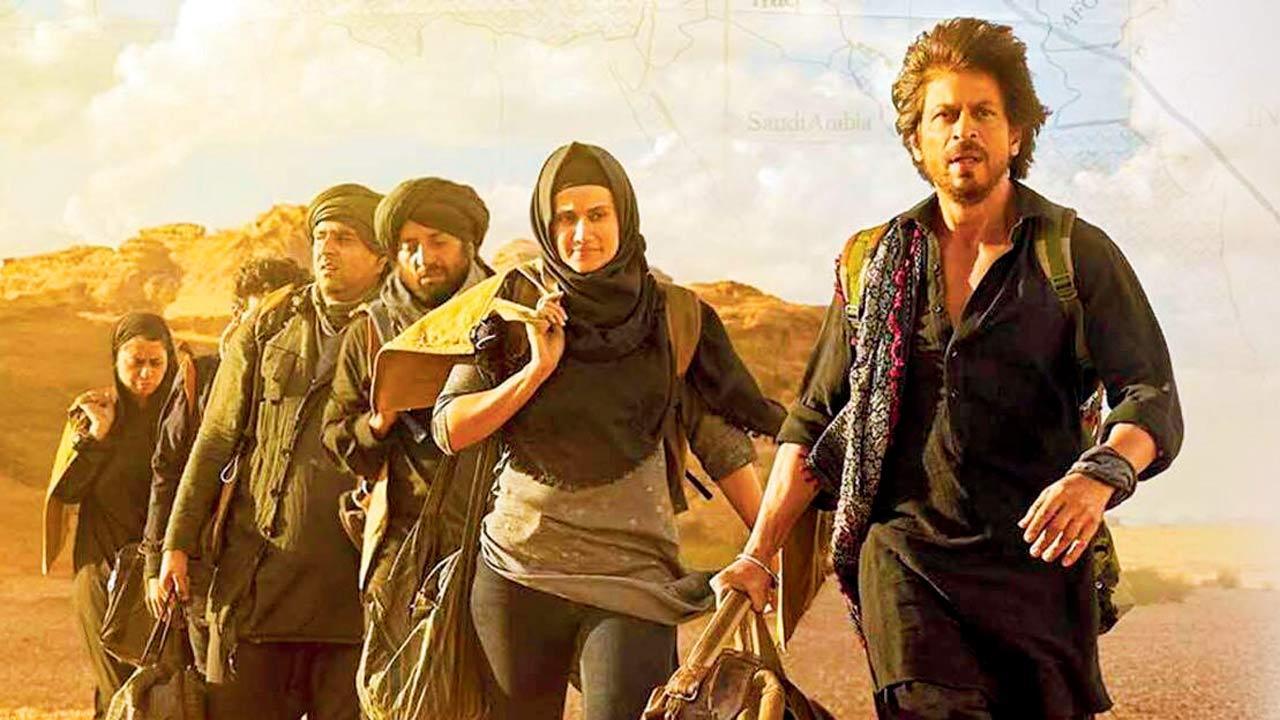
As Indian citizens are deported from the US and their stories come to light, sources say producers are planning to re-release Dunki that explored illegal immigration
Mohar Basu (MID-DAY; February 8, 2025)
Over the past few days, our news feeds have been flooded with videos of Indians, in handcuffs, being deported from the US, as part of President Donald Trump’s immigration crackdown. With the episode putting the spotlight on illegal immigration, it is being heard that Dunki (2023), which explored the theme, might return to theatres.
Sources reveal that discussions about a re-release are underway at Red Chillies Entertainment, which backed the Shah Rukh Khan and Taapsee Pannu-starrer. “The situation with Indian immigrants being deported in terrible conditions has reignited conversations around the themes of Dunki. Like every Rajkumar Hirani film, it was always meant to be more than just a big-ticket release; it highlighted a real struggle. Given what’s happening now, the film’s story feels urgent,” says a source.
In Dunki, Khan played Hardy, who helps his Punjab-based friends as they take the illegal donkey route and migrate to the UK in the hope of a better life. The film depicted not only the risks involved in the donkey route, but also the hardships illegal migrants face in foreign countries.
An industry insider adds, “There is interest from distributors. The makers are looking at a potential release as early as this month.”
When mid-day texted Hirani, he said, “I’m not aware of any such plans, but I’d be happy if it re-releases. Illegal immigration has been happening for years from Punjab. It’s just that the rest of the country is becoming aware now.”
We also reached out to Red Chillies Entertainment, who didn’t respond till press time.
Donald Trump's biggest issue is his mouth. He is his own worst enemy-Sunny Leone
3:03 PM
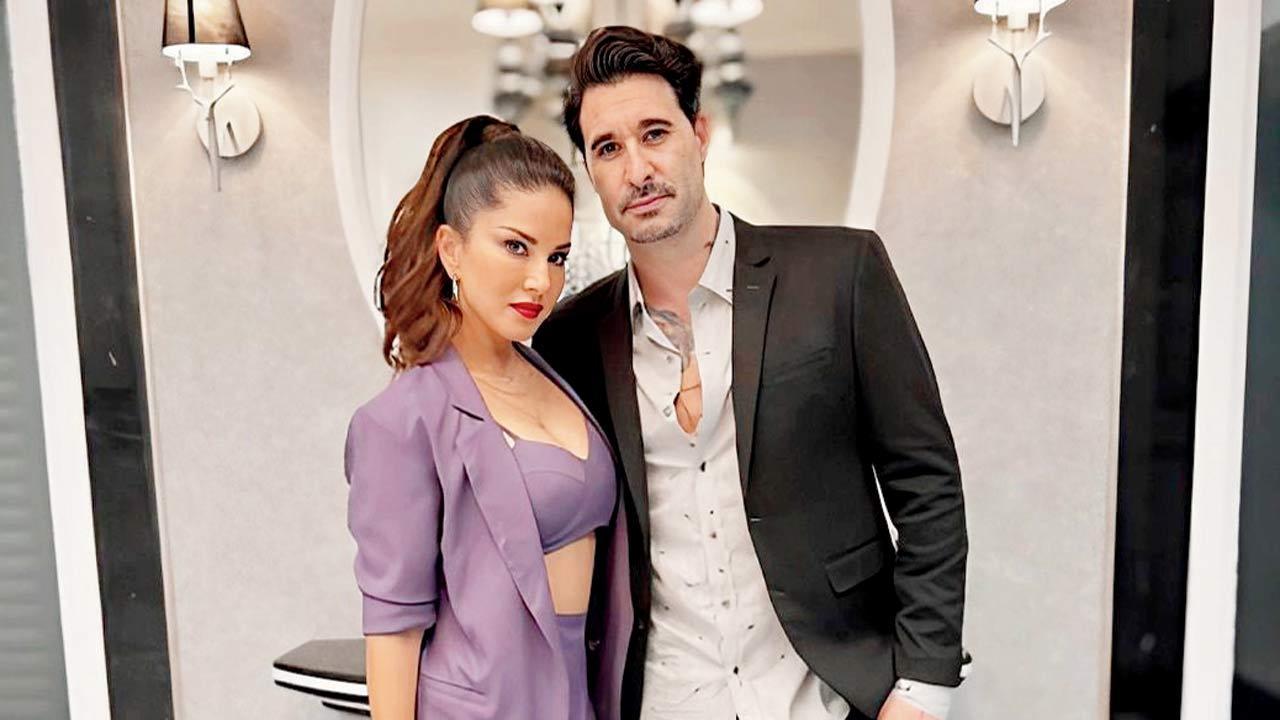
As Donald Trump wins the Presidential elections, US citizens Sunny Leone and Daniel Weber say he can shape a better second term ‘if he chooses his words wisely’; attribute his victory to people-centric policies
Mohar Basu (MID-DAY; November 7, 2024)
I’m so surprised,” was Sunny Leone’s opening remark, as we got on a call with her an hour after Donald Trump was elected as the 47th President of the United States of America. Trump, who served as the US President from 2017 to 2021, had something of a landslide victory this time, way ahead of Democratic Party’s presidential candidate Kamala Harris.
What will Trump’s second term be like? When we posed the question to Leone, arguably India’s most famous US citizen, she chose to be optimistic. “I think he’ll be a little less aggressive in how he speaks. He will still be funny and witty, but I think he cares about America doing well in every aspect,” she said.
Daniel Weber, Leone’s entrepreneur-husband, stated that Trump’s master-stroke was that he promised policies that were people- and America-centric. “He is selling lower taxes, especially corporate taxes. Immigration was his number one [priority]; he wants [tighter] immigration policy. Lowering crime is a big [agenda], [as is] ending foreign wars. In the last two years, we have seen big conflicts between Ukraine and Russia, and Israel with Hezbollah and Hamas. During his first term, there were no wars. That’s a big thing he was running on—that he will hopefully put an end to the wars,” said Weber.
Chiming in, Leone recounted that during his last term, Trump brought US troops stationed in Afghanistan back home. “I remember how happy people were, that they were finally not having to be on the frontlines or in dangerous areas. The [soldiers’] families were extremely happy. Even though American soldiers aren’t on the battlefields, we have the Navy and US soldiers in supporting roles in so many places all over the world. They should be brought home, and the conflicts should be ended with some resolution. That was a big agenda of Trump.”
But Trump 2.0 comes with some older problems. Leone pointed out, “I think his biggest issue is his mouth. He is his own worst enemy. Sometimes, you just don’t know what he is going to say. I think if he keeps himself calm, chooses his words wisely and [follows] decorum, he will be able to leave with a different legacy after four years.”
She is also hopeful that the President-elect will focus on women’s healthcare during his term. With his victory, the future of abortion rights in the US faces uncertainty. She said, “He will have to deal with a lot of backlash amongst women and young people when it comes to his policies on women’s healthcare, pregnancy and abortion. He will have to reach out [to his detractors] in some manner so that everyone or the majority is happy with his policies. When he left [after his last term], there was so much hatred towards him. But he has obviously gained a lot of support over the last four years. I think if he is open-minded to certain policies, he will gain so much more love.”
Many feel that this has been one of the most polarizing US elections in a long time. Polarising or not, Leone lauded Harris for holding her ground and giving Trump a tough fight.
“She had a tough road ahead of her. She put in the work, trying her very best. She was fighting a gigantic wall that has been put on for years. I think she fought well, but her campaign lacked some sort of a zing. Trump has been campaigning for eight years, if you really think about it, and she, for 110 days. How can you compete with that? That time frame not enough to create a strong voter base,” the actor emphasized.
A prominent conversation on X, after the elections, was that the average American doesn’t want a female president. Does Weber think it’s true? “It hasn’t happened in America, but it has happened in many other places. It happened in Italy,” said Weber, adding, “I don’t even vote for a party, let alone gender. I have voted Democrat before, and I have voted Republican. For me, it’s about the candidate.”
Leone echoed his sentiments, saying, “America is definitely ready for a female president. It’s about the right person, the right time; plus, the people that are backing her up have to make it about America, not about themselves. The Republicans have two or three women that will be phenomenal candidates. You’ll see them in the years to come.”
What is the most pressing issue for an average American today that the new President needs to address? According to Weber, it boils down to one need. “Does it cost me more to put food on my table and pay my bills? That is every citizen’s pressing issue. Borders, wars, trade or anything [are secondary]; the first thing is, at the end of the day, is it too expensive for me to feed my family, send my kids to school, and make my day-to-day living?”
Leone added, “Over the last four years, there were so much [funds] given to illegal immigrants. That was taxpayers’ money. I think that hurt a lot of people. So, I believe every country should have great immigration policies, where anybody and everybody can apply to go to that country. We both come from immigrant families. If it wasn’t for those policies, I wouldn’t be an American citizen. But everything should be done at fair pay. I pay taxes like every other American does. Personally, I don’t think don’t think it’s fair that [illegal immigration] is taking away from other US citizens; the government is responsible for its citizens. There should be aid given to anybody who needs it, but there must be a system.”
Donald Trump biopic The Apprentice gets stuck with Censor Board for this reason
8:22 AM
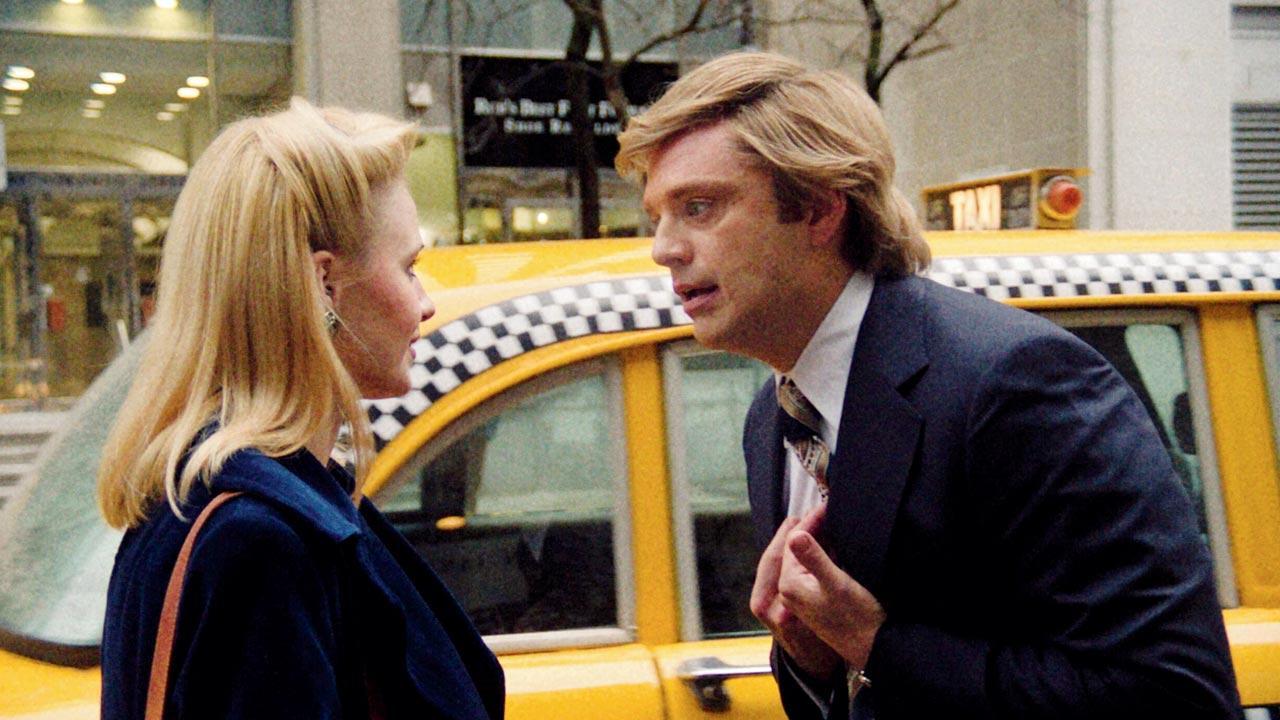
The Apprentice’s India release pushed after filmmaker Ali Abbasi refuses to comply with CBFC’s cuts, which include removing nudity and reducing non-consensual sex scene
Mohar Basu (MID-DAY; October 18, 2024)
First Monkey Man, then Punjab ’95, and Emergency—in each instance, the Central Board of Film Certification (CBFC) has pulled out its scissors, much to the dismay of the concerned filmmakers. Now, another movie has been subjected to the CBFC’s snip-happy attitude. Ali Abbasi’s The Apprentice, which was scheduled to hit Indian theatres today, has been postponed. It is heard that the filmmaker, known for his uncompromising stance on creative integrity, has refused to comply with the censor board’s recommended cuts.
With Sebastian Stan playing Donald Trump and Jeremy Strong, his lawyer Roy Cohn, the biopic chronicles the former US President’s early years as a real-estate mogul. It opened in US cinemas on October 11, while its India release hangs in the balance. So, which scenes in the biopic are in contention? A source from the CBFC shared the details, stating that the suggested snips make it a 122.42-minute affair.
“The cuts weren’t drastic. The CBFC requested for the deletion of nude scenes wherever they appear in the film. This was more than a minute-long content. What upset the director was the CBFC’s request that the scene, which depicts Trump having non-consensual sex with [then] wife Ivana Trump, be reduced by 75 per cent. The board members also asked the studio to provide the source from where this information has been obtained. Abbasi and the studio countered that the scene has been put for a reason and not with the objective of titillation. The filmmaker, through his representatives, made it known that reducing the sequence takes away its impact altogether. The word ‘Negro’ was also instructed to be dropped, while the standard disclaimers in drinking and smoking scenes were asked to be added.” Examining officer Govind Mishra had presided over the CBFC viewing.
PVR Inox Pictures has partnered with the makers to bring The Apprentice to India. A source from the studio revealed that the film now stands indefinitely pushed.
“Making cuts to the film is something Abbasi ethically stands against. We thought we could probably negotiate and release it a little later, but there is no scope for it. He believes that these cuts would diminish the impact of his work. He would rather halt the India release than agree to them,” said a source.
mid-day texted Abbasi, who did not respond till press time.
The Apprentice's online promotions stalled as Meta flags Donald Trump biopic for election messaging
8:26 AM
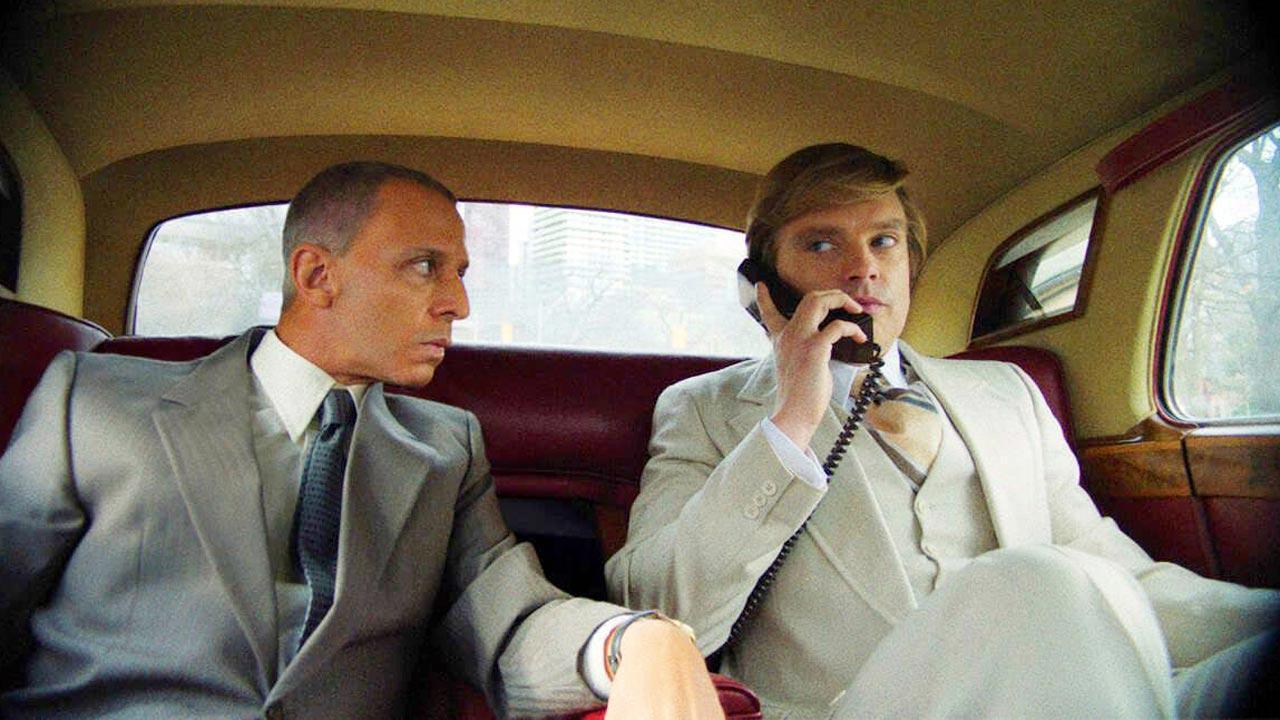
The Apprentice’s online promotions hit as Meta blocks Trump biopic’s reels; platforms designed to curb any content that it views as election-related messaging
Mohar Basu (MID-DAY; October 5, 2024)
An aggressive online promotional plan was charted out for The Apprentice, leading up to its October 18 release in India. But, with two weeks to go, the marketing team has encountered an unexpected hurdle. The biopic, which sees Sebastian Stan step into the shoes of former US President Donald Trump and also stars Jeremy Strong, has found its promotional campaign under fire after Meta’s platforms Facebook and Instagram have blocked all of the film’s reels.
Reason? It turns out the parent company has stringent policies on content that touches on political themes, and blocks content that it interprets as political advertising or election-related messaging.
Despite Ali Abbasi’s directorial venture tracing only Trump’s formative years, its association with the Republican nominee for the presidential race has drawn the attention of Meta’s AI-powered content detection system. That has made the film’s digital promotion tricky. An insider told mid-day, “While we knew The Apprentice would stir conversations, we didn’t expect Meta to block the reels entirely.”
The source further adds, “Their AI systems seem to flag anything associated with Donald Trump, especially when it’s tied to elections, even if the content is unrelated to contemporary politics. It directs us to the policy on election advertising. We keep getting messages stating that these ads don’t comply with the platforms’ policy. Several accounts are getting deactivated for promoting this film.”
Digital platforms have become an integral part of film promotions. With Instagram and Facebook blocking most of The Apprentice’s reels, the India marketing team is scrambling to change its strategy. Vishaal Shah, co-founder of a communication consulting firm working in the entertainment space, said that such a blanket blocking hinders them from reaching out to a wide audience.
“When platforms restrict the promotion of content centred around Donald Trump in relation to The Apprentice, it hinders the ability to share key narratives about his life and career. Such limitations not only affect marketing strategies, but also deprive audiences of a well-rounded understanding of the topics the film aims to highlight,” he stated.
Now, the team will have to resort to traditional methods of advertising to drum up the buzz before the biopic’s release. The source adds, “We are now strategizing how to navigate this digital blockade. We are exploring other creative alternatives. We are also reaching out to media outlets and entertainment influencers, who may not be bound by such rigid content policies.”
Meta’s strict stance on content is said to stem from its ongoing efforts to prevent the spread of misinformation during election periods. However, critics argue that these technologies sometimes apply overly broad restrictions, inadvertently censoring content that isn’t necessarily political.
An employee of Meta India, on condition of anonymity, explained, “Meta’s policies surrounding elections have become increasingly cautious after the backlash from the 2016 and 2020 US elections, where the platform was accused of being a breeding ground for disinformation. In an effort to regain trust and control over the content circulating on its platforms, the company has since tightened its guidelines. But if the film’s marketing team reaches out to us and explains it, it can be rectified.”
mid-day reached out to the US team of Meta, but did not receive an official response.
An online start-up finds novel way to connect stars to their fans; ropes in Shankar Mahadevan and Shaan
8:22 AM

Uma Ramasubramanian (MID-DAY; May 31, 2020)
 There's a price for everything, even birthday wishes. A Mumbai based start-up, GoNuts, finds a novel way to get fans closer to their favourite stars. The platform opened avenues for fans to receive personalised greetings in the form of video shoutouts from celebrities; garnered at a pocket-friendly price.
"The pricing starts from Rs 1,000 for a lookalike," informs Vinamra Pandiya, founder, GoNuts adding, "Rates fluctuate depending on the popularity of the artiste. If you want someone like Shankar Mahadevan, [the shoutout would be priced] at Rs 30,000. Singers gain more popularity because they sing too."
"For a personal video message from artistes like Shaan, the cost is about Rs 15,000 per video plus taxes," says Pandiya adding that every star would take 70 per cent cut per video. Pandiya adds, "We are targeting one genre at a time. We have begun with music because it has a huge fan base. The idea is to use a celebrity as a medium to convey your feelings to amplify the message. It can be for an anniversary, birthday or any milestone in your life."'
The most trending personality on the platform has been the lookalike of Donald Trump. He says, "The lookalike of Donald Trump is one of the best-selling creatives as it is laced with humour." The platform has a portfolio of over 200 celebrities across fields, including Salim Merchant, Sivamani, Jonty Rhodes, Lance Klusener, Gaurav Biduri, The Phogat sisters, among others.
Robin Wright talks about being typecast as an actor and life after House Of Cards
8:21 AM

Hollywood star, Netflix sensation Robin Wright on life with, and after, House Of Cards
Mayank Shekhar (MID-DAY; November 18, 2018)
"Petrified," isn't an emotion you'd instantly associate with Robin Wright, especially given her steely-cold exterior as Claire Underwood (nee Hale) on the Netflix flagship show, House Of Cards (HoC). But that's really how she felt as she called up executive producer, auteur David Fincher, night before a shoot, towards the end of the series.
Why's that? Over the show's six seasons, while Hale had transitioned from being Congressman Frank Underwood's wife, Vice President, First Lady, to the President of the United States; personally, Wright herself, besides earning unprecedented global fame and a Golden Globe for Clare's part, was turning director with HoC's finale episode.
Unknown to most, directing the dark, moody, relatively quiet HoC is a lot like gently tip-toeing around a delicate house of cards itself. For, rules on what you can, and cannot do on the show - no steady-cams, for instance, no hand-held cameras, no tight close-ups, only a specified set of lenses allowed, no use of the (bright) colour red-had been set in stone, by Fincher, when HoC began in 2012, under his direction.
"David is so smart about not conforming to a convention. Would it look like West Wing (a relatively optimistic show; also set in the White House) with lots of movement, pace, activity? He, in fact, created a new portraiture for chaos," Wright says.
Before she stepped into the director's shoes, while still in Claire's high-heels, Fincher told her just one thing: "For every scene, create a (mathematical) fraction (in your head): Behaviour/Time. With everything you look at in the frame, no matter how wide you are; ask yourself: What's the behaviour going on in the room. You can stay in that (pre-determined) wide shot for three solid minutes, if you've got ample 'behaviour' going on. If not, cut out quicker, go somewhere else."
With her last shot for HoC therefore, Wright, 52, didn't just finally move on from Claire, but also moved into filmmaking as a new profession. This is something she appears most keen to talk about, as we meet along with a group of international journalists, on the sidelines of a Netflix slate-event in Singapore.
She starts shooting her maiden feature film as director next winter, the story of which she's uncannily generous enough to share: "It's about a woman who loses her husband and child from a terrorist bombing. Dealing with grief, she goes out into the wilderness, to live in the wilds alone. She feels that she can't re-enter society, or be good for it, being the person she has become. Then she meets an (American) Indian man, who's also suffered tremendous amounts of loss. He teaches her how to live, and love life again."
That's poetic, alright - quite in contrast to psychopathic tendencies of American realpolitik (or politics in general), beneath polite pretentions, that HoC stood for. Rather stood out for: Its uniquely chilling insight into betrayals, lies, deceit that goes on in the White House, or among those desperately wanting to get in. Where, to quote Gore Vidal from the show's fifth season, "Power is an end in itself; and the instinctive urge to prevail, the single most important human trait."
I've used this story before, Wright says, but it's very telling still: "When House of Cards came out, we went to the Democratic National Convention Dinner that year. The actors sat at different tables, with different politicians. Each table was an eclectic group. I was next to a Southern senator. And he went, 'God, I just loved the show. It's so real, so accurate.' So I asked, How accurate? And he said, '99 per cent!' What's the one per cent that's not accurate, I asked. I thought he was going to say, people don't really murder, kill… He said, 'You'll never be able to pass the Education Bill that fast!'"
At this point, of course, one doesn't know whether to laugh, or barf. We laugh. Since it would take at least a year to film the ideas the writers came up with, Wrights recalls, "Sometimes we would shoot a scene, and then that would happen in reality. We would then extract that scene, and reshoot it with another event." The current (Trump) administration though, she exclaims, "Literally stole all our good ideas: Nothing's gonna top that shit!"
The writing process for HoC essentially involved hired advisers in Washington DC to gauge/predict what the repercussion of a particular event/situation on the show could be on Capitol Hill - was it to really happen. This would influence the final scene. Wright adds, "I would then come in, and say, hey, Claire as a character, would only say one of those four lines - she's a man, or woman, of few words. That sort of alteration would help. But that was the easy part." And the hardest part of playing Claire Underwood? "Having to sit up straight, everyday. And I'm not kidding!"
The incessant drama of HoC eventually rubbed off on the show, when in November last year, its lead actor Kevin Spacey (Claire's husband, Frank Underwood) was sacked from the series, following charges of sexual misconduct. Waiting for dust to settle, the show's top management regrouped after Christmas. That they chose to go ahead with HoC, nonetheless, Wright says, were because of two-fold reasons: "One was [to get at] what would be best for the show, its fans, and the five years we put into it. We finished the fifth season with Claire breaking the fourth wall to say, 'This is my turn.' Let's explore that, we thought, as we always intended to.
The other reason was the show's cancellation would've put over a thousand people in the state of Maryland out of employment [that was guaranteed to them for the time]."
Either way, that the final season suffers as a result of Frank being no more, but very much omnipresent in every episode, certainly makes the end of the Underwoods a rather underwhelming experience. It could well be because the graph of the season, at the time of Spacey's exit, must've already been scripted; leaving the writers, producers too little time to start from scratch.
This is still to take away nothing from Wright, as the eerily elegant, President Claire Hale, a life-changing part, she obviously remains grateful for: "To be able to play that fierce character opened doors for me, and why I got Blade Runner 2049, Wonder Woman. I'd been typecast for so many years - being the quiet, pained, understanding wife." I'm thinking her role as Forrest Gump's girlfriend (1994) must have set off that stereotype.
She describes the original intent behind Claire as "being the best of both sexes: a leader in a female body, who is also a man. She simultaneously operates the way a man, and a woman does, within an environment of a very Shakespearean drama." Despite a bit of a hint-hint, wink-wink cliffhanger at the end of HoC, Wright reconfirms Claire - and the series that introduced binge-watching (with all episodes of a season dropping in one go), and redefined television - is definitely not coming back. Having spent over half a decade with Claire, what's she going to miss most? "Her clothes," she says.
Akshay Kumar's tweet delete saga proves how the BJP regime has compelled actors to be silent and s**t scared
9:33 AM

Before 2014, things were far simpler in India. If the government would go wrong, all sections of society would voice their complaints and anger. The then government run by UPA 2 with Indian National Congress having a lion share of this alliance, used to be perennially at the edge over the mounting criticism. It was the time when numerous scams had come to light, inflation was quite high and hike in the petrol and diesel price had burnt a hole in the pockets of the aam junta. No wonder, all strata of society would be speaking against the government policies. The members of our film industry were also not left behind. Though most of them would not speak about it a lot, they would once in a while speak their mind which would be in sync with the mood of the public.
Then came the BJP rule from May 2014, under the leadership of the dynamic Narendra Modi. Before the elections, Mr Modi and other BJP personalities promised the moon. They assured that the prices of fuel and other essential items would be brought down and with the return of the black money stashed abroad, things would get better in India in the economic front. It’s been four years now and though things have got better in a lot of departments, price hike remains a huge challenge. Recently, the rate of petrol touched Rs 84 and it sent shockwaves throughout the country. The common man began to ask the government about the ‘acche din’ and reduced prices that were promised to them.
Despite such a huge rise in petrol prices, the Bollywood industry has been silent this time on the whole. The ease and fearlessness with which they would write against government’s decision can’t be seen anymore. This led to an embarrassing situation for superstar Akshay Kumar recently when his February 2012 tweet went viral. It read: “Guys, I think it’s time to clean up your bicycles and hit the road! As per sources, expecting another petrol price hike”. The netizens began asking why the superstar is no longer making such amusing but thought-provoking tweets since the petrol prices have hit the roof again. The criticism was mounting to such a level that Akshay decided to delete this tweet. He hoped this would save him from accusations of double standards. Sadly, that’s not the case as his tweet has got screenshot and has also been archived. There’s one more tweet of Akshay Kumar mocking the fuel price rise that’s still available. The deleting of the 2012 tweet got him even more criticism and hence that’s why he has probably chosen to retain this other tweet, as of now.
Couldn't even get to my house at nite for all of Mumbai was queuing up for #petrol before the prices rocketed again.— Akshay Kumar (@akshaykumar) May 16, 2011
Just like Akshay Kumar, even Amitabh Bachchan has made some interesting jokes on petrol price, in the pre-Modi era. Then there were others like Ashoke Pandit, Anupam Kher etc who too had dissed the Congress for hurting the common man with their rise in prices. Both of them have made it clear many times that they have a lot of soft corner for BJP and Narendra Modi. Hence, they can’t be expected to now write about fuel rise now and thereby hurt their idol. But what has prompted Amitabh Bachchan and Akshay Kumar to go mum now?T 753 -Petrol up Rs 7.5 : Pump attendent - 'Kitne ka daloon ?' ! Mumbaikar - '2-4 rupye ka car ke upar spray kar de bhai, jalana hai !!'— Amitabh Bachchan (@SrBachchan) May 24, 2012
The answer is simple. In today’s times, criticizing the BJP government and Modi is akin to criticizing the country. The BJP troll army is huge, shameless and are ready to go to any lengths while attacking their ‘prey’. Most of them are faceless and fake ids but still when a planned troll attack is done from thousands of such troll twitter and Facebook handles, it can easily give a shiver down the spine of these celebrities. Aamir Khan knows it very well. His famous intolerance speech in November 2015 became a talking point. He was criticized left, right and centre like never before. In the same month, Shah Rukh Khan was also mercilessly targeted for his views on the political and communal climate in India. Aamir in fact had participated in Anna Hazare's movement in 2011 which was also against the then Congress rule. Can you imagine Aamir attempting something similar in today's times?

These nameless, faceless trolls don’t simply post negative comments. They go a step further – they’ll spread fake news about that particular actor. Their families won’t be spared either. Recently, when Swara Bhasker held a placard to protest against the gruesome Kathua rape, she faced criticism of another level. A photoshopped tweet was put out that stated that Swara protested against the Kathua for publicity and money. Also, last month, journalist Rana Ayyub, a fierce critic of Narendra Modi, had the most traumatizing experience of her life when photoshopped tweets was put that made people believe that she has made anti-India comments. Moreover, her phone number was leaked and a pornographic video was widely shaped where her face was morphed onto another woman.
So how exactly is BJP responsible for the wrongdoings of these trolls? Well, the problem is that it’s an open secret that all these slut-shaming campaigns have the backing of the BJP leaders. Many of them, for instance, shared Rana Ayyub’s fake tweets and refused to delete despite hunderds of twitter users explaining to them that it’s fake. Many people who regularly troll are followed on Twitter by none other than Narendra Modi himself. This gives them an added boost to target the critics of the government. Moreover, it has increasingly come to light that the BJP IT Cell is actively perpetrating such campaigns against celebrities to ‘teach them a lesson’.
In such a scenario, it is understandable that Akshay Kumar, Amitabh Bachchan and other celebrities are quite scared and would think thousand times before saying anything remotely against BJP. After all, they don’t want their Twitter notifications to be filled with hate-filled messages. They don’t want rape threats for the women in their families or their numbers getting leaked or worse of all, their morphed porn videos getting circulated. They don’t want ignorant public sharing their ‘I hate India and Indians’ photoshopped tweets and be seen as traitors and anti-nationals. All this can lead to extreme psychological trauma and break even the toughest of people. Also, the industry has seen how Shah Rukh Khan and Aamir Khan were tortured. Even the recent agitations against Sanjay Leela Bhansali’s period film Padmaavat was possible because of the BJP government’s inaction which indirectly motivated the protestors to go all out, even attacking a school bus full of scared children. As a result, it is completely understandable the silence of our Bollywood stars.
Ironically, in the West, it’s US President Donald Trump who has come to power owing to his right-wing views and for promising lots and lots of stuffs. And even he’s unable to perform well but the Hollywood film fraternity is not scared. They openly mock and criticise him and his policies. Even during the Academy Awards, he was the butt of many jokes. Some of the biggest stars like Meryl Streep has made it clear that he’s unjustified with his viewpoints. But then, Trump’s troll army is not as brazen and shameless like the BJP troll groups. Right now, in Bollywood, it’s only the not-that-famous celebrities like Swara Bhasker, Vishal Dadlani, Prakash Raj, Pooja Bhatt, Shruti Seth etc attacking the government. They are not that huge and can take the risk. But Akshay Kumar can’t. As mentioned above, it’ll lead to personal trauma. Also, what if the protestors come to the streets and try to stop the release of his film? Crores of money is at stake when the film’s release is due and such protests can hurt everyone involved with the film, not just the actor in question.
But how long will this go? Slowly and steadily, these tactics of the troll army won’t work with the same intensity. Already, one can see around that more and more people are trying to verify fake messages that they receive on WhatsApp and social media. Fact-checking websites have mushroomed and are doing great job in instantly alerting people about fake news being spread by the troll army. Cyber-crime laws are strong and if celebrities take action against the mischief mongers, it can lead to a fear among these criminals. Hopefully that time will come soon and we shall once again get to see our celebrities without much fear rightfully criticising the government!
Action Jackson girl Manasvi Mamgai celebrates Diwali with US President Donald Trump
7:46 AM

Joginder Tuteja (DNA; October 24, 2017)
Ex-Miss India Manasvi, one of the leading ladies with Ajay Devgn in Action Jackson, is not only firmly settled in the US, but is also actively involved in quite a few social and political campaigns involving US President Donald Trump. A testimony to this fact was at a mega event last week when she not only welcomed him during a special Diwali event, but also spent an hour in his company.
A close associate of the beauty queen-turned-actress-turned-Indian ambassador of Republican Hindu Coalition (RHC) says, “This isn’t the first time she met President Trump. She, along with her industrialist father Shalabh Kumar, actively campaigned for Trump during the US elections. The father-daughter combo has been running RHC for more than a year now and one of the initiatives pioneered by them was to work towards garnering support for Trump during 2016 United States presidential election.”
While one can pretty much see several pictures of her along with top US politicians on social media, that has been a result of quite a few initiatives and events that Manasvi has driven during the last few months, which has led to many connects been build.
This was evidenced over the weekend gone by as well when she welcomed Trump on Diwali during celebrations that lasted five days. Says Manasvi, “One year has passed since I became RHC India Ambassador and a lot has changed decidedly for Hindus. We got the most pro-Hindu, pro-India US President elected, and President Donald J Trump put all terrorists and Pakistan on notice. Our community has much to celebrate this Diwali, ushering the age of best friendship between the US and India. I was honoured to spend 60 minutes with Mr President and the first family on Diwali.” No wonder, Manasvi has taken a break from Bollywood and is working extensively with her father to take forward the RHC initiative in the US.
How Donald Trump messed up Vir Das’s gig
4:59 PM

Actor-comic Vir Das admits he expected Hillary Clinton to become US President, had to rework his Netflix special after Donald Trump's shock victory
Sonil Dedhia (MID-DAY; April 21, 2017)
Vir Das became the first Indian comedian to bag his solo Netflix original comedy special, putting him among the likes of Russell Peters and Jon Stewart. But it was not really a smooth sailing for the actor-comedian as he sat down to write the jokes for Abroad Understanding, which also marks the debut of an Indian original production on the video-streaming platform.
After completing the shoot of the show's first instalment in Delhi, Vir jetted off to New York for the second schedule in November 2016 in the midst of the US presidential elections. Given that comedians draw inspiration from daily developments to humour others, Vir decided to incorporate elements around the elections, and the then incoming president. Of course, like everyone assumed, it had to be Hillary Clinton. Only, it wasn't..
"When I first found out that Donald Trump had won, I was as shocked as the rest of the world," says Vir, who had scripted several jokes that spoke of Hillary's victory over Trump. "I knew I had to go back to the drawing board after the announcement. I was going to shoot my Netflix special in 48 hours, and since Trump won, I had to prepare better."
That Trump had been a subject of discussion for two years prior to his appointment, given his decision to run for the elections, Vir knew his act had to tackle the topic distinctly. "Finding a new angle is tough. I decided to put forward an Indian's take on Trump. The idea came to me almost an hour before we shot, and the Americans loved it. I am sure once it premieres here, people will love it too," he says of the show that releases on the platform on April 25.
President Donald Trump invited to IIFA in New York
8:01 AM

Sonil Dedhia (MID-DAY; April 15, 2017)
The pre-inaugural ceremony of Donald Trump earlier this year saw a 45 minute Bollywood dance routine led by former Miss India Manasvi Mamgai. Come July, the US President could be treated to more — at the IIFA Awards in New York.
A source close to the event management team says, “The IIFA festival (July 14-15) will be an extravaganza of entertainment. There is a plan to send out an invitation to the White House and we hope the President can attend the event. A few other top American politicians are also on the guest list.”
Andre Timmins, director of Wizcraft International, which hosts the annual awards, refused to confirm the news, but said several big names from Bollywood and Hollywood are expected at the gala. “In recent years, we have had many Indian celebrities going to the West and working in films and television series. At the same time, a lot of Hollywood celebs are also coming to India to shoot or promote their film. So, we thought New York is the ideal place [for both industries to come together]. This edition will have a great mix of people from Bollywood and Hollywood. We will announce the entire line-up soon,” added Timmins.
Besides a bunch of top movie stars, a few cricketers will also be part of the star-studded event. “Movie stars and cricketers are worshipped in India. This time, our aim is to make IIFA bigger and better, and so, we have decided to do something different,” Timmins said.
Subscribe to:
Posts (Atom)