Showing posts with label Do Raaste. Show all posts
Showing posts with label Do Raaste. Show all posts
Why Mahesh Bhatt wept bitterly after the release of Do Raaste and later got Rs. 300 for it
8:42 AM

Avijit Ghosh (THE TIMES OF INDIA; May 20, 2025)
New Delhi: In the winter of 1969, a tornado named Rajesh Khanna barrelled through India. Two films created Hindi cinema's first superstar: Shakti Samanta’s Aradhana, shortly followed by Raj Khosla’s Do Raaste.
But the first few days of Do Raaste were uncertain at the box-office. Mahesh Bhatt, a young “production hand” in the film, wept bitterly over the film’s grim prognosis, says a forthcoming biography of Raj Khosla, whose 100th birth anniversary falls on May 31.
Khosla had already delivered superhits in a variety of genres: thriller CID (1956), suspenseful Woh Kaun Thi? (1964) and romantic drama Do Badan (1966) underlining his ability as an all-rounder. But his last two ventures, Anita (1967) and Chirag (1969), hadn’t fared well. Debt collectors were at the door.
Do Raaste, which he produced and directed, was based on Marathi writer Chandrakant Kakodkar’s novel, Nilambari. When the film opened at Bombay’s Royal Opera House on December 5, 1969, editor Waman Bhonsle and Bhatt were at the theatre.
Biographer Amborish Roychoudhury writes in the book, “A manager by the name of Desai, came to Bhatt and Bhonsle and said, “Saamne woh Shakti ki picture chal rahi hai Aradhana, woh advance mein housefull hai. Yahan par log nahin aate. Picture doobegi.” (Shakti’s film Aradhana, playing across the road, is running to full house in advance booking. No one is coming here. This film will flop.)
“When he heard this, Bhatt broke down. Bhonsle had seen it all before, but the young Bhatt, all of 20, was emotionally attached to the film,” says the book, co-authored by Anita Khosla and Uma Khosla Kapur, both director’s daughters.
The crisply-written book titled, "Raj Khosla: The Authorized Biography,” also says that the film originally ended with some “touching lines about mother-son relationship” which wasn’t working too well with the audience.
Khosla reached out to heroine Sadhana, with whom he had worked in four films. “Over the years, she had become a confidante and a sounding board. He showed her his films, and she told him what she felt,” writes Roychoudhury.
Sadhana suggested ending the film with a clip of the track, “Bindiya Chamkegi”, which was to become radio countdown show, Binaca Geetmala’s No 1 song of 1971. Khosla carried out the change.
Do Raaste “ran for more than 50 weeks at the same Opera House where the staff had written the film off.” Debt collectors were paid. Khosla announced a bonus for some staff members. Bhatt’s bonus was Rs 300, equivalent to a month’s wage. “He gave me 300 bucks extra to me for shedding tears!,” the biography quotes Bhatt as saying.
Khosla passed away in 1991. In the foreword, Bhatt describes him as “My mentor. My master.”
Lata Mangeshkar and I went on to create history by recording 712 songs together-Pyarelal
8:23 AM
Soumya Vajpayee (HINDUSTAN TIMES; February 6, 2023)
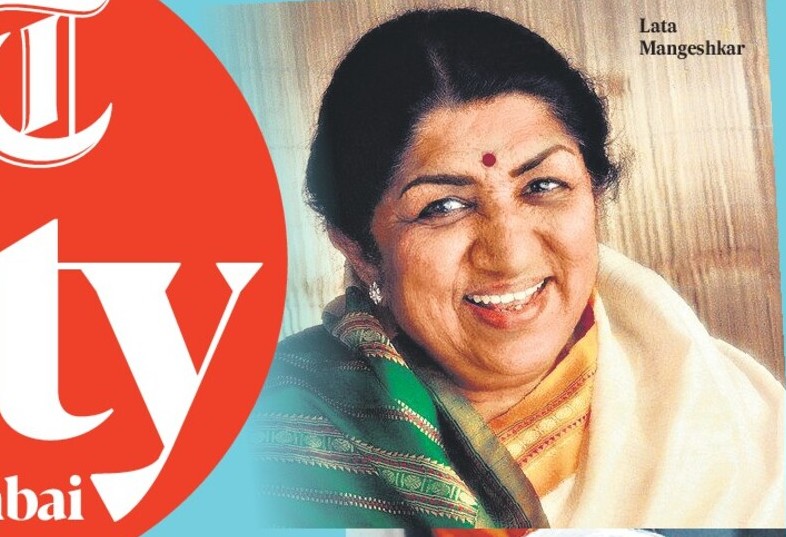
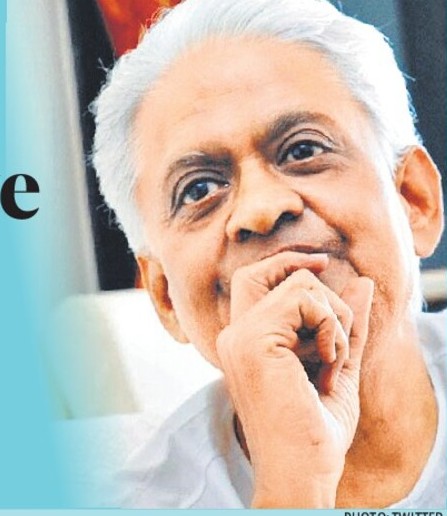
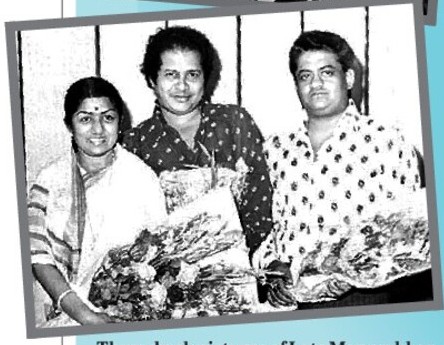
Yesteryear composer duo Laxmikant-Pyarelal and late music legend Lata Mangeshkar are forever bound by the 700-odd songs they’ve worked on together. Today, on the singer’s first death anniversary, Pyarelal Sharma, one half of the duo, misses her “immensely”.
“Lata ji was a part of every important moment of my life. She was like a mother to me. I feel she is still around,” he says, adding, “Woh humare liye Saraswati maa hain. Hum Laxmikant-Pyarelal jo bhi bane, Lata ji ki wajah se bane. We were quite young when we were introduced to her. Laxmikant (Shantaram Kudalkar) ji ko unhone Shankar-Jaikishan (late composer duo) se milwaya aur kaam dilwaya. When she saw I was good at playing the violin, unhone humara ek music group bana diya. She always supported us. She was jovial and fun-loving. We went on to create history by recording 712 songs together.”
Recalling Mangeshkar’s reaction when they reached out to her for their debut project, Parasmani (1963), Sharma says, “When we requested her to sing our first song, she said, ‘Tum itne chhote ho, music director ban gaye?’ She happily recorded the songs and we gave her a cheque of Rs. 101. She’d sing our compositions in her own style, be it Bindiya Chamkegi (Do Raaste; 1969) or Satyam Shivam Sundaram (1978) title track. Woh jo bhi gaati thi, uss gaane ko amar kar deti thi.”
Sharma, 82, goes on to recall another fond memory of the Bharat Ratna awardee: “Jab hum Ek Duuje Ke Liye (1981) ki recording kar rahe the, Lata ji ne mujhse kaha, ‘Pyare, tu itna achha music arrange aur compose karta hai, tu western symphony kyun nahin likhta?’ I was touched by her thoughtfulness. When I finally released a symphony, Om Shivam, she was so happy. Unhone ek Shiv ji ki murti di, jo mere ghar mein sthapit hai.”
Subscribe to:
Posts (Atom)