Showing posts with label Diljit Dosanjh. Show all posts
Showing posts with label Diljit Dosanjh. Show all posts
Writer Niren Bhatt says Satluj's removal from OTT sets a ‘bad precedent’
3:03 PM

Natasha Coutinho (HINDUSTAN TIMES; July 8, 2026)
Diljit Dosanjh-starrer Satluj (formerly Panjab ’95) was removed from streaming platform Zee5 in India just two days after its July 3 premiere. The move came after the film, based on human rights activist Jaswant Singh Khalra’s life, had finally released online following nearly four years of certification hurdles.
The film’s writer Niren Bhatt, who co-wrote it with Utsav Maitra and director Honey Trehan, says he was caught off-guard by the move and was left “speechless and heartbroken”. He shares, “I was hoping that once the film is out, people will see there is nothing problematic about it. It’s just a common man’s story and it was getting positive word-of-mouth.”
He adds, “Diljit said he anticipated it but I hoped that everyone would enjoy the film for what it is.”
Calling the removal a “bad precedent”, Bhatt says it could make filmmakers hesitant to tell real stories: “Whoever attempts to tell a story will now be worried whether the project will see light of day. If this goes on, we will have to play safe, nothing political and no more real stories.”
---------------------------------------------------------------
Whoever attempts to tell a story will now be worried whether the project will see light of day. If this goes on, we will have to play safe, nothing political and no more real stories. We will have to keep questioning if the film will hurt someone or go against some agenda or ideology.
- Niren Bhatt, writer
FWICE president says Diljit should be careful signing controversial films
Birendra Nath Tiwari, President of the Federation of Western India Cine Employees (FWICE), says actors should be more mindful of the projects they choose. He shares, “Diljit has a huge fan base that looks up to him. He should keep this in mind before supporting controversial films that can create unrest in society. If the government and censor board have issues, the film is not fit for public viewing.”
Satluj row: Diljit Dosanjh's film removed globally until further assessment
2:55 PM

Mohar Basu (MID-DAY; July 12, 2026)
A week after Satluj was pulled from Zee5 in India following government intervention, the Diljit Dosanjh-starrer has now been removed from the platform globally. Multiple sources told mid-day that the film’s release has been put on hold until the Inter-Departmental Committee, as per the Information Technology Rules, completes its review of the film, originally titled Punjab '95. “The idea is to maintain one uniform position globally while the process is underway given the sensitivity of the story,” says an insider.
“This isn’t necessarily a permanent decision. Everyone is waiting for the committee’s observations before deciding the next course of action,” the source adds.
While Satluj is no longer available on Zee5 worldwide, the film — which chronicles activist Jaswant Singh Khalra’s investigation into the extrajudicial killings of Sikh youths during the Punjab insurgency between 1984 and 1995 — is being widely pirated online. mid-day has learnt that it is streaming on YouTube, uploaded by several non-profit organizations, including Ensaaf, a US-based human rights organisation that has extensively documented cases of killings in Punjab.
Earlier this week, mid-day had reported that the film was being screened in gurudwaras across Punjab (No hiding our history, July 9). Those screenings are now being halted by the police.
A committee set up by the Centre to examine the content of ‘Satluj’ has recommended that the ban on its public access through online streaming platforms should remain as the film allegedly goes against India’s sovereignty and integrity, government sources said on Saturday.
Diljit Dosanjh's Satluj taken down amid fears of reviving separatist sentiment
11:04 AM
Mohar Basu (MID-DAY; July 7, 2026)
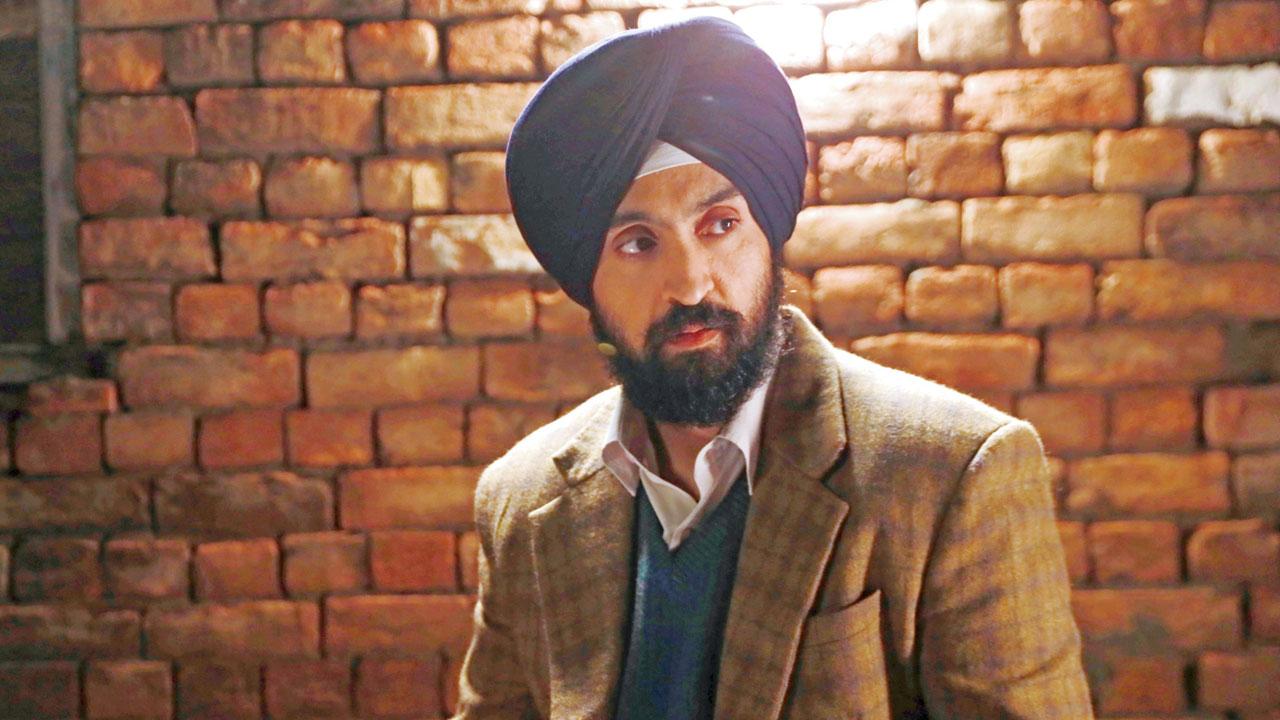
Just about 48 hours. That’s how long Diljit Dosanjh’s Satluj, formerly titled Punjab '95, was available for streaming in India before it was pulled down from ZEE5 on the evening of July 5, even as it remained accessible overseas. Sources have told mid-day that the takedown decision came after the government apparently flagged the film — a biopic on human rights activist Jaswant Singh Khalra — citing threats to national security.
Satluj chronicles how Khalra investigated the extrajudicial killings of Sikh youths during the Punjab insurgency between 1984 and 1995. Sources revealed that authorities were concerned that the film could be used to revive separatist sentiment in Punjab ahead of the Assembly elections in November.
An insider said, “The concern is the environment in which the film is releasing. There is a feeling that certain groups could weaponize the film to further their own agenda. The assessment has been made from a national security perspective, not a political one. With Punjab heading towards elections, the authorities are not willing to take chances.”
Despite the latest takedown, director Honey Trehan’s movie — that was stuck in a years-long battle with the Central Board of Film Certification (CBFC) — continues to circulate online. During a recent Instagram Live, Dosanjh acknowledged that users were downloading the film through torrent websites.
Shortly afterwards, an X account user told mid-day that over 5000 people had downloaded the movie through their link. “It started with over 300 downloads, but now there are over 5000 downloads of our print,” said the user.
The film’s journey
- On the first viewing in 2022, the CBFC sought 21 cuts. The makers approached the Bombay High Court
- In July 2024, mid-day reported that the CBFC’s list of cuts had risen to 85
- By September 2024, it sharply rose to over 120
- In January 2025, mid-day reported how the makers unsuccessfully tried a global release for the biopic
------------------------------------------
After years of censorship battles, title changes and release delays, Diljit Dosanjh’s long-delayed film finally reached audiences without cuts — only to disappear from ZEE5 within two days. As speculation grows, no official explanation has emerged
HINDUSTAN TIMES (July 7, 2026)
For years, Honey Trehan’s film on human rights activist Jaswant Singh Khalra existed more as a censorship controversy than a movie. Announced as Ghallughara, later retitled Punjab ’95 and finally released as Satluj, the Diljit Dosanjh-starrer spent nearly four years battling certification hurdles before quietly premiering on ZEE5 on July 3.
There were no promotions, interviews or marketing campaigns. Then, just 48 hours later, the film disappeared.
On July 5, ZEE5 announced that Satluj would be unavailable in India “until further notice”, citing unspecified “developments”. The platform has not elaborated further, and neither the CBFC nor the film’s producers have publicly explained the move.
HT City reached out to all stakeholders but had not received a response at the time of going to press.
ONLY ONE MAN IS TALKING — DILJIT
The most detailed response has come from Diljit, who suggested the team always feared such an outcome. During an Instagram Live session, the actor said the makers deliberately avoided announcing or promoting the release because they worried the film might never reach audiences otherwise. In fact, during a fan interaction a day before the takedown, he had predicted it could happen: “Today is Saturday. I feel it could be taken down by Monday. But no worry, you download it and watch.”
After the removal, Diljit remained defiant. “You can trouble me as much as you want. I am with Punjab till the day I die,” he said, adding that he was satisfied the film had reached viewers and urging those who downloaded it to share it further.
Beyond Diljit, most stakeholders have remained silent. Producer Ronnie Screwvala has not commented, while director Honey Trehan only reposted ZEE5’s statement with the message, “Tera bhana meetha lage” (God’s will seems sweet).
WHY WAS THE FILM CONTROVERSIAL?
The film tells the story of Jaswant Singh Khalra, the human rights activist who investigated alleged illegal cremations and extrajudicial killings during Punjab’s militancy years. Khalra was abducted and murdered in 1995, and the case later led to the conviction of several police personnel. Because it revisits one of the most sensitive chapters in Punjab’s history, the project faced scrutiny from the start. After being submitted to the CBFC in 2022, the film reportedly ran into objections and was asked to make more than 120 cuts. Trehan maintained that such changes would fundamentally alter the film. The prolonged dispute derailed release plans and eventually pushed the makers towards a direct-to-digital release.
WHY OTT?
Unlike theatrical releases, OTT platforms do not require prior CBFC certification. Industry observers believe streaming offered the makers the only realistic way to release the film in its intended form. That makes its sudden removal all the more puzzling.
SO WHAT HAPPENS NOW?
Some observers point to the film’s politically sensitive subject matter, while others have noted that Punjab is due to hold Assembly elections early next year. Film trade analyst Atul Mohan says the exact trigger remains unclear but believes the subject itself may have raised concerns. “It is definitely a sensitive issue. Elections are coming in Punjab and maybe there could be a concern that no one should use this as propaganda,” he says.
Adding to the controversy, advocate Vineet Jindal has said he filed a complaint with the Ministry of Home Affairs seeking action against the filmmakers and ZEE5, alleging that the film promotes a distorted narrative around Punjab’s insurgency years, in addition to an FIR against Diljit. There is currently no indication that the complaint is linked to the film’s removal.
Honey Trehan breaks silence on Satluj controversy: "I genuinely don't know who objected"
9:38 AM

Just two days after its Zee5 première, ‘Satluj’ — previously titled ‘Punjab '95’ — was made unavailable in India, mid-day finds out how the film got an India release in the first place
Mohar Basu (MID-DAY; July 6, 2026)
Four years after Punjab '95 was stopped in its tracks over objections from the censor board, Honey Trehan was finally breathing easy on Saturday morning when we got on a call with him. His film, now streaming on ZEE5 as Satluj, had arrived without a single cut.
For the filmmaker, it marks the end of a battle that often seemed impossible to win.
In his first interview since the film's release, Trehan told mid-day that there were moments when even he wasn't convinced the film would eventually see the light of day "Even till yesterday afternoon, I wasn't sure if the film would come out," he says with a laugh. "We've reached this point so many times before that I had stopped allowing myself to believe it. I kept telling myself, 'Let it go, let it go.' Then suddenly, it was just there."
The release, he says, belongs as much to the family of human rights activist Jaswant Singh Khalra as it does to the makers. "I spoke to them immediately. They are very, very happy. It was important because we didn't get the title Punjab '95. Naturally, people assumed the film must have been released with cuts. Paramjit aunty herself clarified that this is the same film. Hundreds of people who had watched the earlier version are now saying Satluj is exactly the same film."
For Trehan, that validation mattered more than anything else. "I'm getting messages from IPS officers in Punjab asking, 'The film is without cuts, right?' They are excited to finally watch it. That means a lot."
The director admits he was initially worried that the four-year delay would burden the film with impossible expectations. "I actually felt the opposite happened. These three years became three years of publicity. Punjab '95 had become much bigger than the film itself. My only anxiety before release was whether I could live up to what people had built in their minds. But the response has been overwhelming. Every reaction has become memorable."
Trehan credits producer Ronnie Screwvala, Diljit Dosanjh and ZEE5 for refusing to compromise. "The way Ronnie sir and Diljit stood by me and stood by the film... I can't thank them enough. And what courage ZEE has shown. Hats off to them. They simply dropped the trailer, posters and the film together. There was no release date, no countdown, nothing. It was just — streaming now. I've never seen anything like that."
Throughout the film's uncertain journey, Dosanjh remained firmly behind the project, says Trehan. Recalling how the actor came on board, he says their relationship dates back to Udta Punjab. "Even before I told him I wanted to make a film on Jaswant Singh Khalra, he immediately said, 'There's only one story from Punjab worth making if it isn't about 1984'. I showed him my research book. He looked at Mr Khalra's photograph, picked up the book, placed it on his forehead and simply said, 'Waheguru ji... tell me when and where to come. You'll find me there'."
That commitment, Trehan says, never wavered. "There were days when he reported at six in the morning and I couldn't take his first shot until four in the evening because schedules had gone haywire. I kept apologizing. Every single time he would tell me, 'Paaji, no problem. Whatever you're doing, you're doing for the film. I'm here to support the film.'"
The filmmaker also recounts how Dosanjh recently waited nearly an hour for an Instagram Live session promoting the film despite repeated technical glitches. "He waited for almost 50 minutes. We couldn't connect because of technical issues. Finally, someone got us connected. It wasn't about publicity. Somewhere, both of us felt we would connect. That's the kind of person he is."
Even today, Trehan says he doesn't know who exactly objected to Punjab '95. "If somebody asks me who had a problem with the film, I genuinely don't know. I don't have a face. I don't have a name. Everything came through third persons or lawyers."
He reveals that communication from the censor board effectively stopped earlier this year, forcing the makers to find another route. "There came a point when there was simply no communication anymore. After everything we'd gone through, there was nothing left to discuss. That's when ZEE stepped in and made this release possible."
Yet, despite the years of uncertainty, he refuses to hold grudges. "I've never been bitter. Sometimes you feel hurt emotionally because you're not getting answers. But I also remind myself that I'm talking about one film. The people running the country have much bigger responsibilities. Sometimes there must have been helplessness. I respect the people and the positions they hold."
He points out that every legal body and community organization that watched the film responded positively. "The SGPC watched the film. The Akal Takht committee watched the film. Everywhere I went, the response was overwhelming. Today the film is available across 196 countries on ZEE5 and all I'm receiving is love. So where exactly was the problem?"
Trehan also responded to Diljit Dosanjh's recent assertion that he is "not political, but an artiste". Without commenting on the actor's statement, the director says art inevitably exists alongside politics. "Art can be different from the politics of the time you're living in. Otherwise your art cannot be truthful. Everything today becomes political."
He insists Satluj was never designed to make a political argument. "We're only talking about human rights. We're not commenting on the politics of that period. We're talking about what happens when extraordinary powers are placed in the hands of a few people. That's a human issue, not a political one."
Trehan believes that is why audiences across generations are responding to the film. "Someone messaged me saying this film doesn't reopen wounds; it heals them. That stayed with me. People feel somebody has finally told their story. That's probably the greatest compliment I've received."
At the time of going to press, ‘Satluj’ had been made unavailable on ZEE5 in India.
Statement by Zee5 “The response to ‘Satluj’ since its release has been truly overwhelming. We are deeply grateful to every viewer who chose to subscribe, watch and champion the film. Your love and support have meant a great deal to us and to everyone who brought this story to life. At Zee5, we stand firmly by ‘Satluj’ and the creative vision behind it. We believe powerful storytelling has the ability to inspire, endure, and leave a lasting impact. We remain committed to championing authentic and meaningful narratives. In light of the current developments, ‘Satluj’ will be unavailable in India until further notice. We remain committed to exploring every appropriate avenue through due process to bring the film back to our audiences at the earliest opportunity. Our commitment to creators and to stories told with conviction, artistic integrity and purpose remains unwavering.”
Punjab '95 finally releases as Satluj; Diljit Dosanjh says no cuts made
9:30 AM

HINDUSTAN TIMES (July 5, 2026)
After years of delays and censorship-related hurdles, Diljit Dosanjh-starrer Punjab '95 has finally been released under a new title. The film, now called Satluj, quietly dropped on OTT on Friday. Based on the life and death of human rights activist Jaswant Singh Khalra, the Honey Trehan directorial was originally slated for release last year but remained stuck amid certification issues.
During an Instagram Live session on Friday, Diljit clarified that while the title has changed, the film itself remains untouched. “Unfortunately, we couldn’t keep the original title for certain reasons... But there are absolutely no cuts in the film. The version I watched in theatres two years ago is exactly the same one I watched at home last week. If even a single cut had been made, I would not have promoted the film,” he said.
Trehan echoed the sentiment, revealing that Khalra’s wife, Paramjit Kaur Khalra, had also confirmed that the released version remains unchanged. “Paramjit aunty also shared a post about the film and said this is the very same version she had watched earlier. Only the title has changed,” he said.
Trehan added, “Everything I objected to, every word I refused to cut or mute, is still there in the film.”
The film also stars Arjun Rampal, Surinder Vicky, Varun Badola and Geetika Vidya Ohlyan.
Imtiaz Ali on Main Vaapas Aaunga's slow opening: "We are not a star-driven film, so it was supposed to be like this"
9:52 AM

The filmmaker on his latest movie’s slow-burn box office journey, why Gen Z is often misunderstood, and Diljit Dosanjh
Akash Bhatnagar (HINDUSTAN TIMES; June 19, 2026)
Even as Main Vaapas Aaunga (MVA) records a gradual uptick at the box office, filmmaker Imtiaz Ali says he always expected the film to find its audience over time rather than through a blockbuster opening.
“We are not a star-driven film, so it was supposed to be like this. If people like it, they will tell others to watch it, and that’s how the film will grow,” he says.
Ali is particularly encouraged by the response from younger viewers, who he believes are yearning for deeper connections. “I feel the younger generation needs love the most. They are sensitive, romantic and seeking commitment, but they are often misunderstood and labelled as flaky. Their lives are different from previous generations, but they are searching for something meaningful,” he says.
Set against the backdrop of Partition, the film intertwines a love story with the lived experiences of survivors. “When I heard their stories of what they’ve seen, what they remember now after 78 years, I realized that no love story can happen in a vacuum. It happens in the real world, and the real world of the era of partition was necessary for the setting of this love story,” says Ali.
He was also unfazed about mounting a large-scale film led by relatively new actors Vedang Raina and Sharvari. “I am a man, not from the trade, but from the art of filmmaking. I do understand the power of cinema and performance, and also the power of good casting. If all those things come together, then there is a certain power that is created. I had no doubt that both these actors will be able to headline this story well,” he says, adding, “But I also knew that on the poster, there is also Diljit (Dosanjh). Everybody in the world knows him and they are interested to see what he’s doing. I was sure that there was going to be a poster appeal because he is there.”
While Imtiaz Ali has made romances across decades, he claims that he “doesn’t come from a point of understanding love”. “In Socha Na Tha (2005), the confusion of Viren (played by actor Abhay Deol) was actually my confusion of committing in a direction but your heart pulling you in another. I didn’t have an answer for that but I made a movie on it. Jab We Met (2007), in my mind, was not even a love story. It is about two people who meet as strangers and eventually become like the other. They complete each other and realize that [they are in love] later,” he says.
Similarly, Main Vaapas Aaunga (MVA) is set up as a love story, but also showcases the ordeal faced by the people of Punjab during the 1947 Partition. Does Ali feel that the film should be made tax free, especially in Punjab? “A lot of people have said that this is a story of Punjab, and also in a way of Bengal and other parts of India. If people feel that way genuinely and if that comment of national interest is out, then there must be a process in these states to see if the film can be made tax free and we’d be looking into it,” he says.
The filmmaker also asserts on the universality of the story, insisting that tragic incidents like the Partition are happening even today, something he brought out with the video of Kya Kamaal Hai in MVA’s end credits. And it was Diljit who pushed for it.
“I must thank him and Irshad (Kamil, lyricist) for encouraging me to make the video. I had never done or seen anything of this sort, but Diljit said, ‘Ye to karna hi hai kyunki ye phir isko sabki film bana dega’,” he shares.
Thank God for Dhurandhar. We are allowed longer films now-Imtiaz Ali
9:20 AM

Madhureeta Mukherjee (BOMBAY TIMES; June 15, 2026)
There is a reason Imtiaz Ali’s stories linger. Beneath the romance, music and heartbreak lies a deeper search — for home, for meaning, for the versions of ourselves we leave behind as we move through life. With Main Vaapas Aaunga, inspired by an emotional return to his childhood home, the filmmaker once again turns inward, exploring memory, longing and the ache of belonging.
In this conversation, Imtiaz reflects on love and loss, the purity today’s generation is searching for, and the invisible pull of the past. He reflects on why the stories that stay with us are often not born from cinema, but from life itself.
Would you say, there’s a certain beauty in that sense of loss?
There’s beauty in that because it brings you to yourself. The yearning, therefore, sometimes cannot be cerebrally understood. Everyone always feels that they have left something behind, in whatever they might have achieved. You feel…kya choot gaya? Inevitably, you want to go back to that. I guess the feeling of who we were is something we can never leave behind, however far we go.
From Love Aaj Kal, Rockstar to Tamasha – your films often ask whether love liberates us or consumes us. Has your own understanding of love changed over time?
I feel the simplistic answer is that it’s the being consumed that liberates you. It’s the surrender that liberates you. You realise your power when you surrender. And it’s easier said than done. In love, you’re constantly engaged with yourself. You are constantly talking to yourself. I’ve noticed that people who are in love with different women at different times in their lives, are in love in the same way. They yearn in the same way. If somebody is, let’s say, obsessive, then they will be obsessive in every relationship of theirs. They will try to find someone to shower love and affection on, and become obsessive about. The thing is, I don’t have answers about love or life, if I had answers, I wouldn’t be making movies.
So, you’re finding your answers through movies, characters, stories?
I don’t think I’ve found anything from my movies (laughs).
And you insist you aren’t a romantic? You have this image of being a romantic, a bit of a philosopher, too…
I am not. These words like romantic, philosopher and all of that sound very boring to me. I don’t know why I have this image. Tell me, how do I break this image?
Music in your cinema isn’t just something that happens in the background or around the story – it forms a character. It adds to the emotional rhythm, literally. You seek something from music emotionally that dialogue alone cannot achieve?
Oh, I love the work of music. I don’t listen to music too much, but I’ve always been a fan of music in films – whether it’s being part of the making of the song, the background music or shooting to music. The biggest thrill of shooting for me is when music plays on a set. I am the director who prays every day that we are not forced to reduce or remove music from films. For romantic movies, sometimes we connect to the music first and then the story.
This is your second collaboration with Diljit Dosanjh after the much-acclaimed Amar Singh Chamkila. He has an interesting emotional quality about him; he can appear really vulnerable, restrained with a certain kind of power. How do you direct someone like him?
He has somehow kept himself pure. He’s connected to himself and for that reason, he has not done many things that other people do. He is not like an actor who’s standardized in a certain way he lives. He doesn’t care for the obvious things, but some other things. Like, when we were starting out with Chamkila, we had to postpone the shoot, because of which one and a half months of his dates got wasted. I called him and told him about the problem. He said, ‘Koi nahi paaji. Main chala jaunga. Main solo trip pe chala jaunga pahadon mein. Problem hi nahi hai. Meri taraf se toh ho gaya.’ I said, ‘Lekin aapke days waste ho gaye.’ He said, ‘Arey, waste thodi hote hain dates. Mujhe jaana tha pahadon mein, toh solo trip pe chala jaata hoon.’ So, he went ahead and did whatever he wanted.
You’ve made generational love stories and worked with actors across generations. Today, in a world that is increasingly instant, performative and filtered, do you think people still crave the purity and beauty of truly connecting with another person?
I feel you can be very lonely in the present world. There is so much noise all around us that it’s difficult to talk and communicate. I believe this generation is seeking much more than before. For instance, today getting intimate with a girl or a guy is not difficult. Previous generations were distracted by the thought, as they knew that they would get intimate after marrying the person. Now that happens early on, they get over it and they aren’t lusting anymore. Lust is out of the park. What this generation is seeking is pure. They are digging deeper and are truly trying to find meaning. It’s just that they are very lost.
How do you protect your own sensitivity in an industry that can often become transactional and noisy?
I believe that the film industry is actually better than most other places in the world, because there are drifters and dreamers here. And no matter how smart they pretend to be, at the end of the day, all of these great guys in the film industry who talk about numbers and all of that, they are basically dreamers and drifters. What they want to do is to huddle somewhere and talk about cinema (laughs). This is what I have realized. Otherwise, it wouldn’t be possible for a rank outsider like me to be here. It must have been the kindness of some people that gave me my first step, my first break, right? The world is what it is, but I feel that the film industry is better, really, than most of the other parts of the world.
Your cinema generally revolves around the idea of yearning, not just from the point of view of yearning for romantic love, but yearning to come into yourself, to become someone else. What was the starting point for this film Main Vaapas Aaunga?
There was a point when I went home to the place which I call home, which was just a company quarter in Jamshedpur where I grew up. My earliest memories are from there. It was a rented place, but every time I think of home, I think of that place. One day, I went back there with my dad and I got so overwhelmed, I just went straight inside the house and in the courtyard, and obviously the present occupants found it strange. The courtyard had changed; that whole area seemed like it had changed, and something came over me, and I broke down. I never cry, in fact, my mother feels there’s something wrong with my system. But I broke down. I kept asking myself…what happened here? There was this sense of loss, but it’s not as though I’ve lost something.
Love portrayed in your films is rarely idealistic. It’s messy, transformative and often heartbreaking. Do you think our cinema still struggles to portray emotionally complex relationships with honesty?
For me, it’s impossible to show something clean and perfect because I would have no reference. If you asked me to make a clean love story with no heartache, I wouldn’t know where to begin because I’ve not seen it in my life, and I don’t think it exists. I don’t go out to make love stories, really. I make stories where people have various emotions and I follow those characters and see where they come at. And sometimes, of course, there’s an echo of what I’ve seen and felt, since I don’t draw from cinema as inspiration, I draw only from life as inspiration. Yes, I feel relationships are messy sometimes. They have the potential to be messier if the film duration were longer.
Now we’re slowly going back to longer films…
Thank God for Dhurandhar. We are allowed longer films now (laughs).
In Bollywood, at one time, romantic films were celebrated as spectacle films, today, action seems to occupy that space. Do you think filmmakers should make more romances for theatrical viewing?
I don’t think that era of romances can go away. A prominent producer recently told me, ‘Imtiaz ji, good love stories always run. If there are more action films being made, then that is the time to make a good love story.’ I think that is true. There will always be a Qayamat Se Qayamat Tak, and suddenly, you won’t even remember the other movies around you. I’m not saying that films of other genres are not good, but somehow, the memorability of a Qayamat Se Qayamat Tak or Maine Pyar Kiya is much more.
All of Imtiaz Ali’s women are mature but have a childish quality to them-Anjana Sukhani
10:01 AM
Priyanka Sharma (MID-DAY; June 13, 2026)
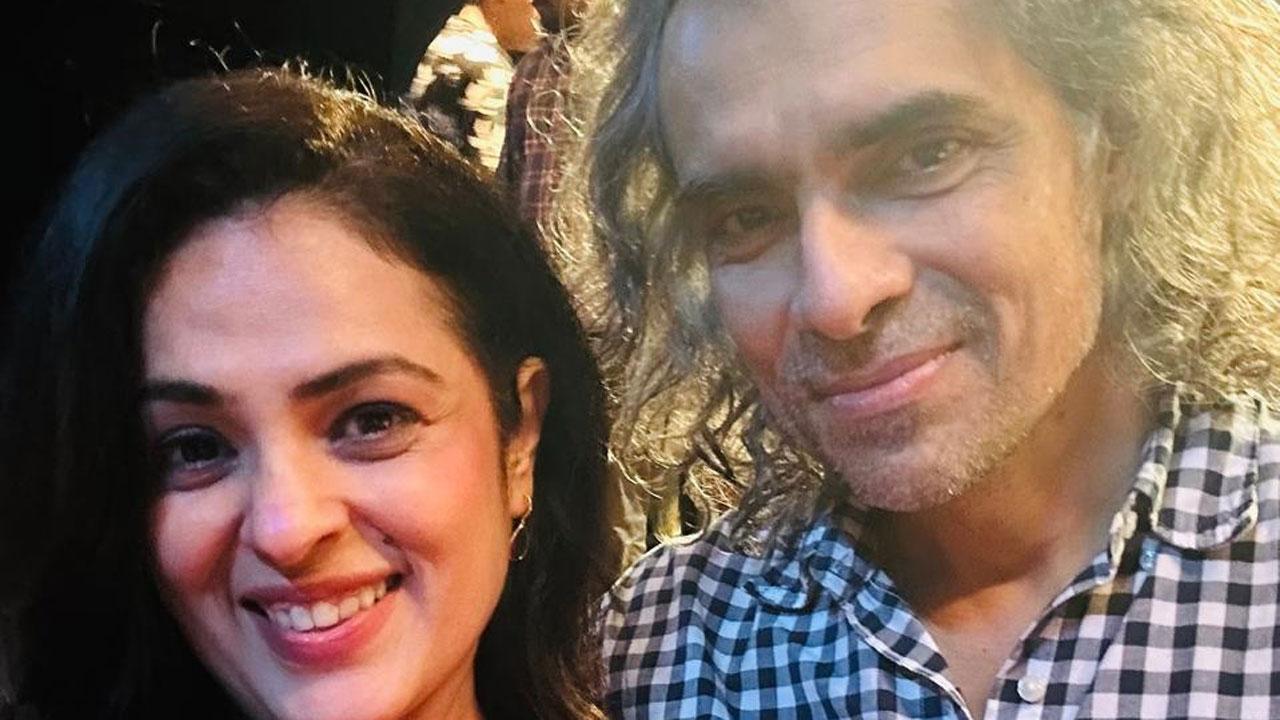
“How many actors can really say that I am in an Imtiaz Ali film?” asks Anjana Sukhani, her excitement evident as she speaks to mid-day about Main Vaapas Aaunga. Her journey began with a call inviting her to meet the filmmaker. The role: Naseeruddin Shah’s daughter-in-law and caretaker in the Diljit Dosanjh, Vedang Raina, and Sharvari Wagh-starrer.
“He wanted to see me on camera,” recalls Sukhani, who was first asked to send an introduction video. “When I met him at his office, I think he saw Meher in me. He narrated the part to me. And [I had] no questions. Who am I to say no to Imtiaz?” she says. During their discussions, she realised that Meher shares shades of Geet from Jab We Met (2007).
“Like Geet, [played by Kareena Kapoor Khan] Meher has no filter. I feel all of Imtiaz’s women are mature but have a childish quality to them. She innocently speaks about the wrong things at the most unfavourable time. It’s an endearing character,” says the actor.
Sukhani also cherishes her experience of working alongside Shah. Marvelling at the veteran actor’s commitment, she says, “Every time I did a scene with him, I teared up because of the way he performed. Just watching him perform is a masterclass in itself.”
Her admiration also extends to Dosanjh. “Diljit comes with a lot of sincerity and honesty as an artiste. He knows everybody’s lines, so when I fumbled, he would tell me my line.”
Hypermasculinity is not a genre-Vedang Raina
9:05 AM

Akash Bhatnagar (HINDUSTAN TIMES; June 2, 2026)
With filmmaker Imtiaz Ali’s upcoming romance Main Vaapas Aaunga, actor Vedang Raina is stepping into a genre that has recently taken a backseat to action spectacles and larger-than-life heroes. However, he isn’t convinced that genres determine a film’s success
“Something works because the audience accepts it regardless of what is working in reality apart from that film. And then you think it’s the genre that is working. If the film is good, the genre works, not the other way round,” he says.
The actor feels the industry’s tendency to categorise successes can be misleading. “Firstly, hypermasculinity is not a genre. I don’t think it is the reason a film works; it works because it has great content. Amid this, a 12th Fail (2023) worked and I don’t know what category it falls in. So, at the end it’s about the content that is working,” he explains.
Just two films into his career, with The Archies (2023) and Jigra (2024), Vedang is already among the most talked-about young actors in the industry. Yet, he remains grounded: “I’m just starting out and I’m just privileged to even be part of an Imtiaz Ali film. These are things that were beyond my imagination even five years ago.”
He adds, “Right now I don’t feel successful. I don’t feel like I’ve even begun. I have a long way to go and I want to achieve certain milestones as an artiste, but I’m also proud of where I’ve reached today.”
His next also features actor-singer Diljit Dosanjh, whom Vedang has long admired. “When I saw Amar Singh Chamkila (2024), it blew my mind. I can only take inspiration from him; I don’t consider us in the same league at all,” he says.
I was liked for Amar Singh Chamkila’s role before Diljit Dosanjh-Udaybir Sandhu
4:51 PM

Vishakha Pandit (HINDUSTAN TIMES; April 20, 2026)
Fresh off the success of Dhurandhar The Revenge, actor Udaybir Sandhu, who played Pinda, actor Ranveer Singh’s friend, is taking a moment to reflect. While he’s enjoying the spotlight, he hasn’t forgotten the struggle that shaped his journey.
Opening up about a moment that could have changed his career trajectory, Udaybir reveals he almost landed the lead role in Amar Singh Chamkila (2024), a part that eventually went to actor-singer Diljit Dosanjh.
“I had auditioned for Chamkila’s part. I had done a lot of research and I was totally invested in it. I was the one who was liked for the part,” he says. However, things didn’t go as planned. According to the 27-year-old, director Imtiaz Ali “always wanted a singer for it… they didn’t think a non-singer would be able to perform it”.
Despite the disappointment, Udaybir holds no bitterness. “When I got to know that Diljit had been cast for the role instead of me, I understood the decision. He did a great job in the film, but I could have played it very well too because I was invested,” he admits.
And what initially felt like a setback eventually turned into an opportunity, as the same audition helped him land another role in the film. “It was due to my audition for Amar Singh Chamkila that I later got the chance to play (late Punjabi singer) Surinder Shinda’s role in the film,” he shares.
Looking back, Udaybir believes the struggles he faced have made his current success more meaningful. “If you get a chance early on, it’s almost like a fluke… you stop doing that kind of hard work. So you need that struggle, that hustle,” he ends.
There is no love for Pakistan in Main Wapas Aaunga-Imtiaz Ali
10:51 AM

Sonal Kalra (HINDUSTAN TIMES; April 11, 2026)
He’s been in the film industry for almost 20 years now, and people swear by his school of filmmaking. Unrequited, often incomplete love (barring a few exceptions) forms an integral part of his stories. Yet, when you speak to him, he’s all heart. Filmmaker Imtiaz Ali, gearing up for the release of his next film Main Wapas Aaunga, spoke about everything under the sun on The Right Angle with Sonal Kalra. Excerpts:
Do you still get asked about a Jab We Met 2 or Tamasha 2?
I do keep hearing about Rockstar 2 and Jab We Met 2. But especially for Jab We Met (2007), I won’t [make a sequel]. Some things are best left untouched. I don’t want to start from a point of view that this is a money-making plan or a professional move… Good films cannot be made that way. They have to come from a point of, ‘This is a nice story, I want to be in this world’. Love Aaj Kal 2 (2020) bhi toh banayi thi na… woh toh itni achhi nahin gayi.
How did you come up with the title Main Vaapas Aaunga?
When I was in school, I read a poem called The Highwayman, which was very effective. I was thinking this is such a thing to say, that ‘I’ll come to thee by moonlight, though hell should bar the way.’ Then there was a song actually in Khuda Gawah (1992), in which the character of Badshah Khan (Amitabh Bachchan) says, ‘Main vaapas aaunga; main agar mar bhi gaya phir bhi vaapas aaunga’. I remember the impact of that song. Even while shooting this film, I didn’t think that it would be called Main Vaapas Aaunga. There was this scene we were shooting on a moving train. I had briefed Vedang Raina (actor), who is playing Kinu in the film, that he comes and he screams these same words. He’s making this promise to somebody, and it happened to be those words. During the take, I realised that this has to be the title of the film.
Have you received Love Aaj Kal-like comparisons?
I saw some on the internet, but I’m not worried about that at all. This is not two love stories; it is just one story.
You’ve taken two risks—one, telling a romantic story in a time dominated by high-scale violent films, and two, exploring love involving Pakistan when sentiments are sceptical.
There is no love for Pakistan in the film. It’s a very personal story of one person. And it is not casting an allegation. It is not saying anything which is politically one way or the other. Anybody watching the film will not feel slighted by the fact that this is catering to anyone. The second thing is, is there a time for a love story to work? I’ve seen all of my life that any good film, whether it’s violent, bold, romantic or a comedy, is working at any particular time that it’s released. The audience is very strategic in the way that it wants to see films, and if the socio-political climate becomes very intense, maybe comedies will also work very well, and a film which is very intense and bloodthirsty will also work.
Which of your films comes closest to perfection?
Perfection— no! As for things which made me happy, there are certain points in Rockstar (2011) and Amar Singh Chamkila (2024). In Chamkila, there was this portion where we had a beautiful sunset, and somehow, we had time in hand. I don’t know what we were doing, so I just asked Diljit (Dosanjh), ‘Please sit here, and I’ll play the song. You just listen to it and turn and look at the lens when I say.’ That’s the longest take in the film. And I thought, let’s take a chance at Mainu Vida Karo. So then I played it, and he heard it for the first time. Sometimes, you don’t even know why, and it feels nice.
Do you see flaws in any of your past films?
Oh yes, I discover flaws very early. I remember that I saw Socha Na Tha (2005) after many, many years, and then I was laughing along with it, which is not something that ever happened for the first 10-15 years since its release. For a film like Jab Harry Met Sejal (2017), there was something very nice, which did not really turn out nicely. This whole angle of somebody being a womaniser or looking at themselves like an unstable character but having a story behind it… It was very enticing. I feel that even in Love Aaj Kal (2020), there were certain things which were underwhelming. There was a very beautiful thought, but I couldn’t bring it out in the best possible value.
Is a reunion with Ranbir Kapoor (with whom he worked in Rockstar and Tamasha) on the cards?
There is no present plan as such. But hopefully there’ll be something that will have to top the other work that we’ve done.
What’s that one thing about the film industry that you have still not been able to understand in 20 years?
Everyone here is very passionate and always trying to come across as strategic and professional. But I think they’re just a group of passionate drifters. I don’t know how they have so much time to just do gup-shup. When I met (actor) Shah Rukh Khan... he was sitting calmly for 5-6 hours, talking to me. How does he have so much time? It’s the same for all of the Khans, various other producers, directors — whoever you meet. I love that about the film industry. But unfortunately, what happens in the film industry is that with popularity comes power. Each one of them have so many people on their social media… it’s almost unfair. And if somebody has to say something about politics, etc., maybe we are not the most qualified, but we have to be damn careful.
I also feel lucky to be a part of the industry because I didn’t know anybody when I came here. It’s only with the support of these people that I could do anything.
Exciting that Diljit Dosanjh was putting out a song celebrating something I have been championing-Chandrika Ravi
2:41 PM

The desi face of Kim Kardashian’s SKIMS, Chandrika Ravi, talks brown beauty, rejection from India, reclaiming the tag of sex symbol and playing Silk Smitha in an upcoming biopic
Mohar Basu (MID-DAY; March 15, 2026)
When Chandrika Ravi appeared in Diljit Dosanjh’s music video Saanvle, the word itself was evidently the message that both Ravi and Dosanjh were making. The title translates to “dusky”, which is an uncomfortable word that has existed in Indian beauty culture. In the video, Ravi stands exactly for every contradiction that the word offers. When she sits down for a conversation with Sunday mid-day, she starts with why the project felt personal.
“What got me the most excited about the project was that someone like Diljit, having the global impact he has, was putting a song out celebrating something I have been championing for as an Indian actress for years. The visibility, especially for young girls, that they are beautiful as they are and our brown skin should be celebrated was what I needed growing up.”
It is a simple idea, but for Ravi it has been a long fight. Long before she became a viral sensation or a global face of Kim Kardashian’s shapewear brand SKIMS, Ravi was a young woman growing up outside Melbourne, convinced her future needed to be better. “I come from very humble beginnings. I was born in a small town outside of Melbourne to immigrant parents born in Singapore. But I had always told everyone around me that I was going to move to Los Angeles and be an actor, without knowing how or when I could do it,” she says.
Ravi had already been training in dance and acting since the age of three, but Australia’s film and television industry felt limited in ways she couldn’t ignore. “I was starting to feel a lot of discouragement in Australia because they simply weren’t writing parts for people of colour. I took the leap of faith and booked a ticket with whatever money I had, packed three suitcases and left for LA with USD 500 in my bank account and a dream. It’s the best decision I have ever made. I learnt resilience and determination as a person. As an artiste, I have trained with the best, and have learnt the ins-and-outs of the industry.”
But the journey toward confidence did not arrive without bruises. Some of the deepest ones came from the place she felt most connected to — India. “India broke me. It was essentially the Indian film industry that broke me as a person and performer. I was devastated,” she says.
The pain, she explains, was not about failure. It was about something far more difficult to accept. “It was a very hard concept to grasp that my talent wasn’t enough to be cast in something in India. That ultimately, the colour of my skin would dictate whether or not I got a part. Having trained my whole life on my craft, and having represented India and Indians on a global stage, it felt like I was constantly being rejected by my own people. I had to keep reminding myself that I had to keep fighting, not just to prove my worth, but for the other young boys and girls who grew up feeling like they too weren’t good enough because of colourism,” she says.
If Ravi speaks openly about rejection, she speaks just as openly about pride. “A constant reminder has been how much my skin colour and features are celebrated in America. I love when people ask me if I’ve come back from a vacation because my skin looks sun-kissed, but it’s my blessing of being born as an Indian woman.”
The larger point, she says, is about resisting a culture that constantly tells women they need fixing. She says, “In a world where women are especially picked apart and constantly made to feel like they have to be a certain way with beauty standards constantly changing, I am proud to still stand strong with my decision to not alter my appearance and embrace how God made me.”
In the age of paparazzi nicknames, Ravi has acquired one she finds both amusing and flattering: Chandrika Kardashian. The comparison emerged around the same time she became the first Indian woman associated with Kim Kardashian’s brand SKIMS. “It’s very flattering, I’ll take it!” she laughs, “She is confident, hot, and has great style!”
For Ravi, the irony isn’t lost. “Being associated with a name and a brand that is synonymous with being sexy — as an Indian woman sometimes does not feel real, especially when I was always told I was undesirable because I was so different.”
For her, being called desirable now feels like an inversion of the rejection she experienced earlier in life. She says, “Curves, long hair, strong features, and a glowing tan. Being called a sex symbol is a label I embrace with open arms. Being seen as desirable for being authentically myself in a country where I once fought to even have a seat at the table is a battle well fought. Being seen as desirable after being born in a Western country where I was told for years that I was not attractive enough to be in front of the camera means I became the representation I needed growing up of a confident, sexy Indian woman who was unapologetically herself.”
The next chapter of Ravi’s career may also be her most ambitious. She is currently co-creating and starring in the official biopic of cult screen icon Silk Smitha, popularized by Vidya Balan in The Dirty Picture [2011]. “What drew me to her story was how misunderstood she was,” she says, adding, “What she did, no one has ever been able to recreate. The command of attention she had with just a glance in your direction. The number of films she starred in less than two decades. The confidence she had to be seen as a sex symbol at a time where it was seen as taboo. The amount of turmoil she was facing in her personal life yet she was still able to have constant box office hits.” In many ways, reclaiming Silk Smitha’s story is also Ravi reclaiming her own.
I know that the world is in a terrible place right now, and I hope that things improve-Imtiaz Ali
9:37 AM
Oshin Fernandes (MID-DAY; March 14, 2026)
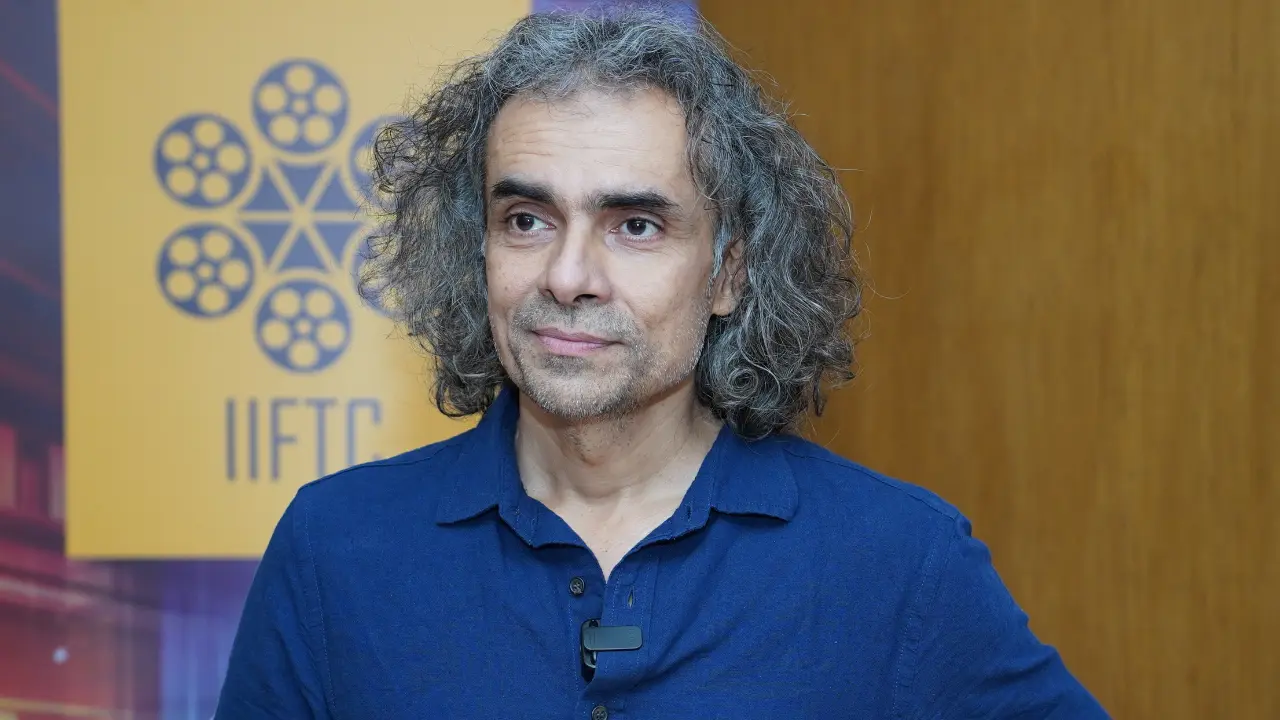
Be it Highway (2014), Tamasha (2015), or Amar Singh Chamkila (2024), through his movies, Imtiaz Ali has a way of saying something bigger than the story itself. A responsibility that the filmmaker believes is only magnified when the world is in conflict. When mid-day caught up with Ali at the India International Film Tourism Conclave (IIFTC) in Mumbai, he emphasised that amid the conflict in West Asia, sparked by the US and Israel’s war against Iran, it’s all the more important for artistes to show the potential of a better world.
Cinema as a cure
Imtiaz Ali believes that as much strife as there is in the world, the requirement for entertainment to provide relief and pleasure also increases.
He explains, “I know that the world is in a terrible place right now, and I hope that things improve, but if I do get influenced by what's going on in the world, it is not actually to make films about what is happening but somehow to make films about what should happen or what the world is missing right now.”
Imtiaz asserts that art can compensate for the absence of a certain condition and draw attention to the real reason why such things happen, aggrieving everybody. “This is the time for all artists to communicate an alternative way of looking, thinking, and feeling to have a better world,” he adds.
The ‘unsafe’ illusion
Imtiaz has never shied away from taking his craft to high-conflict areas. His films, like Rockstar and Highway, have been shot in parts of Kashmir, which he claims felt safer than any other place.
He states, “I have only had extremely cooperative people and peaceful situations. I've had more insecurity in every other place that I've shot. Kashmir has been the easiest place to shoot. Certain narratives get set about the safety and security of certain places. Unfortunately, it takes a lifetime to take that away. People believe that Dharavi is an unsafe place in Mumbai, but there are many more unsafe places.”
Imtiaz stresses the fact that although there’s a war looming overhead, one can’t wait for the ideal situation before making a move. He feels it is paramount that we normalise the world as much as we can.
Director’s darling Diljit
Imtiaz Ali’s next film, Main Vaapas Aaunga, is his second collaboration with Diljit Dosanjh, the lead of his previous hit, Amar Singh Chamkila. Citing how it is rare for him to work again with the same actor consecutively, he says, “This is going to be a Diljit who is very different from the previous film, and this is equally significant to him, maybe more. I’m always very happy to work with great actors, and Diljit is one of them. Personally, I am thrilled to work with him, and I hope to have more chances with him.”
I’m sure Varun Dhawan didn’t pay attention to the trolling-Nidhi Dutta
10:46 PM

Onkar Kulkarni (MUMBAI MIRROR; February 6, 2026)
As actor Varun Dhawan faced online trolling for his expressions before the release of Border 2, producer Nidhi Dutta says the reaction mattered little compared to the validation the film received from those it truly represents.
“Given our intent while making this film, I’m sure Varun didn’t pay attention to the trolling. His biggest victory was being appreciated by a colonel in the Indian Army,” she says. At an event Colonel Sushil Kumar Dahiya — the son of Param Vir Chakra awardee Major Hoshiar Singh and himself a serving officer —approached the actor.
“He went up to Varun and said, ‘I can’t believe how well you played my father.’ There is no bigger compliment than that. No box-office number can give you that feeling.”
The film’s success has brought a deep sense of relief to her and her family. “There’s been a lot of waterworks! My mother and father are constantly tearing up. My father doesn’t cry very often, so seeing that was not something you see too often,” she says.
For Nidhi, Border 2 carried far more than commercial expectations — it came with a sense of responsibility. “Not only the legacy of my father and telling stories of the armed forces, but also the legacy of the armed forces themselves. There was faith from the families who trusted my father and me as filmmakers to tell these stories a certain way,” she points out.
Speaking about the casting of the film, Nidhi shares a belief passed down by her father, which shaped their approach. “If you ask Varun Dhawan, Diljit Dosanjh or Ahan Shetty, they will tell you about the letter J P saab wrote to them on the first day of the shoot. He believes — and it has become my belief too — that we don’t choose the cast. The heroes who died for the country and the roles they played are the ones who choose the actors,” she shares. She believes this conviction may stem from her father’s experience while casting for the original Border in 1997.
“I don’t know which part of his journey made him believe this so strongly, but he does. Whether it’s Diljit, Varun, Ahan or Sunny, it felt preordained… they had to play these soldiers who laid down their lives for us,” she signs off.
Ammy Virk says even words like ‘saala’ are off limits in his film
10:11 AM

Rishabh Suri (HINDUSTAN TIMES; October 30, 2025)
In a decade-long acting career, Ammy Virk has moved effortlessly between Punjabi and Hindi films. While Punjabi cinema has allowed him to experiment with diverse roles, his Hindi outings, from Khel Khel Mein to Bad Newwz (both 2024), have largely showcased his comic side.
Does he feel Bollywood still tends to treat Punjabi actors as comic relief? “Comedy koi chhota kaam toh nahin hai. But experiments have started. Diljit Dosanjh paaji has done Amar Singh Chamkila (2024). It’s not like we can’t do serious roles. I’ve done those in Punjabi films like Qismat and Harjeeta (both 2018), which also won the National Award. It depends on the kind of film really today,” he says.
The actor, who was recently seen in Goday Goday Cha 2, adds, “Comedy bahot badi cheez hai. To bring a smile to someone’s face has become difficult. We consume so much content already on OTT and reels, everyone has heard most jokes. You have to make faces, act in a way that people laugh when they watch. Hamara toh mann hai hum poori umar comedy karein. It looks easy, but it’s actually very difficult.”
On maintaining the fine line between clean and double-meaning humour, Ammy is clear. “Humein voh line rakhni padhegi. I have a daughter, tomorrow she can ask me, ‘Papa, what is this?’ after seeing such content. I’ve done 30–35 films, and I don’t think even one has a double-meaning line,” he says, adding, “It’s not just about what I speak, even words like ‘saala’, we remove wherever possible, even though it refers to brother-in-law. Anjaane mein shayad bol diye honge career ki beginning mein, par ab avoid hota hain.”
Boney Kapoor shuts down rumours of Varun Dhawan exiting No Entry sequel: "It is someone’s imagination"
9:28 AM

Vinay MR Mishra (BOMBAY TIMES; October 14, 2025)
Producer Boney Kapoor has categorically denied reports suggesting that actor Varun Dhawan has exited the upcoming sequel to the 2005 comedy hit No Entry. In a statement to Bombay Times, Kapoor dismissed the buzz as entirely baseless.
“It is just a rumour. Arjun and Varun are very much part of the movie. It is someone’s imagination,” Kapoor told us.
Over the past week, several online reports had claimed that Varun Dhawan had walked out of the sequel, tentatively titled No Entry Mein Entry, allegedly due to scheduling conflicts and delays in the film’s pre-production. The news surfaced shortly after rumours of Diljit Dosanjh also exiting the film made headlines, leading to speculation about a major overhaul in the cast.
Kapoor, however, clarified that no such change had occurred in the core casting of the film. He emphasized that both Arjun Kapoor and Varun Dhawan remain fully committed to the project.
“We didn’t take the news seriously, but now it has become too big,” he said, addressing the widespread attention the rumours have garnered online. He added, “We are making No Entry Mein Entry and Varun and Arjun are very much in the film. We are in active discussions to lock our other hero and the rest of the cast. In the next 15–20 days we should lock other cast members as well.”
The sequel, directed by Anees Bazmee, has been in development for some time and is expected to be a full-fledged comic entertainer, following in the footsteps of the original which starred Anil Kapoor, Salman Khan, and Fardeen Khan.
After Diljit Dosanjh, Varun Dhawan walks out of No Entry Mein Entry
8:31 AM
Mohar Basu (MID-DAY; October 12, 2025)
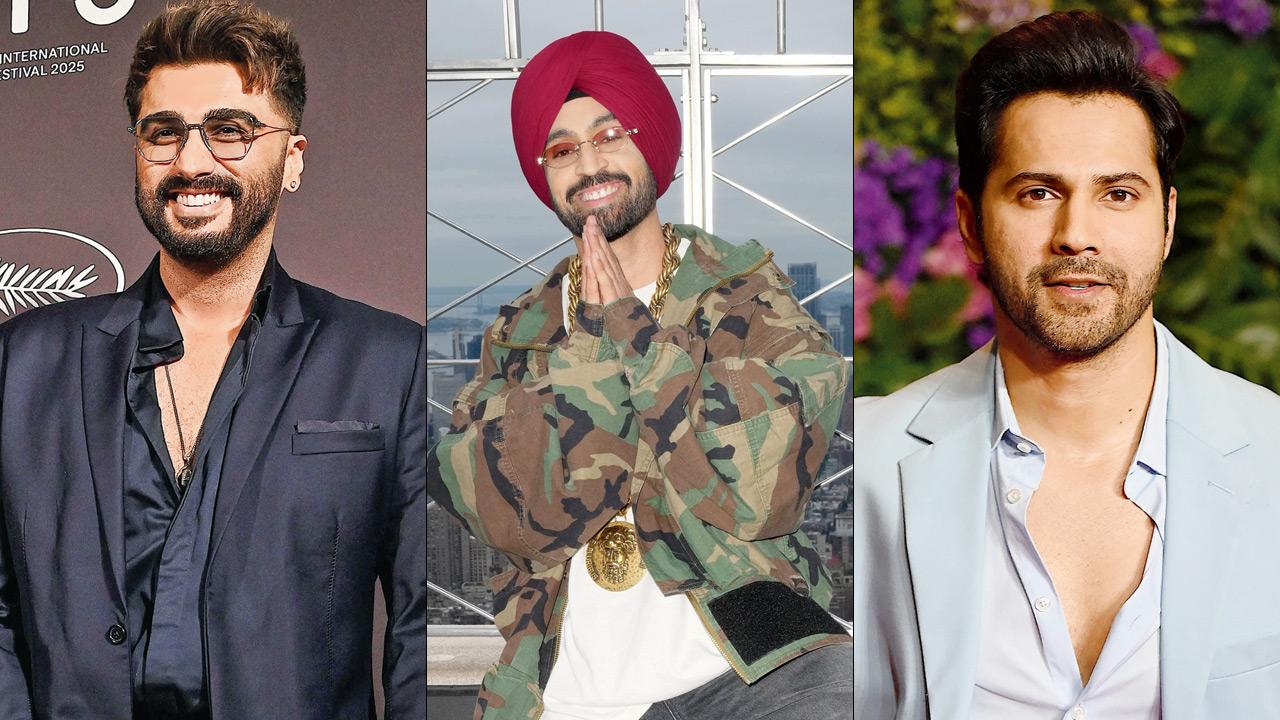
The cast of ‘No Entry 2’ has undergone another reshuffle. After Diljit Dosanjh’s recent exit, now Varun Dhawan has reportedly bowed out of the film too. The makers of the Boney Kapoor production, directed by Anees Bazmee, are now scouting for two actors who will bromance with Arjun Kapoor.
The initial cast line-up had Dhawan, Arjun, and Dosanjh in triple role that had fans buzzing. “Varun was very excited about ‘No Entry 2’,” shares a source close to the production, adding that the changes in dates after Dosanjh’s exit “made things a bit complicated”.
“Now Varun’s dates are locked for ‘Bhediya 2’.” Dhawan will apparently only be free by mid-2026. With both Dhawan and Dosanjh stepping away, the ‘No Entry 2’ team is now back to the casting board. “We’re figuring out the new combinations. Arjun Kapoor is still very much on board.”
Meanwhile, the ‘Sunny Sanskari Ki Tulsi Kumari’ actor has turned his attention to Amar Kaushik’s ‘Bhediya 2’, which will go on floors by the year-end.
Finding a replacement for Diljit Dosanjh in No Entry 2 won’t be easy-Boney Kapoor
3:35 PM

Vinay MR Mishra (BOMBAY TIMES; September 4, 2025)
Diljit Dosanjh has officially exited No Entry 2. Confirming the news, producer Boney Kapoor told Bombay Times, “We parted ways mutually. We need about 90 to 100 days of each actor because all three of them are playing double roles. His dates were not aligning with our requirements. Instead of waiting endlessly, we parted ways mutually. He tried his best to work it out. There are many actors in the film, so we had no choice but to part as friends and hopefully, we'll do a Punjabi film together in the future.”
No Entry 2 stars Arjun Kapoor and Varun Dhawan and now, the hunt for the third male lead is on. Kapoor said it won’t be easy to find a replacement for the singer-actor.
“Finding Diljit’s replacement won’t be easy. We are discussing all possibilities and maybe, in the next 10-12 days we will be able to figure it out. But our plan remains the same. The film will be slated for a Christmas 2026 release. It can go on the floors anytime because the script is ready. We may have to reshuffle a few days, but we are absolutely raring to go," Boney shared.
The sequel, which comes almost two decades after the 2005 cult comedy No Entry, is among the most anticipated projects from Kapoor’s banner. The film promises to carry forward the quirky humor and entertaining confusion that made the original a blockbuster. With a massive ensemble and a double-role twist for the leading men, expectations are sky-high.
While fans may be disappointed with Diljit’s exit, the makers are confident of locking in a strong name soon. Kapoor emphasized that the vision remains ambitious, with an aim to deliver a family entertainer that resonates with both the youth and audiences who loved the first part.
Diljit Dosanjh gets a re-entry in No Entry Mein Entry
8:06 AM
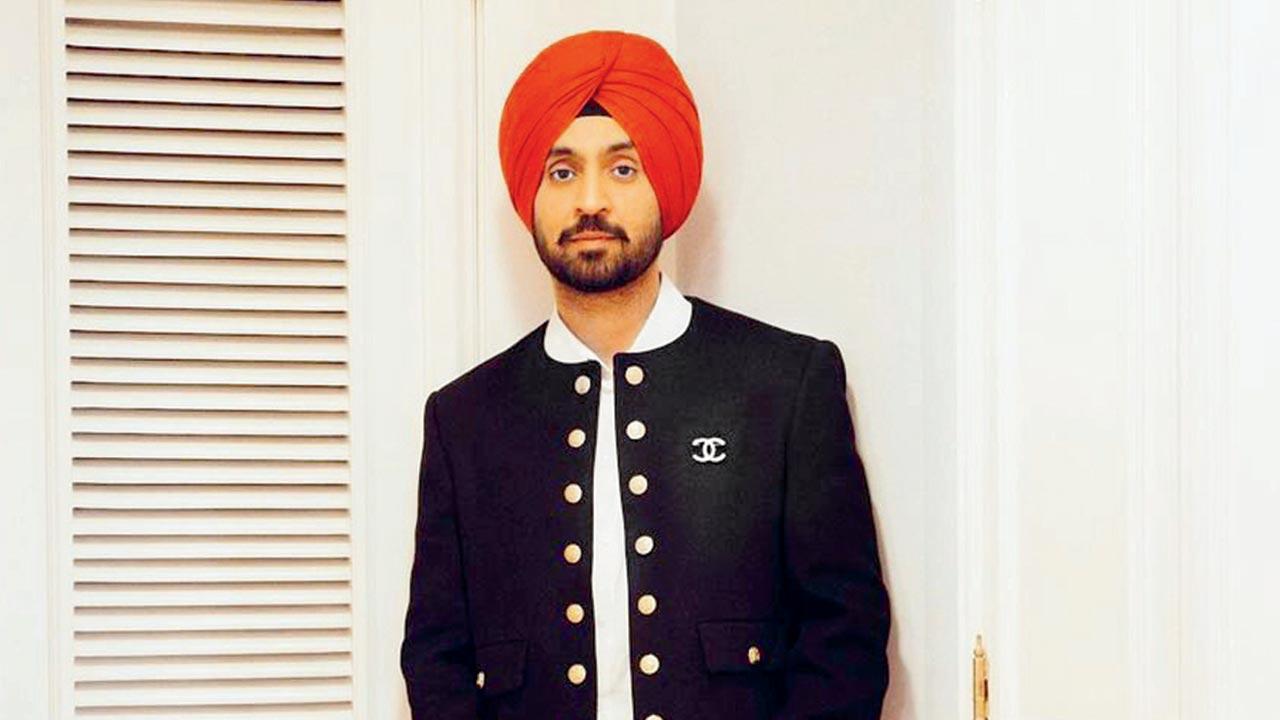
Refuting rumours of his ouster, sources say Diljit Dosanjh to begin shooting for the ensemble comedy post October
Upala KBR (MID-DAY; August 6, 2025)
Rumour mills were abuzz with stories of Diljit Dosanjh’s ouster — first from Nidhi Dutta’s Border 2, and then from Boney Kapoor’s No Entry 2. However, the actor has already wrapped up the war drama, and sources now confirm that he will soon begin shooting for the sequel of the 2005 film, titled No Entry Mein Entry.
Initially, it was alleged that he walked out of the sequel due to creative differences, then due to date issues, and finally, it was said that working with Pakistani actor Hania Amir in Sardaar Ji 3 compelled producer Boney Kapoor and director Anees Bazmee to reconsider Dosanjh.
Refuting the rumours, a source from the creative team confirms that Dosanjh is definitely on board and will, in fact, begin shooting with co-stars Arjun Kapoor and Varun Dhawan post October this year.
“As of now, the film is on track. The unit will begin with a month-long schedule after October. It will be shot across Greece, Italy, and India. While the story is different from the first one, it will [still] revolve around three men, their marriages, and extra-marital affairs. It is a spiritual sequel to [the first] No Entry. While Boney has been busy sorting out the dates of his male and female leads, Anees has completed the script. An announcement will be made shortly,” informs the source.
The date issue with Dosanjh was finally resolved in July when Boney and Bazmee met the actor on the set of Border 2 for the final narration.
The insider adds, “They met Diljit at National Defence Academy, Pune in the first week of July when he was shooting for Border 2 with Ahan [Shetty], Varun, and Sunny [Deol]. There was talk about some creative differences, but that is not true. Diljit is very excited to collaborate with the team, especially with Anees. [In fact], Boney and Anees are committed to having him on board and only he can play this character.”
The producer has also locked Tamannaah Bhatia for the ensemble comedy.
We should celebrate Diljit Dosanjh, not pull him down-Suniel Shetty
9:23 AM

Onkar Kulkarni (BOMBAY TIMES; July 30, 2025)
Suniel Shetty reflects on how much Bollywood has changed over the years, the challenges faced by young actors like his son Ahan Shetty and also weighs in on the controversy around Diljit Dosanjh’s casting in Border 2. Excerpts:
‘Diljit has put India on the world map when it comes to music’
Border 2 faced a setback during the shoot when there was a call to ban Diljit Dosanjh for supporting the release of his movie, Sardaar Ji 3 (outside of India), which featured Pakistani actress Hania Aamir, months after the Pahalgam terror attack. However, following producer Bhushan Kumar’s intervention, the ban was lifted, allowing him to continue with the film.
Talking about it, Suniel says, “When this happened, I thought that there is a world that doesn’t know anything about cinema and is wanting to bring it down. Someone like Virat Kohli, who has served the country as a cricketer, if he can be trolled, nobody will be spared.”
Suniel adds, “The virtual world is feeding us so much that we have forgotten to differentiate. We don’t realise it is creating a perception, and what is perception? What the eye sees, it believes; what the mind believes, it sees. So, where do you belong is the question. For me, it varies from situation to situation. Diljit is a superstar, he has put India on the world map when it comes to music. He has created hysteria for Indian musicians and artistes. We should be celebrating him and not pulling him down. If a child has made a mistake, will you punish him or help him overcome it? Border 2 is a film for the country.”
‘Young actors have to deal with trolls today, not the media’
Talking about how the online world impacts young actors, he says, “It’s tougher now. Today, young actors don’t have to deal with the media, they have to deal with trolls. These are people who don’t know why they are criticizing the actors and films. This virtual world is scary. Otherwise, when it comes to movies, there are great opportunities as many platforms are making content in various forms.”
On how digitization is reshaping the business of cinema
Suniel, who was last seen in Kesari Veer, points out how digitization is reshaping the business of cinema. “Earlier, makers made films, but today, excel sheets are making movies. When a film released on Friday, the producer would be stressed and think, ‘Kya weekend ke baad picture giregi? Kya Monday ko picture ko khada karna padega? Picture kahan thandi chal rahi hai? Kahan poster lagane hain?’ Today, when the film releases on Friday aur jahan Saturday-Sunday ko films ko chalana hai, film corporates ko chhutti hai. Middleman ko nikala hai, technology has taken over. Online sab ho raha hai, but chhote centres ka kya? The personal touch has gone.”
Subscribe to:
Posts (Atom)