Showing posts with label Dil Pe Mat Le Yaar. Show all posts
Showing posts with label Dil Pe Mat Le Yaar. Show all posts
I don’t think Safeena Husain and I had any time to think about a wedding-Hansal Mehta
8:21 AM
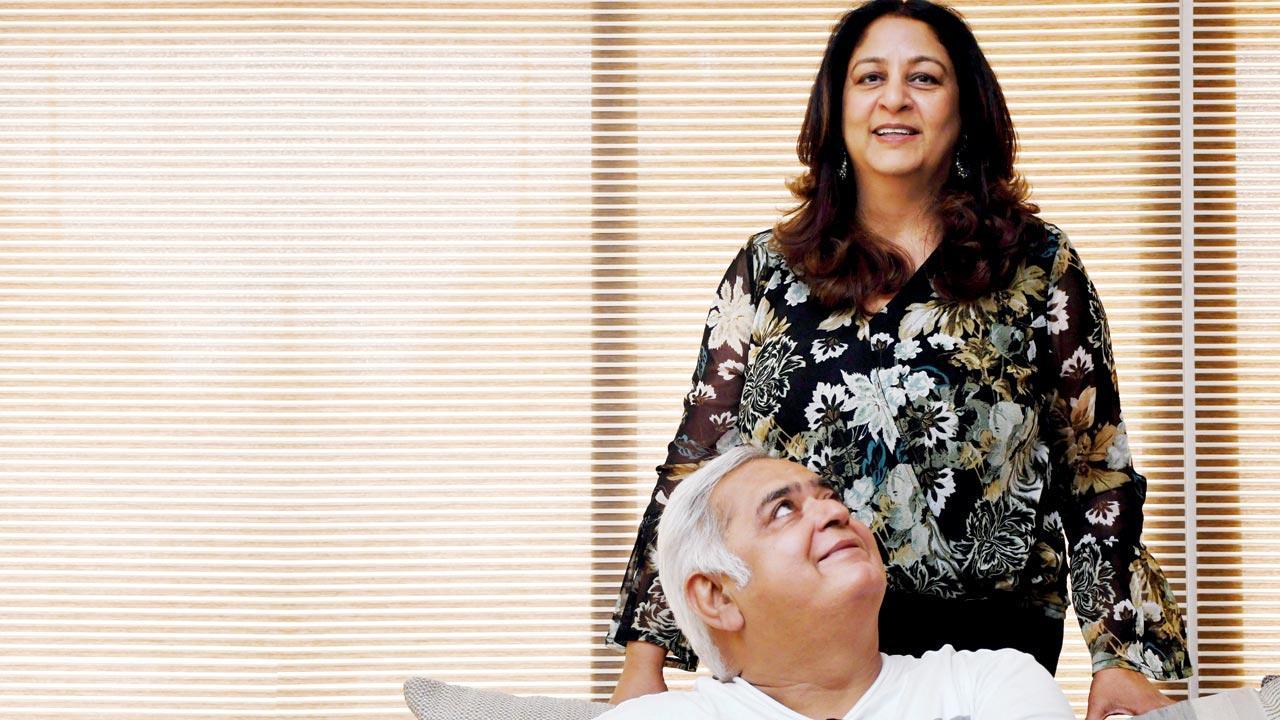
Critically acclaimed filmmaker Hansal Mehta and social entrepreneur Safeena Husain look back at 17 years of struggle, togetherness and children. And three weeks of marriage
Jane Borges (MID-DAY; June 19, 2022)
What would it be like to marry someone you’ve been with for 17 years? It’s something this writer wondered on her way to meet filmmaker Hansal Mehta and his long-time partner and “new bride” Safeena Husain. We were obviously not expecting them to be all coy. Perhaps, we were looking for traces of this new relationship that binds them. “I wonder why anyone would be interested in our story,” Hansal tells us, curious that we were actually curious. Safeena joins us moments later, and sits across her husband on a three-seater sofa at their Bandra home. “Paas aajao,” he says. “Tum aajao,” she teases, “Or else people will think that it was me who was chasing you. Jabki sachayi kuch aur hai.”
The day we meet, it has been exactly two weeks since their “secret wedding” in San Francisco. Theirs wasn’t the kind of ostentatious shaadi that Bollywood is now known for. In fact, their daughter Kimaya played pap with a DSLR that had been gifted to her a few weeks earlier. The wedding happened in a lawyer’s office in California that had been modestly decorated with plastic flowers, drapes and heart-shaped cardboard cutouts, with ‘Love’ scribbled on them—Hansal clarifies this wasn’t his doing. It was a pre-designed set on the mezzanine floor of the office for the many marriages that the lawyer was registering that day. But even while breaking away from the typical, they stuck to the filmi rule book: They announced their wedding on Instagram.
Had it been left to the couple, none of this would have really happened. Marriage, they say, wasn’t even on their mind. “[The conversation about] marriage never came up, because we had children very early on in our relationship,” says Hansal, of his two daughters Kimaya and Rihanna. “And when we started seeing each other, I was already a father to two kids [Jai and Pallava from his first marriage], so she had some advanced booking already,” he jokes. “With all of this, I don’t think we had any time to think about it [a wedding].”
Hansal and Safeena owe writer Daisy Rockwell, who last month won the Booker Prize for translating Geetanjali Shree’s Hindi novel Tomb of Sands, for bringing them together. This was on January 21, 2005. “Daisy was the head of the Institute of South Asia Studies at Berkley, and thought it would be fun to do a Bollywood internship programme for her students. She checked if I could set up a dinner [for her with a few filmmakers and actors], during one of her visits,” recalls Safeena, who at the time, had just moved from California to be closer to her actor father Yusuf Husain.
The dinner, she remembers, was attended by Rajpal Yadav, Tinu Anand and Hansal among a few others. “I didn’t know Daisy or Safeena,” says Hansal. “But a common friend had requested that I join them. It was during this dinner that I learnt that she is the daughter of Yusuf Husain, who I had worked with in a show called Family Business. He always spoke about her. Sometimes, if he wanted to leave the shoot early, he would make an excuse that his daughter had come down from the US. He’d actually go somewhere else,” Hansal laughs.
At the time, Hansal had no clue that Safeena was already a huge fan of his work. “Everyone in my family knew how much I loved his film, Dil Pe Mat Le Yaar [2000]. When I finally met him, I was charmed. I liked him a lot. His political leaning was interesting,” she says. We ask him about it. “I was more Left leaning,” he says, adding, “It wasn’t considered a bad word back then. Today, I consider myself liberal.” “But, I think she liked my humour,” he tells us. “No, no, no, he is not funny at all. One should never encourage his sense of humour,” she butts in.
After that dinner, the two only met a month later, when Safeena along with a student, visited him in Alibaug where he was shooting for a film. “I was trying to take that internship programme forward,” she says, when we tease her about conspiring yet another meeting. It’s at this shoot, that Safeena narrated her favourites scenes from Dil Pe Mat Le Yaar. “He very romantically told me, ‘Mere to baal khade ho rahe hain’,” she smiles.
The truth, Hansal tells us, was that until then, he had never met a person who had understood his vision for the film that starred Manoj Bajpayee and Tabu. The film’s failure at the box office had left him broken. “I wanted to forget it. There were some memories attached to the film that were not very pleasant. But, here was someone who remembered every single detail. That was enough to get me attracted to her.”
Safeena came into Hansal’s life when he was going through a professionally low phase. “It was a phase of despair, to be honest. I was completely lost, and didn’t know what I was doing with my life. I was making these so-called ‘sex films’, so that I could make money out of something... anything. And somewhere, I did feel like I had sold out. Her coming in was almost like a timely reminder that ‘you are that filmmaker, not this’,” shares Hansal.
The couple started seeing each other soon after—a road trip from Ooty to Mumbai followed. “I didn’t realise when we started living together. I used to live very close to her home. She used to stay with her dad in Tarapore Gardens, while I lived in Lokhandwala Complex. Sometimes, I would stay back for days at her place,” he remembers. After Kimaya was born, the two got busy putting their lives in order. Safeena started Educate Girls, a non-profit which focusses on mobilising communities for girls’ education in India’s rural and educationally backward areas.
Since they couldn’t see themselves afford a home in the city, they moved to a village in Malavli near Lonavla, living a frugal existence. “We couldn’t afford anything else.”
Hansal, who was still struggling to find a footing in the movies, used that time to help his wife build her organisation. “I made three films during that period [2005-08]. Two of them never got released, and the one that did, Woodstock Villa, wasn’t my kind of work. I remember asking Safeena then, that if I gave up all of this [movies] indefinitely, and did something I really wanted to do, would she be able to support me. She instantly said, yes. That support saw me through 2008 and 2013, until I made Shahid, which received a lot of critical acclaim. Until then, I was hand to mouth. I was not doing any work.”
The couple returned to Mumbai after three years, buying their first home together with the help of their parents. “We actually lived the life you live after you marry in your 20s. Everything happened to us 10 to 15 years later. We found ourselves, our voice, and our mission together, and then we were just busy pursuing that mission; marriage as a conversation never came up,” says Hansal, adding, “Until, we had to get a passport for our child.”
One of the reasons why Hansal and Safeena also resisted the idea of marriage was because they had both been married once before. “There was this feeling then that... If you don’t get married, you don’t have to get divorced.” Hansal says that their parents too, didn’t force them. “Safeena’s father lived his life unconventionally. In a way, he inspired us to live just that way. We saw him, and never adhered to the conditioning that was thrust upon us. We sort of imbibed that.”
But the only time they felt the challenge of not having a marriage certificate was when it came to getting legal work done. “We couldn’t apply for a bank loan, or even rent an apartment together,” Safeena remembers.
When it came to getting their daughters’ passports, Hansal says he had to give an affidavit “saying that the child has been out of the wedlock”. “It’s the most ridiculous paper to submit. Unfortunately, this institution [of marriage] has been imposed upon us,” he says.
But the real trigger was Khar Gymkhana, Hansal says with a straight face. Safeena breaks into a laugh. “That really irritated him. In all the 17 years that I have known him, he hasn’t been to the gymkhana even once, but he still wants the membership,” she shares.
“See, my father was a Khar Gymkhana member, and I also spent my early years there. That’s where I developed my love for sports, be it cricket, tennis or swimming. Jai also grew up playing badminton and tennis there. When the time came for my daughters to get a membership, I was asked to show over 20 papers to prove that they are my children. The authorities told me that there are byelaws that cannot be flouted. I had to give them so many affidavits and certificates through the lawyer, for my girls to get the membership. After all this, they didn’t give Safeena the membership. They said I had to get married for that. I was so pissed off.”
Safeena clarifies it wasn’t the gymkhana membership, as much as her father’s death, six months ago to Coronavirus, that made her realise how insensitive the system can be. “There was some money stuck in his bank accounts, and despite being his daughter, I had to go through a lot to even inherit what he left me. I thought, ‘Oh my god, our situation is even more complex’. We didn’t want to make it messy for our children, just because we chose to live our lives differently.”
Hansal says his dear friends, actors Rajkummar Rao and Patralekhaa had been trying to convince them to get married since forever. “They even suggested that we get married alongside them,” says Hansal. “But we wanted to have an age-appropriate wedding.”
Their decision to get hitched was an impulsive one. They hadn’t told any family member, including their sons, that they were planning this. “Because, we weren’t sure of it either.” Since Safeena is an American citizen, they were able to get dates for the court marriage almost immediately. They left for San Francisco on the spur.
The couple was married on May 24, in front of their daughters and Safeena’s mother and sister, who live there. “We informed them about it only a day before the wedding,” he says, “The moment I got married, I sent the pictures to our family back home. Jai [Hansal’s son], was quite upset. He said, ‘If you had told me, I’d have been there’.”
The ceremony, Hansal recalls, was an emotional one. “Hansal was crying,” Safeena recounts. “Suddenly, while taking the vows, it just hit me. The spirit of that ceremony is actually sacrosanct. I think we married at the right time, because we understood the meaning of being together.” Safeena adds, “We realised, we had got married for nothing, but love. In the last 17 years, we’ve seen a lot together. We lost our parents, we’ve experienced struggle. And we have stood by each other. Marriage makes it all very real.”
Ever since they returned to Mumbai, they’ve been holding small, intimate celebrations for friends and family. “And can you imagine, the moment that Instagram post was out [announcing the marriage], who messages me?” asks Hansal, leaving little room for us to guess. “The gymkhana president.”
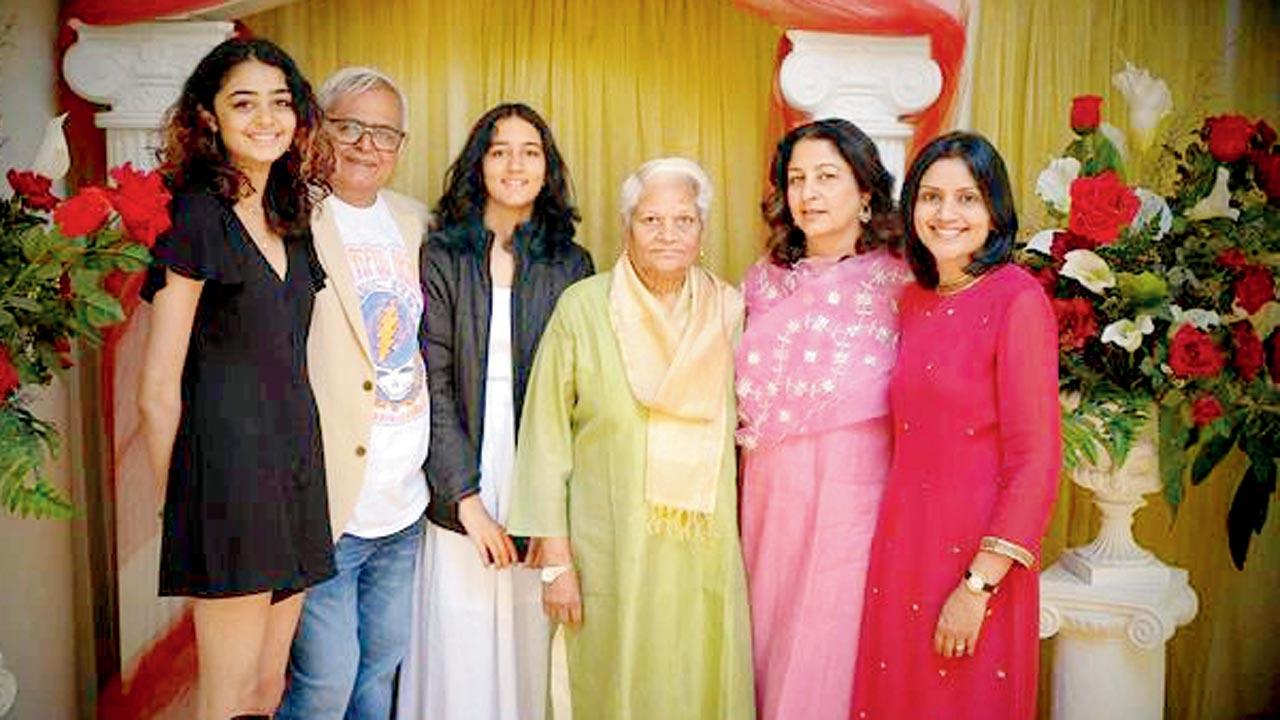
Hansal Mehta and wife Safeena Husain with family at their wedding on May 24, 2022 in San Francisco
I hounded Mahesh Bhatt and wanted him to watch Shahid-Hansal Mehta
3:32 PM

Priya Gupta (BOMBAY TIMES; April 22, 2014)
Hansal Mehta, 46, is an angry, but an
extremely gentle man. Much like all other Gujaratis, he too knows how
to do his jugaad. He fears rejection, but doesn't give up. After years
of struggle and rejection, he won his first National award as Best
Director for his sensitive film Shahid. Over an hour-long conversation,
ahead of his upcoming film City Lights, he talks to Bombay Times about
his mentor Mahesh Bhatt, his inspiration and partner Safeena and why
Sanjay Gupta will always hold a special place in his life. Excerpts:
Tell us about your journey into films?
I am a Gujarati and come from a middle-class happy family from Mumbai. I was not a great student, but was very studious. I was not good at examinations and, in fact, I hate examinations and that phobia still exists. I don't like to be judged in two hours. Examination brings a lot of anxiety to me. It's ironical that I interact with students and that is what I do for a living. I run a small company , which organises experiential learning and it's a social service, where young people look at India in its social context.
Rejection really scares me and it's always been like that. I completed my software engineering from a capitation college from Pune and went to Australia at 21. And that was the turning point in my life. I realised how bored I was. Until then, I had been in denial as I knew that that was the career I had chosen and was trying to convince myself that I would enjoy doing that. And that I would need to do that for earning a big car, a big house and making your parents proud. That's what a good boy does.
But there I was alone and started having conversations with my girl as I had got married at 21. Luckily , opportunity fell in my lap. The company I was working for ran rental stores for pirated films and they wanted me to network all their stores. It was a two-year contract, but I finished my work in three months. There was a huge exodus of their entire staff and I started looking after their division. I started tinkering with their cameras and their editing setup and started editing some of the films they were pirating. For some reason, I grew up watching Kishore Kumar films.
If I watched a Kishore Kumar film, I would sleep well. I also liked watching Utpal Dutt and Amol Palekar films. I liked the fact that they were like normal people and the films were funny. I returned to India in 1993. Satellite TV had just begun. I always liked cooking and typed a proposal with an electronic typewriter I had at home, for a food show and presented it to Zee TV .
They accepted my proposal in two weeks, but their condition was that I would need to find a pretty girl to host the show titled Khana Khazana. I went looking out for pretty chefs and landed at Hotel Centaur, where I didn't find a pretty girl but discovered a tall chef called Sanjeev Kapoor. I decided to shoot with him without telling the channel. When they saw the episode, they freaked out and found it very boring without the pretty girl, with this man wearing a chef's uniform. But they ran four episodes and kept extending it every four weeks, till he made a dish called Shaam Savera that became such a huge success that he became a household name. That launched me as a producer and director. I was then hired to cut a song for Children's Society and went to Vishal Bhardwaj to collect the music for it, as he was the composer. Vishal was very rude to me, as they had not paid him. But he gave me the song to cut. I edited the song that Gulzar sahab had written and both Vishal and he loved it. Vishal called me and apologised and we became friends for life. I then made a very dark story on TV called Highway, which was initially rejected by the channel. I was very depressed, but next morning I got a call from Subhash Ghai who said, `I saw Highway and could not sleep all night. You should make films.' He was the first person to put that in my head and it stayed with me. Vishal later called me to cut the promo of Maachis, when the producer of that film asked me to make my first independent film as a director and I made Jayate. Jayate was inspired by Saaransh, but never got released. After that, nothing happened for two-and-a-half years. I went back to TV as I needed the money. I then made Dil Pe Mat Le Yaar with Manoj Bajpayee, Tabu and Mahesh Bhatt and it did not work. Today I realise that it was way ahead of its time. Post that, I went into a deep, dark well, where nothing did well and many of my films did not get released. In 2005, Sanjay Gupta called me and asked me to direct Woodstock Villa for his company, which, too, did nothing and in fact killed me further. I realised it was a mistake. But the stint with Sanjay saved me. I was, at that time, debt-ridden, sweeped in alcohol, fully in depression and was in a terrible phase. My self-esteem was at its lowest and suddenly, I had Sanjay calling me and giving me a film. He will always hold a special place in my life. He asked me to head his company and I was with him for over three years. After I left him, I left Mumbai. I was very upset with myself. I felt I had let Sanjay down, let Sikandar Kher down (debuted in Woodstock Villa) as I had made an indifferent film. I stayed in a village outside Mumbai and had decided that I would not make films, unless I could make a good film.
What made you make an angry legal-oriented film like Shahid?
I am an angry person. Everybody likes the fact that I am shy and look docile. So, every time they see the angry part of me in the film, they get surprised. Shahid, too, is an angry film, but is gentle. I have always had a flair for very formal writing, be it for my father or for my bosses. I would always write these very formal lengthy letters and probably , that's what made me make a legal-oriented film like Shahid. I am also emotional and overtly sensitive. If you tell me anything, I will think about it for days. I had started turning cynical when I left the city, but having daughters and a lot of love around you, allowed me to let go of my cynicism.
Talk about Mahesh Bhatt?
My whole journey had Mahesh Bhatt in some way . I always wanted to make an Arth, Saaransh and Janam. I used to love his films till one day, when he started letting me down as a director and he made some really bad films. He has come into my life at various points. One of the love stories I directed on television was inspired by Arth. My film Jayate was inspired by Saaransh.
He played a small role in Dil Pe Mat Le Yaar, but surprisingly didn't see the film. He saw it many years later on television and called me one night at midnight, when I coincidentally, was at the lowest point in my life. And he said, `I don't watch films that are not successful, but I am watching your film and it's very good. Don't give up on your dream.' I wanted to tell him that in my heart, I had already given up on my dream.
Again, after Shahid, I hounded him and wanted him to watch it but he was unable to see it, till when Rajkummar made him watch it, after which he told me he wanted to do a film with me. He said, `Be fear less. This is Vishesh Films version 2.0.' That resonated with me and we made City Lights. He has allowed me to open up as a person. My shyness is a little less because of Bhatt sahab, as he actually provokes you to get angry . So, I don't hold back. He is a great spiritual person and motivator. Spending just 10 minutes with him gives me a lot of strength.
Talk about your partner Safeena?
I was initially married at 21 and had my first son at 22. We had two sons and got divorced after 11 years. My older son Jai assisted me in City Lights. I met Safeena in 2005 at a dinner. That was a time when I would do anything for free alcohol. After Dil Pe Mat Le Yaar, I had started drinking regularly . I would get emotional and start crying every night after consuming alcohol. Shockingly for me, she claimed Dil Pe Mat Le Yaar as her favourite film and that did it for me. We fell in love instantly and started living together and have two daughters. I like challenges and know that I can never give up. I can not accept rejection of any kind and therefore, I am constantly fighting.
That rejection keeps me going and Safeena is like my pillar. She is a strong person. She works for nearly half a million girls in Rajasthan and has been awarded for girl education around the world. She is from the London School of Economics and could have been an investment banker and yet, she chose to work for social change and that is inspiring for me. She is very firm about ethics, unconditionally compassionate and allowed me to look inwards.
Do you feel vindicated in a sense by winning the National award as Best Director for Shahid?
I was most attached to my mother, whom I lost last year. She was sud denly detected with oral cancer and she passed away too quickly. She saw me getting an award at the Mumbai festival for Shahid, but after that she missed everything and that for me is the biggest regret, as she had only seen me struggling. Struggling to find my voice, my place. Today, everything without her is meaning less. I was editing City Lights, when I came to know about the National award. Anurag Kashyap, who debuted with me as a writer in Jayate and produced Shahid called me and said, `Sir, roye aap?' I was overwhelmed and cried by myself. And reconciled myself by thinking that even though my mother was not there with me today , it was her blessings that had come to reality .
Tell us about your journey into films?
I am a Gujarati and come from a middle-class happy family from Mumbai. I was not a great student, but was very studious. I was not good at examinations and, in fact, I hate examinations and that phobia still exists. I don't like to be judged in two hours. Examination brings a lot of anxiety to me. It's ironical that I interact with students and that is what I do for a living. I run a small company , which organises experiential learning and it's a social service, where young people look at India in its social context.
Rejection really scares me and it's always been like that. I completed my software engineering from a capitation college from Pune and went to Australia at 21. And that was the turning point in my life. I realised how bored I was. Until then, I had been in denial as I knew that that was the career I had chosen and was trying to convince myself that I would enjoy doing that. And that I would need to do that for earning a big car, a big house and making your parents proud. That's what a good boy does.
But there I was alone and started having conversations with my girl as I had got married at 21. Luckily , opportunity fell in my lap. The company I was working for ran rental stores for pirated films and they wanted me to network all their stores. It was a two-year contract, but I finished my work in three months. There was a huge exodus of their entire staff and I started looking after their division. I started tinkering with their cameras and their editing setup and started editing some of the films they were pirating. For some reason, I grew up watching Kishore Kumar films.
If I watched a Kishore Kumar film, I would sleep well. I also liked watching Utpal Dutt and Amol Palekar films. I liked the fact that they were like normal people and the films were funny. I returned to India in 1993. Satellite TV had just begun. I always liked cooking and typed a proposal with an electronic typewriter I had at home, for a food show and presented it to Zee TV .
They accepted my proposal in two weeks, but their condition was that I would need to find a pretty girl to host the show titled Khana Khazana. I went looking out for pretty chefs and landed at Hotel Centaur, where I didn't find a pretty girl but discovered a tall chef called Sanjeev Kapoor. I decided to shoot with him without telling the channel. When they saw the episode, they freaked out and found it very boring without the pretty girl, with this man wearing a chef's uniform. But they ran four episodes and kept extending it every four weeks, till he made a dish called Shaam Savera that became such a huge success that he became a household name. That launched me as a producer and director. I was then hired to cut a song for Children's Society and went to Vishal Bhardwaj to collect the music for it, as he was the composer. Vishal was very rude to me, as they had not paid him. But he gave me the song to cut. I edited the song that Gulzar sahab had written and both Vishal and he loved it. Vishal called me and apologised and we became friends for life. I then made a very dark story on TV called Highway, which was initially rejected by the channel. I was very depressed, but next morning I got a call from Subhash Ghai who said, `I saw Highway and could not sleep all night. You should make films.' He was the first person to put that in my head and it stayed with me. Vishal later called me to cut the promo of Maachis, when the producer of that film asked me to make my first independent film as a director and I made Jayate. Jayate was inspired by Saaransh, but never got released. After that, nothing happened for two-and-a-half years. I went back to TV as I needed the money. I then made Dil Pe Mat Le Yaar with Manoj Bajpayee, Tabu and Mahesh Bhatt and it did not work. Today I realise that it was way ahead of its time. Post that, I went into a deep, dark well, where nothing did well and many of my films did not get released. In 2005, Sanjay Gupta called me and asked me to direct Woodstock Villa for his company, which, too, did nothing and in fact killed me further. I realised it was a mistake. But the stint with Sanjay saved me. I was, at that time, debt-ridden, sweeped in alcohol, fully in depression and was in a terrible phase. My self-esteem was at its lowest and suddenly, I had Sanjay calling me and giving me a film. He will always hold a special place in my life. He asked me to head his company and I was with him for over three years. After I left him, I left Mumbai. I was very upset with myself. I felt I had let Sanjay down, let Sikandar Kher down (debuted in Woodstock Villa) as I had made an indifferent film. I stayed in a village outside Mumbai and had decided that I would not make films, unless I could make a good film.
What made you make an angry legal-oriented film like Shahid?
I am an angry person. Everybody likes the fact that I am shy and look docile. So, every time they see the angry part of me in the film, they get surprised. Shahid, too, is an angry film, but is gentle. I have always had a flair for very formal writing, be it for my father or for my bosses. I would always write these very formal lengthy letters and probably , that's what made me make a legal-oriented film like Shahid. I am also emotional and overtly sensitive. If you tell me anything, I will think about it for days. I had started turning cynical when I left the city, but having daughters and a lot of love around you, allowed me to let go of my cynicism.
Talk about Mahesh Bhatt?
My whole journey had Mahesh Bhatt in some way . I always wanted to make an Arth, Saaransh and Janam. I used to love his films till one day, when he started letting me down as a director and he made some really bad films. He has come into my life at various points. One of the love stories I directed on television was inspired by Arth. My film Jayate was inspired by Saaransh.
He played a small role in Dil Pe Mat Le Yaar, but surprisingly didn't see the film. He saw it many years later on television and called me one night at midnight, when I coincidentally, was at the lowest point in my life. And he said, `I don't watch films that are not successful, but I am watching your film and it's very good. Don't give up on your dream.' I wanted to tell him that in my heart, I had already given up on my dream.
Again, after Shahid, I hounded him and wanted him to watch it but he was unable to see it, till when Rajkummar made him watch it, after which he told me he wanted to do a film with me. He said, `Be fear less. This is Vishesh Films version 2.0.' That resonated with me and we made City Lights. He has allowed me to open up as a person. My shyness is a little less because of Bhatt sahab, as he actually provokes you to get angry . So, I don't hold back. He is a great spiritual person and motivator. Spending just 10 minutes with him gives me a lot of strength.
Talk about your partner Safeena?
I was initially married at 21 and had my first son at 22. We had two sons and got divorced after 11 years. My older son Jai assisted me in City Lights. I met Safeena in 2005 at a dinner. That was a time when I would do anything for free alcohol. After Dil Pe Mat Le Yaar, I had started drinking regularly . I would get emotional and start crying every night after consuming alcohol. Shockingly for me, she claimed Dil Pe Mat Le Yaar as her favourite film and that did it for me. We fell in love instantly and started living together and have two daughters. I like challenges and know that I can never give up. I can not accept rejection of any kind and therefore, I am constantly fighting.
That rejection keeps me going and Safeena is like my pillar. She is a strong person. She works for nearly half a million girls in Rajasthan and has been awarded for girl education around the world. She is from the London School of Economics and could have been an investment banker and yet, she chose to work for social change and that is inspiring for me. She is very firm about ethics, unconditionally compassionate and allowed me to look inwards.
Do you feel vindicated in a sense by winning the National award as Best Director for Shahid?
I was most attached to my mother, whom I lost last year. She was sud denly detected with oral cancer and she passed away too quickly. She saw me getting an award at the Mumbai festival for Shahid, but after that she missed everything and that for me is the biggest regret, as she had only seen me struggling. Struggling to find my voice, my place. Today, everything without her is meaning less. I was editing City Lights, when I came to know about the National award. Anurag Kashyap, who debuted with me as a writer in Jayate and produced Shahid called me and said, `Sir, roye aap?' I was overwhelmed and cried by myself. And reconciled myself by thinking that even though my mother was not there with me today , it was her blessings that had come to reality .
Subscribe to:
Posts (Atom)