Showing posts with label Dil Dhadakne Do. Show all posts
Showing posts with label Dil Dhadakne Do. Show all posts
I have seen people getting projects because they are friends with those who are influential-Khushi Dubey
9:51 AM
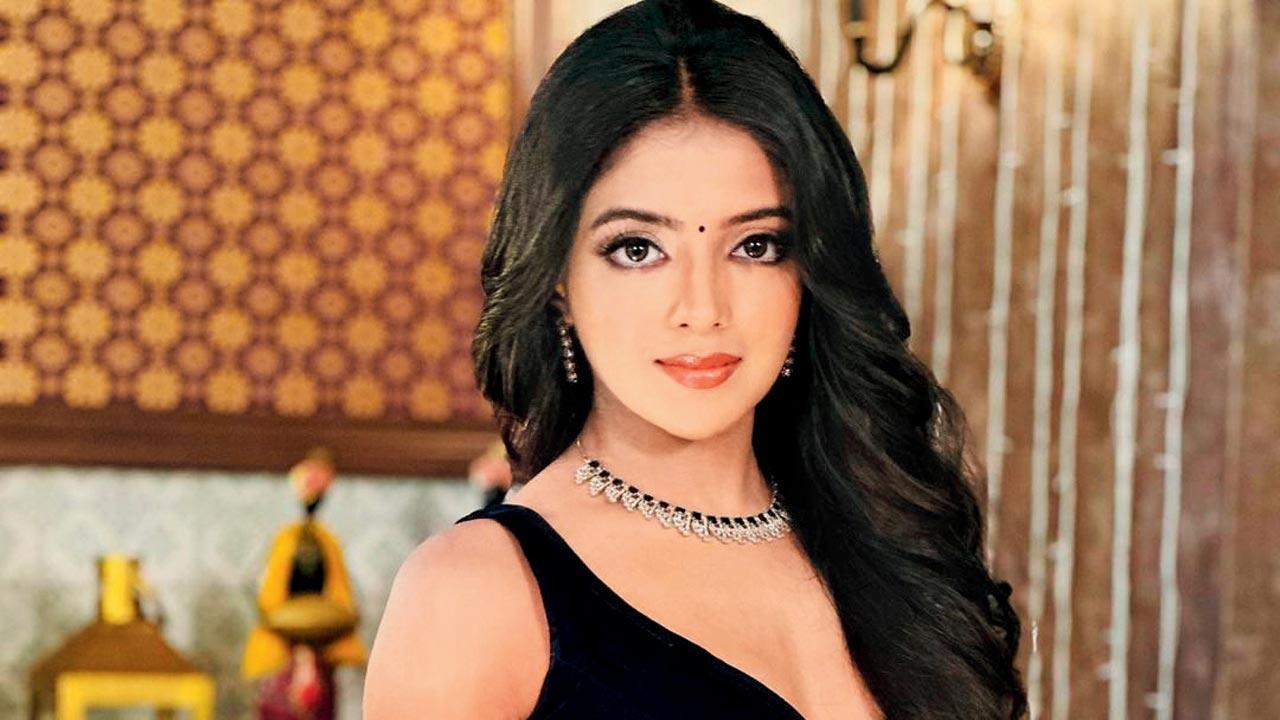
While television thrives on long-running soaps, Jubilee Talkies actor Khushi makes the case for finite serials as they have crisp storylines
Letty Mariam Abraham (MID-DAY; July 16, 2024)
Remember the child actor from Dil Dhadakne Do (2015), who delivered some of the best lines with a poker face? Today, at 24, Khushi Dubey is a far cry from that. But her ease in front of the camera remains unchanged. After fronting Aashiqana, the actor is now basking in the popularity of Jubilee Talkies, a sweeping love story set against the backdrop of the film industry. In conversation with mid-day, Dubey discusses how Jubilee Talkies stands out in the TV world where overacting sells, and starting from square one in the industry despite being a child actor before.
Edited excerpts from the interview.
How do you see your journey from a child actor to re-entering the industry as an adult?
The most important thing is that you have to be a good actor. It is possible to gain the same stardom that one got in his childhood as an adult. Things might get tougher, but ultimately it depends on your acting [prowess]. In 2016, I quit everything to focus on studies for four years. Then I had to start from square one with Aashiqana.
Do you find it easy to navigate Bollywood to get a role?
It is a little [tough], although now people directly approach me for a role. However, I still have to audition for the bigger projects. I’m not the kind of person who socializes to get roles. In fact, I am bad at making contacts. I have seen people getting projects because they are friends with [those who are influential], but I never felt like making friends for a project.
When you took up Jubilee Talkies, did you have any apprehensions that it could go off air soon?
I don’t stress about it. The show could [be pulled off air] for any reason, and I can only focus on acting. If I start thinking about [the longevity] of the show, [my performance] may go for a toss. No one person can be blamed for a show not working. While I want it to run for a long time, I have never insisted that it run for a year. Even if it’s a six-month show, it’s fine by me. The beauty of finite shows is that they have a fixed and crisp storyline. Stories are not dragged for TRPs.
In television, the longer a show runs, the more success it garners. How do you approach a show in such an environment?
I try to gauge if I am happy with what I am doing. Am I happy doing a saas-bahu drama? Is it giving me creative satisfaction? I ask myself these questions. I liked Jubilee Talkies because it was unconventional compared to other TV shows. I know the storyline until the end, and it is not dragging or monotonous. Even when Saurabh Tewari [producer] was narrating the story to me, at a lot of high points, I was quite surprised. If you cannot predict the story, that means it is intriguing. Seeing an ordinary woman enter a superstar’s life [may seem] simple, but the execution is larger-than-life.
Madhubala was about a superstar’s love-and-hate relationship with a common woman. Would you still call it unique?
I have seen bits of Madhubala and Jubilee Talkies, their storylines have nothing in common, except that the protagonist is playing a star. Deepak Chauhan sir’s direction and treatment are different. We want to show the workings of the glamour and film industry.
Do you feel restricted as an actor on television?
A bit. Sometimes the script is such where you cannot perform naturally, [the acting] might get over dramatic. But here, I have lots to do. My director has given me the freedom to let me act naturally and not go over-the-top.
Do you find TV regressive otherwise?
That happens because they have to televise episodes every day. So, the storyline [gets muddled], people put anything [senseless] in the storyline when a certain plot point raises TRPs, and that plot goes on for six months. That’s why having a finite show [is better], it doesn’t experience this treatment.
It’s difficult to connect you with the Dil Dhadakne Do girl, who had some of the best dialogues in the film. How different are the worlds of films and television?
It is 180 degrees different, from work culture to acting. Movies are about being subtle, especially Zoya ma’am [Akhtar, director]. She has a [clear] vision and thought process. She’d tell me that my character is deadpan, so whatever she says, it has to come off right. You get a lot of time in movies to build your character. The work culture in TV is hectic and there is too much on the plate.
Anil Kapoor pitches for George Clooney to suggest his name for his next Hollywood project
8:48 AM
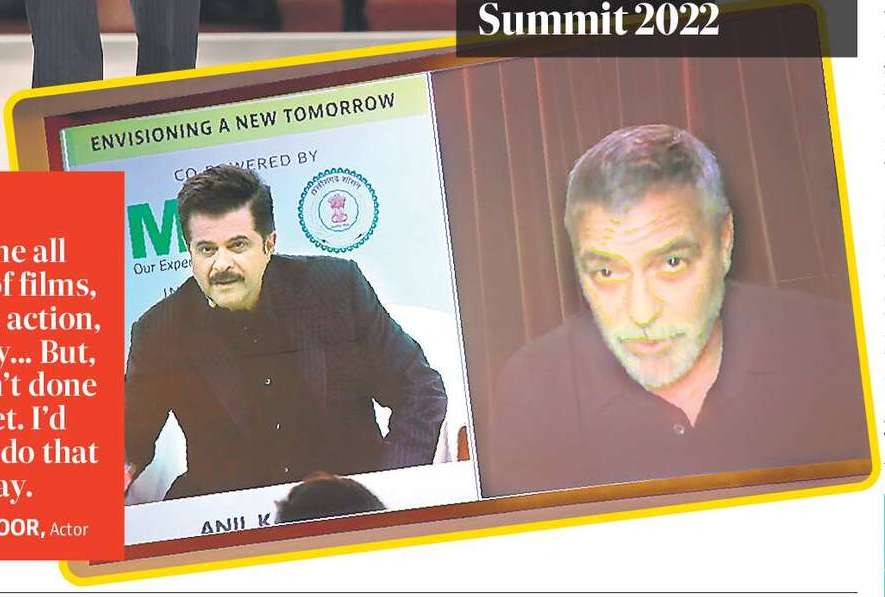
Actors Anil Kapoor and George Clooney came together for an engaging session at Hindustan Times Leadership Summit 2022
HINDUSTAN TIMES (November 19, 2022)
Hollywood actor George Clooney and actor Anil Kapoor came together for a session recently, and what ensued was an afternoon of candid conversation and confessions of mutual admiration, interspersed with moments of laughter. From their filmography to fitness secrets, the stars discussed a wide range of topics at the 20th Hindustan Times Leadership Summit 2022, held last weekend in New Delhi.
The session commenced on a witty note, with Kapoor lauding Clooney for his hairstyle. “I have got a trimmer and I cut my own hair. My wife (Amal Clooney, lawyer) looks at me, thinking, ‘There is something wrong with me’,” chuckled the Hollywood star, who joined in virtually.
“Sometime back, I did a film, Dil Dhadakne Do (2015), and I requested a George Clooney look. I had to sit for 100 hours. While I didn’t get it exactly, the look swept all the awards and was much talked about,” Kapoor admitted, prompting Clooney to say, “I am a big believer that my hair has got me a long way.”
Kapoor, 65, also lauded the 61-year-old for the way he has maintained his physique and fitness, to which the father of two quipped: “I pay people to workout for me!”
Steering the conversation towards films, Kapoor touched upon the kind of versatility Clooney’s filmography reflects. Here, the latter revealed that growing up, he didn’t harbour any dreams of entering showbiz, and went on to say that a bunch of “terrible” jobs led him to the glamour world.
“I grew up on a tobacco farm in Kentucky… I knew I didn’t want to do that. I thought there might be something more fun to do in life. So, I moved out to California, lived with a buddy and rode a bicycle to auditions. For me, everything has just been mostly about luck and I am very appreciative of it,” he said, adding, “I never really considered acting as a profession because I didn’t know anyone who was an actor. It has been a long haul, there has been a lot of auditioning, failures, a lot of nos. Sometimes, when you are successful, you get too much credit. It requires a great deal of luck, to be at the right place at the right time.”
Kapoor reflected on his career, too. He said, “I’ve done all kinds of films, including drama, action and comedy. But, I haven’t done a sci-fi [film] yet. I would love to do that someday. I did a show of the genre, but unfortunately, it was not greenlit.”
When asked what his favourite genre is, Clooney said, “I grew up in the ’60s and ’70s, which was a really exciting time for American cinema. We had the Vietnam War movement, civil rights movement, women’s rights movement, anti drug movement. So, movies were really interesting from about 1964 to 1976… I have always been drawn to political thrillers. They are fun and exciting to do. But, you have to be careful. You don’t want to sound preachy.”
However, Clooney clarified that he has no intentions of entering politics, despite being someone who is known to raise his voice on pertinent societal issues. “I don’t want to be making decisions on people’s life and death. Those are very important decisions to make along the way, and they should be made by people who have had a wide swath of experience,” said the father of two, adding, “To run for office, you have to compromise on your own beliefs. I don’t want to do that. I can stand up for the things I believe in. The only results will be that if people are unhappy, they won’t go see my projects, and I can live with that.”
Clooney was recently seen in the romantic comedy Ticket To Paradise, which fared well at the box office. The actor said he is glad to see the revival of the big screen, after a two-year pandemic-induced lull. “Theatres were hit hard in the last few years. There’s a lot of business as streamers, but theatres themselves have really been hurt. It was important for us to have a film that can bring people back people to theatres,” he said.
The session turned out to be a masterclass for aspiring actors, too. Clooney said, “When people go to auditions, the thought in mind usually is, ‘I hope they like me, I hope I don’t screw up’. But the truth is, the producer/ director who is sitting on the couch is just hoping that you are the right one. If you just change that attitude before walking into the door, it changes everything.”
Ending the session on a high note, the actors shook a leg to The Punjaabban Song from Kapoor’s film JugJugg Jeeyo. The latter also pitched for Clooney to suggest his name for his next Hollywood project.
Experts on obsession with on-screen dogs say, "See the bond, not the breed"
8:46 AM
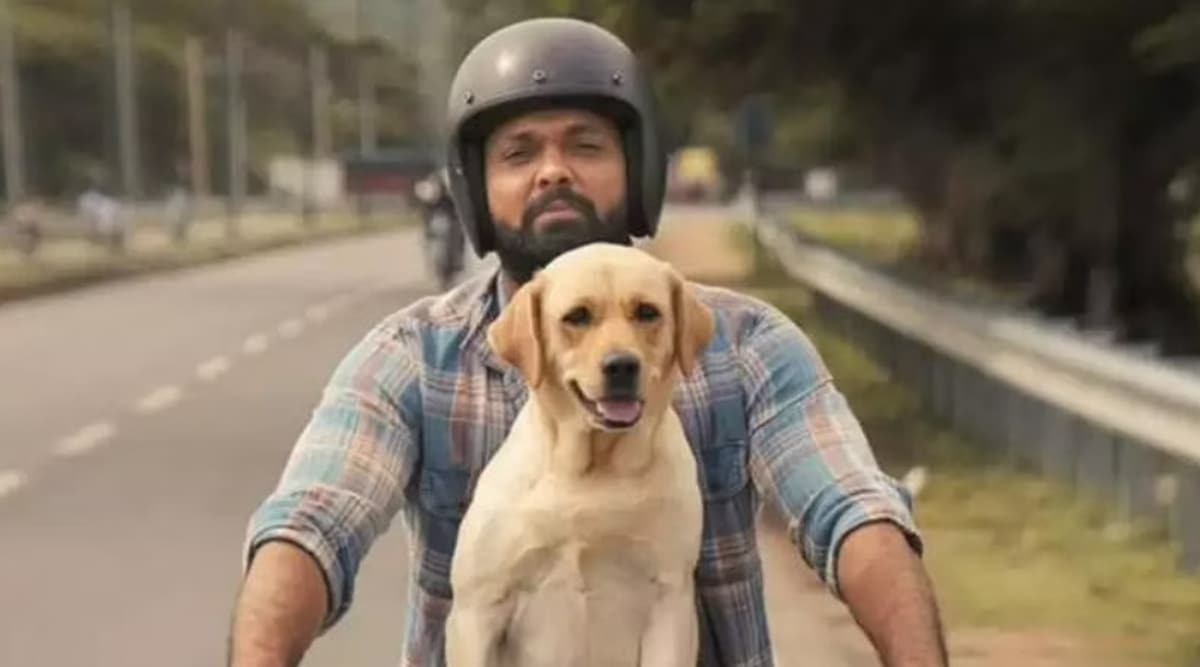
From 777 Charlie to Dil Dhadakne Do’s Pluto Mehra, popular on-screen dog breeds often lead to increase in their demand; Here’s why experts warn against such trends
Riya Sharma (BOMBAY TIMES; June 25, 2022)
Labradors are a popular dog breed in India but recently, its demand has increased even more in some cities, thanks to the recent Kannada film 777 Charlie. Ironically, the film touches upon the issue of unethical breeding and puppy mills and the effect they have on the health and well-being of these dogs.
This is not the first time that a breed has seen a significant rise in its demand after being featured in a film or show. From the Indian spitz Tuffy in Hum Aapke Hain Koun...! to the pug in the Hutch advertisement, the bullmastiff Pluto Mehra in Dil Dhadakne Do and now the Labrador Charlie – pop culture has often made certain breeds popular, leading to a sudden rise in demand.
Animal activists, however, warn that bringing a pet home should not be a short-term plan based on temporary flow of emotions. They say, “Keeping a pet is a responsibility and people should be bringing a pet home only when they are ready for the responsibility. ”

ARE WE CARING ENOUGH FOR THESE BREEDS?: EXPERTS
When Marley & Me released, the demand for Labradors increased significantly. Similarly, when Hutch and Vodafone’s advertisements showed a pug following his human everywhere, the breed witnessed a huge rise in demand. The demand for bullmastiffs also rose to 60% after Dil Dhadakne Do’s release. Recently, activists share that they are now witnessing an increase in the number of calls for Labradors after 777 Charlie, warning that people should not be impacted by the flow of emotions.
Kaveri Rana Bhardwaj, founder, SMART Sanctuary, Canine Paralysis and Rehabilitation Center, explains, “777 Charlie’s director tried to show the bond between the dog and the human but the takeaway for many people was the fawn-coloured Labrador. When Marley & Me released, demand for Labradors in India increased tenfold. We receive abandoned Labradors every week with severe genetic diseases and there is no treatment for it.”
Kaveri adds, “I recently tweeted about a fawn-coloured Labrador that was up for adoption. Someone shared it on WhatsApp groups and mentioned by mistake that it is a female dog. After that, I got 150+ calls post 11 pm and I had to switch my phone off. I never get this kind of response for any breed. It was only later that I realised it was because of 777 Charlie. Shelter homes across the country are witnessing a higher demand for Labradors. My take is, see the bond, not the breed. The bond is ignored, abandonment has not stopped. We are crazy about breeds, but are we caring enough for them?”
Dr Vinod Sharma, Head of Veterinary services at DCC Animal Hospital, points out that he has not yet seen any change in the demand for Labradors because of the movie. “They have always been in demand as they are considered family dogs. People start associating the breed with a movie or an ad. The pug was in huge demand because of the Hutch and Vodafone ad – they remember the breed as the Vodafone dog. People get carried away but they forget that they need to take care of the pet as well.”
He adds that such demand often leads to irregular breeding and people should be considerate of that. “If people start demanding for a breed in huge numbers, breeders will not follow any standard for breeding, which most breeders don’t anyway. This leads to genetic problems in dogs. My advice to people is to not get carried away after watching a movie. Do proper research and know if you have the space and commitment to keep a dog,” he says.
ADOPT FROM SHELTERS, DON’T FUEL COMPANION ANIMAL OVERPOPULATION CRISIS: PETA
Sachin Bangera, Vice President of Celebrity and Public Relations, PETA India, says, “Portrayals of specific dog breeds in films and television shows – including Game Of Thrones (Northern Inuit dogs that look similar to huskies), 101 Dalmatians, Legally Blonde (chihuahua), and Men In Black (pug) – have reportedly caused massive spikes in sales of the featured breeds, and many of these dogs are evidently later left at shelters by their ill-prepared guardians. We encourage people to adopt dogs from an animal shelter or the street and never to buy from breeders, online traders or pet stores, which fuel the companion animal overpopulation crisis.”
Sachin adds that anyone who would purchase a dog after watching a film about a dog who escaped a breeder and became a stray has totally missed the point of 777 Charlie. “When a certain dog breed is highlighted in the media, whether a pug or a Labrador, people flock to purchase that breed while keeping desi dogs languishing in shelters or on the street. Breeders and pet stores, cash in on the demand for specific breeds by forcing female dogs to produce litter after litter until their bodies wear out,” he explains.
RISE IN DEMAND LEADS TO RISE IN POORER BREEDING PRACTICES: EXPERTS
Arpit Mathur, founder and Director of the Perroayuda Welfare Foundation (PWF), an animal welfare NGO based in Delhi, says, “People usually buy breed dogs after getting influenced by pop culture but once they feel that they are unable to take care of them, they abandon them. With the increase in sales, breeders sell puppies without proper nutrition from their mother’s milk. Female dogs are tied and forced to produce more and more puppies irrespective of their health conditions.”
Devanshi Shah, founder of Petkonnect, an online services provider for pets and strays all over India, adds, “About ten years ago, I had a pet which was a breed dog. At the time I was unaware of the poor practices breeders follow in India. My pet’s sudden death opened my eyes to the many gaps in the pet services sector. That is why we encourage a strong dialogue that is pro-adoption, and ask people to not buy from unethical breeders.”
Kaveri Rana Bhardwaj, founder, SMART Sanctuary, Canine Paralysis and Rehabilitation Center says, “I still remember the craze for Indian spitz and Pomeranian after Hum Aapke Hain Koun. . ! Many of them were abandoned later. Such breeds are being destroyed by inbreeding because of high demand from people who do not look beyond the initial craze. Nobody thinks that because of our increased demand, the torture on these dogs would also increase, breeders will resort to irregular breeding and this will result in genetic abnormalities,” she says.
Veterinarian Anand K Pandey adds, “The demand for Labradors now has increased more than 25%. When the demand is huge, people try all options – adoptions, contacting breeders on social media, and also going to the extent of getting dogs from other cities.”
I tend to repeat working with the same cast or crew-Zoya Akhtar
8:06 AM
Backing Eternally Confused And Eager for Love, Zoya discusses reuniting with Rahul and Suchitra for series
Hiren Kotwani (MID-DAY; March 15, 2022)
Zoya Akhtar has been one of the early birds in Indian digital entertainment, giving us the nuanced Made In Heaven (2019). If the web series studied the many failings and hypocrisies of love, her upcoming show is a younger and lighter take on romance. Eternally Confused And Eager For Love, directed by Rahul Nair, traces the awkward Ray’s struggles in finding a partner despite a plethora of dating apps.
Considering the story hinged on Ray’s romantic misadventures, Akhtar — who, along with Reema Kagti, serves as the producer — says they auditioned extensively for the male lead, finally zeroing in on Vihaan Samat.
“Finding Ray was key because he is the show. We needed someone endearing and attractive, but at the same time, he couldn’t be so attractive that [it would make you question] why he is in such a dilemma at all. He had to have a lot of heart, but had to make you feel as though he could be an ordinary boy. We weren’t getting [the right fit] until we found Vihaan,” she states.
The Netflix series also features Rahul Bose and Suchitra Pillai, who are all too familiar with Akhtar’s brand of stories. Bose previously teamed up with her on Dil Dhadakne Do (2015), while Pillai played an interesting part in Farhan Akhtar’s directorial debut Dil Chahta Hai (2001). “I tend to repeat working with the same cast or crew,” admits Akhtar. “Aside from the fact that they are talented, there is a comfort that comes out of having synchronization, having the same values, and the same kind of humour. It makes going to work enjoyable.”
Jim Sarbh has bagged a fascinating role — he is the voice behind Wiz, Ray’s guiding light in the series. Point out that the audience may expect a star to serve as the narrator, like Aamir Khan did in Dil Dhadakne Do, and the director disagrees. “[That line of thinking] is the same as those who feel that an A-list star is must for a box-office [hit]. With OTT offerings, you don’t have to decide [your cast] based on how many eyeballs they will grab. It’s based on whether they fit the part or not. Jim is perfect for the role,” says Nair.
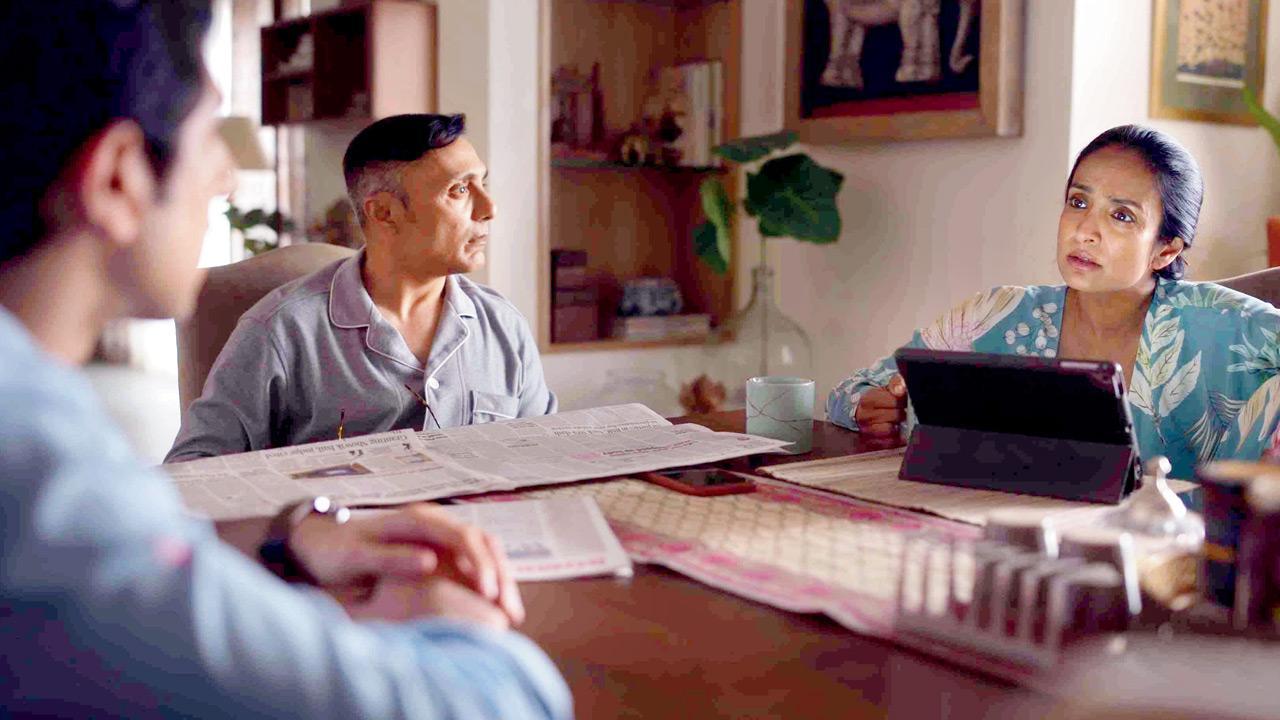
Rahul Bose and Suchitra Pillai in the series
My father has called me 10 times saying please don’t eat a lot in Delhi-Janhvi Kapoor
8:12 AM

At the concluding session of HTLS 2021, chachu-bhatiji jodi Anil Kapoor and Janhvi Kapoor indulged in witty banter, mimicry and a dance-off
Compiled by Rishabh Suri and Sugandha Rawal (HINDUSTAN TIMES; December 5, 2021)
From showing off their jhakaas moves to spilling the beans on what it’s like to be a part of the Kapoor khandaan, actors Anil Kapoor and Janhvi Kapoor’s real-life jodi of chacha-bhatiji had everyone hooked on the final day of the 19th Hindustan Times Leadership Summit 2021. They were speaking with Sonal Kalra, Managing Editor, Entertainment & Lifestyle, Hindustan Times.
Anil was connected virtually, while Janhvi looked stunning in a saree and began by expressing how much she had enjoyed her visit to Delhi. “When here, one must enjoy the food. And it’s such a cultural hub, I’ve always been so fond of the city. I landed and went to Bangla Sahib with my friend Sara (Ali Khan, actor). Then we went to Pandara Road. And papa (producer Boney Kapoor) is going to be so mad hearing this because he has called me 10 times saying please don’t eat a lot, but I had sarson da saag and makki di roti, it was amazing! And kesar pista kulfi too!” said the 24-year-old.
The two then got into a discussion about this year’s HTLS theme, The New World Order, and Anil addressed today’s social media savvy generation of actors. When asked about pap culture, he praised new age actors for getting it right, joking that photographers didn’t want to pap him. Janhvi admitted that people approach her and say they’ve seen all of her gym outfits: “I want to tell them that I do other things besides go to the gym, but you know, take it with a pinch of salt. I find it flattering that someone would take the time out of their day to come and take my picture when I’m sweaty and tired from a workout, and then like the picture. You have to take it for what it is. It is the attention, and if some people have a problem with my gym shorts or how I’m looking, then that’s okay because that’s not my job, that’s a consequence of my job.”
And talking about his fashion sense, Anil, 64, laughed: “Main galti se star ban gaya. My brothers, Sanjay and Boney, were the good looking ones. They are the stars.”
Janhvi had everyone in stitches when she imitated her chachu Anil, who sneaks foods at family dinners, in his trademark style. She then revealed some Kapoor khandaan secrets. Anil’s son, Harsh Varrdhan, for example, is the biggest movie buff in their entire clan, and her father spams everyone on his contact list with his latest pictures, flaunting his sartorial choices.
The conversation turned to her mum, late actor Sridevi. When asked about something that most people don’t know about his sister-in-law, Anil became emotional and said, “She was a special and rare talent.” Janhvi also revealed that her chachu was her mum’s favourite co-star.
And how can you have two Punjabis in the house and not make them dance? On popular demand, the duo danced to Gallan Goodiyan from Anil’s film Dil Dhadakne Do (2015). “We are entertainers. Music nahi bhi hoga toh bhi main naachta rahunga,” Anil left everyone in splits.

Zabaan Sambhal Ke: Mumbai Police calls out misogyny in Bollywood films
8:13 AM

Rachana Dubey (BOMBAY TIMES; October 3, 2021)
Be it creating awareness about following the lockdown guidelines or the need to mask up during the pandemic, the Mumbai Police’s social media handle has often retorted to wit and humour to highlight various social issues. On many occasions, Bollywood movie dialogues, posters and pictures have been tactfully weaved in to deliver the message in a filmi fashion, along with a sense of humour. Recently, the Mumbai Police social media handles put out a bunch of dialogues from various Bollywood movies, which was aimed at putting the spotlight on the misogyny and casual sexism that exists in our society and in cinema.
The post read — “Cinema is a reflection of our society — Here are (just) a few (of many) dialogues both our society & cinema need to reflect upon. Choose your words & actions with care — unless you want the law to intervene! #LetsNotNormaliseMisogyny #MindYourLanguage #WomenSafety (sic).” It was accompanied by snapshots of the dialogues from movies like Hum Tumhare Hai Sanam (2002), Maalamaal (1988), Dabangg (2010) and Kabir Singh (2019), among others.
While a dialogue from Dil Dhadakne Do, too, is among the ones listed here, the writers of the film — Zoya Akhtar and Reema Kagti — have used this situation in the movie to specifically highlight the sexist attitude that’s prevalent in society. In Dil Dhadakne Do, following Rahul Bose’s statement about allowing his wife to pursue her career, Farhan Akhtar points out the inherent sexism in his views.
There have been various debates and discussions over the past few years about how women have been portrayed in cinema and the need for change. We spoke to contemporary Bollywood writers for a perspective on the subject and the debate around misogyny, sexism and feminism.
‘SOMETIMES, WE NEED TO CREATE A CHARACTER TO DEPICT THE CONTRASTING IDEOLOGIES’
Hussain Dalal, who is known for his dialogues of films like Yeh Jawaani Hai Deewani, 2 States and Kalank, among several others, asserts, “I’m grateful that the Mumbai Police called it out, I love what they do with swag. As for misogynistic characters in our films, I think it’s an insecure male who treats a woman badly. There’s no concept of an alpha male. Either he’s a well-brought-up, happy, secure person or there’s something in him that needs immediate attention. Misogyny in my understanding is as deep-rooted as any mental health issue and cinema in no way should be promoting the idea. Yes, sometimes, we need to create a character to depict the contrasting ideologies. That’s not promoting misogyny, in fact, it is underlining the issue for people to understand.”
Talking about the way he approaches his characters, Hussain says, “I have never disrespected women while writing some strong male characters or dialogues, and vice versa. If we become over-woke, we can’t have humour in our films. Also, a person getting offended is not always right. The thing is, dialogues in films have a context in which they are presented, and they have to be seen with it.”
‘CINEMA IS A POWERFUL TOOL AND IT MUST TAKE SOME RESPONSIBILITY’
Films, especially in the ’80s and ’90s, often romanticised and normalised a man pursuing a woman by following her or not taking no for an answer. Piyush Gupta, who has co-written films like Dangal, Chhichhore and Bhoothnath Returns, shares, “I think any pop culture, especially cinema has had a deep imprint on our minds. People who grew up in the ’80s and ’90s were exposed to a chhed-chhad song in the movies. The boy-chasing-the-girl number was an accepted thing and it did have its social impact.”
However, he points out that things are changing today. “Cinema needs to have some sort of conscience while saying something,” he says, adding, “It’s a powerful tool and it must take some responsibility and have a moral compass attached while creating a piece of work. Also, I believe that having a misogynistic character in the film is not about idolising them. The filter we use is the point of view of our film. Everything is a building block to create that view. The main mudda should be clear. For that, if you have to create an opposing viewpoint, you must. But that in no way should be assumed as the promotion of something like misogyny.”
‘WE HAVE TO APPROACH A CHARACTER FOR WHAT IT IS’
Among the dialogues highlighted by the Mumbai Police were lines like ‘Woh meri bandi hai’, written by Siddharth-Garima for Kabir Singh. The duo has also contributed to films like Ram-Leela and Toilet: Ek Prem Katha, among others. Siddharth Singh of Siddharth-Garima says, “I just wish that they had also picked up the strong lines that we have written, empowering the woman in a film. Like we had some strong dialogues for Bhumi Pednekar in Toilet: Ek Prem Katha. We have to approach a character for what it is. When Rahul Bose’s character in Dil Dhadakne Do says that ‘I allowed her to run her business’, the rest of the film actually goes all out to highlight that he’s so wrong in thinking like that. A society is made of all kinds of people and that needs proper depiction. Unless you depict the harmful thoughts prevalent, how will you depict the solution for it? With no conflict, how will anyone write a strong film? Kabir Singh’s character was not meant to be idolised. He is not someone you are supposed to look up to. And if someone looked up to him, then he needs to look within.”
‘CREATORS ARE DOING THEIR BIT, BUT VIEWERS HAVE TO DO THEIR BIT TOO’
Garima Wahal of the duo sums up, saying, “Citing dialogues in isolation is not fair because everything is written keeping a situation and the character in mind. In popular culture, there are extremely misogynistic songs and films which actually need to be picked on, and they are the kind of things that we as creators need to avoid today. If I see the other side of the coin, misogyny and feminism are also abused terms. There is change and there needs to be more change, inside out. Siddharth and I had a tough time casting for a film about a woman making some very bold choices in her life — and by that, we don’t mean that she’s a drunkard or a scamster or some kind of a loose wagon. No mainstream heroine wanted to do it without a strong male opposite her. Dialogues have to be seen in perspective and are interpreted differently by different people. Creators are doing their bit, but the viewers have to do their bit as well.”
I’m very confident in what I bring to the table now-Priyanka Chopra
8:12 AM

Vinita Dawra Nangia (BOMBAY TIMES; September 17, 2021)
Priyanka Chopra Jonas is an icon for all who dared to dream and for those who dared not; for all who tried and failed, and particularly for those who never tried for fear of failure. She has done it all. She dreamt, she attempted; she feared, she overcame; she was rejected and then unexpectedly accepted. Was it destiny or carefully laid out plans, sheer grit, or her refusal to accept failure — or is there a formula to her amazing success story? In this chat with us at the Times Lit Fest, Priyanka shares it all:
Priyanka, your mom has famously called you a bit of a rolling stone. But you seem to have found your peace. Has Priyanka Chopra Jonas finally found her groove, or is she a bit unfinished still?
I think I finally found my roots. I always had a groove! But we are all works in progress. We change every day, we evolve. There's a lot I want to do and have in my life going forward. I’ve left a lot of unfinished things in my life and moved on, when I felt they were not going as I wanted - and it’s okay to do that. But today, I can give my younger self a hug and say, it’s okay for all those times when you were sad and cried… I’ve done this. And now it’s time to find solace in where I am, a sense of contentment, and confidence in my craft. I’m very confident in what I bring to the table now, unlike what I was, of course, when I was starting out.
What prompted you to write your memoir? Most people leave it till much later. Did this process help give you a new perspective of yourself?
I’ve been a very private person in my life. Being home for six months during COVID helped me dig deep. So, once I decided to write my memoir, I had to plan whether I was just going to skim the surface as I have done for the last 20 years of being in entertainment or go deeper. I chose to dig deep. I just wanted people to know me. I wanted to give people an insight into what my truth for me is.
When you faced racism in your American school, you moved out… When Bollywood put up fences and you lost good movies, you looked for roles that others would not covet. Was moving away from your chosen path of least resistance, rather than fighting to the finish?
Sometimes the best way to prove that you can do something is by doing it. By fighting a fight that has existed for ever, you may neglect the opportunity of trying another route. I always have multiple plans. I don’t get defined by one failure.
It is like if I am trekking and see a large boulder in front of me. Instead of picking at it I’ll try to go around it. It is the same with fences and ceilings that have been created for women, for people, in every field. You have to work around these.
It looks like I’m the person who’s choosing everything in my life, but it’s not true. I’m just like anybody else. I have spent a lot of time invested in things which were just not working, and I just stayed and stayed, but at some point, you have to choose yourself. Like, when I take my music, for example, I stayed to try it, but I had to recognise when it was not living up to my standards. I knew that it was futile to spend more time there and that’s important to understand.
When you talk about love, you confess that you made the mistake of trying to change according to people’s expectations, of giving too much of yourself. What are the lessons that love has taught you?
I really believe love makes the world go round. For me, love over anything! And the only way to love is deeply and fully and to give yourself completely. The one thing that my marriage has definitely taught me — something I earlier didn’t even feel the need to have, but which I can’t live without now — is having my partner give complete credence and credit to the job that I do, to my work. It’s so amazing when I see how Nick accommodates his life for my achievements or my career and my choices.
Has having been married to Nick changed you in some way as a person?
He has impacted me in a big way. I’ve become a lot calmer in life. I would bite people’s heads off. My husband is a calm person, and he finds solutions. He's a diplomat, whereas I’m just like a mirchi! If I go off, I go off. I have learnt a lot from Nick. He’s an amazingly talented, creative person and we bounce a lot of our work off each other and then we develop things together. So, having a creative partnership with your partner is amazing.
Is there any Bollywood movie of yours that Nick has watched or loves watching again and again?
We both didn’t know very much about each other’s careers, so after we got married, we did sort of show and tell – he showed me his earlier music work, and I showed him a few of my movies, but Nick loves Dil Dhadakne Do. He has watched it multiple times!
Because I was home during Covid, it helped me dig deep for my memoir-Priyanka Chopra
8:17 AM

THE TIMES OF INDIA (September 13, 2021)
From being Miss World to a Bollywood actor, singer, film producer and Hollywood star, Priyanka Chopra Jonas has worn many hats over the last two decades. So, it’s no surprise that she thinks that “evolution and reinvention is the name of the game.” “We can’t be the same people we were five or ten years ago. One has to keep changing because if you don’t evolve, you’ll be left behind,” she said at the Times LitFest.
While discussing her memoir Unfinished with Vinita Dawra Nangia, she described the process of writing the book as both exhilarating and exhausting. “I’ve been a private person all my life and I could have skimmed the surface but because I was home during Covid, it helped me dig deep.” She added that “she wanted to tell the story like I would to a friend over coffee” so she chose to record her thoughts and then transcribe them rather than typing them out.
“As a public person no one really knows you,” she said. “I chose to dig deep because I felt that there has been so much written about me and I just wanted to give people an insight into what my truth is.”
Chopra’s big break in the West came from her lead role as Alex Parrish in the TV show Quantico, a character she says she’s proud of. “I haven’t seen too many leading ladies who are Indian in American TV and films,” she said. “I was proud of being able to play a mainstream character without being burdened by my heritage, which should be an asset.”
Speaking of her marriage to American pop singer Nick Jonas, she said that the two shared a creative partnership and often bounced ideas off each other. “The one thing my marriage has taught me is having your partner give complete credence and credit to the job that you do. It’s amazing when I see how Nick accommodates my career and choices,” she said.
“I didn’t realise that I needed my partner to understand the value of how much hard work I’ve put into building this career.” Incidentally Jonas’ favourite PC film is Dil Dhadakne Do, which he has watched several times.
I have waited 16 years to find a script that I can approach Shefali with-Vipul Amrutlal Shah
8:05 AM

The filmmaker, who had directed his wife Shefali Shah in the 2005-film Waqt: The Race Against Time,is all set to direct her after a long gap
Rachana Dubey (BOMBAY TIMES; May 29, 2021)

Talking about reuniting with his wife in the capacity of a director, Vipul says, “Shefali had a role in Commando 2, but I hadn’t directed the film. I think it took us so long to work with each other as a director and actor, because the kind of cinema I was involved in didn’t have anything challenging for her to do. She didn’t want to do something that didn’t make her happy. When I found something crackling, I went to her with it, and now I am directing her in my show. I knew she wouldn’t be able to turn down this script.”
Vipul further adds, “The thing is as individuals married to each other, you should not take the other person and their work for granted. There is a reason I refrained from approaching her with something that did not suit her calibre. I have waited 16 years to find something that I could approach her with. I also hope to work with her in a movie soon. It’s my responsibility to write something worthy of her. It’s work in progress right now. Hopefully, next year we should be able to do a film together.”

In the last couple of years, Shefali has found a stronger footing in the business, thanks to her interesting and variety of ventures in cinema and on digital platforms. Talking about his wife’s new innings as an artiste, Vipul says, “I admire her talent and tenacity — she made so many difficult decisions without batting an eyelid. She’s finally getting the work she rightfully deserves. I must give her credit that she has turned down several projects across mediums in the last many years, because she had made up her mind to not take up anything that she would not be happy about at a later date. After Dil Dhadakne Do, she didn’t want to play a mother again. She was offered some beautiful films in that capacity, but she didn’t want it to become a stereotype. So, she had to let them all go. Eventually, she has a lot of amazing work coming her way. The fact remains that, irrespective of the size of the role, each time that Shefali comes on screen, she gives an outstanding performance. It’s the industry’s loss that her talent was not recognised so far. In the next couple of years, you will see her come into her own.”

Everybody in my family has a National Award except me-Zoya Akhtar
8:52 AM

Bollywood's most loved filmmaker Zoya Akhtar looks back during the lockdown
Mayank Shekhar (MID-DAY; May 15, 2020)
 Consider writer-director Reema Kagti (Gold, Honeymoon Travels Pvt Ltd) as an Australian male Ricardo Fernandes, looking for his lost brother in Mumbai, while filmmaker Zoya Akhtar is the local don Mastana's hot moll. That's really how Zoya first met Reema, during the audition for Kaizad Gustad's Bombay Boys (1998).
Reema, as the casting assistant, was standing in for Rahul Bose. Zoya, opposite her, was actually testing for the film's female lead role—mainly to humour Gustad, because he was keen she read for the part, that finally went to Tara Deshpande. Zoya was clear she wanted to AD on the movie.
AD, meaning assistant director—both a proper noun and an active verb on a film set. It's been over two decades since Bombay Boys, where Reema and Zoya were second ADs. Their partnership, as writers over the past decade though, counts amongst its achievements, Gully Boy (2019), the Amazon series Made In Heaven (2019), Dil Dhadakne Do (2015), Talaash (2012), and Zindagi Na Milegi Dobara (2011).
Bollywood wise, they could well be—albeit slightly Bonzai—versions of the '70s super-hit, Salim-Javed (Zanjeer, Deewar, Don, Sholay, Mr India)—the most successful writing pair ever, comprising Salim Khan and Zoya's father, Javed Akhtar.
I say this, while Zoya is talking to us from where Salim-Javed used to work out of—the study in her Bandra family home—that she now uses as her bedroom: "I'm just absorbing them," she smiles. She also drops a hint at working on a talkathon/documentary project of sorts to do with Salim-Javed themselves, as part of her newly launched production company.
But it's too early to talk about, she insists. Much is naturally made of Zoya as poet-lyricist Javed's daughter, eighth generation writer from the Akhtar family. Her love for films, as she points out, flows first from her mother's fine collection of world to latest cinema, projected on the screen at home, growing up.
Also the fact is that it's her mom, Honey Irani, who's the Bollywood insider in the family, having literally grown up in showbiz (Javed had moved from Bhopal).
Wikipedia rather exaggeratedly lists her as the child-star of 72 films!
Honey would've done minimum 20-30 movies as the much loved kid-face of the big screen—graduating much later to screenwriting, with popular titles like Yash Chopra's Lamhe (1991), Aaina (19993), Darr (1993), Rakesh Roshan's Kaho Naa Pyaar Hai (2000), Koi… Mil Gaya (2003), Krissh 3 (2013).
Zoya reminisces, "Now, everybody has a camera to record their children. But people in my generation did not have footage of when their parents were three years old. I was one of the few kids, who had my mother from the time she was two, to when she was 16! I've seen my mother animated [on the screen], with different expressions, speech, seen her change, and grow. It's really interesting even now, to see her like that. She was darn cute, man! She, and my aunt Daisy [Irani]!"
She rues in jest, "Everybody in my family has a National Award— my mother, father, brother [Farhan Akhtar], step-mother [Shabana Azmi], cousin [Farah Khan], everybody. Except me!" Which film did her mom get a National Award as the kid-lead? "I don't know, if it was for Pyaar Ki Pyaas or Taare Zameen Par, one of the two." There was a yesteryear film called Taare Zameen Par? "Zameen Ke Tare! Both my mom, and my aunt."
The mom's acting gene, Zoya contends, went to her younger sibling, Farhan: "He is a bona-fide performer—he always had that. I hate being on stage, or before the camera. My first thing to do with the arts was to write—watching both my parents work at home, discussing scripts… That was one of the first things [in my head]. Directing came later."
Held over video-call for the first time, Zoya is also the first filmmaker to feature on our unscripted conversation series, Sit With Hitlist—so far limited to Hindi cinema's lead actors. Reason for that of course is that she's arguably Bollywood's most loved filmmaker, and therefore a star in her own right.
That apart, little is known about her life up until her rather belated directorial debut at 36-plus, with Luck By Chance (2009), although she'd been working as a film professional for around 18 years before that. Very little worth knowing, Zoya casually reckons, jogging back to age 19, when she started interning for a copy-writer's job at a creative agency—simultaneously reading sociology at Bombay's St. Xavier's College.
"I remember watching Salaam Bombay (1988), being madly in love, and going: I want to direct. And I don't know what I'm going to make. Because Hindi films were not my scene then. Out of the blue, when I was about 21, I got a job with Mira Nair on [the sets of] Kamasutra (1996)." You can find her in a cameo appearance as one of the Kamasutra girls, "an extra part," as she puts it, because ADs are frequently expected to fill-in or add to the human backdrop on shoots.
Of all her past associates, Mira as director appears to have left a strong impression on Zoya: "Mira is just special, you can see that. When she is talking to you, you are the only person in the world. She makes people feel special. She knows everybody on a crew by name. I love that about her. And I love her aesthetics."
Post Kamasutra, Zoya recalls, "I started working mainly on American projects that came to India. Went to NYU [New York University] for a diploma [in filmmaking]. Stayed back in New York. Got a job, thanks to Ismail Merchant, in a small, cool, indie film called Side Streets, directed by Tony Gerber."
She returned to Bombay as a freelance, professional AD, of which there were only four in all of Bollywood, who did a lot of foreign films and Indian work: "Reema [Kagti], [director] Apurva Lakhia, and me. Then Kiran Rao came in." Zoya's credits during this phase include Mahesh Mathai's Bhopal Express (1999) and Dev Benegal's Split Wide Open (1999). She chose to specialise in the casting department, because there, "you get to direct actors, with a script," and that's what she ever wanted to learn/master anyway.
She was the casting director on Farhan's first film Dil Chahta Hai (DCH, 2001), and thereafter Armaan (2003), her mother Honey's directorial debut. Okay did she personally pick/cast that balloon-lover boyfriend in Dil Chahta Hai? "Oh that's actually Hassan, a childhood friend of Farhan. But we handpicked everyone, so to speak. There are very interesting cameos. Kiran Rao is one of the girlfriends in Goa. She'd come to do all the extras' casting for the film's Goa leg!"
Between freelance AD-ing, Zoya had been ideating all along for her debut feature. It's mildly ironic that while so cued into casting, she was unable to kick off her first film for want of a lead actor, for almost a decade that she'd been ready to direct. And the one she eventually cast for the lead role, in her directorial debut (Luck By Chance, 2009) was her brother, Farhan, who'd been around all along!
"You cannot cast someone, unless they are ready. And feel that they want to do this. It took Farhan a while to get there—that he wants to act, and that he is a really good actor." While practically the entire Bollywood A-list came down for cameos in Luck By Chance, including both Shah Rukh Khan and Aamir Khan (guessing, for the first time in the same film, although not in the same frame), Farhan was the seventh star to read/consider/hear the script. Hrithik Roshan played the second lead. "Luck By Chance is a book that I am going to write one day, about how that film got made," Zoya sighs.
Can't wait. It'd be quite a telling tinsel-town tale, given that nobody in Bombay does it. And Zoya is perfectly positioned to—not just as the quintessential insider, but as someone who can surprise you with her adorably random zaniness, on occasion. Recently at an interview she called herself the love-child of directors Karan Johar and Anurag Kashyap. What does that mean? "That I am halfway between Indie and commercial, you know."
One time I remember getting a smoke with a group, outside a closed-door meeting with director Oliver Stone who was in Bombay then, and Zoya casually mentioned, "You know, there are four kinds of people in the world—John, Paul, George and Ringo." What?
I bring that up again: "That is a line from a Tom Robbins book. Have you read Tom Robbins? I love him. I don't remember what the context of that conversation was. You can look at everyone, and be like—that's a Paul, Ringo, George. I am a John, for sure!"
And while her films primarily deal with real, human, often raw emotions, there is this carefree cattiness that inevitably slips in too. It's only fair that we dig into a couple of stories behind some stellar, surprising choices she's made so far. For example, why/how/when did a ladies' bag, called Bagwati, bag a proper part in the breezy masterpiece Zindagi Na Milegi Dobara?
"That comes from Reema and a close friend of ours, Shai Heredia, who's an academic, award-winning documentary filmmaker, and hysterically funny. She and Reema were on a road trip, and they kept talking to Shai's bag. Think they were just tripping! We just put it into Zindagi."
It was Zoya's second film, with Farhan and Hrithik back on her frame, but in a much wider canvas, although the script started out in her head as a small, cathartic, road movie, about three boys in a car—for all the road trips she's taken in her life. Over time, of course, the script "developed a life of its own".
The film she co-wrote after was Reema's Talaash. It's a supernatural thriller that, by the way, was based on a true story, that happened to her! "You have to stop. I am going to be the crazy lady that goes on interviews and says all this shit. I know it sounds really crazy, and I don't want to be propagating this nonsense. But, I had a strange experience on Haji Ali, while a bunch of us were driving back from a nightclub. We thought we had hit a naked woman in the middle of the road. Everybody was freaking out. This is something I told Reema about, and where Talaash came from. I am not going to repeat this story, ever again!"
Okay how about the dog called Pluto, who's the narrator/POV of Dil Dhadakne Do; where does he come from? "From my super-smart, intelligent beagle Zen, who passed away last year. You can find him on my Insta page, Zen Akhtar. Zen would look at us as though he is watching National Geographic—that we are the animals, and he is like, 'What are they doing?' That's Pluto. Even the way the film is shot [as a result] is observational—there are no close ups, only 'wides'."
After a preview screening for Aamir Khan and his wife, Kiran Rao, both of whom Zoya makes it a point to get a feedback from before her film's final cut, she asked Aamir if he'd like to voice the dog: "He was, like, after these many years, you have offered me the voice of a dog? I said, please do it. He was, like, yeah, totally! And he just came [on-board], like a sweetheart. It was great!"
Is there anything she'd like to change about Dil Dhadakne Do? "I think the title. Would have been nicer [if it had] a little more gravitas." How about the climax (that was rather OTT, compared to the rest of the film's tone)?
"I actually liked the climax (of the mom, dad, sister jumping off the ship, with lifeboats to chase down brother/Ranveer Singh's character). The whole metaphor of the trip is that you can't get rid of anyone. Family is what you are stuck with. You can't just walk out the door. Eventually, when shit hits the fan, they are the only ones who will pull you up too. So when everyone tells me, I don't like the climax; I am like, cool, so what would you do? Till now nobody has given me a better ending. If there is one, I'd be like, damn!"
What did upset Zoya even before the release of Dil Dhadakne Do though was people taking the piss out of the picture for it being centred on lives of the super-privileged—intended also as a barb against movies that Zoya had directed thus far.
"Firstly I don't think it was criticism. There is nothing for me to take home from it. It is like somebody seeing a trailer of Gully Boy and saying, oh, this is about poor people. And I made Made in Heaven, along with Gully Boy. And that is about very rich people!"
"I was being interviewed by this woman wearing diamonds and solitaires, and she was telling me, it [the film] is about rich people. I was, like: Would it bother you, if your husband has an affair? Why? But you have solitaires on, it shouldn't bother you! What does it even mean?"
Before Gully Boy — set in a Mumbai slum and the city's underground rap scene—released, it got roundly compared to the American ghetto, hip-hop biopic, 8 Miles. Did that bother her? "The two people I spoke to [to base the film on their lives] are living here. You can talk to them. So, no, I didn't get into it. It bothered me, when they compared Zindagi to Hangover [producer Ritesh Sidhwani had to respond to Warner Bros]. Now, I think that's what they do."
Inspirations from dogs and spirits apart, what makes Zoya's filmmaking process special—given what we've managed to gauge so far—is she is capable of working backwards. Where she must know end, before she locks her script. Which isn't true for many filmmakers, who often arrive at the conclusion, as they navigate the story or characters' journeys: "I have to set a goal. That goal may change. But I when I set off, I have to know where I am taking the film. Otherwise I meander. I need a direction I am shooting at, you know!"
The other thing is her complete clarity on the point she's trying to make—so much so that she can distill each film into a single line, which is different from a log-line that describes a plot: "Of course Gully Boy is about a Muslim kid from Dharavi, who expresses himself through rap. It is a rags-to-riches, coming-of-age story. You can pin it down in any log line. But at the core of it, the film is about class. Luck By Chance is really about self-esteem. Zindagi is about living, seizing the day. Dil Dhadakne Do is a film about projection—who we actually are, and what we tend to project. It is what lenses the film, creates the base."
This sort of sharpness of thought, cutting through fluff, getting to the point, is also something Zoya shares with her father Javed, as a communicator in general—whether it be his works as lyricist, screenwriter, people's poet, or popular orator. He's possibly India's finest conversationalist—whose quick repartees and general gyan stick with you, if not go viral online.
Is there something Zoya remembers he told her that she's held as talisman? "Little things, you know. That when you are writing a script, whatever your story is, you've got to be able to lift your viewer. By the end of it, just lift your viewer! Don't resort to cheap shit to get a laugh or clap. Say it in the most base-denominator way, if you have to. But find a higher level of communication." It's tough, bohot hard.

People call me a big star, but I have always banked on content, and not on my stardom alone-Anil Kapoor
9:36 AM

Neha Maheshwri (BOMBAY TIMES; February 6, 2020)
Anil Kapoor will be seen as a police officer with grey shades in Mohit Suri’s Malang, which also features Disha Patani, Aditya Roy Kapur and Kunal Kemmu. The ‘evergreen’ actor says that he has a surprise or two for the audience up his khaki sleeves. While he doesn’t reveal what they are, in a chat with BT, he gets candid about his unfading popularity with the audience as well as filmmakers, and how he never aspires for any tag. Excerpts...
Many actors have said that they draw upon their inner emotions while portraying characters on screen. As an actor, who has been a part of the industry for over four decades, have you ever felt emotionally sapped while doing such a variety of roles, or the need to take a break?
Of course, I do feel the need sometimes. During the first decade of my career, there were so many factors driving me. I wanted to work as much as I could. The second decade was all about trying to maintain what I had by working in the best of films. There were financial obligations and setbacks, too, like Roop Ki Rani Choron Ka Raja (1993, home production). The third decade was all about maintaining longevity. I was focusing on adapting myself to the need of the hour and trying to make younger filmmakers notice my versatility.
During the fourth decade, I went into a transition mode. Also, God has been kind, as opportunities keep presenting themselves. How can I say no to them? It was almost after completing 35 years in the industry that Dil Dhadakne Do (2015) happened, which opened more doors. Then Ek Ladki Ko Dekha Toh Aisa Laga (2019) happened. It's not that the thought of taking a break hasn’t crossed my mind, but exciting offers keep coming my way.
Talking about Ek Ladki Ko Dekha Toh Aisa Laga, Sonam has been brave with her choices in films. Do you think you are as brave as your daughter?
I am glad that Sonam, Rhea and Harsh (Harsh Varrdhan Kapoor) are making brave choices and sticking to them. They have chosen difficult paths. I was quite brave too, but not as brave as them. That’s probably because I had a lot of financial responsibilities. My kids don’t need to think about money when making their choices. They aren’t crazy about money. They are ambitious, but to do things they believe in. In my case, I had to keep doing safe films, to get a chance to try on brave projects. It was important for my films to do great business, so that I could take a chance with films like Lamhe (1991), 1942 A Love Story (1994), Eeshwar (1989), My Wife's Murder (2005) or Nayak (2001). There was a time jab log bolte the ki yeh bada apne aap ko English actor samajhta hai, itna ‘real’ acting karta hai. And then suddenly, one day, I became a commercial actor for them. Jhakaas ho gaya! Finally, it’s all about perception.
Today, we keep talking about content-driven cinema, but you have associated yourself with such films and unconventional subjects several times in your career...
Hamesha aisa hi tha. Beta (1992), Judaai (1997), Virasat (1997), Chameli Ki Shaadi (1986), Eeshwar… they are all content-driven films, which is why they have stood the test of time. People around me would call me a big star, but I have always banked on content, not on my stardom alone. I believe that’s the reason for my longevity. For me, it’s not always necessary for a film to be a hit at the box office, but it should withstand the test of time.
It’s not easy to keep yourself relevant and going strong in this industry, which is known to be fickle. Many of your contemporaries have retired, while others are settling for smaller parts or even try to revive their careers, though not so successfully. But even after 41 years, you are still going strong...
I am just following my instinct and going with the flow. I have been fortunate that young filmmakers want to work with me. I took risks in the early stage of my career. So, they know that they can approach me with their crazy ideas. I have done films in which the heroine had a better character graph than me. Had I been slightly rigid, I would have missed out on them. There were times when I did films in which I didn’t play the lead role, like Taal (1999), Biwi No 1 (1999) and Slumdog Millionaire (2009). I did them because, as they say, ‘there are no small parts, there are only small actors’. I never cared about the length of my roles. I tell filmmakers, ‘You give me two good scenes and I will do it, but don’t use my presence just because I am Anil Kapoor’. I remember when Farhan Akhtar had approached me for Don (2006), I told him that I don’t mind playing a don in a film which features Shah Rukh Khan in the lead. There were times when I did films for friendship as well. They have told me, ‘Main yeh film bana raha hoon, main takleef mein hoon’. I had an inkling that the film won't do well and even told them ki yeh picture nahi chalegi. They turned around and said, ‘Aapko kya farak padta hai sir. Kar lo aap’. Maine kee hain woh pictures. I am not a ruthlessly self-centred person.
There was a time when you were hailed as a superstar, and now, you are called ‘evergreen’. Today, when we talk about superstars in Bollywood, only very few names feature on that list. How seriously do you take these tags?
My tags change every decade. At first, it was ‘Yeh actor hai, star nahi hai’, which changed to ‘He is not just a star, but a superstar’. Then people said that he tried to replace Bachchan, but he couldn’t. Now, the tag is around my fitness and good health. I never aspire for a tag and don’t work towards earning one. They keep on changing from ‘Forever Young’, ‘Star’, ‘Superstar’, ‘Evergreen’, ‘The next Amitabh Bachchan’, ‘The next Sanjeev Kumar’ and ‘Jhakaas’. However, the one tag that remains to be my favourite and has been bestowed upon me by respected directors, is that of a ‘Chameleon’. I would strive for it to remain with me.
You will be seen with your son Harsh in the Abhinav Bindra biopic. There were rumours that you were initially hesitant to share screen space with him as you did not want any unfair comparisons...
These are all rumours. I can play anybody’s father, grandfather or even great grandfather. That has never been an issue. I had, in fact, almost played Sridevi’s father in Lamhe. I have played father to many actors, so why would I have a problem playing Sonam and Harsh’s father? My children are more worried about me than I am for them, because they are very sure of their work. Fortunately, like me, both Sonam and Harsh don’t worry about the length of the character. I have also done cameos. Similarly, Harsh is doing a cameo in AK Vs AK. It’s not ‘I, Me, Myself’ for any of us. Nobody is anybody’s fan or harbours superiority or inferiority complex. That’s the atmosphere in the house.
When Harsh’s first two films didn’t work, did he come up to you for advice? For any actor, box-office failure can be quite upsetting...
In fact, he advises me on every film, including Malang. He suggested that I watch Harvey Keitel’s character in Bad Lieutenant (1992). We (Sonam, Harsh and I) don’t advise each other, but throw ideas. Of course, box-office success is very important and it does affect you, but you have to move on. Harsh was upset, too, when his films didn’t do well. He is a normal human being. Success and failure are a part of life and our profession.
Lastly, is there anything that makes the ‘evergreen’ Anil Kapoor insecure? Does the thought of ageing play on your mind, at least at times?
What do you think? Everybody has to age and that, too, gracefully, die. There is no sequel to youth, old age and death. You experience it only once.

Even if I had two three scenes, I would want to be part of a film like Chhapaak-Vikrant Massey
8:33 AM

Onkar Kulkarni (BOMBAY TIMES; January 5, 2020)
 From being a part of successful television shows like Balika Vadhu (2010) and Qubool Hai (2013) to doing commercial Bollywood films like Dil Dhadakne Do (2015) and Half Girlfriend (2017) among others, Vikrant Massey has come a long way. The actor, who made his Bollywood debut with Lootera (2013), has also been part of award-winning films like A Death In The Gunj (2017) and the controversial movie, Lipstick Under My Burkha (2017). His next — Chhapaak, directed by Meghna Gulzar — focuses on acid attack survivors. In a chat with BT, ahead of the film’s release, Vikrant speaks about his co-star and co-producer Deepika Padukone and his role in the film. Excerpts...
Chhapaak is probably the first film in Bollywood, which is based on an acid attack survivor. What were your first thoughts when you were approached for the project?
Just like every other individual associated with the film, I, too, wanted to be a part of it, immediately. When I heard the narration, I was shaken up. I was also looking forward to collaborating with someone like Meghna Gulzar, irrespective of what the length of my role would be.
I had made up my mind that even if I had just two-three scenes, I would want to be a part of it, as I had read the story of Laxmi Agarwal (an acid attack survivor on whom the film is based). As a crime, acid attack has been ignored for the longest time, though it has seen an alarming rise. It’s high time we reached out to as many people as possible and spread awareness about it. And, it could have been possible only with someone of Deepika’s stature; she will help us reach out to a much wider audience across the world. Films like these should be made. Yes, at the end of it all, everyone wants to make money. Unfortunately, today, a certain section in the industry has started evaluating the success and impact of a film, based on its box-office numbers. This entire practice, I strongly feel, is corrupt.
When you are making a film on an issue like acid attack, the environment on the set could be intense. And, one of the biggest challenges for the team is to ease that out...
(Cuts in…) It is not a depressing tale, as ultimately, the person facing an acid attack is not a victim, but a survivor. They are fighters. Despite facing all of this, they have the will power and the strength to stand up on their own and face the world. It’s a journey from being a victim to being victorious.
In Chhapaak, you play the partner of an acid attack survivor (played by Deepika). Given that this is your first film together, how did you break the ice with her?
I have met Deepika socially prior to this film. We interacted during the shoot of Dil Dhadakne Do, which also featured Ranveer Singh. She was on the ship (on which major portions of the film was shot) with us for a couple of days. We generally chatted and had a few conversations. She was on a holiday, but we were working (laughs!). Whatever little time I spent with her was wonderful. I am glad that I got an opportunity to work with her, especially on this project. In terms of our on-screen chemistry, this film brought out all the possible vulnerabilities within each one of us. As people, we were emotionally pure and naked in front of each other. Also, when your director is Meghna Gulzar, half of your job is taken care of. I think we have done a fair job.
Was it Deepika’s idea to cast you in this project?
Well, Meghna ji wanted to work with me ever since she saw A Death In The Gunj. Personally, I have always wanted to work with her, too. Her directorial, Talvar (2015), happens to be one of my favourite films. I have been an ardent admirer of her work and wanted to get a glimpse into her process of filmmaking.
On one hand, Deepika was playing an intense character like Malti and on the other, she was also the co-producer of the film. As a co-actor, how do you think she juggled both roles?
During the course of the shoot, I never felt that she was the producer, she was always my co-actor. When we were together, our only focus was to get the shot right. I don’t think at that time she was thinking what the balance sheets were looking like.

Priyanka Chopra has a plan to help Gully Boy bag an Oscar
8:43 AM

Priyanka Chopra Jonas to aid Zoya Akhtar's campaign by hosting several screenings of Gully Boy in Los Angeles for India's Oscar entry
Mohar Basu (MID-DAY; October 19, 2019)
 While the brightest talents of Indian cinema have made the country proud at the Oscars, the golden statuette for the Best Foreign Language Film has unfortunately eluded us thus far. Understandably, all eyes have been on Zoya Akhtar's Gully Boy ever since it was announced as India's official entry to the 92nd Academy Awards. With its stellar performances and masterful storytelling, the Ranveer Singh and Alia Bhatt starrer is being tipped as India's ticket to the Oscars. Even as the makers have kicked off their lobbying campaign in the US, mid-day has learnt that desi girl Priyanka Chopra Jonas has thrown her might behind the film.
As a first step in the direction, Chopra hosted a screening of the movie, along with Amazon Studios and director Akhtar, at the Ray Kurtzman Theatre in Los Angeles on October 14.
A source reveals, "Priyanka has been close friends with both Farhan and Zoya, ever since she worked with them on Dil Dhadakne Do [2015]. She is also invested in the film because she is fond of Alia. Knowing the crucial role that lobbying plays in a film's graduation from the long list to the shortlist, she intends to help the film garner as much visibility as possible. The actor has lined up another screening in Los Angeles before the month-end, where she plans to invite her close friends from Hollywood. She may host a few more screenings till the year-end."
Akhtar and co-producer Ritesh Sidhwani — who have been stationed in the US over the past few days — too have been bullish with their marketing strategy, hoping to grab the Academy's attention before it announces the nomination list in January 2020.

After attending classes for 3 days, I decided I had had enough. I didn’t want to continue with CA-Siddhant Chaturvedi
8:25 AM

As told to Himesh Mankad (MUMBAI MIRROR; July 2, 2019)
When I was just a kid, dad would play a cassette before going in for shower. The first song was “O O Jaane Jaana” from Salman Khan’s Pyaar Kiya To Darna Kya, followed by the Hum Kisi Se Kum Nahin chartbuster “Kya Hua Tera Vaada”. He would often perform on the songs and I would try a few moves of my own too.
The shower dances led to birthday parties and weddings. I was, otherwise, a shy kid but when I was grooving I broke free of my inhibitions. My parents observed this but never pushed me into pursuing dancing professionally. We come from a middle-class family and our dreams were rooted in reality.
Dad is a Chartered accountant and the family thought that was a safe career choice for me. I appeared for CPT (the CA entrance exam) but on the side, I was doing theatre when in college. I can’t explain but some kind of energy was always pulling me towards acting. So, I was acting in plays and even co-writing a few while studying for the exams. I used to attend CA classes from 7 am to noon, and from 2 pm to 5 pm I would be at rehearsals, returning home to revise my syllabus and my dialogue before going to bed. Since I was in the cultural department, attendance was never an issue, and anyway Bachelor of Commerce is an easy stream for someone doing CA.
I had to quit theatre because IPCC (CA, second level) required me to study 14 hours a day. I wanted to finish the course as soon as possible and start acting again so I focussed single-mindedly on academics. I cleared both groups in the first attempt, scoring 426 marks, just 20-30 marks short of getting a rank.
After IPCC, I had to do articleship for two-and-a-half years. I got into a firm but after a couple of months, I felt like taking a break and getting back to the stage. I entered and won the fresh face competition but then it was time to start prepping for my CA final exams. When you are featured in the front page of a newspaper and winning laurels in acting for your college, Mithibai, at inter-collegiate festivals like Umang and Malhar to name a few, it’s difficult to switch gears. Still, I enrolled myself for CA classes even though my heart was not in it. But after attending classes for three days, I decided I had had enough. I didn’t want to continue with CA.
I’d become like Ranbir Kapoor’s character in Tamasha so dad let me go for auditions with my theatre friends. I went for a lot of them and every audition was a learning experience. Initially I didn’t even know how to look into the camera. But slowly, I trained myself and polished my skills. There was a time when I was this pseudo pretentious artiste who wanted to do an art film. But slowly, I realised where the audience’s interest lay and took the jump towards commercial cinema.
I had always planned on becoming a hero, but I took a different route. I was offered a three-film contract by one of the best production houses in India, but I didn’t feel they were the right films for me so I turned them down. My parents were aghast, wondering if I’d gone mad!
My struggles continued and after several rounds of audition, Inside Edge happened. Everyone agreed it was brilliant casting and the producers of the show Farhan (Akhtar) sir and Ritesh (Sidhwani) sir specifically asked me not to undersell myself, promising me something big soon. At the success party, I spotted Zoya (Akhtar) and since I had nothing to lose, I asked the DJ to play “Gallan Goodiyaan” from her film Dil Dhadakne Do. I then walked up to her and requested her to come with me on the dance floor. Everyone, and that includes Zoya herself, was shocked by my audacity, but honestly, I had no other way to catch her attention. She was impressed by my confidence and called me to audition for Gully Boy.
I didn’t know how to rap but had a sense of poetry and rhythm. So, I wrote my own rap song detailing my struggle and crooned it during the audition. The next day, Ritesh sir called me to say, “You are on board.”
Soon after, I started workshops with Zoya. She groomed me and I started writing my own songs, becoming a rapper in the process. And that’s how bathroom dancer Siddhant Chaturvedi who had once set out to become a Chartered accountant like his dad, went on to become MC Sher, sharing the journey with Ranveer Singh and Alia Bhatt. Sometimes even dreams that are mere fantasies come true.

Bosco-Caesar reunite after three years for Sushant Singh Rajput-Shraddha Kapoor starrer Chhichhore
8:18 AM

After three years, the National Award-winning choreographers are gearing up to work together on a song in Sajid Nadiadwala’s Nitesh Tiwari directorial
Avinash Lohana (MUMBAI MIRROR; February 16, 2019)
 Three years ago, Mirror had reported that choreographer-duo Bosco Martis and Caesar Gonsalves, after 200-plus songs in around 75 films, had decided to go their separate ways but would continue with their four-decade friendship. Now, we have learnt that the National Award winners have reunited to choreograph a song for Sajid Nadiadwala’s Chhichhore, featuring Sushant Singh Rajput and Shraddha Kapoor. The Nitesh Tiwari directorial which kicked off last September, is set in an engineering college.
Caesar confirmed the news, saying, “Yes, it’s true, I’m back with Bosco to choreograph a song after three years. Before we split, we used to do all the songs together, barring a few when there were date clashes. I don’t remember our last song together, but Dil Dhadakne Do (2015) was among our last projects.”
He admitted that after choreographing “Senorita” for Zindagi Na Milegi Dobara, the song that bagged them the National Award, director Zoya Akhtar had wanted them to work together on her next film, Dil Dhadakne Do too. “Bosco and I did two songs separately for her recent release as well and now we will be working on one song after a long time. Sajid (Nadiadwala) sir and Nitesh (director Nitesh Tiwari) sir wanted us to get together for Chhichhore. I have already choregraphed another song for them alone where the characters are being introduced,” Caesar reveals, adding that they have just started working on the creatives and so he can’t reveal any details. “We shoot it in April in true Bosco-Caesar style,” he promises.
Bosco–Caesar started out as backup dancers for Farah Khan. They turned independent in 1994 with a stage show for singers, Shaan and Sagarika, at an awards function. They made their film debut with Vidhu Vinod Chopra’s Mission Kashmir in 2000.
Will they collaborate in the future? “I hope so, our break-up was not over a fight or because we hate each other. Yes, we have had a few creative differences, but I always say Bosco is my better half as a choreographer. We have been best friends since childhood, he is like a younger brother. I love him and will always stand by him,” Caesar signs off.

Ranveer Singh is generous, Alia Bhatt is special-Zoya Akhtar
8:25 AM

Meena Iyer (DNA; February 13, 2019)
Zoya Akhtar has an impressive body of work, including feature films like Luck By Chance (2009), Zindagi Na Milegi Dobara (2011) and Dil Dhadakne Do (2015) as well as anthologies such as Bombay Talkies (2013) and Lust Stories (2018).
The writer-filmmaker is known for her attention to detail and presenting well-etched characters with an emotional graph. She is also the talent behind the Ranveer Singh-Alia Bhatt Valentine Day-release Gully Boy, which is currently the talk of the town. Frankly, her plumes need no further polishing. In a freewheeling chat, the pleasant yet candid award winner talks about her independent banner, teaming up with Ranveer for the second time and more.
Your banner name Tiger Baby is intriguing. Is Gully Boy your first production?
Well, we co-produced one movie with Ritesh (Sidhwani) earlier and also did Made In Heaven with Amazon, which is dropping on March 8. Gully Boy is our third offering.
Why Tiger Baby?
My partner Reema (Kagti) and I liked the name. I love the tiger, it’s extremely Indian. It’s fierce, feminine and most of all, it’s specific to us.
Coming back to Gully Boy, the film is tracking extremely well. Does that make you nervous?
Yes and no. Of course, you are happy, because when you put out content, you want everyone to respond to it. Now we’re just hoping they come in to watch our movie and enjoy it. So obviously, there is nervousness because people are excited about the film. But, we’ve crossed the first hurdle.
The voice of the movie is young, it’s inspirational. It seems like a Slumdog Millionaire kind of a story…
It is an underdog story. It’s also talking about a section of society that doesn’t normally get represented in the mainstream.
It speaks of rap, an art form that came up from the street, like anywhere else in the world. These people use music as a tool, they’re all poets, they speak truth to power, so, it’s exciting. Hopefully, it will resonate with a larger section of the audience than just the youth.
Was Ranveer always your first choice?
Yes, he was my first choice, so was Alia, actually.
You’ve watched Ranveer from his Dil Dhadakne Do days. What would you say about his growth as an actor?
I knew Ranveer even before he did his first film. I always got along with him. I liked his energy and what he brings to any situation that he’s in. When I did Dil Dhadakne Do, we got along so well. I’m extremely comfortable with him. He is a real collaborator. He is a generous actor and a good co-creator of the character. He comes without any ego. At the core of his stardom, he is an actor who wants to do well. He understands the role, the script, and reads between the lines. He knows exactly where I’m coming from and brings stuff to the table. We can say yes or no to each ther’s ideas. I find that really exciting. He lifts the characters up. Usually, people just see the flamboyant and slightly larger-than-life side of him, but he’s got a lot of depth and sensitivity. I like being on a film set with him.
And, Alia...
Alia is special, she operates from an instinct that is so powerful. She follows her gut. She is so centered within herself that it comes through in her performances. In fact, it’s evident in everything. She is in the moment. I think that allows her to make her choices and play the characters she does. She is a dream to work with. I can’t wait to collaborate with her again.
Both, you and your brother Farhan Akhtar have a good body of work. Is it possible for you to say who is better?
No, it’s not. There’s nothing as better. Honestly, we’re not even halfway through our body of work. We still have so many films to make, so many stories to tell.
So, there’s never been any sense of competition with him?
No, never. And there can’t be because my film is his film. He’s either acting in it or he’s producing it or writing it. So, the ownership is always there.
There’s also a common soul in your father, in Javed Akhtar saab, who is also associated with your work.
Of course, I feel extremely privileged.
And who is the apple of his eye; you or Farhan?
I’d say it’s me (smiles). I’m the first born and a girl... so we have a different equation like my mother (Honey Irani) and my brother have a different dynamic. I feel blessed and lucky with my family, not because of the privilege, of course, I’m grateful for that as well that we never wanted anything. But what is a real privilege is that we (my brother and I) were treated equally. I was treated with equal amount of opportunity, freedom and confidence as him.
We were allowed to make mistakes. I mean that is a real privilege, to be able to go your own way, find your voice, just have a support system that allows you to do all that.
How involved is your partner Reema (Kagti) in this film?
She has co-written it; so yes, she is very much involved; from the research till the script was ready.
What did you think of her film Gold (2018)?
I cried at the end; It was a massive film. It was nicely made. I think there were certain things that went wrong for her, in terms that she wasn’t happy with the effects. There was not enough time and things went off there. But the film really moved me and I cried. I’m happy that it got made.
There was also talk of similarities between Gully Boy and Eminem’s 8 Mile (2002). Do you see it as unfortunate?
It’s not unfortunate, it’s obvious because 8 Mile is the biggest reference for rap. So people will look at it and be like, ‘Okay, this and that...’ Like during Zindagi Na Milegi Dobara’s release, everybody was saying it’s The Hangover (2009). But it was not The Hangover and I got upset. However today, I don’t feel that way about this film. I know that when Gully Boy opens in cinemas, they will understand that it’s specific to people from our space. I think what they are talking about is the rap battle, but those things are common everywhere. So, I’m not reacting to that.
Ranveer has done a good job rapping in the film. While you say he was your first choice for the role, was it the same case with his rapping, too?
It’s better na, because rap is spoken word. You can’t have another voice, it’s better that he do it himself. And he does rap, he also writes. So, there’s a certain sense of it. But we needed to know how he would flow with the sound that we were producing. I’m so happy that he’s in this film.
Did you get a chance to watch Simmba?
No, I was in post-production. I missed it but I will watch it once my film releases. Because when you’re in the last lap of post-production, you don’t have the space.
You, Karan Johar, Anurag Kashyap and Dibakar Banerjee have been collaborating on short films. Will that association continue?
Yes, definitely.
Who is your favourite filmmaker among them?
They or should I say all of us are unique. There isn’t another Karan. You can’t replace Anurag. They’re my gang, my friends. We have so much fun together. We’re a good bunch when we are together. And that’s what I mean; you can’t compare them, they are incomparable. Who will you replace Dibakar Banerjee with? There isn’t another one. We are four unique voices.
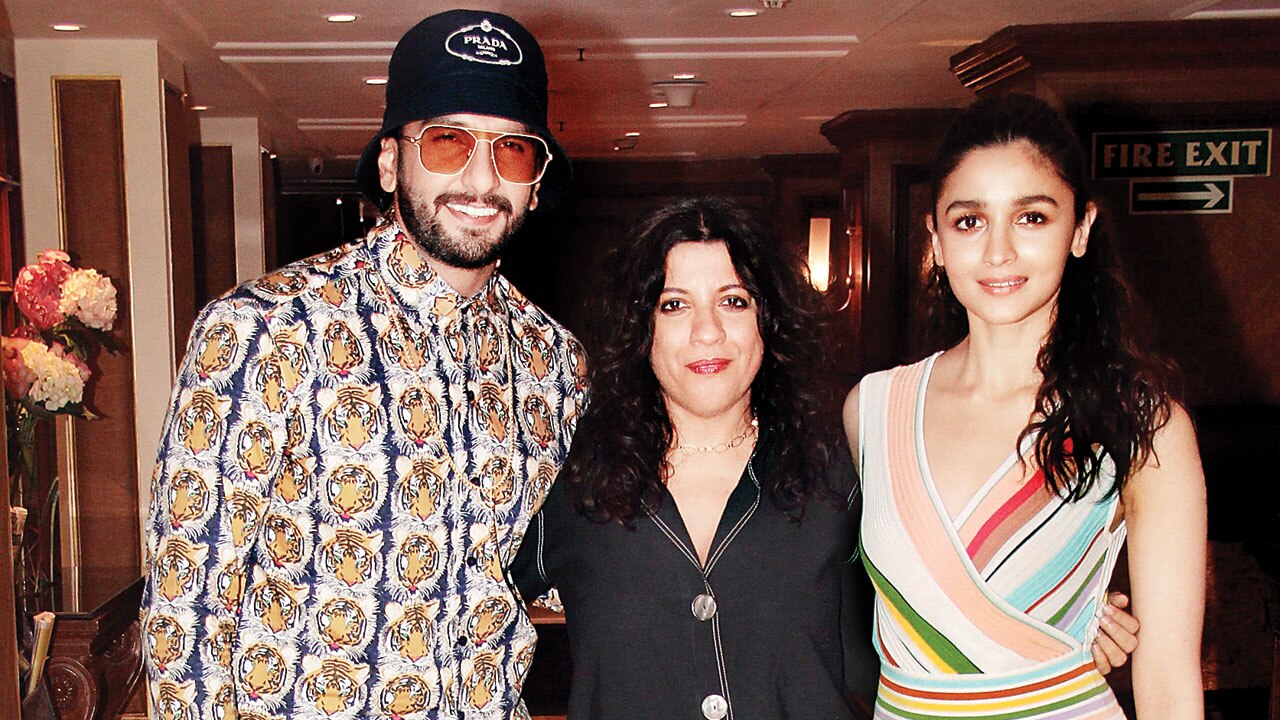
Subscribe to:
Posts (Atom)