Showing posts with label Dibakar Banerjee interview. Show all posts
Showing posts with label Dibakar Banerjee interview. Show all posts
I am like an auto driver; when you ask him if he will go to Andheri, he says no-Dibakar Banerjee
8:36 AM
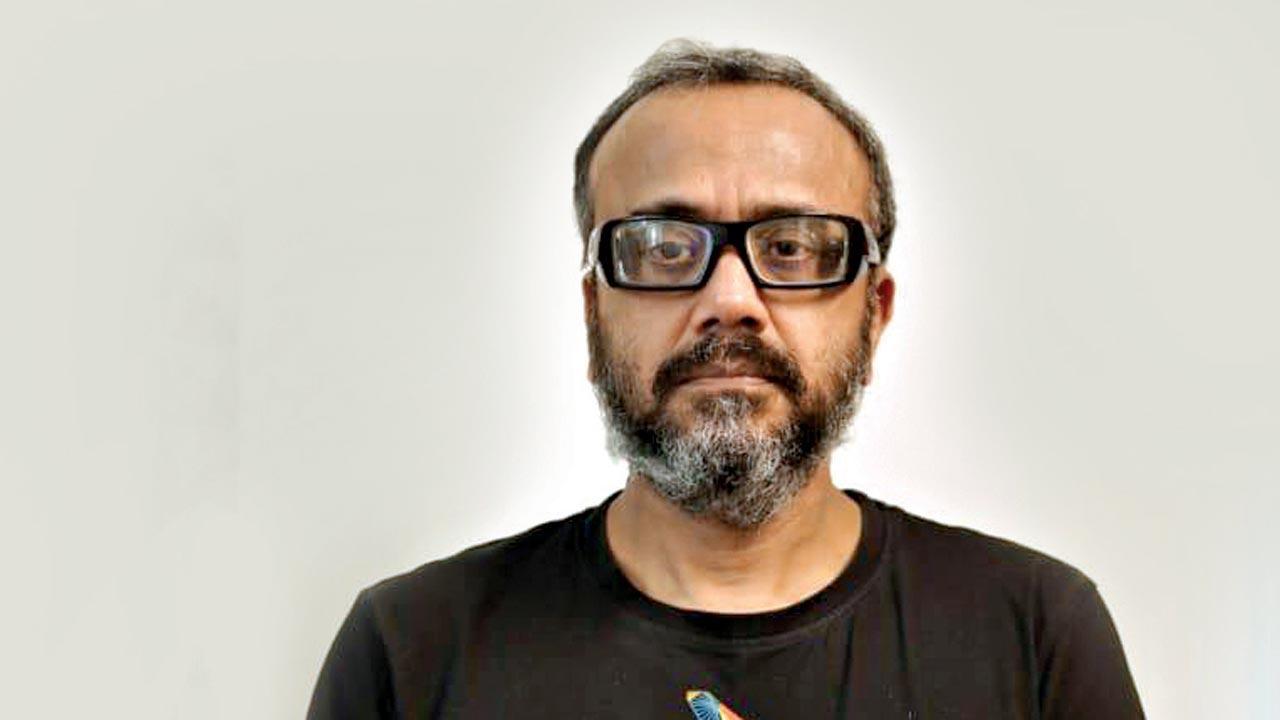
LSD 2 director Dibakar as he talks about making his unflinching brand of cinema and why only a few producers will work with him
Priyanka Sharma (MID-DAY; April 20, 2024)
Fourteen years is a long time between a film and its sequel. But Dibakar Banerjee is certain that Love Sex Aur Dhokha 2 (LSD 2) required a decade of experiences and observations. When producer Ektaa R Kapoor called him in 2020 to propose the possibility of LSD 2, the director knew it was time.
“I thought that a decade has passed and everything has changed in this period. So, there is enough masala [to create] a spiritual offspring. If LSD 1 was about the camera serendipitously spying on you, LSD 2 is you living for a thousand cameras,” he says.
Spanning three stories, LSD 2 is a result of Banerjee’s observations of the invasion of social media in people’s lives. It shows how the internet is both a medium of freedom and enslavement. He elaborates, “The internet gives us a certain kind of independence. In the virtual world, we can be whoever we fantasize to be. But when we reinvent our identity and try to sell it, we are caught in it and that’s the exact opposite of freedom.”
Gender was another concept that the filmmaker wanted to examine. The film has transgender actor Bonita Rajpurohit in a lead role, a first for Bollywood. While the team is tom-tomming about it, the director sees it as neither a feat nor a risk.
“The way I see it, if there is a transgender character, a transgender actor has to play it. It’s only when we started promoting the film that we were told to say out loud that this is the first Bollywood film with a transgender actor in the lead. There is another story in the film, which also has a transgender character, but is played by a man because we were told that taking two transgender actors will be too much. So, we all make our compromises.”
Compromise isn’t a word you’d usually associate with Banerjee, and thankfully so. In his 15-year career, his voice remains distinct, political and often searing—be it Oye Lucky Lucky Oye (2009) or Shanghai (2012) or Ghost Stories (2020). His work has not fallen prey to commercial cinema’s trappings.
How has he managed that? “I keep myself cheap,” he laughs. He says by now, producers know that he won’t pander to their demands. “People have stopped asking me if I can make a certain kind of film. I am like an auto driver—when you ask him if he will go to Andheri, he says no. [He’ll go where he wants to go.] Similarly, my producers say, ‘Aapko kaunsi film banani hai, bata do. We’ll see if it’s feasible for us.’”
Does that mean he rejects most projects that come his way? “No, I am not some big blockbuster director, whom everybody is running after. There are only a few producers who want to make interesting projects and hence, look for me. For instance, Ektaa won’t tap me for The Dirty Picture 2. She is smart, and knows what kind of films I’ll do.”
Not toeing the industry’s line comes at a price, of course. It’s not lost on Banerjee. But it’s a price he is willing to pay. “What happens as a result is that I have one less bedroom in my house, or have a smaller car and less money in my bank account. But like a cockroach, I survive by still going ahead with the story that I want to tell.”
If the film industry doesn’t show some spine, it will be the death knell for stories-Dibakar Banerjee
8:08 AM
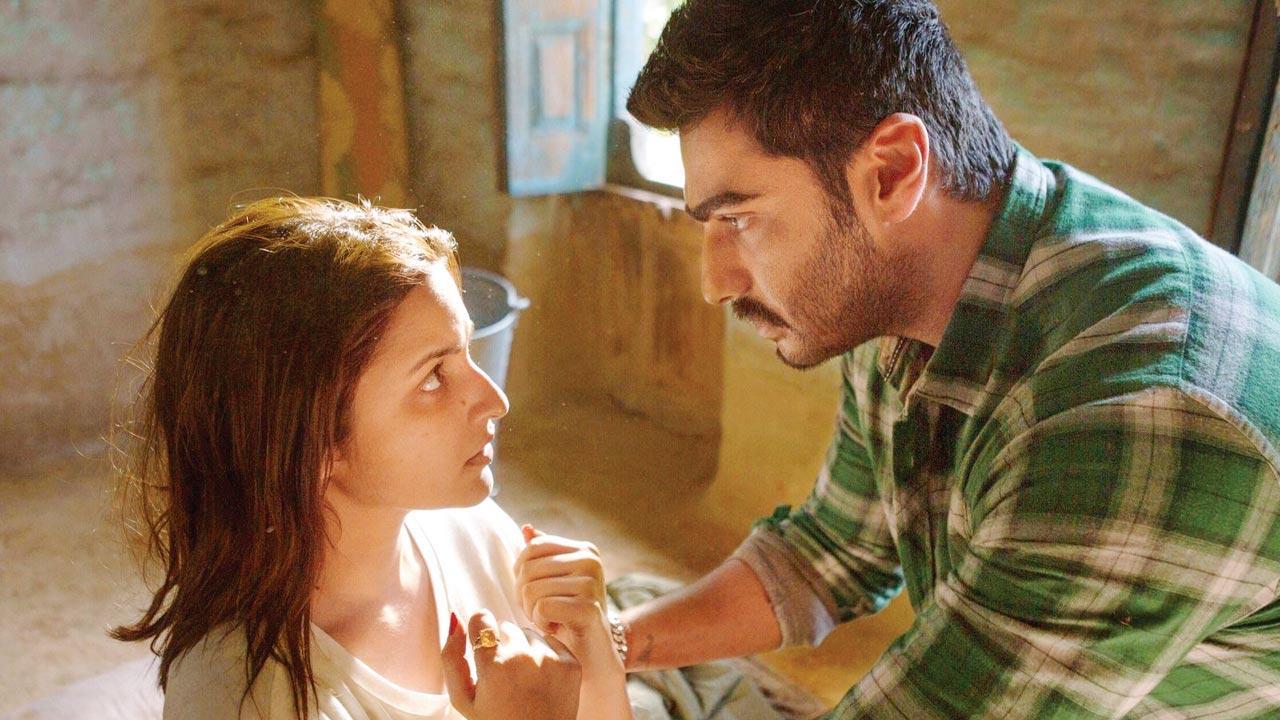
As Sandeep Aur Pinky Faraar wins praise on its online release, director Dibakar Banerjee urges industry to take a stand against curbs on creative freedom
Uma Ramasubramanian (MID-DAY; June 1, 2021)
All that matters to Dibakar Banerjee is that Sandeep Aur Pinky Faraar has earned a nod of approval from his 85-year-old mother. A quick glance at social media will tell you that there are countless others who share his mother’s opinion. Ever since the Arjun Kapoor and Parineeti Chopra-starrer dropped on Amazon Prime Video, there has been an outpouring of love from viewers, something the film didn’t receive upon its theatrical release in March.
The man behind the black comedy doesn’t quite know how to react to the appreciation. “I’m not on social media, so I have no idea about the reaction. I get to know [about the film’s success] through happy calls from the studio,” begins Banerjee, laughing that his leads keep calling to apprise him of the growing love for the satire. “This is the film you would’ve seen theatrically. We haven’t changed an iota of it.”
The movie, which sees Chopra’s banker Sandeep Kaur and Kapoor’s suspended cop Pinky Dahiya on the run from the Haryana police, studies how the balance is tipped against even the most successful women. The material is only elevated by the leads’ restrained performances. “I’m happy if people are saying it’s Arjun’s best performance by far. I always had Parineeti in my mind [for the female lead]. For Pinky, we had one or two names in mind. Aditya [Chopra] suggested Arjun for the role; he felt Arjun is in a phase where he’ll jump out of his comfort zone and will die trying. I was happy to see that he didn’t let the ball drop.”
From returning his National Award as a mark of support to the protesting FTII students in 2015 to offering a commentary on the majoritarian government through his short film in Ghost Stories (2020), Banerjee has often raised his voice against the ruling dispensation.
Asked about the gagging of creative voices, the filmmaker says, “I had warned seven to eight years ago that the film industry [should] give a clear signal that we are not a bunch of sitting ducks who will react to outside pressure. We should prove ourselves to be thinking adults who care for society and care to tell true stories. If the film industry doesn’t come together and show some spine, it will be the death knell for stories. While we talk about our love for our country and patriotism, we have given ground to Hollywood to make inroads into our system. It has been able to do so due to its superior content.”
Suddenly we are being made to defend normal-Dibakar Banerjee
1:47 PM

Udta Punjab gets its censor certificate on Wednesday around 7 pm; filmmaker Dibakar Banerjee addresses arbitrary cuts issue
Dibakar Banerjee (MUMBAI MIRROR; June 16, 2016)
 The cuts were unjustified and what's even more appalling is the
acceptance of the unjustified - till the makers rebelled. That a film
was being butchered to such an extent, with orders to remove all
reference to a state or its cities was baffling. The High Court has
rightly questioned the intention behind these cuts. What is it about the
drugs issue that the ordinary Indian citizen doesn't know already? Are
we not already aware that certain politicians and criminals are a part
of this nexus? Don't we encounter such cases in our lives? Don't we talk
about it in the bus or train? Why are we suddenly treating Punjab's
drug problem as a secret?
The cuts were unjustified and what's even more appalling is the
acceptance of the unjustified - till the makers rebelled. That a film
was being butchered to such an extent, with orders to remove all
reference to a state or its cities was baffling. The High Court has
rightly questioned the intention behind these cuts. What is it about the
drugs issue that the ordinary Indian citizen doesn't know already? Are
we not already aware that certain politicians and criminals are a part
of this nexus? Don't we encounter such cases in our lives? Don't we talk
about it in the bus or train? Why are we suddenly treating Punjab's
drug problem as a secret?
In the case of Udta Punjab the producers and director were brave enough to go to court because the cuts were grievously injurious to their film. They had nothing to lose. But a hundred other films face cuts everyday and their makers, including me, don't have the courage or resources to approach the Tribunal because we are too close to the release date and want to protect our producers and ensure they don't suffer losses. If we have to go to the High Court every time to fight arbitrary cuts, it shows rather poorly on the body that is supposed to clear a film's exhibition by certifying what age group the film is fit for. Also why should a film maker have to defend the normal and the truthful at court as something deviant and almost criminally intended? What about the audience for whom the film is being made? Have we become a society where millions of adults (whose votes are avidly solicited, who constitute the economic engine of the New India) are suddenly reduced to voiceless idiots who have to hand over to a few people the decision of what they can or cannot consume as entertainment or food for thought? Do things have to come to this pass for us to be aware of the problem? It's like only after a child is killed us realizing that there is a child killer around. And what about regional and marginal films that do not have the chatterati value of Bollywood and the huge audience? How do they protest against the unfair cuts? Haven't we heard enough about the pendency of cases in our legal system to burden it with more litigational fights that need not have been so at all?
Indians need to respect the intelligence of other Indians. Until we trust our fellow Indians we will be treated like adolescents all our lives. It suits some, but it does not suit the world's largest democracy and one of its fastest growing economies.
The suggestion by the censor revamp committee to introduce an 'Adults with Caution' category, if true, is ridiculous and laughable, as the journalist who asked this question of me proved by not being able to suppress a giggle. Isn't Adult enough? When will we grow up enough? Vote dete hain. Bacchon ko palte hain. National Anthem pe khade hote hain. Chori ka nahi khate. Aur kitna bada hona padega bhai?
This from a committee headed by Shyam Benegal who's been our guiding light on dissent with films like Ankur, Manthan and Bhumika in which he took state oppression, feudalism, patriarchy and chauvinism head on? I find it difficult to believe. There must be some mistake somewhere.
Cinema is dear to me. Its teaching must be free of political agendas-Dibakar Banerjee
8:58 AM

Dibakar Banerjee is set to return the national award for his first film, Khosla Ka Ghosla, in solidarity with FTII students and to protest rising intolerance. The filmmaker tells Anahita Mukherji that his decision is not politically motivated and that the country needs the BJP as a viable and successful national alternative in order to function as a democracy
Anahita Mukherji (THE TIMES OF INDIA; November 1, 2015)
Writers and filmmakers
usually protest through their work. What has prompted so many to turn
activists and return awards now?
I think all of us - you, me and the average silent Joe on the street - are extremely afraid of what is going on in India today. I have heard sentiments of fear expressed by people irrespective of whether they voted for Congress or BJP. People who voted BJP in the hope of an alternative to the absolute inertia and corruption of the Congress are now expressing extreme anguish over the state of the economy, public safety and the manner in which any view is being expressed with extreme violence. A rightist has every right to disagree with leftists. But in a democracy nobody should be killed for their views. And if that happens, the government must be agile and act fast. That urgency and agility is not being seen. But I know there are people within the current government who want the situation to be different. Things can only change if the average Indian wants them to. If the situation persists, day by day it will become harder to effect change.
It is being alleged that the returning of awards was politically motivated and timed with the Bihar elections.
No. This has nothing to do with elections or parties. I deeply want BJP as a viable and successful national alternative. The more national alternatives we have, the better for democracy. I would want neither the Congress nor the BJP to be the only viable national party. My film Shanghai highlights the problems of Mumbai under successive Congress governments. I want all BJP supporters who are smart, aware and constructive not to look at this protest as politically motivated but one that is fundamentally about the education we impart to our students.
Anupam Kher's tweet says filmmakers returning awards insults the jury that selected them.
I know Anupamji very well and we are good friends. If there has been any insult to the jury, my apologies to them. But my conscience tells me I am not insulting the jury. I am trying to raise the level of consciousness of the writers and filmmakers that were part of the jury and the larger body of citizenry. If they find that someone to whom they had given a national award, and who has nothing personal against any of them, wants to return it, they will want to know why I am doing so. I am doing it because the education of what I hold dear is being governed not by merit but by political agendas.
Some say the FTII student stir is basically a left-wing rejection of a right-wing chairperson.
If BJP MP Paresh Rawal or party supporter Anupam Kher were made FTII chairperson, do you think these protests would have taken place at this level? Between Paresh Rawal and Gajendra Chauhan, who would one imagine, instinctively, as more qualified to head FTII? I do not care whether the chairperson is affiliated with the current party in power or the previous one. Students questioned whether Chauhan had a body of work to his credit that qualified him to head the institution. Students had also objected to four members appointed to the FTII panel whose very bio data shows that their work propagates a monochromatic view and pushes the political agenda of the party they support in a very violent and rabid manner. Individually, they have every right to do what they want to further a political ideology. But it is not their job to teach cinema or sit on the apex body of India's premiere film institute.
The religious Right usually cites Indian culture and tradition to back their cause. Yet you use the same argument to justify the FTII protest.
When it comes to imparting an education, we want it to be unbiased. This means all cultural thought is offered up equally. The tenets of the Indian education system were developed well before Left or Right came into existence. A teacher who spoke of one school or philosophy also spoke of another. Debates and arguments are part of India's culture. You see this in the Upanishads which are a series of arguments between the vaadi and vivaadi (opposing chords). The Gita is a series of questions between Arjun and Krishna, as friends. Whether Right or Left, one can easily see the need for unbiased teaching, for which a teacher must have a history of work that allows for a breadth of knowledge that gives the student a complete picture of the discipline. If this is absent, students will not respect the teacher and the education will not be valid.
I think all of us - you, me and the average silent Joe on the street - are extremely afraid of what is going on in India today. I have heard sentiments of fear expressed by people irrespective of whether they voted for Congress or BJP. People who voted BJP in the hope of an alternative to the absolute inertia and corruption of the Congress are now expressing extreme anguish over the state of the economy, public safety and the manner in which any view is being expressed with extreme violence. A rightist has every right to disagree with leftists. But in a democracy nobody should be killed for their views. And if that happens, the government must be agile and act fast. That urgency and agility is not being seen. But I know there are people within the current government who want the situation to be different. Things can only change if the average Indian wants them to. If the situation persists, day by day it will become harder to effect change.
It is being alleged that the returning of awards was politically motivated and timed with the Bihar elections.
No. This has nothing to do with elections or parties. I deeply want BJP as a viable and successful national alternative. The more national alternatives we have, the better for democracy. I would want neither the Congress nor the BJP to be the only viable national party. My film Shanghai highlights the problems of Mumbai under successive Congress governments. I want all BJP supporters who are smart, aware and constructive not to look at this protest as politically motivated but one that is fundamentally about the education we impart to our students.
Anupam Kher's tweet says filmmakers returning awards insults the jury that selected them.
I know Anupamji very well and we are good friends. If there has been any insult to the jury, my apologies to them. But my conscience tells me I am not insulting the jury. I am trying to raise the level of consciousness of the writers and filmmakers that were part of the jury and the larger body of citizenry. If they find that someone to whom they had given a national award, and who has nothing personal against any of them, wants to return it, they will want to know why I am doing so. I am doing it because the education of what I hold dear is being governed not by merit but by political agendas.
Some say the FTII student stir is basically a left-wing rejection of a right-wing chairperson.
If BJP MP Paresh Rawal or party supporter Anupam Kher were made FTII chairperson, do you think these protests would have taken place at this level? Between Paresh Rawal and Gajendra Chauhan, who would one imagine, instinctively, as more qualified to head FTII? I do not care whether the chairperson is affiliated with the current party in power or the previous one. Students questioned whether Chauhan had a body of work to his credit that qualified him to head the institution. Students had also objected to four members appointed to the FTII panel whose very bio data shows that their work propagates a monochromatic view and pushes the political agenda of the party they support in a very violent and rabid manner. Individually, they have every right to do what they want to further a political ideology. But it is not their job to teach cinema or sit on the apex body of India's premiere film institute.
The religious Right usually cites Indian culture and tradition to back their cause. Yet you use the same argument to justify the FTII protest.
When it comes to imparting an education, we want it to be unbiased. This means all cultural thought is offered up equally. The tenets of the Indian education system were developed well before Left or Right came into existence. A teacher who spoke of one school or philosophy also spoke of another. Debates and arguments are part of India's culture. You see this in the Upanishads which are a series of arguments between the vaadi and vivaadi (opposing chords). The Gita is a series of questions between Arjun and Krishna, as friends. Whether Right or Left, one can easily see the need for unbiased teaching, for which a teacher must have a history of work that allows for a breadth of knowledge that gives the student a complete picture of the discipline. If this is absent, students will not respect the teacher and the education will not be valid.
Being slotted is my nightmare-Dibakar Banerjee
3:11 PM

Filmmaker Dibakar Banerjee, who attempted a contemporary take on the fictional Byomkesh Bakshi featuring Sushant Singh Rajput, talks about the middling to positive reviews to his film, evolving audience sensibilities and more in a no-holds-barred conversation
Asira Tarannum (MID-DAY; April 13, 2015)
Your film, 'Detective Byomkesh Bakshy!' (DBB) has received mixed reactions. What were your expectations?
I didn't know there were mixed reactions. I thought they were polarised reactions, mostly from those who have held on to Sharadindu Bandyopadhyay and his book, Byomkesh, as a fetish. Fortunately, we had anticipated something like this because we knew the animal we were unleashing. The surprise is that the audience, which goes to the theatres to watch a film, has come out saying that it's been an experience. I expected the curious reaction, but not the euphoria over the film.
But hasn't this happened with all your films?
No, this time everyone was saying that Dibakar would sell out. But the opposite happened. This is the best thing to happen because I have gone out of the slot again. Being slotted is my nightmare. With this film, I have avoided the slot at least for a year or two. For the next couple of years, no one will trust me.
But then great filmmakers Manmohan Desai and Basu Chatterjee also worked within a slot...
Mercifully or unfortunately, Manmohan Desai had a short career. God knows what would have happened to him if he had gone forward at that time. With the failing star power of Amitabh Bachchan and other actors in the '70s, it wouldn't have been a good space to be in and that would have been a direct consequence of the slot he was in. But times have changed and we all have to earn respect and money by making films. I am trying to do that so that I can pay my EMIs and for you to keep calling me.
Many have said that it's difficult for a normal audience to understand your film?
Who is the normal audience?
The audience which goes to watch 'Kick'...
Maybe, but I know you can understand it. I also know that you and I are not necessarily more intelligent than the person walking on the road who goes to watch Kick. It's just that we have more time to read and think. Their life is unfortunate and they want an escape. They watch a film to derive the same entertainment which you and I will get from watching a play, or going for a picnic, a night in the company of a lover or music, or perhaps, a trip to Goa. All these are not accessible to them, so they demand those pleasures from one film. So when that film comes, they watch it. But today India has an audience which will get one film Rs 25 crore in a weekend — they belong to our group, people who have time to think. They might watch a film which will tell them they are not dumb. That's all what we are trying to tell the audience through this film.
Did you tell Aditya Chopra (boss of YRF, which produced 'Detective Byomkesh Bakshy!') what kind of a film you will be making and that he may not get the kind of returns he usually does?
The only thing we discussed was that the experience would be drastically different. He said he was game for something which shakes up everything and makes one per cent contribution in changing the taste of this country's audience. Because that's what a Dibakar Banerjee film with Sushant Singh Rajput and YRF production banner may hope to achieve. He feels that today's niche is tomorrow's mainstream.
Would you say this has been your toughest film?
Physically, yes. But fortunately I have been adapting this (Sharadindu Bandopadhyay's book) for the last six-seven years. Urmi (Juvekar) came in and added a valuable layer to the film. The toughest part was writing the script.
When can we expect a sequel to Byomkesh?
I will not make the sequel right now though we have the material for it. Byomkesh has already got a lot of marks for being unexpected, so the sequel has to top it and go beyond the audience's expectations.
Sushant speaks...
Your performance was understated and totally suited the character that we had in mind about Byomkesh. Was that difficult for you to play?
It was deliberate. A lot of people asked me why I was not looking confident in the initial part of the film and I said that was precisely the point. It is so easy as an actor to be confident in front of the camera, but the role required me to be not that confident initially.
We have seen different portrayals of Byomkesh in films and on TV. Were you sceptical about the role?
First, I had convince myself that I can play this character from the 1940’s. Then there was a sense of responsibility to tell the audience who Byomkesh is. I met some people in Kolkata during my prep and they had very strong opinions about Byomkesh. Although I was skeptical, I was resolute about not letting them down. We got a lot of calls appreciating Byomkesh’s portrayal. Post the film, the biggest changes that I see in myself is clarity of thought and being aware of what I want.
Do we see you turning producer soon?
Why not? I have been discussing with a few of my close friends about how to sell a film, just for fun. I have nothing worked out as of now.
India is a victim of Bollywood and Tollywood-Dibakar Banerjee
7:56 AM

Dibakar Banerjee on why regional cinema are in need for succour and how film festivals can contribute to it
Shakti Shetty (MID-DAY; September 24, 2014)
He comes from an advertising background and is, no wonder, succinct. Dibakar Banerjee doesn’t shy away from speaking his mind. In a tête- à- tête with hitlist , Banerjee shares his thoughts on the significance of film festivals and regional cinema’s fluctuating fortunes on day two of the Jagran Film Festival (JFF)…
There’s been a steady rise in the number of film festivals in the country, especially in Mumbai…
The more the merrier, because you never know which festival will find its identity. The selection of films makes all the difference, but it would be nothing without proper management and curation. However, a film festival in Mumbai assumes significance as it would be under the direct shadow of Bollywood. We need film festivals because if it is a single dominant film festival, the drive to compete and come up with better films diminishes a bit.
What, according to you, should an event like JFF aim for?
It should try to be around for as long as possible. That would be a challenge indeed but say, 10 years down the line, we will see the quality of films screened are going to be of the highest level. Film festivals that started as an enthusiast and a critic event 60 years ago — Cannes, Venice or Berlin — are among the most revered in the world today. A festival prepares the market, the audience and the talent of tomorrow.
Where exactly does the commercial viewpoint enter a film festival?
Film festivals will eventually have a commercial pull. The greatest film distributors, exhibitors and sales agents are spotted at international film festivals like Cannes because they know their purpose is best served with proper attention. A film festival is a language of cinema and it’s not the only one. There are different types of film fests and different films are appreciated by different people with different sensibilities. What this situation demands is a promise that no new talent or idea would be overlooked.
But isn’t there a ‘stigma’ attached to film festival with the audience expected to be fans of artsy films?
Do you associate automobiles with art? I don’t think we do but that doesn’t change the fact that every design that an auto company comes out with is a manifestation of art. Auto shows put out designs that won’t hit the market until two or three years and the same applies to film festivals. I don’t think I would have made it on the film fest circuit had my work not been appreciated at international film festivals. Do you think the distributors, who eventually picked my films on the global film fest circuit, did it just like that? I don’t. They were clued in and wanted to be part of something they thought would be interesting. A film fest attracts those at the forefront of cinema, the ones who experiment and others. You can call them artsy at your own risk because you never know what’s going to click in, say, five years and turn commercial.
Why do you emphasise on workshops before getting down to shoot?
When you’re making a film, you tend to forget that there is much more to a script than the technical angle. You set things up, put the light in order and want to do your best with camera. But what happens mostly is that we forget that the actor is a human being too and not just a tool to be employed. So, I feel an actor should be interacted with properly before s/ he turns into a tool.
Don’t you feel that regional cinema is not given much attention unless a film festival highlights them?
India is a victim of Bollywood and Tollywood... just like the world is a victim of Hollywood. So there is a huge hegemony in place and this monopolistic approach grounds out the talent. Regional cinema tends to come up with the freshest stories. No wonder the Hindi film industry has been constantly stealing stories from regional cinema. To ensure we continue to steal good stuff, it’s necessary that we encourage regional cinema. And as audiences, where else would you get to watch them first hand if not at a film festival?
Subscribe to:
Posts (Atom)