Showing posts with label Dibakar Banerjee. Show all posts
Showing posts with label Dibakar Banerjee. Show all posts
Producer Savita Raj Hiremath reacts to the long gap in making Khosla Ka Ghosla 2: "Good things take time"
9:18 AM
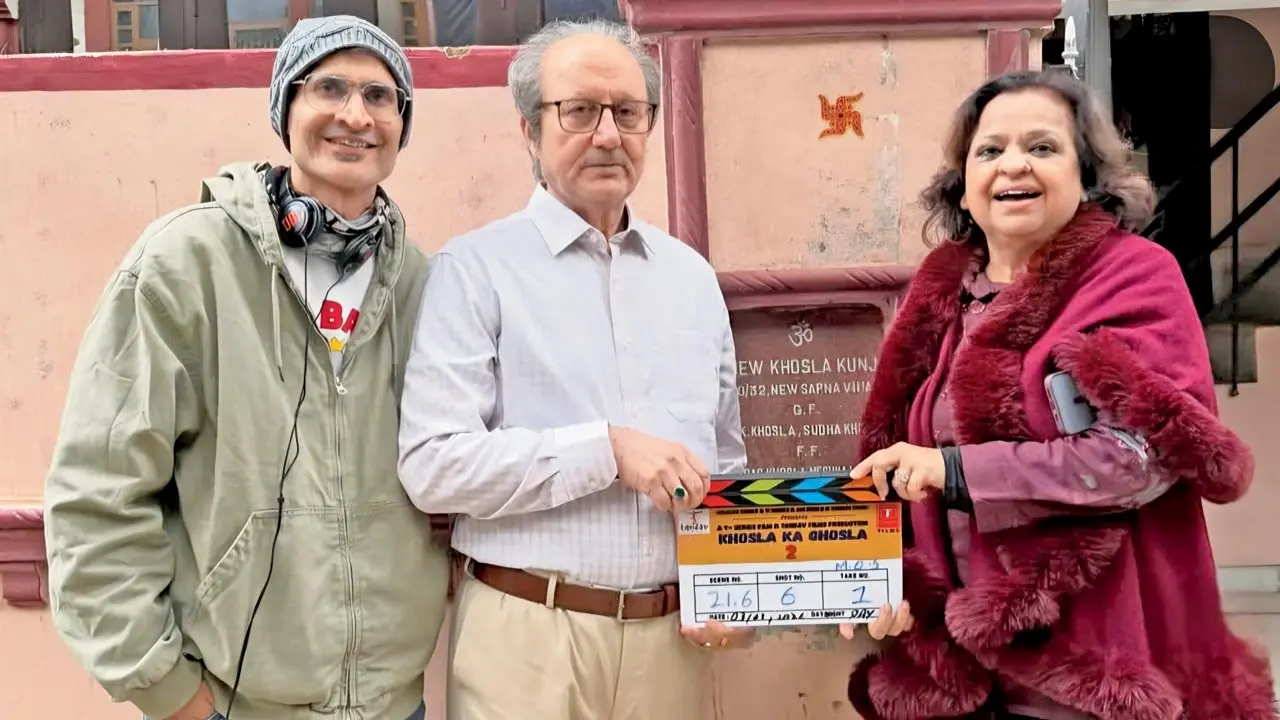
Prashant Bhagia, Anupam Kher, and Savita Raj Hiremath
Upala KBR (MID-DAY; January 7, 2026)
The Khosla household is back in a familiar territory as cameras roll once again, on the sequel to Khosla Ka Ghosla (2006). The film, which recently went on floors in Gurgaon, reunites key members of the original cast while expanding the story with new characters and conflicts.
Tara Sharma Saluja, Anupam Kher, Ranvir Shorey, Ravi Kishan, Kiran Juneja, and Parvinn Dabbass are presently filming the sequel in Gurgaon, with Boman Irani and Divya Khosla expected to join soon. The new film continues from where the original ended, with the characters older, settled and facing fresh challenges.
Producer Savita Raj Hiremath tells mid-day that the long gap was inevitable. “Good things take time and it wasn’t easy to make the sequel as expectations are more. There are so many actors in the movie, finding the right story was important.” She adds, “Director Dibakar Banerjee and writer Jaideep Sahni aren’t involved this time. My team and I have written the story this time.”
Though Banerjee was approached, the sequel eventually found a new director in ad filmmaker Prashant Bhagia. “If they say that KKG is not their zone anymore, obviously I had to find another director, and I found that simplicity in Prashant.”
Despite the shift, the emotional core remains. “When we say KKG we mean there is something more about the ghosla that matters a lot to the Khoslas,” says Hiremath.
Khosla Ka Ghosla 2 to go on floors in December, original cast to reunite
9:13 AM
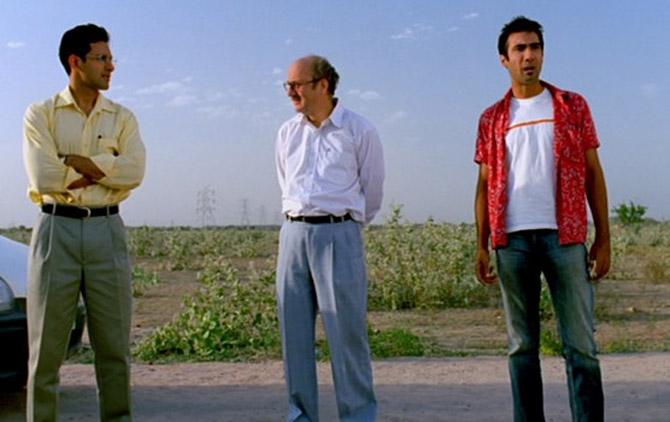
‘Khosla Ka Ghosla’ sequel to go on floors next month; while Dibakar Banerjee passes the directorial baton, Anupam Kher reveals the original cast members are set to return
Priyanka Sharma (MID-DAY; November 24, 2025)
Dilliwale Mr Khosla is back! In October 2024, producer Savita Raj Hiremath had announced that the sequel to director Dibakar Banerjee’s much loved Khosla Ka Ghosla (2006) was in the works, a piece of news that cheered not only its fans but also its cast members. Now, mid-day has exclusively learnt that the film is set to go on floors in December.
Confirming the news, leading man Anupam Kher tells mid-day, “We are starting Khosla Ka Ghosla 2 next month.”
The National Award-winning film — also starring Boman Irani, Parvin Dabas, and Ranvir Shorey — told the story of Kher’s Kamal Kishore Khosla, whose plan of building a house for his family comes crashing when an unethical real estate builder dupes him. Through the satire, Banerjee, who made his directorial debut, examined the corruption that often eats up the hard-earned savings of the common man in India.
Unfortunately, Banerjee won’t helm the sequel. While details about the director and script are under wraps, Kher shares that the original cast will return. “It’s a brilliant script. That was my major concern — the script has to be great. I am excited to reunite with the cast on the set next month,” he says.
15 Years of Love Sex Aur Dhokha: Rajkummar Rao butt-naked scene was cut by the Censor Board
9:16 AM

As Rajkummar Rao and Nushrratt Bharuccha’s debut film Love Sex Aur Dhokha (LSD) clocks 15 years, here’s some interesting trivia around the film
Compiled by Akash Bhatnagar (HINDUSTAN TIMES; March 20, 2025)
WHEN RAJ WENT BUTT-NAKED
While he has set boundaries on screen over the years, Rajkummar did bare it all in his first film. “In LSD, I was butt naked in a scene. Of course, it wasn’t cleared by the censor board; it was blurred, but I was scared to do it,” he told India Today, adding, “I also knew that it was my first film and big break, and I couldn’t turn around and say that I’m not comfortable doing it. I didn’t know when I’d get my first film again.”
He was also glad about his parents’ reaction to it: “My mum said, ‘You’re an actor. If your role demands it, then go ahead and do it.’”
NO PAY FOR NUSHRRATT
While Rajkummar was paid Rs. 11,000 for LSD, Nushrratt didn’t get any money for it. “I always wanted to work with (director) Dibakar Banerjee. When I watched Oye Lucky! Lucky Oye! (2008), I said that I would work for free with Dibakar and that’s what happened. I didn’t get paid for the film, not a single penny,” she told Zee News in an interview.
THE BEGINNING OF RAJKUMMAR RAO
LSD marked the entry of many new faces in Bollywood, including Rajkummar Rao. “For my first audition, I wore atrangi clothes, as per the brief. I was asked, ‘What are you wearing? Do you have anything else?’ I said, ‘No’. I was like, ‘S***, I’m gone, he doesn’t like it’,” the actor recalled on the podcast with Raj Shamani.
However, he got a call back and was asked to shed weight from his face. “In one week, I lost a lot of weight. I ran a lot,” he said. While his performance was loved, it left his now wife, actor Patralekhaa “creeped out”. After seeing LSD, she refused to do a music video with him.
EKTAA WAS ‘SHOCKED’
Director Dibakar Banerjee had revealed that producer Ektaa R Kapoor was shocked after seeing the film for the first time. And interestingly, it wasn’t because of the content on voyeurism and free-for-all invasion of privacy, but due to the treatment and format of it. The film was shot in a digital format with a hand-held camera, and thus Ektaa asked Dibakar why the camera was shaking so much? She even doubted who will watch the film. Reportedly, the director shared that his producer initially didn’t believe that such an unusual and shocking film would be viable. She also got so paranoid after watching the film that after coming out of the theatre after watching the movie, she was looking for bugs and cameras everywhere around her.
THE SEQUEL THAT BEGAN ON BIGG BOSS
A sequel to the film, LSD 2, was released last year, but it’s journey started on Bigg Boss 16. Ektaa went to the house to cast the female lead, actor Nimrit Kaur Ahluwalia. But, she didn’t do the film. Dibakar had said during LSD 2 promotions that the casting on Bigg Boss was just a “PR stunt”.
If producer pays writers more, and they deliver, it’s the producer who makes more money-Niren Bhatt
9:32 AM
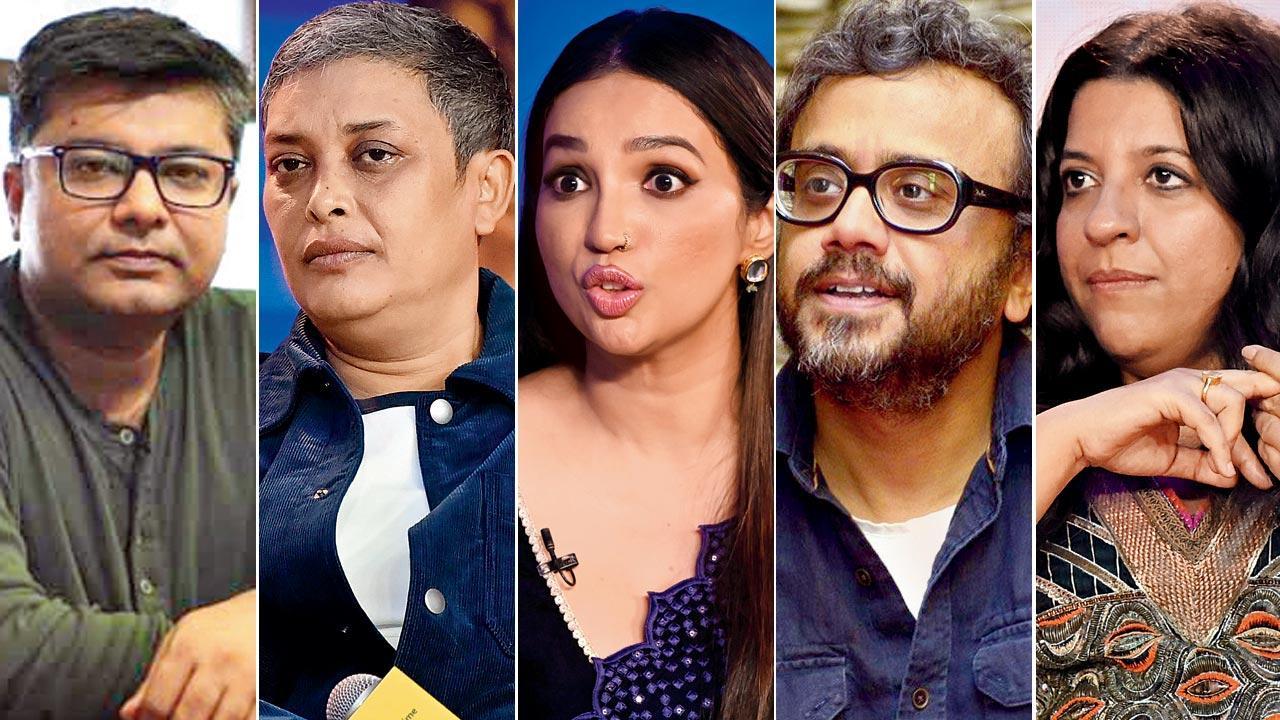
Niren Bhatt; Reema Kagti. Pic/Kirti Surve Parade; Kanika Dhillon. Pic/Satej Shinde; Dibakar Banerjee. Pic/Getty Images; Zoya Akhtar. Pic/Kirti Surve Parade
At the recently concluded 7th edition of the Indian Screenwriters Conference, writers spoke about the industry’s unhealthy practices that are hurting the ones who shape the backbone of the project—the story
Priyanka Sharma (MID-DAY; February 23, 2025)
Never seen before”, “phenomenal”, “relevant”, “hatke” are just some of the adjectives stars often deploy to sell the stories of their next releases during promotions. But one hardly hears the names of the writers, whose work prompt stars to green-light their projects. But the invisibilzation of screenwriters in the Hindi film industry doesn’t begin when a film nears release. It goes back to the beginning of the process, when a writer’s words start taking shape.
As we catch Niren Bhatt at the seventh edition of the Indian Screenwriters Conference held by Screenwriters Association (SWA), the man behind last year’s blockbuster Stree 2, says a brainstorming session between a director and a writer ends up with the former taking the writing credit. “Directors stealing credit is a practice that has been going on for years. The final credit slate will feature them as both director and writer of the project, while the actual writer is given credit somewhere else.”
The fight for rightful credit is exhausting and many a time, a writer is forced to make do with the remuneration and move on. But how is that struggle any better, when more often than not a writer’s pay is dependent on everything else but his/her story. “A writer friend of mine recently showed me his contract with a studio, which I will not name, where it was mentioned that the tranches (of his fee) were dependent on the actor’s approval and once the director comes in, then on his approval. Those kinds of contracts are unhealthy,” shares Bhatt, who also had his share of unfair contracts at the beginning of his career, but success has made negotiations easier. “People need to realize that if you pay writers more, and they deliver, it’s you who makes more money,” he adds.
“Young writers sit with bigger writers or producers and directors, soak in all that these people say, and go home and write. And then, they get the last credit. Just talking a lot doesn’t make you a writer. Only the ones who writes, is a writer. This is one of the biggest challenges that young writers are struggling with today,” says filmmaker-writer Reema Kagti, behind acclaimed works like Talaash, Made In Heaven and Dahaad. She makes her point in her art as well. Her upcoming work, Superboys Of Malegaon, penned by Varun Grover, features an emotionally charged dialogue, which says, “Writer baap hota hai, writer”.
But a mere small talk with any screenwriter in Mumbai will reveal that a writer actually the neglected child of a large family. From stolen credits to abominable fee, Bollywood screenwriters pay a heavy price for every written word. “It’s obnoxious,” says Zoya Akhtar, Kagti’s frequent writing partner and co-producer on Superboys Of Malegaon.
She breaks down why exploitation of writers is casual. “Because everyone thinks they can write. I can’t think I can act or be a cinematographer, as these are very ‘specialized’ skills. With writing, everyone thinks they know end mein kya hona chahiye. They don’t understand a lot of the times what the integrity of the story is.”
Filmmaking doesn’t happen in isolation, it thrives on collaborations, which naturally involve suggestions and inputs from cast and crew members. But that shouldn’t dilute a writer’s role and position, Akhtar says. “Every actor I have worked with isn’t a prop. They are talented beings, who have their process to reach a character, whether we have written it or not. They will come up with their suggestions. As a filmmaker or a writer or a showrunner, it’s your job to filter it, by thinking, is this adding to the larger narrative or the theme I want to sell?”
Screenwriter-producer Kanika Dhillon is reminded of her initial days, when producers and directors would be baffled at her demands. After all, the industry notoriously expects writers to forgo fairness in lieu of work offered to them.
“When I used to go for meetings with producers or directors, their main grouse would be, ‘How are you talking like this? This has never happened here. No writer asks or says this. Hence, you can’t get it’. So, every time I have crossed a milestone, I have made sure to speak about it. So others can do it as well,” she says. Even today, after Dhillon has created a successful filmography that features titles like Manmarziyaan, Kedarnath and Haseen Dillruba (Part 1 and 2), she is asked to not speak up for writers’ rights. “I am told, ‘Arey, you have achieved so much. Why do you need to speak up?’ But why should I not? My success has emboldened me.”
Bhatt believes speaking up is the only option. “Don’t say ‘I am just a writer. No one bothers about me’.” But self-victimization is only natural, when an artiste is constantly pushed to a corner. That’s where community support becomes essential, says National Award-winning filmmaker-writer Dibakar Banerjee.
“A lot of the writers, who work here, are not from Mumbai. They try to write, survive, and face all the existential and creative questions. They are trying to improve their craft. In this kind of a situation, having a community with shared problems, thoughts and ecosystem really works. A community is most important so that nobody is left alone. If you are left alone, you will be exploited. If you are in a community, it’s that much harder to exploit you because we all stand for each other,” he says, lauding the efforts of SWA to uphold a writer’s rights and back him/her in time of need.
"I really hope that this kind of building from strength to strength really reaches that level, where no writer at least who is a part of SWA, feels alone. It’s when you feel alone, you start getting depressed, having doubts about your craft and start listening to idiotic requests from a studio or a platform, who doesn’t understand what you are trying to do. In every which way you become vulnerable. Writers in this city are the most needed and the most neglected at the same time. I have seen the advantages of having a community. That can be anything, your crew, a number of like minded people, who are there. Like, I just got a call from a writer and he had something to say, which was very hard to share. But he shared. That’s what having a community feels like.”
Tees is a film that is suppressed; it's like my Khosla Ka Ghosla experience being repeated-Dibakar Banerjee
8:46 AM
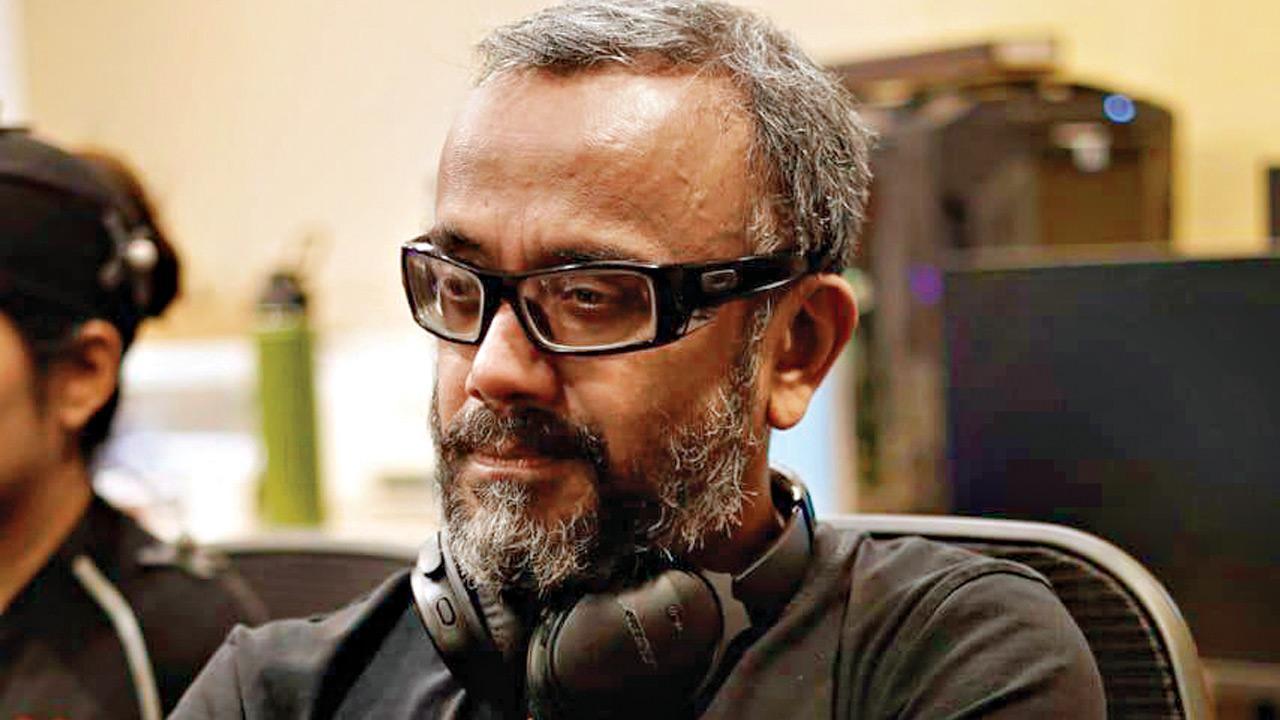
Even as he is developing three projects, director Dibakar Banerjee on how his 2022 film Tees has been shelved by Netflix and his struggle to find another producer for its release
Priyanka Sharma (MID-DAY; February 18, 2025)
One thing to know about Dibakar Banerjee is that his mind is always ticking, he is always pursuing his next story. That’s exactly what the director has been doing in the 10 months since his last release, Love Sex Aur Dhokha 2 (2024). He is currently co-writing three scripts and testing new waters with each.
“The need to start from zero is very important. Otherwise I’ll become a senior filmmaker. I don’t want that. My hair is falling, but my brain is still young. I want to start from zero. I have never done the kind of films that [I’m developing] now,” he says.
The new projects, however, share one aspect with the acclaimed movies that Banerjee has made in his 18-year career so far—dark humour. It has been a constant in his stories, be it Oye Lucky Lucky Oye (2008) or Sandeep Aur Pinky Faraar (2021). “I’m not making a funny film. But all my films have humour. I can’t tell stories without it,” he says.
Through each movie, the two-time National Award-winning filmmaker will explore the country’s different eras. “They are set in India— contemporary India, India of the past, and of the future.”
While Banerjee is looking forward to his future projects, the past is also on his mind. The director’s Tees, a Kashmiri family’s saga exploring India’s “personal, ideological, and sexual history,” was initially set for a 2022 Netflix première. However, the streamer held off the release of the Naseeruddin Shah and Manisha Koirala-starrer. Banerjee, who was reportedly told that it wasn’t the right time to release the film, has been since searching for a producer, who can buy it off the streamer. It has reminded him of the struggle he faced with Khosla Ka Ghosla (2006), which wasn’t finding takers as it was an unconventional film for the time.
“Tees is a film that is suppressed. I considered it my best before LSD 2. It’s made for the audience of Khosla Ka Ghosla, the same audience that started my journey. We are trying desperately [to find a producer]. It’s almost like my Khosla Ka Ghosla experience being repeated. We went around showing that film to every distributor for two years and everyone would say, ‘What a film!’ But nobody would buy it. It took Ronnie [Screwvala], UTV and Sid [Siddharth Roy Kapur] to release it.”
Your therapist bills go up; you feel rage, helplessness-Dibakar Banerjee
8:03 AM

Dibakar Banerjee opens up on needing therapy to deal with the trauma of his unreleased film, Tees
Priyanka Sharma (MID-DAY; April 28, 2024)
Dibakar Banerjee’s latest offering, Love Sex Aur Dhokha 2, has opened to critical acclaim. But the filmmaker has yet to move on from the pain of his unreleased work, Tees. Spanning three generations of a family, Tees is said to reflect “the personal, ideological and sexual history of India”. Netflix was slated to release it in 2022, but pulled the plug on it—an episode that Banerjee says he hasn’t been able to move past.
“It’s definitely not easy to go on, keeping aside the project I gave my all to. Your therapist bills go up a lot when the sense of repression, rage, anger, and absolute helplessness catch you, and you have to still plod on through the day,” says the director.
Banerjee is known for his searing films, from Shanghai (2012) to Sandeep Aur Pinky Faraar (2021), and it’s heard that Tees was no different, a scathing political movie. The filmmaker is now seeking producers to buy it from the streaming giant. “In 2022, [the officials at] Netflix said, ‘Looking at the times around us, we don’t think it would be correct to release this film.’ They owned the film. They paid me fully. So, they can do whatever they want.”
He is well-aware that a director like him has to constantly hustle to take his movies to the audience, more so when it’s a political drama. Banerjee believes the genre of political dramas is dead in India, where the population indulges in hero-worshipping and has become numb to critical thinking.
“Between oligarchy of distribution, OTT platforms, retail outlets, all the companies that disburse content today and a state that’s anxiously trying to curtail the expression of diversity of thought, this was supposed to happen. When you hand over your destiny to the Baahubali who promises to deliver you from all evil, when you stop thinking and engaging in collective action and become a crowd instead of a dynamic society, this is inevitable.”
I am like an auto driver; when you ask him if he will go to Andheri, he says no-Dibakar Banerjee
8:36 AM
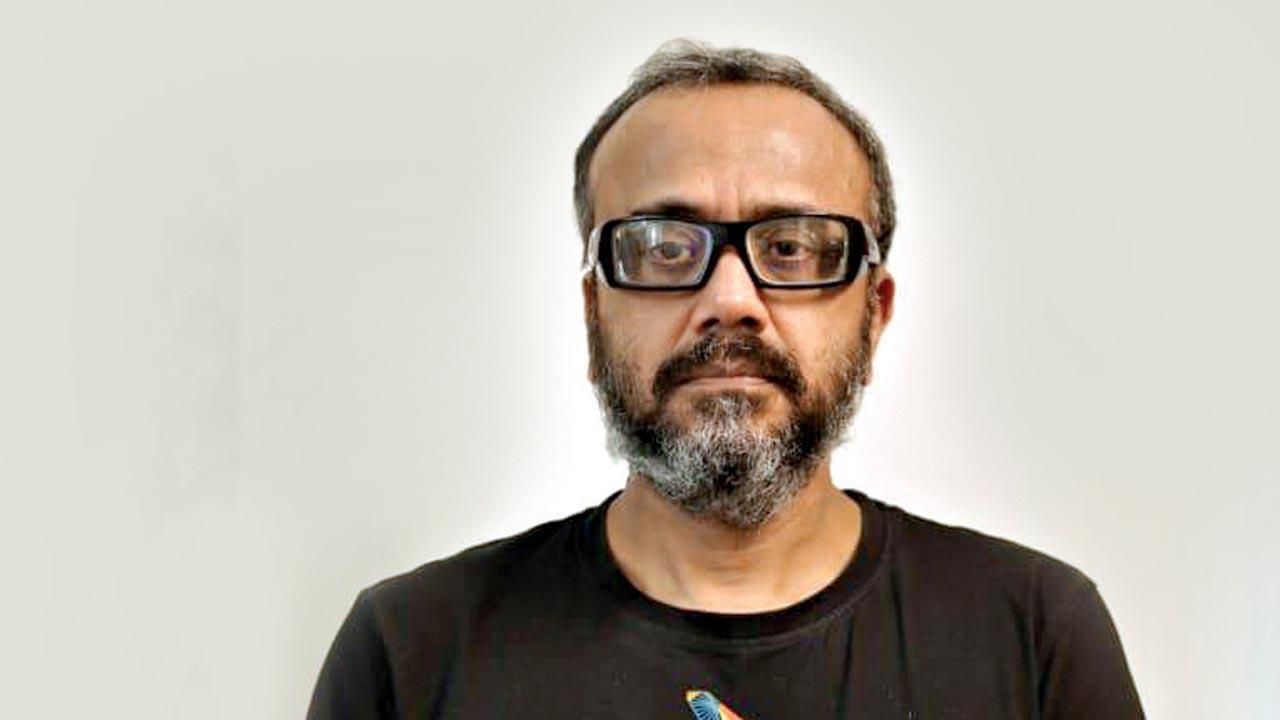
LSD 2 director Dibakar as he talks about making his unflinching brand of cinema and why only a few producers will work with him
Priyanka Sharma (MID-DAY; April 20, 2024)
Fourteen years is a long time between a film and its sequel. But Dibakar Banerjee is certain that Love Sex Aur Dhokha 2 (LSD 2) required a decade of experiences and observations. When producer Ektaa R Kapoor called him in 2020 to propose the possibility of LSD 2, the director knew it was time.
“I thought that a decade has passed and everything has changed in this period. So, there is enough masala [to create] a spiritual offspring. If LSD 1 was about the camera serendipitously spying on you, LSD 2 is you living for a thousand cameras,” he says.
Spanning three stories, LSD 2 is a result of Banerjee’s observations of the invasion of social media in people’s lives. It shows how the internet is both a medium of freedom and enslavement. He elaborates, “The internet gives us a certain kind of independence. In the virtual world, we can be whoever we fantasize to be. But when we reinvent our identity and try to sell it, we are caught in it and that’s the exact opposite of freedom.”
Gender was another concept that the filmmaker wanted to examine. The film has transgender actor Bonita Rajpurohit in a lead role, a first for Bollywood. While the team is tom-tomming about it, the director sees it as neither a feat nor a risk.
“The way I see it, if there is a transgender character, a transgender actor has to play it. It’s only when we started promoting the film that we were told to say out loud that this is the first Bollywood film with a transgender actor in the lead. There is another story in the film, which also has a transgender character, but is played by a man because we were told that taking two transgender actors will be too much. So, we all make our compromises.”
Compromise isn’t a word you’d usually associate with Banerjee, and thankfully so. In his 15-year career, his voice remains distinct, political and often searing—be it Oye Lucky Lucky Oye (2009) or Shanghai (2012) or Ghost Stories (2020). His work has not fallen prey to commercial cinema’s trappings.
How has he managed that? “I keep myself cheap,” he laughs. He says by now, producers know that he won’t pander to their demands. “People have stopped asking me if I can make a certain kind of film. I am like an auto driver—when you ask him if he will go to Andheri, he says no. [He’ll go where he wants to go.] Similarly, my producers say, ‘Aapko kaunsi film banani hai, bata do. We’ll see if it’s feasible for us.’”
Does that mean he rejects most projects that come his way? “No, I am not some big blockbuster director, whom everybody is running after. There are only a few producers who want to make interesting projects and hence, look for me. For instance, Ektaa won’t tap me for The Dirty Picture 2. She is smart, and knows what kind of films I’ll do.”
Not toeing the industry’s line comes at a price, of course. It’s not lost on Banerjee. But it’s a price he is willing to pay. “What happens as a result is that I have one less bedroom in my house, or have a smaller car and less money in my bank account. But like a cockroach, I survive by still going ahead with the story that I want to tell.”
OTT platforms are now battling threats, FIRs, boycotts and trolling, just like theatrical distributors-Dibakar Banerjee
8:47 AM

Rishabh Suri (HINDUSTAN TIMES; February 21, 2023)
Director Dibakar Banerjee’s film Tees is in trouble, as the OTT platform, Netflix, which was supposed to release it has backed out. Starring actors Naseeruddin Shah, Kalki Koechlin and Huma Qureshi, the movie was shot, finished and delivered to the streaming platform. But, Banerjee has been “verbally” told by them that “they were not sure if this was the right time to release the film”. So, has it been shelved? “I haven’t been mailed anything to the effect,” the 53-year-old says.
While OTT is considered an artiste’s medium, where makers, writers and actors have the liberty to go all out with creativity, this instance suggests that filters have started seeping into the web space as well. “It’s not about guts, but the ease of business that is rapidly decreasing. The [OTT] platforms are now battling litigations, threats, FIRs, boycotts and trolling, just like theatrical distributors. They are dependent on the blessings of the government to function, mine data, hook eyeballs and [make] profit. Entertaining critique and active social relevance, like in all my earlier films, are now taboo,” he says.
A dialogue with the OTT platform to expedite the process of taking Tees to buyers is underway, he says: “A lot of people have shown interest in Tees, but whether it converts into a commercial buyout is yet to be seen. I have a long, lonely battle ahead like Khosla Ka Ghosla! (2006).”
Not every character you play will be in your belief system-Arjun Kapoor
8:17 AM

Even as he admits that every character can’t share his beliefs, Arjun says his films Kuttey and The Lady Killer back gender equality
Mohar Basu (MID-DAY; August 4, 2022)
With Ek Villain Returns behind him, Arjun Kapoor is now focusing on his upcoming projects — Aasmaan Bhardwaj’s Kuttey and Ajay Bahl’s The Ladykiller. The actor believes that the two films, through their narratives, further gender equality. For Kapoor, Ki And Ka (2016) was the starting point from where he ensured that he backed movies batting for gender equilibrium.
He says, “There is a gender bias created subconsciously in our upbringing. It is up to artistes to break it by doing films that they can ideologically stand by. Like in Sandeep Aur Pinky Faraar [2021], the climax initially had Pinky [his character] beating up Jaideep Ahlawat’s character. But Dibakar [Banerjee, director] did research, and added the final sequence [where Pinky cross-dresses to escape the police]. It was a big risk. But that’s where your own faith convinces you to take the plunge. I come from a deep-rooted understanding of gender dynamics, and want to submit to such stories.”
A look at the recent hits — from Pushpa: The Rise (2021) to KGF: Chapter 2 — and it’s easy to see that the male leads showcase problematic behaviour. How does an artiste align with that?
“Not every character you play will be in your belief system. But these characters operate from their own values,” explains Kapoor, who was the voice of reason in the otherwise misogynistic Ek Villain Returns. “Films aren’t always about teaching, but also about showing [the reality]. Do we need to glorify it? No. If there is something I find unnecessary [in the story], I will debate it. As actors, we must pick material carefully.”
My goal is to see the entire planet in this lifetime. If I could do only one thing in my life, I would travel and see the world-Parineeti Chopra
8:52 AM

Harshada Rege (BOMBAY TIMES; December 31, 2021)
Parineeti Chopra was one of the few actors to have multiple releases in 2021. But that wasn’t the only highlight of the year for her. The actress spent a lot of time travelling to various scenic destinations. From diving deep in the ocean to exploring off-beat places, she did it all. In the last quarter of the year, she clocked in a decade in the industry and celebrated the occasion by being on the sets of Sooraj Barjatya’s Uunchai. In a chat with Bombay Times, the actress talks about her passion for travelling, striking a work-life balance and pushing her boundaries as an actress. Excerpts:
You were seen in three films in 2021, which had you in diverse roles. Would you say that this is the year that you stepped out of the box and played characters perceived image?
I will say that 2021 was the year that I finally did the work that I wanted to do for so many years. The problem is that sometimes actors are not cast in the kind of work they want to do because directors have not seen them in something like that. So, often you do certain roles because that’s what’s been offered to you. I have been doing such roles (out-of-the-box roles) for many years now, but I wasn’t really finding the right script; that’s why I am thankful to directors Ribhu Dasgupta, Dibakar Banerjee and Amole Gupte for giving me these films that I am not the obvious casting for. I had faith that I could do these roles, but you don’t get these films till the directors offer them to you.
You got good reviews and box office success at the beginning of your career, which was followed by a difficult phase. Now, it looks like you have managed to return to form. What has inspired you to keep going in the last 10 years in the industry?
I started my career in the best way possible for me as an actor. What I mean is that there are different kinds of journeys for an actor. Sometimes, people struggle for years and then find success, while some find success on day one and then have to struggle later.
Since I got success with my first film itself that gave me clarity about how I wanted to conduct my career. Then, of course, you make different kinds of choices — some work, some don’t, and then you start learning. If you ask me where I get the motivation from, I will honestly say that there has been a lot of hits and trials. At the beginning of my career, I got to do very different work that is not expected from a Bollywood heroine, and I got a lot of success in that. Then, I tried a different route, which I didn’t like, and those films didn’t work. Now, I am back to where I wanted to be. It’s been pretty interesting for me, I would say.
Your social media account gives an indication that you have travelled a lot this year. Are you an ardent traveller, and does that help you as an actor?
There are two aspects to this, my goal is to see the entire planet in this lifetime. If I could do only one thing in my life, I would travel and see the world. I must tell you that only 10% of it makes it to social media. I believe in living in the moment and not taking the pressure of posting it on social media. The other aspect is that because I meet so many strangers and become friends with people from all over the world, I get a lot of inspiration as an actor, and I am able to use that, especially now in the films that I recently did. There was a time when I was doing only rom-coms or a certain kind of film that didn’t require that sort of homework. I am happy that now I am living such an amazing life and getting to use these experiences. I did that in Saina, The Girl On The Train and Sandeep Aur Pinky Faraar. I am glad that people are seeing me in a different light as a person as well as an actor.
You took a long break at one point in your career, was it the time you felt the need to strike a work-life balance?
I come from a very different background. I am built like a corporate worker. In corporate life, you have a 9 to 5 job, and largely speaking, you have some kind of work-life balance. This (acting) is not that kind of a job, we often work on weekends, every day is completely different and our schedules are pretty hectic, but the kind of person I am, I will get burnt out and saturated if I don’t keep taking breaks. When I say breaks, I don’t mean a six-month-long break, it could be just a two-day break to travel, so that I can come back recharged. At the beginning of my career, I was doing so much work that I didn’t take a break for the first three years, which is actually against my nature. I realised that it was not working for me, so I forced a break on myself. In fact, I took a six-month-long break and worked on myself and made myn ew house...I realised that I have to balance it out well. At that time, I was just starting my career, so you know how it is...you just dive into it and forget about everything else, but I soon realised that it doesn’t work in the long run.
You have some exciting projects coming up. While Animal has you opposite Ranbir Kapoor, you recently shot for Sooraj Barjatya’s film Uunchai. How do you see your career panning out now? What are you expecting from 2022?
It almost overwhelms me... I feel like the last few years were, like I said, that hit and trial phase. I was trying out things, but I don’t think they were the right decisions for me, barring a few films. I was waiting for my films to do well and for critics to appreciate my performances again. And of course, you want to do big-ticket films at all times. It is 2021 that gave me both. I hope that 2021 was just a teaser for the rest of my career.
It seems to be the wedding season in B-Town, what’s your headspace like in the personal zone?
I am in the space that I always have been in. I focus on living my best life. I meet so many people and I try and build my relationships with them. I try and live as peaceful and happy a life as I can.
What about having someone special in your life... a partner, a boyfriend?
I don’t think I can talk about that. Whenever there is something that is final or needs to be told, I will share that with the world.
When we saw Khosla Ka Ghosla for the first time, Anupam Kher was excited about my entry, which was unbelievable-Boman Irani
8:40 AM

Impeccable script, talented cast, Khosla Ka Ghosla lives on; The comedy with its commentary on social issues and generation gap elevated its status to a cult classic
Text by Kavita Awaasthi (HINDUSTAN TIMES; September 22, 2021)

Tara Sharma
The film cuts across all age groups. It created awareness about loopholes while dealing with property-related matters. It doesn’t feel like 15 years; I feel it was just yesterday that we were shooting for it. We made some wonderful friends. As it was a small-budget film, we shared the same vanity van and played many games.

Boman Irani
This film holds a special place in my heart. To play a Punjabi character was a leap of faith for me. Jaideep Sahni (writer) wanted to cast me, but I wasn’t keen on playing the role, as it was a daunting task. Today, I am grateful to him for having faith in me. Dibakar Banerjee (director) and Jaideep hand-held me through the dubbing process. Anupam Kher saab was a huge support. When we saw the film for the first time, he was excited about my entry, which was unbelievable. The film helped people cast me in roles outside my comfort zone without trepidation. It had a huge impact on my career.

Parvin Dabas
What struck me was the simplicity of the script. It was not your regular film. I remember meeting Dibakar Banerjee for the role, but he was cocky for a first-time director and wanted me to audition immediately. I told him, ‘Do you want a good audition or a quick audition?’ I came the next day and improvised on scenes and when I was done, he offered me the role. The film faced hurdles, but was a hit when it released.

Ranvir Shorey
I was starting out at that time and was auditioning a lot. It was a difficult decision for Dibakar to cast me, but he trusted me with the role. Playing the Punjabi, Delhi ka launda was familiar to me. I remember reading the script and thinking how perfect it was. The making was fun, with all credit to Anupam Kher, who led the cast in every way. He inspired and entertained us. I struck a great friendship with him. It was frustrating to wait for the release, especially as the film was important for my career.
Now, I have validation that I should follow my instinct and not worry about box office-Arjun Kapoor
8:19 AM

Harshada Rege (BOMBAY TIMES; June 15, 2021)
Arjun Kapoor’s nine-year stint in Bollywood has been a roller-coaster ride of sorts. The actor has seen box-office success followed by films that failed to click. Arjun admits that he fumbled when he based his career choices on what he thought an actor is supposed to do, rather than follow his instinct. However, the release of his recent film made him look at his career path in a new light. In a conversation with BT, the actor talks about different kinds of cinema, and also highlights what he terms the ‘new commercial narrative’ that’s growing in the industry. Read on:
You have always said that you love all things typically Bollywood unabashedly, but you have also made interesting choices at regular intervals like Aurangzeb, Finding Fanny or Ki & Ka, and your new release Sandeep Aur Pinky Faraar. Do you find yourself wondering how to strike the balancing act?
The endeavour is to try and do stuff that excites me at a personal level and also as a member of the audience. Sometimes, you have to be intimate about your selection, because as an actor these are the things you have craved that you would get an opportunity to do. Yes, it has been a tough act to balance because over a span of two-three years, you get masked as a mainstream commercial hero, so you aren’t given enough offers of this kind. Therefore, you have to go and seek that unique and different film rather than it coming your way organically. However, that doesn’t stop me from seeking it.
Also, the lines have blurred from 2012 to 2021, where a film like Sandeep Aur Pinky Faraar (SAPF) is not looked at just as an interesting choice, or Aurangzeb and Ki & Ka aren’t looked at as offbeat films. They blend with the commercial, or rather, the new commercial narrative that’s growing, and that’s a heartening sign.
Theatres had reopened after seven months in November 2020, but had to down shutters once again during the second wave of Coronavirus. The pandemic played havoc with film releases and business. How did you deal with the uncertainty around the release of your film?
In my case, the release of SAPF was affected not once, but twice. First in March 2020, when we had the trailer out and had started the marketing, and then again in March 2021, when we were preparing once more and had to deal with the fact that there was a likelihood of another lockdown. At such a point, you just accept the fact that the film is not meant to connect with the audience in a broad spectrum and you feel it will be scattered — with the movie coming out mainly on satellite and digital. You accept that and detach yourself from the result but continue to believe that the process was worth it. You can’t get emotional about these things because they are beyond your control... it’s not like everyone else’s films were releasing.
We wanted to make sure that the film comes in theatres, and Dibakar sir (director Dibakar Banerjee) had made a film that I felt would get its due over the years to come. What I didn’t expect was this burst of love and genuine understanding of what the film speaks about, and people catching the nuances to such a level. The rekindling of the magic of Ishaqzaade that had Parineeti and me... This time around our chemistry was appreciated despite being devoid of romance. And this is where the audience wins at the end of the day. You can’t predict the audience or know them beyond a point, you can just keep your head down and work honestly and hope that the film connects with them.
You recently said that you followed your instincts at the beginning of your career and you fumbled a bit when you tried to strategize after a certain point. How did you get into that phase?
People tell you that you should do films that are viable at the box office, and I have done that and enjoyed those. When I had said I fumbled, what I meant was that I got muddled in my thinking about what actors are supposed to do versus what I should do. When you look at it through the optics of what your stardom should have you doing versus what the audience or you as an actor or someone who watches films should do, sometimes you get confused. When I was offered my kind of cinema, I just grabbed it.
What are you planning to do differently when it comes to selecting future projects?
The material that I am doing right now is selected with an attempt to make sure that you are looking at the pan-India audience, who likes to be entertained. When I do a film with Mohit Suri, I am aware that he connects with our entire country when it comes to romance, music and action, and there’s a certain way he presents actors. At the same time, when I am doing a horror-comedy with Saif Ali Khan, I know it appeals to the audience with certain sensibilities, and mine as well. I have always wanted to be a part of a comedy with Saif, and things just fell into place and Bhoot Police took shape.
Do you feel more confident now to make choices that don’t necessarily fall into the typical Bollywood hero trap?
Now, I have validation that I should follow my instinct and impulse, and not worry about the box-office implications... well, right now all of that exists on paper, so you can’t tell where the situation will be one year down the line. You just have to go with your instinct and know that the audience is sensible. Right now, they are consuming material on OTT, so when they come into the theatres — and believe me, they will — they should feel respected and not taken for granted. So, the material that I am selecting now, whether it’s more mainstream or as they call it a little off-centre, there is a certain regard that I am keeping in my mind for the audience, where I myself don’t want to be taken for granted when I go to watch a film, be spoon-fed and be made to feel silly about things. I want to enjoy cinema that stimulates while entertaining me. You realise that the audience is ready to use all their might to get involved in the journey of the characters, catch on to the smaller details and make a film a bigger success. Before SAPF came on OTT, I was thinking about whether I should stick to a certain kind of cinema, but this experience has given me the confidence to dabble in both worlds and enjoy myself equally.

If the film industry doesn’t show some spine, it will be the death knell for stories-Dibakar Banerjee
8:08 AM
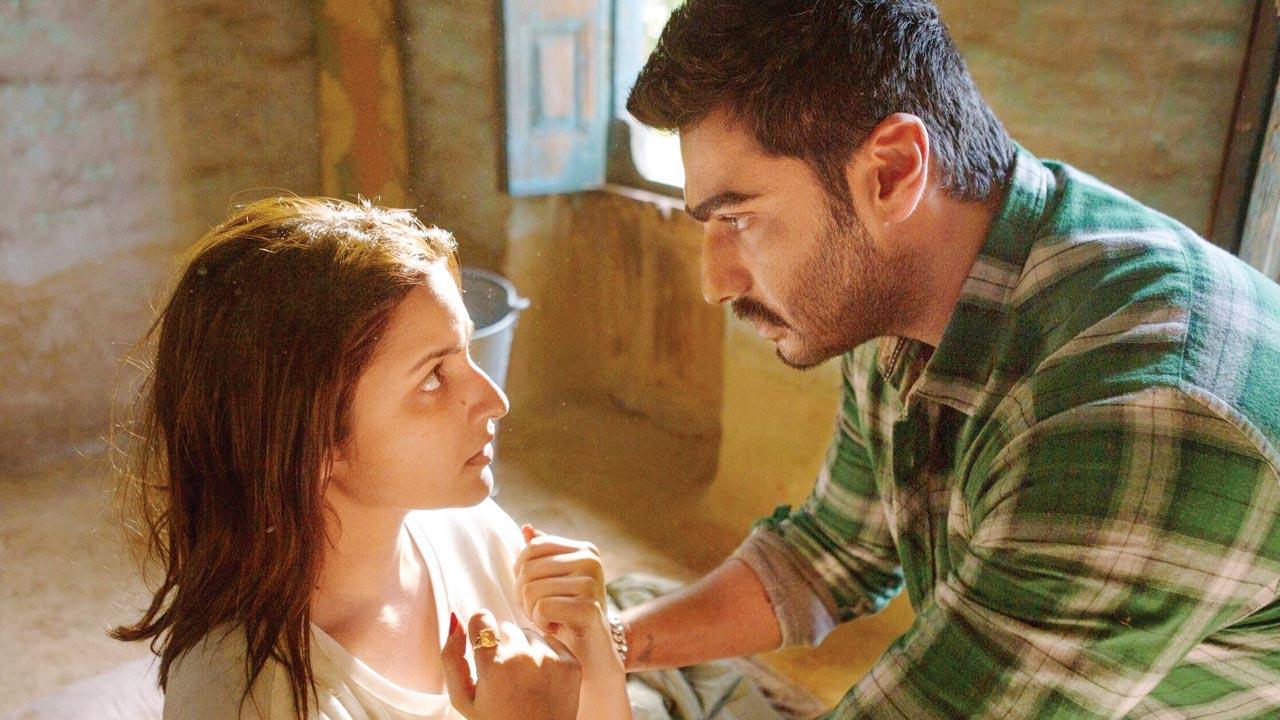
As Sandeep Aur Pinky Faraar wins praise on its online release, director Dibakar Banerjee urges industry to take a stand against curbs on creative freedom
Uma Ramasubramanian (MID-DAY; June 1, 2021)
All that matters to Dibakar Banerjee is that Sandeep Aur Pinky Faraar has earned a nod of approval from his 85-year-old mother. A quick glance at social media will tell you that there are countless others who share his mother’s opinion. Ever since the Arjun Kapoor and Parineeti Chopra-starrer dropped on Amazon Prime Video, there has been an outpouring of love from viewers, something the film didn’t receive upon its theatrical release in March.
The man behind the black comedy doesn’t quite know how to react to the appreciation. “I’m not on social media, so I have no idea about the reaction. I get to know [about the film’s success] through happy calls from the studio,” begins Banerjee, laughing that his leads keep calling to apprise him of the growing love for the satire. “This is the film you would’ve seen theatrically. We haven’t changed an iota of it.”
The movie, which sees Chopra’s banker Sandeep Kaur and Kapoor’s suspended cop Pinky Dahiya on the run from the Haryana police, studies how the balance is tipped against even the most successful women. The material is only elevated by the leads’ restrained performances. “I’m happy if people are saying it’s Arjun’s best performance by far. I always had Parineeti in my mind [for the female lead]. For Pinky, we had one or two names in mind. Aditya [Chopra] suggested Arjun for the role; he felt Arjun is in a phase where he’ll jump out of his comfort zone and will die trying. I was happy to see that he didn’t let the ball drop.”
From returning his National Award as a mark of support to the protesting FTII students in 2015 to offering a commentary on the majoritarian government through his short film in Ghost Stories (2020), Banerjee has often raised his voice against the ruling dispensation.
Asked about the gagging of creative voices, the filmmaker says, “I had warned seven to eight years ago that the film industry [should] give a clear signal that we are not a bunch of sitting ducks who will react to outside pressure. We should prove ourselves to be thinking adults who care for society and care to tell true stories. If the film industry doesn’t come together and show some spine, it will be the death knell for stories. While we talk about our love for our country and patriotism, we have given ground to Hollywood to make inroads into our system. It has been able to do so due to its superior content.”
There is scope for a dark, gritty and thrilling sequel of Sandeep Aur Pinky Faraar-Arjun Kapoor
8:03 AM

With Sandeep Aur Pinky Faraar getting a new lease of life on OTT, Arjun says Dibakar’s satire lends itself to second instalment
Mohar Basu (MID-DAY; May 27, 2021)
Sandeep Aur Pinky Faraar’s run at the theatres may have been cut short due to the second wave of the pandemic, but you can count on a good film to get its due sooner or later. Dibakar Banerjee’s black comedy, featuring Arjun Kapoor and Parineeti Chopra, has got a new lease of life, courtesy its release on Amazon Prime Video last week. Kapoor, who is basking in the praise coming his way, feels the film’s climax — that sees his character give Haryana Police the slip — sets the stage for a sequel.
“If you see the climax that Dibakar has so masterfully designed, you will realise that there is scope for a dark, gritty and thrilling sequel. Now, with all the love and appreciation that the film is getting, it is up to my director to tell us whether he can see [a second instalment] happening. Whenever he gives us the green signal, Pari and I will be on board,” says the actor.
Through the journey of Chopra’s Sandeep Kaur, a successful banker who is on the run from the cops, the film studies how women have to battle patriarchy and toxic masculinity in the professional field and outside of it.
Kapoor’s Pinky Dahiya evolves from an aggressive suspended cop to an empathetic aide, fighting for what is right. “As an actor, the film took me to places that I didn’t imagine going. All the appreciation I’m getting is because Dibakar saw me as Pinky Dahiya. He told me to believe in myself and submit to his process,” he adds.
I need to be convinced as to why a director wants to cast me in their Hindi films-Prosenjit Chatterjee
8:11 AM

Titas Chowdhury (HINDUSTAN TIMES; April 15, 2021)
Nine years after his film Shanghai (2012) released, Prosenjit Chatterjee has returned to Mumbai to shoot for his upcoming Hindi language project. The actor had recently kick-started the first schedule of his debut web series, titled Stardust, in the city. He says that the spike in Covid-19 cases and shoots getting stalled are surely matters of concern, but one has to push their fears back and keep working once they resume.
“The situation is tough not just for actors but technicians, too. Shooting during these times will be a major challenge. But this is an exercise that we need to learn and adapt to. There is a fear button within all of us, but we should know when to turn it off,” Chatterjee says.
Ask him about what kept him away from the Hindi entertainment industry for so long and the Bengali film star says, “It’s not like I consciously kept myself away. When Dibakar Banerjee (filmmaker) had approached me for Shanghai, my first question to him was why he wanted to cast me in his Hindi directorial. The same thing happened when Vikramaditya Motwane (filmmaker) approached me for my upcoming collaboration with him. I need to be convinced as to why a director wants to cast me in their Hindi films.”
On the occasion of the Bengali New Year, the 58-year-old says that had the situation been normal, he would have flown back to Kolkata (West Bengal) to spend the day with his family.
So, what is his wish for this new year? “It is going to be a year-and-a-half that we’re living with the pandemic. I pray to God that we overcome this and go back to our normal lives. The process of vaccination has started and I hope we all get vaccinated soon. I also wish for everyone’s good health,” he signs off.
Now, jokingly people call me Pari 2.0 version-Parineeti Chopra
8:07 AM

Parineeti Chopra says that she has always tried to surprise her audience with roles and films that are a far cry from her perceived image
Juhi Chakraborty (HINDUSTAN TIMES; March 31, 2021)
She is the busiest actor in 2021. After all Parineeti Chopra already has had three film releases — The Girl On The Train, Sandeep Aur Pinky Faraar and Saina this year, all of which are starkly different from one another and a far cry from her girl-next-door image that she had in the initial phase of her career.
So, has it been a conscious decision for her to stay away from such roles now? “100% yes. I was feeling a bit saturated with the kind of work that was being offered and the kind of work that I was choosing. When I did certain type of roles and did them well on screen, nobody envisioned me doing anything different. But I had faith in myself and I wanted to surprise the audience, and shock them,” she says.
However, Chopra, who started her acting career with Ladies vs Ricky Bahl (2011), adds that one does not always get to do what they want in the film industry.
“It is a two way street. Makers need to have that confidence in me. So, actually I am thankful to Dibakar (Banerjee) sir, Ribhu (Dasgupta) and Amole (Gupte) sir. They were the three directors who saw me outside of what I had done onscreen. I was aching and itching to do these kind of meaningful roles. I am thankful to them for putting faith in me and getting the ball rolling for me. Now, jokingly people call me Pari 2.0 version,” the 32-year-old shares.
Two of the actor’s films have been theatrical releases and Chopra says she is happy that things are slowly getting back to normalcy.
“It is a mixed feeling. Last year, given the climate, it wasn’t feasible to do any cinematic releases properly and you know most people decided to shift their work to this year. So in 2021 there seems to be a lot of traffic, loads of releases. In any other year I would have said wow what a year for me I have three films releases within a month, but honestly this year it is more about keeping fingers crossed and seeing how people react and how our films do. More than my films releasing in cinemas, my relief is that things are getting back to normal,” the actor explains.
But Chopra also feels that it was a wise decision for makes to go for OTT releases. Her film The Girl On The Train was one too. “Times have changed in the way films used to release last year. There are now limited releases, there are OTT releases, films are releasing in all sorts of way,” she concludes.
Ranveer Singh and Parineeti Chopra are two people with whom I share a kinship-Arjun Kapoor
8:02 AM

Arjun Kapoor says theatres, OTT platforms must co-exist as he straddles distinct mediums with Sandeep Aur Pinky Faraar and Sardar Ka Grandson
Mohar Basu (MID-DAY; March 16, 2021)
Arjun Kapoor has two distinct projects on his plate — where Sandeep Aur Pinky Faraar hits the big screen this Friday, Sardar Ka Grandson will be his first Netflix original film. Naturally, we start our conversation with the primary difference between the two mediums — the lack of box-office pressure in digital entertainment. “This is the first [digital outing] for me, so I’ll know the answer in due time. But today, a film opening in theatres is not as much about the box-office numbers as it is about bringing people back to cinemas,” he says.
For Kapoor, the black comedy is a departure from his mainstream offerings. He admits that working with director Dibakar Banerjee changed his understanding of filmmaking. “He chases artistic integrity. He can tap into something inside you that even you don’t know exists. At the start of the shoot, he told me, ‘I might not be your best friend, but I will find the best performance inside you.’”
That the film reunites him with his first co-star Parineeti Chopra is a bonus. “Ranveer [Singh] and Parineeti are two people with whom I share a kinship. We started out as two people who had no clue about filmmaking, and 10 years on, we have retained that innocence.”
Interestingly, Sandeep Aur Pinky Faraar features Jaideep Ahlawat, Neena Gupta and Raghubir Yadav, each of whom has made his mark in the web world. Asked about how he views the demolition of the star system in the OTT era, Kapoor says, “Bollywood and OTT must co-exist, and not try to outdo each other. More than the star system and battle of mediums, it’s important to focus on the diverse stories that will come to the forefront. Actors and their craft can’t be gauged by numbers all the time. Be it Anushka Sharma producing shows for OTT platforms or Saif Ali Khan starring in Sacred Games, people are now crossing over wonderfully.”
Sandeep Aur Pinky Faraar was physically and mentally exhausting for Parineeti Chopra-Dibakar Banerjee
8:26 AM

Dibakar Banerjee on how Parineeti Chopra had countless creative arguments with him as she cracked her character in Sandeep Aur Pinky Faraar
Mohar Basu (MID-DAY; March 13, 2021)
Director Dibakar Banerjee believes that his upcoming film, Sandeep Aur Pinky Faraar, hinges as much on the leads’ performances as it does on the clever writing. In his first collaboration with Parineeti Chopra, the filmmaker heaps praise on the actor for lending a simmering anger to her character Sandeep Kaur, a sharp but down-on-her-luck woman who is on the run from the cops.
“Sandeep is trying to [step out of the] box in the film; so is Parineeti through the project. The movie was physically and mentally exhausting, and stretched her to her limits. She channelled her real-life anger into her animosity with Arjun’s [Kapoor] character. I think many actresses hide against the relentless patriarchy and mansplaining they encounter,” says Banerjee.
He states that the black comedy, at its core, is about a woman fighting for her fair share in a man’s world. “How Sandeep navigates the world while trying to protect herself and others mirrors how talented actresses in Bollywood have to manoeuvre for survival.”
As the film gears up for release after a year’s delay, the filmmaker remembers the set as a creatively charged atmosphere where Chopra and Arjun Kapoor tried to constantly understand their characters’ motivations, and would film a scene only after they were convinced with it. “Parineeti and I argued endlessly about Sandeep, and I learnt a lot from her. Parineeti is a strong-willed and combative individual who needs her answers. I enjoy confrontations on creative aspects, so that was the high point of our work.”

Today, people appreciate your grey hair. Back then, you couldn’t afford to have a single wrinkle-Manisha Koirala
8:53 AM

Manisha Koirala looks back on her films, relationships and making a career out of a stop-gap arrangement
Kunal Guha (MUMBAI MIRROR; August 16, 2020)
Manisha Koirala was only 17 when she caught her first break in acting, a Nepali film. The job offered her Rs 50,000, a grand sum for a teenager in 1990. With the 20-day shoot to be held in the neighbouring town, Pokhran, her Kathmandu-based family gave the go-ahead without much ado. “I never felt I’d get so hooked [to acting] that it will become something that I’ll end up wanting to do till my last breath,” says Koirala, who turns 50 today, marking her three decades in films. “Even when I made my Bollywood debut in Subhash Ghai’s Saudagar [1991], I felt I’ll do a film or two, and then move abroad and settle,” she says, over the phone from Kathmandu, where she’s presently staying put with her family.
Koirala’s filmography, which is one short of 90, includes super hits such as Bombay (1995), Agni Sakshi (1996), Akele Hum Akele Tum (1995), 1942: A Love Story (1994) and Dil Se (1998). But nudge her to look back on her career, and she ruefully reflects upon her “volatile” profession as one “where one’s sorrows, joys and anguish are shared with everyone”. “It’s been erratic,” she says. “I’ve had the great highs and crushing lows, so it has been dramatic.”
Hits and misses aside, Koirala suffered a major setback in 2012 when she was diagnosed with ovarian cancer. And while she has been cancer free since 2014, she remembers being extremely nervous when Dibakar Banerjee offered her a part in Lust Stories (2018), her first performance following her recovery.
“I had apprehensions about whether I still knew how to act and if people would like and accept me again,” says the actress, who went ahead with the film, despite having reservations about the subject material. “It had some intimate scenes. The story also featured an extramarital affair and I wasn’t sure about it.” The critical response the film garnered was reassuring but the life-altering experience of grappling with a terminal condition led to many epiphanies too. “A lot of illusions fade away and you see the reality of life as it is when faced with death,” she says. “You realise that you shouldn’t expect those who share a good laugh with you, to stand by you during your bad time, unless you want to be disappointed.”
But to be able to function and be relevant at 50 is something Koirala is grateful for. “I have seen documentaries, where actresses who reach their 40s and 50s say that work slowly diminishes after a certain age. While that’s the truth, if you work at it, and have the craft, nothing can stop you,” says the actress, who acknowledges that the rise of OTT platforms that have opened doors for actors of a certain vintage. “One doesn’t just have to be young, college-going and dancing around trees anymore. It was fun when I was that age and did it. But now, I get to play my age and sometimes, even older and I don’t mind. As long as there’s material for me and the director brings out my best, it’s great,” she says.
Koirala takes an optimistic view about the offers she’s received in recent years, which include playing Nargis Dutt in the Sanjay Dutt biopic, Sanju (2018). “When I started out, to get work for an actress at 50 was unheard of. Even the best actresses would last [in the business] for 10 years at the max,” she says. “But today, people appreciate your grey hair and respect that you’re accepting your age. Back then, you couldn’t afford to have a single wrinkle.”
Hailing from a prominent political family in Nepal, Koirala recalls how her family was initially sceptical of her delving into the “big, bad world of Bollywood”. But a few years in, they came around. “The reputation of the industry wasn’t that great at the time. But over the years, a lot of people from good families began joining films, and it became a respectable profession to be in,” she says, adding, “It hurts me now, when people say horrible things about the industry. There’s a lot of hard work and struggle, but a lot of dreams come true too.”
Entering mainstream, Koirala admits, was not easy at first. “When I got cast in Saudagar, I was clueless. Subhash ji put Vivek (Mushran, co-star) and me through various classes for kathak, diction, horseriding, driving and acting. I didn’t even know how to dress up or do make-up… I was taught everything from scratch.” From her initial days to plunging into the deep end soon after, Koirala remembers pulling 20-hour-shifts in her prime, a norm for many popular actors in the 1990s. “When one is young and has that extra energy, you work till you drop. That pulled me through a lot of hard work.”
Koirala credits her career’s trajectory to chance. In fact, according to her, she was hardly aware of Mani Rathnam’s legacy when he offered her a part in Bombay, and only agreed to it on cinematographer Ashok Mehta’s insistance. “I’ve been extremely blessed to have people around to guide me. Bombay helped me get recognised as a good actor,” says the actress, who is quick to admit how she struggles to watch some of her older films. “When I see myself wearing the frills and loud make-up, it makes me cringe. Even the extremes that we would go to show a character cry, it was just too much melodrama,” she says with a laugh.
On the personal front, Koirala, who has over the years been linked with co-stars, business tycoons, among others, says that every relationship she’s been in has been a learning experience, even though some have caused her much hurt. “Early on, relationships mattered to me a great deal, and I would give them my 100 per cent. I was often alone in Mumbai and there was a constant pressure of work. While I’ve always had a great circle of friends, there were many times when a sense of loneliness would creep in. Perhaps the need for relationships was a lot more back then,” says the actress.
Koirala tells us that she is presently in a “satisfying relationship” with herself. “Whatever I am today and whatever I’ve gone through, it’s all part of it,” she says. “I trusted people I shouldn’t have and regret the pain I suffered, but that’s also a part of growing up and maturing.”
Shooting is getting tougher, actors need to work harder-Shashank Arora
8:46 AM

Before the country was put under lockdown, Shashank Arora was occupied with Dibakar Banerjee's Freedom, which is still underway
Uma Ramasubramanian (MID-DAY; August 16, 2020)
Often among the cast members who like to loiter around the set to get comfortable with the surroundings, Made In Heaven actor Shashank Arora found himself bound to his vanity van when filming in Delhi, amid the Coronavirus pandemic. "It's scary and has definitely taken a toll on me. I'm sure it will affect all the actors. Shooting is getting tougher, and actors need to work harder," says Arora.
Before the country was put under lockdown, Arora was occupied with Dibakar Banerjee's Freedom, which is still underway. "The Netflix Original features Naseer sir [Naseeruddin Shah], Manisha Koirala, and a wonderful bunch of actors. It will be shot in Mumbai this year. I have to devote five to 10 days to it," says Arora, who collaborated with Banerjee for the second time after they initially worked together in Titli (2015).
"Dibakar was the producer on that project, and he rarely came on set. When I met him for Freedom it felt like a fresh interaction. I love collaborating with him because he is one of the most gentle, and clear-headed directors I have worked with. He knows exactly how to take the story ahead."
Subscribe to:
Posts (Atom)