Showing posts with label Dhaka. Show all posts
Showing posts with label Dhaka. Show all posts
Veteran singer Suman Kalyanpur passes away at 89
8:52 AM

Bella Jaisinghani (THE TIMES OF INDIA; June 1, 2026)
Mumbai: Weeks after Asha Bhosle passed away April 12, India lost another stalwart singer Suman Kalyanpur at age 89 on Sunday May 31. Her voice bore such striking similarity to that of melody queen Lata Mangeshkar that common listeners sometimes mistook one for the other.
Born Suman Hemmady on January 28, 1937, in Dhaka (undivided India), she went on to make a glorious career as a playback singer in Hindi and Marathi apart from a few other Indian languages. Her non-film songs span bhajans, ghazals and Marathi abhang and bhavgeet.
After completing school from St Columba, Mumbai, an artistic Suman enrolled in the JJ School of Art to learn painting. She went on to learn vocal music from Pt Keshavrao Bhole, Ustad Khan Abdul Rehman Khan and Master Navrang.
Her early successes came in two films Shukrachi Chandni and Mangu (1954) followed by a colourful pyramid layered with Sharaabi sharaabi yeh saawan ka mausam, Rahein na rahein hum, Aajkal tere mere pyar ke charche, Na na karte pyaar, Na tum hamein jaano, Parbaton ke pedon par and Nimbonichya zhaada maage. Her duets with Mohammed Rafi peaked in the early 1960s, driven by the Lata-Rafi rift.
As news of her death broke Sunday, NCP leader Sharad Pawar and singer Fayyaz were among the first to express condolence.
Pawar said, "The news of the passing of Suman Kalyanpur is extremely heartbreaking. With her sweet, melodious, and soul-stirring voice, she enriched the world of Indian music. Her immortal songs in Hindi, Marathi, and numerous other regional languages have reigned supreme over the emotional realms of generations. With her demise, the curtains are drawn on an era of gold in Indian classical and light music. I offer my heartfelt tribute to her and extend my condolences to her family."
Suman had married businessman Ramanand Kalyanpur in 1958. She is survived by her daughter Charu Agny and son-in-law Manoj Agny.
--------------------------------------
Narendra Kusnur (MID-DAY; June 2, 2026)
After news of singer Suman Kalyanpur’s death came in on Sunday night, one noticed two common reactions. One was that she was the closest to sound like Lata Mangeshkar, and the other was that she didn’t get the accolades she deserved.
Both responses may be justified, but the fact remains that Kalyanpur had some iconic hits in the 1960s. Even today, songs like Na Tum Hamein Jaano (Baat Ek Raat Ki, 1962), Tumne Pukaara (Rajkumar, 1964), Na Na Karte Pyar (Jab Jab Phool Khile, 1965), and the super-hit Aajkal Tere Mere Pyaar Ke Charche (Brahmachari, 1968) rule radio shows and talent competitions.
The Padma Bhushan awardee passed away in Mumbai at the age of 89, following old age-related issues. Her death comes seven weeks after that of Asha Bhosle, and is thus seen as the definitive end of the Golden Era. Though Kalyanpur is best remembered as a Hindi playback singer, she was also admired for her Marathi bhavgeet and bhajans, Punjabi shabd and wedding songs, and tunes in Bengali, Assamese, Gujarati, Kannada, and other regional languages. Her rendition of the Marathi devotional song, Keshava Madhava, is an audience favourite.
Born Suman Hemmady in Dhaka on January 28, 1937, she moved to Mumbai with her family when she was six. She took formal training in singing and painting. She got an offer from All India Radio in 1952, and sang in the Marathi film Shukrachi Chandni the following year. In 1954, she sang in Mangu and Darwaza.
After marriage, her husband Ramanand Kalyanpur encouraged her to pursue her singing career. The hits came in the first half of the 1960s, with Garjat Barsat, a duet with Kamal Barot in Barsat Ki Raat (1960), the Dil Ek Mandir (1963) title track, Ajahun Na Aaye Balma in Sanjh Aur Savera (1964), and Mere Mehboob Na Ja in Noor Mahal (1965).
During this time, many had noticed how similar Kalyanpur’s voice texture and style of delivery was to Mangeshkar’s, and often listeners found it difficult to differentiate between the two. It began when they sang Kabhi Aaj Kabhi Kal in Chand (1959), but became more noticeable when Kalyanpur got many songs with Mohammed Rafi after his four-year fallout with Mangeshkar in 1964. In Mamta (1966), Mangeshkar was hugely admired for Rahen Na Rahen Hum, and very few people knew the alternate version was sung by Kalyanpur.
She slowed down in the 1970s, and subsequently kept a low profile. In the few interviews she gave, she attributed her destiny for not getting the attention she may have deserved, also saying her songs were dropped from some films. Of course, the melodies she has left behind fill a treasure trove.
I feel this generation desires love more desperately than any other-Imtiaz Ali
9:37 AM

Director Imtiaz Ali says ‘Main Vaapas Aaunga’ is his way of presenting a different viewpoint on the Partition than to help people heal from the historic event
Mohar Basu (MID-DAY; May 22, 2026)
Set against the backdrop of India’s Partition, Main Vaapas Aaunga is not a political statement, according to filmmaker Imtiaz Ali. Instead, it looks at the emotional weight that the historic chapter left on the people it divided. At its heart, it’s a sweeping romance, particularly for the younger audience.
“People often say this generation doesn’t have patience. But I feel this generation desires love more desperately than any other. There’s this feeling that meaningful, lasting love existed in the old times, but cannot anymore,” shared Ali.
To dispel the idea, the director has woven a timeless love story starring Naseeruddin Shah, Diljit Dosanjh, Sharvari, and Vedang Raina. The June 12 release is centred on a man remembering, on his deathbed, the love of his life whom he had to leave behind in Pakistan during the Partition.
Revisiting Partition on screen in today’s political climate inevitably comes with its own sensitivities. Asked whether art can help heal the trauma carried by those who lived through the episode, Ali reflected, “No, it’s not meant to make you forget the horrors or somebody’s personal grief. A film can never be and should not be so powerful that it obliterates that grief. However, it can present somebody else’s story, a [different] point of view.”
Ali’s love story has struck a chord with his friend and filmmaker Shoojit Sircar. Recalling Sircar’s response, Ali shared, “He said, ‘Yeh film mujhe banaani thi. I could never take my father back to Dhaka.’ In a way, it’s so many people’s stories. It’s not as though their feelings will go away after watching this film. But [they] will at least get the joy that it’s being addressed. More people will know this story, which stayed only in my closet.”
Bangladesh: Mob attacks 'Bheegi Bheegi' and 'Alvida' singer James's concert; 25 hurt
9:26 PM

Ahsan Tasnim (THE TIMES OF INDIA; December 28, 2025)
Dhaka: Over 25 people, mostly students, were injured after a mob attacked a concert - in which popular Bangladeshi singer James was scheduled to perform - in Faridpur on Friday night, amid growing insecurity in the country's cultural sphere after a spree of attacks on artistes by hardliners campaigning for austerity and purity.
He gained popularity in India for hit Bollywood numbers - 'Bheegi Bheegi' and 'Alvida'.
Local authorities blamed the chaos on the ineptitude of organizers who failed to fathom the simple fact that the fame of James would draw in numbers many times more than they expected and planned for.
Coming after similar incidents and threats issued by Islamists to enforce a culture and a lifestyle compliant with their version of pure and austere Islam, the fiasco at Faridpur will reinforce the perception of Bangladesh as an inhospitable territory for artistes.
"I saw the whole incident. It was terrifying. Even after returning to Dhaka, the trauma doesn't seem to go away," said Srabanya Touhida, who was anchoring the event, recalling the large mob outside the event's venue and the chaos caused as it hurled bricks and stones on the audience.
On the incident, exiled Bangladeshi author Taslima Nasreen said on X, "The cultural centre Chhayanaut has been burned to ashes. Udichi - the organization that was built to foster a secular and progressive consciousness through the promotion of music, theater, dance, recitation, and folk culture-has also been burned to ashes. Today, jihadists did not allow the renowned singer James to perform at an event."
She also claimed that a few days ago, Siraj Ali Khan - the grandson of Ali Akbar Khan and great-grandson of maestro Ustad Allauddin Khan - had come to Dhaka, but returned "without performing any programme and saying he wouldn't come to Bangladesh again until artists, music, and cultural institutions are safe".
"Two days ago, Ustad Rashid Khan's son Arman Khan also declined Dhaka's invitation. He too made it clear that he does not wish to set foot in a Bangladesh inhabited by music-hating jihadists," the author claimed.
The injured were admitted to a local hospital, and among them was also the convener of the reunion committee of Faridpur Zilla School. Faridpur Kotwali police station in-charge Mohammad Shahidul Islam said that 20,000 to 25,000 people gathered outside the school after news spread of James's arrival. "It was impossible to accommodate such a large crowd inside the premises," he said, adding that the concert was cancelled to restore order. Officials said more than 25 people were injured.
James's spokesperson Rubaiyat Thakur Robin called it "complete mismanagement and failure of the organizers." The band - Nagarbaul - arrived in Faridpur around 7.30 pm for the concert and were staying at a guest house. "We only learnt about the chaos after the programme had started. When the situation became extreme around 10.30 pm, we were informed that the concert has been cancelled. We then returned to Dhaka," he said.
The organising committee said the reunion was meant exclusively for registered former and current students. "However, thousands of people gathered outside the school," it said.
Dissatisfied, some outsiders attempted to climb the boundary wall around 9.30 pm. When security personnel stopped them, they began throwing bricks at the audience and the stage inside the school premises. The situation escalated further when four to five individuals managed to enter the premises, but were confronted by students, the officials said.
My film Faraaz had to bear the brunt of Bangladesh’s authoritarian regime-Hansal Mehta
8:12 AM

Chandrima Pal (BOMBAY TIMES; August 8, 2024)
In the backdrop of the socio-political upheaval in Bangladesh, Hansal Mehta, whose film Faraaz was based on the Holey Artisan Bakery hostage-shootout in Dhaka (2016), expressed his views on what he said was the ‘tyranny’ of the ousted government that had banned his film in the country. In a social media post Mehta alleged he had been threatened and was under pressure from both ‘Indian agencies’ and ‘senior officials from Bangladesh’, to abort his film, which eventually took two years to find a small theatrical release before streaming on OTT.
In a conversation with Calcutta Times, the Scoop and Aligarh director elaborated on what transpired during the making of the film, the ban and his hopes from the young people and the creative community in the neighbouring country. Excerpts:
You have written about what happened after you decided to go ahead and make your film. But why did you pick this topic in the first place?
This idea came to me from Mahesh Bhatt. He was at an event where Faraaz, the protagonist of our film, was posthumously awarded for his bravery during the shootout. Bhatt sahab was moved by the story and shared the idea with me. I wanted to make the film because I realized it is not just a story about Bangladesh but a story of our times, about the ineptitude of the system in a time of crisis, and the youth of our times, and of the majoritarian chokehold on humanity. In my view, the tragic event was a catalyst for a larger story with a universal message. The characters could have been anywhere, the incident could have happened anywhere.
You have expressed your empathy for the citizens of Bangladesh who have overthrown the Sheikh Hasina regime. Have you been following the recent developments in the country?
I have borne the brunt of the authoritarianism that the people in Bangladesh have been protesting. I know how they pressured me from the point the film was announced. I received calls and messages from various quarters not to make the film. There were senior cops, IAS and IFS officers who tried to intimidate me by saying, “RAW officers want your number.” I would tell them so please give them my number. Unfortunately, they were talking to the wrong person. Intimidation empowers me, it tells me I am doing something right. I even had the Bangladesh High commissioner fly down to Mumbai to meet me and tell me that I should not make the movie because it shows their government “in a very poor light.” This is what authoritarian and majoritarian governments like to do, control people’s voices, silence them. But my film is not critical of the government. In its core it is a human drama. But the litigation kept pouring in and it took me nearly two years to release the film.
What were the exact objections to your film?
The strange thing is all the petitions filed from Bangladesh were from the families of the victims. They were grieving and hurt, I understand. But there were people like this mother who filed a petition saying the film would destroy Bangladesh’s image in the world. They liked to present themselves as a progressive, efficient democracy under the former PM’s regime. And Faraaz was apparently against national interests. It simply did not make any sense and even today we have been going round in circles because the lawyers representing the petitioners simply do not show up. Obviously, the objections were manufactured. They also had a problem with me making the film. Since when did an incident of this nature become out of bounds for any filmmaker?
Bangladesh’s youth have been at the forefront of this uprising. What was your sense of the mood on the streets when you were making your film?
I went to Dhaka quietly to research for my film, and interviewed many young people, survivors and even acquired the rights to the book that takes you through the incidents of the night. Wherever I went I met people who kept saying that they were hopeful that a new Bangladesh would emerge, and they are in for better times. You see, when you suppress common people for so long, there will come a point when they rise in protest. That’s what’s happening now.
You have also been reposting stories about the upheaval that followed the overthrow of the regime.
There is a counter narrative that this movement is powered by extremists and fundamentalists. It is not true. I have met people there. This movement has seen spirited participation of citizens from all walks of life and they are genuinely asking for a change. I hope they get the democracy they had been fighting for.
Are you hopeful about the release of your film now in Bangladesh?
I sincerely hope the film reaches the people it is meant for. We have incurred a considerable financial burden with this ban. But I am always in solidarity for democracy, freedom, equality and justice. That’s what I stand for, my work and my films uphold these values. I am in solidarity with all like-minded people from my fraternity and outside anywhere in the world.
-------------------------------------------------
I am aware of B’desh filmmaker Mostofa Sarwar Farooki’s film on the same incident which was delayed for similar reasons. It finally found a slot on OTT
-------------------------------------------------
The Holey Artisan Cafe incident could have happened anywhere. The characters could be any of us. It is the universal story of a system that fails its people and stifles dissent
-------------------------------------------------
India is not Bangladesh or Pakistan. We have a robust judicial system. It took us time, but the courts ruled in our favour & our film was released here
Sheikh Hasina provided us with details about Sheikh Mujibur Rahman's family life-Shyam Benegal
8:13 AM
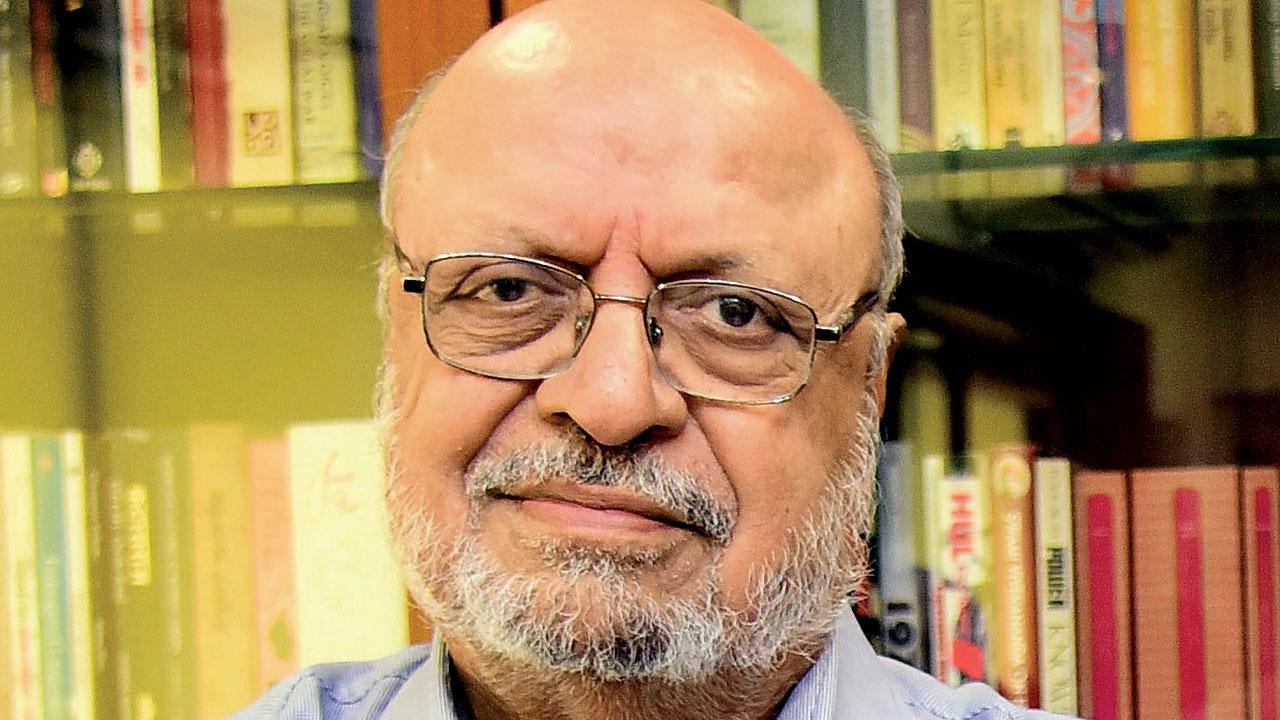
Benegal, who is readying Sheikh Mujibur Rahman biopic, says Bangladesh PM Sheikh Hasina gave him rich account of leader-father
Upala KBR (MID-DAY; December 15, 2022)
Shyam Benegal spent his 87th birthday yesterday just how he likes it — immersed in his next directorial venture. That his next is a definitive biopic on Bangladesh’s founding father, Sheikh Mujibur Rahman, only adds to the joy. “I was inspired by Mujib’s fascinating life, and his tragedy of Shakespearean proportions. His entire family was assassinated, except for his two daughters [Sheikh Hasina, and Sheikh Rehana] who happened to be in London,” reflects the veteran filmmaker.
In 2020, India and Bangladesh announced the co-production, Mujib: The Making Of A Nation, to mark the birth centenary of Bangabandhu, as the late leader was fondly called. Benegal, who took the Bengali film on floors earlier this year, is currently working on its post-production.
“We shot in Dhaka, Chittagong, north and south Bangladesh, as the film traces Mujib from his late teens to his politician [days]. The cast comprises Bangladeshi actors Arifin Shuvoo [in the titular role], Nusrat Imrose Tisha and others. Since Dhaka is a crowded city, we conducted the second half of the shoot in Mumbai.”
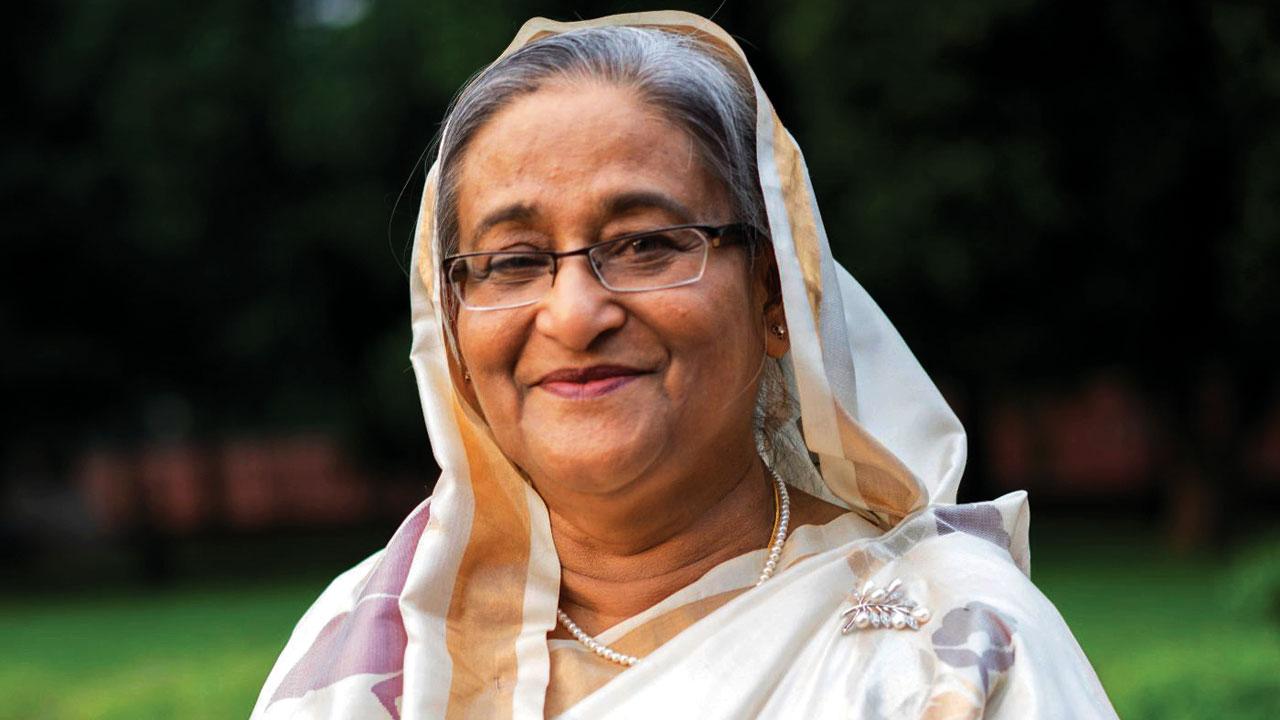
Rahman served as Bangladesh’s first president, going on to become the prime minister between 1972 and 1975. He served as the president again before being assassinated in August 1975. As Benegal brings the late leader’s legacy to the screen, he says Rahman’s daughter and Bangladesh’s current Prime Minister Sheikh Hasina Wazed gave him insights into the visionary behind the man.
“Prime Minister Sheikh Hasina was extremely helpful. She provided us with details about their family life, and her mother [Sheikh Fazilatunnesa Mujib], who was a source of inspiration to Mujib. [This is the kind of] information that no biography would provide. During the shoot, she invited me for lunch at her home. She is a wonderful cook, and had whipped up some special Bengali dishes, including hilsa. After the post-production is complete, I’ll invite her for the first screening.”
Bangladesh scraps Nora Fatehi dance event to save dollars
8:09 AM

THE TIMES OF INDIA (October 18, 2022)
The Bangladesh government denied a Bollywood actor permission to perform at an event in the capital Dhaka in a bid to save dollars as part of austerity measures.
Actor Nora Fatehi wasn’t granted permission “in view of the global situation and with the aim of maintaining the foreign exchange reserves”, according to a notice issued by Bangladesh’s cultural affairs ministry on Monday. Fatehi was scheduled to dance and hand out awards at an event organized by the Women Leadership Corporation.
The ministry referred to the central bank’s curbs on dollar payments amid dwin-dling foreign exchange reserves, which slipped to $36.3 billion as of October 12 —enough to cover roughly four months of imports — from $46.1 billion a year earlier.
The International Monetary Fund is preparing to send its first negotiation mission to Bangladesh later this month to open talks with the government on loans the country has sought, according to AnneMarie Gulde-Wolf, deputy director of the Asia and Pacific Department at the IMF.
The reserves “are still at a comfortable level, but the direction has been going down”, she said at a media briefing on October 13. The IMF is discussing an economic programme that will “contain measures to stabilize the economy”.
Lawsuit filed in Delhi High Court against Faraaz makers
8:13 AM

Rishabh Suri (HINDUSTAN TIMES; October 15, 2021)
Filmmaker Hansal Mehta and producer Bhushan Kumar have been asked by the Delhi High Court to appear on October 28, in connection to their upcoming film, Faraaz.
The families of the two victims, Tarishi Jain and Abinta Kabir, who died in the 2016 Dhaka terrorist attack, have filed a lawsuit against the makers. Yatin Grover, who is representing them, says the film’s name is the same as the two girls’ best friend, Faraaz. “He was also a victim of the attack. Mehta and others are making a film on the attack, and they have named it Faraaz. We sent a legal notice as we think that they are going to portray our clients’ daughters as well, and they have not taken consent,” he tells us.
Grover adds that the makers’ reply was “very vague”. “They said whatever they are going to do, is in public domain. We have asked for a special screening so we know nothing is portrayed wrongly. We have reserved our rights, sought prayers to completely injunct the film, to not use the name Faraaz because that is connected with our daughters’ lives,” he explains.
Grover points out to earlier interviews where they said their film was based on true events, and in their reply to the notice, they said it is a fiction. Our attempts to reach Mehta for a comment weren’t met with a response at the time of going to press.

Sham Kaushal back from Dhaka due to Coronavirus scare
8:13 AM

Upcoming schedule of an international film was cancelled, crew asked to return home
Avinash Lohana (MUMBAI MIRROR; March 14, 2020)
Veteran action director Sham Kaushal had flown to Dhaka on March 10 to begin work on an international film, titled The Battle For Bengal. Four days before the production was to roll, the makers have postponed the shoot because of the coronavirus scare.
Speaking to Mirror from a Dhaka airport, Kaushal said the film’s crew was instructed to go back to their home countries as soon as possible. “The film is being made by an LA-based producer with the support of the Bangladesh government. The crew, including the London-based director Richie Mehta and Fast & Furious cinematographer Amir Mokri, were in Dhaka too. We were returning from a recce in Chattogram (a city 40-minute plane ride away from Dhaka), when we were informed about the cancellation,” he said.
The stunt master went on to share that he managed to secure a return ticket for himself and his assistants with great difficulty, while the Bangladesh government arranged for a chartered flight to bring the rest of the Indian crew members to Kolkata. “I would urge people to avoid travel unless absolutely necessary,” Kaushal said, adding that his son, Vicky, was in touch with him all through the journey.
I became a bigger fan of Thor after meeting Chris Hemsworth-Priyanshu Painyuli
8:37 AM

Priyanshu Painyuli with Sam Hargrave
Upstarts discovery Priyanshu Painyuli on shooting with Chris Hemsworth for Dhaka's final schedule
Mohar Basu (MID-DAY; November 2, 2019)
It has been a good month for Priyanshu Painyuli — after his Netflix film Upstarts dropped online, the actor headed to Thailand for the final schedule of Chris Hemsworth's Dhaka. He is tight-lipped on his role in the extraction drama, directed by Sam Hargrave. "I am part of the primary cast. Let's just say I am not nice to Chris Hemsworth in the film," he teases.
Ask him about his first meeting with the Australian actor, and Painyuli says they bumped into each other in the vanity van. "He had walked into the van to get his beard trimmed. We chatted about his experience of shooting in India and he mentioned that he loves the energy of the country. He is down-to-earth and friendly. I became a bigger fan of Thor after meeting him."
Painyuli acknowledges that finding himself in a Hollywood film so early on is a dream come true. "In Dhaka, I experienced what it is like to shoot a big Hollywood film. Everyone treated each other with utmost respect, irrespective of which department they are from."

Chris Hemsworth to fly down to Mumbai on October 20 for Dhaka's patchwork shoot?
7:54 AM

Sources say Chris Hemsworth to fly down to Mumbai on October 20 for Netflix film Dhaka's week-long patchwork shoot
MID-DAY (October 11, 2019)
Late last year, Chris Hemsworth had taken India by storm when he shot for the Netflix film, Dhaka, across Mumbai and Ahmedabad. Now, mid-day has learnt that come October 20, the Thor star will return to Mumbai for the patchwork shoot of the movie, which also stars Randeep Hooda, Manoj Bajpayee and Pankaj Tripathi.
A source reveals, "The unit has planned a week-long schedule across Mumbai and Ahmedabad. The film's cast, comprising Indian and Hollywood actors, has been called upon to allot their dates. With Hemsworth expected in the city by October 20, the ensemble cast has been asked to dedicate the last two weeks of October to the Sam Hargrave-directed project. The team will shoot at the places they had covered the first time around, including Dharavi and Byculla in the city, and a few pockets of Ahmedabad. They may also have a brief two-day stint in Indonesia. If all goes as planned, it will be a wrap before October 30." The kidnap extraction drama is produced by the Russo Brothers.
Audience should prepare for a really emotional ending of Avengers: Endgame-Joe Russo
7:57 AM

Joe Russo, one half of Russo brothers, on their second outing with Avengers and how TV served as prep for directing the superhero franchise
Vijayeta Basu (MUMBAI MIRROR; April 2, 2019)
In 2013, Steven Spielberg, the king of blockbusters, predicted the implosion of the superhero movie genre in an interview. Over the last few years, the term ‘superhero fatigue’ has been bandied around the internet. All this doesn’t faze Joe Russo, one half of the directorial duo of the Russo Brothers, who is visiting Mumbai to promote the 22 nd film in the Marvel Cinematic Universe: Avengers: Endgame. “I don’t think it is a trend. This kind of serialised storytelling in film, it is a new form of narrative,” he shares. “People have grown up with this franchise—it has elicited emotional reactions from them and they have shared it with their families and friends. That’s why it’s the dominant form of storytelling right now,” he says, adding that superhero films have kept alive the tradition of watching films in a movie theatre a little longer in today’s world of digital streaming.
Russo, however, is completely fine with the changing times. “This is the future, and I think every generation deserves to tell stories the way they want to tell it. Movies have had a great run for a hundred years, but technology is changing all that, with the advent of AR (augmented reality) and VR (virtual reality). We are talking to companies that work in those fields and are trying to define what that would mean when it comes to storytelling—it is fascinating where technology can lead us,” he says.
Turning away from the future and venturing into their past, we ask how they went from working on hit comedy shows such as Arrested Development (for which they won an Emmy award) and Community to landing smack in the middle of the action-packed and dramatic universe of Captain America (their first MCU film being Captain America: The Winter Soldier in 2014). “We didn’t want to be comedic filmmakers really, the first movie we wanted to make was actually a drama, but we couldn’t get it financed,” explains Russo, sharing that Marvel approached them as they were comic book geeks who were “very passionate” about superheroes stories. Russo does concede that working on TV shows prepared them for undertaking the last two films of the Avengers series. “Making content for TV is the hardest thing in the world for a director because it is a constant grind. It is for months on end—you are prepping, shooting and posting at the same time, as you are doing episode after episode. This absolutely prepared us.” Citing Joss Whedon, Judd Apatow and JJ Abrams—all directors who have worked in TV and delivered blockbuster films—Russo explains that TV prepares a filmmaker to handle volume and stress, both of which are present while making superhero films such as Avengers.
Another stressful factor for the Russo Brothers is to avoid spoilers from leaking out—especially when the whole world wants to know how the Avengers saga comes to an end. “People get mad at us sometimes for obscuring facts in trailers and misdirecting them, but it’s the only way to keep information from getting out,” he says, sharing that even the actors didn’t have access to the entire script. He jokes that Tom Holland (aka Spider-Man), who is notorious for accidentally slipping spoilers on social media, got only three pages of the script. “There are only a handful of people who know what happens in the movie. Hopefully, it releases three weeks from now with all its secrets preserved”. While still tight-lipped, he does share that “audiences should prepare themselves for a really emotional ending”.
After Endgame, the Russo Brothers will be done with Marvel movies for a while, but not with their actors. Chris Hemsworth features in the Sam Hargrave-directed Dhaka, which has been written by Joe Russo and was shot in India last year. The brothers will then direct a film called Cherry, a true story about the opioid crisis in the US, featuring Tom Holland. “We grew up in a big Italian family and we treat the cast and crew as family. We like to work with the same people because it creates shorthand between us. Also, it is always fun to hang out on the set, go for dinners and just laugh about things together,” Russo concludes.

As Dhaka shoot draws to a close, Chris Hemsworth hosts send-off bash for child artiste Rudraksh Jaiswal
8:39 AM

Mohar Basu (MID-DAY; February 11, 2019)
 With the shoot of Chris Hemsworth’s Dhaka nearing its end, the film’s team had an early wrap-up party over the weekend. The bash doubled up as a send-off party for child artiste Rudraksh Jaiswal, who plays a pivotal part in the drama. A unit member said, “Chris has forged a deep bond with Rudraksh, and wanted the perfect send-off for him. He has invited him to his home in Australia as well.”
Jaiswal says that the past months of shooting across India and Thailand has been a cherished experience. “This film made me richer as an actor. Now, I’m looking forward to reuniting with Chris sir during the promotions.”
Pankaj Tripathi joins Chris Hemsworth’s Dhaka; flies to Thailand for his first international production?
7:13 AM

Mohar Basu (MID-DAY; February 8, 2019)
Only a day after he bagged a biggie in Ranveer Singh starrer '83, Pankaj Tripathi has another reason to cheer about. mid-day has learnt that the actor has been roped in for his maiden international production, Dhaka, that features Chris Hemsworth in the lead. Tripathi will fly down to Thailand tonight to join the Australian actor for the last schedule of the kidnap extraction drama directed by Sam Hargrave.
A source reveals, “Pankaj essays an Indian ganglord in the Netflix offering. While Chris plays a mercenary who is hired by a businessman to save his kidnapped son, his paths cross with Pankaj during his rescue efforts. It will be a 10-day schedule that will be shot in an undisclosed island, a few hours away from Bangkok. After Sacred Games, he was keen to be part of international projects, and this came his way at the right time.”
Arjun Kapoor and Parineeti Chopra's Namastey England to start in Amritsar
4:20 PM

The love story begins there; moves to Ludhiana, Patiala, Dhaka, Paris, Brussels and finally London
Avinash Lohana (MUMBAI MIRROR; February 20, 2018)
Arjun Kapoor who made his Bollywood debut opposite Parineeti Chopra in Habib Faisal’s 2012 romantic thriller Ishaqzaade, will be reuniting with the actress in Vipul Amrutlal Shah’s Namastey England which will kick start from Thursday in Amritsar.
The director had earlier filmed in Chandigarh and Patiala for the Salman Khan-Ajay Devgn starrer London Dreams and for Namastey London with Akshay Kumar and Katrina Kaif. This is the first time he will be shooting in Amritsar and Vipul who loves Punjab is looking forward to it. “From Amritsar, we move to Ludhiana and Patiala. We are filming at more than 75 locations spread across these three cities. Later, we’ll also be shooting in Dhaka, Paris, Brussels and finally in London. That’s how the love story progresses,” informs Vipul.
The director says that this is the perfect time to be in Punjab as the weather is neither too hot nor too cold and the crops will make for stunning visuals. “Both their characters are from Punjab and this is the first time that Arjun and Parineeti will be playing genuine lovers. Away from the camera, they are good friends and are always joking and pranking. There’s a lot of camaraderie and it’s going to be fun working with them,” he adds.
Arjun and Parineeti have been prepping for a few weeks. They have gone through dance rehearsals, costume trials, readings and now are ready for “Lights, Camera, Action! You will see a completely new Arjun and Parineeti,” Vipul promises.
Director Amjad Khan shooting film on Malala Yousafzai; 45% shoot complete
7:47 AM

Sanyukta Iyer (MUMBAI MIRROR; February 10, 2015)
When director Amjad Khan decided to make Gul Makai (Corn Flower), titled after Malala Yousafzai's blog, it was vital to find a girl who looks exactly like the 17-year old, Nobel Peace Prize winner. He found a perfect match in Bangladeshi teen, Fatima Sheikh, and started filming with her but she soon started getting death threats. "When activists broke into her house, I received a letter from the Governor of Dhaka to end the chaos my film was causing in his city," recalls Khan who after two months, found Fatima's replacement in a Bengali girl from Kolkata. "But this time I won't reveal her name or photographs till the film is up for release."
Forty-five per cent of the film had been completed in Bhuj and the second schedule begins in March-end. Khan adds, "We are presently building a set of the Pakistani administrative office in Mumbai. We will wrap up in Manali. The script has been approved by Malala's father, Ziauddin Yousafzai, and the story has been discussed with General Ashfaq Parvez Kayani, the Army General of Pakistan from 2007-2013, who has a pivotal role in the film."
The General, who will be played by Om Puri. told Khan that he had prayed for Malala's life when she was being operated in a hospital in London after being shot by the Taliban. "I have turned his prayers into an Arabic song which translates as Allah help me. Om Puri will sing it,"says Khan, adding that several victims from real-life attacks are playing supporting roles, including a boy who lost his leg in a landmine blast in Pakistan.
Subscribe to:
Posts (Atom)