Showing posts with label Deven Bhojani interview. Show all posts
Showing posts with label Deven Bhojani interview. Show all posts
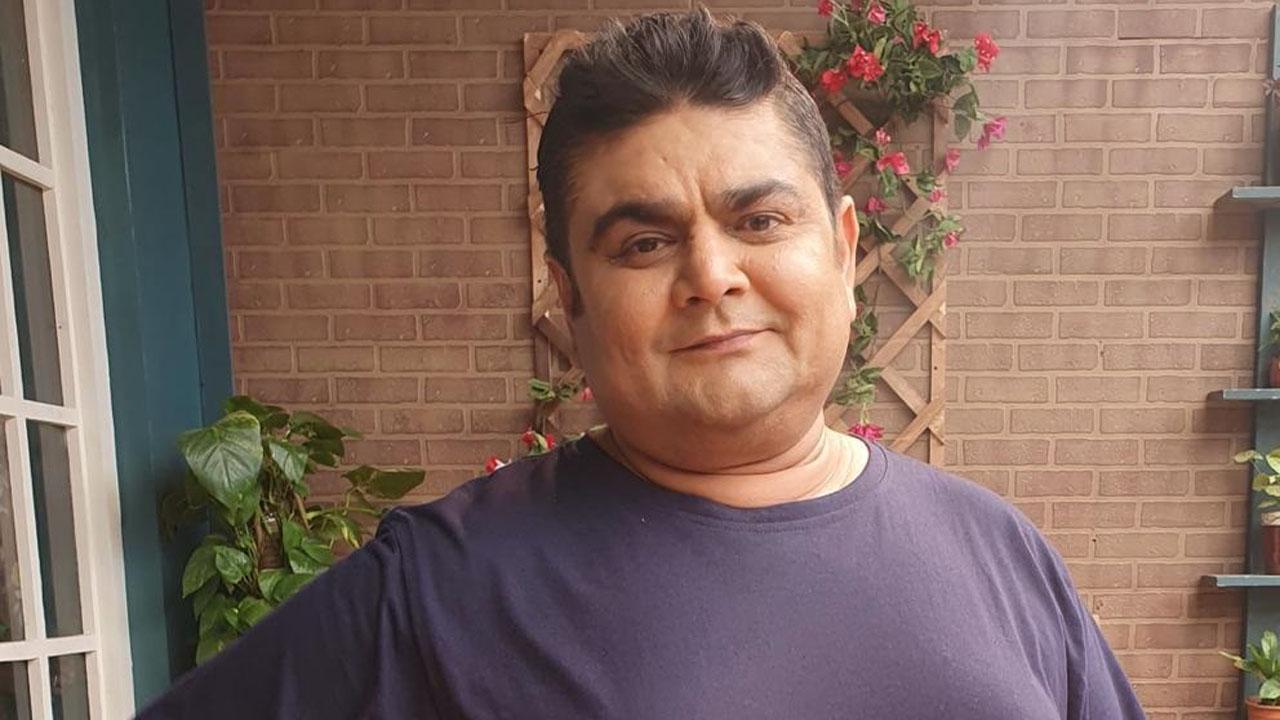
We would be happy about earning Rs. 35 per show-Deven Bhojani
8:25 AM
Kanksha Vasavada (BOMBAY TIMES; March 28, 2025)
“My life changed when my friend locked me in a room in college, where auditions for an inter-college theatre competition were happening,” says Deven Bhojani, who wanted to become a chartered accountant. The actor, who has done plays in Gujarati, Hindi, and English, adds, “Theatre gave me the exposure I needed and groomed me to become the actor I am today.”
‘We would be happy about earning Rs. 35 per show’
It didn’t take long for Deven to start enjoying doing theatre “more than accountancy.” He says, “I was a quiet and sincere student. But after my first audition (for the role of a lunatic) and calling out our director for his rude behaviour as a part of the act, I was offered a lead role in that play due to my confidence on stage. I started participating in various inter-college drama competitions and won the Best Actor award multiple times. I knew that I would be making a career out of it.”
Deven shares, “I did experimental plays after graduation and remember not being paid for around 40 shows. Then we were paid Rs. 35 per show, and we would be happy about it. Later, I started exploring commercial theatre and did many Gujarati plays. Three plays - Thank you Kokila, Ek Bija Ne Gamta Rahiye and Aavjo Vhala Phari Malishu - remain close to my heart. All these plays were written by Aatish Kapadia and produced by J D Majethia, which strengthened our friendship.”
‘You need to improvise while doing plays’
Talking about theatre being a medium of “constant learning”, Deven shares, “Theatre exposes you to so many aspects of life. Being on stage teaches you spontaneity, improvisation, discipline and being agile. Off stage, you travel to different destinations and are exposed to different kinds of audiences, which grounds you and shapes you as a person.”
He adds, “Every show is different, and it prepares actors for different audience reactions. I have done shows with the audience talking loudly during the play and shows where there was pin-drop silence during a very funny scene. I had to improvise on both occasions. The shows may start late or there may be a technical glitch during the show, but actors have to deal with it. So, theatre is very important for an artiste to grow.”
‘Asking for free passes is disrespectful towards the medium’
Deven agrees not many people are “willing to pay for tickets” for a play. He says, “The return on investment in theatre is way less compared to other mediums. After months of rehearsals and preparations, and even after charging around Rs. 500 to Rs. 700 per ticket, it gets difficult to earn what you spend. So, the pay is less too. There are people who ask for free passes, which is disrespectful towards the artistes and the medium.”
He adds, “Despite all these challenges, watching an actor performing live is an altogether different feeling. Even if you see big stars on screen, it doesn’t match the excitement of watching them performing live.”
Talking about the difference in theatre back in his days versus ow, Deven says, "When we did theatre, we had to be loud and touched upon simpler topics. Today, with more exposure, audiences like experimental genres with subtle performances. I am glad that theatre is a medium people want to explore."
Any messages for the youngsters? Deven says, "Youth today need to find their own talent, rather than running behind fame and fortune. I see many youngsters attending theatre workshops, as they feel ‘it will help us be famous’, which is not what theatre is for. If you truly aim to become an actor, these are the last things you aim for."
I kept forgetting my lines and couldn’t focus-Deven Bhojani
8:12 AM

Actor and director Deven Bhojani on returning to the sets of his ongoing television show Bhakharvadi and the new normal of shooting
As told to Kunal Guha (MUMBAI MIRROR; June 28, 2020)
Ever since the lockdown, I had not stepped out of my 14th floor apartment in Kandivali. Someone had told my wife that those who are overweight need to be extra cautious during the Coronavirus pandemic and she just would not let me go anywhere.
Having been in complete isolation until recently, you can imagine the concerns I had before returning to the shoot this Friday. I was worried and skeptical that not everyone would be as serious about social distancing. But the show’s producer J D Majethia took me through the arrangements, which included standard measures including the installation of foot-operated sanitiser pumps and wash basins for hand washing and having a nurse on set to monitor body temperatures. The entire unit was equipped with PPE kits, masks and gloves and J D came up with the idea of ensuring that everyone on set held an umbrella to ensure social distancing. Despite all these efforts, I am glad the production accepted my request to have a mock shoot a day in advance to crease out possible issues that may arise while shooting.
An obvious yet critical concern that surfaced during this mock shoot is‘where does one place one’s mask just before facing the camera?’ The solution was to keep it in a folder in one’s makeup kit, thus ensuring no one touches it. As an actor, it was tough to focus on work and initially, I was forgetting my lines for the first time in my career. I felt my focus was being swayed each time I noticed anyone touching anything on set. It all felt like a bad dream. During the shoot, characters were positioned at a distance and physical touch was avoided as much as possible.
A couple of network representatives were present on set too to ensure that safety precautions were taken and to call out those who unknowingly flouted rules. Even I am doing my bit to limit physical interaction. I have learnt to do my own makeup during the lockdown so now I not only do my own make up but also carry the kit around for a final touch-up before the shot.
Since my character on the show has a moustache, I grew one during the lockdown and even got rid of the wig, since it would mean that someone would have to help me with it. I have been managing costume changes (my character has 5-7 changes in every shoot) on my own. This includes wearing a dhoti as well. I have requested the costume department to leave my costume in my make up room a day in advance and my room is sanitised and equipped with water bottles only after the day’s shoot is complete. This ensures that no one has to enter my room when I am on set. We are also getting the bed sheets, curtains and cushion covers sent to the laundry a day in advance.
Scripts are also accommodating the current scenario. So while earlier we have had scenes featuring 12-14 characters at times, now most do not exceed 2 to 3 in a frame. Since the number of crew members were reduced keep up with suggested norms, the day’s output is lower than usual. But to meet telecast deadlines, screenplays are planned in such a way that we get to shoot a lot more double units which basically means shooting more than a scene simultaneously with fewer characters and small units. Of course, all this has to be accomplished without compromising on creativity, logic and entertainment quotient.
On set, I found myself dabbing sanitiser on every surface I touched, from props and furniture to my makeup kit. I even sprayed the chairs before sitting on them and also sanitized the microphone before I pinned it on. Even the lunch break was staggered in small groups, and we ate sitting separately. Instead of the usual buffet, separate boxes were provided. I missed lunching with my friends on set, and it was a bit weird sitting at a distance even while doing gupshup, but it’s better to be safe than sorry. I have also swapped the multiple cups of chai I have on set with kaadha which my wife made with turmeric, ginger and lemon. I also washed my own utensils (cups, glasses, bowls, tiffin box) and by the end of the day, I felt really knackered. I really wish this ‘new normal’ returns to the ‘original normal’ at the earliest.
Action is the biggest genre in Hollywood, but here, it is dismissed as mindless cinema-Vipul Shah
8:12 AM

Neha Maheshwri (BOMBAY TIMES; March 2, 2017)
They may have been friends
for decades, but on the set of their upcoming film Commando 2: The Black
Money Trail, producer Vipul Amrutlal Shah and Deven Bhojani, who
is making his directorial debut in Bollywood with this film, were true
blue professionals. The camaraderie, they say, would start only when the
camera stopped rolling. Recounting those moments in an informal chat
with Bombay Times, the duo throws light on their collaboration...
Deven, as someone synonymous with comedy, what was your reaction on being offered an action film?
Deven: While it's natural for people to associate me with my comic roles on TV, not many know that I've been directing shows for the past 15 years and have explored various genres. I had earlier directed a mini action-drama series, Pukaar, for Vipul. But still, when he offered me the film, I was taken offered me the film, I was taken aback and told him that I needed time to think it over. Vipul knows my capabilities as we've been friends for a long time now. Also, I realised that there couldn't be a better beginning than Commando 2 to help me break the mould.
Did you watch action films to draw inspiration?
Deven: Many directors speak about their inspirations, but I don't relate to it. I'd rather go with the flow than emulate somebody else's work. Firstly, I don't watch many films and to add to it, I have a poor memory. Also, I don't conform to generalisations - in my case, the perception is that one who does comedy can't direct an action film.

Considering the fact that the original, Commando: A One Man Army, was received well, did you feel any pressure while directing the second installment?
Deven: I did. After all, I have to take the franchise to the next level. Besides, I am also directing Vidyut (Jammwal), one of the best action heroes today. A lot of money has gone into making this film. I didn't worry about the box-office figures when I was shooting, the pressure builds up after that. Having said that, I am not too ambitious. I want to contribute to cinema in my own little way. I don't aspire to bag an Oscar or a National Award. If I bag one, it would be nice, but that's not my goal. I just wanted to become a film director and I am glad to be one today.
Vipul, was your friendship with Deven instrumental in getting him on board as the director?
Vipul: I keep my personal and professional life separate. For example, I haven't cast my wife (Shefali Shah) in most of my films. I won't go to her unless the role demands it; the same rule applies to Deven as well. We have known each other since our college days; he is like a brother, but you can't work on the basis of friendship. If I had offered him something he wasn't comfortable with, he would have made a bad film, which would have been detrimental for the entire project. Since he has a certain screen image, the decision to have him as the director might seem misplaced, but I am against stereotyping people. Alfred Hitchcock was not aggressive, but he made the best horror films of all times.
Deven: Nobody is doing anybody a favour. Friendship helped only because Vipul knows my capabilities better than outsiders. Dosti mein birthday gift dega koi - maybe an expensive watch or a diamond set, but not a film.
Vipul, why did it take three years for the sequel?
Vipul: I have to redefine action if I am making a series of action films. It's challenging because you don't want to repeat the stunts. Unfortunately, people write off this genre as maar-dhaad films. Comedy is tough in terms of getting the timing right, but action is tough on the whole team.
Isn't making a film without any big name a huge risk?
Vipul: If you have a strong script and a good actor, I don't see why a film with a newcomer cannot work. Also, I wouldn't have reached so far if Amitji (Amitabh Bachchan) or Akshay Kumar hadn't agreed to do Aankhein when I was new. Every newcomer should get a fair chance, the industry is unfair to outsiders. People called the first installment of Commando a C-grade film as it featured a new guy. It's offensive to judge a film, just because the actor doesn't belong to an illustrious film family. Newcomers risk their career by entrusting you with it and it's a big responsibility, because if something goes wrong, they suffer more than anybody else. It's immensely satisfying when the risk pays off. I find casting only stars limiting, as it feels like a safety net. Am I not capable of making a successful film on my own?
Unlike Hollywood, Bollywood doesn't take the action genre seriously...
Vipul: Action is the biggest genre in Hollywood, but here, it is dismissed as mindless cinema. The amount invested in an action film is huge. Our mindset is the problem. It's changing, but it needs to change faster. A Hollywood film is reviewed better than a Hindi film unless it has big stars. What Keanu Reeves does in John Wick is considered A-class, but it's substandard if Vidyut does the same. I am not calling John Wick a bad film, but the same perspective won't be applied to a film like Commando. Somebody has mastered the art after 20 years of hard work and is putting his life at risk. Don't rubbish it just like that.
Deven, as someone synonymous with comedy, what was your reaction on being offered an action film?
Deven: While it's natural for people to associate me with my comic roles on TV, not many know that I've been directing shows for the past 15 years and have explored various genres. I had earlier directed a mini action-drama series, Pukaar, for Vipul. But still, when he offered me the film, I was taken offered me the film, I was taken aback and told him that I needed time to think it over. Vipul knows my capabilities as we've been friends for a long time now. Also, I realised that there couldn't be a better beginning than Commando 2 to help me break the mould.
Did you watch action films to draw inspiration?
Deven: Many directors speak about their inspirations, but I don't relate to it. I'd rather go with the flow than emulate somebody else's work. Firstly, I don't watch many films and to add to it, I have a poor memory. Also, I don't conform to generalisations - in my case, the perception is that one who does comedy can't direct an action film.
Considering the fact that the original, Commando: A One Man Army, was received well, did you feel any pressure while directing the second installment?
Deven: I did. After all, I have to take the franchise to the next level. Besides, I am also directing Vidyut (Jammwal), one of the best action heroes today. A lot of money has gone into making this film. I didn't worry about the box-office figures when I was shooting, the pressure builds up after that. Having said that, I am not too ambitious. I want to contribute to cinema in my own little way. I don't aspire to bag an Oscar or a National Award. If I bag one, it would be nice, but that's not my goal. I just wanted to become a film director and I am glad to be one today.
Vipul, was your friendship with Deven instrumental in getting him on board as the director?
Vipul: I keep my personal and professional life separate. For example, I haven't cast my wife (Shefali Shah) in most of my films. I won't go to her unless the role demands it; the same rule applies to Deven as well. We have known each other since our college days; he is like a brother, but you can't work on the basis of friendship. If I had offered him something he wasn't comfortable with, he would have made a bad film, which would have been detrimental for the entire project. Since he has a certain screen image, the decision to have him as the director might seem misplaced, but I am against stereotyping people. Alfred Hitchcock was not aggressive, but he made the best horror films of all times.
Deven: Nobody is doing anybody a favour. Friendship helped only because Vipul knows my capabilities better than outsiders. Dosti mein birthday gift dega koi - maybe an expensive watch or a diamond set, but not a film.
Vipul, why did it take three years for the sequel?
Vipul: I have to redefine action if I am making a series of action films. It's challenging because you don't want to repeat the stunts. Unfortunately, people write off this genre as maar-dhaad films. Comedy is tough in terms of getting the timing right, but action is tough on the whole team.
Isn't making a film without any big name a huge risk?
Vipul: If you have a strong script and a good actor, I don't see why a film with a newcomer cannot work. Also, I wouldn't have reached so far if Amitji (Amitabh Bachchan) or Akshay Kumar hadn't agreed to do Aankhein when I was new. Every newcomer should get a fair chance, the industry is unfair to outsiders. People called the first installment of Commando a C-grade film as it featured a new guy. It's offensive to judge a film, just because the actor doesn't belong to an illustrious film family. Newcomers risk their career by entrusting you with it and it's a big responsibility, because if something goes wrong, they suffer more than anybody else. It's immensely satisfying when the risk pays off. I find casting only stars limiting, as it feels like a safety net. Am I not capable of making a successful film on my own?
Unlike Hollywood, Bollywood doesn't take the action genre seriously...
Vipul: Action is the biggest genre in Hollywood, but here, it is dismissed as mindless cinema. The amount invested in an action film is huge. Our mindset is the problem. It's changing, but it needs to change faster. A Hollywood film is reviewed better than a Hindi film unless it has big stars. What Keanu Reeves does in John Wick is considered A-class, but it's substandard if Vidyut does the same. I am not calling John Wick a bad film, but the same perspective won't be applied to a film like Commando. Somebody has mastered the art after 20 years of hard work and is putting his life at risk. Don't rubbish it just like that.

Aamir Khan replaced me in Kesar Bhina play while it was on tour-Deven Bhojani
8:19 AM

The actor-director is busy adpating an American sitcom and working on the script for his directorial debut in films
Kunal Guha (MUMBAI MIRROR; July 19, 2015)
Deven Bhojani is known to
some as Gattu (from Baa Bahoo Aur Baby), to others as Patel (from Office
Office), but to most as Karima (from Dekh Bhai
Dekh). Presently, the actor is directing the Indian adaptation of
Everybody Loves Raymond (Sumit Sambhal Lega), whilst simultaneously
working on the script for his directorial debut in feature films, an
untitled action film for Vipul Shah's Sunshine Pictures. “He liked my
work in Pukaar and decided to let me direct a film,“ says Bhojani.
Pukaar, the mini-series he directed, starred Rannvijay Singha and Raj
Babbar, and concluded in February this year.
Leaning back on his chair at Vipul Shah's Andheri office, he credits Gujarati theatre for teaching him all that he has learnt. Bhojani discovered his calling for the stage as a commerce student of NM College. “My TV debut was in Malgudi Days when it used to be a one-episode story. I was cast for the story of Nithya,“ he reminisces. “Mahendra Joshi, who'd direct most of our plays, referred me to Arundhati Rao, whose husband, the late Shankar Nag, directed the show. She also got my reference from Naushil Mehta, who had written a sex comedy called Doctor Doctor, where I shared the stage with Paresh (Rawal), Apara Mehta and Darshan Zariwala,“ he says, adding he was only 17 then.
Bhojani's move into direction was accidental and he first wielded the megaphone when the director of Ek Mahal Ho Sapno Ka had to temporarily take off because of a personal emergency. Bhojani has since directed Sarabhai VS Sarabhai and Instant Khichdi, both raking in a cluster of TV awards.
Despite his directorial laurels, Bhojani's landmark achievement was playing an autistic child in Baa Bahoo Aur Baby, a show that survived five years and made his character Gattu a household name. Bhojani says, “There were tiffin boxes, kites and even rakhis with Gattu's face on them. But the funniest story is when a friend went to buy a goat for Bakri Eid and the butcher demanded a hefty sum since the goat was very 'Gattu'.“ He laughs at having becoming an “adjective for someone who is very healthy“.
After nearly 700 episodes when the show ran its course, Bhojani was burnt out and needed a break. “I was also the creative director on the show, so I had 10 people pouncing on me each time I reached the sets. From which blouse is right for whom to which storyline needs development, everything needed my attention. The show was like a well and I was a frog. I needed to get out and see the world,“ says the actor, who headed off for a filmmaking course in the US just after wrapping up the show in 2010.
He signed up for a direction course at the University of Southern California, impressed by the fact that the programme invited guest speakers like Steven Spielberg, James Cameron and George Lucas. But the one speaker who actually left him teary-eyed was someone quite familiar. “Aamir Khan was to come for a talk and screen Peepli Live,“ remembers Bhojani, who had worked with Khan before. When Khan was about to begin his talk, he was surprised to spot Bhojani and got off the stage to hug him. Khan also shared with the audience how his break in acting could be credited to Bhojani. Bhojani says, “I had done a play about army life called Kesar Bhina. I was also doing my articleship - mandatory for CA aspirants at the time. So when the play went on tour, I didn't get leave to travel. Aamir, who worked backstage then, replaced me on the tour. Since I had to give him the handover, I got to know him for the first time.“ Years later, Bhojani was cast in Jo Jeeta Wohi Sikandar when Khan saw him in a film called Kafila and referred him to Mansoor Khan.
“My passion for direction also began with Jo Jeeta, since I assisted Mansoor Khan, after Farah Khan, who assisted him in the first schedule, got busy with choreography,“ he says with a smile. Post Jo Jeeta.., Bhojani's career took off as he was flooded with acting offers. David Dhawan's Andaz, Mahesh Bhatt's Naraaz, Vikram Bhatt's Janam, Laurence D'souza's Sangram and a string of other films saw Bhojani play the “hero ka dost“, a typecast he didn't mind at the time.
“Mujhe shaadi karni thi, ghar lena tha, paise kamane the. (I had to get married, buy a house, make money.) So I accepted every film. I barely remember all the names. I would just ask, 'how much will I get paid per day?'“ laughs Bhojani. He ticked off “shaadi, gaadi and ghar“ from his list before turning selective about work.
Today, Bhojani is excited about his upcoming TV show, Sumit Sambhal Lega which is to go on air soon. He says it will be a 'first of its kind' on many counts. “Just like in the West, we're conducting technical rehearsals, stage rehearsals, script readings with the cast where the entire team brainstorms on how a scene can be improved. There's no ego, and everyone is cumulatively working towards a better product,“ he says of the show, where Namit Das is playing the lead role that was essayed by Ray Romano in the original.
Leaning back on his chair at Vipul Shah's Andheri office, he credits Gujarati theatre for teaching him all that he has learnt. Bhojani discovered his calling for the stage as a commerce student of NM College. “My TV debut was in Malgudi Days when it used to be a one-episode story. I was cast for the story of Nithya,“ he reminisces. “Mahendra Joshi, who'd direct most of our plays, referred me to Arundhati Rao, whose husband, the late Shankar Nag, directed the show. She also got my reference from Naushil Mehta, who had written a sex comedy called Doctor Doctor, where I shared the stage with Paresh (Rawal), Apara Mehta and Darshan Zariwala,“ he says, adding he was only 17 then.
Bhojani's move into direction was accidental and he first wielded the megaphone when the director of Ek Mahal Ho Sapno Ka had to temporarily take off because of a personal emergency. Bhojani has since directed Sarabhai VS Sarabhai and Instant Khichdi, both raking in a cluster of TV awards.
Despite his directorial laurels, Bhojani's landmark achievement was playing an autistic child in Baa Bahoo Aur Baby, a show that survived five years and made his character Gattu a household name. Bhojani says, “There were tiffin boxes, kites and even rakhis with Gattu's face on them. But the funniest story is when a friend went to buy a goat for Bakri Eid and the butcher demanded a hefty sum since the goat was very 'Gattu'.“ He laughs at having becoming an “adjective for someone who is very healthy“.
After nearly 700 episodes when the show ran its course, Bhojani was burnt out and needed a break. “I was also the creative director on the show, so I had 10 people pouncing on me each time I reached the sets. From which blouse is right for whom to which storyline needs development, everything needed my attention. The show was like a well and I was a frog. I needed to get out and see the world,“ says the actor, who headed off for a filmmaking course in the US just after wrapping up the show in 2010.
He signed up for a direction course at the University of Southern California, impressed by the fact that the programme invited guest speakers like Steven Spielberg, James Cameron and George Lucas. But the one speaker who actually left him teary-eyed was someone quite familiar. “Aamir Khan was to come for a talk and screen Peepli Live,“ remembers Bhojani, who had worked with Khan before. When Khan was about to begin his talk, he was surprised to spot Bhojani and got off the stage to hug him. Khan also shared with the audience how his break in acting could be credited to Bhojani. Bhojani says, “I had done a play about army life called Kesar Bhina. I was also doing my articleship - mandatory for CA aspirants at the time. So when the play went on tour, I didn't get leave to travel. Aamir, who worked backstage then, replaced me on the tour. Since I had to give him the handover, I got to know him for the first time.“ Years later, Bhojani was cast in Jo Jeeta Wohi Sikandar when Khan saw him in a film called Kafila and referred him to Mansoor Khan.
“My passion for direction also began with Jo Jeeta, since I assisted Mansoor Khan, after Farah Khan, who assisted him in the first schedule, got busy with choreography,“ he says with a smile. Post Jo Jeeta.., Bhojani's career took off as he was flooded with acting offers. David Dhawan's Andaz, Mahesh Bhatt's Naraaz, Vikram Bhatt's Janam, Laurence D'souza's Sangram and a string of other films saw Bhojani play the “hero ka dost“, a typecast he didn't mind at the time.
“Mujhe shaadi karni thi, ghar lena tha, paise kamane the. (I had to get married, buy a house, make money.) So I accepted every film. I barely remember all the names. I would just ask, 'how much will I get paid per day?'“ laughs Bhojani. He ticked off “shaadi, gaadi and ghar“ from his list before turning selective about work.
Today, Bhojani is excited about his upcoming TV show, Sumit Sambhal Lega which is to go on air soon. He says it will be a 'first of its kind' on many counts. “Just like in the West, we're conducting technical rehearsals, stage rehearsals, script readings with the cast where the entire team brainstorms on how a scene can be improved. There's no ego, and everyone is cumulatively working towards a better product,“ he says of the show, where Namit Das is playing the lead role that was essayed by Ray Romano in the original.
Subscribe to:
Posts (Atom)