Showing posts with label Delhi Crime. Show all posts
Showing posts with label Delhi Crime. Show all posts
How bullies knocked the people-pleaser out of Shefali Shah
9:50 AM

Priyanka Sharma (MID-DAY; October 25, 2026)
Shefali Shah doesn’t always have it together, even if her towering public persona suggests otherwise. Both, the women she has played on screen and the woman the public has known through the filter of media, have contributed to this image of someone who can never fall apart. Shah is serious, solid, and sure-footed, until she lets one in her mind through her “sort-of-memoir”, The Audacity Of Being.
The Shefali Shah that one meets is a revelation. She is chaotic, impulsive, funny, and like any woman, has a million moments of self-doubt. “I think people wonder, ‘Isko toh kabhi koi problem nahi hoti hogi. She is always in control’,” the actor tells Sunday mid-day.
The point of a memoir is to be honest, but revelations about the self come with risk, especially for a public figure. “It was a risk, until I made the decision. Once I knew I was writing this, there was no other way of telling it besides honestly. And that’s me in everything I do,” she says.
The book that marks Shah’s debut as an author makes one thing clear: You can’t make Shefali Shah do anything. So, while the decision to write a memoir didn’t come from her, it felt like the right thing to do in the pursuit of her bigger goal, sharing the volume of stories living inside her with the world.
“I wanted to actually publish my novella, which is a fictional story. But my publishers thought that my first book had to be a memoir or a biography. I was not very convinced... And that’s exactly why it’s a sort-of-memoir, because it’s not like ‘this happened, then I was born here’. Now, when I look back, it was a good place to start because it’s my story. I can say what I want to. And no one’s going to sue me,” she laughs.
Writing a memoir inevitably involves revisiting unpleasant memories. One such memory in Shah’s book involves her school days. She shares she was bullied by her classmates, even as her mother didn’t allow her to make friends. The actor corrects us, though.
“It wasn’t unpleasant. In fact, I could revisit it in much more clarity because I was glimpsing it from outside. I was, however, sceptical because talking about it could hurt my parents. It’s very easy to blame your mother when you are growing up. But as I grew older, and particularly when I became a mother, I realized they did the best they could. Writing about that wasn’t even emotional. It was all just coming out; there was no feeling of ‘Oh My God! Why did this happen?’ Ho gaya na. Fine, move on.”
With clarity, has she gotten the answer to why she was subjected to bullying in school? “Maybe they thought I was very LS [‘low standards’]. So, the school I went to is very prestigious; rich people sent their children there. My parents weren’t rich. I was ashamed of my tiffin because I didn’t know if the thepla or roti-sabzi in it was going to be judged. My peers could pick up a bread roll from the canteen; I could not,” she says.
“Maybe [it was] because I was too dark or because I had two oily plaits. Maybe because I wasn’t a cool kid. I really don’t know what it was, but, now when I look back, it’s on them, not me,” she adds.
This became her mantra for life. Come what may, Shah wasn’t ready to fit in, especially when she experienced freedom for the first time through performance arts. Part after part, she built a rare career for a woman actor in the Indian film industry that featured fully-realised women with their quirks, flaws, dreams, and desires. For someone, who claims in the book and to us in person that she is not ambitious, a rich career of over three decades is no less than a feat.
“Just after Monsoon Wedding (2001), I got married and was pregnant with my first child. At that point of time I wasn’t even thinking of my career. I just wanted to have babies and take care of them. And that’s exactly what I did. After my second child, I felt ready to come back,” she recalls.
Then, she did Waqt [The Race Against Time (2005)], “where I played a mother and cut all my chances of playing anything my age”. “I was ready to work but I didn’t get anything that was exciting enough. But I never had a drive or an ambition to pitch myself to a director because I don’t think I am an ambitious person. It is so stupid. How are you expecting people to know you exist? I mean people didn’t even know if I was alive or dead,” she laughs.
In 2019, Shah struck gold with filmmaker Richie Mehta’s crime thriller Delhi Crime. Even if unintentionally, Shah also managed to challenge the one thing that’s often weaponized against female stars in the movies: time. Here was a 45-year-old leading woman of a blockbuster series. The success of which led her to six projects across theatres and OTT, making her one of the busiest female actors in Bollywood.
“If I was told years before I did DC, ‘You would be headlining a project in your 40s,’ I would have laughed the loudest. I was at the right place at the right time. It depended on a lot of choices I made earlier. So many actors, who work in television, get typecast. Had I been probably doing television, maybe this wouldn’t have happened. I did Juice [2017], which worked almost like my showreel. I thought, ‘Yes, you can rule at 40.’ I got six projects after DC. I thought to myself, ‘I have arrived’. The next year, I was back to feeling, ‘Okay what is happening?” she laughs.
At 53, time feels like sand slipping through her hand. “I wish DC had happened earlier,” she tells us, “Because then I would have had a longer run and done many films and played so many parts.”
But Shah has a plan. “I’m probably at my thinnest right now and I like the way I look. I’ve also cut off age, because when you’re thinner you probably look younger. And I mean thinner in a good way, not like when you’re dilapidated. There’s only so much work that will come for a 52-53 year old and it will be in the same bracket, but if I look like I’m in my 40s, I still have another couple of years,” she says.
Why should Huma Qureshi still have to struggle to get a major theatrical film? Hasn’t she earned that by now?-Saqib Saleem
3:43 PM

Ancela Jamindar (BOMBAY TIMES; August 21, 2026)
Saqib Saleem, who was in Ahmedabad recently along with his actress-sister Huma Qureshi to promote Baby Do Die Do, which he co-produced, says, “It is extremely difficult to release a female-led action thriller in theatres. It’s not because the audience doesn’t want to watch such films, but because of the gatekeeping within the industry. The people who decide what gets into theatres often don’t allow these films to be mounted and released properly. I feel Huma is a phenomenal actor. She has consistently proved herself with projects like Gangs Of Wasseypur, Delhi Crime and Maharani. So why should she still have to struggle to get a major theatrical film? Hasn’t she earned that by now?”
He adds, “I have produced two films before this, Double XL and Single Salma. Both were backed by studios and although the reviews and audience feedback were positive, neither film got a fair chance in theatres. They didn’t get enough screens or the right show timings. Even for our latest film, when a studio had certain unreasonable demands, I just decided to do this on our own and told Huma, ‘Let’s make this film, we’ll think about everything else later.’ I was blessed to have an incredible team. The vision behind our production house is to build an ecosystem where talented voices get the opportunities they deserve. We want to create a platform for people we truly believe in. I may not always make the biggest films, but I will give artistes the freedom to express themselves. I’ll create an environment where their voices are heard, because that’s often what’s suppressed in this industry.”
‘Producing a film is a completely different ball game’
Talking about the responsibilities that come with producing films, he says, “As a producer, my responsibility is to make sure the film reaches the right theatres and gets the right number of shows. It’s not easy, but I believe audiences don’t think about whether a film comes from a studio or an independent producer. They simply want a good story and a unique film experience. I am glad that Main Vaapas Aaunga, which is very different from the kind of films that are considered commercially successful today, found its audience in the second week. It gives me hope and shows that people want to watch different, unique films and not just formula-driven cinema.”
He adds, “Producing a film is a completely different ball game from acting. Acting is a demanding profession, but as an actor, your focus is largely on your character, dialogues and performance. As a producer, however, everyone on the set looks to you for answers. You’ll meet plenty of people who will discourage you, but you need to believe in yourself, build a good team, work sincerely, and not let the outside noise affect you.”
‘Even today, I’m a cricketer in my head’
Saqib, who has played cricket at the under-19 level, says the sport continues to influence the way he approaches filmmaking, “Even today, I’m a cricketer in my head. I still feel like I can play for India, and I don’t think that feeling will ever go away. I’ll always consider myself a sportsperson because cricket was my first love. Sports taught me that you start from zero every single day. For every new film, I have to start from zero. I can’t carry the baggage of my previous success.”
He adds, “That’s why I always relate filmmaking to cricket. Cricket is about building the right team and bringing people together to achieve one common goal. Producing is the same; my responsibility is to bring together the right people. I tell my directors, ‘I believe in your style. Make the film your way.’ Similarly, I choose actors who I believe are exceptionally talented. For instance, Sikandar Kher is a phenomenal actor. The same goes for Chunky Panday and Seema Pahwa. I like to cast actors who are immensely talented but haven’t always received the recognition they deserve. That includes Huma too; she’s a phenomenal actor. She has consistently proved herself with projects like Gangs of Wasseypur, Delhi Crime and Maharani. So why should she still have to struggle to get a major theatrical film? Hasn’t she earned that by now?”
I don’t believe in ‘angry’ feminism-Huma Qureshi
10:54 PM

Ancela Jamindar (BOMBAY TIMES; May 1, 2026)
An actress who consistently prioritises substance over stereotypes, Huma Qureshi is as compelling in conversation as she is on screen. From redefining feminine archetypes to championing authentic empowerment, her perspective serves as a mirror to the evolving consciousness of the modern woman. During a recent visit to Ahmedabad for an event, Huma spoke at length about the complexities of womanhood, the fallacy of "angry" feminism, and why she refuses to be pigeonholed.
‘To do the tried and tested (on screen) is boring’
Huma’s career trajectory has been defined by a refusal to follow the "tried and tested" path, which she dismisses as "dead and boring". People are always ready to put you in a box. I always say, ‘Give me something you think I haven’t done, and I’m going to do the character differently and prove you wrong.”
Huma says, “Today, audiences are very smart, and we must respect their intelligence by giving them something they can truly engage with. As an actor, I would get bored doing the same thing repeatedly. My pact with my audience is to bring them something new every single time.”
Huma, who’s played layered, complex titular characters on OTT, admits that “Essaying intense roles like Rani Bharti in Maharani, Juhi Adhikari in Mithya, or dark, manipulative antagonists Badi Didi in Delhi Crime 3and Monica Machado in Monica O My Darling, which resonated with the audience, were deeply satisfying and enriching experiences. These shows also let me experiment with intense, dark and morally ambivalent characters who were not just cardboard cutouts as leads or even the antagonist.”
She adds, “Maharani really challenged me as a performer, and I want to bring the success I’ve had with Maharani on OTT to single-screen theatres as well. I want to be part of the kind of work that brings audiences back to cinemas.” Ask Huma what else lies ahead professionally, a genre she has yet to conquer, her answer is immediate: “Action.”
‘Morally grey female characters are accepted’
Reflecting on the industry's shift, Huma admits that she’s “excited” about the “acceptance of morally grey and complex female characters, probably because they are more real and relatable. There is space for far more nuanced portrayals and an audience as well”.
She says that the "damsel in distress or the one-dimensional vamp are relics of a time when cinema failed to represent real women. Audiences were always ready for layered stories," she says, adding, “The fault was simply that we weren’t consistently representing the reality of women on screen.”
'I am not an angry feminist; we need to move beyond constant comparisons'
Huma feels there’s an invisible weight often placed on women’s shoulders, and societal expectations can be a heavy mantle to carry. “It’s exhausting that women are often made to feel responsible for everything—the family’s honour, its dignity, and so much more,” she says.
For Huma, feminism isn't a battle of the sexes. “I don’t believe in ‘angry’ feminism," she says. "The idea is not to be against men; the real issue is patriarchy—a system sustained by men and women. We need to move beyond constant comparison."
She credits her own confidence to the secure men in her life, specifically her father and brother, saying that their “support allowed her the freedom to own her journey, mistakes and all. I believe that behind every successful woman, there are also secure and supportive men."
On her connection with Ahmedabad
Huma’s connection with Ahmedabad runs deep, fuelled by film shoots and a close circle of friends and not just promotional tours.
She says, “I love Ahmedabad. I think it's the best city ever. I get so much love here. I've visited Ahmedabad not just for promotional tours; I have shot movies here, and I have a lot of friends here. My connection with this city is beautiful. I haven’t been able to travel around much, though I have been here many times, but someday I would really like to explore it as a tourist.”
Everyone else suffers because people are coming four hours late-Sayani Gupta
8:42 AM

Taking the stipulated work hours debate forward, ‘Delhi Crime 3’ actor Sayani Gupta says star system is the root problem as several A-listers come hours late on sets
Priyanka Sharma (MID-DAY; November 10, 2025)
Sayani Gupta starts our conversation with a disclaimer. “I haven’t watched seasons one and two,” says the actor, who has joined Delhi Crime’s upcoming third season. Before we can ask why, she explains that the self-built distance from the acclaimed series, led by Shefali Shah, has a deeper cause. “I haven’t seen season one because I still feel triggered. Everyone says it’s so well-done and well-researched,” she shares. The opening season, created by Richie Mehta, was based on the 2012 Delhi gang-rape case.
Two editions later, when director Tanuj Chopra, who is also Gupta’s friend, offered her the Netflix series, it was an opportunity to be a part of an important story. The icing on the cake? Working with friends. “Every time Tanuj and I spoke [about the character], we were on the same page. Plus, it was a long-time wish to work with Rasika Dugal, who is like my sister,” she smiles.
Our conversation then veers into the ongoing discourse about unregulated work hours in the industry. Gupta has worked 20 hours, even 22, at a stretch. She admits those were aberrations, but the norm isn’t too healthy either. “For actors, someone drives us to and back from the sets. Except maybe 10 people on set, everyone is commuting by public transport. A lot of them are taking trains at night that don’t run after 1 am. [So, how will they commute in case of overtime?] There is no weekly off sometimes; it’s exploitative.”
She notes that one fundamental change is required — dismantling of the star system. “Actors in our country are undisciplined. Men and women, irrespective, if you’re given a call time, come on time. The problem is the star system. So, we have to say, ‘You could be an actor, but you’re as important as the guy doing the clap.’ Everyone else suffers because people are coming four hours late.”
Have we even accounted for the number of hours some male actors come late?-Shefali Shah
9:47 AM
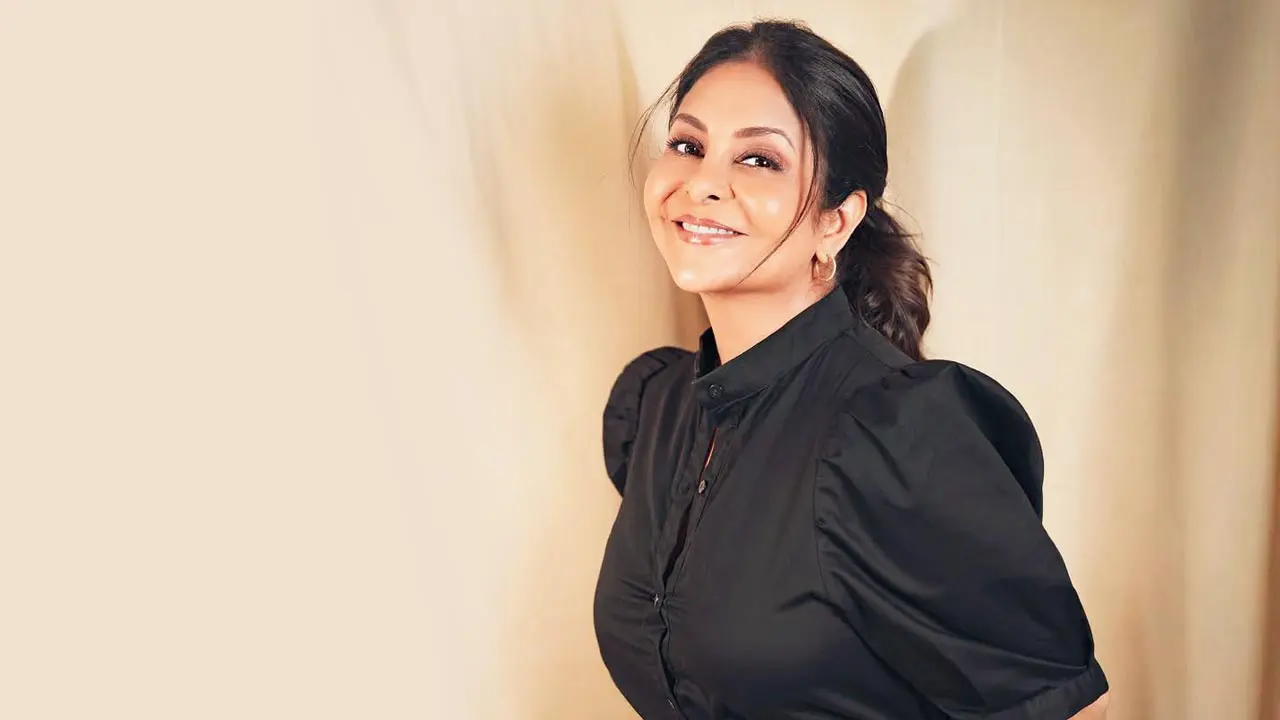
Batting for stipulated work hours in the industry, ‘Delhi Crime 3’ star Shefali Shah on how long shoot days go unchecked, affecting actors’ output and the crew
Priyanka Sharma (MID-DAY; November 7, 2025)
How long does it take for an actor to find her way back to a character when a new season is set to roll? Shefali Shah, who returns as DCP Vartika Chaturvedi in the third season of Delhi Crime, says she wouldn’t know, for a simple reason — she never let the character leave her system. “There are parts that you do and move on. This is something I can’t move on from,” she starts.
Her emotional attachment to the Netflix series is evident. But with the attachment comes nervousness, even though she has played the astute cop, who rarely misses a thing, for two seasons, even bagging an International Emmy nomination in 2023.
“My biggest fear is that I’ll let Vartika and Delhi Crime down,” she admits candidly, before saying how the show elicits conflicting emotions in her. “When I get to know we’re doing another season, I am the happiest. But I don’t let go of that fear. I just surrender.”
Surrendering to scripts and characters is something every artiste swears by. But surrendering to the industry’s functioning style is something more and more actors are voicing out against. With Deepika Padukone’s recent episode opening a dialogue about work-life balance and stipulated working hours in the industry, many actors — including Sonakshi Sinha and Konkona Sen Sharma — have batted for regulation of working conditions on sets. In an unregulated workplace like the film industry, can there be a way for actors to negotiate working hours?
“We need to have this discussion desperately,” emphasizes Shah. “We are reasonable people. So, we realize [the need to accommodate] if a location is not available tomorrow or something has to be done now. But it can’t be the norm.”
Shah says, “I take one-and-a-half hours to reach the set and the same time to return. For those hours on set, I give it my all. I go back home, and hopefully, I can go to the gym because that’s part of my job. Then I will shower, eat, go back to the script, and then wake up the next morning for another day of work. How many hours of sleep am I getting? And how are you expecting me to come with my A-game?”
The actor echoes what Sinha told mid-day recently about the crew suffering more than the actors (What takes 14 hours on set can be done in eight, Nov 1). “On one of the last films I shot for, which had a 10-hour schedule, some of the ADs said, ‘Thank God, she leaves because that way we get to go.’ The rest of the crew doesn’t get paid extra [for the overtime]. Is it fair to them?”
What only makes matters worse is the disparity of treatment between male and female stars. Some stars have pointed out how the same demands made by male actors are readily accommodated, but viewed as a problem when asked for by a female counterpart. Shah agrees, noting, “We [female actors] are talking about eight hours and 10 hours contractually, but have we even accounted for the number of hours some male actors come late? That’s not even considered!” She emphasizes that such long working hours over years can cause burnout, leaving artistes mentally and creatively bankrupt.
But undisciplined sets are not all that we’re talking about. There are the other kinds too — the ones that spark joy and creative stimulation. Like the one led by Delhi Crime 3 director Tanuj Chopra, where Shah was joined by cast regulars Rajesh Tailang, Rasika Dugal, and Jaya Bhattacharya, as well as new entrants to the universe Sayani Gupta, Mita Vashisht, and of course, Huma Qureshi, who plays the antagonist in the police procedural drama.
“Sadly Huma and I just had two scenes. I wish we had more work but when I heard that she is doing the series, I was so excited. When we met — be it Huma, Sayani, Mita ma’am — there was no such thing as breaking the ice. It was almost like being a part of something we wanted to create together. It’s one of the most powerful female ensemble casts you’ll ever see.”
In the film industry, sets populated by women have historically been called many things — difficult, filled with insecurity, and almost all wrapped up in misogyny. She smiles as she describes this set as a place of sisterhood. “I don’t want to undermine male actors because I have worked with some amazing ones, but I have felt a silent sisterhood. I feel that for other people around me, and the same was true [on this set]. You have to see how happy I get when I am with all these beautiful women.”
Even though Shefali Shah hasn’t met Zohran Mamdani, she feels a bond with the Mayor-elect of New York City. The actor, who worked with Mamdani’s mother Mira Nair in ‘Monsoon Wedding’ (2001), shares, “From the time we did ‘Monsoon Wedding’ to date, I get a Christmas or New Year’s card [from Nair], which has a picture of all three of them. So, I have seen him from his childhood to now. I don’t know him personally, but it [his recent win] feels so good.”
I love giving gifts on Diwali, but I don’t really receive them-Shefali Shah
8:59 AM

The actor recalls cherished memories of the festival and how she gives it a personal touch
Akash Bhatnagar (HINDUSTAN TIMES; October 18, 2025)
Just before Diwali, the November premiere of the third season of Delhi Crime was announced. Lead actor Shefali Shah calls this news a “divine intervention” amid the festive season’s excitement. “It feels like this Diwali’s patakha. I’ve been asked constantly when the next season is dropping, and it took a lot to be secretive,” the 52-year-old tells us.
This season brings out the actor’s playful spirit. “During Diwali, I get this childlike excitement,” she laughs, adding, “It’s my favourite festival, something I look forward to every year.”
Shefali fondly recalls how Diwali was a ‘big deal’ during her childhood. She remembers waking up at 5 am to the smell of patakhas filling the air and how new curtains were always part of the celebration. “The night before Diwali, my mother used to make a rangoli of Lakshmi ji, and I would get very possessive about it,” she shares, adding, “I would get upset if somebody were to spoil it. I would sit up all night while she was making the rangoli and help her.”
That’s why every ritual and tradition still feels meaningful to her. “It’s about the puja, about everyone coming together and decorating the house. And finally on the Diwali night, it’s about our core circle being together,” she says.
Shefali also enjoys the Diwali tradition of giving gifts, which she personally handpicks. “I don’t just order something and ask others to make it. If you’re giving a gift, it has to be personal,” she explains, sharing that she visited Mumbai’s Crawford Market this year to source goodies herself.
“I went through all the garmi, dhool, and mitti, made my selections, brought them home, packed everything, and sent it off with a note. I love giving gifts, but I don’t really receive them. Maybe I should tell people it’s time they start giving me gifts,” she adds.
Huma Qureshi opens up about her dance number in Maalik: "Why should I not express my sensual side as a woman?"
9:08 AM

Sharing an exclusive look of her dance number from Maalik, Huma Qureshi says dance numbers don’t just cater to the male gaze today, but celebrate a woman’s sexuality
Mohar Basu (MID-DAY; June 20, 2025)
Rajkummar Rao and director Pulkit have built a world of grit and grime with their upcoming film, Maalik. Bringing a dose of glam into the actioner is Huma Qureshi, who features in the song, Maalik ki mehfil mein mallika ka swagat. Sharing the song’s first look with mid-day, ahead of its release today, the actor reveals that her love for spectacles made it an easy yes to front the dance number.
“I enjoy spectacle! I enjoy Indian films that have elaborate songs. I’ve grown up dancing on Beedi from Omkara [2006]. So, this felt like a perfect song to show who I am,” she says, before adding, “Until your song plays at a party, have you even made it?”
Featuring in dance numbers seems at odds with Huma Qureshi, who is known to headline powerful female stories in Maharani, Tarla (2023), and the upcoming season of Delhi Crime. Mention this, and she says it’s the perfect way to strike a balance.
“I always approach everything as a performer. I want to balance my work as an artiste. People ask me if dance numbers dilute my image, but I don’t want to have a set image. Just because I can do an acclaimed show like Maharani or Delhi Crime, doesn’t mean I can’t do this. I refuse to get myself boxed. No one can tell me what I can or cannot do!”
We’re in an age where ‘item numbers’ are being reimagined as empowering cameos. The actor says she fully trusted the director’s vision as she shook a leg to the Sachin-Jigar composition that is choreographed by Vijay Ganguly.
“In 2025, we women are aware of these songs’ intentions. Earlier, such songs were made for the male gaze, but now there is a shift of perception. Now, it is about celebrating female sensuality, form, and sexuality. It’s an important differentiation. When a filmmaker like Pulkit decides to do a song like this, you know you’re in safe hands. His movie Bhakshak [2024] was one of the most powerful stories of recent years. When we approached this song, I felt empowered. The people, who want to present you, are doing so with the right idea. Moreover, why should I feel shy as a woman and not express my sensual side?”
My defining moment was when I chose to walk out of an unhappy relationship-Shefali Shah
3:24 PM

Amina Ashraf (THE TIMES OF INDIA; April 29, 2025)
A recent event hosted by the Lucknow chapter of FICCI FLO, turned into a significant one with the National Award winning actress Shefali Shah interacting with the lady members in a session titled ‘Rise and Roar’.
Sharing her thoughts on various topics including her career, OTT, relationships and courage with Swati Verma and Vandita Agarwal, the Darlings actress began the session by sharing her warm first impression of the city. “What I loved about Lucknow is how clean the roads are, the city is spaced out and well-planned. Yes, Chowk is a little different, but that’s supposed to be like an old city,” she said with a smile.
Reflecting on her upbringing, Shefali spoke of her humble roots, being the daughter of a doctor and a Reserve Bank of India employee. “I’m extremely lucky and a privileged daughter because of my parents, whom I credit for my values,” she shared. She further shared about her journey into acting, Shefali revealed that it was never a planned move.
“I hated studies, and going into acting was never on the horizon. I wanted to be an air hostess. However, I started with theatre, and then it all just happened organically,” she said with a smile.
The Satya and Dil Dhadakne Do actress also spoke about some defining moments of her life, receiving cheers and applause from the women in the room. “As an actor, it might seem shocking, but my defining moment came just a couple of years ago, even after working for so long. That moment translated into more work. That happened with Delhi Crime for me, where my art was appreciated and I had the opportunity to play a lead role and work at my age,” she said, adding, “Earlier, our traditional films mostly revolved around a hero-heroine and a pair of friends. For a very long time, there was no space for real characters. However, with the arrival of OTT, we now give space and consideration to characters.”
Touching upon the evolution of content, Shefali called OTT a game-changer. “It’s not led by numbers, age, skin colour, or how beautiful or thin you are. OTT gives space for the real you and real characters. But yes, the charm of samosas and watching a movie in a theatre is irreplaceable. Still, OTT is a boon for actors like me, a platform where, in films, there hadn’t been much character work for someone like me.”
Speaking of another turning point in her life that required courage, she shared, “The second was when I chose to walk out of an unhappy relationship. Whether there is something else or not, the question was, do I want to live like this all my life? I probably could have been alone for the rest of my life, but I’m glad I took that step.”
On relationships and tolerance, the Hasratein and Juice actress, who is married to filmmaker Vipul Shah, added, “There is a basic level of tolerance, and anyone in a marriage will stretch themselves. But when taking someone for granted piles up, that’s when trouble begins. You may disagree, but respect towards each other must be there. Humour and wit are important to get through the journey of life, but we should also pay heed to situations when the jokes become too much,” she emphasized.
Known for her strong opinions and powerful characters, Shefali has perhaps not done many films but says she has always chosen roles with substance. “When you decide to be that kind of actor, then you don’t get to do many films, because characters like these don’t come often. The kind of work I do doesn’t come often, and I’ve learned to say no—and I have the privilege to do so. I am happiest on set. Even though I don’t necessarily love all the people, I love the give and take in this craft.”
As the session drew to a close, and the women keenly listened to the profound conversation, Shefali, who has two sons Aryaman and Maurya, also reflected on parenting. “Earlier, it used to be our mothers who led the narrative; now our children do. My parents taught me to be selfless. But now our kids are teaching us how self-preservation is important too. Parenting is both a bane and a boon, and it’s a different journey for each parent,” she reflected.
I was beginning to believe that work had dried up as it happens to most women from the age of 35-Dia Mirza
8:09 AM

Dia Mirza, whose next production is currently being scripted, says she wants to show powerful women in unique stories as they are not depicted enough on screen
Priyanka Sharma (MID-DAY; April 21, 2025)
In the first four months of the year, Dia Mirza had a release in Nadaaniyan, and saw her acclaimed series Kaafir being re-released as a film. But it’s the next step that has her excited about 2025. The actor, who had turned producer with Love Breakups Zindagi in 2011 and has backed two more projects since, is set to return to production after six years.
“The writing [on my next] has been on in full swing. Hopefully, we’ll begin the project soon. I am looking for diversity, representation of powerful, incredible women in unique stories. If nobody is making it, I will make it,” she smiles.
There is no dearth of acting offers for Mirza, but the lack of inspiring parts pinches her. Today, her nos are more frequent, more decisive even. With a 24-year career behind her, she doesn’t feel the compulsion to give her nod to everything that comes her way.
“I came from a humble background and moved to Mumbai at a young age. When you’re seeking financial independence, at that stage of your life, you say yes to everything. It takes a certain kind of security to reach a point where you recognize that you have more than you need, that you can continue to hone your craft and don’t need to say yes to crap,” she says.
Her recent movies reflect not only her career principles, but also her personal activism and ideology. She reflects, “It comes from the understanding that being an artiste is about driving change. I’m perhaps a better actress today as many of my life experiences taught me to empathize more deeply with my characters.”
-----------------------------------------------
Dia Mirza feels that in cinema, offers often disappear for women from the age of 35 to 48, and is glad that OTT has given these actors a new voice
Vishakha Pandit (HINDUSTAN TIMES; April 21, 2025)
Actor Dia Mirza Rekhi has a new reason to be happy. Her 2019 web series Kaafir was re-released as a movie recently. Interestingly, it was originally written as a feature film, she shares adding, “As a film is shorter, it is probably more convenient to watch. It also gives the story an opportunity to reach out to a whole new set of people.”
Dia, who is mother to three-year-old Avyaan Azaad Rekhi, played a mum in Kaafir. In this year’s Nadaaniyan as well, she played a doting mother.
Ask if motherhood has influenced her choices in work and she says, “Every single project I have done over the last five years leading to my son’s birth is the kind that I would want him to watch. When choosing stories, I always think, ‘Would I want my child to watch this? What will he gain from it?’”
As she completes 25 years in the industry, Dia is happy that factors such as age, marital status and motherhood are no longer affecting work for female actors. However, she admits that she did face its impact to some extent: “I was beginning to believe that work had dried up as it happens to most women in cinema — from the age of 35 to 48, offers disappear. Then, you get mother’s and sister’s roles. Fortunately, OTT has given a new voice to women. (Actor) Shefali Shah in Delhi Crime is an example of it, and I count Kaafir as one of those, too.”
While she is hopeful about the way ahead, the actor laments a new factor that has come into play — social media following.
“Now, there is a new nonsense — a lot of casting is done looking at an individual’s popularity on social media. It is unfair. Some extremely talented artistes may not be willing to put their voice out on social media, but that doesn’t mean they don’t qualify for a part. This is a new culture gaining prominence globally, too, and it’s terrible,” she ends.
I’d love to try a fun comedy or a biopic next-Rasika Dugal
10:10 AM

Rasika Dugal exploring the markets of Mandawa
Richa Shukla (BOMBAY TIMES; November 17, 2024)
Rasika Dugal recently visited Rajasthan for a project and took the opportunity to explore its historic beauty. Already enchanted by Rajasthan, she got to shoot in Mandawa, a heritage town in Jhunjhunu district known for its havelis. The town's architectural marvels prompted Rasika to take a day off from filming and turn tourist.
She shares, “I had visited Mandawa many years ago for a short ad shoot but didn’t get to explore then. This time, I unexpectedly had an evening off, so we made the most of it. We wandered around the main market, visited quaint shops — one had the most beautiful juttis, so I did my share of festive shopping. We also discovered a store with gorgeous antique laces. Handiwork has always held a special place in my heart. Later, we toured the Mandawa Fort with a guide full of interesting stories. It was wonderful to see how well these heritage sites are preserved. We ended the day with a warm cup of chai at the highest point of the fort, enjoying a stunning view of the town at sunset.”
'The markets and monuments of Jaipur are the perfect mix of chaos and serenity'
Rasika also got to experience Jaipur as she wrapped up her shoot. “Jaipur is a beautiful, bustling city. The markets and monuments offer the perfect mix of chaos and serenity. Every corner has a story to tell. I love strolling through the markets without an agenda, and indulging in some pyaaz kachoris. This time, I stayed at a boutique homestay with green lawns and warm hospitality," she says.
'I find the long-format of series fascinating'
The actress, who debuted with Anwar in 2007, has appeared in numerous Bollywood films and is also active on television. When asked about the differences between the two mediums, she said, “Actors find it difficult to choose one format over the other because our approach remains the same, regardless. But I do find the long-form format of series fascinating. The extended timeline allows for depth, letting you explore the character and make adjustments along the way. It also allows for a true ensemble, where multiple tracks and characters can be well-developed. This has especially opened up opportunities for nuanced roles for women.”
'As an actor, vulnerability is key'
When selecting projects, Rasika relies on her instincts. “Creative collaborations are rare, and it’s essential to be open to the possibility that some might not work out. I trust my instincts about the role and the people I’ll be working with, including the director and co-actors. As an actor, vulnerability is key, so it’s important to work in an environment that respects that. We have little control over the overarching message of the story, so trusting the director’s sensitivity and vision is important.”
'Lucky to play versatile roles'
Rasika further adds, "I’ve been fortunate to experiment with varied characters, genres, and formats. My roles as Beena Tripathi in Mirzapur and Neeti Singh in Delhi Crime are vastly different, showcasing the range performers crave. There’s so much more to explore, which is exciting and keeps me eager to learn and grow. I’d love to try a fun comedy or a biopic next.”
"It’s one for generations": Harman Baweja on distributing Rajinikanth-Amitabh Bachchan's Vettaiyan
9:43 AM

Harman, who is prioritizing production over acting at this stage, says Bachchan-Rajinikanth casting coup made him turn Vettaiyan’s distributor
Priyanka Sharma (MID-DAY; October 8, 2024)
Vettaiyan is one of those rare films that have brought Amitabh Bachchan and Rajinikanth together on screen. Fans are not the only ones excited to see the two legends together 33 years after Hum (1991). Actor-producer Harman Baweja says their reunion was a big reason why he came on board to distribute the film’s Hindi version.
“It’s a once-in-three-decade phenomenon. It’s one for generations to watch,” exclaims Baweja. T J Gnanavel’s directorial prowess assured Baweja that the action drama, also starring Fahadh Faasil and Manju Warrier, would be a solid cinematic experience
“I had watched T J Gnanavel’s Jai Bhim [2021] and knew this director was special. He is a solid storyteller,” he says.
After making his acting debut with Love Story 2050 (2008) and starring in a few forgettable films, Baweja made an acclaimed comeback to the screen with Scoop last year. But he is clear that acting isn’t his top priority now.
“The focus is Baweja Studios. That is where I am at, for the next few months,” says the producer, who is collaborating with Richie Mehta on his next film, Boy From Andaman. “Collaborating with Richie has been brilliant. He has one of the strongest visions as a filmmaker. I remember watching Delhi Crime [2019] and going, ‘Wow! Who’s this guy?’ The idea is to make a film that’s Indian at heart, but with a creator like Richie, it has the legs to travel internationally.”

Poacher is a non polarizing issue; nobody wants to see an elephant get shot in the head-Richie Mehta
2:27 PM

Niharika Lal (BOMBAY TIMES; June 18, 2024)
Five years after Delhi Crime, Richie Mehta returned with another web series this year – Poacher, a wildlife crime story based on real-life heroes. At the Mumbai International Film Festival (MIFF), Richie Mehta spoke about why he chose to narrate these stories of real-life heroes.
“Delhi Crime was very important to me, especially as an NRI. It’s a very low-hanging fruit for someone like me to observe a problem in India and then highlight it. I think it’s actually bullsh*t; it’s not my right to do that. I’m benefiting as an NRI, in an environment like Canada, where I can set my sights on something and achieve it. So, for me, it’s like I owe it to give back to this place. If I can take stories where the world has certain prejudices against India and turn them on their head to showcase the best of humanity, then I’ll do that. That’s what Delhi Crime was about and that’s what Poacher was about.”
‘ENTERTAINMENT IS A MEANS TO AN END’
Richie shared that after watching Poacher, people have been calling him to say they were unaware of how their grandmother had that bangle or a piece of decor carved from ivory in their house. Talking about why he decided to make the series, Richie said, “Without getting into controversy, we live in a very polarizing world. Poacher, however, was an issue that was non-polarizing. Nobody wants to see an elephant get shot in the head. I saw this and thought there are people who seem to be working tirelessly (to stop poaching).”
In response to a question on whether crime is his favourite genre, Richie shared, “I’m not much of a true crime person. I don’t watch true crime shows, although there are films that I’ve seen and really loved. I am using true crime as a device to talk about things that might not otherwise be interesting to the audience. So I am using every trick in the entertainment book to reach them.”
He added, “Personally, I believe that entertainment is a means to an end, not the end itself. That is not to say there aren’t wonderful films out there, which I also enjoy watching, but that’s not something I want to do. I would much rather do corporate videos for NGOs than make a film that I don’t like.”
‘AFTER DELHI CRIME I HAD LEVERAGE, AND I DECIDED TO USE IT ON WILDLIFE CRIME’
Richie shared that among the projects he is currently working on there is a tiger trail story. Doesn’t he want to tell human stories, he was asked. “These are human stories; animals are not watching these shows. The amount of human drama involved is astounding. It’s incomprehensible what human beings are capable of, and there are people working to stop those crimes. I’m interested in very big stories that get to the heart of what we are capable of as a species. My journey is taking me to all sorts of places. I’ll be very lucky if I get to keep going.”
Richie shared that after Delhi Crime, he was offered hundreds of crime stories, military stories, big-budget stories. But he said no to all of them. “I thought, I have leverage, and I’m going to use it on wildlife crime. Let’s run with it and see what happens. I’m a big believer in taking that gamble when I’m in that position.”
Elaborating further on his choice of the stories, Richie said, “I have ten projects now, working on different things most of them are wildlife-related… As an NRI, I am not interested in telling local stories because local filmmakers can tell them better.”
‘I love researching and writing a lot, I don’t want to give it up’
Richie said that he has never used a writer’s room for any of his projects. “I have witnessed writer’s rooms before, and sometimes it’s dangerous because it is so much fun. It’s very easy to lose your way. At the end of the day, you might think it was the best creative experience, but a month later, you realize you’re far off from the point you started and are in a different world now. I think writer’s rooms are most successful with comedy because the intention of comedy is a kind of sophisticated diversion. I love researching and writing a lot, and I don’t want to give it up.”
Delhi is more similar to London than Kerala-Richie Mehta
7:49 AM

Niharika Lal (BOMBAY TIMES; May 20, 2024)
Emmy-winning Delhi Crime director Richie Mehta spoke at a session titled, Abundant Incentives and Seamless Facilitations – Come, Create in India, at the Bharat Pavilion at Cannes. He discussed why the perception and gaze of the kind of films India makes is changing at film festivals like Cannes.
Richie remarked that he believes what has evolved in India is the willingness of filmmakers to explore a variety of narratives and to make films about their own experiences.
He shared that over the past 20 years, there has been an expansion in the number of filmmakers who are making films about their personal experiences and perspectives.”
“I think what has changed in India is the number of filmmakers willing to take chances on narrative. Those making films about their experiences have expanded exponentially in the last 20 years. My experience of working in India for the last 22 years is that anyone who says that I know India is lying because it is only their version of India,” he added.
Richie shared that through his experiences of filming in India across locations he started realizing that there are filmmakers who are changing the perception of Indian cinema through their films. He also spoke about the opportunities that are currently available for filmmakers such as co-productions and film shoot facilitation.
‘Delhi is more similar to London than Kerala’
Talking about his experience of filmmaking in India, Richie said, “Having done a project in Delhi (Delhi Crime), I then went to the jungle for a year and a half to shoot another project (Poachers). There, I realized that the urban experience in India is entirely different. Delhi is more similar to London than Kerala.”
Many times I would get saluted as people didn’t know I was an actor and not a cop-Shefali Shah
8:31 AM

Niharika Lal (BOMBAY TIMES; September 30, 2023)
Shefali Shah talks about her character in Delhi Crime, Vartika Chaturvedi, as if she’s a real person. She admits that she is obsessed with Vartika, possessive about her, and genuinely believes that such a character comes only once in a lifetime. She says that the character brought her recognition and appreciation – from viewers, police officers and IPS aspirants alike. Now, she has been nominated for the International Emmy Awards for Best Performance by an Actress category for her role in Delhi Crime Season 2. In a chat with us, she decodes her favourite character that brought her the Emmy nod.
‘I FEEL HONOURED WITH THE REACTIONS THAT I HAVE GOT’
Shefali says that she has been bowled over by the appreciation her character in the series has received. Recalling an incident, she shares, “When I was shooting and was in uniform, many times I would get saluted because they didn’t know I was an actor and not a cop.”
She continues, “I was at an event somewhere outside Baroda, and the Commissioner of Police was there, who said, ‘Thank you for portraying cops the way you did because we have our own troubles and fights.’ It’s really amazing how the series touched people’s lives. I received messages, ‘I took the IPS exam and failed, but after watching Delhi Crime, I’m reappearing for it. I want to be like Vartika.’ I’m honoured.”
‘THIS ROLE REALLY CHANGED MY LIFE’
In an earlier interview, Shefali had said, “Vartika will be with me even when I’m old. She changed my life. What she and Delhi Crime did to my career, all these years of work had not.”
Elaborating on this, she says, “I have received appreciation, but that was not translating into the kind of work I wanted to do. Also, in films, there are heroes, heroines, and villains; they don’t know what to do with the other actors. And this was an amazing opportunity. This was a real incident (Delhi Crime Season 1 is based on the Nirbhaya case) that was very painful; a story that had to be told. And there was a director (Richie Mehta) who wanted to tell this story. This role really changed my life.”
She continues, “It was after this role that I started getting primary and central characters. Also, my way of working changed when I started working in Delhi Crime. This character really changed a lot of things. It was all thanks to Delhi Crime. It has taken me a lifetime to reach here.”
‘EVERY TIME I GO IN FRONTOF THE CAMERA IT’S LIKE THE FIRST TIME’
The actress says, “When I start working on a project, it’s like my first day of shooting when I started years ago. The need to excel, the urge to give it my all, hard work, passion, blood and sweat, that still exists. I never take any of it for granted. For me, every project and every time I go in front of the camera, it’s like the first day I’m doing it and I don’t know how to do it. I think the day I will know how to do it, that would be my downfall. It helps me to learn every day.”
VARTIKA CHATURVEDI THROUGH THE EYES OF SHEFALI SHAH
Who does Shefali think Vartika Chaturvedi is? “Wow. (Pause) I think she is somebody who is ruthlessly honest. She is very critical, pragmatic. Even if she is burdened with her emotions, she knows how to do her job and not let emotions override what is required of her. I don’t think she is worried or scared about anything. In season 1, she is a hero; in season 2, she became human. She falters. When she falters, she has the sense to apologize. Her biggest strength is her vulnerability. She does break down, but she chooses to set her emotions aside and do her job. She has so many layers. You see a cop as a hero and you see a cop as a villain (on screen). But Vartika is very real. There is no caricature, there is no larger-than-life persona… People compare other characters with Vartika, but they don’t compare Vartika with anyone. I think that’s great. She has her own identity.”
-------------------------------------
Rishabh Suri (HINDUSTAN TIMES; September 30, 2023)
Actor Shefali Shah received an International Emmy nomination earlier this week. She will be contending for the Best Performance by an Actress award for her role in the second season of the web series Delhi Crime. Shah shares that she was in disbelief at first upon learning the nomination: “I couldn’t believe it. I went, ‘Are you serious?’”
Shah, who portrayed the character of tough cop Vartika Chaturvedi in both seasons, goes on to express her deep attachment to the series, stating: “I am very possessive about this show. Whether it’s creative satisfaction or love, this show keeps giving (back).”
With a string of successful projects in the recent past, such as Darlings (2022) and Human, to her credit, the 50-year-old seems to have hit a purple patch in her career. “I am happy that all the hard work and waiting I put in for years is paying off. But I am hoping I can cover more heights,” she says, adding, “This is just the beginning.”
On whether this global recognition will translate into more opportunities in India, Shah says, “I will be able to answer that question better if, after a couple of days, I am flooded with amazing offers.”
I have an imposter syndrome that made me feel Delhi Crime's Vartika was a fluke-Shefali Shah
8:34 AM

Nominated in the Best Actor category at International Emmys for Delhi Crime 2, Shefali says constant praise for her character has made her overcome her doubts
Mohar Basu (MID-DAY; September 28, 2023)
One assumed that Shefali Shah would’ve scheduled a party after hearing of her International Emmy nomination in the Best Actress category. But when we call the actor, she says a party is not in order. Instead, she intends to sink into her couch and read a book.
“For me, any kind of achievement is short-lived. Within minutes, I was back to reality,” she smiles. Reality is sweet when you’ve been recognised globally for a compelling performance in the second season of Delhi Crime. “The fact that I’m nominated is an honour. My mind doesn’t go to the [possibility of a] win. I don’t want to take away from today for something I may or may not have.”
In 2020, the opening season of Delhi Crime was adjudged the Best Drama Series at the International Emmys. Three years on, Shah views her nomination as her character Vartika’s moment.
“She isn’t a caricature of a cop. Delhi Crime highlights pressing social issues. [I remember] I slept till 2 pm the day the second season dropped. Since the first season had [attained] so much success, I was scared. But when I woke up that afternoon, I cried with joy [on seeing the reviews].”
With the second edition, director Tanuj Chopra delved into how society pushes the marginalised against the wall. Tell Shah that the nomination raises the expectations around the next season, and she states, “Tanuj said that now more people will watch the show, and expectations will be higher. I am pressured already. I never expected Vartika to be a hero. I have an imposter syndrome that made me feel Vartika was a fluke. But I have been working for so long and with every nomination, I think I couldn’t have fooled people all along!”
While Rocket Boys’ Jim Sarbh is a contender for the Best Actor award, Vir Das has earned a nomination in Best Comedy for Landing. Shah says the nominations highlight the diversity in the world of art.
“The world is becoming inclusive, and art [transcends] language. So, someone who doesn’t know our language has watched Vartika, like we watched Narcos in the original language.”
1 Year of Darlings: People want a spin-off of Shamshu and Zulfi-Shefali Shah
8:36 AM

As Darlings clocks a year of release, Shefali says she was offered only serious roles before the satire came her way
Mohar Basu (MID-DAY; August 7, 2023)
In a film about domestic violence, Darlings (2022) director Jasmeet K Reen snuck in a tender love story between Shefali Shah and Roshan Mathew’s characters. As the dark comedy completed a year of its release on August 5, Shah, looking back on the Alia Bhatt-starrer, says the romantic track took her by surprise.
“I didn’t see it coming at all. The romance was short and sweet, and was handled with the sensitivity it required. People wanted a spin-off of Shamshu and Zulfi [Shah and Mathew’s characters respectively],” smiles the actor.
Shah has been enjoying the golden period of her career since Delhi Crime streamed in 2019. After shouldering the acclaimed crime drama, the actor took on myriad roles—be it a lonely wife who finds love in Ajeeb Daastaans (2021), or a house-help determined to seek justice for her daughter in Jalsa (2022). But she laments that her softer side isn’t explored enough.
“I carry an image. Directors have said that I am intimidating and serious, assistant directors are instructed to speak to me only when spoken to. But a few hours down the line, they realise I am a different person altogether. [That’s why] I was excited when Darlings came my way. Playing a wacko like Shamshu was fun. I am hoping it showed directors that I am open to comedy.”
Currently, the actor is in discussion for four projects. And where does Delhi Crime 3 stand? “It’s in development. I am terrified of going in front of the camera as Vartika.”
Now that he is a director, I see a totally different side to Riteish-Genelia Deshmukh
8:48 AM

Praising actor-husband Riteish’s judgment of scripts, Genelia says he nudged her to front Trial Period
Upala KBR (MID-DAY; July 29, 2023)
Sometimes, we all require a nudge before we follow our heart. Genelia Deshmukh remembers being fairly certain that she wanted to be a part of Trial Period when she finished reading the script. But that nudge to follow her instinct and make her digital debut with the film came from actor-husband Riteish Deshmukh. “Riteish played a big role in my signing the project,” shares the actor.
“We often discuss our scripts, and are each other’s bouncing boards. After I read Trial Period, the next person I gave the script to was Riteish. He has a better sense of scripts than I do. Now that he is a director, I see a totally different side to him. We both saw Trial Period as a sweet family film.”
Aleya Sen’s directorial venture has Genelia playing a single mother who gives in to her son’s demand and brings him a father, essayed by Manav Kaul, on a 30-day trial period. One of the reasons the Jio Cinema offering is special to her is that her sons, Riaan and Rahyl, loved it.
“My boys hardly see any of our films. But since Trial Period was an OTT release, it was a nice experience watching it at home with my family,” she smiles.
Last year, Genelia returned to the movies after a decade-long break with the Marathi blockbuster, Ved. Now, the actor is looking forward to doing more projects. To her, the medium is secondary; what matters is the story.
“Having played bubbly, girl-next-door roles, now I am keen to do something darker and stronger, like Gone Girl [2014]. When I was on a break, one of the series I loved was Delhi Crime. It made me want to come back to acting because it had an amazing character [leading it], and Shefali Shah carried it on her shoulders.”
Is another collaboration with Riteish on the cards, after Ved? The two are quite popular on Instagram, thanks to their quirky reels. Genelia reveals that they have been offered quite a few projects, owing to their reels.
“Many [filmmakers and creators] have been offering us rom-coms, situational comedies and the chance to host our own shows. If something has to shape up, we’d be happy to be part of it.”
Delhi Crimes creator Richie Mehta in talks with Priyanka Chopra to show history through female gaze
11:04 AM

Sources say Delhi Crime creator Mehta in talks with Priyanka to front his series about women who led India’s freedom struggle
Mohar Basu (MID-DAY; May 31, 2023)
After the ground-breaking series Delhi Crime (2019), creator Richie Mehta is now revisiting the chapter of India’s independence. His yet-untitled period drama aims to shed light on the lives of women who played pivotal roles in the Indian freedom struggle, and yet were overshadowed by prominent figures like Mahatma Gandhi, Jawaharlal Nehru, and Mohammad Ali Jinnah. We hear the acclaimed filmmaker has initiated discussions with Priyanka Chopra Jonas to lead the series.
The idea behind creating the period drama is to study the freedom struggle through the female gaze. A source tells us, “The series will unearth their struggles, sacrifices, and triumphs. It will not only explore the contributions of Kasturba Gandhi, Sarojini Naidu and Aruna Asaf Ali, but also other female freedom fighters whose voices have often been excluded. Through their stories, viewers will gain a deeper understanding of the complex web of events that shaped India’s history. Given Priyanka’s fierce personality and ability to immerse herself into varied roles, Richie felt she’d be the best choice for the project.”
Badhaai Ho: Character actors turn leading lights of Hindi cinema
8:31 AM

Mature actors playing central roles in movies and web series and raking in big bucks amid transformation in cinema, plots and audience taste
Shephali Bhatt (THE ECONOMIC TIMES; April 10, 2023)
Mumbai: Gajraj Rao is in disbelief. The 50-something actor of Badhaai Ho (2018) fame is finally getting to play leading roles of his liking in films and web series after spending three decades in the industry. What’s more, he’s able to charge a fee on his own terms, with negligible resistance from producers of the Hindi film industry, the largest in the country by audience size – over 520 million.
“A decade ago, if someone told me they had written a role for me, I would have thought they were mocking me,” said Rao, who is also an ad film director. Today, he has headlined movies like Thai Massage (2022), which reportedly trended on Netflix India in the first spot during the second week of January this year. “I was emailed the entire script of Bholaa (2023) even though I had only a guest appearance in the recently released movie. Earlier, people only sent the pages that carried my scene,” the actor said.
For someone who admits to having spent 25 of his 30 years in cinema doing minor roles for little-to-no money, these changes are rather significant. “I never thought I’d get to see days like these,” he said.
Senior character actors such as Rao, who had been relegated to the supporting cast for most of their careers, are having their moment in the spotlight — well into their 40s and 50s. The likes of Neena Gupta, Shefali Shah, Pankaj Tripathi, Jaideep Ahlawat, Sanjay Mishra and Manoj Bajpayee are playing central roles in movies and web series, the preserve of younger artistes thus far. Further, most of these mature actors are charging 10 times the fee they were able to command less than five years ago.
“There’s been an exponential change in their fee structure, with many of these senior actors’ pay going from Rs 25-30 lakh to Rs 1-4 crores per project within the last four to five years,” said a producer closely associated with movies and shows featuring senior character actors in lead roles.
To put it in perspective, “their current fee is commensurate with what most mid to top-tier female lead actors are making,” said a celebrity manager who prefers not to be named.
A middle-aged character actor was offered Rs 2 crores for playing the lead in a web series, said a producer in the know, on the condition of anonymity. “When the show gained popularity, the actor is known to have charged Rs 15 crores for the second season,” the person said. “He may get up to Rs 35 crores if the platform renews the show for a third season.”
The last figure is comparable to what one popular lead male actor in his early 30s is charging after delivering one of the biggest box office hits (in Hindi) of 2022, added the producer quoted above.
OTT AVENUES
Senior character actors took centre stage in movies for a brief period in the aughts as well, said trade analyst Atul Mohan — Anupam Kher and Boman Irani starred in Khosla Ka Ghosla (2006), Vinay Pathak in Bheja Fry (2007) and Dasvidaniya (2008), and Anupam Kher and Naseeruddin Shah in A Wednesday! (2008). “But it did not become a regular practice as the box office was still star driven,” Mohan said.
A decade later, that changed with the advent of over-the-top (OTT) content platforms. “So, even a story like Uunchai (2022) that is centred around the senior demographic — featuring Amitabh Bachchan, Anupam Kher and Boman Irani — turned profitable for the makers despite faring average at the box office because it made good money from ancillary sales, that is, platform licensing rights,” Mohan said.
The proliferation of streaming platforms has de-homogenized the audience and reduced the box office pressure that had turned “filmmaking into gambling, where you only want to bet on the winning horse,” Rao said.
Initially, Badhaai Ho — the story of a middle-aged couple getting pregnant and dealing with the consequent disapproval of a conservative society — was “supposed to be told from the parents’ point of view,” recalled Priti Shahani, founder of Tusk Tale Films, who was heading Junglee Pictures (one of the producers of the movie) at the time.
“It was rewritten from the point of view of the son because otherwise, casting the parents was becoming a challenge,” she said. “Once Ayushmann Khurrana was locked in for the son’s part, it gave us the freedom to cast the parents.”
But then the audience started noticing and appreciating the characters of Rao and Gupta in Badhaai Ho , or that of Tripathi in Bareilly Ki Barfi (2017) who then went on to play central roles in web series like Mirzapur and Criminal Justice, and Ahlawat in Raazi (2018), who headlined web series Paatal Lok. “Since OTT platforms do not have the theatrical pressure but do need recognizable talent to drive not only subscriptions but also engagement, these actors started getting the weightage they had been missing all this while,” said Shahani.
[Disclaimer: Junglee Pictures is the movie studio division of The Times of India Group, which also publishes The Economic Times. Bareilly Ki Barfi and Raazi were also co-produced by this division.]
Pooja Kohli Taneja, managing director at FilmKaravan, cannot be happier about this shift. “As a producer, I have also faced the pressure of recovering money at the box office,” said the executive producer of the international Emmy Award-winning web series, Delhi Crime. “If I had a dollar for every time someone suggested I get an A-list actress to play the cop… But with platforms, you work within a budget instead of worrying about the theatrical collection.”
Rasika Dugal's Delhi Crime character was based on a real person who was by Nirbhaya’s bedside in the hospital-Richie Mehta
8:24 AM

From real to reel, team Delhi Crime shares what went into creating strong female characters in the OTT show
Niharika Lal (BOMBAY TIMES; March 18, 2023)
In one of the scenes in Delhi Crime, DCP Vartika Chaturvedi’s junior officer proposes to take the fall for an incident at the police station, she responds, “If you take the fall, what does that say about me and our team’s competence? Just keep everyone in this building safe, or else I will shoot you myself one day. But I will stand in between you and anyone who tries to shoot you.”
While critics praised Delhi Crime for the portrayal of its women police officers, the show’s team told us in their interviews that this realistic portrayal was made possible by the actors, who spent long hours at police stations, and writer-director Richie Mehta’s years of interviewing, and observing the investigation team.
RICHIE OBSERVED POLICE STATION TO KNOW HOW COPS FUNCTION
Delhi Crime received a lot of appreciation for its portrayal of Vartika Chaturvedi (played by Shefali Shah), a character based on IPS officer Chhaya Sharma, which was unlike any other portrayal of female police officers on screen. Chhaya Sharma, who was then (during Nirbhaya investigation) DCP South, Delhi Police, and is currently posted as Joint CP EOW, Delhi Police, suggested Richie observe police stations to understand how the police department works, and he took her advice.
'NEETI SINGH WAS BASED ON A REAL PERSON'
Observing female police officers helped Richie create strong female leads. He described listening to their stories as his emotional entry point, and said, “Their experiences made me realize that not many stories from their point of view have been told. I chose to show the character of Neeti Singh (played by Rasika Dugal) for a specific reason. It was based on a real person who was by Nirbhaya’s bedside in the hospital and was then called to India Gate at the frontline during consequent protests.”
In an interview, Richie had discussed how he created the show’s strong, layered female characters, particularly the DCP. The series portrays her as an officer who never minces her words and never cuts anyone slack based on gender. The show received a thumbs-up for several reasons, including the portrayal of its protagonist as a police officer and not just a woman police officer.
'I SHADOWED AN IPS PROBATIONER FOR MY ROLE'
Rasika Dugal, whose character Neeti Singh is an IPS probationer, says, “In Season 1, I shadowed an IPS officer who was a probationer, because Neeti was at the same position.”
About her role as a female officer in command, Shefali Shah told us earlier, “A lot of research went into creating the character of Vartika Chaturvedi. For me, it was not about replicating her (Chhaya Sharma) as a person. When it came to Vartika, it was about creating a character with the same values and the same work ethic. You grab the emotion and then you create this person.”
Subscribe to:
Posts (Atom)