Showing posts with label Deepak Kingrani. Show all posts
Showing posts with label Deepak Kingrani. Show all posts
Manoj Bajpayee feels the country's top film awards need to be corrected: "The systems must look within"
9:33 AM
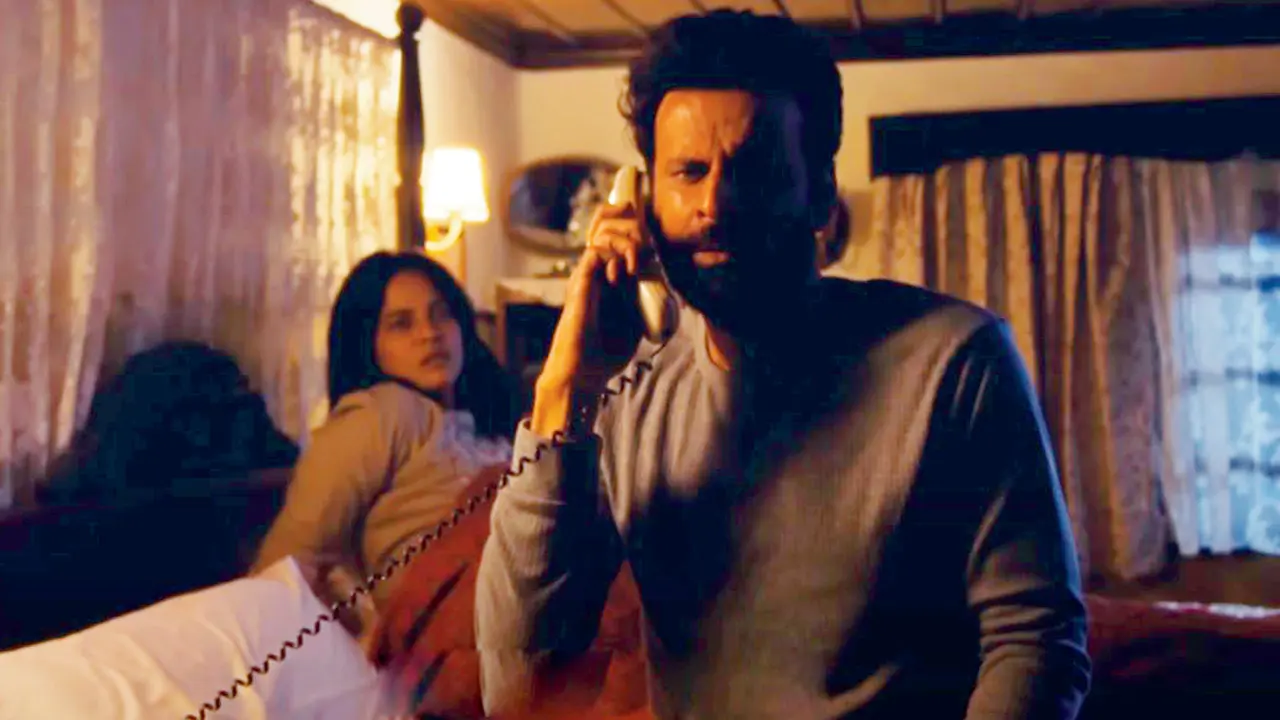
Ahead of the release of Jugnuma, Manoj Bajpayee feels that the top film honours in the country need correction as he reflects on the National Award snub for Sirf Ek Bandaa Kaafi Hai
Priyanka Sharma (MID-DAY; September 8, 2025)
Pondering about the past is not in Manoj Bajpayee’s nature. Why should he when the present holds so much promise? But, at a point in our chat, we take him back to Sirf Ek Bandaa Kaafi Hai (2023), which won Deepak Kingrani the National Film Award for best dialogue. The writer had told mid-day, at the time, that he wished Bajpayee too had won the gong for his powerful performance. Did the actor wish the same?
“More than me, the people associated with the film were sad. I don’t feel sad because a few people [comprising the jury] have decided not to give it to me. They must have their own reasons, with which I may or may not agree. It has happened in the past, even at National Awards, where one truly deserved it, but didn’t get it. If I complain about it, I will sound like a loser. All the award systems in the country have to look within. They have to correct their system. I can’t correct it, right? I’ve moved on,” he says.
He certainly has moved on to a glorious project, Jugnuma — The Fable. Twice in our conversation, he mentions that Raam Reddy’s directorial venture sits right at the top of his three-decade filmography. That’s a huge compliment for the film, which also stars Priyanka Bose, Tillotama Shome, and Deepak Dobriyal.
Bajpayee shares, “Magic realism [was the first draw] to do the film because we don’t make this genre at all. Secondly, the spiritual part of the story spoke to me.”
Another reason was Reddy, who made his directorial debut with the acclaimed Kannada film Thithi (2016). The director and his crew persevered through two pandemic-induced lockdowns and some delays to bring Jugnuma to life. “Then Raam took his time to edit it. He is a purist,” Bajpayee chuckles, before adding, “He is full of ideas, and uncompromising.”
Jugnuma has reminded the actor how much he loves collaborating with relatively new directors. “The film matters to them more than their lives. Their demands are high. I like that push because it’s easy to be content at my age. But the actor in me is so famished all the time. I want to be part of stories told by all these young and imaginative filmmakers.”
But does he ever feel egoistic, given his experience as an actor, while being directed by a relatively inexperienced director? “The awareness is always there. It’s up to you how you push it back. I don’t take it seriously. I don’t even watch my films. I do my film and move on.”
50th anniversary special: "Gabbar Singh is bad because he enjoys being bad"
3:05 PM
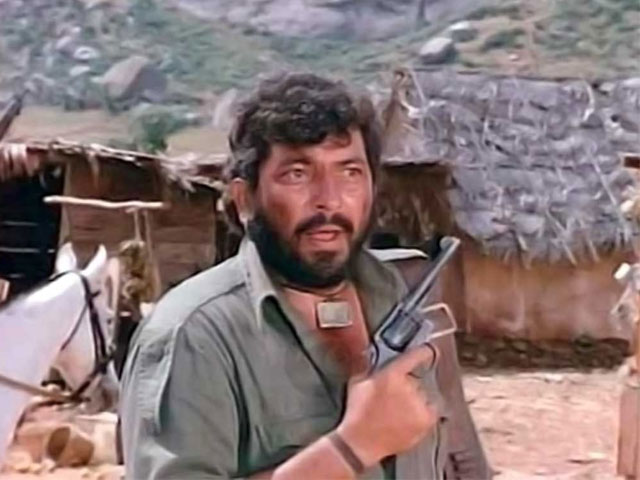
A ‘terrifyingly real’ villain without a tragic backstory or an apology – just a daaku who enjoyed being bad. This unadulterated evil, coming from a man with an un-villain-like personality and voice, is what made Gabbar an enduring pop-culture phenomenon – that’s what screenwriters now believe
Niharika Lal (BOMBAY TIMES; August 15, 2025)
Ruthless dacoits had been on the screen before Sholay, but Amjad Khan’s Gabbar Singh turned the stocky villain into a pop culture phenomenon. Such was the charming menace of Gabbar that he not only became an unlikely ‘hero’ of the film but effectively created a preand-post-Gabbar era.
‘GABBAR WAS TERRIFYING AND ODDLY CHARISMATIC’
“Villains in Indian cinema history can be divided into Gabbar BC and Gabbar AD,” says film historian Gautam Chintamani, adding, “Until Sholay , most dacoit characters followed a formula – exaggerated menace and theatrical delivery. Gabbar changed all that. In earlier films, like Mother India (1957), Ganga Jumna (1961), or Mujhe Jeene Do (1963), the dacoit was either tragic or a menace. Gabbar was realistic, terrifying, and oddly charismatic.”
However, Amjad Khan wasn’t the first choice, Danny Denzongpa was initially cast. But the latter was shooting Dharmatma in Afghanistan and had to step away. Khan, once on board, read extensively about Chambal’s dacoits, including Abhishapta Chambal – written by Jaya Bachchan’s father, Tarun Kumar Bhaduri – to make Gabbar authentic, not a caricature. Before the release, some doubted his soft voice and even suggested dubbing. But Ramesh Sippy refused. “Thankfully, the original voice stayed,” recalls Chintamani, “and those dialogues became some of the most iconic ones in Hindi cinema.”
Gabbar’s entry, too, is masterfully delayed – viewers only hear of him in fearful whispers for nearly an hour before he appears.
‘GABBAR WAS A PSYCHO LONE WARRIOR’
Gabbar became a synonym for fear says writer-director Hitesh Kevalya. “Unlike many villains before him who still feared the law or had a shred of accountability, Gabbar was a psycho lone warrior – no parents, no family, no moral compass. Kaanoon ke haath bahut lambe hote hain, but Gabbar chopped off Thakur’s arms, signalling he was above the law,” he adds.
Writer Saurav Dey feels it is Gabbar’s unapologetic evilness that makes him believable. “You’re not traumatized by the villain’s villainy, because it has that “oh, this could never really happen” feel. Even his most brutal acts, like chopping Thakur’s hands, entertain because you know retribution will follow. And unlike most villains, he doesn’t have a tragic backstory or an apology. He’s bad because he enjoys being bad and that freed the writers from inventing reasons for why bad has to be bad.”
Meanwhile, writer Deepak Kingrani credits Gabbar’s dialogues for his staying power. “After Sholay released, his lines were repeated in every household. Even today, people know them word for word. Villain jitna hum bada banate hain, hero utna hi bada hota hai.”
‘GABBAR’S SWAGGER MAKES HIM A ‘HERO’ IN A WAY’
In the film, Gabbar brags, “Yahan se 50 kos door gaon mein jab bachha raat ko rota hai, toh maa kehti hai – bete so ja, nahi toh Gabbar Singh aa jayega.” Dey notes, “Usually, it’s the heroes who are narcissistic; here, the villain has that swagger, which in a way makes Gabbar the hero of Sholay.”
For screenwriter Anjum Rajabali Gabbar’s “pure, unrepentant evil” with a stylish edge makes him memorable. “Villains like Ajit or Pran had a caricature-ish style, but Gabbar didn’t.” Rajabali believes Salim-Javed tapped into a universal truth: cruelty often stems from insecurity, and control comes from instilling fear. “Gabbar enjoyed his evil, he took pleasure in it.” He says that Gabbar’s character, who keeps saying ‘jo dar gaya samjho mar gaya’, also had a very human quality – fear.
'VILLAINS LIKE SHAKAAL OR MOGAMBO COULDN’T MATCH’
Before Sholay, villains were expected to be towering men with booming voices. But Gabbar defied stereotypes and proved that menace couldn’t be defined by just size or loud, threatening voices. “Amjad Khan was a man of average-build with a soft voice, yet he terrified audiences. His performance proved that menace can come from characterization, dialogue, and acting, not just physical presence. After Gabbar, casting became freer – a villain didn’t have to look like a giant to scare people,” says Dey.
When Sholay released, audiences kept returning to the theatres for rewatches, repeating Gabbar’s iconic dialogues loudly.
Chintamani says, “Villains who came after Gabbar, like Shakaal (Shaan), Mogambo (Mr. India), or Kancha Cheena (Agneepath) could never match his mix of realism and menace. Gabbar remains a pop culture icon because he was terrifyingly real and completely fresh in 1975 – and because audiences had no preconceived image of Amjad Khan. That shock factor still works today.”
Internet divided over Shah Rukh Khan's National Award win for Jawan
8:54 AM
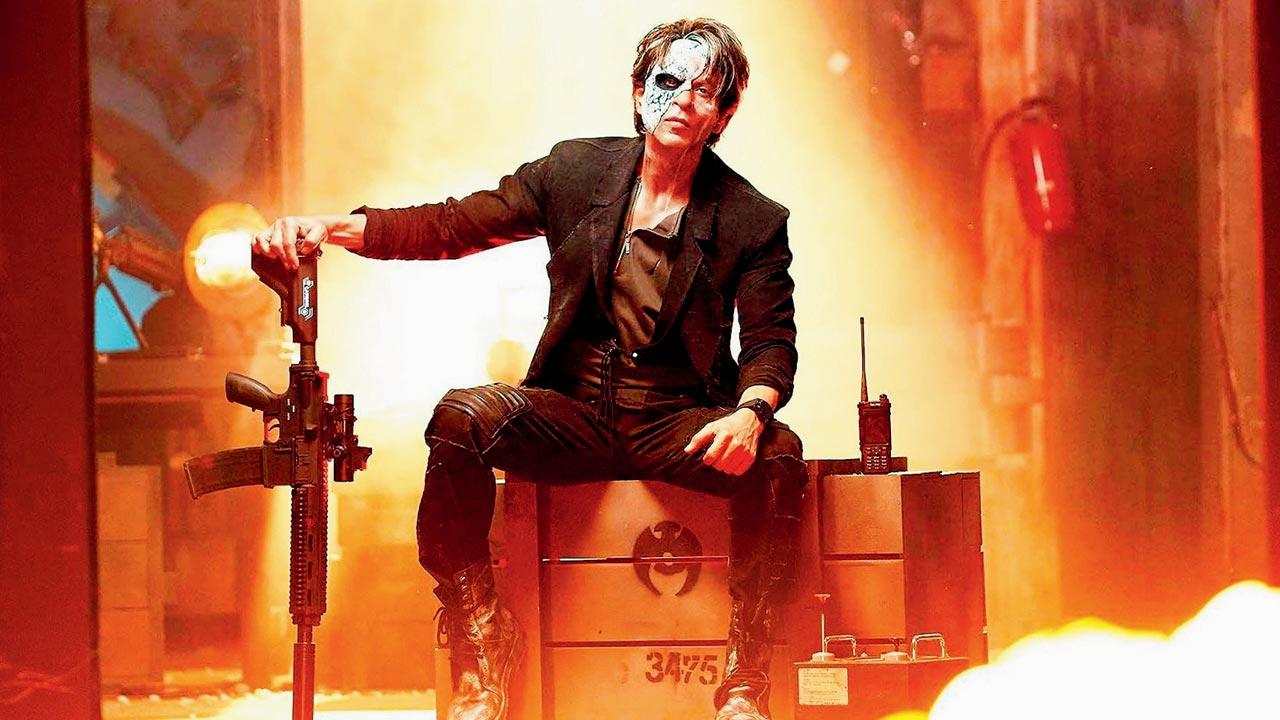
National Film Awards leaves internet divided as Shah Rukh Khan wins his first Best Actor nod for Jawan alongside Vikrant Massey for 12th Fail; ‘Sirf Ek Bandaa Kaafi Hai’ writer hopes Best Dialogue win will boost social dramas
Priyanka Sharma, Komal RJ Panchal (MID-DAY; August 2, 2025)
The 71st National Film Awards couldn’t have gotten starrier than this. Superstar Shah Rukh Khan won his first National Award in his 33-year career for his double role in Jawan (2023). The actor shared the honour with Vikrant Massey, who won it for 12th Fail (2023). Bollywood entertainers seemed to dominate the awards as Rani Mukerji took home the Best Actress award for Mrs Chatterjee Vs Norway (2023).
On the one hand, Khan’s fans saw the win as overdue, considering his restrained act in Swades (2004) was overlooked by the National Film Awards jury 20 years ago. On the other hand, some social media users called the Jawan win “laughable” and “a joke”.
The Best Director award went to Sudipto Sen for The Kerala Story (2023) — a win that will presumably be debated over the next few days. The movie, which centred on the alleged coerced religious conversion of Malayali women, was widely criticized. An elated Sen called the win “validating”.
He told mid-day, “I would’ve been even happier if the film had also taken the top honour, but this recognition validates everything we set out to express through The Kerala Story.”
With Rocky Aur Rani Kii Prem Kahaani winning the Best Popular Film Providing Wholesome Entertainment, co-writer Ishita Moitra told mid-day, “It’s Karan Johar’s [filmmaker] hard work and love that shines in this film.”
The film also won Vaibhavi Merchant the Best Choreography award. She learnt about the win when we called her. “This is overwhelming. You’ve broken the news to me,” said a surprised Merchant.
Deepak Kingrani, who bagged the Best Dialogue award for Sirf Ek Bandaa Kaafi Hai, said, “This win is important as [it gives us] courage to write and producers to pump money in such films.”
Manoj Bajpayee would often sit in our script reading sessions-Deepak Kingrani
4:45 PM
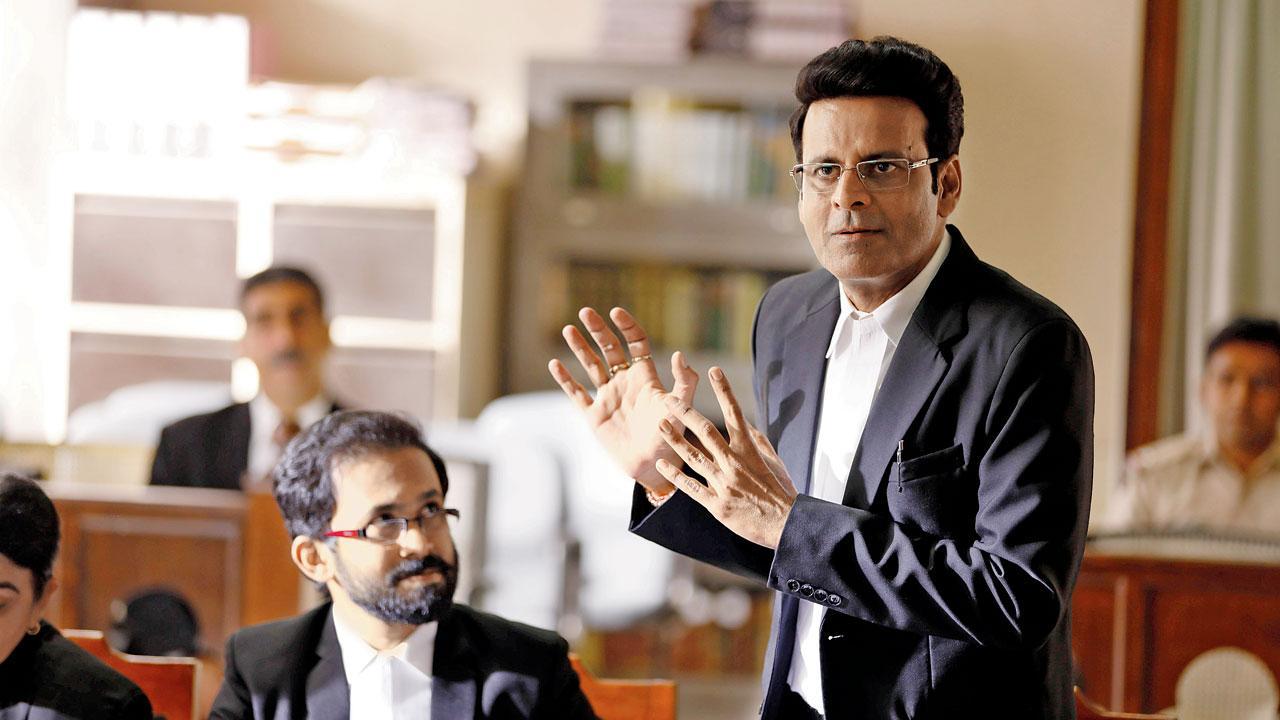
Winning praise for Sirf Ek Bandaa Kaafi Hai, writer Kingrani on how Manoj played a key role in fine-tuning the social drama’s script
Priyanka Sharma (MID-DAY; June 15, 2023)
In 2017, Deepak Kingrani left his cushy corporate job in the Netherlands to pursue writing. Six years on, the screenwriter is flooded with congratulatory calls for penning Manoj Bajpayee’s powerful social drama Sirf Ek Bandaa Kaafi Hai. From earning in euros to moving to a creative job in Mumbai wasn’t a difficult shift, he says, as his passion for writing kept him going.
“I got to write Special Ops [2020], which was a fantastic experience. There wasn’t a single day when I regretted leaving my job for this,” smiles Kingrani.
Apoorva Singh Karki’s directorial venture, which sees Bajpayee as a lawyer, is based on the 2013 rape case against self-styled godman Asaram Bapu. Through the ZEE5 film, both Karki and Kingrani wanted to focus on sexual abuse involving godmen.
“Being a father to a daughter, I personally connected with the story. For us, the story began with the idea that we know [there are] bad guys. But when someone you worship and consider god-like breaks your trust, the betrayal and pain is far more. We are all spiritual people, and we don’t like how [faith] gets a bad perception because of these people,” says Kingrani.
What makes him happier about the success of Sirf Ek Bandaa Kaafi Hai is that the screenplay was a collaborative effort, with the leading man bringing in his years of expertise. “Manoj sir has a rich experience of working with several directors and reading scripts. He’d often sit in our script-reading sessions. Sometimes he would tell me, ‘I need a strong dialogue here to convey the emotion,’ while Suparn [Varma, creative producer] would play the devil’s advocate.”
If the children aren’t safe, our future is not safe-Manoj Bajpayee
8:27 AM
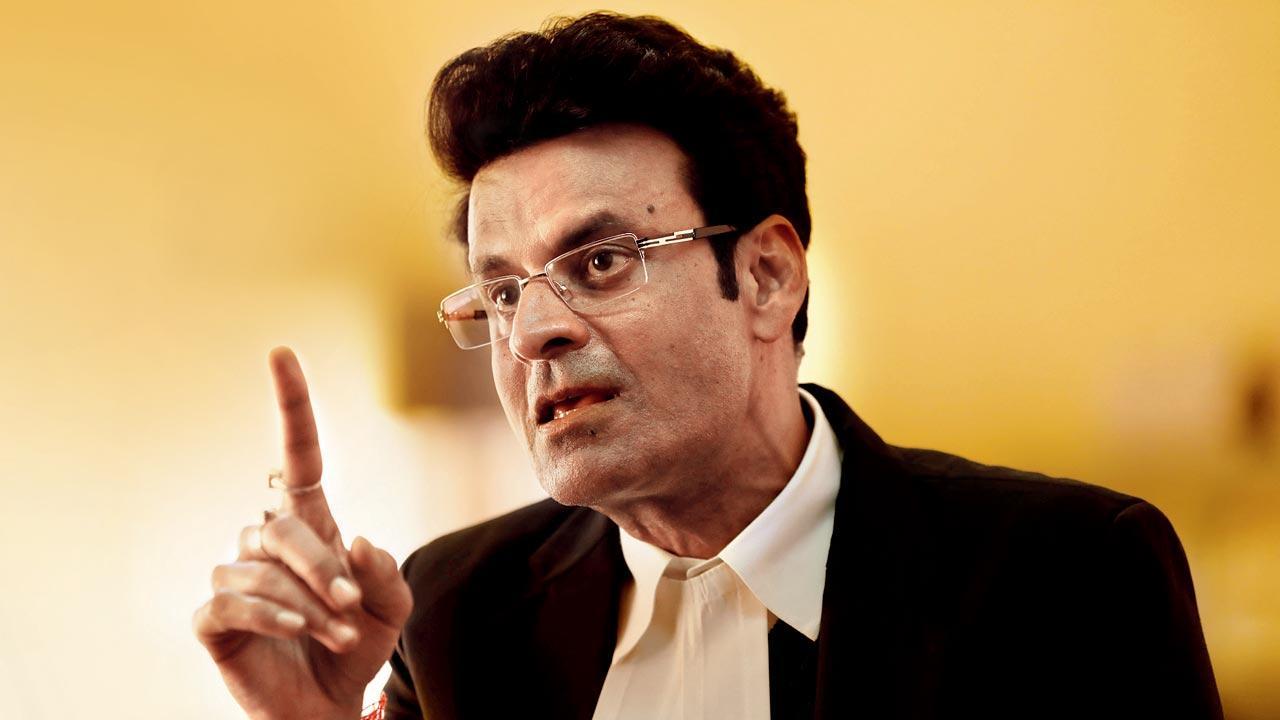
Manoj says he fronted Bandaa, based on the 2013 rape case of a minor by self-styled godman Asaram Bapu, to highlight issue of children’s protection
Priyanka Sharma (MID-DAY; May 15, 2023)
Every time Manoj Bajpayee invests in a film that has a social message, he has a singular concern — that a badly made film can render the message pointless. With Sirf Ek Bandaa Kaafi Hai, the actor had no reason to worry as the script surpassed his expectations. When producer Vinod Bhanushali and creative producer Suparn Varma offered him the social drama, based on the 2013 rape case of a 16-year-old by self-styled godman Asaram Bapu, they gave him the liberty to choose a suitable director and writer.
“I happened to see Aspirants by Apoorv Singh Karki and loved it. I mentioned his name in the meeting. Apoorv happily came on board. The way writer Deepak Kingrani and he have written the climax overwhelmed me. It became the most attractive part of the film,” says the actor.
But there was a bigger and more powerful reason for Bajpayee to lead the ZEE5 offering, which sees him step into the shoes of Jodhpur-based lawyer Poonam Chand Solanki, who fought against some of the country’s most powerful attorneys and had Asaram convicted. Being a parent, the actor felt deeply about children’s safety.
“All of us were driven by our concern for the protection of children and minors. We are a heavily populated country, but our children are not as secure. Their safety is a concern shared by me, Apoorv and every parent. If the children aren’t safe, our future is not safe. If a child’s privacy and dignity are invaded, it means so many other children’s dignity is crushed too,” he emphasises.
Even as Bandaa chronicles the events that led to Asaram’s conviction in 2018, Bajpayee is aware that people’s faith in the country has oddly become intertwined with worshipping godmen. In such a scenario, is it risky to tell a story that shows the evil in men, who are fiercely protected by people’s blind faith?
The actor weighs in, “I am a believer. My day starts with a prayer. But at the same time, I have a few concerns as a believer. It’s the believer’s responsibility to keep the bad element out [of his faith]. By [making the film], we are also protecting the belief.”
Subscribe to:
Posts (Atom)