Showing posts with label Deepa Mehta. Show all posts
Showing posts with label Deepa Mehta. Show all posts
I don’t make films for bigoted racists or colonialists-Gurinder Chadha
9:40 AM

Director Gurider Chadha and producer Anushka Shah
As Gurinder Chadha’s Christmas Karma gets ready to arrive in India, the British filmmaker reflects on her growing up in Southall, carrying her Indian heritage everywhere and the sisterhood she feels with her peers Mira Nair and Deepa Mehta
Priyanka Sharma (MID-DAY; December 7, 2025)
It’s been two weeks since Gurinder Chadha released her upcoming feature, Christmas Karma, in the UK, the country where she lives. It’s a week before she releases the film in India, the country she carries with her everywhere. Like her film, Chadha has always found her belonging there and here.
So, as we sit with her, in a Mumbai suburb club, to talk about the film, we can’t help but ask her, “What’s home for you?” “Southhall is my home,” Chadha replies promptly, while browsing through her phone gallery to show us the street she grew up in.
“And I always end up going back to those streets. I was there last week and I did a little activity with local school children to open their Christmas festival. I saw one particular area where the first Indian shop in Southall opened, where my parents used to go. Next to it was a playground where I played as a little girl,” the filmmaker shares with a child-like excitement.
Her love for her British roots and Indian origin is reflected throughout her filmography. Christmas Karma is no different, in that context. But something else is different this time, Chadha says. “When I adapted Jane Austen’s Pride And Prejudice (as Bride & Prejudice), no one asked why Gurinder Chadha should do this. But because the country’s moved a bit to the right, there are people who feel emboldened, and they are asking, ‘Why should Gurinder Chadha do Charles Dickens? How dare she make a film on Christmas? It’s our holiday’.”
In such times, a film like Christmas Karma that puts an Indian immigrant in the UK at the centre of the story is only timely. Chadha says, “There’s a fight going on for who decides what British cinema is and whose voice is considered to be British or not. It’s really important that those questions are being asked at a time when racism is on the increase. I make films for those fighting the good fight, ones who talk about inclusivity. I don’t make films for bigoted racists or colonialists.”
But it’s not to say that the director doesn’t feel isolated at times. “Sitting here, we’re all Indian women, right? I’m not anything unusual to you. In England, I’m a complete anomaly. Where are the Indian women? Where are the actual directors?”
That’s a question that does need to be asked. Throughout her career, Chadha has been a force to reckon with when it comes to telling stories of the Indian diaspora, including successes like Bend It Like Beckham (2002), Bride & Prejudice (2004). But there haven’t been voices after her that have been able to make themselves heard and seen. The first thing to understand, Chadha says, is the struggle that theatres in the UK have been facing since the COVID-19 pandemic.
“In England, people are saying, ‘It’s a miracle that you’ve got a film made, because there’s so little getting made right now.’ Post-pandemic, it’s been a tough time for all film industries, everywhere. So, that is also something to be kept in mind,” she says. But that just scratches the surface. The bigger obstacle for any South-Asian filmmaker in the west is still rooted in his/her identity.
“When you try and make a film with a person of colour as the lead, it’s very hard because people don’t see it as necessarily as mainstream and commercial as we think it is. And this is when I have proved the opposite with my films. I have examples. I have numbers to support it. I tell them, ‘I don’t understand. Why are you hesitant? Look at the successes.’ I am shocked by the lack of films from the diaspora. I also didn’t make a sequel to Bend It Like Beckham because I felt that that was a film that I couldn’t really emulate,” she says.
But her single-minded pursuit to tell stories of Indian immigrants stems from a personal emotion, which she is not sure motivates the generations of filmmakers that came after. Even Christmas Karma, the adaptation of Charles Dickens’ A Christmas Carol, is born out of the endeavour, Chadha says, of showing that the struggles of her ancestors, who had to leave their land behind, weren’t in vain.
“Christmas Karma comes from the same wheelhouse as Bend It Like Beckham. It’s a human empowerment movie. It’s about having the muscle memory of knowing that your parents and your grandparents went through some kind of migratory movement. In my case, it was a partition that my grandparents went through. Then my parents were born in East Africa. I was born in Kenya, but I grew up in England. And you carry all that with you. So, the successes of my generation are really about wanting to show that our parents’ lives were worth it. And their struggles were worth it,” she smiles.
And in her endeavour, she always ends up finding allies. Even though the director initially struggled to find investors for Christmas Karma, she eventually found a partner in producer Anushka Shah, whose Civic Studios has backed the project. And if her films have been unifiers for Indians around the world, in her life, she has forged a sisterhood with Indian women, who walk the same path as hers.
One such bond is what she shares with filmmakers Mira Nair and Deepa Mehta. The trio has a WhatsApp group as well, which goes by the name “Behenji Brigade”.
“Mira gave this name. I congratulated her on Zohran’s (Mamdani, Nair’s son) win. I messaged her, ‘Bohot Mubarak, Mira. What wonderful news to wake up to. It is great that my son has such a role model to look up to. Kya baat hai.’ Then Deepa wrote, ‘Bilkul, Mira. Many, many congratulations. Waah Bhai Waah.’ Mira said, ’It’s the dawn of a new day. We’re bursting with joy,’” Chadha shares.
And if there’s another friendship that the filmmaker is proud of, it’s with Bollywood star Priyanka Chopra, who even sang a Hindi cover of George Michael’s Last Christmas for Chadha’s film.
“She is just amazing. She is always sending me messages, where she would say, ‘Keep breaking new ground.’ She doesn’t have to do that. She sang the song to support me. Priyanka is also a woman who left the safety of Hindi cinema and went abroad, and had to knock on doors to get recognition. She did it the hard way. Maybe some people in India don’t see that struggle but I have seen it. I know what it is like for her because I know what it has been like for me.”
After Defence ministry refuses to grant NOC, Onir reimagines queer love story, makes We Are Faheem & Karun
8:07 AM
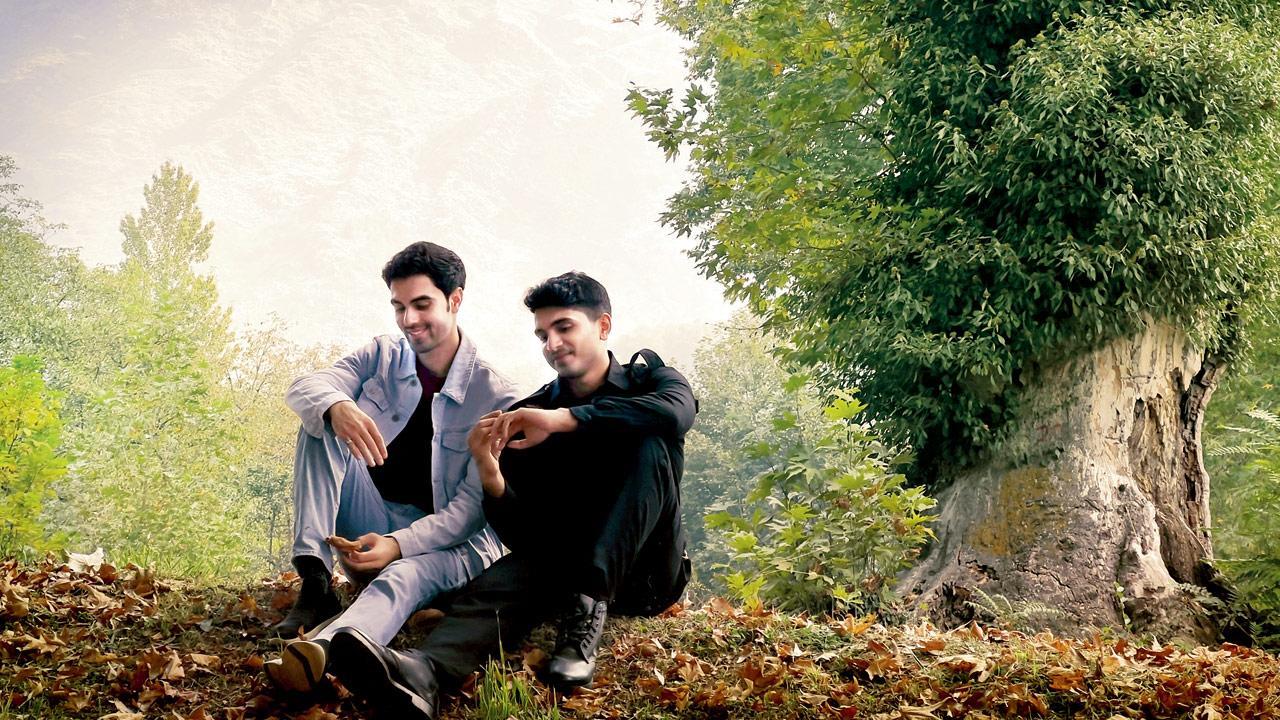
Actors Tawseef Mir and Akash Menon in the film
As Fire filmmaker Deepa Mehta joins We Are Faheem & Karun as a presenter, director Onir says the queer love story questions why empathy is rare despite the SC’s decriminalisation of homosexuality in 2018
Mohar Basu (MID-DAY; October 25, 2024)
In 2022, when the Ministry of Defence (MoD) had rejected the script of one of his short films in the We Are anthology, a disappointed but resolute Onir had told mid-day, “If you tell an artiste no, he will still make the film” (May not have the resources to fight long legal battle, Jan 24, 2022).
Two years on, the result is for all to see. The director is ready with We Are Faheem & Karun, a queer love story set against the turbulent backdrop of Kashmir. As the short film, the first instalment in Onir’s We Are series, gears up for its première at the Dharamshala International Film Festival, Fire (1996) filmmaker Deepa Mehta has come on board as the presenter.
Mehta says she was deeply moved by the film’s exploration of emotions and societal themes. “We Are Faheem & Karun’s themes of love, friendship, and duty are profound and universal. It is essential to highlight the heartbreak and humanity in geopolitical conflicts. Stories like this are so important right now,” she says, batting for the movie that stars actors Tawseef Mir and Akash Menon.
The short film was inspired by the life of a former major, who came out as gay and had to leave the Indian Army as LGBTQIA+ individuals cannot officially serve in the military. However, the MoD rejected the script over the “illegal” depiction of a queer soldier and refused to grant it a No Objection Certificate (NOC). The film was then reimagined as a same-sex love story of Karun, a security guard from Kerala stationed at a construction site in Kashmir, and Faheem, a local Kashmiri college student.
Using his voice to push for queer identity in mainstream movies, Onir says that despite the setback, he has ensured that We Are Faheem & Karun stayed true to the story he intended to tell.
Reflecting on its themes, he shares, “Like I Am [2010], this speaks about identities. This is special for me as it’s set after the 2018 Supreme Court judgment on IPC 377. The film portrays that in spite of the judgment, we, as a society, are so fragmented that acceptance in many spaces is still difficult, and young queer individuals still struggle to be proud about who they are. This film seeks empathy and kindness, and speaks of the loss and pain that is inflicted on individuals. Why would the acceptance of something that doesn’t affect your personal life be so difficult?”
Fire actually went through the censor board twice, without a single cut-Deepa Mehta
8:25 AM

Debarati S Sen (BOMBAY TIMES; May 20, 2024)
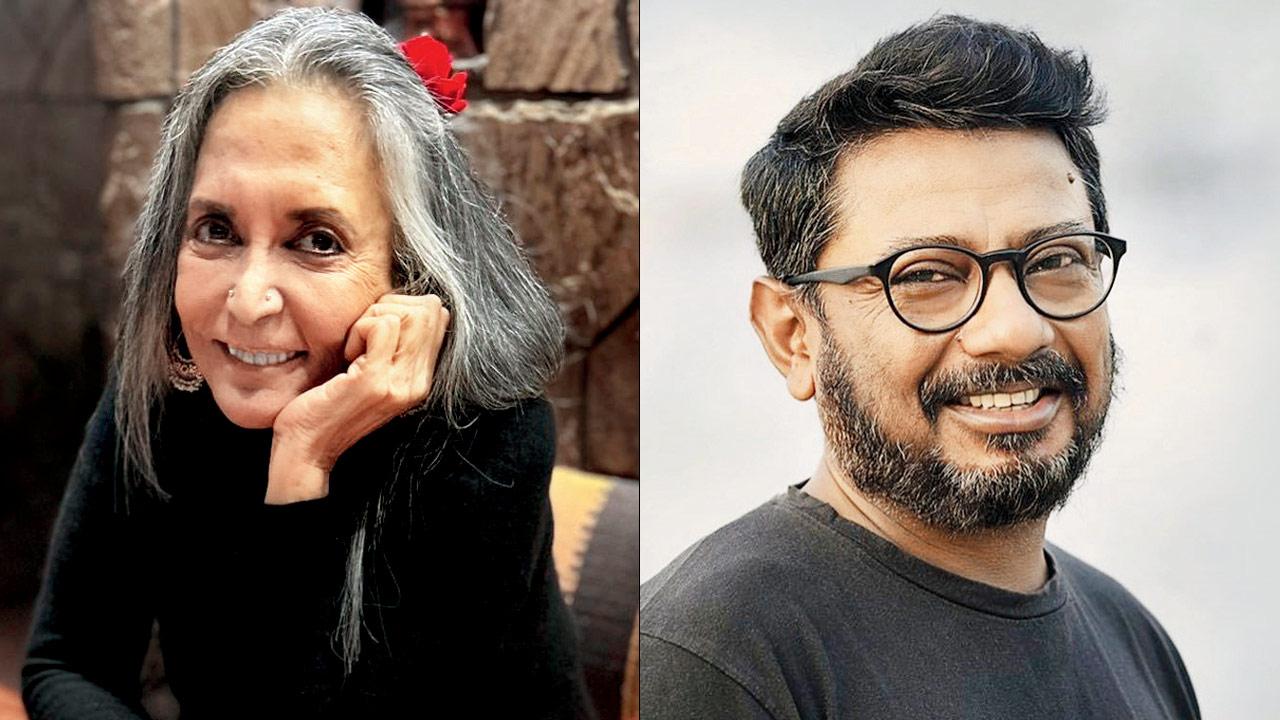
Deepa Mehta’s Fire, starring Shabana Azmi and Nandita Das, was among the first films in mainstream Indian cinema to explore the topic of same-sex relationships. At the recent Kashish Pride Film Festival at Liberty Cinema, Deepa Mehta and Nandita Das came together for a ‘Fire’side Chat to talk about the impact the film had on the audience and the LGBTQIA+ community 28 years ago.
Nandita, who made her acting debut with Fire and has directed films over the years, said, “Fire sparked a crucial conversation about LGBTQ+ issues at a time when such a dialogue was virtually non-existent. Revisiting this journey at this film festival with Deepa was profoundly moving. It reminded me of the power of cinema in driving social change and the importance of continuing this advocacy.”
Deepa said that when she made Fire, she didn’t think about conveying a message through the film. “For me, it was an exploration, and I didn’t think of it as a queer film then. It was a natural progression in the relationship, where they were emotionally available and sustainable for each other,” she revealed.
Nandita added, “For me, Fire was my first film. Many people said it was such a bold decision to work in a film like this as your first. But at that time, I didn’t see it as an act of courage because I didn’t know there was going to be a second film. I didn’t want to be an actor; I was quite happy working at the NGO after my Masters of Social Work. To me, Fire was a story of love, about something that we weren’t talking enough about. My understanding of queer issues came after the film when I started realising what kind of an insensitive world we were living in, with so many double standards. I became a natural ally without having the vocabulary and the ‘isms’.”
‘Fire went through the censor board twice, without a single cut’
The protests, attacks and vandalism did not begin immediately after the release, but after almost two weeks. Deepa recalled, “Fire actually went through the censor board twice, without a single cut and that we felt was amazing. After the release, I was in Dubai, but was called back to Delhi because the attacks began. There were protestors at the Regal Theatre and Connaught Place. I reached there and was astounded. I wept at what I saw. I saw women with placards that said, ‘We are lesbians and we are Indians’.”
Nandita chipped in, “We knew there would be problems when we made the film. We were prepared for some cuts, but when the Censor Board passed it without a single cut, we were overjoyed. It was released, and there were mixed reactions. On the 13th day, the attacks started with, ‘Yeh hamare culture ke khilaf hai’. What gave us courage was that people took to the streets spontaneously saying that it was their right to be able to watch the film.”
I’m apparently the first working Bollywood actor to publish a novel-Huma Qureshi
3:06 PM

Turning author with Zeba: An Accidental Superhero, Huma on how she expanded on her idea of a fantasy fiction show to pen her first novel
Mohar Basu (MID-DAY; December 9, 2023)
Zeba, the sassy protagonist of Huma Qureshi’s debut novel, Zeba: An Accidental Superhero, reminds us of Kamala Khan from Ms Marvel (2022), the hijabi superhero being the common motif. When we share our thoughts with Qureshi, she says, “She is more Deadpool than Marvel, don’t you think?” Through Zeba, the first-time novelist tells a story about heroism, transformation and the indomitable human spirit in the face of adversity. Like its protagonist, the book itself had quite a transformation.
“I had written it originally as a 10-page concept for a TV show. Everyone loved it, but [creating a] fantasy fiction show is expensive. When COVID hit and I had two years to kill, I went back to it. I then thought of [making it] as a comic book series, but when I sat down to write, each chapter came to me in the voice of a film character. That’s how the story evolved,” she recalls.
Qureshi has put her mother Aamna’s Kashmiri heritage in the novel that is set in a fictional place called Khudir. The actor-turned-novelist acknowledges that some of the material stemmed from her life experiences and how she views the world.
“I’m not a trained novelist or screenplay writer. I’m an actor and trained to think like my characters. So, each chapter is about a character and their aspirations.” While Zeba is an unlikely hero whom you root for, Qureshi was tested when creating the character of Khan, a despot.
“He is so different from my being that it was challenging to write him. I remember reading an interview about how an actor in Django Unchained [2012] had to spit on his co-star’s face and couldn’t bring himself to do so. But he had to do it to make a larger point. Similarly, I wrote Khan to understand how a dictator’s mind works.”
Working with the best minds in the industry has only honed her imagination and storytelling prowess. “Filmmakers like Deepa Mehta, Vasan Bala, Anurag Kashyap, Subhash Kapoor and Sriram Raghavan have had an influence. I’ve learnt so much from how they explain the character and then execute it from script to screen. These learnings pushed me further.”
So, what’s the next step? Will we see a movie on Zeba soon? “Inshallah,” smiles Qureshi. “I’m apparently the first working [Bollywood] actor to publish a novel. I would’ve loved to see a film like Zeba, but no one wrote it. So, I had to write it for myself.”
I went to last page of Kohrra's script to see if my character is killed-Suvinder Vicky
8:21 AM

Nurturing Bollywood dream since 20 years, Kohrra’s breakout star Suvinder says he was in disbelief when he was offered the lead role
Priyanka Sharma (MID-DAY; July 27, 2023)
Until a few weeks ago, Suvinder Vicky would feel anxious about his career, worried that it wasn’t moving in the right direction. But that has changed dramatically since Kohrra dropped online over 10 days ago. “Maybe this is what fame feels like. My phone hasn’t stopped ringing,” laughs the actor, talking to us over a call from his Chandigarh house.
With Netflix’s gripping investigative crime thriller emerging as a sleeper hit, the Hindi film industry and the audience have found a new breakout talent in Vicky, who plays a Punjab cop investigating a murder case. The actor, 50, points out that his success is not overnight; instead, it’s the culmination of a 20-year journey. To him, Bollywood was always the destination, but he was too scared to pack his bags and move to Mumbai.
“I come from a humble background. My parents weren’t keen on sending me to Mumbai because it felt unsafe. You keep hearing stories of outsiders, struggling to find work and pay bills. I could never muster the courage to follow my Bollywood dreams. So, I kept honing my craft, working in Punjabi films,” he says.
But Bollywood often knocked at his door, even if with smaller opportunities. The actor featured in Hansal Mehta’s Shahid (2013), and Abhishek Chaubey’s Udta Punjab (2016). Unknown to Vicky, it was during the making of Udta Punjab that Kohrra creator Sudip Sharma spotted him. Sharma, who wrote the Shahid Kapoor-Alia Bhatt crime drama, was so impressed by Vicky that he decided he would cast him in a bigger role whenever the opportunity arose.
“Sudip sir then cast me in Paatal Lok [2020], where I just had a few days’ shoot. So, I found it unbelievable when he rang me up and asked if I would do Kohhra,” the actor shares.
Even though he played a significant role in CAT (2022), headlining a Hindi show was beyond Vicky’s imagination. He candidly shares, “I read the first few pages of the script, and then went directly to the last page to see if they have killed my character.”
There was no denying that the story—exploring the dark side of love, father-son bond and familial violence—was powerful. But more than that, it was Sharma’s unflinching faith in him that made Vicky come on board. “The script was complex. I was so scared if I would be able to do it. But when the show’s creator says, ‘I won’t make the show if you don’t do it,’ then that becomes your guiding light.”
Now, Vicky feels emotionally prepared to visit Mumbai and explore more opportunities. “I have done many credible films, where I’d be mentioned as a scene-stealer, but it’s the first time, every praise mentions me as the leading man. It’s such a different feeling, especially when directors like Karan Johar, Hansal Mehta and Deepa Mehta specifically mention your name,” the actor smiles.
Applause and standing ovations for What’s Love Got To Do With It were a pleasant surprise-Shabana Azmi
2:16 PM
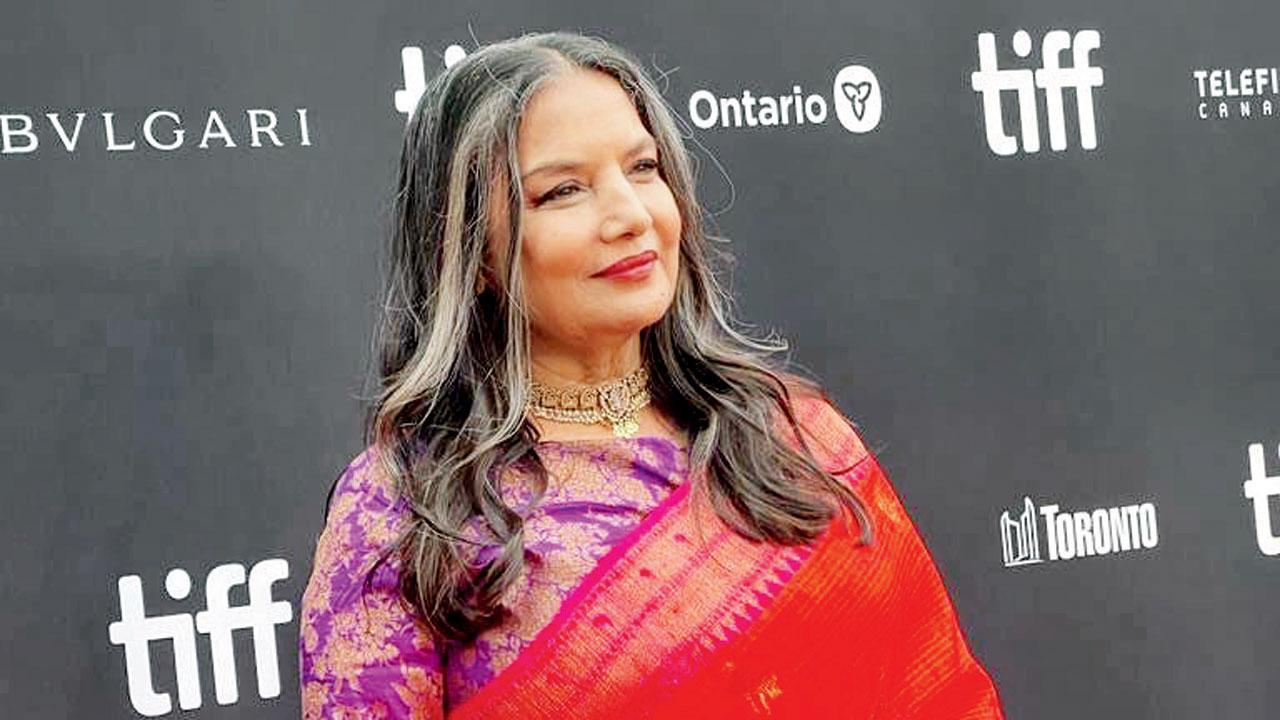
Shabana Azmi on the standing ovations her film, What’s Love Got To Do With It received at TIFF screening
Upala KBR (MID-DAY; September 16, 2022)
It is rare to witness the audience’s reaction to a film these days, but Shabana Azmi, who recently attended the Toronto International Film Festival (TIFF), for the premiere of Shekhar Kapur’s What’s Love Got To Do With It?, was overwhelmed with the response the film garnered. “It was evident that the audience was loving the film,” says Azmi, who was thrilled that “every joke had landed” and people registered the emotions of the film.
“I was watching the film on the big screen for the first time. The thunderous applause and standing ovations were a pleasant surprise. Shekhar reacted to the overwhelming response with equanimity. He was smiling at all the press interactions,” says Azmi.
What’s Love Got To Do With It?, written by Jemima Khan, also stars Emma Thompson, Lily James and Shazad Latif. While Thompson and Latif couldn’t make it to TIFF due to prior commitments, they caught the audience reactions and were thrilled nonetheless. “We missed Shazad. He was gutted because he couldn’t attend,” expressed Azmi.
The actor, who plays Aisha Khan — the matriarch of the Asian family — believes that the audience connected with the movie because they found it “relatable”. “It’s a warm, funny, and emotional film about love, intimacy, and identity. Jemima Khan’s observations of the difference between cultures is laced with clever lines, humour, and compassion. In today’s dark times, it is refreshing to have a film that celebrates life and the family.”
The icing on the cake was when Azmi caught up with her Fire (1996) team at TIFF after ages. “TIFF got us together to celebrate 25 years Of Fire since we first premièred it at the festival. Nandita [Das] was there as a director [for her film Zwigato] and Deepa [Mehta, director] was at the fest for a workshop. It feels great that all of us have our boots on and are still working. Fire has become a cult film. Even today, we receive warm messages from people who say it transformed their lives,” expresses the actor.
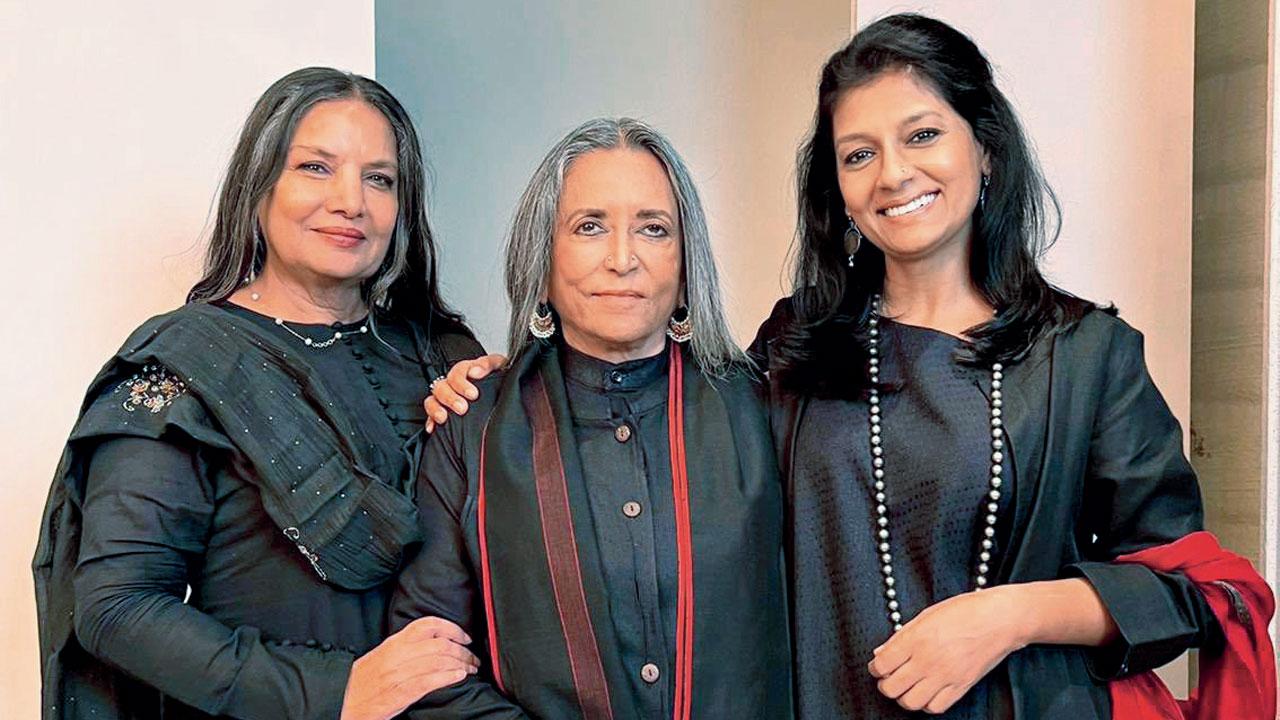
Azmi, Deepa Mehta, and Nandita Das celebrating 25 years of Fire
Be it Sonakshi Sinha, Mrunal Thakur or I, we stand here to service the story and tell it right-Huma Qureshi
8:11 AM
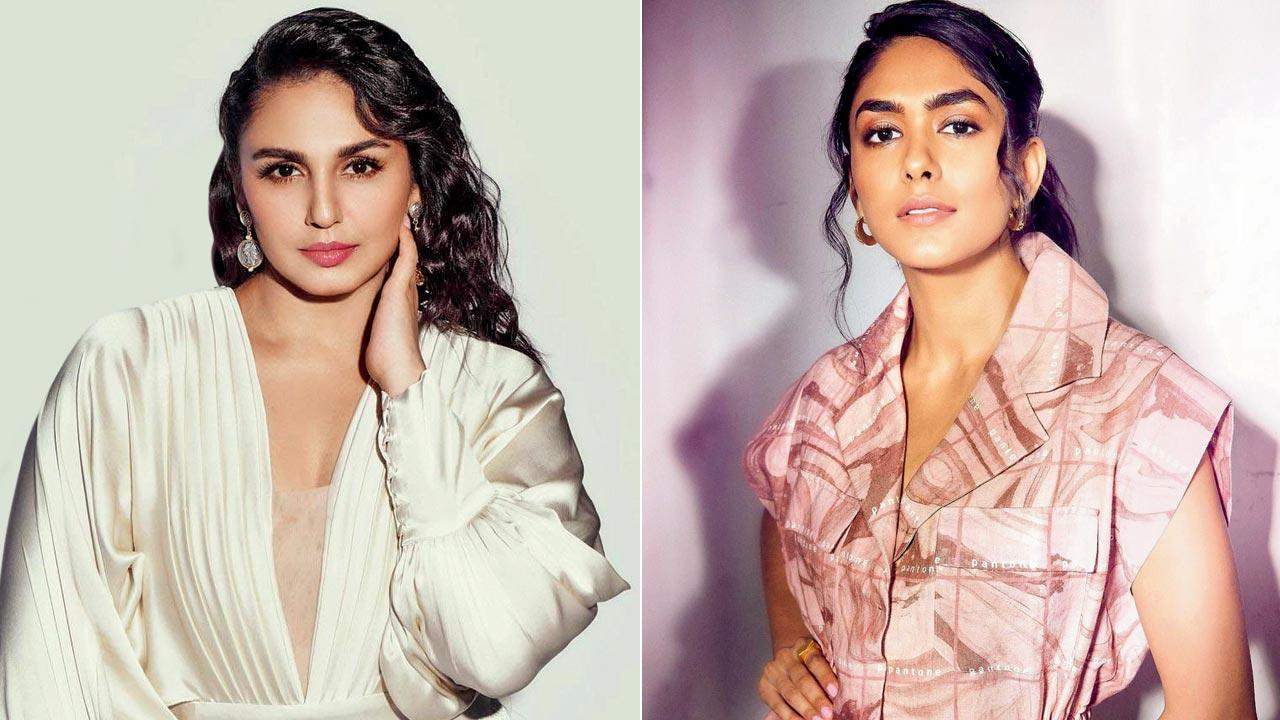
Doing two-heroine projects in Pooja Meri Jaan and Double XL, Huma says she is a secure artiste who doesn’t want to be limited by industry’s trappings
Mohar Basu (MID-DAY; August 3, 2022)
It has been a busy week for Huma Qureshi. While she began the promotional run for the second season of Maharani, her next Pooja Meri Jaan was also announced. With its teaser that shows the threatening side of a romantic proposal, the makers have built much intrigue around the Navjot Gulati-directed movie. “It is a relevant conversation, which [piqued] my interest in the film,” begins Qureshi, who is joined by Mrunal Thakur and Vijay Raaz in the Dinesh Vijan production.
“I have worked with Dinoo on Badlapur [2015] before. This film is also produced by Amar Kaushik who is one of the best directors we have in the country today. When he told me he is creatively producing the film, I was kicked about it. Navjot’s script is so hard-hitting, highlighting an important conversation we need to have.”
It is equally relevant to discuss how Qureshi, while headlining solo outings like Maharani and the Tarla Dalal biopic, is unafraid to give her nod to two-heroine projects. If Pooja Meri Jaan sees her share the frame with Thakur, Double XL has her teaming up with Sonakshi Sinha.
Happy to front stories told from women’s perspective, she says, “I am operating from a place where content matters the most. I am a secure actor who is assured of her space. If I like the film and the intentions of those making it, [I will go ahead]. Be it Sonakshi, Mrunal or I, we stand here to service the story and tell it right. As artistes, we should not let ourselves get limited too easily and too soon.”
From her performances to her choice of projects, it is evident that Qureshi has matured as an artiste. The new line of thinking, she says, comes from director Deepa Mehta, with whom she collaborated on Leila. “She has empowered me as a performer. I talk to her every week. She is my mentor in a way. She is the first director who shot me in a way where the camera was [focused] on my eyeball. I was petrified, but she gave me the confidence that I can shoulder a project.”
I didn’t come here to play a doll. I came here to be an actor-Huma Qureshi
8:08 AM

Rachana Dubey (BOMBAY TIMES; July 1, 2022)
Huma Qureshi recently clocked a decade in Bollywood. She had stepped into the industry with Gangs of Wasseypur – Part 1, which had released in June 2012. Today, even as she’s busy completing movies and shows at breakneck speed, she believes she has learned to strike the perfect work-life balance. In a conversation with BT, she talks about working non-stop and how the narrative for women and women-led stories has changed in the industry in the decade that she has been a part of this field. Excerpts:
The last two years have turned out to be interesting for you career-wise. At a time when there was so much uncertainty around us, you shot for a couple of projects between the two lockdowns. You were seen in Bellbottom and Zac Snyder’s Army Of The Dead and were appreciated for your performance in the web show Maharani. How do you plan to sustain that momentum for the rest of this year?
Opportunities and hopes come at the most unlikely times and from the most unheard of places. The two years, 2020 and 2021, were the pandemic years in public memory. Theatrical releases had virtually stopped and content on the OTT platforms was dictating the entertainment space. In that phase, I was clear that I won’t let this bog me down. I wanted to go out there and put out something great for people to see. When Bellbottom came to me, I eagerly took it up because it was the first film that went on floors post the global slowdown. The part was great, and it was an experience worth the risk we took. Subhash Kapoor’s narration for his web show (Maharani) had blown me away. I was certain that I wanted to do it. We shot it between two lockdowns amid so much uncertainty. What if this was my last piece of work? That thought ignited an entirely different passion in me. It liberated me in so many ways. And that is the thought with which I have surged into 2022. I’m trying out newer things, playing characters that are completely different from who I am.
You recently completed a decade in Bollywood. In these years, you have seldom played the conventional heroine — something that wasn’t the norm when you started out. What do you think helped you get this far?
I just do things that I naturally gravitate towards. At the outset, I didn’t have the luxury of choosing projects, neither was I launched on a grand scale nor have directors chasing me. I went through an entirely different journey where I auditioned to get work, I got replaced on numerous occasions and went through a grind, something that I wear like a badge of honour. I am proud of everything I endured to get this far. All that I have today has been earned with a lot of hard work and patience. It didn’t come to me. If you find my repertoire full of unconventional projects, it’s also because those were the choices I made from all that came my way. It was about choosing a role where I could not really see myself easily. I have never tried playing myself. The greatest compliment for me was to be told that I played an uneducated Bihari housewife like I belonged there, although I am a South Delhi girl. That is the fun of being an actor. I didn’t come here to play a doll. I came here to be an actor. I will do what it takes to play a part effectively. In the last year alone, I have worked with different directors and in content across various genres. Do I love songs and dances? Yes, I do, but I don’t want to do just that. I have a lot more to offer that goes beyond it. I don’t know what the new conventional norms are, but with our choices, if we have been able to redefine how a woman should be seen in a movie, we’re getting somewhere and exploring so many of her other facets.
A decade ago, it was a big deal for a heroine to shoulder a film on her own. Today, plenty of leading ladies, including yourself, are carrying films as well as web shows on their own. That’s a huge transition, don’t you think?
Yes, and it hasn’t come in easily. I can talk for myself. After I worked with Deepa Mehta on the show Leila, my perspective changed in a big way. It was such a turning point. Khoon chakh liya maine! The joy of leading a project is scary and empowering in the same breath. And she gave me that. Deepa made me believe that I can carry an entire show and be in every frame without boring the audience. She made me believe that I had it in me. When an opportunity presents itself, you rise to the occasion. The show opened doors for me to work with Hollywood bigwigs like Zack Snyder. It got me several good projects. Maharani was one of them. I am now leading a lot of stories which have a female perspective. This is Huma Qureshi 2.0. I want to call it that without sounding vain about it. I am not the same person I was back in the day. I am trying to do things differently. As an actor, the more fearless you get, the more this industry and the audience rewards you. I like reading and watching content. A few years ago, people had an issue with the phrase, web-series. I had seen that not only was it brimming with international talent, but it was also gearing up to take India by storm. The writing and the production standards were superlative. These are opportunities that have to be grabbed when they come to you. Doing my first show has hence, been a big turning point. Sometimes, merely doing things you like can have a domino effect on your life. It benefitted me in a big way.
Lastly, the film industry in India is gradually moving towards becoming one cohesive workspace that ropes in talent from film industries across the country. As someone who has worked in two films down South, do you find a change in the manner in which people now perceive actors who work across industries?
I think the change here is phenomenal. People have realised that there is a lot to learn from them. Industries like Tamil and Telugu are not talking down to their audience. In fact, they are pushing their boundaries. The stories are contextual, they pride themselves in the cultural references, they are deeply personal, nuanced and have a massive scale. The southern industries have done this repeatedly. The way things are going, multilingual projects are the in thing. For every actor and talent involved, the audience base increases. I feel thrilled that I did my second Tamil film, Valimai. I have learned so much by sharing screen space with Thala Ajith and Rajinikanth sir. Not just as an actor, but also as an audience member, I am excited about these big pan-India films. Why should we have so many boundaries within our country anyway? We need to shake things up a bit in these seminal times.
Huma Qureshi earns a place in New Wave Actors' list by Los Angeles-based Film Independent for Leila
8:29 AM

Mohar Basu (MID-DAY; October 12, 2019)
Her stellar act in Leila has earned Huma Qureshi a place in the New Wave Actors' list, an annual curation by Film Independent that recognises diverse performances across the world. The actor finds herself among distinguished company that includes Asante Blackk of When They See Us and Olivia Cheng of Warrior, among others. The artistes will come together at the Museum Of Contemporary Art in Los Angeles on October 20 for a discussion on global cinema.
Elated at the honour, Qureshi says, "I feel humbled to be recognised by Film Independent, a body that I have always admired for their encouragement of distinctive work in entertainment around the world. I am grateful for Deepa's [Mehta, Leila director] belief in me and Netflix's belief in diverse stories. As an actor, I always strive to be able to communicate with people around the world [through my work], and this is testament to that."
I have never been eager to work with stars-Huma Qureshi
8:01 AM

Deepali Singh (DNA; May 23, 2019)
Just a day after Huma Qureshi took off for the Cannes Film Festival, the trailer of her dystopian series Leila was released. While the actress was tight-lipped about the Netflix series directed by Deepa Mehta, which also stars Rahul Khanna and South actor Siddharth, she did mention, “I can only say I’m very excited. I can’t wait for people to watch the show!”
Calling Deepa a mentor, a guide and now, a friend, the Kaala actress exulted, “I love her! I have said this earlier, but I feel she’s really opened another chapter of my life for me as a performer and as an actor.” Observing that it’s easy for an actor to sometimes get lost and be affected by things around them, she added that Deepa has pushed her to be a better artiste and connect with her craft all over again. “She took me back to my authentic place as a performer,” she said.
While her previous film, Jolly LLB 2 (2017) was a hit, Huma admitted that she can’t take any credit for it. “It’s just that, as an actor, I took a conscious decision to do more meaningful work. And that kind of work is less and hard to come by,” she opined. It’s been a while since we saw the actress on the silver screen and the reason for that, she informed, is that she wanted to take a break to understand what she was doing.
“I want to do the right kind of stuff and that takes time, which is okay. I will sit at home and work on myself as an actor, as opposed to having two-three releases a year. I didn’t join the film business because I wanted to be famous, but because I enjoy acting. If I’m not enjoying my craft, and doing it because I’m getting money or I’m insecure, then I don’t want to do it,” added the 32-year-old.In her free time, Huma travels, reads and writes. “I have a lot of other interests which take my time, but as far as film work is concerned, it’s a sacred space for me. It’s always like ‘I want to work with this director or I want to do this kind of role.’ I’ve never been eager to work with stars. I always chase scripts and directors,” she concluded.
Sunny Leone skips her own documentary premiere?
7:51 AM

Keeps director Dilip Mehta in the dark about her absence
Subhash K Jha (DNA; September 13, 2016)
Sunny Leone’s absence at the premiere of a documentary
at the prestigious Toronto International Film Festival (TIFF) raised
several eyebrows. And this was because said docu, Mostly Sunny, is about
her own rise to Bollywood stardom from her beginnings in the adult
movie business.
The two-hour film, helmed by photographer Dilip Mehta, had Sunny and husband Daniel Weber’s approval and participation, but now, it seems to have run afoul of the Leone camp.
Says a source from Toronto, “The premiere of the Sunny documentary was held on Sunday night at TIFF. Dilip and his sister Deepa Mehta had even organised a lunch in honour of Sunny, which she was to attend along with her husband. But she didn’t turn up for the lunch or the premiere in the evening.”
When contacted, Sunny and Daniel told us they were in New York attending a family function. Says Daniel, “Sunny had a prior commitment. Sunday was a very important day for our nephew (Daniel’s nephew). He had his bar mitzvah (Jewish coming-of-age ceremony for boys) that day and this was planned in advance.”
Then again, so was the film’s premiere in Toronto. Why wasn’t the filmmaker and his team informed of Sunny’s unavailability on said date?
The city of Aligarh is homophobic-Hansal Mehta
7:42 AM

The city banning his film just proves his point, feels director Hansal Mehta
Subhash K Jha (DNA; March 1, 2016)
Hansal Mehta is livid over the unconstitutional ban on
his film Aligarh in the city that it is named after. Though there was
no formal announcement barring the film from being released in Aligarh,
the city’s mayor Shakuntala Bharti has been quoted as saying that the
film links the city of Aligarh with homosexuality and that according to
the mayor, is nothing short of defamation. Here’s what Hansal had to
say...
Your reaction to the ban on Aligarh?
The ban is most unexpected. It just proves what the film is saying: that Aligarh is a homophobic city. Also, if as reported, the ruling regime has anything to do with this unofficial ban, then it also shows them in very poor light.
Is this why you shot the film in Bareilly?
Just before we were to leave for a recce to Aligarh, we were threatened. We had hired a local guy in Aligarh to help us with the locations. News that we were supposed to shoot over there, got out through him. The night before we were supposed to drive from Delhi to Aligarh, my son Jai received a warning against shooting there.
You changed the location overnight?
Yes. Jai still wanted us to go to Aligarh. In fact, the entire team insisted we did. But I reminded them we were not making the film to win bravery awards. We were doing it because we wanted the world to know the story of this man named Prof Sreenivas Siras. We didn’t expect to fight unending battles with homophobic people.
Do you intend to fight this unconstitutional ban in Aligarh?
That isn’t the only battle I’ve had to fight. Some writ petitions have been filed against me in the Lucknow court. Apparently, the rickshawwallah who was allegedly found making love with Prof Siras and the reporter who entered Prof Siras’s house and found him making love, have filed a criminal case against me. But I am yet to be served any notice regarding this matter.
What is the rickshawallah’s grouse?
His grouse is that I am defaming him by showing him in a poor light in my film. That he is not a homosexual, and that he has five children and that apparently, Professor Siras forced him to have sex.
But that changes the entire subject of your film...
It changes nothing. It just shows how desperate some elements are to stop the film. This is our country. This is tolerant India.
19 years ago, Deepa Mehta’s Fire went through the same ordeal.
I am aware of that. The same elements who tried to stop Fire are still very active. Now when the fire is raging in Aligarh, the elements that tried to stop Deepa’s film are in power now. I wonder what they have against us Mehtas. (Laughs)
Audiences at TIFF enjoyed the Sardar humour in Beeba Boys-Randeep Hooda
7:57 AM

After walking the red carpet at TIFF, Randeep Hooda has returned to his home turf to shoot a movie and is horsing around with a polo club of his own in Gurgaon
Roshmila Bhattacharya (MUMBAI MIRROR; September 22, 2015)
September 13 was Randeep Hooda's lucky day. He walked the red carpet at the just-concluded 40th Toronto International Film Festival with the team of Deepa Mehta's upcoming crime thriller, Beeba Boys, which had its North American premiere at TIFF's 'Gala' section. It brought back memories of his debut film, Mira Nair's Monsoon Wedding, which premiered at the 2001 Cannes Film Festival and bagged the Golden Lion at the Venice Film Festival. "I was a kid then, hiding behind everyone else, but this time I put a sure foot forward. And though the rain ruined our parade, the standing ovation at the end of the screening was a real high," exults the actor.
His rush-rush schedule meant he missed out on a tete-a-tete with Johnny Depp, who was in Canada too with his film, Black Mass, but he got to meet The Life and Death of Peter Sellers actor and internationally acclaimed producer, Geoffrey Rush, whose class act in Shine bagged him an Oscar, the BAFTA, a Golden Globe, a SAG Award and The Critics Choice Award. "He's from Melbourne and since I've spent some time Down Under, we had stuff in common to talk about besides cinema," laughs Randeep.
There have been some quibbles about Deepa's film with The Hollywood Reporter saying "it's too quirky a project to travel far, and its main appeal should be to Indians in Canada and the U.S. where the offbeat humor should make the most sense". Randeep points out that given Deepa's track record, maybe the critics were expecting a more serious film. "But the audience was laughing at the right points and enjoying the Sardar humour. And later on the streets, we were greeted with shouts of 'Hey, Beeba boys'," he reminisces.
He admits that since he had not seen the film before, there were some apprehensions. "Some of my scenes were edited, but no complaints as long as it works for the screenplay and the director. And the critics have been really kind to me. I wasn't expecting such a super response," he says.
So, has Deepa spoken to him about her next film yet? Randeep admits that they have been discussing a lot of ideas but haven't locked on anything yet. "It's nice to collaborate with the same people because you're in your comfort zone and can do things better with the communication lines more open. I have been talking to others too but talks take a long time and till things don't materialise, you don't talk about it," he says evasively.
Randeep returned from Toronto to his home state Haryana where he's filming Laal Rang via Mumbai and Delhi, jet lagged. "I got into the vanity van, into my costume, and it was a real culture shock. From Karnal to Toronto, it's been a long journey, for me as a person and as an actor too. It's heartening when locals now, clued in to my whereabouts, thanks to the social media, ask me, "Toronto kaisa tha?" he laughs.
Meanwhile, Randeep has launched a Polo Club in Gurgaon with the intention of making polo and equestrian sport more accessible. "I don't want to bring down its aspiration quality but I want to make polo more accessible to people and clear the misconception that it is an expensive sport. It's cheaper than hiring a cricket pitch and equipment," he says, adding that there are plans to start such clubs across India.
His new initiative must have made his horses happy? He guffaws, "I haven't had time for a chat with them. May be some of them are jealous but they will understand that its for the larger good."
I had a 4-page-long, email from an upset Deepa Mehta making her point clear-Gulshan Grover
7:53 AM

Roshmila Bhattacharya (MUMBAI MIRROR; September 3, 2015)
Gulshan Grover is gearing up for the unveiling of Deepa Mehta's gangster drama, Beeba Boys, at the Toronto International Film Festival on September 13. While another actor would have been brainstorming on which couture brand to wear, Gulshan casually points out that he has enough designer suits in his wardrobe. "I've been to enough film festivals around the world and have realised that it's not so much about what you wear as what you did, on screen and off it," the actor smiles.
He recalls how a journalist friend of his, Kirk Honeycutt and his wife Mira Advani Honeycutt, had arranged for a two-minute meeting between Johnny Depp and a girl who wanted an autograph for her mother, who was a crazy fan of the actor. "She was telling him how her mom had seen all his films, several times, and Depp offered to fly her down so he could meet her personally. Everyone was flabbergasted but Johnny arranged for the tickets, got a car to ferry her from the airport, and spent quality time with her, sending a thrilled fan home with several mememtoes," narrates Gulshan.
He's looking forward to a meeting in Canada with the talented, drool-worthy Hollywood actor, who was told by Angelina Jolie in The Tourist, "Twenty million dollars worth of plastic surgery. And that's the face you choose?" Depp's Black Mass, also featuring Joel Edgerton and Benedict Cumberbatch, will be playing at the Gala section too. Johnny plays an infamous gangster and FBI informant.
Interestingly, Gulshan himself plays a mafia boss in Canada, in Deepa's film. Robbie Grewal runs his business like a serous enterprise till the Beeba boys with their fascination for fast cars, fashion and power challenge his authority. "And when the boys mess with the 'Bad Man' they are going to have a bad time," he says menacingly and you can almost see the bullets flying, the blood spurying and bodies going down.
Gulshan admits that Deepa Mehta, out of her comfort zone with a new genre, was like a woman obsessed. She wanted nothing but the best on the set and while she was her usual warm, affectionate, charming self with her actors, they also got a piece of her mind when they missed her point.
It happened with Gulshan too when during a family scene with his wife and daughter, his kingpin persona suddenly crept into his behaviour. "I thought that the power he wielded would be there at the back of his mind, the fact that he could at any time pick up the phone and order an assassination. But my interpretation was not in sync with Deepa's. After pack-up I returned to the hotel and had just walked into the lobby, when the Wi-fi came on, and boom, I had a four-page-long, email from an upset Deepa making her point clear," he reminisces with a laugh.
The next day, he went on the sets and didn't veer away, even slightly, from his brief. That evening, he was just getting out of his car in front of the hotel, when he got a call from Deepa's assistant informing him that she would be picking him up in an hour. "She took me out to the best restaurant for a drink and dinner, telling me how much she had loved my performance that day," Gulshan smiles.
He was in Toronto recently, for a special screening of the film organised for the team, at which a poster of his was unveiled. "The next morning, I got a call from the distributor telling me I had nailed it," he exults, hoping for similar reactions in Toronto.
If my work was good, Deepa Mehta would take me out for a drink-Gulshan Grover
10:33 AM

Gulshan Grover, who played a sardar in Deepa Mehta's 1947—Earth, reunites with the Oscar-nominated director after 17 years in her first action thriller
Roshmila Bhattacharya (MUMBAI MIRROR; July 25, 2015)
Gulshan Grover started out hating Deepa Mehta after she dropped him from her 1996 film, Fire. "I was to play Nandita Das's husband. In fact, I was the one who introduced Nandita to Deepa at a dinner at my place. Then, suddenly, she was in and I was out," he reminisces, adding that after this he swore never to work with either of them again.
He only relented when Aamir Khan called, twice, to persuade him to play a sardar in Deepa's 1998 Partition drama, 1947: Earth. It was hard to refuse Aamir who's been a friend since they worked together in Love Love Love. Ajay Devgn was requested to adjust the dates Gulshan had allotted for Hindustan Ki Kasam so he could go back to 1947. And there, on the sets, he fell in love with the director who had entrusted the bad man with a rare positive role which got him raves from Naseeruddin Shah, Om Puri, Anil Kapoor and Aamir himself.
Cut to 2015. Today, Gulshan is being appreciated for his performance in another Deepa Mehta film, Beeba Boys. He plays Robbie Grewal, a sardar again, but this one's a mafia don who's feeling threatened. "When I showed Jackie (Shroff) the trailer, he was hooked onto one of my lines, 'These boys are starting to irritate me' and kept repeating it all evening," Gulshan laughs.
So is Robbie the modern-day Bad Man, the unforgettable Ram Lakhan character? Gulshan points out that Robbie is more of a drably dressed family man who plays golf and visits religious places but also deals in drugs and dabbles in crime. When he reported for the shoot in Canada having actually grown a beard this time, Deepa told him he'd have to spend his evenings with his reel life wife and daughter because she wanted them to look like a real family. Gulshan, who likes to be alone with his scenes after pack-up, tried to wriggle out of the "assignment" but Deepa insisted they dine together at restaurants paid for by the production. "My wife, Monica Deol, who was Canada's first MTV VJ, is a celebrity of sorts, but for her and the other Indian-Canadian actors who played the Beeba boys and had to badmouth me, I was a Bollywood star with 400 films behind me. They were like fans who remembered every dialogue from Raja Ki Aayegi Baaraat to Ram Lakhan. Even my on screen daughter, whom I always called Chutki, and the sardarji who was on the sets to tie my turban for every take were starry-eyed," reminisces Gulshan.
The film is gearing up for a Toronto premiere and he is looking forward to a Punjabi Scarface. An action thriller is a new genre for Deepa but Gulshan is quick to point out that there's plenty of human drama and emotion amongst the bullets and blood. "There was a time when I would fight with Deepa for real. Now, I'm fighting for her on reel. If my performance is any good, all the credit goes to her. She would brief me after pack-up with a four-page email and if the work was good, take me out for a drink," he smiles.
Beeba means good in Punjabi. For every bebe (mother) her son is a beeba boy. Is he Deepa's beeba boy now? "No, that's Randeep (Hooda) and the other boys. I'm her beeba friend who's moved from hating her to loving her," he guffaws.
MAMI has to make the right choices-Cameron Bailey
7:37 AM

Cameron Bailey, the artistic director of TIFF, presents a growth plan for the city's homegrown film festival
Roshmilla Bhattacharya (MUMBAI MIRROR; February 26, 2015)
The Mumbai Film Festival organised by the Mumbai Academy of Moving Image (MAMI) will partner with the Toronto International Film Festival (TIFF) in its 17th edition which flags off on October 29.
Cameron Bailey, Artistic Director, TIFF, and Natalie Lue, Vice-President, Production and Visitor Experience, are in Mumbai this week to share their experiences and insights with the MAMI team through workshops enabled by the support of the Canadian General Counsel of Mumbai. Bailey talks about how the city fest can be audience friendly and more.
How can our small film fest grow to become a large, prestigious event like TIFF?
MAMI is not as old as TIFF or some of the other festivals but we have a lot of respect for the people associated with it and were a little worried when we heard last year that the funding was dropped. I'm glad it's back on its feet with the support of the film community because Mumbai is one of the biggest, most original film cities on the planet and deserves a great festival of its own.
The key to any successful festival is two-fold: Good judgment in films and a strong connect with the audience. The people here know their cinema well and just need to make the right choices. The festival audience must passionately enjoy the films they get to watch. I can see that there are many in the city who love films but there is a disconnect between commercial and art house cinema. The audience for the latter is not that big or engaged. But with our expertise on board, I think it's possible to increase the numbers.
Kiran Rao, the new chairperson of MAMI, wants to move beyond cinema and theatre to set up an easily accessible cultural hub which will make the festival a 360-degree experience.
That's a great idea. Five years ago, we set up a hub with five cinemas playing different kinds of films all year around so a committed audience would keep returning and gets the opportunity to meet and interact with like-minded people. That has made TIFF stronger.
What creative inputs will you bring to MAMI?
We're still thinking about that but since India and Canada have an audio-visual co-production treaty we'd like to bring down more Canadian films. I haven't attended the festival yet but I am impressed by the people associated with it.
Any films you're eyeing for TIFF?
(Laughs) Good try, but I can't answer that question.
Deepa Mehta is hoping to premiere her next film, Beeba Means Good at the fest?
I'm looking forward to seeing Deepa's film which is in post-production. I'm told it's a risky subject but that's not surprising.
Did any Indian indie films impress you lately?
Margarita With A Straw, which we premiered won a lot of praise. Court also is a beautifully made film. And I've heard good things about Dhanak, I've a lot of respect for Nagesh Kukunoor as a filmmaker. The Lunchbox is also a film the world wants to see from India. We presented it in Toronto and I wish it had won a lot more awards including the Oscars.
What's your take on mainstream Bollywood cinema?
Mary Kom was fab, a story which went beyond Bollywood fantasy to inspire young girls across the world. And I loved Aamir Khan's 3 Idiots. I haven't see PK yet. I wanted to see it on the big screen but I don't think its playing here.
What do you plan to do during your stay in Mumbai besides talk cinema?
If I get the chance, I will have a snack and stroll down Marine Drive.
The Mumbai Film Festival organised by the Mumbai Academy of Moving Image (MAMI) will partner with the Toronto International Film Festival (TIFF) in its 17th edition which flags off on October 29.
Cameron Bailey, Artistic Director, TIFF, and Natalie Lue, Vice-President, Production and Visitor Experience, are in Mumbai this week to share their experiences and insights with the MAMI team through workshops enabled by the support of the Canadian General Counsel of Mumbai. Bailey talks about how the city fest can be audience friendly and more.
How can our small film fest grow to become a large, prestigious event like TIFF?
MAMI is not as old as TIFF or some of the other festivals but we have a lot of respect for the people associated with it and were a little worried when we heard last year that the funding was dropped. I'm glad it's back on its feet with the support of the film community because Mumbai is one of the biggest, most original film cities on the planet and deserves a great festival of its own.
The key to any successful festival is two-fold: Good judgment in films and a strong connect with the audience. The people here know their cinema well and just need to make the right choices. The festival audience must passionately enjoy the films they get to watch. I can see that there are many in the city who love films but there is a disconnect between commercial and art house cinema. The audience for the latter is not that big or engaged. But with our expertise on board, I think it's possible to increase the numbers.
Kiran Rao, the new chairperson of MAMI, wants to move beyond cinema and theatre to set up an easily accessible cultural hub which will make the festival a 360-degree experience.
That's a great idea. Five years ago, we set up a hub with five cinemas playing different kinds of films all year around so a committed audience would keep returning and gets the opportunity to meet and interact with like-minded people. That has made TIFF stronger.
What creative inputs will you bring to MAMI?
We're still thinking about that but since India and Canada have an audio-visual co-production treaty we'd like to bring down more Canadian films. I haven't attended the festival yet but I am impressed by the people associated with it.
Any films you're eyeing for TIFF?
(Laughs) Good try, but I can't answer that question.
Deepa Mehta is hoping to premiere her next film, Beeba Means Good at the fest?
I'm looking forward to seeing Deepa's film which is in post-production. I'm told it's a risky subject but that's not surprising.
Did any Indian indie films impress you lately?
Margarita With A Straw, which we premiered won a lot of praise. Court also is a beautifully made film. And I've heard good things about Dhanak, I've a lot of respect for Nagesh Kukunoor as a filmmaker. The Lunchbox is also a film the world wants to see from India. We presented it in Toronto and I wish it had won a lot more awards including the Oscars.
What's your take on mainstream Bollywood cinema?
Mary Kom was fab, a story which went beyond Bollywood fantasy to inspire young girls across the world. And I loved Aamir Khan's 3 Idiots. I haven't see PK yet. I wanted to see it on the big screen but I don't think its playing here.
What do you plan to do during your stay in Mumbai besides talk cinema?
If I get the chance, I will have a snack and stroll down Marine Drive.
I'm friends with Sara Allen's boyfriend too-Randeep Hooda
8:00 AM

Deepa Mehta and her Beeba Means Good star Randeep Hooda on the gangster drama which united them.
Roshmilla Bhattacharya (MUMBAI MIRROR; January 14, 2015)
Deepa, what made you cast Randeep Hooda in your upcoming film, Beeba Boys?
DEEPA: I was looking for someone to play Jeet, a gangster, and my mother who lives in Delhi, suggested Randeep's name. On her insistence, I watched Once Upon A Time In Mumbaai in which he played a cop and I was mesmerised by his eyes which conveyed pain, anger, pathos and compassion in equal measures. Later, I watched Highway and Sahib Biwi Aur Gangster and was riveted by this minimal, method actor who looks gorgeous on screen. Now, to set the record straight, the film is titled Beeba Means Good and not Beeba Boys.
Wasn't it Inland earlier?
DEEPA: That was the working title.
RANDEEP: And a little too controversial. Beeba munde has a nice ring to it.
DEEPA: (Laughs) Sarah Allen's character in the film tells Randeep's character, Jeet, "I know what you sweet boys do." And he retorts, "Beeba means good, not sweet."
Isn't Jeet modeled on Bindy Johal, an organised crime leader who operated in British Columbia, Canada, and was executed in a nightclub in Vancouver?
DEEPA: Some six-seven gangsters operated in Vancouver in the late'80s and '90s, Bindy being the most prominent one. The film is partly based on true events about what happened to them and partly from my mind.
RANDEEP: There are many wannabe Bindys still around, plaguing the community there.
Bindy's quote, 'I'm still around' is a statement that can be attributed to Randeep too...
DEEPA: It's true of all good actors, whether it's Natalie Portman, Brad Pitt or George Clooney.
RANDEEP: (Laughs) Yeah, I'm not someone who can be swept under the carpet.
What was your impression of Deepa?
RANDEEP: I knew her from 1947 Earth. What sets her apart from other North American directors is her no-nonsense approach. I felt that she'd be able to draw out something extraordinary from me.
And did she?
DEEPA: I was sick the day he saw the film. And the next day I was depressed when he told me, "You've made a commercial film."
RANDEEP: (Laughs) It does have plenty of masala, the characters are larger-than-life
DEEPA: It has blondes, guns....
RANDEEP: Violence, the 'yeh dosti hum nahin todenge' kind of bonding, Deewar's father and the Maa who watches her boys take charge, while still being boys.
DEEPA: It talks about racism, discrimination, the frustration of being marginalised in a white country but at the end, it's a family story. All gangsters are family men.
RANDEEP: It has all the elements of a great drama with Deepa Mehta's sensibilities. The film's main market may be North America but I think it'll connect with all Indians. It's inspirational and aspirational.
Canada is a dream many Indians chase, was it yours too?
RANDEEP: I went to Australia. North America was a bit beyond me.
DEEPA: Little did he know he'd end up there.
Deepa, would you agree Randeep is one of Bollywood's bad boys?
DEEPA: Bad boy? No way! He is responsive to honesty and responsible. He was always prepared with his lines, had lots of questions, some good suggestions and got along with everyone on sets, including his spot boy who is white and a film school graduate.
RANDEEP: (Laughs) It was one of my little pleasures to call out for Evan and say, "Oh, it's nothing!"
You fall in love with all your heroines; did that happen this time too?
DEEPA: There's amazing chemistry between Randeep and Sara Allen, especially in the sensual scenes. They are good friends.
RANDEEP: I'm friends with her boyfriend too.
DEEPA: Yes, he really likes Michael.
What's your next project?
DEEPA: There's something Randeep and I have been talking about. I can't talk about it right now, too many sharks around.
What makes the film memorable?
DEEPA: A four-minute scene with Kulbhushan Kharbanda who plays Jeet's dad doing most of the talking, with Randeep listening. Actors rarely listen, they are always thinking of their cues, and it shows on their faces. But Randeep listens.
RANDEEP: (Laughs) I'm trying to remember my cue and since my line is in direct response to what the other person is saying, I listen, carefully.
What surprised me was Salman accepting me as co-actor & friend-Randeep Hooda
7:50 AM

Roshmilla Bhattacharya (MUMBAI MIRROR; August 11, 2014)
Its way past Cinderella hour
in India, but across the globe in Canada, the day is just peaking and
Randeep Hooda is busy filming Deepa Mehta's Beeba Boys, earlier titled
Inland. And he's thrilled to be working with a foreign crew in a
different country with an Oscar nominated director. “Deepa's a rock
star, she keeps me on my toes. If any laziness has crept in over time,
you gotta banish it,“ he laughs, long-distance from Toronto.
Randeep is hoping this film will cut across borders and appeal to the Indian diaspora.“It's about the journey of a man, a Jatt Sikh called Jeet Johar. It's a hero's role, larger than life, yet grounded, with heart and soul,“ he says.
Any other actor would have been cut up about missing the celebrations, as his latest release Kick makes box office history back home, but Randeep reasons that the distance helps him view the film's success objectively. “I knew that given bhai's (Salman Khan) phenomenal pull and Sajid bhai (producer-director Nadiadwala) making the film with no expenses spared, it would be a blockbuster. What surprised me was Sajid bhai coming to me with such a cool role when he could have chosen any big name and bhai accepting me as a co-actor and a friend," he admits candidly.
Earlier in the year, he'd watched Alia Bhatt hijack Highway. Kick comes as a bonus to balance out the disappointment. “I'm not used to being a part of the Rs 100 crore club and I'm over the moon. But there's no doubt that it is because of bhai that so many people are watching the film and along with him, liking me too,“ he says, adding his biggest takeaway as an actor is that the audience has accepted him in roles as diverse as Bombay Talkies, Highway and Kick. “Now I hope that some of these people come to see my smaller films, Rang Rasiya and Main Aur Charles."
Rang Rasiya will be releasing with SRK's Happy New Year this Diwali but will have a limited release. Yet, Randeep, who'll be back in the first week of September, is excited about the film. “So many people's hard work has gone into it and I'm keen that people see the film. It's the story of an artist, Raja Ravi Varma, who took art out of the palaces and into common people's homes. The pictures we've been praying to for the last 100 years were painted by him, even Dadasaheb Phalke, the Father of Indian cinema, used his art in his films," he says.
But Rang Rasiya has been more in the news for its love making and nude scenes rather than it's art. “When you see it, you'll understand there's more to it than,“ Randeep retorts.
Main Aur Charles, another biopic, has Randeep as Charles Sobhraj, the conman and serial killer who manipulated the system. “Our film is about his great escape from India's high security prison, Tihar," he informs.
It's time for another shot. Before Randeep breaks the connection, you remind him of his earlier statement to Mirror, (June 26), “My girl changes with every film." What's the equation with Canadian co-star Sarah Allen? No rumours yet. He guffaws, “We're keeping it under wraps but the still they've put up says more than a 1000 words," he jokes, then adds seriously, “She a sweet, talented actress and I'm very fond of her."
Randeep is hoping this film will cut across borders and appeal to the Indian diaspora.“It's about the journey of a man, a Jatt Sikh called Jeet Johar. It's a hero's role, larger than life, yet grounded, with heart and soul,“ he says.
Any other actor would have been cut up about missing the celebrations, as his latest release Kick makes box office history back home, but Randeep reasons that the distance helps him view the film's success objectively. “I knew that given bhai's (Salman Khan) phenomenal pull and Sajid bhai (producer-director Nadiadwala) making the film with no expenses spared, it would be a blockbuster. What surprised me was Sajid bhai coming to me with such a cool role when he could have chosen any big name and bhai accepting me as a co-actor and a friend," he admits candidly.
Earlier in the year, he'd watched Alia Bhatt hijack Highway. Kick comes as a bonus to balance out the disappointment. “I'm not used to being a part of the Rs 100 crore club and I'm over the moon. But there's no doubt that it is because of bhai that so many people are watching the film and along with him, liking me too,“ he says, adding his biggest takeaway as an actor is that the audience has accepted him in roles as diverse as Bombay Talkies, Highway and Kick. “Now I hope that some of these people come to see my smaller films, Rang Rasiya and Main Aur Charles."
Rang Rasiya will be releasing with SRK's Happy New Year this Diwali but will have a limited release. Yet, Randeep, who'll be back in the first week of September, is excited about the film. “So many people's hard work has gone into it and I'm keen that people see the film. It's the story of an artist, Raja Ravi Varma, who took art out of the palaces and into common people's homes. The pictures we've been praying to for the last 100 years were painted by him, even Dadasaheb Phalke, the Father of Indian cinema, used his art in his films," he says.
But Rang Rasiya has been more in the news for its love making and nude scenes rather than it's art. “When you see it, you'll understand there's more to it than,“ Randeep retorts.
Main Aur Charles, another biopic, has Randeep as Charles Sobhraj, the conman and serial killer who manipulated the system. “Our film is about his great escape from India's high security prison, Tihar," he informs.
It's time for another shot. Before Randeep breaks the connection, you remind him of his earlier statement to Mirror, (June 26), “My girl changes with every film." What's the equation with Canadian co-star Sarah Allen? No rumours yet. He guffaws, “We're keeping it under wraps but the still they've put up says more than a 1000 words," he jokes, then adds seriously, “She a sweet, talented actress and I'm very fond of her."
Check out Randeep Hooda & Sara Allen in Deepa Mehta's Inland
8:50 AM

BOMBAY TIMES (July 27, 2014)
Randeep Hooda and Sara Allen in Deepa Mehta's action-packed film about love and family, titled Inland. The film, being made in three languages - Hindi, English and Punjabi - inspired by true life incidents, is about identity and is shot in Canada.
Randeep Hooda won't be able to promote Kick?
8:38 AM
Sonali Joshi Pitale (MID-DAY; July 9, 2014)
Randeep Hooda has flown to Canada to start shooting for Deepa Mehta’s upcoming film, Inland, and since the film’s schedule spans two months, the actor has no choice but to skip promotional events for his upcoming film, Kick. A source says, “Randeep is already in Canada where he is currently finishing a workshop. Given his schedule for Inland, where he plays a Punjabi don, he won’t be able fly back and participate in Kick’s promotions. He has already informed the makers about it.”
Meanwhile, it turns out that the actor’s team has not accompanied him to Canada and thus, he has to manage many things on his own. “Right from laundry to cleaning the dishes, Randeep has decided to handle it all alone as he didn’t want to engage his entire team for his two-month long schedule,” says the source.
Randeep’s spokesperson confirmed news. “Randeep is currently in Canada to shoot for Deepa Mehta’s film and he will be available only for telephonic and email interactions,” said the spokesperson.
Randeep Hooda has flown to Canada to start shooting for Deepa Mehta’s upcoming film, Inland, and since the film’s schedule spans two months, the actor has no choice but to skip promotional events for his upcoming film, Kick. A source says, “Randeep is already in Canada where he is currently finishing a workshop. Given his schedule for Inland, where he plays a Punjabi don, he won’t be able fly back and participate in Kick’s promotions. He has already informed the makers about it.”
Meanwhile, it turns out that the actor’s team has not accompanied him to Canada and thus, he has to manage many things on his own. “Right from laundry to cleaning the dishes, Randeep has decided to handle it all alone as he didn’t want to engage his entire team for his two-month long schedule,” says the source.
Randeep’s spokesperson confirmed news. “Randeep is currently in Canada to shoot for Deepa Mehta’s film and he will be available only for telephonic and email interactions,” said the spokesperson.
Subscribe to:
Posts (Atom)