Showing posts with label Darbar. Show all posts
Showing posts with label Darbar. Show all posts
Coolie No 1 is a big hit on satellite
8:38 AM

Box Office India Trade Network
COOLIE NO 1 has emerged a big HIT on the satellite circuit as it sustains very well since release. It has seen the best results for Zee post the lockdown till date. RADHE had its premiere on Zee cinema just this week so results are not known yet. It premiered on Zee TV on Independence Day but the comparable ratings come on the cinema channel.
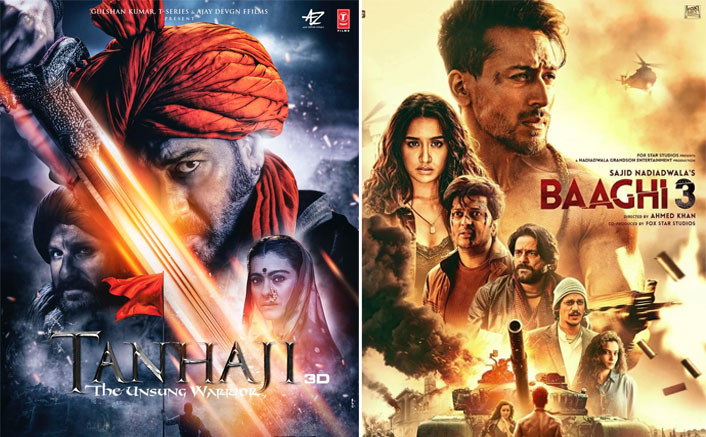
COOLIE NO 1 started with a 1 crore impressions premiere while the second screening was a solid 55 lakh. Since then it has averaged around 30 lakh impressions for its next five screenings. This makes its results post premiere on the lines of TANHAJI: THE UNSUNG WARRIOR and WAR (counting post pandemic releases). The only two films to perform better are LAXMII and BAAGHI 3.
The main competition for COOLIE NO 1 on Zee mainly comes from South films as the other Hindi releases like GUNJAN SAXENA, KHAALI PEELI and SAINA are far far behind finding a limited audience.
The best South film is VIJAY THE MASTER which is a dubbed version of the Tamil film MASTER. This opened at 70 lakh impressions and is averaging around 25 lakh post premiere. These are pretty good results but no comparison to another dubbed Tamil film DARBAR which debuted at 1.25 crore impressions and has seen repeats at over 50 lakhs. DARBAR has just edged out SAAHO as the top film released on satellite post the pandemic from the South. But at the box office DARBAR and VIJAY THE MASTER were nothing compared to SAAHO in Hindi circuits.
All time top satellite premieres - 5 films enter the league in 2020
8:22 AM
Box Office India Trade Network
This year there have five films which are among the top 25 television
premieres of all time. WAR, TANHAJI: THE UNSUNG WARRIOR, BAAGHI 3, SAAHO (Hindi) and DARBAR (Hindi) are the five films from this year and
they all topped the 1 crore mark for their premieres while WAR crossed 2
crore.
WAR had the best premiere but was the weakest one of the lot in subsequent screenings. The dubbed films SAAHO and DARBAR have had great results and for SAAHO, this is coming after a very good box office run of 150 crore nett. The other film to get good numbers on television this year was PATI PATNI AUR WOH which hit 88 lakh plus and STREET DANCER which got over 70 lakh despite releasing on satellite six months after digital release.
The films which were not upto the mark were DABANGG 3 (repeats are steady but a very low premiere), GOOD NEWWZ and BALA. HOUSEFULL 4 and TOTAL DHAMAAL released last year have had extraordinary runs through the Covid-19 period.
Below are the top 25 premeires of all time. The
numbers are impressions which are the number of television sets viewing
the film.
1. Baahubali 2: The Conclusion - 2,60,54,00,000 (Sony)
2. Prem Ratan Dhan Payo - 2,51,19,00,000 (Star)
3. Bajrangi Bhaijaan - 2,37,45,000 (Star)
4. Housefull 4 - 2,15,42,000 (Star)
5. War - 2,25,00,000 (Star)
6. Baahubali: The Beginning - 2,07,77,000 (Sony)
7. Dhadak - 1,83,16,000 (Zee)
8. Total Dhamaal - 1,67,93,000 (Star)
9. 2.0 (Hindi) - 1,65,13,000 (Zee)
10. Golmaal Again - 1,63,52,000 (Star)
11. Dangal - 1,62,64,000 (Zee)
12. Baaghi 2 - 1,61,45,000 (Star)
13. Kesari - 1,56,66,000 (Zee)
14. Judwaa 2 - 1,52,66,000 (Star)
15. Tanhaji: The Unsung Warrior - 1,38,40,000 (Star)
16. Tiger Zinda Hai - 1,37,04,000 (Sony)
17. Baaghi 3 - 1,29,06,000 (Star)
18. Saaho - 1,28,20,000 (Zee)
19. Darbar - 1,27,31,000 (Star)
20. Luka Chuppi - 1,25,00,000 (Star)
21. Stree - 1,23,29,000 (Star)
22. Junglee - 1,11,77,000 (Star)
23. Simbaa - 1,11,02,000 (Zee)
24. Toilet - Ek Prem Katha - 1,09,25,000 (Zee)
25. Jolly LLB 2 - 1,08,51,000 (Star)
2. Prem Ratan Dhan Payo - 2,51,19,00,000 (Star)
3. Bajrangi Bhaijaan - 2,37,45,000 (Star)
4. Housefull 4 - 2,15,42,000 (Star)
5. War - 2,25,00,000 (Star)
6. Baahubali: The Beginning - 2,07,77,000 (Sony)
7. Dhadak - 1,83,16,000 (Zee)
8. Total Dhamaal - 1,67,93,000 (Star)
9. 2.0 (Hindi) - 1,65,13,000 (Zee)
10. Golmaal Again - 1,63,52,000 (Star)
11. Dangal - 1,62,64,000 (Zee)
12. Baaghi 2 - 1,61,45,000 (Star)
13. Kesari - 1,56,66,000 (Zee)
14. Judwaa 2 - 1,52,66,000 (Star)
15. Tanhaji: The Unsung Warrior - 1,38,40,000 (Star)
16. Tiger Zinda Hai - 1,37,04,000 (Sony)
17. Baaghi 3 - 1,29,06,000 (Star)
18. Saaho - 1,28,20,000 (Zee)
19. Darbar - 1,27,31,000 (Star)
20. Luka Chuppi - 1,25,00,000 (Star)
21. Stree - 1,23,29,000 (Star)
22. Junglee - 1,11,77,000 (Star)
23. Simbaa - 1,11,02,000 (Zee)
24. Toilet - Ek Prem Katha - 1,09,25,000 (Zee)
25. Jolly LLB 2 - 1,08,51,000 (Star)
When stars go south: Hindi film actors accept South offers to resuscitate their careers or increase their audience reach
8:40 AM

Many Hindi film actors are now accepting offers from southern filmmakers to either resuscitate their careers or increase their audience reach
Kunal Guha (MUMBAI MIRROR; May 31, 2020)
 When Boman Irani was first offered a Telugu film in 2013, he was “petrified”, but took it up as a challenge anyway.
“Although I knew the language would be a problem, I felt it could be another way of expressing myself,” says the actor of his Telugu debut in the comedy drama, Attarintiki Daredi, where he plays a grandfather. The film’s overwhelming success was encouraging and Irani has, since, acted in one Tamil (Kaappaan, 2019) and three Telugu films (Bengal Tiger, 2015; Agnyaathavaasi, 2018; and Naa Peru Surya Naa Peru India, 2018).
Irani is among Hindi cinema’s many recent exports to Telugu, Tamil, Malayalam and Kannada films, which are finding an increased audience, thanks to subtitles and dubbed versions on streaming platforms. So it’s hardly surprising that they’re attracting new talent — even across the language barrier — from Bollywood. Some of these are actors looking to revive their flagging careers, and some (though they won’t admit it) are attracted by a vastly superior pay packet. But for many of them, the films from south also offer a chance to do something different — take a crack at a role of a lifetime, after being typecast in Hindi films.
 “Most superstars in the south only want to play the hero, so you need an equally formidable villain,” says Aalif Surti, former chief creative officer at Fox Star Studios India, who has worked in cinema both from the north as well as the south. “There’s a staleness that has set in with actors who typically play negative roles in the south, so filmmakers are now scouting from Hindi cinema,” says Surti, who has recently completed Suriya’s next, Soorarai Pottau, which marks Paresh Rawal’s debut in Tamil cinema in a negative role.
The film industries in the south are themselves richer for this reverse migration. Where earlier stars like Kamal Hassan, Sridevi or Jaya Prada moved to Bollywood from Tamil cinema (with varying degrees of success), now Hindi film actors are trying to recreate that magic by going south.
More than words
Take Arbaaz Khan, for instance. He packs fierce punchlines in the recent Mohanlal-starrer Big Brother, where he plays a policeman-cum-drug mafioso, and can easily be mistaken for a regular baddie from the Malayalam industry. Khan, 52, first forayed down south in 2005, with Vijay Bhaskar Reddy’s Telugu hit Jai Chiranjeeva, but found success in regional cinema only after the 2017 hit, Kittu Unnadu Jagratha.
 Language, he says, is no longer a limitation for an actor today. “In parts of the script where it was easy to ‘cheat’, they would let me use similar Hindi words [and then dub it over]. But when that wasn’t possible, I had to learn the lines,” Khan says, adding that the directors were very accommodating, and sometimes even slipped a few English lines into the dialogue for his comfort. “Or they ask you to recite ‘1, 2, 3, 4’ while portraying the emotion required in the scene,” he adds.
Jackie Shroff, who has a dozen films in Tamil, Telugu, Kannada and Malayalam to his credit, doesn’t speak any of these languages, but says he got by quite easily. “Sometimes they give me lines in English because they think I won’t be able to manage the language. But they seem to love my voice, so I still get dialogues in the local language,” says Shroff, who was last seen in Bigil, the highest-grossing Tamil film of 2019.
There are some actors, however, who believe language is an integral part of their acting process. Irani, for instance, hates the idea of “just moving the lips” and translates his lines into Hindi while rehearsing (for comprehension) before memorising them in the regional language. He even dubbed for himself in the blockbuster Naa Peru Surya Naa Peru India but admits that not all the words rolled off his tongue. “When I’m struggling with a line, I go back to the Hindi translation to at least get the emotion right,” says the 60-year-old actor and photographer. “The feelings you portray in a scene are universal across languages, but you have to be mindful of the local culture and leverage that to bring authenticity to the emotion.”
Sonu Sood, who has acted in over 70 films across the four southern industries, says his acceptance by audiences there may have something to do with his determination to learn the local tongue. “My dialogues from Arundhati (2009) became the most downloaded ringtones at the time,” says the actor, who has won several Filmfare Awards as well as state-specific honours such as the Nandi Award for Best Villain (Arundhati), for his turns down south. “Allu Arjun once told me, ‘You’re the only north Indian actor who manages to evoke an overwhelming response when you come on screen’,” Sood says, quoting the Telugu superstar.
Blurring the borders
The reasons for Bollywood actors joining the south bandwagon are as varied as the talent. Suniel Shetty, who returned to the movies last year after a sabbatical, has already made up for lost time with Pailwaan (Telugu), Darbar (Tamil) and the yet to release Mohanlal-starrer Marakkar (Malayalam) and Mosagallu (Telugu). He says he categorically avoided south Indian films till recently. “Bollywood actors are inevitably assigned a negative role in the south films, and I didn’t want to do that,” he says. “They believe that if you’re a national-level hero and they can show one of their heroes bashing you up, the audience would love it.”
Shetty says he caved when he was offered Pailwaan, where he plays a “wrestler’s guru” which he considered a more meaningful role. “And in Darbar, I got a chance to work with the King, which was on my bucket list,” he says, referring to Tamil superstar Rajinikanth. Shetty has no qualms about admitting that he sometimes receives offers because of the relationships he’s built over the years. “Someone like Priyadarshan will cast me in Marakkar not only because I suit the role, but also because he likes working with me,” he says honestly, talking about the director with whom he has had hit Hindi films such as Hera Pheri and Yeh Teraa Ghar Yeh Meraa Ghar.
For Shroff, 63, a convenient choice turned into a fortuitous one with Aaranya Kaandam. “I was cast because no one else wanted to play the role of an older man who is losing his virility,” he says of his character in the neonoir action thriller which won two National Awards. “Even negative roles [in the south] seem like the lead.”
But not all actors get their big break down south through connections or luck. Filmography matters too. Murli Sharma, a regular face in Hindi films, says: “[Telugu director] Surinder Reddy had seen my performances in Maqbool, Black Friday and Apaharan, so he had seen me play both the good and the bad guy. This led him to offer me Athidhi (2007).” He plays a cop who turns out to be the film’s villain. “Once you do well in a certain part, similar ones begin trickling in.” Sharma, 49, had started to get typecast in Telugu films, much like he had been in Hindi films, so he picked Maruthi Dasari’s Bhale Bhale Magadivoy (2015) — where he plays the heroine’s father — to break the mould and open the door to a range of new portrayals.
Khan, too, believes that filmmakers cast keeping in mind an actor’s image and skill sets. “When they offer me a role, it could be for my body of work and my personality or perhaps my availability and the price I command,” he says candidly. “Maybe they also see me as someone who will be able to work within their conditions.” On the sets of his first south Indian film 12 years ago, a costume designer took Khan aside, held up a lungi, and asked him to change into his costume behind it. “There were no vanity vans at the time, and even the top stars would hang out with the rest of the crew,” adds Khan, who was later given a van. Since the regional stints help him “fill up the diary”, Khan says he doesn’t fret too much about the offers. “I can’t keep waiting for a great role to come my way. For me, it’s just a job that keeps me busy, helps me hone my craft and is my livelihood,” he says. “Besides, I don’t consider myself a great actor, but I do want to keep working.”
 For some actors, the south is very much a part of their plans. “I have rejected big banners in Bollywood to do films in the south,” says Sood. “I choose good roles, irrespective of language. Many people think that I’ve shifted base to south India and that Bollywood has become my second choice, but that’s not true either.”
It's a refreshing change, too, to be on sets far more professional than seen in Bollywood. Filmmakers in the south are said to be more committed to delivering within the agreed timelines, and staying within budget. Khan remembers arriving on the sets of Big Brother at 9 am once, only to discover that a star like Mohanlal had reported two hours earlier and already begun shooting. “That’s how professional they are,” he says.
One thing that works in everyone’s favour is the fact that Indian films — regardless of geography and regional sensibilities — are becoming increasingly homogenous in their narrative and overall construct. But actors migrating from the north to south (or even the other way around) must be mindful of local culture to bring those nuances to their performance. “The emotions may be the same, but there are subtle differences in the interpretation which one needs to capture. How a character responds when he gets upset or angry [is rooted in his culture],” says Khan.
Mukesh Rishi, best known for playing a villain in Hindi cinema, has acted in over 70 films down south, 60 of them in Telugu. He explains that pauses in speech play an important part in dialogue delivery. “When it comes to south Indian languages, I find people speak very fast,” says Rishi, adding that this carries over into film dialogues as well. After two decades of acting in various south productions, Rishi says he has mastered the art of “twisting the tongue” to effortlessly speak an unfamiliar language.
Shroff, who has essayed a range of characters — from a gangster to the president of a football federation — feels that some films have specific requirements. “Sometimes the dialogue delivery may require you to be over the top, and sometimes it’s more muted. It all depends on how much they can take out of me,” says Shroff, with his trademark lopsided smile.
Surti adds that actors like Shroff have over time amassed their own fan following in the south. "Bigil director [Atlee Kumar] wrote Jackie Shroff's character with the actor in mind," he says. Clearly, it worked; the sports entertainer collected Rs 100 crore at the box office in just three days. Going south sometimes can get your career to catapult northwards, after all.
HIT BRIGADE
• Jackie Shroff acted in the Vijay-starrer Bigil, which was last year’s highest-grossing Tamil film and second-highestgrossing Hindi film, collecting Rs 300 crore
• Sonu Sood has featured in over 70 films in Tamil, Telugu, Malayalam and Kannada, and even won regional honours such as the Nandi Award for his performance in Arundhati
• Arbaaz Khan found success in regional cinema after starring in the Telugu hit Kittu Unnadu Jagratha, and will soon make his Kannada debut in Where is my Kannadaka
• Returning from a sabbatical last year, Suniel Shetty’s recent and forthcoming releases include films in Kannada (Pailwaan), Tamil (Darbar), Malayalam (Marakkar) and Telugu (Mosagallu)

Murli Sharma and Allu Arjun in the Telugu blockbuster Ala Vaikunthapurramuloo (2020)
The team intends to make Hera Pheri 3 but some differences have to be ironed out first-Suniel Shetty
8:27 AM

Meanwhile, Suniel Shetty is storming South films, asserts language barriers don’t matter anymore
Himesh Mankad (MUMBAI MIRROR; May 19, 2020)
 Suniel Shetty, who took a break from acting to spend time with his ailing father, returned to films as the antagonist in the Sidharth Malhotra-led action-thriller, A Gentleman. Soon after, he crossed over to the South film industry. After playing Sudeep’s mentor in the Kannada sports-drama, Pailwaan, the 58-year-old actor signed up for a face-off with Rajinikanth’s cop in A R Murugadoss’s Tamil action-thriller, Darbar. Now, he is gearing up for the release of Priyadarshan’s Malayalam period-drama, Marakkar - The Lion Of Arabian Sea.
“Films like Baahubali and KGF, and digital platforms, have bridged the gap between the Hindi audience and films from other regions. Language barriers don’t matter anymore,” Suniel explains his foray down South, adding that he was also drawn to them because of the projects, the money offered and the respect he got there. “Darbar and Pailwaan are in line with my stature. I’d rather make an impact with a big film, even if it doesn’t revolve around me, than sign up for junk.”
The actor also has the Hollywood film Fraudsters, to be dubbed in Telugu as well, and another Hindi-Telugu bilingual, in the offing. Priyadarshan’s film, fronted by Mohanlal, was to release on March 26 before the nation-wide Coronavirus lockdown was announced. Instead of sighing over the delay, Suniel chooses to rave about the action done by an international team with its production values. He is sure it will appeal to a wider audience.
One of his most iconic comedy films, Hera Pheri, completed 20 years on March 30. It is frequently in the news with talks of a sequel. “Everything is on hold for now. The film’s team intends to make Hera Pheri 3, but some differences need to be ironed out first. The film is a big hit on television as well as in the meme world and we are all aware of the anticipation among the audience for the film,” Suniel signs off.
Housefull 4 and Total Dhamaal continue to dominate television in the lockdown period
8:41 AM

Box Office India Trade Network
HOUSEFULL 4 and TOTAL DHAMAAL continue to dominate television in the lockdown period with every screening in peak periods fetching a strong rating. HOUSEFULL 4 is now touching 7 crore impressions after seven peak screenings while TOTAL DHAMAAL is at 8 crore impressions after 11 peak screenings. The average of HOUSEFULL 4 after seven screenings is at 99.50 lakh and that is higher than what most films get on their premieres. Only 5 or six films will have topped this number in their premieres last year.
Both films have delivered post release better than any other films in the last decade barring the two BAAHUBALI films. The lockdown period has also seen success for WAR, DARBAR (dubbed) and PATI PATNI AUR WOH.
Three members of the family also saw television premieres in April and late March. The three being CHHAPAAK, SAAND KI AANKH and PANGA and all three failed to register even though they came in lockdown period. The result of the other member THAPPAD of the family is still to come. The impressions for HOUSEFULL 4 and TOTAL DHAMAAL till date are as follows.
Housefull 4
1st - 2,15,42,000
2nd - 1,32,26,000
3rd - 77,93,000
4th - 48,62,000
5th - 55,96,000
6th - 97,84,000
7th - 68,46,000
TOTAL - 6,96,50,000
Total Dhamaal
1st - 1,67,93,000
2nd - 84,58,000
3rd - 73,06,000
4th - 79,84,000
5th- 84,36,000
6th - 52,87,000
7th - 37,41,000
8th - 45,50,000
9th - 60,97,000
10th - 53,28,000
11th - 50,98,000
TOTAL - 7,90,78,000
I don’t want to compete with Akshays & Ajays because you know you don’t stand a chance-Suniel Shetty
8:40 AM

Now a familiar face in South Indian films, the actor talks about riding the choppy waves of public adulation
Kunal Guha (MUMBAI MIRROR; March 15, 2020)
At 58, Suniel Shetty is still built like a tank. He brushes his hands over his salt-and-pepper beard as he settles down for this interaction at his Aaram Nagar office. The actor may have slipped off the Hindi film radar, but he has been making waves down South. In recent months, he’s shared the screen with Rajinikanth (Darbar), Kichcha Sudeep (Pailwaan) and will soon be seen in Mohanlal’s epic period war film Marakkar - The Lion Of Arabian Sea. “The passion to create and love for life” is what keeps him going, he says. “There’s a generation that has forgotten me and a younger generation that respects me for my fitness, rather than for my films,” he says. “They think you’re yesteryear’s [star]… but they don’t know why you’re not working.”
Shetty shares that he was comfortable with his extended sabbatical; he never thought he’d end up working in South Indian films, despite having done cameos in the past [Kalimannu (2013) and Kakkakuyil (2001)]. “I didn’t want to do a negative role and any actor from Bollywood who goes there is offered just that. They believe that you’re a national-level hero, so if any of their heroes can beat you up, it’s the best thing ever.” His recent film choices, he says, were driven by passion and uncertainty. “When you’re back from a long sabbatical, the best work doesn’t come your way and I wasn’t even sure if I can act,” says the actor credited for 128 films.
The response that Darbar and Pailwaan received, however, encouraged him to consider more projects. In the forthcoming Mosagallu, he dons the avatar of a powerful cop, while he plays a 16th century warrior in Marakkar - The Lion Of Arabian Sea. Unsurprisingly, Shetty’s invincible action hero image from the 1990s still has traction. He credits veteran actor Danny Denzongpa for helping him carve this image in his debut Balwaan (1992). “When we were brainstorming on how to make my character seem powerful, Danny Sa’ab suggested that I carry him on my shoulders and then drop him. The last person who had lifted him up in a movie was Amitabh Bachchan in Khuda Gawah. This tip worked like a charm.”
But at 58 it’s getting tougher to keep up with that image. Of an action sequence shot for Darbar, where he was expected to “fall and throw five kicks and six punches”, he says, “I asked a 19-year-old assistant if he felt I’ll pull it off, and he said ‘Very easily, sir’. Then, I asked him how old his father is, and he said 54. I told him, ‘I am 58, so if your dad can do it, I’ll do it’.”
Shetty made several attempts to shake the image of a brooding, death-defying action star, but it was never “accepted”. “I tried comic and socially-relevant films too, but they didn’t work,” he says. “My producers would only say, ‘Do action scenes aur ek baarish mein gaana daal dena, body dikhake’.” In fact, the feedback he received from his family for his non-action films was just as telling. “I would ask my parents and kids, ‘How’s the film?’ and they’d say ‘Brilliant’ and then later, ask for a Saridon. So, you know where you stand.”
Post Hera Pheri (2000), a milestone in Shetty’s chequered career, many were convinced that he also had the chops for comedy. “And that was validation for an actor who was dismissed by critics as ‘absolutely wooden’,” he says. But there was always a back-up plan. Shetty ran a restaurant and boutique business before films and if acting didn’t work out, he would have to swallow his pride and listen to friends say, “Actor banne gaya tha, wapas aa gaya”. But since he had signed about 14 films even before his debut, there was no looking back.
Later, Shetty decided that rather than struggling to dazzle his audience with his performance, he would startle them with death-defying stunts. “I took on action stunts which were so dangerous, people would say ‘Alag hain’,” says the actor, who remembers that some of them actually lead to serious injuries. “While shooting for Mohra [the 1994 hit], when I lost a ligament, I was told to go for surgery but I couldn’t as 17 films were pending. Kitchen usi pe chal raha tha,” he says. “I would shoot for Mohra during the day and then strap my ankle and go shoot for Gopi Kishan at night. I’d only get two hours to rest — while commuting between Mukesh Mills and Filmistaan.”
Only time will tell if his son, who makes his debut this year with Milan Luthria’s remake of RX100, is cut from the same cloth. While Shetty believes Ahan will be able to handle success, he worries about how he will deal with failure. “There will always be brickbats, and nowadays, any faceless person can take pot-shots at an actor. But I’m sure Ahan will fight back,” he says.
Reflecting on his own experience, Shetty shares that when he started out, he was “barely ready to take on the world”. “We felt personality hain, we’ll wing it. But dialogue bhi bolna hain, naachna bhi hain and both haath aur pao ke saath nachna hain,” he says with a laugh. The actor got a lot of flak for his puppet-like moves and peculiar voice. “Every newbie thinks that you’re the next Bachchan. But then you watch your film and think ‘Sh*t, I really need to learn the craft’,” he says. Incidentally, this was what he told his daughter Athiya after her debut Hero opened to a lukewarm response. “Then, she really worked on her performance and the result can be seen in Motichoor Chaknachoor,” he says of her third film with Nawazuddin Siddiqui.
The actor, who counts Border (1997) as his most gratifying film and credits Dhadkan (2000) for helping him sharpen his craft, learnt lessons of his own along the way, too. “Dharmesh [director Darshan] told me ‘Just really believe you’re the character’. That’s when I realised that the most important thing for an actor to do is to invest 10 per cent mind and 90 per cent heart,” says Shetty, who does not grudge his peers their succes. “I don’t want to compete with the Akshays and the Ajays because you know you don’t stand a chance,” he says. In fact, he appreciates their strengths. “Jackie Dada’s [Shroff] personality is so loving and affectionate that if you give him attitude, he’ll just ignore you; Amit ji’s [Bachchan] humility makes you feel, ‘Amitji aise hain, toh main kaun hoon’, while Salman Khan has mastered the art of commanding attention and respect without saying a word,” he says.
I may have missed out on opportunities by not attending parties, but I don’t regret that-Suniel Shetty
8:17 AM

Bollywood actor Suniel Shetty, whose new innings in films has him do characters in different shades, gets candid
Tanvi P S (BOMBAY TIMES; January 25, 2020)
Bollywood actor Suniel Shetty was on a self-imposed break for a few years — a time well-spent with his father, whom he lost thereafter — until his recent comeback with the multilingual Pailwaan, alongside Kichcha Sudeep. His return to films has also heralded in a new phase in his career, as he branches out into other industries. He’s already done Darbar with superstar Rajinikanth and is part of Mohanlal’s Malayalam film Marakkar as well. Amid all this excitement, Suniel made a quick trip to Bengaluru to be a part of a sports injury conclave, during which we caught up with him for a quick chat on films, fitness and fashion. Excerpts...
Your children, Ahan Shetty and Athiya Shetty, have followed in your footsteps and forayed into the film industry. Does it fill you with a sense of pride?
I have been a proud father right from the day they began school. They were well-behaved, humble, respectful students. Mana (his wife) has brought them up beautifully. Ahan and Athiya grew up around their grandparents, and have learnt good values, amid love and affection. What I am happy about is that they chose their careers and trained for it. A lot of people had expressed their concern over girls being in films (referring to Athiya). But I believe that as long as you are brave and confident, you can handle anything in the world. I remember being asked at a press meet once, ‘The film industry is such a shady place. What advice do you give your daughter about it?’ I replied, ‘I don’t give any advice to my daughter at all. Instead, I advise my son to treat women well.’ If everyone does that, there is no cause for concern.
The Class of 80s south actors are famed for organising annual get-togethers that most aim to attend religiously. Is there a trend like that in Bollywood?
There is no such trend in Bollywood, but when a team is working together, there is a tendency to meet up. But I stay further away from the city, and the journey back home is long and tiring. Also, I am very lazy, so I often skip going to such gettogethers. Once my shoot is done, I head back home and spend time with my family. On Saturdays, I usually catch up with my childhood friends. I have some amazing friends in the industry as well. I meet them whenever there is time.
Do you feel that by not socialising much, you may have missed out on movie opportunities?
I may have missed out on a few opportunities by not attending parties, but I don’t regret that. Sometimes, you need to make a choice in life, and I choose family over anything else. In my career, there was a four-year period when I did not work, but those were also the most beautiful four years of my life, because I spent time with those whom I love the most. And during that time, the media did not forget me. When a certain movie has done well and you ask me how I feel, I would say that I am feeling good. But in a movie like Darbar, I know that it has done well mainly because of Rajinikanth sir. Similarly, Pailwaan was a big hit, and the credit for its success goes mainly to Kichcha (referring to Sudeep). I accept that. I think I am in the happiest phase of my life. I respect everyone, but I am not insecure.
You are currently rocking a man bun. Tell us about your style mantra...
I sport a man bun, because I have hair on my head (laughs). If you are a sportsperson or an actor, you need to have your own style statement. There were times when we dictated fashion, but now fashion dictates us. The brands tell you what to wear, how to walk. I am old school, and I’ll stay that way. I will wear my hair and my beard the way I like it.
You have spoken about the recent cases of brutality on students. As actors, how important do you think it is to let your voice be heard?
Actors speak up on matters that we feel need to be talked aloud. Many artistes even voice their opinions through their films/craft. Having said that, things do get a little taxing, sometimes; expecting actors to call out every time doesn’t make sense.
What else is happening for you as far as films are concerned?
Hera Pheri 3 is in the making. There are certain issues regarding the film, but all three of us — Akshay Kumar, Paresh Rawal and myself — are working towards making it happen. There’s also an American film, titled Fraudsters. The story is inspired by a massive call centre scam that happened in India.
-------------------------
SMALL TALK WITH SUNIEL SHETTY...
Are you the father who tells ‘dad jokes’ to his kids?
When I try to crack a joke, Athiya will, at least, respond to it. Ahan rolls his eyes and walks away. Perhaps, it’s the generation gap.
Is there someone you consider your style icon?
Jackie Shroff has always been my style icon. I think Dada (referring to Jackie) is still the most good-looking man on earth. It is not only about the clothes he wears, but also the way he carries it off.
You are a fitness freak. How does a cheat day look like for you?
Cheat-day dishes are whatever my mother cooks on a Sunday. Fish rawa fry and Kori Rotti (both Mangalurean delicacies) are my absolute favourites.
Darbar bags 500 more screens for a day to make most of one-day advantage before Chhapaak, Tanhaji's release
8:00 AM

Upala KBR (MID-DAY; January 9, 2020)
 In its bid to become a Pongal release, Rajinikanth's Darbar is clashing with two Bollywood big-ticket releases — Chhapaak and Tanhaji: The Unsung Warrior — at the marquee. Knowing that the Hindi projects are likely to dominate the screens in North and central India on their release tomorrow, the makers of the multi-lingual are making the most of the one-day advantage over its competitors. Distributor Reliance Entertainment, which has acquired 4,000 screens across the country, has procured 500 more screens only for today.
Trade analyst Taran Adarsh says it is a wise move as the actioner will get a jumpstart. "Theatre owners will [happily] accommodate the film for one day. After all, the film boasts the jodi of Rajinikanth and A R Murugadoss [director]. Most importantly, besides Good Newwz, no film has brought in footfalls. So, this will also work [to the advantage of] exhibitors."
Film business expert Girish Johar says that the movie marks one of the biggest releases for a Rajinikanth-starrer. "Rajini sir has a massive following among the single-screen audience in the Hindi belt. That said, if all three films had opened on Friday, Tanhaji would be leading, followed by Chhapaak. The makers of Darbar pre-empted that and the one-day window will help them garner positive word-of-mouth."
Trade analyst Atul Mohan adds that Darbar, owing to its masala movie treatment, will find takers. "With Rajini sir [mouthing] catchy dialogues and a Bollywood star in Suniel Shetty, Darbar is a commercial entertainer. The distributors are confident [of the offering], that is why they have increased the screen count for a day."
At this stage of my career, I need to reinvent myself-Suniel Shetty
8:38 AM

Playing a villain in Darbar, Suniel Shetty on holding his own in front of Rajinikanth
Sonil Dedhia (MID-DAY; December 22, 2019)
It is endearing to see Suniel Shetty, a star with a 27-year run at the movies, turn into a fan boy at the mention of Rajinikanth. The actor acknowledges that sharing screen space with the megastar had been on his bucket list. "When Murugadoss [director] approached me, I said yes mentally since working with Rajini sir was always on [my wish list]," begins Shetty, who plays the antagonist in Darbar. "[Working with him] is a huge responsibility because he is considered the god of acting. Since I am playing a negative character, I have to stand up to him, which was a big challenge."'
What started off as an "unnerving" experience soon gave way for a budding friendship. The actor reveals that the two bonded over food, politics and fitness. "What is commendable about Rajini sir is that he appreciates [his co-star]. After a fight sequence, he told me that I was handling him beautifully. On one occasion, he started clapping after I delivered my dialogue. Such appreciation coming from a superstar like him is so [encouraging]."
He may have started out as an action hero, but over the past two decades, Shetty has not shied away from taking on grey roles. "The last time I played a villain was in Main Hoon Na [2004]. Just like that character, my role here has an emotional back story," he explains.
Darbar marks Shetty's second regional film after his Kannada outing Pailwaan. On the cards is another regional outing—Priyadarshan's Marakkar: The Lion of the Arabian Sea. "At this stage of my career, I need to reinvent myself. I have got interesting offers from down South. The audience is accepting South cinema in a big way."
Check out Rajinikanth and Suniel Shetty shooting a dramatic sequence for Darbar in South Mumbai
7:22 AM

Here’s all the dope from the discreet SoBo shoot as Rajinikanth and Suniel film action sequence for Darbar
Mohar Basu (MID-DAY; August 30, 2019)
 After repeated instances of pictures being leaked from the sets of Darbar, director A R Murugadoss has been shooting the latest sequence in Mumbai under a clampdown. Long after the hustle-bustle of the day is over, Horniman Circle lights up, ready to greet Rajinikanth. It wears a busy look — while stunt directors Ram and Lakshman Chella are instructing the junior artistes about the sequence to be shot, Murugadoss is having an animated discussion with the megastar. the location is swarming with as many as 20 bouncers.
“We have been filming for the past four days. Today’s scene is crucial — it’s a car chase sequence that culminates in a face-off between Suniel Shetty and Rajinikanth,” we are told. The action thriller, also starring Nayanthara, is in its final leg of shoot, racing towards the January 15 deadline.
We try to click pictures of the set and are immediately stopped by the bouncers around. “There is a lot of pressure on us to not let any picture get out,” says one of them. Our chat is interrupted with Shetty’s entry. Dressed in a printed shirt and black denims, he walks up to a khaki uniform-sporting rajinikanth, who has finished a quick patch shoot.
The crew starts setting up the shot as per cinematographer Santosh Sivan’s instructions, before Murugadoss bellows ‘Action’. And thus begins Thalaiva and Shetty’s high-octane sequence, with a fleet of cars — police jeeps, SUVs, a Mercedes and an Audi with Shetty in it — playing their parts. The scene is broken down into several shots, with body doubles filling in as required.
Sometime post midnight, we enquire how long they shoot every night. “till 6 am,” says the chaiwala on set, who is only too happy to witness Thalaiva in the flesh.
It's Rajinikanth v/s Suniel Shetty in A R Murugadoss's Darbar
8:08 AM

Suniel Shetty takes on Rajinikanth as the antagonist in AR Murugadoss’ cop-drama
Himesh Mankad (MUMBAI MIRROR; May 23, 2019)
 Rajinikanth flagged off AR Murugadoss’s cop-drama, Darbar, in mid-April on the streets of Mumbai with leading lady Nayanthara. During the 20-day schedule which wrapped up on May 14, he also filmed an intense action scene with Prateik Babbar, who plays the son of the antagonist, Suniel Shetty. Yes, Mirror has learnt that after Akshay Kumar in 2.0, Suniel Shetty plays the baddie in Darbar, his first negative role in 15 years after the Shah Rukh Khan starrer, Main Hoon Na.
“Anna, a corporate giant, will take on Thalaiva’s IPS officer. He joins the team during the second schedule which starts in the next few days in Mumbai and will be there all through,” informed a source close to the development.
The thriller wraps up by August. Suniel has been working on his menacing ‘look’ and bulking up in the gym. “The antagonist’s track has an emotional back-story also featuring Rajinikanth, which makes the revenge all the more exciting. There will be several confrontation scenes between the duo in the film which climaxes with a stylized, larger-than-life action scene,” said the source.
Rajini has previously played a cop in films like Moondru Mugam, Geraftaar, Hum and Pandiyan. Speculations are rife that he will sport multiple avatars in the film, including that of a social activist, details of which are being kept strictly under wraps.
In the second innings, Suniel has taken up several meaty roles down South. He recently wrapped up Priyadarshan’s multi-lingual period drama, Marakkar: The Lion of Arabian Sea. Also featuring Mohanlal, it is set against the Zamorin war with Portuguese. He also makes his Kannada film debut with the soonto- release Sudeep starrer Pailwaan. “There is another big Telugu project which he has signed and discussions are on with couple of directors for his Hindi films as well,” added the source.
Suniel had recently acknowledged that talks are on with Priyadarshan to return as the director of the Hera Pheri franchise. Hera Pheri 3 is expected to take off by the year-end reuniting him with Akshay and Paresh Rawal.
Dalip Tahil to play senior cop in Rajinikanth-starrer Darbar
7:53 AM

Avinash Lohana (MUMBAI MIRROR; May 13, 2019)
Mirror had earlier reported (April 17) that A R Murugadoss started filming for his Rajinikath-starrer cop drama Darbar, in which Prateik Babbar plays the antagonist’s son, in mid-April. Now, we have learnt that the film also features Dalip Tahil as a senior officer to the South superstar’s cop.
“My character supports Rajini bhai’s drive to clean the city of goons. I started filming with him at a hotel in Goregaon,” informed Dalip, who has worked with Rajinikanth in the 1995 action crime film Aatank Hi Aatank. They had done another film together which didn’t release. “I was so happy to meet him after 24 years. I didn’t recognise him when he arrived on the first day as Rajini bhai is looking like a 25-year-old boy. He has maintained himself well. When I told him that, he had a good laugh,” the actor said, adding that his portions will wrap up with the Mumbai schedule. The Hindi-Tamil-Telugu trilingual also features Nayanthara.
Why are Bollywood's heroes looking at Tamil and Telugu films for villainous roles?
8:10 AM
Deepali Singh (DNA; May 11, 2019)
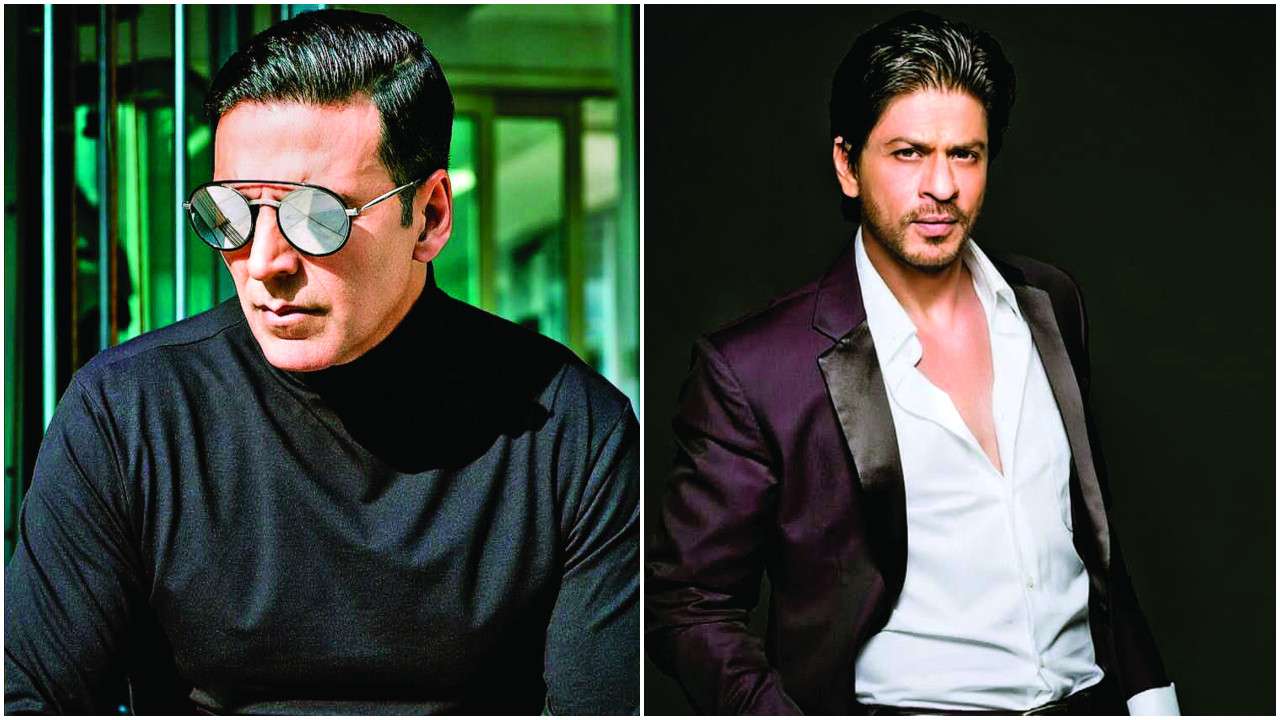
Much before he donned the costume for Shankar’s 2.0, where he played the antagonist, we had asked Akshay Kumar why he said yes to playing a negative role in the Rajinikanth starrer. “Because villains ke award mein lobbying nahin hoti hain!” he had responded with a loud laugh. The superstar might have been kidding about his villainous turn, but the fact remains that his negative act coupled with Rajinikanth’s might have helped the sci-fi film’s final collection for all formats to reach a massive Rs 655.81 crore!
Honestly, the idea of a conventional hero playing a villain is not new to Hindi cinema. Akshay himself played a man with amoral values in 2001’s Ajnabee. Shah Rukh Khan, who is looked upon as the king of romance, ironically played the anti-hero in more than one film — Baazigar (1993), Darr (1993), Anjaam (1994), Duplicate (1998) and Don (2006). In fact, the shahenshah of all heroes — Amitabh Bachchan, too, could not resist the lure of playing a baddie in movies such as Faraar (1975), Parwana (1971), Aankhen (2002) and Ram Gopal Varma Ki Aag (2007). Actors like Aamir Khan, Ajay Devgn, Saif Ali Khan, Hrithik Roshan and John Abraham among others, too, have explored their darker sides. Last year, it was Ranveer Singh who got the maximum applause in Padmaavat, even though he played the cruel ruler Alauddin Khilji.
While these villainous portrayals were few and far between, lately, the grey shade seems to be holding quite an appeal for B-Town’s heroes. Prateik Babbar has recently been named the antagonist in A R Murugadoss’s Darbar featuring superstar Rajinikanth as a cop. And if rumours are to be believed, SRK will once again play the bad man in his Tamil debut, actor Vijay’s upcoming film Thalapathy 63.
HEROISM IS OVERRATED
How does a hero prove that he’s a hero if there isn’t a villain to make his life hell? Akshay, who knows this quite well, told another publication why he took on the role of the shape-shifting antagonist Pakshirajan in 2.0. “Many people asked me why I wanted to play a villain and I told them, ‘Why not?’ A hero exists only when there’s a villain.”
Shah Rukh, who has seen success in both his avatars — heroic as well as villainous — has, in the past, been vocal about the lure of the darker side. “Evil or devil, black or little grey characters, be it in books, stories, films or television, have some sort of attraction... I enjoy doing it. I am in no way glorifying negative characters. These are stories and characters. But as an actor, it is one of the greatest highs to play a villain. It is a different kind of a high for an actor,” he has been quoted as saying.
EYEING THE SOUTH
The other notable thing that seems to be happening is that a number of these ‘switchovers’ are happening in the South film industry. While AK’s 2.0 was a Tamil film, Vivek Oberoi has become a sought-after actor in the South after playing a villain successfully in movies such as Vivegam (Tamil) and Lucifer (Malayalam). Darbar, in which Prateik will be crossing swords with Rajinikanth, too, is a Tamil project. It might be a co-incidence but the fact remains that including a Hindi cinema star to a South film lends the movie a pan-India appeal. Also, there is curiosity about what the combination of two stars from two different film industries will bring to the table. Take 2.0, for instance. While Rajinikanth is a superstar in every sense of the word, the Khiladi is undisputedly one of the most successful actors in Bollywood today, with the ability to pull in the masses. His presence in the film ensured that the Hindi version became the fifth-highest Hindi grosser of 2018, netting Rs189.85 crore at the domestic box office.
Trade analyst Taran Adarsh agrees that a movie starring a Bollywood actor in a South film does have its charms. “People are bound to give it a second look because of curiosity. Also, the pan-India appeal makes it viewer-friendly,” he says. However, he doesn’t believe that the South connection is a major factor when it comes to actors making the switch. “Maybe the offers they received were lucrative. It all boils down to the content. Roles are not defined anymore and the lines have blurred. Actors, today, want to do all kinds of roles to showcase their range and versatility. If they are getting an opportunity to do that in a South film, why not?” he concludes.
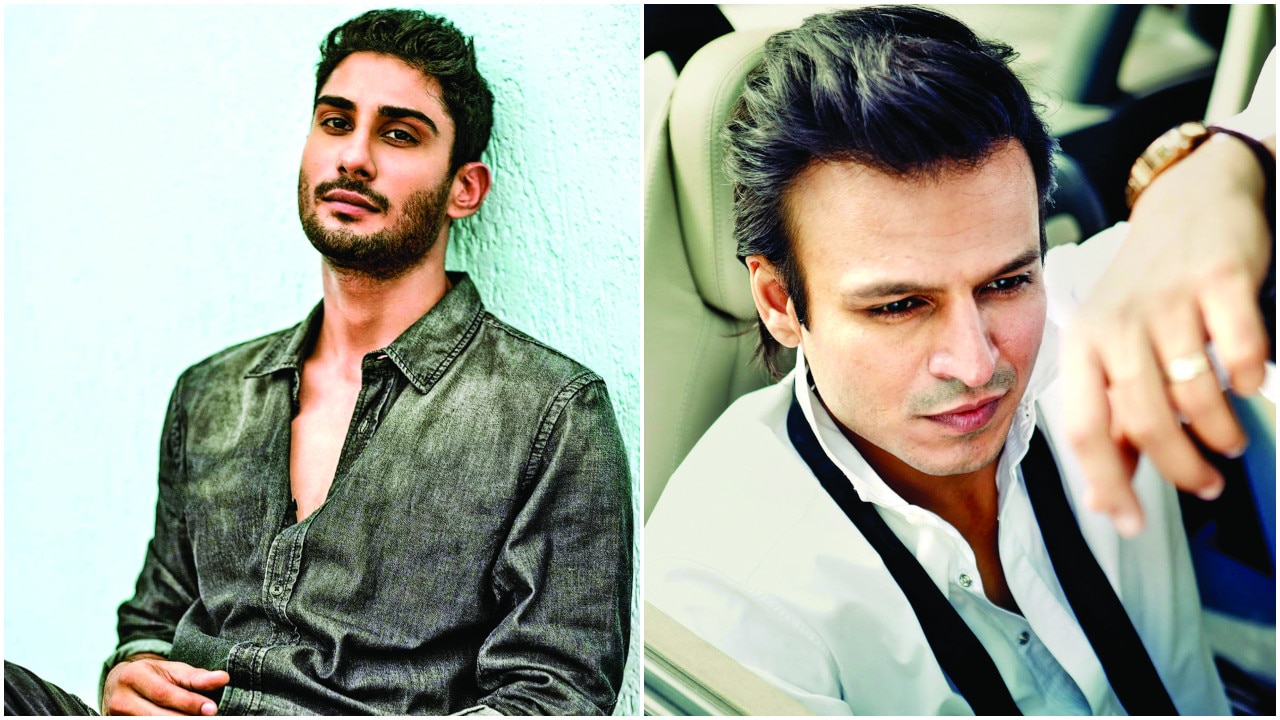
Prateik Babbar will be the antagonist in A R Murugadoss’ Darbar (left); Vivek Oberoi
Prateik Babbar returns as a baddie for Rajinikanth's tri-lingual film Darbar
7:42 AM

Actor is set to join AR Murugadoss’s next, a Hindi-Tamil-Telugu trilingual which is set for Pongal 2020 release and features Nayanthara as female lead
Avinash Lohana (MUMBAI MIRROR; April 17, 2019)
Prateik Babbar’s second innings at the movies seems to have come a full circle. The actor, who returned to the big screen as an antagonist in the Tiger Shroff and Disha Patani-starrer Baaghi 2 last year and is following it up with Nitesh Tiwari’s Chhichhore, Mahesh Manjrekar’s Power and Anubhav Sinha’s Abhi Toh Party Shuru Hui Hai, is on-board A R Murugadoss’s Rajinikanth-starrer Darbar for a negative role. The film is slated for a Pongal release next year.
Touted as an out-and-out entertainer, the Hindi-Tamil-Telugu trilingual will see Rajini return as a cop, which he has previously played in films like Moondru Mugam, Geraftaar, Hum and Pandiyan. Shooting commenced last week in Mumbai and Prateik joins the team on Sunday. “Murugadoss was impressed by Prateik in Baaghi 2 and decided to cast him. He plays the antagonist’s son and will feature in important scenes with Rajini. After Mumbai, the team heads to Tamil Nadu for the remaining portions,” informs a source close to the development.
Prateik, who was recently campaigning in Agra for father Raj Babbar, confirmed the news but refused to divulge details. “It has been my aspiration to share screen space with a legend like Rajinikanth sir. I can’t wait to meet him and observe him on set. I have been appreciated for characters with grey shades and I am investing my 200 per cent in this role because it’s an opportunity of a lifetime,” Prateik asserted. According to the source, the actor is required to gain more muscle for the part and will have to learn Tamil and Telugu.
Rajini was last seen in Karthik Subbaraj’s Petta earlier this year in which he played a hostel warden whose path crosses with a group of dreaded gangsters. On April 8, Murugadoss revealed the first look of Darbar. The film features Nayanthara as the female lead, who has earlier worked with Rajini in Chandramukhi, Sivaji and Kuselan.
Subscribe to:
Posts (Atom)