Showing posts with label Cyrus Broacha. Show all posts
Showing posts with label Cyrus Broacha. Show all posts
My father told me I don’t have the personality to be an actor-Aayush Sharma
10:29 AM

HINDUSTAN TIMES (April 12, 2026)
Actor Aayush Sharma recently opened up about his journey into acting on a podcast with comedian Cyrus Broacha, recalling the resistance he faced from his father, politician Anil Sharma.
“My father used to say, ‘You are not going to be a hero at all. Neither are you tall, nor do you have a physique, nor do you have a voice, nor are you good-looking. You have no personality whatsoever. When you walk on the road, nobody looks at you. You are nothing close to (Amitabh) Bachchan sahab, or Dharmendra ji. I am not going to pay even Rs. 50 to watch you on screen’,” Aayush said.
The 35-year-old shared that he initially kept his dream a secret, moving to Mumbai and enrolling at Jai Hind College for a BMS course. Instead of focusing on academics, however, he joined acting workshops, which led to poor attendance.
When the college contacted his father about it, Aayush finally confessed his aspirations but his father asked him to return home and join the family business.
Recalling the moment, he said, “My father told me, ‘Beta, tune dekha hai kabhi kisiko langde ghode pe paisa lagate huye? Main toh chalo Rs. 10 crore beta samajh ke de bhi dunga, but tere ko dekhne kaun aayega?’”
Aayush, who is married to actor Salman Khan’s sister Arpita Khan, made his debut with Loveyatri in 2018, backed by Salman himself. The film failed at the box office. He later appeared in Antim: The Final Truth (2021) and Ruslaan (2024), but neither found major commercial success.
Missing the beat: MTV’s OG crew recalls their wildest years
10:58 AM

’90s kids remember when MTV was the boss of cool. Malaika hosted Loveline, Cyrus hosted Bakra. As MTV shuts down some of its channels globally, we’ve hit Rewind
Rachana Parekh (HINDUSTAN TIMES; February 27, 2026)
First, let’s get one thing out of the way. MTV is going nowhere. Last year, Paramount Global announced that in some countries, the channel will stop broadcasting by December 25. Millennials around the world dropped their TV remote in panic. Turns out, the company was referring only to sub-channels such as MTV 80s, MTV 90s, Club MTV and MTV Live. Regular MTV continues, in India too, though we’re not sure who’s really watching.
The channel has been playing here for 30 years. At its peak, MTV was that glorious spot that filled the years between Chitrahaar on Doordarshan and YouTube on the internet. How else were Indians to know that Michael Jackson was the monster all along in his Thriller video? Or that Milind Soman was going to pop out of the wooden box in Alisha Chinai’s Made In India? Or that it was two grandpas who were actually singing Macarena?
Right off, MTV was always more than music. For a generation coming into its own in the 1990s, it was a rebellious older sibling who spoke their language, played their anthems, understood their angst. Sure, MTV played rock, pop and hip-hop. But it also taught a generation how to speak, dress, joke, rebel and belong.
Mumbai writer Shubarna Mukherjee Shu, 43, remembers sitting in front of the living room TV in 1999, landline in hand, when MTV’s Most Wanted played the top songs of the moment. “My friends and I would be on a conference call, collectively praying,” for any song from the Backstreet Boys’ album Millennium to air. “When they finally played one, we’d scream-sing along on the phone. It made our day.”
This kind of magic didn’t happen by chance. Here’s how it all was all part of a grand design.
Forever young
MTV India announced itself with swagger. In January 1996, Slash from Guns N’ Roses flew to Bangalore to jam with Indus Creed at the channel’s launch. Months later, MTV partnered with Michael Jackson for the Mumbai stop on his HIStory World Tour. There was an 11-city roadshow, MTV Get It, making stops on college campuses and getting a sense of what young India was all about.
“The Indian music industry was not developed,” says Seher Bedi, who joined MTV in 1995 as a producer, one of the first employees at the channel. “We had singers and bands, but no music videos. Outside India, nobody knew these artists existed.”
The team started from scratch, shooting videos, packaging live gigs, creating sets. “In that first year, the buzz was insane,” Bedi recalls. “Audiences went crazy when we just showed up to record concerts.”
The graduating class of Indian pop — Alisha Chinai, Daler Mehndi, Lucky Ali, Shaan and Sagarika, KK, Sonu Nigam, Euphoria, Colonial Cousins, Indian Ocean and more — all built their fame on airplay on MTV, and rival Channel [V].
“A R Rahman wasn’t known outside the south then,” recalls Cyrus Broacha, who hosted shows on the channel until 2008. “We were shooting Maa Tujhe Salaam in the desert, and I told him, ‘Bring that bag from the corner.’ I had no idea he’d become this colossal figure. Back then, he was just a colleague.”
International music was funnelled into simplified segments: Unplugged for acoustic recordings; Alternative Nation for indie and alt genres; Headbangers Ball for noisy metal and rock; Select for viewers requests. And, in a move that left Millennials ever grateful, MTV flashed the song’s name, artist, album and often the video director, with every play. What a time to be alive!
“The channel’s high-energy aesthetic left its mark on advertising, film, comedy, graphic design — everything. Show business as we know it today wouldn’t exist without it,” says Alex Kuruvilla, who led MTV India between 1999 and 2006. They called viewers the MTV Generation – kids who chomped on burgers, dared to wear jeans with kurtas, got bored in three minutes (the average length of a song), mourned Kurt Cobain, rapped to Baba Sehgal and knew the difference between RHCP and RATM.
The OG influencers
India needed a little hand-holding to process these new sounds. Enter VJs (video jockeys), young super-confident Indians who dressed stylishly, had radical opinions and jabbered between the songs. It was immediately the coolest job in the country.
“Rahul Khanna was based in Singapore then, so Tara Deshpande and I were technically the first local VJs,” Broacha says. In 1997, Malaika Arora joined to host Club MTV and Loveline. The same year, MTV launched its nationwide VJ Hunt, and discovered Maria Goretti and Nikhil Chinapa.
“I almost didn’t go,” recalls Goretti, who was a model then, and got asked to audition in the last week of the hunt. “I thought maybe they just needed more people on stage. My sister pushed me. I won. It changed my life.”
Chinapa, an architecture student, had been hosting radio shows and live events for pocket money in Bangalore. He participated on a whim. “Anything that popped up, I’d try,” he says. He moved to Mumbai, started off with hosting Select, eventually leaving to set up the Submerge and Sunburn music festivals and shape the channel VH1 Supersonic.
The job looked like fun, but it was relentless: VJs shot links, hosted on-ground events, visited colleges, met brand partners and distributors, attended parties. The pay was modest; the real currency was access — to artists, to ideas, to a rapidly globalising world.
“I don’t think any of us realized how much impact we were having,” says Shenaz Treasury, who hosted MTV Most Wanted and MTV Chillout and moved on to MTV Asia. “It hit me later, when people in Singapore would recognize me on the street and tell me how MTV shaped their style, humour, even their slang, that MTV was bigger than any one show.”
Beyond the music
In 1998-99, the channel went mainstream, including Hindi music in its programming. “While the brand’s DNA was global, everything else – the IPs, programming, the shows, the marketing was hyper local,” says Kuruvilla. “MTV took pride in its local successes.”
It’s most enduring hit: Bakra, in which Broacha essentially pranked unsuspecting folks on camera. No one was exempt – not even movie stars and cricketers. The MTV generation was fearlessly laughing at itself, at others, at life. It spawned 13 competitors within six months and ran for over a decade.
Broacha recalls feedback from an unexpected fan: “Someone called my landline and said, ‘Bal Thackeray speaking,’ He spoke clearly, in English, and said, ‘I just wanted to tell you I love this show. I stop all our meetings at 3.30 to watch it. Keep up the good work’.”
The channel took Indian music to the world. In 1999, Bedi was sent to New York to cover the MTV Video Music Awards, where A R Rahman won the International Viewer’s Choice: MTV India for Dil Se Re, the title track from Mani Ratnam’s Dil Se. “We shot with him across the NYC talking about his favourite places and music,” she recalls. “Later, we took Colonial Cousins to MTV London for the first Unplugged.”
Mini Mathur, VJ between 1999 and 2003, recalls interviewing Richard Gere at an Aids concert, stepping in last-minute to interview Deep Purple, and hosting Aamir Khan alongside the cast of Lagaan.
“The actors were nervous – it was their first big interaction with cameras. I moved easily between English and Hindi, and Aamir looked at me with respect.”
Goretti recalls being part of Gaana Masti, which parodied popular music. “Cyrus and I spoofed an Urmila Matondkar song. We also did Koi Mil Gaya: Mini was Rani Mukerji, Cyrus was Shah Rukh, and I was Kajol. Mad stuff!”
YouTube launched in 2005, Spotify launched worldwide in 2008 (and in India in 2019). Music videos, MTV’s lifeblood, were now free and on-demand. So, it pivoted to reality shows. It was a new MTV generation, one that dreamed of making it to Roadies and Splitsvilla, who understood the power of their own stories and voice.
“When people auditioned, they’d talk openly about trauma – facing abuse for being gay, skinny, fat, identity,” says Chinapa. “We encouraged young people to speak.”
We no longer need VJs, handholding or a chance to speak. We’re doing it all ourselves, editing, adding filters and clapping back at trolls. But MTV’s spirit – Indian yet international, irreverent but honest – it will take more than a channel shutdown to stamp that out.
How MTV's VJs defined pop culture before the arrival of influencers
9:34 AM

MTV India VJs who became style and cultural icons. (From left, seated: Malaika Arora, Cyrus Broacha, Maria Goretti, Shenaz Treasury, Mini Mathur, (standing) Cyrus Sahukar, with former MTV producers Seher Bedi and Preeta Sukhtankar
In India, the M(usic) had gone out of MTV long ago. Now, the channel is shuttering its music channels in Europe. But its VJs, who had made TV cool, have banded together and are now making everyday life look cool, one reel at a time
Mohua Das (THE TIMES OF INDIA; October 16, 2025)
After four decades of shaping youth culture and late night channel surfing, MTV is finally turning down the volume. But while MTV channels abroad — its parent, Paramount Global, announced on Oct 12 that MTV Music, MTV 80s, MTV 90s, Club MTV and MTV Live will go off air by the year-end — prepare for their swan song, MTV India remains alive. The catch? Here, the music died a while ago, somewhere between the last CD shop and the first streaming app.
What it left behind was a tribe of OG video jockeys (VJs) who defined pop TV and then outlived it.
Nearly four decades later, the faces that once invented what it meant to be young, loud and slightly ridiculous on Indian television — Cyrus Broacha, Cyrus Sahukar, Shenaz Treasury, Nikhil Chinapa, Malaika Arora, Maria Goretti, Mini Mathur, and others — have regrouped for an encore.
There’s a reason for that. The nostalgia had never really left. Every time a former VJ posts an old clip, comments flood in. “If you grew up in the ’90s, we were part of your life,” says Cyrus Sahukar. That shared history still binds the old gang.
“Everyone’s in touch and hangs out quite a bit. It feels like home,” says Shenaz.
The old MTV crew have remained unusually close now that ‘home’ has a new address: Instagram. Under the banner of Bratpack Studios, the collective they launched in Aug 2024, they’re doing what they’ve always done best — talking, laughing, oversharing, and making everyday life look cool.
The studio serves up weekly drops of music, travel, food and laughter but, more than anything, the nostalgia of everything they once stood for.
Back then, each VJ was a one-person brand before influencer culture even had a name. Its hosts introduced not just songs but a new way to talk, dress and laugh. While Doordarshan gave you discipline and family values, MTV gave you Cyrus Broacha in a short skirt and heels who got himself waxed for a Women’s Day gag.
For Nikhil Chinapa, the architecture graduate who won the VJ Hunt, MTV was never just a channel but an awakening. “I’ve met people from small towns who watched MTV and realized there was a world outside their world.”
One was rapper Raftaar, whose mother pointed at Chinapa on TV and said, “He’s from South India, too, so you can do it.”
“I’m not saying I’m the reason Raftaar became Raftaar,” he grins, “but that’s the kind of permission MTV gave.”
That sense of possibility was infectious. “There was a guy called Vishal from Bihar who stole cable TV from a neighbour’s house to watch MTV and later became its executive producer.”
To Chinapa, that was MTV’s real legacy. “It became an accidental torchbearer for empowerment. Through shows like Roadies, MTV spoke about gender equality, same-sex acceptance, even abuse within families but never in a preachy way.”
Shenaz, the bubbly boho face of MTV Most Wanted, still remembers how it began. A St Xavier’s student, she was spotted through an ad audition.
“I auditioned for Club MTV... Malaika got that, and I became her stylist, and also Broacha’s,” she recalls.
Within months, she had an offer from Singapore Airlines, but her boss convinced her to stay: “He said, ‘Either you see the world or the world sees you’.”
That spontaneity defined the era — a brief, unselfconscious decade. “Most Wanted didn’t have a director telling us what to do. I just did my own thing... I used to shoot 10 shows a day.”
That DIY energy served as training for the creator economy she works in now. “I learned filmmaking through MTV... producing, editing, everything,” she says.
Age Of Irreverence
Broacha — MTV’s original prankster — was the accidental VJ, a theatre kid who nearly joined Channel V in Hong Kong before MTV offered him a reason to stay home.
“In 1996, MTV wanted regular guys. The others were models, too good-looking, strange accents... I looked like a boy with no hope... so I represented a lot of boys with no hope,” he laughs.
Looking back, he shrugs with affection. “Fourteen years at that damn channel, getting paid nothing; of course, it shaped me. Being MTV VJ was a badge of honour. I’m embarrassed to admit it because it’s such a vacuous profession, but for a little while, you turned heads. People treated you with a lot of unnecessary respect.”
Sahukar, barely 18 when he won the VJ Hunt, brought satire to MTV’s scriptless comedy. His Fully Faltoo spoofs like Semi Girebaal — a parody of ‘Rendezvous With Simi Garewal’ — famously outrated its source material. “Can you believe that? It actually did better.”
Could they get away with that kind of humour today? “Dude, I’d be thrashed. I don’t think Simi was too happy with it either,” he concedes. “But back then, people didn’t have an opinion on everything. Outrage existed, but it didn’t have an audience. It was freer. You could be silly without overthinking.”
Broacha agrees. “Before 26/11, we had no problem being on the road dressed as cops, doing almost violent capers. We did end up in the lock-up, explaining we were just doing a silly show and then let off without much noise,” he says about shooting MTV Bakra, India’s first reality show based on candid camera pranks.
That mix of madness and camaraderie became MTV’s signature. “It was egalitarian... There was no star system,” says Broacha.
Sahukar agrees. “It was a golden time. No one cared about algorithms or likes. It was about doing things that were fun and stupid and hoping others found it funny, too.”
That was before the music faded, and the idea of a “music television” dissolved into the endless noise of non-music content.
“MTV became everything except music,” says Shenaz. “And lost its niche in 2003–2005, when they decided, ‘let’s just go mass and do reality TV...’ then it became like every other channel and stopped being cool.”
After MTV, the gang scattered but never really left the spotlight. Chinapa built India’s EDM scene from scratch, Shenaz became an actor and travel vlogger, Mini turned producer and anchor, Malaika a style and fitness icon, Maria a chef and cookbook author, Sahukar an actor and show host, and Broacha, keeps tickling funny bones like no one else can.
Could MTV ever be rebooted? “It would have to be run by the youth again,” says Sahukar. “You can’t have older people deciding what young people want to watch,” Broacha feels. “It could have become some sort of influencer-run OTT platform... but we’re the ‘Last of the Mohicans’.”
And yet, as Sahukar points out, MTV’s DNA never really disappeared, it just moved online. “You could cut what MTV did for 10 years into reels and you’d have a full-fledged network. But you’d still need to build culture. Because that’s what it really was. Pop culture.”
Sex is like vegetarian stuff compared to the stuff that my children and I have talked about-Cyrus Broacha
10:50 AM

He tickled India’s funny bone long before stand-up comedy became popular. Television anchor Cyrus Broacha is best known for his pranks on ‘MTV Bakra’ and his satirical take on current affairs via ‘The Week That Wasn’t’. His talk show ‘Cyrus Says’ recently completed 10 years making it the country’s longest-running podcast. The 55-year-old and his artist-wife Ayesha had Neha Bhayana in splits as they discussed their not-so-little kids and their not-so-matching parenting fundas with mock seriousness
Neha Bhayana (THE TIMES OF INDIA; May 25, 2025)
How old are your kids now? Are they past the teen stage where they tend to hate their parents?
Cyrus: My daughter Maya's doing her 12th finals so she is 18. I’ll check her Aadhaar card and confirm. The boy Mikhaail is 22 and he’s studying in London, Ontario, Canada, not London, UK, England. My daughter never hated me, but my son sort of rejected me when he turned 11 or 12. I think a lot of males go through that stage where the father becomes redundant or like a joke or someone they are disappointed in. But it’s a little better now. He’s much less disappointed and our relationship is better. With my daughter, it’s been pretty much the same from the beginning. She’s always looked at me as an NGO to look after ever since she was able to walk. She’s always helping me with all kinds of things…it’s wonderful. I feel like I’m a wheelchair-bound old man and my daughter takes care of me.
Do your kids like facing the camera too?
Cyrus: Right now, Mikhaail is driving me mad. He wants to be on our Insta page because he’s had a good fitness journey from really horrible body dysmorphia to where he is now. He wants to share that. Personally, I don’t have a choice. As the father, I just have to say yes to everything. It’s really embarrassing. Ours is a real democracy, not like the governments of the world, you know. They pretend to be free and tell you to do what you want, but you can’t.
Toddlerhood, the teen phase or the part in-between — which is the toughest stage to manage?
Cyrus: It may sound clichéd, but the second kid is so much easier. With the first kid, you don’t know what you are doing at all, especially as a member of the first generation of urban Indian men who were involved in raising kids. With due respect to my dad and that generation… they were involved as we grew up, but when we were babies, I don’t think they did much. So, I was stuck with the diaper work, which I was really not good at. I’m not good at cleaning myself. Sorry to bring this up. So how do I clean others? That was horrible. And the other thing is putting Mikhaail to sleep. Ayesha would give me that job and you know how kids are...even without caffeine they can go on for 24 hours. Often, I would fall asleep and he’d be awake and call his mom to tell her. That was a bit tough.
The problem is that kids always win. If you just remember the premise that you’re losing, then the pressure goes off you. Still, parenting is scary. But then again, if they weren’t there, what would I do with my life? Oh, my dogs. Yeah, I’d have more dogs for sure. In fact, I wanted to call my son Rocky and my daughter Biscuit, but my wife said no. These are not acceptable names in urban India. I do regret that, but like I said, I had no power. So parenting, I mean, you can put any label on it, but I was a peon in the relationship. Ayesha is the one in charge.
So, she is the lead parent?
Cyrus: Yes, yes. She’s based loosely on the model of Colonel Gaddafi. So many of her virtues come from the Libyan dictator except she stopped wearing the uniform after 15 years of marriage because it looked bad. But yeah, she’s the real parent. She’s brought them up. Like most dads, I was the fun parent who got away with picking, dropping, and taking the kids to football. But I did more homework with them too. Just earlier today I was sitting with my daughter for English, global politics and economics. I was completely out of my depth. Thank god for Google. I keep saying, don’t worry, I have the answer.
But what I don’t want to ever do again is attend school performances, where you have to sit through like 100 kids waiting for your own child. Most parents only want to see their own kid, but one has to sit and pretend.
You were in the ‘Bigg Boss’ house a few years ago. If you had to choose between being stuck in the ‘Bigg Boss’ house again for a week or being stuck in a room with your kids, what would you select?
Cyrus: I had a good time in the ‘Bigg Boss’ house. They were actually normal people, but much younger than me. But the food was horrible. I was starving. The good part was there were more girls in ‘Bigg Boss’ and they were very nice to me. At my age, that’s something that’s not going to happen very often. As much as I love my kids, I have to think this through. But seriously though, it is a very tough thing — parenting. It is not for everyone. If you have a weak heart, I would say don’t get into parenting.
Tiger, panda, free-range or helicopter - which parenting style do you follow?
Cyrus: We follow the Ayesha Monani Broacha School of Art. We’re basically into ‘jisko jaisa’…permissive culture. Sometimes, I think my kids are upset that why can’t we play piano, excel at seven sports, read to the United Nations by the age of 13 and publish books by 14. But I think we’re just not the right parents for that. We are the parents who are always complaining about how life sucks. No disrespect to other parents (I know it’s tough. Maybe you do things because your parents did some things you want to go against, or you want to go with).
Ayesha, were you comfortable or concerned if and when you left the kids with Cyrus when they were little?
Ayesha: No, not with my daughter. She has Cyrus wrapped around her little finger. Cyrus wasn’t a great parent with my son when he was little. My son is a slow mover and a deep thinker and Cyrus is very impatient. So, whenever there was anything that he needed to do with my son, I was dreadfully concerned. My poor child had to face the consequences. And I hope he’ll never do that with his own children.
So, was he very strict with Mikhaail?
Ayesha: No, no, Cyrus is the opposite, you know. He is the most immature father.
But he changed by the time you had your daughter?
Ayesha: Everybody is a better parent when the second one comes. Daughters also have some sort of control. The fathers become different people. They’re very malleable when it comes to the girl child.
Cyrus: Hey, that’s not fair. I have such a lovely relationship with my son and I’m very malleable with him also. Right now, he wants to do Insta, pinsta, whatever time of the day.
Ayesha: Yes, yes. I’m not saying anything about now. I’m talking about when he was little….
Cyrus: Okay, fine. I have to find another wife on shaadi.com….this time I want a slightly older, maybe 60-year-old woman, so she can’t hear what I say in any case.
So, who’s the strict parent and who’s the soft one?
Ayesha: I won’t say strict, but I certainly try to demarcate the rules. Of course, Cyrus flouts every rule. So, he is certainly not the strict parent. Never has been.
Cyrus: Neither has she. But sometimes the kids complain about her lecturing them and how they fall asleep. That’s not a good thing. So that’s one area where Ayesha can improve. She has to stop with the long lectures and slightly boring storytelling style. Ayesha, I’m being honest here to help your relationship with your kids. So that one day it will be as good as mine with my kids.
The US Surgeon General has called parenting stress a serious health concern. Do you think parents are to blame for this stress?
Ayesha: I think both Cyrus and I have been the most laidback, go-with-the-flow, do-what-makes-you-happy type of parents. So, we wouldn’t be the right people to answer that.
Cyrus: A lot of parents around us are stressed, no doubt. I think people are just worried that if they don’t do this, the child will miss out or whatever. There’s this competitive urge in our society, especially in the big cities, where everybody pushes the kid to do 10 things. Ayesha and I never really got into that. I am cheap. Most things cost money. So, I’m against it. It is nice to play the piano or swim decently or sing a little bit. At the end of the day, you need one skill in life. Everything else is just a show, a drama. I’m pretty clear that they have to find their way with that one skill or one thing that they’re good at or passionate about. That’s all you need. The rest doesn’t really matter. It helps you at a cocktail party or to pick up girls when you’re young, but that’s it. I mean I can swim decently and sing a bit, but what does it help me with? And Ayesha is a very talented runner, but it does not help us at all. Although now she’s earning also with the (marathon) running. Last time, she got 4,000 rupees or something.
Ayesha: Five thousand.
Cyrus: By the way, we parents are ATMs for life for the kids. I don’t think that ever stops. Even if they make more money than us, they’ll still take from us.
What advice would you give to new parents?
Ayesha: You don’t get second chances. So, don’t think too hard because every day is just that day and it’s not going to come back. The kids are with you for just the first 18 years of their lives and then they’re off. So, it is a very precious time. Just enjoy it and understand that they’re children.
Cyrus: Your answer is so long that people are giving birth in the meantime.
Ayesha: My advice to you is to stop interrupting me, all right? That would be nice. That’s what you’ve done with the children and me also. You don’t let me talk to them.
Cyrus: So, then they’re badly brought up because of me? Oh, wow. Oh, by the way, that’s what she says all the time. Whenever she is angry, she will say ‘your children’. It’s amazing. They do something nice, then it is ‘my son, my daughter’. Otherwise, it’s ‘your children’. This switch happens so quickly.
Anyway, I’ll not give you advice. But I would like to tell young parents to talk to their kids normally. I find too many parents have a distance in the way they talk. They act like they are talking to some idiot who can’t hear. They talk loudly and each word is dragged out. ‘Buntyy betaaaa, diddd youuu eattt?’ I think we should just talk normally because kids are much smarter than us. Each generation is smarter and quicker. I learned that quickly. My kids have been correcting me from the age of three. A lot of parents put on airs and think that they have to talk to the kids like they are not intellectually all there.
If your children had to choose one parent to spend a day with, who would they choose?
Ayesha: Kunal (Vijaykar).
Cyrus: Ayesha, don’t do the comedy. Let me do this.
Ayesha: I’m not doing the comedy. That’s the absolute truth. Kunal is very tolerant. He is the best parent. If there’s anybody who spoils my children more than us, it’d be Kunal.
Cyrus: I hope Ayesha doesn’t mind, but if it is about having fun, the kids will surely choose me. I am more easy-going. They don’t have to worry about anything around me. If there’s trouble, definitely Ayesha. In any crisis or bad situation, they want her. It’s like World War II. You have Winston Churchill during war, and they voted for Clement Attlee during peace.
Are you friends with your kids? Can you discuss dating and sex with them?
Cyrus: Oh, much worse than that. We discuss religious issues, wars, our views on LGBTQ and all the woke stuff. Sex is like vegetarian stuff compared to the stuff that we’ve talked about. I find the left versus right kind of philosophies far more provocative than just pure sexual things. Besides, the kids grow up so fast. I don’t tell them anything. The next generation seems to know everything. So, it’s not like our time. There’s no fear of talking about any subject, except money. But I always tell them I don’t have any. So that’s one topic less.
Do you have a lot of differences when it comes to parenting decisions?
Cyrus: I don’t think we fight much because she’s the lead parent. We both know where we stand. Ayesha decides everything. I don’t have a problem with that because I think she’s got a head on her shoulders. Our fights are about things like towels on the bed and wet bathroom.
Cyrus, do your kids find you funny or do your jokes fall flat on them?
Cyrus: Nobody finds me funny. My daughter is famous for rolling her eyes at anything I say or do. You know that expression like ‘Oh god, here we go’. My son doesn’t even respond most of the time. If Liverpool is playing, he’d be like ‘just move’ because I will be in the way of the TV or something. I don’t think they’re impressed by my or Ayesha’s jokes or anything. That’s fine. I mean some kids do a little bit of PR work to please the parents and some kids are good at engineering. But by and large, man, you’re sitting with the parents every day. There’s nothing interesting about your own family.
Cyrus, you’ve been into fitness of late and revealed a ripped new look recently. Do you motivate the kids to work out too?
Cyrus: I don’t make the kids do anything, but they’re completely obsessed with weight training. My daughter’s final exams are on and yet she is with me at the gym at 5.30 am daily. She comes back, studies, eats and then I drop her to school. I am very proud of them because they don’t skip the gym. That’s one thing about our family…we’re not tiger parents or whatever, and we’ve never asked them to do anything…but all of us love to exercise. My wife’s exercise is a little bit different though. It involves running on Marine Drive alongside men with terrible physiques in tight shorts. But she recently started coming to the gym. Aha! Ayesha, we converted you.
How ’90s VJs Shenaz Treasury, Nikhil Chinapa, Maria Goretti, Cyrus Broacha train in 2024
3:16 PM
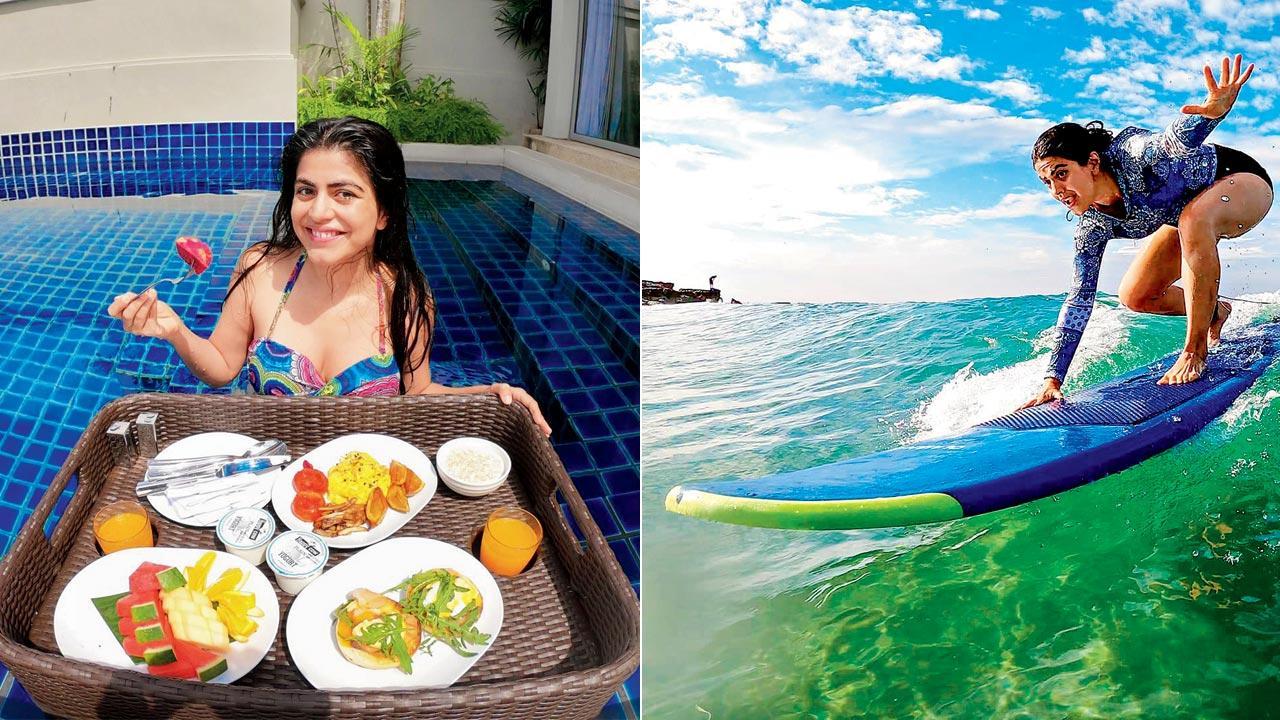
Video jockeys who are now thriving in their respective fields discuss how their varied requirements shaped their fitness trajectories
MID-DAY (August 23, 2024)
‘I am thankful for my thick and muscular legs’: Shenaz Treasury
Shenaz Treasury recalls a family vacation that she had taken to Singapore’s Sentosa island at the age of 12. Having headed into the ocean on a cycle along with her sister, she remembers having struggled to return to the shore as her father called out to her.
“My dad got worried because he realized that we were not fit, and made us start exercising. That’s when I was introduced to this world of fitness training,” recalls the host and travel influencer, who went on to practice multiple sports in her 20s. “Because my dad was a captain, I’ve spent a lot of time on the ship, and learned to swim [early on]. I’d pull off 40 laps.”
By the time Treasury entered college, she had a defined midriff, and was often picked for commercials. “But because I was always slightly plump, people would say [I’d benefit from] losing five kilos. I recall, even when I did Ishq Vishk [2003], Ken Ghosh [director] said I should lose weight because the other actress is so thin. [When I was younger], I took too many cardiovascular activities. I’d run across Bandra’s Bandstand and Pali Hill at noon, and also considered becoming a fitness trainer by certifying myself in step aerobics. Back then, no one told us how beneficial weight-lifting is. I wish I had [adopted] that sooner.”
Contrary to popular belief, Treasury says life as a travel influencer gives her enough opportunities to stay in good shape. “While travelling, I stay active. You’ll find me climbing, surfing, or swimming,” she says, adding that she also covers long distances on foot. “It is true that I love to eat, but I consume healthy foods. People call me a waiter’s nightmare because I instruct them to cook my meals with less salt and oil. I also don’t consume refined sugar and choose coconut sugar, dates, and fruits instead. Sure, they are still sugars, but I consume them because I don’t need six-pack abs. I just need to be healthy and feel good.”
Treasury also encourages young girls to avoid “hating their body parts”. “I spent my 20s stressing over my small belly, and no matter how well I eat, I will never lose it, unless I starve myself. Also, I was often [mocked] for my big thighs. I’d wear long skirts to hide them, and it wasn’t unless my first boyfriend gave me the confidence to [flaunt my legs] that I began to do so. Today, I love wearing shorts, and am thankful for my thick and muscular legs. Hopefully, they’ll take me through my 90s. As women, we tend to hate our bodies when we should be honouring them.”
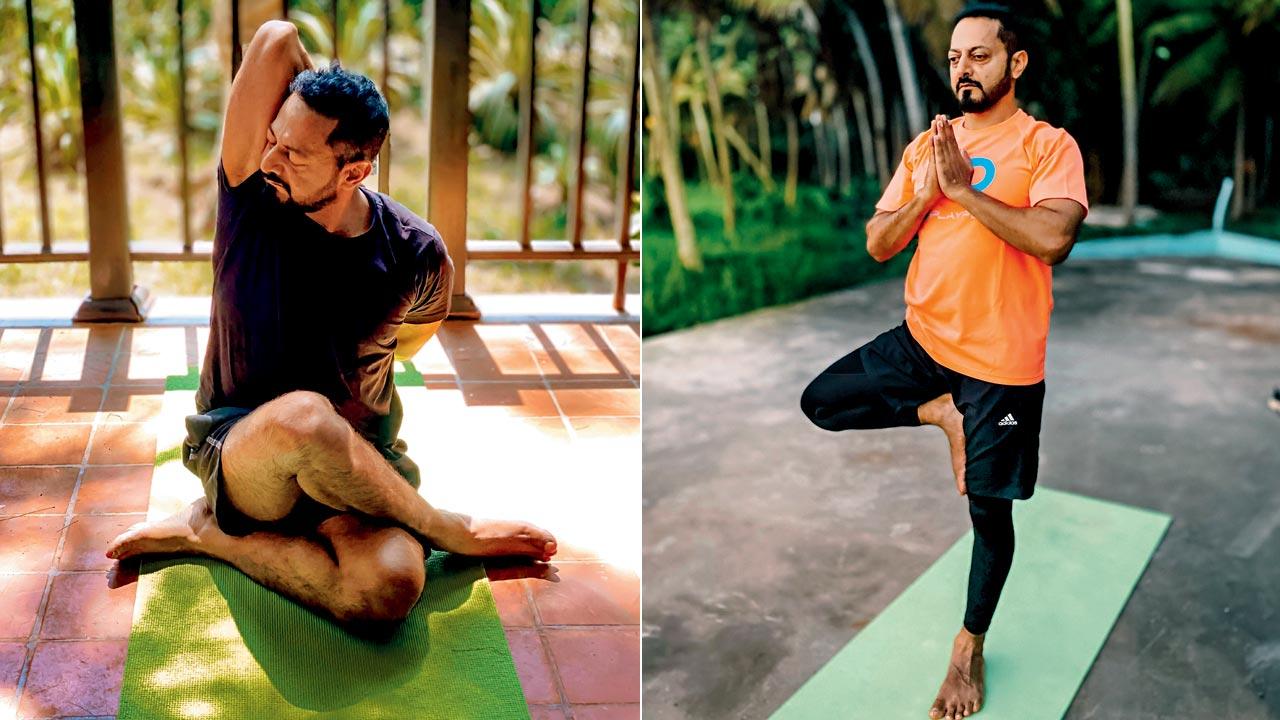
‘When I built some muscle, I stopped getting beaten up’: Nikhil Chinapa
Being a “skinny kid with a big mouth” often landed Nikhil Chinapa in hot water. “I’d get beaten up a lot because I would say smart things to people. At some point, I got tired of being beaten up, so I decided to go to the gym to build some muscles. When I did that, I stopped getting beaten up,” he says simply, adding that weight training has been an integral aspect of his life.
Among the most prominent figures in the thriving independent music industry in India, Chinapa recalls stepping into the gym as a 50-kilo youngster who struggled to gain weight. “I’d force-feed myself, or follow my lunch with a glass of milk. Initially, I found it difficult [to build muscle mass]. I’ve never relied on protein supplements, choosing instead to opt for sources that could be procured from a natural diet.”
As the face of a celebrated music brand, Chinapa spent most of his 20s and 30s travelling across places, and was fortunate to be “put up in hotels with good gyms”. “In the evenings, I’d spend time on the treadmill,” he recalls, adding that while he enjoys adhering to his fitness routine, he “did things in an ad hoc manner”.
“When I see how things have changed today, with so many fitness enthusiasts [educating us], I realize fitness is an intense [discipline] and requires focus.” And while an exhaustive profession like his can compel one to put their exercise regimen on the backburner, Chinapa says he was “fortunate to have good genes” that helped him “sustain my physique”.
It was on a Roadies trip with co-judge Neha Dhupia that Chinapa recalls having “enjoyed” a yoga class. “I’ve avoided yoga for a long time, but I enjoyed the class with her trainer. Having a yoga teacher who you can vibe with is important. I started doing it regularly, and found that it improved my mobility, and ability to lift weights. Both the activities complement each other.”
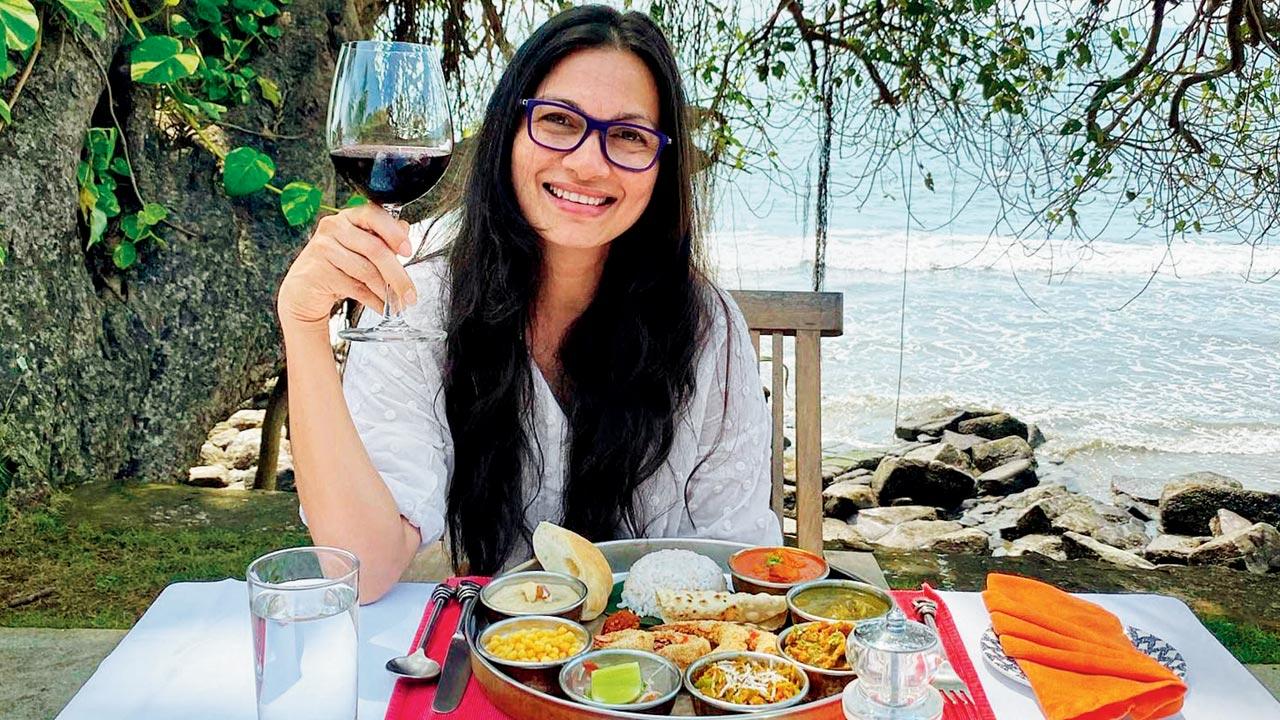
‘[Eggs benedict] is like heart attack served in a pan’: Maria Goretti
Maria Goretti says she set off on her “health journey” as soon as she learned to cook. “I have been trained in the art of French cooking. When I started to learn, I realized how unhealthy some food are. For instance, I would always order eggs benedict at a cafe, but after I learned cooking, I realized that hollandaise sauce was essentially [a mixture of] egg yolks and extra virgin olive oil. That’s like a heart attack [served] on a pan. While one part of me was soaking in the knowledge of cooking, another part was realizing that there were certain things that I should be eating only once a month,” recalls Goretti, who gained more knowledge in a bid to make “tasty, but heathy” meals for her kids.
“All of us at home eat differently. Soup is made for my parents, while I enjoy eating vegetables. Arshad [Warsi, actor-husband] eats according to his schedule. I’m usually always trying to figure out how to meet all these demands. [For my kids], I make a lot of stuff with ragi and other millets, and ensure that they get [enough] protein at night. But, my parents don’t digest it easily, so I don’t give them protein before bedtime.”
Goretti’s nutritional advice is fairly simple. She stays away from foods that have a shelf life longer than two days. “Such foods are filled with chemicals that enable them to be consumable for long periods, and this affects their freshness. A lot of brown breads available in the market are not made of wheat, but are simply caramelized or artificially coloured. The safest brown bread that you can eat is a roti.” She encourages people to minimize using additional flavours while consuming vegetables because “vegetables have their own unique flavour”.
“Also, when I cook at home, I make smaller portions so that I can cook each meal closer to the time it must be consumed. I understand that this isn’t possible for a lot of working couples because they will end up spending a lot more time in the kitchen, but it was beneficial for my kids. Finally, preparing for your meal is also crucial. For example, marinating meat and keeping it [aside] overnight enhances its flavour and softness. Finally, I do not mix raw meals with cooked food. So, I won’t eat a salad that has pieces of chicken in it, because the digestion of both these food items is very different.”
She encourages individuals adopting specific eating patterns to be vigilant about their choices. “Gluten-free”, she points out, need not necessarily imply that the food has health benefits. “When you opt for gluten-free foods, you may end up using nut flour, which is not particularly a low-calorie option. We have to be smart about the choices we make.”
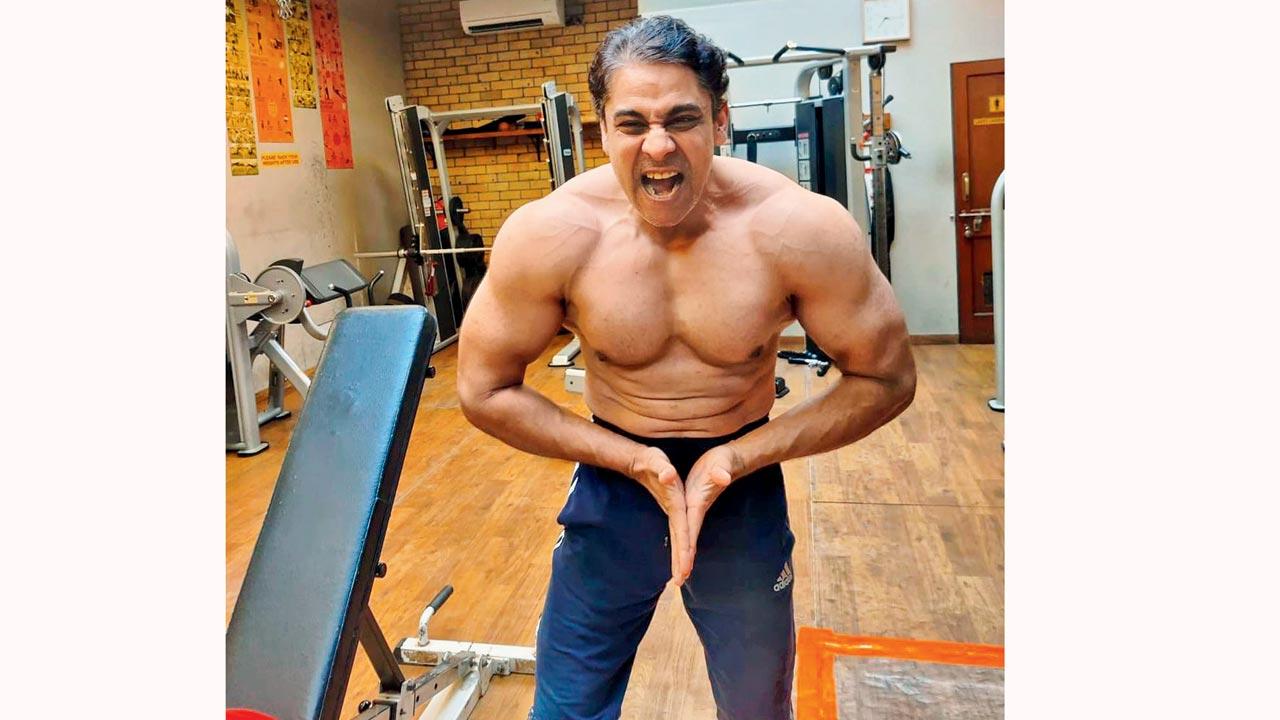
‘A gym is where a man should come to be a man’: Cyrus Broacha
Given that he developed a deep interest in the sport of body-building early on in his life, Cyrus Broacha says his weekly routines today “look pretty standard”. “On Mondays, I train my shoulders, on Tuesdays, I work on my legs, and subsequently train my chest and back muscles on other days of the week. I target one body part every four days,” says Broacha.
The host had first connected with mid-day to discuss how he was adhering to his regimen amid the lockdown, and today, lessons learned from the phase have encouraged him to adopt new practices. “I’m terrified after the pandemic, because that is when I saw that after a couple of weeks [of rest], it was tough to work out [at the same intensity]. I don’t mind training seven days a week today. When you are in your 50s, you have to use your muscles, or you’ll lose them.”
Broacha’s passion for body-building is easily expressed when the subject of the training patterns of “Indian men” is broached. He is irked by the thought of listless “men entering the gym without the desire to train”, and refers to cardio as a regimen that’s “ too boring for my mentality”. He gets his share of cardiovascular activity with fast-paced and explosive training routines, and chides those who “walk in, do some little stretching, and step on the treadmill at a leisure pace”.
“It’s not suited for the Indian body type. [Long-distance runners] end up with skinny-looking arms and legs. There’s no definition in their torso. A gym is a place where a man should train [aggressively]. It’s where a man should come to be a man.”
In the last two years, he has trained attention towards fixing his diet. “You have to think about how old you are. Once you tend to gain abdominal fat, it becomes hard to lose that. I don’t eat a lot of sweets, and don’t include carbohydrates in my first meal. When I have carbs, I consume it with protein to reduce sugar spikes. But, I will treat myself to them because I love rice. But, in the first half of the day, my diet is without flaw.”
Comics were once called names like ‘clowns’ or ‘jokers’-Cyrus Broacha
8:09 AM

The comedian chose to keep his recent show in Bengaluru interactive
Fathima Ashraf (BANGALORE TIMES; February 11, 2023)
This stand-up comic act was all about tasks for the audience members: lucky draws, impersonating famous cricketers, impromptu interviews, as well as debates on why Bengaluru was the best city ever. Headlined by Cyrus Broacha, one among the country’s pioneers in the world of standup comedy, Bengaluru audiences were treated to a unique interactive session.
And the best part according to Cyrus is this, “The audience has changed and how. Back in the day, the audience was shy. You had to make an effort to get them involved. But now you have an audience that is informed. Due to the internet and all the exposure, they come to the room with a certain knowledge. They pick up all the nuances: the tongue-in-cheek stuff, the double meanings, the political jokes, everything. And they have no qualms about participating.”
Cyrus points out to another welcome change. “It’s great to see that comedians are finally getting some credibility. Back then, there was a tendency to call comics names like ‘clowns’ or ‘jokers’ in a derogatory way. They were not respected. I feel satire has helped performers also share a bit of wisdom as part of their comic routine. Today, there are so many comedians out there. It is wonderful to see how an entire generation has completely taken to humour,” he shares.

Anubhav Sinha pulls off a casting coup with Abhi Toh Party Shuru Hui Hai
7:54 AM

MUMBAI MIRROR (April 9, 2018)
Sony Pictures Networks Productions (SPN Productions), the film production arm of Sony Pictures Networks India Pvt Ltd (SPN), announces its upcoming film, Abhi Toh Party Shuru Hui Hai (ATPSHH), written and directed by Anubhav Sinha.
The film is a satirical ride into the circus of coalition politics. The biggest highlight is the cast of highly acclaimed actors coming together in one film for the first time. The cast includes Saurabh Shukla, Pankaj Tripathi, Vinay Pathak, Pavan Malhotra, Divya Dutta, Kumud Mishra, Manoj Pahwa, Richa Chadha, Dilip Prabhavalkar, Cyrus Broacha, Prateik Babbar and Shriya Pilgaonkar.
 Sony Pictures Networks Productions is all set for an entertainment packed year with Soorma, T for Taj Mahal, and Abhi Toh Party Shuru Hui Hai in the pipeline and other announcements to follow in the coming months.
“This story is very close to my heart and when I started writing it, I finished in one go. I narrated it to SPNP and I am glad Sneha Rajani (right) and her team instantly fell in love with the subject. I think the casting has been a great asset to this film as it’s impossible to imagine all these supremely talented actors coming together in one frame,” director Anubhav Sinha said, while Sneha Rajani, Deputy President and Head, Sony Pictures Networks Productions, added, “Anubhav Sinha has created such wonderful characters for this film. Who would have thought of seeing such great actors sharing the screen space? This speaks volumes about the script that has managed to attract such great talent. I am certain that the madness of the script and the fantastic cast will leave a longlasting impression on the minds of our viewers.”
ATPSHH is being produced by Sony Pictures Networks Productions and Anubhav Sinha.
I Am Offended, a documentary on stand-up comedians to premiere online in February
7:59 AM

Ankur Pathak (MUMBAI MIRROR; January 17, 2015)
Filmmaker Jaideep Verma who has previously made documentaries on the indie band Indian Ocean (Leaving Home) and filmmaker Sudhir Mishra (Baawra Mann) has now completed a documenatary on the current stand-up comedy scene in India. Mirror has learnt that the film will feature top comedians, including Vir Das, Cyrus Broacha, Johny Lever, Raju Srivastav, Varun Grover, Sanjay Rajoura, Aditi Mittal, Sorabh Pant, Tanmay Bhat, Gursimran Khamba, Ashish Shakya, Rohan Joshi, Rajeev Nigam, Rajneesh Kapoor, and legendary humorist Pu. La. Deshpande. It will premiere online in February.
Titled I Am Offended, the film has been put together by Being Indian, and focuses on the rising level of intolerance among people as well as on freedom of expression and the extent to which it can be used. The narrative develops through conversations between the comedians with a segment dedicated to some of their best performances.
Confirming this Jaideep told Mirror, "Humour has a particularly important role to play in this rather grim world we seem to have created for ourselves. Hopefully this film demonstrates that aptly."
Sameer Pitalwalla of Culture Machine, which got the comedians together for the project said, "It is an ode to the scene as much as to our promise of delighting India's Internet audiences with cutting-edge programming."
The Shaukeens: Akshay Kumar brave enough to take potshots at himself
9:41 AM

Subhash K Jha (DNA; November 8, 2014)
It takes a brave man to make fun of himself. Akshay
Kumar has gone to the other extreme at self-directed humours in his own
production The Shaukeens which released yesterday. He has made fun of
everything that he is usually panned for: The three A’s — action films,
awards and ads!
Action star: Throughout the film, Akshay takes potshots at himself and his image of a ‘Khiladi’ star who has a reputation of not giving serious performances. There is a scene in the film where he tells his manager — played by Cryus Broacha — that he is fed up of only leaps from buildings, choppers and bridges.
Ad world: Another scene shows him endorsing products while on a break from his film shooting. And he tells his manager ‘cheque le lena.’ That is a dig at the many endorsements he does. And that he will live out his acting career jumping out of helicopters and from skyscrapers.
Awards: Akshay makes fun of his non-actor’s image by showing a ‘serious’ Bengali director mocking him and telling him he will never be taken seriously as an actor. Then he is shown wooing the award-winning director in the attempt to bag the National Award for Best Actor.
Says an industrywallah admiringly, “Which other A-lister star would dare to satirise himself so savagely and with so much pleasure?” Akshay has gone even further with the self-mockery by portraying himself as an alcoholic, in contrast to his teetotaller image.
Subscribe to:
Posts (Atom)