Showing posts with label Cocktail. Show all posts
Showing posts with label Cocktail. Show all posts
Top 10 romcoms; Tanu Weds Manu Returns the only film with 1 cr plus footfalls
10:08 AM
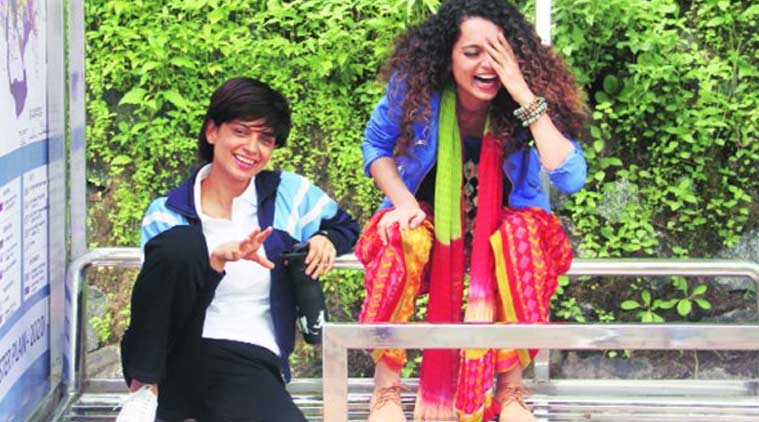
Box Office India Trade Network
COCKTAIL 2 released this week and has done so so business till date though it will not feature among the top ten Rom Com films of all time. However, in terms of cost, its probably the second biggest rom com ever after TU JHOOTHI MAIN MAKKAAR. The genre is one which came to the fore in the last thirty years as before that there were hardly any rom com films made.
Basically comedy films and rom coms gained traction at roughly the same time because in the 50's 60's 70's and 80's, there were not many comedy or rom com films as North, East and Central India was very unkind to these genres most of the time. It is actually hard to divide which is Rom Com and which is a love story for a film but if a film has drama which is stronger than the comedy and forms much of the film then that goes towards a love story. Drama on the lighter side means Rom Com.
The biggest Rom Com till date is TANU WEDS MANU RETURNS and it is so far ahead of the rest that it makes you doubt that is this film actually a Rom com but a Love Story. It is not for sure as comedy dominates through the film. This film got 1.5 crore footfalls while no other Rom com has even picked up 1 crore. The footfalls of COCKTAIL (2012) are under 90 lakhs.
There is sure to be something different with TANU WEDS MANU RETURNS compared to the other Rom Com films and it could be characterization, relatability or authenticity whereas most Rom coms tend to go the filmy/urban route which limits the business. If big films are still to be made in the genre, then this film is the one at as it stands above all by a margin. Otherwise the genre probably has to be made at a lower cost with possibly smaller casts.
The top ten Rom Com films of all time by footfalls are as follows. There could be some missings from the earlier years but that will not matter much in the context of business today.
1. Tanu Weds Manu Returns (2015)
2. Cocktail (2012)
3. Chhoti Si Baat (1975)
4. Tere Mere Sapne (1996)
5. Dostana (2008)
6. Kabhi Haan Kabhi Naa (1994)
7. Mere Brother Ki Dulhan (2011)
8. Tu Jhoothi Main Makkaar (2023)
9. De De Pyaar De (2019)
10. Luka Chuppi (2019)
Being in a race with others is boring-Kriti Sanon
10:09 AM

Actor Kriti Sanon reflects on creative risks determining her career choices, including Mimi, Tere Ishk Mein, and now Cocktail 2
Sonal Kalra (HINDUSTAN TIMES; June 25, 2026)
It began in 2024 and has continued well into 2026 — Kriti Sanon’s successful run at the movies shows no signs of slowing down. It started with Teri Baaton Mein Aisa Uljha Jiya, followed by the heist comedy Crew and a darker turn in Do Patti. 2025 brought the intense love story Tere Ishk Mein, and now, the breezy Cocktail 2.
When we point out that she seems content staying out of the rat race and away from social media rivalries, she says she is “actually very competitive”. She says, “When I see someone doing well, I feel like I also want to do well. Competition motivates me to do better. I feel like it also comes at a certain point in your career that you have a sense of security with yourself.” Things changed for the better, especially in 2021, she adds: “The validation that Mimi (2021) gave me, whether from the audience or through the National Award, made me feel like I had finally proved my talent and could now explore more... I am very critical of myself. So, I am always wanting to do better than what I have done before. It’s boring to be in a race with someone else and it just doesn’t give you peace.”
For Cocktail 2, have you received more compliments for your looks or your performance?
It’s a mix of both. I think any actor craves for that moment and day. Fortunately, this is a role that is very glamorous but also has its layers. I got lucky.
With sequels comes the pressure of matching the original. Does the positive response to Cocktail 2 feel especially rewarding?
I knew that there would be comparisons, and thankfully, this was not a sequel but a franchise. It’s just the vibe of Cocktail (2012) that was being taken forward in Cocktail 2… and the fact that it was one boy and two girls. Apart from that, there was absolutely no similarity; the story and the conflicts are completely different. I feel like Ally, my character, was not Veronica (Deepika Padukone’s character in Cocktail), and that’s what excited me. If I were doing a remake, then I think the pressure would have been way more.
One thing that is absolutely similar between you and Ally?
At the end of it, we all want to be loved, so I feel that’s a similarity. But I also feel even though she is really bindaas and free-spirited, in her heart, she really cares. The empathy part of it was interesting for me, and I connected with it.
Whose compliment after the film has touched you the most?
There have been so many coming from everywhere. Whether it’s Sajid (Nadiadwala, producer) sir or Sabbir (Khan, director) sir, who have seen me in my debut film Heropanti (2014), and now after this journey of about 12 years, playing a role like this; both sent me long, lovely messages. That was very emotional because when I did Heropanti, I was a baby who knew nothing and just learned everything on the job. The only thing that hasn’t changed is that I used to ask a lot of questions back then. And I am curious even now.
With each project, you’ve pushed yourself further. While success gives freedom to take risks, does it also make you cautious because there’s pressure to keep everything going well?
That also happens where sometimes it’s like, ‘Oh now I don’t want to spoil it, it’s a good run going on,’ But when you try different things like when I did Mimi (2021), a lot of people told me ‘Why do you want to play a mother right now’ or ‘Surrogacy is such a serious topic’ or ‘It’s too soon to take something on your shoulders’. The fact that I didn’t listen to it and went with my gut feeling gave me what it did (her first National film award).. So, that made me feel that okay, ‘I need to feel it from inside’. I need to really feel hungry towards doing a certain film. I need to feel challenged by the character and not repeat myself. When Tere Ishq Mein (2025) happened, it was such an intense film; it was emotionally and physically draining. As an actor, by the end of that film, I couldn’t do another intense project immediately. Fortunately, I had Cocktail 2 that came to me, and I was like, ‘This is a breath of fresh air and I would love to do this next.’
With so many different films working at the box office now, do you think audiences have always just wanted good stories, regardless of genre?
Yes. Aapko agar ek hi tarah ka khaana baar-baar denge toh aap bhi bore ho jaoge na? So, as an audience also, you want different kinds of cuisines and different genres of films. I think what we started thinking is ‘Oh, action is working. So, let’s make action films.’ But at the end of it, people want something that is engaging and different for them to not wait for the film to stream on OTT. People should have FOMO, ‘we have to go to a theatre and see it’. That experience needs to happen. Earlier, when OTT was not there, it took six months for a film to come on TV. So, there was a little more urgency to watch it. Now, mediocrity is not going to work.
What’s coming up next for you?
I am excited to find a script. Genuinely, I have not signed anything, and I am not in a hurry. Right now, quality over quantity for me, for sure.
An upcoming film that you are excited to watch?
Spider-Man: Brand New Day is coming. I’m excited about that. Dune: Part Three, too. Then there’s Eetha. Laxman Utekar sir is directing, the teaser is fab. It’s Laxman sir in his full element and avatar with Shraddha (Kapoor, actor). It looks very powerful.
Is marriage on the cards for you?
That will happen when it happens. I am not in a hurry. I think everything has its own time.
Fenil's Bollywood Talk # 939
4:11 PM

WILL COCKTAIL 2 MANAGE TO OPEN BETTER THAN COCKTAIL?
After two weeks of multiple releases, the next two weeks will see just one major Hindi film trying its luck at the box office – Cocktail 2. Like any other Maddock production, the romcom has been extensively marketed and is constantly in the news.
Cocktail 2 stars Shahid Kapoor, Kriti Sanon and Rashmika Mandanna and is directed by Homi Adajania. The songs are peppy while the film’s promos promise a vibrant, youthful entertainer. For many months, there were murmurs that Kriti and Rashmika play lesbian lovers. However, they recently clarified at an event that it's not true. One song from the film, ‘Mashooka’, has especially worked well and is big on Instagram Reels.
However, the film faces some roadblocks. While there’s excitement for the film, a section of the audience will prefer to wait-and-watch, that is, go through the response and then book tickets. The film’s ‘A’ certification has raised eyebrows. It won’t affect business, as proven by Dhurandhar and Dhurandhar The Revenge that adult rating is no more a roadblock. However, viewers are curious why such a rating has been given to a film that doesn't seem really adult.
Cocktail 2’s advance booking is decent and is expected to have a double digit opening if collections jump as intended in the evening and night shows. The first part, Cocktail (2012), starring Saif Ali Khan, Deepika Padukone and Diana Penty, opened at Rs. 10.47 crores. The aim of Cocktail 2 would be to go past this figure. With limited competition from holdover releases, the film should then aim for a Rs. 45-50 crore weekend.
Meanwhile, Haunted – Echoes Of The Past emerged as a surprise last week. An opening of Rs. 1.50 crores was considered the best-case scenario pre-release. But it went on to collect Rs. 2.25 crores and is the best-performing film of the week. The weekday trend is weak. But the job is done and it’ll the end Week 1 with earnings totaling Rs. 14 crores.
On the other hand, Main Vaapas Aaunga was expected to take a Rs. 2-3 crore start. Sadly, it opened at just Rs. 1.10 crores. One expected the collections to double on Saturday and Sunday. That didn’t happen and the film collected Rs. 1.85 crores and Rs. 2.50 crores respectively.
Thankfully, the Monday hold was strong, when the film collected as much as on Friday. On Tuesday, due to the discounted rates, collections jumped to Rs. 1.50 crores. On Wednesday, the earnings should have come down. Instead, the film collected Rs. 1.75 crores. The film is expected to collect around Rs. 11.50 crores in Week 1. It needs to earn as much or more than Week 1 to come out with some sort of respectable collections.
Cocktail 2 deserves a complete makeover-Diana Penty
8:33 AM

Akash Bhatnagar (HINDUSTAN TIMES; July 9, 2025)
While Cocktail 2 has been a rumoured project for a while, designer Anaita Shroff Adajania, wife of Cocktail director Homi Adajania, recently shared a picture of a script with the title “Cocktail 2” on her Instagram Story. The film reportedly stars Shahid Kapoor, Kriti Sanon and Rashmika Mandanna.
Ask actor Diana Penty, who marked her debut with the 2012 film, how she feels about the sequel, and she says, “I am sure the makers have a great script at hand and that’s why they are making a sequel. Also, the fact that the first film did well means that there will be an audience for the sequel. I will be very excited to see it as an audience.”
While Diana, who was recently seen in Detective Sherdil, isn’t part of the film, would she want to be a part of it, even if it’s a cameo? “I feel I have played my part in the first film, and it did well for me. I am here today because of that film and I am grateful for it. But if they are embarking on a new journey, it deserves a complete makeover,” she says.
Talking about Cocktail that re-released in theatres recently, Diana says, “I was keen to see if it resonates with the newer generation who missed out on it 13 years ago. And it did, because you can’t go wrong with a romcom. Everyone loves such films.”
The family is very fond of Arif; I am the slightly off one. And the ladies love him-Imtiaz Ali
8:59 AM
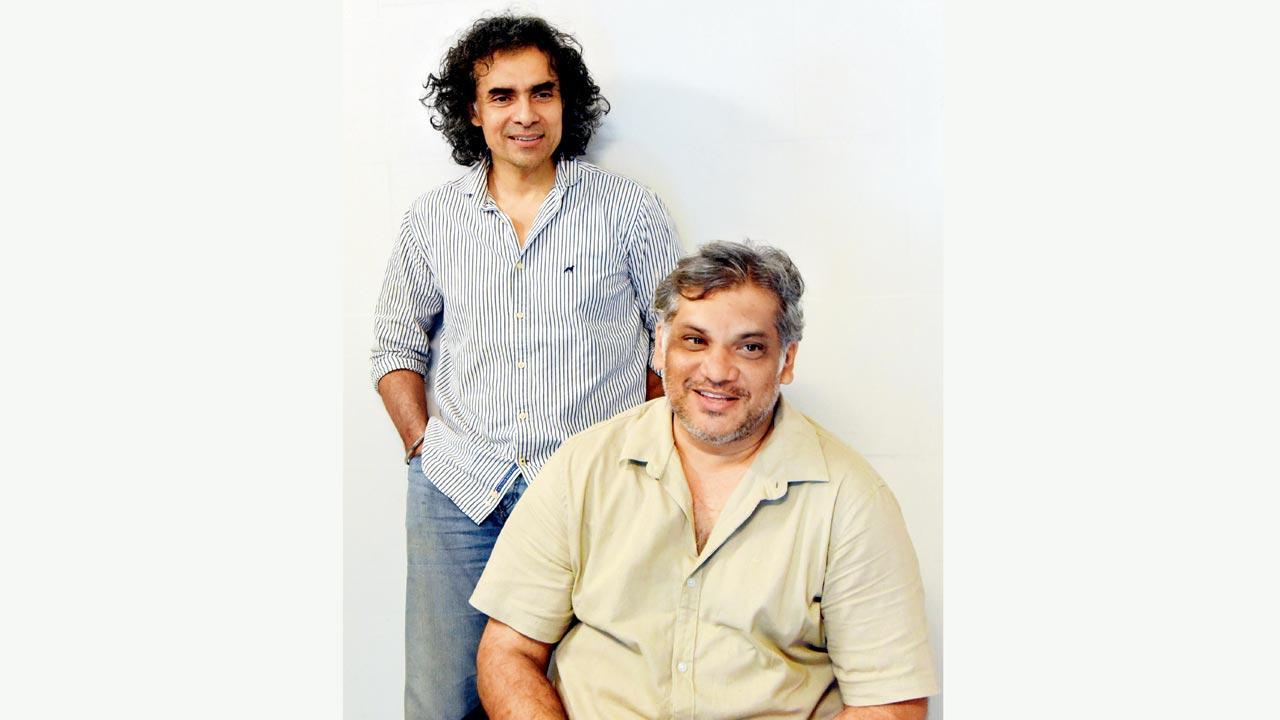
Imtiaz and Arif Ali, who are back on OTT with the second season of thriller She, talk about their bond made of mutual acceptance, admiration and adaptability
Aastha Atray Banan (MID-DAY; June 19, 2022)
“We have similar food tastes,” says director Arif Ali of his elder brother, writer and director Imtiaz Ali. Somehow, the conversation that has to be about the second season of Netflix thriller She, which Imtiaz has created and written, and Arif has directed, has become about the cuisine that Mumbai is home to and isn’t. “We share the same opinion—the North has better food, but we need to find a few places and then be happy within that,” says Arif. Surprisingly, this attitude is also reflected in the rest of the conversation, which is about the brothers believing in the same philosophy—do the best you can, and then just put it out in the universe.
When it comes to She, a story about a woman constable who goes undercover as a sex worker to bust a kingpin no one has seen, the two seem to be in sync as well. The second season is about the lead, Bhumi, played by actress Aaditi Pohankar, coming into her own, realising the power of her sexuality, and how she can use it to gain control over others. “That’s what I find most fascinating about the second season—the fact that she uses it now like a weapon,” says Imtiaz.
The two brothers often look at each other before they answer questions, almost taking unspoken permission, a courtesy that may have helped them through the making of the show. “Imtiaz pays attention to the details, while I am more macro. He has written certain things the way he sees them… there is a comma, or a full stop, because of a reason. And he wants it a certain way. We have had to change some scenes, because he didn’t think they were true to what he wanted. And I am okay with that—at the end of the day, it’s his vision.”
Imtiaz gets it, but says that as showrunner, he was responsible for the final product, unlike a project where he may have just written a script and handed it off. We remind him of the time when we pointed out discrepancies in Homi Adajania’s Cocktail, which he wrote. The film didn’t share his vision. “Yes, but with Arif I can say anything, and know that I am not being judged. I can’t impress him, and I can’t fool him. He knows it all. So when I am signing off on something, it has to be absolutely right. A scene, a moment, a dialogue… is all there for a reason. Or else let’s chop it off completely.”
Arif laughs when we ask if he wants to give his elder brother some “feedback” on his process. “There are times where what he may have written, could be different. He spent two hours on one scene, I spent many on the recce, and the preparation. I thought that maybe this could be different. But sometimes, he is obstinate about it. And it [the scene] eventually got cut on the editing table!”
But the brothers show no signs of discontent or disagreement. They talk about spending a lot of time together growing up. “We were the constants in each other’s lives. He got married first, so he had a TV and a home, and we used to spend evenings watching movies. We have similar likes and dislikes,” says Arif, who is the natural extrovert between the two.
“Oh, he is very popular and genial, and gets along with people. He is the one who is interested in people being together. The family is very fond of him—I am the slightly off one. And the ladies love him,” says Imtiaz, who we have discovered through interviews over the years is the natural introvert, who talks only because he has to. “I am not popular with the ladies the way he is,” Arif interjects.
Is the mutual love of and from women, the reason they could get into the mind of Bhumi, a lower middle class Marathi girl shunned by her husband because he saw her as cold, manly, asexual, who is now grappling with the nuances of her own sexuality? “I don’t think we disagreed about any way in which we showed her. We were clear she was coming into herself. But it wasn’t to be woke. I am socially responsible in the way that I don’t want my movies to make audiences take the wrong steps, but at the end of the day, it’s a story.” Arif adds, “Yes, I’m glad we are talking about all the issues that are important to women and us, but for us this was a character, and the character will have an organic journey.”
Maybe Bhumi is just looking for the “self”, a trait common to many of Imtiaz’s characters—Dev in Tamasha, Veera in Highway or Aditya in Jab We Met. “Ya, maybe. I am not looking for my ‘self’ at all, but my characters seem to be. There has to be some deeper psychological reason for that.”
At the end of the day, the brothers can put aside work, hang and talk about other things. “But we do talk about work as well; work is life.” Do they care how critics and audiences will react to She? Arif takes this one—“You can never know what audiences want. But we knew what we wanted, and we made that product. Now, it’s out of our hands.”
I hope people tell stories that are in their hearts without fear-Deepika Padukone
8:10 AM
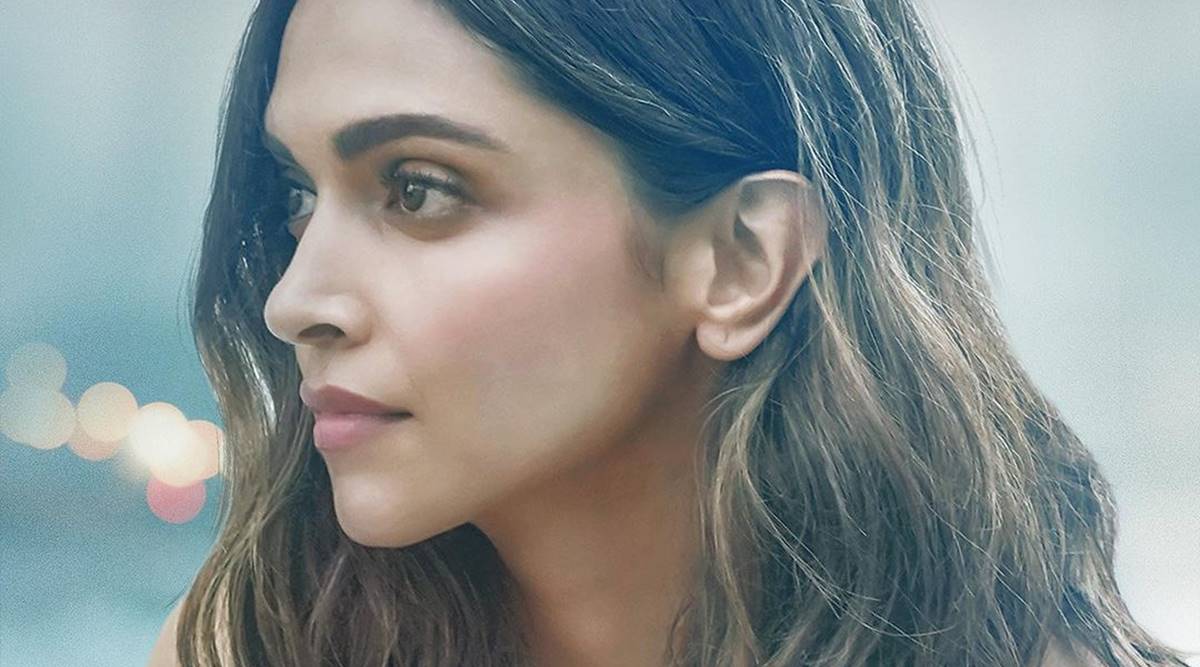
Madhureeta Mukherjee (BOMBAY TIMES; February 9, 2022)
We have witnessed many shades of Deepika Padukone unfold on screen — glamourous, romantic, brave, real and royal. And every time, she comes shining through, revealing yet another facet of her talent and her willingness to wade through unvisited territories as an actor. Even if that means going into the deep end, Deepika takes the plunge. With Gehraiyaan, releasing on Amazon Prime Video on February 11, she is taking one of her deepest outings ever. In a conversation with us, she talks about her fascination for relatable stories, what prompts actors to make brave choices, and how we are constantly finding ourselves in everything that we do. Deep, huh? Read on...
You have featured in films like Cocktail and Tamasha, where relationships and love have been explored, but not entirely in the conventional way. Now,we will see you in Gehraiyaan, about which you have said, ‘This is my first of its kind.’ Would you say that you get drawn to subjects that delve into this space with a certain honesty and realism, while breaking barriers on various levels?
I think with Gehraiyaan, I really wanted to work with Shakun Batra and that was the starting point for me. Beyond that, even while growing up, I was drawn to stories that were more relatable and realistic. I think it comes from my fascination with everything that is as close to real life as possible. Even if I am sitting at home and watching a film on OTT, I am more likely to watch something like this versus maybe a fantastical sort of film. In my 15-year-long career, I have done all sorts of films — from a Chennai Express and Yeh Jawaani Hai Deewani to Piku and now Gehraiyaan, and of course, I enjoy all of them, but this genre, specifically, where characters are true to life has a special place in my heart.
You have also played characters that are set in a certain period, which are intense — with the heavy costumes, dance sequences and extensive scenes. While a part like that has its own challenges, would you agree that a role like this one is more internal and intimate, and is set in a space where you can draw from your own life experiences?
That’s the process of an actor. I think you live life and when you are given certain characters, you draw from various experiences. I think that is the natural process of acting. Sure, there are times you don’t relate to certain situations and characters, but that’s your job as an actor — to make it believable, authentic, real and humanise a character.
There will be times when you will get roles and characters that you can relate to, and there will be times you won’t. It certainly comes from a place of different experiences, and not just relationships. It’s not that just because I am doing a relationship drama, I am drawing from my relationships, or necessarily past romantic relationships. You draw from life. Hence, I feel it is important for actors to lead a life that is full of different kinds of experiences, and eventually, from some of that experience, engagement or interaction with someone, you can draw bits and pieces and put them into the work you do.
Shakun Batra roped in intimacy director Dar Gai, who was present on the shoot. Elaborating on that process, during my chat with him, he explained that it is literally about creating a space where people can openly talk about it, as opposed to being shy. How much of that effort, which is a first of its kind for our cinema, helped you pull off this character?
Yes, it is the first time an Indian film is doing something like this, but at the same time, at least in my head, it’s not such a big deal that we have an intimacy coordinator. If we were shooting a song sequence, we would have a choreographer, likewise, if we were shooting an action sequence, we would have an action director on set. So, if we are doing a film that has intimacy, you are going to have an intimacy director on board. So, for me, it’s not any different from any other sort of specialization that you need to bring on to make the characters and story as relatable as possible. But of course, you feel safer. Once you know what you are comfortable with, it’s easier during execution.
Given that this is a zone you have never stepped into before, and given how intimate the story is in the way it is narrated, what was your first reaction when you read the script?
When Shakun narrated the script to me in London (where we were shooting for 83), I remember allowing it to sink in. It’s not that I haven’t played similar characters before, like Veronica in Cocktail, and Piku, which was even closer to real life. However, this was far more nuanced and layered. So, it took me a while to commit to, as I knew that this would take a lot of my mental and emotional energy. But I remember being fascinated by the story. Well, the story has also evolved from there. When you make stories like this, it’s not like a biopic where you don’t have much room to play. In films like this, where the characters are real, you can always tweak, add and refine it. The script that I had heard two years ago was slightly different, we added a lot more layers to it and worked on it during the lockdown when we had time on our hands. I remember falling in love with my character.
The film has an interesting mix of actors — Siddhant Chaturvedi, Ananya Panday and Dhairya Karwa — a fairly new bunch of talent who are in awe of you. Something that they even spoke about in their interviews. How did the equation warm-up on set, as it is evident that the characters needed to share a certain kind of chemistry and warmth?
It was certainly something that I was cognisant of, as at any point, I didn’t want to make any of them feel intimidated or threatened. In fact, I gave Shakun the idea that we all go to Goa earlier and hang out, get to know each other and keep reading the script, as it is the kind of film where the relationships feel extremely real and organic. I would like to believe that I made them feel as comfortable as possible and not think of me with any preconceived idea of who I am. And to sort of connect with me the person, instead of the idea of me that they might have.
Did you do anything specific to help them open up, ease their pressure, or just be able to connect with you?
No, not really. Also, I am not the kind of person who walks into a movie set with the feeling that you have to take me seriously or that I am this actor with 15 years’ experience. I would like to believe that I don’t carry that kind of energy, whether it is on set, or while hanging out before or after shoot, or even during prep. I wanted them to embrace the person that I was. A large part of me is also like that, as I like being very normal. In my routine and the way I am, there are no frills. So, I didn’t have to do anything different. I was just being who I am.
In recent times, we are gradually seeing a shift where various such shades of relationships — complex, confusing, deep, fragile, dark — are being depicted in our cinema and our filmmakers are not as fearful of digging deeper into the human psyche and reflecting the same in their stories. Do you think this change has come about with the evolution in the audience’s choices or that new-age filmmakers now have the courage to venture into these spaces?
I think it is the audience that is giving us cues and telling us that we are ready for content that we haven’t seen before. I am certainly taking my cues from the audience. In fact, I feel they often shun the predictable and the obvious, and they are constantly searching for something new and different. I think that is where actors, directors and writers today are getting the confidence to go ahead with their ideas and being brave in making those decisions and choices.
The pandemic has changed so much for so many people around the world. How much has life and the kind of choices you make for yourself changed — professionally and personally?
The choices I make as an actor haven’t really changed. I was doing this film even pre-pandemic. The difference is that today we can release a film like this on OTT because there has been a boom in the last two years. So, was India headed there anyway like the West was? Certainly, but I think the pandemic only accelerated the growth of the OTT space in India. We didn’t set out thinking this film would be an OTT release, it was meant to be a theatrical release. When we started out two-and-half years ago, no one was thinking of OTT in that sense. I remember doing a meeting with Karan Johar (producer of Gehraiyaan) as he thought that I would resist it. I know he wanted to meet me to convince me, and he was pleasantly surprised when the meeting got done in 30 seconds. He said that he believed that this film was best for an OTT release. I told him, ‘Karan, even I have come here to tell you that this film is best for OTT.’ I would have done this film anyway, so I don’t think the choices have changed. On a personal level, of course, a lot has changed for a lot of people, like the fragility of life and the uncertainty of it all. Now we are more about living in the moment, gratitude and work-life balance. It has opened up people’s minds to a lot more. It’s been extremely rough on people around the world, but hopefully, there is only something to learn from this.
Gehraiyaan also speaks about how we are in many ways continuously finding ourselves. Do you see that process, that kind of evolution happening in your life and relationships continuously?
Of course, we are constantly finding ourselves in everything that we do. In different experiences, relationships, and sometimes, even in crisis situations, you learn so much about yourself and the people around you. So yes, the journey ought to be like that, otherwise, you are going to stagnate, if you are not going to look inwards, learn, grow and evolve.
Do you think this film will pave the way for more mature stories that can be told with sophistication and realism?
Hopefully, people will continue to tell the stories that they want to. Firstly, the audience is ready for it, secondly, you have umpteen number of platforms to tell these stories. I hope people tell the stories that are in their hearts without fear.
When I was given Cocktail's script to read I assumed it was for Meera’s character-Deepika Padukone
8:27 AM

The actor initially believed she’d play the other female lead
Juhi Chakraborty (HINDUSTAN TIMES; July 13, 2021)
A film that reintroduced actor Deepika Padukone to her fans was Cocktail (2012). As the uninhibited and emotionally raw Veronica in the film, the actor moved away from girl-next-door roles into a performance considered one of her best. As it clocks nine years today, Padukone remembers the role which is very close to her heart.
“I’ve always believed while you put a little part of yourself in every character you play, you also carry a part of that character with you forever. Veronica will always be one of the most special characters I’ve played; one that changed a lot for me professionally and impacted me personally,” she says.
So does she believe Veronica was a turning point for her Bollywood career, which started with Om Shanti Om (2007)? “Yes. If a character resonated with millions, then obviously there was something about it that audiences empathised with,” she says.
The film, directed by Homi Adajania and written by Imtiaz Ali, also starred Saif Ali Khan and Diana Penty. Reminiscing how she prepped for the role, the 35-year-old shares Veronica’s personality is not one she was familiar with at that stage in her life.
“When I was given the script to read I assumed it was for Meera’s character (played by Penty). Imtiaz Ali called me up one day and requested me to re-read the script for Veronica. After a couple of days and giving it some thought, I understood what he meant and saw what he saw. While I had butterflies in my tummy, I also knew I was ready for it,” Padukone says.
But she is quick to add, “I don’t think I would have been able to do what I did if it wasn’t for Homi Adajania. He gave me wings to fly and made me believe I could do no wrong. With that belief, we were able to create a character that will live in our hearts forever.”
I’d jump with joy if someone gave me an action film-Diana Penty
8:17 AM

Diana Penty on future plans, reuniting with Dinesh Vijan after her debut and why she hasn’t unleashed her domestic goddess online
Himesh Mankad (MUMBAI MIRROR; June 18, 2020)
 Diana Penty, whose peers utilized the Coronavirus-triggered lockdown to tap into their painting, singing, dancing or even cooking skills, confesses that she was unable to do so. “I felt bad about it in the beginning, but it’s not a competition. There is so much to do in the house, especially when you don’t have outside help, and only so many hours in a day. So, there was no time for additional stuff,” the actress explains, adding that she isn’t following a workout routine either. “I have realised that to some extent, doing chores around the house is like exercising. I will resume workouts when everything opens.”
Besides getting the house in order, cleaning, sorting out her cupboards and wardrobes, Diana is spending a lot of time with her mother and hopes that a situation like the pandemic never arises again. To help combat the health crisis, she has also been working closely with the Salaam Bombay Foundation to provide safety gear and hand sanitisers to the police. “This is our way of saying ‘thank you’ to them. They have been on the frontline of the pandemic since the beginning and ensured that the lockdown was successful,” she asserts, adding that she started out with the police station in her neighbourhood and took it to others across the city. “We have covered over 10 police stations in Mumbai that needed these two things on priority. We are going to support more and more police stations across the city.”
On the work front, Diana will next be seen in Dinesh Vijan’s Shiddat. “It’s a special film for me as it has brought Dinesh and me together again after my debut film, Cocktail. I loved the script, which was pleasantly surprising. As a fan of the romcom genre, I never expected to be so drawn to an intense love story. We are almost done filming and only a little patchwork remains,” she informs. She may not have unleashed the domestic goddess in her online during the lockdown, but the actress did read a couple of scripts.
When asked if she has zeroed in on her next project after Shiddat, the answer is “no”. Why so selective? “I think that is a misconception people have about me. I want to be a part of films that I would enjoy watching, and there needs to be an organic connection with the script. I follow my instincts at work and don’t overthink,” she reasons, adding that she would love to do an action film. “I would jump with joy if someone gave me an action film. It’s a difficult genre that requires a lot of prep and hard work, but I would love a full-on action project,” Diana admits.
The conversation takes her back to the action sequence she pulled off in the John Abraham-fronted Parmanu. “It made me realise that even a small scene requires a lot of homework. I learnt kick-boxing and a bit of martial arts for this one and after the prep, I could feel every single muscle in my body I didn’t even know existed,” the actress reminisces.
Homi Adajania retraces his 14-year journey in films with Being Cyrus, Cocktail, Finding Fanny, Angrezi Medium
8:18 AM

Homi Adajania, Dimple Kapadia during the London shoot of Angrezi Medium
The self-taught filmmaker retraces his 14-year journey on 70 mm through a quartet of films
Roshmila Bhattacharya (MUMBAI MIRROR; March 12, 2020)
 BEING CYRUS (2006)
For three months, I was sitting around working on a book—it’s on some shelf at the back of my house now—with no publisher in sight, when Kersi Khambatta, who was my writing companion, penning travel pieces for foreign websites, asked if I could read a piece of fiction he’d spun. A magazine had rejected it for being profane, but as soon as I finished it, I knew that this was going to be my first film. Everyone thought it was another crazy whim, but six months later, I was shooting Being Cyrus.
I have to admit that the black comedy was my most fearless film because I had nothing to lose and was running on pure instinct. I don’t know if it was over-confidence or my ability to bull**it, but everyone presumed that I was an ad filmmaker and didn’t think to ask if I had made a film before. Had they known I was just a scuba-diving instructor who’d taken off his lungi and walked onto the set, they might have had some misgivings because I knew nothing about the medium. I loved telling stories and direction started as a life experience. I slowly got sucked in because the power of a movie is so bizarre. As rational human beings, we know it’s not real, yet we are able to suspend our sense of disbelief and laugh and cry at what is happening on screen.
I was working with some of the finest talents. It was a privilege for me, but I never thought about it that way. For me, Naseer (Naseeruddin Shah), Dimple (Kapadia), Saif (Ali Khan), Boman (Irani) were actors, but since I was poorly versed with their work, at some level, it helped me because I had no pre-conceived notions and no reference points. Plus, I don’t have the fan gene in me and never look at someone in any other way except than as a fellow human being who excels in their craft.
I was told to meet Dimple and I walked into her house to find her on the treadmill, screeching at Twinkle’s dog who had pooped under it. And I knew instantly that she was my Katy Sethna, a loud, bossy, incredibly abrasive and slightly crazy woman. What was even more special about her was that when she turned around and saw me standing at the back, she was unapologetic. She is totally uninhibited, brutally honest and one of my closest friends today, who doesn’t care if the role is big or small. If I am directing the film, she has to be in it or I will get kicked in the ar**.
As an actor, she’s not insecure; she submits completely. All she needs is some validation that I’m satisfied with the shot, then, it’s “Okay chal, aage badh.”
In our upcoming film, Angrezi Medium, there is a scene where Irrfan (Khan) and Deepak Dobriyal find her passed out in her house, wrap her up in a rug so she will not get hurt when they are ferrying her to the hospital and try to flag down a car for the ride. We were shooting on the streets of London and while I sat on the pavement there waiting for the car to drive up, Dimple napped behind me, wrapped in the rug. She was totally chilled out, telling me, “Jab shot ready ho toh mujhe bol dena.”

COCKTAIL (2012)
I had never done a commercial Bollywood film with song and dance. To start with, the story did not appeal to me because it was not my space. So, when Dinoo (producer Dinesh Vijan) brought it to me, I told him, “It’s just another romcom, dude, why are we making it.” He didn’t push, but after a month I went back to him and told him I’d do the film. What pulled me in was that it was something new for me to explore, figure out and make my own. And when I saw the palette midway through, I admitted even to myself that it looked good. That’s when Dinoo revealed that the reason he’d wanted me to direct Cocktail was because he’d wanted to repackage the genre and present it in a fresh way. The shoot was raucous, the film was filled with outtakes because many times the actors had no idea the camera was still rolling so the fun we were having for real was carried to the screen.
It was the beginning of a lifelong friendship with Deepika (Padukone). It took a while for us to get on the same page because the character of Veronica was far removed from the real Deepika. She was cool, and I pointed out to her that you can’t act cool, you have to be cool because the audience can pick up a false note. She’s an incredibly hard-working and intuitive actress. After some time, she gave me her blind trust and we saw what she is capable of. Since then it’s only been up for her.

FINDING FANNY (2014)
Deepika’s character Angie (Angelina) was the polar opposite of Veronica and yet they were similar, too, in that both girls grapple with loneliness and wear a mask to survive. I told her about Finding Fanny while we were shooting Cocktail and Deepika told me that whenever I made it, she would do it. I pointed out that it would be an off-beat, indie film and she retorted, “I don’t care, I’m an actress.” We love working with each other, we have such a blast and that laugh which comes from the belly is so rare and precious!
I met Pankaj Kapur for the first time, having been told that he was solemn and a hard nut to crack. In two meetings, I discovered that he really is a shy guy who is largely misperceived by the world because of the front he puts up. His only concern was the scene in which his character, Don Pedro Cleto, gets accidentally shot in the head and drowns in the sea. He was not fond of water, having had a slightly bad experience while filming Maqbool. I assured him I’d use a prosthetic dummy for the sequence and promised that by the end of the film, I’d teach him how to swim. So, every day, after pack-up, we’d return to the hotel and start our swimming classes. After a few days, I started Naseer on it and it was the cutest sight seeing the two oldies splashing around in the pool.
Finding Fanny was like a small picture book; I wanted every frame to be edible, so you feel like taking a bite of it. I always wanted to make a film like that, but I think it flew over the heads of a lot of people, who thought it was funny, when really it was a very sad film about loneliness and longing.
The other day, when Deepika and I were talking about it, she pointed out that the problem with me is that my movies are ahead of their time.
“So, does that mean I’ll get my due when I am dead?” I retorted, and she laughed, “Probably.”
ANGREZI MEDIUM (2020)
I was working on a very dark project that a writer had brought to me, about a schizophrenic serial killer, ironically called Anand, when Dinoo called me for a narration of Angrezi Medium. Soon, I was rolling on the floor, laughing, then, I was crying. By the end of it, I had realised that it was time to spread some joy and make people laugh because that feeling of fulfilment is unparalleled. I asked Dinoo if any director was attached to the project and when he said “no”, I told him I’d do it.
Again, it was a space I was uncertain about, but I’ve never been comfortable in my comfort zone when I’m creating. Also, I’ve come to understand that for all the divisiveness there is in the world, when it comes to the primal emotions of love, sorrow and pain, it’s the same no matter where you are from. Angrezi Medium is an opportunity to do something I might never get to do otherwise... And also work with Irrfan Khan.
I’ve never worked with an actor with this kind of ability to be the character. Even when he is not doing anything in a scene, he is doing so much. While shooting, I discovered he’d given me 10 times more than what I’d wanted. While editing, I noticed 100 more things which I hadn’t seen while we were filming. That’s his magic!
And more than a genius actor, he’s a genius human being. Watching him play a single parent, I realised Irrfan is a feminist without trying to be one and that was beautiful. As Champak Bansal, when he looks at his daughter, Tarika, he is not seeing a girl, a guy or any other gender; she’s his child and he will give her whatever she wants. That’s a very evolved way of looking at life and I hope people take that away from the film.
Films come and go and all you are left with, at the end, are these memories. It’s exciting for me to learn more about myself and the world through my films, which is why I have chosen subjects so different from each other.

Making a film like Angrezi Medium has made me a better person-Homi Adajania
8:15 AM

Onkar Kulkarni (BOMBAY TIMES; March 12, 2020)
They began their journey together in 2006 with Being Cyrus. After Cocktail (2012) and Finding Fanny (2014), this year, the duo has collaborated on Angrezi Medium. In conversation with BT, director Homi Adajania and producer Dinesh Vijan speak about their association, working with Irrfan and how that experience has changed them for life. Read On:
You have collaborated with each other since Being Cyrus (2006), and Homi, you have always worked with Dinesh. There are things that have worked and not worked where your projects are concerned, but creatively, the two of you have had an interesting journey, right?
Homi: I remember, I narrated the story of Being Cyrus to Dinesh, and he asked me how many days I would take to make the film. I had no clue, as I had never made a film before. I told him that I’d finish it in 30 days. He said that if I took more than 30 days, I would have to pay from my own pocket. By the end of that day, I was a little worried. I asked him, ‘What if it starts raining and that disrupts the shoot?’ It was like dumb and dumber (laughs!).
Dinesh: It was a level playing field. He didn’t know how to direct, and I didn’t know how to produce. We were trying our best to keep that fact hidden from the other (laughs!). The thing is that Homi and I learnt the business together and we have had an interesting journey.
Homi: The only thing common between us was that we wanted to tell stories — that was our passion. After the first film, I became a scuba diving instructor. One day, I got a call from Dinesh for Cocktail. A romantic comedy was virgin territory for me. He approached me so that I could bring my own palette to the genre. Dinesh always believed in my potential, while I have been blind towards it. One thing that has worked for us is that we have never lied to each other. Even when I agreed to do Cocktail, I told him that I still don’t believe in the story, and I will give the subject my own twist. He said that’s exactly what he wanted me to do.
Dinesh: Even films like Stree or Bala that I have backed have been as reckless as Cocktail. If I like a story, I want to tell it, and one does everything to make it happen. One week before a film’s release, I know where we stand. My average products have never worked. Initially, I would wish that I could get away with it, but that has never happened. If it is a good film, and it doesn’t work for some reason, then I am okay with it. But, if it is a bad film, then it is not forgivable.
Everyone wants to make content-driven cinema, but you also have to be a risk-taker and have the faith to go ahead and put your money in such projects…
Dinesh: In the last 15 years, filmmakers have destroyed the business because we wanted to make money beforehand and we didn’t want anyone else to make money. We also wanted to ensure that if our film failed, we would not be at risk. That model changed for us with Stree (2018). Since then, we have made money and at the same time, done better films. Nobody wanted to put their money on Stree. I had no option but to back it myself. It was all or nothing, and it could have shut us down. I will tell you about my production house’s formula. We believe that if it doesn’t fire, nobody loses money and only if it fires, we make money. A film has to run in theatres. If that doesn’t happen, it is sad as a lot of work goes into it. My upcoming release, Angrezi Medium is an entertaining film. I have no problem if you love it or hate it. But, being indifferent towards a film is scary!
Talking about Angrezi Medium, how was your experience of working on a film with Irrfan, at a time when he was battling a tough phase in his life and undergoing treatment?
Homi: Well, the experience changed everyone. It made me change the way I make my films. After all, you are making a film and not curing a disease. Don’t take it so seriously! The entire experience of shooting Angrezi Medium will always be a wonderful memory. Making this film has made me a better person. In fact, it has touched everyone in one way or another. It the kind of experience which uplifts your spirit and makes you understand what resilience is. We knew all about the risks. We went into it with our eyes open. There was no question of tiptoeing around Irrfan. The fact is that we addressed the elephant in the room. He had cancer and was undergoing treatment. And we all were living life the way that one is supposed to. Nothing has to stop at any point in your life. That’s the spirit with which we kept going. Irrfan, too, soldiered on with passion and wasn’t stressed about it. It was inspiring seeing him do what he was doing.
Dinesh: When the unit was shooting in London, I was supposed to be on set only for five days, but Irrfan asked me to stay back. He told me he feels positive when I am around. So, I stayed back for him. There was never a gloomy moment on the set of the film.
A lot of actresses (probably more popular, too) would have loved to play the role essayed by Radhika Madan. What made you think that Radhika was apt for the part?
Dinesh: A lot of actresses were keen to play this role as the first one (English Medium, 2017) did so well. So, whichever manager approached us with their client’s name, I showed them Radhika’s audition video. And after that they agreed that Radhika was apt for the role.
Homi: Dinesh showed me her audition for Pataakha (2018). I remember she had invited me to watch the film, but unfortunately, I wasn’t in town. Later, she messaged me and asked if she could audition for this role. I turned down her request and told her that we wanted a younger actress to play the part of the 18-year-old girl. Regardless of that, she sent her audition video. I was just blown away seeing her performance.
Homi, you have directed films like Being Cyrus, Cocktail and Finding Fanny. This is your first film that is in quite a desi zone, in a sense.
Homi: Yes, Angrezi Medium is very much out of my comfort zone.
Dinesh: I feel that if you have something on paper, and a good director on board, then language can never be a barrier. I felt Homi would be perfect to direct this film because he is an amazing father. He has two boys, and I have seen their equation. He also has maximum respect for writing and writers.
Homi: The film is about a parent and a child. Personally, as a father, I really get scared of some situations. You hold the hands of your little ones; show them the way, and then one day you let them go. You do that with a lot of pride and as much pain and a lot of hope in your heart that one day, when you need them, they will come back to you. This is the sur of this film. The writer got it, Irrfan got it, and then, we all were on the same page.
Dinesh, you have tried your hand at direction with Raabta (2017). When do we see you directing again?
Homi: He is a very good producer, let him produce (laughs!).
Dinesh: We do a lot of stuff for validation. As you grow older, you realise this. I thought I was enamoured by direction. When I did it, I realised I genuinely loved producing. Ten years later, I feel the urge to direct, then I’ll think about it at that time. Right now, producing is working well for me. Now that I have been through the process of direction, it helps me better my production skills, too. I believe we have a lot of directors, but only a few producers who can add value to a director’s vision. Though your failure teaches you much more than your victory, life is too short to make all your mistakes. So, you learn from other’s mistakes. Today, all filmmakers get along with each other and use each other’s creativity. It helps and it also gives a good vibe.
The film industry is going through a positive change in many ways…
Homi: (Cuts in) Of course! After all, if films do well, then it is more conducive and beneficial for us as an industry. For some strange reason, earlier, we would feel that people didn’t want someone else to do well within the industry. But that has changed now.
Dinesh: When I met a well-known Hollywood film producer, he said, “You know why Hollywood works? Because the top five people (of the industry) get along really well.” We need to take from each other if we want to grow the business.
Homi: The film industry can be wiped out if we don’t stick together and grow the business.

Shakun Batra’s film is kind of in the Cocktail and Yeh Jawaani Hai Deewani space-Deepika Padukone
8:27 AM

Deepika Padukone informs that her Shakun Batra directorial opposite Siddhant Chaturvedi rolls in March; the actor opposite Ananya Panday yet to be finalised
Himesh Mankad (MUMBAI MIRROR; January 25, 2020)
 Mirror was the first to report (December 7) that Deepika Padukone has signed Shakun Batra’s next directorial, about relationships in the modern world. In the yet-untitled film, the actress is paired alongside Siddhant Chaturvedi, MC Sher to Ranveer Singh’s protagonist Murad in Zoya Akhtar’s Gully Boy, and the first-time co-stars have several intense romantic scenes in the film. Soon after, it was revealed that the Karan Johar production will also feature Ananya Panday in a pivotal role, however the leading man alongside the actress is yet to be finalised.
Deepika had recently informed Mirror that the film will go on the floors in March. Ask her what made her take up the film after serious characters in Ram-Leela, Bajirao Mastani and Padmaavat and the actress says, “I am a big fan of Shakun’s work. He is beautiful when it comes to dealing with interpersonal relationships. This is a story about two couples and creatively, I was looking forward to doing something in this space.”
A source close to the development reveals that before taking the film on the floors, the cast will attend reading sessions and workshops to get a hang of their characters and to develop a comfort level with each other. “It’s a first-time pairing for the entire ensemble, and the cast will have multiple meetings before kicking off the shoot,” adds the source.
A self-confessed fan of the romcom genre, Deepika is quick to add that it is difficult to slot her upcoming film. “I don’t like to box the films that I do. Shakun’s film is kind of in the Cocktail and Yeh Jawaani Hai Deewani space but also new in many ways. It belongs to a genre that we haven’t attempted in Indian cinema before,” she says.
Every moment is a fan moment when working with Gulzar saab. I’m always in awe-Pritam Chakraborty
7:52 AM

Juggling a sports film, a superhero fantasy and a drama can be daunting. But The Sky Is Pink composer Pritam tells us it’s the only way he can work
Sonia Lulla (MID-DAY; October 7, 2019)
Even though it is the story — inspired by actual events — that’s the biggest draw of The Sky Is Pink, composer Pritam Chakraborty has managed to keep cinephiles further invested in the film owing to his score. In an interview with mid-day, he discusses what went behind composing for the Priyanka Chopra and Farhan Aktar-starrer, and juggling multiple films.
When you have the biggest production houses wanting you on board, what are the parameters you consider before taking up a project?
Generally, I have two ways to decide whether I want to take it up. The first is if I want to collaborate again with friends whom I have associated with in the past. The other is the script. If the script is exciting, [I] look forward to working on it.
In the case of The Sky Is Pink, I had heard very little of the story, initially. When Shonali [Bose, director] approached me, I turned her down because [my diary was] choc-a-block. But, when I heard the story of Aisha [Chaudhary], and saw the way Shonali spoke of the film, I felt for the family. Doing this was an emotional [decision].
While Gulabi Sky and Dil Hi Toh Hai have released, can you take us through the other songs in the film and the genres you’ve explored?
[Much like viewers] I also thought that the film would offer many opportunities to create emotional songs. But there aren’t many. There’s one song called Zindagi, which is my favourite. The others are feel-good [songs]. Dil Hi Toh Hai is a celebration of love. Gulabi Sky is [a play on] the film’s title. Nadaniya celebrates Aisha’s emotions. I thought there would be more emotional numbers, but Shonali wanted to cut through the heavy emotions with [a] brighter [palette]. Also, collaborating with Gulzar sa’ab [was fantastic]. Every moment is a fan moment when working with him. I’m always in awe.
You have mammoth projects like Brahmastra, ’83, Aaj Kal and Gulabo Sitabo, in the pipeline. Do you work on them simultaneously?
I don’t like to work on one project at a time because I can’t sit on one thing constantly. I have a [limited span of] attention, which helps me, in a way, because I can take up multiple projects. I can easily move in and out of the sound zones that I allot to different scripts. If I don’t juggle projects, I get bored. I usually devote no longer than two days for one song. After I finish one track, I’ll move on to another, from another film. Also, I am very moody. I won’t do something if I’m not enjoying it in that moment. The job is difficult. The projects I do are varied and I must keep each soundtrack [suited] to the script. Even if two films that I’m simultaneously working on release together, they should sound different, like it was in the case of Jagga [Jasoos] and Jab Harry Met Sejal, or Barfi and Cocktail.
Is there a soundtrack from your recent releases that has stayed with you?
Jagga Jasoos. I don’t think I’ve worked as much on any project as I did on it. Generally, projects that do well don’t remain a favourite. See, you are likely to focus your attention on a person who is talented, but still under-performs [laughs]. I wish it [Jagga Jasoos] had done better. Then, there are songs from [well-performing] films, that [go unnoticed]. There’s Ghar, from Harry Met Sejal. It’s close to my heart, but didn’t do very well. It was also not promoted.
Diana Penty recounts her journey from being a model to accidental actress
10:03 PM

As told to Himesh Mankad (MUMBAI MIRROR; April 8, 2019)
 In my final year of college, I signed up with a top agency as a part-time model. I was studying at Mumbai’s St. Xavier’s College at the time which is known for its meritorious students and is very particular about attendance. I was in two minds but eventually took up the offer because people around had been telling me that I’d be the perfect model. But I made it clear to the agency that academics were my priority and I’d only take up modelling assignment during holidays. For me it was just an opportunity to earn some pocket money.
I worked with the agency for a year-and-a-half. My first job was for an Italian designer. I went on to do a couple of print shoots and ad campaigns which I quickly realised brought in far more than pocket money. I was the only earning member in my group and it felt great to be financially independent.
After graduation, I took up modelling as a full-time career because it was so fascinating. Initially, I was unnerved by the spotlight, but with time I became comfortable. My plans of going to Boston for further studies in Marketing, Communication and Advertising took a back seat but I was in Paris for a few months during the Fashion Week and walked the ramp for a number of designers. That trip was great exposure for me, as living in another country helped me evolve as a person. After Paris, it was on to New York for another Fashion Week. I also ended up doing a lot of shoots there.
I was happy being a model. It gave me the chance to travel around the world and make some good money. Along the way, I also did a television ad and then, when I was in Rome, I got a call from Saif Ali Khan and Dinesh Vijan’s production company. Once I returned to Mumbai, I went to their office. They were looking for a fresh face and having seen my pictures had me in mind for the role of Meera, a traditional Indian girl who moves to Mumbai after marriage only for her husband to disown her. They asked me to enact a scene and my lack of confidence during the audition worked for the character because Meera was a shy girl-next-door, the polar opposite of the free-spirited party girl, Veronica (played by Deepika Padukone).
I was called for another audition next day and an hour after that, they called me to say that I had bagged the role. Cocktail was a big banner film with Saif as the hero and though acting had never been on my mind, Homi (director Homi Adajania) and Dinesh boosted my confidence. I was enrolled for diction, acting and dance classes. They had faith in me and because of them I am an actor today.
During the shoot, I was nervous working with experienced and established actors. However, everyone was supportive and encouraging. I made mistakes and forgot my lines but the unit ensured that I remained calm. In fact, they all helped me with my lines and scenes, accepted me for who I was.

I don’t always keep looking around and feel insecure just because I am not from the industry-Kriti Sanon
8:08 AM

Neha Maheshwri (BOMBAY TIMES; February 26, 2019)
She may be an outsider, but Kriti Sanon believes that her talent holds her in good stead. The svelte actress feels that persistence is the key to success and that’s why she did not give up despite the initial struggles in her career. After a few misses and a super successful Bareilly Ki Barfi (BKB), Kriti is all set to rock the box office with four releases lined up in 2019. Just ahead of her upcoming film Luka Chuppi, the actress spoke to BT about the fact that she has nothing to be insecure about and being frank in her opinions. Excerpts...
 You haven’t looked back since Bareilly Ki Barfi and you have four releases lined up this year with Luka Chuppi, Arjun Patiala, Housefull 4 and Panipat. Are you happy with the variety of work in your career?
It feels great; all the four films are different from each other in terms of concept, storyline, and characters. While Luka Chuppi is a situational comedy, Arjun Patiala is a crazy North Indian comedy and Housefull 4 is a laughter riot. Panipat, on the other hand, is a complete breakaway from anything I have done so far. It’s my first proper period film, in which I play the historical character of Parvatibai. I am a Punjabi and to dress, talk and behave like a Maharashtrian woman was a different experience. I completely submitted myself to director Ashutosh Gowariker and his vision.
From a shaky start to now being a sought after actress, do you feel your career is on track?
I am definitely happy with the way my career is shaping up. However, there is still a lot more to do and explore as an actor. I want to work with directors, who probably can push me. I always feel the need to step out of my comfort zone and do things differently… like play an angst-driven character or someone who is nothing like me.
From my days of struggle, I have learnt that one shouldn’t take success or failure seriously as neither lasts too long. For me, the journey of a film is more important than the result. I have no regrets if a film like Raabta didn’t connect with the audience, because I learnt a lot from the experience. People couldn’t imagine that I could do a film like Bareilly Ki Barfi (BKB). I have been perceived as this glamorous and urban chick, and that’s a perception I broke with the character of Bitti. Now, I am way more confident about taking risks. I would like to play a role where people say I’ve been wrongly cast so that I can shock them again.
In a way,do you feel BKB set the ball rolling for content-driven films, especially the ones set in small towns?
Times have changed. The past year, in particular, has been an eye-opener for us, because films have done well only because of good content, be it Andhadhun, Badhai Ho or Uri. Most of them haven’t really had big stars. I am glad that the audience is looking at a mix of entertainment and content way more than anything else. Having said that, I still feel that I should have more opportunities to choose from which sometimes you don’t get because you don’t come from a film background. Right now, a lot of directors I want to work with and the content I want to explore aren’t really available on a platter to me.
Raabta was producer Dinesh Vijan’s directorial debut. Since that film didn’t fare well at the box office, was it tough to invest faith in a fairly new director with Luka Chuppi?
Not at all. In fact, I feel every new director has new energy and a lot more hunger. Everything has its pros and cons. It’s not necessary that an experienced director will always deliver a hit. If a film does well, but people don’t like my performance, it will break my heart. A film can go either way with any director or actor. The script and the vision of the director play an instrumental role when I say yes to a project. Laxman (Utekar) sir isn’t a rank newcomer; he has directed Marathi films. I am a director's actor and the way he instructed me on certain things during the narration, totally convinced me to take up the role.
Today there are ample opportunities for actors, but there’s also tough competition between the current crop of actresses. Does that ever play on your mind?
You think of competition the moment you step in or, maybe, even before that. It’s not a realisation that seeps in at a later stage in your career. There’s competition at every step, as you could be vying for the same part like several others. But then, I look at its healthy aspect. I like many of my contemporaries’ films. It inspires me and makes me want to do better. Having said that, everyone has a different journey. I don’t always keep looking around and feel insecure just because I am not from the industry. I agree it is a little difficult to get noticed. I feel that everybody has those few films which turn into milestones and change the course of their career. Deepika Padukone did several films, but was recognised as a great actor probably with Cocktail. Homi Adajania wrote a completely new character for her. For me, BKB was that one milestone, which broke barriers.
Like you just said, everybody has those few films that turn into milestones, but even to get that kind of work is no mean feat. Is it tougher for you, as opposed to an industry kid, who has more access to opportunities?
To be honest, you feel frustrated. It’s not just about films, but something as simple as magazine covers. There are people who grace them even before their first film has released. I remember after starting work on Heropanti, I didn’t get my second film, until my first film had released and people had judged my capabilities. That doesn’t happen when you come from a film background. But to be fair, today there are a lot of people in the industry who don’t see it that way and there are a lot of good opportunities coming my way. It feels really good when I work with a director like Ashutosh Gowariker and know that I was his first choice.
Last year, when people from the industry were being named in the #MeToo movement, you took to social media to share your views. You received a mixed response for the post in which you insisted that the veracity of the anonymous cases should be checked. What’s your stand today?
I stick to what I wrote. I really appreciate everyone who came forward and shared their experiences, because it takes a lot of guts to do that. I only said the process to have a method. It’s absolutely fine if the one accusing wants to stay anonymous, but you need to lodge an FIR so that there is a way of taking the case forward. Otherwise, it’s of no use. I feel that in today’s time, you should speak up and not be scared or shut yourself out. For me, self-respect is paramount and you won’t be at peace if you allow someone to walk over you. I don’t know how I would have reacted if I had been or were in a similar situation, but I can tell you that nobody can force me to do anything and that’s how it should be. If you are here to work, then your talent and work should speak for you. One shouldn’t be scared of any one, because there are so many other people in the film industry who are giving chances to newcomers. If one door shuts, the other door opens for those who are talented.
Were you shocked when your friend Mukesh Chhabra’s (casting director turned filmmaker) name came up?
Since Mukesh is a dear friend, it was both shocking and sad for me to read about the #MeToo story involving him. I am glad that a procedure was followed, which brought some clarity to the matter and that he is back on track.
Speculations are doing the rounds about your relationship with Sushant Singh Rajput for a while now. What’s your equation with him currently?
Haven’t these speculations been around for few years now? I have the same answer every time I am asked this question. There is no change in the equation between us. We were friends earlier and remain good friends. Of course, as we do other films, we tend to get busy with our respective careers. But that doesn’t mean that the equation has changed.

There is place in the industry for people who don’t come from a film background-Diana Penty
8:33 AM

Lasyapriya Sundaram (BOMBAY TIMES; August 19, 2018)
Model-turned-actress Diana Penty, who debuted in Cocktail (2012) as the girl next door, waited for the right role for almost two years, to avoid getting stereotyped. That’s when Happy Bhag Jayegi (2016) came her way. The film was a success at the box office, and now the second instalment in the franchise, Happy Phirr Bhag Jayegi, is up for release. In a candid chat with BT, Diana talks about how even though the industry is perceived to be nepotistic, there is still place for outsiders, why she felt directionless after doing her first film and how she was body shamed while growing up. Excerpts…
You were the leading lady in Happy Bhag Jayegi. In the second instalment, Happy Phirr Bhag Jayegi, Sonakshi Sinha is headlining the cast. Is your role that of a parallel lead?
I have no qualms in saying that this is Sonakshi Sinha’s film. My character, along with the others, helps in taking the story forward. When I read the script, I liked the fact that it revolved around the idea of mistaken identity.
You delivered a hit with the first film in the franchise, so why isn’t Happy Phirr Bhag Jayegi revolving around your character?
The first part did well enough for the makers to consider making a second film and converting it into a franchise. That makes me feel proud and satisfied. This film is bigger and better. I would like to see it that way.
You’ve worked with Deepika Padukone in Cocktail and now, with Sonakshi Sinha. Deepika has risen to the top, despite being an outsider and Sonakshi, who comes from a film background, is also successful in her own right. Have you seen a difference between them that perhaps stayed with you?
I don’t think of it as a big deal when an actor’s child gets an opportunity easier than somebody else. What they do with that opportunity is what matters at the end of the day. Having said that, there is place in the industry for people who don’t come from a film background as well. Deepika, Anushka Sharma and Priyanka Chopra are successful actresses and they have made it on their own.
There was a four-year gap between the release of Cocktail and Happy Bhag Jayegi. What transpired in those four years?
Cocktail was the best thing that happened to me. It brought me into the world of films, which I didn’t know at that time I would enjoy a lot. Movies happened accidentally. Overall, I had a great time working in Cocktail and figured that this, perhaps, is something that I could do long term as well. My role in the film also led to me being slotted as an actor. After Cocktail, filmmakers couldn’t see me as anything else, but as the goody-two-shoes girl next door. I wanted to break out of that perception and that’s why, it took a while for me to do Happy Bhag Jayegi. Also, Bollywood was alien to me and I didn’t know how it worked. I was directionless and didn’t know what my next step should be. I wasn’t sure whose advice I should take into consideration because everybody was advising me! Yet, I didn’t have that one person who could mentor or guide me in Bollywood. I had to figure it out along the way. When I was offered Happy Bhag Jayegi, no one expected me to play the role of this loud, vivacious and no-holds-barred Punjabi girl. In fact, I didn’t see myself like that (laughs). I am very soft-spoken and for the film, I had to learn to talk loudly. It took a while for me to get into the skin of the character and I engaged in workshops to pull that off. Nonetheless, it was liberating.
Before Happy Bhag Jayegi (2016), director Mudassar Aziz’s film Dulha Mil Gaya (2010) wasn’t successful at the box office. Did you have any apprehensions about working with him because of that?
Everything in this industry is unpredictable and transient. That’s why you can’t judge somebody based on their success and failures. Everybody deserves a second chance. Sometimes, talent remains untapped. When Mudassar narrated the script to me, he seemed like a confident director. In fact, he told me not to watch his first film (laughs). The dialogues of Happy... were written by him and the film’s humour was in the writing. I have always gone with my gut and at that time, it felt right. Most of us associate comedy in Bollywood films with adult humour. This film broke away from that.
You started you career in showbiz as a model. Were you advised by people to join Bollywood because of your good looks?
Everybody told me that I should become a model because I was tall and skinny. But, it had the opposite effect on me, because being called skinny scarred me. I was a skinny girl, so people would come up to my mother and ask her if I was well-fed at home. It is so insensitive. You don’t go around telling somebody who is overweight that they are fat, likewise, being constantly commented upon for being skinny is also body shaming.

I genuinely don’t want any more long gaps between my films-Diana Penty
8:39 AM

Rinky Kumar (DNA; August 13, 2018)
Diana Penty managed to impress critics and audiences alike with her portrayal of a gregarious, fun-loving Punjabi kudi in Happy Bhag Jayegi (HBJ, 2016). Now, she is back in its sequel Happy Phirr Bhag Jayegi (HPBJ), handing over the mantle to Sonakshi Sinha. After staying away from the arclights for almost four years following her debut film Cocktail, it seems the leggy beauty is making up for lost time with a spate of releases such as Lucknow Central (2017) and Parmanu: The Story of Pokhran, which opened in cinemas this May. In a freewheeling chat, the model-turned-actress tells us why being a part of HPBJ is like homecoming for her and how she is no longer nervous while facing the camera. Excerpts…
How does it feel to return as Happy?
It’s a proud feeling that part one did so well that it prompted the makers to consider a sequel. It’s always great to go back to the ‘Happy’ family because we had such a blast working on the first film. It was a total laugh riot. And of course, my association with producer Aanand L Rai and director Mudassar Aziz has been amazing. This outing, too, has almost all members of the old cast including new additions like Sonakshi and Jassie Gill, so it was fun working with them.
Were you apprehensive about passing on the baton to Sonakshi as you were the protagonist in the first part?
To be honest, when I heard the story I understood how our characters come together. It was essential to take the plot forward. And why not make the film bigger and happier? This time, there are two Happys, so it’s double trouble. It just adds to the script and the audience’s curiosity. I was integral to the first part, so I wouldn’t want to hold the makers back. I would want the second part to be even better. The earlier movie was about my character, while this one is Sonakshi’s story, which I help to take forward. Wherever Happy goes, trouble follows. So, in the sequel as well, I have caused some trouble and Sonakshi has to bear the brunt of it (smiles).
Within a year, you have had three releases. Have you changed your strategy or do you feel you need to make up for lost time?
My strategy was always the same, which was to do good films. It was just that initially, I didn’t know which route to take and what kind of subjects I should do. It took me a while to figure out what my next step should be. After Cocktail, people had automatically categorised me as the shy, quiet, girl-next-door because of the character, Mira, that I played in it. I wanted to do something different in my later films. That is why I thought I should wait till I find a good script. That’s when HBJ came about. I realised this was the perfect way to make people sit up and take notice of me.
Go on…
Along the way, I have learnt a lot about what I like to do and what I don’t. As I didn’t have any guidance or mentor, I was trying to figure out things on my own, which took a little longer than it should have. Now, that I’ve managed to do that, things have become easier. I don’t want to break the momentum. I genuinely don’t want any more long gaps between my films. Today, my focus is to try and do as many movies as I can. Also, for some reason, people have presumed that I don’t want to do commercial cinema, which is not true at all. All the movies that I have done to date are mainstream. In fact, Happy Bhag Jayegi (HBJ) was even more commercial than Cocktail as it was set in a small town.
So, what is your criteria while signing a film?
For me, it’s just the story that matters. It’s the heart and soul of every film. I’m happy to experiment with characters and genres. I want to do diverse kinds of cinema, which is what I have consciously tried to do along the way. In Parmanu, I had a slight action role, Lucknow Central was a drama, HBJ was an out-and-out comedy while Cocktail was a rom-com. I have tried to do something different each time because it’s more exciting that way.
Are you keen to explore any particular kind of genre?
I would love to do a thriller and explore the action zone more. It’s challenging and that’s what I like about it. I would also like to do another comedy because I have realised how much I enjoy it. And who doesn’t like to watch a light-hearted fun film at the end of a long day?
When you look back, how do you think you have grown as an actress?
Each film that I do, I take something away from it, which helps me grow as an actor. Now, I’m definitely more at ease in front of the camera. I remember in my first two films that wasn’t the case at all. Each time I faced the camera, I would get nervous. My approach towards acting, too, has changed a bit. It helps to work with diverse filmmakers because you get a different perspective as an actor. I have learnt something from all my directors. They have given me tips that have helped me carry a scene forward or enact a character better.
Right now, it’s a great time for cinema as a lot of off-beat subjects are being made. How do you perceive this scenario as an actress as well as a viewer?
Today, movies have become more relevant in terms of the subjects that are being addressed. The audience is beginning to accept this new kind of cinema. They are not going for typical movies that they were used to watching earlier. It gives us so much more to do as actors. We get to play diverse characters and explore more opportunities.
Are you keen to explore the digital space?
The web is truly the way forward. A couple of years from now, everyone will be going down that route. It seems to be quite the trend in the West already, but here, we are just beginning to discover it. And there is such high-quality work on it. So, I would love to act in a web series.
Stories last a lifetime; box office calculations are transient-Imtiaz Ali
8:17 AM

As he brings another timeless romance, Laila Majnu, to theatres, Imtiaz Ali on how he'd rather create a legacy with his work than be part of the rat race
Mohar Basu (MID-DAY; August 12, 2018)
When you've said almost everything about love in your last eight films, is it difficult to find uniqueness in a concept?
I don't approach a story based on the concept of love. I love the idea of telling stories about men, women and their relationships. People are unique and that makes it interesting for me. I don't start thinking that I am making a 'love story'. I have a lifelong interaction with my movies and choose to showcase the experiences well that keep the audience entertained for three hours. I am a greedy filmmaker, hunting for stories to satiate my greed. I don't uphold the genres I am said to be known for.
But ultimately, they are all love stories.
I don't deny that they are, because that's what they are categorised as eventually. However, these categories are defined by people. The audience finds what they are looking for and what is missing from their lives, in my movies. Filmmakers are categorised by their abilities. If my films explore the relationship between a man and woman, someone else's beat revolves around a man's relationship with guns. When Yash ji [Chopra] started making films, he introduced the concept of the angry man with Waqt (1965). In the latter half of his career, he made movies like Dil Toh Pagal Hai and was hailed as King of Romance. Who knows what I will be known for (smiles)?
What about Laila Majnu's story compelled you to write it?
There is divinity and an eternal quality in stories that never end. To understand that is essential in improving my craft. I was reading an anthology on great love stories and my focus was on Heer Ranjha, especially because I was making (2011) at the time. Laila-Majnu has a philosophical stature, like Sufi saints, which hooked me. I wrote about 35 scenes and 10 years later, people who read it thought it could be made into a film.
Is it easy to part with a script that you have written?
I never intended to direct this. Usually, I write scripts with the intention of directing it, otherwise, I hate writing. But once a story is given away, like Cocktail (2012) and Ahista Ahista (2006), I let go. I make no bones about the treatment of a story once I've handed it over to someone else. I don't grudge Homi [Adajania] for Cocktail; once it is someone else's baby, it is easy.
Are you critical of the films they make?
I am critical, but only as much as I am of my own work. I am aware of the mistakes in Cocktail, that happened because of me, as well. Work in this industry is collaborative; at any time, over 150 people are involved in making a film. An Imtiaz Ali film is a product of many people; movies are never a one-man show. All my films could have been better and I can list scenes which could have been shot differently. It's a curse I live with because unlike other industries, the work we do here exists for eternity.
Since you are critical of your own work, can you deduce why Jab Harry Met Sejal was panned so brutally?
It's difficult to say what it deserved. I don't think it's a bad movie and won't shoot it down as a mistake. I have worked hard on that film, like all my other projects. I know what went wrong with that film. Had I done few things differently, it would have turned out better. As far as criticism goes, people will say things, but you have to believe in what you are making and stand by it. I've got contrasting views on Tamasha (2015). Some hailed as a masterpiece and some called it boring as sh** on the same day. They will always try to convince you that their feeling is the universal truth.
When you move forward from a commercially unsuccessful film, are you cautious about your next?
There are no guidelines on what would work and what wouldn't. I am a clean slate when I sit down to write. Stories last a lifetime; box office calculations are transient. I don't operate from a mindset that movies are made for cashing out. I don't know what Sholay (1975) or Andaz Apna Apna (1994) earned but I want to give the audience what these movies gave me. I am creating a legacy.
Have you managed to create a trademark legacy?
I haven't made a legacy, but I am in the process of creating and producing what I wish to. I believe in the power of movies. Market respects talent and creativity, but creativity doesn't necessarily have to respect the market. Making something like Baahubali is beyond my purview.
Do you have a favourite in your filmography?
I can pick a thousand reasons why none of my films are my favourites. But as passionate experiences, I'd pick Highway (2014) and Rockstar.
What is next in the pipeline?
I am writing four stories, will figure out what I want to make next at a later stage. I will be producing these and hence won't be under pressure to stick to time frames. I have had these stories for a long time, and each film will have its own destiny. Right now, I am in the hatching period. I can't be compelled to be part of the industry's rat race.

I aspire to do at least one or two Hindi films a year-Gippy Grewal
8:03 AM

Lasyapriya Sundaram (BOMBAY TIMES; June 2, 2018)
Gippy Grewal is one of the most popular singers and actors in the Punjabi entertainment industry. The artiste, whose Punjabi film Carry On Jatta 2 released yesterday, spoke to BT about how he struggled to establish himself as a singer, his foray into acting and why he wants to do more Bollywood films. Excerpts…
Did your song Angreji Beat from Cocktail (2012) help you gain recognition on a pan-India level?
Before the song Angreji Beat was used in a Hindi film, I was recognised for my work only in Punjab. In fact, when I had collaborated on it, the idea was that it will cater only to a Punjabi audience. However, when it was used in Cocktail, it made me popular in other parts of the country as well.
Where did your passion for singing stem from?
Music runs in the blood of Punjabis. I used to perform on stage while in school. In 1996, I shifted from my village in Punjab to Chandigarh. I was drawn towards Punjabi folk music, but I also started learning music formally. My first album, Chakkh Lai, released when I was just 18 years old. In fact, I struggled a lot to make a mark in the field of singing. To establish myself as a singer, I had to do many stage shows. Eventually, in 2004, one of my songs became a huge hit and catapulted me into the limelight.
How would you describe your style of singing and who’s your musical inspiration?
I am inspired by the great Punjabi singer, Amar Singh Chamkila. All the songs I sing are inspired from folk music. Only the beats and the compositions are presented in a manner that hook the urban audience.
After establishing yourself as a singer, what prompted you to take up acting in Punjabi cinema?
Around 2005, I was a very popular singer and the youth of Punjab related to me. This resulted in many film offers coming my way. The Punjabi film industry was also finding a new lease. Some of the films that were being made were good. As a child, not only was I interested in singing, but I used to do a lot of theatre as well. When I began my singing career, I thought about acting in movies, too, but the quality of Punjabi films was not very good. As it is, I had to struggle to establish myself in Punjab and I didn’t want to come to Mumbai and struggle to become an actor. In 2009, Jimmy Sheirgill’s team came to me with an offer. The film was Mel Karade Rabba (2010). Though I played the second lead, the film turned out to be a huge hit. Since then, there has been no looking back.
Do you consider Jimmy, Diljit Dosanjh and yourself as the artistes who have revived the Punjabi film industry?
Diljit and I had a lot going for us even before we became actors, because we were famous for our singing even in the overseas market. The audience that appreciated our music, came to see our films. They might not have watched Punjabi films earlier, but because we acted in films, they were keen to watch us. When I sign a movie, the one thing that I ensure is that the project has good technicians. The quality of filmmaking has improved and that’s why more people want to watch Punjabi movies.
Your recent film, Carry On Jatta 2, released six years after the prequel, which was a hit. Why did it take you so long to make the second part?
Making sequels was not a trend in Punjabi cinema. Whenever I would meet my fans, they would keep asking me when we were going to make the sequel of Carry On Jatta 2. But it took time for things to fall into place in terms of story and finances. This film is not a sequel; it is a brand new story, but the flavour is the same.
Tell us about your upcoming projects in Punjabi cinema?
After directing Ardaas (2016) and producing Manje Bistre (2017), the next film that I will be backing is Mar Gaye Oye Loko. It falls in the fantasy and comedy genre. Fantasy films are not made in the Punjabi industry. So, it’s a first attempt of sorts. Then we will be making Manje Bistre 2.
While you made your acting debut in Bollywood with Second Hand Husband (2015) and followed that up with Lucknow Central (2017), your work in Hindi cinema is not very frequent…
I do get offers from Hindi films, but I don’t want to do some of them because I worry that my Punjabi audience might question me about my choice of roles. They might ask me, what was so great about the character or what was the Punjabiat in it. Lucknow Central was a film I did because the role in it was appreciated by my Punjabi fans, even though the film didn’t do well at the box office. I aspire to do at least one or two films in Hindi every year.

Subscribe to:
Posts (Atom)