Showing posts with label Close To The Bone. Show all posts
Showing posts with label Close To The Bone. Show all posts
I have always defied perceptions and labels-Lisa Ray
8:06 AM
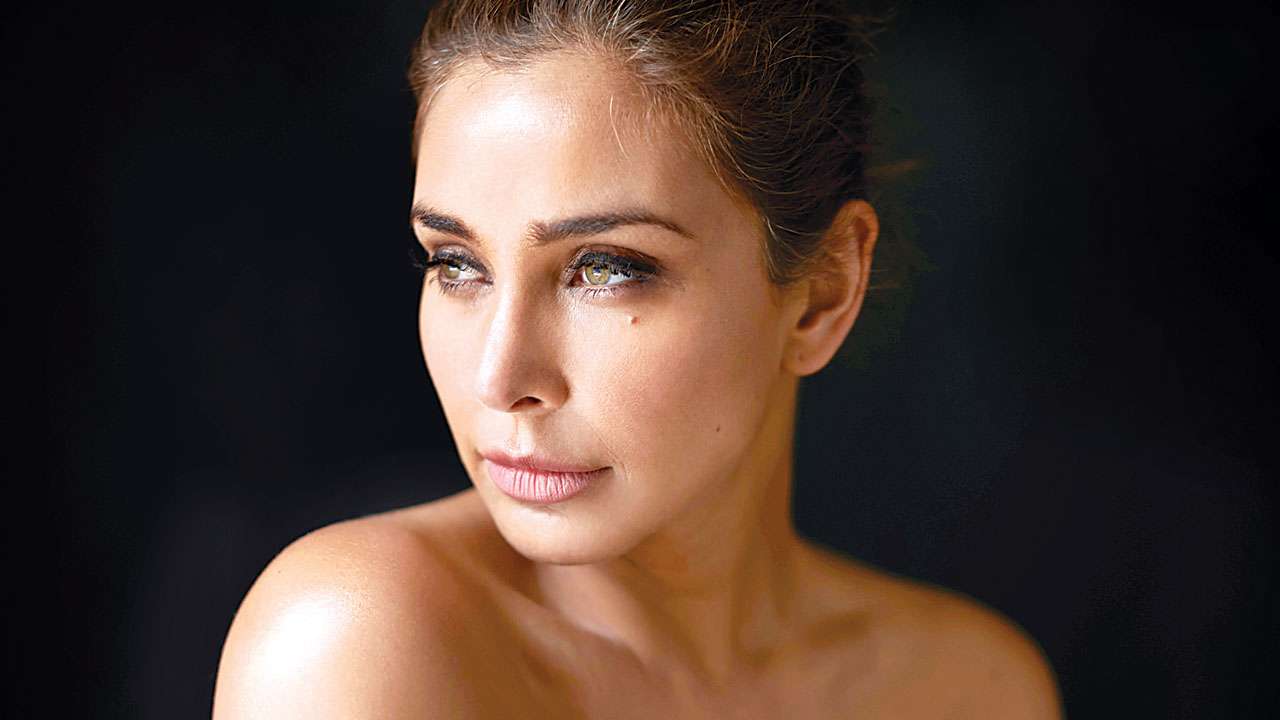
Deepali Singh (DNA; June 1, 2019)
When we compliment Lisa Ray on the emerald green ensemble she has on for her book launch event, the model, actress and now, author, tells us, “My friends were like, it’s your book launch, you have to wear something bright!’” It certainly highlights her light green eyes and we tell her that these days, there are awards for stylish authors as well. “That’s the thing, why can’t we be both, right?” she asks.
In a way, the cancer survivor’s entire life has been all about defying norms and fighting off labels. One of India’s first supermodels, the daughter of a Bengali father and Polish mother started her journey with entertainment at the age of 16. Close To The Bone is her insightful travelogue about her life-changing experiences, including her acting projects, her battle with eating disorders, being diagnosed with Multiple Myeloma at the age of 37, her spiritual quest, her heartaches and triumphs along the way. “There is no contract any of us sign that we are going to get through life without any problems. Yet, we have the tendency to feel ashamed about presenting what are perceived to be our flaws. For me, my flaws are what make me beautiful.
I believe we are more beautiful for having been broken. That is me today,” she states, pointing to the chemotherapy scar on her chest. “Sometimes during shoots, they ask if they should cover it, and I say, ‘Don’t, it’s part of who I am’.” Over to Lisa...
It’s been a while since we saw you on the silver screen. Are you open to acting in Bollywood projects or doing web series?
I am a part of the web series Four More Shots Please. That was a great experience. Then, I have A R Rahman’s film 99 Songs. I only do the projects that really interest me because it’s my time away from my family and my writing.
Writing’s always been a part of your journey, right?
Always, since I was a child. I’ve only been delayed by 30 years! (Laughs). That is also one of the motivations behind writing the book, to explain this slightly surreal trajectory that my life has taken. Having said that, I have some stories to tell now and some experiences under my belt, so perhaps I will be a stronger writer for it. My entire career is literally an accident on many different levels. Entering the entertainment business in India has definitely been an accident. Also, it’s hard to understand because today’s entertainment world has changed so much since 1991, when I started. It wasn’t such a machine as it is today. So I thought it’s a worthwhile story to tell. Of course, it took me away from what I think is my primary passion and calling – writing. But I never stopped writing. I have been compulsively writing — journals, notebooks, poetry, articles for magazines. I literally have stacks and stacks of cardboard boxes from the last 20 years of my life!
So there’s a lot more to expect from you?
Yes, and it has helped a lot when it came to writing this book. Eventually, I would like to write fiction. I’m an observer. I create a back-story for strangers and I’m an introvert by nature. That’s my comfort zone and that’s how I process and understand the world around me.
What’s the idea behind the title of the book?
It’s an intriguing title, which I think, works on a few different levels. As a writer, it interests me. I am as taken by how a story is told as the story itself. Each and every sentence I wrote in the book, the title ended up being a manifestation of that. It’s a little bit lyrical and enigmatic and a little hard to place. Also, it’s a play on words, considering I was diagnosed with bone cancer and I have lived a life close to the bone. It implies stripping away a lot of peripheral stuff. But it’s open to interpretation and that’s also what I wanted.
What has been the takeaway for you as the author of this book?
For me, it’s a chance to connect, to reveal, to take control of my own narrative. Having been in this business for as long as I have — having started very young and having developed as woman in terms of my voice and my authenticity — I still am labelled. It’s a double-edged sword to be successful in the glamour business. You invite all the things that people consider define success — fame, money and reputation. On the other hand, you are boxed. People actually feel angry and threatened if I don’t conform exactly to those perceptions of me, over the years. My personal journey has always been about defying perceptions and labels. I was born a rebel and that’s come from my parents. So, the book is an opportunity for me to define myself as I feel. The book is a revelation for me, probably the most creative project I have ever been a part of in my life, even bigger than a film release.
With your husband Jason by your side and your twin daughters, Sufi and Soleil, do you feel more settled and sorted now?
There is less restlessness, perhaps. I was chasing answers, love, wholeness and I found them all within myself. I married the most incredible man but that happened after I started loving myself. I wasn’t looking for him to complete me. Everything else has fallen into place. I decided to become a mother at this age in my life because I knew that I was whole and fulfilled and I could be a good mother. I did it at the time it was right for me, because I had healed myself and I was ready to be able to give as much as take. But yes, I do get restless. I have a lot of ambitions. I want to be great writer. I want to win the Booker prize! And I don’t see that as a contradiction to who I am. Why can’t I be both?
Ayushmann Khurrana asked me, “What’s more important, your life or breast?”-Tahira Kashyap
8:34 AM

Without #selflove, Lisa Ray and Tahira Kashyap say they wouldn’t have survived cancer, found humour in bleak disease arithmetic or felt beautiful in radically altered bodies
Aastha Atray Banan (MID-DAY; May 19, 2019)
A small suitcase plump with makeup sits behind a chair at Taj Lands’ End’s House of Nomad. The stylist follows our gaze, and says, “She doesn’t need too much of it.” Lisa Ray is propped up on a high stool, speaking of being comfortable in her new skin. Tahira Kashyap, who has been listening to her, calls her hot in the way that a fan would. Ray cracks up, shaking her arm to prove she has bat wings. “Where? What!” Tahira goes, “She is so hot!” Kashyap has enjoyed the preview excerpt she received of Ray’s memoir, Close To The Bone. She has sent her a text message saying so, which Ray seems to have missed in a barrage of book promotion sessions. “Check your phone, right now!” Kashyap demands.
They stand shoulder to shoulder, peering into the phone screen; Ray in a black drape with a white streak of tie and dye, Kashyap in a white-black polka dotted wrap dress. They are twinning, without realising it. As they speak over milky tea (“I like a little bit of tea in my milk,” says Ray), they discover other connections, including an affinity for practicing Buddhism and thumbing their nose at morbidly bad news.
Ray has an interesting body of work behind her, including Deepa Mehta’s Oscar nominee Water. Kashyap, who directed the well-received Toffee, a short film about unlikely friendships, is married to actor Ayushmann Khurrana, and is working on her feature movie, to be produced by Atul Kasbekar and Tanuj Garg.
They talk a lot, and laugh more, admiring each other’s resilience and commitment to trashing myths around women and cancer. Ray has survived multiple myeloma, a form of blood cancer, which she announced to the world at the red carpet of Toronto International Film Festival in 2009.
Using her fame for cancer advocacy also extends to interviews around the memoir, just as Kashyap has leveraged her public image to document her recovery from ducta carcinoma in situ, since she was diagnosed last September.
mid-day: In the book, you say you asked the doctor if he’d like a glass of water when he revealed the diagnosis, and you didn’t react.
Ray: He looked stressed at my reaction. Maybe he expected me to bawl.
Kashyap: My first reaction was funny. I had been feeling like my right breast was heavy, and had experienced a secretion. The gynaec asked for a mammogram and ultrasound, but the radiologist said, ‘you have calcifications in your breast, but you are just 35 and have two kids. You don’t need it’. He sent me back. The gynaec said it could be a mammary infection, and, to be sure, sent me to an expert who I didn’t know was an oncologist. When I saw oncology written outside the department, I said, ‘WTF!’ Then, the doctor shared data with me.
Ray: Oh my god, statistics!
Kashyap: He said I had a two per cent chance of acquiring breast cancer. After the mammogram, they found more calcifications, and it went to 30 per cent. Then I went for an MRI, and they found a sort of shadow at the back of breast, and it became 70 per cent. It was 90 per cent after the biopsy. It was stage 0 cancer, but aggressive and had spread all over the breast. There were so many people around me when I heard the news. We are conditioned not to react. But when my husband and I were back alone in the hotel room in Delhi, my first reaction was, “Behen****, lag kayi!” And we laughed. But, when I was told I needed a mastectomy, I had no joke handy. Ayushmann made me realise, it’s only remedial treatment. “What’s more important, your life or breast?” I really wanted to say to him, ‘my breast!’ It’s associated so strongly with femininity. But, as we went along, I realised my body doesn’t define me. I got reconstruction surgery, of course, but my view of myself had changed.
Ray: It’s funny what bothers you when you are diagnosed, the little things. I used to cope with it by laughing, and writing. But, what killed me was getting a port [disc and tube transplanted in the chest to connect to a major vein typically for chemotherapy and transfusions]. My veins were hard to find, so this helped. I still have it.
Kashyap: Hey, I had one too! Right here (points to right side of chest). While I was on chemo, I attended a panel discussion where one woman said she had rejected drugs and was using some alternative Chinese herbs. I think that takes balls. My cancer was aggressive and malignant, so I am gald I took the drugs. But I realised that I had very little information and control over how my body worked. I still don’t know whether it’s good to eat one thing or another. I’m off dairy and gluten right now.
Ray: I got over with medication in 2010, and was on maintenance therapy. I wanted to go off drugs completely, but two years later, I had a relapse. I saw it as a sign, that I needed drugs and something else. Because in cancer, no one ever talks talk of nutrition. I went to a retreat in Florida that explores how nutrition can reverse disease. So, suddenly, you have an instruction manual for your body, like you would for a gadget. That was a big takeaway.
mid-day: How did the condition change your notion of beauty?
Ray: Just to be able to live is a win. I had always been deeply affected by the fact that I was defined by beauty. And so, I chose a moment on the red carpet to declare my fight against cancer. I was 40 pounds overweight due to steroids. I said, I am going to fight this, and that moment, broke the spell of the pathology of perfection. The images we see today on social media and in magazines don’t exist. When I started modelling, there was no airbrushing pictures. I posted pictures of myself with no hair, and it didn’t matter. Nothing matters when you are fighting for your life. I am happy now to be who I am, comfortable in this new skin (jiggles her arms and laughs).
Kashyap: You have so much to deal with physically that you try and win the fight mentally. People offered me so much love online, and their validation gave me energy. My parents had freaked out. When I went bald [she grew tired of wigs and decided to come out with a clean pate], my mother said she’d meet me when I had hair back on my head and cut the call. I called her back, this time on Facetime. There is no escaping me. I was resilient when it came to self love. I remember a time a few years ago when I’d be insecure because there were many gorgeous women around my husband all the time, and now I was posing bald on social. I was photographed barebacked, the surgery cut snaking around. I genuinely felt cool. And my practice of Buddhist chanting helped. Strength suddenly kicked in.
Ray: I practice Buddhism too! Tibetan Buddhism. I spent close to six months at a retreat in Dharamshala.
Kashyap: Really? It has helped me immensely. It’s about being happy and I had made up my mind that I would be. I was a negative person three years ago, and I’m not sure how I would’ve dealt with this challenge back then. But Nichiren Buddhism made me stop being the victim.
Ray: My doctor said to my husband, who wanted to know more about the disease after we met, that life expectancy in multiple myeloma was eight years, according to statistics. He was worried. It meant I had four more years to go. This was in 2012. But I wouldn’t believe anything they said. My practice had made me resilient. Everyone should find some sort of practice that resonates with them, and creates a cushion when needed.
mid-day: Lisa says she is wary of the “war imagery around cancer”. But, for you, Tahira, hasn’t it been effective in blunting a disease whose idea can kill before it actually does?
Ray: (Interjects) No, let me explain. Warrior, yes. That’s an incredible imagery. I think that’s really important...
Kashyap: Yes, it’s not really a fight. It’s more about awareness.
Ray: The problem with saying fight is that you are speaking of something outside your body. How can you fight against your own body? That’s not the way forward in healing. The disease is inside you. For me, it was about accepting and building my immune system.
Kashyap: The fight is against taboo and stigma. A very close family member said to me, ‘now that you’ve been diagnosed, don’t speak about it’. I was told by the doctors that women who know about their cancer don’t speak up or seek treatment due to shame. That’s unacceptable. Then, there are those women who will agree to chemo, but not to a mastectomy. What I’m saying is, get your tests done, take caution. Do it for your kids.
mid-day: Lisa has often spoken about working towards reaching a space where she has strength and energy, which she owes the children. Where does motherhood feature in the fight against cancer?
Kashyap: I never felt something bad was happening to me or that I was going away anywhere, and so that mamta never kicked in! Yes, I was in the hospital for seven days, so I told my children that I was coming back with two stitches. But they had no clue. It hit my son when I went bald, and he asked me not to come in front of his friends. But I did to him what I did to my mother. I came in front of them and said, ‘hello everyone!’ I normalised my condition. The next time he seems someone bald, he won’t think it’s embarrassing or weird.
mid-day: Have there been moments of loneliness?
Kashyap: We are all connected. We need a support system. People are very essential. I value every person I come in touch with now.
Ray: I’d add to that by saying there were so many instances of random kindness that I encountered. It was from people I didn’t even know. And when I’d ask them, what can I do for you, they’d all say, pay it forward. I have tried to do that, make that the theme of my life.

Sufi and Soleil, Ray's children join them. LOCATION COURTESY/TAJ LANDS END COFFEE SHOP, HOUSE OF NOMAD

Make up is the uniform I wear to go to work-Lisa Ray
8:33 AM

In her first book, and hopefully not the last, Lisa Ray survives misconceptions, toxic relationships, multiple myeloma and more
Aastha Atray Banan (MID-DAY; May 19, 2019)
We might just have yet another promising writer in a Bollywood actor, we think, after negotiating Close to the Bone, a warm and detailed memoir by Lisa Ray that releases tomorrow. People are often, not what they seem - Ray, for one, has acquired far more formal acting training than we imagined - and life is as much happy and morbid for the famous as it is for the average Joe, you realise. The "dreamer gypsy", encouraged by her Bengali father and Polish mother "to keep flying" discusses learning to act, finding and losing love, negotiating an eating disorder and surviving a rare form of blood cancer in an intelligent, inspiring personal story. Edited excerpts from the interview.
The book is vastly detailed. How long did it take to write?
I was first asked to write in 2010. But I had a block, more than just a writer's block. I needed to digest my life a bit more. It's my debut, and I have more at stake than if I was doing a movie. I was an accidental actress, but always wanted to be a writer. I have come back to it [the dream] now.
Your mother calls you and your father "dreamers", but your mother's drive is evident in your person. Who are you more like?
We become our mothers, and I have embraced the reality. I cherish it today. I didn't know what the entry point to my story would be, so to trace my own impulses and decisions, I had to go back to my parents. They are the original rebels. I am practical like my mother, and switch to being creative when I act. I picked up my love for literature from my father.
You talk about never fitting in, and glorifying your differences.
Yes, that's why writing this book was important. It was hard to live like that, waiting for societal validation, for so many years. I have been wanting to live my own truth.
For someone who has for the large part of her career been seen as a hot model, you've spent a lot of time studying acting. Did you stop trying to be taken seriously at some point?
It's an ongoing struggle. The fame happened when I was very young, and unexpectedly. I have a problem with being perceived as uni-dimensional. I have put on shooting make-up and I am talking about my book, which is a serious piece of writing. Why not? When I get glammed up, and transform, it's like a person putting on a suit to head to work. It's my uniform. At one time, I would dress as raggedy as possible, to say, you don't know me. Today, even with make-up, I feel naked.
You talk of Bollywood as being a Gatsbyish world.
It was like the crazy tea party and I was Alice. I was being courted by everyone. Nobody understood that I was just 16 [when I was introduced to films] and that I was dealing with the personal tragedy of my mother's accident. I was coveted, but I had tragedy [to deal with]. So, was I successful? I had to confront that question at 16. It somehow helped me go beyond the idea of success.
You've invested a few beautiful paragraphs discussing the passing of your mother and the idea of grief. Has your idea of death changed since?
It's the great mystery. I don't embrace it, but I don't see it as a great fear. My Tibetan Buddhist practice is about rehearsing your death. As an actor, you prepare for a role, and it's the same with death. My practice has helped me. I ask everyone to contemplate their death because it takes away the fear. If you avoid [the thought of] it, it may overpower you.
What's next for you?
I certainly hope to write more books. I already have an idea brewing in my head. I will continue with my cancer advocacy. I will also be in front of the camera, and spend time with my family. I just hope this writing debut will mean I spend a lot more time writing.
In my mind, the real me could never live up to the glamorous girl on the billboards-Lisa Ray
8:21 AM

Model and actor Lisa Ray on why she decided to write a no-holds-barred memoir instead of an account on dealing with cancer
Anjana Vaswani (MUMBAI MIRROR; May 19, 2019)
One afternoon, I was having coffee in a suburban five-star hotel coffee shop. I was sitting on my own, hiding in full view in a ripped t-shirt, my hair in disarray. I eavesdropped on a conversation between two young men at the table next to me. I could sense their curious glances out of my peripheral vision... ‘Hey, look at her. She’s not bad, huh’ [one of them said, in Hindi]. The other guy regarded me coolly and asserted, ‘She’s okay.’ He turned back to his friend, ‘But, she’s no Lisa Ray.’
This scene, which makes it into Lisa Ray’s memoir (to hit bookstores tomorrow), played out in the mid-1990s — an era marked by such brazen prudery and hypocrisy, that while kissing scenes were still deemed offensive in films, Ray, just a teenager, shot to fame when she wore a risqué red bathing suit and appeared on the cover of a glossy magazine, run by Maureen Wadia.
The exchange at the coffee shop amused her to no end then, as it does now. Looking back, Ray, now 47, believes it also captures how she felt at the time. “In my mind, the real me could never live up to the glamorous girl on the billboards… that me did not exist,” says Ray, who struggled with body image issues — which manifested in bulimia — while the world around her came to define her as a “sex symbol”.
Now, in a voice that’s startlingly honest, Ray tells her story in Close To The Bone (Harper Collins), a biography that she says has been in the works for 25 years. Sitting in the living room of her Bandra apartment, which is awash with sunlight, Ray appears calm and even has a spring in her step as though she’s recently been relieved of some weighty emotional baggage.
Ray’s is, after all, a journey of incredible highs and lows — from an accident which left her mother paralysed just as she was getting her first taste of success, to battling life-threatening cancer, which relapsed soon after her marriage in 2012, to last year, when she became a mother of twin girls via surrogacy.
Through it all, Ray says, she had been acutely aware that hers would be a story worth telling someday. “I have this unique ability to both be in a situation, and also watch as it unfolds,” she says. So, when she first put pen to paper, she had a trove of mental snapshots to rely on — “Distinct memories of the way someone moved their hands as they spoke, or the reflection on a glass picture frame…”
She also obsessively kept notes — she stowed away boxes and boxes of diaries, which she’s maintained since she was 14 or 15. The trips to Mumbai from Hong Kong, where she’s been living for the last four years, “helped me to draw on memories”, she says. “The sights and smells of Bandra would help take me back in time.”
The result is a powerful narrative, in which Ray has not just embraced her past, but made peace with it. What this book isn’t, however, is a story about her dealing with cancer — the book the publisher had originally commissioned her to write, based on her blog The Yellow Diaries, which chronicles her experiences with multiple myeloma, a cancer of plasma cells, which she has been receiving treatment for since 2009.
“How could I write about the disease in isolation from the rest of my life, when I truly believe that its seeds were sowed earlier on,” says Ray. An old entry on her blog reads: “A few months ago my bone marrow started sending me messages…. The attempt to communicate probably started earlier. Time when I was ‘busy’. Building a career and impersonating myself… So I couldn’t hear my marrow gently carbonating. Trying to get my attention. Instead of tuning in to my body, I tuned out like a landlocked pirate tuning out the sounds of the sea.”
“I felt that I had to tell my story in its entirety, and fortunately the publishers were very supportive,” she says. A six month extension stretched into eight years. “Something prevented me from moving forward, and I realised I needed to digest my life first,” says Ray.
The manuscript she finally turned in, a day before the birth of her twins, Sufi and Soleil, in June 2018, is a beautifully written and deeply introspective account. Ray deftly weaves between a childhood spent in Canada and Kolkata, the influences her Polish mother and Bengali father had on her and the events that helped shape her life. The account is also audacious. Ray has opened up about her conflicted relationship with Wadia and other prominent celebrities, and also heaped the book with generous doses of deeply personal conversations and anecdotes.
For instance, Ray quotes designer James Ferreira who once told her: “I designed something these stupid Indians will not understand. I wish they would just open their eyes to beauty and stop being so conservative because everyone is sucking c**k anyway,” she writes. She has also candidly detailed her own indiscretions — an affair with a married man and when she lashed out at a watchman — but Ray thinks nothing of this. “I haven’t made anything up,” she says, comforting her 11-month-old daughter who has just woken from a nap.
“Besides, there is compassion at the core of my writing and I think that should smoothen out any rough edges. That, and the fact that a lot of these incidents happened 25 years ago,” she says. “Part of this has been about removing masks. Masks are sometimes necessary in the profession I am in, but I have always found it easiest to be truthful.”
Ray admits that her transformation is not quite complete yet. “I still have my days,” she says. “But, I am more comfortable in my skin now than I’ve ever been.”
Subscribe to:
Posts (Atom)