Showing posts with label Cinepolis. Show all posts
Showing posts with label Cinepolis. Show all posts
Exhibitors say Dharma Productions demanded 60% profit share for Ramayana; worry it may set a bad precedent
10:08 AM

Priyanka Sharma (MID-DAY; October 21, 2026)
Around 6.30 pm on October 20, the makers of Ramayana: Rise Of A Legend announced that the movie’s advance bookings had opened in leading theatre chains, removing the cloud of uncertainty that loomed over the Ranbir Kapoor, Sai Pallavi, and Yash-starrer in the preceding hours. The delay in the advance booking’s opening, it turns out, was due to a tussle between the exhibitors and Dharma Productions, which is the North India distributor of filmmaker Nitesh Tiwari’s magnum opus. Dharma Productions reportedly demanded a 60 per cent profit share for the first week, in a departure from the usual 50-50 per cent share between distributors and exhibitors.
Happy that the exhibitors and the distributor found common ground, leading to bookings opening in PVR-Inox and Cinepolis, exhibitor Akshaye Rathi told mid-day, “The commercial terms that have been agreed upon are on similar lines as those in the case of event films. The negotiations with the rest of the theatre chains are underway.” It’s not known yet if the exhibitors agreed to Dharma’s demands or the latter relented.
But one thing is for certain — the demand has left the exhibitor community worried. Bihar-based exhibitor Vishek Chauhan shared, “Dharma was trying to arm-twist cinemas by saying, ‘This is a big film. We have paid a bomb [to buy it], now you pay us more in the first week.’ Assume the film makes Rs. 300-400 crore in the first week, Dharma will generate anywhere between Rs 25-30 crore of extra revenue. In the second week, they are asking for 50 per cent share. My contention is that if Ramayana merits a 60 per cent profit share because it’s a big movie, then how much should we pay Udta Teer, which is [a smaller film] distributed by Dharma? Then we should give a low share to them.”
Chauhan further argued that such a demand may leave exhibitors open to being arm-twisted by bigger players in the future. “Avengers: Doomsday is a bigger film than Ramayana. So, should we pay the distributor 70 per cent? Should we give 65 per cent share to Shah Rukh Khan’s King? One film cannot destroy a set [practice].”
Jailer 2 4 week OTT row: South film producers in thrall to streaming deals
10:01 AM

Jailer 2 producers’ refusal to extend theatrical window in north throws spotlight on financial risks, multiplex revenues
Rajesh N Naidu (THE ECONOMIC TIMES; October 19, 2026)
Mumbai: Superstar Rajinikanth-starrer Tamil film Jailer 2 has skipped a Hindi theatrical release in leading multiplex chains PVR Inox and Cinepolis in northern India after its producer refused to extend the theatrical window from four weeks to eight weeks.
This standoff highlights southern producers' growing preference for the certainty of lucrative streaming rights deals over uncertain box-office returns.
With streaming deals increasingly compensating for lost theatrical revenue, a Hindi release for southern films is becoming a calculated commercial decision rather than an automatic part of a pan-India film strategy, producers and trade analysts told ET.
Some said by choosing not to take a financial risk, producers could be harming the overall ecosystem.
Increasingly, southern films have travelled to the hinterland of North India thanks to subtitling, faithful and fairly accurate and evocative dubbing, and social media discussions around them. Today, the northern market can contribute 10-50% to pan-India focused southern films depending on how well they resonate with audiences, they noted.
"When a film runs for eight weeks in theatres, everyone gains in the ecosystem," explained Devang Sampat, managing director of Cinepolis India. "Producers get bigger box office and a new market for their stars that carries into their next films. Also, a film is worth more when it goes to streamers."
South-based veteran film trade analyst Sreedhar Pillai also said, "Jailer 2 could have done extraordinary business if it had been released in national multiplex chains which account for nearly 70% of Hindi films' box-office collections."
Of its total India collection of Rs. 145 crore, Jailer 2 earned Rs. 10.9 crores from Hindi dubbed, which has been released in stand-alone theatres and smaller, regional multiplex chains. Interestingly, its Hindi dubbed collection jumped to Rs. 4.5 crores on the third day from Rs. 2.9 crores on the second day, indicating rising interest from Hindi audiences.
Haldiram provided Rs 1.25 cr towards P&A, reveals Hanuman Ansh producer Namrata Singh
5:01 PM

Rajesh Naidu (THE ECONOMIC TIMES; October 16, 2026)
In 2026, a film which has debunked many myths around Hindi cinema is Hanuman Ansh. Myths such as increasing aversion among audiences to watch films in theatres, only stars can pull audiences to theatres and small films can not get space in theatres have been broken by the film. Made on a modest budget of less than Rs. 3 crore, the film collected close to Rs. 340 crore (net collection) at the box office (the film is still running in theatres).
ET spoke with one of the producers of the film Namrata G Singh tounderstand the story behind the making of this great blockbuster.
One of the favourite expressions of Singh is Intellectual Property (IP). This expression does not seem out of context or radical. It is in sync with times. IP does not just mean business control. It means creative control. It means preserving the purity of a vision and achieving it. The underlying current throughout the conversation is she is particularly focused on preserving the purity and sanctity of her approach to her creative ventures.
Singh is one of the biggest proponents of adapting, sharing and spreading the Indian experience to the world. This is because this is where lies the foundation of her personality. She wants to share Indian stories rooted in spirituality and the wisdom contained in it. In this interview, Singh also explains how the Genz audiences view spirituality in today’s uncertain times. She also shares how she along with her collaborators overcame the challenges involved in making Hanuman Ansh. Edited excerpts:
Could you talk about the IP studio SacredIP Trans Media Tech?
SacredIP Trans Media Tech aims to take Indian cultural stories to audiences around the world. I grew up reading Amar Chitra Katha comics and spiritual books published by Gita Press. I also once ran a comic-book company called Division 91. My inspiration comes less from the West and more from our own stories, cultural milieu and emotional vocabulary. All of these are reflected in the Navarasas.
The question for me has always been how to take these stories to a global audience. A story can be told through cinema, animation or any other format. Since 2017, I have been actively exploring how to build and reimagine businesses around Indian stories for the global market. My role is to protect intellectual properties (IPs), nurture them, and keep them relevant across formats and generations. I believe Indian stories are global assets. We have a responsibility to keep them alive for successive generations.
Some of the early IPs I developed included The Sufi Route. I collaborated with music director A R Rahman and Shital Bhatia of Friday Filmworks on the IP. Launched in 2017, these were music and event-based IPs. Building intellectual property has been a key thing for me. I worked in various capacities in big media and entertainment companies such as YRF (Yash Raj Films) and Sony. These experiences taught me how to develop and own an IP.
How did you apply these experiences to the film Hanuman Ansh?
My approach is rooted in the belief that creative works require an understanding of emotion and psychology. Owning IP allows you to carry a particular sensibility to audiences across generations. Regardless of a consumer’s age, you must think long-term. You must consider how a story can evolve across different formats. This is an approach found greater visibility in the success of Hanuman Ansh.
I have been a devotee of Neem Karoli Maharaj. Even our film’s director Vishal Chaturvedi is Neem Karoli Maharaj’s devotee. So, our shared devotion to Maharaj ji was the driving force behind the film. Vishal has been Maharaj ji’s devotee for twenty years. I have been a devotee for fourteen years. On my birthday last year, we realized that Maharaj Ji was a common thread between us. We simply asked ourselves what we could do. Then, we mutually decided to tell Maharaj ji’s story. We did not initially decide to make a film.
As we explored the idea, we realized that Maharaj Ji was such a cosmic, larger-than-life figure that cinema was a natural medium for telling his story. We also felt that his story was, in essence, a Ram Katha. It should first reach devotees who could experience it together in groups. These were instinctive and deeply human decisions. At every stage, our intention was to do justice to the story and share it with people. We were guided by that purpose and not by an industry report, an Excel sheet or a numerical model.
Could you talk about the challenges in the making of the film?
We intended to tell a small story and take it to people who love Maharaj ji. In our minds, it was a relatively modest undertaking. However, the process of bringing it to life was extremely difficult. One of the biggest challenges was the production and financing structure. We received what I would call ‘slave contracts’ from prospective co-producers. We were looking for funding. Contracts offered to us were structured as co-production agreements rather than intellectual property (IP) agreements. The industry people do not have sufficient understanding of IP ownership in the way we were trying to approach it. So, I kept asserting that I was an IP owner and that my co-founder, Swambu, owned the IP associated with Hanuman Ansh. This included authorship, ownership and the broader structure required to protect the property. We were offered co-production agreements in which we were expected to effectively give away our rights for a relatively small amount.
These arrangements did not consider the sensitivity of our story, the need to protect its creative integrity, or the emotional and psychological connection to the lived reality of Maharaj ji. I realized that although we often describe ourselves as creative people, we are essentially operating in a trading environment. For authentic storytellers, this transactional mentality can be deeply disappointing. It takes a toll because you are trying to tell a story in a particular way but the people negotiating with you do not necessarily understand or respect that intention.
Vishal and I, as co-founders, understood the film and its sensibilities best. However, our understanding was not given the required importance. This is because Vishal had not directed a film before. Even I had no experience in producing a film. We secured financing through two individuals who also came on board as producers. Ragini Sona supported the production. Anupriya A Nagar, the daughter of the UK-based financier Anshul Nagar, financed the post-production. Their support was important. Today, the film’s IP is fully secured by us.
Are there plans to release the film in other languages and formats?
Yes, we are now expanding the property into other formats. We are working with influencer-investor Vishal Gondal, who built fitness technology company GOQii, on a game called Hanuman Kavach. Vishal is also a Hanuman bhakt. We are developing accessibility features so that the film can be experienced by people who are deaf or hard of hearing. We are also working on different language versions. We do not yet have an English version. We would also like to develop a Sanskrit version of the film. There are also discussions around the animated version of the film. We are also thinking about the live music of the film. These things were possible because we never approached the film as a project. We saw it as an intellectual property through which Maharaj ji’s energy could be carried across formats and age groups. Our responsibility is to preserve that essence. If we can keep it intact, everything else will take care of itself.
Who owns Holy Cow Home Production?
Holy Cow Home Productions is Vishal's (the film’s director Vishal Chaturvedi) company. It is one of the production companies which produced Hanuman Ansh apart from Swambhu Media Network. Swambhu Media Network was founded by Vishal and I. Swambhu Media Network owns the Hanuman Ansh IP. The ownership and authorship of Hanuman Ansh reside within a private limited company because we always envisioned this as a long-term undertaking.
How did you plan to distribute the film and reach as many audiences as possible?
We created this film because we believed there was no other story in the world that explored Maharaj ji's childhood in this way. We understood that it would be a slow burn. We knew audiences will discover the film over time. Even if the film were made available on YouTube across many languages, it could generate revenue over a lifetime. Most people do not think that far ahead. However, for us, this film enterprise was never simply about money. If I want someone in Korea to watch the film, they should be able to watch it dubbed in Korean. Since we did not have the resources upfront, we had to plan for the long term. Many of our decisions were shaped by those constraints.
So far, most of the revenues have gone to distributors and exhibitors. We have yet to explore OTT, satellite television and other distribution avenues. But we were always clear that this was a timeless film that people would continue to watch digitally for generations, across languages and cultural contexts. Our responsibility is to make it accessible to them. Theatrical release was the first step. The non-theatrical distribution will be the second. We also intend to explore different language versions. Besides this, we also intend to explore digital distribution through subscription-based and transactional video-on-demand models.
Do you have any non-traditional ways of making the film available to its audiences?
Yes. Today, a fundamental question for us is: Why should content creators always depend on platforms and intermediaries rather than develop direct-to-audience models?
Therefore, group viewing is another possibility we are exploring for a film like this. All these possibilities were part of the film's DNA because we approached it through the lens of intellectual property (IPs) and not merely as a film. The film was the first step.
We also want to collaborate with some of the best talent in the world. We intend to collaborate with best animators, game designers, non-theatrical technology specialists and direct-to-audience experts. Each of these represents a distinct area of work. For instance, artificial intelligence has not yet been developed with an understanding of the Navarasas and their application to Indian storytelling. Much of the existing AI ecosystem has been shaped by Western perspectives. We lack sufficiently Indianized AI systems that can understand and work with these emotional frameworks. We want to explore this in the context of our film.
If we are talking about an Indian film rooted in our identity and taking stories of our saints to audiences around the world, we should be thinking on a much larger scale and for the long-term. Traders tend to look at a five-to-ten-year horizon rather than in terms of perpetuity, legacy and long-term value of intellectual property.
Could you talk about other producers? How did they come on board?
One of the film’s producers Ragini Sona is Vishal’s friend. They have known each for a long time. They used to recite the Hanuman Chalisa together as part of a Hanuman club they ran. So, when we needed funding, Vishal approached her. She is an experienced producer. Her insights were valuable. When nobody else was willing to invest, Ragini offered to contribute Rs. 50 lakh on the condition that someone else matched the amount. When no one came forward, I invested Rs. 50 lakh from my mutual fund savings. That is how we managed to complete production.
We needed additional funding for post-production. That is when Anupriya Nagar came on board as an investor.
We had a shareholders' agreement. The arrangement was structured around the four of us with each holding a 25% share in the IP along with a three-year lock-in period and other agreed terms.
What was the total budget of the film?
The film was made at a total cost of Rs 1.7 crore. Haldiram provided Rs 1.25 crore towards prints and advertising (P&A) as part of the co-production arrangement. Of the P&A budget, we spent approximately Rs. 65–70 lakh on marketing with the remaining amount going towards the release. We wanted to ensure that the film remained in theatres for three weeks, which involved an additional expenditure of over Rs. 40 lakh. The overall expenditure, including production and P&A, was approximately Rs. 2.95 crore or close to Rs. 3 crore.
Now let us talk about the film. How did you develop the film’s structure?
One of the biggest challenges in telling Maharaj ji’s story is how to portray his leelas. How do you represent these experiences without reducing them to miracles? We wanted to avoid presenting the story simply through the lens of miracles. For us, it is fundamentally about faith. The film has clearly been made with conviction, faith and good intentions. It does not feel as though it was created to cash in on or exploit someone else’s faith. That sincerity comes through.
When we set out to make the film, we had one simple principle: Maharaj ji’s story could only be told through the experiences of his devotees. The nine stories in the film are real. We brought them together within a particular narrative structure and gave the film a central idea.
What was the central idea of the film?
The film’s central idea is an exploration of the Hanuman Chalisa and its Ashta Siddhis (eight powers). We were telling the story of a man who became a saint over time while remaining a grihastha saint. These were our guiding principles: the Ashta Siddhis, the interpretation of the Hanuman Chalisa, his identity as a householder saint, and his journey from the age of 11 until 1942. We had conceived the project as a trilogy from the beginning. The first film tells this part of his journey, the second was intended to explore Kainchi, and the third would focus on a foreign devotee. Ultimately, you are telling a story that you have lived. I could not make a compelling film about Guru’s love if I did not have personal experiences.
Our primary focus was the bhaav or the underlying emotion and essence. His personality emerged well through the storytelling. He is not portrayed to be a perfect man. He is as flawed as any of us. He left home after his mother’s death. He discovered his sanskaras. He became a saint. And then, he married, had children, served as the mukhiya of his village, and built 108 temples during his lifetime. He undertook significant work in the external world. In his internal world, his life remained centred on the constant chant of “Ram Ram,” Ultimately, we wanted to draw attention to that inner experience—to what is happening within him as a person.
What was your approach towards achieving these lived experiences?
For me, storytelling is an act of transferring empathy. That transfer becomes difficult when you have not experienced or understood the reality you are trying to portray. This is also why I see the film as an intellectual property rather than merely a film. I cannot sell my sensibility. I can curate it, protect it and bring it into the world through different forms of storytelling.
Vishal and I are fortunate that we lead relatively simple lives and do not place too much importance on status or material possessions. That gives us the freedom to make certain choices. Once you become preoccupied with money and status, your cost of living rises, and you may begin making compromises that are not true to your work or your larger body of work.
What people may not fully recognize when they assess the film is how the film beautifully marries emotional quality with artistic and technical elements. The bhaava (rasa or emotion) we have drawn upon is Shanta Rasa (the film’s dominant emotional experience: Peace). One experiences peace and tranquillity when one watches the film. These qualities are increasingly absent from today’s world. The feeling of peace that the film evokes can be powerful precisely because it is so uncommon. People have experienced Shanti (peace) through the film.
Throughout the conversation, you have been talking about IPs. It is very evident now. Funders are focusing on IPs which have built-in audiences. The recent Hollywood film Backrooms is a key example. Did you follow a similar approach?
Our response and approach naturally reflect our devotion towards Maharaj ji. Even though I am excited about the possibility of making a trilogy around Maharaj ji, it is not the sentiment that governs our intentions. We made this film with a particular vow and intention. I want to preserve that spirit. Ultimately, we cannot allow these conversations to become transactional or exploitative. Figures such as Maharaj Ji and other saints are not commodities. These are matters of values and responsibility. As storytellers, we are not merely creating content. We are also infusing values through the stories we choose to tell.
How did you navigate the challenge of dealing with exhibitors especially when the film has no known names? How do you convince them?
I didn't convince them. We showed the film to only two people before its release: Anil Thadani (one of the biggest film distributors in India) and Mayank Shroff (head, film programming from Cinepolis). Ultimately, we chose Cinepolis because the terms they offered made the most sense for us.
Vishal and I had initially imagined it as a small film intended primarily for tier-2 and tier-3 cities and rural India. We were not looking to release it exclusively in expensive cinemas. We wanted people to be able to watch it in smaller theatres with tickets priced at around Rs. 100 without feeling that they needed to belong to a particular economic class or dress a certain way to enter a cinema.
Cinepolis had a presence in the kinds of locations we wanted to reach. This was an important consideration. Our devotees come from different economic backgrounds. We did not want the cost of a ticket or the environment of a cinema to become a barrier in their experience of the film. We wanted to create a space where they could recite the Hanuman Chalisa and keep Maharaj Ji on a seat as a mark of devotion. We felt that Cinepolis understood and respected that sensibility.
Even PVR has been one of our strongest supporters. PVR's CSR division subsequently supported us by providing discounted tickets and food for underprivileged children, including children with cancer. We remain grateful for that support.
What convinced Mayank Shroff to back the film?
Apart from the film’s merits, we also benefited from the fact that Mayank is a fellow devotee of Maharaj ji. We didn't really have to sell it.
Today, we are seeing a lot of faith-based films being made. Do you think there is a section among Gen Z audiences which is returning to our roots or has become interested in spirituality? Bhajan clubbing is a case in the point.
I do not necessarily see this as a return to our roots. We need to understand that today there are three generations living alongside one another. Also, nearly 70% of India’s population is below the age of 30. Today, we are consuming spirituality through our phones. Earlier, one would get spiritual knowledge or understanding primarily through a temple visit, a book, a religious scholar or the wisdom passed down by our grandparents.
For younger people, this accessibility can spark curiosity and encourage them to explore these subjects more deeply. They do not necessarily accept every subjective experience at face value. They look for objectivity within subjectivity. Spirituality is inherently subjective. The sheer volume of information now available allows people to explore the relationship between science and spirituality.
I often describe the three generations in this way: our parents were thinkers and doers; we are thinker-doers; and the generation after us is a generation of imagination. I believe this younger generation is increasingly drawn to India's eternal beings: deities, spiritual teachers, gurus or saints.
But there are many young people in the audience who have liked the simplicity of the film. They are neither followers nor devotees. How do you respond to that?
Yes. Today, I think the pursuit of external markers of success—whether becoming a CEO, a footballer or achieving fame and wealth—is not necessarily bringing people peace. Many are experiencing anxiety, depression and other mental health challenges. They are beginning to question whether these conventional aspirations can provide the fulfilment they seek. This generation is therefore realigning itself with fundamental human values. The stories that resonate with them increasingly revolve around human endeavours. Cinema, which once focused on narratives at the scale of entire population, is now also exploring stories at a deeply human level.
Maharaj ji's story is an example of this kind of connection. It allows people to engage with his life and experiences at a personal level. The story has a global relevance because its appeal is human rather than geographically or culturally restricted. Not everyone can travel to Vrindavan or live in a temple town, so people are looking for other ways to experience spirituality and connect with these traditions.
I believe this generation is increasingly interested in contributing to society rather than pursuing only individual success. They have grown up with relatively greater access to basic needs such as food, clothing and shelter. Many are now asking what they can do with the opportunities available to them. If they choose to pursue something, they want it to have meaning. Today’s young generation is a generation of imagination. They are increasingly drawn to human endeavour and fundamental values. There is a common thread that connects us all: we are looking for peace of mind, meaning and purpose. I think this explains the growing interest among younger people in practices such as bhajan clubbing. We have grown up listening to kirtans and attending Satsangs, but this generation is finding its own way of engaging with these traditions.
I disagree with the idea that people turn to spirituality only when they are broken or looking for solace or an escape from their problems. I think that is a limited understanding of spirituality. Spiritual practices and rituals offer us a moment to pause in a world where we are constantly bombarded with information. Our minds are burdened by cognitive overload.
When you stand in a temple or participate in bhajan clubbing, your senses align with something deeper and greater than yourself. There is a certain loss of the individual self as you move from an ‘I’ to a ‘we’. That experience can make you feel good because it connects you to a shared sense of humanity. Any sensory experience that brings you closer to that common humanity is good for the soul. It reminds you that you are not merely a human being but a spiritual being having a human experience.
Our spiritual traditions are deeply rooted in respecting people for who they are rather than expecting everyone to be alike. We are not meant to be cookie-cutter versions of one another. The current young generation is discerning. This generation can see through performance, pretence and public relations. If you offer young people something genuinely positive, they will recognize its value and embrace it. They do not necessarily need to be experiencing a problem to appreciate what spirituality has to offer. We should give this generation credit for its ability to distinguish what is meaningful from what is merely performative. Ultimately, much of the film’s success can be attributed to the growing word-of-mouth communications and recommendations.
Cinepolis India slips to Rs 61 cr loss in FY25
9:30 AM

Javed Farooqui (THE ECONOMIC TIMES; November 6, 2025)
Multiplex operator Cinépolis India slipped into the red in FY25, posting a net loss of Rs 61 crore against a net profit of Rs 32 crore in the previous year, showed company filings sourced by Tofler.
Total revenue declined 7.5% to Rs 1,284 crore from Rs 1,388 crore. Other income plunged nearly three times to Rs 16 crore from Rs 43 crore. Expenses remained largely flat at Rs 1,345 crore.
FY25 was a difficult year for multiplexes. While Hindi films underperformed, footfalls hinged on a few big releases. This led production houses to defer new projects, thinning the release slate and slowing the content flow.
Delays in Hollywood releases added to the strain. Prolonged writers and actors strikes disrupted global releases, and although films from the South brought some relief, they could not fully offset the shortfall.
Cinépolis India, owned by Cinepolis International Holding S L, earns revenue from ticket sales, food and beverages, on screen advertising, convenience fees on digital bookings, and virtual print and management services.
Despite the weak year, liquidity improved. Cash and cash equivalents rose to Rs 60.79 crore in FY25 from Rs 55.42 crore a year earlier.
The company operates 449 screens across formats including Cinépolis VIP, Cinépolis Junior, Cinépolis Macro XE and Fun Cinemas. It also runs India’s largest megaplex in Pune with 15 screens.
Across the industry, FY25 marked a period of resets. With fewer marquee Hindi and Hollywood titles, footfalls softened, and recovery remained uneven in urban multiplex markets where these content streams dominate.
Even so, the Indian box office delivered Rs 11,833 crore in calendar 2024, the second-highest on record, only slightly lower than 2023’s Rs 12,226 crore, according to Ormax.
PVR Inox, India’s largest cinema exhibitor, sharply widened its net loss to Rs 281 crore in FY25, from a net loss of Rs 33 crore in the previous year. Ebitda fell to Rs 1,715 crore from Rs 1,966 crore, while revenue declined to Rs 5,953 crore from Rs 6,263 crore.
Now playing: Second show of movies at theatres near you
8:30 AM

Re-release of old films such as Rockstar and Ghilli is helping exhibitors cover fixed costs after a muted June quarter
Rajesh N Naidu (THE ECONOMIC TIMES; September 23, 2024)
In the absence of fresh blockbusters, re-releasing old films has breathed new life into theaters, surprising the industry by not only helping exhibitors cover fixed costs but also proving that what didn't work before can succeed when the timing is right.
This strategy has borne fruits and provided reasonably good business to exhibitors after a muted June 2024 quarter.
Gautam Dutta, CEO, revenue & operations at PVR INOX said, "From a slightly muted response in the beginning, we have seen strong response from audiences. Films such as Rockstar (2011), Ghilli (2004), Laila Majnu (2018) and Tumbbad (2018) generated footfalls in the range of 4-700000 and occupancy of 35-43%." He added, "In all, we have re-released 50 films across languages across our more than 1,700 screens and most films have received good response."
According to Dutta, these 50 films have cumulatively generated 60,00,000 footfalls in theatres. He said that these footfalls are likely to grow in the coming weeks and will amount to 4% of the annual footfalls the multiplex. Ticket prices for these re-released films have been set between Rs. 112 and Rs. 149.
Exhibitors say that running a multiplex screen involves significant fixed costs, including rentals, electricity, water charges, and other operating expenses.
According to the FY24 annual report of PVR Inox, fixed costs as a percentage of its total costs is 55.1%. This highlights the substantial costs multiplexes face in the absence of an attractive lineup of new movies, making the strategy of re-releasing old films a sensible approach.
Quite favorably, these re-released films have not only generated decent box office collections but also boosted food and beverage sales. According to data from multiplexes, popular titles like Ghilli (Tamil), Rockstar (Hindi), and Laila Majnu (Hindi) have brought in Rs. 10-50 crore since their re-release. Interestingly, trade analysts note that the 2018 film Tumbbad collected Rs. 18.9 crore overall, with an opening day haul of Rs. 1.65 crore-surpassing the Rs. 1.15 crore earned by the new release The Buckingham Murders (2024) on its debut.
Devang Sampat, managing director at Cinepolis India said, "We have been engaging with audiences on social media platforms and doing online polling. Through targeted marketing through our social media platforms we select films to showcase in theatres. There is a demand for alternate content. Whether it is sporting events or showing old films, the audience is looking for good and engaging content."
He added, "In 450 screens, we have a million visitors. Films such as Rockstar (2011) and Tumbbad (2018) have generated stupendous responses from the audience. Though there is a repeat audience for these old films, a large section of the audience belongs to Generation Z who were not born when these films were released."
Multiplexes expect a blockbuster weekend; record footfalls likely
8:42 AM

Record footfalls likely during 5-day weekend, which coincides with top Hindi & regional movie screenings: Execs
Javed Farooqui (THE ECONOMIC TIMES; August 14, 2024)
Film exhibitors expect record footfalls through the five-day weekend that coincides with the screening of potentially blockbuster Hindi and regional films, such as Stree 2, Khel Khel Mein, Vedaa, Double iSmart, and Thangalaan.
Executives at PVR Inox and Cinepolis say that the footfalls during the five-day long weekend that begins with Independence Day on Thursday have the potential to break the previous year's record of 35 million footfalls during the I-Day week.
"For us, it's better when 4 to 5 films work well in tandem rather than one film going through the roof. Stree 2 and Khel Khel Mein are seeing strong traction, but Vedaa, Double iSmart, and Thangalaan are also looking very promising," said PVR Inox co-CEO Gautam Dutta.
PVR Inox has done advance bookings of 4.5 lakh tickets between the five movies and expects ticket sales to accelerate as the week progresses.
"This is just the tip of the iceberg, as we have just opened Thursday, Friday, Saturday, and Sunday bookings. This number should be looked at from the perspective that the trend of advance bookings is not very high," Dutta added.
PVR Inox is expecting footfalls of four million between Thursday and Sunday. "We are expecting a million footfalls on Thursday. We are looking to do a footfall of about 3 million on Friday, Saturday, and Sunday," Dutta said.
Cinepolis India MD Devang Sampat said that the movie line-up looks promising as the content is diverse, catering to audiences with different tastes. Cinepolis is eyeing 1.2 million footfalls during the week.
"We have a five-day holiday, which has never happened in the past. What Gadar 2 and OMG 2 did last year, we are expecting something similar to happen this year," he said, adding that it has already sold 1 lakh tickets for Stree 2, Khel Khel Mein, and Vedaa during the weekend.
Jio Studios and Maddock Films’ Stree 2 has sold over 1 lakh tickets for the opening day alone within 48 hours of tickets going up for sale. Going by the advance booking data, the movie has already garnered over Rs 30 crore for the opening day on August 15
Would moviegoing be incomplete without the ads? Experts share their views
8:38 AM
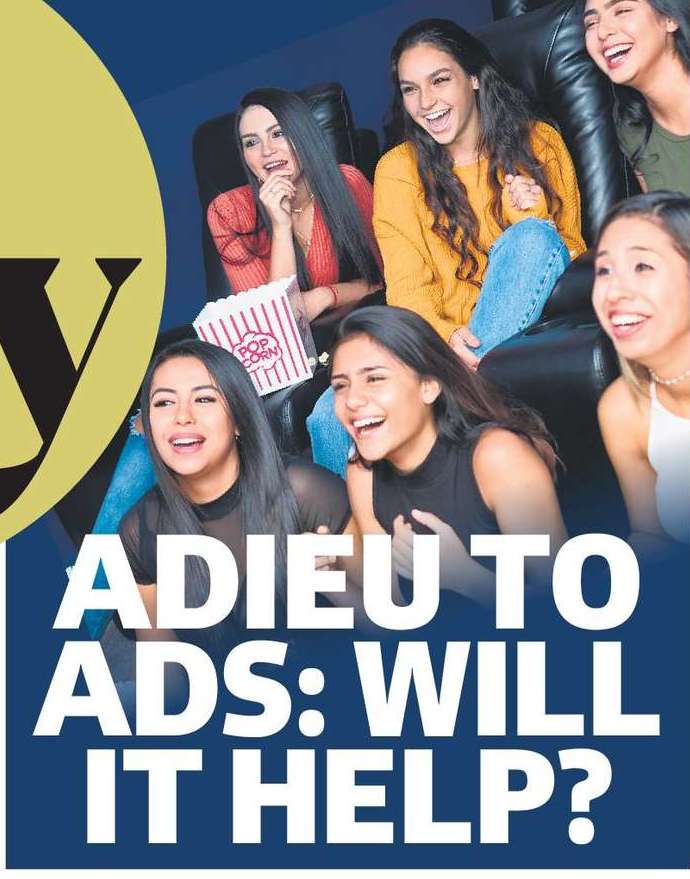
Would moviegoing be incomplete without the ads played before a film and during the interval? A theatre chain has set in motion a debate around its feasibility and if it will really raise footfall
Navya Kharbanda (HINDUSTAN TIMES; April 28, 2024)
Recently, PVR INOX launched an ad-free movies policy in select luxury screens across Delhi, Gurugram, Bengaluru and Mumbai, amid declining theatre footfalls. Also, it is believed that weak box-office collections of even the big-budget films have affected the theatre business in the last quarter.
Cutting down the length of the ads slotted before a movie from 35 minutes to 10 minutes, the theatre chain is looking to add extra shows. Can this practice actually increase footfalls? Will it change the experience for moviegoers in any way? Will the time buffer that these ads allow audiences to reach the cinemas, render it counter-intuitive?
“One of the things that the consumers expressed is that when they get in, they have to wait 15-20 minutes as a pre-show. So, they’d like it if the ad time was a bit shorter. Another set of audience expressed that they don’t mind if we scrapped the ads and charge them a little more. We aim to get the right balance between the number of ads playing and the overall experience,” says Gautam Dutta, CEO-Revenue and Operations, PVR INOX Limited, adding, “We will see if people will pay a little extra for a more premium experience, or if we are able to get one extra show in.”
Will more theatres follow suit?
Negating the query that they will anytime adopt the no-ad policy and emphasising the value of ad revenue, Devang Sampat, CEO, Cinepolis, shares: “In the past, advertisers looked at blockbusters, but that is changing. They’re now advertising throughout the year, no matter how well the movie performs.”
Addressing the reasoning for such a step being footfall, he continues, “Footfalls are only improving every year. You never know which film would work. So, advertisers and brands are now looking at continuing campaigns running round the year.”
On the other hand, Rajan Gupta, owner, Liberty Cinema, says, “At Liberty, we haven’t been showing ads for years. We are anti-ads. I am really surprised that it has taken them this long to figure it out. You might be making money from ads, but it is taking away from the viewers’ experience.”
To show or not to show?
The high-end properties where this has been announced have tickets priced at around Rs. 1,500, so ad revenue is a fraction of the revenue that comes to the cinemas. But for theatres where the price of tickets is Rs. 150-200, if there are no advertisements, it becomes infeasible for the projection systems to be deployed and ticket cost to be justified. For this larger demographic, 10-15 minutes of advertisements don’t really spoil the movie-going experience.
Experts speak
Akshaye Rathi, film exhibitor: If you really have a flow of great movies that can entertain, no one cares about ads or no ads. In the last few months, there has been a decrease in footfall because of the inconsistency in the quality of content. Give me a Jawan, Pathaan, Gadar or The Kerala Story every second week, and the footfalls will skyrocket.
Girish Johar, producer and film trade analyst: The issue on ground is that this is happening only in the metros. They will ask for an extra amount on the ticket price for this premium offering. It’s a good marketing tool to be explored, but it should give them a couple of hours to add another show on their screens.
Cinepolis India to spend Rs. 280 crores on adding 80 screens next year
8:51 AM

Javed Farooqui (THE ECONOMIC TIMES; October 27, 2023)
Mumbai: Mexico-born cinema chain Cinépolis’ Indian arm is looking to double its capex to Rs. 280 crores in 2024 as it looks to add 80 screens a year to achieve its eventual goal of having 1,000 screens in the country, CEO Devang Sampat told ET.
Cinépolis, which entered India in 2009, has 432 screens in the country and has been adding 40–50 screens per year. On average, the company spends Rs. 3.5 crore on launching a new screen.
“Apart from the 432 screens that we have in the country, we have signed another 600 screens that will become operational at various stages,” Sampat said, noting that the cinema exhibition industry’s fate is very closely linked to the mall development activity in the country.
“For us, capex is not a constraint, but the infrastructure is. When we entered India in 2009, our original plan was to open 1,000 screens in 10 years,” he added. Sampat stated that the pace of mall development that has been sluggish hampered the move in the country.
PVR Inox is the biggest multiplex operator in the country, with 1,702 screens. The Cinépolis India CEO said the company’s growth in 2023 will be driven by record footfalls and an increase in the average ticket price (ATP). The company’s regulatory filings show that its operating revenue stood at Rs. 367 crores in FY22.
The company earns 55% of its revenue from ticketing, followed by food and beverage (F&B), which contributes 35%, with advertising contributing the remaining 10%.
"The cinema exhibition business will remain stable because people don’t go to a multiplex just for a movie but for the experience of watching a movie together with family and friends,” he noted.
He also believes there is huge potential to grow the F&B revenue stream since multiplexes get enough footfalls every year.
“We don't have to hunt for customers, unlike quick service restaurants (QSRs), because we have 4 crore people coming to our cinemas every year. We just have to offer them what they want,” he said.
Due to revenue sharing negotiations, multiplex chains yet to open advance booking for Sooryavanshi
8:17 AM
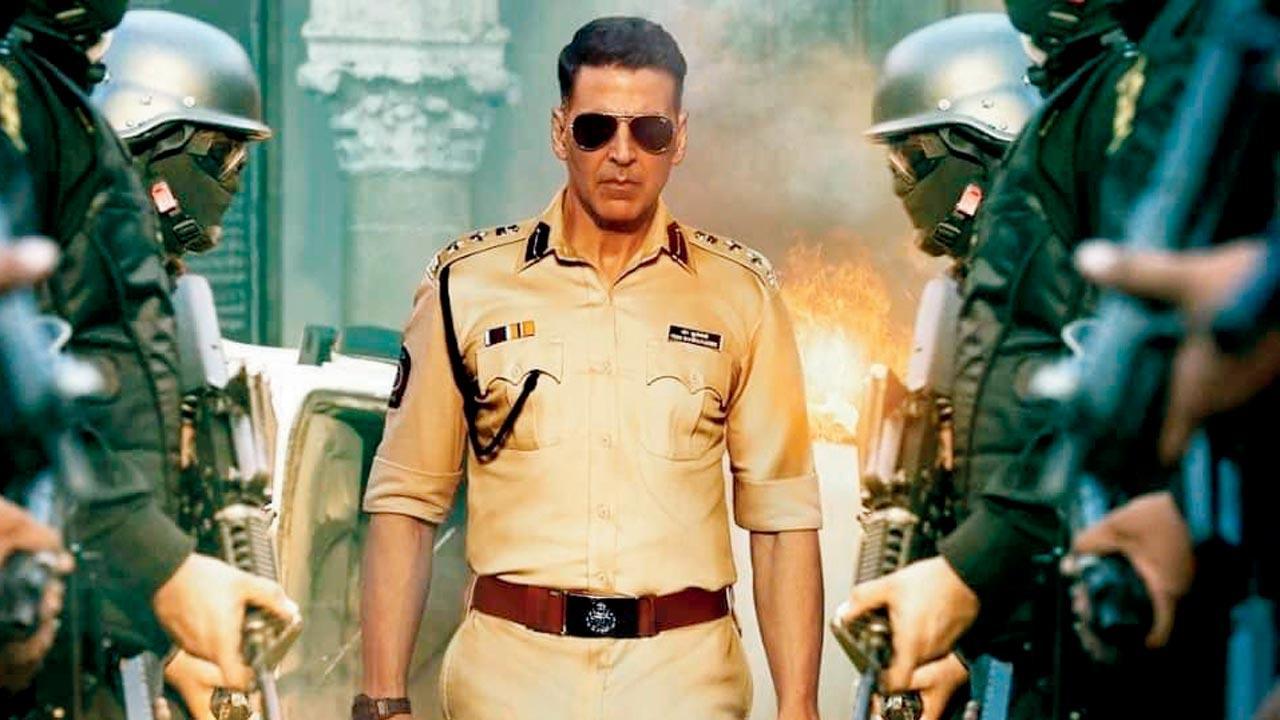
While single screens witness strong response to Sooryavanshi, leading multiplex chains have yet to open advance booking; trade says exhibitors negotiating with makers over revenue-sharing
Upala KBR (MID-DAY; November 3, 2021)
There is palpable excitement at single-screen cinemas as the owners count the hours to Sooryavanshi's release. With their business having nose-dived during the past 18 months, the exhibitors are counting on the Akshay Kumar-starrer to help them bounce back. However, the scene is starkly different at multiplexes across the country, including Inox, PVR Cinemas and Cinepolis, which have yet to open the advance booking for the Diwali offering. mid-day has learnt that the exhibitors and makers are negotiating the revenue-sharing ratio of the film's first and second-week collections.
When the Rohit Shetty film was slated to release in March 2020, the two parties had agreed to the standard revenue-sharing ratio, where producers get 52 per cent of the first-week collections. “During the pandemic, Reliance Entertainment waited for 19 months, supporting the cinemas. One good turn deserves another. They are not wrong in asking for 60-40 revenue-sharing in the first week, and 55-45 in the following week,” says Komal Nahta.
Trade analyst Atul Mohan seconds Nahta, noting that Sooryavanshi was one of the few films that did not take the OTT route. “The red carpet should be rolled out for the team.”
The other bone of contention is the sharing of screens between the cop caper and the Hollywood superhero movie, Eternals. “The exhibitors want to give an equal number of shows to Eternals, which is not fair. They should give priority to Rohit who urged the Maharashtra CM to reopen cinemas,” he says.
Exhibitor Akshaye Rathi views the negotiation as a necessary step. “When the industry reboots like it's doing now, the commercial terms are reset and big films like Sooryavanshi set the terms for the way forward. Producers and exhibitors have suffered [during the pandemic]. But this is not a situation for fans to be worried about. Sooryavanshi will open on a strong note.”
When mid-day reached out to Kamal Gianchandani, CEO, PVR, he declined to comment. Shibasish Sarkar, CEO, Reliance Entertainment, Mayank Shroff, general manager, Cinepolis, and Rajender Singh Jyala, chief programming officer, Inox, remained unavailable for comment.
Blast from the past: Now theatres in India too will re-release blockbusters?
8:06 AM

Production houses contemplate playing previous hit films to increase footfalls, should cinema halls reopen
Upala KBR (MID-DAY; August 2, 2020)
 Taking a cue from countries that have resumed operations of theatrical screenings amid the Coronavirus pandemic, Indian production houses will also screen their previous blockbusters to lure viewers back to cinema halls.
A trade source tells mid-day, "Some multiplexes and single screen owners are in talks with distributors and studios like Warner Bros India, Yash Raj Films, and Reliance Entertainment, among others, to showcase their blockbusters."
Devang Sampat from Cinepolis says that with the Indian audience comprising viewers of Indian and international content, they have a large slate to play with. "For the first two weeks, Cinepolis plans to screen 3D films like Avatar, Gravity, and Titanic, and Oscar-winning movies. Regional films will also be aired in accordance with each state," he says, adding that a survey conducted by their team has revealed that 86 per cent of moviegoers are eager to visit theatres. "Once we decide which titles we want to play, we will work on acquiring the rights."
Exhibitor Akshaye Rathi, who runs 17 single-screens across Maharashtra, Madhya Pradesh and Chhattisgarh, adds, "Single screens have been at the forefront of these conversations. Reliance has Rohit Shetty-movies like Golmaal 3 and Golmaal Again, Singham, and Simmba. Warner Bros has gone a step ahead and created interesting packages and catalogues where the best of their comedies and action films can be sent to the exhibitors. The idea is to rebuild the habit of watching movies at theatres and earn the confidence of our audiences."
Cinema halls aim to reopen with a shot of immunity for patrons
7:59 AM

Ruchika Garg (HINDUSTAN TIMES; July 30, 2020)
Looking forward to a fizzy drink and some fast food with the movie as soon as cinema halls reopen in unlock 3.0? Hold on. You’ll have to ditch the soft drink and fries, and instead opt for healthy stuff when you get back to the theatres now!
Thanks to the Coronavirus pandemic, managements of cinemas have not only decided to make food ordering contactless, but also put immunity-boosting food on their menus, ranging from the fancy Turmeric Latte to the traditional kadha and rasam. “We’ve introduced immunity boosters such as Hot Turmeric Pepper Latte, and lots of soups and juices. We will also serve Pepper Rasam and energy bars,” says Dinesh Hariharan of INOX Leisure.
Some have gone a step ahead, the natural way. “We understand that patrons will be looking at health-conscious options when they visit the cinemas, especially during this period. So we have introduced items such as coconut water on our menu,” says Devang Sampat, from Cinepolis India.
But healthy doesn’t mean you won’t be spoilt for choice. Kunal Sawhney, from Carnival Cinemas, says, “We have included kadha, Turmeric Latte, Tulsi tea and many other varieties of immunity-boosting teas in the drinks menu. Spinach, broccoli, fresh citrus fruit platter, yoghurt, and nuts are also being included in the food menu. In the combos that will be on offer, we will add at least one healthy food item from these dishes.”
Interestingly, film buffs, who are looking forward to finally return to cinema halls for the big-screen experience, say that this is the need of the hour. “It would be a very different feeling, for sure, to get back to the theatres after more than four months, and the scare of the virus surely demands that cinema hall menus include such healthy options than just serving junk food that plays havoc with our system,” says Mohit Saraf from Faridabad. And while the movie he'll watch is yet to be decided, Saraf has his beverage choices lined up. “From the immunity-boosting menu, I would love to taste the Turmeric Latte,” he adds.
Mumbai 24x7 nightlife: Eateries gear up; cinemas, retailers to wait and watch
2:08 PM

As restaurants in malls and mill compounds prepare to cater to the late-night weekend crowds, multiplexes won't yet have late shows
Karishma Kuenzang, Pallavi Smart, Sonil Dedhia (MID-DAY; January 24, 2020)
As Mumbai gets the green light to stay open all night, a few restaurateurs have already planned their night menus and hired additional staff, ready to take 24x7 head-on. Cinemas and retailers, though, don't seem too excited about the move, and may keep regular hours for now.
mid-day reached out to businesses for a low-down on how they are gearings up for Mumbai's post-midnight transformation.
'3rd shift staff hired'
Many of restaurateur Zorawar Kalra's outlets will stay open. At least half of them are located in malls such as Palladium, Phoenix Mills and at BKC. These will stay open till at least 3 am from Wednesday to Sundays. "Some of our outlets will offer the entire menu while others will have a slightly smaller one. We have hired people for the third shift, which has led to a 30 per cent increase in employment," Kalra said, adding that there could be a new breakfast menu at 5 am later.
'Social outlets open till 4 am'
Riyaaz Amlani's Flea Bazaar in Kamala Mills will be open till 4 am, and there will be a special midnight menu that will be launched at his Social outlets. "All our Social and Smoke House Deli outlets will stay open till 4 am. We are planning to do this every day initially. We believe that if we are open, we create a behaviour wherein people go out to eat late at night," Amlani said.

R City open on weekends
At R City mall in Ghatkopar, around 20 brands have agreed to stay open on Fridays and Saturdays, till 3 to 4 am. Participating brands include kiosks at food courts and eateries like Grandmama's Café, Starbucks, Frozen Bottle, Agent Jack's, TGIF, Pop Tate's and retail outlets like Shoppers Stop, Globus and Decathlon. There will be a trial run on Friday and Saturday to gear up for D-day — January 31 (the first Friday after the launch date, January 27). Santosh Kumar Pande, head, R City, said, "We are planning late-night deals and entertainment options. This trial will help malls understand consumer behaviour and profitability."
Palladium's Ishaara till 3 am
Prashant Issar, co-founder of Ishaara at Palladium Mall said, "24x7 is an advantage for the customer and an opportunity for businesses. We will keep our restaurant open till 3 am on weekends and assess the impact." Most brands at Palladium mall will stay open till 3 am on weekends.
'Retailers work on finances'
"It is imperative that we take feedback and consensus from our retail partners. The entertainment and F&B tenants have responded positively for extended hours. However, most retailers are still working on their revenue versus expense projections. We are also reviewing the cost impact on operational cost versus revenues. To begin with, we are trying this out on Fridays and Saturdays," said a statement from Growel's 101 mall.
Retail outlets undecided
Retail outlets at malls seem to be undecided on remaining open. According to sources, most retail brands are not excited due to logistical reasons. "The focus is on eateries, movies and other entertainment options. Shopping outlets are expected to get shut regularly. The decision depends on individual brands as remaining open will involve double the electricity and manpower," said an official from a suburban mall. "Eateries and movies are expected to make business at night but there is no clarity if shopping outlets will see sales."
Multiplexes will wait
Rajender Singh Jyala, chief programming officer, Inox Leisure Limited, said, "We don't have clarity as the official circular hasn't come. A few extra shows won't affect the revenue but the footfall will surely increase during weekends and public holidays and also for big-ticket films."
Atul Goel of Cinepolis said, "It's too early to decide anything. We haven't taken a call but I don't see a reason to not implement it." Kamala Gianchandani, CEO of PVR cinemas, refused to comment.
Saviours Of Post-Midnight Cravings
Social outlets
Smoke House Deli outlets
Grandmama’s Café
Starbucks
Frozen Bottle
Agent Jack's
TGIF
Pop Tate's
Ishaara at Palladium
4am
Time till when restaurants will remain open
Jan 27
Day outlets will start 24x7 ops
Need To Know
What is 24/7 Mumbai?
The state has permitted establishments to remain open 24 hours a day in a gated community
When does it start?
January 27
What does 'gated community' mean?
The phrase refers to a mall or mill compound, which house establishments
So, which malls or mill compounds have permissions?
Atria Mall, Worli; Growel 101, Kandivali; Phoenix Market City, Kurla; R-City Mall, Ghatkopar; High Street Phoenix, Lower Parel; Oberoi Mall, Goregaon; Fun Republic Mall, Andheri; Kamala Mills Compound, Lower Parel; Mathuradas Mill Compound (Todi Mill), Lower Parel; Victoria Mill Compound, Lower Parel
*These places have permission as per the definition of a 'gated community'. It is not yet clear whether all of them will remain open all night, all week
Will they serve alcohol?
No. Liquor will be served only till 1:30 am.
Will they play music beyond 1:30am?
Light music can be played provided it does not cause a nuisance

Working on Players helped me realise what I didn’t want to do-Bhaskar Hazarika
6:58 AM

Sanskrita Bharadwaj (HINDUSTAN TIMES; December 13, 2019)
 With an enthusiastic crowd patiently waiting outside the Cinépolis Fun Republic theatre, Andheri, it was heartening to see how Aamis (Ravening) — filmmaker Bhaskar Hazarika’s much-talked-about Assamese film pulled in people from a diverse spectrum, and not just the Assamese diaspora. What the crowd perhaps wasn’t expecting was a macabre end to what seemed like a sweet love story.
Two films down and Hazarika has somewhat made a reputation as somebody, who is drawn to experimenting with dark themes and complex characters. His debut film, Kothanodi (2015), won a National Award for Best Film in the Assamese language. Based on characters and events described in Burhi Aai’r Xadhu (Grandma’s Tales), a beloved anthology of folk stories compiled by the Assamese literary giant Lakshminath Bezbaroa, Kothanodi proofed to be its sinister retelling. And, if it managed to spook people out, Aamis is a notch above that, a film that will make you question topics such as morality, and forbidden relationships. “I like watching films from the masters of horror and sci-fi,” says the director, and indeed, this love for the dreadful reflects in his work.
Earlier this year in April, Aamis had premiered at the Tribeca Film Festival (TFF) in New York, USA, where it was nominated in five categories, including Best Film. The film also received two awards at the Singapore South Asian International Film Festival, Best Director for Hazarika and Best Actress for Lima Das. After watching the film, director Anurag Kashyap took note of it and wrote on his Instagram account, “have not seen anything like this coming out of India” before. Kashyap, who has been known to present independent films from across India in theatres, declared that he will be presenting Aamis. But, this was the first time he presented a film from North-East India.
 Aamis is a story set in urban Guwahati, Assam and written by Hazarika himself. It revolves around the lives of a doctor, and a PhD student, bonding over food — a variety of exotic meat. The story then takes a bewildering turn, which may even leave many in disbelief.
Starring debutants — Lima Das and Arghadeep Barua, Aamis, Hazarika says is based on the Romeo and Juliet template. He, who’d earlier cast popular actors such as Adil Hussain and Seema Biswas for Kothanodi, says that it is important to not have familiar faces while working on that template. “It is easier for the audience to relate to new faces when it’s a love story,” he says.
When asked if he looks at himself as somebody who might be at the risk of being typecast as a teller of grim tales, he says, it’s only coincidental that both his films touch upon the deviant. “I am currently working on a comedy film, and I have also written a thriller,” he adds.
Writing for an A-list Bollywood movie, is what most aspiring filmmakers look out for, but Hazarika chooses to focus on independent content. In 2012, he got writing credit for the Abbas-Mustan thriller, Players, a remake of the American film, The Italian Job (2003). Hazarika says being a part of that film was an eye-opener of sorts for him. “It helped me realise what I didn’t want to do,” he adds.
For a long period of time, regional cinema meant only southern films. But with films such as Sairat (Marathi, 2015) making a mark, it doesn’t seem impossible for the mainstream to open up to films from North-East India, as well. Assamese cinema, especially, seems to have undergone a qualitative change with filmmakers taking on unconventional topics. For instance, in 2017, Village Rockstars, directed by Rima Das, was selected as India’s official entry to the 91st Academy Awards. But do these filmmakers make films keeping a universal audience in mind? “We have to create universal content, which will work outside,” Hazarika says. This belief is why he started Metanormal Pictures, a small studio based in New Delhi, with a vision to create original cinema from India, especially, with a focus on regional content.
Is the audience, then, ready to take on such films?, we ask. Hazarika, who looks at filmmaking as his “job” and not particularly a “passion”, says it’s not a filmmaker’s responsibility to educate people to come and watch films from a certain region. “That’s too much pressure on the maker,” he concludes.
I am disappointed at the lack of support from producers, distributors and the creative community-Ronnie Screwvala
7:55 AM

Bombay Times spoke to the producer after the Competition Commission of India ruled in favour of the multiplexes on the Virtual Print Fee (VPF) issue
Rachana Dubey (BOMBAY TIMES; July 26, 2019)
Back in March, producer Ronnie Screwvala had filed case with the government body Competition Commission of India, against four multiplex chains — PVR, Inox, Cinepolis and Carnival Cinemas — and the FICCI Multiplex Association of India, alleging undue imposition of Virtual Print Fee (VPF). In his petition, the filmmaker complained that the multiplexes make Indian film producers/distributors cough up Rs 20,000 for every film screened, per screen as VPF.
On Wednesday evening, the CCI ruled the matter favouring the multiplex chains and their association, citing that there wasn’t enough reason or material for them to initiate a probe in the matter as Ronnie had demanded in his petition. The Commission observed that the general allegations made in the case, including lack of transparency in exhibition of trailers and promotions, do not fall within the ambit of the provisions of the Competition Act, 2002. The Commission was of the opinion that there exists no prima facie case warranting investigation into the matter.
Talking to BT about this, Ronnie said, “I have read the ruling from the CCI on the cartelization by the multiplexes and they have dismissed the petition on the grounds that it lacked documented proof of such misuse of collective power. My complaint was not an anonymous one which is normally how it starts. It was based on asking the CCI to launch a formal probe and investigation and they would have got all the documentation and proof they needed. But they have ruled on it and I respect and abide by their final view. I am disappointed, though not surprised, at the complete lack of support from all colleagues, producers, distributors and the creative community who in private commended the action. But not one individual, company or association supported my complaint as that would have gone a long way to endorse with the CCI the apparent practices that is common knowledge to all. I am a firm believer that there is a circle of life and in the end, truth always catches up with reality. So, I am sure that at an appropriate time there will be justice to this. Meanwhile, it’s business as usual for the multiplexes while fair play takes a back seat.”
 Talking about the ruling, Kamal Gianchandani, the head honcho of PVR Cinemas, told BT, “I think the CCI’s decision validates what we have believed and said from the time this one particular matter came to the fore. I am thankful to them for viewing it objectively.”
To jog your memory, as a result of Ronnie’s petition, Inox Leisure had boycotted the film Mard Ko Dard Nahi Hota and refused to screen it (which was produced by Ronnie’s company). Reportedly, he was asked to withdraw his complaint, if he wanted the multiplex chain to screen his film. The producer, it’s learnt, had paid VPF to other multiplexes, albeit under protest, for his film to be screened. His petition described VPF as a draconian, discriminatory charge that the multiplex chains are forcibly imposing.
In 2010, following a discussion among producers, distributors and exhibitors, the process of transformation from physical prints to digital had started. Back then, it was agreed upon that VPF will be levied to support the transition for five years, which ended in December 2015. According to Ronnie’s complaint, the period was extended twice, following a verbal agreement between producers and distributors with the sunset clause till December 2017.
What is Virtual Print Fee?
Earlier, when films were developed from negatives, the distributors and producers had to pay a Print Fee to develop the print of their films. And the exhibitors used to bear the projector costs. VPF was first introduced to help make multiplexes compliant with Digital Cinema Initiaties (DCI), a technology that helps reduce cost, curbs piracy and enhances the movie-viewing experience. Since the technology was costly, it was agreed that the multiplex chains will charge Rs 20,000 per screen for each movie for five years to recover that cost, beginning 2010.
---------------------------
Ronnie Screwvala reacts to the CCI’s order against his allegation of undue imposition of Virtual Print Fee by national multiplex chains; Kamal Gianchandani of PVR says it was not an industry issue
Himesh Mankad (MUMBAI MIRROR; July 26, 2019)
On March 19, Mirror had reported that Ronnie Screwvala had filed a case with the Competition Commission of India (CCI) against four multiplex chains—PVR, Inox, Cinepolis and Carnival Cinemas—and the FCCI Multiplex Association of India after the release of Sushant Singh Rajput’s dacoit-drama, Sonchiriya, for “anti-competitive collusion with respect to undue imposition of Virtual Print Fee (VPF)”. In his petition, the filmmaker had alleged that the multiplexes make Indian film producers/distributors pay Rs 20,000 for every film screened in their theatres as VPF. He described it as a “draconian discriminatory charge that the multiplex chains are forcibly imposing”.
We have now learnt that in its judgment passed on Wednesday, the CCI has given a clean chit to the multiplexes. “The informant (Ronnie) did not allege that VPF is anti-competitive per-se, rather, the allegation of informant pertains to its undue imposition after a certain period,” read the judgment. It observed that there is no formal/written agreement pertaining to imposition of VPF between producers and national multiplex chains, hence a ‘Sun-set clause’ doesn’t exist. The case was filed under section 3 of the Competition Act, 2002, which prohibits an association or enterprise from entering into anti-competitive agreement.
Ronnie, in his petition, had stated that following a discussion between producers, distributors and exhibitors in 2010, the transition from physical prints to digital started and a fee was agreed upon to support the evolution for five years till December 2015. It was extended twice, following a verbal agreement with producers/ distributors till December 2017. “But they have continued collecting VPF directly from distributors of Hindi and regional films,” he groused. Apart from VPF, Ronnie also raised concern over delay in release of payment by the multiplexes, lack of transparency over screening advertisements and inserting interval in films which don’t call for a break. These grouses didn’t fall within ambit of the Competition Act, 2002. The concluding lines of the CCI’s order read, “The commission does not find alleged contravention of the provision of Section 3 of the Act against opposite parties being made out.”
Kamal Gianchandani, CEO, PVR, reacted to the CCI’s order, saying, “It is a validation of the position we had taken all along.” He added that partners often have disagreements and he’s looking forward to the future because content producers and suppliers are integral to the business. “We are committed to working in a constructive fashion. I’m glad that the debate at the CCI forum is out of the way, this wasn’t an industry issue, but rather a disagreement with one producer,” he insisted.
Ronnie is disappointed that colleagues from Bollywood didn’t come forward to support him. He believes that CCI’s verdict would have been different had the film industry shown some unity. “Have read the ruling from the CCI on the cartelization by the ’plexes and they have dismissed the petition on the grounds that it lacked documented proof of such misuse of collective power. My complaint was not an anonymous one which is normally how it starts and was based on asking the CCI to launch a formal probe and investigation to all the practices and they would have got all the documentation and proof they needed. But they have ruled on it and I respect and abide by their final view. Am disappointed though not surprised at the lack of support from colleagues, producers, distributors and creative community who, in private, commended the action but not one individual, company or association supported my complaint as that would have gone a long way to endorse with the CCI the apparent practices that is common knowledge to all.”
He ended saying, “But I am a firm believer that there is a Circle of Life and in the end truth always catches up with reality so am sure at an appropriate time there will be justice. In the meantime, it’s business as usual for the ’plexes while fair play takes a back seat.”

Theatres are unlocking movie magic for disabled audiences
8:06 AM

LAPPING IT UP: A theatre chain in Tamil Nadu is holding autismfriendly screenings on the first Sunday of every month
Assistive Tech Is Here In The Form Of Apps, Gadgets For People With Wide Range Of Special Needs To Catch Film Shows At The Good Old Cinema
Mohua Das (THE TIMES OF INDIA; July 14, 2019)
Like most teenagers growing up in the ’70s, George Abraham’s favourite film is Sholay. “I’ve seen it at least 10 times,” he gushes. But it wasn’t until last year that he laughed hysterically when a voice in his ears described Jai and Veeru’s antics as they zigzag through the countryside on a motorbike singing ‘Yeh dosti’. “I had no idea they were up to such mischief!” laughs the 60-year-old who suffered meningitis at 10 months old that damaged his optic nerves and left him with blurred vision for life.
Abraham, who cannot see beyond the end of his nose, loves the movies but usually either needs to go with someone who is willing to describe the scenes, or picks a film that is heavy on dialogue and easier to follow. “To avoid getting shushed by others in the audience,” he says. That was until last July, when he attended a screening of Sanju at the PVR Plaza in Delhi and became one of the first users of an intelligent system that the theatre has partnered with to offer XL Cinema, a free app developed by Mumbai-based MIT graduate Kunaal Prasad that narrates non-verbal parts of a movie — essentially everything going on between dialogues, including the expressions and special effects — as audio descriptions. Making strides in assistive technology and inclusive entertainment, the app, originally created to enable people to watch a movie in the theatres in a language of their choice, became a game changer for visually-challenged cinephiles. The audio content for the app is scripted by Saksham, a non-profit empowering those with print disability.
While accessibility in the space of recreation and entertainment is an issue that remains largely ignored, modern cinema operators are investing time, technology and training to make far-reaching changes, which come app-enabled, audio-described, subtitled, autistic-friendly and wheelchair apportioned — making it possible for people with different disabilities to enjoy an evening out at the movies.
In December, PVR Cinemas became one of the first to roll out an accessible cinema programme, ‘Cine Care’, across 37 out of their target of 50 cinemas, spending close to Rs 4 crore on assistive equipment like step sliders, roll-a-ramps, stair lifts. It also designed a training module that 90% of the staff has undergone. “It includes video scenarios of how to handle people with different disabilities, how to use assistive equipment, and disability etiquette for respectful communication. It’s about building an internal culture of sensitivity,” explains Sangeeta Robinson, who heads sustainability and inclusion at PVR.
Inox organised what was India’s first ‘whispering cinema show’ last month, where 70 visually impaired guests were each accompanied by a companion to whisper the scenes into their ears. Inox has also “procured and installed two-channel infra-red headphones for narrative audio and glasses for closed captioning”. Employees at three Cinepolis cinemas in Delhi have undergone sign language classes in order to better communicate with differently-abled guests and colleagues. “We believe that equal opportunity is important even for our employees. So, in select locations, we have differently-abled employees and have communication informing patrons of the same so they can interact accordingly,” said Devang Sampat, director of strategic initiatives, Cinepolis India.
Meanwhile, for those on the autistic spectrum, the hectic mall and movie environment can be a sensory minefield. To address this, SPI Cinemas in Chennai and Coimbatore have launched ‘SENS’, or sensory friendly shows, for those who can be hypersensitive to sound, light and movement at the movies. Following autism-specific principles to promote a sense of calm during a screening, the lights are turned up and sound levels turned low while unrestricted movement and chatter is allowed within the movie theatre. Also, the intermission is much longer. Launched last August with a screening of Jungle Book, these autism friendly screenings take place on the first Sunday of every month.
The Rights of People with Disabilities Act, passed in December 2016, mandates that all electronic content come with “audio description, sign language interpretation and closed captioning”, something that the Indian Cinematograph Act is yet to execute. “What’s the point in having technology if there’s no content? To close-caption a film remains the discretion of the film studio or producer, but very few are doing it,” says PVR’s Robinson, who has written to the social justice and empowerment ministry about the accessible cinema mandate. She hopes things will change soon as “both producers and the government have the wherewithal to turn things around”.
COMING TO A CINEMA NEAR YOU
XL Cinema App
Currently used by over 8,000 visually impaired people, it has 28 audio-described Bollywood films on it. One needs to download and log in to the app, plug in earphones and order a free audio ticket. The app tracks if the user is inside a theatre and accordingly syncs the audio description in real-time with what is playing on screen
Two-channel infrared headphones
Offers audio narrative for visually impaired. The sound controls allow users to modulate the sound reception. The user hears the soundtrack and a description of the action on the screen
Closed-captioning glasses

Sensory shows
Following autism-specific principles to promote a sense of calm during a screening, the lights are turned up, sound levels turned low. Unrestricted movement and chatter is allowed and the intermission is longer
Sano liftkar
A battery powered mobile stair climber with integrated chair (pic right), it can be used for transporting a user up or down very steep, narrow and spiral staircases while seated on the device and not in a wheelchair
Ronnie Screwvala takes national multiplex chains INOX, PVR, Cinepolis, Carnival to court for discriminatory fee
9:41 AM

Filmmaker has complained that Indian producers/distributors are being forced to pay Rs 20,000 per theatre, something Hollywood films are exempt from
Himesh Mankad (MUMBAI MIRROR; March 19, 2019)
 Ronnie Screwvala has filed a case with the Competition Commission of India against four multiplex chains—PVR, Inox, Cinepolis and Carnival Cinemas—as also the FICCI Multiplex Association of India for “anti-competitive collusion with respect to undue imposition of Visual Print Fee (VPF)”. In his petition the filmmaker has complained that the multiplexes make Indian film producers/distributors pay Rs 20,000 for every film screened in every theatre as VPF. He described it as a “draconian discriminatory charge that the multiplex chains are forcibly imposing”.
Following a discussion among producers, distributors and exhibitors in 2010, the process of transformation from physical prints to digital started and the fee was agreed upon to support the evolution for a period of five years till December 2015. But, according to the complaint, it was extended twice following a verbal agreement with producers and distributors with the sunset clause till December 2017. “However, they have continued collecting VPF directly from the distributors of Hindi and regional films,” the petition states, pointing out that Hollywood movies, even dubbed versions, are exempt from VPF and this gives them a competitive advantage over domestic films.
The petition brings to notice that 2016 Aamir Khan-sport drama, Dangal, produced by Disney was not charged the discriminatory fee owing to an arrangement with the foreign studio regarding the exhibition of their international films in India. “This severely limits any kind of level playing field that Indian content creators crave for.”
 The petition informs he was forced to release Love Per Square Foot, digitally, as the exorbitant charges to get his film screened in the national chains were not economically viable. It reasons that while national multiplex chains are the obvious choice for a theatrical release since they control 60 per cent of the entire multiplex film exhibition business in India, given that Love Per Square Foot was made on a budget of just Rs 8 crore, the additional cost would have made it a loss-making venture, as hypothetically, the multiplexes would have earned in excess of Rs 7 crore from him as compared to his earnings of Rs 2.35 crore. “All the Indian producers on an average have to pay Rs 2 to 3 crore to the multiplexes as Visual Print Fees, if they want to release their film on 1000 to 1500 screens,” it states.
More recently he had a run-in with cineowners during the release of the Sonchiriya. He’d planned to release Sushant Singh’s dacoit drama on 505 screens in PVR, INOX, Cinepolis and Carnival. But that would have meant spending Rs 93 lakh on VPF. So he had to change his release plans.
When we reached out to Kamal Gianchandani, the CEO of PVR Cinemas, he said, “Since the matter is now sub-judice and will be under investigation there is nothing more to add at this stage.”
Tickets costlier at PVR chains despite GST relief
8:24 AM

Movie-goers also miffed with other multiplex chains across the country; exhibitor insists that prices have reduced but are dependent on ‘movie categories’
Himesh Mankad (MUMBAI MIRROR; January 12, 2019)
The reduction in Goods and Services Tax (GST) - 18 per cent from the original 28 per cent for movie tickets costing more than Rs 100, and from 18 per cent to 12 per cent for those up to Rs 100 - was expected to bring a smile on the face of movie-goers. However, Mumbaikars are miffed because the national multiplex chain, PVR, have yet to pass down the tax relief to the audience.
“Till last year, the morning shows at PVR Juhu were priced at Rs 150- Rs 170. On Friday morning, I was shocked that tickets for both Uri: The Surgical Strike and The Accidental Prime Minister were priced as high as Rs 185 and as a mark of protest, I decided not to watch either of the two films,” says trade analyst Amod Mehra, adding that the industry should look into the matter so viewers are not cheated.
He was justified in feeling shortcharged because the Anushka Sharma-Varun Dhawan-starrer, Sui Dhaaga, which had opened on September 29, 2018, had been priced Rs 15 lower than Uri. When this was pointed out to Kamal Gianchandani, CEO, PVR, he explained the reason for the discrepancy in the pricing, saying, “We follow variable ticket pricing in Mumbai. Depending on the curiosity and excitement around a film, we categorise them as ‘blockbuster’, ‘popular’ and ‘ordinary’. Uri is carrying fantastic reports due to its topical subject, so we have placed it in the popular category whereas Sui Dhaaga was in the ordinary category. One shouldn’t compare the rates of the two films.” He argued that it is not “fair to compare two films that released in different periods”. “The best way to see the GST benefit is by comparing the ticket prices of Simmba on December 31 and January 1, as that would show a clearer picture. The benefit has been passed on to the patrons across the country and there is absolutely no ambiguity on this,” he maintained and also shared the reduced ticket price chart of Simmba.
The chart above shows that there is reason for viewers like Mehra to be upset given that tickets for the same film at various multiplexes differ. “Though the tax benefit is huge, there doesn’t seem to be a decline in ticket prices across the spectrum. The distributor association should sit down with the multiplexes and fix the rates for big and small films and this should be done at the earliest,” he states.
Despite the tax slabs coming down from 45 percent in 2014 to 18 per cent in 2019, there has been a surge in the average ticket rates across national multiplex chains. Ticket prices have gone up from Rs 280 to Rs 400 for evening shows at key city multiplexes which, according to industry experts, is one of the reasons for the audience to stay away from theatres.
Bobby Singh, a cine goer in Delhi groused on Twitter, that Cinepolis (West Delhi) is yet to pass on the benefit of GST reduction. “Cinepolis (West Delhi) charged Rs 190 for morning shows before Jan 1, and they are still charging the same for morning shows of Uri,” he complained.


Subscribe to:
Posts (Atom)