Showing posts with label Chitchor. Show all posts
Showing posts with label Chitchor. Show all posts
In the era of the angry young man, I was just a common man trying to survive-Amol Palekar
9:25 AM
Divya Kaushik (BOMBAY TIMES; January 6, 2024)
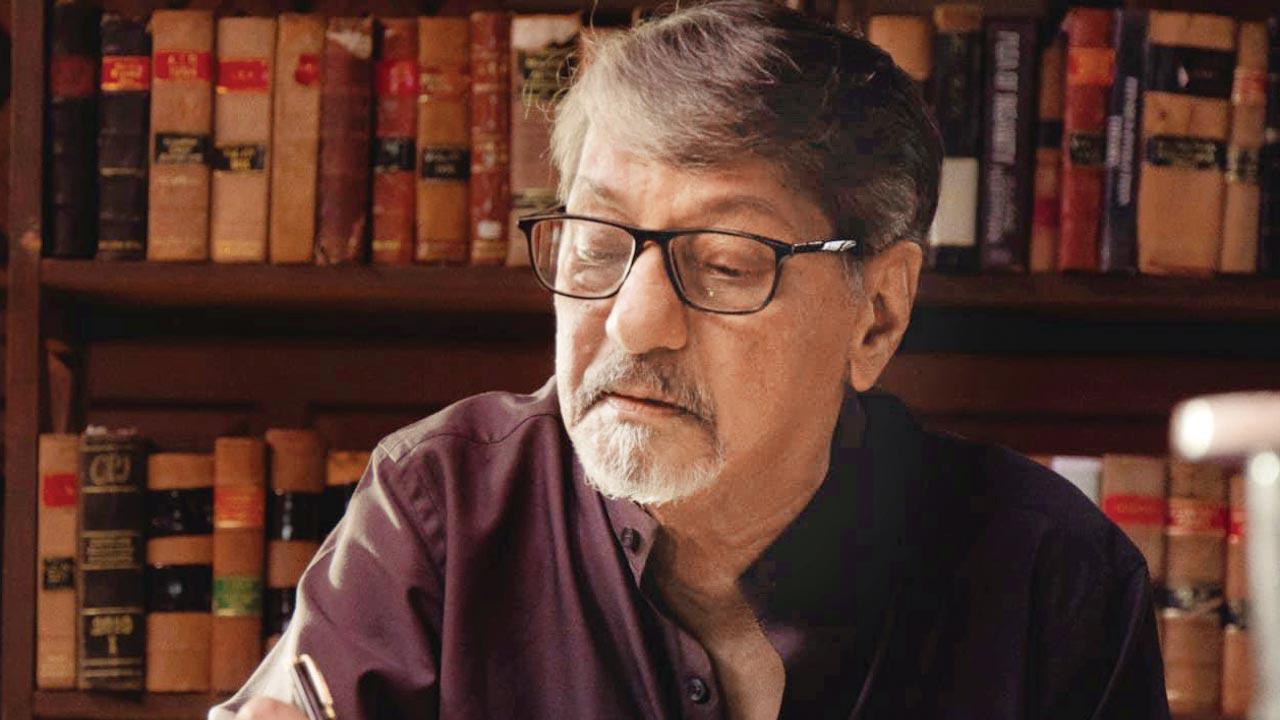
Among his many achievements as an actor and filmmaker, one thing that Amol Palekar will always be proud of is how he came close to every common man through the characters he played on screen. From Gharonda, Gol Maal to Chhoti Si Baat, the actor says that he always tried to be the “boy-next-door who comes across as vulnerable as any common man is.” The veteran actor, who was in the city recently, spoke to us about Hrishikesh Mukherjee and Basu Chatterjee’s era of filmmaking, when simple stories ruled the celluloid.
‘I CONSCIOUSLY TRIED TO RETAIN THAT VULNERABILITY OF A COMMON MAN’
“I feel nice that I was a part of the era when parallel cinema evolved,” says the actor as he talks about the audience relating to his characters.
He adds, “In Rajnigandha, Chhoti Si Baat, Chitchor, Baton Baton Mein, Gol Maal, Naram Garam – the hero that I played never utters a simple line ‘I love you’ and that was the continuing point in all those portrayals. I think every young boy related to it. I think I managed to bring out that aspect of the boy-next-door quite nicely. And the vulnerability of the man... I have consciously tried to retain that vulnerability. I found this vulnerability in every character that I portrayed, and I think I haven’t done badly.”
Talking about what made him stand out, Palekar says, “The time when I was portraying the boy-next-door, it was not just the era of angry young man, it was the era of lover boy Rajesh Khanna, Dharmendra the He-Man, Jeetendra who could dance so beautifully and charm a girl – I think I had none of those qualities and that’s what people liked. What I also liked was that I was none of those ‘heroes’, I was just a common man trying to survive, trying to convey his love without uttering those words. It made me stand out among all those larger-than-life portrayals on screen back then.”
‘WORKING WITH BASU DA, HRISHI DA, SHYAM BENEGAL USED TO BE LIKE A FAMILY PICNIC’
Palekar credits Basu Chatterjee for his acting career. “Basu da approached me for Piya Ka Ghar, which I refused. I didn’t think he’d ever come back to me – I was a nobody from theater. But he did and that’s how Rajnigandha happened. Basu da, had a great command on his craft and celluloid narration, but in real life, he was a terrible narrator. Woh kahani bata hi nahi paate thay. Our conversation was like, ‘Amol main ek film banane ja raha hoon. Ek ladka hai, maano tum ho, aur ek nayi ladki hai Vidya Sinha naam ki, aur phir… yaar tum yeh padh lo!’ This was his narration!”
He adds, “Hrishi da (Hrishikesh Mukherjee), Basu da, Shyam Benegal, all the people that I have worked with – it used to be like a family picnic. It was like fun and hansi mazak karte karte film ban jaati thi. And that’s what reflected on screen. The kind of fun we used to have in Gol Maal, oh my god! We were like a family on the sets, it worked beautifully.”
The veteran actor has relived many of his memories in his book, View finder: A Memoir. “The end result of writing this book was a catharsis, but to reach that catharsis it was like excavating and peeling off oneself. So many memories came out, I thought I had forgotten them. I relived so many memories. I felt nice, relieved and quite overwhelmed... The dilemma was what to keep and what not keep from all those memories. That was a major step. I belong to the dinosaur era, I still write on a paper. They were about 450 hand written pages in Marathi and I handed over to Sandhya (his wife). Sandhya and I have associated in so many roles. So this final product is our collaboration in the true sense as we have been doing for the last 25 years of our marriage. This proudly can be termed as the lovely climax to that journey.”
‘ENJOYED PLAYING GREY CHARACTERS’
In contrast to the vulnerable, common man, Palekar also played characters with a grey or dark side. “I played a villain in Benegal’s Bhumika, which was unheard of at that time. The industry resisted that, they said you are a successful hero with three silver jubilees in your belt why do you want to play a villain, have you gone bonkers? But I chose to because it was a huge challenge for me as an actor. From there to Vidhu Vinod Chopra’s Khamosh, where I play a murderer, I was very happy to choose such roles. In Gharonda, too, the character is so grey, he is actually a villain. All these grey shades are attributed to a villain, and I enjoyed that.”
Remembering Basu Chatterjee: Khalid Mohamed pens tribute; Amol Palekar, Zarina Wahab too remember Basu da
9:12 AM

Chhoti-badi baatein about Basu Chatterjee, champion of middle class cinema who passed away on Thursday
Khalid Mohamed (MUMBAI MIRROR; June 5, 2020)
 Bustling into his airy study room, on the first storey of Violet Villa, Santacruz, he nonchalantly pulled out a file titled “The Window.”
“That’s my last script,” Basu Chatterjee, often attired in a grey safari suit, darted his boyish grin. “You make it. I’m tired of flogging it around to producers.”
The story revolved around a Muslim girl in love with a police officer who proposes marriage. It turns out to be a ruse to arrest her brother, a suspected terrorist, at the wedding. Heartbroken, the girl never opens her home’s window again.
“But Basu da, who’ll finance a film with Muslim characters?” I asked.
He countered, “Just get one or two big stars. I’m not charging you a rupee anyway. Now, what’ll you have —scotch and soda or with water?”
 Scotch evenings with the puckish writer-director, who was surmised to be 90-93 and passed away on Thursday of age-related ailments, were enlivened with conversations about his early days in Ajmer and his move to Mumbai, where he became a cartoonist-cum-illustrator with the Blitz tabloid.
Backbone of the cineaste club, Film Forum, and a constant presence at its pokey office overlooking the Dadar railway station over-bridge, he was working on the script of Sara Akash (1969), and could no longer edit the Forum’s quarterly magazine Close-Up. He asked a college friend, Abbas, and me, to take over. We didn’t know the ‘e’ of editing. “Neither do I,” he had chortled. In return, we could attend the film society screenings for free.
 After the uncompromised Sara Akash and the slice-of-life Piya Ka Ghar, he became a champion of the middle-class ethos with the sleeper success Rajnigandha (1974).
In 1975-’76, Chitchor and Chhoti Si Baat once again sided with Simple Simon over cool man-about-town.
Intermittently, Basu da took on more than he could chew, resulting in the disappointing Us Paar, Tumhare Liye and Do Ladke Dono Kadke. Yet, the writer-director bounced back with Khatta Meetha, Baton Baton Mein, Swami, Apne Paraye and Shaukeen.
He did work with the top heroes — Rajesh Khanna (Chakravyuha), Amitabh Bachchan (Manzil), Dharmendra (Dillagi), Jeetendra (Priyatama) and Anil Kapoor (Chameli Ki Shaadi) — but sought to avoid the star system, preferring intimate to showy cinema.
The film Jeena Yahan (1979), featuring Shabana Azmi and Shekhar Kapur, remained closest to his heart. “It was quite easily my best,” he would say about the barely-remembered reflection on a young couple’s adjustment to daily commutes and housing issues. Not Ek Ruka Hua Faisla? “Naah,” he’d say. “You know that was taken from 12 Angry Men.”
Not the sort to whine, he was okay with his light-hearted Prateeksha (Jimmy Sheirgill-Dia Mirza) being dumped on Sahara TV channel. From what I could glean, he at least hoped to travel to Kolkata where he’d be received with open arms, thanks to the success of his two Bengali films (Hochheta Ki, Trishanku).
When he retired (not out of choice), he’d spend time surfing the net and emailing. Worried about his huge collection of cinema books, he’d wonder, “What’ll happen to them? You take them.” “Basu da, stop it, you’re going nowhere”, I’d retort.
By the time I gathered a team to work on a documentary on Basu da, some three years ago, he had started to fade. He walked by taking support of the wall, would recognise his wife and TV filmmaker-daughter Rupali Guha, but drew a blank on seeing me. Alzheimer’s was setting in.
During the first and only shoot, he tried to be amiable, but answered only with “Yes” or “No”. Questions about his firebrand TV series Rajni or the sleuthing Byomkesh Bakshi made him restless. Maybe, he didn’t wish to delve into the past or he had erased them subconsciously.
Once, he told me he had started writing his biography in Hindi but quit midway because “it meant writing lies on every page, I would have cheated myself”. And if he had done that, he wouldn’t have been able to open his study room’s window again.
-----------------------------
Amol Palekar: He never attempted a typical masala movie, yet top heroes worked with him
Basu da was a simple person. It reflected in all his films and his humour. He was a man of few words. When we met for a narration of Rajnigandha, he started off saying, “Ek ladka hota hai, maan lo tum ho, ek ladki hoti hai, Vidya Sinha…” Then, he stopped, handing me the story, screenplay and dialogue. “It’s better if you read this.” Looking back, I’m amazed by his inability to narrate a simple story. However, he could do it on screen beautifully, without the cliched melodrama.
It took us almost two years to release Rajnigandha because no one wanted to distribute it. They would ask “Hero kaun hai?”, and wonder how a new boy with a Marathi name could be the hero? Then, they would learn that the heroine was a debutante, too, and that the film had no villain. Quickly losing interest, they’d ask Basu da, “Toh phir film kyun bana rahe ho?” Later, these memories made him laugh but at the time, I could see the trouble he was going through and marveled that he stuck to his vision.
He never attempted a typical masala movie, yet all the top heroes, from Dharmendra and Hema Malini to Amitabh (Bachchan), Vinod Mehra and Moushumi (Chatterjee), worked with him. Basu da was probably the first major link between parallel and commercial cinema, thanks to the subtle humour that lit up his films and the strength of his characters. Hailing from the film society movement, he was aware of world cinema, took its strength and carved his own niche. I’m privileged to have had such a long association with him.
—As told to Hiren Kotwani
-----------------------------
Zarina Wahab: He could crack a joke with a straight face
This year has been very bad so far and Basu da’s demise is very upsetting because I was really close to him and his family. His daughter was our neighbour till she moved away. Around two years ago, Amol Palekar, Deepti Naval, Vidya Sinha, Bindya Goswami and I all met at Basu da’s place. He was fine then, a really sweet man. After that, I passed by his house a couple of times and today, wonder why I didn’t drop by.
I played the main lead in his film, Chitchor, for the first time. Once, during the shoot, I was sitting around with Master Raju (the child artiste then) and a few others. Raju was showing us how a mute man would ask for water. Basu da watched for 10 minutes, then, incorporated it in the sequence where we go to Amol’s house.
After Chitchor, I did Hua Savera, which never released. He told me that he couldn’t pay me but would get the producer to give me a car. Back then, you could get a car for Rs 25,000-Rs 30,000. He was one of the best directors I worked with, a genuinely wonderful person who could crack a joke with a straight face.
— As told to Hiren Kotwani
Chitchor: Love in the time of letters
7:38 AM

Roshmilla Bhattacharya (MUMBAI MIRROR; November 25, 2014)
Yesterday, Amol Palekar turned a youthful 70. Surrounded by family and friends and in the midst of hectic preparations for a solo art exhibition which previews today, the actor took a quick stroll down memory lane to talk about the 1976 musical romance Chitchor. The film followed Rajnigandha (1974) and Chhoti Si Baat (1975), to complete a hat-trick of silver jubilee hits for Basu Chatterjee and him.
Based on a Bengali story by Subodh Ghosh, Chittachakor, the film revolves around a match being arranged for the headmaster's daughter through letters by her elder sister.
In an ironic twist of fate, the engineer who was to arrive in the village of Madhupur is preceded by his overseer. Mistaking him for the groom-to-be, the parents have no objections to their younger daughter spending hours in his company. By the time they realise he's the wrong man, Geeta has lost her heart to Vinod and is immune to the attentions of his boss, Sunil, much to everyone's exasperation.
Describing his relationship with the director as "special, yet so different", Amol remembers Basuda as a man of few words. "He would start narrating a story but after just two-and-a-half lines would trail off saying it would be better if I read the script myself. That's what happened with the two earlier films and it was no different with Chitchor," he smiles.
He is quick to add that the filmmaker knew what he wanted and how to get it without any dramatics. "A master of narration on screen, he was at a complete loss when he had to narrate the same story off screen. This contradictory aspect of his personality never failed to fascinate me," admits Amol, who played the guy-next-door Vinod in Chitchor.
Quiz him on the shoot and he says that like all the films he did with Basuda, this one too was a lot of fun, may be more so because they went off on a long outdoor schedule to Panchgani and Mahabaleshwar. A day before they were to roll, the director, over a drink, asked Amol to take care of Vijayendra Ghatge who plays Sunil. "It's his debut film and Vijayendra is tense. Can I put him in your room so you can do whatever is needed to help him unwind?" he requested. Amol readily agreed, having experienced the same during Rajnigandha. Even though that film about a girl torn between her college crush and a forgetful, bank clerk who brings her bunches of rajnigandha, was Amol's debut in Hindi cinema, both Dinesh Thakur and he being from the stage, were self-assured actors. But this was a completely new medium for the other debutante Vidya Sinha and so Basu had made the same request to Amol.
"Basuda was living in Adarsh Nagar, Worli, at the time and all three of us would go there every evening and rehearse our scenes for a couple of hours," reminisces Amol, admitting that by the time they started shooting, they had bonded and the friendship continued. "Dinesh has passed away but Vidya and I still meet and exchange notes. I'm also in touch with my wonderful Chitchor co-star, Zarina (Wahab)."
He remembers Zarina as an impulsive, spontaneous actress who when he once asked her to repeat something that he had liked during rehearsals, had absolutely no memory of what she had done. Zarina on her part recalls that for some reason she developed a competitive streak and wanted to be one up on Amol in this particular film.
"But despite this Chitchor was like a picnic and wrapped up in just 25 days," she says.
Almost four decades later, she still remembers filming the evergreen Yesudas hit, Gori tera gaon bada pyaara, in a bungalow in Panchgani. "I often visit the hill station and everytime I stop at the bungalow. It hasn't changed much in all these years and brings back a flood of memories like applying lipstick after every shot, hoping Basuda would not notice," she laughs. "But the hard taskmaster that he was, he always did and with a frown would tell me to wipe it off because he didn't want his gaon ki gori Geeta to have any signs of artificial gloss."
Subscribe to:
Posts (Atom)