Showing posts with label Chhoti Si Baat. Show all posts
Showing posts with label Chhoti Si Baat. Show all posts
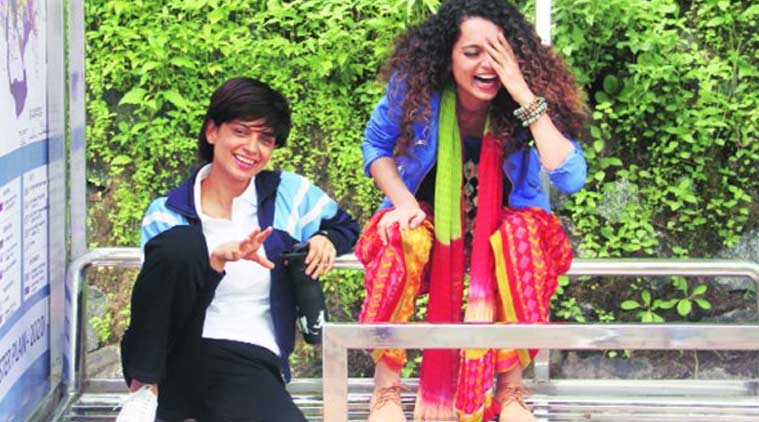
Top 10 romcoms; Tanu Weds Manu Returns the only film with 1 cr plus footfalls
10:08 AM
Box Office India Trade Network
COCKTAIL 2 released this week and has done so so business till date though it will not feature among the top ten Rom Com films of all time. However, in terms of cost, its probably the second biggest rom com ever after TU JHOOTHI MAIN MAKKAAR. The genre is one which came to the fore in the last thirty years as before that there were hardly any rom com films made.
Basically comedy films and rom coms gained traction at roughly the same time because in the 50's 60's 70's and 80's, there were not many comedy or rom com films as North, East and Central India was very unkind to these genres most of the time. It is actually hard to divide which is Rom Com and which is a love story for a film but if a film has drama which is stronger than the comedy and forms much of the film then that goes towards a love story. Drama on the lighter side means Rom Com.
The biggest Rom Com till date is TANU WEDS MANU RETURNS and it is so far ahead of the rest that it makes you doubt that is this film actually a Rom com but a Love Story. It is not for sure as comedy dominates through the film. This film got 1.5 crore footfalls while no other Rom com has even picked up 1 crore. The footfalls of COCKTAIL (2012) are under 90 lakhs.
There is sure to be something different with TANU WEDS MANU RETURNS compared to the other Rom Com films and it could be characterization, relatability or authenticity whereas most Rom coms tend to go the filmy/urban route which limits the business. If big films are still to be made in the genre, then this film is the one at as it stands above all by a margin. Otherwise the genre probably has to be made at a lower cost with possibly smaller casts.
The top ten Rom Com films of all time by footfalls are as follows. There could be some missings from the earlier years but that will not matter much in the context of business today.
1. Tanu Weds Manu Returns (2015)
2. Cocktail (2012)
3. Chhoti Si Baat (1975)
4. Tere Mere Sapne (1996)
5. Dostana (2008)
6. Kabhi Haan Kabhi Naa (1994)
7. Mere Brother Ki Dulhan (2011)
8. Tu Jhoothi Main Makkaar (2023)
9. De De Pyaar De (2019)
10. Luka Chuppi (2019)
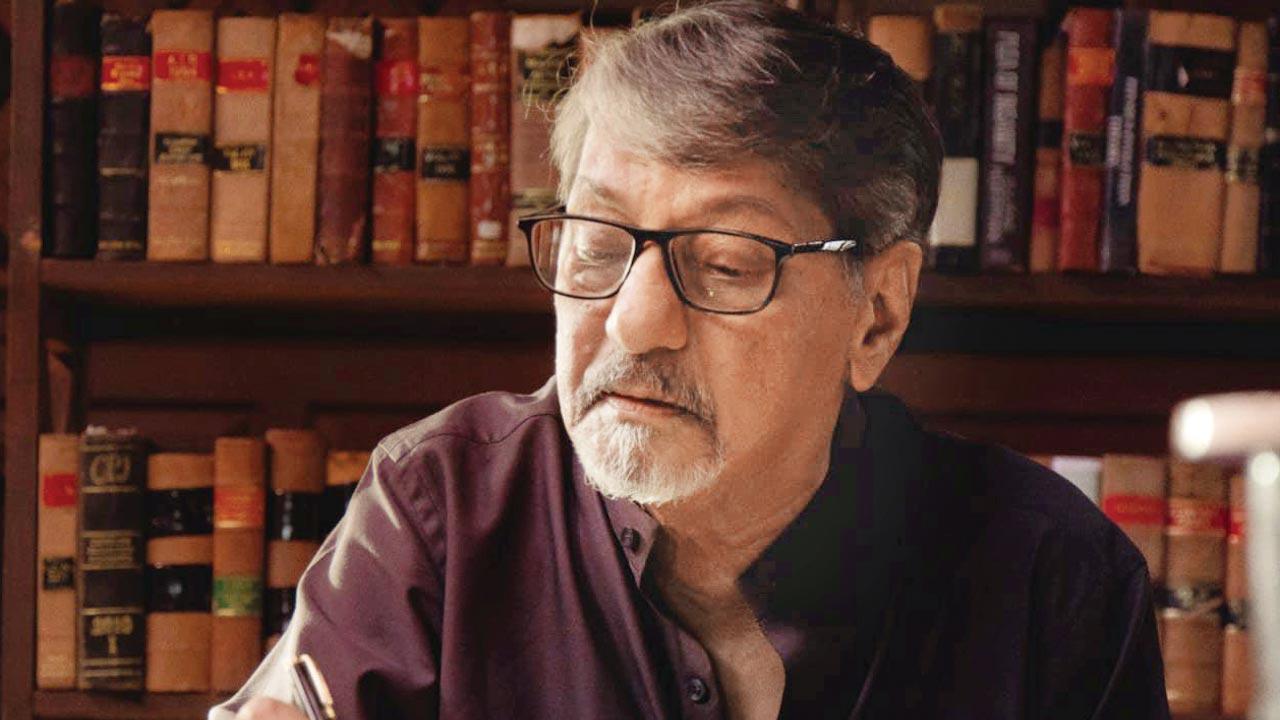
In the era of the angry young man, I was just a common man trying to survive-Amol Palekar
9:25 AM
Divya Kaushik (BOMBAY TIMES; January 6, 2024)
Among his many achievements as an actor and filmmaker, one thing that Amol Palekar will always be proud of is how he came close to every common man through the characters he played on screen. From Gharonda, Gol Maal to Chhoti Si Baat, the actor says that he always tried to be the “boy-next-door who comes across as vulnerable as any common man is.” The veteran actor, who was in the city recently, spoke to us about Hrishikesh Mukherjee and Basu Chatterjee’s era of filmmaking, when simple stories ruled the celluloid.
‘I CONSCIOUSLY TRIED TO RETAIN THAT VULNERABILITY OF A COMMON MAN’
“I feel nice that I was a part of the era when parallel cinema evolved,” says the actor as he talks about the audience relating to his characters.
He adds, “In Rajnigandha, Chhoti Si Baat, Chitchor, Baton Baton Mein, Gol Maal, Naram Garam – the hero that I played never utters a simple line ‘I love you’ and that was the continuing point in all those portrayals. I think every young boy related to it. I think I managed to bring out that aspect of the boy-next-door quite nicely. And the vulnerability of the man... I have consciously tried to retain that vulnerability. I found this vulnerability in every character that I portrayed, and I think I haven’t done badly.”
Talking about what made him stand out, Palekar says, “The time when I was portraying the boy-next-door, it was not just the era of angry young man, it was the era of lover boy Rajesh Khanna, Dharmendra the He-Man, Jeetendra who could dance so beautifully and charm a girl – I think I had none of those qualities and that’s what people liked. What I also liked was that I was none of those ‘heroes’, I was just a common man trying to survive, trying to convey his love without uttering those words. It made me stand out among all those larger-than-life portrayals on screen back then.”
‘WORKING WITH BASU DA, HRISHI DA, SHYAM BENEGAL USED TO BE LIKE A FAMILY PICNIC’
Palekar credits Basu Chatterjee for his acting career. “Basu da approached me for Piya Ka Ghar, which I refused. I didn’t think he’d ever come back to me – I was a nobody from theater. But he did and that’s how Rajnigandha happened. Basu da, had a great command on his craft and celluloid narration, but in real life, he was a terrible narrator. Woh kahani bata hi nahi paate thay. Our conversation was like, ‘Amol main ek film banane ja raha hoon. Ek ladka hai, maano tum ho, aur ek nayi ladki hai Vidya Sinha naam ki, aur phir… yaar tum yeh padh lo!’ This was his narration!”
He adds, “Hrishi da (Hrishikesh Mukherjee), Basu da, Shyam Benegal, all the people that I have worked with – it used to be like a family picnic. It was like fun and hansi mazak karte karte film ban jaati thi. And that’s what reflected on screen. The kind of fun we used to have in Gol Maal, oh my god! We were like a family on the sets, it worked beautifully.”
The veteran actor has relived many of his memories in his book, View finder: A Memoir. “The end result of writing this book was a catharsis, but to reach that catharsis it was like excavating and peeling off oneself. So many memories came out, I thought I had forgotten them. I relived so many memories. I felt nice, relieved and quite overwhelmed... The dilemma was what to keep and what not keep from all those memories. That was a major step. I belong to the dinosaur era, I still write on a paper. They were about 450 hand written pages in Marathi and I handed over to Sandhya (his wife). Sandhya and I have associated in so many roles. So this final product is our collaboration in the true sense as we have been doing for the last 25 years of our marriage. This proudly can be termed as the lovely climax to that journey.”
‘ENJOYED PLAYING GREY CHARACTERS’
In contrast to the vulnerable, common man, Palekar also played characters with a grey or dark side. “I played a villain in Benegal’s Bhumika, which was unheard of at that time. The industry resisted that, they said you are a successful hero with three silver jubilees in your belt why do you want to play a villain, have you gone bonkers? But I chose to because it was a huge challenge for me as an actor. From there to Vidhu Vinod Chopra’s Khamosh, where I play a murderer, I was very happy to choose such roles. In Gharonda, too, the character is so grey, he is actually a villain. All these grey shades are attributed to a villain, and I enjoyed that.”
Scent of Rajnigandha: Remembering Vidya Sinha...a tribute by Khalid Mohamed
7:55 AM

Remembering Vidya Sinha, the actor who made low-key performances, fluid body language, unaffected dialogue delivery and an ethnic wardrobe her calling card
Khalid Mohamed (MUMBAI MIRROR; August 16, 2019)
Her handloom saris were selected from the rows of discount-rate shops in Dadar and Girgaum. At most, she was allowed to apply kajal around her eyes. Make-up and lipstick were strictly forbidden. No bouffants or teased hair-styles please, either. She had to look and behave like the quintessential girl-next-door of a middle-class colony of the 1970s for Rajnigandha.
The parsimoniously-budgeted film—commuting between Delhi and Bombay—established her as a heroine who didn’t require an iota of glamour to score a surprise hit when it opened on September 13, 1974 for limited shows at the Akashwani auditorium at Churchgate in South Bombay.
To date, Vidya Sinha who passed away on Tuesday at 71, after a protracted illness, is called the ‘Rajnigandha’ girl.
This was her second film. She had already featured in Raja Kaka opposite Kiran Kumar, an actioner which had tumbled under the cracks. Ignoring her inauspicious debut, film society activist-cartoonist-turned-film director Basu Chatterjee didn’t audition her for the role of Deepa, a young woman who has to decide between her two suitors, a mousy white-collar worker of Delhi and a flamboyant ad guru of Bombay, portrayed by Amol Palekar and Dinesh Thakur respectively.
Incidentally, the to-die-for role of Deepa had been initially offered to Mallika Sarabhai, who had turned it down politely.
Vidya Sinha, the daughter of film producer Pratap A Rana, who had modelled for fabrics and consumer products, was recommended to Chatterjee who in his patented casual manner had said, “Why not?” Although the director went on to cast frontline heroines, ranging from Hema Malini and Jaya Bachchan to Neetu Singh and Tina Munim, he collaborated with Vidya time and again through Chhoti Si Baat, Tumhare Liye and Safed Jhooth, not to forget a cameo in Jeena Yahan, which the auteur has often cited as his best work.
Chatterjee at age 89 is bed-ridden and cannot remember things easily, states his filmmaker-daughter Rupali Guha. Speaking on his behalf, she points out, “Dad was never demonstrative or given to praising anyone. But he regarded Vidya as an actor he could depend on. Since she considered him a mentor, she immediately agreed to act in my TV serial Ishq Ka Rang Safed. I always found her to be an extrovert and she treated me like a baby who’d watch her with round eyes at the shoot of Rajnigandha.”
The Rajnigandha girl had acted in almost 20 films, and nine TV serials, kicking off with Kkavyanjali. She was last seen in the Salman Khan-starrer Bodyguard and in the serial Kulfi Kumarr Bajewala. The transition from status of the leading lady to the typical hand-wringing maa and next, grandma, wasn’t exactly smooth, perhaps because she had resettled in Australia for close to a decade.
Towards the end of 1986, roles reduced to a trickle. Her childood neighbourhood sweetheart, Venkateshwaran Iyer, whom she had married, passed away in 1996. Next, she moved to Sydney where after chatting online, she married Dr Netaji Bhimrao Salunkhe in 2001. Eight years later, she filed a complaint against him for physical and mental torture and divorced. The actor, with her daughter Jhanvi, then returned to start life again in an Andheri apartment.
Low-key performances, an infectious smile, fluid body language, an unaffected dialogue delivery and an ethnic wardrobe were her calling card. Besides the interpretation of a girl who’s charmed by the scent of tube-roses in Rajnigandha, her other impactful performances were evidenced in BR Chopra’s Pati Patni Aur Woh, Raj N Sippy’s Inkaar, and in Gulzar’s Kitaab and Meera.
Gulzar recalls, “Vidya and I enjoyed working with Uttam Kumar in Kitaab. That was a lovely journey which comes rushing back to me today. In Meera, the title role was Hema Malini’s of course, Vidya enacted her sister gracefully. She was a director’s actor, sincere to the script to the last letter and punctuation mark. She would be friendly on the sets with the assistants, spotboys and technicians. I wonder if that quality still exists today. We will always miss her unbridled joy for life. She had a doodhiya (milky) laughter. Whenever she laughed, you had to laugh with her.”
Vidya Sinha, face of the working woman in 70s, passes away
7:54 AM

Chhoti Si Baat Heroine Dies Of Lung Ailment
Avijit Ghosh & Bella Jaisinghani | TNN (THE TIMES OF INDIA; August 15, 2019)
In 1970s India, she typified the nice, neighbourhood middle-class girl whom shy guys would wait for wordlessly at the bus stop. Vidya Sinha, who played that girl to perfection in the middle-of-the-road classic Chhoti Si Baat (1976), passed away at Mumbai’s Criticare Hospital on Thursday. She was 71.
"Vidya Sinha died around 11.30 am. She was ailing with lung disease and recently also had heart trouble. She was not responding to treatment,” Dr Deepak Namjoshi, who treated her, said.
Chhoti Si Baat was the bigger hit but Vidya had already caught everyone’s eye earlier in the modestly successful Rajnigandha (1974), which was based on Hindi litterateur Manu Bhandari’s story, Yehi Sach Hai. Both films were directed by Basu Chatterjee, the master of miniature middle-class life.
The characters played by Vidya in these films had larger social echoes. In Rajnigandha, she was a student unable to choose between two lovers. In Chhoti Si Baat, she played a typist wooed by two suitors. Both these women were half-confined, half-free. Through them, Vidya seemed to be representing thousands of middle-class women in urban and small town India. She became their celluloid mirror, her life and pleasures a fulfilment of their fantasy. In times when Bombay heroines were synonymous with shimmery glamour and inviting pouts, Vidya was the divergent other: big, kohl-laced eyes, smart saris and a smile that reminded you of flowers in the morning sunlight. She was the real, attainable middle-class girl for thinking young men.
The hashtag, Vidya Sinha, was the top trend on Thursday evening. And it only underlined that she still retained a fond, if forgotten corner in many hearts even four and a half decades later.
To Vidya’s credit, she tried to break free of the “good girl” image. She even bashed up baddies in Chalu Mera Naam (1977). But it didn’t work. Neither did producer-director B R Chopra’s Karm (1977) where she was cast opposite Rajesh Khanna, then a superstar on a slippery slope.
The following year, Pati, Patni Aur Woh (1978) became a box-office smash, though actor Sanjeev Kumar walked away with the plaudits. Apart from Amol Palekar, the hero of both Rajnigandha and Chhoti Si Baat, she shared screen space with Kumar in other films such as Mukti (1977) and Tumhare Liye (1978). Vidya also acted in Raj N Sippy’s profitable thriller Inkaar (1978), which was inspired by Akira Kurosawa’s High and Low.
No image-conscious heroine would have played the avenging killer in Ramsay’s murder mystery, Saboot, or the female Fagin who exploits child beggars in Raj N Sippy’s Josh (1981), in a desi Oliver Twist kind of film.
“I still remember her final scene where she gets buried amid a barrage of coins, the very coins she would exploit the children for. We did not use visual effects, that scene was actually shot with heavy coins. We took precautions not to hurt her. But Vidya ji was very brave. She endured retakes without complaint,” recalled Sippy.
Another notable film in her resume is Tyaag Patra (1978), based on renowned Hindi writer Jainendra Kumar’s famous novel of the same name. Gulzar’s Kitaab (1977) was certainly more watched.
In a 2015 interview with rediff.com, Vidya had said that she grew up in central Bombay’s Matunga area. She was Miss Bombay in 1968 and started modelling which led to her being cast by Basu Chatterjee, her daughter Jahnavi told TOI.
In the rediff interview, Vidya regretted having said no to Raj Kapoor for the role eventually played by Zeenat Aman in Satyam Shivam Sundaram.
Her first husband, whom she had married before signing her first movie Raja Kaka, passed away in 1996. A second marriage ended in acrimonious divorce. In recent years, she found comfort in television work. What will endure longer is the girl with sparkling eyes of Rajnigandha and Chhoti Si Baat.
Subscribe to:
Posts (Atom)