Showing posts with label Chhapaak. Show all posts
Showing posts with label Chhapaak. Show all posts
Star Positions 2023: Alia Bhatt, Deepika Padukone, Kiara Advani, Shraddha Kapoor lead the way
8:42 AM

Box Office India Trade Network
The box office has been back for two years now and now enough films have been released to get an idea of star positions post the pandemic. As far as female leads go, Alia Bhatt is the undisputed number one being the main force driving for the success of GANGUBAI KATHIAWADI and ROCKY AUR RANI KII PREM KAHAANI. She is probably the only female star who is a a box office draw and can carry a film alone.
The box office numbers of films featuring Alia Bhatt have always been better in Mumbai city and Pune even when the content is more of a North type of film like 2 STATES or RAAZI and this has continued with GANGUBAI KATHIAWADI and ROCKY AUR RANI KII PREM KAHAANI. So, when a heroine has a few places always outperforming, it really helps at the box office though it will be tougher ahead as these two centres are very unpredictable at the moment.
There are probably three other female leads that can be called stars today and they are Deepika Padukone, Kiara Advani and Shraddha Kapoor. So the ranking today is as follows and its difficult to put someone in fifth place as either no one is able to make much of an impact or other female leads don't hold the same value as before.
1. Alia Bhatt
2. Deepika Padukone
3. Kiara Advani
4. Shraddha Kapoor
There was a time when Deepika Padukone was well clear of the field but there were not many films towrds the end of the last decade just before the pandemic and the attempts to succeed in films where the female lead is the driver did not work like FINDING FANNY and CHHAPAAK. The last named was a huge downer just before the pandemic. PATHAAN came post the pandemic and it probably undid some of the CHHAPAAK damage which was a mistake of epic proportions for a heroine like Deepika Padukone..
Kiara Advani had made huge strides just before the pandemic with films like KABIR SNGH and GOOD NEWWZ and even in the pandemic, she had a blockbuster song Burj Khalifa and the film LAXMII (2020) which is probably still the only genuine HIT to be premiered on digital. The run continues post the pandemic and at the moment, she is that quintessential Hindi film heroine who fits well into all genres and is also able to pair up with most leading male stars. In popularity with the youth, she could actually be ahead of Deepika Padukone at this point of time.
Shraddha Kapoor is the fourth genuine female star today and actually should probably be doing better but there are so few films and this is just not the case over the last few years but even now post pandemic it will be only two releases in around four years with TU JHOOTHI MAIN MAKKAAR and STREE 2. The popularity is there but films have to come to prove this.
After these four, it would probably be names like Katrina Kaif, Kareena Kapoor, Kriti Sanon and Disha Patani. Katrina Kaif had TIGER 3 which did well and that is the zone she fits into well but there are very few films made like that. But the issue is that its difficult to slot her into that so called female content film zone unless its action genre but those films are also very less if any.
Kareena Kapoor has had LAAL SINGH CHADDHA and a television film but has face value and the talent still to work at the box office given the right film. But obviously too many television films will dilute the equity as far as theatrical value is concerned which will only make box office success harder especially in a female led film.
Kriti Sanon was on a upward curve before the pandemic hit and just behind Alia Bhatt and Kiara Advani as fas as the girls who made an entry in the last decade were concerned. Post pandemic, the audience has not been that kind with major duds and now its about whether this trend can reverse with the right films.
Disha Patani is similar to Shraddha Kapoor with so little work. There is some credit to go to her for the initial of EK VILLAIN RETURNS. So, there is some popularity there but again, you need back to back films to reach that genuine star status.
Generally there is dearth of popular heriones for the youth hero/heroine film as Alia maybe has become too big for this zone, Deepika will not pair well with the younger actors while Shraddha hardly does films leaving Kiara. But with her run at the box office, she will probably have the choice of the bigger films and there are four female stars who actually make a difference.
This makes it even more difficult to make that medium budget comedy/action /love story as the younger male stars have not hit huge heights at the box office, Hence, you need a pairing with a popular heroine to make it a package to get that initial audience out but those heroines are limited in supply.
Is a tax-free film ticket cheaper? Experts share their views
8:18 AM

Every year, several films are declared tax-free by some state(s). In the past, some films have had eight to nine states declaring them tax-free. But what does that really mean – for the cinemas and for moviegoers?
Niharika Lal (BOMBAY TIMES; May 16, 2023)
HOW MUCH CHEAPER IS YOUR TAX-FREE TICKET?
In December 2018, two GST slabs were announced for films – 18% for tickets above Rs. 100, and 12% for tickets below Rs. 100. This tax is divided between the state and central government (State GST and Central GST). When a state declares a film ‘tax-free’, it exempts half of the entertainment tax, which would be either 9% or 6%, as per the ticket price. For the multiplex audience, since there are hardly any tickets available below Rs. 100, the default exemption would be 9%.
TAX-FREE STATUS HAD A BIGGER IMPACT IN THE PRE-GST ERA
Cinema hall owners say that declaring a film tax-free had a bigger impact in the pre-GST years, when every state had different entertainment tax and the state governments could exempt the whole amount. Now, with GST in play, a moviegoer still needs to pay Central GST even for tax-exempted films.

‘TAX-FREE EXEMPTION DECLARATIONS CREATE AWARENESS ABOUT A FILM’
Rajender Singh Jyala, Chief Programming Officer PVR INOX Limited, says, “Whether a film will perform better after tax exemption largely depends upon its content. For a moviegoer, tax-exempted tickets used to be cheaper in the pre-GST era. Now, when a film is declared tax-free (it is more about that) it creates awareness about the film among the audience. Hence, even if the film is declared tax-free in only one or two states, the film performs well in other states too.”
‘IT WORKS AS A PUBLICITY TOOL AND INCREASES LONGEVITY IN THEATRES’
Producer Girish Johar, several of whose films were declared tax-free in pre-GST years, says, “There are three reasons why producers want their films to be declared tax-free. First, it lures moviegoers to watch a film, second, it works as a publicity and marketing tool because a state government is endorsing your film; and third, the film gets longevity and instead of four weeks, it may end up getting eight weeks in the cinema hall.”
WHAT MAKES A FILM ELIGIBLE TO BE TAX-FREE?
There’s no fixed criteria for a film to claim exemption. Usually, socially relevant films or inspiring stories are made tax-free. From films on issues, such as Toilet: Ek Prem Katha, Chhapaak and Hindi Medium, to biopics like Mary Kom and historical films like Tanhaji: The Unsung Warrior have been declared tax-free over the years.
Sometimes states also declare films tax-free to show solidarity with its theme and in some cases producers apply for a tax-free status. In their film policy, some states have the provision of declaring a film tax-free when a certain portion of a film is shot in the state. Overall the decision resides with the state government.

2021 will be jam-packed with work, but I can take a week out for my shaadi-Vikrant Massey
8:16 AM

Onkar Kulkarni (BOMBAY TIMES; February 21, 2021)
He fits into the category of those who successfully forayed into Bollywood after winning popularity in the television industry. But what’s striking about Vikrant Massey is that unlike television where he played supporting roles, on the big screen, he took it a notch higher. Last year, he was seen in a lead role opposite Deepika Padukone in Chhapaak, a film that won him immense attention. In 2021, with his upcoming films he will be seen playing significant parts.
About the prominence he received thanks to Meghna Gulzar’s directorial, Chhapaak, he says, “I can say that post that film, the world around me has definitely changed. Suddenly logon ko aisa lagne laga hai ki… Yaar, yeh toh ab bada actor ban gaya hai.”
Vikrant says, “In fact, I started to see this change steadily post my projects like A Death In The Gunj (2017), Chhapaak and a web show that I did. Thanks to projects like these, now people have started taking me a little seriously. I am getting interesting scripts now.”
This year, Vikrant is looking forward to Haseen Dillruba and 14 Phere where he plays a protagonist opposite Taapsee Pannu and Kriti Kharbanda, respectively. There is a huge responsibility that comes with shouldering a project as the male lead, but that doesn’t scare him. He explains, “I am someone who has always believed that one works better under pressure. So, when the stakes are higher with bigger names attached to the project, there is a sense of responsibility which I want to believe brings out the best in me.”
While things are moving at a smooth pace for him on the professional front, and he’s loving the space that he is currently in, on the personal front, there is exciting development, too. The actor took to social media to reveal his brand-new house in Mumbai where he’s moving in with his fiancée, actor Sheetal Thakur. If it wasn’t for the lockdown that delayed plans for many, the positive changes in his personal life, too, would have happened sooner. He shares, “Agar lockdown nahi hota toh meri shaadi ho chuki hoti (sighs!). That’s one thing that pushed me back by a few months. I was supposed to get married to Sheetal last year, but the good thing is that I have this year to look forward to now. I am back to work in full swing and 2021 looks quite jam-packed, but come on, shaadi ke liye ek hafta toh nikaal hi sakta hoon, yaar. Hopefully, God willingly, 2021 is the year I am getting married!”
Ask him if his parents are eagerly waiting to see him tie the knot and he is quick to add, “Mere parents toh apni hi life mein bahut busy hai. Woh kehte hai ki beta shaadi pe kab aana hai buss bata dena (laughs!).”

Boycott drama fails as Salman Khan & Akshay Kumar's films fetches record viewership on TV & digital
8:16 AM

Box Office India Trade Network
The has been this boycott word for the last few months but where are
all these boycotts. Yes the cinema results have been bad since they
reopened but that is more to do with Coronavirus and no real films on the screen
but Hindi films have still scored on satellite and digital.
It shows that the things that people like they will watch irrespective
of what sort of trends are started as this trend world is not the real
world. In fact these people involved in such trends may also be actually
watching the stuff that they are telling others to boycott.
There was these boycott Salman Khan and boycott Akshay Kumar trends a
few months back and at the same time films like HUM SAATH SAATH HAIN and TIGER ZINDA HAI were finding strong audiences on television and this
was every other week while HOUSEFULL 4 was a rage on satellite.
Then there was boycott LAXMII campaign but that film got a record audience for
OTT when it released and even post release it has done pretty well and
that is when its still being called one of the worst films ever. Now its
the turn of COOLIE NO 1 to get the treatment. The trailer may
not be at par with say a BAAHUBALI but its pretty decent and like LAXMII, this film may also
find an audience irrespective of what is being said.
A boycott has to be organic and that is if the public do not like
something they will automatically boycott and not shout about it as
seems to be the case here. It can be said the other releases in the last
six months did not find an audience but that was because of content and
not a boycott. Actually it would be funny if SADAK 2 found some sort of
audience on television as it would really show the worth of this
boycott crap as the film is actually very poor. The huge importance of
the film industry can be seen by the fact the people calling for
boycotts are so engrossed in all details of the film industry and try to
make someting out of things which are not even an issue.
There was a boycott for CHHAPAAK earlier this year but again it failed
because of the poor content and not because there were groups out there
who were calling for a boycott of the film. The pandemic might have
stopped films releasing in theatres but the story is still about
entertaining content and if its there then a film will someway find an
audience irrespective of what is being called for or said. Actually in
this time, sub standard content can even do better due to a lack of
content due to the pandemic.
OTT releases find place in Oscar entry selection
8:14 AM

Priyanka Dasgupta (BOMBAY TIMES; November 22, 2020)
Kolkata: No film may have released in most of 2020, but India will still send an entry for the Academy Awards. This is the first year that a good number of OTT releases will be among the 27 films that are currently being viewed online by jury members who will select the Indian entry to the Oscars.
Last year, Zoya Akhtar’s ‘Gully Boy’ was selected as India’s Oscar entry. This year, the jury is being chaired by director Rahul Rawail. According to a source, some of the Hindi films submitted for consideration are ‘Sir’, ‘Shikara’, ‘Gunjan Saxena’, ‘Shakuntala Devi’, ‘Bahattar Hoorain’, ‘Malang’, ‘Chhalaang’, ‘Gulabo Sitabo’, ‘Chhapaak’, ‘Bhonsle’, ‘AK vs AK’, ‘Kaamyaab’, ‘Serious Men’, ‘Bulbbul’, ‘I Pad’, ‘Atkan Chatkan’ and ‘Chintu Ka Birthday’.
Of these, ‘Gunjan Saxena’, ‘Serious Men’, ‘Shakuntala Devi’, ‘Bulbbul’, ‘Gulabo Sitabo’, ‘Chintu Ka Birthday’ and ‘Bhonsle’ have already been released on OTT platforms. Three Marathi films —‘Chippa’, ‘The Disciple’ and ‘Bittersweet’— and two Malayalam movies, ‘Moothon’ and ‘Jallikattu’, are also in contention. Not a single Bengali film is in the race this year, though last year ‘Nagarkirtan’, ‘Tarikh-A Timeline’ and ‘Konttho’ were considered.
Director Nila Madha Panda’s Odia film, ‘Yesterday’s Past’ (‘Kalira Atita’) has been submitted. “It is almost like a silent film about a man and the sea. The film is based on the vanishing villages by the sea,” Panda said.
‘Bittersweet’ director Ananth Narayan Mahadevan said it was important that the film representing a country ticked all the important boxes for an Oscar shortlist. The film had an original subject that had never been explored on the Indian screen. It is on how woman sugarcane-cutters in India are “advised” to undergo hysterectomy to save four working days a month that they may lose to the menstrual cycle.
“It is rooted in its country of origin, is about human rights, tells an emotionally charged story and has an international appeal — these are all requisite boxes for an Oscar jury. It will be a privilege to represent the country with such content that received rave reviews at Busan International Film Festival,” Mahadevan said.
We are so consumed with work that we may sometimes forget to maintain physical distancing-Vikrant Massey
7:51 AM

Vikrant Massey on working with the minimal crew as he films his first project in the post-COVID world
Mohar Basu (MID-DAY; September 17, 2020)
After an unprecedented break of six months due to Coronavirus pandemic, the top brass of a leading OTT platform finally gave the green signal to return to sets, thus setting the ball rolling on several projects. A special video featuring Vikrant Massey was among the first projects to go on floors. The actor, who reported to the Madh Island set earlier this week, says going back to work was exciting and nerve-wracking in equal measure.
"I won't deny that I feared [being on] a set. We are so consumed with work that we may sometimes forget to maintain physical distancing. I am worried that people on my unit may contract the virus, which is scary because a vaccine has yet to be developed. It helps that all safety precautions were in place," begins Massey, who shot the video over two days. The decision to resume his place in front of the camera did not come easy. "I took my time, gauged the scenario and then took the leap."
In keeping with the state government's on-set guidelines, the actor says that the unit was cut down to half. Even as he understands the need to combat crowding, Massey notes that a lean unit has its own disadvantages. "Due to fewer people, the pace of work has slowed down. Everyone on the set, except actors, wore masks all the time. Shoots don't feel the same; it will take us a while to go back to normal."
Circumstances may have compelled him to stay away from work for the better part of the year, but Massey has a promising line-up of films. Only a week after his Netflix outing Cargo dropped online, he is looking forward to the digital premiere of Dolly Kitty Aur Woh Chamakte Sitare. "Thankfully, I had a big release in Chhapaak before the lockdown," says the actor, who will kick off the patchwork for Haseen Dillruba next month.
Delhi is a city with a lot of power, more power than it can handle-Raj Kumar Gupta
7:55 AM

As the legal process comes to a close in the infamous Jessica Lall murder case with Manu Sharma being released from prison after spending 17 years behind bars, Raj Kumar Gupta, who made No One Killed Jessica, reflects on the strength of Sabrina Lall, Jessica’s sister, and the typical ‘Delhi’ power mindset that drives incidents such as this
Anshul Chaturvedi (BOMBAY TIMES; June 4, 2020)
 What do you recall of the events that led you to make No One Killed Jessica? In an earlier interview you had said that NOKJ ‘was a story born out of tragedy’ and that ‘I spent 20-25 days with Sabrina. I used to sit with her for two-three hours every day. It was not easy and you get overwhelmed’.
I had finished my first film, Aamir, and I was looking for my next film. We were all aware that this (the Jessica Lall murder case) could be a good subject to explore. Emotions were running high, there was tragedy, injustice and the media had done a good job of bringing that incident to the forefront.
The first step was to meet Sabrina, tell her that we wanted to make a film on it and see what she thought about the idea. That’s how it all started. After that there were two parts. The first was sitting with Sabrina and getting her thoughts and experiences, whatever she had been through. The second part was reading – there was so much to be read, so many versions, reports and stories. For 20-25 days, I spent a couple of hours daily with Sabrina. I used to go and meet her and go through the timeline and what she had gone through. It was so emotional, overwhelming... it affected me. It was quite a long process. By the end of it, I was emotionally overwhelmed.
As far as Sabrina was concerned, I found her very open. Of course, she was very emotional. She was also very strong. There was a certain angst as well about what had happened, fairly so. She had lost her sister, she had lost her parents. But I found her very strong, very emotionally balanced. She had specifically told me that she was not ready to forgive the person who had killed her sister, but then in 2018, when she was asked about Manu being pardoned early, she was okay with it. That again shows how strong her character is – she is somebody who is ready to let go. It made me remember a quote by Mahatma Gandhi, that ‘The weak can never forgive. Forgiveness is the attribute of the strong.’
So when you researched the story, you would have spoken to the nightlife sector, the bureaucracy, the police, lawyers, the system and so and so forth. What was the sense you got in the city’s vibes – how ‘typically Delhi’ was the incident?
In No One Killed Jessica, the monologue that comes when the film begins, it is the voice of the journalist (played by Rani Mukerji) who is talking about Delhi. She says that she has never understood Delhi. It is a city where people are ready to show power, ‘You don’t know who I am’. I tried to address that because I have lived in Delhi. I studied in Delhi and spent three-four years in the city, graduating from Ramjas College. So that side of Delhi is something which I had seen. The wrong side of masculinity. It really, really disturbed me.
Do you think Delhi has changed at all in ten years? Stories of people pulling out a gun at the smallest of provocations continue to be part of what Delhi — NCR, actually — is.
I would like to believe it has. But whenever I visit Delhi, I do not see it. Delhi is a city with a lot of power, more power than it can handle. I think that is something that really corrupts people. It has too much power to be impartial or to be fair. So I don’t know if it is as bad it as it was, but I think that not much has changed. That kind of power wakes up the monster, the evil.
 What is your take on Manu — not in terms of your movie’s character, but as someone who read the news, and followed what was actually happening?
From whatever I read or saw, it was a very typical representation of what power does. It was very typical of how these characters behave, you know, when they are drunk in a bar or when they think they can get away with it. It was a very typical kind of a character.
NOKJ is among many realistic films where a Delhi-based female character has to bear the brunt of what happens – Talvar, Chhapaak, Pink, even Thappad. As a filmmaker, does this make you feel optimistic that these topics are now discussed in the public domain, or disturbed at how NCR is such a fertile territory for such topics and stories? Do such movies make a difference to how we conduct ourselves?
As a filmmaker, you have to hope that these kinds of films might have an impact on the people who are victims and on the culprits as well. You would want to believe that, we don’t make cinema in a vacuum. Yes, we keep making such films but these incidents still happen. But that should not stop us from telling those stories. It takes a lot to tell a No One Killed Jessica, or Talvar, or Chhapaak, or Thappad. I don’t think we should stop reflecting or telling stories that put a mirror to ourselves and to the society.
-----------------------------
DIDN’T MEET MANU TO PREP FOR NO ONE KILLED JESSICA: ZEESHAN
Niharika Lal (BOMBAY TIMES; June 4, 2020)
 Mohammed Zeeshan Ayyub made his film debut with No One Killed Jessica, in which he played a character based on Manu Sharma. He says he never met Manu to prepare for the role. “Raj Kumar Gupta had told me that he didn’t want me to meet the real convict, so I didn’t really prepare for the role and just acted raw. I just had two scenes in the film and a few shots. I focussed on two things for the role – the character didn’t speak English properly, and he had a Haryanvi tone. But after the movie, I never looked back or followed the case. Honestly, I never followed this case, neither before doing the film nor after.”
Housefull 4 and Total Dhamaal continue to dominate television in the lockdown period
8:41 AM

Box Office India Trade Network
HOUSEFULL 4 and TOTAL DHAMAAL continue to dominate television in the lockdown period with every screening in peak periods fetching a strong rating. HOUSEFULL 4 is now touching 7 crore impressions after seven peak screenings while TOTAL DHAMAAL is at 8 crore impressions after 11 peak screenings. The average of HOUSEFULL 4 after seven screenings is at 99.50 lakh and that is higher than what most films get on their premieres. Only 5 or six films will have topped this number in their premieres last year.
Both films have delivered post release better than any other films in the last decade barring the two BAAHUBALI films. The lockdown period has also seen success for WAR, DARBAR (dubbed) and PATI PATNI AUR WOH.
Three members of the family also saw television premieres in April and late March. The three being CHHAPAAK, SAAND KI AANKH and PANGA and all three failed to register even though they came in lockdown period. The result of the other member THAPPAD of the family is still to come. The impressions for HOUSEFULL 4 and TOTAL DHAMAAL till date are as follows.
Housefull 4
1st - 2,15,42,000
2nd - 1,32,26,000
3rd - 77,93,000
4th - 48,62,000
5th - 55,96,000
6th - 97,84,000
7th - 68,46,000
TOTAL - 6,96,50,000
Total Dhamaal
1st - 1,67,93,000
2nd - 84,58,000
3rd - 73,06,000
4th - 79,84,000
5th- 84,36,000
6th - 52,87,000
7th - 37,41,000
8th - 45,50,000
9th - 60,97,000
10th - 53,28,000
11th - 50,98,000
TOTAL - 7,90,78,000
Housefull 4 and Total Dhamaal continue to run riot on satellite
9:48 AM
Box Office India Trade Network
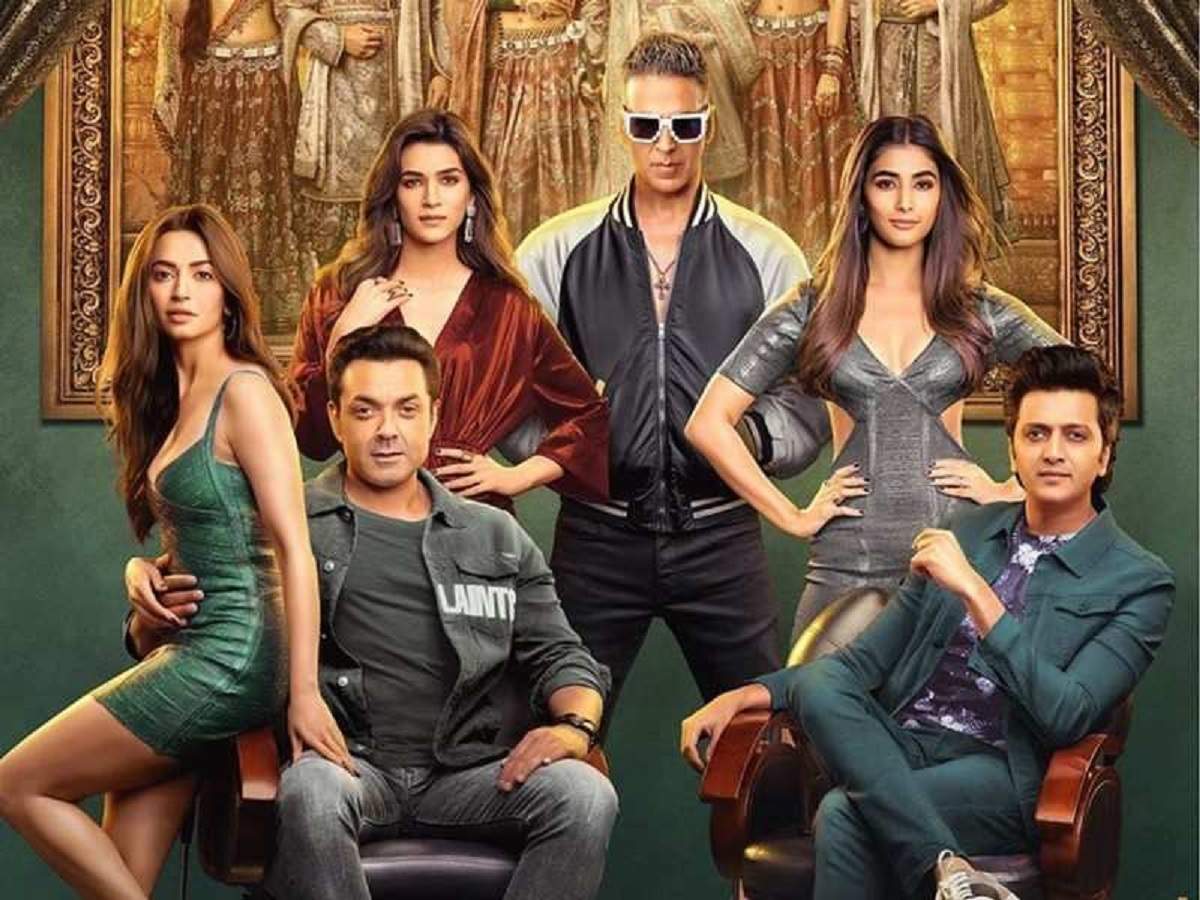
HOUSEFULL 4 and TOTAL DHAMAAL are running riot on satellite emerging the biggest television blockbusters in the satellite era after the two BAAHUBALI films. The Coronavirus lockdown has probably given the films a boost in terms of numbers in the recent screenings but they were recording huge numbers even before the lockdown.
HOUSEFULL 4 has recorded 6.28 crore impressions in six viewings while TOTAL DHAMAAL is at 7.40 crore after 10 viewings. These are peak viewings which register. HOUSEFULL 4 is the biggest ever for Akshay Kumar on satellite as well as box office in terms of collections while TOTAL DHAMAAL is the biggest ever on satellite for Ajay Devgn though TANHAJI: THE UNSUNG WARRIOR is the biggest at the box office in terms of collections and footfalls.
The numbers are impressions which are television sets and the reach which is the number of people would be around 22.50 crore for 7 crore impressions. This is calculated on the reach given for impressions for general viewing programs.
The lockdown is sure to boost numbers and WAR did extremely well with 2 crore plus impressions going by its TRP rating, the biggest ever for Hrithik Roshan and Tiger Shroff. PATI PATNI AUR WOH also scored recording 88.40 lakh impressions which is second best for Kartik Aaryan after LUKA CHUPPI while CHHAPAAK failed even in the lockdown.
The impressions for HOUSEFULL 4 and TOTAL DHAMAAL till date are as follows.
Housefull 4
1st - 2,15,42,000
2nd - 1,32,26,000
3rd - 77,93,000
4th - 48,62,000
5th - 55,96,000
6th - 97,84,000
TOTAL - 6,28,03,000
Total Dhamaal
1st - 1,67,93,000
2nd - 84,58,000
3rd - 73,06,000
4th - 79,84,000
5th- 84,36,000
6th - 52,87,000
7th - 37,41,000
8th - 45,50,000
9th - 60,97,000
10th - 53,28,000
TOTAL - 7,39,80,000

Fenil's Bollywood Talk # 616
7:56 AM

2020’S FIRST QUARTER SUFFERS A BIG DROP, AND NOT JUST DUE TO CORONAVIRUS!
A few years back, it was normal to not expect much from the business point view in Bollywood from the first three months of the year. Very few biggies used to release and it was said that a combination of reasons like cold wave, exams etc used to affect footfalls in cinemas. But things began to change from 2018. It saw a series of successful films like Padmaavat, Sonu Ke Titu Ki Sweety, Raid, Hichki and Baaghi 2. Padmaavat even in fact collected a mind-boggling Rs. 282.28 crore at the box office, despite not releasing in 4 states. Baaghi 2 too exceeded expectations with a business of Rs. 160.74 crore. Sonu Ke Titu Ki Sweety came with some hype but no one dreamed it’ll manage to cross the Rs. 100 crore mark.
The scenario got a bit better in 2019. It began with a bang with the blockbuster success of Uri. No one expected it to cross even Rs. 50 crore mark but it earned, believe it or not, Rs. 244 crore. Manikarnika – The Queen Of Jhansi was not a hit but accumulated Rs. 90 crore. Total Dhamaal had a lot of negativity among media and so-called intellectuals but masses made it a Rs. 150 crore grosser. Other films like Gully Boy, Luka Chuppi, Badla and Kesari too exceled at the ticket window.
As for 2020, it also started on an encouraging note thanks to Tanhaji – The Unsung Warrior. It was not a success in some states but the business in Maharashtra especially was so legendary that it ended its business with Rs. 269.70 crore. The other upcoming films too seemed exciting but sadly none of them worked well at the box office. Street Dancer seemed like a sure-shot hit to many but its opening was shockingly poor and so was its overall business. Love Aaj Kal started off well but public response was terrible. It opened at Rs. 11.47 crore but its lifetime earnings didn’t even cross the Rs. 35 crore mark! Bhoot – Part One: The Haunted Ship was Vicky Kaushal’s first film after Uri but its niche appeal and mixed word of mouth proved detrimental. Meanwhile, a lot was expected from Chhapaak and Panga. But these women-centric films proved to be flops.
By the time it was March, the Coronavirus scare began to increase day by day. Baaghi 3 had minimal impact of it initially but its opening got affected by lack of considerably hype and word of mouth. It ended it’s week one at Rs. 86.73 crore and it’s lifetime would have been around Rs. 115 crore. But sadly, cinema halls began to gradually shut from its 6th day of release. By the time it was its 11th day (March 17), cinema halls had shut across India. It’s collection stood at Rs. 92.31 crore and it’s said that it’s unlikely that it’ll re-release after normalcy.
Angrezi Medium was the unfortunate one as it released a day after Delhi government shut its theatres. On Day 2 of release, most centres of Maharashtra were closed down. Slowly, all other states also followed suit. It’s lifetime was a mere Rs. 9.06 crore. Despite Delhi shutdown and the fear, it had a decent opening of Rs. 4.03 crore. Hence, a Rs. 5 crore opening was possible if things were normal. Many missed watching it and it was hoped that it’ll resume its run once theatres open. A few days ago however, it arrived on digital platform Disney+ Hotstar. The inside news is that it the OTT giant handsomely paid the makers for its rights.
Meanwhile, a few films did well thankfully. Malang didn’t open well but had great response from public. It earned Rs. 57.96 crore. Saif Ali Khan-starrer Jawaani Jaaneman performed decently with Rs.24.58 crore. Shubh Mangal Zyada Saavdhan was helped by Ayushmann Khurrana’s presence majorly though the gay theme kept people away. Thappad did very well considering its subject and collected Rs. 29.70 crore. It could have easily crossed the Rs. 35 crore mark if things were fine.
The total nett box office collections of all Bollywood films in 2018’s first quarter was Rs. 880 crore approx. In 2019’s first quarter, it jumped to Rs. 1041 crore approx. In 2020, it however came down at Rs. 735 crore approx. Had the highly awaited Sooryavanshi released on its scheduled date on March 24, then this figure could have crossed the Rs. 1000 crore mark.
It’s scary when critics declare you are in top form-Taapsee Pannu
8:53 AM

Taapsee Pannu on bouquets, brickbats and making the most of an unplanned break
Ankita Chaurasia (MUMBAI MIRROR; April 8, 2020)
 Taapsee Pannu was gearing up for a jam-packed 2020, before the Coronavirus pandemic came along. The actress had only 10 days of work left on Vinil Matthew’s romantic-thriller, Haseen Dillruba, and the Tamil spy-thriller, Jana Gana Mana and was to kick-start four films — Rashmi Rocket, Looop Lapeta, Anurag Kashyap’s supernatural thriller and the Mithali Raj biopic, Shabaash Mithu. When the shutdown was announced, she burst into laughter instead of suffering a nervous breakdown. “I was getting stressed about juggling dates. Now, everything will have to be readjusted, and for no fault of mine,” she chuckles.
 Describing the resulting chaos as “karma that has come back to bite the human race” and “nature putting their foot down”, Taapsee points out that she will have lots of stories to narrate to the next generation. As far as work goes, she’s not fretting as not just the film frat, every job and person has been hit by the outbreak. “When normal life resumes, we will all be starting from the same place, no one will have a headstart,” she philosophizes.
The actress has been undergoing rigorous training since January to play an athlete in two back-to-back sports dramas, Shabaash Mithu and Rashmi Rocket, and has to maintain the fitness level. “It will be impossible to sustain the training over a long time. Also, my diet has to be in sync, which is nearly impossible right now. So, I’m on a plateau, looking at maintaining form and shape so that when I get back to work, it doesn’t feel like I’m starting anew,” informs Taapsee, who flew down to Mumbai from Haridwar to isolate herself from her 59-year-old mother and 65-year-old father, who are in Delhi with her sister.
 Away from family, she’s been trying to hone her skills in the kitchen, even though she doesn’t enjoy cooking, because it keeps her occupied. “I’m worried I may soon run out of things to clean. I have OCD. Even during a hectic schedule, I water the plants every day. Now, with the gardener away, I need to keep them alive. Cleaning the house is therapeutic, I’d recommend it to everyone,” she laughs.
When she’s done with the chores, Taapsee unwinds with a film that she couldn’t catch in the theatres or clocks in some hours of reading. “I wasn’t able to read any scripts because I was caught up with the shoots and promotions. Now, I am reading one every day, making feedback notes and sharing my inputs. I’ve even liked some of them,” she says.
Isn’t she keen to pursue long-cherished hobbies during the downtime? “I’m a trained classical dancer. A couple of years ago, I was determined to give dance more time. Unfortunately, the teacher can’t come to train me now. That apart, I was never into arts, crafts or cooking,” she says dismissively.
 Dancing, gardening, cleaning and a lack of culinary skills…Taapsee’s timetable reads like a character sketch of Amrita, her housewife from Thappad. Has the character stayed with her, you wonder, and the actress admits that filmmaker Anubhav Sinha, who knows her well, wrote the character keeping her in mind. “Amrita was real and hence resonated with so many on a personal level,” she avers, pointing out that the film could have enjoyed more weeks in the theatres if not for the unseen virus. “Deepika (Padukone) and Kangana (Ranaut)—whose women-centric films, Chhapaak and Panga, released this year—are big names. We never thought that Thappad would match or surpass their collections, more so since films on acid attack survivors and a mother reviving her career don’t divide the audience. It is a huge validation for everyone involved.”
The actress, who was already in Haridwar by the time the reviews started coming in, says she’s happy she didn’t have the time to revel in the compliments. “It’s scary when critics declare you are in top form after every film. Where do you go from there? The graph should always keep climbing because once you reach the top, you have nowhere to go except down. Praise can go to your head, though mine is firmly placed on my shoulders,” she chortles, admitting that the best compliment came from her father, who couldn’t find a single flaw in the film.
But what about the brickbats, in particular those coming from detractors who wanted her film banned? “Twitter is a war-zone, when you try answering the trolls, they manipulate your words and give everything a political turn, making things controversial. Then, they will ask for your film to be banned. When it works despite them, they are enraged,” smirks Taapsee.
She recently stood up for Neha Dhupia after she was trolled for her comment on a reality show. Insisting that she would have dealt with the situation differently, the actress reasons, “Neha feels that cheating is a moral choice but violence is not acceptable. I feel both are morally wrong. One can’t be the answer for the other as two wrongs don’t make a right. Ditto for trolls, who questioned her morality and targeted her husband and one-year-old daughter. I was speaking up against that.”
Lockdown effect: 42% spike in TV viewing
8:26 AM

News and film channels have shown the maximum growth; in GECs, Ramayan, Taarak Mehta Ka Ooltah Chashmah and Khatron Ke Khiladi are superhits again
Himesh Mankad (MUMBAI MIRROR; April 4, 2020)
 On March 25, after Prime Minister Narendra Modi announced a 21-day national lockdown due to Coronavirus, the entertainment industry came to a standstill, with the exception of TV. As TV tracking expert Shailesh Kapoor informs, there has been a spike of 42 per cent in TV viewing. “News and film channels have shown the maximum growth. GECs (General Entertainment Channels) haven’t grown much because they are running out of original content,” he shares.
 There has been an increase in the overall consumption of films across the country, with Sony Max, Star Gold and Zee Cinema leading the race. “Star Gold benefitted through the world TV premiere of Hrithik Roshan and Tiger Shroff’s War, which premiered on the same day as Janta Curfew. Deepika Padukone’s Chhapaak also premiered in the same week on Star Plus,” informs Shailesh. Meanwhile, Sooraj Barjatya’s Hum Saath Saath Hain continued to grab eyeballs 21 years after its release. Sajid Nadiadwala’s more recent comic caper, Housefull 4, is another hit, with consistently high ratings despite repeat runs.
The other TV shows that are doing well are Kumkum Bhagya and Kundali Bhagya on Zee TV, Naagin 4 and Choti Sarrdaarni on Colors and Kasautii Zindagii Kay on Star Plus. Shashi Shekhar, CEO, Prasar Bharati, recently tweeted that Ramayan re-runs on DD National have recorded the biggest rating for a Hindi GEC show since 2015.
After two years, I’m home for longer than a week-Vikrant Massey
8:52 AM

Vikrant Massey rings in his 33rd birthday today with his mom, and fiancée Sheetal
Akash Bhatnagar (MUMBAI MIRROR; April 3, 2020)
 Vikrant Massey, who turns 33 today, is excited to be celebrating the day with his family after a long time. “I have been spending my birthday on the sets for the past six-seven years. Since 2018, I have mostly been out of the city, as most of my films have been shot outdoors. After two years, I’m home for longer than a week,” shares the actor, who is living in with his fiancée Sheetal Thakur. “I’ll cook pav bhaji, I have bought all its ingredients, and maybe kheer as well. But probably, my mother and Sheetal will end up doing all the cooking,” he laughs.
Unlike many of his restless colleagues, Vikrant doesn’t mind the Coronavirus lockdown. “I am not constantly checking the clock to see how much time I have left. I’m reading scripts and books at leisure, writing in my journal and doing the household chores,” he informs, adding it is also giving Sheetal and him time to bond.
Earlier, the actor was scheduled to shoot in Haridwar with Taapsee Pannu for Haseen Dillruba around this time. “We would have finished the film in two weeks. Now, my schedule for the year has gone for a toss,” sighs Vikrant, whose next release with Yami Gautam, Ginny Weds Sunny, has been pushed as also a new project that the actor was supposed to do.
The actor started the year with Deepika Padukone’s Chhapaak, revolving around an acid attack survivor. The film did not do well commercially, but Vikrant insists it resonated with some people. “We always knew it wouldn’t get big numbers; it wasn’t made for that. But with the digital platform and our tie-ups, we have reached our target audience,” he states.
It’s been seven years since Vikrant debuted in Hindi cinema as Ranveer Singh’s friend in Lootera. Now, with lead roles in his kitty, does he feel he is finally getting his due? “I started with TV and for film producers to sign me, means I got my due even back then. I played the hero’s friend in a couple of films and directors like Zoya (Akhtar), Konkona (Sen Sharma) and Meghna (Gulzar) spotted me in them and gave me bigger roles. The industry has been very kind to me,” he asserts.
Tanhaji: The Unsung Warrior is the only success of the first quarter of 2020
8:57 AM

Box Office India Trade Network
The first quarter has seen a dull response with only TANHAJI: THE UNSUNG WARRIOR emerging a success and a huge one also. The film became the third biggest blockbuster of the last 20 years in Mumbai circuit with footfalls only behind BAAHUBALI 2: THE CONCLUSION and GADAR - EK PREM KATHA.
The rest of the films did not work at all though BAAGHI 3 would have been a SEMI HIT/HIT film as it would have hit the 115 crore nett mark and maybe even crossed 120 crore nett for HIT status if it was not for the shutdown of theatres due to Coronavirus. The film could still make AVERAGE status if it get another 2.50 crore share when cinemas reopen.
The only two other films to avoid FLOP status were SHUBH MANGAL ZYADA SAAVDHAN and MALANG though the former under performed and the latter had far too high costs for the cast of the film. The classifications of the the major films released in the first quarter of 2020 are as follows. Only BAAGHI 3 may have a change depending on what happens when cinemas reopen.
All Time Blockbuster
-
Super Blockbuster
-
Blockbuster
Tanhaji: The Unsung Warrior (131 crore)
Super Hit
-
Hit
-
Semi Hit
-
Average
-
Below Average
Baaghi 3 (47.50 crore)
Shubh Mangal Zyada Saavdhan (26.50 crore)
Malang (26 crore)
FLOP
Street Dancer (32 crore)
Chhapaak (14.75 crore)
Bhoot: Part One – The Haunted Ship - (14 crore)
Thappad - (13.50 crore)
Jawaani Jaaneman - (13 crore)
Panga (8.75 crore)
Angrezi Medium (4.25 crore)
Shikara (3.25 crore)
Fenil's Bollywood Talk # 605
10:22 AM

SECOND BIG CLASH OF THE YEAR IS HERE!
The Tanhaji: The Unsung Warrior vs Chhapaak clash is done and the verdict is clear. The former has emerged as a blockbuster while the latter is a flop. The fight was never about which film will collect more. Tanhaji: The Unsung Warrior had more appeal and would have anyways been ahead in terms of earnings. But if Chhapaak had done well in the range of Rs. 50-60 crore, it would have still emerged as a winner.
Now, a similar clash will be seen tomorrow with Street Dancer and Panga. Again, the former is a biggie and a commercial entertainer. Panga meanwhile is niche but with solid potential. My analysis:
STREET DANCER: It is the same zone as ABCD – Any Body Can Dance and ABCD – Any Body Can Dance – 2. Both films were directed by Remo Dsouza, with the second part starring Varun Dhawan and Shraddha Kapoor. Street Dancer marks the comeback of all 3 together and is in the same zone. And what’s more, it’s in 3D just like the first two films. The trailer indicates that the makers have tried their best to ensure that the dance and madness goes one level up. There’s also a patriotism and India-Pakistan friendship element and can work, if it’s handled well. And of course, there’s also Nora Fatehi, whose presence also adds to the film. Songs have worked very well and have got huge number of views. It’s a small indication that audiences, especially youth, are really interested to see it.
Street Dancer, however, has some challenges to face. The buzz is there but not that high. Also, a section of viewers feel that it might be too similar to ABCD films. The use of so many remixes is also slammed especially songs like ‘Lahore’ whose original had come out just a couple of years back. Moreover, the super success of Tanhaji: The Unsung Warrior means that some shows will be reserved for it. In fact, it’ll be strong in Week 3 as well and might eat into business of Street Dancer, especially if it’s response is not positive.
But thanks to massy and youth factor, Street Dancer will have a great opening, of more than Rs. 10 crore. It should go to Rs. 15 crore, and that’s crucial because ABCD – Any Body Can Dance – 2, 4 ½ years ago, opened at Rs. 14.28 crore. If Street Dancer opens below than this film, then it’ll be a slight loss of reputation. Yet, the makers shouldn’t worry if content clicks as it can cover lost ground from Saturday. Republic Day sadly falls on Sunday this year but that can also give a slight boost to the collections.
PANGA: It is directed by acclaimed director Ashwiny Iyer Tiwari, of Bareilly Ki Barfi and Nil Battey Sannata fame. The film stars Kangana Ranaut, Jassie Gill and Neena Gupta with Richa Chadha in a cameo, and tells the story of a mother returning back to the sport she once exceled in – Kabaddi. The trailer is great and it seemed the marketing and launching of songs will keep the hype going. Sadly, that didn’t happen. The music hasn’t worked at all. The makers now solely hope that Kangana Ranaut’s popularity and their content will get people to theatres in hordes, and that too in urban areas only as it has no chances in B and C centres. Moreover, it has competition from Street Dancer and Tanhaji: The Unsung Warrior.
Kangana Ranaut’s last films like Judgementall Hai Kya and Simran opened at Rs. 4.54 crore and Rs. 2.43 crore respectively (We are not counting Manikarnina – The Queen Of Jhansi as that film was more mainstream, unlike Panga). Panga will have an opening which will be somewhere in between the day 1 of these films. It should be around Rs. 2.50-3.50 crore range with a slight chance of reaching the Rs. 4 crore mark. If reports are positive, then the film can score big time and collections can even be double of Friday. And then once Monday collections are more than Friday, then the film is a winner and is accepted. This of course will happen if people love it. If reports are negative or if the film, like Chhapaak, is too dry, then it’ll have a very tough time.
WHICH FILM WOULD YOU LIKE TO SEE AND WHY? DO LET ME KNOW!
I have no time for people with any kind of baggage-Kangana Ranaut
8:31 AM

Kangana Ranaut on why marriage is not a compulsion right now, the struggle to rehabilitate sister Rangoli Chandel after an acid attack and how nepotism can only end with action, not empathy
Roshmila Bhattacharya (MUMBAI MIRROR; January 20, 2020)
Your upcoming film, Panga, is about surmounting hurdles and pursuing dreams. For a small-town girl with no godfather in the film industry, how difficult was it for you to chase after a Bollywood dream?
It wasn’t all that difficult for me because I left home when I was only 15. And the minute I broke away, I could breathe freely and operate like a single, independent entity. There was no explaining to parents, no listening to the bitter city experiences of family elders and no societal pressures tying me down. I could take risks, telling myself that the worst thing that could happen was failure and I was ready for the consequences. It was harder for my character, Jaya Nigam, because as a mother she couldn’t abandon her child or walk away from her marriage. But at 30, she wants to chase her dream of being a kabaddi player because dreams are not limited by age. For me, it was an insight into a life very different from mine, where it was important for the family to understand that this woman, till now, has only given, and expected nothing in return. Jaya doesn’t have a choice. She has to raise a family but is unwilling to compromise on this dream. She has to strike a balance between the two, and that’s how it should be. Today, fortunately for me, I’ve got my family back. But I know that somewhere success had a huge role to play in the reconciliation. Had I not made it in films, I might have lost out on both my family and my dream, and that would have been devastating.
Alone, in a big, heartless city with no family support; how terrifying was it for the teenager Kangana?
Well, I fell into bad company straightaway. Some people took advantage of the fact that I was alone and couldn’t confide in my parents, and I’ve experienced the worst a person can go through. It toughened me up and made me the person I am. But I wouldn’t want my children to go through such extremes. I would want to be there for them.
Marriage and children, is that a dream now?
When I was in my 20s, I was desperate for a family. I felt incomplete and thought my own people would make me feel complete. With time, I have come to realise that this is not true. So, right now there’s no compulsion to be a wife and a mother. I’m at a phase when I’m just beginning to enjoy my life. If someone can add to it, I’m fine, but if, as a woman, I am expected to ensure he’s emotionally stable, enhance his spiritual growth, be lucky and bring him financial windfalls and take on the responsibility of a home, children and family, then, I’m not up for that. At the moment, I have no time for people who come with any kind of baggage.
Why not?
Well, for the longest time, we’ve been emotionally scarred by what happened to my sister Rangoli (Chandel) after the acid attack. It took a long time, but finally, she is happy, with a child all of us dote on. Her husband’s business is doing well and my mamma, who was grappling with some health issues, is fully recovered. Also, the half-a-dozen cases filed against me have been dismissed as the allegations couldn’t be proved. My brother Akshit and I have just launched a production house and we’re starting from scratch, we aim to do some good work. This is a wonderful time for all of us; I’ve never felt so good. The world is respectful; there’s a lot to do and give. And for the first time, I can think about myself. Let me be a little self-centered and enjoy what I have earned. I don’t have the time and energy to invest in another family. That can come later.
Have you seen Chhapaak, in which Deepika Padukone played an acid attack survivor?
No, with my own film, Panga, coming up, I haven’t had the time but I will watch it for sure.
How difficult was it to deal with the acid attack on Rangoli?
It was horrific! You are hurt if your loved one gets even a scratch or a pimple, so, you can imagine the kind of pain one would feel to see their face melt. Outward appearance is far more important to a woman than a man, and taking that away from her is a fool-proof way of isolating her from the world. I was just 19, on the threshold of a bright career, when the attack happened and it was a long, hard struggle to deal with this kind of perverse, sexist cruelty. Financially too, I was not strong back then. Girls around me would feel depressed by a bad hair day or because a meal was not to their liking. I was grappling with something far more real and yet had no time to sit and cry. I did tacky films, took on roles I did not deserve, accepted guest appearances, so my sister could be treated by the best surgeon in India. It took 54 surgeries.
Your mentor, Anurag Basu, recently described you as a strong, ambitious girl and says he’s proud of where you have reached.
Anurag is my godfather. He just picked me, auditioned me and gave me a break. There were people around, like Gangster producer Mahesh Bhatt, who wanted Chitrangda Singh, because he thought I was too young to play the mother of a five-year-old kid. He was right, too, because I was still a minor then. But Anurag believed in me and fought for me.
He also worked a lot on me. I was a theatre actor, but Anurag didn’t want me to act. He wanted me to surrender myself to the camera. The foundation of my acting, which is strong, subtle, natural and universally appealing, comes from him. I will always be building on that. He’s one of the best directors we have and I have only taken from him, not added anything to his life. I hope someday I get the chance to give something back, too. I feel a karmic connection with Anurag and I’m sure we are going to collaborate again and create some great work.
Pooja Bedi’s daughter Alaya F, who debuts as Saif Ali Khan’s daughter in Jawaani Jaaneman, recently said that being a star kid “we are privileged even in our struggles”. As someone who brought the term nepotism to the fore, what do you feel about this disparity in the industry?
One day I was thinking that as a star kid, what would it take to empathise with an outsider and say we understand the exploitations they go through. The important thing is not just to imagine but also empathize and work towards ending the culture of exploitation of outsiders from a position of power.
You’ve started your own company and you are in a position of power today. Will you put an end to this nepotism culture?
I think nepotism is completely based on the fact that people, who are not as deserving, get a chance, as opposed to those who deserve it. Because of such practices, most people are lagging behind. I will always go for the person who is best suited for the job, that’s the basis of my work ethics. I want the best for my project, without personal gains or emotional pressures. I’ll be doing myself a favour working with deserving people.
Panga will be your second Republic Day release after Manikarnika last year...
Yes, Republic Day has been lucky for me and I hope that continues. The ability to keep the family together while retaining her individuality is something a mother does so wonderfully. And I’m grateful to Ashwiny (Iyer Tiwari, Panga director) for giving me the opportunity to live this role and experience.

How much cheaper is a tax-free film?
8:11 AM

Niharika Lal (BOMBAY TIMES; January 16, 2020)
Recently, several states declared Deepika Padukone’s Chhapaak, a film on acid attack survivors, taxfree, while UP did the same for Ajay Devgn’s Tanhaji: The Unsung Warrior, a film on Maratha warrior Tanhaji Malusare. Maharashtra is considering making both the films tax-free, as per Revenue Minister Balasaheb Thorat, who said, “Earlier, the Revenue ministry used to take a decision on making a movie tax-free, but now the tax has been subsumed in the GST.” Since GST (Goods and Services Tax) came into effect, what exactly does a film’s tax-free status mean?
In December 2018, two GST slabs were announced for films — 18% for tickets above Rs 100, and 12% for tickets below Rs 100. This tax is divided between the state and central government (State GST and Central GST). When a state declares a film ‘tax-free’, now it exempts only half of the entertainment tax, which would be either 9% or 6%, as per the ticket price. For the multiplex audience, since there are hardly any tickets available below Rs 100, the default exemption would be 9%. Cinema hall owners say that declaring a film tax-free had a bigger impact in the pre-GST years, when every state had different entertainment tax and the state governments could exempt the whole amount. Now, a moviegoer still needs to pay Central GST even for tax-exempted films. With GST in play, now the tax-free status of a film means endorsement of a film by the state government, rather than any significant monetary benefit.
Chhapaak has given us a place in people's hearts-Laxmi Agarwal
8:14 AM

Acid-attack survivor Laxmi Agarwal watches Chhapaak with her daughter Pihu, leading to a heart-warming conversation between the two
Sonia Lulla (MID-DAY; January 15, 2020)
 Despite being told otherwise, acid-attack survivor Laxmi Agarwal recently sat with daughter Pihu, four, to watch Chhapaak, the Deepika Padukone starrer that is inspired by her life. Agarwal wasn't certain how much her daughter would comprehend of the crime committed on her.
"She usually leaves a film half-way, but patiently watched this one till the end. She then posed questions, one by one, all of which I addressed. After the film, she showered me with so much love. She also went and hugged Deepika. I wanted to make a video of her [reacting to the film] and show the world what she felt, in her own words," Agarwal tells mid-day in a joint conversation with director Meghna Gulzar.
In what can be considered an achievement for Chhapaak, the Uttarakhand government recently announced its plan to start a monthly pension scheme of Rs 6,000 for acid-attack survivors in the wake of the film's release. Agarwal is hopeful that other states will follow suit. The human drama, she says, has not only underlined the heinous crime but also made people increasingly empathetic towards survivors. Citing an example, she says, "Those residing in Chandni Chowk are old-school, and generally make fun of people [like me]. But, today when I was there, shop owners invited me in and saluted me. The film has given us a place in people's hearts. Today, we've got over the pain that people gave us."
Gulzar asserts her objective to make Chhapaak was to bring these heroes to the fore, who were rendered "invisible" by society. "They were invisible, not because they were covering their faces, but because we didn't look at them. [Now] the way we're seeing them has changed. Today, we shared a video [from an NGO] where a [survivor] spoke of how people's reaction to her has changed. For me, that is as big an impact as the [Uttarakhand government's step]," she says.

To all those who ‘boycotted’ Deepika Padukone’s Chhapaak, do you have the GUTS to boycott her next, ’83?
10:02 PM

Exactly a week ago, Deepika Padukone’s film Chhapaak seemed non-controversial. A section of audience was interested to see it. The rest weren’t; a large part of the population didn’t even bother about this flick. But then all hell broke loose as the actress visited the most hated place for some Indians – the Jawaharlal Nehru University (JNU). She met the student president Aishe Ghosh, who was injured in a recent attack along with many other students. She stood in silence, in solidarity, in the presence of activists like Kanhaiya Kumar. As expected, within no time, the IT cell machinery of the ruling BJP government went into an overdrive. They launched a vicious attack on Deepika Padukone and even managed to find her 2011 interview wherein she praised Rahul Gandhi. Of course, they conveniently chose to hide that she said called Rahul the future Prime Minister of India at a time when many in the country didn’t find him a ‘Pappu’. The most laughable was that they spread a lie that her film Chhapaak, which is based on real incidents, has changed the religion of the attacker from Muslim to Hindu! It turned out to be a blatant lie. To save their faces, they claimed that originally, the said character was a Hindu and it’s only because they raised voices is that the change was made. Obviously, they had no answer when asked which cutting-edge technology was used to alter the lip movement when the character’s name was uttered many, many times in the film!
And like it always happens in such cases where someone goes against the BJP, their infamous and notorious IT cell started the #BoycottChhapaak trend. It got lakhs and lakhs of tweets. As part of this campaign, they began to encourage the other film releasing with Chhapaak – Tanhaji: The Unsung Warrior. This film was a saga of an unsung Maratha hero who fought the Mughals. Moreover, it starred Ajay Devgn, who has never visited JNU or Jamia and in fact, once went to Bihar to support BJP during 2015 elections. Thus, this film ticked all the right boxes. So anti-Chhapaak crusaders overnight became pro-Tanhaji fanatics, when 90% of them didn’t care about both the films 12 hours prior.
Both Chhapaak and Tanhaji: The Unsung Warrior opened on January 10. And Tanhaji: The Unsung Warrior was a clear winner from Day 1. The film was a great entertainer with an unbelievable climax that made people clap and whistle. Most importantly, it was a mainstream film. Chhapaak, on the other hand, was a niche flick and a story of an acid attack survivor. It was not the conventional entertainer. As a result, the film opened on a not-so-great-note. Sadly, even reports were mixed. A lot of viewers complained that it was a missed opportunity as the film had lot of potential. This reflected in its collections. Usually, such films have a poor opening but then have a huge jump in earnings. This has been seen with films like Pink, Article 15, Andhadhun etc. But Chhapaak never got that spike in earnings. As expected, the geniuses behind #BoycottChhapaak began to take credit. They felt it’s because of them that Chhapaak has flopped.
So did Deepika Padukone’s JNU visit and the subsequent smear campaign really dent the film? The answer is a BIG NO! And it’s easy to explain why. Take a look at all those who are vehemently against Chhapaak due to the JNU episode. These people were never the target audience of the film. These people would have never ventured out to see Chhapaak, even if Deepika Paudkone had made no such visit to the said university. The film was targeted at the elite multiplex crowd. Most of them are sympathetic to the manner in which the students were assaulted and injured. Again, these are the ones who were interested to see the film as they are usually accepting of such disturbing and niche subjects. Hence, the intention probably was to get into their good books.
In the past, these BJP fanatics have targeted films like Dangal and Veere Di Wedding. Both were huge hits. Even Padmaavat was a film that had enraged some of these trolls due to the controversies over its content. It didn’t release in as many as 4 states. Yet, it crossed more than Rs. 270 crore net at the India box office. Hence, it has been proved time and again that boycott campaigns have zero impact on films. The reason Chhapaak didn’t work is because the content didn’t click with the target audience.
To further explain this point, let me make a comparison of Chhapaak collections with that of the 2018 Varun Dhawan starrer, October. The collections of Chhapaak for the first four days are as follows:
Friday - 4,50,00,000 apprx
Saturday - 6,50,00,000 apprx
Sunday - 7,00,00,000 apprx
Monday - 2,00,00,000 apprx
TOTAL - 20,00,00,000 apprx
Meanwhile, these are the four-day collections of October
Friday - 4,50,00,000 apprx
Saturday - 7,00,00,000 apprx
Sunday - 7,50,00,000 apprx
Monday - 2,50,00,000 apprx
TOTAL - 21,50,00,000 apprx
As one can see, the collections are more or less in the same range. October earned around Rs. 25.37 crore approx in Week 1. Chhapaak too would end up earning the same as it’ll get advantage of minor holidays today and tomorrow. But the main point is – even October had similar mixed word of mouth like Chhapaak. Despite having a star like Varun Dhawan, the collections didn’t go beyond a point and this usually happens with such niche films with not-so-great reports. And mind you, Varun never visited JNU!
Also, can all those promising to boycott Chhapaak can assure that they’ll similarly boycott Deepika Padukone’s next, ’83 as well? For those who don’t know, this sports film is based on India’s stunning victory in the 1983 Cricket World Cup. Ranveer Singh essays Kapil Dev while Deepika plays his wife. Just like Chhapaak, it’s also produced by the actress. It’ll release on Good Friday Holiday, on April 10, 2020, and is expected to be the biggest blockbuster of Hindi cinema, dethroning Dangal from number 1 position. The hype it’ll create will be historic as it’s a film that’ll attract audiences of all age groups and all kinds. And this also includes the BJP fanatics. They won’t be able to help but not see ’83! As a result, this #BoycottChhapaak movement was nothing more than a nuisance and made no impact to the film whatsoever.
Lastly, it also raises another question – if Deepika Padukone’s JNU visit didn’t dent the film, then did it help Chhapaak in any way? Again, the answer is a No. There’s no doubt that it was a publicity stunt by the makers. Possibly, it was done because they realized that the product is not upto the mark and were hoping that this campaign gives them the much needed boost. Well, it did grab eyeballs but didn’t translate into healthy box office numbers.
In the process, however, Deepika ended up taking a huge risk. In order to promote her film, she took a step that can have huge repercussions in a country like ours. Her image of standing with folded hands in front of Aishe Ghosh would forever haunt her and might be taken up in future by vested interests to further their evil agenda. Obviously, she must be having the urge to support the students and that’s what made her go there. After all, there are other, non-controversial and headline-grabbing methods of promotion as well. One just wishes it was not done under the guise of film promotion as that took away some impact. Nevertheless, here’s hoping Deepika Padukone’s brave decision motivates other Bollywood actors, who also want to do something similar but don’t do it out of fear.
I couldn't have Vikrant Massey do things that you'd associate with a filmy hero-Meghna Gulzar
8:55 AM

As Vikrant Massey's understated character in Deepika Padukone-starrer Chhapaak wins praise, director Meghna Gulzar discusses writing sensitive parts for men in times of machismo-driven films
Mohar Basu (MID-DAY; January 12, 2020)
 "I did not make this film to specifically give out a message to the men," begins director Meghna Gulzar whose Chhapaak—that highlights an episode of violence against women—has opened to rave reviews. The human drama may be a Deepika Padukone show all the way as she brings alive the story of acid attack survivor Laxmi Agarwal on celluloid, but the deft treatment of Vikrant Massey's character too has earned praise. Through his part, that is modelled on Alok Dixit (Agarwal's partner), the writer-director has given us a strong yet sensitive man, who joins Padukone's character in her fight against the sale of acid.
Ask her if women filmmakers weave more empathetic male characters as they mirror their own projections of what they hope from the men in their lives, and she says, "I don't have the lens for gender. If you can speak to humanity at a generic level, the gender issue will sort itself out. I have been fortunate to write and direct male characters that are noble and sensitive. With Vikrant, we were guided purely by the story we were telling, the real-life reference and the sensibility of the writer and filmmaker involved. I couldn't have Vikrant do things that you'd associate with a filmy hero. Such [supportive] men also exist as much as those we show on screen."
The writer-director has a knack for creating male characters that are refreshingly divorced from the macho parts that Bollywood often churns out. In her last offering, Raazi (2018), Gulzar brought depth to the role of Iqbal, that was enhanced further by Vicky Kaushal's performance. As a Pakistani major who discovers that his wife is an Indian spy, the character of Iqbal was valiant, yet vulnerable. She emphasises, "The acceptance that Vicky's character got proves that there's appreciation for characters that are not larger-than-life heroes. These are real men, and we have to celebrate them."
Subscribe to:
Posts (Atom)