Showing posts with label Censor Board. Show all posts
Showing posts with label Censor Board. Show all posts
Pakistani singer Mustafa Zahid in talks to reprise Tera Mera Rishta in Awarapan 2
4:17 PM

Mohar Basu (MID-DAY; August 6, 2026)
Emraan Hashmi’s ‘Awarapan’ (2007) remains memorable as much for its songs as for its unrequited love story. So, as soon as ‘Awarapan 2’ was announced, speculation abounded whether its hits ‘Tera Mera Rishta’ and ‘Toh Phir Aao’ would be revisited. Now, mid-day has learnt that Pakistani singer Mustafa Zahid, who voiced the original ‘Tera Mera Rishta’, is in talks with producers Mukesh and Vishesh Bhatt to record its reprised version.
This development comes as a surprise — after all, following the 2016 Uri attack, the Indian film industry stopped working with Pakistani artistes. In the aftermath of the 2025 Pahalgam terror attack, cine bodies reiterated their stance of boycotting artistes across the border.
However, talks about a potential collaboration are on between Zahid and the ‘Awarapan 2’ makers. If things go as planned, the recording will take place in Dubai this week.
A source said, “Should the deal materialize, it will mark one of the rare instances in recent years of a Pakistani playback singer recording for a mainstream Hindi film. The song won’t be used in ‘Awarapan 2’ as that may land the film in certification trouble. So, the makers are considering bypassing its theatrical use; it will be used only in social media-led promotions. The professional reunion is awaiting approval from both parties at this stage.”
mid-day reached out to Vishesh Bhatt, who didn’t respond till press time.
I got a lesson in casteism during Max Min And Meowzaki censor process-Padmakumar Narasimhamurthy
10:49 AM

From AI and censorship to politics and compassion, director of the new Hindi film Max, Min & Meowzaki, Padmakumar Narasimhamurthy, unpacks why Hayao Miyazaki’s greatest influence has always been the enduring humanity of his movies
Mohar Basu (MID-DAY; July 26, 2026)
Ghibli AI fever has taken over our phone screens but this week we watched a movie Max Min And Meowzaki by director Padmakumar Narasimhamurthy that wants to reclaim Hayao Miyazaki’s real legacy, reigniting debates around artistic originality and a long-standing criticism of AI-generated art. The filmmaker believes the social media discourse on the subject has missed what truly makes the Japanese master timeless.
His Hindi film starring Adil Hussain, Nasser, Medha Shankr, Siddharth Menon, Mandira Bedi, Nafisa Ali and Vidhatri Bandi among others, even names its feline after Miyazaki. But the reference for Narasimhamurthy, it’s about bringing back the values that define Miyazaki’s cinema. “I think the biggest thing is friendship,” he says.
“If it’s genuine, it endures. You see that throughout the film. Every relationship begins with friendship before it becomes anything else. That’s something Miyazaki has always understood. Whether it’s between men and women, humans and non-humans, his films always celebrate the depth of friendship.”
Just as important, he says, is compassion. “In Miyazaki’s films, people genuinely care about each other. We are closed to other points of view. For instance, a track I used in this film is about a friend of mine who cut all ties because his girlfriend wanted to have an abortion and I supported her because well, her body, her decision! People think it’s biographical, but it’s really not. Some of what my relationship with my father was, is mirrored in the movie. I built in a grandfather I wish I could have had. The bittersweet breakup is well, life,” he says, with a glint of joy in his eyes.
The politics in Max Min And Meowzaki are equally important. It goes on to discuss everyday politics, religious discrimination, body autonomy for women, youth protest in a regular everyday fashion, while focussing on intergenerational trauma, grief and moving on. Narasimhamurthy rejects the idea that Miyazaki’s films are escapist.
“Every Miyazaki film is political. Princess Mononoke is about nature and coexistence. Kiki’s Delivery Service has a feminist undertone. Spirited Away is about consumerism. They’re wrapped inside beautiful fairy tales, but they’re all saying something about the world,” he says, adding that he simply follows suit.
He admits he has never believed in separating his politics from his filmmaking. “I wear everything on my sleeve. My first film, A Billion Colour Story, came out during the lynching years because I had something I needed to say. My greatest fear is the division and suspicion that exists today. What is the need for all this hatred? Art is supposed to speak the conscience of humanity.”
That conviction, however, came at a price. Even this gentle, feel-good drama wasn’t spared. “I ran into censor problems with this film. There were lines I had to change. References to Muslims were removed. I even got a lesson in casteism during the process. It’s ironic. Here’s a film that’s fundamentally about kindness and healing, and we’re still afraid of conversations.”
The resurgence of AI-generated Ghibli-style artwork has only strengthened his belief that the industry is heading in the wrong direction. “I’m very against what AI is doing right now because it’s destroying lives, not just livelihoods. AI isn’t creating original work. It’s making mathematical combinations of everything that already exists. What happens to the musician who’s spent a lifetime mastering an instrument? What happens to writers? It’s not just eroding art, it’s eroding readership.”
He believes preserving the work of masters like Miyazaki is an ethical responsibility. “We should be using technology to remove human drudgery, not replace human creativity.” His own film reflects that philosophy. Therapy, forgiveness, broken relationships and complicated family dynamics all emerge naturally instead of being reduced to dramatic plot devices.
“We’ve all been somebody’s toxic boyfriend or toxic partner. We’ve all had toxic partners. Then you grow up and realize it didn’t have to be that bitter. Therapy teaches you to forgive yourself and everyone else. You just keep trying to do life a little better, parenting a little better, loving a little better. That’s what this film is about.”
The filmmaker says one of his biggest challenges today is simply finding backing for stories that choose empathy over spectacle. “I make films that feel good but still ask difficult questions. Financing them has become harder and harder. Then I see films full of misogyny getting massive budgets. That’s disillusioning. But I’m a writer. I’m a dreamer. I’ll keep making these stories. If you call out a little dissidence in society, what’s wrong with that? Art is meant to speak the conscience of humanity.”
But does it have a nod from the master himself? After making the film, Narasimhamurthy even tried to reach Miyazaki himself. “We screened the film in Osaka and reached out to Studio Ghibli because I wanted Mr Miyazaki to watch it. That’s all. We aren’t borrowing his work; we’re celebrating everything he stands for. We couldn’t reach him, but I hope someday he watches it.”
For Narasimhamurthy, Max Min And Meowzaki is far from an attempt to recreate Studio Ghibli in Hindi. It’s an attempt to revive something far more elusive. “I feel like I’m hugging people with this film. That’s all I wanted to do,” he signs off.
"A revolutionary act to watch it": Satluj, the India’s censors do not want you to see
3:37 PM

Hannah Ellis-Petersen in Delhi (THE GUARDIAN; July 18, 2026)
For as long as he has been a film-maker, there is one story Honey Trehan has wanted to tell above all.
Growing up in the Indian state of Punjab, Trehan saw firsthand the devastation wrought by police who carried out tens of thousands of killings and illegal cremations in the 1990s, as they cracked down on a separatist insurgency. To those in Punjab, the period remains one of the darkest in India’s modern history. Jaswant Singh Khalra, the activist who exposed the crimes and was murdered in the process, is a national hero.
By 2022, Trehan’s movie about Khalra and the crimes of Punjab police was completed under the title Ghallughara – a reference to a historical massacre of Sikhs – but the film would never reach Indian cinemas.
For more than three years, India’s film censorship board, which must approve all cinematic releases, blocked the film from release. When it was finally launched straight to a streaming platform last week, under a new title, Satluj, it was taken down within 48 hours and banned on government orders as a threat to national security.
Trehan describes the ordeal of trying to get Satluj released as “dystopian” and decries “undemocratic censorship” and alleged political interference under the Narendra Modi government re-shaping India’s film industries. He claims Indian cinema has been widely co-opted as a propaganda arm for the government’s rightwing, religious nationalist agenda, where there is “only room for one kind of story to be told”, particularly in mainstream Hindi films.
“It is clear to me that there is no creative freedom in India today,” says Trehan. “When you see the level of censorship happening, films getting blocked by the film board and banned from release, it makes you question: does democracy exist in this country any more?”
Even today, discussions of Punjab’s separatist movement – which raged in the 1980s and 1990s, fighting for an independent Sikh homeland called Khalistan, before it was crushed by the state – remain highly sensitive for the Modi government.
A ministry of information committee backed the ban on Satluj on the grounds that it lacked “balance” and had “whitewashed” the acts of Punjabi separatist militants, with the potential to incite national security issues.
“Show Muslims in a bad light and your film will get a standing ovation in the parliament,” says Trehan. “But if you dare to try and tell an uncomfortable part of our history, suddenly you are a criminal and a threat to national security.”
Trehan is not the first Indian film-maker to fall foul of India’s Central Board of Film Certification (CBFC) in recent years. The body is legally mandated to be independent, but it has faced growing accusations by those in the industry of pushing an agenda aligned with the Hindu nationalist politics of the Modi government. The CBFC has not responded to the allegation and was not available for comment.
“From what I’ve experienced, the film board is hand in glove with the government,” says Trehan. “They are being used as a backdoor entry to control the narrative of the film industry.”
Film-makers have complained of an opaque process in which films that make any reference to government oppression, certain religions, police brutality or caste violence are blocked by censors or face demands to make impossible cuts. Filmmakers have even been told to cut images of meat in films, to avoid offending Hindus.
There is no official figure for the number of films that have languished due to censor demands. One recent example was Santosh, which debuted at Cannes to acclaim but was blocked by the CBFC for its negative portrayal of police. Writers and directors privately acknowledge that self-censorship has become a norm in the industry in order to ensure their movies get a cinema release, and not lose huge sums in profits.
Meanwhile, Bollywood films with an alleged pro-government slant such as The Kashmir Files and The Kerala Story, which some have accused of telling a highly distorted version of historical events – and of fuelling Islamophobia and Hindu-Muslim division – have sailed past the board and been backed with government tax breaks and promotion.
Anna M M Vetticad, an Indian film journalist who has written about censorship, said that the treatment of Satluj encapsulated what many film-makers now have to endure.
She described a culture where film-makers were reprimanded by the censor board for realistic portrayals of social oppression or for simply “showing India in a bad light”.
“The goal is to create an atmosphere of fear and encourage self-censorship among those who have not boarded the rightwing bandwagon,” says Vetticad. “The effect on Indian cinema is potentially devastating.”
Trehan says few in the industry are willing to be as vocal as him, fearing retribution. “I know many other filmmakers who have faced similar issues but we lack unity as an industry. Most people are too worried about speaking out, especially because there is often a lot of money and careers at stake. If you criticize, suddenly a police case could be filed against you.”
In total, CBFC demanded 127 cuts to Trehan’s film, some of which appeared impossible for him to execute. As well as changing the name, the censors wanted the removal of all mention of Punjab police, the killings, government, the crematoriums where the bodies were illegally burned, the name of a former prime minister, the dates the events took place, images of the Indian flag and any scenes that showed the police in a “bad light”. They even requested the removal of Khalra’s name and a scene showing his murder inside a police station – an incident of historical record.
Trehan was particularly concerned by an insistence that he change the name of Trilokpuri – a real area in Delhi where Sikhs were massacred in the 1980s – to the invented name of “Khanpuri”, which is a name associated with Muslims. “This incident had nothing to do with Muslims, so why change to this name?” says Trehan. “You could clearly see them trying to insert their Hindu-Muslim political agenda into each and every film.”
The censors also questioned whether the film was really based on true events, prompting Trehan to hand them a file of more than 1,800 pages of research, including witness statements and court testimony.
Trehan says that “afterwards one of the people on the board said to me: ‘To my surprise, it’s a true story. But Mr Trehan, I want to ask you one thing. Who speaks the truth so loudly in today’s time?’”
As Trehan continued to be stonewalled by the CBFC, he eventually opted for a digital-only release earlier this month which does not require censor approval. He never thought the government would go as far as immediately banning the film, describing the effect as “chilling”.
He says that far from provoking a “law and order situation” in Punjab, Satluj has in fact brought communities in the state together. Since it was banned, guerilla screenings have been held across Punjab and surrounding states in village squares, gurdwaras, schools, community halls and fields, sometimes with thousands turning out. “It’s become a revolutionary act to watch it,” says Trehan.
At an event this month in remembrance of Khalra’s 1995 disappearance, people gathered on the banks of the Sutlej River in Punjab – where police are believed to have dumped his body and many others – and families of victims protested against the banning of the film.
Ranjit Singh, 38, was three years old when his father was tortured to death by police. “This film is, for me, an archive of him – of the injustices he bore on his body,” says Singh. “It may be the only archive that all this happened. I cried for days after watching it.”
Anuj Behal contributed reporting from Punjab
I&B Ministry to mandate CBFC certification for OTT films, amend the current IT Rules amid Satluj row
8:32 AM
Mohar Basu (MID-DAY; July 18, 2026)
The release and subsequent takedown of ‘Satluj’ from Zee5 may have a ripple effect on OTT films. Discussions are said to be underway within the Ministry of Information & Broadcasting (I&B) about amending the Information Technology (Intermediary Guidelines and Digital Media Ethics Code) Rules, 2021, and requiring films premièring on streamers to obtain certification from the Central Board of Film Certification (CBFC).
This comes seven months after the I&B Ministry had informed the Parliament that OTT platforms would continue to be regulated under the IT Rules.
A source told mid-day, “At present, films released directly on OTT platforms are not required to secure the CBFC certification, unlike theatrical releases. Under the new proposal, a film would not be permitted to stream in India until the certification process is complete.”
According to sources, another idea being considered is to have the CBFC examine not all, but those films whose certification proceedings remain pending.
The source added, “One proposal is to ensure that if a film has been submitted for certification, like ‘Satluj’ was, it cannot stream unless the matter has been resolved.” The discussions are at an early stage. mid-day reached out to the CBFC, which didn’t respond till press time.
- Currently, OTT content falls under the purview of the IT Rules, 2021
- Content is classified based on age groups
- Streamers have a three-tier grievance redressal mechanism, with the first level being self-regulation by the platform. An independent body forms the second tier, while Inter-Departmental Committee oversees the final tier
Diljit Dosanjh's Satluj taken down amid fears of reviving separatist sentiment
11:04 AM
Mohar Basu (MID-DAY; July 7, 2026)
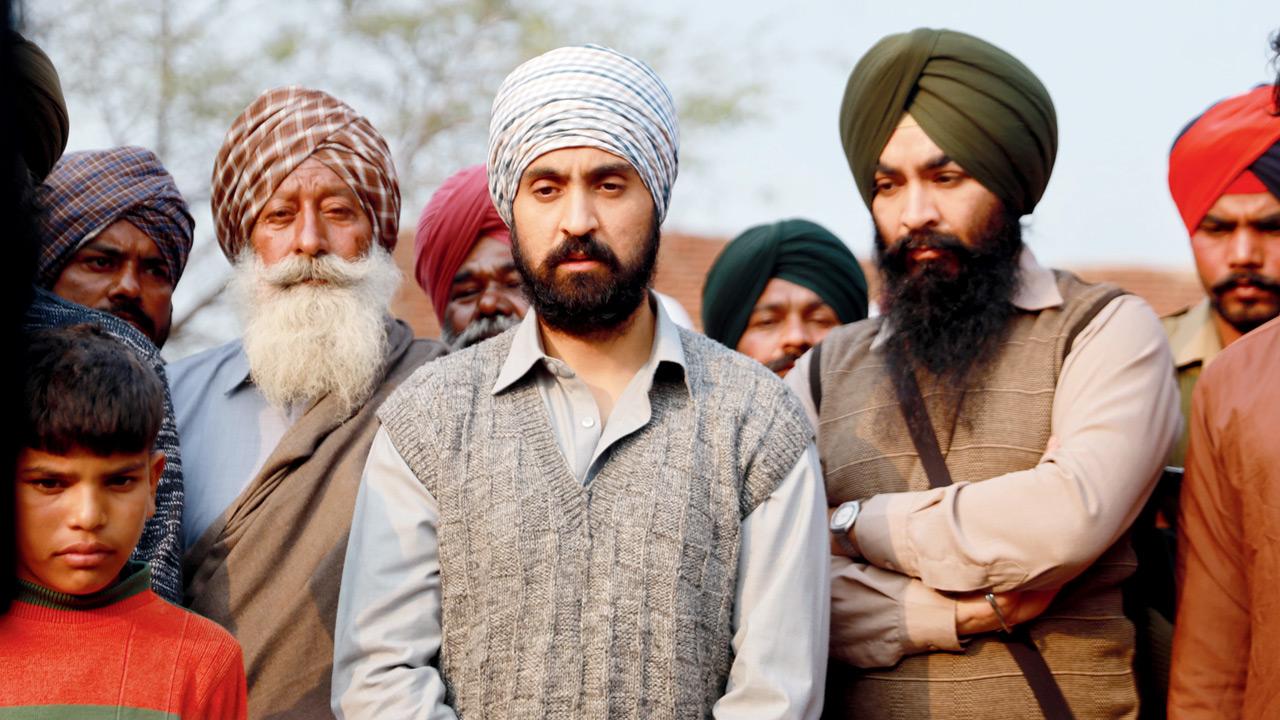
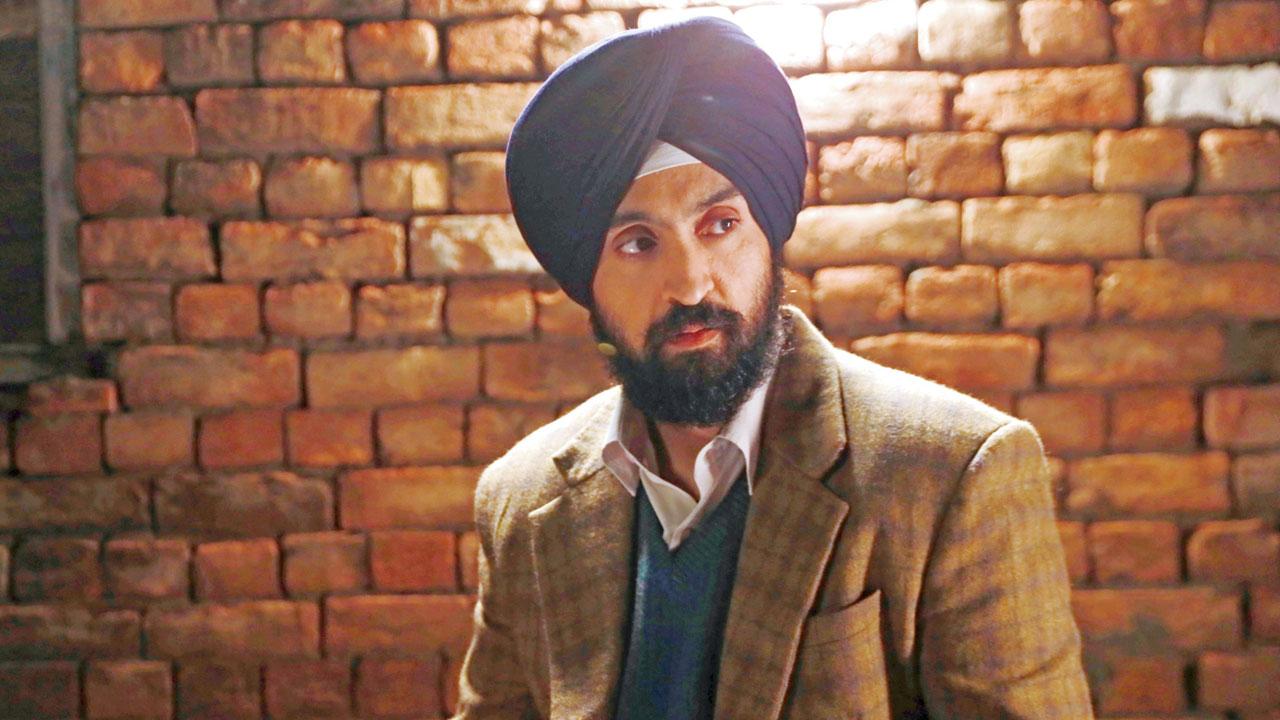
Just about 48 hours. That’s how long Diljit Dosanjh’s Satluj, formerly titled Punjab '95, was available for streaming in India before it was pulled down from ZEE5 on the evening of July 5, even as it remained accessible overseas. Sources have told mid-day that the takedown decision came after the government apparently flagged the film — a biopic on human rights activist Jaswant Singh Khalra — citing threats to national security.
Satluj chronicles how Khalra investigated the extrajudicial killings of Sikh youths during the Punjab insurgency between 1984 and 1995. Sources revealed that authorities were concerned that the film could be used to revive separatist sentiment in Punjab ahead of the Assembly elections in November.
An insider said, “The concern is the environment in which the film is releasing. There is a feeling that certain groups could weaponize the film to further their own agenda. The assessment has been made from a national security perspective, not a political one. With Punjab heading towards elections, the authorities are not willing to take chances.”
Despite the latest takedown, director Honey Trehan’s movie — that was stuck in a years-long battle with the Central Board of Film Certification (CBFC) — continues to circulate online. During a recent Instagram Live, Dosanjh acknowledged that users were downloading the film through torrent websites.
Shortly afterwards, an X account user told mid-day that over 5000 people had downloaded the movie through their link. “It started with over 300 downloads, but now there are over 5000 downloads of our print,” said the user.
The film’s journey
- On the first viewing in 2022, the CBFC sought 21 cuts. The makers approached the Bombay High Court
- In July 2024, mid-day reported that the CBFC’s list of cuts had risen to 85
- By September 2024, it sharply rose to over 120
- In January 2025, mid-day reported how the makers unsuccessfully tried a global release for the biopic
------------------------------------------
After years of censorship battles, title changes and release delays, Diljit Dosanjh’s long-delayed film finally reached audiences without cuts — only to disappear from ZEE5 within two days. As speculation grows, no official explanation has emerged
HINDUSTAN TIMES (July 7, 2026)
For years, Honey Trehan’s film on human rights activist Jaswant Singh Khalra existed more as a censorship controversy than a movie. Announced as Ghallughara, later retitled Punjab ’95 and finally released as Satluj, the Diljit Dosanjh-starrer spent nearly four years battling certification hurdles before quietly premiering on ZEE5 on July 3.
There were no promotions, interviews or marketing campaigns. Then, just 48 hours later, the film disappeared.
On July 5, ZEE5 announced that Satluj would be unavailable in India “until further notice”, citing unspecified “developments”. The platform has not elaborated further, and neither the CBFC nor the film’s producers have publicly explained the move.
HT City reached out to all stakeholders but had not received a response at the time of going to press.
ONLY ONE MAN IS TALKING — DILJIT
The most detailed response has come from Diljit, who suggested the team always feared such an outcome. During an Instagram Live session, the actor said the makers deliberately avoided announcing or promoting the release because they worried the film might never reach audiences otherwise. In fact, during a fan interaction a day before the takedown, he had predicted it could happen: “Today is Saturday. I feel it could be taken down by Monday. But no worry, you download it and watch.”
After the removal, Diljit remained defiant. “You can trouble me as much as you want. I am with Punjab till the day I die,” he said, adding that he was satisfied the film had reached viewers and urging those who downloaded it to share it further.
Beyond Diljit, most stakeholders have remained silent. Producer Ronnie Screwvala has not commented, while director Honey Trehan only reposted ZEE5’s statement with the message, “Tera bhana meetha lage” (God’s will seems sweet).
WHY WAS THE FILM CONTROVERSIAL?
The film tells the story of Jaswant Singh Khalra, the human rights activist who investigated alleged illegal cremations and extrajudicial killings during Punjab’s militancy years. Khalra was abducted and murdered in 1995, and the case later led to the conviction of several police personnel. Because it revisits one of the most sensitive chapters in Punjab’s history, the project faced scrutiny from the start. After being submitted to the CBFC in 2022, the film reportedly ran into objections and was asked to make more than 120 cuts. Trehan maintained that such changes would fundamentally alter the film. The prolonged dispute derailed release plans and eventually pushed the makers towards a direct-to-digital release.
WHY OTT?
Unlike theatrical releases, OTT platforms do not require prior CBFC certification. Industry observers believe streaming offered the makers the only realistic way to release the film in its intended form. That makes its sudden removal all the more puzzling.
SO WHAT HAPPENS NOW?
Some observers point to the film’s politically sensitive subject matter, while others have noted that Punjab is due to hold Assembly elections early next year. Film trade analyst Atul Mohan says the exact trigger remains unclear but believes the subject itself may have raised concerns. “It is definitely a sensitive issue. Elections are coming in Punjab and maybe there could be a concern that no one should use this as propaganda,” he says.
Adding to the controversy, advocate Vineet Jindal has said he filed a complaint with the Ministry of Home Affairs seeking action against the filmmakers and ZEE5, alleging that the film promotes a distorted narrative around Punjab’s insurgency years, in addition to an FIR against Diljit. There is currently no indication that the complaint is linked to the film’s removal.
Honey Trehan breaks silence on Satluj controversy: "I genuinely don't know who objected"
9:38 AM

Just two days after its Zee5 première, ‘Satluj’ — previously titled ‘Punjab '95’ — was made unavailable in India, mid-day finds out how the film got an India release in the first place
Mohar Basu (MID-DAY; July 6, 2026)
Four years after Punjab '95 was stopped in its tracks over objections from the censor board, Honey Trehan was finally breathing easy on Saturday morning when we got on a call with him. His film, now streaming on ZEE5 as Satluj, had arrived without a single cut.
For the filmmaker, it marks the end of a battle that often seemed impossible to win.
In his first interview since the film's release, Trehan told mid-day that there were moments when even he wasn't convinced the film would eventually see the light of day "Even till yesterday afternoon, I wasn't sure if the film would come out," he says with a laugh. "We've reached this point so many times before that I had stopped allowing myself to believe it. I kept telling myself, 'Let it go, let it go.' Then suddenly, it was just there."
The release, he says, belongs as much to the family of human rights activist Jaswant Singh Khalra as it does to the makers. "I spoke to them immediately. They are very, very happy. It was important because we didn't get the title Punjab '95. Naturally, people assumed the film must have been released with cuts. Paramjit aunty herself clarified that this is the same film. Hundreds of people who had watched the earlier version are now saying Satluj is exactly the same film."
For Trehan, that validation mattered more than anything else. "I'm getting messages from IPS officers in Punjab asking, 'The film is without cuts, right?' They are excited to finally watch it. That means a lot."
The director admits he was initially worried that the four-year delay would burden the film with impossible expectations. "I actually felt the opposite happened. These three years became three years of publicity. Punjab '95 had become much bigger than the film itself. My only anxiety before release was whether I could live up to what people had built in their minds. But the response has been overwhelming. Every reaction has become memorable."
Trehan credits producer Ronnie Screwvala, Diljit Dosanjh and ZEE5 for refusing to compromise. "The way Ronnie sir and Diljit stood by me and stood by the film... I can't thank them enough. And what courage ZEE has shown. Hats off to them. They simply dropped the trailer, posters and the film together. There was no release date, no countdown, nothing. It was just — streaming now. I've never seen anything like that."
Throughout the film's uncertain journey, Dosanjh remained firmly behind the project, says Trehan. Recalling how the actor came on board, he says their relationship dates back to Udta Punjab. "Even before I told him I wanted to make a film on Jaswant Singh Khalra, he immediately said, 'There's only one story from Punjab worth making if it isn't about 1984'. I showed him my research book. He looked at Mr Khalra's photograph, picked up the book, placed it on his forehead and simply said, 'Waheguru ji... tell me when and where to come. You'll find me there'."
That commitment, Trehan says, never wavered. "There were days when he reported at six in the morning and I couldn't take his first shot until four in the evening because schedules had gone haywire. I kept apologizing. Every single time he would tell me, 'Paaji, no problem. Whatever you're doing, you're doing for the film. I'm here to support the film.'"
The filmmaker also recounts how Dosanjh recently waited nearly an hour for an Instagram Live session promoting the film despite repeated technical glitches. "He waited for almost 50 minutes. We couldn't connect because of technical issues. Finally, someone got us connected. It wasn't about publicity. Somewhere, both of us felt we would connect. That's the kind of person he is."
Even today, Trehan says he doesn't know who exactly objected to Punjab '95. "If somebody asks me who had a problem with the film, I genuinely don't know. I don't have a face. I don't have a name. Everything came through third persons or lawyers."
He reveals that communication from the censor board effectively stopped earlier this year, forcing the makers to find another route. "There came a point when there was simply no communication anymore. After everything we'd gone through, there was nothing left to discuss. That's when ZEE stepped in and made this release possible."
Yet, despite the years of uncertainty, he refuses to hold grudges. "I've never been bitter. Sometimes you feel hurt emotionally because you're not getting answers. But I also remind myself that I'm talking about one film. The people running the country have much bigger responsibilities. Sometimes there must have been helplessness. I respect the people and the positions they hold."
He points out that every legal body and community organization that watched the film responded positively. "The SGPC watched the film. The Akal Takht committee watched the film. Everywhere I went, the response was overwhelming. Today the film is available across 196 countries on ZEE5 and all I'm receiving is love. So where exactly was the problem?"
Trehan also responded to Diljit Dosanjh's recent assertion that he is "not political, but an artiste". Without commenting on the actor's statement, the director says art inevitably exists alongside politics. "Art can be different from the politics of the time you're living in. Otherwise your art cannot be truthful. Everything today becomes political."
He insists Satluj was never designed to make a political argument. "We're only talking about human rights. We're not commenting on the politics of that period. We're talking about what happens when extraordinary powers are placed in the hands of a few people. That's a human issue, not a political one."
Trehan believes that is why audiences across generations are responding to the film. "Someone messaged me saying this film doesn't reopen wounds; it heals them. That stayed with me. People feel somebody has finally told their story. That's probably the greatest compliment I've received."
At the time of going to press, ‘Satluj’ had been made unavailable on ZEE5 in India.
Statement by Zee5 “The response to ‘Satluj’ since its release has been truly overwhelming. We are deeply grateful to every viewer who chose to subscribe, watch and champion the film. Your love and support have meant a great deal to us and to everyone who brought this story to life. At Zee5, we stand firmly by ‘Satluj’ and the creative vision behind it. We believe powerful storytelling has the ability to inspire, endure, and leave a lasting impact. We remain committed to championing authentic and meaningful narratives. In light of the current developments, ‘Satluj’ will be unavailable in India until further notice. We remain committed to exploring every appropriate avenue through due process to bring the film back to our audiences at the earliest opportunity. Our commitment to creators and to stories told with conviction, artistic integrity and purpose remains unwavering.”
Punjab '95 finally releases as Satluj; Diljit Dosanjh says no cuts made
9:30 AM

HINDUSTAN TIMES (July 5, 2026)
After years of delays and censorship-related hurdles, Diljit Dosanjh-starrer Punjab '95 has finally been released under a new title. The film, now called Satluj, quietly dropped on OTT on Friday. Based on the life and death of human rights activist Jaswant Singh Khalra, the Honey Trehan directorial was originally slated for release last year but remained stuck amid certification issues.
During an Instagram Live session on Friday, Diljit clarified that while the title has changed, the film itself remains untouched. “Unfortunately, we couldn’t keep the original title for certain reasons... But there are absolutely no cuts in the film. The version I watched in theatres two years ago is exactly the same one I watched at home last week. If even a single cut had been made, I would not have promoted the film,” he said.
Trehan echoed the sentiment, revealing that Khalra’s wife, Paramjit Kaur Khalra, had also confirmed that the released version remains unchanged. “Paramjit aunty also shared a post about the film and said this is the very same version she had watched earlier. Only the title has changed,” he said.
Trehan added, “Everything I objected to, every word I refused to cut or mute, is still there in the film.”
The film also stars Arjun Rampal, Surinder Vicky, Varun Badola and Geetika Vidya Ohlyan.
In Deoria, 100 people approached a theatre because they wanted to watch The Voice Of Hind Rajab-Manoj Nandwana
9:42 AM
Mohar Basu (MID-DAY; June 20, 2026)
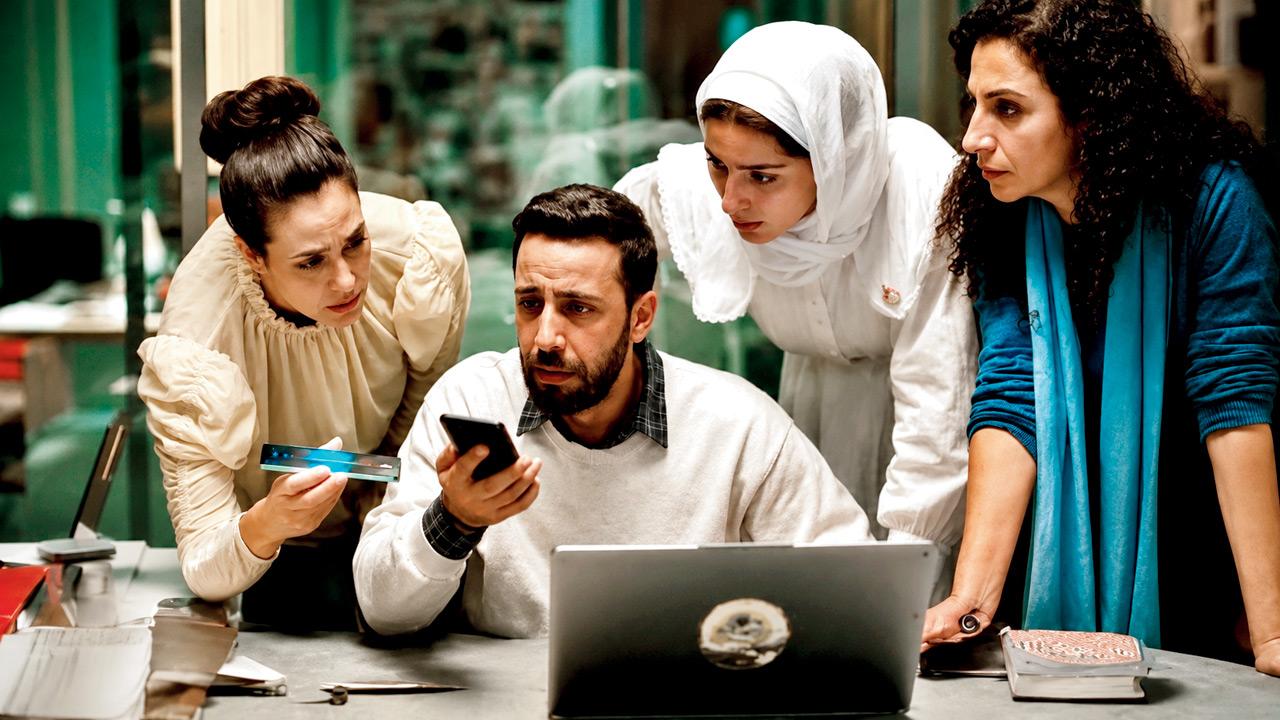
It earned accolades, standing ovations, and executive produced by Hollywood’s creme de la creme, yet remained unseen in India for six months. Director Kaouther Ben Hania’s The Voice Of Hind Rajab finally opened in cinemas on Friday (June 19) across 80 screens in India. While the film hasn’t secured a wide release or packed halls from day one, distributor Manoj Nandwana says the initial response has been encouraging, with interest emerging from unexpected corners of the country.
Nandwana says curiosity around the movie is steadily building despite its limited release. He urges people to judge the film after watching it rather than relying on what is written about it.
“See what message the film is trying to give. Even foreign ministry officials who watched it before the Central Board of Film Certification [CBFC] screening, said that it was a completely different film from what they had expected,” he shares.
The distributor believes younger audiences are driving the interest, especially in smaller towns. In Deoria, Uttar Pradesh, a group of nearly “100 people approached a theatre because they wanted to watch the film”.
Calls from Nagpur also pleasantly surprised him, considering it is a foreign-language film. “In Chennai, a few shows are already houseful. A lot of people between 15 and 30 years of age are returning to cinemas. That’s a good sign for the industry,” adds Nandwana.
What is ‘The Voice Of Hind Rajab’ about?
The 2025 docudrama traces the real-life tragedy of Hind Rajab, a five-year-old Palestinian girl trapped in a bullet-riddled car in Gaza City, surrounded by he dead relatives.
CBFC’s fast-track certification route may be gone, but the industry isn’t ready to let it go
9:54 AM

Mohar Basu (MID-DAY; June 10, 2026)
Barely two years after the Central Bureau of Film Certification (CBFC) introduced its Tatkaal certification facility to fast-track film clearances, the Ministry of Information & Broadcasting has abolished the mechanism. Now, several producers’ bodies are seeking its return in a restricted form, arguing that an emergency certification route remains essential for films facing unforeseen delays.
According to CBFC insiders, discussions are underway among guilds, producers’ associations, and trade stakeholders to persuade the ministry to retain the provision for exceptional circumstances rather than scrap it entirely.
“The consensus is that the scheme was being misused, but that doesn’t mean it should disappear completely. There are genuine situations where a producer has no control over delays and needs an expedited certification route,” a CBFC insider told mid-day.
Stakeholders insist they are not seeking a return to the earlier system, under which Tatkaal applications became increasingly common. Instead, they want a limited provision that can be invoked in cases involving court litigation, delayed post-production work, certification disputes, and other last-minute contingencies.
Industry insiders point to recent examples. Earlier this year, Parasakthi received its censor certificate just a day before release after scrutiny by a Revising Committee. Jana Nayagan also became the subject of legal proceedings over alleged certification delays before the Madras High Court directed the issuance of a certificate. While neither case involved the Tatkaal mechanism directly, certification issues can escalate dangerously close to release.
“Nobody plans to submit a film late,” said a producer associated with a leading industry body. “But visual effects get delayed, revising committees ask for modifications. In such situations, an emergency certification window becomes a necessity.” With the Tatkaal facility gone, certification would take around 22 to 48 days.
The Tatkaal scheme allowed producers to fast-track certification by paying three times the standard examination fee. The Indian Motion Picture Producers’ Association (IMPPA) opposed the additional cost, with president Abhay Sinha arguing that smaller and regional producers were being pushed into an expensive process to secure timely certification. IMPPA instead proposed a capped emergency quota system requiring documented proof and approval from senior CBFC officials.
'Tatkal' cut could spoil the show for the film industry
9:25 AM

Move likely to affect multilingual releases, increase legal and operational uncertainty
Rajesh N Naidu & Javed Farooqui (THE ECONOMIC TIMES; June 13, 2026)
Mumbai: Film producers and distributors fear tighter release schedules and greater uncertainty after the Ministry of Information and Broadcasting discontinued the Central Board of Film Certification’s ‘Tatkal’ or priority certification scheme.
The withdrawal of the fast-track system – which allowed filmmakers to get CBFC certification within 10-15 days by paying a premium – from June 1 could aggravate delays in film clearances, already worsened by the abolition of the Film Certification Appellate Tribunal (FCAT) in 2021, industry executives said.
It could particularly affect multilingual releases, last-minute edits and films locked into fixed theatrical windows, while increasing legal and operational uncertainty for producers, they said.
“The impact will be felt most by independent producers and regional films, where production timelines are often compressed and release windows are highly competitive,” said Suniel Wadhwa, cofounder and director at Karmic Films.
Executives said the absence of both FCAT and the Tatkal route could slow dispute resolution, forcing producers into prolonged litigation and making release schedules harder to predict.
The ministry had floated a public consultation in February proposing discontinuation of the priority scheme before formally withdrawing it from June 1 through the notification of the Cinematograph (Certification) Amendment Rules, 2026, on May 20.
Some regional producers and industry veterans welcomed the move, saying the priority system had long disproportionately benefited large studios and influential production houses, often disrupting release plans of smaller producers who finalise theatrical windows months in advance.
“Situation becomes chaotic when big producers release films without advance communication,” said Naveen Chandra, founder of 91 Film Studios. “This disturbs the release schedule of films which have been planned months in advance.”
He said the growing volume of films requiring certification had made the priority system increasingly difficult to sustain.
“India’s long-term average suggests that nearly 1,800 films are produced annually across languages, amounting to almost five films a day. Besides this, there are festival films in sizeable numbers,” Chandra said. “It is not possible to physically watch films on a Tatkal basis and remain objective.”
Distributors highlighted practical challenges in certifying big-budget films, noting that Indian filmmakers, including big directors, often re-shoot and work on visual effects until just days before a film’s release.
“Unlike in the West, where studios plan films well in advance, one hardly sees big directors presenting full films to CBFC one month prior to release,” said Shaaminder Malik, film distributor and trade analyst.
The ministry, while proposing discontinuation of the scheme, had argued that routine use had diluted its intended purpose and created a “two-tier certification system” where applicants with deeper pockets secured faster clearances.
Government data tabled in parliament showed CBFC-certified theatrical films rose to 2,687 in FY25 from 2,031 in FY22. The ministry said average certification timelines for feature films currently stand at 18 working days against the prescribed 48 working days under the Cinematograph (Certification) Rules, 2024.
Ex-censor chief, producer Pahlaj Nihalani dies at 76
10:54 PM

Bella Jaisinghani (THE TIMES OF INDIA; June 5, 2026)
Mumbai: Producer Pahlaj Nihalani died at age 76 Thursday, reportedly of a liver ailment. He had produced successful films like ‘Ilzaam’ and ‘Aag Hi Aag’ which introduced actors Govinda and Chunky Panday respectively.
Nihalani’s first venture was ‘Haathkadi’ (1982) featuring Reena Roy’s song ‘Disco Station’, followed by ‘Aandhi Toofan’, ‘Paap Ki Duniya’, ‘Aankhen’, ‘Gunaahon Ka Faisla’, ‘Mitti Aur Sona’ and ‘Shola Aur Shabnam’.
He was also president of the (former) Association of Pictures and TV Programme Producers for 29 years.
Nihalani courted controversies during his tenure as chairman of the Censor Board of Film Certification (CBFC) from 2015 until his eventual sacking in 2017. His criticism of certain artistes raised concern, and his 98 edits of ‘Udta Punjab’ were defeated after the makers approached court. Critics said Nihalani’s moralistic stand over the depiction of Indian culture in cinema contrasted with bold portrayals and songs in his own films like ‘Andaz’ and ‘Julie 2’.
He is survived by his wife and three sons. The last rites were performed at Santacruz crematorium where Govinda arrived to pay respects.
He said, “Nihalani ji was like a foundation stone for many of us. Several artists, including me, who rose from impoverished backgrounds, received his support and encouragement. He shaped the careers of at least one dozen artistes. He had a rare ability to identify talent and help people rise to the skies of fame.”
CM Devendra Fadnavis said, “The news of the demise of renowned film producer and former CBFC Pahlaj Nihalani is heartbreaking. His contribution to the film industry will be remembered forever. With his passing, the film world has lost an experienced personality.”
Censor board should have protocol on spy movies-Delhi High Court
4:32 PM

Abhinav Garg (THE TIMES OF INDIA; May 21, 2026)
New Delhi: The Delhi High Court on Wednesday remarked that the "censor board should have some guidelines" related to spy movies, after a PIL filed by a serving Sashastra Seema Bal (SSB) personnel flagged concerns over Ranveer Singh-starrer 'Dhurandhar The Revenge' revealing tactical and sensitive information on the country's intelligence and defence operations, and sought framing of a 'spy movies protocol'.
"The concerns raised by the petitioner need to be considered and addressed appropriately," a bench of Chief Justice D K Upadhyaya and Justice Tejas Karia said, adding although films are meant for entertainment, they do have an impact.
The bench disposed of the PIL with a direction to the I&B ministry and Central Board of Film Certification (CBFC) "to consider the entire writ petition as representation of the petitioner and take an appropriate decision on the issues raised". It asked the authorities to communicate their decision on the representation, and if any corrective measures are taken, to the petitioner.
The PIL contended that the film violated the Official Secrets Act as it showed tactical operations, sensitive locations and agents in "depth", and some scenes even revealed information that is not in the interest of the country's security. The petitioner further argued that actions and characters modelled after high-ranking officials and martyred servicemen are so explicit in the film that it is not in the country's best interest, and even certain successful military operations are recalled in the movie.
The petitioner also objected to the movie using "classified protocols" in certain scenes and depicting "deep cover identities". He claimed that the movie has "directly compromised the safety of our on-field undercover agents" and led to local authorities in Karachi being on "spy alert".
The PIL sought framing of a protocol to prevent the showcasing of methods of the country's agents, and revocation of the certification granted to the movie.
Prasoon Joshi appointed Prasar Bharti chairman
11:20 PM

THE TIMES OF INDIA (May 3, 2026)
New Delhi: The Centre on Saturday appointed noted lyricist and communications expert Prasoon Joshi as chairman of Prasar Bharati, filling a key vacancy at the public broadcaster that has been without a fulltime head since December.
Joshi, who is currently chairperson of CBFC, brings with him decades of experience across advertising, cinema, literature and public communication. His appointment comes at a time when the national broadcaster is navigating a rapid shift towards digital platforms and evolving audience preferences.
Union information and broadcasting minister Ashwini Vaishnaw expressed confidence that his leadership would infuse “renewed energy, deeper purpose and a fresh creative voice” into the organization.
The post had been vacant since the resignation of former IAS officer Navneet Kumar Sehgal in December last year.
Jana Nayagan leak row: IMPPA demands strick action against piracy, writes letter to PM Narendra Modi
8:25 AM
After ‘Jana Nayagan’ is leaked online, IMPPA shoots off letter to PM Narendra Modi urging strict action; body’s secretary notes certification delay makes films vulnerable to piracy
Upala KBR (MID-DAY; April 14, 2026)
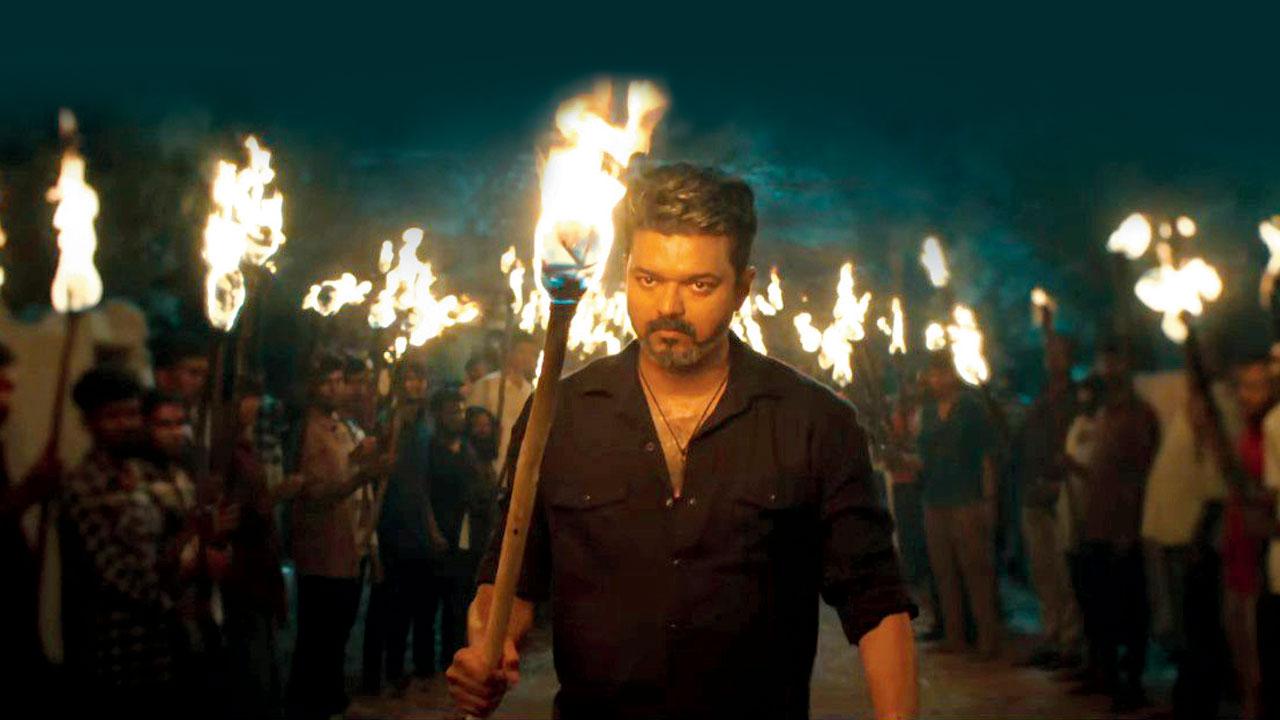
Piracy has become a persistent issue in Indian cinema. Vijay-starrer Jana Nayagan, which has been awaiting clearance from the Central Board of Film Certification (CBFC) since December 2025, became the latest victim when the action drama was leaked last week. Disturbed by the episode, the Indian Motion Picture Producers’ Association (IMPPA) has written to Prime Minister Narendra Modi, urging him to take action against the menace.
In its letter dated April 11, the organization has not only highlighted the need for stringent measures against those aiding piracy, but also indicated how a delay in the certification process makes films vulnerable to online leaks.
When mid-day reached out to Anil Nagrath, Secretary, IMPPA, he noted that the industry has been spotlighting this issue for years.
He said, “Platforms like Telegram, torrent websites, and illegal portals like Tamilrockers are still operating. If the government has banned 36 porn sites and other digital platforms, why doesn’t it ensure the entire apparatus of piracy is taken down too?”
Nagrath pointed out that the H Vinoth-directed Tamil film couldn’t meet its January 9 release date since it was stuck at the certification stage.
“The CBFC referred it to the Revising Committee. Earlier, producers could go to the Film Certification Appellate Tribunal [FCAT], but the government shut it down. The fate of Jana Nayagan has been hanging, while scenes from the film, which has been in CBFC’s possession, have leaked online. While I’m not making a direct allegation [against the CBFC], it amounts to this only. We’re unable to tackle the problem of piracy. Producers are significant contributors to the PM’s Make in India initiative. Why not help us too? The government should find the culprits and put them in jail.”
Industry demands stricter anti-piracy laws and accountability after Jana Nayagan’s leak
10:28 AM

HINDUSTAN TIMES (April 12, 2026)
The alleged online leak of Jana Nayagan, the much-anticipated political thriller starring Tamil superstar-turned-politician Vijay, has sparked outrage across the film industry, with Rajinikanth and Suriya leading calls for accountability and stricter anti-piracy measures.
Directed by H Vinoth, the film is widely seen as Vijay’s final cinematic outing before his full-time entry into politics. It was reportedly leaked online on Friday, triggering strong reactions across the fraternity.
Rajinikanth took to social media to express anguish over the breach. Writing in Tamil, he called the leak “a cause for shock and pain” and urged film bodies to raise their voice, while asking the government to identify those responsible and impose strict punishment. “Such crimes must not be allowed to continue,” he said.
Suriya termed the incident “heartbreaking and unfair”, making an emotional appeal to audiences. “An entire team’s passion reduced to this. Please don’t watch, share, or discuss the film here. Respect their work,” he said, adding that he stands with the film’s team and condemns the act.
Several others in the industry, including Chiranjeevi, have also extended support, urging audiences to watch the film legally in theatres. Production sources said civil and criminal proceedings are being initiated against those responsible for the leak.
Kamal Haasan’s take
The actor offered a sharper critique, linking the leak to delays in the certification process. The film has reportedly been caught in a prolonged legal tussle with the Central Board of Film Certification. “The leak of Jana Nayagan is not an accident, it is the result of systemic failure,” he said, adding that delays create fertile ground for piracy. Haasan stressed that piracy goes beyond politics and directly harms the creative ecosystem. “It endangers the work of hundreds of artists and technicians, and the investments of honest, tax-paying producers, exhibitors and theatre owners,” he said, calling for accountability, timely certification and real-time takedowns.
Oscar-nominated film The Voice Of Hind Rajab on hold to ‘protect Indo-Israel ties’?
9:07 AM
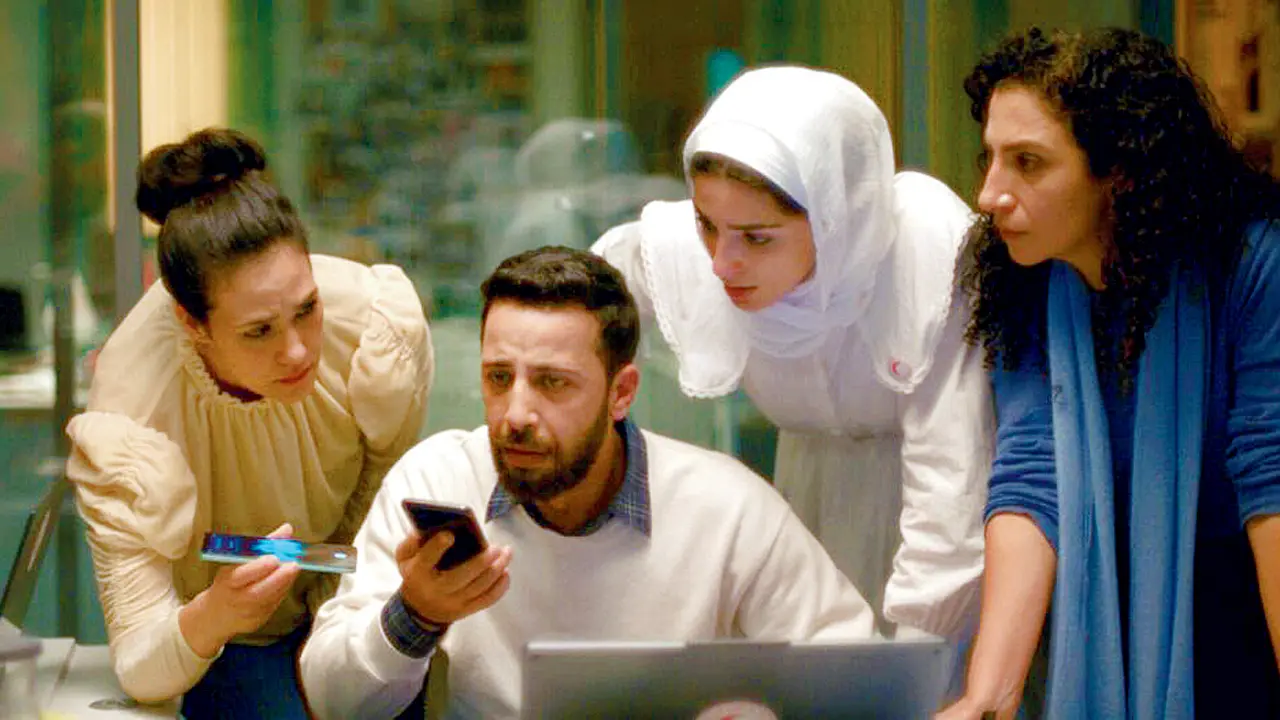
The Voice Of Hind Rajab becomes a talking point after India distributor says he was told verbally that ‘if it gets released it would break India-Israel relationship’
Niharika Lal (BOMBAY TIMES; March 21, 2026)
The India release of The Voice Of Hind Rajab, the Oscar-nominated Tunisian film centred on the death of a young girl during the Gaza conflict, has been put on hold after it failed to secure certification from the CBFC (Central Board of Film Certification), according to its distributor.
The film’s Mumbai-based distributor Manoj Nandwana, told Variety that the film has been verbally rejected by the CBFC. Nandwana said he had submitted the film to the board in February, aiming for a mid-March release ahead of Oscars, but it has not been cleared, and he was told by a CBFC member that “if it gets released it would break up the India-Israel relationship.”
He said, “I told them: the India-Israel relationship is so strong that it’s idiotic to think this movie will break it.”
A real story of a child from Gaza
The Voice Of Hind Rajab is about a five-year-old Palestinian girl who was killed in Gaza City in 2024. The critically acclaimed, Oscar-nominated 2025 docudrama by Kaouther Ben Hania that tells the story of a young Palestinian girl trapped in a car under Israeli military fire in Gaza, blending real recordings with scripted performances. The film premiered at the Venice Film Festival to over 20 minutes of applause, won the Silver Lion, and was later screened at the UN Headquarters in New York during the International Day of Solidarity with the Palestinian people.
‘CBFC directly referred the film to Revising Committee’
When a film is submitted to the CBFC, the Examining Committee members watch it and suggest cuts to the producer or distributor. If the producer does not agree with the cuts, they can appeal to the Revising Committee.
In the case of films like Jana Nayagan and Emergency, producers moved the CBFC Revising Committee. However, in this case, it was the CBFC that referred the film to the revising committee itself. The distributor was told that he would be notified later about when the film would be screened by the Revising Committee.
Manoj Nandwana explains, “I have not submitted the film to the revising committee. I received a letter 10 days back from the CBFC stating that the film has been referred to the Revising Committee. Once the revising committee is formed, they will watch the film and take a decision. Only then will we know the film’s release status. The current status of the film on the website shows that the film’s certification is ‘pending for revising committee formation.’”
The CBFC is expected to certify films within a 48-day window. The CBFC did not comment till the time of going to press.
They told me it’s a very sensitive film: Distributor
Manoj Nandwana told us, “The Voice Of Hind Rajab was submitted to the CBFC for certification in late January, ahead of a planned release before the March 16 Oscars. CBFC members did not clear the film and pointed out that, at one point, a character says, ‘f**k the army.’ They said, how can you use the F-word for the army – it has to be removed. There is no violence or anything objectionable in the film, so they didn’t suggest any cuts. They just told me that this is a very sensitive film. India and Israel have very good relations at present, and this film, if released theatrically in the country, will harm India-Israel relations.”
-----------------------------------
India distributor of ‘The Voice Of Hind Rajab’ on the Oscar-nominated movie’s censor ordeal, and the mounting losses due to the ban
Mohar Basu (MID-DAY; March 22, 2026)
It is strange, almost jarring, that a film about the devastation of Gaza has found ways to be screened in Israel itself, and yet, in India, it has not secured clearance. Directed by Tunisian filmmaker Kaouther Ben Hania, The Voice Of Hind Rajab reconstructs the true story of Hind Rajab, a young girl fleeing Gaza City with her family in January 2024. Their car, however, came under fire from Israeli forces. The film unfolds from the perspective of Palestinian Red Crescent volunteers, who remain on call with Rajab as she tells them, in fear, that her cousins are already dead, and pleads with them not to leave her alone.
The docudrama is anchored by Rajab’s real voice recordings from her final moments. She was never rescued. Twelve days later, her body was discovered alongside her relatives and the two volunteers who had tried to reach her.
For India distributor Manoj Nandwana, the effort to bring the Oscar-nominated film to Indian audiences has been cumbersome. “The Voice Of Hind Rajab is not banned in Israel. Their courts tossed out the efforts to ban films. We went to the Board [Central Board of Film Certification, CBFC] on February 27, where it was viewed by five people. They said it needs to go to the revising committee,” he explains, adding, “They feel the film could sever Indo-Israel relations and is [too] sensitive.”
The film was scheduled to release on March 6, but that date has now been pushed. “But they’re not saying no.”
According to Nandwana, the Board did not return with a list of cuts or a formal objection, but instead left the film in limbo. “They feel the film is against Israel, but it’s not. It’s anti-war. It’s about saving a child. There’s no issue like violence, nudity, and direct political instruction either,” he says. The delay has resulted in a “complete loss for me”.
“I felt it had the legs to fare well. Usually, docudramas don’t do as well, but a lot was going for the film — its theme, the accolades. In India, we didn’t get permission for any festival either. The film has now gone to revising committee but no screening date has been given so far.”
Did you know?
‘The Voice Of Hind Rajab’ holds the record for the longest standing ovation in the history of the Venice Film Festival (23 minutes and 50 seconds).
NHRC issue notice over Sanjay Dutt-Nora Fatehi song in KD - The Devil; controversy reaches Lok Sabha
8:32 AM
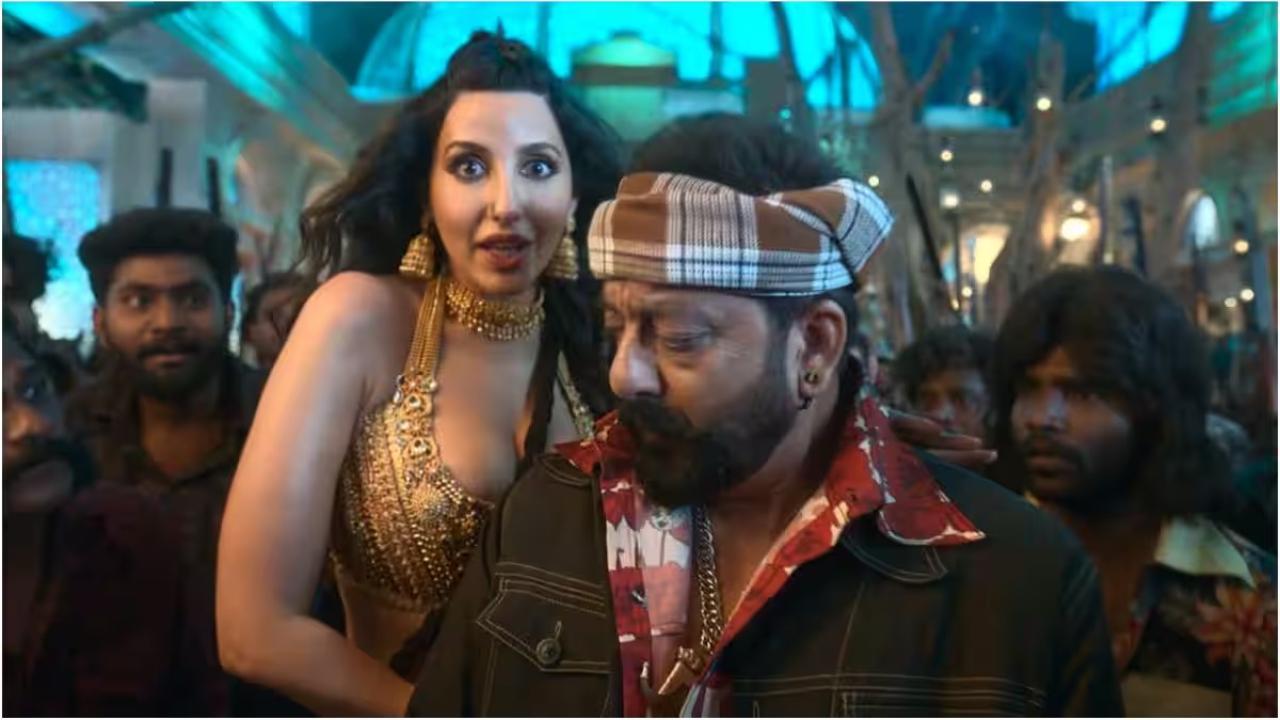
THE TIMES OF INDIA (March 18, 2026)
New Delhi: National Human Rights Commission (NHRC) has issued a notice to ministry of information & broadcasting, Censor Board and IT ministry over a song from “KD - The Devil”.
NHRC member Priyank Kanoongo said the commission has asked that the allegedly obscene lyrics should be removed and questioned how the Censor Board allowed its release. If there are any officials of Censor Board involved in this, then action should be taken against them too, he told news agency ANI.
The film features actors Nora Fatehi and Sanjay Dutt.
“We got a complaint from Gems Of Bollywood and Rashtra Jyoti organization that a song has been released on YouTube in which very obscene lyrics have been used. In this song, women are described as objects, women’s garments are discussed,” Kanoongo said.
-----------------------------------------
THE TIMES OF INDIA (March 19, 2026)
New Delhi/Bengaluru: A row over alleged vulgarity in the Hindi version of a song of an upcoming Kannada film 'KD - The Devil' spilled into Parliament on Wednesday, with Samajwadi Party MP Anand Bhadoria flagging what he described as the harmful impact of unchecked explicit content on OTT platforms and social media.
In response, Union information and broadcasting minister Ashwini Vaishnaw said the song had already been banned.
"A ban has been imposed on the song. The framers of the Constitution placed certain reasonable restrictions, and we should function within those limits. Freedom of speech cannot be absolute, it has to be in the context of the society and culture," Vaishnaw said.
The controversy centres on the smutty track 'Sarse Ninna Serage Sarse', written by Kannada director Prem, who has apologized following the backlash. The Hindi version of the song 'Sarke Chunar Teri Sarke' was written by Raqueeb Alam who claimed he had only translated it.
Featuring Sanjay Dutt and Nora Fatehi, the song was released on YouTube two days ago and quickly went viral for its lyrics that appear to describe a sexual act. Karnataka State Commission for Women (KSCW) has also urged action against what it calls objectionable content in the original Kannada movie track.
In her letter to Karnataka Film Chamber of Commerce (KFCC), KSCW chairperson Nagalakshmi Choudhary stated, "Such lyrics provoke the youth towards eve-teasing, especially targeting students and working women."
She urged the chamber to direct the filmmakers to avoid content that "outrages the modesty of women." In a separate communication to the regional director of Central Board of Film Certification (CBFC), she requested that the board ensure the "objectionable portions are deleted or suitably modified" before certification.
CBFC clarified that it has not received any application for certification of the song and does not regulate such digital content.
"This is to clearly state that CBFC has not received any application seeking certification for the song 'Sarke Chunar Teri Sarke' from 'KD - The Devil' film. It is to be noted clearly that content on digital platforms is not certified by CBFC. There is often confusion about this and CBFC is unnecessarily dragged into matters that are not connected," it said, adding that "in the case of this particular song all queries should be directed to the platform and the makers of the song."
The Kerala Story 2 producer Vipul Shah defends U/A nod amid backlash
9:37 AM

Yashika Mathur (HINDUSTAN TIMES; February 21, 2026)
The Kerala Story 2: Goes Beyond has been granted a U/A certificate by the CBFC, a move that has sparked mixed reactions. The U/A classification allows for unrestricted public exhibition for viewers aged 14 and above. Critics — including Kerala CM Pinarayi Vijayan — have called the film, based on religious conversion, “poisonous propaganda” that could damage the state’s image.
Amid the debate, producer Vipul Amrutlal Shah shares, “CBFC told us to make 15-16 changes, including some words and dialogues, and only then did they grant a U/A. They have taken all precautions to make sure that the film is suitable to be shown to a U/A audience.”
Ask how the sequel secured a U/A when the first film, The Kerala Story (2023), received an A rating and he says, “In the first film, there was a brutal rape sequence which my director was not ready to remove, so it had to get an A certification. This time, we took extra care to ensure that there is no such sequence.”
The trailer of The Kerala Story 2 was released on Thursday, the same day it received a U/A certificate, which has now come under legal scrutiny. According to Live Law, the Kerala High Court issued a notice to the makers in a writ petition challenging the certification.
The All India Muslim Jamaat (AIMJ) President Maulana Shahabuddin Razvi Bareilvi told ANI, “The Kerala Story 2 is a story based on fake narratives, and nowadays a trend has started among film directors to earn money in any way possible. The films these days are increasing communal tension and destroying the Hindu-Muslim brotherhood. All these things are being done as part of a planned effort to defame Muslims.”
Responding to the criticism, producer Vipul Amrutlal Shah says, “I am surprised that all Muslim organizations are saying that this is a lie. In the last half year alone, there have been cases such as Jalaluddin alias Chhangur Baba, who is now in jail and had allegedly converted thousands of girls. There was also Umar Gautam, who has been given life imprisonment for converting more than a thousand girls. UP Police launched Mission Asmita and alleged that a racket to convert thousands of girls was running across eight to twelve states.”
He adds, “When such stories come out, I expect Muslim organizations to condemn these acts and say this is not what should be happening. But I haven’t heard any such comment. When a film tries to show a certain reality, everybody raises an objection, that’s like shooting the messenger. If there is evidence that these cases are false, then there is no need for another Kerala story.”
Vijay breaks silence on the delay of his final film Jana Nayagan’s release
10:41 AM

HINDUSTAN TIMES (February 1, 2026)
Amid the ongoing legal issue with the release of his final film Jana Nayagan, actor-turned-politician Vijay has finally broken silence on the matter.
Talking about the delay in the film’s release due to certification issue, Vijay told NDTV, “I feel bad for my producer as Jana Nayagan is suffering because of my political entry. I was mentally prepared for this and was aware that my film would be affected due to my political entry.”
The film was slated for an initial release on January 9, but it didn’t get clearance from the Central Board of Film Certification (CBFC) in time.
In the latest development in the case, the CBFC filed a caveat in the Supreme Court, as per Bar and Bench, saying that no orders shall be passed in the case until CBFC is heard.
This comes ahead of the anticipation of the producer, KVN Productions, moving the Supreme Court over the Madras High Court Division Bench order, as per Live Law.
On January 27, a Division Bench of the Madras HC allowed the CBFC’s appeal and set aside the Single Judge’s direction to grant a UA certificate to the film. The bench observed that CBFC should’ve been given time to present its case in the single-judge hearing that favoured the film.
The producer claimed in court that CBFC’s examining committee watched the film in December and informed that it would be given UA 16+ certificate after 14 cuts. They complied to it but did not hear back from CBFC till January 5, that’s when they approached the Madras HC. CBFC had claimed that the stall in certification was due to a complaint saying that the film might ‘hurt religious sentiments’ and certain scenes needed board’s clearance.
Dhurandhar OTT version is similar to the one running in theatres since January 1
10:30 AM

With viewers noting shorter runtime and muted expletives in ‘Dhurandhar’ OTT version, Netflix insiders say the version is similar to the one in theatres since January 1
Mohar Basu (MID-DAY; January 31, 2026)
Within hours of dropping on Netflix on January 30, Ranveer Singh’s blockbuster Dhurandhar (2025) became a topic of discussion. Viewers noted that the OTT version of filmmaker Aditya Dhar’s action thriller was almost 11 minutes shorter than the theatrical one that had a three-hour-34-minute runtime. Another glaring change was that several expletives were muted or beeped out.
Dhurandhar was granted an ‘A’ certificate from the Central Board of Film Certification before its December 5 release. The fresh edits in the OTT version have left many questioning the need for additional sanitization.
A source close to Netflix India said, “Netflix has exhibited the film exactly as it was provided by the studio. The platform does not re-edit certified feature films,” said the source.
According to the source, the version supplied for streaming was already the modified cut running in theatres. A revised version of the film was reportedly screened in theatres from January 1, 2026 after the makers removed the term ‘Baloch’.
“That is a shorter version and the same is streaming on Netflix. It is the same as the theatrical/CBFC-approved version. As with all theatrical films, the three-minute runtime difference is due to elements such as interval plates or in-theatre ad requirements that do not carry over to digital platforms,” added the source.
What prompted the removal of expletives, which were retained in the theatrical version? While Netflix insiders refused to comment, an industry insider said, “The new I&B Ministry Broadcasting Services (Regulation) Bill is being implemented in parts. The expletives being beeped out could be a result of that as they wish to regulate profanity and intimate scenes on OTT platforms.”
Subscribe to:
Posts (Atom)