Showing posts with label Budhia Singh. Show all posts
Showing posts with label Budhia Singh. Show all posts
Manoj Bajpayee ecstatic on 1971 getting 50 million views; says "Kai cinema halls mein film ke poster bhi nahi lage thay"
8:25 AM
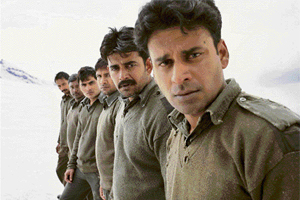
Anshul Chaturvedi (BOMBAY TIMES; October 28, 2022)
In an industry where actors are quick to distance themselves from projects that fail at the box office, here is an actor, at the peak of his popularity, batting for a 15-year-old release which, as he vividly remembers, did not even have posters in many of the halls it released in, and yet won two National Awards. Manoj Bajpayee explains why 1971, a 2007 release, being watched by millions online in 2022 feels like poetic justice and how he cannot disown projects once he takes them on.
The year is 2012.
Manoj Bajpayee is talking about the just-released Gangs Of Wasseypur. Never one to be seen at movie promotions, isn’t the current campaign – unfamiliar territory – tiring for him? Manoj replies, “Things have changed a lot; the fact that everything is temporary was perhaps never as true as it is now. Meri kuch filmon ka jo hashr hua woh mujhe yaad hai, when I faced situations where the producer could not ensure much visibility for my movies, sometimes from lack of funds, or from other reasons.”
‘Meri kuch filmon ka jo hashr hua woh mujhe yaad hai’ – there’s a fair amount of angst in his tone. What happened that has left him in such pain, we ask him, and he responds, “1971 is the prime example! It is one of the best films of my career. Uss film mein har cheez thi. It was the first real film on the Army in a very long time. But due to a lack of resources, or attention, or visibility, woh kab aayi aur kab gayi, pata hi nahi chala. Yeh aalam tha ki jin theatres mein film lagi thi, unn ke baahar film ke posters tak nahi lage! Aur usi film ko National Award mila for the best Hindi film of the year! So I don’t know whether the promotions work or not – yeh fact hai ya myth – but I am not going to find out. Sometimes, publicity can be a braindead thing, but I say, let it be, if it is working for a film, I am available, because I have suffered the cost of no publicity – not in one film, but in two-three films very dear to me! If it’s a fruitful conversation, I am very happy – but even when it is not, I tell people, no, I don’t mind it (laughs)!”
Cut to a decade later – 2022.
Manoj has just gone on his social media, thanking viewers for 1971 hitting 50 million views on YouTube. A film that was released in 2007, which Manoj was wistfully looking back at as a fine effort that nobody watched in 2012, has finally come of age, in views if not in box office returns, in 2022. And he is a very happy, vindicated actor to see that. So, how did this all happen, we ask him.
Manoj says, “To go back to the conversation I had with you in 2012: It had been many years since Satya but even then, jis kism ki filmein main kar raha tha, jin mein mehnat aur mashaqqat kar raha tha, unko logon tak le jane mein badi mushkilein ho rahi thi. The practices and patterns of promotions that had been largely introduced in the industry – it was very difficult for low-range or middle-range producers to match those. Bahut mushkil tha. The challenge was always ki kaise logon ke paas le kar jaaeyein apna kaam, kyunki itna paisa kharch karne ki apni aukaat hai nahi.”
“1971 ke saath jo hua woh apne aap mein ek daastaan hai. The producer had put what little money he had in making the film. I recall we had gone to Bengaluru and at one hall, I was asked to sit behind the ticket counter myself in an attempt to sell more tickets! Aap samajh sakte hain ki kis hadd tak hum gaye uss film ko promote karne ke liye.”
“Woh film Studio 18 ki pehli film thi distribution ki. After acquiring it, unke paas paise nahi thay ki ismein laga sakein, unke budget mein nahi aa raha tha. Kai saare cinema halls ke baahar poster bhi nahi lage thay picture ke…”
He pauses, recollects his thoughts. “Yeh sab ho raha tha with a film jo itni achhi bani hai ki jisko dekhne ke baad Anurag Kashyap ne aur mere bahut saare doston ne kaha ki this was the best film on the Army they had seen. Aur uske baad na uss film ki tickets sell hoti hain na, uss ko kisi awards function mein koi tarjeem di jaati hai toh bahut… main ye nahi kahunga ki mujhe tod diya, lekin haan mujhe bahut bada sabak mila tha, ki yaar agar ab kuch bhi karna pade, naachna pade Juhu Circle pe jaa kar toh woh bhi karenge, humko kahin se jaa kar compete toh karna hi padega. Ek chalan jo chalaya hai bade banner ki filmon ne aur unke stars ne ki yaar utna paisa kharch karoge tabhi public care karegi ki bhai hum iss film ko dekhne jayenge. Humari jaisi film ki koi jaankari nahi milti hai public ko, aur nah hi woh jankari lene ke liye kahi jayenge.”
How did it impact the filmmaker? “My director (Amrit Sagar) went into a depression. And when I asked him to submit the film for the National Awards, he said to me, ‘Tum mera mazak mat udao yaar, ab iss film ka kya hoga’. He was very, very low. And then, much later, on the day it was announced that the film had won two National Awards, mujhe abhi bhi yaad hai, I called him in the morning and woke him up to give him the news. He did not believe it at first. I still remember that morning. He heard me and then said to me, ‘Manoj, main bahut depression mein hoon, meri zindagi mein mujhe samajh nahi aa raha main kya karun, I don’t know what’s left for me in this industry, so don’t play such a dirty joke with me!’”
“I said, ‘Tu news dekh, tujhe do National Award mile hain!’ He cut the call, then saw the news, called me back, and started crying on the phone. And this was not a one-off; I have seen this happening to a couple of producers and directors of mine.”
He pauses again, as if wondering whether to talk about the others. But then we come back to the film being discussed at the moment.
He says, “That is the space I am coming from. And then, skip a few years, come to the COVID time. One day he (the director) decides to put the movie on YouTube. And then he sends me a message – I was in Uttarakhand during the lockdown – he says to me, ‘bas ek kaam kar, main ek creative bhej raha hun, bas apne handle se ise share kar de.’”
“Within three months, twenty million people had watched it. And then people began talking about it. And now it is fifty million!”
Fifty million. We let it register afresh. “I am only talking about the numbers for the sake of the industry, which is so box office-oriented. I am just happy that X number of people have seen and are talking about it. Finally, that is the goal of any creative work, right?”
“And this where social media, with all its faults and all its disadvantages, has really changed the dynamics and the demography of filmmaking. This is giving me so much happiness (laughs, pauses)… and also making me forget all the struggle and the stress that one has gone through fighting for it (pauses again).”
Well, Manoj, let’s use the omnipresent cliché: Kaisa lag raha hai aap ko? “I am relieved,” he laughs. “I am relieved that the people who called me – and those were people, you know, who only thought good for me – they called me an idealist, a person living in utopia. It was difficult. They warned me that it was very difficult to fight that system… But even now, it is not that I have fought the system, you know. It is technology that has fought the system!”
“But yes, I had the stubbornness and the resolve in me, that if I love this job, then I should focus on my love for the work, not on the box office or the other factors which can distract me… And I admit this, I am saying this with all the pride in my filmography, the films that I have collected very slowly, that it is not because of me that this happens. It is because of the sheer innovation in technology that has taken this film to the peak after this long.”
How else is technology changing things in the industry he is such a core component of today?
“OTT, of course. Aaj koi baat karta hai OTT ke baare mein toh main kehta hoon, yeh kitni khushi ki baat hai ki hamare Hindustani cinema space mein itni aukaat hai ki itne saare talent ko consume kar sake, engage kar sake. Isn’t that great? Ek bane-banaye formula mein cinema kaam kar raha tha, aur woh ussey bahar ja kar talent ko tap karne main yakeen nahi rakh raha thaa. Aur aaj? Aaj kisi bhi department ka koi bhi creative aadmi khaali nahi hai! Isn’t that a great thing for the industry? This is where it has completely democratised film-viewing and filmmaking,” says Manoj.
So would you now count 1971 as among your ‘successful’ films – assuming that success is counted at least in terms of how many people saw a movie, if not the box office collection in theatres, we ask him.
“I actually try to, I consciously try not to talk about my films in terms of the box office. I do it for the reason that I really, really don’t want to fall into this trap. I personally feel that my producer should make moneyso that he is encouraged to make more good films, okay? But when I as an actor am talking about it, I should be talking about it in a very creative way. And when I talk about 1971, I would like to repeat what Anurag said when he saw it. He said it was the best Army film he had seen – not war film, mind you, Army film. A film that tells you what an Army man in that situation goes through. What does being a prisoner of war mean? When we read that a soldier is captured, what does it mean for him, physically and mentally? This is a film I am very, very proud of. In the end, the director and meand the team feel that finally poetic justice has been done, not by anyone else but by technology.”
That may well be true, but on the other hand, this is a film that he has batted for, long, long after it sunk at the box office. Like how he mentioned it in vivid de Gangs Of Wasseypur, when at that point the focus was on the attention his role in GOW had got. Actors sometimes distance themselves from projects that have failed and hope that everyone forgets about them. Manoj clearly didn’t distance himself from this one at any point, even when most had forgotten that such a film had ever been released.
This time he doesn’t need any moments of reflection; the response is instinctive and immediate.
“I have never done that. When you choose a film, you do it with conviction–and then there is no scope for disowning it later. I own 1971. I own Budhia Singh (2016), which is on OTT. It has been hailed as one of the best sports film. I keep urging people, please watch this great film that Soumendra Padhi has made, the man who has made Jamtara. The next film of mine that is coming on OTT, one that I regard as one of the topmost films I have done, is Gali Guleiyan (2017). It is one of the performances I am very proud of. And again, for this as well, for a long time, we were not getting a platform, but we kept on fighting to get a buyer. Once it releases, I will back and support Gali Guleiyan as if it is a new film. I have backed it all this while and I will back it now. My belief and the conviction in a film is not based on how it did at the box office, but is based upon the subject matter, the script, and the craft that one has achieved while doing the film.”
Well, he does walk the talk on this.
Did all this happen to me?-Budhia Singh
6:20 PM

Now 14, marathoner Budhia Singh cannot remember his days of fame
Subhash K Jha (DNA; August 8, 2016)
Budhia Singh, the marathon runner who at the age of four, created a world record by running non-stop from Bhubaneshwar to Puri, a distance of 65 kilometers, is now 14.
A film on his life Budhia Singh: Born To Run has now been released, 10 years on.
But Budhia says he cannot remember anything. Speaking in a halting mumble, he says, “Main bachcha tha. Ten years have passed. I’ve spent these years in a sports hostel training for marathons. But I am not allowed to run. I want to run. I want to do my country proud.”
The film on his early life made Budhia happy. “I watched it like I was seeing someone else’s life. It was incredible! I was happy that director Soumendra Padhi made a film on my life.”
Budhia remains detached from the film. “When I finally saw the film this week, I couldn’t recall any of the incidents shown in the film. Not the fame nor the applause… nothing! Did all this really happen to me?”
Budhia was impressed by his own story on screen and the child actor Mayur Patole who plays Budhia. “I’ve seen my pictures from when I was a child. Mayur looks exactly the way I did when I was four.”
“It is amazing! When he stood next to me after the film, I felt I was looking at my own childhood.”
At 14, Budhia is raring to get back to running. “But they won’t allow me. The government says I am too young to run professionally. That I’ll be allowed to run only when I am 18. I want to run for my country. I want to bring back the Olympic medal. But I need a good coach.”
Budhia’s coach during childhood was Biranchi Das, played by Manoj Bajpayee in the film. Says Budhia, “I don’t remember much about my coach, but I’ve been told he loved me like a son and was very encouraging. He is no more. I need another coach like him.”
Recalls Budhia, “They came to shoot the film in Odisha. The boy who plays me ran through those very streets and lanes that I did. I watched him. It was like reliving my own childhood, which I don’t remember. Everyone had forgotten me and my achievements."
I would love to see Budhia Singh run in the Olympics-Milkha Singh
3:04 PM

MUMBAI MIRROR (August 4, 2016)
Budhia Singh's story almost sounds like a roller coaster potboiler, the difference being that it's not a work of fiction but of hard core facts. An overnight celebrity at 5, he was known as the wonder kid who ran 48 Marathons and was projected as India's big Olympic hope. Today, he is a 14 year old at odds with his life who has been banned from doing the one thing he loves - Running.
His achievements as well as his ban were widely discussed both in India and Internationally. But then the nation forgot about him and his fate was just a piece of paper. But will his talent be wasted? His dreams crushed forever? Or will the boy make India's marathon medal hopes come true?
Talking about the plight of many such natural athletes, the legendary former sprinter Milkha Singh said, "India has a lot of talent and what is missing is determined effort from the athletes, coaches and administrators. When we spot any talent that shows determination, we should do our best to nurture it and motivate it to reach the highest possible standards. Budhia Singh is a fine example of a boy who was born with a talent, a talent that should now be allowed to bloom under expert supervision and the right training. I would love to see him run in the Olympics and put India on the global map in the field of marathon running.'
The film on his life called Budhia Singh Born To Run releases this week, a unique biopic that is not just a story of something in the past but one with a hope for the future. Will the nation sit up and take notice or whether Budhia will run again yet remains to be seen.

Manoj Bajpayee in film on wonder boy Budhia Singh
8:29 AM

Bharati Dubey (MID-DAY; August 25, 2014)
The latest buzz has it that Oriya filmmaker Soumendra Padhi is making a film on wonder boy Budhia Singh, who ran marathons at the age of 4, and his coach Biranchi Das. Turns out that Manoj Bajpayee will play Das in the film.
Says Manoj, “It is going to be a big canvas film and it will go on the floors in October. We will be shooting at a lot of real locations which includes places in Orissa, Delhi and Mumbai.’’ Meanwhile, the director is still looking for a child actor to play the role of Budhia Singh.
Budhia was born in a poor family in a small village in Orissa. In 2004, he was sold for Rs 800 to a salesman who used to ill-treat him. Budhia then met local judo coach and orphanage operator Biranchi Das. Once Das asked Budhia to go on running as part of a punishment for bullying an inmate and he forgot about him. Four hours later, Das found the boy still running and that’s when he started training Budhia for marathons.
Later on, Budhia acquired a celebrity status, but there were allegations against Das for exploiting the child and he eventually lost the boy’s custody in 2006. In 2008, Das was shot dead at Bhubneshwar. Marathon Boy, HBO and BBC’s documentary about Budhia’s life, was even nominated for an Emmy.
Subscribe to:
Posts (Atom)