Showing posts with label Buddhadeb Dasgupta. Show all posts
Showing posts with label Buddhadeb Dasgupta. Show all posts
Buddhadeb Dasgupta's shots were like a choreographed scene-Prosenjit Chatterjee
8:08 AM
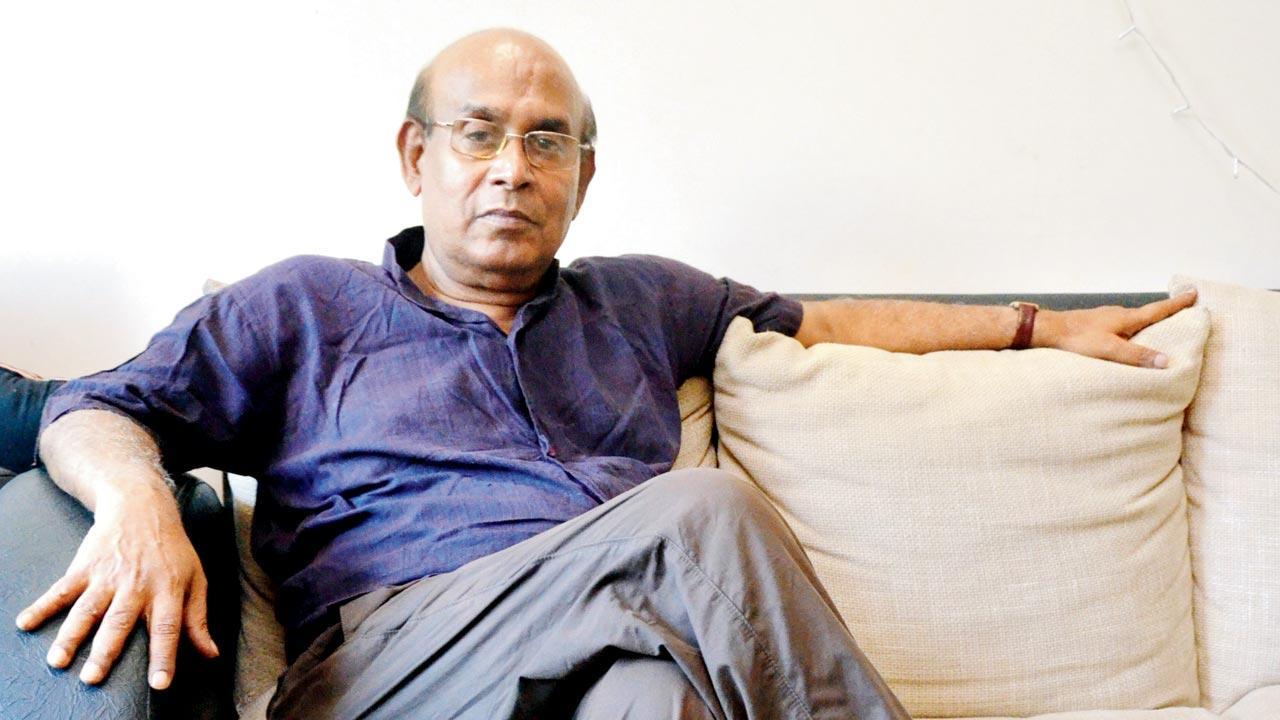
Prosenjit Chatterjee pays tribute to the legendary filmmaker, Buddhadeb Dasgupta, who passed away at 77
As told to Upala KBR (MID-DAY; June 11, 2021)
I was lucky to do two films with Buddha da – Swapner Din [2004] and Ami, Yasin Ar Amar Madhubala [2007]. Unfortunately, they never got a proper commercial release in India. Ami, Yasin Ar Amar Madhubala was screened at Toronto Film Festival and Swapner Din won the Best Film [gong] at the National Awards. He wanted me to do Kaalpurush [2005], where I was to play Mithun da’s [Chakraborty] son, but our dates didn’t match. [I couldn’t be part of] Uttara [2000] because I couldn’t go bald and put on weight [at the time].
Parallel cinema has a [restricted] budget, but we never asked for remuneration as we wanted to work in such films. When I went to meet Buddha da for the narration of Swapner Din, the first thing he told me was, ‘Ami tomake ekta gamchar taka debo [I can pay you the price of a cotton towel].’ I had to change my look to that of an ordinary boy and tone down my skin [colour]. He didn’t think that a successful mainstream hero would go out of his way, put his heart and mind into the role. He was happy. Buddha da would tell people, ‘Prosenjit is a dedicated director’s actor because he is always with the director — from the shoot to managing the sequences and coming up with solutions’.
Buddha da had a huge fan-following at international film festivals and his movies catered to that audience. Hence, all his movies had an international touch. The way he would set up his cameras, by putting one trolley on top of another, and choreograph their movements was different. He worked with the best cameramen and his lighting created magic. I remember we once shot with lanterns for a scene in a dhaba. [Despite] minimal light, it looked completely natural. If actors couldn’t understand the frame, Buddhada would call for me and ask me to rehearse with the rest of the actors.
Every sequence that I have shot with Buddha da was challenging. In Swapner Din, there was a chase sequence where the police were firing at us. Buddha da wanted a real gun for the shot [licensed and brought from Kolkata]. It was a scary moment for me, but dada wanted it. I will never forget that scene in my life. We did rehearsals and workshops at his home before the shoot began. He would take just two to three shots in a day. The first shot had to be filmed at 4.30-5 am to coincide with the sunrise. He considered it the magic hour. So, we rehearsed for the scenes at 2.30 am. [Post] 6: pm, it was pack-up unless there was a night scene. His shots were like one fully choreographed scene and if anything disrupted it — like a cow or person walking across the background — the scene would be shifted to the next day. Buddha da would not take another shot of the same scene that day.
Filmmaker Buddhadeb Dasgupta who wrote on-screen poetry dies at 77
8:06 AM

Priyanka Dasgupta (THE TIMES OF INDIA; June 11, 2021)
Kolkata: Filmmaker Buddhadeb Dasgupta, known for his unique mix of reality and lyricism that made stories of dreamers and outliers flow like on-screen poetry, breathed his last on Thursday morning at his south Kolkata home. The 77-year-old had been battling nephrological ailments, but had been active even during the pandemic.
Born on February 11, 1944 in Anara village near Purulia, Dasgupta studied economics and took up a job as a lecturer. He quit teaching in 1976 to devote himself to his passion of making movies. Two years later, his directorial debut, ‘Dooratwa’, won a National Award for best feature film in Bengali.
Over a career spanning more than four decades, there were numerous awards and recognitions: he had under his belt 32 National Awards, including seven Swarna Kamal Golden for his features and documentaries; Dasgupta has also been programmed for the Masters of World Cinema section of Toronto International Film Festival eight times and has won the prestigious Golden Athena, Lifetime Achievement award from Athens International Film Festival. A former chairman of the Satyajit Ray Film and Television Institute, he was also a part of the present Academy Award Jury Board.
Tapas Pal was dancing in Venice, says Buddhadeb Dasgupta
8:13 AM

National Award-winning director Buddhadeb Dasgupta on his Uttara actor Tapas Pal
Hiren Kotwani and Jayatri Nag (MUMBAI MIRROR; February 19, 2020)
Sixty-one-year-old actor and former TMC MP Tapas Pal passed away on Tuesday at 3.30 am. He is survived by his wife Nandini and daughter Sohini.
Pal had a history of heart ailments and was also suffering from nerve-related problems. He was on his way to the US to meet his daughter when ge fell ill and was admitted to a Mumbai hospital on February 1. The funeral will be held in Kolkata this evening.
Pal started his journey in Bengali films with Dadar Kirti (1980) opposite Debashree Roy and entered Bollywood with Abodh (1984) with another debutante Madhuri Dixit. His memorable films include Guru Dakshina, Amar Bandhan, Parabat Priya, Bhalobasa Bhalobasa, Anurager Choyan and Amar Bandhan. Veteran actor Soumitro Chattopadhyay was shattered by his death and Debasree was so distraught she couldn’t say a a word.
 National Award-winning filmmaker Buddhadeb Dasgupta (right), who collaborated with Pal in Uttara and Mondo Meyer Upakhyan, described him as one of the finest actors he’s worked with. “A director only had to find an interesting role for Tapas. He grasped what was required during the narration itself,” he raved, recalling that after the premiere of Uttara, when he was honoured with the Special Director Award at the Venice Film Festival in 2000, an excited Tapas was dancing on the streets. “It was his way of expressing his joy. I had to go out and stop him. We spoke six months ago, he was losing his memory. It made me so sad.”
Pal graduated in EOM Bio Science. He joined the Trinamool Congress in 2000 and was elected from the Alipore Assembly seat as MLA the following year. He was elected to the Parliament (MP) from Krishnanagar for two consecutive terms. He was arrested by CBI in connection with multi-crore Rose Valley chit-fund scam in December 2016. Following his release from jail, after 13 months, he had distanced himself from both films and politics.
Door handles and dining plates..: What celebs do with awards
11:06 PM

Pt Vishwa Mohan Bhatt (above) holds a Grammy he won in 1993 at his Jaipur residence; (below) Bhatt’s son Salil
Top artistes end up with many trophies in their lifetimes, leaving no room for them
Priyanka Dasgupta (THE TIMES OF INDIA; February 3, 2020)
On a December evening that marked the first anniversary of film-maker Mrinal Sen’s death, his Chicago-based son and daughter-in-law opened the door of their Kolkata flat to friends and well-wishers. In an act of unusual generosity, the duo decided to give away the maestro’s possessions, including some of the trophies awarded to him.
Apart from awards like Dadasaheb Phalke, Padma or National Awards, an increasing number of honours — medals, figurines, framed citations — are bestowed on doyens in the film industry. Consequently, celebrity households often run out of storage space and have to constantly devise ways to preserve their prizes.
While trophies awarded to director Buddhadeb Dasgupta were remodelled as door handles of a bungalow he once owned in Kolkata, another veteran director had melted medals to make dining plates. “Preservation of awards is tricky,” said Poulomi Bose, daughter of Dadasaheb Phalke winner Soumitra Chatterjee, admitting the actor — who worked in 14 Satyajit Ray movies since his debut in 1959 — receives 15-odd recognitions a month.
“My father doesn’t like to display or discard them since they’ve been given with love and respect. Many awards are kept in my mother’s almirah or father’s office. We’ve carved out space to keep some at the landing near the staircase. Now he even keeps some underneath his bed,” she said. That seems to be a popular choice of space. Mrinal Sen also kept some awards under his bed.
But Dasgupta, who has 32 National Awards including seven Golden Lotus Awards (Swarna Kamal) to his name, has used some of his trophies for interior decoration. “While some figurines were turned into door handles, others are mounted on the wall,” he said.
The director recounted how once at a party in Raj Kapoor’s house, he found the actor’s awards sitting atop a rotating disc. “I don’t attach much importance to awards and can’t think of displaying them in such a way,” said Dasgupta. His wife and director, Sohini, added she has even given away some awards to relatives and domestic help due to space crunch.
Many other celebrities are also reluctant to turn their residences into a museum of sorts with a “display of achievements” so they put their awards to other uses.
Film-maker Rituparno Ghosh had once narrated how a renowned director served him dinner on plates made from medals he had won and each plate had the year of the award inscribed on it. He had also mentioned that another director — like Dasgupta — had had his awards turned into door handles of his farmhouse.
The celebrities, however, agree on one thing — special awards do get special treatment. Mohan veena player Pt Vishwa Mohan Bhatt has kept the Grammy award that he received in 1993 in the drawing room of his Jaipur residence along with his Padma Shri, Padma Bhushan and Global India Music Award. “Initially, I kept my Grammy in an almirah. Later, I made a glass case as so many people wanted to see it. I also have a theft alarm at home,” said Bhatt.
Satyajit Ray’s family has kept the honorary Oscar that was awarded to him in 1992 and the Golden Lion for ‘Aparajito’ from the Venice Film Festival in a vault. But at home, no one is surprised with a trophy popping out of every cupboard.
With his son director Sandip Ray winning awards too, Sandip’s wife Lalita said storage was becoming a problem.
So sometimes the A-listers part with their awards as soon as they are received. “Carrying home framed citations is difficult since the glass is fragile. Sometimes, I give them away to students in the city I am performing in,” Bhatt told TOI.
Durga Jasraj, daughter of 90-year-old vocalist Pt Jasraj, said awards he won have been distributed to music schools across the globe. “Once when heavy artefacts were awarded to performers at a concert in Mumbai, a certain musician mentioned his humble home was too small to keep them. But the organisers took offence and banned the musician from performing at their institute.”
Some organisers are aware of this challenge, but say appearances have to be kept up. “It’s difficult to carry heavy metal trophies past security checks at airports. But as a festival organiser, I can’t give light-weight trophies since they will look cheap,” said Sangeet Natak Akademi winning sarod player Tejendra Narayan Majumdar, who also organises music festivals.
Shawls that accompany awards hardly take up space. And it’s common practice to distribute them. At Sen’s house last month, a shawl had been kept aside for actor Nandita Das while other belongings went to ordinary people, giving them a chance to own a piece of cinematic history.

End of an era as Mrinal Sen passes away
9:07 AM

Dadasaheb Phalke awardee and last of the triumvirate that included Satyajit Ray and Ritwik Ghatak, is no more
Jayatri Nag (MUMBAI MIRROR; December 31, 2018)
The legendary Mrinal Sen passed away at his South Kolkata residence on Sunday following cardiac arrest. The 95-year-old filmmaker is survived by his son, Kunal. His actress-wife, Gita Sen, passed away in January last year.
As the third pillar of the triumvirate that included Satyajit Ray and Ritwik Ghatak, Sen narrated contemporary realities of life through his films and was one of the pioneers of the Indian newwave cinema.
Winner of innumerable national and international awards, Sen won the highest film honour, Dadasaheb Phalke award, in 2005. He was honoured with the Padma Bhushan, India’s third highest civilian award, in 1983.
Sen won five National Awards, for Akaler Sandhane, Chorus, Parashuram, Kharij and Khandahar, and one National Award for his Telegu film, Oka Oori Katha (1977).
The auteur made his first film Raat Bhore in 1955, with Uttam Kumar, and gained international recognition in 1960, with Baishey Shravan. Mrigaya (1976), which portrayed the plight of tribals in rural India, marked the debut of Mithun Chakrabarty. His 1986 directorial Genesis, featuring Naseeruddin Shah, Om Puri and Shabana Azmi, also told a story of slavery and freedom. His last directorial was Amar Bhuvan in 2002.
Born in Bangladesh’s (erstwhile Bengal) Faridpur in 1923 on May 14, Sen had arrived in Kolkata to study Physics at Scottish Church College and Calcutta University. After completing his education, he was forced to take up a job as a medical representative but he eventually returned to Kolkata to work as an audio technician at a city film studio.
President Ram Nath Kovind condoled Sen’s death on Twitter, sharing, “Sad to learn of the passing of acclaimed film-maker Mrinal Sen. From Bhuvan Shome to the Calcutta trilogy, his penetrating and sensitive portrayal of social realities made him a fine chronicler of our times. A loss to Bengal, to India and to the world of cinema.”
West Bengal Chief Minister Mamata Banerjee said, “Mrinal Sen’s death is an immense loss to the film industry.” Filmmaker Buddhadeb Dasgupta called it an “end of an era.” Union Minister Rajyavardhan Rathore and Sitaram Yechury also condoled his death. Veteran actor Soumitra Chattopadhyay was at a loss of words. “I have no words to express my grief.” Shabana Azmi was distraught. “I am deeply saddened by the news. Mrinal da was a very important filmmaker because he had a maverick streak in him that made his films edgy and unpredictable. He was deeply invested in the society around him and did not hesitate to question his own frailties through his films. He was deeply sensitive and humane. I consider Khandhar to be the film in which I have made the least number of mistakes (as an actress). Undoubtedly, he will live on through his films. My deepest condolences to Kunal and Nisha (Sen’s son and daughter-in-law).”

Why are only songs considered to be music, and not background scores?-Alokananda Dasgupta
8:18 AM

She may have disappointed her father, who wished to see his classical pianist daughter receive a standing ovation at the Albert Hall, but she currently has half a million people, including A R Rahman, cheering her score for the new mob drama Sacred Games. Meet Alokananda Dasgupta, one of a handful of female music directors in Bollywood, who tells Mohua Das about going it alone in a man’s world, conjuring music from noise, and the need to bring background scores to the foreground
Mohua Das (THE TIMES OF INDIA; July 21, 2018)
The apocalyptic chorus in the opening credits of Sacred Games is turning out to be as intriguing as the Laurel-Yanny audio illusion! From kahwa and waah waah to Wadala and Wai Wai, speculation is rife. Please solve this puzzle.
It’s aah waa anne yawa tyu aai — absolute gibberish. I wanted to create a chant with a religious aspect, but at the same time I did not want it to be associated with any religion or country. I wanted it to sound pagan but not witchcrafty. So, I mouthed some nonsensical words on the soundtrack and it fit. A very anti-climactic mystery, actually!
Rahman graciously welcomed you into the “scoring club” on Twitter. But why do you think background scores are still overlooked?
I’ve wondered too. Despite Ilaiyaraja, Satyajit Ray and A R Rahman having set the bar high, it’s only songs that are considered to be music. Even at award shows, it belongs in the technical category. What part of the creativity do they not see? In the West, soundtracks are available in isolation. It’s like the bassline in a rock song. You don’t need to hear it but without it, the song would fall apart. But I think that’s changing now. I’ve never received so much praise for a soundtrack.
You tend to use unconventional sounds — trap rap, water drops, clanging metal, creaks, drones, thuds — alongside classical strings, winds and keys. What guides your musical instincts?
The classical bit comes from my background in piano. Secondly, I’ve been suffering from a noise problem. It started some years ago and it ate me up to an extent that I was hearing noise all the time, be it construction, traffic and motor sounds or the elevator announcement: ‘Please close the door.’ I got my ears tested, checked for Vitamin B deficiency, went to a shrink until I couldn’t deal with it anymore and decided that instead of dreading it, I would look forward to it. I started recording noises and recreating them as musical rhythms. Some of the steel and rubble sounds in Trapped are actual noises from the construction below my floor. It was a personal trip to see if dissonance can attract people and it worked.
How do you define your creative idiom?
I can never let go of my roots in Western classical, Indian folk and attention to melody. Above that bedrock are the ups and downs I’m facing in life, new music and films, people I meet, and the indigenous instruments I discover. To me the sound of the cello is as fascinating as the instrument used for beating cotton mattresses. I think my forte lies in my strong sense of cinema. I really understand narrative and like to defamiliarise the familiar. Anything that you’ve listened to in the past, I want to morph differently.
That sense probably stems from growing up with a famous filmmaker father (Buddhadeb Dasgupta). How did you take to music?
There were many other influences at play. My mother’s grandfather was Rajanikanta Sen (Bengali renaissance poet and composer) and my sister and I were naturally into dance. I was going to take up Odishi as a career but Baba introduced us to piano. We did it as a chore because we weren’t good performers. Then Fauzia Mariker, a music teacher in Kolkata inspired me to study music, for which I went to York University in Toronto. Over time, I realised my happy zone was in the compositional part. I landed in Mumbai to work, assisted Amit Trivedi and then two Marathi films Shala and Fandry came my way. Having grown up on foreign films, a different language or culture didn’t pose a problem. Instead, it opened doors.
We’re seeing women directors, cinematographers, editors; why not more music directors?
I don’t understand why it has been so male dominated for generations although there shouldn’t be anything holding women back. There might be aspects considered easier for men, like handling long and late hours though in a city like Mumbai it isn’t really a problem. There’s also this intimidation of technology. But that’s not imperative to producing good music. I started by writing notations on paper and gradually moved to computing and programming. It can easily be learnt on the job. The craft has nothing to do with gender.
But does it get more difficult when you belong to a minority in an industry within the industry?
Oh yes, there’s definitely an inequality that you know exists but once you get into it, you can change things for yourself. I’ve never faced gender discrimination in terms of wages or work respect. I was always like Matangini Hazra (freedom fighter), expressing myself if I felt something was unfair.
Aamir, Salman Khan, Priyanka Chopra, Deepika, Aishwarya, Big B invited to have a say at Oscars
8:13 AM

B’wood
actors to filmmakers and technicians, the Academy, in its most diverse
list yet, invited a record 774 film personalities to be new members
Sanyukta Iyer (MUMBAI MIRROR; June 30, 2017)
On Wednesday, the Academy of Motion Picture Arts and Sciences issued a record 774 invitations to new members, which included 14 Indian film personalities, outdoing its record of 683 invitations in 2016.
Rubbing shoulders with Hollywood stars Chris Evans, Riz Ahmed, Dwayne Johnson and Kristen Stewart are Amitabh Bachchan, Aishwarya Rai, Aamir Khan, Priyanka Chopra, Deepika Padukone, Salman Khan and Irrfan Khan. Internationally acclaimed filmmakers Mrinal Sen, Goutam Ghose, Sooni Taraporevala and Buddhadeb Dasgupta, documentary filmmaker-activist Anand Patwardhan, costume designer Arjun Bhasin and sound designer Amrit Pritam Dutta have also made the cut. Also in the list are India-born Mohit Kallianpur and Mahesh Ramasubramanian, who’ve done the animation and visual effects of films like Frozen and Shrek.
Patwardhan hailed the move as “surprising but much-needed”. He pointed out that for a long time the Oscars have been dominated by American and British ideologies and Hollywood has been pushing the American propaganda. “Apart from horror, the James Bond franchise and war films, powerful and progressive pieces of work need to be brought to the forefront,” he asserted, citing Michael Moore’s 2003 win, Bowling for Columbine (Best Documentary Feature) to emphasise how he used the platform to speak up about the Iraq war and rebel against the media. “Since there is a fairly closed system of naval-gazing at the Oscars, more people from different countries will fuel the rebel culture and that’s a healthy sign.”
However, his enthusiasm is tinged with scepticism as he wonders if all 14 Indians will actually be flown to Los Angeles for the ceremony or will it be only the stars. “How are they going to fit all 774 people?” he ruminates but says he’ll definitely exercise his vote.
Dasgupta is not only an invitee but also a member of the jury. “It’s a huge honour and I am definitely going to make my presence felt. I don’t care about categories, I plan on enjoying all kinds of good cinema,” he exults, insisting the number of Indian invitees will have no bearing on India’s performance at the awards.
In the last 80 years, only three Indian films – Mother India, Salaam Bombay and Lagaan-- have made it to the last five in the Foreign Language category, with Mother India losing to Federico Fellini’s Nights of Cabiria by a single vote. “It is difficult to lobby for an Oscar at a ceremony dominated by English-speaking content. A country like India should be allowed a minimum of four-five entries and Indian federations need to write to the Academy on this,” suggests Ghose, speaking from Satara where he is scouting locations for his next film. The National Award winning filmmaker learnt of his invitation through the media.
Taraporevela who wrote the screenplays of Mira Nair’s Mississippi Masala, Salaam Bombay and The Namesake before making her own film Little Zizou, has been a member of the Writers Guild of America since 1988. She woke up to an email congratulating her and woke up her husband with a delighted scream. “They used to choose actors and technicians of Oscar-nominated films before, now they have opened up the field. I’ve been a working screenwriter for nearly 30 years and in my mind, this is a prize for staying the course and not giving up,” she says.
Speaking to Mirror from New York, where he is presently filming his next Hollywood film Puzzle, Irrfan agreed that invitations to Indian actors would impact the representation of Indian film in the Foreign Language category. “But they don’t work as a boosting mechanism and will have no effect on the kind of movies we make in India. I am excited because I will now be updated on the nominated movies and as a privileged member of the Academy, I’ll get to watch them before the voting process,” he avers.
The actor whose repertoire boasts of Ang Lee’s Life of Pi and Dany Boyle’s Slumdog Millionnaire, has walked the Oscar red carpet in 2009 but adds that now that he’s an official member, “his fondest memory is yet to come!”
Priyanka Chopra is presently filming in New York for her second Hollywood film, A Kid Like Jake. “I’m so grateful, such an honour! I’m excited about the Academy inviting me and all these amazing women into the fold. There’s Naomi Harris, Gal Gadot, Leslie Jones… It’s so good to see all these wonderful women on the list. And it’s good that the Academy included some guys too,” she quipped.
On Wednesday, the Academy of Motion Picture Arts and Sciences issued a record 774 invitations to new members, which included 14 Indian film personalities, outdoing its record of 683 invitations in 2016.
Rubbing shoulders with Hollywood stars Chris Evans, Riz Ahmed, Dwayne Johnson and Kristen Stewart are Amitabh Bachchan, Aishwarya Rai, Aamir Khan, Priyanka Chopra, Deepika Padukone, Salman Khan and Irrfan Khan. Internationally acclaimed filmmakers Mrinal Sen, Goutam Ghose, Sooni Taraporevala and Buddhadeb Dasgupta, documentary filmmaker-activist Anand Patwardhan, costume designer Arjun Bhasin and sound designer Amrit Pritam Dutta have also made the cut. Also in the list are India-born Mohit Kallianpur and Mahesh Ramasubramanian, who’ve done the animation and visual effects of films like Frozen and Shrek.
Patwardhan hailed the move as “surprising but much-needed”. He pointed out that for a long time the Oscars have been dominated by American and British ideologies and Hollywood has been pushing the American propaganda. “Apart from horror, the James Bond franchise and war films, powerful and progressive pieces of work need to be brought to the forefront,” he asserted, citing Michael Moore’s 2003 win, Bowling for Columbine (Best Documentary Feature) to emphasise how he used the platform to speak up about the Iraq war and rebel against the media. “Since there is a fairly closed system of naval-gazing at the Oscars, more people from different countries will fuel the rebel culture and that’s a healthy sign.”
However, his enthusiasm is tinged with scepticism as he wonders if all 14 Indians will actually be flown to Los Angeles for the ceremony or will it be only the stars. “How are they going to fit all 774 people?” he ruminates but says he’ll definitely exercise his vote.
Dasgupta is not only an invitee but also a member of the jury. “It’s a huge honour and I am definitely going to make my presence felt. I don’t care about categories, I plan on enjoying all kinds of good cinema,” he exults, insisting the number of Indian invitees will have no bearing on India’s performance at the awards.
In the last 80 years, only three Indian films – Mother India, Salaam Bombay and Lagaan-- have made it to the last five in the Foreign Language category, with Mother India losing to Federico Fellini’s Nights of Cabiria by a single vote. “It is difficult to lobby for an Oscar at a ceremony dominated by English-speaking content. A country like India should be allowed a minimum of four-five entries and Indian federations need to write to the Academy on this,” suggests Ghose, speaking from Satara where he is scouting locations for his next film. The National Award winning filmmaker learnt of his invitation through the media.
Taraporevela who wrote the screenplays of Mira Nair’s Mississippi Masala, Salaam Bombay and The Namesake before making her own film Little Zizou, has been a member of the Writers Guild of America since 1988. She woke up to an email congratulating her and woke up her husband with a delighted scream. “They used to choose actors and technicians of Oscar-nominated films before, now they have opened up the field. I’ve been a working screenwriter for nearly 30 years and in my mind, this is a prize for staying the course and not giving up,” she says.
Speaking to Mirror from New York, where he is presently filming his next Hollywood film Puzzle, Irrfan agreed that invitations to Indian actors would impact the representation of Indian film in the Foreign Language category. “But they don’t work as a boosting mechanism and will have no effect on the kind of movies we make in India. I am excited because I will now be updated on the nominated movies and as a privileged member of the Academy, I’ll get to watch them before the voting process,” he avers.
The actor whose repertoire boasts of Ang Lee’s Life of Pi and Dany Boyle’s Slumdog Millionnaire, has walked the Oscar red carpet in 2009 but adds that now that he’s an official member, “his fondest memory is yet to come!”
Priyanka Chopra is presently filming in New York for her second Hollywood film, A Kid Like Jake. “I’m so grateful, such an honour! I’m excited about the Academy inviting me and all these amazing women into the fold. There’s Naomi Harris, Gal Gadot, Leslie Jones… It’s so good to see all these wonderful women on the list. And it’s good that the Academy included some guys too,” she quipped.
Chandan Roy Sanyal's Tope to have its world premiere at Toronto International Film Festival
7:45 AM

Natasha Coutinho (MUMBAI MIRROR; August 1, 2016)
Buddhadeb Dasgupta's
bilingual, Bait in English and Tope in Bengali, will also have its world
premiere at The Toronto International Film Festival. Chandan Roy Sanyal
who plays the lead in this film shot in Purulia in West Bengal last
year, recalls that he was in Venice when he got a call from the
director's daughter requesting a narration on Skype. “Since the film is
about human evolution, I'm mostly on a tree befriending monkeys,“ he
laughs.
Shooting with animals isn't easy and Chandan ended up spending long hours on the tree. If the monkeys shifted from their mark, it was a retake. "You cant control animals beyond a point,“ he reasons.
The effort has paid off. After the premiere at Toronto, Bait will travel to the Busan film fest and then BFI London International Film Festival: “It gave me the opportunity to work with a director who's a respected poet and activist. This is the seventh time his film is being screened at TIFF,“ adds the actor
Shooting with animals isn't easy and Chandan ended up spending long hours on the tree. If the monkeys shifted from their mark, it was a retake. "You cant control animals beyond a point,“ he reasons.
The effort has paid off. After the premiere at Toronto, Bait will travel to the Busan film fest and then BFI London International Film Festival: “It gave me the opportunity to work with a director who's a respected poet and activist. This is the seventh time his film is being screened at TIFF,“ adds the actor
I know there is an audience that enjoys my work. That’s enough-Pawan Malhotra
8:15 AM

Pawan Malhotra may not have chased stardom, but his 25-year-old career and a retrospective on it in Delhi, is proof that it’s long overdue
Aastha Atray Banan (MID-DAY; January 3, 2016)
“It was the 70s, and Delhi theatre was at its peak. Plays like Begum Ka Takiya and Mukhyamantri were being staged and names like Pankaj Kapoor were acting,” says Pawan Malhotra, recalling that his acting career began on the stage. “I acted in a play called Father, and there was a line printed in a newspaper that said ‘Pawan Malhotra is impressive as an orderly’. I read it again and again for an entire week.” Today, over three decades later, Delhi’s India International Centre’s Film Club is organising a retrospective on Malhotra’s 25-year journey in films from January 11 to 21.
If you don’t know of Malhotra’s National Award-winning movies like Bagh Bahadur (where he plays a man who paints himself as a tiger and dances in rural Bengal), or Salim Langde Pe Mat Ro (where he plays an angry roadside underworld don), you will know him at least for the more commercial roles like Black Friday, Jab We Met, Don and Bhaag Milkha Bhaag. And, of course, you will remember him as Hari from that seminal TV show, Nukkad.
As a part of the retrospective, six movies, including Bagh Bahadur, Children of War, Salim Langde Pe Mat Ro and Brothers In Trouble will be shown. There will also be a seminar, titled Unmasking Pawan, which is a session with Saeed Mirza, Buddhadeb Dasgupta, Amit Rai, Mrityunjay Devvrat, Rakyesh Omprakash Mehra, Faisal Alkazi and Khalid Mohamed talking about the actor’s journey and the characters he has made immortal.
He describes his journey as a quiet one, only because he says he was so busy doing his work that he forgot to market himself. “Lots of people have told me that there’s a reason it’s called show business. After all, it is about selling yourself, making money. But, I feel I just did my job, and never wooed the press. If they talk about me, they would be doing their job." The son of a successful machine tools businessman, Malhotra was expected to join the family business after he graduated from Delhi University’s Hansraj College. “I was doing theatre in college but I never thought of taking it up as a profession. One day my father told me to come to the factory and learn the ropes,” says the 57-year-old, adding, “and around the same time a friend asked me to work in the costume department of the movie Gandhi. I told my dad ‘this one last time’ and off I went. When the crew shifted to Mumbai, so did I, and then I never looked back.”
He followed it up with working on costumes for Jaane Bhi Do Yaaron, and then started working as a production assistant. His first big acting role, as Hari in Nukkad, was also a fluke. “The camera guys have to check sync of the dialogue and mics. So, they need a person to talk to continuously for one minute and they asked me. I started talking about Mumbai, which director Saeed Akhtar Mirza saw. He told me ‘you are an actor’. I didn't even audition for Hari, but for some other small role in Nukkad. But, the actor who had to play Hari didn’t like his role, and so I got it.”
The role made him a household name, and when he bagged Salim’s role in Mirza’s Salim Langde Pe Mat Ro (1989), about the Hindutatva movement in Mumbai and the lives of underworld goons, he shouldn't have been surprised. “But, I was. I asked him, ‘are you sure?’ He said, ‘start working on your character, Mr Malhotra’. So I took fellow actor Makrand Deshpande and we went to places like Dongri and Chor Bazar for a ride. We based our characters, small-time goons, on people we saw there. We all had droopy moustaches and were cocky. The smaller you were, the cockier you were.”
This brought him his other landmark movie, Bagh Bahadur, directed and written by Buddhadeb Dasgupta, where a man paints himself as a tiger and dances in a village in Bengal. "Buddhadeb saw me on the cover of a magazine and said, 'I loved your eyes'. I had to learn Chaau dance. It was a hard role. At the end of the day I would be rubbed down with kerosene, and my back ached all the time thanks to the dance,” he says, and then pauses, “I guess what's worked for me is that I have no set mannerisms or way of talking. I can be any one. As a part of the retrospective, they have made a 17-minute film that has clips of all my movies, and I realised that my mannerisms and way of talking change with every scene. But, sometimes I think a star is only one who can be mimicked, right?”
In Childern Of War (2014), which was about the Bangladesh Liberation War, he plays a tyrant who thinks Pakistani soldiers raping Bangaldeshi women is justified. “After a screening, a woman told me that she was scared of me, but had still told her daughter to watch the film for me.” He also released Punjab 1984, about the insurgency’s impact on social life. Right now though, he is on a high with his retrospective. “People have been telling me it’s taken too long to come.” But he sees it as an honour. “For a retrospective, you need a body of work, and a body of different kind of work. I don’t have lakhs of people running after me, but I know there is an audience that enjoys my work. That’s enough for me. I have enjoyed this immensely.”
Check out Chandan Roy Sanyal's monkey business in Purulia, Bengal on the sets of Tope
7:41 AM

Avinash Lohana (MUMBAI MIRROR; October 17, 2015)
Chandan Roy Sanyal is set to wrap up the shooting of Buddhadeb Dasgupta's Tope in a record 10 days in Purulia, Bengal. "These guys are really fast. I've been giving one-take shots. I haven't bathed for 10 days and my hair is so rough," the actor sighs. He plays a postman in the film, who takes all the letters from the post office and seeks refuge in a tree, refusing to come down. "I've shot most of the film in the tree with some monkeys," he reveals.
Chandan is elated to work with the National Award winning director. "He is 71, walks with a stick and is a true genius. His approach is completely different from the others," he says.
Chandan Roy Sanyal to play postman in Buddhadeb Dasgupta's Tope
8:07 AM

Avinash Lohana (MUMBAI MIRROR; September 21, 2015)
A week ago, Chandan Roy
Sanyal, who was at the Venice Film Festival for the premiere of his
film, Island City, was informed that filmmaker Buddhadeb Dasgupta wanted to make a
Bengali film with him titled Tope. “We did a Skype chat. I absolutely
loved the narration. It's about a 35-year-old postman in a small village
in Bengal, Purulia. It's a great script, something very different from
what I do in Mumbai and working with Buddhadeb sir too is a big
incentive,“ says Chandan.
His favourite Dasgupta film is Tahader Katha, which bagged his idol, Mithun Chakraborty, a National Award. Tope kicks off on October 7 with a 20-day schedule. “I am reading up on Indian news services and the postmen in particular as a part of my prep,“ says Chandan. It took him back to the letters he wrote to his uncle in Bahrain as a child. “All of us from the family would write in the same letter,“ he adds. Adding on his role as a postman, he says, “I loved Rajesh Khanna's role as a postman in Palkon Ki Chhaon Mein; the uniform, bicycle, bagful of letters, cap and all.“
Chandan has directed a short film after the critically acclaimed Hiroshima, titled 35 mm. It's a 25 minute film with five minutes of dialogue. “It's a love story between a director and an actress. We are into post-production now,“ he smiles.
His favourite Dasgupta film is Tahader Katha, which bagged his idol, Mithun Chakraborty, a National Award. Tope kicks off on October 7 with a 20-day schedule. “I am reading up on Indian news services and the postmen in particular as a part of my prep,“ says Chandan. It took him back to the letters he wrote to his uncle in Bahrain as a child. “All of us from the family would write in the same letter,“ he adds. Adding on his role as a postman, he says, “I loved Rajesh Khanna's role as a postman in Palkon Ki Chhaon Mein; the uniform, bicycle, bagful of letters, cap and all.“
Chandan has directed a short film after the critically acclaimed Hiroshima, titled 35 mm. It's a 25 minute film with five minutes of dialogue. “It's a love story between a director and an actress. We are into post-production now,“ he smiles.
A look at the Indian films that have been screened at the Cannes over the years
7:43 AM

Shakti Shetty (MID-DAY; May 15, 2014)
The 67th edition of the Cannes film festival kicked off yesterday with the screening of the Nicole Kidman-starrer, Grace of Monaco.
Uday Chopra happens to be one of the producers of this biopic. However, he’s not the only Indian face at the French Riviera this year. Along with the usual dose of Bollywood glamour (read: Aishwarya Rai-Bachchan, Sonam Kapoor and many more), this year will see director Kanu Behl keeping his fingers crossed even as his film Titli competes in the Camera d’Or category, which acknowledges the best debut effort.
Interestingly, over the years, several films have been screened at Cannes but none have won an award in the competitive categories. hitlist takes you down the memory lane to look at films from India that were not only screened at the prestigious film fest but also won laurels...
'Neecha Nagar' (1946)

Director: Chetan Anand
The lowdown: When the Cannes Film Festival was held for the first time after the World War II in 1946, this Hindi film bagged the Palm d’Or (Golden Palm) along with 10 other entries from around the world.
'Do Bigha Zamin' (1953)

Director: Bimal Roy
The lowdown: Heavily inspired by Bicycle Thieves (1948), this Bengali film — starring Balraj Sahni and Nirupa Roy in leading roles — won the Golden Palm along with eight other movies.
'Boot Polish' (1954)

Director: Prakash Arora
The lowdown: A Raj Kapoor production, the film’s socialist approach was difficult to ignore but its story won the audiences over. To add to this, the festival made a special mention of child actress Naaz who rendered a heartwarming performance in the film.
'Pather Panchali' (1955)Director: Satyajit Ray
The lowdown: This film is counted among Ray’s best works. At the Cannes film fest, it unanimously won the Best Human Document award.

'Gotoma the Buddha' (1956)
Director: Rajbans Khanna
The lowdown: The film’s title may have not been conventional but its message was clear. This feted documentary was nominated for Palm d’Or and it won a special mention for the director who, interestingly, never made another film.
'Kharij' (1982)Director: Mrinal Sen
The lowdown: This Bengali film was nominated for the Palm d’Or, which was won by the Japanese film, The Ballad of Narayama. However, Sen didn’t return home emptyhanded as he was awarded the Jury Prize.
'Salaam Bombay!' (1988)

Director: Mira Nair
The lowdown: Before it became the second Indian film to be nominated by the Academy, this Camera d’Or (Golden Camera) winning film bowled over critics as well as the public at Cannes.
'Piravi' (1989)

Director: Shaji N. Karun
The lowdown: Just a year after Salaam Bombay! took the honours, this Malayalam feature film — it deals with rural and urban disparity — earned a special mention in the Camera d’Or category.
'Marana Simhasanam' (1999)Director: Murali Nair
The lowdown: This Malayalam film threw light on the relationship between elections and idiocy in the country. It won the Camera d’Or — a feat yet to be repeated by an Indian film.
'The Lunchbox' (2013)

Director: Ritesh Batra
The lowdown: Although it didn’t win a major award in the competition category at the 66th Cannes Film Festival, it bagged the Grand Rail d’Or.
Filmmakers speak out: Why aren’t we winning top honours lately?
Dibakar Banerjee, producer of Titli

"I haven’t had the time to think about it. Maybe because it’s not an important issue."
Goutam Ghose, filmmaker

"It’s unfortunate because our films haven’t really matched the standards set by the Cannes jury. Of late, there have been many interesting Indian films but the question has always been the same: How rooted to Indianness are they?"
Buddhadeb Dasgupta, filmmaker

"There is no dearth of good films in our country but how many make it to Cannes, or for that matter, other international festivals? Maybe the required channels for such films are missing and that should be our concern."
Govind Nihalani, filmmaker

"To win an award at a film festival, your film should be in the competitive category. In the past few years, we’ve read about films travelling to Cannes, but I don’t think many were competing for awards. So winning anything big is out of the question."
"I haven’t had the time to think about it. Maybe because it’s not an important issue."
Goutam Ghose, filmmaker
"It’s unfortunate because our films haven’t really matched the standards set by the Cannes jury. Of late, there have been many interesting Indian films but the question has always been the same: How rooted to Indianness are they?"
Buddhadeb Dasgupta, filmmaker
"There is no dearth of good films in our country but how many make it to Cannes, or for that matter, other international festivals? Maybe the required channels for such films are missing and that should be our concern."
Govind Nihalani, filmmaker
"To win an award at a film festival, your film should be in the competitive category. In the past few years, we’ve read about films travelling to Cannes, but I don’t think many were competing for awards. So winning anything big is out of the question."
Buddhadeb Dasgupta blasts Censors for making him delete 'objectionable' stuff from Nawaz-starrer
9:46 AM

Roshmilla Bhattacharya (MUMBAI MIRROR; April 24, 2014)
 Globally
acclaimed (he is the recipient of three Lifetime Achievement awards at
international film festivals) and 11 times National Award-winning
filmmaker, Buddhadeb Dasgupta is livid following a six-month battle with
the Central Board of Film Certification over half-a-dozen objections to
his upcoming Hindi film, Anwar Ka Ajab Kissa. “I used to believe that
filmmakers in Mumbai enjoy excessive freedom but for the first time in a
career spanning almost five decades, I had to surrender to the diktats
of the Board because I couldn’t put my producer through this agonising
wait,” rages the filmmaker who had to edit out a scene and alter a word
in a dialogue for his film to arrive at the “verge of clearance”.
Globally
acclaimed (he is the recipient of three Lifetime Achievement awards at
international film festivals) and 11 times National Award-winning
filmmaker, Buddhadeb Dasgupta is livid following a six-month battle with
the Central Board of Film Certification over half-a-dozen objections to
his upcoming Hindi film, Anwar Ka Ajab Kissa. “I used to believe that
filmmakers in Mumbai enjoy excessive freedom but for the first time in a
career spanning almost five decades, I had to surrender to the diktats
of the Board because I couldn’t put my producer through this agonising
wait,” rages the filmmaker who had to edit out a scene and alter a word
in a dialogue for his film to arrive at the “verge of clearance”.The scene in question features three ghostly characters sharing their woes. One moans that he hasn’t had a bowel movement in two days, another complains that she’s not slept in a decade and the third whines with his hands inside his trousers, “Teen saal mein maine kisiko lagaya nahin.” “They made me change ‘lagaya nahin’ to ‘kiya nahin’ even though the words are simply a translation of lines from my own book of verse, Crap Series, which has never sparked off any kind of controversy,” says the veteran director. Even more ludicrous is the objection to the scene which he had to edit out. A prospective client is called away while visiting a prostitute whom he obviously knows well. The disgruntled woman says, “Aag to tumne laga diya, ab tum hi ko bujhana hai.” An aggrieved Dasgupta cannot believe that today anyone would be outraged by brothel talk, pointing out that a recent Bengali film, Cosmic Love, which took physicality to the extreme, got the nod. “My Mondo Mayer Upakhyan had far more explicit scenes and no one objected to it,” he retorts.
Dasgupta believes that it is imperative that honorary members of the CBFC, who have no grounding in Indian or world cinema, should be put through a orientation course before they take charge. “Just an hour or two for a week would give them a broader perspective and help them see beyond antiquated censorship guidelines which date back to the ‘40s,” he reasons.
To add to his woes, Dasgupta who shot one of his five National Award winning films, Bagh Bahadur, in ’89 with a real tiger, suddenly found that casting a pet dog with whom his detective shares his drunken loneliness also set his film back by three months. “Even after getting the green signal from the animal welfare associations before and during the shoot, nowadays you need to get a vet to certify that the animal was not harmed during the filming,” he sighs, adding that when he mentioned this to Columbia University film students during a lecture they laughed for five minutes because even in the US, where they are very protective about animals, the whole process doesn’t take more than an hour. Dasgupta says he will film his next with a real tiger flown down from Bangkok.
Pointing out that filmmakers today have become soft targets in the country, he adds, “If someone like me who has won so many national and international honours, been on the jury of several prestigious film festivals have to go through this, I can only imagine the harassment the young filmmakers face. I plan to take up this issue with the CBFC on a war footing in the future, irrespective of which government comes to power at the Centre,” he warns.
Rakesh Kumar, CEO of the CBFC, chose not to respond to our text.
Subscribe to:
Posts (Atom)