Showing posts with label Brahmachari. Show all posts
Showing posts with label Brahmachari. Show all posts
Veteran singer Suman Kalyanpur passes away at 89
8:52 AM
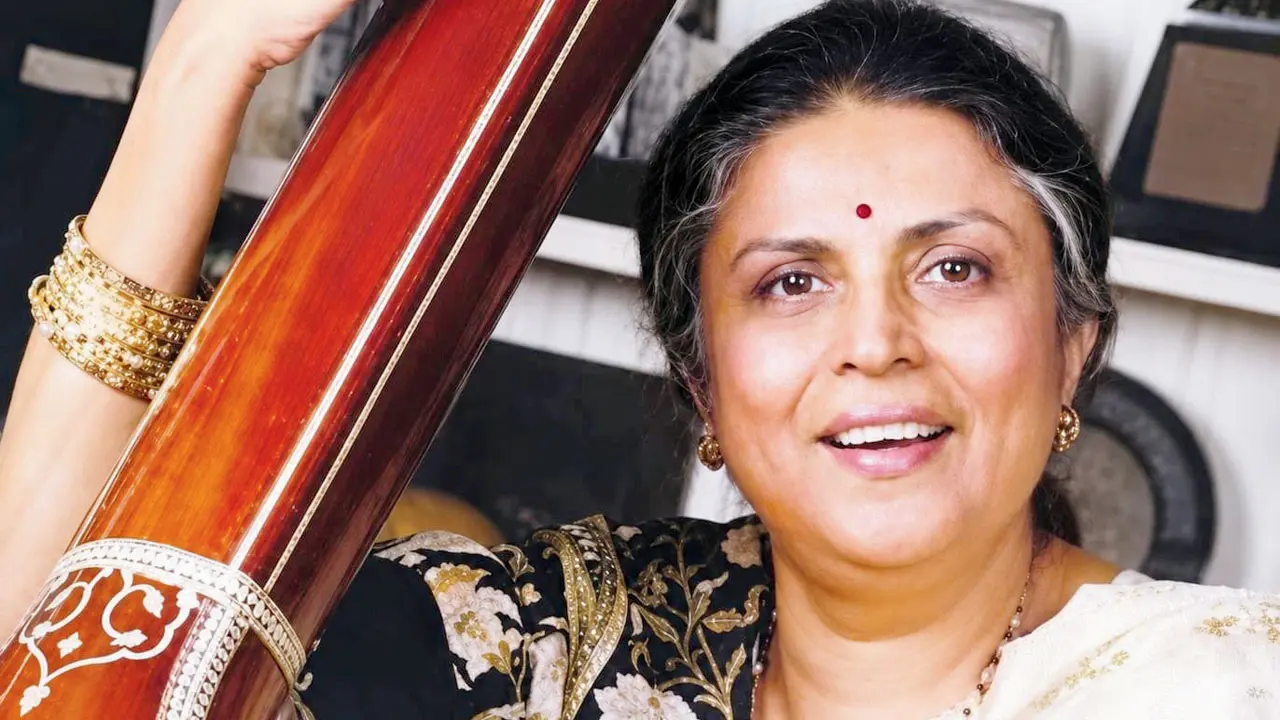
Bella Jaisinghani (THE TIMES OF INDIA; June 1, 2026)
Mumbai: Weeks after Asha Bhosle passed away April 12, India lost another stalwart singer Suman Kalyanpur at age 89 on Sunday May 31. Her voice bore such striking similarity to that of melody queen Lata Mangeshkar that common listeners sometimes mistook one for the other.
Born Suman Hemmady on January 28, 1937, in Dhaka (undivided India), she went on to make a glorious career as a playback singer in Hindi and Marathi apart from a few other Indian languages. Her non-film songs span bhajans, ghazals and Marathi abhang and bhavgeet.
After completing school from St Columba, Mumbai, an artistic Suman enrolled in the JJ School of Art to learn painting. She went on to learn vocal music from Pt Keshavrao Bhole, Ustad Khan Abdul Rehman Khan and Master Navrang.
Her early successes came in two films Shukrachi Chandni and Mangu (1954) followed by a colourful pyramid layered with Sharaabi sharaabi yeh saawan ka mausam, Rahein na rahein hum, Aajkal tere mere pyar ke charche, Na na karte pyaar, Na tum hamein jaano, Parbaton ke pedon par and Nimbonichya zhaada maage. Her duets with Mohammed Rafi peaked in the early 1960s, driven by the Lata-Rafi rift.
As news of her death broke Sunday, NCP leader Sharad Pawar and singer Fayyaz were among the first to express condolence.
Pawar said, "The news of the passing of Suman Kalyanpur is extremely heartbreaking. With her sweet, melodious, and soul-stirring voice, she enriched the world of Indian music. Her immortal songs in Hindi, Marathi, and numerous other regional languages have reigned supreme over the emotional realms of generations. With her demise, the curtains are drawn on an era of gold in Indian classical and light music. I offer my heartfelt tribute to her and extend my condolences to her family."
Suman had married businessman Ramanand Kalyanpur in 1958. She is survived by her daughter Charu Agny and son-in-law Manoj Agny.
--------------------------------------
Narendra Kusnur (MID-DAY; June 2, 2026)
After news of singer Suman Kalyanpur’s death came in on Sunday night, one noticed two common reactions. One was that she was the closest to sound like Lata Mangeshkar, and the other was that she didn’t get the accolades she deserved.
Both responses may be justified, but the fact remains that Kalyanpur had some iconic hits in the 1960s. Even today, songs like Na Tum Hamein Jaano (Baat Ek Raat Ki, 1962), Tumne Pukaara (Rajkumar, 1964), Na Na Karte Pyar (Jab Jab Phool Khile, 1965), and the super-hit Aajkal Tere Mere Pyaar Ke Charche (Brahmachari, 1968) rule radio shows and talent competitions.
The Padma Bhushan awardee passed away in Mumbai at the age of 89, following old age-related issues. Her death comes seven weeks after that of Asha Bhosle, and is thus seen as the definitive end of the Golden Era. Though Kalyanpur is best remembered as a Hindi playback singer, she was also admired for her Marathi bhavgeet and bhajans, Punjabi shabd and wedding songs, and tunes in Bengali, Assamese, Gujarati, Kannada, and other regional languages. Her rendition of the Marathi devotional song, Keshava Madhava, is an audience favourite.
Born Suman Hemmady in Dhaka on January 28, 1937, she moved to Mumbai with her family when she was six. She took formal training in singing and painting. She got an offer from All India Radio in 1952, and sang in the Marathi film Shukrachi Chandni the following year. In 1954, she sang in Mangu and Darwaza.
After marriage, her husband Ramanand Kalyanpur encouraged her to pursue her singing career. The hits came in the first half of the 1960s, with Garjat Barsat, a duet with Kamal Barot in Barsat Ki Raat (1960), the Dil Ek Mandir (1963) title track, Ajahun Na Aaye Balma in Sanjh Aur Savera (1964), and Mere Mehboob Na Ja in Noor Mahal (1965).
During this time, many had noticed how similar Kalyanpur’s voice texture and style of delivery was to Mangeshkar’s, and often listeners found it difficult to differentiate between the two. It began when they sang Kabhi Aaj Kabhi Kal in Chand (1959), but became more noticeable when Kalyanpur got many songs with Mohammed Rafi after his four-year fallout with Mangeshkar in 1964. In Mamta (1966), Mangeshkar was hugely admired for Rahen Na Rahen Hum, and very few people knew the alternate version was sung by Kalyanpur.
She slowed down in the 1970s, and subsequently kept a low profile. In the few interviews she gave, she attributed her destiny for not getting the attention she may have deserved, also saying her songs were dropped from some films. Of course, the melodies she has left behind fill a treasure trove.
Family member and friends of Junior Mehmood recount the man and legacy he leaves behind
8:08 AM
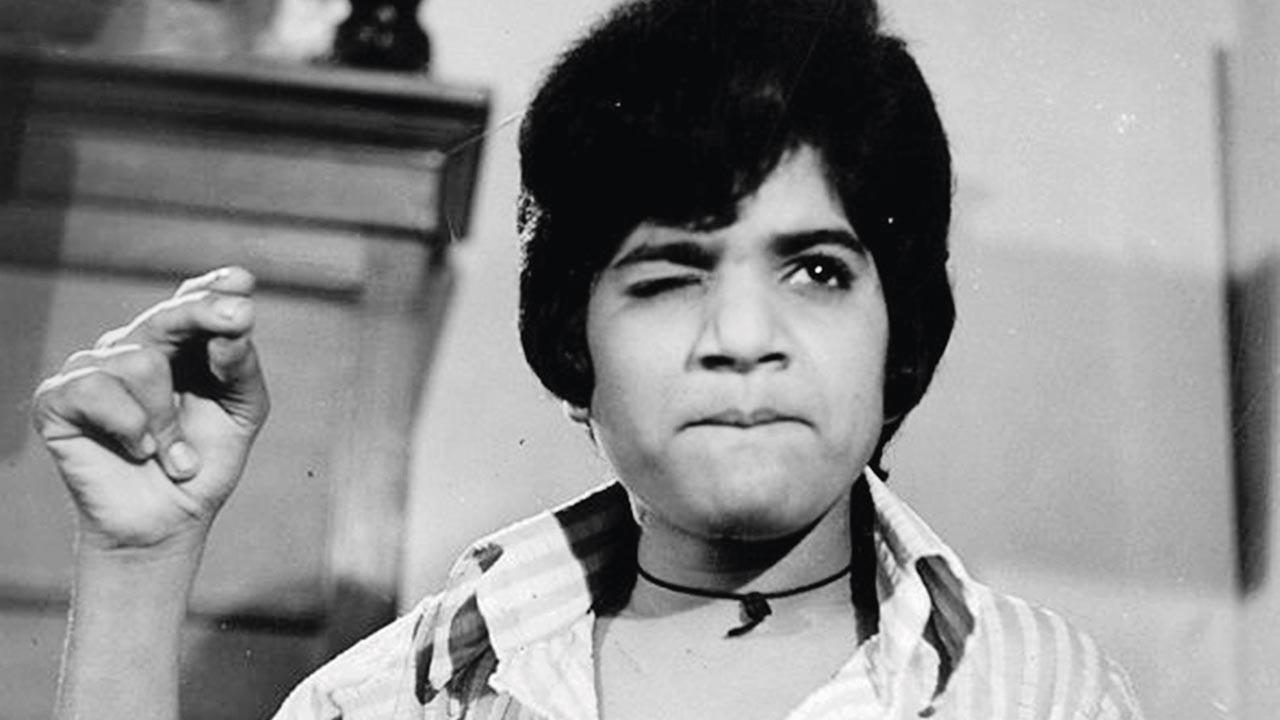
Family member and friends of the late Junior Mehmood recount the man behind the name, and the legacy he leaves behind
Gautam S Mengle (MID-DAY; December 17, 2023)
The year was 1981 and shooting for Shyam Ralhan’s Jeeo Aur Jeene Do was underway. The scene showed the legendary actor Pran as a dacoit who leaves the mountains of Chambal to come to Mumbai. Unfamiliar with the ways of the city, Pran’s character lies down on a pavement to rest for the night when the local goon’s sidekick shows up to demand hafta. The deadly dacoit responds by placing his leg on the collection bowl. The sidekick, not to be outdone, raises his fist and says, “Ae shaane, pair nikaal, haath jeb mein daal aur hafta nikaal.”
Placing of the leg on the bowl was not in the original script, and neither was the sidekick’s response. But Pran sahab, as he was known, was offended by the artiste’s improvisation, perceiving it as impudence. The shoot halted for over two hours, with the director having to intervene to soothe the veteran.
The actor who played the sidekick, too, was surprised. He had only responded the way his character would have. He was none other than Naeem Sayyed, better known as Junior Mehmood, who passed away on December 8 after a short battle with stomach cancer.
“I don’t know this specific story,” says his son Rafiq, “but it’s typical of Dad. I’ve grown up hearing stories about how, as soon as the camera started rolling, he would do something completely different than what was rehearsed. And not once did the scene have to be reshot. Directors always loved it when he pulled this on them.”
Over time, actors learned not to take it personally. By the time he passed away in 2013, Junior Mehmood had become ‘Mera Junior’ for Pran.
We meet Rafiq in the compound of the Dara House building in Khar. Rafiq and his younger brother Hasnain were both born in this house, which Junior Mehmood bought at the age of 12 in 1967. “Of course, the legal owner was our grandmother, but it was all Dad’s money. He was a star at the time and earning in lakhs,” Rafiq recalls.
Best remembered as the first child artiste to win a Filmfare award, Junior Mehmood’s legacy includes his unforgettable performance in Brahmachari, where he danced to a recorded version of Hum Kaale Hain Toh Kya Hua Dilwaale Hain, a song originally picturized on the actual Mehmood. He went on to give us a string of equally memorable performances in various films before moving on to TV serials.
The son of a locomotive pilot working with the Mumbai Port Trust, Junior Mehmood got his foot into the film industry at the age of ten, with Mohabbat Zindagi Hai that released in 1966, but he was only properly noticed during Suhaag Raat in 1968, when both Jeetendra and the original Mehmood appreciated him, and bestowed his lifelong sobriquet on him.
His last project was a Hyderabadi film named Majja Masti, which he directed this year and is yet to be released.
The loss is still fresh for the Sayyeds. The actor’s wife is observing the 130-day grief period of Iddah, and Rafiq has taken it upon himself to be the rock of the family. Just before we meet him, we see him talking to a gentleman. We stand at a distance out of respect but still overhear the words, “spoke to him only a few days ago”. Everyone seems shocked at the sudden loss. Nobody seems to have seen this coming.
It is only after the man leaves that we learn he was a lyricist, and that Junior Mehmood was collaborating with him for a project. Perhaps the reason why everyone is so shocked at his demise is the fact that he was fully energized till his final days.
“He performed at our building’s function in Diwali just a month ago!” says Inderpal Singh Kohli, who lives on the third floor of the same building. “He gave us a box of mithai with his own hands. My kids used to love him too. That’s just how Mehmood Uncle was, everyone’s favourite.”
Junior Mehmood was diagnosed only two months ago, and that too by accident. “He had been complaining of a constantly upset stomach for several days,” recalls Salam Kazi, who runs the YouTube channel India Asks. Kazi has been a family friend for 25 years.
“It got so bad that whenever we went out to eat, he’d first check if the place had a washroom, because he was unable to retain food in his system. I took him to a doctor, who prescribed a series of tests. When all the results were normal, we did a CT scan of his stomach. The doctor told us he had cancer,” Kazi recalls.
What followed was a series of tests at the Tata Memorial Hospital. As kindly as they could, the doctors told Kazi that chemotherapy would mean instant death, and that taking Junior Mehmood home was the best option. Since then, he had a nurse and a doctor tend to him, while he spent his days in the company of his family and close friends. Hundreds of well wishers came to see him, and Junior Mehmood recognized every one of them, and inquired after their well being.
“That is simply how sahab was. Every day, people would come to him for help, and not a single person would go back disappointed,” says Mangalaprasad Yadav, who has been working as a security guard at the Dara House since 1992. Yadav was at Junior Mehmood’s side during his constant visits to Tata Memorial.
Yadav recalls how Junior Mehmood would give him a Rs. 500 note to get him a pack of cigarettes and never ask for the change. Rafiq knows this too. “I asked Dad once and all he said was ‘uska ek din ka kharcha nikal jaega (he will have money to spend on a day’s essentials)’. I don’t recall Dad ever not thinking about someone else. He used to have a large amount of money in his bag, which he always carried. Whenever someone came for help, he would dip into the bag and give him whatever money came out, without counting.”
For Kazi, like countless others, it has been a personal loss. His phone has been ringing constantly. Everyone knew how close he was to Junior Mehmood, and he has been getting condolences from all over the country. He answers each call, thanks the caller and says the same thing: Dua kijiye unko jannat naseeb ho.
“I first met him on the set of a film around 25 years ago. I loved watching shoots. We got talking during the lunch break and he asked me where I live. When I said Wadala, he told me he too lived there till he shifted to Bandra,” Kazi tells us as we ride on his bike past Building Number 23 in Nadkarni Park, Junior Mehmood’s former residence. “I went back to the set to meet him and he not only recognized me but also put his arm around me like we were old friends.”
Kazi’s videos on social media alerted the world to Junior Mehmood’s plight. He posted it a week before the latter’s demise, and as a result, co-stars such as Jeetendra, Sachin Pilgaonkar and Johny Lever came rushing to meet Junior Mehmood. Also present throughout was comedian-actor Johny Lever, who arranged for Junior Mehmood’s check up at the Tata Memorial Hospital after hearing about his illness.
“I first saw him perform at a dance programme when we were both nine years old,” Lever tells mid-day on the phone. “We didn’t interact at the time, and the next time our paths crossed, Brahmachari had released and he was a big star. He was the chief guest at a dance audition in Bandra and I was too embarrassed to perform in front of him. I prayed to God that I should not be selected, and God answered my prayers.”
From then on, Lever never missed any of Junior Mehmood’s films and also tried to meet him several times, but there would always be a huge crowd outside his building. “This led to his father getting to know me!”
He says. “Then, in 1982, a cassette of one of my comedy performances was released and he sought me out because he loved it. Before we knew it, we were fast friends. We also performed together at live programmes and in films. Our kids have grown up playing with each other.”
Like many, Lever, too, can’t believe that the powerhouse of energy is gone. “We had a function in August to remember the original Mehmood, and Junior danced to and sang his songs. I’m not sure if he knew he was falling ill, but I believe he didn’t want his treatment to come in the way of his passion, and hence didn’t tell anyone,” Lever says.
“We never told him his diagnosis but I think he knew. Two days before his death, I asked him if he had any unfulfilled wishes. He said no, he just wanted to be remembered as a good man. I think even God will not deny this fact,” says Kazi.
He isn’t sure if he can say the same about many people who worked with Junior Mehmood, though.
“There are so many megastars who stay in the same city, who we have seen with Junior bhai in so many films. And none of them came to his funeral,” a pensive Kazi says. “They should have, right? I’m sure they could have, if they really wanted to.”
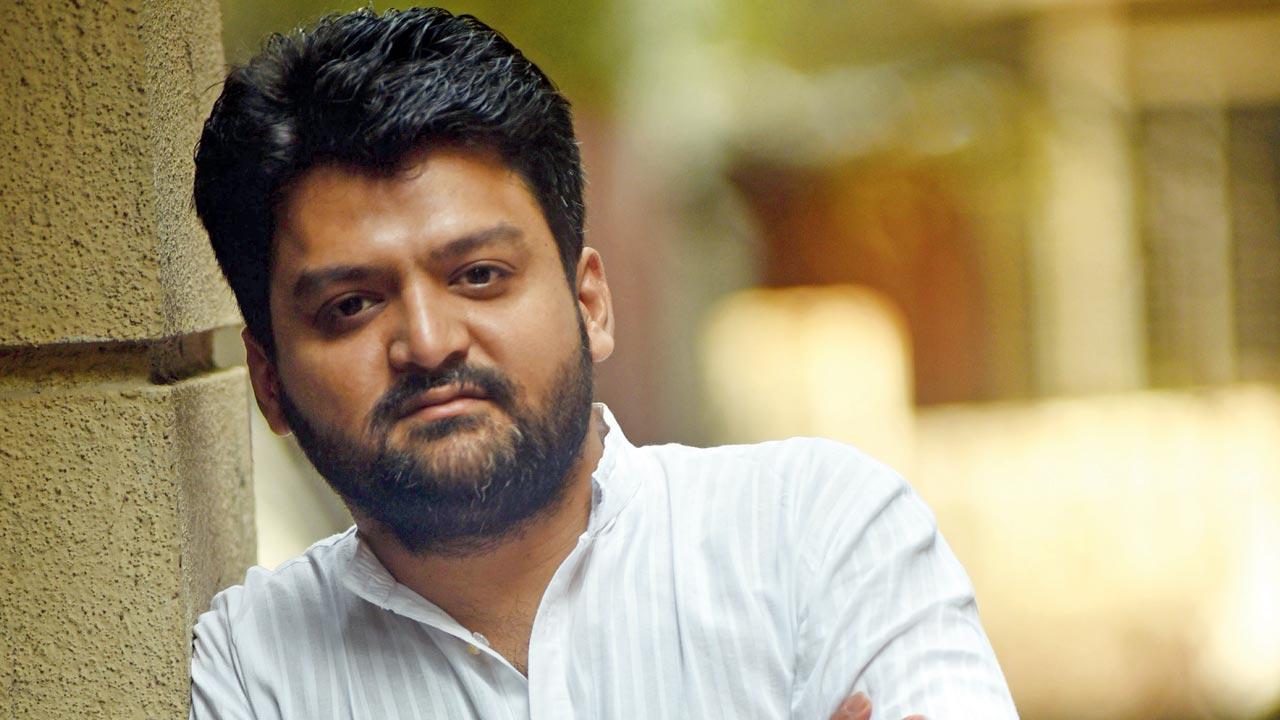
Junior Mehmood’s elder son Rafiq remembers his father who spared no effort to help the people around him, from old friends to rank strangers. Pic/Sameer Markande
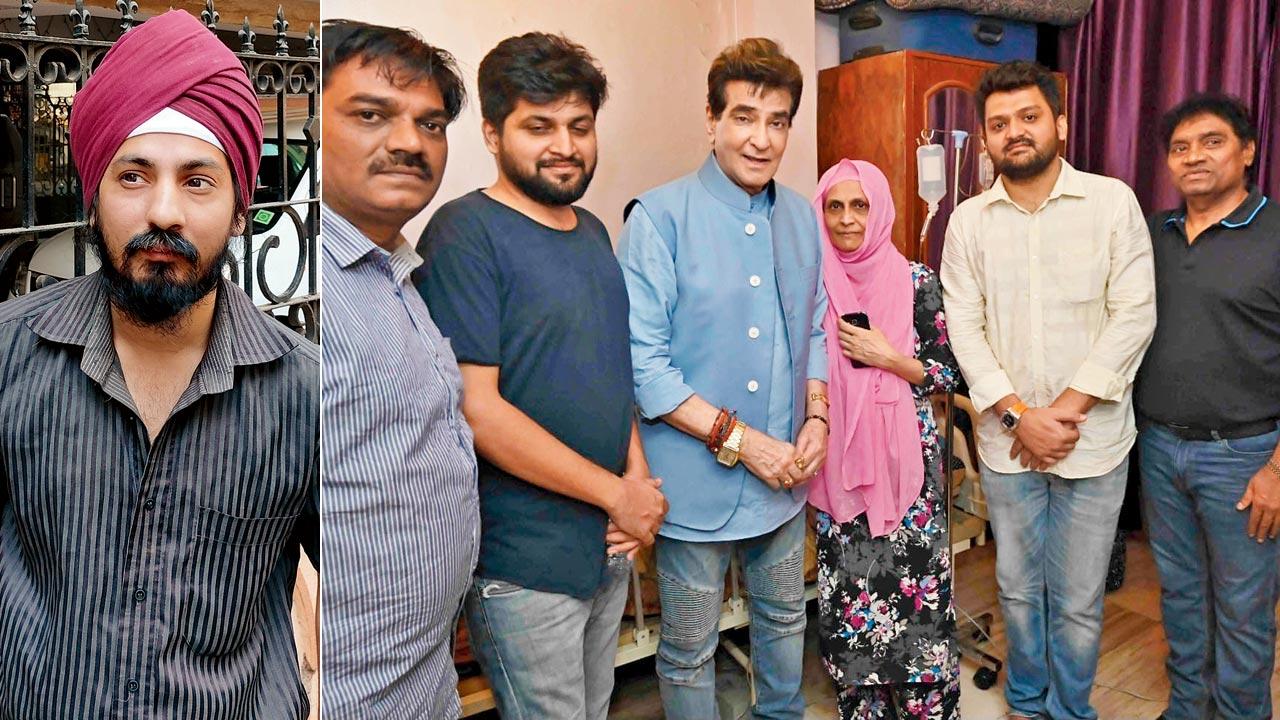
Neighbour Inderpal Singh Kohli recalls Junior Mehmood performing at the society’s Diwali function, and is still struggling to believe he is gone; (right) Stars like Jeetendra came rushing down to meet Junior Mehmood after learning about his failing health, while Johnny Lever, his old friend, was by his side throughout
The dress-saree in Brahmachari set a fashion trend-Mumtaz
8:15 AM

As told to Roshmila Bhattacharya (MUMBAI MIRROR; October 16, 2020)
I remember Bhanu Athaiya as an intelligent and sophisticated lady who always looked serene and was never in a rush. She used to make mannequins of the actresses she designed for and tried the costumes on them before coming home for the final dress trial. Then, she’d come with her tailor and spend an hour watching the fitting closely. If she spotted even a slight fold, she’d immediately point it out to the masterji and tell him to pin it up and smoothen it.
She was one of the most dedicated designers I’ve worked with and my favourite, which is why I would always insist on her even though she was the most expensive at the time.
Not every producer could afford her, but many obliged because they knew I was comfortable with her. She designed my costumes in films like Patthar Ke Sanam, Brahmachari, Bandhan, and Roop Tera Mastana. For the latter, she charged Rs 5 lakh, an exorbitant sum back then, but she did not repeat a single costume and deserved every rupee she got.
I never liked to dance in sarees because I was afraid I would trip and fall. But for the evergreen Brahmachari chartbuster, “Aaj Kal Tere Mere Pyaar Ke Charche”, I was told I had to wear a saree and we sat together for an hour-and-a-half, with her sketching various designs on her pad till she finally came up with a dress-saree. It could be zipped up once I wriggled into it and near the zip was the pallu, which we brought in front and clipped on. It was just perfect and thanks to her inventive creativity, I could do that energetic song and the costume went on to set a fashion trend. She was just amazing and I was so proud when my favourite designer went on to win an Oscar.
We had no inkling Soorma Bhopali would become so iconic-Ramesh Sippy
8:28 AM

Prashant Singh (HINDUSTAN TIMES; July 11, 2020)
It was just a two-scene part, but neither filmmaker Ramesh Sippy nor late actor Jagdeep ever thought that Soorma Bhopali — from the 1975 hit Sholay — would become a legendary character. As Sippy puts it, “Honestly, it (the part) was only meant to be a comic diversion, something that used to be a norm in those days, in a Hindi film. But we had no inkling about the kind of impact the character would have on the audience. With his unmatched sense of timing and gestures, Jagdeep brought Soorma Bhopali to life, and made it one of the most loved characters ever.”
Though it was an extremely small role, late Jagdeep, who was a known face by then, readily agreed. Before Sholay, Sippy had worked with the comedian in Brahmachari (1968). “When we were casting for Sholay, I immediately thought of him as he was fantastic in Brahmachari. Plus, he was well versed with Bhopal, so, I knew he’d bring out the flavour of Soorma Bhopali,” he says.
For Sippy, what made the late actor “absolutely wonderful” was his range as an actor. “Comedy is a serious business, but the kind of flair and ease he’d bring shows the kind of great actor he was. Once he got hold of a character, you didn’t have to tell him too much on the sets. That’s wonderful about a really good actor,” says the filmmaker, adding that the veteran actor was “very unwell” for the past couple of years.
Interestingly, not many know that Soorma Bhopali was close to getting edited out of Sholay. Sippy tells us, “The film released during Emergency, and it was nearly three-and-a-half hours long. So the last show would end around midnight, which wasn’t ideal for that period. Also, Sholay was criticised on it’s initial release and declared a flop.”
Sippy recalls that he was requested by distributors to shorten the length of the film, and he took out the comedy scenes featuring Jagdeep and Asrani. “In those days, a film would usually release in B and C centres after having had a run in A centres. But when Sholay came out in B and C centres (minus the comedy scenes), people complained a lot, so we had to put the edited parts back,” he shares.
Shammi Kapoor's song Aaj Kal Tere Mere revisited in Kunal Kemmu-starrer Lootcase
7:55 AM

Shaheen Parkar (MID-DAY; September 27, 2019)
 Even as the debate over reboots of classic numbers continues, the makers of Lootcase have revisited the yesteryear chartbuster, Aaj Kal Tere Mere Pyar Ke Charche, from the Shammi Kapoor-starrer Brahmachari (1968). However, director Rajesh Krishnan explains at the outset that they have not tampered with the Shankar Jaikishen composition. "We have incorporated the entire track, as it is, in the film," he clarifies.
The recently dropped teaser of the Kunal Kemmu-starrer sees the protagonist's adventures after he discovers a suitcase filled with hard cash. As his obsession with the suitcase piques the curiosity of those around him, the Mohammed Rafi ditty plays in the background. "Aaj Kal Tere Mere has quirk written all over it, especially when you use it in today's context. In the case of Lootcase, it helped us amplify the madness of the plot," explains the director.
Subscribe to:
Posts (Atom)