Showing posts with label Borivali. Show all posts
Showing posts with label Borivali. Show all posts
Then bus conductors listened to our poems. City of Mumbai has changed, but so have I-Gulzar
3:09 PM

At 91, Gulzar has outlived at least two versions of the city, the one that destiny “deposited” him into in 1950, and the one he continues to observe and absorb. ‘Aamchi Mumbai’, his new collection of 36 poems and 25 stories, is not an attempt to explain Mumbai in 2026 but to preserve the city that lives inside him, populated by migrants and mill workers, eccentrics and survivors. Speaking to Mohua Das, he reflects on why poetry is his way of making sense of the world
Mohua Das (THE TIMES OF INDIA; June 21, 2026)
You have lived through mills becoming malls and Bombay becoming Mumbai. What do you miss most?
I remember the Bombay of mills, with smoke constantly rising from the chimneys. It was an industrial city, known for textiles across the country. I remember buses where no passenger was allowed to stand. It was a city of progressive labour unions, labour laws and workers’ movements. I have seen workers’ rallies and remember (Shripad) Dange Sahab, the great union leader, carrying the banner and leading those marches. Mazdoor gareeb zaroor the, par us gareebi mein bhi ek izzat thi. Usme sharmindagi nahin thi. (The workers may have been poor, but there was dignity in that poverty. There was no shame in it.) We used to attend Progressive Writers’ Association meetings at Charni Road with people like Sardar Jafri, Rajindra Singh Bedi, Krishan Chander and Sahir Sahab. We were younger writers, so after those meetings ended, we would continue our discussions on the upper deck of a tram all the way to Dadar. Conductors and passengers would listen to poems and stories and even participate. All that is not there now.
And yet, in poems such as ‘These Were All Villages, Once!’, ‘Sealink’, ‘Haji Ali’ and ‘Skyline’, there is nostalgia but not necessarily resistance to change…
What Mumbai has retained is its progressive outlook. Earlier, if somebody wanted to dream bigger or look beyond the country, the route somehow passed through Bombay. Even today, Mumbai looks outward and pushes people from the national towards the international. The skyline has changed completely. I remember how Mira-Bhayandar, Borivali and Bhandup, once jungles, have become mini Mumbais. There are tall buildings where once there were palm trees and open views. But some things have become more beautiful. Haji Ali earlier felt trapped within the city. Today, when you pass it from the flyover, especially during high tide, it looks like a gem to me. The city has grown, but some of that change is beautiful.
You view the city from street level, sometimes even below street level… the beggar at a traffic signal, life on the footpath, chawls, scavengers. How have you kept that line of sight open?
I would say not only eyes, keep your antennas open, and the city will nourish you and keep you informed. If I spend the whole day at home and then go out in the evening to look for life, then I am finished as a writer. Life is not displayed in a showroom. It is touching you every moment. That is true not only for writers but for painters, musicians, actors and performers.
We find very little of the glitzy or corporate side of Mumbai in the collection. Was that a deliberate choice?
I think it is one’s temperament… what you notice and what attracts you. There is a story in the book about a boy who draws his own chalk outline every night like the police do around dead bodies and lies down inside it only to roll out of it every morning and say, ‘See, I survived again today’. His sense of humour fascinates me. You must see the zinda (living) part of the city. People ask me why the footpath appears so often in my poems and stories. My association with it is direct, not imagined. But it is neither something to boast about nor turn into a tragedy. The struggle is not that you slept on a footpath. The struggle is how you lived through it. Suppose a man has lost a leg. Do you think he never smiles or is never happy? He may limp and clean taxis or rickshaws for a living, but he still laughs and lives. Don’t count him out.
Poetry has been at the heart of your writings, whether in ghazals, nazms, film lyrics, experiments with tanka or presenting poets across borders. What do you value most in poetic expression?
I look for a live moment in a poem. I’m not giving a lesson. I am working on a show about the environment. But environment is not about saying, look how dirty things have become. How do you make people aware of trees? Of leaves? My next book, called ‘Spinning the Moments’, has a poem called ‘Ek akela patta’ where a tree is half submerged in flood water, but that one lone leaf still attached to the tree whispers to it, ‘Darna mat, main hoon na’. My heart goes out to that moment. That’s what makes a poem.
Most of your books, including ‘Aamchi Mumbai’ are bilingual, but so much of your writing is in the wordplay and nuances. After years of translating and being translated, what is essential even when carried into another language?
A young man from Kerala once wrote to me asking if he could publish a Malayalam version of my book ‘Suspected Poems’ that his father had translated while he was in jail during a communist movement. I liked the gesture and told him to go ahead. Later, he came to meet me with the book. That act of sharing is wonderful.
You describe Mumbai as a lifelong partner who has ‘admonished’, ‘beaten’ and ‘scared’ you, but ‘never dropped you from its lap’. What do you understand about the city — and about yourself — today that you didn’t when you first arrived at Bombay Central as a teenager?
Bombay is like the eldest brother in a family who takes care of the younger ones. When I write, ‘Yeh shehar woh nahin jahan main 60 saal pehle aaya tha’ (This is not the city where I arrived 60 years ago), the city replies to me: ‘Yeh sab theek hai, par tum bhi woh nahin jo 60 saal pehle aaye the.’ (All that may be true, but you are not the same person who arrived here 60 years ago either.) It is because of us that the city changes, and it is because of the city that we change. The migrating population that comes every day and goes back leaves its impressions. The city learns from them and makes space for them.
Akshay Kumar sells two properties in Borivali, Mumbai
10:40 AM
Kailash Babar (THE ECONOMIC TIMES; July 28, 2025)
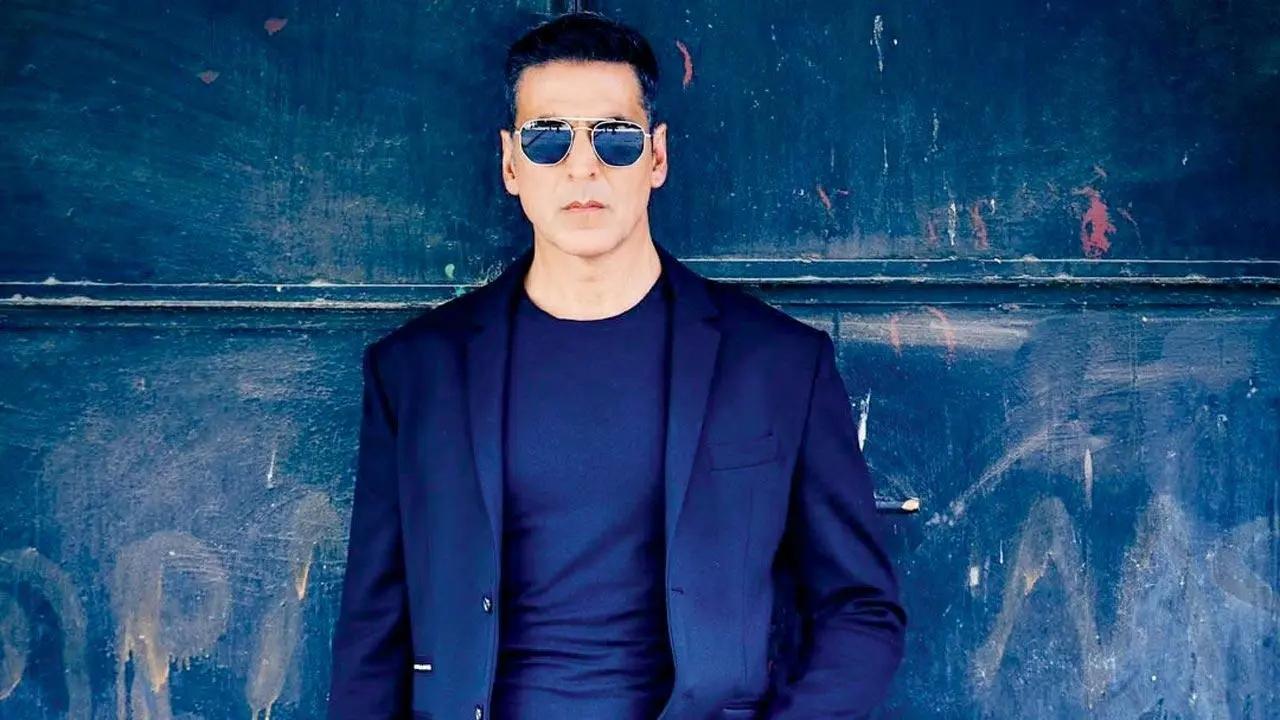
Bollywood actor Akshay Kumar has sold two adjoining residential properties in the same residential project for a total of Rs. 7.10 crore in Mumbai’s western suburb Borivali east.
The first property sold by the actor has a carpet area of 1,101 sq. ft valued at Rs. 5.75 crore. The deal attracted stamp duty payment of Rs. 34.50 lakh and includes two car parking spaces. He had purchased the property in 2017 for Rs. 3.02 crore.
The second property spread over a carpet area of 252 sq ft was sold for Rs. 1.35 crore. The transaction incurred a stamp duty payment of Rs. 6.75 lakh. The actor had purchased the property in 2017 for Rs. 67.90 lakh, showed the property registration documents reviewed by squareyards.com on the website of the Inspector General of Registration (IGR). Both transactions were registered in June 2025.
These properties are in a ready-to-move-in project spread over 35 acres developed by Oberoi Realty. Bollywood actors Amitabh Bachchan and Abhishek Bachchan have also acquired multiple properties in this project in May 2024.
Bollywood personalities continue to play an active role in India’s property market, frequently opting for premium residential developments in Mumbai and other key metros. From high-end apartments to strategic real estate acquisitions, these investments reflect a blend of lifestyle aspirations and portfolio diversification goals.
Amitabh Bachchan buys two luxury apartments in Mumbai’s Borivali worth Rs. 7 cr
3:18 PM
Kailash Babar (THE ECONOMIC TIMES; June 29, 2024)
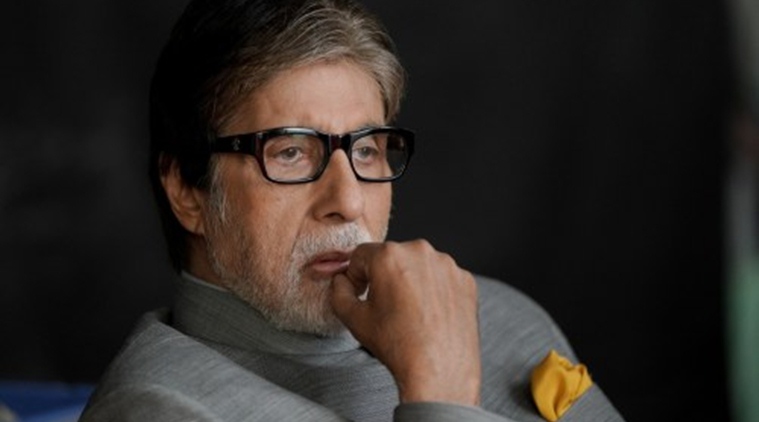
Bollywood actor Amitabh Bachchan has bought two apartments in a premium residential project in Mumbai’s Borivali suburb where his son Abhishek Bachchan recently acquired six apartments.
The deal comes immediately after the veteran actor recently purchased three more office properties spread across three floors in a commercial project in Oshiwara locality of Mumbai’s western suburb of Andheri.
Bachchan purchased apartments in Borivali worth nearly Rs 7 crores from Incline Realty, a subsidiary of Oberoi Realty. These apartments spread over 2,188 sq ft are located on the 57th floor of the tower, the same floor where his son Abhishek’s apartments are situated.
Bachchan paid stamp duty of Rs 40.72 lakh for the registration of both the deals that took place on May 29, showed the documents accessed through Zapkey.com
These deals involving the Bachchan family have created a buzz in the property market as most transactions involving celebrities were so far used to be concluded in South, Central Mumbai and prime localities such as Bandra, Khar and Juhu.
ET’s separate email queries to Amitabh Bachchan’s team and Oberoi Realty remained unanswered till the time of going to press.
Real estate continues to be a top investment choice for high net-worth individuals. Bollywood celebrities have been actively acquiring properties, recognizing the value of these assets not just for personal use but also as an attractive investment opportunity that can contribute to their growing wealth portfolios.
Several prominent personalities from Bollywood, including actors, producers, and directors such as Amitabh Bachchan, Shah Rukh Khan, Shilpa Shetty, Akshay Kumar, Abhishek Bachchan, and Aishwarya Rai, have actively invested in various real estate ventures.
These industry stalwarts have been strategically diversifying their portfolios by acquiring properties across prime locations.
Additionally, in recent quarters, notable celebrities like Ranveer Singh, Hrithik Roshan, Rani Mukerji, Alia Bhatt, Disha Patani, and Janhvi Kapoor have also been involved in multiple high-profile transactions, focusing particularly on luxurious and upscale properties.
Amitabh Bachchan buys more office properties in Andheri for Rs. 60 crores
7:57 AM

Kailash Babar (THE ECONOMIC TIMES; June 26, 2024)
Bollywood actor Amitabh Bachchan has purchased three more office properties spread across three floors in a commercial project in Oshiwara locality of Mumbai’s western suburb Andheri for nearly Rs 60 crore.
The actor already owns four offices totalling over 12,000 sq ft built up and 10,800 sq ft carpet area in the same commercial tower. ET had reported in September that these offices spanning an entire floor were bought and leased to music entertainment company Warner Music India through a long-term agreement for a total tenure of five years.
The new office space spread over 8,429 sq ft carpet area is on the 27th, 28th, and 29th floor of the ready to move commercial tower. As part of the deal, the buyer will also get exclusive access to three car parking slots in the building.
Bachchan has paid stamp duty of over Rs 3.57 crore for the registration of the deal that took place on June 20, showed the documents accessed through FloorTap.com, market-place for commercial properties.
The veteran actor recently acquired a land parcel from the House of Abhinandan Lodha (HoABL) in Alibaug near Mumbai to build a luxury villa in the beach town known for sea view properties of rich and famous personalities. In January, he had purchased another land parcel in a 7-star mixed-use development of the developer to construct a house near the Shri Ram Janmabhoomi Temple in Ayodhya.
The Bachchan family owns several properties in Mumbai. Recently Amitabh Bachchan and his wife Jaya Bachchan gifted their lavish bungalow, Prateeksha, in plush Juhu locality of Mumbai to their daughter Shweta Nanda. The transfer of ownership was formalized through two distinct gift deeds, each corresponding to a specific plot on which the bungalow stands.
Recently, Abhishek Bachchan bought six apartments in a premium residential project in Mumbai’s Borivali suburb totalling Rs 15.42 crores. Interestingly, two of these apartments are spread over 252 sq ft each, while the remaining four have around 1,100 sq ft carpet area each.
ET’s email query to Bachchan’s team remained unanswered until the time of going to press.
Real estate continues to stand out as a top choice for investments among high-net-worth individuals. Bollywood figures are actively acquiring properties, not just for personal use, but also as lucrative investment ventures.
Actors Kartik Aaryan and separately Sara Ali Khan along with her mother Amrita Singh have also acquired properties in the same commercial tower in Oshiwara. Interestingly, actors Ajay Devgan and Kajol too have bought offices in this project earlier.
Several Bollywood actors, producers and directors including Amitabh Bachchan himself, Shahrukh Khan, Shilpa Shetty, Akshay Kumar, Abhishek Bachchan, and Aishwarya Rai have invested in properties.
Many deals of high-end luxury properties acquired by Ranveer Singh, Hrithik Roshan, Rani Mukherji, Alia Bhatt, Disha Patani, and Janhvi Kapoor have also been reported in the last few quarters.
After Shivaji Park, Ajay Devgn and Anand Pandit to build Covid facilities in Juhu and Borivali
3:37 PM
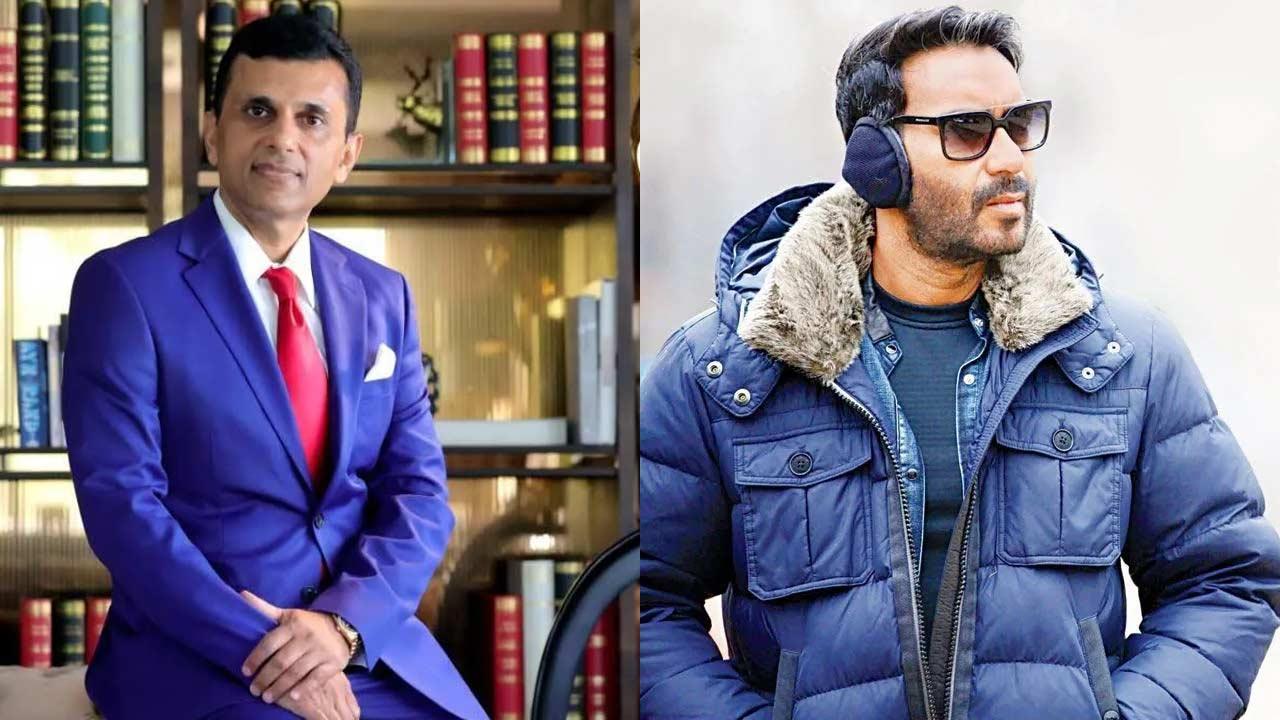
After converting Shivaji Park Hall into Covid-19 facility, Ajay Devgn, along with producer Anand Pandit, to expand service to Juhu and Borivali
Mohar Basu (MID-DAY; May 6, 2021)
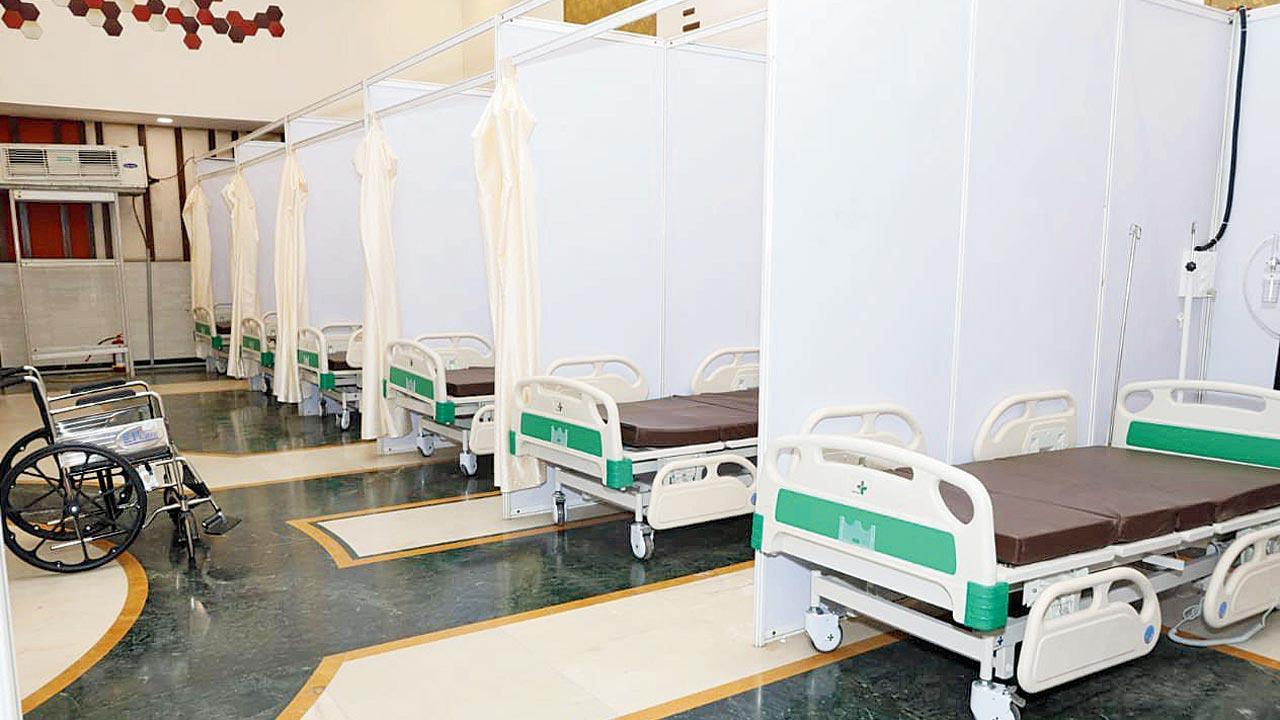
As the city reels under the destructive second wave of the pandemic, Bollywood has stepped up to support the healthcare system. Last week, it was announced that Ajay Devgn and producer Anand Pandit have joined hands with Brihanmumbai Municipal Corporation (BMC) to build a Coronavirus facility at Shivaji Park. With the actor-producer duo contributing over Rs 1 crore, the State Bharat Scouts and Guides Hall has been converted into a 20-bed treatment facility, complete with ventilators, oxygen support and para monitors. While the care centre is up and running, Devgn and Pandit have begun scouting for locations to build similar makeshift facilities.
Confirming the development, Pandit says, “We have earmarked two spaces, one each in Juhu and Borivali. Together, they will accommodate 50 to 60 patients. Given the current shortage of oxygen, we have demarcated funds for oxygen concentrators, which will remain our main focus.”
Work is on in full swing at both centres. If all goes well, the producer says that the Juhu facility may be operational by May 12. “The Juhu centre will have around 25 beds. We are [converting] a school for the purpose as the classrooms have good ventilation and easy accessibility. Our team is working towards supporting it with the necessary equipment,” he adds. While medical personnel from Hinduja Hospital serve at the Shivaji Park set-up, the logistics of the new sites are being worked out.
Housefull 4's promotional gig with Indian Railways off to bumpy start
7:53 AM

Film's promotional gig with Indian Railways off to bumpy start; makers compelled to cancel photo-op at Borivali station after fans throng platform despite security
Shaheen Parkar (MID-DAY; October 17, 2019)
On Wednesday, Akshay Kumar and the Housefull 4 cast kicked off Indian Railways' plan, Promotion On Wheels, which sees them partnering with studios and enabling them to use the trains to promote their films. The superstar joined Kriti Sanon, Bobby Deol, Riteish Deshmukh and others at Borivali station at 4 pm where the eight-coach Delhi-bound train — adorned with posters of their Diwali release — awaited them. The stars were to be accompanied by fans and media persons as the special train made its way to Delhi, halting at Surat, Vadodara and Kota. So far, so good.
However, the stars' multitude of fans played spoilsport in their plans. As soon as word spread that the stars would be arriving at Borivali station, a sea of fans thronged the venue. While cops had barricaded the area anticipating huge crowds, it did little to dampen their excitement. mid-day has learnt that the makers of the ensemble comedy altered their plans on seeing the commotion at the railway station. A source close to the project reveals, "The entire star cast was to do a photo-op with select fans on the platform. However, on reaching the venue, they unanimously decided to drop the plan and instead headed directly to their designated coach."
This is not the first time that a Bollywood plan has gone off rails. In 2017, Shah Rukh Khan took the Mumbai-Delhi August Kranti Rajdhani to promote Raees. One person died of suffocation as 15,000 people turned up at Vadodara station to catch a glimpse of Khan.
Fortunately, it was a smooth ride thereon to Surat for Housefull 4 team as they interacted with fans on board and regaled them with their travel tales.

Akshay Kumar at platform 10 of Borivali station


Beefed-up security controls the crowd at Borivali station
Making me related to Mohan Bhagwat is something even Manmohan Desai couldn’t have come up with-Urmila Matondkar
8:45 AM

On the campaign trail, Urmila Matondkar sets temperatures soaring with her star power, and comes down hard on failing civic facilities, internet trolls and communal politics
Kunal Guha (MUMBAI MIRROR; April 7, 2019)
Almost a quarter of a century ago, Urmila Matondkar dazzled cine-goers in Ram Gopal Varma’s blockbuster Rangeela — and those images of her poised on a rocky beach in a black swimsuit, with a Speedo-clad Jackie Shroff gazing at her with love and longing, are etched into the collective consciousness of the city.
Cut to the present: en route to campaigning in the predominantly Maharashtrian area of Kaju Pada in Borivali, Urmila Matondkar realises that her SUV route is being obstructed by a BEST bus. The driver and conductor have apparently disappeared to relieve themselves. But then again, April, as they say, is the cruellest month — and the Congress Party’s candidate for Mumbai North, her days in AC vanity vans long gone — is feeling the heat.
Soon, a mob of fans and party workers surrounds the car, armed with cellphone cameras. Her unarmed security guards struggle to disperse the crowd, but the actress-turned-politician pops out of the vehicle’s sunroof with a wide smile and folded hands. This has been a format for all rallies that Matondkar has attended in the last week, ever since she was fielded by the Congress Party on March 27.
Within the first 10 days of assuming her new avatar, the actress has met with trade associations, women’s wings and locals in her constituency to try and put her finger on the pulse of the electorate. “I have learnt that housing is a pressing concern and slum development projects need to be initiated. There are places in the city where water is available only at 2am and then, the locals have to wake up and go to work in a few hours.”
The 45-year-old’s decision to contest has garnered unsavoury reactions from certain quarters — singularly on Twitter. During her first interaction with the press at a microbrewery in Bandra, 12 hours after her formal induction, the actress laughed uproariously when a reporter quizzed her on being RSS founder Mohan Bhagwat’s niece — a theory that’s been widely endorsed across social media channels. Yet another scribe referred to her by her ‘real’ name, Mariyam Akhtar Mir — a moniker supposedly acquired after her marriage to businessman and model Mohsin Mir. “They also said that my husband is Pakistani — since that seems to be the ‘in’ thing these days. But making me related to Mohan Bhagwat is something even Manmohan Desai couldn’t have come up with,” says Matondkar. Despite her years in showbiz having insulated her from sharp criticism, she wasn’t prepared for things to take such a nasty turn. “I was initially alarmed but that’s what pushed me to join politics. There is no freedom to stand up for what one believes in, or express oneself in this country. This election is not just about power or party, it will decide our country’s path in the coming years.”
A female party worker clutching a megaphone abutting Matondkar’s car announces with proselytising zeal that can only be triggered by a general election: “Aapki Mumbaichi mulgi, aapki Konkan Kanya, Smt Urmila-taai, aapka aashirwad lene aapke beech mein aayi hain!” The announcement instigates a Pied Piper effect and locals surface from every corner, as the rally negotiates its way through the serpentine bylanes of Kaju Pada. Matondkar takes over the microphone and fluidly flits between Marathi and Hindi while addressing folks, emerging from their homes to see her. Matondkar’s dexterity with language has also been recently targeted for favouring certain communities that constitute a fat chunk of the vote bank. “If I speak to Gujaratis in Gujarati (their mother tongue) in Kandivali, how am I catering to just one community? I have a flair for languages. I can speak decent Telugu as well. What people don’t know about me is that I have always been an extraordinary student,” she tells us when we meet her at the rally.
Pitted against BJP MP Gopal Shetty, who defeated former Mumbai Congress chief Sanjay Nirupam in the 2014 Lok Sabha polls, Matondkar has been critical of her opponent’s tactics. Her point of contention — a long hoarding that communicated his party’s objectives in Gujarati was nothing but a ‘communal ploy’ to attract votes. “I only commented about the hoardings on a truck that were in a language which is not a language of the state. Is that wrong?” she counters. “When you call yourself a leader, you cannot divide your people based on language or religion. I don’t want to treat any community in isolation,” she adds, making eye contact with every bedazzled local she waves at.
At a U-turn, Matondkar descends from her car to personally greet a gathering of women and children. A sari-clad woman steps forward with an aarti thali and presses a tika on the actress’ forehead. “Sab ke saath photo loongi,” assures the actress to the congregation jostling to catch a closer glimpse of the actress. Her campaign trail has sensitized Matondkar to issues in her constitutency. “In recent years, Kandivali, Borivali and Malad have grown so vastly and deeply that the number of trains assigned barely suffice. For instance, there’s only one ladies special local train that leaves from Borivali to Churchgate. This is appalling given the number of women who commute daily on this route.” Matondkar also laments the deplorable state of healthcare, especially for pregnant women. “You wonder why even such basic things were not looked into. Healthcare centres have been created but there are hardly any doctors visiting them. I feel this area has been extremely neglected and you wonder if it is part of the same Mumbai which has been perceived as this glorious, glamourous city where one has lived for so many years.”
Despite her determined stance on improving civic infrastructure, the actress isn’t oblivious of the obvious. “No matter what you speak and how well you speak, people will consider you for your glamour quotient. Being an actress known for my sexy image, they will think that I am dumb blonde. But the beauty of it is that the idea of ‘dumb blonde’ itself is a myth that exists in a man’s mind,” she avers.
 We approach a rudimentary stage, possibly constructed for a religious ceremony. Party workers urge Matondkar to say a few words from the vantage point she enjoys. “Pani puri kaisi hain?” she quizzes a group of young men gobbling down the quintessentially Mumbai street snack at a distance. Once convinced of the undivided attention of her audience, she folds her hands and makes a direct plea, seeking their mandate. “April 29 is a holiday and the women at home may be busy preparing meals. But before you have lunch, first go out and cast your vote for Congress. If the women of the household don’t come out and voice themselves, the country can’t progress,” she says.
A party worker suggests she sing a line or two from one of her chartbusters. The actress politely rejects the idea, saying, “Phir bolenge gaana gaake vote maang rahi hain.” Matondkar is alluding to media reports that followed after she broke into song — Lakdi ki kathi, kathi pe ghoda from Masoom (1983) at one of her recent rallies. The actress had then conveniently segued into “ab humein vikas ka ghoda aise hi leke jana hain… .. yahan se Dilli tak.” She assures us that this was “not a gimmick”. “I swear I didn’t know the media was following me. It was an extremely tiny pocket near the intersection between Borivali and Dahisar which houses low-income families. When I reached there, the kids were very excited and happy to see me. I had prepared a speech but when I met them, I was like ‘What do I tell them?’ I felt that if I could bring a smile on their face, it would be worth it,” she clarifies. “Yesterday, someone was asking me to play garba with Gujaratis and I refused,” adds the contestant, who was also accused of resorting to a cheap political stunt of eating a vada pav during her meeting with the Marathi Ekikaran Samiti.
As we reach the end of the rally, Matondkar mulls over her new identity. “Till yesterday, I was in a relaxed state of being. Now, I have reduced sleeping hours and spend more time in the car than anywhere else. I am constantly going from one place to another and have no fixed meal timings. I don’t even know when I last had water.” In her new role as a party candidate, Matondkar has even embraced a sartorial shift: dresses and gowns have had to make way for kurtas stitched from fabrics conducive to a tropical clime. “When you go amongst people from your constituency, you’re not bothered about what you’re wearing or how you’re looking. I am happy with my wardrobe because it’s comfortable. It’s better than wearing chiffon saris and dancing in the Alps like I have in my movies,” she quips. It is the sort of pragmatism that is rather apt for a woman on the move in the relentless Indian summer.

Matondkar flanked by Sanjay Nirupam (left) and Sachin Ahir at a Kandivali meeting
SHOCKING: How multiplexes in Mumbai are looting moviegoers
9:01 AM

A glass of soft drink for Rs 240, a bucket of regular popcorn for Rs 240, and two samosas for Rs 95. Welcome to fleeceland
Days after a Mirror test drive revealed that multiplexes were violating a govt rule by not allowing people to bring food from outside, we highlight the massive overpricing of food items at the theatres
MUMBAI MIRROR (August 13, 2018)
Days after this paper exposed how multiplexes are hiding behind the lack-of-clarity excuse to bar moviegoers from carrying food inside (‘Now showing: Confusion’, August 8), we carried out another test drive, this time on the prices of food and beverages. The results will leave you seething.
At a Lower Parel multiplex (see above), items as basic as a regular tub of popcorn and a glass of soft drink were priced over 500 per cent more than what they cost outside a cinema theatre — more than the price of the movie ticket itself.
And the overpriced food did little to enhance the movie-going experience, as showed by a Borivali theatre. A Ghatkopar East multiplex claimed to have reduced prices “by a big margin” since the debate over unaffordable food began raging, but catching a movie there could still burn a hole in patrons’ pockets.
The test drive came days after the state government, after announcing during the monsoon session of the legislature that moviegoers were free to carry food into multiplexes from August 1, shot itself in the foot by telling the Bombay High Court — which is hearing a public interest litigation on the matter — that such a move could pose a security risk. The HC demanded an explanation from the state government on that claim.
“What security concern can be caused by food inside theatres? People are not prohibited from carrying food to any other public place besides cinema halls. If people can be permitted to carry home food inside the aircraft then why not to theatres?” the bench had sought to know.
Following the state government’s U-turn on the issue, Ravindra Chavan, minister of state for food and civil supplies, clarified with Mirror last week that there was “no ambiguity” and multiplexes cannot prevent anyone from bringing food from outside.

Carnival Cinemas, Borivali: Popcorn costlier than cooked food
 A large tub of popcorn (Rs 260) was the most expensive item at the
food counter, steeper than cooked dishes such as chicken momos and
rolls. The cheapest popcorn, that too hot and fresh out of the machine,
that this reporter has come across comes in a small packet at Churchgate
station for Rs 7. The caramel popcorn at the theatre did not skimp on
caramel, but the cheese popcorn was almost bland, with no clear taste of
cheese coming through.
A large tub of popcorn (Rs 260) was the most expensive item at the
food counter, steeper than cooked dishes such as chicken momos and
rolls. The cheapest popcorn, that too hot and fresh out of the machine,
that this reporter has come across comes in a small packet at Churchgate
station for Rs 7. The caramel popcorn at the theatre did not skimp on
caramel, but the cheese popcorn was almost bland, with no clear taste of
cheese coming through.
A large cup (650 ml) of a soft drink cost Rs 170, which can easily come under Rs 50 outside.
In the fast food category, cheesy nachos with Mexican salsa and topped with French fries was the costliest at Rs 230. Both the quantity and the taste were satisfactory. A plate of samosa, which cost Rs 90, was fresh and tasty, but there are better samosas for far less outside.
The experience was partially worth the cost, considering that food and tickets for two can set your back by Rs 1,000. This was the same multiplex where the reporter was allowed to carry food in during the first test drive, but a Mirror staffer was stopped on Saturday.
AUG 11, Noon
TICKET PRICE: Rs 150
POPCORN AND SAMOSA: Rs 350
COST OUTSIDE: LESS THAN Rs 100

R Odeon Mall, Ghatkopar East: Slashed by ‘big margin’, yet not as afordable
A large cup (900 ml) of soft drink came for Rs 150. For a large tub of caramel and cheese popcorn, one will have to shell out another Rs 180. Outside, one has to pay only Rs 50 for beverage and Rs 60-70 for popcorn. Neither of them was worth the price. The carbonated drink tastes the same anywhere, and although the popcorn was fresh, one can get the same outside for half the price. Tarun Devnani, duty manager of the multiplex, said they reduced prices “by a big margin” recently. The mega tub (170 gm) of plain popcorn, which earlier cost Rs 330, is now around Rs 200 on weekdays, and Rs 250 on weekends and after 6 pm. “They become even cheaper during ‘happy hours’. We also have the facility of booking snacks online, which has special combos and offers.”
Aug 11, 5.25 PM
TICKET PRICE: Rs 225
POPCORN AND SOFT DRINK: Rs 330
COST OUTSIDE: Rs 120
Prices of other items: Packet of banana chips: Rs 60; veg puff: Rs 70; veg burger: Rs 130, 2 samosas: Rs 80; French fries: Rs 140; veg sandwich: Rs 130

INOX CR2 Mall, Nariman Point: Salty sandwich, costliest water
Since this reporter went for the last show of the day, samosas and burgers were not available. There was a single samosa on display, but the staff was candid and kind enough to admit that it had gone bad. The last vada pav (Rs 140) was up for grabs, but customers who had purchased one before didn’t like it. From the little variety, a bottle of water (Rs 60 — the most expensive water on offer), a tub of caramel popcorn (Rs 280) and a paneer sandwich (Rs 210) was the safest bet. The same come at Rs 20 for a water bottle, Rs 100 for popcorn, and Rs 50 for a sandwich outside. The popcorn was good but the price left a bad taste in the mouth. The salty sandwich was nothing to write about. If these items were an indication of what is offered through the day, skip the food.
Aug 11, 10.45 PM
TICKET PRICE: Rs 430
WATER BOTTLE, POPCORN AND SANDWICH: Rs 550
COST OUTSIDE 170

Metro INOX, Marine Lines: Where chaat is six times costlier
During the interval, this reporter bought bhel puri, which cost Rs 150. Outside the theatre, the same can be bought for just Rs 25. A small tub of sukha bhel was also priced at Rs 150, 10 times more than what it costs elsewhere. In fact, all chaat items were overpriced, ranging from Rs 150-200.
A plate of two samosas — rather bland given the steep price — cost Rs 100, twice the price at which it’s available outside. A large turn of cheese popcorn went for Rs 280, in contrast to Rs 40 outside. That translates to a hike of 500 per cent. This reporter, too, ended up paying more for food items than the ticket, and none of it made it a worthwhile movie-going experience.
Aug 11, 7.45 PM
TICKET PRICE: Rs 350
BHEL PURI, 2 SAMOSAS AND POPCORN: Rs 530
COST OUTSIDE: Rs 115

PVR Phoenix, Lower Parel
A no-frills tub of regular popcorn (55 gm) costs Rs 240. One can buy the same outside for just Rs 40. That’s a 500 per cent hike, and this was just plain salted popcorn. A large cheese caramel popcorn costs Rs 500.
A glass of soft drink (600 ml) was charged at Rs 240. A 500 ml bottle of the same costs Rs 40 outside. For the price this correspondent paid, he could have bought 3 litres of the same soft drink outside. Again, this is a 500 per cent hike.
Then came the humble samosa. A plate of two samosas cost Rs 95; outside the mall, one can get the same for Rs 40 a plate. The taste was no different from what one gets outside. Together, the soft drink, samosas and popcorn cost more than the ticket itself. The food is not worth the price. Given a choice, take your own chow.
Subscribe to:
Posts (Atom)