Showing posts with label Border. Show all posts
Showing posts with label Border. Show all posts
Hope 29 yrs from now, another generation is still watching Border-J P Dutta
2:59 PM

Debarati S Sen (BOMBAY TIMES; August 16, 2026)
Nearly three decades after its release, Border remains more than a war film — for many Indians, it is an Independence Day ritual. As the 1997 classic continues to find new audiences across generations, filmmaker J P Dutta looks back at the emotion that made the film endure, his deeply personal understanding of patriotism, and the responsibility of cinema to keep the stories of India’s soldiers alive.
For many families, watching Border has become an Independence Day ritual. What do you think keeps audiences returning to the film year after year?
I think people return to Border because the film carries an emotion that resonated deeply with them. Somewhere along the way, it stopped belonging to just one generation. Parents showed it to their children, those children grew up and showed it to theirs, and the emotion was strong enough to travel from one generation to the next. I don’t think it is about saying that today’s cinema has lost something or that patriotic films today are any less sincere. Every filmmaker has their own narrative and way of telling a story. Perhaps Border simply touched a certain place in people’s hearts and stayed with them. They remember the battles, the songs and the dialogues, but ultimately, I think they still remember how the film made them feel.
Do you think the meaning of patriotism changed since you made Border? If you were making the film today, what, if anything, would you do differently?
Times have changed, and naturally the way patriotism is expressed in cinema has changed too. But I don’t believe its fundamental meaning or feeling can ever change. For me, patriotism was never about aggression; it was about pride, sacrifice and duty. It was about a young man standing at the border, knowing his family was hundreds of kilometres away, yet choosing to protect something larger than himself. That is what our soldiers have always done, and I felt that emotion needed to reach every home. Cinema was the medium through which I could do that. I come from an Armed Forces background. Many of my cousins and uncles served, and my younger brother was also in the forces. So, I have seen and understood that sacrifice closely. That is why, for me, whether then or today, the emotion and meaning of patriotism remain the same. If I were making Border today, it would perhaps be technically different because I would have access to more technology. But the language, narrative and, most importantly, the emotion would remain exactly the same. Emotionally, I would not change the film if I were to make it today. That is where patriotism lives for me.
Some might believe that watching Border every Independence Day has turned the memory of war into nostalgia. Do you see it that way, or do you think the film continues to keep the sacrifice of our soldiers alive? What responsibility does cinema have in preserving that memory?
If Border has become a film families watch together every Independence Day, I don’t think that trivializes the sacrifice. In many homes, the soldiers depicted in the film have become almost household names. Generation after generation knows their stories - who Bhairon Singh was, who Kuldeep Singh Chandpuri was, and for me, that itself is a triumph. I don’t see it as the trauma of war being turned into entertainment. Cinema is a medium, and I used it to tell the story of these men. It has been almost 29 years, and I can only hope that 29 years from today, another generation will still be watching Border and remembering the soldiers. The film has immortalized those soldiers forever. And, somewhere, I think it has given me a little immortality too.
"Don’t cheer for war": Operation Safed Sagar creator recalls J P Dutta's advice that inspired the show
8:51 AM

Kushal Srivastava and J P Dutta
Operation Safed Sagar creator Kushal Srivastava reveals that this advice from filmmaker J P Dutta influenced his approach as he chronicled the Indian Air Force’s mission during the Kargil War
Priyanka Sharma (MID-DAY; August 3, 2026)
Joining the Indian Air Force (IAF) months after the 1999 Kargil War, Kushal Srivastava got deeply interested in its story. He left the services after six years, but the story of young IAF officers executing the world’s highest aerial operation didn’t leave him.
Today, it has resulted in Netflix’s Operation Safed Sagar. “I met all the war heroes who were involved in it. I did a lot of research and wrote a story,” he told mid-day.
As Srivastava and his co-creator Abhijeet Singh Parmar shaped Operation Safed Sagar, they knew one thing for certain: the Siddharth and Jimmy Shergill-starrer would steer clear of the jingoistic depiction of war that’s become a norm in Bollywood.
“We start glorifying the heroes. But the soul of the IAF is that the men are more important than the machine. In commercial flights, if there is a snag, they will [ask the pilot to] try till the last moment. But in the Air Force, we’re told that the moment the pilot feels something is wrong, they can eject,” said Srivastava.
This learning came as much from the IAF as from filmmaker J P Dutta, whom Srivastava assisted in the initial years of his filmmaking career.
He said, “J P Dutta sir told me that we tell war stories so that people can realize their mistakes, understand the ones who sacrificed their lives and the cost of a war won. He used to say, ‘Don’t cheer for war. While you are happy that you’ve won, you should remember the losses behind it.’”
Citing the example of Border (1997), in which the song Mere Dushman Mere Bhai plays as India wins the war, Srivastava said, “J P sir told me, ‘When it was the moment of celebration in my film, I put this song like a thappad.’”
I don't interefere; I didn't even see one frame of Border 2 during its making-Suniel Shetty
10:06 AM

Madhureeta Mukherjee (BOMBAY TIMES; January 24, 2026)
When Suniel Shetty and Ahan Shetty sit down together, the conversation is as much about cinema as it is about courage and strength — to be vulnerable, to withstand judgment, and to allow each other the freedom to fall, rise, unlearn and recharge. On the Bombay Times Lounge, Suniel brings his trademark candour and talks about the dangers of both success and failure, while Ahan reflects on carrying a celebrated surname without letting it define or confine him. The full, unfiltered conversation drops tonight on the Bombay Times YouTube Channel, offering a rare, intimate look at what it means to stand tall together under the spotlight. Excerpts:
Ahan, the industry knows your dad as this rock-solid pillar — someone who speaks his mind and stands his ground. But who is Suniel Shetty at home? Do you get to see his softer, more vulnerable side?
Ahan: Dad shows his vulnerable side, not just at home, even outside. He shows his emotions; he is who he is, and that’s why people love him.
Suniel: You have to be vulnerable, as that’s the side of you that your kids see, else you will be putting up a façade. At the recent Border 2 event, if I got teary-eyed, that was the father in me. That moment mattered to me most when Ahan came next to me and placed his hand on my back – that’s when my emotions flowed. When it comes to your children, I think parents are most vulnerable and become a completely different person.
Suniel, you’ve seen box-office ups and downs, dealt with criticism, have seen films being announced and quickly shelved, and even signed over 30 films at a go. You are well-versed with the ways of the industry, but how hard is it to watch your son go through judgment and criticism, and we know how harsh it can be at times.
Suniel: That is the scary part. I have told my kids that I know you’ll see success and handle it, but will you be able to handle failure? Because it’s a ruthless world out there. It’s a virtual world. Abuse is abuse. And being first and not right is what news is often all about. And that can destroy an individual. So, I tell my kids to be ready for that. Make sure that notifications and approval are not what your life is all about. Cut off when you have to. Engage, let people know what you are up to and then disconnect.
Ahan, isn’t that the hardest part – disengaging?
Ahan: It is hard. But I think we’ve grown up in an environment where dad kept us away from everything, so Athiya and I had a world beyond movies. A lot of my friends are not from the industry, and I think that is very important to have before you step into a career like this. You need to be grounded. You need to have those friends who tell you, “Hey, relax!”
Today, there’s an overwhelming pressure to validate yourself almost instantly — to prove very quickly that you belong and deserve to be here. Suniel, do you think actors from earlier generations were given more time and space to grow, experiment and discover their path?
Suniel: That’s the sad part about sports, cinema and politics. You’re in the public eye and have to constantly prove yourself. We’ve got another kid at home (K L Rahul) who is a cricketer and has to constantly prove himself. They (Athiya, K L and Ahan) sit together and share things. It’s important to have a family that can actually tell you what it is to handle the highs and lows. We talk about individuals and freedom. I think what we need is the joint family system, where the family can help you handle the highs and lows in life because both could be dangerous at times.
Ahan, you share an extremely close bond with Athiya, right?
Ahan: She’s my go-to person for anything and everything. I’ve seen her grow and mature so much more throughout this journey of motherhood. It’s surreal for me to see her in that way.
Suniel, is it hard to see Ahan stumble, make his own mistakes, learn and move on, instead of stepping in to protect him?
Suniel: It is tough. It is his journey, his choice of films and I’m absolutely fine with that. But apart from that, if you’re going to take a potshot at my son, I’d sit down once, I’d sit down twice, then I’m a Shetty boy and old school is old school. I will not let go. I will take you on. I will take you on the way you want me to take you on, because I’m clean and honest here, and also fearless. It’s only when you are honest that you are fearless. That’s the way it is going to be. I didn’t interfere during his debut film, Tadap, even once, nor did I say I want to see even one frame of Border 2 during its making. For this film, only when they told me to be there at an event, I was there. It’s my son’s film, so it’s my film and I’ll do it. It’s his journey, of course, I will keep guiding him whenever he needs me, as my years of experience have taught me a lot.
Ahan, when your father takes a stand or speaks out on something he strongly believes in, do you ever find yourself feeling protective of him?
Ahan: At times, I do, even Athiya does, and we tell him. I think she is more assertive. We know how far he can go for someone, and we know how much he can do for a person, so it’s like we have to hold him back.
Have both of you imagined being on the big screen together?
Ahan: We definitely have, maybe it will happen when the time is right. I’ve taken that step in a way, by being a part of Border 2, and being a part of an iconic film franchise that my father was a part of.
Ahan, how important is it for you to carry your father’s legacy forward? Does the pressure to live up to his name get a bit intense at times?
Ahan: Carrying my father’s legacy forward is very important to me. Obviously, I have his name, and I want to carry forward that name. The pressure is there and will always be there, but I try not to focus on that. A lot of people on social media say, ‘You’ll never be like your father.’ I know I’ll never be like him. I can’t compare myself to him and I won’t. This is my journey. I just hope that I can be true to myself and be honest in terms of my performances and with the people around me.
I’d love to be a part of Hera Pheri, I love that franchise-Ahan Shetty
9:17 AM

Madhureeta Mukherjee (BOMBAY TIMES; January 17, 2026)
Two generations. One powerful surname. And a story that goes far beyond the movies. Suniel Shetty— one of Hindi cinema’s original action heroes, known for his discipline, grit and integrity, and Ahan Shetty — a bright, young actor finding his voice in an industry driven by clicks, commentary and constant comparison. Our next guests on the Bombay Times Lounge are the father–son duo, sitting down for a rare, unfiltered conversation — moving from Border to Border 2, from fame to family, from nepotism to self-belief. This isn’t just about a surname. It’s about the family behind it and the bonds that tie them. The promo drops today. Here’s a sneak peek into the conversation. Watch out for the full episode coming soon on the Bombay Times YouTube channel.
In the industry, when you fall, they make you feel that you’re nothing: Suniel
“We always want our kids to be happy, and I am not talking about success. I’m scared of failure in the industry and not of success. In other fields, when you fall, you get up and start walking. Here, when you fall, the world looks at you, and they make you feel that you’re nothing. People feel that Hindi film actors are illiterate; they don’t know anything. We know a lot and we are smart. In today’s times, failure is sometimes more celebrated than success. It’s a fact.”
Social media has created a divide: Ahan
“Today, people just react to what they see in a 2-3 second clip. That’s what’s happening in my generation. We’re being put up against each other. I know there are comparisons between Ahaan Panday and me. I know that guy. I know how hard he’s worked for his film and everything that he’s done to prepare for it. There’s no competition between us. We have our own careers. There is so much love and respect amongst each other and that is what needs to come out. We’re all one industry. Social media has created a divide and that’s why you don’t see so much support for one another.”
Today, it’s very easy to trash someone and run them down: Suniel
“Has anybody seen the film (Border 2)? Nobody has seen the film. We’ve seen glimpses of the film. Varun Dhawan will kill it in the film, he’s outstanding. Varun is not playing himself; he is playing a decorated officer who’s given his life for the country. So, I think we should think a little bit before we go out there and say these things. Today, it’s very easy to trash someone and run them down.”
Bring out the ‘X’ factor in you and see the difference: Suniel
Talking about self-belief and dignity, Suniel says, "I am who I am, but my attitude depends on who you are. You treat me right, and I treat you like a god and a goddess. If you don’t, then you don’t even exist for me in a room. And that’s my approach to everything today. That’s the confidence I go with. I tell everybody that all of you have that in you. Bring out the ‘X’ factor in you and see the difference."
The nepotism debate comes up a lot. I’ve accepted it: Ahan
“It’s been a long journey since Tadap came out in 2021. It’s definitely not been easy. I mean, the whole nepotism debate comes up a lot. I’ve always accepted it. My father is an actor, and I wanted to be an actor. I think it is important to stay focused on what you want to do and not let the noise around you affect you too much. I focus on giving my director and producer my 200 per cent.”
At home, we don’t talk about careers at all, we talk about character: Suniel
“I’m very close to a lot of the actors in the industry. But at the same time, it’s not that I socialise with them. That respect is there from a work perspective and for the kind of individual that they are. If you tell me that ‘X’ is not a good person, that means nothing to me. It is my judgment of the person that matters. I don’t judge; we never judge. At home, we don’t talk about careers at all, we talk about character. It is about how you behave, whether it is Rahul, Athiya or Ahan.”
Dad’s mornings begin with Evaarah: Ahan
“Right now, our world and all our conversations at home revolve around Evaarah (Athiya’s daughter). She’s brought us closer and we even went on a family trip together after 15 years. Dad’s mornings begin with Evaarah – playing with her, feeding her. In the evening, all of us get together at home with her. It’s all about her.”
I’d love to be a part of Hera Pheri: Ahan
Ask Ahan which films of his father’s he would want to be a part of, and he says, "I’d love to be a part of Hera Pheri, I love that franchise. Fortunately, I am part of Border 2, which was one of dad’s films that I have always been inspired by."
Akshaye Khanna, Suniel Shetty, Sudesh Berry's characters to feature in Border 2 alongside its leading men
9:51 AM

Upala KBR (MID-DAY; December 22, 2025)
If J P Dutta’s Border (1997) chronicled the Battle Of Longewala of the 1971 India-Pakistan war, its upcoming sequel Border 2 will focus on several chapters of the same war. Its subject aside, another element binds the two movies.
mid-day has exclusively learnt that director Anurag Singh’s drama — led by Sunny Deol, Diljit Dosanjh, Varun Dhawan, and Ahan Shetty — will have appearances by Akshaye Khanna, Suniel Shetty, and Sudesh Berry, who played significant roles in the original.
Khanna played Second Lieutenant Dharamvir Singh Bhakhri, Suniel, Assistant Commandant Bhairon Singh Rathore, and Berry was Naib Subedar Mathura Das. In the narrative, all three characters were killed in action.
A source revealed, “Since Border 2 is also set against the backdrop of the 1971 India-Pakistan war, the characters from the original film will serve as their peers. Anurag and producer-writer Nidhi Dutta felt bringing the heroic characters from the 1997 war drama would make it a memorable experience. So, they incorporated this segment. The characters from the old and new films will cross paths at an event before the 1971 war begins. It’s a great idea as it not only brings the father-son duo of Suniel and Ahan on screen, but also harks back to the much loved movie.”
Apparently, the original plan was to shoot the sequence earlier this year in Pune. However, things did not work out due to the unavailability of combination dates of the concerned actors, and other logistics.
The source added, “In November, Akshaye and Sudesh filmed their portions in Mumbai. Suniel has been shooting for a new project in which he sports a distinct look. So, his parts were shot against a green screen, and will require special effects. All three actors will be de-aged in keeping with their Border avatars.”
mid-day reached out to producer Bhushan Kumar, who remained unavailable for comment.
Mona Singh on working in Border 2: "It is 100 per cent nostalgia for me"
10:25 AM

With makers casting influencers or stars with a strong social media game in projects, Mona Singh on how actors feel the pressure to be active online
Priyanka Sharma (MID-DAY; November 12, 2025)
A digital detox sounds like a wonderful idea to Mona Singh. While the actor has adopted the philosophy on screen in her Zee5 series, Thode Door Thode Paas — which revolves around a family going on a ‘digital fast’ — applying it off screen is a distant idea. If anything, she is advised the opposite. “My team tells me to be more active on social media. They drive me crazy, telling me, ‘This song is trending, make a reel on it,’” she laughs.
The pressure doesn’t work on Singh, who views social media as a great platform to connect with her fans. That said, she is clear that documenting every moment of her day is not her style. “I’m not an influencer. I’m an actor, and I will stick to [acting]. It feels great to connect with fans through social media. You also get to know which show is working. But I never give in to the pressure of posting or think to myself, ‘This show of mine has worked. So, let me start posting about where I am and what I’m eating’.”
Singh’ team’s advice, however, is not without reason. Actors’ social media game is increasingly becoming a criterion when it comes to their casting. “I have been fortunate enough that people don’t look at my number of followers. But I’ve heard stories that people cast you seeing your profile and the number of followers you have. If it brings [the platform] more subscriptions and more downloads, why not cast them?”
But the actor believes this won’t be a long-term practice. She reasons, “Actors are professional artistes who know their job. Influencers getting into acting is tricky. It might get the numbers that [the makers] want, but for them to get into acting completely is difficult.”
'It is nostalgia for me'
Mona Singh will open 2026 with the big-screen outing, ‘Border 2’, which stars Sunny Deol, Diljit Dosanjh, Varun Dhawan, and Ahan Shetty. Joining the sequel to the war drama ‘Border’ (1997) is a proud moment for Singh. “It is 100 per cent nostalgia for me. Also, being a fauji's daughter, I loved being [cast in] the film. Anurag Singh is a very sensitive director. I had loved his last directorial Kesari (2019),” she says.
"Lakshya was an accurate depiction of army life; Hrithik Roshan’s haircut was exactly how it is in the forces"
8:38 AM
Niharika Lal (BOMBAY TIMES; July 26, 2025)
For 26 years, July 26 has been observed as Kargil Vijay Diwas, commemorating India’s victory in the Kargil War. In 1999, TV brought the war into the living room with 24 hour news cycles. At the time, realtime footage left little room for films to fill in the blanks. With time, filmmakers began exploring the Kargil narrative. The early 2000s saw a number of films – LOC Kargil (2003), Dhoop (2003) and Lakshya (2004). In recent years, Gunjan Saxena: The Kargil Girl (2020) and Shershaah (2021) attempted to show the war on screen. If TV captured Kargil as it happened, cinema stepped in to memorialize it, say cinema experts.
“That emotional connection created by films is very real,” says Major Sandeep Sangwan (Retd). “They help citizens understand and appreciate what the Army does, especially those who may never see it firsthand.”
‘Emotional storytelling is key for war films’
A film distributor recalls that when LOC Kargil and Lakshya had released, these films inspired many young people to join the forces. He says, “It’s not important to have 200 films (on the subject). What’s important is to have authentic films that tell the story of the Kargil war and inspire youngsters.”
Retired Major Sandeep Sangwan believes realism alone doesn’t move people. “If a film only talks about an operation without showing what the soldiers are feeling, it won’t stay with the audience. Emotional storytelling is key. That’s why you’ll always notice a personal angle in good war films – the family waiting back home, the camaraderie among soldiers.”
‘LOC, Lakshya, and Shershaah left a mark’
Major (Retd) Sandeep Sangwan, who now consults on military operations for films, names three films when it comes to cinematic depictions of the Kargil War – LOC Kargil (2003), Lakshya (2004), and Shershaah (2021). “Most of the war heroes were part of LOC Kargil, whether it’s Lt Balwan Singh (now Colonel), Capt Sachin Nimbalkar (now Colonel), or Capt Vikram Batra, who of course became known as Shershaah – the Tiger of Kargil. Since 8-10 operations were packed into one film, it became hard for audiences to register everything, but it is one of the most remarkable films on Kargil war,” he says.
Written by Javed Akhtar, Lakshya zeroed in on one officer’s journey. “It followed one operation, and one officer – right from his Academy days to getting selected, and eventually leading the operation. That’s why Lakshya stayed in people’s memory. It was focused and emotionally engaging,” says the Army veteran.
As director Farhan Akhtar, recalled on the film’s 20th anniversary, “Javed Akhtar had mentioned that he was working on a story about a young boy who joins the Army – not just in terms of calling, but also finding a true calling in life and truly understanding who he is through that process. That was the core of the film.”
‘Stories of officers who made sacrifices during Operation Safed Sagar need to be told’
Brigadier Gautam Ganguly, SM, VSM (Retd) says that stories from Operation Safed Sagar – the Indian Air Force’s (IAF) codename for its air operations during the Kargil War – should also be turned into cinematic projects.
“The Indian Air Force didn’t get as much recognition for its operations, which it conducted during the Kargil War. The stories of the officers who made immense sacrifices and displayed acts of bravery need to be told. Our younger generation must know these stories. After Operation Sindoor, people became more aware of the IAF’s operations – but back then, when the Indian Air Force didn’t even have precision-guided ammunition, the way they carried out their missions is an untold story of courage.”
I think OTT platforms are ideal for Kargil war stories: Gautam Chintamani
Film historian Gautam Chintamani feels sometimes when you’re too close to history, you don’t know how to chronicle it. He says, “That’s been the challenge with depicting the Kargil War. It was India’s first war in the age of 24/7 media – broadcast live into our homes. But strangely, despite its gravity, the seriousness of the Kargil war was often diluted in how it was reported and remembered. I still remember how bizarre it felt – India was playing a cricket series against Pakistan, while the same news channels were reporting sensitive details about troop movements during the war. In some ways, people didn’t fully register what we were fighting for.”
He continues, “Now, 25 years have passed. And a huge percentage of India’s population is under 25 – which means for them, Kargil is history. For those of us who lived through it, it was current affairs. So now is the right time to re-examine and retell these stories. The first big film on Kargil was J P Dutta’s LOC Kargil. Initially, J P saab wasn’t keen on making a film so soon after Border (1997), especially since the war was so fresh. But he met many families, widows and parents who’d lost sons – and that moved him deeply. That’s when he decided to make the film. But I’ve always felt that LOC... would’ve worked better as a series. A two-hour or-four-part miniseries would have allowed the individual stories of courage to breathe. In the film, because of its length and scale, many heroes ended up being unintentionally sidelined. I think OTT platforms are ideal for Kargil war stories. Now, with the benefit of time and long-form storytelling, we have a chance to do justice to Kargil in a more layered, meaningful way.”
Real soldiers were cast in Lakshya
On the 20th anniversary of Lakshya, Farhan had said, “There is a simple thing that anybody who is not from the Indian Army doesn’t know – soldiers do not kneel. Getting down on your knees is not considered right – they either lie down or stand. These kinds of things were learning for us.”
The production team even collaborated with the Army to include real soldiers in the film. “As far as weapons were concerned, the Indian Army did provide us weapons, which were then modified to fire blanks. This was handled by production and leads from the Army,” Farhan said.
‘There’s a surge of interest for such films now’
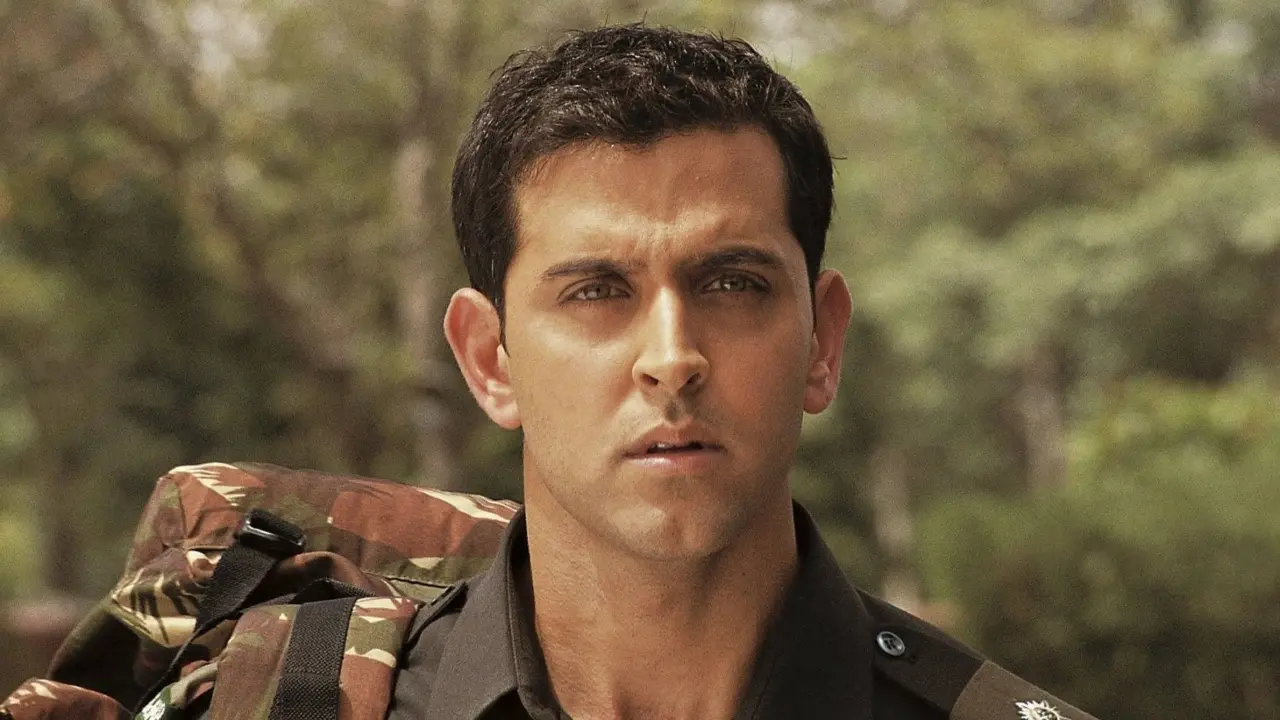
Mohommed Ali Shah, a former Army Major, who has acted in films like Haider (2014) and Bajrangi Bhaijaan (2015), believes there could be more films on Kargil war. He says. “There’s already been a surge of interest in the last few years with films like Gunjan Saxena and Shershaah. Lakshya stood out for its realism. To a huge extent, it was an accurate depiction of Army life – even Hrithik Roshan’s haircut was exactly how it is in the forces... Whether we fully agree with it or not, films leave an impact. And indeed, for a number of people, these films are how they remember Kargil War.”
Border 2 is more Sunny Deol uncle’s film than ours-Nidhi Dutta
8:26 AM
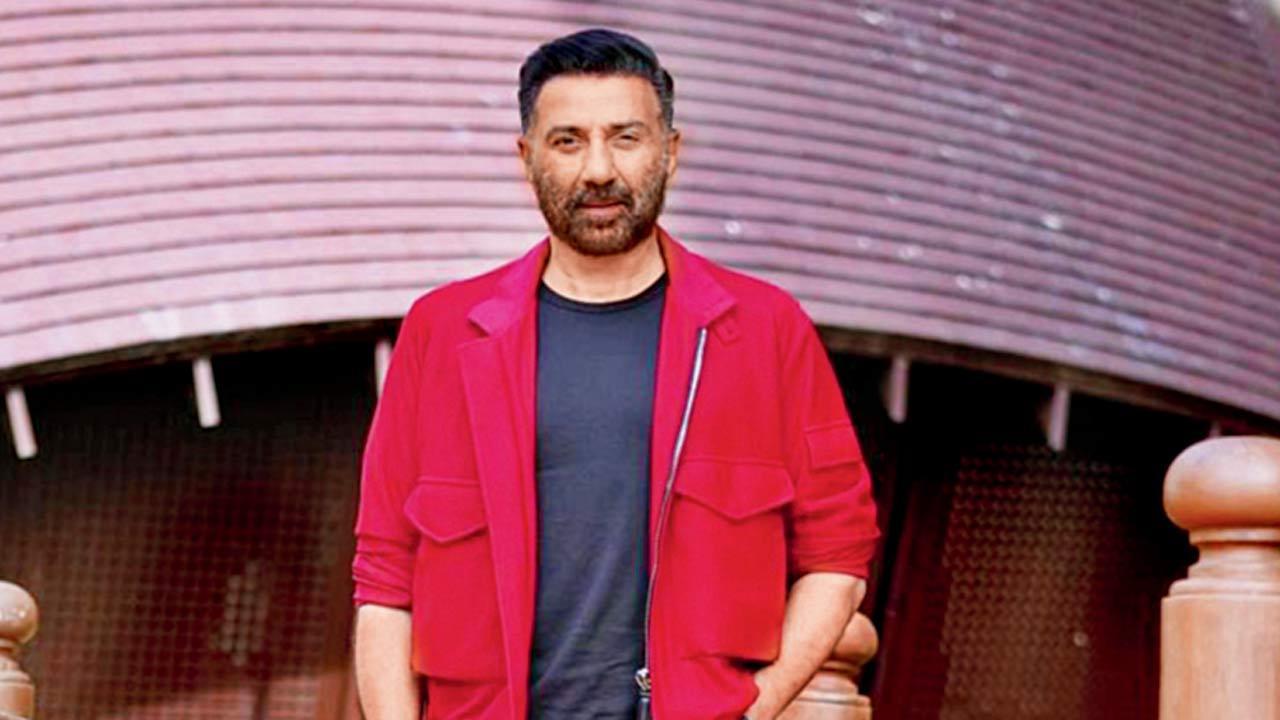
Claiming that the 1997 film Border has been close to Sunny Deol’s heart, writer-producer Nidhi Dutta discusses why the sequel is important in an exclusive interview
Priyanka Sharma (MID-DAY; January 25, 2025)
Sitting in the cantonment area of Babina, Jhansi, surrounded by her team of actors and over 300 army men, Border 2 writer-producer Nidhi Dutta has only one thing in mind—gratitude. Over a call, she tells us, “Sometimes I feel, ‘Is it really happening?’”
Border 2, a spiritual sequel to JP Dutta’s blockbuster Border (1997), is being helmed by Anurag Singh and offers a retelling of the 1999 Kargil war. With the war drama, Nidhi hopes to not only create a worthy successor to her filmmaker-father’s creation, but also pay tribute to the Indian Armed Forces. What makes her confident is that she has a well-researched story and an all-star cast in Sunny Deol, Varun Dhawan and Diljit Dosanjh. The writer-producer is particularly grateful that Deol, who led Border, agreed to headline her film.
“We couldn’t have made this film without Sunny uncle. There is no Border without him. I can say this on behalf of my father that it is Sunny uncle’s film more than ours.” She adds that Deol has kept the franchise close to his heart all these years. “If dad was directing this film, he’d [proudly] feel, ‘This is my franchise.’ I see that feeling in Sunny uncle,” she says.
Border 2 is being designed as a 2026 Republic Day offering. Over the last few years, many patriotic films have been churned out, most of them half-baked. Nidhi, however, disagrees that the audience is fatigued with the genre. “The audience won’t accept anything that is dishonest. If they see that a film is made for the right reason, they’ll love it, no matter how many have come before that in the genre.”
In that regard, she asserts that the team’s heart is in the right place. What adds to their advantage is that the Duttas have a background in the Armed Forces.
“When your background is the Armed Forces and you tell the story, it strikes a chord. That was the case with my father, whose younger brother was in the Air Force. In his films, the scenes where the soldier’s family gets to know about his demise are impactful. That’s because my father went through that in his life. When my uncle passed away in the MIG-21 crash, two Air Force officers had come to our house to inform us. So, when he sat down to make a war film, it came from a personal space.”
Border has ensured me immortality-J P Dutta
8:19 AM
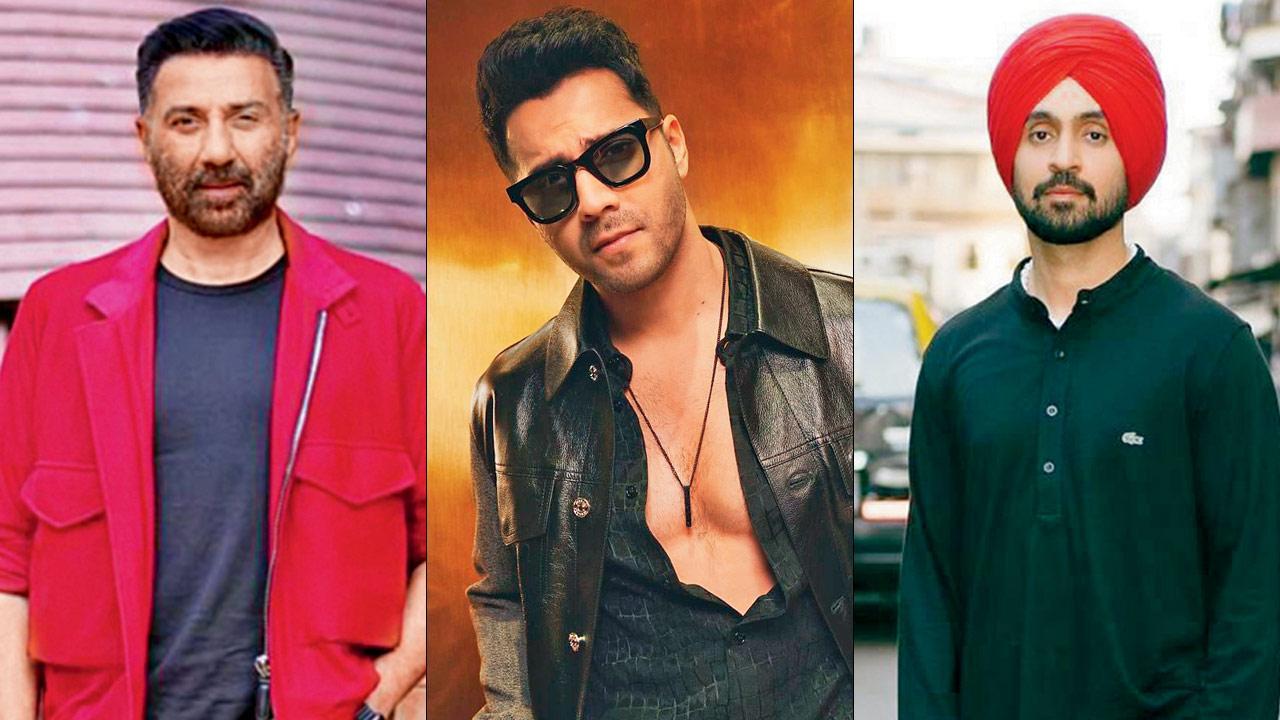
Border filmmaker J P Dutta, who turns 75, happy to hand over the directorial baton to Anurag Singh for the sequel; says he only helms movies that are written by him
Priyanka Sharma (MID-DAY; October 3, 2024)
J P Dutta, who turns 75 today, is not big on birthdays. But the one thing that the filmmaker is crazy about, even after pursuing it for close to 50 years, is movies. He has spent the past year developing Border 2, the sequel to his blockbuster Border (1997).
“Every film that I have made has been a milestone. But Border has been my biggest milestone and it’s been the one thing that has ensured me immortality,” he smiles.
Dutta had directed the Sunny Deol, Suniel Shetty, Akshaye Khanna and Jackie Shroff-led war drama. Over 27 years on, Deol takes centre-stage again as the sequel’s leading man, joined by new entrants Varun Dhawan and Diljit Dosanjh. The change is not restricted to in front of the camera alone. The veteran filmmaker has handed the directorial baton to Anurag Singh, who previously helmed Kesari (2019) and Punjab 1984 (2014).
Wasn’t Dutta tempted to helm the second instalment as well? “I have never directed something I haven’t written. I’ve always been a writer-director. This story was written by Nidhi [Dutta, writer-producer]. So, it was natural to get someone other than myself to direct it.”
Border 2, like the original, will focus on a chapter of the 1971 India-Pakistan war. Dutta is confident that the franchise is safe in new hands. “I really liked Anurag’s work in Kesari. He is someone who understands the emotion that is India. With Sunny, it has always been a dream run, and now with new blood Varun and Diljit [playing] celebrated heroes from the Armed Forces, it will be great.”
From Border to LOC: Kargil (2003) and Paltan (2018), Dutta has largely built his five-decade career on war films. However, in the recent past, the genre has been unable to set the box office on fire. Not just that, most of the films have been criticized for being jingoistic rather than patriotic. Point this out to Dutta, and he remains unfazed.
“In war films, the difference lies in having knowledge of the Armed Forces, which is what sets me and my films apart [from the others] because most of my family is part of it. My daughter has imbibed that from me. So, she has been able to write the story.”
Border 2 will have chest thumping patriotism-J P Dutta
8:12 AM

The filmmaker talks about the much-awaited Border sequel and what makes the franchise still relevant
Renuka Vyavahare (BOMBAY TIMES; June 26, 2024)
J P Dutta’s epic war film Border celebrated its 27th anniversary this month with an announcement that the film will get a sequel in 2026. Sunny Deol will resurrect his role in the much-awaited instalment to be directed by Anurag Singh and written by Nidhi Dutta (JP Dutta’s daughter). The director of the 97’ original, spoke to Bombay Times about Border 2 and how he will closely overlook the project as its creator.
‘Border 2 will be about other battles fought in the same war’
For those curious, Border 2 will also be based on the 1971 India-Pakistan war, but a different battle. “Yes, the sequel will be about other battles fought in the same war. Stories of bravery and heroism of our armed forces will always be relevant as well as our love for our country. We respect the soldiers who have laid down their lives for us and hearing those stories is important,” says the veteran director, stressing on the relevance of the sequel.
‘All my actors in Border gave it their all’
Reflecting upon the massive success of the original, he said, “As a maker, you just know that sometimes, certain films have a destiny of their own, but in the case of Border, it was the stories of valour. Our armed forces are so inspiring with everything they do that if the emotion is caught and portrayed the right way, it can create magic in the hearts of people. Also, my actors gave it their all. They portrayed the characters so well.”
‘The sequel will have the same sensibilities as my previous films’
On the creative front, Dutta informs us that Border 2 was written two years ago by his daughter, Nidhi. “She wrote the story and when she came to me, I was thrilled that she had imbibed the love for the armed forces from me. She was able to pen down the emotion genuinely. Having Bhushan Kumar on board with us only made our will to make this film stronger.”
People’s sensibilities have changed over the years. The patriotic language is subtler. Will the sequel have a different sensibility than the first movie, we wonder.
Dutta clarifies sternly, “The film will have the same sensibilities as my previous films - telling stories that make you want to join the Indian Army. Subtlety is not for a franchise like this. Border 2 will have chest-thumping patriotism.”
Dutta is confident about Anurag taking over as a director. “Anurag will helm the film as a director. I liked his work in Kesari (starring Akshay Kumar), and he seemed like a man with sensibilities like mine, and thus, a perfect choice to take the franchise ahead. I will overlook the creative process to make sure the emotion and sensitivity of the armed forces is kept in mind, as they have put their trust in me for years. Will I return to direction in the near future? You never know,” he concludes.
My eyes welled up when my daughter told me the story of Border 2-J P Dutta
10:24 AM
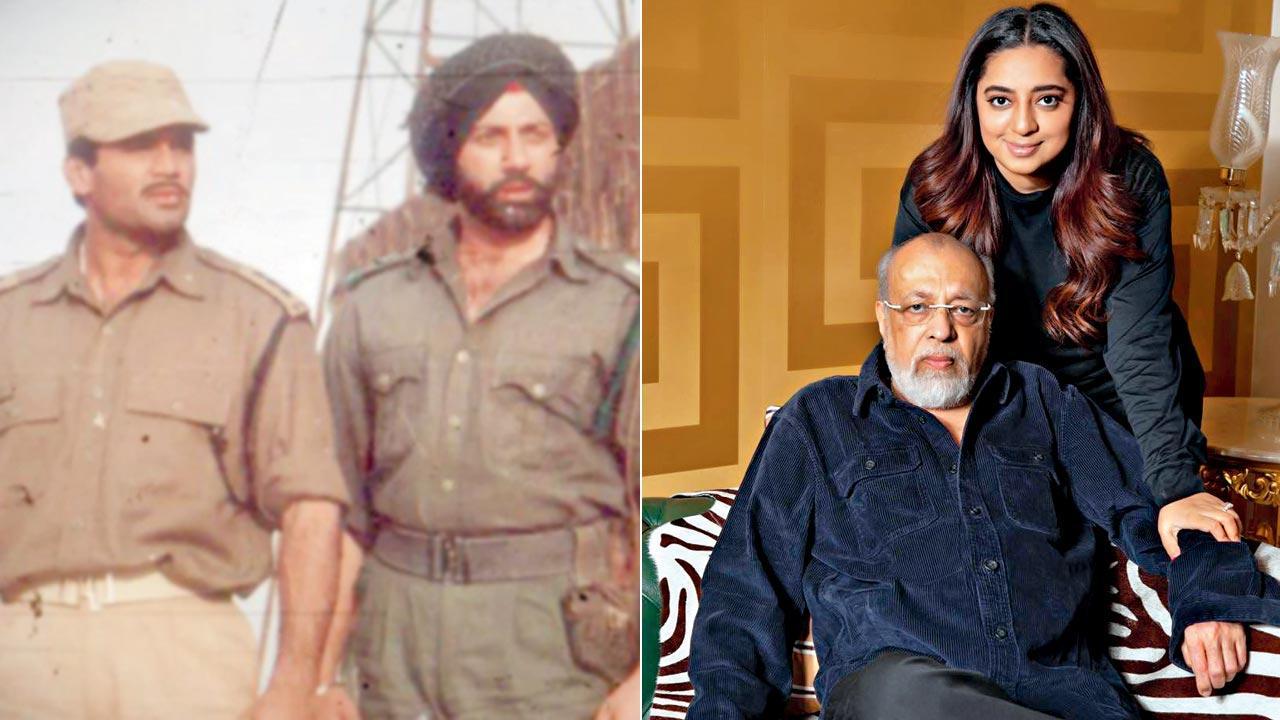
Handing over Border 2 to the next generation, JP Dutta expresses confidence in daughter Nidhi Dutta’s writing and production
Upala KBR (MID-DAY; June 16, 2024)
Sunny Deol and Suniel Shetty’s war cries ignited the fire of patriotism with Border (1997). Almost 27 years later, the soldiers are back on the battle field with a new war story titled Border 2. While filmmaker J P Dutta helmed the 1997 film, for the sequel, he has handed the baton over to daughter Nidhi Dutta, who has written and produced the film.
“My daughter is my strength. I’m giving the responsibility of the franchise to the strongest part of me. She has written the film, so it’s her baby. I’ve never directed a film I haven’t written. My eyes welled up when she told me the story of Border 2,” says J P, adding that he will be involved in the creative process of the film because the armed forces have placed their trust in him to tell their stories.
“I will make sure that the feeling of patriotism and the heroes it’s based on are given justice,” he added, assuring that Nidhi is “conscious of her responsibility towards the armed forces. She has balanced the essence of India with all the valour of the troops.”
Directed by Anurag Singh, the film showcases a different chapter of the 1971 Indo-Pakistan war. “Border was based on the Battle of Longewala, but the 1971 war has many real-life stories of our soldiers in the armed forces that I have heard. We need to tell the stories of these brave hearts to the nation. I have met their families and loved ones, and felt their bravery and pain before I wrote the story,” says Nidhi. The film will roll out by the end of 2024 and will be shot at real-life locations across India.
Hoping to make her father proud by walking in his footsteps, Nidhi shares that Border is an emotion that she has carried with her since the age of seven. “It feels surreal to me that today I am producing Border 2 with my father. I am excited, nervous, and happy that I am part of it,” says Nidhi, who is co-producing the film with husband Binoy Gandhi, also starring Deol and Shetty.
“Ours has always been a family-run business. Dadaji [O P Dutta] wrote the dialogues, Papa would direct, and Mom [Bindiya Goswami] would handle the production. In Border 2, it’s dad, Binoy, and me now.”
Border filmmaker J P Dutta to make his web series debut with a war drama
8:56 AM
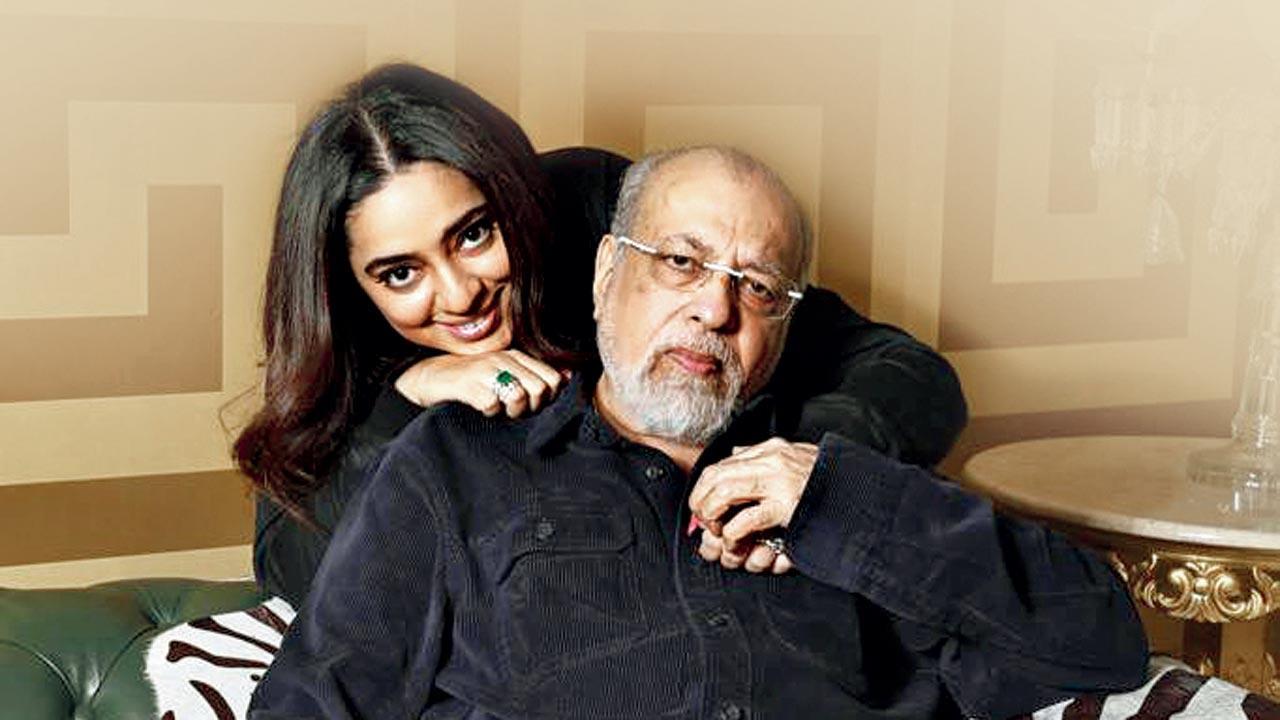
Priyanka Sharma (MID-DAY; April 23, 2024)
One would think that the big screen is the perfect medium for J P Dutta and his ambitious war dramas. But at a time when most are jumping on the OTT bandwagon, it looks like the veteran filmmaker too is ready to adapt to the times. mid-day has learnt that the director— known for Border (1997), Refugee (2000), and LOC: Kargil (2003)—is set to foray into digital entertainment with a war drama.
“The series’ script has been locked. It will be a big-scale patriotic drama based on a real war. Disney+ Hotstar is keen to begin the shooting as soon as possible,” says a source close to the development. The offering will be produced by his daughter, Nidhi Dutta, under their banner.
It turns out Nidhi’s director-husband Binoy Gandhi was keen to direct the show. But since he is busy with Sanjay Dutt and Raveena Tandon-starrer Ghudchadi, the veteran filmmaker decided to take things ahead. The source adds, “It’s an ambitious project for the streamer, and the top brass didn’t want to wait too long to kick-start it.” The makers are expected to begin casting soon.
This makes it the Duttas’ second project lined up this year alongside Border 2. Last year, it was reported that the sequel to the 1997 blockbuster would roll in 2024 with Sunny Deol and Ayushmann Khurrana in the lead. Border 2 has been designed to explore the backdrop of the 1971 India-Pakistan war, with personal stories of the war heroes.
I am dyslexic; earlier, we didn't know about it; people would think 'Yeh duffer aadmi hai'-Sunny Deol
8:33 AM

Sunny Deol talks about how he keeps reading dialogues and makes them his own, how he doesn’t believe in doing research for roles and dad Dharmendra being his idol
BOMBAY TIMES (December 11, 2023)
The Deols are one close-knit family, they are deeply attached to each other and proudly wear their emotions on their sleeve. It’s been a great year for Sunny and Bobby at the movies, and of course, even their dad, Dharmendra, created quite a storm with an outing in Rocky Aur Rani Kii Prem Kahaani. This week, the senior Deol turned 88, and his family was there with him to celebrate the day.
During a conversation with BT, when we asked Sunny how it felt to see hisdad on set working at this age and if it worries him, the Gadar 2 actor said, “One is always worried, it’s like he is worried about us, and we are worried about him all the time. Whenever he is shooting, I go on the set to see if he is okay. Beta baap ke baare mein sochta hai, baap bete ke baare mein. I can say that because I have sons (Karan and Rajveer), so I know how it feels.”
Sunny added, “My father has been my only idol, because he is the only actor anywhere in the world who has done every genre of films, and they have been successful. There has been no actor who has been successful across so many genres. Back in the day, they did two or three films, and most of them did well. They didn’t have scripts, and they made better films and far quicker. Dad would do two-three shifts, sleep for a few hours and do films back-to-back. Aaj ke din mein koi aise karke dekhe.”
Bring up how today’s filmmakers spend a lot of time researching subjects and actors devote months to delve deep into their characters, and Sunny shares his take on it. “All this research actors do, I find all this gibberish. Considering this (the time spent doing it), all our films should have been great. Back then, what research did actors do… But they still played their characters beautifully. Characters were based on real life and real emotions.”
The actor, who witnessed a mega success after over two decades with Gadar 2 this year, further explained, “If you are playing a biographical character, then it is different, but even then, in a film like Border, where I played Brigadier Kuldip Singh Chandpuri, I didn’t imitate him. I took the soul of the character and did it in my own way. It’s not like I researched ki woh kaise chalta tha, kya karta tha. When I am doing a film, I don’t even have the dialogues with me. That is another thing - I am dyslexic, so I can’t read and write properly, and that has been my problem since childhood. Earlier, we didn’t know what it was, and people would think…ki yeh duffer aadmi hai. I always get my dialogues in Hindi, and I take my time to read it. I read them many times and make them my own. That is my prep for the part.”
Suniel Shetty flags off the BSF annual marathon in Punjab; expresses gratitude to the jawans
11:28 PM
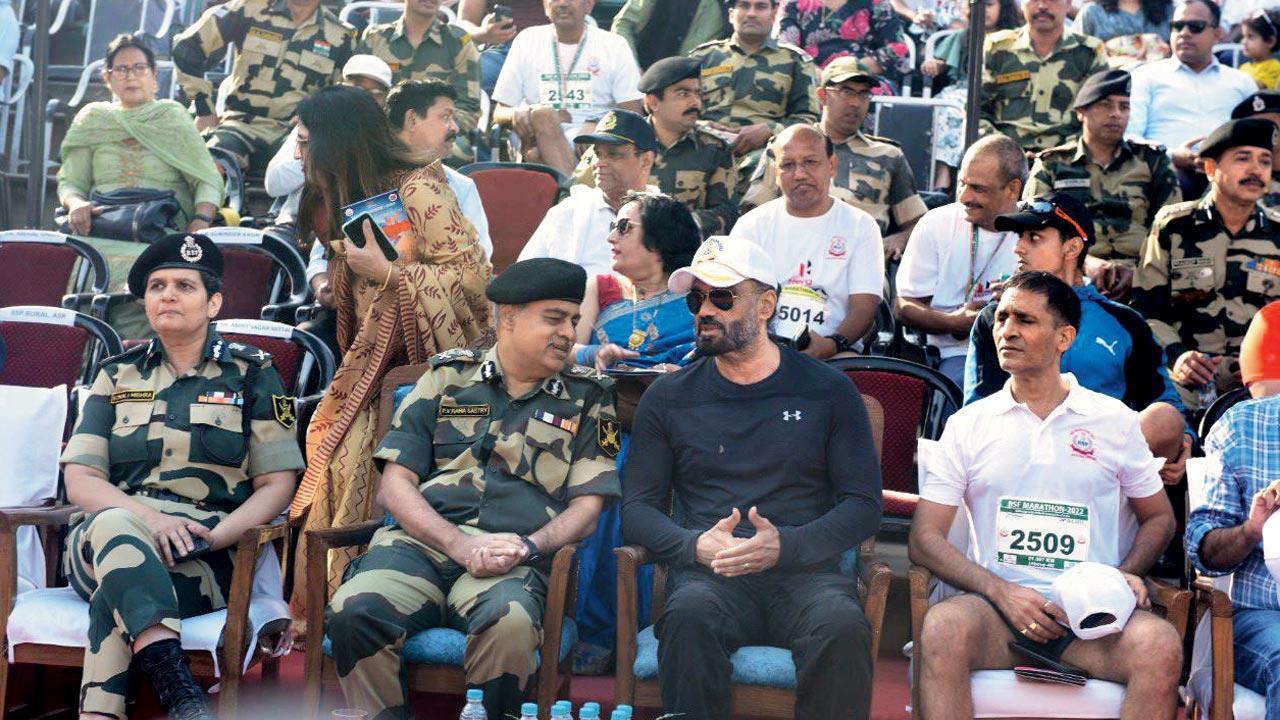
Suniel Shetty flags off the BSF annual marathon in Punjab; expresses gratitude to the jawans for their resilience and sacrifices
Upala KBR (MID-DAY; October 31, 2022)
On October 29, the Border Security Force (BSF) organised its annual marathon in Punjab, which was flagged off from Amritsar and culminated at the Attari-Wagah joint check post. Suniel Shetty, who was the guest of honour, was present for the prize distribution ceremony at the Attari-Wagah check post. For the senior actor, who played BSF’s Assistant Commandant Bhairon Singh Rathod in Border (1997), it was a privilege to meet the real-life heroes.
“Many of them told me that they had watched Border when they were in school or college, and that they were honoured to [host] me. But for me, it was the opposite. It was an honour to be a part of the event and [meet] the soldiers who [are willing to] sacrifice their lives to keep us safe,” says the actor.
Shetty, along with some sportspersons from the BSF, flagged off the event. While interacting with the soldiers and the media, the actor mouthed a few popular dialogues from Border. “Few people realise that the BSF is the first line of defence. I expressed my gratitude to them; after all, every border is secure because of them. I also thanked them for being the epitome of fitness. They are standing at the borders, guarding them relentlessly. I told them what the BSF means to me and the nation, and how it makes such a big difference.”
The actor wishes to join the bravehearts at the BSF marathon next year. Not only that, he wants to do his bit by spreading the word about the event. “I requested them to inform a few months in advance the next time they organise the marathon. I can help promote it, and make it one of the biggest events.”
Army Day special: Soldiers insist they want to see 'less jingoism, song & dance; more authenticity & originality' in war films
8:13 AM

Niharika Lal (BOMBAY TIMES; January 15, 2022)
While the Army has featured as a character – central, as well as peripheral – in several Bollywood movies, few have gotten the nuances of military life right or managed to nail the details related to Army personnel and the war zone down to the T. On Army Day, we spoke to some serving and retired Army personnel on how they think Bollywood movies captured their lives and battles, including all the things they got right – and wrong – on screen.
‘HAQEEQAT, LOC: KARGIL, SHERSHAAH ARE AMONG THE MOST REALISTIC FILMS’
What is surprising is that over a dozen officers (retired and those still serving) – when asked about their favourite Army films – could only think of two-three names that did justice to the Forces. Among these was Chetan Anand’s Haqeeqat (1964), starring Dharmendra and Farhan Akhtar’s Lakshya (2004) starring Hrithik Roshan – both of which featured a realistic portrayal of soldiers’ lives.
Major (retd) Sandeep Sangwan, who is also a defence consultant for the upcoming film Pippa, starring Ishaan Khatter and based on the Indo-Pakistan war of 1971, says, “If one were to judge a film on the parameters of weapons, equipment, uniform and the movement of the troops, then Border, LOC: Kargil, Lakshya, Uri: The Surgical Strike, and Shershaah score the highest.”
Major Mohommed Ali Shah, a former Army officer, who has acted in several films and web series, says, “Films that I feel were quite close in their depiction of the life of soldiers are Lakshya and Uri — if we don’t count the drone scenes and jingoism in the latter. Uri showed operations like no other film had before, and had all the accurate details, be it the uniform or the operations procedure.”

‘DON’T APPRECIATE FILMS WITH SOLDIERS DANCING ON THE BATTLEFIELD, GLORIFICATION OF WAR AND JINGOISM’
While several defence personnel may have appreciated Border, Lt Gen Zameer Uddin Shah, former Deputy Chief of Army Staff, who fought in the Battle of Longewala, isn’t a fan. He says, “The image that Indian films often portray of a soldier — as an alcoholic who sings and dances in the mess, and at times even on the battlefield! — isn’t true. Wars are nasty, but our films glorify them and have so much jingoism. Either they don’t hire any defence consultant or they don’t listen to them. I think Haqeeqat is a film that is better out of the lot, and I do think that films have improved in recent years.”
An Army officer who didn’t wish to be named, adds, “War is glorified and even politicised at times in Bollywood films, and they often imply that all soldiers do is to fight, which is definitely not true. Soldiers are quite well informed and they have to study and do a lot of research too, which is unfortunately never shown in films. Apart from films like Haqeeqat, I really liked Shaurya — inspired by Tom Cruise’s A Few Good Men — in terms of its portrayal of Army personnel. It is quite a wonderful film.”

‘WHAT’S THE POINT OF MAKING A FILM BASED ON THE LIFE OF A SOLDIER AND NOT GETTING THE BASICS RIGHT?’
Major Sangwan believes that to get the details right, it’s important to have defence experts on board. “While filmmakers do a lot of research when it comes to uniforms, they would not know the nuances of the uniform as compared to a person who wore it. While an artiste may believe they are wearing a ‘costume’, a uniform is not a costume. In fact, while portraying a soldier, one should know every aspect of that uniform.”
Major Shah adds, “Many makers have this misconception that they can’t show an accurate uniform on screen because ‘it is not allowed’.”
Having starred in the military drama series Avrodh: The Siege Within (2020) — for which he was also a defence consultant — and the film Haider (2014), he believes it is, in fact, necessary to get the details right. “In Haider, it was just a matter of a few scenes, but even then we got these details right. When there is a web series or a film based on the life of a soldier, if you can’t get these basics right, then what’s the point?”
Major Sangwan adds, “For Pippa, we trained junior artistes on how to talk, mannerisms, and decorum so that nuances weren’t lost. As compared to 20-30 years ago, films today are also more realistic because makers can use CGI, VFX, and other special effects.”

Shershaah scores on Amazon Prime
8:58 AM

Box Office India Trade Network
SHERSHAAH, which released a couple of weeks back, has scored on Amazon Prime as it becomes the most viewed content on that platform over a two week period. The film is said to have sustained its viewership remarkably well over the two weeks.
SHERSHAAH would have good chances of doing something at the box office in a normal scenario especially in the Delhi NCR and East Punjab belts. In fact, with these two areas being more advanced in terms of the audience returning at present, a release even now could have returned good numbers. It would have had higher numbers than BELLBOTTOM in these areas for sure due to content more appealing to these markets. But SHERSHAAH would have needed a normal scenario across all Hindi markets to have a chance to do overall good numbers and the makers probably could not wait that long so it had to have an OTT release.
There have been many patriotic films made in India but few war films and even less have worked. BORDER (1997) is the grandfather of all war films by a distance with URI: THE SURGICAL STRIKE (2019) being the next best. Then there was HAQEEQAT in 1965 which was not liked when released in 1965 but did a bit better in the years after but that was mainly as Dharmendra had become a huge star which got it some repeat runs and there was a patriotic song in the film which was hugely popular. So the minor success was not really coming for the film but other points.
SHERSHAAHcould have come after BORDER and URI: THE SURGICAL STRIKE but that will never be known. Obviously if satellite does well then success becomes locked but here again war films are not big on satellite going by the results of URI: THE SURGICAL STRIKE. The results on digital ensure the film is one of the successful films since the cinemas shut last year and they have been very few.
The character of Dharamveer in Border was turned down by Akshay Kumar, Ajay Devgn-J P Dutta
8:37 AM
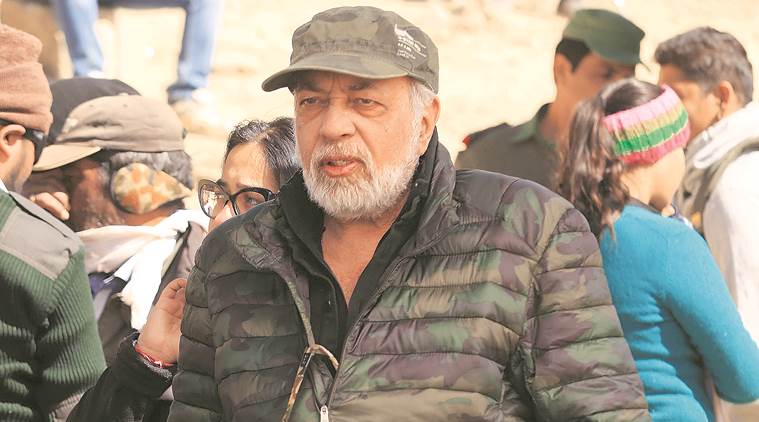
The filmmaker is expected to attend some of these screenings, which will be held in different parts of the country between September and December this year
Rachana Dubey (BOMBAY TIMES; August 13, 2021)
This year marks the 50th year of the Battle of Longewala, which was fought in the early days of December 1971. As a part of homage to the war heroes, a host of screenings of the film Border (1997), based on the said war, are expected to be held in different cities with Army officials and their families in attendance. Filmmaker J P Dutta, whose brother, Deepak Dutta, a flight lieutenant at that time, had fought in the war, is also expected to attend some of these screenings.
The filmmaker made the film nearly 25 years after the war, with Sunny Deol, Akshaye Khanna and Suniel Shetty in pivotal roles. It’s 24 years since the film’s release, but it’s fresh in the minds of the audience and the filmmaker even today. For Dutta, it’s a professional milestone and a personal experience of his sibling being on the battlefield.
Talking about it, the filmmaker, who’s known for his war dramas and whose last release was Paltan (2018), says, “My brother Deepak had fought in the War of Longewala. Those days, my mother used to be glued to the radio to hear the updates and also the names of the jawans who were martyred. My mother was worried about my brother. Those moments and the memories of that time keep coming back to my mind. When you reach a certain age, you start living in the past and it is the only thing you can feel connected with — what was and what is. My daughter Nidhi wants me to visit every single city where the movie will be screened next month onwards for the armed forces, their families and families of war heroes. I am 70 now and I am not sure how many cities I can visit, but it will be an experience that I will cherish.”
Making a war-drama like Border was not easy. Dutta had waited 25 years to procure clearances to make the movie. He also had a tough time casting an actor for the part of Dharamveer, a role that was eventually essayed by Akshaye Khanna, a newcomer at that time. “Border was the first film I was producing,” reminisces Dutta, adding, “I came from a middle-class background. When I came into films, my father, O P Dutta’s financial position was weak. We did everything together — from the very first film I directed which was Ghulami (1985), all the way up to Umrao Jaan (2006). Border was the first film I produced. All those affairs of money, getting into the big game and the big picture were playing on the mind. Sometimes, when I think of Border, I am reminded of all the stress I went through while making it. Being creative by the day while shooting, and then, later by night, being driven by numerous other things that were going on around the movie... I would finish shooting sometimes at 10 in the night and at times, we would go on till 2 am. After that, my accountant and I would go through the day’s expenses. The experience of making Border was personal in so many ways.”
When prodded about the casting decision for Dharamveer’s character, the filmmaker recalls, “The character was turned down by Akshay Kumar, Ajay Devgn... I was this spoilt director as I would not narrate the entire script; I would just tell the actor about their character and how it would play out. They knew Sunny Deol had been cast to play Kuldeep Singh Chandpuri, so actors wanted to know how the film in its entirety plays out. I refused to give anyone the entire script in their hands. I used to be very confidential about my scripts. Border was based on the real details I had about the war. It entailed a lot of research and I chose to keep a closed fist as far as the script was concerned. It took a while, but I found Akshaye Khanna and he played the part well. Getting Sunny and Suniel Shetty was a home run. In fact, Suniel and I had not done any work before this film, but he and I clicked. Ditto, Jackie Shroff.”
When asked what according to him brings the audience back to Border each time war dramas and patriotic films are in the spotlight, Dutta says, “There is a human element to the story, which went beyond the war and the border. I think that is what worked. I still don’t know what drove me to make Border. I just feel grateful to God that I could make the film.”
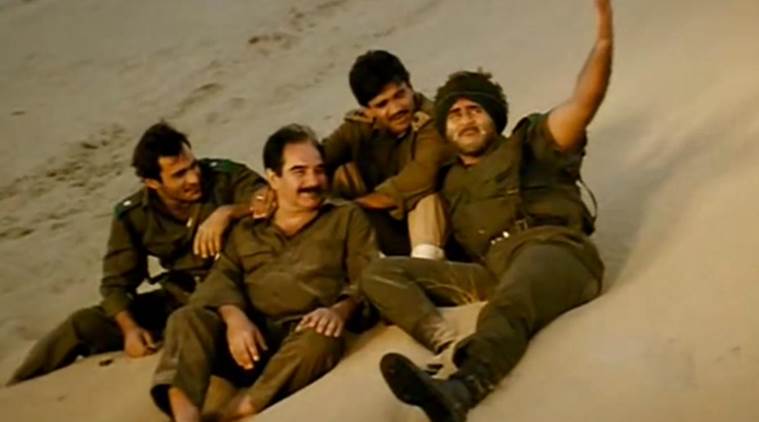
Akshay Kumar connects the real Bhairon Singh with the reel one
8:23 AM

Kavita Awaasthi (HINDUSTAN TIMES; January 20, 2021)
Akshay Kumar, who has been shooting for his next film Bachchan Pandey in Rajasthan, took time out to celebrate Army Day (Jan 15) by flagging off a marathon and playing a game of volleyball. But he also had a surprise visitor that day.
“A veteran Army officer, Bhairon Singh, sent a note to Akshay, asking to speak with him. When Akshay met him, he realised that Bhairon Singh is the same Lance Naik Bhairon Singh, who had played an important role in the historic war at Longewala in 1971. The Army man told him that while Suniel Shetty played him in the multi-starrer movie Border (1997), his character dies but he is still alive! Everyone who heard him found the exchange hilarious and sweet, as well,” reveals a source.
Kumar then called Shetty to tell him about Singh and get the two of them together but couldn’t connect with Shetty.
Shetty tells us, “Akki had called me but I couldn’t take his call and by the time, I called him back, he had left the venue. Later, he told me about the incident and we laughed about the whole episode because Bhairon Singh said he wants to talk to the Bhairon Singh of the movie! So I called him but unfortunately he wasn’t comfortable talking on the phone, due to age perhaps, so I spoke to his son. I told him the next time I am in the city, I will come and visit.”
Ask him though Border was a true story, why was Bhairon Singh killed in the film and Shetty explains, “It was a true story but at times, we fictionalise a bit to make it more dramatic. He was ready to give up his life which is important and that’s why J P sir (Dutta; director) thought to make changes. The moment in Border, when I walk through landmines, worked like magic and is one of the most beautiful moments in the film and of my career as well,” he shares.
Kumar also gifted ₹5 lakh to Singh as a personal gesture.
I have never felt neglected when I didn’t win an award-Akshaye Khanna
7:59 AM

Rachana Dubey (BOMBAY TIMES; December 29, 2019)
 Akshaye Khanna is considered to be a reclusive actor, but when he speaks, he doesn’t hold back. Ahead of the release of Sab Kushal Mangal, he spoke to Bombay Times about working with new talent, being a secure actor and why he was drawn to a comedy after all these years. Excerpts:
Your portrayal of a lawyer defending a rape accused in Section 375 was appreciated by the audience as well as the critics. When your name was skipped in the nominations at recent award shows, it created a stir on social media. Does winning an award affect the work you choose to do?
No, it’s always the writing. If people liked my work in Section 375, it’s because I was backed by good writing. As for awards, it’s for the jury, and not me, to decide if I really deserved one. The awards in India are based on popular choice, and they make no bones about it. In a lot of other countries, the box office does not count when judging. In fact, it’s the opposite. Once you win a BAFTA, Golden Globe or an Oscar, your box office takes off. It’s a matter of time before that happens in India. To answer your question, I’ve never been disappointed or felt neglected that I didn’t win an award. And how does one possibly know while signing a film that the role can get them an award?
You said that it’s the writing that attracts you, is that the reason you signed Sab Kushal Mangal, too?
Yes, a film’s writing is the first interaction you have with the subject. Your reaction to that matters and then, you go into other details like what’s in it for me, who’s on board and who’s producing it. It was the sheer sweetness of the story that got me in.
Sweetness does not mean sugar-coated. The world of the film is really sweet. The last Hindi film that I could compare it to is Badhaai Ho (2018), which had an awesome topic. People in India have always been attracted towards cinema that can add that dash of sweetness to their lives. Such films are not necessarily escapist, like Sab Kushal Mangal is not. It has a strong, meaningful story.
Sab Kushal Mangal has two newcomers, Riva Kishan and Priyaank Sharma, making their debut. Do you, as a senior actor in the cast, feel a sense of responsibility to land them well into show business?
Yes, I do feel a little responsible, but not entirely. There is a degree of fondness for someone who is starting out with you. However, they have put their trust into the project, not me. They chose this as their first film. So, a lot depends on them, as well. Priyaank and Riva are kids, and they are sweet, innocent and raw, so you feel protective towards them, but not responsible for their debut.
The scenario when you began your career in the 1990s was hugely different from what it is today, wasn’t it?
Right from my first film, I had the privilege of working with some very senior actors like Hema Malini, Danny saab (Danny Dengzongpa) and my dad (Vinod Khanna). In Border (1997), I worked with Sunny Deol, Suniel Shetty, Puneet Issar, Kulbhushan Kharbanda, Rakhee ji. I have even worked with Rajesh Khanna and Sridevi. I don’t think too many people from my generation or the one after me have worked with any or most of these actors. I worked with some incredible artistes, some of who were in the last years of their work life and were working very sparingly. Sridevi worked selectively; it’s rare, and I cherish the work that I did with her. I feel fortunate that so many people, apart from the actors, were so considerate towards me. They were so giving and caring that it is impossible to forget their gestures. Had they not been so, things could have turned out very differently. As a young actor starting out, you’re so vulnerable.
Why do you say that?
When you come into any form of public life, you put yourself out there for love, hate, appreciation and brickbats. It takes guts to allow people to assess you. Sometimes when I speak to aspiring actors, I ask them, ‘When you start in any career with the energy of youth, besides imagining the highs and adventures that you will possibly experience, do you also visualise what will happen if things go the other way?’ I ask this because I know that anything can happen. As a young person, you could almost block it all out and think that everything will turn out fine. When I ask these questions, most kids say that they haven’t thought about the other eventuality, which is interesting.
Sab Kushal Mangal is a comedy and you haven’t worked in one in a fairly long time. How different do you find the current world of a comedy film as compared to your last experience?
I think it’s got nothing to do with a genre, but less time is spent on writing and more time on other things. The audience notices everything. Yes, there will be those comedies that aren’t great, but they are money spinners. However, today, the audience also equally appreciates a film with quality writing. Karan V Kashyap, who wrote and directed this film, is familiar with the industry. He was the dialogue assistant on Dil Chahta Hai (2001) and has worked with Mani Ratnam as well. His sensibility in terms of humour, the world and the characters that he has created are of quality and standard. There is a certain cleanliness in his film.
Your co-actors Richa Chadha (Section 375), Priyaank and Riva, have said that you’re an extremely secure actor, who doesn’t hesitate to say or help another actor cope under pressure on difficult days…
Okay, first and foremost, I would only do that with a co-actor I feel comfortable with. Richa is an experienced actor. If I felt like telling her something that could help her on a tough day, it’s entirely because of who she is, and how I felt about her. A lot of people here are not open to that, they don’t like it, irrespective of whether they are seniors, peers or younger. Had I felt that Richa won’t accept a word from me or won’t be receptive to it, then I wouldn’t have approached her. I wouldn’t have the nerve to go to an actor if I don’t share that level of comfort with them. And I would never hold back on my own performance to make someone else look better, even if they are newcomers. There is not a single time when I felt like going easy to let Riva or Priyaank cope with a certain scene. To their credit, they never requested me to do things differently to help them out. Most newcomers, in their first few films, tend to have the entire unit focussing on what is good for them. These two kids didn’t have anything of that sort. Priyaank and Riva were being equally competitive; that distinction is huge. My respect for them as actors and debutants is even more for this very reason. Not many people would even be remotely bothered to give this any consideration, but it matters to me.
Does any newcomer remind you of a younger version of yourself?
No, and that’s because I was an extremely unprofessional guy. If I look back at my behaviour and attitude in the first five or seven years of my career, I feel it was unacceptable. I don’t see that in any newcomer today. What I did was a disaster. My immaturity and inability didn’t let me grasp my responsibilities; it didn’t strike me for a long time. Thank God, but I don’t see newcomers who are like that today.

Image: J P Dutta’s 70th birthday brought memories alive
8:04 AM

Himesh Mankad (MUMBAI MIRROR; October 8, 2019)
On October 3, National Award winning filmmaker J P Dutta brought in his 70th birthday with a surprise party organised by wife Bindiya Goswami and daughter, Nidhi Dutta. Among the guests were actors Sunny Deol, Suniel Shetty, Abhishek Bachchan and Randhir Kapoor, singer-composer Anu Malik, lyricist Javed Akhtar and singer Sonu Nigam.
Anu, who has scored the music for his Border, Refugee, LOC: Kargil, Umrao Jaan and Paltan, was accompanied by wife Anju and daughter Anmol. He informs that the filmmaker was clueless about the two-day extravaganza at a heritage property in Jaipur which started with fireworks. There were ladies strewing flowers and rose petals on the guests as they walked in, while a flautist played songs from Border and Refugee.
“Sunny was the first to arrive, and as others trickled in, J P saab grew quiet as it slowly began to sink in that this was a surprise birthday party with his team of actors, lyricists, writers, composers and singers in attendance. He doesn’t usually smile much but had one on his face and it didn’t slip all evening,” Anu recounts fondly.
A film aficionado, Anu was very impressed with J P Dutta’s Ghulami, Batwara, Hathyar and was delighted when he got a call. “He showed me pictures of the army and told me the film was about the armed forces who guard our borders. For me it was a God-given opportunity to tell the world how much I love India. 'Sandese Aate Hai' will make you realise how much heart I put into the music,” he asserts, saying when he sits across from the producer-director, the tunes just flow. “I know what he wants and he knows what I can give.” Anu bagged the coveted national honour for his Border score.
Sonu made the birthday special by singing many songs, including his National Award-winning “Sandese”. He called Anu on stage to croon another Border song, “Toh Chalun”, which made Dutta emotional as did Akhtar’s heartrending poem. “But, then, Javed saab had the guests rolling with his rib-tickling shayaris. Abhishek added to the laughs with a straight-face quip, ‘We all know how talented Anu Malik is… Except Anu himself,’” Anu chortles, adding that Kapoor came in a wheelchair as he’s not keeping well but joined in the revelry. “It was a surreal evening, we didn’t sleep that night. I left the table only at 6 am and returned home the next day with a lifetime of memories.”
Subscribe to:
Posts (Atom)