Showing posts with label BookMyShow. Show all posts
Showing posts with label BookMyShow. Show all posts
Nukkad Natak: Here’s how you make an indie movie in 2026
4:56 PM

With no producers, no studios, and no guarantees, two debut filmmakers hustled hard for their first break — one by taking his film to every nukkad, the other by taking his story to the global festival circuit
Junisha Dama (MID-DAY; February 15, 2026)
On a busy street, a young filmmaker walks into traffic. This is a shoot, but for your phone screens. For weeks now, this young crew has been relying on social media and funny content to get the word out about their film. As they criss-cross India in a caravan, their pit stops double up as trailer screenings, NGO visits, and the occasional scenic halt for a quick reel. Months earlier, the same team was detained in Germany for trying to publicize their film without permission.
This is the team of Nukkad Natak, a social drama set to release on February 27 on the big screen. And, they are doing all they can to market and distribute their film from their own pocket.
Another first-time filmmaker, Sriram Emani, is preparing for his film Jam Boy’s world premiere just blocks away from where immigration policies are written in the US. For a film about an Indian immigrant who may never be allowed to leave the country, premiering at the DC Independent Film Festival 2026 in Washington, DC, on February 15, this is no easy feat.
Neither project has a studio or a marketing budget worth the name. Together, Nukkad Natak and Jam Boy offer a sharp snapshot of what making it looks like today.
Directed and produced by Tanmaya Shekhar, Nukkad Natak is an independent Hindi feature. The film follows two college students who are forced to confront life outside their elite campus after being expelled and sent to work with children in a nearby basti. The idea, Shekhar says, came from growing up around an IIT campus and seeing “two Indias existing within a few kilometres of each other, without ever meeting.”
From the start, the film was conceived as independent. “I always knew this would be an indie,” he says. Years of pitching scripts taught him how slow and uncertain the process could be. So, he wrote practically, avoiding scenes he couldn’t afford to shoot. Even then, money ran out more than once. “The day we finished shooting, we didn’t have money to pay all the vendors,” he admits. Fundraising continued long after the camera stopped rolling.
Speaking about the experience, he says casting, especially a 13-year-old girl from the basti, was one of the toughest challenges. The team conducted acting workshops in government schools near their shooting location, slowly building trust. “We didn’t want a preachy film,” Shekhar says. “We wanted something emotional, where people connect to the characters.”
But finishing the film was only half the battle. Releasing it without a producer or distributor meant inventing a new playbook.
That playbook is now playing out on Instagram feeds and city streets. With Architaa Chawla joining as head of marketing and PR in the final months, the team launched a road-trip campaign across India. They are currently visiting cities where the film would screen, meeting audiences directly, performing with children, collaborating with NGOs, and documenting everything online. They have made humorous reels, launched a series called How to Enter Bollywood, created a Hindi alphabet song, and turned their own learning curve into content. “We wanted to connect directly with people,” Chawla explains. “The film itself is called Nukkad Natak. So we went to the nukkad.”
The now-viral Germany arrest happened during an overseas festival run, when the team tried promoting the film on the streets without clearance. Instead of burying the incident, they posted about it. The honesty worked.
Their strategy also leans on data. One key metric: interest numbers on BookMyShow. “If we can show one lakh people are interested,” Shekhar says, “we can tell theatre owners that audiences exist.” For small films competing with star-driven releases, show timings are everything.
Lead actress Molshri says the pressure is constant. “If this doesn’t work, we go home,” she says plainly. “It’s all or nothing.” But the team has also seen something else on the road: Young artists in smaller cities recognising their own futures in this journey. “They tell us, ‘If your film works, maybe we can do this too,’” says Shekhar.
Jam Boy unfolds in a far quieter way. Written, directed, produced, and performed by Sriram Emani, the dystopian short film follows a successful Indian immigrant in the US who begins to realise that freedom, especially the freedom to leave, may be slipping away.
The film draws directly from Emani’s lived experience. “Once I went to the US, I became very hyper aware of all the parts of myself that I was erasing to belong — my name, my food, my accent, my habits. They want your brain, but not your food or your culture. That contradiction felt like something we needed to talk about,” he says. The film asks what happens when the model immigrant story stops feeling like success and becomes a performance.
Emani chose sci-fi because it allows fear to be visualised. In Jam Boy’s world, visas are needed not to enter the US, but to leave it. The anxiety is familiar. “I should not be afraid to get on a flight and see my mom,” he says. “That happens in jail, not in a country you live in.”
Food becomes the film’s emotional anchor, a memory, a resistance, and an identity rolled into one. “They can change how you dress or speak,” Emani says. “But they can’t change how you eat.”
Unlike Nukkad Natak, Jam Boy has taken the festival-first route. The film will premiere in competition at the DC Independent Film Festival on February 15, followed by screenings at the Boston Independent Film Festival and the DisOrient Asian American Film Festival. For Emani, festivals were always a strategy, not an afterthought. “Making the film is only half the work. The other half is figuring out how it enters the world. As a debut filmmaker today, you are not just a storyteller. You are building a community, a distribution strategy, and a conversation.”
He adds that where a film premieres shapes how it is read. DC, he felt, was the right place to frame the story as emotional rather than partisan, as he wants the film to be a conversation about belonging rather than policy alone. “Film festivals were never just about screening the movie for me. They are where the film starts a conversation with audiences, policymakers, other filmmakers. Where a film premieres becomes part of its identity,” he explains.
The response has surprised him. “I underestimated how much it would resonate,” he admits. The film has sparked Q&As, community conversations, and interest from programmers and distributors who scout festivals for new voices. Emani sees this as part of a larger shift. As film equipment is cheaper and barriers to entry are lower, it’s increasingly easier to make a film. But attention, however, is harder to hold. “Indie films grow through communities before they grow through algorithms,” he says. Distribution, he believes, is no longer just a business decision but has become storytelling.
What connects Nukkad Natak and Jam Boy isn’t genre or geography, but the absence of a safety net. One film fights for screen space in Indian theatres. The other fights to start a conversation in policy-heavy rooms. Both are navigating an industry where studios feel distant, money is scarce, and visibility has to be earned inch by inch.
Neither route guarantees success, but both reveal a generation of filmmakers refusing to wait for permission. Could these two films act as case studies into how first-time filmmakers can break into the industry? Quite possibly.
What they do reveal is how independent filmmakers can’t simply rely on their filmmaking skills alone. As Emani puts it, “Independent films today grow through communities before they grow through algorithms. Unless you have very deep pockets for marketing, word of mouth and genuine connection are the only ways forward.”
Stage's set for live shows to outshine the silver screen
8:19 AM
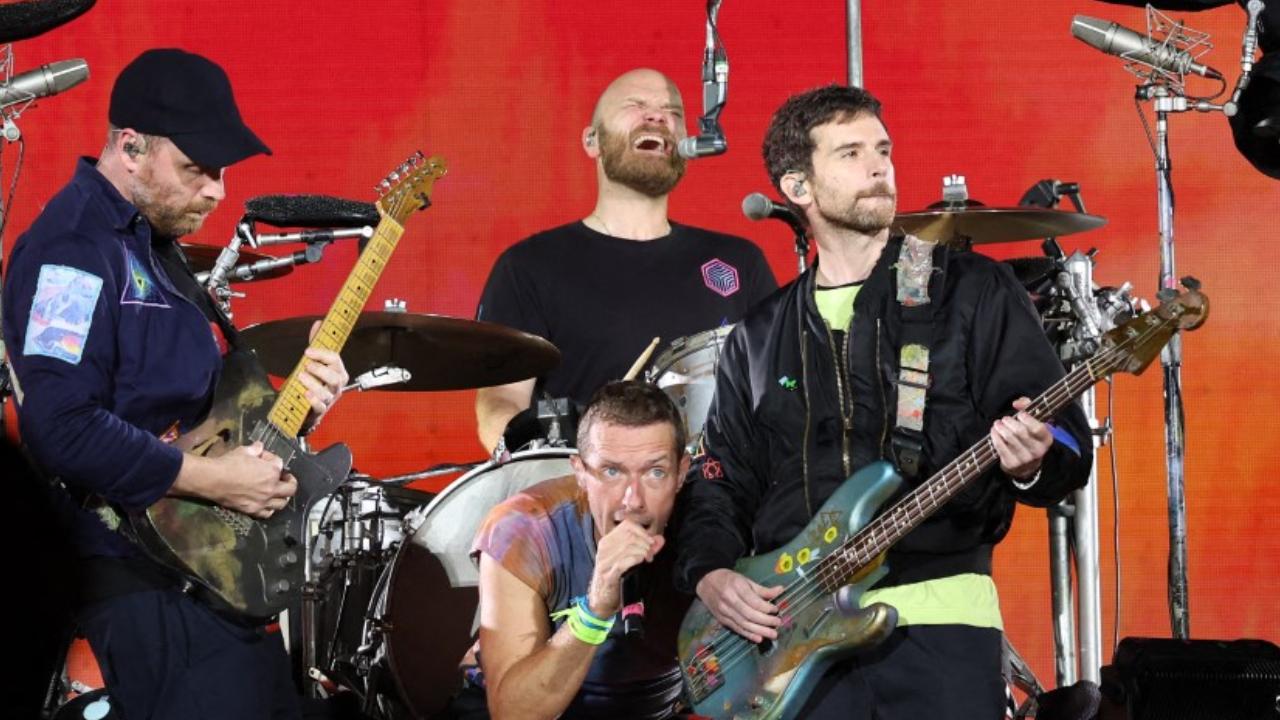
Live events poised to be the fastest-growing category in entertainment biz in 3 years, driven by demand for niche experiences
Rajesh N Naidu (THE ECONOMIC TIMES; April 15, 2025)
Mumbai: Live events are poised to emerge as the fastest-growing entertainment category over the next three years, with revenues projected to grow at 18.2% compounded annually to Rs. 16,700 crore, outpacing filmed entertainment, which is estimated to grow at a modest 4.3% to Rs. 21,300 crore, according to the latest FICCI-EY Media and Entertainment report.
Filmed entertainment includes box office, satellite and digital rights, international theatricals, and in-cinema advertising.
A key factor fuelling demand for live events is the emergence of ticket booking platforms, making the economics of live events favourable for organizers in recent years.
"Availability of ticket-booking websites has brought about a big change. Today, a live event derives 60-70% of its total revenues from tickets and food & beverages (select locations). Sponsorship contributes, on average, 30-40% to total revenues of events," said Lalitt Gattani, cofounder, Showcraft Productions, which organises musical concerts and political events.
An estimated 30,687 live events took place across 319 cities in 2024, marking an 18% growth over the previous year. Revenues from ticket sales surged 40-50% last year, while sponsorship revenues jumped 30% in the same period.
Live event is an umbrella term used for defining business-to-consumer (B2C) and business-to-business (B2B) events. These include sports, musical concerts, political and religious events, comedy shows, weddings, musical plays, and managed corporate events. Sports and musical concerts attract larger audiences in B2C events, according to event organizers.
"Today, audiences seek premium entertainment experiences which are at par with global standards. This reflects a shift in their expectations. They are ready to invest in unique, high-quality events," said Anil Makhija, chief operating officer for live entertainment and venues at BookMyShow.
Digital or social media penetration also contributed significantly to creating demand for live events. Various social media platforms are giving the much-needed information required for exploring and discovering artists and their works.
"Today, we live in a global digital world. Audiences are exposed to artists across geographies. Audiences aged between 12 to 25 are tastemakers as they explore and identify artists. These artists discovered by tastemakers are followed by audiences who are taste followers," explained Tarsame Mittal, a musical entrepreneur who has managed more than 60 artists, including Arijit Singh, Badshah and Vishal-Shekhar.
Live events require Rs. 5-30 crore in investments on average, generating returns of about 30%, according to event organizers. Of late, the emergence of a favourable demographic for live events with 40-50 million affluent homes and easier access to purchasing tickets through digital platforms has helped grow this market.
"Live events such as musical concerts offer premium, aspirational and assured-quality experiences, which enable higher monetary commitment. This is a great attraction about them," said Ashish Pherwani, leader, media & entertainment sector, EY India.
Screen fatigue such as mobiles, laptops, and televisions has also become another key contributor to growing attendance at live shows. Event organizers say audiences are looking for more 'real' experiences instead of the mind-numbing virtual world experience.
PVR Inox chain fined Rs. 1.2 lakhs for forcing audience to watch non-mandatory ads
3:50 PM

Rachana Ramesh (BANGALORE MIRROR; February 20, 2025)
A Bengaluru resident won a consumer case against PVR and INOX (now merged with PVR) for displaying excessive advertisements before film screenings, which he claimed was a waste of his time.
According to Bar and Bench’s report, Abhishek M R initiated legal proceedings against PVR Cinemas, BookMyShow and INOX for showing approximately 25 minutes of advertisements before the film’s start, during his visit to watch Sam Bahadur in 2023.
The consumer court has directed PVR to display the actual film start time on tickets, rather than the time when advertisements begin. The complainant stated that the extended advertisement duration caused delays, disrupting his work schedule.
The district consumer forum determined that PVR and INOX should not engage in unfair practices by showing lengthy commercial advertisements during scheduled film time. However, they absolved BookMyShow of responsibility as they do not control showtimes or advertisement broadcasts. The court emphasized that time has value and no entity should profit from others’ time and resources.
“Spending 25 to 30 minutes watching advertisements is a significant waste of time, especially for individuals with tight schedules. People seek entertainment for relaxation, but that does not mean they have no other responsibilities,” the court observed.
Following this ruling, the court has instructed PVR and INOX to specify actual film start times on tickets, cease unfair trade practices, and restrict advertisement duration. The court awarded Rs 20,000 to Abhishek for mental distress, Rs 8,000 for complaint filing expenses, and Rs 1 lakh as punitive damages.
PVR INOX justified their practice by referencing government mandates for public service announcements before films, though the court noted these guidelines specify a 10-minute limit.
The complainant documented the advertisements as evidence. While PVR INOX contested this as an anti-piracy violation, the court rejected this argument, noting only advertisements were recorded to highlight a widespread concern.
------------------------------------------------------
Niharika Lal (BOMBAY TIMES; February 20, 2025)
What happened
A consumer commission in Bengaluru has ordered PVR INOX to ensure that movie tickets mention the actual start time of a film, not the time when ads are screened before a film. While the cinema chain claimed that it is legally obligated to screen certain Public Service Announcement (PSA), the Consumer Commission stated, “Cinemas should concentrate on telecasting commercial ads as well as PSAs as per the guidelines during the intermission of the movie. They can telecast PSAs 10 mins prior to the movie.”
Background
- A complainant claimed that around 25 minutes of his time was wasted when he went to watch Sam Bahadur in 2023 at a mall in Bengaluru, as he was shown long commercial ads before the film
- He booked tickets worth Rs. 825.66 for a 4.05 pm show. He entered the theatre around 4 pm. However, the cinema played ads and movie trailers from 4 to 4.25 pm, and the film began only at 4.30 pm
- The complainant claimed the 30-minute delay disrupted his plan to return to work by 6:30 pm
- The cinema chain claimed that it was required to play PSAs
- The consumer forum found that 95% of the ads played before the movie attended by the complainant were not government PSAs but commercial ads
‘25-30 minutes is not less (time) to sit idle in the theatre’
The District Consumer Commission said in a statement, “In the new era, time is considered money. Each one’s time is precious, no one has the right to gain benefit out of others’ time and money. 25-30 minutes is not less (time) to sit idle in the theatre and watch whatever the theatre telecasts. It is very hard for busy people with tight schedules to watch unnecessary advertisements.”
The directions by Consumer Commission
- Cinema tickets should specify the actual movie start time for the public.
- Advertisements should not be shown beyond the scheduled show time stated on the ticket
- The district consumer forum further ordered the cinema to pay Rs. 20,000 to the complainant for causing him mental agony and inconvenience, and an additional Rs. 28,000 towards the expenses he bore to file the complaint
- Rs. 1 lakh as punitive damages for engaging in unfair trade practice
Cinemas are obligated under the law to screen certain PSAs: Cinemas
In their defence, the cinema chain claimed, “Cinemas are obligated under the law to screen certain Public Service Announcement (PSA) in the form of short films and documentaries provided by the Central Government or State Government from time to time. The main objective of such announcements is to spread awareness amongst the citizens about the important social issues. These PSAs are screened during prime time, prior to screening of any movie, when the audience are seated inside the theatre.”
BookMyShow’s business story gets Zomato’s Paytm plot twist
3:04 PM

While BookMyShow may lean on its clout, Zomato will leverage its food delivery biz
Pranav Mukul (THE ECONOMIC TIMES; August 23, 2024)
BookMyShow, the leader in India’s entertainment ticketing market, could face intense competition from Zomato, which is acquiring Paytm's ticketing business for Rs 2,048 crore and plans to build it into the company’s third main consumer vertical.
BookMyShow, which posted nearly Rs 1,000 crore in fiscal 2023 revenue and is profitable, will try to protect its market share by using its clout with suppliers and other stakeholders, and leveraging exclusive contracts with multiplex chains, event organisers, sporting bodies, artists and theatre companies among others, analysts and industry executives said.
Meanwhile, Gurugram-based Zomato will seek to utilise profit from its other mature businesses like food delivery to scale the going-out segment that includes the dining out and entertainment ticketing verticals.
In a shareholder letter published on Wednesday, Zomato’s chief executive Deepinder Goyal said the company anticipates the gross order value of its going-out vertical to grow more than threefold to over Rs 10,000 crore by FY26.
“...we see the going-out business as a combination of multiple categories with strong network effects – with some categories driving traffic and certain categories driving profits. Idea is to drive profitability at a combined level while allowing for different sub-categories to operate at different margin profiles,” Goyal said.
The deal will give the company increased access to the lucrative movie and event ticketing business, which comprises nearly two-thirds of the going-out segment.
“Movies and event ticketing is the biggest business…close to two-thirds of the revenue comes from convenience fees from movies and event ticketing. Live events would be the remaining 30% of the business,” said Karan Taurani, senior vice president at Elara Capital.
Holding the fort
Currently, Reliance Industries and Accel-backed BookMyShow is the market leader in the movie ticketing segment with a 75% market share, followed by Paytm Insider, as per Bernstein.
Paytm Insider is part of the businesses that Zomato is acquiring.
In the online ticketing segment, the proxy of which is the Rs 1,500 crore convenience fee – including movies, events and sports — BookMyShow has 40-45%, said Taurani.
In FY23, the company’s operating revenue surged to Rs 976 crore from Rs 277 crore in FY22. BookMyShow swung to a profit that year as it rebounded from the impact of the pandemic-induced lockdowns and challenges to its operations in the preceding few years.
With this, the 25-year-old venture brings in inherent advantages.
“They’ve been a large player in this segment…and have sizeable traffic across all segments,” a media and technology sector analyst said. “For a lot of cinema chains, BookMyShow accounts for a larger share of ticket sales than Paytm. They also have a number of exclusive contracts…including with BCCI (Board of Control for Cricket in India) to sell tickets for tournaments, including IPL.”
Zomato’s playbook
“While Paytm Insider has been a good and respected product among the community…there hasn’t really been a strong push for the business to grow at scale. Contrarily, the industry in which it operates is a fast-growing one. There’s a huge opportunity waiting to be addressed,” a senior creative director at a Mumbai-based marketing agency said.
Industry executives said Zomato will look at leveraging its existing customer base to drive users to the new going-out app, District, which is set to be launched in the next few weeks.
However, it will be equally important for the company to find exclusivity contracts and own live event properties.
“Zomato needs to get as many large properties as possible under their banner because BookMyShow has exclusivity on many large IPs (intellectual properties). Secondly, they can leverage the quick-commerce and food-delivery user base, and have a loyalty programme where you can have certain promotions if you’re a food or quick-commerce user,” Elara Capital’s Taurani said.
“Thirdly, they would really need to focus on niche live events that they do, and the food business. Differentiated events is an edge here and that will continue to be the USP (unique selling proposition) for Zomato,” he added.
Publicly listed Zomato has a cash pile of Rs 12,539 crore.
The company said the services initially will continue to be offered as is, but all the offerings will eventually be transitioned to the District app.
Goyal said part of the success of this acquisition would depend on a seamless transition of users from apps such as Paytm, Insider, TicketNew and Zomato to District.
“We might need to incentivise customers to move from Zomato/Paytm/Insider/TicketNew to District – but that is merely a marginal financial risk as of now, which we will try to eliminate as much as possible,” he said.
Subscribe to:
Posts (Atom)