Showing posts with label Bombay Velvet. Show all posts
Showing posts with label Bombay Velvet. Show all posts
From Ranbir Kapoor’s screen-worn jacket to Mogambo’s uniform, the afterlife of Bollywood’s material history
10:37 AM

In the absence of a formal museum, iconic artifacts — from Ranbir Kapoor’s screen-worn jacket to Mogambo’s uniform — are recirculated and stored across an unofficial ecosystem of godowns, trunks, and prop houses
Nisrin Saria (MUMBAI MIRROR; July 12, 2026)
A yellow Ambassador glides onto the red carpet. Flashbulbs erupt as Shanti Priya (Deepika Padukone) steps out in blush pink silk, her wave choreographed for stardom. Moments later, the fabric catches Om’s sleeve, setting in motion one of Hindi cinema’s most cherished meet-cutes. Years earlier, audiences had travelled to an altogether different world, where Helen danced to Mehbooba Mehbooba inside a cave lit by flickering torches. One film recreated the glamour of 1970s Bombay. The other conjured a ravine that never existed. Both persuaded millions that these worlds were real.
If you’ve ever visited the Harry Potter studio outside London, wandered through Warner Bros’ archives in Hollywood or admired K-pop exhibitions in Seoul, you know some entertainment industries preserve their history behind glass. Bollywood, for some reason, has never done so. Here, the cave comes apart plank by plank, the palace becomes plywood again, costumes disappear into garment bags and props are counted, labelled and packed into trucks. Still almost nothing is truly discarded.
“Most costumes and many props are hired,” says veteran filmmaker Prahlad Kakkar. “You use them for the shoot, return them afterwards and pay the rental.” Furniture, crockery, chandeliers, doors, windows and architectural fragments all begin another journey once the cameras stop rolling. Every item is checked against an inventory, packed away and stored until another script calls it back into service.
Ad filmmaker and photographer Sunhil Sippy says production designers often become collectors by default. “Many own prop houses themselves, or they’ve spent years building collections from Chor Bazaar and antique markets.” It’s not unusual for things from their own homes and studios to even find a way into frames. “For close-ups, I’d often bring something from my own house, an object I lived with every day because I knew I wouldn’t find it in a rental house. The right object gives a frame its truth.”
Cement brains and books
Not every prop returns to a rental house. Some end up at Many Many Things, a Versova prop studio run by production designers Shaira Kapoor and Dhara Jain, whose work covers Gully Boy, Bombay Velvet and The Archies. Over the years, productions have left behind what many would see as a museum-worthy collection of collectibles: a miniature red vintage car sourced for a Lays commercial featuring Ranbir Kapoor, gold bricks made for a smuggling sequence in Bombay Velvet, even two cement brains created as paperweights for a radio station set in Tumhari Sulu.
“We never planned to start a prop house,” says Kapoor. “Some pieces stayed back after productions, others came from family, and many were simply too special to let go.” Every object is catalogued, barcoded and tracked before heading out to its next assignment.
That, they insist, is how Bollywood has always worked. Doors, windows, plywood, lights, furniture and fabrics are dismantled, stored and reinvented. “We pride ourselves on making the same object look completely different,” Kapoor says.
“A new lampshade, fresh upholstery or different artwork can transform it.” Nothing illustrates that better than Zoya Akhtar’s The Archies. The pair sourced nearly 10,000 vintage books, along with vintage cookware and utensils, for Betty’s (Khushi Kapoor) home from Mumbai, Bengaluru, Ooty, Bangkok, and international Etsy sellers. Once filming ended, most were sold on. “We don’t know exactly where they went,” Jain says. “But they’re still in the ecosystem. They’ve simply moved to another shelf.”
History in mulmul
While a handful of props are preserved, Kakkar says that remains the exception. “Commercials work on rentals. Keeping elaborate sets after a shoot isn’t practical. The economics just don’t support preserving every unique creation.”
Costumes have had an even more uncertain fate. Academy Award-winning costume designer Bhanu Athaiya treated preservation as second nature, says her daughter, Radhika Gupta. “She never folded old saris or fabrics. She rolled them, wrapped them in mulmul cloth and stored them in steel trunks.”
Even that could not protect them from the weather and termites that infested them. Athaiya began designing in 1953, long before climate-controlled storage. Studio lights generated intense heat, makeup stained fabrics and colours faded under harsh lamps. “The costumes didn’t survive very well,” Gupta says, “More importantly, they belonged to the production houses, not to her.”
Until the 1970s, few studios archived costumes. Raj Kapoor was among the exceptions, though many garments, including costumes from Mera Naam Joker, were later lost in the RK Studios fire. Gupta still remembers actors arriving at their home to try on costumes as tailors and embroiderers worked around them. “My mother was a director’s designer,” she says. Directors described the character and mood of a scene, and Athaiya translated them into attire, even using colours in the black-and-white era to create tonal contrasts on screen.
Not quite Narnia
Looking back, Gupta believes preserving costumes is about far more than saving clothes. “As Indians, we don’t really have a strong culture of preservation,” she says. “We tend to discard things and take them for granted.” Conservation, she adds, requires time, expertise and sustained funding.
Some of Athaiya’s surviving work has reached the public through the People of Mumbai exhibition at CSMVS, where costumes, sketches and archival material traced both her career and the city’s cinematic journey. “Bhanu Athaiya became a natural choice because her journey from the Sir JJ School of Art to costume design reflects that evolution,” says the exhibition’s architect, Nandini Somaya.
Displaying the collection required a careful process. Costumes were protected under acrylic sheets, while larger garments—including the landmark sari worn in Gandhi—were mounted on custom plastic supports and enclosed in protective cases to prevent stress on the fragile fabric. But such examples remain rare.
Madhav Agasti, who tailored costumes for more than 350 films, including Mr India and Andaz Apna Apna, says costumes usually remained with producers once filming ended. Mogambo’s military-inspired uniform, he believes, is still with Boney Kapoor. Lead costumes are never really reused, Kakkar explains. Designed for one actor and one character, they often end up with producers, collectors or members of the crew. Sometimes they become personal keepsakes. Shivam Hingorani, an assistant director on Yeh Jawaani Hai Deewani, still treasures the brown AllSaints jacket worn by Ranbir Kapoor. “The moment I saw it, I knew I wanted it.” And once production wrapped up director Ayan Mukerji handed it to him.
And, thus, Bollywood’s best stories survive in fragments: a sari wrapped in mulmul, a villain’s uniform in a producer’s cupboard, or a prop on someone’s shelf. They may never draw museum crowds, but for the person who recognizes one from the screen, those ordinary objects still possess the power to collapse time, carrying them back to the moment the story first came alive.
Bombay Velvet failure distanced me from Ranbir Kapoor, Anushka Sharma-Anurag Kashyap
9:56 AM

HINDUSTAN TIMES (January 2, 2026)
A decade after the commercial failure of Bombay Velvet (2015), filmmaker Anurag Kashyap has reflected on how the experience affected his relationships with its stars Ranbir Kapoor and Anushka Sharma.
“I think Ranbir was very upset, and he keeps saying, ‘Why do you keep talking about Bombay Velvet? Just ignore it. The film didn’t work, but you don’t have to talk about it all the time.’ But people ask me questions all the time, how can I just ignore that?” he told Screen.
Kashyap also recalled his hesitation in facing the lead actors after the film’s failure and admitted to becoming distant from them: “We don’t meet often. Whenever we meet, we just hug and greet each other. And at the beginning, I just didn’t know how to face them because they had given me a lot of trust and love. And I was dealing with my own demons. So I needed to come out of that and make a very small film and was very focused on Raman Raghav 2.0 (2016). But slowly, we became distant.”
The 2015 neo-noir period drama, which also featured Karan Johar, collected only Rs. 43 crore worldwide against its Rs. 118 crore budget.
10 years of NH10: Lesser known facts about the sleeper hit thriller
9:48 AM

With the Anushka Sharma, Neil Bhoopalam and Darshan Kumaar-starrer recently turning 10, here are some lesser-known facts about the sleeper hit thriller
Compiled by Rishabh Suri (HINDUSTAN TIMES; March 17, 2025)
To prepare for his role as Satbir, the antagonist in the film, actor Darshan Kumar began closely interacting with people who lived near National Highway 10, and added Haryanvi songs to his playlist.
Anushka Sharma’s character Meera smokes cigarettes in the film. To prepare for the role, the actor started smoking too. However, she kicked the habit the moment the film wrapped.
Rajkummar Rao and Freida Pinto were director Navdeep Singh’s initial picks. Anushka had initially declined the role of Meera, but was convinced to take it on by filmmaker Anurag Kashyap while shooting for Bombay Velvet (2015). Actor Neil Bhoopalam was later cast as Meera’s husband, Arjun.
Anushka refused to have any song-dance or item songs in the film. “Someone suggested we have a typical song-and-dance sequence just before the most critical point. I was told it would be good to pause with a romantic song where the leads get out of the car and start singing. My reaction was a blank expression,” Pinkvilla quoted her as saying.
In 2015, the makers confirmed that the film would get a sequel titled NH12. But there have not been any developments since.
There’s a persistent fear that I may make a Bombay Velvet again-Anurag Kashyap
8:26 AM

Even as his wish to work with Vikram on Kennedy remains unfulfilled, Kashyap says absence of stars in projects gives him a free hand with the story
Mohar Basu (MID-DAY; August 15, 2023)
If something comes a close second to his love for filmmaking, it’s his love for film festivals. Since May, Anurag Kashyap has been doing the festival rounds with Kennedy, the latest being at the Indian Film Festival of Melbourne. For someone whose latest movie got a standing ovation at the Cannes Film Festival, does he harbour fears as a filmmaker?
“My producers feel the pressure because my movies don’t make enough money for them. I do what I want to do. I work with people who are available. I don’t have access to stars. Also, there’s a persistent fear that I may make a Bombay Velvet [2015] again. When you don’t have stars, the resources are limited and you get a free hand with the story,” smiles Kashyap.
It’s true for Kennedy. The noir thriller was originally written for Tamil superstar Vikram, even borrowing the title from his nickname. But things didn’t work out, and Kashyap went on to cast his Ugly (2014) actor Rahul Bhat.
“I can’t chase stars. I don’t want to pressure anyone to do a film, I want them to joyfully submit to it. I reach out to stars, but if they say, ‘Pata nahin,’ I don’t pester them. Rahul did Kennedy because he trusts me. Vikram keeps changing his number. When he was shooting for Ponniyin Selvan 1, Sobhita [Dhulipala] told him that I reached out to him. [That’s when] we figured out that I texted him on a number that was three years old. My cast was locked by the time Vikram reached out to us, but he gave his blessings.”
Another quality that is common to most Kashyap films is their political undertones, his last offering Almost Pyaar With DJ Mohabbat being a prime example. “All my films factor in the social context of its milieu. Almost Pyaar has strong social undertones. But I am not deliberately trying to make a political film. Politics will seep in naturally, given the setting. Kennedy is set during COVID-19, so it reflects its times.”
It has been a rich 25-year run at the movies for Kashyap. As an artiste, how does he view the current stage of his career? “I’m at a stage where I don’t feel the need to compete with anyone. People want to box me, but I like every genre. I loved Rocky Aur Rani Kii Prem Kahaani. I loved Barbie more than Oppenheimer. Christopher Nolan delivered what’s expected out of a film, but Greta Gerwig delivered something novel with a doll! I fight to keep creativity soaring in filmmaking.”
If the audience says an actor is trying too hard, that’s the worst feedback-Vicky Kaushal
8:29 AM
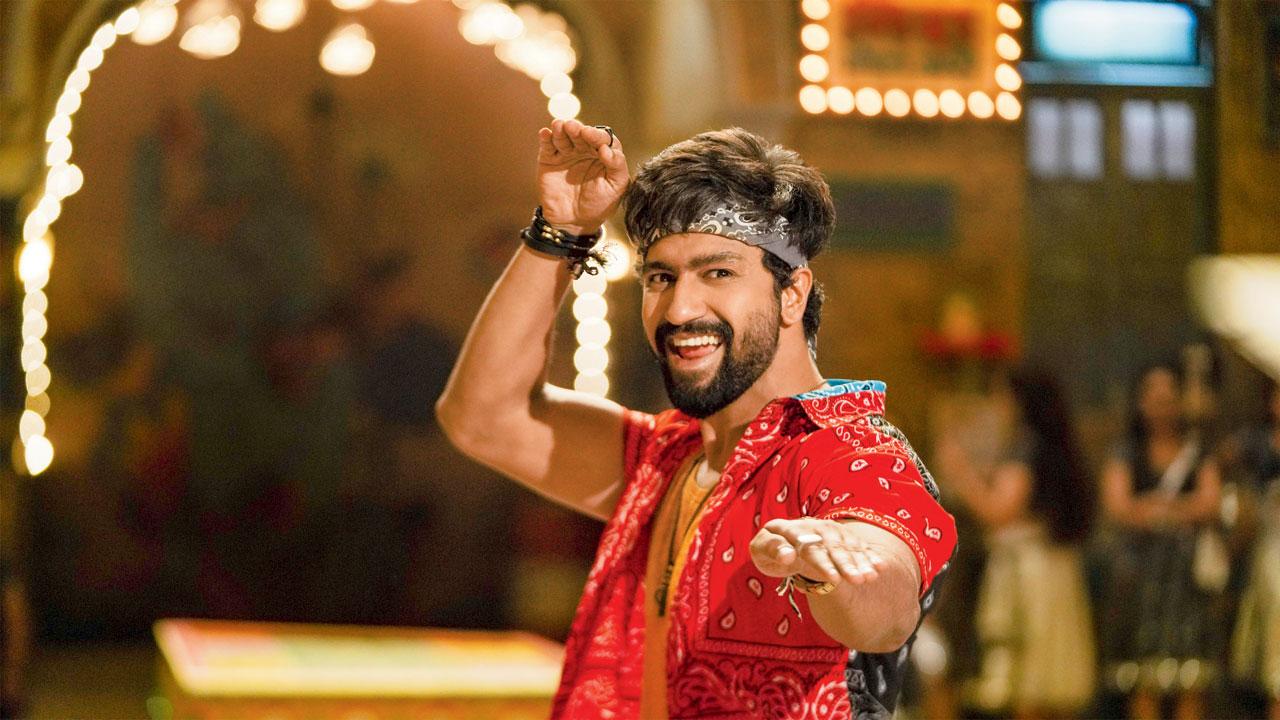
A decade after he featured in his first film, Kaushal stars in his first comedy; actor talks about navigating the genre
Hiren Kotwani (MID-DAY; December 5, 2022)
While Varun Dhawan, Sidharth Malhotra, Ayushmann Khurrana, and Vicky Kaushal have all kicked off their careers in Bollywood a decade ago, one crucial aspect separates Kaushal’s journey from that of the rest — unlike the trio, he was not the face of his debut film, Luv Shuv Tey Chicken Khurana, which was front-lined by Kunal Kapoor.
Evidently then, Kaushal’s journey to becoming one of the most sought-after actor’s of the industry even in the absence of a competitive head start, is noteworthy. “It feels surreal. I’m extremely grateful,” says the actor ahead of the release of his next, Govinda Naam Mera.
In this journey that was fraught with obstacles, he recalls his time spent auditioning for roles, questioning his chances of bagging “a film if I couldn’t even crack a small ad”? When offers came his way, he admits he wasn’t afforded the luxury of choice.
“When I got the role of young Omi [in my debut film], I was asked to join the shoot in two days. When Anurag sir [Kasyap] told me about a role in Bombay Velvet, I didn’t ask him any questions. If you want to make a career as an actor in Bollywood, [taking up roles without a second thought] could be a suicidal decision. But, I didn’t think that way,” says the actor, who grew to prominence following his act in Masaan (2015).
Govinda Naam Mera sits appropriately between a bunch of intense dramas like the previously released Uri: The Surgical Strike, and Sardar Udham, and the soon to release Sam Bahadur. “It balances things out,” he says, adding, “I felt the hunger to do something light-hearted. Even though [I wanted] a break from intense roles, when I was offered Govinda Naam Mera, I tried to decipher if the subject was one that would entertain me, if I was the viewer. [Only] if I enjoy it will I be able to think about ways to bring something new to the table.”
Shashank Khaitan’s directorial venture marks Kaushal’s first attempt at a fully-fledged comedy, a genre that he says actors “either nab, or just don’t”. “If the audience says an actor is trying too hard, that’s the worst feedback. Attempting the genre while carrying the pressure of making people laugh is [not appropriate]. So, comedy is indeed a serious business.”
Apart from Khaitan’s guidance, he sought the advice of co-actors Renuka Shahane, Sayaji Shinde, Amey Wagh, and Viraj Ghelani. “They came together to create the needed vibe. On set, we would be joking around, pulling each other’s leg. That energy translated to the screen.”
Top five biggest losers of all time; '83 is on number 1 position
8:44 AM

Box Office India Trade Network
There have been many disaster films in Hindi cinema since the Sohrab Modi film JHANSI KI RANI in 1953 which was the first film to lose a huge amount of money. The film only lost 30 lakh but at that time there were hardly any films made on a budget of 30 lakhs and it was a huge amount for that time.
There are two ways at looking at disasters - one is the amount of money they lose and then there are complete washout films which just tank but sometimes they do not lose the most money as the budgets are lower and many times there is decent recovery from non theatrical revenue against the budget.
These washouts would include films like RAM GOPAL VARMA KI AAG (2007), DRONA (2008), KHELEIN HUM JEE JAAN SEY (2010), ZANJEER (2013), BOMBAY VELVET (2015) MIRZYA (2015), FITOOR (2016), RANGOON (2017) among others. '83 does not come in this list as its not what you call a washout but more of a rejected film. The washout films are the ones where the public just does not care for these films and don't even give them a chance.
Below is a list of the top five losers in Hindi cinema and these are the films to have lost 50 crore or more but only one of these films is a disaster and a washout also and that is BOMBAY VELVET. The others are also disasters due to heavy losses but they are rejected films and not washouts. The number in brackets is the loss of the film. The washout result of BOMBAY VELVET can be seen by the footfalls against the other films. ZERO will remain with the highest footfalls of these films as its likely that '83 will not even reach the level of MOHENJO DARO.
1. '83 (80 cr)
Footfalls - 52 lakhs apprx (2 weeks)
2. Bombay Velvet (70 cr)
Footfalls - 22.24 lakhs
3. Zero (70 cr) (on valued SRK remuneration)
Footfalls - 68.74 lakhs
4. Mohenjo Daro (55 cr)
Footfalls - 60.17 lakhs
5. Jagga Jasoos (50 cr)
Footfalls - 49.74 lakhs
We are caterers of mediocrity-Rekha Bhardwaj
8:28 AM

Rekha Bharadwaj breaks down why the finesse in the independent music industry isn't arguably translating to Bollywood
Sonia Lulla (MID-DAY; February 18, 2019)
Ashe chronicles the goings-on in the Bollywood music industry, Rekha Bhardwaj sprinkles this conversation by drawing examples of artistes and films, spanning decades. Her fine observation skills and deep understanding of cinema trends are made evident, even though she isn't one to go to town when critiquing the industry. Set to serenade fans on an upcoming episode of MTV Unplugged, Bharadwaj talks to mid-day about the reason behind the increasing gap in the quality of music being churned out in and out of the film industry.
Edited excerpts from the interview:
There is a lot of talent in the independent music scene. Why do you think that quality arguably isn't translating to Bollywood music?
[Independent music] platforms still have a long way to go [before they can become popular]. Abroad, an artiste first releases an album, then the song is picked up for a film. But, songs are an integral part of our films, [and hence] we have incorporated film songs [on this platform too], to meet the demand. We are, primarily, a melodramatic society, and caterers of mediocrity. A majority of our population appreciates mediocrity, and that's why it exists in films and fine arts. Also, since crores are invested in films, certain requirements must be met. Today, the film business is a three-day affair, governed by collections from Friday through Sunday. Few are [driven] by a creative pursuit. The independent music genre has come to the fore after 20 years. I struggled for 11 years to release the album that was to launch me. There's a lot that we have to do to put up the quality [of music] that we desire. Rural audience won't appreciate sophisticated music. They would prefer folk music, while the youngsters would, maybe, choose noisy tunes. Remixes too are horribly executed. They are derogatory to the original classic.
How do you suggest that can change?
Artistes should be more concerned about content, [which comprises] language, diction and musicality. The younger musicians must educate themselves about our musical heritage. Also, [a lot depends on] aesthetics. I've sung many item songs, and am proud of all of them, including Namak Ishq Ka, and Ghagra. When Gulzar sa'ab writes a naughty, raunchy song, you will still find it aesthetically appealing. Aesthetics must be maintained in the lyrics, composition and rendition.
Is the industry receptive of singers with unique voices, like your own?
After Namak Ishq Ka, a lot has changed. The younger lot of composers have a background in Western music, and are hence open to experimenting with all sort of voices. Jagga Jasoos, for instance, had so many new voices, and a beautiful range of singing. Also, pronunciation must be paid heed to. For example, in Bombay Velvet, all the songs were nice. Some singers, like Neeti Mohan, paid attention to diction. When singing in Urdu, one should be certain to pronounce correctly. Neeti was, while a few others weren't. When the diction is correct, 60 per cent of your job as a singer is done. Unfortunately, even lyricist don't care if their words are being pronounced right. We pay heed to accents and pronunciation when singing English numbers. But, Hindi songs are tackled with carelessness.
You've often spoken positively about the influence of Western music in India. Why is that so?
This is something that was even evident in old music. In fact, earlier, Catholic musicians from Goa formed a major part of our industry. If you listen to older melodies, like Madan Mohan's Khelo Na Mere Dil Se, you'll notice that the introductory music will not reveal the melody that comes in later. The music arrangers then were classically trained in Western music, and also understood Indian nuances. The young generation is talented since they are exposed to all genres. But, there's a thin line between good and bad influences.
How does a platform like MTV Unplugged benefit the industry?
When a song is composed for a film, it's based on situations. Here, we're not bound by demands. I've recreated Darling [for the show], and used a brass section. There are two originals too, one of them being an Amrita Pritam poem.
I thought Wake Up Sid was my Titanic-Ranbir Kapoor
8:17 AM

Ranbir Kapoor in an exclusive chat with mid-day talks about 'marrying' the director's mind; sending harsh messages to his dad Rishi via his mom, why there will never be a Raj Kapoor biopic, and more...
Mayank Shekhar (MID-DAY; July 6, 2018)
Actor Ranbir Kapoor visited the mid-day office to 'Sit with Hitlist', as it were, right before the release of Sanju. Which is just as well, since he usually meets the press only to promote his films, a rule of sorts, we hope, he would make exceptions to, once in a while. For, the last time mid-day was trying to get in touch with him was in late 2016, when we wanted to put him on the cover of a new product we were launching. We asked his best-friend, filmmaker Ayan Mukerji, to put in a word, we exchanged text messages with Kapoor for a couple of days; until, he totally disappeared! Only fair then that we start this conversation with:
You obviously don't like being interviewed, now, do you?
No, I don't. Maybe it is because I am an introvert. And when I don't have a movie to talk about, I really feel naked to be asked [questions about myself], because I find it hard to lie about certain things.
Which is true. There should be a serious meme online with, 'Ranbir honestly says'. You've spoken about your parents' marital problems, developing a drinking problem, because you were chilling at home, alone. In the early years, you've spoken about having been a stoner once, and then your dad's lawyer called to warn that you could go to jail for saying that. Are you more careful now?
No, I don't want to be careful, I prefer to be honest. It's always nice when someone talks to you for the hard work you've put in, or the fact that someone just recognises your work. When I started my career, there was a lot of spotlight on my personal life — not about my parents, but about my partner. So I got scared, and it made me cautious. And I don't know how to lie, or manipulate a situation. If somebody wants to know about my life, and it kind of changes something in their life, inspires them, or helps them learn from my mistakes, then of course, I wouldn't mind talking.
We met last year before the release of Jagga Jasoos, and then, of course, you were gone after. What did you make of the reactions to that film?
I was disappointed for various reasons. I was collaborating with a director like Anurag Basu who had worked his a** off for three years. Katrina [Kaif] and I did other projects, but he was just on this. In our heads, it is usually hard to accept that our film wasn't very good. When the audience rejects it, you feel that maybe they didn't get it, or the film was way ahead of its time. But that's not true. A good film is a good film. Nothing else matters. It was sad that the film didn't do well. But thankfully, as actors, we have other projects that we've already surrendered ourselves to; we're on a different journey, which helps. Also, I'm a detached person by nature, which applies to the final verdict of a film as well.
You had earlier done Barfi (2012) with Basu; apparently you didn't have any idea what was going on in that film as well, and then everyone loved it. You had similar thoughts about Jagga; that it could have gone either way?
I think so. Barfi was made in such a way that we — including Priyanka [Chopra], Ileana [D'Cruz] — had no clue what was going on. We would come on set, and Dada [Basu] would ask us, "Aaj kya mann hai karne ka? Chalo aaj tum teen pani-puri khaane jao." And so we would improvise on that scene. We didn't have a script. There was a story. There was a heart, and character synopsis. When we finally saw the film the three of us were like, "Wow, this is something great." But we didn't feel that while making the film. So we thought, chalo, if we could pull that off, it might just work with Jagga as well. Both films were made in the same way, just that he spent a lot of time on Jagga, as it was a musical, father-son story, my character stammers, was a detective…There was too much going on. I think there were some genius parts. But on the whole, it didn't really come together.

Your dad totally bajaoed the poor director in the press after the film. Poor guy must have felt terrible, no?
Of course, I felt really bad for Dada. And he said something about Pritam da [music composer] as well. I only have empathy for them. But, to be honest, I have never looked my father in the eye. I always look down and speak to him. And only say, "Yes!" So, it was very hard for me to confront him on these things. But I always pass on a harsh message through my mom. What do I do, I can't control him.
You seemed to be in a happy space before Jagga's release though, because you said you were working with Rajkumar Hirani on Sanju.
When you work with a successful director, you already have that cushion. It's like somebody has your back. Because even when Sanju's promo and posters came out, the amount of love we received was because of Rajkumar Hirani and Sanjay Dutt's fan-following first.
And certainly yours, too.
Of course, but I haven't received such response to any of my earlier films. When I was constantly hitting failure, it was not in my control either. For me, Bombay Velvet (2015), Jagga Jasoos (2017), Tamasha (2015) were entertaining films. That's why I was part of them. They were my choices. So you need to take a step back, and ask yourself what's going wrong. That answer requires patience. In my case, people in the industry said, "Commercial picture karo. Body banao." It confuses you. But you need to take in everything: Suno sabki. Karo apni. I am feeling better now.
Correct me if I am wrong: Your dad Rishi Kapoor had taken you to Hirani after Lage Raho Munnabhai (2006) and requested him to work with you. You were also considered for 3 Idiots (2009), and there were talks about PK (2014) as well, in which you made a cameo. Clearly, Aamir Khan stole those parts, right?
Not at all. Let's just put it this way, I didn't deserve to be in those films, given the time and place I was in my life. Post Lage Raho Munnabhai, my father saw Raju sir's mother, fell flat on her feet, and told her, "Your son is a genius, and I hope he works with my son at some point." Because my father is like that. When he likes something, he just overdoes it!

You spent an entire year on Sanju, even while you weren't shooting through it all, simply hanging around in Raju's office, observing the process; in the same way that you spent 45 days in A R Rahman's studio during Rockstar (2011). Is that your method?
Yes, it is. Before I start a film, one of the things I try to do is completely marry the director's mind. As an actor, I am just channelling what he has written. The other thing is to understand the material. A role like Sanju doesn't come often in an actor's life. So, I understood that this is the film that I need to work my a** off for. Also, it's very rare that an actor feels so inspired towards a film. Post-Rockstar, Sanju was that film for me.
It's also a character you've seen all your life. He's been your neighbour at Pali Hill. Forget the irony of it all, just as a tabloid story of 70 years: Nargis and Raj Kapoor were the nation's top on-screen couple, even creative partners. And then, generations later, Raj Kapoor's grandson plays Nargis's son on screen. It is kinda crazy, right?
It is. But Sanju sir would always tease me when I used to work out in his gym during Barfi, "Yeh kya movie kar raha hai, Barfi. Iske baad kya karega? Laddoo. Phir, peda? Body bana. Be a man. Hero ban." But he has a lot of affection for me. He would always say, "If there is a film made on me, then I would like you to do it!"
He actually offered you the role...
He did. This was couple of years before Raju sir had thought about it. When the offer actually came to me, I wasn't really excited. I was like, "I can't do it. My personality is so different. He is larger than life, macho, alpha-male. And how can you make a biopic on an actor, who is still so relevant and working? How will I convince people?" But once I read the script, my perception completely changed.
Wasn't (late) Yash Chopra once supposed to make a biopic on Raj Kapoor and Nargis Dutt's life?
Yes, there were certain talks. But, I guess, when you are making an actor's biopic, it has to open certain classified files, and reveal the human side, the flaws and mistakes. You can't highlight only the good side of a person. I don't think my family would allow such a biopic on my grandfather to be made. But, yes, there was interest that Yash ji has shown in making it.
In the same way that Kishore Kumar's family didn't allow you to make a biopic on him?
Yes. In fact, a lot of people called us during the making of Sanju to find out if there was a mention of them in the movie! Raju sir had to come clean on those accounts most of the times. You can't mention someone, and just stop your film! We had to fictionalise certain things, or change some names.

Then there's your body-language in Sanju, which straddles a thin line between performance, and mimicry, that so many people love to do of superstars. In fact, that may well be a definition of old-world super-stardom —when the public starts mimicking your walk, talk, voice, for fun. Have you found someone who mimics you well?
[Mimicry artiste] Sanket [Bhosale, who does a drunk Sanjay Dutt really well, and who I had met while prepping for the part] has done me as well, and it's pretty good. But as the years have passed in Indian cinema, a lot of stylised acting has diminished. It has become more natural and spontaneous. It's hard to mimic spontaneity, and this holds true with all the actors in my generation. Everyone seems quite relatable in that sense. But I think the way someone talks, or dances, you can mimic. I guess Sanket has done a good job with me.
What's the first mannerism you notice about yourself, watching someone mimic you?
When someone mimics you, that means you are successful, and that you are doing something right. But the first reaction watching it is: That doesn't sound like me. The second reaction is always: Wow. It's pretty cool that someone is relating to me. I have tried to mimic Amitabh Bachchan from Agneepath (1990), Hrithik Roshan in Koi Mil Gaya (2003), Shah Rukh Khan in Dilwale Dulhaniya Le Jayenge (1995), Salman Khan in Hum Aapke Hai Koun (1994), Aamir Khan in Rangeela (1995)…. I never thought someone would mimic me.
And were you good at it?
No, I suck at it. I don't have the talent to modulate my voice, or study each mannerism, and swing it back. In Tamasha, I had to do Dev Anand's mimicry. For that, I actually took classes. But it still seems caricaturish.
The other thing about stardom is when one is pitted against the other. The Khans, for instance, have been exclusive 'rivals' for almost 30 years now; feeding off each other, as if there's no chance anyone else can enter this zone. In your generation, the big story is Ranbir Kapoor vs Ranveer Singh; correct?
It will be pompous for me to say that it is the thing.
Will it be pompous to compare yourself with Ranveer Singh?
To anybody. But yes, I have a great opponent if I can say so [myself]. When I see his [Ranveer's] films, I get inspired. He is quite magical on screen. And I think I'll help him do better. And he will help me do better. There are times when his movies really set cash registers ringing. I would want to beat that. And it's not only the two of us. There is Varun [Dhawan], Tiger [Shroff], Sushant [Singh Rajput]. When I started out, there were only two or three. Now, there are 15. But I am really excited about this media competition.
Why media competition? It's a genuine numbers' thing, isn't it?
I think it's exaggerated by the media. I don't sit at home thinking, "Achcha, Ranveer ne aisa kiya, toh mujhe bhi karna padega!" But this media-created competition will be exciting.
Also the two of you have followed a cliché of show business. For instance, everyone refused Zanjeer (1973), and Bachchan was born. Everyone, or at least Aamir refused Darr (1993), that pretty much made SRK. And you refused Band Baaja Baaraat (2010), then there is Ranveer Singh!
I started out being very choosy about the films I was doing. And my dad never understood this side of an actor, where he does one film at a time. He comes from a school of thought where you work all the time: three-four releases a year. And then he said, "You have to understand that for every film you say no to, you're creating another actor, who's going to get better than you." But that's destiny. I can't do every film. And, I don't have any regrets about the fact that I didn't do a particular film, and so, some other actor came up!
Speaking of new talents, one of the films you move on to is with Luv Ranjan, who you called up right after watching his low-budget debut, Pyaar Ka Punchnama (2011). Do you do that very often?
It's the only time. Of course, when I like a film, I always congratulate. It's important for the fraternity to celebrate others' film-successes —whether it's a performance, or the director's work. But with Luv, I saw Pyaar Ka Punchnama on a flight to London. Soon as I landed, I messaged him, "Hey, I really enjoyed your film. This is Ranbir, and I would love to collaborate with you on a film." We left it at that. Over the years, we spoke about various subjects. In passing, he also narrated the subject of Sonu Ke Titu Ki Sweety.
Did he offer that to you?
Not that he directly offered it to me, but we were just talking about films. And, finally he narrated this one I absolutely liked — a no-holds-barred, ba**sy entertainer, if I may say so. It's not the kind of film that Luv has made.
And Shamshera is the next one, which seems like a macho/dacoit film, the sort of image that has propelled Bollywood's major stars for front-benchers —Bachchan, Salman, or Sanjay Dutt, if you may. Did you consciously choose not to be that macho hero?
To be honest, I can't be that macho hero. I don't have that personality. Salman Khan, Ajay Devgn or Akshay Kumar bring macho-ness to any part. If they did Jagga Jasoos, they'd make Jagga Jasoos seem macho. I like the story [of Shamshera], set in 1800s, about a daku tribe, fighting for their rights, and it could add to my macho-ness on screen, given the intensity. It's got an aspirational vibe to it. Sanjay Dutt plays the antagonist. I'm excited about the part. It's very new.
That will be surreal again: Ranbir Kapoor with Sanjay Dutt?
I told the director that when he [Dutt] doesn't come on set, I could do his part as well —quickly get my prosthetic done, do all the over-the-shoulder shots. But I'm very happy about the two films I'm about to explore.
You've spoken about how you were tired of being that same guy film after film…
Yes, the coming-of-age films. I'm done with the Harry Potter phase in my life. It's time to take the next step.
But you've also spoken about how, growing up in a sheltered environment, yet playing characters so different from each other, you're always trying to explore something deeper within. That you almost force a conflict in your life, which helps you broaden your emotional bank. That's like your character from Rockstar, no?
No. There's a dialogue in Tamasha where my father says, "Jinki life mein conflict nahi hota, and they wish it upon themselves, ek din itni buri tarah woh conflict aayega, that you'll wish that you'd never wished for it." I like to play parts that emotionally challenge me, where you can really surrender. Roles that make you feel empty from inside, because that makes you feel alive. It's boring to superficially go on set every day, say some dialogue, romance an actress, sing a song. That's fun too. It's part of the deal, and you need to do that. But, I've always leaned towards the tragic, intense side. If you consider Rockstar and Yeh Jawaani Hai Deewani: Rockstar was a 100 times harder part, Yeh Jawaani was easy — coming on set, with positive energy, having fun with a great ensemble cast. It was a party. I got a lot of respect for Rockstar, within the industry, and the media. But the love I get for Yeh Jawaani is something that I'll never get for Rockstar. Today, if you saw [before this interview]...
Yes, that little fan-girl was crying uncontrollably when she met you.
She had seen Yeh Jawaani 250 times. Those are the films people like watching. They like watching entertainers — films that don't take themselves too seriously. We're not saving people's lives. We're entertainers, and that's what we should stick to doing.
I guess in a role like Yeh Jawaani, you have to channel your actual personality a lot more, in the same that way Shah Rukh and Salman do?
Salman Khan and Shah Rukh Khan are very easygoing with who they are. It's like wearing a T-shirt. You don't put on, or play any character. People love them for who they are first. That's hard for me to do. It's easier me to have crutches of a character, like in Barfi, Wake Up Sid (2009), or Rocket Singh (2009). You're channelling something emotionally, through something else. But to be yourself is very hard. Character-driven films are more exciting because you feel, "Okay, I can be this, and be that." But, to some extent, just to continue being you, is another challenge, which I need to get more comfortable with. I guess you have to believe in yourself. Yeh Jawaani was more about Ayan's belief in me.

Speaking of your personality, what I find really odd is that, at one level, you call yourself an introvert, and that you like to spend most of your time alone, not that you're lonely. But, since the age of 13, you've always been in a relationship. That means you also seek companionship all the time. Last year, you said, was when you were single for long, for the first time. I'm assuming that's changed?
See the thing is...
Has that changed?
There are so many questions here. I don't want to cause any misunderstanding, which I'll end up clearing for the next six years of my life! To find love, relationship, companionship repeatedly is very rare. When you isolate yourself so much from the world, you tend to find that one person you can devote, or direct every feeling and emotion towards. Because it comforts and shelters you. That one person makes your life easy. And sometimes it comes in the form of friendship. Most of the times, yes, it comes in the form of a partner.
You didn't answer my question...
That's my answer.
Are you single right now or not?
Erm... I'm not single. I'll never be single.
Are you dating Alia Bhatt?
Main iss sawal ka jawab dene ke liye Raazi nahi hoon!
That was a great answer! So many films of yours have have had so much gyan on relationships, is there one where the world-view is closest to your own?
Well, I do believe characters do extra-ordinary things only when they are in love. No selfish character will do anything extraordinary. And when you're young, starting out, mostly love stories are written for you. It's a great genre. What you stand for, believe about love, politics, people, society, kind of reflects in your films. Because I'm not really doing anything apart from my movies.
You obviously don't make any political statements.
I don't make any political statements because I don't follow politics. Politics makes no difference in my life. I'm not at the brunt of anything. I live a luxurious life. I don't have water, or housing problems. I don't have any issues, so who am I to comment on politics?
Your next film is Brahmastra, in which you play a superhero. You're a natural actor; will you ape a superhero? (Mohar Basu)
Brahmastra is not a superhero film. You can call it a supernatural romantic fairytale. And Ayan [Mukerji] will never write a character that has no truth in it. I think it's too early for me to talk about what Brahmastra is about, but Ayan's going to spend the next 10 years of his life on this trilogy. That's all he wants to do. So I'm really excited. We need your excitement also.
So that's the next 10 years of your life too?
Yes. What Ayan's doing is allowing me to do two films between every [edition of] Brahmastra. So I make this film every one-and-a-half years.
Is it overconfidence to plan a franchise even before the first one is a hit?
But he's written it in a format of three films. So when Brahmastra part 1 ends, you know it's not the end. There's so much more to it.
Are there any personal tricks that you apply on every film as an actor? (Veeral Pathak)
Apart from marrying the director's mind, and really understanding the text, I do a lot of silly things — like, it may sound silly to you that I wear one perfume for every character [I play]. I have a very strong sense of smell, so when I smell that fragrance, it kind of connects me to that character.
What were you wearing for Sanju?
I went to his [Dutt's] house and stole his perfume! It's this really strong, macho perfume that I would never wear otherwise. Every AD on the set was like, "What are you wearing?" But it helped me stay in character! Then, I'm very bad at remembering lines. When I have long dialogues, I stress over not how I'm looking, or how I'll perform, but that I don't get the dialogues wrong. That's very embarrassing for an actor. And that's happened only over the past two-three years. I used to be pretty good at this before. I'm very scared. Can't be old age, I'm only 35. What's wrong? Too much coffee? Is it bad habits?
Stoner?
That was another lifetime.
Drinking problems?
Another lifetime! Like I said, every film comes with a new process. Because Sanju was a biopic, dealing with a real-life character, you had to go deeper. During Ae Dil Hai Mushkil (2016), I asked Karan Johar what my process should be, he said, "Just shut up and come on set with a big smile. That's what you are!"
So much of it could also come naturally to you, being the fourth-generation actor. Speaking of which, you are named after your grandfather; he was, in fact, 'Ranbir Raj Kapoor'?
That's because of this weird theory that all of our names should begin with R. I don't know why. They ran out of names eventually, I guess. My grandfather used to sign Ranbir Raj Kapoor, but never used that name. So Shammi Kapoor suggested I be named Ranbir!
Is there any particular story about Raj Kapoor that always get shared at family gatherings?
Lots of them. We speak about him as anyone would speak about their grandfather. For instance, the fact that post 8.30 pm, no one would want to cross paths with him — not even his wife or kids — because he would have three drinks, and then anyone who came around would get a lecture of their life. People would crawl by his door to avoid his gaze! I was six years old when he passed away, and I am told he was very fond of me. So whenever my mother would shout at me, he would call and be very upset with her.
I recently read a biography of Shammi Kapoor, and figured his life was as good as a movie. He was something else!
Sanjay Dutt actually used to tell me that he used to hear Shammi Kapoor stories the way we hear Dutt's stories! I really can't speak about those stories on this platform, because they're absolutely crazy!
What really connects you and Shammi Kapoor is that you are the only two Kapoors to have finished class 10, without having failed it once! True?
But I have done Standard 12 also! (Laughs) I remember I was assisting Dad on Aa Ab Laut Chalein, when my Class 10 results came out. We were in America. And I had secured 54 per cent. When my dadi [grandmother] saw it, she thought hamare ghar mein Einstein paida hua hai! She threw a party in America, gave me a lot of dollars to shop. I felt like a scholar in my family!
On the same (funny) note, did you see the recent Hindi version of Deadpool 2? There's a line there by Ranveer that thoroughly lampoons Bombay Velvet. It's not like it was the worst movie ever, and you take a lot of pot-shots at the film too.
No I didn't know about this [in Deadpool 2]. Well, the expectations were way too high with that film. There was this massive star I was being made out to be, a certain arrogance coming from the filmmakers—massive budget, and its subsequent earnings. That's really the thing. I take potshots at every film I do. I tasted such a big disaster with my very first film [Saawariya], being the butt of jokes at all award functions.
Literally.
Literally, yes! I was born in the industry, and understand the value of success, failure. You should own it, it's yours. When you are making a film, everybody is on a journey. You've spent 80-85 days, it seems the truth. It's only when you see the film, you say...
Was there any such point with Bombay Velvet, for instance?
When Karan [Johar] and I saw the film, a year before its release, we sat in the car and the first thing I asked was, "I know we are screwed, but how screwed are we?" Karan said, "Too screwed!"
So you knew?
Even if you know, you live on hope that maybe audiences will like it. I was shooting Wake Up Sid and Ajab Prem Ki Ghazab Kahani simultaneously. Ayan's Wake Up Sid had a cool, young vibe. Ajab was being directed by Rajkumar Santoshi, who comes from a certain generation. All his ADs were older than him. I thought Wake Up was my 'Titanic'. It released in August, made Rs 40 crore, got me credibility. And then I was wary of Ajab, thinking my career would be over after that. Katrina always told me, "You're stupid; it's going to be a success. You should stand by it." When it released, it did double the numbers. That's when I realised that as a Bandra boy, who goes abroad to study, I don't know what India, or Indian cinema, is. This industry doesn't have a fixed formula.
From an audience perspective, what could have been most disappointing was your third film that same year: Rocket Singh!
I get so much love for that movie. But where were these people when the film released? I remember Aditya Chopra said that I should not promote the film, because I had already promoted two films that year; found commercial, and critical success. I thought Rocket Singh was my 'Munnabhai'. But there was something wrong with it. It didn't speak to people the way it should have. If it was a good movie, it would have done well.
Transcribed by Mohar Basu, Sonil Dedhia and Sonia Lulla

Raazi success party was a rocking affair; here are the details
8:07 AM

All the fun wisecracks from a success party with a difference
Sanyukta Iyer (MUMBAI MIRROR; May 18, 2018)
Karan Johar is on a roll, equating himself to popular TV and event host Maniesh Paul, joking that he’s shouldering the responsibility of introducing the Raazi team. The espionage thriller, a Junglee Picture and Dharma Productions co-production, which opened last Friday has already knocked off a half century at the box-office and that’s reason enough for a party. The bash is being hosted at a sea-facing suburban five-star on Wednesday.
 “A film that wins love and respect, and also earns money, is truly a
rarity. But we will try very hard to be humble tonight,” KJo quips,
welcoming birthday boy Vicky Kaushal with a passing reference to his
2015 acting stint. “Vicky was with me for a career-defining piece of
work — Bombay Velvet. Apparently we were in the same scene but we never
met. A lot of that happened on that film… I didn’t meet myself either.”
As everyone guffaws, Vicky, who plays Iqbal, a Pakistani Major in Raazi, admits that director Meghna has made his 30th birthday unforgettable by introducing him to her father Gulzar. The two hug warmly and the veteran lyricist insists it’s time the industry let the newer generation lead the way, adding that there is nothing bigger than standing in the midst of his daughter’s audience. The comment makes Meghna teary-eyed and the emotional director cries for an hour of the gettogether, revealing that she missed composer Ehsaan Noorani, who scored the music with Shankar Mahadevan and Loy Mendosa, and her co-writer Bhavani Iyer. Eventually, her papa tells her it’s time to smile now!
 Meanwhile, Karan recalls his “first born child”, Alia Bhatt, who plays
the spy Sehmat, walking into his office as a 17-year-old. “She’s done
eight feature films for us in the last five-and-a-half years, and seven
of them have been successful. We’ve had one blemish on our report card,
but so what, the journey has still been Shaandaar!” he exclaims with a
straight face and Soni Razdan, seated beside her daughter, is in splits.
Her daddy, Mahesh Bhatt is not around, but Karan is happy to stand in
for him. “Proud mumma and papa at their daughter’s elocution
competition,” he quips.
The filmmaker’s revelation about how supporting actors Jaideep Ahlawat, Rajit Kapoor, Arif Zakaria and Ashwat Bhatt, among others landed up in the story, are cut short with Meghna pointing out that it’s still just the first week and his spoilers can ruin the suspense. Priti Shahani is keen to collaborate with co-producer KJo and his team again and he’s quick to resort, “Watch this space for more,” hinting at a possible reunion between the duo in the future.
Meghna thanks her producers for their rock solid support and shares that Karan, who is also a director, was often rolling over from her side to the producers’ team. “You never know who I am in bed with,” Karan chuckles. And well, it’s good night.
Karan Johar is on a roll, equating himself to popular TV and event host Maniesh Paul, joking that he’s shouldering the responsibility of introducing the Raazi team. The espionage thriller, a Junglee Picture and Dharma Productions co-production, which opened last Friday has already knocked off a half century at the box-office and that’s reason enough for a party. The bash is being hosted at a sea-facing suburban five-star on Wednesday.
“A film that wins love and respect, and also earns money, is truly a
rarity. But we will try very hard to be humble tonight,” KJo quips,
welcoming birthday boy Vicky Kaushal with a passing reference to his
2015 acting stint. “Vicky was with me for a career-defining piece of
work — Bombay Velvet. Apparently we were in the same scene but we never
met. A lot of that happened on that film… I didn’t meet myself either.”As everyone guffaws, Vicky, who plays Iqbal, a Pakistani Major in Raazi, admits that director Meghna has made his 30th birthday unforgettable by introducing him to her father Gulzar. The two hug warmly and the veteran lyricist insists it’s time the industry let the newer generation lead the way, adding that there is nothing bigger than standing in the midst of his daughter’s audience. The comment makes Meghna teary-eyed and the emotional director cries for an hour of the gettogether, revealing that she missed composer Ehsaan Noorani, who scored the music with Shankar Mahadevan and Loy Mendosa, and her co-writer Bhavani Iyer. Eventually, her papa tells her it’s time to smile now!
Meanwhile, Karan recalls his “first born child”, Alia Bhatt, who plays
the spy Sehmat, walking into his office as a 17-year-old. “She’s done
eight feature films for us in the last five-and-a-half years, and seven
of them have been successful. We’ve had one blemish on our report card,
but so what, the journey has still been Shaandaar!” he exclaims with a
straight face and Soni Razdan, seated beside her daughter, is in splits.
Her daddy, Mahesh Bhatt is not around, but Karan is happy to stand in
for him. “Proud mumma and papa at their daughter’s elocution
competition,” he quips.The filmmaker’s revelation about how supporting actors Jaideep Ahlawat, Rajit Kapoor, Arif Zakaria and Ashwat Bhatt, among others landed up in the story, are cut short with Meghna pointing out that it’s still just the first week and his spoilers can ruin the suspense. Priti Shahani is keen to collaborate with co-producer KJo and his team again and he’s quick to resort, “Watch this space for more,” hinting at a possible reunion between the duo in the future.
Meghna thanks her producers for their rock solid support and shares that Karan, who is also a director, was often rolling over from her side to the producers’ team. “You never know who I am in bed with,” Karan chuckles. And well, it’s good night.
Nawazuddin Siddiqui makes a special appearance in a song in Mukkabaaz
8:00 AM

After his turn in Dev D’s ‘Emotional Atyachar’, actor makes another special appearance in filmmaker’s sports-drama
Avinash Lohana (MUMBAI MIRROR; December 14, 2017)
Anurag Kashyap’s upcoming sports drama, Mukkabaaz, which features Vineet Kumar Singh in the lead, has his ‘lucky charm’ Nawazuddin Siddiqui in a special appearance. The actor will be lip-synching to Sunil Jogi’s cult poem, “Mushkil Hai Apna Mel Priye”, which people in North India have grown up listening to. “It talks about class differences and when I met Sunil at an award function, I asked him if I could use his poem as it defines the love story in Mukkabaaz. We have upgraded it to the present times,” informs Anurag.
Quiz him on Nawaz’s reaction to his unusual request to fly down to Bareilly for a day and shoot this song for him, and Anurag says that his friend trusts him so much that he never questions him. “He flew in on the day of the shoot, filmed all night and left. He shows off a few moves but there’s no real dancing. Nawaz will do anything for me, I love him,” beams Anurag, pointing out that being from Budhana in UP, he’s the biggest representative of that part of India. “I used him in the Dev D song, “Emotional Atyachar” too. We take that further with this new song.”
Their association began with Shool in 1999, and was followed by Black Friday, Gangs Of Wasseypur to more recently Raman Raghav 2.0. “He was always a good actor but earlier he didn’t understand the medium so you had to explain things to him. Today, he has evolved but my equation with Nawaz, Radhika Apte and Rajeev Ravi remains the same,” asserts the filmmaker.
Mukkabaaz, presented by Eros International and co-produced by Aanand L Rai and Phantom Films, has been shot in total secrecy. Anurag says that he’s realised that too much attention can adversely affect a film. “Bombay Velvet was being talked about every day and see what happened. Now, I want to shoot all my films quietly,” avers Anurag who’s looking younger and fitter. “It’s not because I want to face the camera but because I was staying in a yoga house during Mukkabaaz and would do two hours of yoga every day, besides swimming and exercising. I lost weight while shooting the film and now it’s become a habit. I wish I had learnt all this when I was 30,” he signs off.

Bollywood's going through its roughest phase, here's how
8:19 AM

Joginder Tuteja (DNA; August 13, 2017)
There was a time till a couple of years ago when star power ensured that a substandard or a bad film worked at least to an extent at the box office. Not anymore! While bad films are failing, even good films are finding it difficult to find an audience. The new era of Bollywood audiences is fairly and squarely announcing that they are the king.
How it all started
When the Rs 100-crore phenomenon kick-started with Ghajini, hordes of films followed suit. Each Khan — Aamir, Shah Rukh, and Salman got into a race to deliver a century. Soon enough, Akshay Kumar, Ajay Devgn and Hrithik Roshan, too, had them to their names. The young brigade, Varun Dhawan, Ranveer Singh and Arjun Kapoor, entered the club and countless films joined in.
There were bad apples
Each biggie delivered by superstars was not quite worth the Rs 100-crore fortune. To some, it seemed like a fluke where films managed to score big. In fact, there were bad apples — films managing to register big numbers despite being panned by critics. So, on the one hand, there was quality cinema being missed and on the other, there was this slogan of ‘Bollywood Shining’.
Stardom ruled
One of the key reasons for this phenomenon to gain prominence was the star system ruling Bollywood. A Khan film had to take an opening. A non-Khan superstar (read Akshay, Ajay, Hrithik) was a reliable commodity. Bring in Deepika Padukone, Priyanka Chopra, or Katrina Kaif into the mix and a ‘deal’ was well in place to draw in audiences at least during the opening weekend. More films started seeing a Rs 50 crore plus weekend and content took a backseat. Stardom ruled!
The bubble had to burst
This was a bubble waiting to burst, but the industry wasn’t willing to see it with open eyes. The projects continued to be put together and an occasional Rs 200-crore or Rs 300-crore blockbuster made many believe that this phenomenon was there to stay. Many didn’t bother to check the abysmal failure rate that stood over 60 per cent at least. Producers and distributors lost money on these films. Still, for the 20 per cent odd films where both parties made money, champagne bottles were popped. No one was willing to wake up.
Audiences wised up
As corporate presentations were being put together for the big projects, audiences were wising up, too. They decided not to be enticed by just star power or a package deal. The early signs, what with Salman’s Jai Ho, Ranbir Kapoor’s Besharam and Bombay Velvet, Ajay’s Action Jackson, and SRK’s Fan being rejected became prominent with Ranveer’s Befikre, Hrithik Roshan’s Mohenjo Daro flopping. Unfortunately, many still didn’t understand these signals.
The unforgiving audience
One look at how audiences have given a thumbs down to star power is pretty much a testimony to how they’ve come up with a collective call of ‘enough is enough’. Salman returns after 10 Rs 100-crore biggies and delivers a major failure in Tubelight. SRK returns in his romantic avatar with Jab Harry Met Sejal and even that’s not welcomed. Ranbir’s Jagga Jasoos finds itself in the midst of widespread negativity. Tiger Shroff sees his lowest grosser ever in Munna Michael. Rangoon and Raabta emerge as disasters. Youngsters are not impressed with OK Jaanu and Meri Pyaari Bindu. Amitabh Bachchan suffered one of the biggest disasters with Sarkar 3. In a year that has seen close to 60 releases already, 14 odd turned out to be profitable at least for the producers, if not for the distributors as well.
Will there be a change?
Change is the name of the game, but one waits to see if that would happen quickly. The rest of the releases of 2017 can’t be altered with the content already being shot. Most of 2018 releases won’t see much of a change either since the script has been drafted and the shooting commenced. So, if a remarkable turnaround is expected, it would be in 2019, when some sort of sanity would have returned to the scene. Guess life would indeed have to come full circle for Bollywood by then.
Male actors are better valued than us in Hindi cinema-Anushka Sharma
7:56 AM

Mohar Basu (MID-DAY; July 25, 2017)
Anushka Sharma, one of Bollywood's most successful female actors, is not delusional about the power that she and her colleagues yield in the industry. She admits the scenario is skewed in favour of the boys.This means that male actors enjoy the privilege of receiving greater accolades and criticism than their female leads, depending on how the film fairs.
Her co-star from last year's hit, Ae Dil Hai Mushkil, and the not-so-lucky Bombay Velvet (2015), Ranbir Kapoor had in a recent interview shared the reactions he received after the latter bombed at the box office. "The hugs were longer than usual. It was as if they were offering condolences," he said. Sharma, who was cast opposite him in the Phantom Films production, didn't have it as tough. "What happened to him was unfair. He is one of the best actors we have today. But it's also because Bombay Velvet was Johnny's film more than Rosie's," she says of the characters the lead pair essayed. "I would have been held solely responsible if NH10 [Sharma's first film as producer and female lead] had flopped, not because I produced it, but because the film was riding on my shoulders. But, he continues to be targeted also because of other films he did [that didn't fare well]. I was relatively less affected because I had successful films before and after Bombay Velvet."
Sharma explains that the contribution and involvement of a male star in a film is way more than a female actor's. And it's years of social conditioning that's to blame. "Films led by female actors do not open to remarkable numbers. A lot of us are trying to change that with the kind of work we do," she adds. "Who said that the industry was fair? Talking of the gender divide won't make it go away. Male actors are better valued than us in Hindi cinema. As an actor, what I can do is choose roles that send out a message [of empowerment, both as actor and the character]. As producer, I am trying to foster a new value system that makes content king in the long run."
I’m not on Tinder. Wahan tak ki naubat aayee nahin abhi tak-Ranbir Kapoor
8:04 AM

Ranbir Kapoor on dad, dating, Dutt, and the idea behind his directorial debut
Mayank Shekhar (MID-DAY; July 16, 2017)
Ranbir Kapoor is a reluctant star. And we don’t mean it in the same way as many refer to Rahul Gandhi as a reluctant politician. A 24x7 actor, and in the case of Jagga Jasoos, a producer, Ranbir is very much out there — taking calls, doing interviews, on-camera, off-camera, through the evening, at Bandra’s Mehboob studio, where we meet. The reluctance has more to do with his laconic, reticent personality. He usually pauses during the interview, awaits the next question, rather than elaborately answering the previous one. That way, he reminds you more of Aamir Khan until, thankfully, Kiran Rao happened to him. And, as Ranbir admits it himself, he’s certainly nothing like Rishi Kapoor, his wildly exuberant father! Excerpt from the interview:
About a year ago, you’d said in an interview that you’re in a “pause or metamorphosis phase, somewhere between “what if” and “f*** it”. Still in the same state?
Well, no. At the time, I was also starting a new film, the (Sanjay) Dutt biopic, and I’m nearly completing it now. So I got to live a new person, and a new experience. I feel more alive now.
But what does “somewhere between ‘what if’ and ‘f*** it’” mean anyway?
I was a bit lost. I didn’t know how to understand and deal with failures. I didn’t know if the choices (I was making) were wrong. I was questioning my instincts. So you’re at that crossroad where you don’t know what’s happening, in terms of having control over your life. And I think that phase is really important — the confusion, turmoil, or to be stuck between ‘what if’ and ‘f*** it’. And it’s your own battle to fight. Some people come out of it sooner, some take time. Fortunately, the medium I’m in, films — which I love the most — changes me a lot, from phase-to-phase. Whether it’s the experience of (making) a film; or how inspired and excited I am (during the process). Dutt really gave me that.
You’d also mentioned that you were tired of seeing yourself on screen. Did this come from the fact that a lot of your films have followed very similar narratives: a lost boy, confused about everything, including love, finally comes of age. Was that choice in itself a coincidence?
I think that’s the phase I was in, earlier on. So those were the parts I was choosing. And those were the best parts being offered. Also, somewhere I was working with the same filmmakers — Imtiaz (Rockstar, Tamasha), Ayan (Wake Up Sid, Yeh Jawaani Hai Deewani), Karan (Ae Dil Hai Mushkil) — because they had stories to tell, that I wanted to be a part of. But yes, I have to change that. I can’t ‘come of age’ anymore! I can’t walk out of a marriage with tears in my eyes. I can’t pursue an ambition, be selfish, and have a girl make me realise what my true dreams are, so I can come back to her!
A year ago was also a time when three films of yours back-to-back had bombed, Besharam...
Bombay Velvet.
Also Roy. You were right on top of that poster. Now whether those movies were good/ bad is subjective. All that the film industry cares about is if you’re the star, then your poster must guarantee bums on seats in the first weekend.
To be honest, Besharam opened to Rs 21 crore on Day 1. So, we count that out. And even Roy, for whatever it’s worth, opened to Rs 11 crore. But yes, Bombay Velvet did not open well at all. And I do take blame for that. But as I said, I had no control over it. Bombay Velvet was a film I loved on paper; it was a film that I would stand by. But there is no formula. I don’t know what’s gonna work, or not.

Do you think this whole obsession with the star system is antithetical to huge risk-taking; has that taken us back over the years?
Not at all. I can’t follow somebody else’s career path. In my career, what’s always paid off have been the risks. When I’ve done something formulaic like Besharam, I’ve always fallen flat on my face. I just go by gut instinct, which was the same that made me sign on Rocket Singh, Wake Up Sid, Yeh Jawaani Hai Deewani, Rockstar, Rajneeti, and Barfi. And it was the same instinct that made me sign on Besharam and Anjaana Anjaani. So, this is the person I am. I am going to have lots of failures in my life; hopefully I’ll have some successes too. But I can’t really plan anything. I’m just spontaneously living my dream.
Is it then more about the craft, parts, performances, in terms of living the dream, as it were?
Not at all. You need bums on seats. I’m not here to prove to people that I’m a great actor, and that I only get great reviews, and awards. At the end (of the day), it’s about box-office collections — about how many people know you as a star, and come to see you in a movie. But I have a long way to go. I’m still struggling to find that rhythm. And I hope that I struggle for a long time. The day it gets a little easy, I might get contented.
Speaking of distinction between star and actor, you have attempted to bridge the two. For instance, your dad says you actually went back to acting school in the US simply to get the stammer right for Jagga Jasoos.
It’s my job as an actor to do my preparation. Eventually the audience has to connect with my character. And if my character stammers, I’d try to get it right. I can’t look foolish on screen. But, that’d be the same if I was a driver — I would have to know how to drive, both a manual and an automatic car, not a big deal. As for the star-actor issue, or trying to become a star while remaining an actor, I think you just have to become capable at your job. Everything else follows. If you’re honest, a good person, and your intentions are correct, you will become a star. You can’t really concentrate on ‘ki mein star kaise banoonga’, and begin to design things around it; I don’t think that works out well for anybody.
You went to Lee Strasberg school (in New York) and studied method acting. How much of that have you applied in your films?
Not much, you know. Having come back home after an under-grad course in direction (from the US), I was around 20, a star-kid, getting attention from a lot of directors willing to work with me. But I was too young then. My father asked me if I might want to go back to the US and do something for a year. I went to the Lee Strasberg Institute for nine months, to learn the ‘method’ (style/school of acting). It’s not something I thoroughly endorse myself. I think acting is not something you can learn. In a practical form, yes (it helps) that you’re working with other actors, doing scenes, and so you’re putting it (the craft) into a method. But the Strasberg or Stanislavsky ‘method’ ( acting) itself is not something I buy. As an actor, you have to develop your own method — if you’re intelligent, have had good exposure in life, and can surrender to a moment, or material. You don’t need a curriculum or syllabus.
Would you do drugs to play Sanjay Dutt, for instance?
(Laughs) It’s acting, and you have (an actual) sense of it, it always helps, and might seem truer. But I’m not really going to kill somebody to know what it feels like for a scene! I’m not that deep into the ‘method’. Playing Dutt, I’d want to see how I can get into the soul of the character. The look is easy…

The look, which leaked online, was frickin’ nuts!
Yeah! We worked really hard at it, doing four months of prosthetic (make-up) trials, lots of disappointments, thinking that it’s not going to work out. But you need to put in that time and effort. It’s a daunting task to play someone like Sanjay Dutt, who everybody knows anyway.
We met Dutt recently; he said he was astounded to see you during the shoot.
It was surreal for me. You’re acting like him, and the director calls cut, you look up, and suddenly there’s Sanjay Dutt actually sitting behind the monitor! But then I’d got so obsessed with him. Every time I’d see him, I’d start observing him like a hawk — the way he scratches his beard, twitches his eye, drinks water, hugs… It'd become a bit of a sickness for me. But that obsession is necessary for acting, or any form of art — that madness to get something right. You may still fall flat on your face, but it's necessary.
The other biopic you were working on was Kishore Kumar's, with Anurag Basu. We saw you in the Asian Paint ad recently, where you were clearly channeling Kishore, you even looked like him in it. True?
Yes, Prasoon Pandey had directed that ad, and his reference was Kishore Kumar. But I was really upset that the Kishore biopic didn't happen at the time. It's such an amazing story waiting to be told, and he's such a genius. He's also someone that many in today's generation have forgotten. At that time, we didn't get the permission from certain real-life people to use (the story). It was a bit of a bu***r. But I hope that film gets made, and I'd love to play Kishore Kumar.
As stars, inaccessible Kishore, or Dutt, for that matter, held much aura/mystique around them. The way you've played out your career so far — not on social media, never done TV — is there a conscious attempt to take stardom back to how it once used to be, there being distance between audience, work, and the person?
Well, I'm trying to. And yes, that is the intention. But it's really hard, because today, people want data. They want to consume things, and if they like you, they want info on you, and talk to you, since there is access.
I think that really comes in the way of your job, especially if you're an actor, because you're not yourself on screen. You're playing different parts. I may be wrong, and maybe the order of the day is to be on social network, market yourself, and have direct contact with the audience. It's my natural instinct to stay away from all of this. And I'm happy. My life is more peaceful, simpler. I've fewer things to pretend about.
Your dad, on the other hand, is a social media star, because he basically doesn't give a s***. We read your foreword for his autobiography, where you hope that you don't become a dad like him. Now that's being just as publicly honest as he is.
I can't be like my father. He's one of a kind. He's so honest, which is which is admirable. He’ll have no guilt or baggage in his life. He’ll always be a free man. We’re all, at some level, hypocrites. If there’s a political question at a press conference, I’ll have a hypocritical answer, or I’ll clam up, or wriggle out of it. But he won’t. And he regards himself as junta. So if he has an opinion on politics, sports, entertainment, ban on a certain food, he will give it. He feels he has that freedom of speech. Unfortunately he’s an actor, so that gets blown out of proportion, or gets taken too seriously. I don’t think I have that frankness, openness.
Are you more like your mother in that sense?
My personality is more like hers than my father’s. My sister (Riddhima) is more like my father.
Did you also grow up being closer to your mom?
I think that’s true (for kids) in most Indian families, where the father is away at work, and is a strict person. Growing up, we hardly saw our father. Back then, they used to do two shifts a day, six movies a year. We could only see him during holidays — in Ooty, Kashmir or Switzerland. He’d be shooting there, and we needed a holiday, so we’d go where he was.
You have spoken about how marital problems between your parents really affected you as a kid. Does that remain a sore point still?
Not at all. Besides the problems they went through, the greater thing is how they came out of it. I still see so much passion, love and respect between my parents. My father is still so possessive about her. My mother is still so inquisitive about how he’s doing. It’s been 38 years. So, no, I don’t think there’s a scar. I feel happy when I see them together. They’ve found a healthy companionship.
According to psychology, a possible fallout with parents having marital issues, and the kid being too close to the mother, is that as an adult that child turns into a “love avoidant” — as against a “ love junkie”, which mostly happens when you’ve been neglected by parents while growing up. Do you find yourself being either?
No, I think I’m different with different people, and different phases. Everybody wants attention, companionship, and to feel loved.
I’m talking in terms of relationships.
Relationships only. There are varying degrees of what you expect (from a person). As you grow older, you understand more about life, and how much you have to give (back) in a relationship. What I was like while dating a girl in school, and what I am now, and what I will be to my girlfriend later or my wife, will be very different. There is no way to measure it. But there is a different sense of evolvement so far as love in my life is concerned.
Do you go on dates with people outside films, or regular folk, as it were?
Unfortunately I don’t. I’m so obsessed with my films, my life at the movies, and working through the year, that I don’t really get to meet people, unless I travel, or it’s a chance encounter. Usually the only people you get to meet are from the (film) industry. And mostly you interact with actresses. I’m not saying that’s a bad thing. Film people are amazing, but I’d like to, you know, go on a date…
With an architect, or a doctor…
Yeah that’d be lovely. I think it’ll be hard for that person though, because of the kind of lives we live. There’ll be a lot of insecurities. But if you meet somebody who’s sorted, and if you’re yourself sorted…
How would you even meet them? Surely you're not Tinder, unless you have a fake account there as well, like the one on Instagram.
Unfortunately, or fortunately, I’m not on Tinder. Wahan tak ki naubat aayee nahin abhi tak!
You make it sound like it’s a bad thing to be on Tinder.
No, actually, I shouldn’t say that. It’s not a bad thing to be on Tinder. Tinder is doing good to people — it’s getting them together. But I’m happy falling in love with my own company. I’ve always been like that. I don’t mind traveling, having breakfast, lunch, dinner, alone. Sure, being with someone is amazing. There is nothing more beautiful than that. But being alone is something I also enjoy very much.
Would you consider yourself a loner, in that sense?
Not dramatically, but yeah. I’m constantly in a bit of a meditative state — I don’t have a thought (in my head), or stress, anxiety problems, or insecurities. So I’m at peace with myself.
You’ve spoken about how it bothers you that you’re considered a Casanova, when you’re really not.
It used to bother me before. But I’ve also understood that this is how show-business and media operate. The media made me a star even before I deserved it. So this is a small price to pay. I’ve dated actresses, so there’ll be some interest over where you had dinner, or went on a holiday. It comes with the territory. There was a time I used to get bitter about it. I was hating on them going, “How dare they?” But now it’s fine. As long as people don’t judge me for what’s written about.
Of course they will.
But I have no control over that. I can only hope my work over-rides all of it.
Have you ever had a personal publicist?
I never had a PR person because I really don’t know how to play the game. If I knew how to market myself, I definitely would. I don’t know how to be exciting; apart from the parts I play. Films give me an outlet to express myself, and become interesting. I like to become non-interesting after, so I can save the interesting parts for my movies. My personality is boring. I am an introvert.
At 31, you said by 25, you’d want to have a movie, as a director, out of the way; at 34, are you close to checking that box?
I always feel I’m close, but then I get lazy. I have a brilliant idea, which I’ve been sharing with my director friends, and others who’re close. I just don’t have the strong discipline, and gift, to write. It’s still definitely on my to-do list — a big ambition. Having said that, the more I work with good directors— (Anurag) Basu, (Raju) Hirani, Ayan (Mukerji) — I realize how far away I’m from it. I just don’t want to direct a film, since I’ve said it, or it’s cool. I want to be good at it. I want a story that I wish to express myself through. I think I have it…
So you do have the idea for your directorial debut.
Yes, I do. The genre is fantasy-romance. I don’t mean fantasy in the sense that it’d take the audience away to another time or place that they can’t connect with. I mean a love story with a fantasy quality — that’s idealistic, magical. I’ve always leaned towards the genre.

After swearing off acting post Bombay Velvet, Karan Johar to be seen in a pivotal role in IIFA film Crazy Hum?
7:46 AM
Mohar Basu (MID-DAY; July 15, 2017)
He may have provided the perfect launch pad to many aspiring actors, but Karan Johar did not get a dream debut as far as his acting career was concerned. KJo, who made his full-fledged acting debut in Bombay Velvet (2015), had joked after the film’s debacle, “Nobody has offered me any role till now. I think nobody liked me. I should at least get offers to refuse them. I can’t cast myself in my own films.”
Looks like acting is still on the cards for the talented filmmaker. KJo has been roped in for a pivotal role in the film, tentatively titled Crazy Hum, which puts the spotlight on the incidents that occur behind the stage at the International Indian Film Academy (IIFA) Awards. “It’s a full-fledged role and not a cameo. While many celebs are making cameos, KJo has a prominent part in the film. He will be seen playing himself,” informs a source.
Newbie director Chakri Toleti had approached the filmmaker a few months ago. “He was kicked about the idea the minute he heard it,” informs another source from NYC. Johar is currently in New York attending the events leading up to the big finale. He will also be hosting the awards ceremony with Saif Ali Khan. We reached out to producer Vashu Bhagnani and Johar, both of whom remained unavailable to comment.
Meanwhile, Sonakshi Sinha and Diljit Dosanjh have already begun shooting for Crazy Hum in the Big Apple.
Anurag Kashyap will move court for every film that Pahlaj Nihalani objects to
8:23 AM

Filmmaker Anurag Kashyap's strategy to deal with CBFC chief Pahlaj Nihalani is simple, he plans to move court for every film of his, which will be opposed by CBFC chairman Pahlaj Nihalani
Mohar Basu (MID-DAY; January 12, 2017)
Nawazuddin Siddiqui's upcoming film, 'Haraamkhor', which has been in the making for four years, was stuck at the censors for eight months before the Film Certification Appellate Tribunal finally passed it. This is the second time in the last few months that a movie backed by filmmaker Anurag Kashyap has hit a roadblock with the CBFC (Anurag moved to Bombay High Court against the CBFC at the time of 'Udta Punjab').
Recently, CBFC chairman Pahlaj Nihalani was criticised for retaining Ranveer Singh's butt-naked shot in 'Befikre'. Speaking to hitlist, Anurag says, "If anything is remotely associated with me, Pahlajji opens his pitara and brings out the special love he has for me. He can say whatever he wants. We know we will always have to move court for our films."
An exasperated Kashyap adds that he doesn't expect Nihalani to know the line between good and bad. "It's (censorship) a topic that I would rather not talk about, because it's pointless; it's like banging your head against a wall. For every film, we will have to move court. So, the process of getting our films cleared will take around six to eight months. I remember at the time of 'Bombay Velvet' (2015), Pahlajji had cut a simple intimate scene. And now you see him clearing much more than that in a film."
I don't believe that dhande me sab kuch chalta hai-Anushka Sharma
10:06 AM

Madhureeta Mukherjee (BOMBAY TIMES; October 27, 2016)
Cherry-picking, I call
it. Not making the choices most heroines make, working at her own pace.
And being confident (or lazy?) enough to say `No' to some big banners
because 'the role wasn't right'. For her, the length of the role doesn't
matter, how long it will be cherished does. Anushka Sharma comes with a
rare nonchalance that most acquire only towards the latter part of their
career. The biggest launch, the biggest banners and the megastars, and
yet, she didn't jump at all the 'cheese'. This cat has the patience and
determination to wait for the cream.As Karan Johar's Ae Dil Hai Mushkil
(ADHM) will probably prove all over again. More power to her.
Karan Johar revealed that you were the script police on the sets. True?
Yes, I would ask him a lot of questions, though I don't think it annoyed him. He would ask me to give my shot and not torture him (laughs). But we both knew that there was a reason for it. My character and the kind of relationship she shares with Ranbir (Kapoor)'s character needed a certain understanding, so we had to keep in mind that it doesn't get lost in the midst of everything else.
I heard that after pack-up, you would disappear and return to the set only the next day.
Honestly, I cannot handle too many things at one time. When I'm shooting, I can do just that. Now I'm beginning to accept that I can't multitask, some people can. I know Karan can do it. After shoot, I need to catch up on sleep. Everyone who works with me knows that the one thing I can't do without is my quota of sleep.
Yes, Ranbir and Karan said that they shopped more than Aishwarya (Rai Bachchan) and you...
Totally! Every day after pack-up, Karan and Ranbir would go shopping. On my way back from the gym, I would see them entering the hotel with lots of bags. Karan had a separate room for his wardrobe. Yes, he had a room just for his clothes to be laid out; it was like a walk-in closet.
In your movies, is there any character that you have connected with instantly?
I don't think I can become her (a character) completely. I can physically change my appearance, I can modulate my voice, work on my accent and appearance. I can think about what she is going through, and empathise with her. Like in ADHM, Alizeh is an extremely emotional person, who is very impractical about love and relationships, but I'm the opposite of that. I'm not a very emotional person, and by that, I mean I am not completely led by my emotions. Alizeh is somebody who will leave everything for love. She goes to London and lives there because of a heartbreak. I don't think I'm like that. I feel emotions, but I deal with it in a practical way. I wouldn't do something that would completely displace my life.
Was being directed by Karan Johar on your bucket list? He didn't quite approve of you when he saw you for the first time on the set of Rab Ne Bana Di Jodi (RNBDJ)...
It was definitely on my bucket list; in fact, I agreed to do the film instantly. I take at least one night to think over scripts. But with ADHM, I loved it instantly. When Karan called me to discuss the film, I wasn't really sure if he was calling me for his own film. This man didn't even want me in the industry in the first place (laughs), but it's really big of him to accept it on national television.
Ranbir said that the first time he met you, he stayed away because you were a Yash Chopra heroine. You scared him away, huh?
Ranbir has a habit of adding so much mirch-masala to stories. The real story is this. He was working out at the gym and I had come to work out, too. He was with his trainer and we both exchanged pleasantries. I finished my workout and he continued. It was as simple as that. We didn't speak at all, also because I'm very shy and awkward with new people. I take a while to start chatting with someone. I think the first time Ranbir and I really spoke was after Band Baaja Baaraat, when he started telling me what he thought of the film. Of course, today we are very good friends. There's a natural ease between us, as there is no sense of judgment. Sometimes, you just click with some people. I think the two of us have a natural chemistry, just like the film needed. Anurag (Kashyap) would always tell us that if I start rolling a camera behind-the-scenes between Ranbir and you, I can make another film.
Did the failure of Bombay Velvet affect you deeply?
I think failure makes you more appreciative of your success and whatever you have achieved. Failure does not let you take things for granted. For me, it happened right after my first film. With the scale of a film like RNBDJ, I could have been at a different level right after its release. It didn't happen that way. It wasn't overnight stardom. After RNBDJ, I wasn't seen on magazine covers right away. So it was disappointing and I faced it very early in my career.In fact, for six months, I didn't even have a film. I knew I was doing a film with the banner that launched me, but because of some confusion, people thought I was only supposed to do projects with that banner. And then, Band Baaja Baaraat happened and it was appreciated. The film taught me that if the script is good and I am good in the film, it can do so much more for me. Those phases in my life prepped me for the rest of my career. Yes, I was disappointed that Bombay Velvet didn't work, and I felt bad for the producers who lost money, as it affects the industry at large. But carrying the baggage of a failed film is a mistake and I don't do that.
In all the commercial films that you have done, you've always shared equal ground with the hero. Has that been a conscious decision?
I realised that's my USP. Band Baaja Baaraat did what it did to me because of my performance in the film. For me, what I'm doing in a film is really important; I won't do a film because I want to be part of a big banner. I'm not saying it's wrong, whoever wants to do it should do it. It just doesn't satisfy me as a person. I feel fortunate that I'm working in this industry, so I want to make the most of it by cautiously choosing films that I want to be a part of. I've never been lured by what is working and what's the trend. I've never paid attention to what everybody is thinking or expecting of me. In a way, I've always been anti-establishment. If someone is doing something a certain way, I want to do just the opposite. I think taking risks pays off in the long run.
Are you fiercely ambitious?
I'm ambitious, but I have principles when it comes to my ambition. I don't believe that dhande me sab kuch chalta hai. I'm not that type. I'm not someone who thinks that you can be anything, do anything and say any thing because you need to get your work done. I have certain principles and a value system which I cannot compromise on. I don't think that to look better myself, I can run down others.
I cannot be so competitive that I harm someone else in the process. I often appear to be really chilled out, but inside me, something is constantly working. It's harder to work the way I do. I believe that I need to do good work and keep getting better at it. The trappings of being a star are very scary, and you are expected to do certain things to be a star. You are also expected to behave like a star, and for me, these things are really difficult and exhausting.
Has stardom changed you? I mean, you come from a simple, non-filmi family. The transition must have been dramatic.
I don't think it has changed me, I feel that I've improved as a person. For a creative person, it's most important to have a perspective, and the only way to have perspective is by keeping things in check. I always spend time introspecting and making sure that I'm doing something with myself, rather than just doing things.
I have a life beyond movies, and once I'm done shooting, I don't just hang out. I go back and watch TV shows and enjoy my down-time. I'm mostly by myself. I'm not someone who likes to go out too much.
When you started out, there was this perception of you being snobbish, even aloof to an extent. Now, that perception has changed.
I was never snooty; in fact, I'm very respectful of people. Again, people expect you to be a certain way. But like I said earlier, I'm never going to do something which doesn't come naturally to me. For instance, I won't put on an act of raising my pitch or tone to look excited on meeting someone. I have never felt the need to prove my respect for anyone just because I want them to like me. I knew it would take longer for people to understand me, which is what has happened. Now, they've understood that this is who I am.

Subscribe to:
Posts (Atom)