Showing posts with label Bhumika. Show all posts
Showing posts with label Bhumika. Show all posts
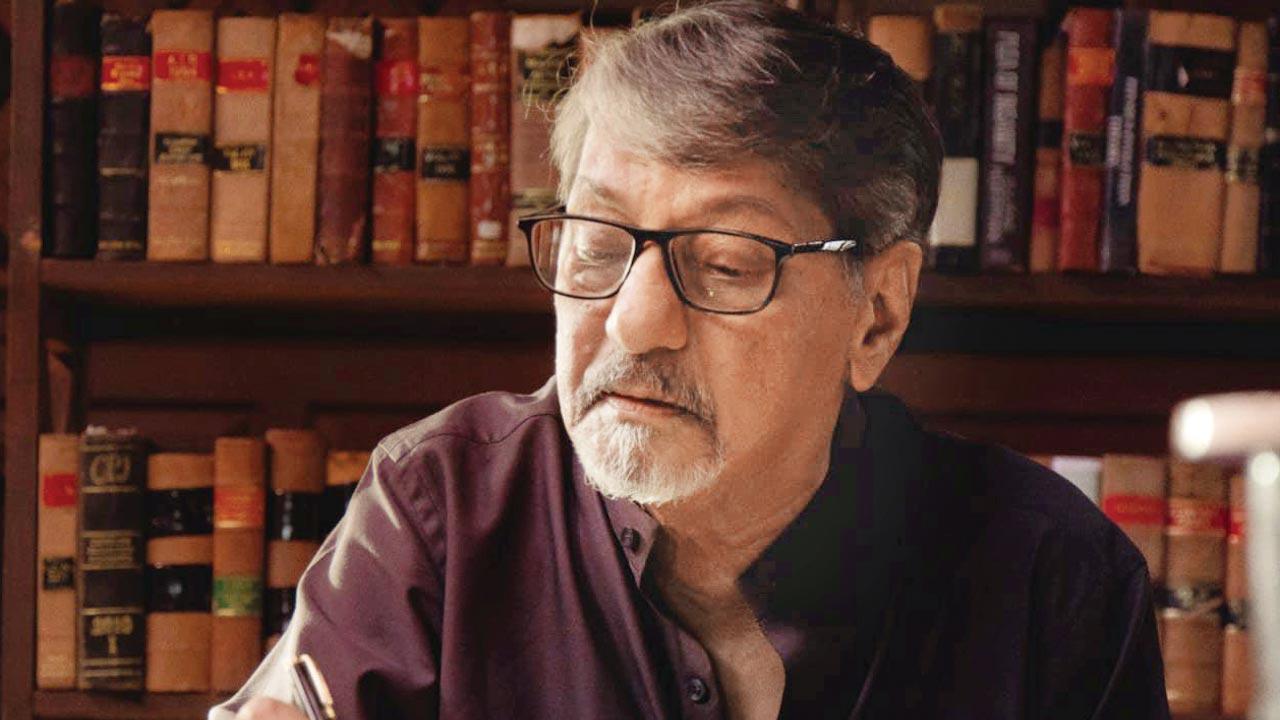
In the era of the angry young man, I was just a common man trying to survive-Amol Palekar
9:25 AM
Divya Kaushik (BOMBAY TIMES; January 6, 2024)
Among his many achievements as an actor and filmmaker, one thing that Amol Palekar will always be proud of is how he came close to every common man through the characters he played on screen. From Gharonda, Gol Maal to Chhoti Si Baat, the actor says that he always tried to be the “boy-next-door who comes across as vulnerable as any common man is.” The veteran actor, who was in the city recently, spoke to us about Hrishikesh Mukherjee and Basu Chatterjee’s era of filmmaking, when simple stories ruled the celluloid.
‘I CONSCIOUSLY TRIED TO RETAIN THAT VULNERABILITY OF A COMMON MAN’
“I feel nice that I was a part of the era when parallel cinema evolved,” says the actor as he talks about the audience relating to his characters.
He adds, “In Rajnigandha, Chhoti Si Baat, Chitchor, Baton Baton Mein, Gol Maal, Naram Garam – the hero that I played never utters a simple line ‘I love you’ and that was the continuing point in all those portrayals. I think every young boy related to it. I think I managed to bring out that aspect of the boy-next-door quite nicely. And the vulnerability of the man... I have consciously tried to retain that vulnerability. I found this vulnerability in every character that I portrayed, and I think I haven’t done badly.”
Talking about what made him stand out, Palekar says, “The time when I was portraying the boy-next-door, it was not just the era of angry young man, it was the era of lover boy Rajesh Khanna, Dharmendra the He-Man, Jeetendra who could dance so beautifully and charm a girl – I think I had none of those qualities and that’s what people liked. What I also liked was that I was none of those ‘heroes’, I was just a common man trying to survive, trying to convey his love without uttering those words. It made me stand out among all those larger-than-life portrayals on screen back then.”
‘WORKING WITH BASU DA, HRISHI DA, SHYAM BENEGAL USED TO BE LIKE A FAMILY PICNIC’
Palekar credits Basu Chatterjee for his acting career. “Basu da approached me for Piya Ka Ghar, which I refused. I didn’t think he’d ever come back to me – I was a nobody from theater. But he did and that’s how Rajnigandha happened. Basu da, had a great command on his craft and celluloid narration, but in real life, he was a terrible narrator. Woh kahani bata hi nahi paate thay. Our conversation was like, ‘Amol main ek film banane ja raha hoon. Ek ladka hai, maano tum ho, aur ek nayi ladki hai Vidya Sinha naam ki, aur phir… yaar tum yeh padh lo!’ This was his narration!”
He adds, “Hrishi da (Hrishikesh Mukherjee), Basu da, Shyam Benegal, all the people that I have worked with – it used to be like a family picnic. It was like fun and hansi mazak karte karte film ban jaati thi. And that’s what reflected on screen. The kind of fun we used to have in Gol Maal, oh my god! We were like a family on the sets, it worked beautifully.”
The veteran actor has relived many of his memories in his book, View finder: A Memoir. “The end result of writing this book was a catharsis, but to reach that catharsis it was like excavating and peeling off oneself. So many memories came out, I thought I had forgotten them. I relived so many memories. I felt nice, relieved and quite overwhelmed... The dilemma was what to keep and what not keep from all those memories. That was a major step. I belong to the dinosaur era, I still write on a paper. They were about 450 hand written pages in Marathi and I handed over to Sandhya (his wife). Sandhya and I have associated in so many roles. So this final product is our collaboration in the true sense as we have been doing for the last 25 years of our marriage. This proudly can be termed as the lovely climax to that journey.”
‘ENJOYED PLAYING GREY CHARACTERS’
In contrast to the vulnerable, common man, Palekar also played characters with a grey or dark side. “I played a villain in Benegal’s Bhumika, which was unheard of at that time. The industry resisted that, they said you are a successful hero with three silver jubilees in your belt why do you want to play a villain, have you gone bonkers? But I chose to because it was a huge challenge for me as an actor. From there to Vidhu Vinod Chopra’s Khamosh, where I play a murderer, I was very happy to choose such roles. In Gharonda, too, the character is so grey, he is actually a villain. All these grey shades are attributed to a villain, and I enjoyed that.”
"The film industry should bow to the last Trojan": Amol Palekar, Manoj Bajpayee pay tribute to Shyam Benegal
8:16 AM

Bhumika collaborator Amol Palekar and Zubeidaa actor Manoj Bajpayee remember the pioneer who spearheaded parallel cinema
Upala KBR, Priyanka Sharma (MID-DAY; December 24, 2024)
"We always want our greats to live on forever,” says Manoj Bajpayee, moments into our call with him. On Monday evening, that wish was shattered as Shyam Benegal, one of the finest filmmakers of Hindi cinema, passed away at 90.
For Bajpayee, Benegal, who cast him as the male lead in Zubeidaa (2001), represented someone who made him confident about his looks. “When nobody could understand why he cast me as a prince in Zubeidaa, he had his own idea. For him, I was a better-looking guy than all the real princes at that time. He gave me a lot of confidence when I didn’t have confidence in my own looks. Every day, I would rush to be on the sets with him, to listen to him and be directed by him. It was a time that I will never be able to forget,” recounts the actor.
Bajpayee echoes the sentiments of many in the film industry when he describes Benegal as “a pioneer, a pathbreaker, and a guiding light for so many filmmakers of this generation”. “It was all started by that great man. It’s a sad day for all of us, who define cinema not as a commercial medium, but as one of art. He never compromised with the art of cinema. He kept changing the grammar of cinema. I admire him because he was existing in the extreme times when mainstream cinema was ruling the roost, where Mr Amitabh Bachchan came like a tsunami. Here was a man quietly carving a niche for himself, carving a new path for all the new generations to come.”
Amol Palekar fondly remembered the filmmaker with whom he collaborated on Bhumika (1977), which was fronted by the late Smita Patil. Saddened by the loss, Palekar said, “The film industry should bow to the last Trojan! I do.”
Vanraj Bhatia hated being termed parallel cinema composer-Shyam Benegal
8:08 AM

As he bids farewell to the man behind gems of Bhumika, Manthan, filmmaker Shyam Benegal says musician friend Vanraj Bhatia craved commercial success
As told to Shaheen Parkar (MID-DAY; May 8, 2021)
I could not think of anyone other than Vanraj Bhatia as a composer on my films. All my projects, except those made in the last few years, had him on board. Having trained in Indian and Western classical music, his knowledge in both genres was deep-rooted. Even though we were long-time collaborators, we would squabble often. My Tardeo office would be rocked by our creative differences and arguments. He was critical of the kind of films I made, what was termed the parallel cinema or the New India Cinema. He used to complain that I [didn’t] use his music [to maximum effect]. My films did not have the hero running around trees and singing — something that he would have probably loved. [Despite our] different tastes in cinema, he would create the best score for me.
He was inclined towards music from his student days, and in the ’50s, spent several years in Paris, studying with the legendary composer-conductor, Nadia Boulanger. After returning to India, theatre doyen Ebrahim Alkazi asked him to teach music at the National School of Drama in New Delhi. It was a short stint in the early ’60s because he soon realised that he wanted to compose music.
He shifted back to Mumbai, and began scoring music for ads and jingles. At the time, I was working with Lintas. We worked on several projects together, and in due course, struck up a friendship.
When I moved to feature film direction with Ankur [1975], he was the obvious choice. He was more inclined towards Western classical music, whereas my films — be it Nishant [1975], Manthan [1976] or Bhumika [1977] — were earthy and had inherent Indianness to them. But his knowledge of music was so profound that he could showcase his brilliance, regardless of the film’s subject.
He was at ease composing the folk song, Mero Gaam Katha Parey, which became Manthan’s iconic track. It was later used by Amul as the theme song for their campaign to showcase the model of cooperative farming. Baaju Re Mondar [Bhumika] showcased his classical excellence.
Even though he bagged the Sangeet Natak Akademi Award and the National Award, he never got his due. He did not achieve popular success, like say Shankar-Jaikishan did; he craved it. He hated that he was termed a composer for parallel cinema. He would have liked to do more commercial films, but his sensibilities did not match. He was an evolved and sophisticated musician; there was no crudeness to his music.
Shivendra Dungarpur takes on the task of preserving Shyam Benegal’s cinematic oeuvre
7:47 AM

Avinash Lohana (MUMBAI MIRROR; December 27, 2017)
 Four days after Shivendra Dungarpur, founder of the Film Heritage
Foundation, tweeted about Shyam Benegal donating some of his work to the
archives, the former’s office is lined with over 20 cartons of material
as they deliberate on the impending process of preservation.
Dungarpur informs that Benegal is on the advisory board of his organisation and has been an eminent supporter since its inception in 2014. “We have set up a ‘Shyam Benegal archive’, under which we have some of his scripts, including The Making Of The Mahatma, Samvidhaan and Bose: The Forgotten Hero, among others. We also have stills, books on films, photographs and original posters of a few of his films including Zubeidaa, Antarnaad, Ankur, Mandi and Bhumika. He has also made several ad films, documentaries and two televisions shows – Bharat Ek Khoj and Yatra – and we are in possession of their original camera negatives, film clap boards, call sheets and film-related letters,” informs Dungarpur.
Benegal is confident of his decision. “Shivendra is extremely serious about what he is doing and has got a wonderful museum. I have been working for close to 58-59 years. It’s a long period to have accumulated a great deal of material and one has to let people make the right use of it. Quite a few original negatives of the films that I have made have been given to the National Film Archive and what I had in my office has been given to Shivendra,” the filmmaker tells Mirror.
 Dungarpur, who counts Bhumika, Ankur and Manthan among his favourite
Benegal films, says that his biggest challenge is to save the original
camera negative of Susman. “It’s in a very poor condition; it reeks of
vinegar and we have to start work on it soon. The challenge is to
collect more material and to make sure that it is accessible to public
as well. We will take six months to figure out the entire material
donated by Shyamji,” he says. Dungarpur has previously acquired film
material of other directors like Mani Ratnam, Kundan Shah, Saeed Mirza,
Govind Nihalani, JBH Wadia and films produced by Amitabh Bachchan. “We
have also conducted three workshops on film preservation and restoration
to bring in more people who are equipped to look after this archive.”
When asked if he’d like to have one of his films restored, Benegal says, “Only if other people are interested in doing it, which is why I gave them away. There used to be a vault in Mahim where master negatives were kept for years and years. The people running it went out of business and didn’t inform anyone before the air conditioning was taken out. Finally we had to go running to look for our negatives,” the veteran filmmaker reflects on the current state of film preservation in India. Dungarpur, however, argues that restoration is an expensive process. “We don’t have as much funds right now so we will first start preserving them,” he signs off.
We had no money for publicity; I told Shabana Azmi & Smita Patil to roam in Cannes in sarees-Shyam Benegal
7:40 AM

Roshmila Bhattacharya (MUMBAI MIRROR; October 19, 2017)
The first thing Shyam Benegal remembers about his protégé, Smita Patil, was her natural talent and reluctance as an actress. She was studying at St. Xavier’s College when he approached her to play the queen in a children’s film, Charandas Chor. “She was very hesitant. Her mother told her not to be silly and let the opportunity slip away,” he narrates.
Soon after, the filmmaker whisked her away to Chattisgarh for the shoot, where she was thrown in the company of Habib Tanvir’s village actors, some farmers, some local traders, who were reprising their roles from the original play. “Smita quickly became a part of the team, having no starry airs or pretensions, a quality that made her special even after she became Bollywood’s leading lady. She would haul the lights and the cables, serve meals. No one realised that she was homesick. Those days there were no cell phones, and in locations as remote as ours, you could at best book a lightning call from the local post office, which was not always possible. So Smita, who was away from her family for the first time, wrote a letter to her mother every day, but otherwise never let slip just how lonely she was,” he says.
The same year, she also played Naseeruddin Shah’s wife, Rukmini, in his Nishant, which went on to bag the National Award for Best Feature Film in Hindi and was only the second Indian film in competition for the Palme d’ Or at the 1976 Cannes Film Festival. “It was a huge honour, but being a poor ‘art’ filmmaker as compared to the other competitors who came from larger industries we had no money even to print posters. So I asked my heroines, Smita and Shabana Azmi, to drape themselves in gorgeous temple saris and walk up and down the Cannes Crussell. They immediately caught everyone’s eye and their photograph appeared on the front page of the local newspaper along with news of the Nishant screening and we had a packed house,” says Benegal, chuckling at the memory.
They did other films together, including Manthan and Bhumika. The latter was broadly based on the memoirs of Marathi actress Hansa Wadkar, Sangyte Aika, with Smita playing Usha, a role that spanned from 16 to 46. “It was a challenge as she was just around 22-23 at the time and had to literally grow up from an adolescent to a mature woman and to familiarise herself with the industry and its trappings. I had taken her to Cannes for Nishant, which was perhaps her first foreign trip. Bhumika fetched her the National Award and the Filmfare Award for Best Actress and she grew up to become one of our finest performers recognized the world over with a unique ability to blend into her surroundings,” he says, recalling the time when they were filming Manthan in Saurashtra, about 35-40 kms from Rajkot. “Smita who played a village woman, looked so much like one, that the college boys who had cycled all the way down from Rajkot after reading that a film unit was shooting in their part of the world, almost didn’t recognise her as she squatted on the floor of her home, leaning against the mud wall. They were whispering amongst themselves wondering about the heroine when one of them suddenly pointed to Smita.”
On October 17, Smita would have turned 62. Ask Benegal how he imagines she might have been today and he sighs, “I can’t, she never thought she would grow into an old lady. She would always say I’ll die young and though I would reprimand her for getting morbid, it happened that way.”
How Nehruvian view of social change shaped Indian Cinema-Shyam Benegal
10:09 AM

As told to Mithila Phadke (THE TIMES OF INDIA; November 9, 2014)
I remember the first time I saw Nehru. It was soon after the police action that liberated Hyderabad from
Nizam's rule. I must have been about 12 at the time. A friend of
mine and I were walking towards a disused golf course close to my home
where we often played cricket. It was early in the morning. Two horsemen
came cantering along on their horses. One was General J N Chaudhuri who
was the Military Governor of Hyderabad at the time and the second was
Jawaharlal Nehru. He looked like a bronze god. The second time I saw him
was several years later at an Inter University Youth Festival in New
Delhi. He gave an extraordinarily inspirational speech which in fact
changed the course of my life.
 The early years of Independent
India were times of great optimism. Nehru was the great hero, with his
film star good looks and his charming manner. Also, he was an extremely
inspiring leader, particularly for young people. Nehru in his youth was
greatly inspired by the Russian Revolution. He travelled to the Soviet
Union with his father in the late 1920s and was most impressed with the
idea of the social engineering that he saw being attempted there. He was
all for creating a new society but
not necessarily by altogether dismantling the earlier economic and
social structures. He substituted the ideal of socialist society with the
term socialist pattern of the society which was described as a mixed
economy with space for both private and public sector. He wanted a
self-reliant India rather than attempting to make it self
sufficient.
Many mainstream filmmakers were impacted by the optimism of the early Nehruvian years. The films of Khwaja Ahmed Abbas ('Jagte Raho', 'Awara') and others such as B R Chopra ('Naya Daur') were critical of the present but were extremely optimistic of the future. Their films were essentially Nehruvian in concept.
Another important development in the Nehruvian era were the creation of the three cultural academies - Sangeet Natak Akademi, Lalit Kala Akademi and the Sahitya Akademi. The Film and Television Institute was founded during Nehru's tenure. The FTII was designed to train filmmakers who would create films that would reflect changes taking place in Indian society rather than turn out escapist fantasies which were the staple of mainstream cinema.
The impact of Nehruvian thinking was felt most significantly in Bengali, Malayalam, Kannada and Oriya cinema before it was felt in Hindi films. These films were clubbed together by the press and described as parallel cinema.
Most of the early graduates of the FTII, began to make films that were far more original and reflected social and aesthetic attitudes and views very much their own rather than being influenced by popular mainstream cinema of the time. Among the notable filmmakers, who made their mark were Adoor Gopalakrishnan and Aravindan in Kerala, Girish Karnad in Karanataka, Nirad Mahapatra in Orissa among others. As far as Hindi Cinema was concerned, there were filmmakers like M S Sathyu and myself.
Hindsight criticism of Nehru has become fairly fashionable today. Nehru's contribution according to me was a foundational one and contributed hugely in making India an independent minded democratic country. What Nehru did was help open up minds to different kinds of thinking and to possibilities whose significance can never be underestimated.
My film 'Ankur' was essentially about social change. So was 'Manthan' while 'Bhumika' was about the liberation of women from the oppression they suffered in the traditional patriarchal society of our country. 'Kondura' was about breaking free of traditional superstitions that held society in thrall.
These were all influenced either directly or obliquely by Nehruvian views on social change - the idea that one cannot develop society and move forward without actively helping to make far reaching social changes.
These views are as relevant today as they were yesterday.
The early years of Independent
India were times of great optimism. Nehru was the great hero, with his
film star good looks and his charming manner. Also, he was an extremely
inspiring leader, particularly for young people. Nehru in his youth was
greatly inspired by the Russian Revolution. He travelled to the Soviet
Union with his father in the late 1920s and was most impressed with the
idea of the social engineering that he saw being attempted there. He was
all for creating a new society but
not necessarily by altogether dismantling the earlier economic and
social structures. He substituted the ideal of socialist society with the
term socialist pattern of the society which was described as a mixed
economy with space for both private and public sector. He wanted a
self-reliant India rather than attempting to make it self
sufficient.Many mainstream filmmakers were impacted by the optimism of the early Nehruvian years. The films of Khwaja Ahmed Abbas ('Jagte Raho', 'Awara') and others such as B R Chopra ('Naya Daur') were critical of the present but were extremely optimistic of the future. Their films were essentially Nehruvian in concept.
Another important development in the Nehruvian era were the creation of the three cultural academies - Sangeet Natak Akademi, Lalit Kala Akademi and the Sahitya Akademi. The Film and Television Institute was founded during Nehru's tenure. The FTII was designed to train filmmakers who would create films that would reflect changes taking place in Indian society rather than turn out escapist fantasies which were the staple of mainstream cinema.
The impact of Nehruvian thinking was felt most significantly in Bengali, Malayalam, Kannada and Oriya cinema before it was felt in Hindi films. These films were clubbed together by the press and described as parallel cinema.
Most of the early graduates of the FTII, began to make films that were far more original and reflected social and aesthetic attitudes and views very much their own rather than being influenced by popular mainstream cinema of the time. Among the notable filmmakers, who made their mark were Adoor Gopalakrishnan and Aravindan in Kerala, Girish Karnad in Karanataka, Nirad Mahapatra in Orissa among others. As far as Hindi Cinema was concerned, there were filmmakers like M S Sathyu and myself.
Hindsight criticism of Nehru has become fairly fashionable today. Nehru's contribution according to me was a foundational one and contributed hugely in making India an independent minded democratic country. What Nehru did was help open up minds to different kinds of thinking and to possibilities whose significance can never be underestimated.
My film 'Ankur' was essentially about social change. So was 'Manthan' while 'Bhumika' was about the liberation of women from the oppression they suffered in the traditional patriarchal society of our country. 'Kondura' was about breaking free of traditional superstitions that held society in thrall.
These were all influenced either directly or obliquely by Nehruvian views on social change - the idea that one cannot develop society and move forward without actively helping to make far reaching social changes.
These views are as relevant today as they were yesterday.
Subscribe to:
Posts (Atom)