Showing posts with label Bharat Ek Khoj. Show all posts
Showing posts with label Bharat Ek Khoj. Show all posts
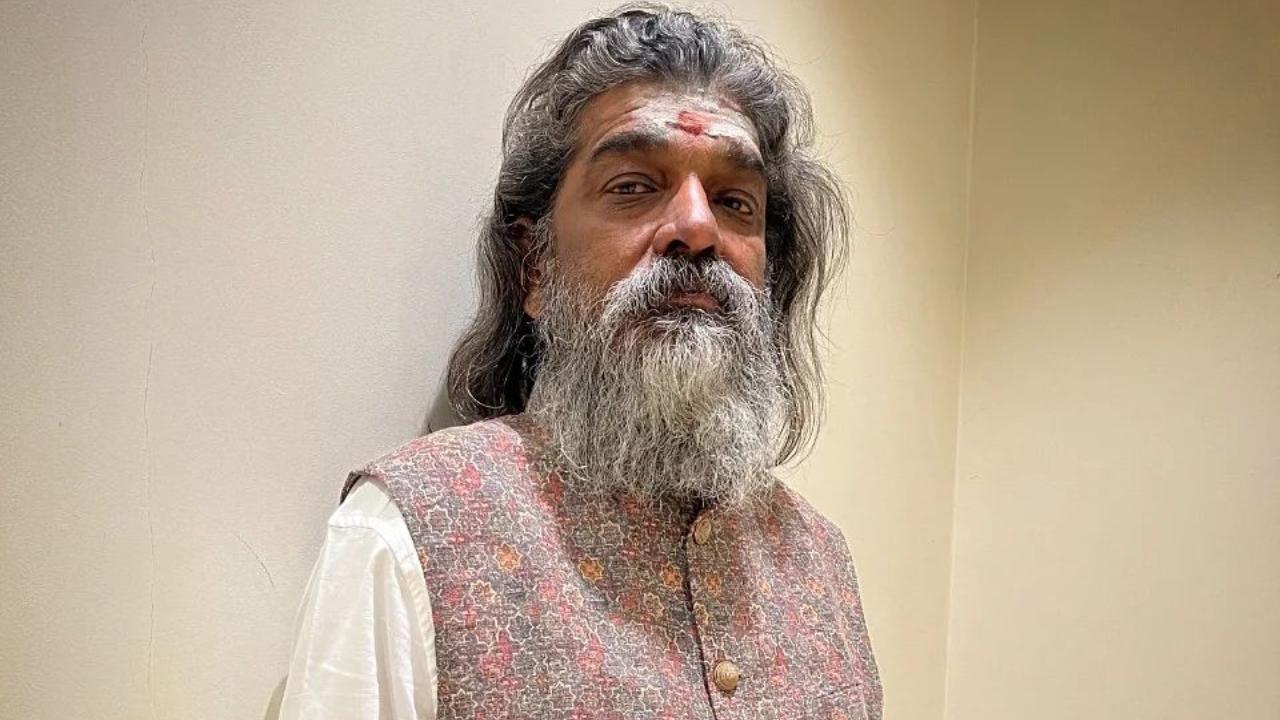
Nitin Desai’s sets were a visual custard of colours and opulence
8:50 AM
Avijit Ghosh & George Mendonca | TNN (THE TIMES OF INDIA; August 3, 2023)
As word of veteran Bollywood art director Nitin Desai’s death got around, several personalities paid homage to his creative spirit. Television producer Siddhartha Basu, who collaborated with him on several shows, including the iconic Kaun Banega Crorepati (2000), tweeted that Desai conjured “world class installations on an industrial scale.”
Apart from films and TV shows, Desai was much sought after for organising state fun ctions for Maharashtra such as the Republic Day tableaus. He was to set up Mumbai’s popular Lalbaugcha Raja Ganpati installation this year.
Actor and BJP MP Hema Malini remembered the art director as “a warm human being.” Actor Riteish Deshmukh described him as “soft spoken, humble, ambitious & a visionary” who had contributed “immensely to the growth of Indian cinema.”
As an art director first—and later in the more expansive capacity of a production designer—Desai elevated the projects he was associated with, especially those of film directors Vidhu Vinod Chopra, Sanjay Leela Bhansali and Gowariker.
There’s a harmony and continuity of palette in the way most scenes are crafted in Bhansali’s Hum Dil Chuke Sanam (1999). “A French production company called me up to find out where the location in the film was. I had to tell them the whole thing was a set built at Film City,” Desai said in a 2003 interview.
Bhansali’s Devdas was a visual custard of colours and opulence, and offered a contrast to the earlier film versions of Saratchandra’s novel portrayal of 19 century Bengal. Desai’s artwork turned colours into a language and helped Bhansali communicate his alternative vision. Just a year earlier, the art director had displayed his versatility in Gowariker’s anti-colonial cricket drama, Lagaan.
The terrain was totally different: the desert of Kutch where a famine looms. Desai’s production design of the village and surroundings is delightfully restrained, much in tune with the movie’s needs and mood. Just as he is pompish in the medieval tales of romance and valour, Gowariker’s Jodhaa Akbar and Panipat (2019). In his own way, Desai revolutionized art direction in Hindi cinema.
A student of photography at JJ School of Arts in Mumbai, he shifted to the world of moving images in the 1980s. Desai started out as a fourth assistant to the renowned art director Nitish Roy in Govind Nihalani’s telefilm, Tamas (1988), a searing tale on the horrors of Partition. He also assisted Roy in Shyam Benegal’s Bharat Ek Khoj and worked independently in the DD serial, Chanakya.
But he caught attention and found appreciation with Vidhu Vinod Chopra’s 1942: A Love Story (1994), which underlined his eye for details and flair for the eye-catching. The film earned him the first of his three Filmfare Awards: Khamoshi: The Musical (1997), Devdas being the other two. He also bagged four national awards for production design: Dr Baba Saheb Ambedkar’ (1998), Hum Dil De Chuke Sanam, Lagaan and Devdas.
In 2005, Desai set up N D Studios, a sprawling facility for filmmaking and television work, spread over 52 acres. It was his dream venture where many big projects such as mega reality tv show, Bigg Boss, were lensed. Sadly, this is also where the dream died.
(With inputs from Mohammed Wajihuddin in Mumbai)
-----------------------------------------
Final act: Help for tribals, NDRF amid landslide
Navi Mumbai: Nitin Desai provided 10 tents to house victims and rescue workers at the landslide-hit Irshalwadi hamlet in Khalapur taluka. The tents were kept at two different locations to help victims and government staff involved in rescue and relief. Desai also provided a night's accommodation and dinner to 56 personnel of the National Disaster Response Force 5th battalion-Pune which carried out the rescue work. Desai’s aid came when the administration was struggling with the logistics at a remote location in the immediate aftermath of the incident.
You have to watch Salim Ghouse in Bharat Ek Khoj. From Lord Krishna to Ram, he was marvellous in every role-Shyam Benegal
7:42 AM

Legendary director and screenwriter pays tribute to film and TV actor Salim Ghouse
Natasha Coutinho D'souza (MID-DAY; April 29, 2022)
Film and TV actor Salim Ghouse passed away on Thursday in Mumbai after suffering a cardiac arrest. He was 70. He is remembered for his performances in Shyam Benegal’s ‘Bharat Ek Khoj (1988), 'Chakra' (1981), 'Saaransh' (1984) and 'Mohan Joshi Hazir Ho!' (1984). He featured as the antagonist in the Kamal Haasan-starrer 'Vettri Vizhaa' (1989) besides Vijay's film 'Vettaikaaran' (2009).
Legendary director and screenwriter Shyam Benegal paid tribute to the late actor in a conversation with mid-day.com. Benegal said, “It’s such a shock to hear that Salim Ghouse is no more. He was such a physically fit person. Apart from being a brilliant actor, he had quite an energetic presence on the sets. He was a dear friend, but I had lost touch with him for some time. We worked together a lot. He was in ‘Bharat Ek Khoj' in many different roles, one of the characters he played was that of Lord Krishna in the show, by far the most astounding performance. The dialogues were in Sanskritised Hindi, and Salim was from the South, yet he delivered them so well. It was one of those series where you had to have excellent actors because they had to speak continuously for 8-10 minutes. His was an outstanding performance.”
Adding that he is saddened by the news, Benegal said, “His last film 'Well Done Abba' was also with me. In recent years, we didn’t work together much, but you have to watch him in 'Bharat Ek Khoj!' From Lord Krishna to Ram, he was marvellous in every role. He got busy with films in the South, where he was quite popular. I lost touch with the family in recent years, but he was too young to pass away.”
A walk to remember: Charting Irrfan Khan’s long, tough journey to the audience's heart
8:07 AM

Irrfan Khan during a film shoot at Madh Island in 2008
Charting Irrfan Khan’s long, tough journey to the audience’s heart, which began with a footnote of a role on the small screen and the quest for a voice
Chandrima Pal (MUMBAI MIRROR; April 30, 2020)
Fans, followers and devotees of Irrfan will remember him for his inherently natural way before the camera, his easy body language and distinctive dialogue delivery. But it was not as though the actor woke up one morning and found his voice. ‘That’ voice.
Long before this Khan became the anointed king of indie cinema and took on meaty roles in big budget productions, he struggled to find a niche. There were the odds—he was lanky, not good-looking in the conventional sense, and yet to discover how best to use his eloquent eyes. However, he had a certain charisma and could turn the tackiest frame into something half-decent.
While Bollywood of the ’80s and ’90s certainly did not have room for an actor such as him (except Mira Nair’s Salaam Bombay, which was hardly Bollywood, even though it was in Hindi), television seemed to be a tad more generous. Irrfan began with a footnote of a role in Bharat Ek Khoj, based on Pandit Jawaharlal Nehru’s seminal book, The Discovery of India. Epics and costume dramas were the order of the day, and Doordarshan was constantly throwing up opportunities for talented actors to eventually get a toe-hold in the industry and do work that they could be proud of. Irrfan was one of them. As Senapati Bhadrashal in Dr Chandraprakash Dwivedi’s 47-part epic Chanakya, Irrfan was not quite impressive. But the show gathered enough accolades and viewership to set him off.
Over the years, the actor hopped from one costume and period-drama to another, switching channels and mouthing dialogues that evidently came to him with certain difficulty. Whether it was the character of Rudra in DD’s take on Sharatchandra Chattopadhyay’s Sreekant (top-lined by Farooq Shaikh) or as the twin brothers Badrinath and Somenath in Neerja Guleri’s Chandrakanta on Sony, Irrfan looked ill-at-ease. It was no better in Sanjha Chulha, where he played a chillum-smoking sadhu dressed in a saffron sarong and dreadlocks.
It was not until he found himself in a realistic context, with dialogues he could sculpt according to his strength, that he began to make his presence felt. And it, kind of, came together for him when his wife, Sutapa Sikdar, wrote the dialogues for Banegi Apni Baat. The popular show, produced by Deeya and Tony Singh, captured the imagination of the generation that was comfortable talking about extramarital affairs, pre-marital sex, teenage crush and parent-child communication gaps. It was inspired by American coming-of-age TV dramas and it throbbed with a desi heart. Irrfan, who was initially reluctant to take on the role, was persuaded by his wife to audition for it. He played a father who starts off with a turbulent relationship with his kids, and eventually discovers his gentler, more sensitive side. The role and the show gave him an opportunity to flex his acting muscles for the first time.
BAB—as it was known—primed Irrfan for more roles in urban, contemporary settings, a universe where he thrived. In Sparsh, directed by Ravi Rai, who ruled the television industry at that time, he was definitely in his element as a man who negotiates a complex marriage and separations. It had just the right dose of reality, with a touch of drama, in an instantly recognizable setting that brought out Irrfan’s finest performance until then. Even then, he was still way down in the pecking order, with his peers such as Kunickaa Sadanand and Mahesh Thakur, bagging top honours.
By the time Ek Shaam Ki Mulaqat happened on Star Bestsellers, Irrfan was on fire. In the story about a married man who finds himself attracted to his eccentric land-lady, he gave us a taste of what was in the offing. The role was a serendipitous coming together of all that would define Irrfan Khan, the actor, on the big screen. He was gentle, funny, charismatic and extremely watchable. Most importantly, he played the lead. In the scenes where he preps his room hurriedly in anticipation of the woman’s arrival and his misreading of her ‘signals,’ Irrfan strikes gold.
Unlike the other Khan, who transitioned from television to the big screen as well, Irrfan did the entire arc. He worked hard to find his voice, that timbre, that would eventually set him apart from the others. And he was not apologetic for the calluses under his feet that spoke of his long, tough walk to his audience’s heart, where he would remain forever.

It's a crying shame, say Shyam Benegal and Sai Paranjpye after Doordarshan loses priceless footage
7:59 AM

A recorded discussion lost: Michelangelo Antonioni and Akira Kurosawa with Satyajit Ray during their visit to India in 1977
Stalwart filmmakers Shyam Benegal and Sai Paranjpye rue the rigid unaccountability of Doordarshan, which has resulted in the loss of priceless documentary footage, exclusive interviews and several serials
Khalid Mohamed (MUMBAI MIRROR; July 3, 2019)
Even as the hallowed Doordarshan has announced recruitment for 89 vacancies in its English news channel, beyond priceless footage has gone missing or has been cavalierly erased.
No official in the public service broadcaster initiated by the government of India on September 15, 1959, has an answer to the missing documentary footage, exclusive interviews and several of its commissioned TV serials.
 Filmmaker and writer Sai Paranjpye (left), who incidentally was among one of the first six women to be recruited as a producer at DD in New Delhi, states, “For years, I went blue in the face asking officials—senior and junior—to locate four of my programmes. I should have persisted for an answer. Admittedly, now I’ve become lackadaisical because of the who-cares! attitude about the disappearance of its treasure trove.”
Gone missing are Paranjpye’s documentaries on Captain Lakshmi Sahgal, revolutionary of the independence movement, on movie-hoarding painters including bytes from M F Husain, a human-interest story The Little Tea Shop on a feisty woman running a dhaba single-handedly on the Delhi-Agra highway, and a portrait of the revered composer and singer Pankaj Mullick.
According to a source in the capital, a 1980s documentary on the proposed statehood of Gorkhaland featuring the first teleinterview of the leader of the Gorkha National Liberation Front, Subhash Ghisingh, and the then West Bengal chief minister Jyoti Basu, is untraceable.
A programme on Tamil Nadu politics including an interview with Jayalalithaa after the passing away in 1987 of the state’s chief minister M G Ramachandran, is either inaccessible or has been binned.
The same fate has befallen the original video-tapes of the two-part documentary Footprints Across India on the global media baron Rupert Murdoch’s visit to India in the 1990s, as well as a bold account on the dacoits of the Chambal Valley.
These, in fact, form just a miniscule part of the missing DD footage. A majority of the official as well as independent producers and directors are no longer living. Most of the surviving filmmakers contacted shared the view, “Why re-open wounds? Over the decades, the various chiefs of Doordarshan have pinned the blame on their predecessors.”
Clearly, the lapse –unintentional or not-—is part of a larger issue of lost content in the history of broadcasting. Besides DD, the All-India Radio and Films Division, have remained rigidly unaccountable. From personal experience, I can recall that shortly after the imposition of the Emergency, the International Film Festival of India had hosted the legendary Akira Kurosawa, Michelangelo Antonioni and Elia Kazan. A round-table discussion between them and Satyajit Ray was recorded by columnist Amita Malik, simultaneously for DD and AIR. And it has been confirmed that those were erased since there was a shortage of recording tapes. A producer at DD is lored to have recorded another programme over the valuable interview.
Malik, during her lifetime, would often lament that her exclusive with the iconic actor Marlon Brando, interviewed during his UNICEF-sponsored visit to India circa 1967, was also wiped out.
There is no news either of the tapes of interviews with the legendary actors Jeanne Moreau from France and that of Vanessa Redgrave from Britain – in the course of their visits to the International Film Festival of India.
On the sports front, archived tapes of the tied 1987 Ahmedabad test between India and Pakistan are one among the many disappearing chronicles. The match was singularly important, showing Sunil Gavaskar as the first cricketer to cross the 10,000-run mark.
 On being quizzed about this, Gavaskar had described the incident as “unfortunate” adding that perhaps in the 1980s technology wasn’t as advanced, leading to the loss of an incalculable number of files, tapes and papers. “At least from now on, they should ensure that they archive stuff properly,” he had suggested.
In response, a Doordarshan official had stated that of late tapes are being digitised to ensure there is a back-up support in case a tape has to be re-used. Seemingly, earlier there wasn’t an option. In the absence of “proper guidelines, it was easy to overwrite a tape.” Easy? The word speaks for itself.
Filmmaker Shyam Benegal (left), who has consistently demanded the need for preservation of documented footage, states candidly, “It’s a crying shame really. Supposedly DD is required to hand over its material to the National Film Archive of India in Pune. How many have been handed over is a mystery. The archive is meant to store and preserve our national heritage of cinema and TV series. Clearly, the archive has never been looked after or given any priority.”
 Although some episodes of Benegal’s seminal series Bharat Ek Khoj (right) (1988)– based on Jawaharlal Nehru’s book Discovery of India --have been officially uploaded on YouTube, the original tapes shot on 35 mm gauge have disappeared. “The storage facilities at the archive are awful,” Benegal remarks. “I am clueless about how many of the 53 episodes are still surviving.”
His documentaries revolving around the subject of the various forms of music like rhythm and melody were given to the archive but are no longer accessible. Moreover, the auteur’s documentaries on the sarod maestro Ali Akbar Khan, and the sitar wizards Ravi Shankar and Abdul Halim Jaffer Khan, have either perished or are mouldering in the cans somewhere.
Any salvaging operations possible? To that, Benegal ripostes, “None that I can think of. Except to raise the consciousness that it’s never too late to start preserving filmed material.”
And he makes the point, that it’s not only the national film heritage which has been squandered over time. What about our books, which should have been looked after? Where have all the original parchments gone? We must have lost out, he contends, on at least a millennium of our literature.
To encapsulate the topic, Benegal has a one-liner. And that is, “Whatever token attempts have been made, they have amounted to zilch.”

Also gone missing is Sai Paranjpye’s documentary on Captain Lakshmi Sahgal (seen above with Subhash Chandra Bose), revolutionary of the independence movement
If there was no TV, people wouldn't have seen Shyam Benegal's films-Anurag Kashyap
8:59 AM

Genteel doyen Shyam Benegal and Bollywood's enfant terrible Anurag Kashyap on how India's movie capital shaped them, and they shaped it too
Mayank Shekhar (MID-DAY; June 28, 2019)
It's pre-noon. We are at Shyam Benegal's office in South Mumbai. Anurag Kashyap has travelled all the way from Oshiwara in North Mumbai, where Bollywood currently resides. Between two of India's most iconoclast filmmakers rest stories that equally span the journey of Mumbai as a movie capital, since they also personify the change that they wished to see.
What we didn't know is Kashyap's own struggles in this city, when he moved from Delhi in 1993, began from the same Everest building, Tardeo office we are at. It was the first door he'd knocked, looking for a job. This is his first visit since. Understandably, we start the conversation with:
Mid-Day: What Happened When You First Came To Mr Benegal's Office [In 1993]?
Anurag: It was my second day in Bombay, rainy June 4. I found his address, and came right here. Shyam ji wasn't in. I met a sweet man, Mr Ravi Khemu [actor Kunal Kemmu's father; Benegal's associate]. He realised I'd only watched movies at film festivals, and recommended that I go to FTII. The exams of which were over. Then he gave me other addresses — of Govind ji [Nihalani], and Prahlad Kakkar, who was also in the same building. Eventually, I realised, I needed to do something [for a résumé], before looking for a job.
Mid-Day: Mr Benegal, You've Been In This Office For Years. Even Up Until The '90s, South Bombay Was Actually The Hub Of The City's Film Industry, Wasn't It?
Benegal: I've been here since the '70s. Before this, I used to be at Jyoti Studios [in Nana Chowk]. It was the first sound studio in the country — Alam Ara [1931] was shot there. I used to love that place. Just about anybody/everybody in the history of Indian/Hindi cinema had worked at Jyoti Studios. For years, before things became expensive in this part of the world, and offices moved to Dadar and thereafter, Andheri, this street in Tardeo was the capital of the entire film industry.
Anurag: When I came to Bombay, Lokhandwala was a small hub, with Four Bungalows, and a road between them. Nothing else. Zee and STAR had started setting up offices, and we used to come to Worli all the time. The student-lot, like Imtiaz Ali, stayed at Lalbaug.
Benegal: The film industry had been gradually moving northwards given land value. B R Chopra used to be in Parel, and then his brother [Yash Chopra] moved further up [to Juhu]. Now, many have moved beyond Andheri because it's not affordable.
Mid-Day: Has The Demographic Of People Looking For Jobs In Films In Bombay Changed Over The Decades?
Benegal: Not at all. Most of them come from smaller towns with stars in their eyes, given the larger-than-life image of cinema itself.
Anurag: Most of them come here to be actors. But now with so many job opportunities in various media, what's come down is passion for making a movie — and living and dying for it.
Mid-Day: When You Hang In Versova/Andheri, The Sense You Get Is That Actually Everyone Is From Delhi. Did That Begin In The '90s?
Anurag: A lot of people moved from Delhi, after Shah Rukh Khan. Delhi had a strong theatre scene, where Shah Rukh used to do smaller roles. But when he broke out [in the mainstream] in such a big way, everybody came to Bombay thinking, if Shah Rukh can, so can we. The exodus that was otherwise taking place anyway didn't comprise people who wanted to be part of mainstream. We liked a certain kind of cinema and theatre, and wished to be part of it. The entire cast of Bandit Queen moved to Bombay from Delhi after the film. Piyush Mishra even wrote a play about it called Jinhe Jaldi Thi Woh Chale Gaye!

Mid-Day: By The '80s, Mr Benegal, While You Were An Established Filmmaker, Your Cinema Must've Been Still Hard For The City's Showbiz To Define Within Its Constructs. True?
Anurag: They used to call it "parallel" cinema [laughs].
Benegal: I hated those terms! Somebody once called me a middle-of-the-road filmmaker. I said if I stand in the middle of the road, I'd get run over! Calling something alternate/parallel denoted a caste system. The terminology automatically indicated that nobody can see your films. Even with press reviews, while they wrote good things, there would always be a line, "This is not for general public!" That's it. Killed your film! [laughs].
Anurag: And we were categorised the "Shyam Benegal" type! Which means I need another job to sustain myself.
Mid-Day: Say A Karan Johar Collaborates With Anurag. Curious To Know How Mainstream Showbiz Comprising Manmohan Desais Of The World With Amitabh Bachchan At The Centre Interacted With You Personally, Mr Benegal.
Benegal: I had a similar kind of [joint] conversation [for the press] as we're doing now, with Manmohan Desai, and it went off quite well actually! And there was no feeling [of discord with people from "commercial cinema"] of any kind, seriously. Because you were not seen as a threat. They could be very patronising.
Anurag: There must also have been resentment that if people like Shyam ji didn't exist, then all other awards could've also been ours — outside of box-office! [laughs].
Mid-Day: Anurag, You On The Other Hand, Were The Wild-Child Seeking Validation From The [Mainstream] Film Industry. Threat In That Sense?
Anurag: I made myself into one! My career started precisely because I wasn't a threat — available to do any job for free, because I was learning, and figuring out if I can do it, or not. That's how I broke in. In the early 2000s, I started fighting aggressively for sustenance of a certain kind of cinema. Because I realised the '70s/'80s were not going to come back. Back then, to watch a film that I wanted to, I'd have to travel all the way to Town, that too to one cinema, which was playing one show, over 20 weeks! And even that began to be taken away from us. It was a massive fight.
Benegal: Multiplexes [that came in after] made a huge difference. It gave an incredible boost to filmmakers who were not part of the mainstream, as it were. Because, you had to fill a theatre of 60 or 100 seats, which was not so difficult.
Anurag: Single screens were very different for us. How do you fill up that many seats? And they wouldn't give us more than a morning or a late-night slot.
Benegal: And if you couldn't get 80 per cent audience on the first weekend, you were out on Monday. Even if you filled up 75 per cent of a 1,000-seat cinema, you'd still be out.
Mid-Day: When Television Entered The Scene In The '80s, Did That Change Things For You As A Filmmaker, Mr Benegal?
Benegal: Of course. For one, people who had never seen my films started watching them, because they were coming to your home. That's really where I developed an audience.
Anurag: That's when our fathers said, his film is coming, watch it on TV. Our introduction to his works was the TV series, Bharat Ek Khoj.
Mid-Day: While We Categorise Films As Mainstream/Parallel, The Fact Is Both Of You Have Been Commercial Filmmakers, Backed By Private Funding With Expectation Of Returns, Isn't It?
Benegal: Except for Suraj Ka Satvan Ghoda [1992] and Mammo [1994], which were NFDC [state-funded] films, all my features were made through regular, private finance. Naturally, they had to cover their cost. There's no way I could've remained a filmmaker, if they didn't. Any filmmaker would feel commercial pressure. But you really have to work on strategies, and be clever to get your way.
Anurag: You have to say things that people believe in, to protect your vision.

Mid-Day: Both Of You Worked With New Actors, Who Could Build A Fresh Audience-Base. Say Nawaz, Vicky, Etc. In One Case; And Naseer, Shabana, Smita And Others In The Other. This Created A Parallel Star-System Of Its Own, Didn't It?
Benegal: It did, to the extent that some of them [actors] started to resent it! [laughs]. They weren't getting an 'in' into the mainstream. Because they were considered to be a certain 'type' of actors. Well, you can't beat the system in matters like these. I wanted to make films that I wanted to make, and in my own way. I don't think there was any intention beyond that.
Anurag: All my actors at least get strong-character, or even lead, roles in the mainstream. That transition has happened. Because the old star-system doesn't work anymore. There's greater democracy over how the medium has changed, especially with the advent of the Internet. A person who pulls in the biggest crowds these days is Bhuvan Bam, who's a YouTube sensation.
Mid-Day: The Way Mr Benegal Did With Actors Fresh From FTII In The '70s, You Also Created A Similar Ecosystem, Decades Later, In Mumbai, Though.
Anurag: I didn't do it thinking I was creating a new ecosystem. I didn't have money, so I developed a new way of making movies. It started with Black Friday [2007] — shooting on the street, in full public view. I had no option but to hide cameras, and shoot everywhere. I had no money to create Zaveri Bazaar, so I'd shoot there.
Mid-Day: Black Friday Was Produced By Mid-Day.
Anurag: Which helped, because mid-day gave us these badges, that we flaunted around saying we're shooting a documentary. In the process, I learnt how to shoot on streets without people ever finding out. Primary requirement of that language is to work with people who won't be recognised. I went looking for good actors, with screen presence, and who aren't known. So I created casting systems, with [people like] Gautam [Kishanchandani], Mukesh Chhabra..
Mid-Day: For The Longest, Since Local Distribution Was A Bottleneck, Did You Both Consciously Look At International Markets To Expand Audience-Base?
Benegal: I never did. But because my first film Ankur [1974] went to a few international film festivals, garnering excellent audiences, I found a distributor with presence in all of western Europe. And another distributor in Britain, with a string of art-house cinemas in London. Automatically, my films after that got distribution.
Anurag: I was only trying to survive, having grown tired of people telling me that nobody would want to see my films. I spent considerable time trying to understand that market. I had to make a film that I owned — That Girl In Yellow Boots — so I could experiment in that direction.
Benegal: Now you have OTT platforms. You find your films in their bank. They're available to people all over the world.
Mid-Day: Given Where We Are Now, With The Internet, Where Practically Everyone Is A Filmmaker, Do We Even See Mumbai As A Centre Of Filmmaking In The Future?
Anurag: The world's completely changed. I just saw a whole shoot, where the producer is Bengali, the film is in Hindi, the filmmaker is from the South, the cinematographer is from Poland, sound-designer is from elsewhere. Everybody had only met on the Internet. And they're now making a film together.
Mid-Day: Looking Back At 40 Years Of Films, If You Were To Place A Turning Point, Where Would That Be?
Benegal: It was television, which went national. That made the huge difference.
Anurag: I think it was television, when it came in the '80s. And then Internet, which went global. If there was no TV, people wouldn't have seen Shyam ji's films. Likewise, if there weren't pirated downloads on the Internet, they wouldn't have seen my films either.
Mid-Day: Disappointed That Two Filmmakers Are Calling TV And Internet As Turning Points. There's Still Cinema, Right; Or Is That Charm Over?
Anurag: It's my personal choice to watch films in cinemas. But I can't deny that I found my audience online.
Benegal: The classic distance that you must keep from any screen is two and half times its diagonal length. That gives you the kind of image that you'd get in a cinema hall. I can get that in my home — on a large screen, with surround sound, the works. What I miss is the audience!

I want to see what all the fuss is about-Shyam Benegal on watching Padmaavat
7:12 AM

Shyam Benegal says he will see Sanjay Leela Bhansali’s film which is based on the same poem which had inspired his Padmavati episode in the Bharat Ek Khoj television series
Roshmila Bhattacharya (MUMBAI MIRROR; January 25, 2018)
 Sanjay Leela Bhansali’s period
drama Padmaavat opens in the theatres today and even as Ranveer Singh
takes on the menacing avatar of Alauddin Khilji, one is reminded of
another actor, the late Om Puri, who had played the same role with equal
elan but in a more understated way as a ruthless statesman in Shyam
Benegal’s ambitious 53-part TV series in the late ’80s, Bharat Ek Khoj.
Seema Kelkar was the legendary Queen, a role Deepika Padukone takes on
in the film, with Rajendra Gupta as her husband, Raja Ratansen (Shahid
Kapoor is Raja Ratan Singh today). Sanjay Leela Bhansali was a part of
the TV series too.
Sanjay Leela Bhansali’s period
drama Padmaavat opens in the theatres today and even as Ranveer Singh
takes on the menacing avatar of Alauddin Khilji, one is reminded of
another actor, the late Om Puri, who had played the same role with equal
elan but in a more understated way as a ruthless statesman in Shyam
Benegal’s ambitious 53-part TV series in the late ’80s, Bharat Ek Khoj.
Seema Kelkar was the legendary Queen, a role Deepika Padukone takes on
in the film, with Rajendra Gupta as her husband, Raja Ratansen (Shahid
Kapoor is Raja Ratan Singh today). Sanjay Leela Bhansali was a part of
the TV series too.
 “His sister, Bela Sehgal, was the chief
editor on the series and Sanjay was assisting her. The brother-sister
duo was working together and his name even featured in the credits as
part of the team that edited this particular episode (along with Dilip
Panda, Chakradhar Sahu and Ashok Swami),” reminisces Benegal.
“His sister, Bela Sehgal, was the chief
editor on the series and Sanjay was assisting her. The brother-sister
duo was working together and his name even featured in the credits as
part of the team that edited this particular episode (along with Dilip
Panda, Chakradhar Sahu and Ashok Swami),” reminisces Benegal.
Ask him why Padmavati featured in the series and he states that it is a “part of India’s history”. “We know that Khilji laid siege on the Chittorgarh Fort and the popular belief is that he had wanted to possess Queen Padmini, known for her legendary beauty, even though he never met her. He only saw her reflection in a moat and a mirror, according to the poem,” informs the Padma Shri and Padma Bhushan recepient.
Khilji appears in episodes 25 and 26 of the series which were aired in 1988-’89 on the national broadcaster Doordarshan. In the first episode, he is seen trying to find the reason behind the revolts and conspiracies in his kingdom and quells them with executions while episode 26 is completely based on Malik Muhammad Jayasi’s 16th century epic poem Padmavat which has also inspired Bhansali’s film.
Benegal refuses to be drawn into a debate on whether Rani Padmini really existed since he is not a scholar of history of that period. But he does argue that this particular poem has been accepted as a literary classic and has retained its bearing as it were for all these centuries. “Padmaavat is like Kalidasa’s Meghdoot, a great classic that people know. In that part of the country, it is sung as a ballad,” says the veteran filmmaker who even used the “Ghoomar” song in his series without any objections being raised. “I got Ila Arun and a popular folk singer from Rajasthan to sing for me.”
However, Benegal did not show the queen committing jauhar as is seen in the film. “It was difficult to depict it on screen but we did mention it. There is a reference to jauhar in the poem as well,” the filmmaker says.
Quiz Benegal on whether he faced any kind of disruption during the shoot like Bhansali and he is quick to retort, “None, there were no issues. The shooting happened without incident.”
So how does one explain the controversies that have dogged Padmaavat since the film rolled, right up to its release? “There must be some political reason for it. Some political consolidation is happening somewhere. I don’t want to speculate on it as I don’t understand the inner politics of Rajasthan where the problem appears to be,” Benegal shrugs.
Will he see the film? “Most definitely I will. I would like to know what the fuss is about,” he signs off on an enthusiastic note.
 Sanjay Leela Bhansali’s period
drama Padmaavat opens in the theatres today and even as Ranveer Singh
takes on the menacing avatar of Alauddin Khilji, one is reminded of
another actor, the late Om Puri, who had played the same role with equal
elan but in a more understated way as a ruthless statesman in Shyam
Benegal’s ambitious 53-part TV series in the late ’80s, Bharat Ek Khoj.
Seema Kelkar was the legendary Queen, a role Deepika Padukone takes on
in the film, with Rajendra Gupta as her husband, Raja Ratansen (Shahid
Kapoor is Raja Ratan Singh today). Sanjay Leela Bhansali was a part of
the TV series too.
Sanjay Leela Bhansali’s period
drama Padmaavat opens in the theatres today and even as Ranveer Singh
takes on the menacing avatar of Alauddin Khilji, one is reminded of
another actor, the late Om Puri, who had played the same role with equal
elan but in a more understated way as a ruthless statesman in Shyam
Benegal’s ambitious 53-part TV series in the late ’80s, Bharat Ek Khoj.
Seema Kelkar was the legendary Queen, a role Deepika Padukone takes on
in the film, with Rajendra Gupta as her husband, Raja Ratansen (Shahid
Kapoor is Raja Ratan Singh today). Sanjay Leela Bhansali was a part of
the TV series too. “His sister, Bela Sehgal, was the chief
editor on the series and Sanjay was assisting her. The brother-sister
duo was working together and his name even featured in the credits as
part of the team that edited this particular episode (along with Dilip
Panda, Chakradhar Sahu and Ashok Swami),” reminisces Benegal.
“His sister, Bela Sehgal, was the chief
editor on the series and Sanjay was assisting her. The brother-sister
duo was working together and his name even featured in the credits as
part of the team that edited this particular episode (along with Dilip
Panda, Chakradhar Sahu and Ashok Swami),” reminisces Benegal.Ask him why Padmavati featured in the series and he states that it is a “part of India’s history”. “We know that Khilji laid siege on the Chittorgarh Fort and the popular belief is that he had wanted to possess Queen Padmini, known for her legendary beauty, even though he never met her. He only saw her reflection in a moat and a mirror, according to the poem,” informs the Padma Shri and Padma Bhushan recepient.
Khilji appears in episodes 25 and 26 of the series which were aired in 1988-’89 on the national broadcaster Doordarshan. In the first episode, he is seen trying to find the reason behind the revolts and conspiracies in his kingdom and quells them with executions while episode 26 is completely based on Malik Muhammad Jayasi’s 16th century epic poem Padmavat which has also inspired Bhansali’s film.
Benegal refuses to be drawn into a debate on whether Rani Padmini really existed since he is not a scholar of history of that period. But he does argue that this particular poem has been accepted as a literary classic and has retained its bearing as it were for all these centuries. “Padmaavat is like Kalidasa’s Meghdoot, a great classic that people know. In that part of the country, it is sung as a ballad,” says the veteran filmmaker who even used the “Ghoomar” song in his series without any objections being raised. “I got Ila Arun and a popular folk singer from Rajasthan to sing for me.”
However, Benegal did not show the queen committing jauhar as is seen in the film. “It was difficult to depict it on screen but we did mention it. There is a reference to jauhar in the poem as well,” the filmmaker says.
Quiz Benegal on whether he faced any kind of disruption during the shoot like Bhansali and he is quick to retort, “None, there were no issues. The shooting happened without incident.”
So how does one explain the controversies that have dogged Padmaavat since the film rolled, right up to its release? “There must be some political reason for it. Some political consolidation is happening somewhere. I don’t want to speculate on it as I don’t understand the inner politics of Rajasthan where the problem appears to be,” Benegal shrugs.
Will he see the film? “Most definitely I will. I would like to know what the fuss is about,” he signs off on an enthusiastic note.
Pyaasa, Kaagaz Ke Phool cinematographer V K Murthy passes away
7:45 AM

MUMBAI MIRROR (April 8, 2014)
Renowned cinematographer and Dada Saheb Phalke awardee V K Murthy, who won encomiums capturing breathtaking images in Guru Dutt's classics like Pyaasa, Sahib, Bibi Aur Ghulam and Kagaz Ke Phool, died in Bangalore yesterday at the age of 91.
Known as 'Guru Dutt's eye', Murthy also worked with the pioneer of Indian cinema in Aar Paar and later teamed up with Kamal Amrohi in Pakeezah and Razia Sultan.
"He passed away this morning at his Shankarapuram residence here; he had only age-related issues," said Murthy's niece Nalini Vasudev. The ace cinematographer is survived by his daughter Chaya Murthy.
Murthy was the first technician to be honoured with the Dadasaheb Phalke Award, Indian cinema's highest honour, since its inception in 1969. He won the award in 2008. Murthy, who shot India's first cinemascope movie Kagaz Ke Phool in 1959, also won the International Indian Film Academy Lifetime Achievement Award at Amsterdam in 2005 during his four-decade-long career. His picturisation of the song Chaudavin Ka Chand is still considered one of the best cinematographic works that Hindi cinema has seen and his work in films like Kaagaz Ke Phool and Sahib, Bibi aur Ghulam won him Filmfare Awards.
From his early collaboration with Guru Dutt in the 50's to his work in Shyam Benegal's mega-serial Bharat Ek Khoj, Murthy has also to his credit one of the most acclaimed Kannada movies titled Hoova Hannu in 1993, where he made his acting debut, though he never tried his luck in acting after this. Born in 1923 in Mysore, Murthy earned his Diploma in Cinematography from S J Polytechnic, Bangalore, in 1946. He later shifted base to Mumbai, where he met Guru Dutt.
—Agencies
Subscribe to:
Posts (Atom)