Showing posts with label Bhagat Singh. Show all posts
Showing posts with label Bhagat Singh. Show all posts
There should be one or two films made on Gandhi every year for the next 100 years-Anubhav Sinha
9:44 AM

Anshul Chaturvedi (BOMBAY TIMES; October 2, 2026)
Hindi cinema doesn’t have a great track record, at least of commercial success, when it comes to projects around the generation of freedom fighters. Not many movies have been made, fewer still have connected to the larger audience. Is there any point in making more movies on characters such as Mahatma Gandhi? Anubhav Sinha says yes, that filmmakers have a responsibility to keep making these films, in the hope that maybe the next one will work, or the one after that, or the one after that...
Why should another film be made on Gandhi today?
I feel there should be one or two films made on Gandhi every year, for the next hundred years. His contribution to the modern history of our country is just amazing. The weaknesses he shows, the strength that he shows, the tough decisions that he takes…
I was telling my son ki Gandhi woh aadmi tha jo kehta tha ki tum log jhagda band nahi karoge toh main khana nahi khaunga. Toh mera beta hasne lag gaya. Bola toh? Toh maine kaha log jhagda band kar dete thay. Ek baar nahi hua, kai baar hua. Ye uss aadmi ka power tha. Ambedkar ke, Gandhi ke views sabko maloom hain. Par jab Constituent Assembly banti hai toh woh Nehru se jaakar kehta hai ki Constitution inse likhwao. Because yeh desh ko behtar samajhte hain. Desh ke vanchiton ko behtar samajhte hain. Aur woh aadmi jo criticize karta tha, woh aisa karne ko agree kar deta hai. Woh Congress party join karta hai. Yeh bade unique log thay. Ambedkar ho, Gandhi ho, Patel ho. Yeh baat toh sach hai na ki Patel ko vote zyada mile thay aur Gandhi ne kaha ki nahi Nehru. Toh woh step back kar jaate hain, aur aapko kahin bhi Gandhi aur Patel aur Nehru ke beech mein koi animosity ya koi sarcastic remark kahin dekhne ko nahi milta. Ye bade unique log hain! Patel, Nehru, Gandhi, even V P Menon. Inn logon par toh itna zyada kaam hone ki zaroorat hai. Bhagat Singh. Bose. Matlab aapas ke itne contradictions...
A counter thought: We had a large number of Bhagat Singh movies in 2002. Five came out together. And maybe some of them did not even recover their cost. Is the audience willing to consume all those movies if you make them?
We have to understand that we are not making glucose biscuits. These are films, and these films live. A glucose biscuit is consumed with a cup of tea and it’s over. Then you buy a new packet. This is a different ball game. This is an art form. And every film, every such film will leave an impact on X number of people.
And slowly for all we know that X number of people will swell into a much larger number, which it should and it will. So just because two films on Bhagat Singh did not work, it doesn’t mean that the audience is not interested in him.
And also, those films were made with people who were in their thirties. When Bhagat Singh started, he was 17. He was born in 1907. He died in 1931. 24 saal mein toh phaansi ho gayi thi. Toh 17 saal ke ladke ke saath Bhagat Singh kab bani? Jab tak aap 17 saal ka Bhagat Singh nahi dekhenge, aap Bhagat Singh ko samajh hi nahi sakte.
A second counter thought: India is fascinated, captivated with the persona of Subhas Bose. And I remember vividly when Benegal’s The Forgotten Hero was released. I went to Kanpur to meet Captain Lakshmi Sehgal (who was then 90 years old), to ask her what she thought of the portrayal of her character. She said, “Beta abhi I have not watched the movie, because it is not running in a single hall in Kanpur.” And I was taken aback. Sahara was the distributor, I had gone from Lucknow, it was on Bose – and the INA veteran hadn’t been able to find a show in her city. As an audience, do we care about these movies – at least proportionate to how we apparently idolize those leaders?
Those are the predicaments of the cinema being run by corporations, right? See, any art form is very intimate, very personal. But cinema is so capital intensive that it becomes a corporate-run art form. So it will have these hiccups and roadblocks. But that still doesn’t mean that the next Bose should not be made or the one after that should not be made – or the one after that should not be made. It is our responsibility as filmmakers to keep on doing it because these people have played the most significant part in the making of India that we live in and that we chant about. We will never be able to contribute to India like they did.
That’s a legit POV too. Hollywood never tires of making movie after movie on the men who fought for them in WWII, and it just keeps coming. And they never say, we are now tired of seeing what our soldiers did. From the Battle Of The Bulge (1965) to A Bridge Too Far (1977) to Pearl Harbor (2001), Saving Private Ryan (1998), to Dunkirk (2017)… there are dozens, literally.
True. And we do not; we do not have this argument about the other side of the spectrum. So are you telling me that if a film about Air Force warfare doesn’t work, we should stop making films about Air Force warfare? No! It didn’t work. The next time it will work. Maybe the time after that.
Maybe a Safed Sagar comes in 2026 and it will sort of restore the perception.
Yeah, yeah. Maybe in 2047, a Netaji Subhas Chandra Bose film will work. We have to keep making it. And it’s not easy to make these films. It’s very difficult to make these films. But that’s the game. That’s the business of films.
So you say films on Gandhi should keep being made. There are films on Godse also now. What is your take on that?
But why shouldn’t they? I am not opposed to it. There are people who believe in Godse. They should make films about Godse. There are people who believe in Savarkar. They should make films about Savarkar. There are people who believe in Nehru. They should make films about Nehru. These people, whether it’s Godse or Savarkar – they have a place in history, right? They have a definite place in history, and their stories should be brought to the table.
We should not live on WhatsApp myths. There should be a biopic on Godse. There should be a biopic on every such person who played a part in the making of this nation. Because we can have these n number of dining table conversations about them, but we have a responsibility to acknowledge them, to recognize them, to talk about them, to know them. I’ve just ordered a book by Savarkar. I want to read Savarkar. I want to know Savarkar. And why shouldn’t I?
You’re saying, essentially, that people of every single spectrum/affiliation should understand every other spectrum as well to know what the actual debates were, rather than taking this condensed version 70 years later and arguing over it?
I think they were all human beings. I’m reasonably certain that they all made mistakes. But there was something going on between 1915 and 1950. There was something going on, and there were significant things going on. People losing lives, people changing history’s course. According to me, there are 200 films between 1915 and 1950. 200. 200 films minimum.
The Komagata Maru ship tragedy is not explored yet. A whole lot of things, like even Bose. Bose’s days in Germany when he goes to meet Hitler, there’s a film there. You can agree, disagree with anybody. That’s besides the point. But there are at least two movies there. There’s maybe more. What happened in Singapore?
What was Bose doing in Singapore? There’s a story there. There’s a film there. I would love to make a love story between Nehru, Gandhi and Patel. I think it’s a love story. It’s a beautiful love story.
Did you read up on Gandhi earlier as well?
Yeah, There’s... In my office, in my room, there’s only one picture on a wall, which is Gandhi. And for a reason. I try to visit every place that Gandhi visited. I go and sit there alone. I went to Bhitiharwa where he started his first Indigo Revolution. I sat there for two hours. I was sitting in the cottage that he made with his own hands. I sat under the tree that he planted. I… sort of spent time with him. One thing I miss terribly is that I never met him.
Any movie you think that got Gandhi’s persona right? We all began by seeing, of course, Attenborough’s Gandhi as a first starting point.
That’s a very hagiographical film.
Irrespective, but that’s the first time most Indians saw Gandhi on screen, so that remains your initial definer of what... it’s like seeing Arun Govil as Ram.
Yeah. No, there’s no other film on Gandhi, actually, and there’s none that treats Gandhi as a human being, which this film is doing. Just as a human being. I mean, we forget that the first time Gandhi ever got political, it was a rather racist cause. In South Africa, he was saying, ‘Don’t treat Brown people like Black people. Treat them like White people.’
But then he corrects himself. By the time he comes back in 1915, he’s a different man, and between 1915 and 1948, he’s a different man. And he’s changed over time. He’s constantly improving himself and at the same time not rejecting his mistakes. You read his autobiography, he talks about his stint with non-vegetarianism. He talks about that night when his father passed away.
By the time he wrote this book, he was a Mahatma already. He didn’t need to write all that. He didn’t need to write all that. His non-vegetarianism was between him and his friend and could easily have been buried. You and I wouldn’t talk about it today. But he wrote it in his autobiography. And that’s when I... And it comes on the fourth page or the sixth page, and I was like, “Whoa. What a man.”
We haven’t seen a film of that kind about Gandhi, the kind of truthfulness and faithfulness he has in his narrative about his own life without being worried of, uh, its interpretations.
He wrote what he lived. That’s a lot of courage. I was recently reading something that Marcus Aurelius said – that nobody knows you fully well. There are 17 sides that are inside of you. Nobody knows you. Even if you don’t know yourself very well. Then why should you worry about what people think of you? Because they don’t know you. And Gandhi explores himself in that book, and, he says everything that he knows about himself.
Some of the pictures are dark, some of the pictures are bright, but he puts them out, and he allows you to interpret him in the manner you choose to.
What was your buy-in into the project when Sudhir discussed it with you?
The first thing was that I... The first thought that came to mind was, how can I steal this story? (laughs). Can I... Should I ask him? Can I? Because he had come over. He comes over home quite frequently in the night, sometimes for dinner, sometimes for post-dinner coffee or ice cream, and we sit and we talk about films and life and the world. And one of these days, he told me that story, and I actually considered asking him, ‘Do you want... Do you mind giving this story to me?’ But then I didn’t, because he was so passionate about it. So, I thought I’ll get associated with it as a producer.
No, but what stayed in the story? I don’t know that part.
The fact that he was looking at Gandhi in such a personal humanist vision. A man who could make mistakes.
When I did the first season of Tripling, there was no word like OTT-Amol Parashar
8:42 AM

Saptaparna Biswas (PUNE TIMES; October 1, 2022)
For actor Amol Parashar, the online space was where he had his tryst with onscreen acting. Amol, an engineer and theatre enthusiast, became a popular name through the characters he portrayed in online shows, much before the OTT boom. In a candid chat with us, the Sardar Udham actor speaks about the rise of OTT, playing a legendary character like Bhagat Singh and handling trolls with vinamrata.
‘VARIETY OF ROLES WERE LIMITED BEFORE THE RISE OF OTT PLATFORMS’
Amol has carved a niche for himself by playing a variety of roles in different web shows and has seen the rise of the medium. “When I did the first season of Tripling, there was no word like OTT. Web series used to come out on YouTube then. By the second season, there was a vast difference, and a bunch of platforms had come up. Then, of course, the pandemic happened and blurred all distinctions. I’m not a person to sit and judge ki arey pehle aisa hota tha, ab aisa hai. Now everything – films, TV shows, reality shows, documentaries – everything invariably goes on OTT eventually,” he says.
He further adds how the increasing volume of content has increased the scope of diverse roles for actors. “Before this there were only certain kinds of roles for films, and TV shows would run for years. The scope was a little limited. There is a greater quantity of work now. Every week you get to watch something new, and people are sitting with lists of what they want to watch,” he adds.
‘I WAS NERVOUS WHILE PLAYING THE ROLE OF BHAGAT SINGH’
Amol had stepped into the shoes of legendary freedom fighter Bhagat Singh for Shoojit Sircar’s Sardar Udham. When asked if he was apprehensive of doing a role that has been played by many successful actors before him, he shares, “I was quite nervous. The character itself is legendary and I have grown up watching various talented actors essay the role before. So, there was a fear of not being able to do justice, or people perceiving it differently. I was anxious, more so with a character like this which has preset expectations. But taking up such a role is a risk every artiste takes.”
He recalls how he spoke to his co-actor Vicky Kaushal and Sircar about his doubts. “I’d spoken to Shoojit sir and Vicky also about this and they said ‘Arey tu aaja, apan karenge, bohot mazza aayega’. The goal was to do something different from what others had done with the character. We wanted to bring authenticity and not think much about what had been done before,” he adds.
‘I TRY TO AVOID UNNECESSARY RUDENESS ON THE INTERNET’
With popularity and fame come the trolls on social media who have an opinion about everything a public figure does. Talking about it, Amol says, “Thankfully, I haven’t experienced so much negative attention online. I also have tried on my part to be honest in my interaction with people. I don’t think anyone should talk down to people, even in the virtual world. I have always kept conversations respectful. So, when people comment on something, and you reply with humility and vinamrata, they also mellow down. The escalation stops there. It is tiring and exhausting at times to engage in conversations with people who are there just to pick battles. But I try to avoid any kind of unnecessary rudeness. And if you don’t have the bandwidth, don’t engage.”
Bhagat Singh's commentary about capitalism, communalism and bigotry gives us a peek into his motivations-Amol Parashar
8:18 AM
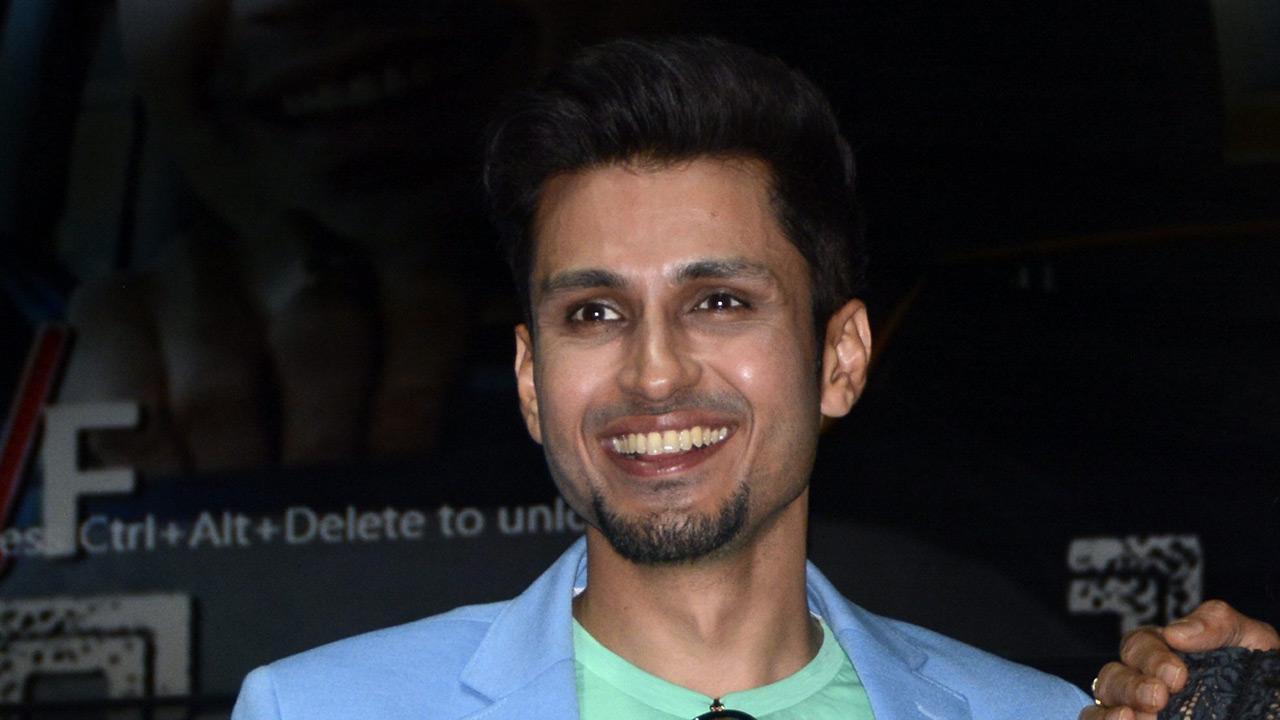
Amol Parashar on playing Bhagat Singh in Vicky Kaushal’s Sardar Udham Singh
Mohar Basu (MID-DAY; July 25, 2021)
He firmly believes in letting his work do all the talking, so Amol Parashar has been quite mum about playing the role of freedom fighter Bhagat Singh in Shoojit Sircar’s Sardar Udham Singh. “It’s a cameo of sorts,” says the actor of the film that was wrapped up in February 2020, a month before the world went into lockdown due to COVID-19.
“It’s the kind of film that will get what it deserves and good things take time to brew,” says Parashar of the Vicky Kaushal-starrer. While the big screen has emulated the man from history in several outings—Shaheed-e-Azad Bhagat Singh (1954), Shaheed Bhagat Singh (1963), Shaheed (1965), 23rd March 1931: Shaheed (2002), the Legend of Bhagat Singh (2002), Shaheed-E-Azam (2002), and Rang de Basanti (2006)—Parashar was keen to interpret the character differently.
“The challenge was to discover this man from the pages of our history and lend authenticity to him. I did my interpretation of the character because playing this part comes with both, baggage and expectations. I was conscious to not copy any other actor and find my own footing. Shoojit Da briefed me right at the start that I need to play a young 21-year-old, passionate boy who is well-read. It was important to humanise a revolutionary like him and the starting point was reading a lot of literature that he had written in his lifetime. His general social commentary about capitalism, communalism and bigotry gives us a peek into his motivations.”
Tricolour movies, then and now: How Bollywood has re-invented films on desh bhakti over the years
7:41 AM

How Bollywood has re-invented films on desh bhakti over the years and made it more diverse — from war films to sports and now, social issues
BOMBAY TIMES (August 17, 2019)
The Hindi film industry has always managed to touch the hearts of cinephiles with films having a dash of patriotism and love for “desh ki mitti”. Over the years Bollywood has managed to invent and re-invent movies based on nationalism and patriotism, leading to a high success rate at the Indian box-office.
Down the decades, films like Kismet, Purab Aur Paschim, Shaheed, Upkar, Border, Ab Tumhare Hawale Watan Saathiyo, Kesari, Baby, Uri: The Surgical Strike and Lagaan have been but a few among many films that celebrated the essence of desh bhakti, evoking the love for the country among cinegoers.
Currently, Indian filmmakers are flipping through real stories to explore the genre. Apart from obvious instances such as recent war films (Uri: The Surgical Strike and Paltan come to mind) that let filmmakers tap the patriotism genre, stories of sportspersons (Dangal, Mary Kom, Bhaag Milkha Bhaag, Gold to name a few) and real incidents, where commoners played the hero (Airlift, Raazi, Pad Man, India's Most Wanted) have come to be ready formula.

‘EVERYONE FEELS PATRIOTIC’
Actor Arjun Kapoor, who starred in India's Most Wanted, says patriotism in films should not be used to further personal agenda but to encourage love for the nation. “Everyone feels patriotic. To be able to speak about it without being jingoistic is great. Sometimes you have to be jingoistic to motivate and encourage, which is also great as long as it is not used for personal agenda. You should not exploit people’s patriotic notions for personal gains,” he said.
 Actress Yami Gautam, who is on roll with the success of Uri — based on the 2016 surgical strikes that India conducted following a terrorist attack in Uri in Jammu and Kashmir — said that “gone are the days of chest-thumping patriotism”. New-age Bollywood films such as Uri seem to thrive on a maxim Yami herself endorses: “Apne desh se behad mohabbat karo, jee tod mehnat karo and desh ka naam roshan karo (love your nation immensely, work hard and make your nation proud).” She added that the success of Uri underlines the nation’s sentiment towards its soldiers.
Producer Sandip Ssingh, who has bank-rolled movies like Mary Kom, Sarbjit and PM Narendra Modi, believes that it’s the love for matrubhoomi that makes the movies strike a chord with the people. “Whether it was Manoj Kumar, who was known as ‘Mr. Bharat’, he made those films and people got emotionally connected to him.. These films will work as it already has an emotional chord attached to it, which is the nation,” he said.

WAR FILMS AND BEYOND
The war film in Bollywood really came of age with Chetan Anand’s 1964 classic, Haqeeqat, based on the 1962 Indo-China war, and probably the most accomplished war drama Hindi mainstream has ever made. The decades that followed saw Border, LOC Kargil, Lakshya, 1971 and Paltan explore various military themes, mostly highlighting patriotism.
 Actor Harshvardhan Rane, who starred in Paltan, says cinema with a patriotic vibe involves the audience. This is perhaps the only aspect about the genre that has not changed over the generations. “Love for your motherland is a very strong emotion and motivation for a story to be told. Films made with a patriotic backdrop tends to involve the audience into the plot immediately,” he said. But with changing time, filmmakers realised that there is more to explore.
In 2001, director Ashutosh Gowariker made Aamir Khan-starrer Lagaan, in which a group of villagers fight the Britishers for tax reduction via a cricket match. The film set a trend of blending desh bhakti with the sports genre in new-age Bollywood. Then there was Rang De Basanti, which, beyond being a blockbuster, also drew a connect between today’s youth and their need to find a purpose and the freedom struggle of Shahid Bhagat Singh, Rajguru, Sukhdev and Chandrashekhar Azad. Bhagat Singh, in fact, has been a subject of numerous biopics.
Actor Sonu Sood, who has essayed Bhagat Singh in 2002’s Shaheed-e-Azam, said, “There is a lot of change in films that are being made on patriotism, because people are expecting it. People have got certain thinking issues towards patriotic films and the type of content provided to the actor and audience, is something which was needed for very long.”
It was just soon after that stories revolving around women made it through — Shah Rukh Khan’s Chak De! India, Alia Bhatt’s Raazi and Kangana Ranaut's Manikarnika - The Queen of Jhansibeing some examples.
— IANS

What's common between Manoj Kumar-starrer Shaheed and Ajay Devgn-starrer The Legend Of Bhagat Singh
7:52 AM

Roshmila Bhattacharya (MUMBAI MIRROR; March 22, 2018)
His first role made Ghulu a hero in his mohalla but through endless rehearsals and costume trials, no one realized that the little boy was suffering from acute stage fright and was dreading his turn in the spotlight.
D-day dawned shimmering with excitement. His family took their place and the curtains parted. All the actors were in place on the makeshift stage, except one. Realization was collective: Where was Ghulu? Where was their Bhagat Singh? There was a mad scramble to find the star player who’d jumped over the wall and melted away into the darkness. His no-show meant that the show had to be eventually cancelled. No one ever let him forget it. Surprisingly, Ghulu grew up to be an actor who christened himself Manoj Kumar and at 22, picked up the pen to immortalize his childhood hero.
On March 23, 1931, Bhagat Singh had been hanged for the assassination of a British police officer, John Saunders. Manoj Kumar had grown up on stories of the martyr but when he asked his leading lady about him, she shocked him by saying blithely, “Of course, he’s a famous dacoit.”
Determined to set the record straight, the actor took four years to complete his script only to discover that after two disastrous, Bhagat Singh biopics, Shaheed-E-Azam Bhagat Singh and Shaheed Bhagat Singh, no one was interested in a third. It was only after Hariyali Aur Rasta had turned him into a star, that his publicist-friend, Kewal P Kashyap, offered to produce Shaheed with him in the lead.
Interestingly, Shaheed was also the title of Dilip Kumar and Kamini Kaushal’s 1948 tragic love story which Manoj Kumar had seen as a boy of 10. Kamini played Bhagat Singh’s mother in his Shaheed. The actress had been incredulous to learn that he wanted her to play his mother. “I don’t want you to play just anyone’s mother but Bhagat Singh’s mother,” he’d explained and she had come out of retirement to shoot for the film when seven months pregnant, radiating the glow of impending motherhood.
Shaheed premiered in 1965 with then Prime Minister Lal Bahadur Shastri among the guests. Thirty-seven years later, Rajkumar Santoshi’s 2002 biopic, The Legend Of Bhagat Singh, with Ajay Devgn, opened, as did Dharmendra’s 23rd March 1931: Shaheed with Bobby Deol as the 23-year-old patriot and elder brother Sunny playing Chandrashekhar Azad. It was a Bhagat Singh festival that year with a few more films, including Shaheed-E-Azam with Sonu Sood. But it was Ajay’s act that remains unforgettable. Ramesh Taurani had once confided that when Santoshi came for a narration, he refused to reveal which actor he had in mind for the lead but while he was outlining his story, the producer could only visualize Ajay in the role. When he told the director this, Santoshi admitted Ajay was his choice as well.
Ajay bagged the National Award for Best Actor for his performance, The Legend Of Bhagat Singh was also adjudged Best Film. Earlier, Shaheed had bagged Manoj Kumar three National Awards. The martyr’s real mother whom the actor fondly called Chaiji, was seated beside him at the Rashtrapati Bhavan during the ceremony and joined him on stage as the whole auditorium rose to its feet to give them a 10-minute standing ovation.
However, for Manoj Kumar the bigger reward came after the film’s release when during a shoot of Amaanat in Goa, he went to a government tea house for a cup of tea. When he asked for a bill, he was told it was already paid for by the sweeper who’d bought him his chai. The old man confided he had never heard of Bhagat Singh till he saw Shaheed and learnt of his sacrifice. “The least I can do is to offer you a cup of tea,” he said quietly.
Manoj Kumar on Shaheed and the idea of 'dying twice'
7:46 AM

Roshmilla Bhattacharya (MUMBAI MIRROR; March 18, 2014)
Eighty-three years ago, on March 23, Bhagat Singh was in his cell when jail officials arrived with his death warrant. The 23-year-old revolutionary, who had been tried and convicted for the murder of British police officer John Saunders, is believed to have quietly requested them to give him a few minutes so he could finish the last chapter of Karl Marx's book. Once done, he let himself be marched to the gallows with a smile playing on his lips.
Manoj Kumar who relived the martyr's short but eventful life in the 1965 patriotic drama Shaheed, insists that Bhagat Singh could have saved his life with an apology. In fact, Chandrashekhar Azad had planned the perfect escape plan for him. But he chose to be publicly executed because he believed his death would inspire the country's youth to rise up against British imperialism.
While reliving his idol's life, the actor and his unit stayed in Ludhiana jail for two months and interacted with the real qaidis. One of them, a Sardar sentenced to life for several murders, confided that he’d been a jail warden in Bhagat Singh’s time and nothing being filmed was exaggerated or out of sync.
“Even the gallows that Bhagat Singh, Sukhdev and Rajguru walk towards were real gallows,” asserts Kumar, who at the age of 10, had been chosen to play the fiery nationalist in a street play but ran away before the curtains went up, overcome by an acute attack of nerves.
Soon after, he accompanied his uncle for his first film, Jugnu. The film’s hero, Dilip Kumar whom he knew as Suraj, died at the end and the young boy cried all the way back home.
But a few months later, he spotted Suraj again on the posters of Shaheed (1948) and coaxed his uncle to take him for the film. On screen, he was amazed to see Suraj resurrected as Ram, fighting his father and the British, before dying a second time.
This time he returned home bemused and asked his mother how many times a man could die. In response to her “once” he prodded, “What if he dies twice?” To that beeji had replied, “Then he is a farishta, an angel.” That day Hari Krishna Goswami who was later rechristened Manoj Kumar for the silver screen, decided he was going to be a farishta too…. He went on to die a martyr’s death on screen.
Kamini Kaushal, who had played Dilip Kumar’s heroine in the 1948 film, played Manoj Kumar’s mother in the Shaheed that came 17 years later. The actress had retired and settled down to quiet domesticity since and was surprised when she discovered what Kumar had to offer. “You want me to play a mother?” she asked. “Not just any mother but Bhagat Singh’s mother,” he retorted. Kamini Kaushal agreed and shot for the film while being seven months pregnant.
The revolutionary’s real chaiji confided to the actor that he reminded her in many ways of the son she had lost to the freedom struggle and even started calling him Bhagat. She was at Rashtrapati Bhavan when Manoj Kumar walked up to receive his first National Award. He invited her up on stage and as the old lady dressed in white stepped in the dais, the auditorium erupted with thunderous applause. Reminisces the actor, “The standing ovation continued for a good 10 minutes.”
Indeed, some memories live on, forever.
Subscribe to:
Posts (Atom)