Showing posts with label Bengaluru. Show all posts
Showing posts with label Bengaluru. Show all posts
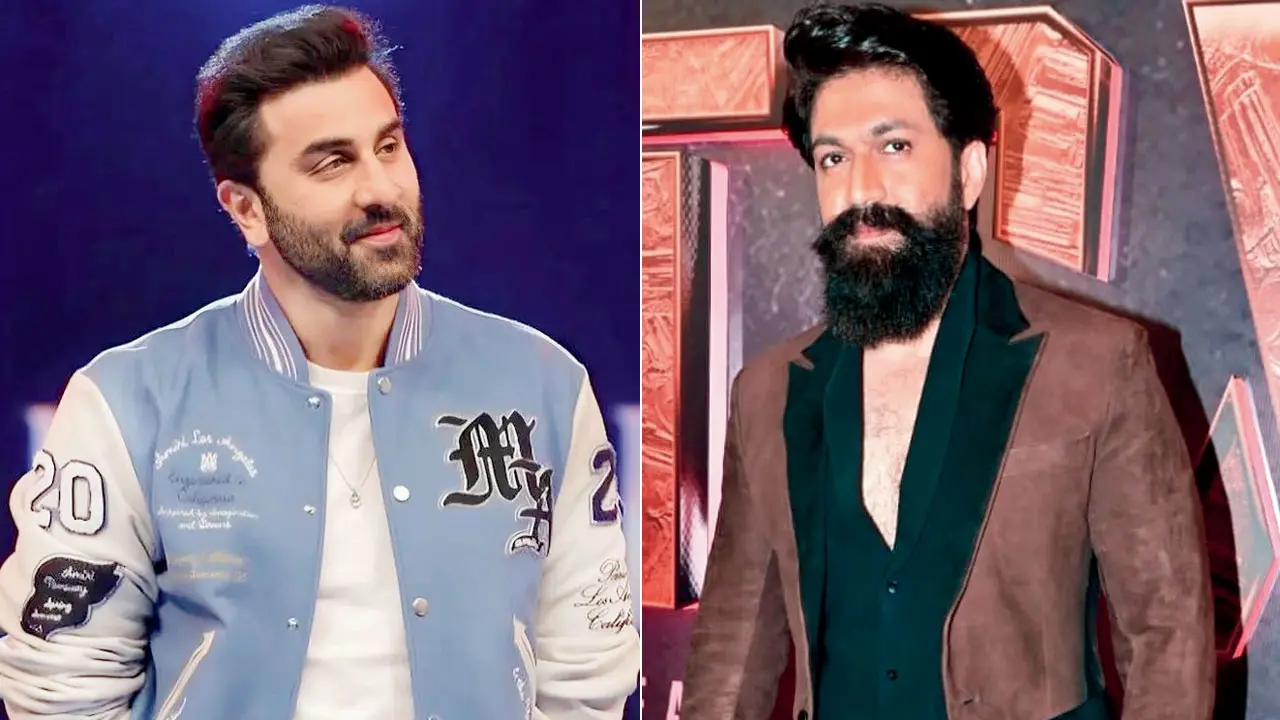
Ranbir Kapoor, Yash to lead special fan events for Ramayana: Part 1 in Delhi, Bengaluru
8:43 AM
Mohar Basu (MID-DAY; September 3, 2026)
With ‘Toxic: A Fairy Tale For Grown-ups’ in theatres now, Yash is giving undivided attention to his next ambitious release, ‘Ramayana: Part 1’. While the Ranbir Kapoor, Sai Pallavi, and Yash-starrer has generated enough buzz, we’ve heard that the two male leads plan to take their epic to fans across India through special interactions.
According to an industry insider, Kapoor — who plays Lord Ram — will spearhead a fan meet-up in Delhi on October 31, while the South star will host the Bengaluru leg on November 1.
“The idea is to create a pan-India connect. Ranbir and Yash will lead the interactions in their respective cities,” said a source.
The team is also said to be planning a summit in Hyderabad, potentially a day before the Nitesh Tiwari-directed venture’s India release on November 8. Details of the event are still being worked out.
The source added, “The exact format has yet to be finalized, but over 4000 people are expected to attend. The makers want to ensure the film travels to the South belt. That said, the official première of ‘Ramayana’ will be in Mumbai.”
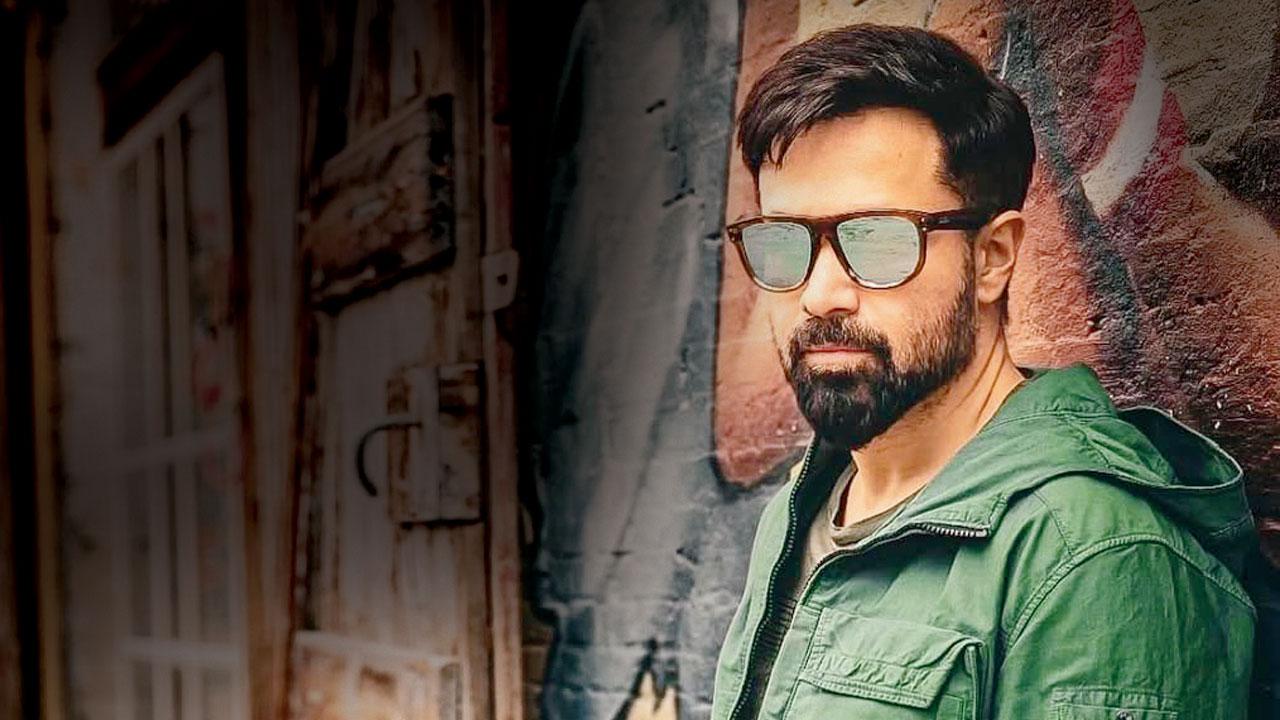
After Awarapan 2 success, Emraan Hashmi returns to stage after 19 years; charges Rs. 2 cr
10:57 AM
Upala KBR (MID-DAY; August 28, 2026)
You’ve seen Emraan Hashmi plenty on screen, but when was the last time you saw him performing on stage? Some may recall the actor’s rare dance performance at IIFA Awards in 2007. Well, 19 years later, he is going back on stage.
Hashmi, the man of the moment after Awarapan 2’s runaway success, is headlining two gigs — on August 29, he will host a Bollywood-themed event, titled The Emraan Era, at Sunburn Union in Bengaluru. A week later, on September 5, he will share the stage with DJ Ganesh at Quake Arena in Hyderabad.
According to sources, the actor, who is riding high on the Awarapan 2 wave, has charged a cool Rs 2 crore for the appearances. But then, with Hashmi comes his massive fan following and an enviable playlist of one chartbuster after another. The events promise Bollywood beats and nostalgia, taking the fans back to the aughts.
A source told mid-day, “The first event at Sunburn Union will have the star burning up the stage, reliving his bangers from Murder [2004], Aashiq Banaya Aapne [2005], and Jannat [2008] — all the films that made Emraan a household name. Joining him that evening would be DJ Aerreo. At the Hyderabad gig, he will make a brief appearance. DJ Ganesh will present remixes and mash-ups of Emraan’s party starters. While he has always been popular with millennials, after The Ba***ds Of Bollywood [2025] and Awarapan 2, he has found a new fan base in Gen Z as well.”
I felt a bit sorry for Virat Kohli actually-LizLaz
4:47 PM

Amid the frenzy surrounding Virat Kohli’s latest ‘likegate’, viral girl LizLaz reacts to the brief like- unlike moment
Rishabh Suri (HINDUSTAN TIMES; April 19, 2026)
Friday belonged to Virat Kohli and Instagram’s newest obsession, LizLaz. The cricketer, who runs the most-followed Indian Instagram account with 276 million followers, briefly liked one of her posts before unliking it, triggering a fresh round of ‘likegate’ chatter online, after a similar incident with actor Avneet Kaur last year. Memes, throwbacks, and speculation followed in minutes.
Caught in the middle of the frenzy, German vlogger-musician LizLaz says the attention caught her off guard. “It was crazy because I woke up and then I was all over the news,” she tells us in an exclusive chat, adding, “I don’t even know when he liked the picture, I learnt through the news. So many people found the articles on me and sent them in my DMs; they were super excited.”
The buzz has also revived an old clip where she admits being a Kohli fan. Her connection to cricket, she says, began during a trip to India last year. “I was born in South Africa but brought up in Germany, where the national sport is only football,” she shares. “Then I started watching IPL with my friends in Bengaluru... It was contagious and I also became an RCB fan. And obviously, if you support RCB, Virat Kohli is the most exciting player to watch. So I was happy about him liking the picture.”
As for the unlike? she isn’t reading too much into it. “No, I felt a bit sorry for him actually! I don’t even know how it became such a big story. But I am grateful for him liking my pic.”
Yuzi sends legal notice to Taniya Chatterjee after viral DM video
Actor Taniya Chatterjee claims cricketer Yuzvendra Chahal has sent her a defamation notice after a video of her sharing his alleged Instagram DM went viral. Chahal’s team has also confirmed the legal notice. In the clip, Taniya said he called her “cute”, sparking online chatter. Later, she said she didn’t expect it to “go so viral” and called the legal move “ridiculous”, maintaining she did not intend to malign him. She also alleged his PR team asked her to delete the video.
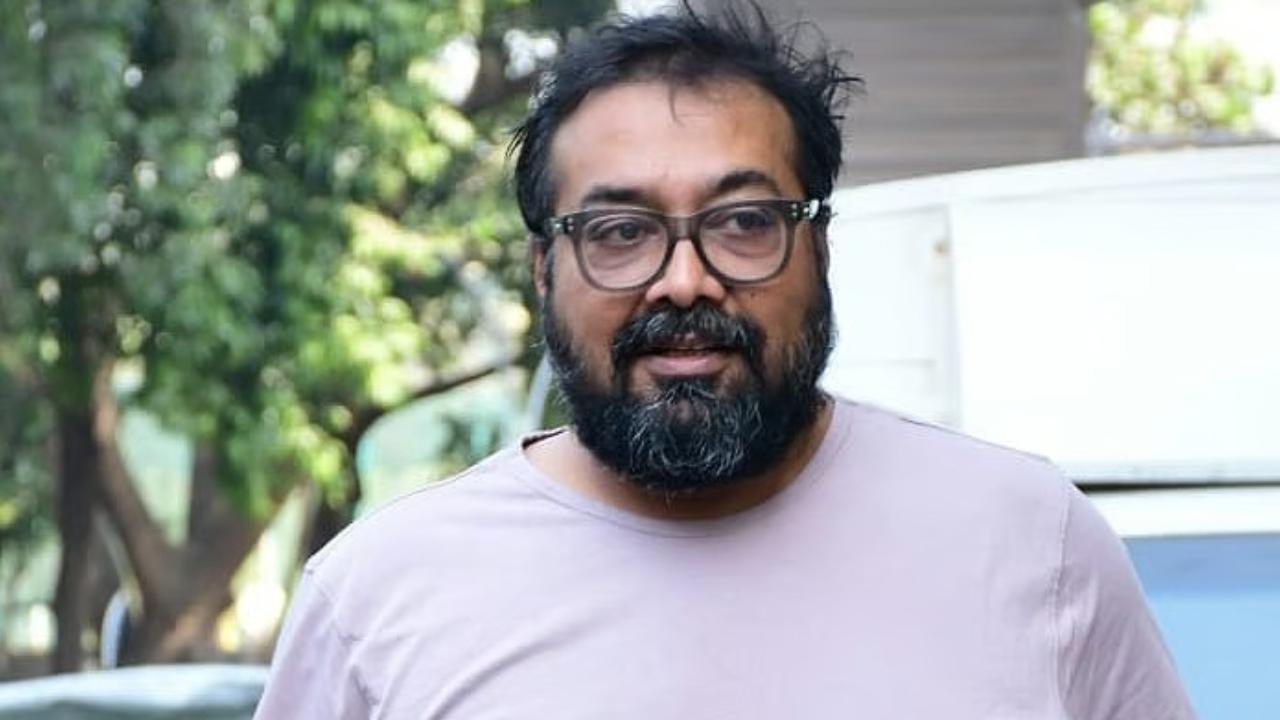
Today, cinema is marked by fear, propaganda and a loss of truth-Anurag Kashyap
9:49 AM
V Nichita (BOMBAY TIMES; April 16, 2026)
When filmmaker Anurag Kashyap sat down for an unfiltered fireside chat with writer and moderator Suman Kumar at the Bengaluru Art Weekend, what emerged was not a polished masterclass, but a candid, stark conversation on propaganda in cinema, creative frustration, and why Anurag has stepped away from directing — for now. Opening the discussion on propaganda in films today, Kashyap didn’t dismiss the debate, he reframed it. Excerpts from the conversation:
‘Caution culture has fundamentally altered filmmaking’
“If a film is propaganda, then the film opposing it is also counter-propaganda. Films that present facts as facts are simply not being made. The ones that hold a mirror are seen as too troubling,” he states. For him, the larger concern isn’t propaganda itself, but the disappearance of honest storytelling. “Today, when you write a script, the first person to read it isn’t the producer or actor — it’s a lawyer who flags what’s ‘problematic’. That culture of caution has fundamentally altered filmmaking,” he believes.
‘I would never cast myself’
Anurag Kashyap the actor, he admits, is very different from Anurag Kashyap the director. “Every time I act, I think, ‘What did I get myself into?’ The director in me would never cast me,” he says. So why take up acting roles? “I’m not making films right now — I need a source of income. Therefore, if someone I trust offers me something, I say yes,” he says simply.
‘I’ve put filmmaking on the back burner is because I’m unable to make honest films’
Today, Anurag points out, “Films are getting dumped, they are not even making it to OTT platforms. As a filmmaker, I find that there is no point. If you make a film only to watch it yourself at home, what’s the point?” For now, he’s choosing to step back. “The reason I’ve put filmmaking on the back burner is that I’m unable to make honest films. I’d rather write and be ready for a time when I can make films safely,” he says.
‘I want to make audiences uncomfortable’
Anurag’s cinema has often leaned into moral ambiguity — and he embraces that instinct. “I cannot write a character who is absolutely moral. There’s some degree of immorality in all of us. I like to make people uncomfortable, even if it’s just a little.”
Reflecting on audience reactions to morally complex characters, he added: “If you feel sympathy for someone with no redeeming qualities, instead of judging them, judge yourself. That’s what art does — it makes you look inward,” he says.
‘Finish your writing before you judge it’
On writing, Anurag kept his advice simple and practical. “When you start writing, finish the script. Don’t read what you’ve written until you’re done. Overthinking is the biggest creative block. If you keep rereading, you’ll never finish. I still write with a pen and don’t revisit it until the end,” he says.
He also cautioned against chasing market-friendly ideas. “A lot of people get stuck trying to find an idea that will ‘work’. If the need to make a film outweighs the need to be called a filmmaker, it becomes easier. I exorcise myself through writing,” he says.
‘Hunger drives everything in life’
Drawing from his own journey, Anurag’s advice to aspiring creators is, “It’s not difficult if you want to write, act, or make films. The real challenge lies in expectations. If you want to be a superstar, then timing, luck, networking — everything comes into play. But hunger is what drives you. When you’re hungry, you find food; it’s the same in any field.”
‘Animation in India is still boxed as children’s content’
Commenting on the lack of adult animation in India, Anurag states that it remains a major limitation. “The fact that we call it ‘cartoon’ automatically reduces it to children’s content.” He pointed out that even globally successful animation often fails to find theatrical space in India. “It travels the world but doesn’t release here. The next five years are going to be very dangerous for Indian animation. With AI entering the space, creative risks may shrink further,” he states.
‘The Kannada film industry is not in a very great state of affairs right now’
Anurag acknowledges both the breakthroughs and the struggles he sees in the Kannada industry. “It’s not a very great state of affairs out here,” he said, noting that while big hits emerge, smaller films continue to face funding and distribution challenges.
“Projects get funded only if certain stars are attached,” he points out. This, he believes, impacts originality. “People start imitating success and lose their own voice,” he says. Yet, he remains hopeful about filmmakers who continue to stay true to their vision.
--------------------------------------
I love Bengaluru. It’s extremely peaceful. People are non-intrusive — they give you space. Returning to Mumbai now feels ‘very weird’
- Anurag Kashyap on his love for Bengaluru
Big budgets, bigger losses: Is pan-India ambition hurting Kannada cinema?
8:39 AM

Single screen theatres are banking on re-releases. The re-release of Puneeth Rajkumar’s ‘Appu’ in 2025 and ‘Jackie’ in 2024 witnessed houseful shows and contributed significantly to the revenue. Credit: DH file photo
S R Ramakrishna, Pranati A S (DECCAN CHRONICLE; March 15, 2026)
Bengaluru: Kannada cinema, with a history of 92 years, is grappling with a new dilemma — should it cater to the pan-India expectations generated by blockbuster hits such as KGF and Kantara, or make less expensive cinema with better box office prospects in Karnataka?
In the six years since the gangster drama KGF hit the screens, many filmmakers in Karnataka have attempted richly mounted, big canvas productions, with national and international audiences in mind. Not many have succeeded, and the focus on scale has created a void in an industry otherwise conservative in its spending.
The industry is paying a hidden price for its obsession with pan-Indian cinema, many insiders told DH.
The sequels to KGF and Kantara (in the latter case, the story goes back in time from where the first film began) have continued their winning streak at the box office, but most other ambitious ventures have tanked.
Kabzaa (2023), starring Shivarajkumar, Upendra and Sudeep, and 45 (2025), starring Shivarajkumar, Upendra and Raj B Shetty, are just two of the many films that came in the wake of the big hits and lost their way. Some films have fared so poorly that their producers have sworn off films for life.
Of the 253 Kannada films produced in 2025, only a handful have recovered their investments. The numbers were equally discouraging in 2024, with just 10-12 moderate grossers and almost no big hits. Film production is always a gamble, but when the odds are so bleak, the enthusiasm for creative risks takes a hit.
Ravichandra A J, producer of the sleeper hit Blink (2024), believes production houses with deep pockets — for example, Hombale Films, which made KGF Chapter 1 and 2 — should not remain wedded to lavish spectacles. “They should back young filmmakers,” says Ravichandra, who has distributed Shakhahari and Second Case of Seetharam, films with tight budgets.
The theatrical success of Blink, a sci-fi shot with theatre actors on a shoestring budget, brought hope. While most films pitched to pan-Indian audiences failed, Blink went from being hyper-local to becoming pan-Indian, finding love on OTT. It was dubbed into six Indian languages and released on Amazon Prime.
A producer who requests anonymity believes the gloom can be dispelled by enlightened project choices. “When an industry is in distress, production houses must make films with reasonable budgets, say with Rs 50 lakh to Rs 100 crore. An industry needs films made at different budget points. In Telugu, six or seven production houses are actively making all kinds of films. Mythri Movie Makers, for example, makes a Rs 500 crore film and follows it up with a Rs 5 crore film.”
The production numbers are high mainly because of Karnataka’s subsidy policy. More than 200 films are made every year, many with an eye on the subsidy rather than the box office. The government gives subsidies to 100-125 films a year, with each film getting Rs 10 lakh. Subsidies have hit a road block though. Citing a financial crunch, the government hasn’t given subsidies from 2018-19. Just last week, Chief Minister Siddaramaiah promised to clear the dues, and the talk is that, going forward, subsidies will be discontinued.
Amid the despondency, cinema from the Karnataka coast has driven home many telling points. Su From So (2025), scripted and directed by J P Thuminad, did not bank on big promotions; instead, it went entirely by word of mouth. The comedy, produced by Raj B Shetty’s Lighter Buddha Films, drove home an anti-superstition message, and became the second-highest grosser of the year. Rare hits of the past couple of years, such as Su From So, owe their success to their writing, and not so much to stars or big banners.
Actor-producer Dhananjaya K A believes actors and producers who have reaped the fruits of blockbuster hits should encourage younger filmmakers from diverse backgrounds, and that is the way to keep the industry ticking.
He tasted success as an actor with Tagaru (2018) and the Telugu hit Pushpa: The Rise (2021), and set up Daali Pictures in 2021 with the objective of promoting fresh talent. His productions Badava Rascal (2021) and Tagaru Palya (2023) impressed audiences with their storytelling strength and production compactness.
Craft of writing
Some filmmakers such as Rishab Shetty assert, and rightly so, that truly local stories can have universal appeal, but the lens is blurred when an entire industry begins to chase pan-India dreams. As film critic Swaroop Kodur says, stories are no longer rooted when an industry is obsessed with catering to huge, imaginary audiences.
A consequence is that films blindly follow other films, with no attention being paid to original writing. When a film is structured exactly like last year’s hit, it is more redundancy than inspiration. Kabzaa came out of KGF, and so many 'Kantaras' are still in the making.
Formulaic films have existed since the beginning of cinema, and certain tropes are indispensable in storytelling, but for a film to be fresh, filmmakers trying to break the mould say, it must draw from contemporary realities. “Big films have always captured our imagination, but we are at a point when we are exhausted by the hype. There is so much to deal with in real life, and then we have a visual overload because of social media, and so increasingly, cinema is taking a backseat,” Kodur says.
In Karnataka, unlike in neighbouring Kerala, the literary community has remained distant from the film industry. Some Kannada directors, such as Puttanna Kanagal, were aware of literary works, and often based their films on novels and their songs on the poetry of the greats, but that was another era. With some exceptions, most filmmakers in current Kannada cinema are oblivious to the wealth of possibilities in contemporary literary writing.
Aravind Kaushik, director of offbeat films Nam Areal Ond Dina (2010) and Tughlaq (2012), says the industry lacks filmmakers who see their art as a medium to express their unique perspectives. “Instead, the focus has shifted towards market-driven content, prioritizing entertainment and box office success over meaningful storytelling. This disconnect leads to inflated budgets and a loss of connection between the film and its audience,” he says.
Ticket pricing
Multiplex culture, with its premium ticket pricing, is designed for big-budget films, and so it is detrimental to smaller, independent cinema, he says, advocating a curated distribution system that works on the lines of film festivals and cinema clubs. A ticket should ideally be priced below Rs 200, and that would make cinema more accessible and democratic, Kaushik says.
Producers are flooded with pitches, and they see a pattern. “Every director wants to make a pan-India film. Out here, Kannada audiences have lost trust in the industry. We have to first gain their trust back. We have to understand the market here and the focus should be on the market here. Instead, everyone is after the ‘pan-India’ market,” says a producer. Talking about the Arjun Janya directorial 45, a multi-starrer produced by Ramesh Reddy that fizzled out at the box office, he says, “Good producers sadly are falling into the wrong hands.”
Ravichandra believes that nothing may come out of the Rs 200 ceiling on tickets in the short term. As a marketing strategy, Second Case Of Seetharam, a slick police procedural starring Vijay Raghavendra, opened preview shows for Re 1. And yet the halls remained empty, he says. Subsequent reports said the film had picked up and was doing well in Tamil Nadu. Ravichandra argues that the ceiling on ticket rates, if implemented, will create a more democratic cinema viewing culture in the future. A production house in Bengaluru is contesting in court the Siddaramaiah government’s decision to cap ticket rates at Rs 200.
Cinema as ‘content’
Where writing is concerned, Kaushik underlines the importance of the individual voice: “Any form of art including cinema becomes a product later. It is primarily an expression of who the artist is.” The market for mass-produced ‘content’ reaches a point of saturation, and that is where the Kannada film industry is at today, he says.
“We have to up our game as far as storytelling is concerned. Filmmaking in itself is not very difficult today. So the primary question we have to ask ourselves is why we are making a film. Everyone is running behind big budgets, where every actor aims to become a star and every movie aims to become a pan-Indian movie,” he says.
Insiders agree the industry is facing numerous challenges — the inability to invest in writing, the refusal to accept failure, and a focus on short-term gain rather than long-term consistency.
A new problem is the paranoia that has gripped filmmakers when their productions are panned by critics. Many production houses orchestrate a positive reception for their films by paying TV and social media channels for promotions. The first three days after a release are crucial for a film’s success, and many producers set aside money to create a buzz. Sometimes, they end up blaming independent critics for the failure of their films.
OTT challenges
A season of misselling may have created a crisis of credibility for Kannada films when it comes to OTT. “They treat calls from Kannada productions like credit card spam calls,” a filmmaker says. When hyped films, sold to OTT in 2023 at fantastic rates, fared miserably at the theatres, the OTT bosses became wary.
Amazon Prime Video now follows a pay per view model for Kannada films — Rs 4 per hour of viewing. If a viewer watches a full film, the producer gets Rs 10. Netflix buys outright streaming rights for Telugu and Hindi films, and JioHotstar is picking up films in Tamil, Telugu Malayalam and Hindi. Zee buys both streaming and satellite rights of films that have performed well in theatres.
The argument that Kannada cinema has a limited market is often countered by hits that defy the odds, and film buffs recall fondly how, when Rajkumar, Vishnuvardhan, Ananth Nag, Shankar Nag, Srinath and Ambarish were delivering commercial hits, a cinema inspired by literature emerged parallelly. The industry is at such a crossroads all over again.
Boong’s BAFTA win makes me happy and sad-Vikram Kochhar
10:47 AM

Deep Saxena (HINDUSTAN TIMES; February 27, 2026)
Director Lakshmipriya Devi’s debut film Boong has made history as the first Indian movie to win a BAFTA Award. Actor Vikram Kochhar, the only Bollywood name in the Manipuri-language film, calls the moment “extremely elating” yet bittersweet.
“It’s a proud moment for all of us, especially with Prime Minister Narendra Modi congratulating the team. I’m happy my choice to back indie cinema paid off. But it’s also sad that we’re celebrating the film only after the West recognised it,” he says.
Released last year, the film struggled for screens in India. “My parents in Hyderabad and friends in Bengaluru couldn’t watch it due to no-shows. It did well at festivals and in the UK, but back home, it’s a brutal reality. We watch global content like K-dramas, yet we failed to support our own,” Vikram adds.
The 42-year-old reveals he signed the film while shooting Dunki (2023) where Lakshmipriya was assisting director Rajkumar Hirani.
He shares, “Raju sir even offered me an ad with actors Sanjay Dutt and Arshad Warsi, but I turned it down as I had committed to Boong. I believed in the film, just never imagined it would win a BAFTA.”
Viewers are intelligent enough to decide what they want to take from Dhurandhar-Danish Pandor
10:25 AM

Actor Danish Pandor on the film’s ban in UAE and camaraderie with co-stars Ranveer Singh and Akshaye Khanna
Vishakha Pandit (HINDUSTAN TIMES; January 12, 2026)
After nearly 15 years of navigating auditions, actor Danish Pandor is basking in widespread recognition for his role as gangster Uzair Baloch in Dhurandhar (2025).
The 38-year-old credits the “overwhelming” appreciation in part to his co-stars Ranveer Singh and Akshaye Khanna for fostering an inspiring atmosphere on set. “Ranveer is a rare actor who allows others to shine. His only focus is how to make a scene better. He comes to set completely in character. You get inspired watching him work,” he shares, adding, “Akshaye is a man of very few words. He sits quietly, observes everything, and when the camera rolls, he transforms. It taught me how much acting is about listening and absorbing; it’s an experience no acting school can give.”
The film has courted controversy by a section terming it a ‘propaganda film’ and has been banned in the Middle East. But Danish doesn’t let the criticism weigh him down: “Viewers are intelligent enough to decide what they want to take from it. If you keep focusing on the negative aspects, you won’t be able to move forward. You take what is good and move ahead with a pinch of salt.”
In an unpredictable industry, the actor is now focused on “proving himself again and again”. Recalling a particularly disheartening experience, he says, “The director loved my audition and a contract was sent over to me. Months passed as I waited for shooting to begin, when I realised the movie had been made with someone else. What do you do in that situation? You can’t fight it. You just move on.”
FLIPPERACHI ANNOUNCES INDIA TOUR
After actor Akshaye Khanna’s dance to Flipperachi’s track FA9LA from the movie went viral in India, the Bahraini rapper has announced a tour here. He posted on Instagram on Saturday night, “First India show date announced! We’re excited to be in Bengaluru on March 14 at @un40fam! More dates to be added soon. Which city should we stop in? Drop your city in the comments! (sic)”
The rapper, whose real name is Hussam Aseem, had earlier told HT City in an interview, “I’m overwhelmed and grateful for all the love FA9LA has been getting everywhere, but specifically in India. It’s another level when people vibe to your song at this scale. My team is working on multiple performance and collaboration projects. I’m very excited to perform live in India soon.”
I cannot struggle anymore. I will not keep pushing anymore-Kanu Behl
9:32 AM
Priyanka Sharma (MID-DAY; November 15, 2025)
The morning of a release day for a filmmaker is usually filled with hope, excitement and anxiety about the audience’s response. But for director Kanu Behl, it was marked by struggle and disillusionment. After a wait of almost two years, Behl’s Agra released on Friday on 70 screens across the country. The filmmaker criticised multiplexes on social media over the film’s showcasing. “We’re being denied shows because small films ‘don’t fit into’ multiplex chain programming,” he wrote on X.
On a call with mid-day, Behl shared his frustration over the relentless fight he had to put up until the day before the release. “Till the last minute, we were told [by theatres], ‘We’ll figure, but nothing [happened],” he said.
When told that only four shows were available in Mumbai on the opening day, Behl pointed out the irony. “On Thursday night, we held a screening in Bengaluru. We had to turn away people because it was houseful. We got a standing ovation. I did around 12 pre-release screenings in India and at least 10 were with aam janta. It played to packed halls,” he said.
Agra has also gained recognition on global platforms, premiering at the Cannes Film Festival 2023. The anticipation was heightened because this is Behl’s theatrical comeback after the 2015 acclaimed Titli. It’s why the cold response of theatrical stakeholders has alarmed Behl — not for himself but for the future of young filmmakers.
“If this is their treatment of a film that opened at Cannes, I shudder to think what younger filmmakers and the next generation will go through. Then they [multiplexes] turn around and say, ‘Aisi filme chalti nahi hain.’ And those they run across 2000 screens, play to empty theatres. So when is this system going to change?”
Behl shared that releasing a film on the big screen is becoming a mental health crisis for independent filmmakers. “The illusion that multiplexes were there to accommodate all kinds of films is long gone. Now it is just about fighting for survival. But I am not going to fight for survival anymore. Either this system has to work or I’m out. I don’t want to do this anymore. How long will a filmmaker fight? This is a larger mental health issue within the industry. This happened with All We Imagine As Light and Sabar Bonda. It will keep happening,” he lamented.
Unless, the audience proves the decision makers wrong, Behl said. Even though the director never believed in putting the onus on the audience to make a film breathe on the big screen, this time he could only look towards the viewers for some hope. Behl said that if Agra doesn’t find audience support, he would quit filmmaking.
“I really want to reach out to the audience and say, ‘It’s in your hands. You come and watch this film and show these guys how much money a film like this can earn or I'm quitting filmmaking. Mujhe nahi karna. I cannot struggle anymore. I will not keep pushing anymore. I will leave filmmaking. (In any other scenario) I would never put this sort of a responsibility on the audience. It's not their responsibility. It is of the gatekeepers. It is these guys who should be doing their job. But in the absence of that, I think the responsibility finally comes upon the audience, including me. This has to be a protest and some sort of a coming together for the audience. So, if there’s only one show available, it should run houseful. If the audience wants to give them an answer and tell them what it wants, this has to come out of the social media echo chamber. Only that will wake these guys up.”
Shouldn’t the industry also unite against the crisis, we asked the filmmaker. The industry would never do it, he replied. “Because they are a cabal. They're a mafia. They all have their families. They all have the kids within the families to protect. It is an incestuous sort of mafianess. So they are not going to move,” he said.
I don’t enjoy acting. I don’t want to have an acting career-Anurag Kashyap
3:30 PM

Upala KBR (MID-DAY; October 31, 2025)
Behind the camera is arguably Anurag Kashyap’s favourite place in the world. That said, of late, we’ve seen him facing the camera just as much. The filmmaker featured in four releases last year, and will soon be seen in three more — the Tamil action thriller One 2 One, Telugu drama Dacoit: A Love Story, and the Kannada sports drama 8. It looks like the acting bug has bitten him.
“I don’t enjoy acting. I don’t want to have an acting career or be known as a star-actor,” states Kashyap, insisting that filmmaking will always be his true love. “I love making and writing films. The process of filmmaking is in my blood. I am making movies non-stop and I want to continue making them. In my free time, I am also writing,” says Kashyap, whose directorial venture Nishaanchi released in September.
Earlier this year, the director had announced that he had shifted to Bengaluru as he found the Hindi film industry “toxic”. How is Bengaluru treating him? Fabulously, he says. “[When in Mumbai], I was in depression for some time. The transition happened during Kennedy [2023], and I came out of it. Leaving Mumbai changed me a lot.”
He can feel a tangible change, he says. “Bengaluru is beautiful because I am not surrounded by film people or the same conversations that bore me. Here, the conversations are about cinema and not about box-office business. Nobody discusses films, music, and literature anymore [in Mumbai]. The cultural space in Bengaluru is beautiful. I keep acting in South movies and keep looking at scripts to direct. After I complete my acting assignments, we’ll see what happens in 2026.”
Ajay Devgn takes his chain of theatres Devgn Cinex to South
10:29 AM
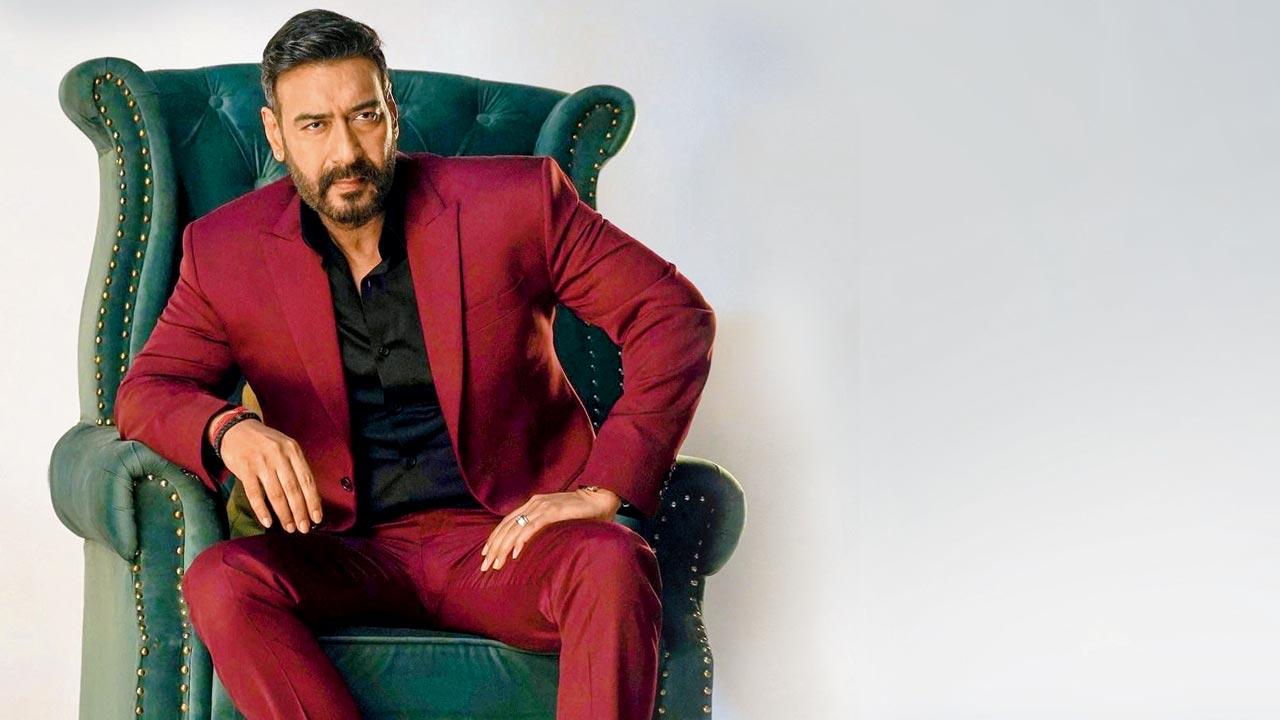
Having recently rebranded his cinemas as Devgn CineX, Ajay Devgn to expand the chain to seven cities in South India; plans to open VFX training centres too
Upala KBR (MID-DAY; October 13, 2025)
In August, mid-day reported that Ajay Devgn is in talks with three production houses in South India, with his first collaboration of the lot being with Kannada director J P Thuminad (Southside story, Aug 29). But the superstar’s interest in the South market goes well beyond headlining movies. On October 1, he unveiled Devgn Cinex — his chain of theatres, earlier known as NY Cinemas — in collaboration with Hyderabad-based Chinta Sasidhar’s Vishwa Samudra Group. It is learnt that over the next few years, Devgn intends to expand the chain across seven cities in South India.
Devgn first started NY Cinemas in 2019 in Ratlam, before launching more outlets in Uttar Pradesh and Gujarat.
A source reveals, “Now with the new identity of Devgn Cinex, the plan is to expand it all over India, especially in the southern cities of Chennai, Bengaluru, Hyderabad, Guntur, and more. In the past few years, Ajay has noticed the rise of Tamil, Telugu, Malayalam and Kannada movies, and how the footfall in theatres is higher in that market. The company’s strategic focus is to expand across metros, tier-1 cities, and strengthen its footprint in South India. The brand wants to redefine the movie-going experience through state-of-the-art theatres equipped with modern digital technologies, and by offering customer reward programmes.”
Theatre chains are only a part of Devgn’s larger plan. The actor also wants to expand his VFX company, NY VFXWaala. While it already has a presence in Hyderabad, the superstar wants to take it to other cities. Another significant step is opening VFX training centres.
The source elaborates, “In July, Ajay met Telangana Chief Minister Revanth Reddy and expressed his interest in establishing a VFX skill-training centre to create more job opportunities for the youth as well as increase the talent pool in the film industry. He plans to bring in experts for the skill training studio. He wants to promote the media and film industries as part of the Telangana Rising 2047 plan. His VFX company recently tied up with the Swedish studio, Goodbye Kansas Studios, and will use its technologies to upgrade the VFX quality in India.”
VFX artists bring Hollywood dreams to life. Can tariffs be the kiss of death?
8:20 AM

For India’s invisible VFX army, the bigger worry is AI
Mohua Das (THE TIMES OF INDIA; October 11, 2025)
That jaw-dropping moment in ‘Mission: Impossible – The Final Reckoning’ of Tom Cruise trapped in a steel pod, watching nuclear missiles arc across the sky and cities vanish in fiery blasts was pieced together in a modest apartment in Bengaluru’s Whitefield.
“I was in my shorts, sipping chai, compositing the missile launches, the explosions and the whole sequence that was CGI,” says Mayank Tiwari, a mining-engineer-turned-VFX-compositor from Ranchi, laughing at the absurdity of working on the shot from his swivel chair.
Over the years, he’s cut out shoot plates for Hollywood films like ‘Cats & Dogs’, ‘Green Hornet’, ‘Gulliver’s Travels’, and ‘Clash of the Titans’, cleaned up skylines for ‘Tron: Legacy’, simulated a tsunami in ‘Hereafter’, and built royal banquets for ‘The Gilded Age’.
That, in a sense, is the story of India’s quiet, unseen rise as Hollywood’s visual-effects backroom, all bringing cinema’s grand illusions to life.
Today, Gaurav Choudhury in Patna who leads a 100-member team at Rotomaker, a self-described ‘offshore VFX partner’ for global studios, shows just how far this largely invisible workforce has spread. With branches in Pune, Chennai, Hyderabad, and Vijayawada, the studio brings high-end work closer to the small towns its artists come from.
“A lot of us are from Bihar, UP, and Bengal,” says Choudhury, who works on wire removal, cleanup, and frame restoration. “It lets me stay close to home and still earn almost twice what I would on an Indian project. We don’t always know which client we’re working for, but there’s a steady flow of international commercials and web series.”
Ganesh Papanna, vice-president of ABAI, a Karnataka-based non-profit for India’s animation, visual effects, gaming and comics (AVGC) industry, says Indian studios manage the nuts and bolts of high-volume, lower-cost work — while the creative design stays with Hollywood. The VFX supply chain runs like a global relay where a single shot can pass through half a dozen hands across three time zones.
Hollywood studios such as Disney or Paramount hire top vendors in the US or UK like ILM, MPC, Framestore who then send large portions of work to Indian production houses like Prime Focus, DNEG, or Prasad EFX. These major studios break down sequences into smaller tasks and pass them to mid-sized boutique studios that specialize in one or two skills. Those boutiques, in turn, rope in freelancers finishing individual shots from home.
That future, however, holds new uncertainties. There’s the spectre of Donald Trump’s proposed 100% tariff on foreign-made films. “I think the 100% tariff is on films entering America,” clarifies Papanna. But he’s confident that the industry can survive this.
“For work done outside the US, the surcharge is 25%. Even then, it’s cheaper to do it here.” The likely fallout, he says, will be leaner vendor rates. “A producer might say, ‘I can’t spend Rs 100, do it for Rs 70’ but somebody will take it.”
The math makes it obvious why India is the execution hub. “An average roto artist in India might earn around Rs 20,000-Rs 40,000 a month — roughly $3,000-$6,000 a year — for work that would cost $40,000-60,000 annually in the US.”
It’s this enormous cost gap, says Papanna, that keeps the world’s most spectacular explosions, creatures, and galaxies routed through Indian hands.
“If Hollywood is the interior designer, think of Indian VFX firms as painters and carpenters,” says Parthasarathy Iyer, who runs Andheri-based studio Katalyst Creates.
“I have about 25 artists when work comes in,” says Iyer. “They can be anywhere in Patna, Goa, or Mumbai. All they need is decent internet.”
Abhishek Prasad, director and chief technology officer of Prasad Studios including Prasad EFX, has been part of the invisible engine behind Hollywood spectacles like ‘Ben-Hur’, ‘Hercules’, ‘Hugo’ and ‘Maleficent’.
“We do a lot of detail-heavy work that may not carry our name in the end credits (due to non-disclosure agreements) but is essential for every frame to hold together,” he says. Studios, he adds, “know we understand workflows, quality check, and the discipline required.”
Scalability is key too. “We can ramp up hardware, software, and people in a month. That kind of agility isn’t easy elsewhere.”
Hollywood’s biggest VFX vendors set up shop in India in the mid-2010s. Technicolor — the French company behind the visual effects of countless Hollywood blockbusters — led the charge. Within months, they had snapped up nearly every skilled artist in the country.
“It was a gold rush,” recalls Tiwari, who rode that wave. “At first, they gave India the easy shots, but once we kept delivering smarter fixes, the trust grew. And if you were earning Rs 60,000 a month for Indian projects, you could suddenly make Rs 3-4 lakh doing the same job for a Hollywood project.”
For American studios, even that was roughly half of what they’d have paid a mid-level artist in the US. Then the bubble burst. In Feb 2025, Technicolor’s global operations went bankrupt, a casualty of the prolonged 2023 Hollywood strikes. “Overnight, over 3,000 artists in India lost jobs,” says Tiwari. But that’s also when the remote-freelance economy exploded.
Studios set up small India outposts or paid through partners. “Old colleagues from Los Angeles would message asking if I was free, had a software licence and we’d put together a team overnight. And it paid far better. What I made in a month as salary, I could now make in ten days,” says Tiwari. Day rates run anywhere from Rs 3,000 to Rs 30,000, depending on skill.
India’s main VFX hubs remain Bengaluru, Mumbai, Hyderabad, and Chennai, but mid-sized studios and freelancers can be based anywhere. “Freelancing has become very, very big,” says Papanna. "People work in a company by day and freelance at night. I’d say 35% of artists are freelance now.”
So, if tariffs aren’t the real threat, what is? “AI hasn’t fully entered VFX yet, but when it does, jobs will go,” says Iyer, who’s already adapting. “I don’t do heavy VFX now but focus on motion graphics and title montages, which I can now do myself on AI tools like Midjourney instead of hiring an artist.”
Tiwari says AI is already replacing some basic, labour-intensive tasks and cutting timelines. “But you still need a compositor’s eye so it’s not replacing my creative skills but helping me work faster.”
Prasad calls this the next upskilling wave. “Those who learn will survive,” he says. His bigger concern is elsewhere. “If international work slows, training and R&D investment could take a hit. You can lose a generation of skilled artists if opportunity dries up.”
Another reason for optimism is that Indian content is growing fast, says Prasad. “Budgets are better and the quality bar has gone up.” Iyer agrees that domestic boom — especially OTT series and CGI-heavy regional films — will keep smaller studios afloat even if Hollywood contracts shrink. “Ten years ago, there were hardly any Gujarati, Marathi, or Odia films. Now there’s one every week.”
Papanna too is upbeat. “After all, VFX in India isn’t just about Hollywood anymore,” he says. “Films like 'RRR’, ‘Brahmastra’, ‘Kalki 2898 AD’ show what’s possible here.”

I don't take life for granted anymore-Lucky Ali
8:35 AM

Devika V Menon (BOMBAY TIMES; September 26, 2025)
In May 2024, while driving back from Goa to Bengaluru with his daughter, singer Lucky Ali suddenly felt too unwell to continue. His daughter immediately took the wheel and rushed him to a hospital, where doctors diagnosed him with a transient ischemic attack (TIA).
“My recovery was possible only because my daughter got me to the hospital in time. The procedure was painless, and I feel even healthier now,” he says with quiet gratitude, adding, “I think my lifestyle and stress caused these situations.” Since then, every concert he performs has become more than just another show — it is a reminder of how fragile life is. Excerpts from the conversation:
‘EVERY CONCERT IS MY LAST CONCERT’
Ali speaks about music with disarming honesty: “Every concert is my last concert. I’ve had friends who died at concerts, so I don’t take anything for granted.” It’s this awareness, he believes, that gives his music its meditative quality, as listeners often describe it, and he admits he leans into that consciously. “I like meditative vibes on a track,” he tells us.
‘I AM GRATEFUL FOR THE JOURNEY I HAVE HAD’
Far removed from the frenzy of fame, Ali values the space he has carved for himself. “Being in the spotlight only takes away from you. It doesn’t give you anything,” he says. Looking back at his decades-long journey since his breakthrough in 1996, he has no regrets.
He says, “I’m very grateful to the Almighty for the journey I’ve had. I’ll continue for as long as I can, as long as I feel good about it.”
For Ali, music is inseparable from lived experience. “Each song of mine is a story. An aspect of my life or my experience with somebody else, which I try to put into lyrics and then I find the right movement for it in music,” he reveals.
‘EVERYONE IS QUICK TO REACT NOWADAYS’
Ali worries about a culture of instant reactions. “People should not get triggered so easily. We are so reactionary that it creates more problems. And unfortunately, we don’t have a very honest press,” he says. His advice: “Be sensible, evaluate what you listen to, instead of simply reacting.”
‘I CANNOT HIGHLIGHT THE IMPORTANCE OF TIMELY TREATMENT ENOUGH’
“The only reason I was able to recover and return to music fully was because of timely treatment,” Ali says. “A stroke or TIA is a medical emergency — but treatable if caught early. My advice to anyone is, don’t delay seeking help. Early recognition and treatment can change everything.”
'DON’T RELEASE YOUR WORK IF YOU DON’T LIKE IT'
While many young musicians see him as a guiding light, Ali remains humble. “It’s an honour, knowing young musicians look up to you. But I tell them — until you feel your own work, until you truly like it yourself, don’t release it," he explains.
Sharing my cancer diagnosis led many women to get tested-Sonali Bendre
2:44 PM

Devika V Menon (BOMBAY TIMES; March 21, 2025)
Bollywood actor Sonali Bendre was diagnosed with stage four metastatic cancer in 2018. The actor, who had, at the time, taken to social media to speak about her diagnosis, revealed that several people misinterpreted her openness as a publicity stunt. At a recent interaction in Bengaluru, Sonali recalled, “When I shared the news, people asked me if I was doing it for publicity. Because, you know, when you’re an actor everything is looked at as, ‘They wanted publicity’.”
“But, everyone has their own way of living,” Sonali explained. “That’s why I started speaking about my diagnosis. While some questioned my openness, there was a news report showing a significant increase in testing rates after I shared my story on social media. Even today, many women tell me they were tested and detected cancer early because of the action they took after learning about my experience,” she said. Excerpts from the interaction:
‘I WANTED TO PREVENT GOSSIP FROM CIRCULATING’
Sonali shared that being open about her diagnosis was her way of taking control of her own story. “I didn’t mean to be so public about my cancer diagnosis. I was filming a reality show when I received the news. Initially, I thought I could take a brief two-week break, have the cancer removed, and return. However, it wasn’t an early stage; it was much more advanced. Then, just three days after my diagnosis, I had to travel abroad. We were also in the era of social media, where information spreads rapidly. I wanted to prevent gossip from circulating. Someone needed to replace me on the show, and I didn’t want false stories to spread about a potential conflict or my being replaced. So, I shared my diagnosis on social media. And that’s the advantage of social media: I can communicate directly, in my own words, a luxury actors didn’t have before.”
‘THE TRICK TO GETTING THROUGH HARD TIMES IS BY TAKING IT ONE DAY AT A TIME’
Looking back, Sonali revealed that daily mantras helped her persevere through the ordeal. “When I was going through my journey, there were two hashtags that I really used. One was #OneDayAtATime and one was #SwitchOnTheSunshine. And I lived by that. Whenever I felt like, ‘Oh my God, this is too much to deal with’, I would just tell myself, ‘Okay, let me get through today and sleep. I will give up tomorrow. Let me go through today’. When the pain got too much, that’s what I would say. ‘I will not take this medication, which is such a problem from tomorrow, but let me just do it today’. And saying that, slowly the days passed and, suddenly I was six months past, nine months past, and so on. ‘One day at a time’ was my mantra for a long time.
‘THERAPY TAUGHT ME THAT SELF-LOVE IS VERY IMPORTANT’
Reflecting on the unique challenges faced by women, she said, “There was a point in time when I realized that I was pleasing my family and the people around me, and in doing so, I quite ignored myself. But, therapy taught me that self-love is very important. It was very difficult to start doing that because as women, we are so conditioned to put everybody else before us. It took me a lot of work to get over that, and I would also like to add that if you need help, then you should ask for help; there’s nothing wrong with that.”
‘I AM AT A STAGE WHERE I WANT TO DO ROLES THAT EMBRACE MY AGE’
Ready for a new chapter in her career, the actor added that she now desires roles that authentically embrace her age. “When you talk about playing your age, you only get a certain type of roles that come your way. Either you are too glamorous in high society or it becomes kind of a caricature. I wanted to avoid returning to those kind of roles and instead, pursue roles that resonated with my current stage of life. It took a little time for me to find what I wanted to do. A couple of great roles did come up, but they were very dark.”
Reflecting on the emotional toll of dark roles and her commitment to healing, she explained, “I think I’m better at compartmentalizing than a lot of other actors, but still it seeps into your life. And I’m healing. I don’t think I want to live with this darkness.”
------------------------------------
“Asking for help doesn’t make us any less strong. It’s okay to unload your emotions to a therapist who will give you a few tools and tell you to use them”
Fans, fame, obsession: The life of an Indian celebrity
9:45 AM

Katrina Kaif being recorded while she takes a dip at the Triveni Sangam. Pic/youtube@showsha
Katrina Kaif emerged from the waters of Triveni Sangam to a host of cameras and controversy over the shots and angles deployed. We ask people who work with, and shield, celebrities: Is there no other way?
Arpika Bhosale (MID-DAY; March 16, 2025)
Top-angle video footage of Katrina Kaif making her way through waist-deep water at the Maha Kumbh Mela flooded social media and news channels last week. Another video that went viral was Kaif emerging from a dip with a man saying, “Ye mera bhai aur mein, aur ye rahi Katrina Kaif,” as moves the camera from his face to Kaif.
Soon outrage emerged about the angle at which the video was shot, and the criticism grew when throughout the day our screens were littered with drone footage of Kaif being pursued in the river by a horde of men—a scene that looked eerily like wildlife channels’ aerial footage of hunter and hunted.
The video saw comments like, “This is terrible. How are people so shameless?” and “Punya karne gaye the, ek aur paap kar aaye” (they went to do good and ended up sinning). The debate soon spiralled into two factions—how much can/should a celebrity be okay with, and on the other hand, the view that this is the price of fame.
Actor Ronit Roy, who has been providing security for Bollywood actors for the last 25 years, says celebs have to wise up about how they operate in public spaces and that the cost of fame is the attention they receive. “If a celeb is out in public there is always a chance of invasion of personal space for a selfie or whatever. We have to understand that for somebody who suddenly spots a huge star, it’s a great moment and they want to record it for perpetuity,” Roy tells us over the phone.
What if a celebrity is having a bad day, however? “They may not want a photograph and this is why celebrities have a team of security professionals called the close protection officers who are responsible for your immediate security. If the celeb does not want their personal space to be breached, they must instruct their security to that effect,” he says.
In situations like the Maha Kumbh, Roy insists that actors/celebs need to be more prepared. “If somebody comes through my door, that is invasion. But if I go to the market I cannot be held responsible for how people in the market react,” he adds.
So how do people who work with actors and celebs manage? What do they think about the debate? Radhika Nihalani, Founder & CEO of Think Ink Communications & Think Talkies, has worked with celebrities including Aditya Roy Kapur for over two decades, and talks about their role as a shield for a celebrity and a mediator for a fan.
“Of course, celebrities are used to being constantly in the public eye—especially today where everyone has a camera and almost everything gets photographed and is out there for public consumption. We, in a way, act like the bridge between fans, media and celebrities. We walk that tightrope to ensure that fans get their moment with the celebrities but the boundaries of their space aren’t crossed. Celebrities are as human as you and I and we all must never forget that.”
Their biggest worry might surprise you—“The biggest challenge is to ensure that there is no harm caused to the fans even if some are being overbearing,” says Nihalani.
Parul Parmar, founder of New Narrative Consultancy, who has previously managed Ranveer Allahbadia, says, “The biggest challenge in ensuring a celebrity’s physical safety is the unpredictability of human behaviour; add to it the celebrities’ hyper-visibility these days and you’ve got a possible storm waiting to hit you! You can plan as meticulously as you’d want but a single determined individual or an unexpected crowd surge can upend everything. I’ve encountered situations where fans bypass barriers, or when obsessive behaviour escalates into credible threats. Technology adds another layer; real-time location leaks on social media can turn a quiet outing into a safety nightmare within seconds,” says Parul.
She recalls an incident where all her experience was put to the test, “During the Dabangg 1 promotions in Bengaluru, Sonakshi Sinha and Salman Khan got swarmed by a rowdy crowd so bad, that even security couldn’t handle it, and it was chaos for everyone. The actors, too, were hurt.”
Kushal Gulab, a senior journalist who started her career in entertainment and covered stars like Kajol and Madhuri Dixit, talks about a time when even journalists had a better sense of boundaries. “We could talk to the stars and there was mutual respect. You could go to Film City and walk into five film sets and get your news for the day and the next, but now it’s a different story.”
As for fan behaviour, she recalls, “People were crazy then as well, no doubt; but that was sheer love. Now what I gather is that the fans almost feel entitled. Entitled to take a selfie, for a hug, for the attention and love of an actor. Earlier if you didn’t get an autograph it meant just disappointment, nothing more. Today they feel they deserve a selfie.”
Parmar remarks, “Maybe the solution lies in adaptability—like maintaining a tight-knit team that can pivot instantly, leveraging real-time intel, and building relationships with law enforcement or venue staff ahead of time. Staying one step ahead of the craziness is what we aim for, because in this job, craziness is the only thing you can bet on.”
So what advice do they give to a distraught actor/celebrity? Roy believes in tough love. “Many celebs have made mistakes in terms of their security despite our advice. So I have a talk with them if I feel they have not understood the situation or our security strategy. I think today’s celebs are kinder to their fans and it might take time but they are always grateful,” says Roy.
Parmar on the other hand builds more of a community for the celeb. “The emotional toll on celebrities can be immense compared to us considering they’re facing constant exposure. Many lean on trusted inner circles, therapists, or structured downtime to process it all. I’ve seen first-hand how they develop resilience, often compartmentalizing their public and private selves,” she says.
To all the celebs/actors, bear with us, until we grow and learn to be better fans… XOXO
Who is Aamir Khan’s new lady love, Gauri Spratt?
9:19 AM

Renuka Vyavahare (BOMBAY TIMES; March 15, 2025)
In an age when celebs prefer to keep their relationships private, Aamir Khan has been quite forthcoming about his personal life. On Thursday, a day prior to his 60th birthday, the superstar met select members of the press for an informal conversation. The chat revolved around his career, age, singing aspirations, and camaraderie with fellow Khans. He joked, "I do not feel sixty. 16 saal ka ho gaya hu main."
What blew everyone away was the massive surprise that came after the paps left. Aamir gracefully introduced the journalists to his stunning and soft-spoken partner, Gauri Spratt. The intent was to allow the couple their freedom to move around the city without being chased and bombarded with speculations. The conversation got a bit chaotic, with everyone unable to contain their curiosity, but the couple answered each question calmly without dodging or dismissing any query.
'We were destined to be together’
Through the conversation, it was understood that the two have known each other for 25 years. They found companionship in each other over a year ago, since both were single. Aamir shared that Gauri, who was based in Bangalore, hasn’t grown up on Bollywood films, so wasn’t in awe of his superstar status.
He said, “She is from Bangalore, and we knew each other for 25 years. But we connected a year-and-half ago. She happened to be in Mumbai and we met accidentally, we kept in touch, and then it all happened organically.”
The actor went on to sing 'Kabhi Kabhi Mere Dil Mein, Khayal aata hai' for Gauri. Gauri revealed she has only watched a handful of Aamir’s films, like Dil Chahta Hai and Lagaan. She currently works for Aamir’s production house. The two got talking when they met each other after several years, kept in touch over the phone and destiny had bigger plans. She also added that she is not used to being papped, and it is not something she is thrilled to face going forward. Gauri is a mother to a six-year-old son.
Marriage at 60?
Everyone was curious to know if Aamir plans to tie the knot for the third time. He clarified, “I don’t know at the age of 60, mujhe shaadi shobha deti hai ki nahi (I don’t know whether marriage suits me at this age). My kids are very happy. Gauri and I have been in a serious, committed relationship for 18 months, which brings us peace and happiness. I’ve been fortunate to be in strong relationships. Like, Reena and I spent 16 years together, and then Kiran and I spent 16 years together, and in many ways we are still together. I’ve learnt so much and it’s been very enriching. With Gauri, I feel settled.”
He even teased, “Dekha, aap logon ko pata nahi chala that we were together because I travelled to Bengaluru to meet her.” The actor went on to sing “Kabhi kabhi mere dil mein, khayal aata hai’ for Gauri. Gauri reacted, “As a partner, it’s Aamir’s kindness, intelligence and generosity that stands out the most.”
Honing singing skills
The perfectionist revealed that he learns something new each year, and of late, he has been taking singing lessons in Indian classical music. He sportingly sang some of his favourite songs like ‘Humne Dekhi Hai Un Aankhon Ki Mehekti Khushboo, Pyaar Ko Pyaar Hi Rehne Do, Koi Naam Na Do’, as well as ‘Dil Kehta Hai Chal Unse Mil’ and ‘Raja Ko Rani Se Pyaar Ho Gaya’ from Akele Hum Akele Tum.
‘Salman, Shah Rukh and I are 1965 born, but we feel like we are 20’
When asked about his camaraderie with Salman Khan and Shah Rukh Khan - the three had a private party ahead of Aamir’s birthday - he revealed, “We gossiped about you all for a change! They even met Gauri. If a good script comes along, we would love to work together. I also hope Andaz Apna Apna’s sequel works out. We all are 1965 born, but we feel like we are 20. I still look at 30-40 year olds and call them uncle!”
The special evening also had Aamir analysing his films like Ghulam and its dangerous train sequence as well as why his film Raakh deserved to get a better response. The evening concluded on a happy note when he said, “Bhuvan ko apni Gauri mil hi gayi.” Aamir will be next seen in Sitaare Zameen Par, a thematic sequel to Taare Zameen Par.
----------------------------------
HINDUSTAN TIMES (March 16, 2025)
Ahead of his 60th birthday (March 14), actor Aamir Khan kept his annual ritual of a friendly media interaction. But this year’s highlight was the revelation about his new partner, Gauri Spratt. They have known each other for 25 years, began dating 18 months ago, and are now living together in Mumbai. Aamir joked: “Dekha, kuch bhi pata nahin chalne diya maine tum logon ko!”
WHO IS GAURI?
Gauri, a resident of Bengaluru, has Punjabi-Irish-Tamil-British roots. Her grandfather was a British freedom fighter. She also has a six-year-old son. As per her LinkedIn profile, she holds an FDA in Fashion, Styling and Photography from the University of Arts, London. She is also a partner/director at a salon, and confirmed working at Aamir’s production house at the event.
A SECRET RELATIONSHIP
In his witty style, Aamir teased the media for not being able to catch onto the relationship. Explaining how, he shared, “For one, she lives in Bengaluru, or lived there till recently. So, I’d fly down to meet her. The media scrutiny is less there, so we stayed under the radar.”
As for when Gauri visited Mumbai, Aamir took a light-hearted jibe at the other Khans: “Mere ghar pe focus thoda kam hai. Aap log miss kar dete ho!”
"Began to sob uncontrollably": Ranya Rao claims harassment during gold smuggling probe; stonewalled questions, says DRI
10:27 AM

Rajiv Kalkod (THE TIMES OF INDIA; March 8, 2025)
Bengaluru: A special court for economic offences in the city Friday remanded Kannada actor Ranya Rao, caught with 14.2 kg gold at Kempegowda International Airport Monday night, in three-day custody of Directorate of Revenue Intelligence (DRI).
Daughter of senior IPS officer and director general of police (Karnataka Police Housing Corporation) Ramachandra Rao, Ranya was caught allegedly smuggling in 17 gold bars while returning from Dubai to Bengaluru.
In a voluntary statement to DRI and reviewed by TOI, Ranya said, “I’m born and brought up in Bengaluru. I studied up to (class) 12. I’m an artist in the film industry/ theatre. I’m a wildlife photographer and freelancer in real estate in Dubai...I’m married to Jatin Hukkeri, an architect, and stay with him on Lavelle Road. I have read the mahazar dated March 3 drawn at Kempegowda International Airport and affixed my dated signature as a token of having seen the mahazar. I accept that 17 pieces of gold bars were recovered frommy possession.”
Passing his orders Friday afternoon, judge Vishwanatha C Gowdar from the special economic offences cases court directed DRI sleuths to produce Ranya before him on or before 4.30pm, Monday. Ranya was in judicial custody at Bengaluru Central Prison.
Accompanied by two DRI women sleuths, Ranya walked into the court around 5.45 pm. Judge Gowdar asked Ranya whether she was illtreated by police during transit or at any other time. Ranya replied in the negative. The DRI team is being led by investigating officer Nageshwar Rao and includes senior intelligence officer Neha Kumari. “The accused shouldn’t be threatened during police custody. She should be provided basic amenities, including food. Her health should be taken care of. Each day, after interrogation is over, Ranya’s counsel can meet her for 30 minutes in the presence of DRI officials,” the judge said.
He directed Ranya to fully cooperate with the investigating agency during their custody. Ranya’s counsel, Girish, sought permission to speak to his client. The court permitted this, saying he can speak to her in the presence of DRI officials.
------------------------------------------------
Rajiv Kalkod (THE TIMES OF INDIA; March 11, 2025)
Bengaluru: The tension in the courtroom was palpable as Ranya, the prime accused in the high-profile gold smuggling case, stood before the judge, accompanied by a team of DRI officials.
The crowded court hall was thick with anticipation. When special court (economic offences) Vishwanath C Gowdar asked if she had been physically or mentally mistreated during her three-day custody with DRI, the room fell silent. Ranya, standing still, appeared calm at first, but then, breaking the stillness, began to sob uncontrollably.
"I was verbally threatened and traumatised. They (DRI) haven't harassed me physically. But they verbally threatened during interrogation. They say if I don't do this or don't do that, consequences will be bad," she said.
However, one of the DRI sleuths quickly rebutted and said Ranya was attempting to describe questioning as harassment. "Each and every moment of interrogation has been video recorded. Yes, we have questioned her, stressing the facts of her regular foreign trips, but she is not cooperating with us. We have posed the questions based on the documents like travel history; still, she refuses to cooperate," the official said.
Hearing this, Ranya countered stating that she was cooperating with the investigating agency. Hearing them, Judge Gowdar told Ranya: "We will hear both sides. The court will never come to a conclusion after hearing just one side. We will hear you and hear them also. Further, we will go through the video recording of the interrogation. And yes, if we come across any sign of taking statements by force or threat, we will act on it."
Meanwhile, DRI sources said Ranya was refusing to answer questions about how the gold bars were sourced, which syndicate was she working for and who are the influential people supporting her.
Kannada actor Ranya Rao arrested at Bengaluru airport with nearly 15 kg gold
10:06 AM

Rajiv Kalkod and Vindhya Pabolu | TNN (THE TIMES OF INDIA; March 5, 2025)
Bengaluru: Sandalwood actor Ranya Rao, daughter of director general of police (Police Housing Corporation) Ramachandra Rao, was arrested by Directorate of Revenue Intelligence (DRI) sleuths at the Kempegowda International Airport (KIA) on Monday night, on charges of gold smuggling.
Ranya, who had arrived from Dubai, was caught with 14 kg of gold bars concealed in a belt strapped to her body, along with 800 grams of gold ornaments. She was produced before a judge on Tuesday evening and remanded to 14-day judicial custody. Investigators suspect she is part of a gold smuggling racket that has been actively operating through Bengaluru airport for the past few months.
The 32-year-old actress has acted in a few Kannada movies including the Sudeep-starrer Maanikya and Ganesh-starrer Pataki, as well as the Tamil movie Wagah starring Vikram Prabhu.
According to sources, Ranya came under DRI’s radar due to her frequent foreign trips — reportedly making over 10 trips since the beginning of the year. “Officials got suspicious and started tracking her multiple short trips to the Gulf,” an officer posted at KIA said.
“When she boarded an Emirates flight from Dubai to Bengaluru on Monday, a DRI team was dispatched to intercept her upon arrival. It was shocking to see how she had concealed the gold bars in the belt. She looked very confident when she disembarked and didn’t raise any suspicion,” the source said.
The four-member DRI team is reviewing footage of Ranya’s recent arrivals in the city. “In the four previous trips in 15 days, she was dressed similarly, with the belt hidden from view,” the source said. The DRI is trying to determine whether she smuggled gold on all these occasions and the total quantity brought in.
Sources said she evaded detection taking advantage of official protocol services typically used by senior bureaucrats, including IPS officers. “A protocol officer would meet her at the terminal and escort her out of the building. While her baggage was subject to random and routine checks, she was never physically frisked as she was accompanied by the protocol officer. In fact, a govt vehicle would even pick her up from the airport, ensuring there is no trouble enroute home,” the source explained.
When contacted, DGP K Ramachandra Rao distanced himself from his daughter’s activities. “Four months ago Ranya married Jatin Hukkeri (an architect specializing in designing interior spaces for upscale pubs and microbreweries in the city). She hasn’t visited us since the wedding. We’re completely unaware of her or her husband’s business dealings. This has come as a huge shock and disappointment. She has let us down. If there is any violation, the law will take its course,” Rao told TOI.
In 2014, when Rao was IGP (Southern Range), Mysuru police came under scrutiny when a Kerala-based jeweller accused them of pocketing Rs 2 crore. On Jan 4 that year, a police team intercepted a private bus at Mysuru border and seized Rs 2.2 crore in cash being transported to Kerala. However, when registering the case, cops declared only Rs 20 lakh as the unaccounted money. The CID later investigated the case and arrested Rao’s gunman for dacoity.
------------------------------------------------------------------------------
HINDUSTAN TIMES (March 6, 2025)
Kannada actor Ranya Rao, known for films such as Maanikya (2014) and Pataki (2017), was arrested at Bengaluru’s Kempegowda International Airport on Monday night after she was caught with 14.8 kg of gold.
The actor has since been remanded to 14 days judicial custody by an economic offences court, PTI reported. Police are looking into whether the 31-year-old is part of a larger smuggling network after she travelled to Dubai four times in 15 days.
Interestingly, Ranya is the stepdaughter of the Director-General of Police of the Karnataka State Police Housing Corporation, K Ramachandra Rao.
Too many ads before a movie? This court ruling could change that
8:26 AM
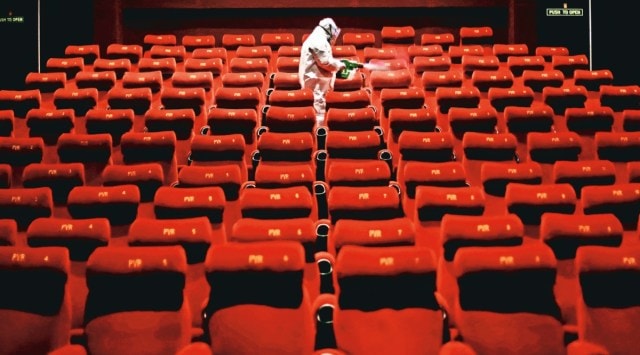
A Bengaluru court recently ordered PVR Cinemas to pay damages for delaying the start of a movie, sparking debate on how cinemas, in their quest to increase profits, could be taking their customers’ time for granted
Sunil Baghel & Bhavika Jain | TNN (THE TIMES OF INDIA; February 25, 2025)
The Bangalore (Urban) District Consumer Commission, in a first-of-its-kind order, has directed PVR Cinemas, Bangalore, and its parent company, PVR Inox, to pay Rs. 1.28 lakh as penalty to a patron who had complained he was made to sit through half-an-hour of advertisements before the movie he had gone to watch was screened.
The order requires the cinema hall chain to deposit Rs. 1 lakh into a consumer welfare fund and pay Rs. 20,000 to the complainant, Abhishek M R, for the inconvenience and mental agony caused, along with Rs. 8,000 for his legal expenses.
The court also instructed the cinema chain to clearly state the actual start time of movies on tickets and avoid similar delays in the future.
What was the complaint?
On January 6, 2024, Abhishek filed a complaint about the screening of Sam Bahadur (2023), a Bollywood biopic based on the life of Field Marshal Sam Manekshaw.
Abhishek had booked three tickets for the 4.05 pm show at PVR Cinemas in Orion Mall, Bengaluru for Rs. 825.66. Expecting the movie to run for 2 hours and 25 minutes, he planned his evening accordingly, assuming the show would end by 6.30 pm. However, Abhishek and his family sat through nearly 30 minutes of advertisements, trailers and promotional content, and the film began at 4.30 pm.
He documented the delay in a video recording, arguing that the prolonged pre-show advertisements disrupted his schedule and constituted an unfair trade practice.
What PVR said in its defence
PVR Cinemas argued that recording a video inside a theatre is illegal as it amounts to piracy, and that that made the complainant’s evidence inadmissible.
It also said theatres are legally required to screen government-mandated public service announcements (PSAs), like anti-tobacco ads, which are typically played when the attendance in the hall is at its peak.
Government guidelines, however, specify that PSAs should not exceed 10 minutes before the film starts.
The theatre chain argued that the movie’s actual runtime was 2 hours and 30 minutes, not 2 hours and 25 minutes as submitted by the complainant. It also said that audience movement and security checks can cause minor variations in movie start times.
What the court ruled
The Consumer Commission dismissed PVR’s arguments and admitted the complainant’s video evidence, noting that it did not record the actual movie screening.
The court found that while two of the advertisements shown were government-mandated PSAs, 95% of the pre-show content was commercial.
The court also said that movie screenings must begin precisely at the time printed on the ticket and recommended that theatres limit commercial ads and PSAs to the intermission period.
“Theatres cannot extend a viewer’s stay for commercial gain. Time is an economic asset, and misleading showtimes inconvenience moviegoers,” the ruling said.
How cinema halls earn
Movie theatres generate revenue through three primary streams, with box office collections being the most obvious one.
In 2023, theatrical revenue hit an all-time high of Rs. 11,200 crore, with over 1,796 films making their way to the big screen, according to Ernst & Young’s (EY) March 2024 report.
But, every time a ticket is sold, a portion of that money is split between the film’s distributor, the exhibitor (the theatre), and the government in the form of taxes.
After these deductions, the cinema owner is left with a fraction of the total ticket price. That’s where the other two revenue streams come in.
Food and beverage sales inside theatres, exorbitantly priced in most cases, is a lucrative revenue stream. A pack of popcorn, available for around Rs. 20 outside, can cost you Rs. 300 in a multiplex. This is why cinemas don’t allow moviegoers to carry any food, or even water, into the theatre. The other crucial revenue stream of course is advertising.
So, how much do cinema halls make from ads? According to an EY 2024 report, cinema halls in India earned Rs. 750 crore from in-cinema advertising in 2023. This revenue stream is likely to grow to Rs. 1,000 crore by 2026, driven by factors such as rising discretionary spends, an increase in high-quality mass content, and advancements in pricing strategies and infrastructure.
Is there a fixed limit to how many ads can play before a film?
There is no regulation limiting the duration of pre-show advertisements. The number of ads shown before a movie can vary based on factors such as the film’s popularity, the time of day, and the day of the week.
“Weekdays generally have fewer ads compared to weekends,” said Nitin Datar, president of the Cinema Owners and Exhibitors Association, adding that advertising agreements are typically made in advance and often span a year.
Big films like Pushpa 2, said Girish Wankhede, head of business strategy at Cineport Cinemas, pull in more advertising, and what is planned as a 10-12 minutes of ad slot often extends to 20-25 minutes.
Are cinema halls struggling?
In October 2024, PVR Inox, India’s largest multiplex chain, reported a consolidated net loss of Rs. 11.8 crore for the September quarter, a stark contrast to the Rs. 166 crore profit for the previous year.
This downturn, according to a Reuters report, was attributed to a 19% fall in total revenue, with movie ticket sales plummeting by 25% and food and beverage sales decreasing by 18%.
However, there are signs of resilience. In February 2025, PVR Inox reported a threefold increase in its third-quarter profit, driven by a strong line-up of new films during the festive period like Bhool Bhulaiyaa 3, Singham Again, and Pushpa 2.
Pushpa 2 alone accounted for 36% of box office collections in the quarter, marking it one of the biggest blockbusters in Indian cinema history.
So, what next for cinema halls?
The Bengaluru court’s ruling against PVR Cinemas could set a precedent, pushing theatres to be more transparent about movie start times and reconsider ad durations. However, PVR is expected to challenge the ruling.
If more consumers complain, cinema halls may have to disclose ad durations upfront or limit them. Since advertising is a major revenue source, theatres might explore shifting ads to intermissions or offering ad-free premium screenings.
Research by Rajesh Sharma
PVR Inox chain fined Rs. 1.2 lakhs for forcing audience to watch non-mandatory ads
3:50 PM

Rachana Ramesh (BANGALORE MIRROR; February 20, 2025)
A Bengaluru resident won a consumer case against PVR and INOX (now merged with PVR) for displaying excessive advertisements before film screenings, which he claimed was a waste of his time.
According to Bar and Bench’s report, Abhishek M R initiated legal proceedings against PVR Cinemas, BookMyShow and INOX for showing approximately 25 minutes of advertisements before the film’s start, during his visit to watch Sam Bahadur in 2023.
The consumer court has directed PVR to display the actual film start time on tickets, rather than the time when advertisements begin. The complainant stated that the extended advertisement duration caused delays, disrupting his work schedule.
The district consumer forum determined that PVR and INOX should not engage in unfair practices by showing lengthy commercial advertisements during scheduled film time. However, they absolved BookMyShow of responsibility as they do not control showtimes or advertisement broadcasts. The court emphasized that time has value and no entity should profit from others’ time and resources.
“Spending 25 to 30 minutes watching advertisements is a significant waste of time, especially for individuals with tight schedules. People seek entertainment for relaxation, but that does not mean they have no other responsibilities,” the court observed.
Following this ruling, the court has instructed PVR and INOX to specify actual film start times on tickets, cease unfair trade practices, and restrict advertisement duration. The court awarded Rs 20,000 to Abhishek for mental distress, Rs 8,000 for complaint filing expenses, and Rs 1 lakh as punitive damages.
PVR INOX justified their practice by referencing government mandates for public service announcements before films, though the court noted these guidelines specify a 10-minute limit.
The complainant documented the advertisements as evidence. While PVR INOX contested this as an anti-piracy violation, the court rejected this argument, noting only advertisements were recorded to highlight a widespread concern.
------------------------------------------------------
Niharika Lal (BOMBAY TIMES; February 20, 2025)
What happened
A consumer commission in Bengaluru has ordered PVR INOX to ensure that movie tickets mention the actual start time of a film, not the time when ads are screened before a film. While the cinema chain claimed that it is legally obligated to screen certain Public Service Announcement (PSA), the Consumer Commission stated, “Cinemas should concentrate on telecasting commercial ads as well as PSAs as per the guidelines during the intermission of the movie. They can telecast PSAs 10 mins prior to the movie.”
Background
- A complainant claimed that around 25 minutes of his time was wasted when he went to watch Sam Bahadur in 2023 at a mall in Bengaluru, as he was shown long commercial ads before the film
- He booked tickets worth Rs. 825.66 for a 4.05 pm show. He entered the theatre around 4 pm. However, the cinema played ads and movie trailers from 4 to 4.25 pm, and the film began only at 4.30 pm
- The complainant claimed the 30-minute delay disrupted his plan to return to work by 6:30 pm
- The cinema chain claimed that it was required to play PSAs
- The consumer forum found that 95% of the ads played before the movie attended by the complainant were not government PSAs but commercial ads
‘25-30 minutes is not less (time) to sit idle in the theatre’
The District Consumer Commission said in a statement, “In the new era, time is considered money. Each one’s time is precious, no one has the right to gain benefit out of others’ time and money. 25-30 minutes is not less (time) to sit idle in the theatre and watch whatever the theatre telecasts. It is very hard for busy people with tight schedules to watch unnecessary advertisements.”
The directions by Consumer Commission
- Cinema tickets should specify the actual movie start time for the public.
- Advertisements should not be shown beyond the scheduled show time stated on the ticket
- The district consumer forum further ordered the cinema to pay Rs. 20,000 to the complainant for causing him mental agony and inconvenience, and an additional Rs. 28,000 towards the expenses he bore to file the complaint
- Rs. 1 lakh as punitive damages for engaging in unfair trade practice
Cinemas are obligated under the law to screen certain PSAs: Cinemas
In their defence, the cinema chain claimed, “Cinemas are obligated under the law to screen certain Public Service Announcement (PSA) in the form of short films and documentaries provided by the Central Government or State Government from time to time. The main objective of such announcements is to spread awareness amongst the citizens about the important social issues. These PSAs are screened during prime time, prior to screening of any movie, when the audience are seated inside the theatre.”
Subscribe to:
Posts (Atom)