Showing posts with label Bareilly Ki Barfi. Show all posts
Showing posts with label Bareilly Ki Barfi. Show all posts
Nitesh Tiwari has been working on Ramayana for five years now-Ashwiny Iyer Tiwari
4:33 PM

Onkar Kulkarni (MUMBAI MIRROR; February 26, 2026)
Filmmaker Ashwiny Iyer Tiwari has often been associated with sensitive, women-led narratives, but she is clear that she does not see herself confined to that space. “I’m eager to move beyond the label of a women-oriented filmmaker,” she says, reflecting on how easily the industry and audiences tend to categorise storytellers.
“We often pigeonhole ourselves into categories. Bareilly Ki Barfi was a romcom. It had two strong male characters — so it’s really about the narrative you choose and how others perceive it,” she explains.
For Ashwiny, the tag has more to do with perception than intention. She says, “People often say I haven’t capitalized on my previous films or spoken much about them. But I have made a conscious effort not to limit myself to women-led films. I don’t think breaking that image is difficult.”
Even as she continues to build her own slate of films, Ashwiny harbours the ambition of directing a large-scale, pan-India spectacle, the kind of cinematic event that defines a season. For now, she is closely observing that world through husband and filmmaker Nitesh Tiwari, who is immersed in mounting an ambitious project. He’s directing Ramayana, a highly anticipated Indian mythological action epic scheduled for a 2026 release, featuring Ranbir Kapoor as Ram, Sai Pallavi as Sita, and Yash as Ravana.
She added, “He’s been working on it for five years now. Producer Namit Malhotra’s vision deeply influences the director. With my background in art, costume and styling, I contribute ideas, but ultimately, it’s his vision. I’m extremely proud because it takes immense patience, which I’m not sure I have.”
Narayana Murthy-Sudha Murty biopic will take its own sweet time-Ashwiny Iyer Tiwari
9:43 AM
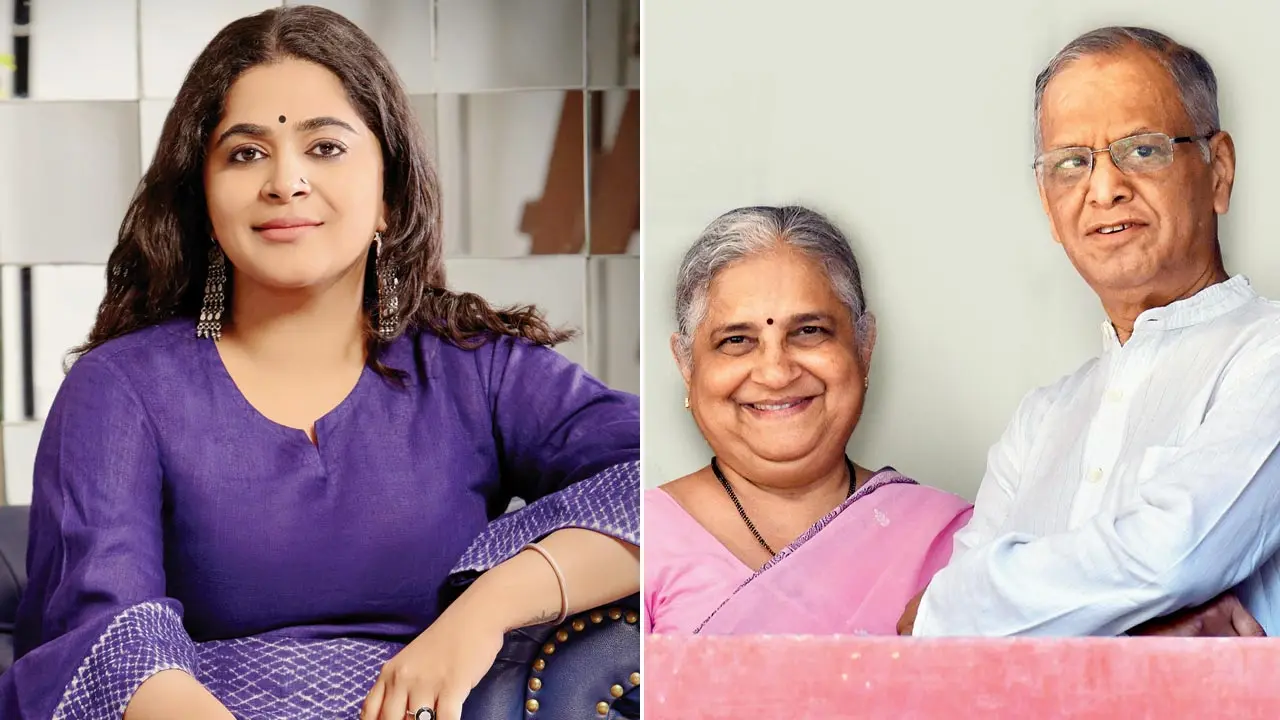
Four years after a film on Infosys founder Narayana Murthy and wife Sudha Murty was announced, director Ashwiny Iyer Tiwari says writing underway; reveals having script discussions with the couple’s son Rohan
Priyanka Sharma (MID-DAY; June 9, 2025)
A lot has happened in Ashwiny Iyer Tiwari’s life between her last directorial venture, Faadu (2022), and now. The filmmaker faced halts on developing projects, and personal loss with her mother passing on. So, when 2025 began, she wanted to do what she knows best — tell stories. The director has been busy scripting the biopic of Infosys founder N R Narayana Murthy, and his wife Sudha Murty, an educator and author.
The project was announced in 2021, but Tiwari says it will take some time before she takes it on floors. “I’m still writing. I do hope it happens, because we have been writing, and it is a complicated story to tell. I’m in touch with the family; I discuss the script with their son [Rohan Murty]. But it will take its own sweet time,” she shares.
Not too long ago, the director was also set to bring Devika Rani, Indian cinema’s first female star, and her filmmaker-husband Himanshu Rai’s love story to screen. Probe her on the movie, and she says, “That is on hold right now. The studio has changed. That is the past.”
The grammar of Hindi cinema has changed in the post-pandemic market. A change for the worse, many believe. Tiwari, a prominent voice of the middle-of-the-road cinema with beautiful films in Bareilly Ki Barfi (2017) and Panga (2020), is displeased with the industry’s obsession with box-office numbers. So much so that she took a step back in the interim.
She rues, “Did anyone ask me how much Nil Battey Sannata [2016] made at the box office? We never discussed that. Javed ji [Akhtar] once told me no one remembers the box-office numbers of the movies that people talk about. That’s because we looked at cinema as good cinema; it was a director and writer’s medium. That’s why we had amazing stories. In Tamil cinema, it’s there even today. But [in Hindi cinema], earning Rs. 100 crore became the benchmark of a good director.”
Today, box-office numbers and franchises are being pursued instead of original stories. She reveals, “I have been told so many times to make Bareilly Ki Barfi’s sequel. But then, you’re making a film just so that you can tick some [boxes]. It’s difficult to convince me to do that,” says Tiwari, who is currently shooting for a web film.
Fenil's Bollywood Talk # 868
11:23 AM

HIMESH RESHAMMIYA, CHRISTOPHER NOLAN, HARSHVARDHAN RANE ALL SET TO RULE THE BOX OFFICE
The coming week will prove to be an interesting one as a mix of new and old releases will spring a surprise at the ticket window. Regarding the new films, the biggest one will be Badass Ravi Kumar. It stars Himesh Reshammiya and there’s tremendous excitement to see this flick. The film was announced way back in 2022. The trailer of the film finally dropped on January 5 this year and it got a terrific response. The trailer is full of over-the-top dialogues and action scenes.
What has worked is that this time, Himesh is simply having fun, unlike before when he was trying to be a serious actor. With Badass Ravi Kumar, viewers can sense that it’s like a spoof film and that has impressed them. Moreover, the songs have caught on big time. A surprising aspect is that Himesh Reshammiya has not done a single on-ground promotional activity. He has not given any interviews. Yet, the film has managed to create noise which proves that sometimes a superb trailer and hit songs can do the trick.
The film is all set to open in the range of Rs. 5 crores with an outside chance of it hitting the Rs. 6 crore mark. This will be huge for this film as Himesh Reshammiya’s movies have never opened beyond Rs. 2 crores. The distributors opted for a smart strategy of pricing tickets at a maximum rate of Rs. 150. Hence, many moviegoers have been tempted to book their tickets.
The same price strategy has also been adopted by the makers of Loveyapa. It is the remake of the 2022 super-hit Tamil film Love Today and stars Junaid Khan and Khushi Kapoor. The film rests on an interesting premise and the trailer is entertaining. But it hasn’t clicked well with the audience. Junaid faced trolling during the promotions after his awkward dance videos went viral.
The advance of Loveyapa is very poor and one can hope that it should at least cross the Rs. 1 crore mark. The ticket sales are sluggish despite the cheaper prices. This is because the moviegoers are spoilt for choice this Friday due to Badass Ravi Kumar and re-releases, which look far more exciting. Ideally, Loveyapa should have been released 2 or 3 weeks later when the competition was not this intense.
Speaking of re-releases, Christopher Nolan’s Interstellar has sprung a surprise. Its advance booking began 20 days ago and the tickets have sold like hot cakes since then. It is all set to open in the range of Rs. 4-5 crores and hence, will give a tough competition to Badass Ravi Kumar.
Another major re-release of the week is Sanam Teri Kasam. The film didn’t do well in cinemas in 2016 but it achieved a cult following over the years. Not many expected it to get a huge advance but it has managed to do the unthinkable. The film has got a wide release and it remains to be seen if it can go beyond Yeh Jawaani Hai Deewani’s re-release first-day collections of Rs. 1.10 crore. If it does, it’ll become the second-highest re-release Hindi opener after Tumbbad (Rs. 1.50 crores). By doing so, it’ll also cross the first-day figures of Sanam Teri Kasam’s original release, which were Rs. 1.12 crore.
Padmaavat was re-released today while Bareilly Ki Barfi will re-release tomorrow. However, both these films will fail to get the desired number of footfalls.
The coming week will prove to be an interesting one as a mix of new and old releases will spring a surprise at the ticket window. Regarding the new films, the biggest one will be Badass Ravi Kumar. It stars Himesh Reshammiya and there’s tremendous excitement to see this flick. The film was announced way back in 2022. The trailer of the film finally dropped on January 5 this year and it got a terrific response. The trailer is full of over-the-top dialogues and action scenes.
What has worked is that this time, Himesh is simply having fun, unlike before when he was trying to be a serious actor. With Badass Ravi Kumar, viewers can sense that it’s like a spoof film and that has impressed them. Moreover, the songs have caught on big time. A surprising aspect is that Himesh Reshammiya has not done a single on-ground promotional activity. He has not given any interviews. Yet, the film has managed to create noise which proves that sometimes a superb trailer and hit songs can do the trick.
The film is all set to open in the range of Rs. 5 crores with an outside chance of it hitting the Rs. 6 crore mark. This will be huge for this film as Himesh Reshammiya’s movies have never opened beyond Rs. 2 crores. The distributors opted for a smart strategy of pricing tickets at a maximum rate of Rs. 150. Hence, many moviegoers have been tempted to book their tickets.
The same price strategy has also been adopted by the makers of Loveyapa. It is the remake of the 2022 super-hit Tamil film Love Today and stars Junaid Khan and Khushi Kapoor. The film rests on an interesting premise and the trailer is entertaining. But it hasn’t clicked well with the audience. Junaid faced trolling during the promotions after his awkward dance videos went viral.
The advance of Loveyapa is very poor and one can hope that it should at least cross the Rs. 1 crore mark. The ticket sales are sluggish despite the cheaper prices. This is because the moviegoers are spoilt for choice this Friday due to Badass Ravi Kumar and re-releases, which look far more exciting. Ideally, Loveyapa should have been released 2 or 3 weeks later when the competition was not this intense.
Speaking of re-releases, Christopher Nolan’s Interstellar has sprung a surprise. Its advance booking began 20 days ago and the tickets have sold like hot cakes since then. It is all set to open in the range of Rs. 4-5 crores and hence, will give a tough competition to Badass Ravi Kumar.
Another major re-release of the week is Sanam Teri Kasam. The film didn’t do well in cinemas in 2016 but it achieved a cult following over the years. Not many expected it to get a huge advance but it has managed to do the unthinkable. The film has got a wide release and it remains to be seen if it can go beyond Yeh Jawaani Hai Deewani’s re-release first-day collections of Rs. 1.10 crore. If it does, it’ll become the second-highest re-release Hindi opener after Tumbbad (Rs. 1.50 crores). By doing so, it’ll also cross the first-day figures of Sanam Teri Kasam’s original release, which were Rs. 1.12 crore.
Padmaavat was re-released today while Bareilly Ki Barfi will re-release tomorrow. However, both these films will fail to get the desired number of footfalls.
Manushi Chhillar on Bade Miyan Chote Miyan failure: "It took away pressure of doing a big film"
7:58 AM

Eagerly waiting for her next film Maalik, Manushi Chhillar says the box office failure of Bade Miyan Chote Miyan has taught her to focus on being an actor
Priyanka Sharma (MID-DAY; November 24, 2024)
It’s been a busy year for former Miss World Manushi Chhillar, who entered Bollywood with Samrat Prithviraj (2022). Even though the year has not been entirely successful, with two theatrical releases—Bade Miyan Chote Miyan and Operation Valentine with Telugu star Varun Tej—being some of the biggest films of her career, Chhillar has taken it in her stride. How did she cope with the non-performance of the Akshay Kumar and Tiger Shroff-starrer at the box office?
“When a film like that didn’t do well, it took away the pressure of doing a big film and delivering a hit. I realized you could have every ingredient in your soup, but it still might not be what the people want, and I have no control over it. I also realized what I needed to put more effort into. Instead of thinking about theatre, OTT, or box office numbers, I [need to put] my efforts into being an actor. Films will come and go. I want to take up roles where I can also explore [myself] as an actor. Working on your craft and skill set makes you secure as an actor. I learnt action for Bade Miyan Chote Miyan, and that’s a skill set that will come handy for another actioner,” explained Chhillar.
Interestingly, Chhillar’s next action film is the Rajkummar Rao-starrer Maalik, directed by Pulkit. While it’s still unclear if the model-turned-actor will be throwing punches in this, she is thrilled about sharing screen space with the Stree 2 actor.
“I remember watching him in Bareilly Ki Barfi [2017]. The scene of him walking to a paan shop to the background [score] of Badass babua has been ingrained in my head since then,” reminisces the actor, adding that leaving an impression even in a five-minute role is something she admires.
“Rajkummar is someone who is purely focused on the scripts he chooses, and his choices are very good,” says Chhillar, who got the opportunity to perform at the ongoing International Film Festival of India (IFFI) in Goa. Being a fan of Madhuri Dixit-Nene and Aishwarya Rai Bachchan, dancing was always on her wish list after being trained in Bharatanatyam, Kuchipudi, and Kathak.
Art itself is feminine. Science is masculine-Arko Pravo Mukherjee
1:43 PM

Riya Sharma (BOMBAY TIMES; October 11, 2024)
For singer, songwriter, music composer Arko Pravo Mukherjee, love songs are essentially feminine. “Nazm Nazm is very special to me. It is the only song with no changes – neither from the director nor the label. Wherever I go, especially women, love the song. Men, too but because women are softer and gentler...these love songs are essentially feminine, unless there are alpha sentiments like ‘Mujhe Tu Chahiye, Haq Hai Mera’,” says the Saathi Rey singer, who was recently in the city.
In Delhi for an album launch, Arko speaks to us about his faith in his art and how the number game doesn’t matter to him. Elaborating on the femininity of love songs, Arko adds, “Art itself is feminine. Science is masculine. Science is like yeh maine discover kiya. Art doesn’t have that. It is not something that belongs to the author or the singer completely,” he says.
“I’ve done many singles, but they haven’t done as well as my film songs like Nazm Nazm. If a layman knows a song, then you know that it has worked; I’ve been much luckier with film songs,” says Arko
‘WE HAD ABOUT 30 VERSES OF TERI MITTI’
Talking about the song Teri Mitti that has been added to the list of patriotic songs in many music charts, Arko, who composed the music for the hit, shares, “I keep telling MM (Manoj Muntashir) that it is very difficult to have this standard of poetry – so lucid and deep at the same time.”
He adds, “In my experience, if you fiddle with a song too much, it does not improve, but this song is an exception. I had about 30 verses and it was so difficult to pick what to keep and what not. MM and I have a great time together. He knows that I am non-diplomatic and I say wrong things to big shots and I fight. Agar kisi ne kuch kiya toh main usko suna deta hoon. I didn’t give up cardio surgery to be a chamcha. I have left so many films because of this,” says Arko, who holds an MBBS degree.
Talking about Teri Mitti, he shares, “Anurag Singh argued against keeping the line ‘O maayi, kya fikr tujhe’ because there is no mother character in the film, but despite its irrelevance to the script, it was kept to convey the essential emotional connection.”
‘I DON’T THINK THE NUMBER GAME MATTERS TO ME’
Arko’s songs like Teri Mitti have 100 million views. Some would say it’s a success, but does the number game matter to him?
“I don’t think the number game bothers me. But there’s stuff to learn from it. It matters in the industry. Success matters because it gives you the freedom. Hats off to these boys (singers) like King and Anuv Jain, I really appreciate how they have come up without the support of a big producer. Bhatt sahab gave me my debut (Jism 2) but these boys have made it on their own and people have loved their music and it is good music. But it is now that I get more feedback about the song than I did when it was released. I really don’t think music has a time frame, we have to be honest about it but the freedom to be honest also has to be earned and I am thankful to Bollywood for that,” he replies.
‘I AM NOT A FAN OF THE CURRENT MUSIC SCENE'
I am not a big fan of the current music scene and it’s not just India but across the world. When I was in high school and college, we used to go and buy CDs. Paisa save karke and we used to buy that Bryan Adams album CD, Aaj ke Top 20s, 18 songs you will not like. Why is Lucky Ali sold out everywhere? Today’s kids are listening to old music. Kids are listening to Jagjit sahab because there is no such artiste. There’s a vacancy, there is nobody like that. Achcha, bura koi nahi hai. Jagjit sahab toh legend hain par koi toh ghazal gaaye. When you switch on the TV, all you see is old songs, remixes and Punjabi music.
‘I ONLY WANT TO DO THE KIND OF WORK THAT WILL KEEP MY INTEGRITY INTACT'
After 46 films, Arko says that he does not want to be dishonest with his work. “Things like ghost writing are rampant. There were producers who asked me to do albums under someone else’s name early on... We do it sometimes in the beginning, but I’m past that now. I’m not greedy. I only want to do work that keeps my integrity intact,” says the singer.
Sumit Saxena, sexuality educator Apurupa Vatsalya discuss how Kaalkoot challenges gender roles and toxic masculinity
8:08 AM
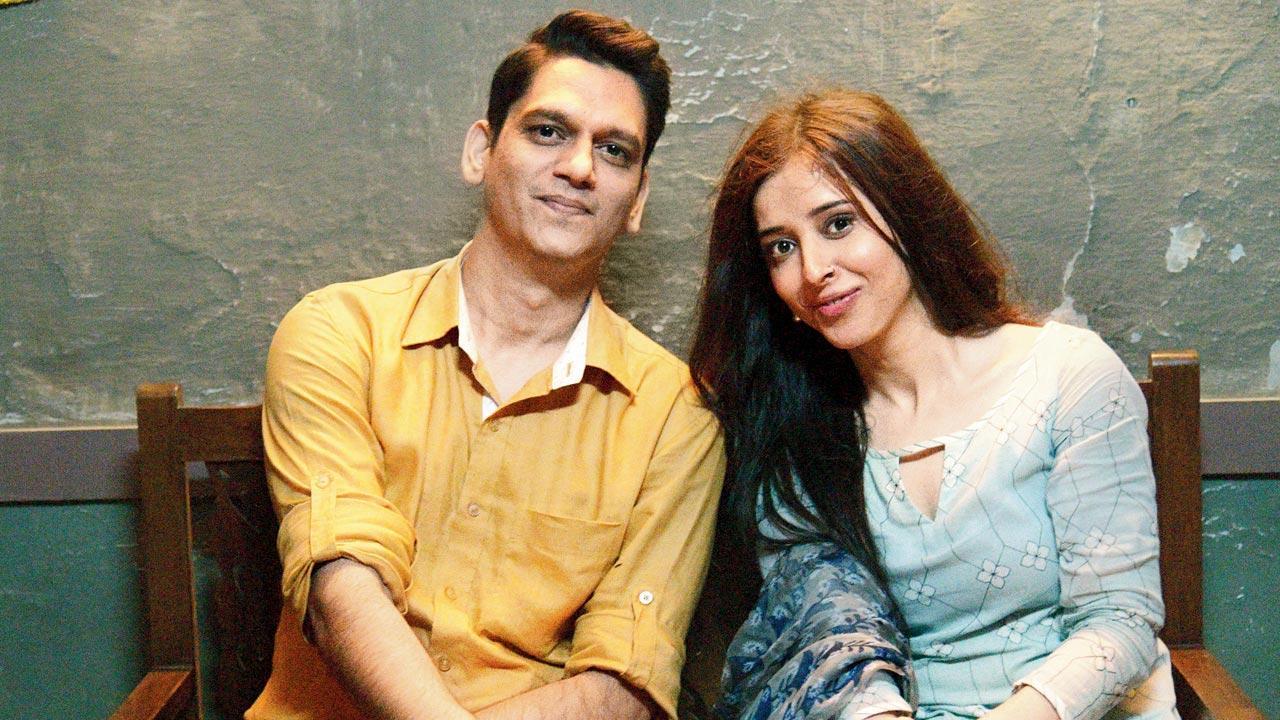
Vijay Varma and Suzanna Mukherjee in Kaalkoot
With Vijay Varma playing an unassertive cop in Kaalkoot, director Saxena and sexuality educator Vatsalya discuss how the show challenges gender roles and toxic masculinity
Letty Mariam Abraham (MID-DAY; August 1, 2023)
In a scene in Kaalkoot, we see Vijay Varma’s character, cop Ravi Shankar Tripathi, climbing a wobbly ladder, tentatively and hesitantly. His fear is only heightened by his boss, who hollers at him from below. Moments later, a junior cop climbs up the ladder swiftly, while Ravi is mocked for his inability to perform the task. The humiliation is repeated in another instance when he is unable to stand up to his boss in a game of badminton. Through these little snippets, Kaalkoot presents a meek, hesitant and quiet-mannered protagonist. And fortunately, a new gaze through which to look at a ‘hero’.
“When Kabir Singh [2019] released, it was lambasted for romanticizing toxic male behaviour. But there was another film, Bareilly Ki Barfi [2017], which wanted the audience to laugh at Rajkummar Rao’s character for not being ‘masculine’ enough. Now, if that is the kind of clown you create, then Kabir Singh is the kind of hero you will get. What we have tried to do in our show in the initial bits—when he looks unassertive, unambitious, and lost—is that we empathized with him,” begins writer-director Sumit Saxena.
Toxic masculinity
Kaalkoot sees Varma’s character investigating an acid attack case. In telling the tale of acid attack survivor Parul, essayed by Shweta Tripathi Sharma, the series delves into society’s distorted idea of masculinity, how that propagates toxic masculinity, and gender violence.
Sexuality educator Apurupa Vatsalya says the Jio Cinema offering holds up a mirror to society and challenges its notions that an ideal man is assertive, domineering and is the protector and provider. “At the outset, you see the hyper-masculine cops ridicule a fellow cop for being too empathetic. It is viewed as a character flaw. The suggestion is that he will not be capable as a cop because he is too emotional. He is doing all the macho things—riding a bike, investigating—and looks masculine, but because he is not assertive enough, he is suddenly incapable of his position. Toxic masculinity is sometimes ingrained. You’re not supposed to express your emotions or cry. They have grown up internalizing their emotions,” shares Vatsalya.
As the series progresses, it sheds light on the microaggressions that often denote toxic masculinity. In an instance, the cops are quick to determine that Parul must be a sex worker, after discovering a bottle of whiskey from her bag. Another scene sees two cops discussing slapping their wives for not being submissive and quiet—“haath chhoot jaata hai,” they say.
Breaking down such patterns, Vatsalya says, “I perceive toxic masculinity as when men do not have the opportunity and space to express and explore the wholeness of masculinity. It therefore spills out in ways that are harmful, not just for themselves, but also for the people around them. They subjugate women by slapping them, and disallow other men from expressing their identity.”
She adds that masculinity should not immediately be implied to be toxic. “There are beautiful expressions of masculinity. It’s important to also see whether a person, irrespective of their gender, is in touch with their masculinity and femininity, both.”
Toxicity not gender specific
The sexuality educator also highlights that toxic masculinity is not always gender-specific, women are often seen as gatekeepers of this mindset and behaviour. “Women also perpetuate this masculinity. So, these expressions of masculinity and femininity are gender-agnostic. If we then automatically move away from the notion that masculinity and femininity are equal to men and women respectively, we can then move away from the binary formula.”
In Kaalkoot, Saxena illustrated this point through the character of Rashmi. Envious of Parul’s beauty, confidence, and the attention she garners from men, Rashmi uploads Parul’s explicit pictures on an adult website and poses as her to talk to men. “One brute way would have been to cast Rashmi as someone who is oversized and has attention deficiency [from the opposite gender]. Instead, we showed her as an average-looking person, but who suffers from her own insecurities, which gave her [that vicious] personality,” explains Saxena.
Vatsalya agrees that misogyny stems from different markers and years of patriarchy, and makes us all victims. “The privilege of beauty is something we value. Unfortunately, it is based on how one appears, their body size, the complexion of their skin, and so on. Rashmi, like all of us, is victimized by the structure of patriarchy. We are raised with a scarcity mindset—we are taught constantly that women have few opportunities, we are fighting for the same few jobs and the same few men. We are taught and raised to be each other’s competition, and are not taught the values of sisterhood.”
The series, while offering commentary on society’s ills and prejudices, is equally cognisant of its protagonist’s shortcomings. Varma’s character calls off his marriage when he realizes that his fiancée has epilepsy. His anger stems from the fact that his fiancée hid the detail from him. As he evolves in the course of the narrative, he realises that he too harbours male entitlement and patriarchy—the very ideas that he claims to fight. Vatsalya, who is also a lawyer, explains this dichotomy.
“Nobody who is inflicting harm on another person is thinking of themselves necessarily as a perpetrator. They might be viewing themselves through a moralistic lens, and considering themselves the saviour or hero. Everyone is a hero in their own story, but they might be a villain in someone else’s story. When Vijay Varma’s character invites or rather tries to humiliate his fiancée by saying, ‘Have sex with me, then I will marry you,’ [he is using] sex and sexuality as a tool of control. This draws us back to [the clause of the ideal woman being a virgin]. The negotiations we make with patriarchy are not rational.”
Need for dialogue
Saxena and Vatsalya agree that the only way to combat misogyny or toxic masculinity is to have a constant dialogue about it, thus fighting our conditioning. The director asserts, “We must talk about whatever makes us uncomfortable. Clinical psychologist Jordan Peterson had noted that Voldemort in Harry Potter is called, ‘He who must not be named’. Why is that? Because the true nature of horror is unspeakable. So when you speak about the horror of life, it reduces [the conflict]. There is a sense of grim horror in the show. To end the horror, we must speak of it.”
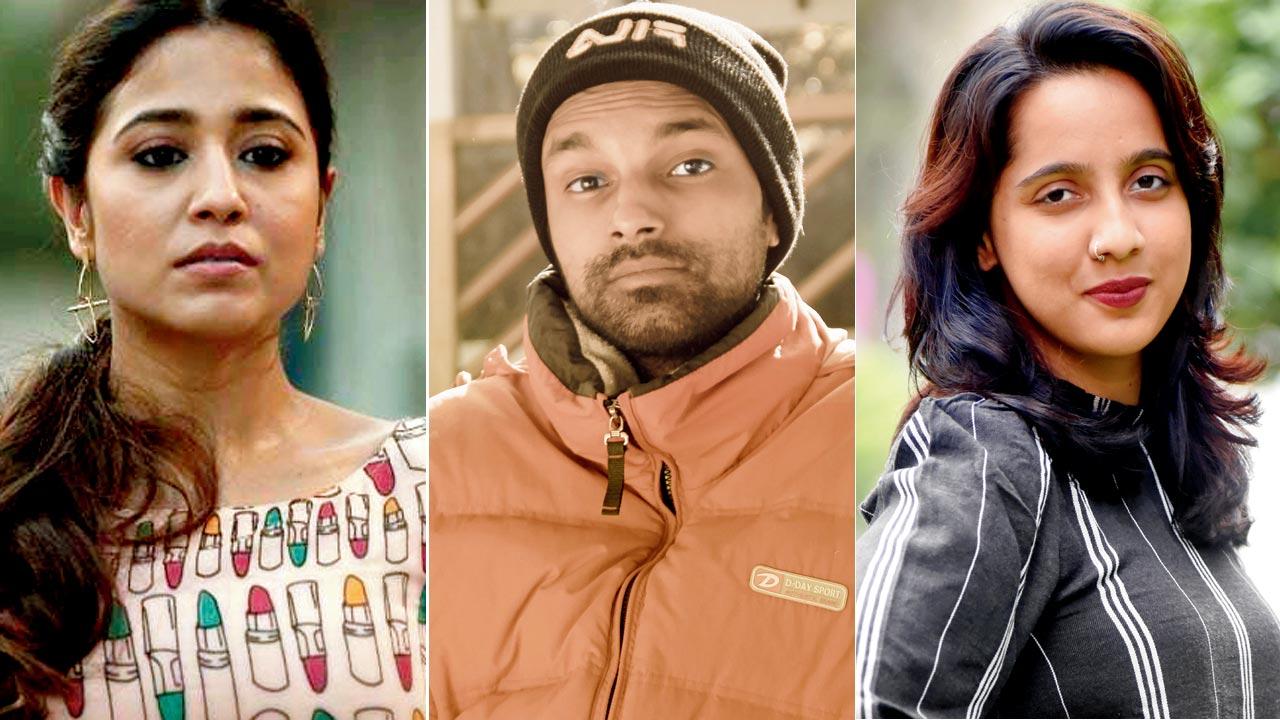
Shweta Tripathi, Sumit Saxena and Apurupa Vatsalya
I can’t really see myself in a typical commercial potboiler-Ayushmann Khurrana
3:50 PM

Onkar Kulkarni (BOMBAY TIMES; May 5, 2023)
Ayushmann Khurrana is known for his distinct genre of films, which can be best described as out-of-the-box, quirky, brave, and rare. In a career spanning over a decade, he has broken some rules, made new ones, and marched ahead. At a recent session at FICCI Frames 2023, the actor spoke about how he has held his own as an unconventional actor, and what made him redefine the new-age mainstream hero in Bollywood.
‘I HAD NO OPTION, BUT TO TAKE THE UNCONVENTIONAL PATH’
Talking about what prompted him to make the unorthodox career choices that he did, he says, “I think in every era there has been space for every kind of character, every kind of actor. In the 2010s there was a definite void for an actor who was also a character, especially, around the time Vicky Donor (2012) happened. The protagonist was a part of an unconventional film that did commercially well, which was not the norm in the past. When I came to Mumbai in 2008, Ranbir Kapoor had just made his debut. At the time there was this void for actors in their 20s as most of them were in their 30s or 40s. When Ranbir made his debut, I was like, yeh toh aa gaya, ab main kya karunga? Then Ranveer Singh came into the industry in 2010 and again, it made me think… yeh bhi aa gaya ab main kya karunga? I had no option but to take the unconventional path and fortunately, it worked for me. I was an anchor on television, and Shoojit Sircar saw something in me (for Vicky Donor). I didn’t even audition for that film, and it all started there.”
‘THE ONLY TRIP IN MY LIFE IS TO DO SOMETHING THAT IS OUT OF THE BOX’
While the Andhadhun actor was eagerly waiting to step onto the silver screen, he was extremely cautious about picking the right film to make his debut, even if that meant turning down as many as six offers as a newcomer. “I was a television presenter at that time and was very secure. I was interviewing actors and learning from their success and mistakes. I had this notion ki agar meri pehli picture nahi chali toh mujhe doosra mauka nahi milega. I had six chances before, but the scripts didn’t resonate with me. Vicky Donor was a breath of fresh air. Shoojit Sircar was a credible director and I always thought that this film will earn a lot of credibility, but the kind of commercial success it got was beyond my expectation”.
When asked about the risks he has taken in his journey to becoming Bollywood’s unconventional star and being the one to create a certain genre of films which is unique to him, he explains, “I have built my entire career on risks. I cannot not take risks. I can’t really see myself in a typical commercial potboiler. I have always been an unconventional actor. The only trip in my life is to do something which is out of the box and something which is being attempted in Hindi cinema for the first time.”
He further adds, “I just focus on one film at a time, and I want the film to engage the audience in a certain way. When I had back-to-back commercial successes, all the subjects were unconventional. I never thought that I would be making a genre for myself, it is too much to think about. I was just taking one film at a time and doing my own thing.”
‘RISK-TAKING CAPABILITIES OF FIRST-TIME DIRECTORS ARE FAR MORE’
The actor has worked with several firsttime directors, like Hitesh Kewalya (Shubh Mangal Zyada Saavdhan), Raaj Shaandilyaa (Dream Girl) and Anirudh Iyer (An Action Hero). And what excites him about working with them is that even they have this urge to push boundaries, and of course, it also helps to keep the film’s budget in check. “The risk-taking capabilities of first-time directors are far more than the seasoned ones. The kind of scripts that I get, by default, are with first-time directors. Also, it is about the budgeting of these films. My films are not mounted on a 100-crore scale, so it’s easy to manage the budget of the film I do with a first-time director. The subjects that I pick are risky, and out of syllabus for Bollywood, hence, they have to be made on a certain budget, so that it works out well for everyone,” he says.
‘I MAY NOT BE THE MAIN DRIVER OF A FILM’S STORY’
What stands out in a film headlined by Ayushmann, is also the ensemble cast – who bring along their talent, quirk and energy to the subject. Elaborating on that, the Badhaai Ho actor says, “In my films, I am not really obsessed with my own character, I am obsessed with the whole story. I may not be the main driver of the story, as the characters around me are also very strong, whether it is Jaideep Ahlawat in An Action Hero, Rajkummar Rao in Bareilly Ki Barfi, Gajraj Rao and Neena Gupta in Badhaai Ho or Bhumi Pednekar in Dum Laga Ke Haisha.”
‘OTT IS LIKE THE IPL’
The actor who has never been bound by any medium, having started out as a radio jockey and then going to become a mainstream Hindi film actor, says that the digital medium excites him. He shares, “OTT is like the IPL where there’s emerging talent and has space for a lot of people. All we need to do is choose the correct medium for a correct project – that has been my learning from the pandemic. I love the OTT space. No medium is small, be it television or radio. Agar aap ek artiste hai toh aap theatre mein perform karke bhi khush ho sakte ho.”
I don’t think 100 crores can be the new benchmark for every film, especially post pandemic-Ashwiny Iyer Tiwari
8:21 AM
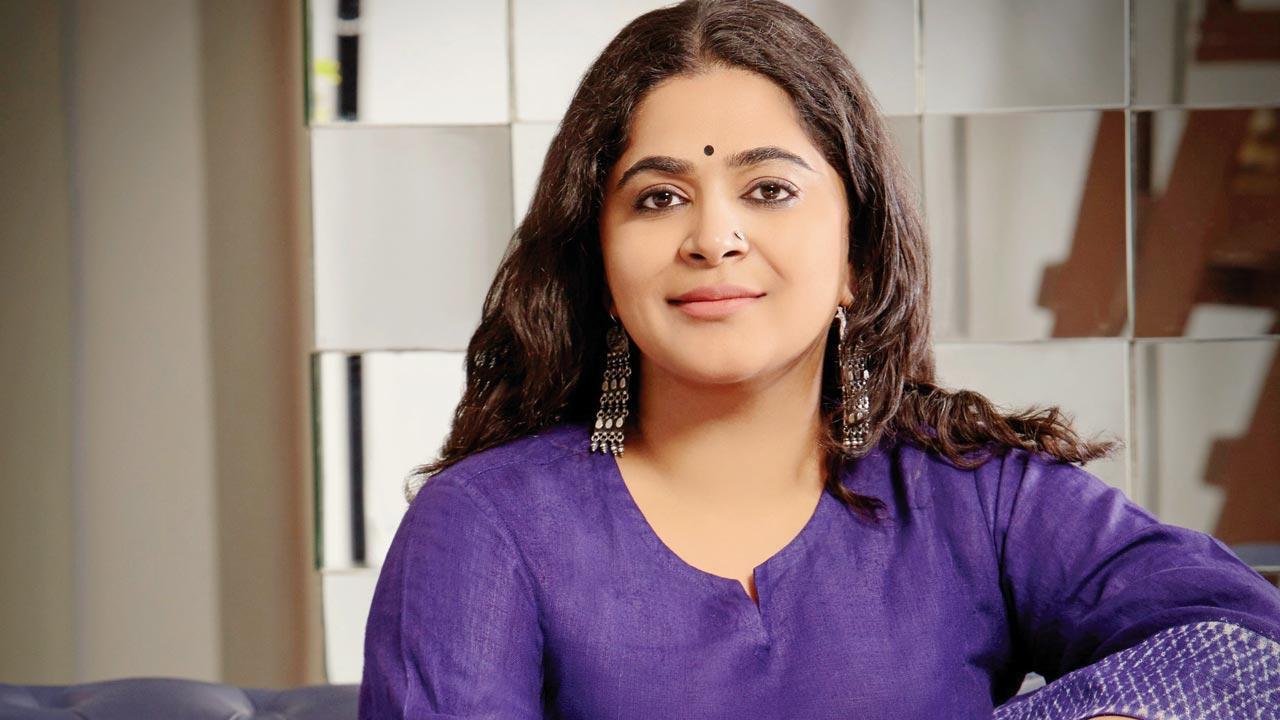
Madhureeta Mukherjee (BOMBAY TIMES; February 23, 2023)
She is a woman of many talents and interests. Telling stories is what fuels her passion, and to her, the medium doesn’t matter. Her films (Nil Battey Sannata, Bareilly Ki Barfi and Panga) have a lot of heart, and brim with spirit. She lets her woman protagonist lead the way, while giving ample space for the men in the plot to shine a fine feat. Filmmaker, author and producer Ashwiny Iyer Tiwari, in a conversation with us, talks about her process and purpose, as a filmmaker. And she knows when to turn off the noise around her and focus on work and conversations, like these. Read on…
Films like Nil Battey Sannata, Bareilly Ki Barfi and Panga — have a lot of soul. The characters in these stories seem real and show a lot of finesse in the way they deal with situations in their life. Is it because the characters you present are inspired by real people and real-life experiences?
Yes, they are. My advertising background helped me see that there is a world outside our world. Everyone has ambitions, someone’s ambition could be to earn Rs 100, while someone else’s could be to see their daughter speak English and move to a big city. I wanted to see stories of people across our country, stories of people sitting in Bareilly, Lucknow, Aurangabad and places outside the big metros. We are an ambitious country and I feel that with the changing dynamics of the country, we need to view things differently. It is also about telling our stories to the world. When I made Bareilly Ki Barfi, my contemporaries from my advertising days said, ‘Yaar, tune ghar ki yaad dila di.’ However far we go, we want to go back to our core and roots.
Is there a bit of you or a huge part of you in all your stories?
I would say, yes. I think it’s the case with every filmmaker, hence, everyone has their own style, which reflects in their movies. As a filmmaker, your voice is what people come for. Maybe, I can change my genre, but not my voice.
Do you believe that the female gaze, when it comes to certain subjects, makes a difference? Or when it comes to art, it is gender-neutral?
I think the male gaze and female gaze is very important. Both Nitesh (Tiwari, husband) and I are directors, and of course, we discuss our work, read each other’s screenplays and write for each other. We see a story from both sides, objectively. If you are telling the story from the women’s point of view, then the female gaze works. Even for the web series that I directed, Faadu – A Love Story, the actors Pavail Gulati and Saiyami Kher told me that, ‘You don’t realize how sensitive you are to certain things’.
Are Nitesh and you each other’s toughest critics?
Yes, very much. We know each other’s strengths and are brutally honest. We have worked with each other for really long. We also know when to draw the line and back off, and that is also important. Our end focus is the same, but our way of filmmaking is very different.
With huge consumption of content across digital platforms, as a storyteller, is there anything that has changed about the way you set out to write, create and produce?
A lot changed because of the pandemic and given the consumption of content across genres and languages on OTT platforms. I think telling a story is like having a relationship, you have to keep doing what you think is correct. As storytellers, we need to tell stories that we believe in, but we also need to be mindful of the changing times in our society. I am not saying that we have to think of numbers while writing a film, but we should know what audience we are writing for.
One way of looking at the current scenario (in the Hindi film industry) is that of crisis, a state of panic, where we don’t know what kind of content will drive audiences to the theatres. The other way of looking at it is that it’s an exciting phase where we can unlearn and reinvent. Your production house Earthsky Pictures is creating diverse content (recently released web show Faadu, upcoming films like Bawaal and the Tarla Dalal biopic, among many), so what are your thoughts on this?
I don’t think we are the kind to panic, but we want to tell stories that we feel can connect with an audience, while aligning with good partners. No one starts out saying that they want to make a bad film. What is happening currently is no one’s fault. It’s like a cricket match — we thought that our favourite player would play well today, but it wasn’t a good day for him. I would definitely agree that the economics of making a film has to change. Somewhere, we were living in a different world where we felt that to make a good film, certain elements were required, but that’s not entirely true. During the pandemic, we weren’t allowed to work with a big crew, it was tough, but we managed. I think that a film does not belong to just the director and producer, hence, every department needs to think about the economics of the movie, so that at the end of the day no one feels the pressure.
The film industry needs to adapt quickly and constantly, the narrative is fast changing, and we need a lot of self-introspection. Do you agree?
At one point of time, we were telling slice-of-life stories and small-town films were working. Maybe, now we have grown beyond that and there are new ways of telling stories. Lots of unconventional stories are being told, and also a lot of technology has come into play and changed the way we are making films. It helps in the way the audience sinks into a story. Yes, it’s important for us to adapt as filmmakers and understand the language of the audience. I don’t think 100 crores can be the new benchmark for every film, especially post-pandemic. Not all storytellers are making big films or films with established stars or have the kind of budgets that some do. I feel it is important to encourage more storytellers to come forward, but we can’t have a young director worry about box-office numbers. That can’t be the barometer. Today, everything is in the public domain — like a film’s budget and BO numbers - and we all know that when a film features big stars, it’s a high-budget film. But all filmmakers and producers are different, and everyone can’t make the same kind of cinema.
You have told stories across formats — ads, short films, feature films, web series and novels. In a world where we are going more and more short form (even in storytelling), and people have a short attention span, how does it feel going back to writing a book? They say writing is a very lonely job. Is that space calmer and less noisy?
I love the space of writing a book. Social media has taken up a lot of our life. As creators, we need to sacrifice a lot of things too. Just like an athlete, who knows that when a game is coming up, and they need to cut off. We have to be very clear when to be out there and when to step back. We all need gratification, and for me, the most important thing is that people may not know me, but they know of my work. I am well aware that because I am doing good work and my films are out there, I am looked at. Tomorrow, if I don’t have stories to tell, no one will look at me. I am very passionate about my work, but I can detach. I have already started writing my next book, and at some point, I will go off social media too. It is important for us as directors to understand what our purpose is. We can’t be everything.
Women in your movies are seen pushing themselves beyond what they see as their limitations, like Nil Battey Sannata’s Chanda or Panga’s Jaya. Do you ever feel you have to push yourself harder, beyond your limits, to play the multiple roles that you do — director, writer, producer, mom, homemaker?
Yes, I see myself doing that as I believe that we are more than what we can do. Often, we tell ourselves that we can do only this much, but when we look back, we realize that there is probably a lot more we could have done. I feel these tags that we give ourselves — writer, filmmaker, author — are unimportant. We are all telling stories. We take ourselves too seriously, we don’t need to. I have realized that the moment you stop giving yourself these tags and do whatever you like, it’s liberating. I am a storyteller, and I can tell a story in any medium.
Bhediya was one of the first few films that I was not nervous about; I'm extremely proud of Adipurush-Kriti Sanon
7:52 PM
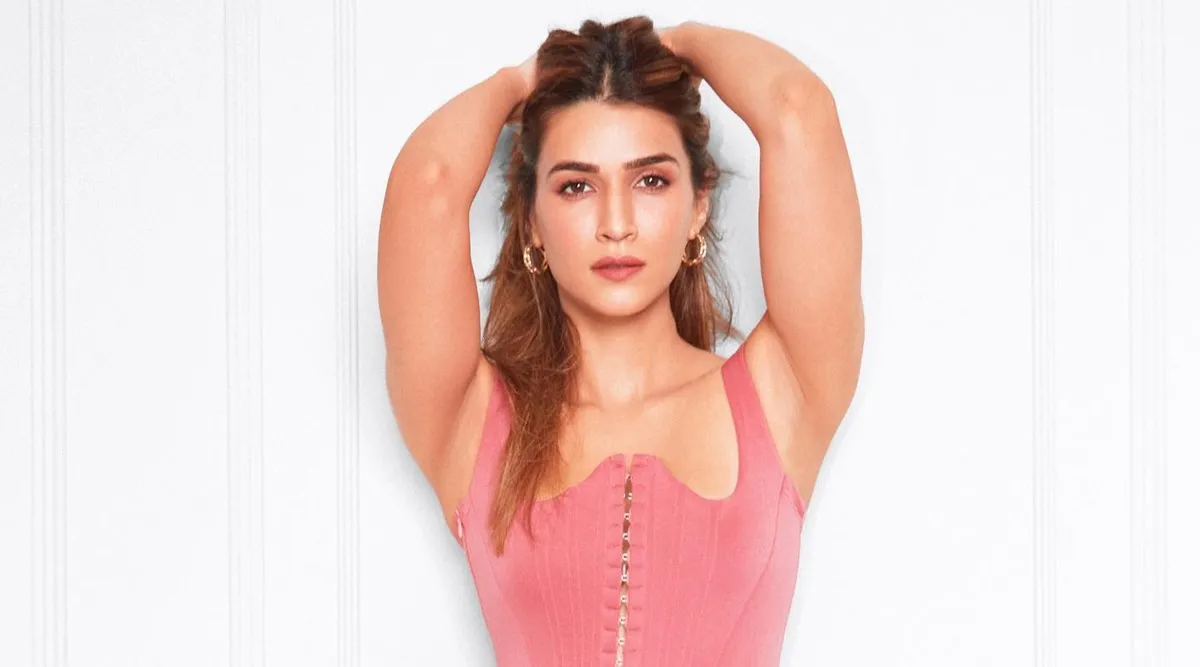
Onkar Kulkarni (BOMBAY TIMES; January 31, 2023)
In her showbiz journey over the last nine years, Kriti Sanon has been a part of films of diverse genres. After making her debut with Heropanti in 2014, she made a mark as the quintessential Bollywood heroine in several big-ticket films. But she didn’t stop at that. She went on to pick roles that gave her a chance to push the envelope and showcase her range as an actor. In 2021, Kriti won immense appreciation for her role as a surrogate mother in Mimi and the Filmfare Award for the Best Actress, which was followed by the creature comedy Bhediya last year, a genre that hasn’t been explored in Bollywood much. In a conversation with BT, the actress talks about how she’s constantly changing gears in her career and the surprises she has up her sleeve for the audience this year. Read on...
2022 was a year of surprises and shocks for the Hindi film industry, but amidst that, there were some movies that left an impact, one of which was the creature comedy Bhediya, which won much appreciation. How confident were you to be a part of a film which was an attempt at a genre that’s rarely explored in Bollywood?
Success at any time is what we all are looking for, especially in times like these where films are struggling a bit to do what they should do or would have done in another time. So, when Bhediya got the reactions it did and performed well, it gave me a little more confidence in my own choices.
It was one of those films that I was extremely sure of when it came to content. Also, I knew we had done something unique in terms of its VFX. When you are absolutely sure of something and that doesn’t end up working then you start questioning your thought process, your choices and decisions. You start wondering if your choices are still resonating with the audience and that is a scary feeling. Bhediya was, in fact, one of the first few films that I was not nervous about. Sometimes you are aware that the part that you are playing in a film isn’t long in terms of screen time, but it is relevant and there is meat in it. I also did the film for that one twist (in the climax). I am glad Bhediya got the love it deserved.
2022 ended on a positive note for you. What’s in store this year?
The audience can probably look forward to far more versions of me. It starts with a very glamorous one which is a family entertainer, followed by probably my biggest film, Adipurush, which I am extremely proud of. Then there is a lot of action coming in with Ganapath, something I have done for the first time. You will see me ride a dirt bike, throw kicks and punches and also use a weapon. I am also doing a quirky love story with Shahid Kapoor. We are teaming up on screen for the first time, so you will see fresh chemistry. Then there is The Crew, which has three women (Tabu, Kareena Kapoor Khan and me) coming together, having a lot of fun and creating something amazing.
After observing the pattern at the box office last year and the beginning of 2023, has your thought process on choosing films and subjects changed?
No. I don’t think we can make our future choices in retrospect. It isn’t a good way to move ahead. We can’t say... ‘Achcha this has worked, so let me do this’. Because that film has worked at that time. I believe that every film and genre have the right timing. Timing is important in terms of when the film is releasing and what the audience is craving for. I go by my gut feeling and instinct. When I hear a script, I try to see if it gets me excited as an actor, as an audience or both. I don’t want the audience to put me in a box where they say if it is a Kriti Sanon film toh aisi hi hogi. I want to give them a variety of content and characters. After Bareilly Ki Barfi, I was getting small-town roles one after the other. So, I did the war epic drama Panipat. Then I took up a strong and meaty role in Mimi and moved on to the next level. I want to shift the gear constantly and not stay in one particular zone. You have to move on and think what’s next, otherwise you will stagnate.
Today, you are in the top league, and are being offered the kind of roles that you want and deserve. But the road up to here has not been easy. When you look back, what has kept you going?
I have been here for nine years and I am glad that finally people are seeing the actor in me. Having said that, I don’t think I have reached even 50 per cent of what I can do. There is a lot more I can offer. Sometimes the opportunity you get gives you a lot to do and you shine. Sometimes it is limited in terms of what the role is or what the screenplay is. There is only so much for you to perform and do. Then there is a film like Mimi, which gives you the range and kind of scenes where you can go all out and shine. So, it is a matter of getting the right opportunity at the right time. I am just glad that people are seeing me in different zones. I am glad Om Raut saw me as Janaki for Adipurush, Vikas Bahl saw me kicking ass as Jassi in Ganapath, Rohit Dhawan saw me as this glamorous urban girl for my upcoming film, Shehzada. I feel excited and blessed in this phase, which probably is the best of my career. It took a lot of consistency, passion, hard work and belief in myself to get here. It is only when you believe in yourself that someone else will believe in you. I’m happy with where I am today, but I still feel that I am not even close to exploring half of my potential. I want to do more. So, you just believe in yourself and hold on closely to the people who are with you when you are not doing well! I think that is very important, too.
Ashwiny Iyer Tiwari plays with music a lot on set, which is interesting-Saiyami Kher
8:31 AM
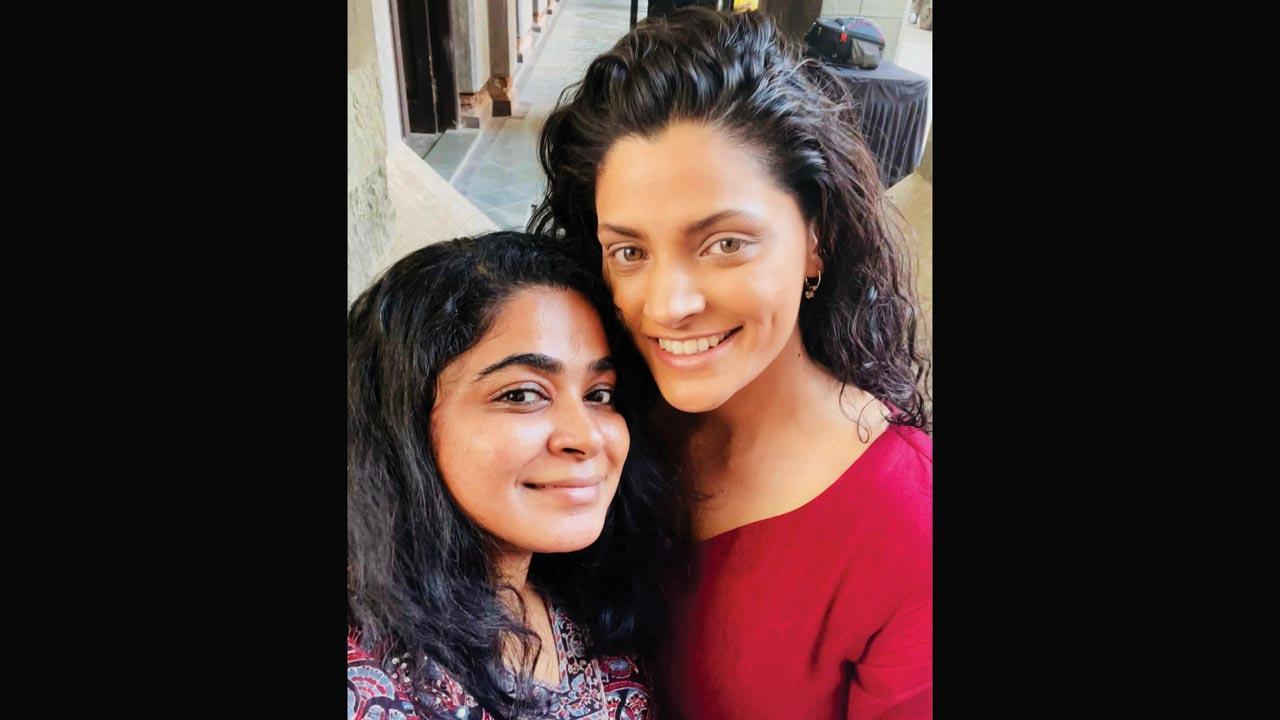
Saiyami, who is impressed by Ashwiny’s knack for developing strong women protagonists, thrilled to team up with director on Faadu
Mohar Basu (MID-DAY; January 25, 2022)
Little is known about Faadu, which the makers describe as a serendipitous love story between two people who are poles apart. For Saiyami Kher, the project boils down to a singular factor — Ashwiny Iyer Tiwari. “They say what’s meant to be, will always find a way. That’s how I feel about Faadu. Collaborating with Ashwiny was on my to-do list. She has done spectacular work with Nil Battey Sannata [2016], Bareilly Ki Barfi [2017] and Panga [2020]. I feel assured that I’m in safe hands,” says Kher, who leads the cast of the Sony LIV web series along with Pavail Gulati and Abhilash Thapliyal.
The director took the web series on floors last November. Having completed a schedule, Kher says that working with Iyer has been everything she dreamed of. “The world of this series is poetic and rooted. Ashwiny ma’am always has such strong female characters in her projects. I’m grateful she has given me the responsibility to play Manjiri. She gives a lot of attention to small details and aesthetics. She plays with music a lot on set, which is interesting,” says the actor who will kick off the next schedule in February. Besides the show, Kher will be seen in Tahira Kashyap’s upcoming movie Sharmaji Ki Beti.
When you get an opportunity to do so much in a film, you start craving for that feeling and experience-Kriti Sanon
7:44 AM

Onkar Kulkarni (BOMBAY TIMES; December 1, 2021)
When the actress known for her glam roles did a Bareilly Ki Barfi in 2017, she felt proud that people saw beyond her good looks and praised her performance. After that, she saw a certain shift in the kind of projects that started coming her way. This year, Mimi tested her acting skills, and she could sense something similar, but amplified to another level. Post the release of the Laxman Utekar directorial that had her playing the role of a surrogate mother, Kriti Sanon feels that times have changed for her in Bollywood. Excerpts from a chat with the actress:
This is the last month of the year. 2021 was tough on most, the film industry included. For you professionally, Mimi has taken your already successful career notches higher. Do you think this film has been a huge turning point for you?
Mimi, for me, has been special from day one. When I heard the script, I knew this was something I am going to be very passionate and excited about because somewhere, I was craving to dig in deeper. I was craving for a platform to play a character that was so layered that it could make me nervous, but at the same time, help me open up and showcase a lot more in one film. Mimi was that film for me. I loved the way the film was written because it had humour, it had moments that made you laugh and cry a little bit at the same time, and it also kind of whispered something into your ears which stayed with you. Many times, it happens you’re shooting scenes and you like them, but you don’t know how they will finally turn out when the film is ready. Here, all the actors on set were on the same page, and every time we shot a scene, we felt like it was better than what was on paper. What the film says about adopting kids at the end touched my heart.
Mimi also marked my debut on OTT platforms, and I don’t think I could have asked for a better film to debut digitally. This has been my toughest role so far, and I’m really happy about the kind of response that I got.
This is the first film of your career where you played the titular role. How did you gather the confidence to pull off the part?
I felt that I had more potential, and I wasn’t getting the right kind of opportunity to tap into those parts of me and bring out a layered performance. When Mimi came my way, it felt like the perfect film to take up as the main protagonist. Yes, it did make me nervous because I was supposed to be in every frame of the film, and if I faltered anywhere, the entire film could fall apart.
The character was also emotionally heavy in the second half. I think those scenes satisfied me as an actor. I like being challenged and being in a situation that scares me, makes me nervous and makes me wonder how to do this.
Some subjects draw a lot from you emotionally, and it gets difficult to break away from them even when you are not facing the camera. Was this film one of those?
This, I think, was one of the most challenging and emotionally heavy films I have done, even though most part of the film is actually comedy. I remember the first schedule of Mimi was very light (before she became a surrogate mother), as her life is very colourful and spunky. I used to call that a happy schedule. The second schedule was where she gets pregnant, and her life turns around. She matures as a woman and her dreams are shattered. Those bits were very emotional and heavy because I was almost doing an intense or sad scene every single day. And you end up drawing from what you’re feeling inside. So, during that entire schedule, I think I was crying, or I was sort of screaming at someone or fighting with someone every single day.
Has Mimi changed your process of picking roles and will it reflect in your film choices in the future?
There are films that have excited me before, but now they feel like a cakewalk, and I don’t feel like taking them up anymore. When you get an opportunity to do so much in a film, you start craving for that feeling and experience. A movie like this doesn’t come your way very often. So, as an actor, you have to tell yourself that you are not going to get these kinds of roles all the time. You need to balance it out by doing films of all genres. There could be projects that are challenging in different ways; for example, when I’m doing an action film, it is also something that I’ve never done before. In Ganapath or Adipurush, the aura and the weight of the character that I’m playing is exciting for me.
Over the years, has there also been a change in the way filmmakers perceive you and your strength as an actress?
Yes, I do feel a change in the way people approach me and the kind of projects that are coming my way. I think, after Mimi, I got a lot of calls and messages. People started taking me a lot more seriously as an actor, and it’s something that I felt after Bareilly Ki Barfi released because before that I had done glamourous roles. Bareilly Ki Barfi was a little de-glam, people saw the actor in me more than my appearance. I remember seeing a certain shift in the kind of projects I was getting after that. With Mimi, I think it’s amplified.
It is often a challenge, as an actor, to strike a balance between all-out masala films and ones that are entertaining but traverse along a different path, too. How has that process been for you?
Yes, it’s difficult to strike a balance. Many times, you end up getting into a loop of doing things that are working for you. When an actor does a film that is centred around a female protagonist and gets praised for it, the tendency is to get drawn towards more such projects only. I don’t want to get typecast with any kind of limitations. I feel like taking more risks and trying something new. I want to give my audience something different to watch. And I will do so, but yes, that won’t stop me from doing other kinds of films. I want them to see me in all colours. I want to be in a completely massy entertaining film and at the same time, I also want to do a film that has a strong message and says something important that I believe in. I am as excited about Bachchan Panday, which is a complete entertainer, as I am about my first horror-comedy, Bhediya. Then, there is a lot of action in Ganapath, and Adipurush is based on history and mythology is a completely different world for me. To be able to do all these kinds of films in a span of one and a half years — there’s nothing more I could ask for.

I’m protective of my younger sister, so there’s a chhoti mummy inside me-Kriti Sanon
8:08 AM
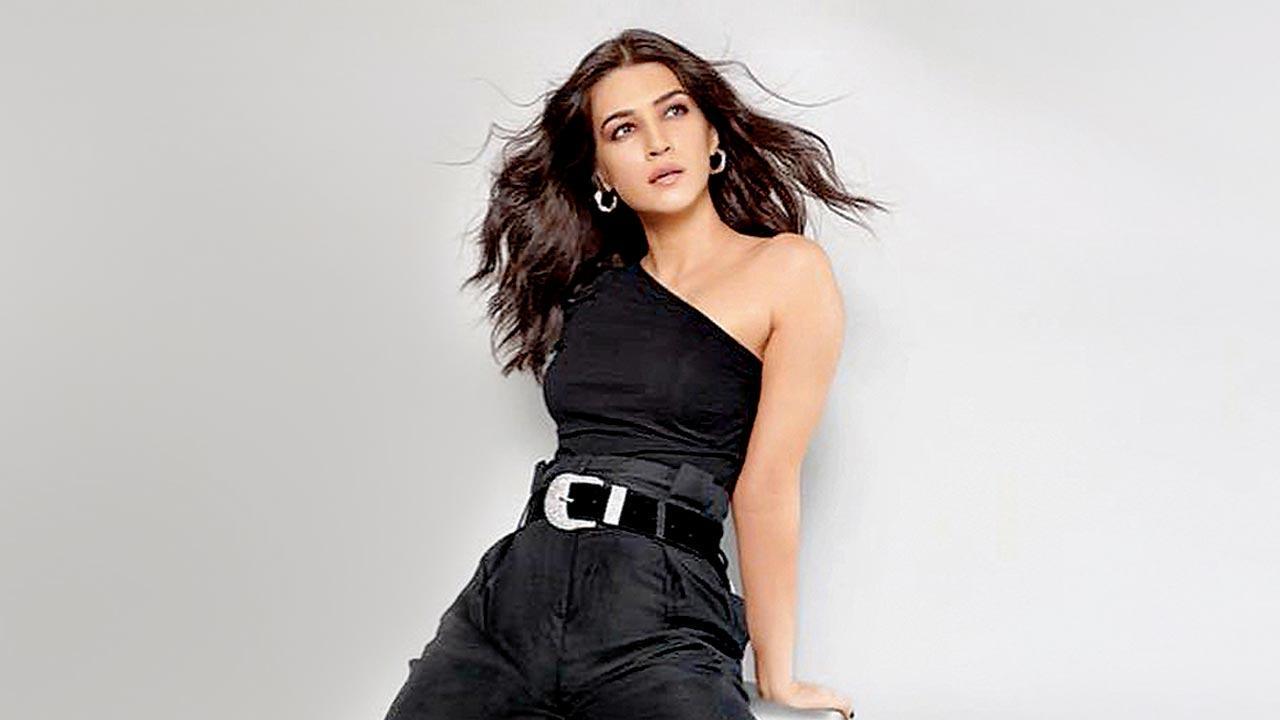
Describing Mimi as her most special project, Kriti says she was confident of pulling off author-backed role after Bareilly Ki Barfi and Luka Chuppi’s success
Uma Ramasubramanian (MID-DAY; July 26, 2021)
To Kriti Sanon, Mimi is the manifestation of how far she has come in her career. After seven years in the industry and several hits, she is ready to carry a film on her able shoulders. “This is my most special project because it’s the first film I am shouldering; it’s a big responsibility. People have invested their money, believing in [me]. With Bareilly Ki Barfi [2017] and Luka Chuppi [2019] winning applause, it gave me the confidence and hunger to find something more character-driven.”
The Netflix film, also starring Pankaj Tripathi and Sai Tamhankar, sees Sanon as a small-town woman who agrees to become a surrogate mother. She says that director Laxman Utekar has a knack for weaving strong social messages in comedies — be it embracing live-in relationships through Luka Chuppi, or putting the spotlight on surrogacy with his latest offering. “When I read the script, I realised it’s a serious subject set in an entertaining world. This film does not preach about surrogacy. It’s based on a true incident that took place 13 years ago when a foreigner couple [roped in] an Indian woman to become their surrogate, but abandoned her mid-way. After that, the surrogacy laws in India became stricter.”
Not too long ago, the industry believed that a young actor playing a mother was hara-kiri for her career. She is glad that we’ve left such regressive ideas behind. “It didn’t cross my mind until I heard people saying, ‘You shouldn’t play a mother so early in your career’. I don’t think [such notions] matter. My producer Dinoo [Dinesh Vijan] was surprised to see how well [my performance] shaped up. Women have a maternal instinct. I’m [protective] of my younger [sister], so there’s a chhoti mummy inside me,” she laughs.
The film reunites her with Tripathi, who played her father in Bareilly Ki Barfi. “People loved our equation in Bareilly, and here, you can’t put a tag to our relationship. That’s the beauty of it. Our characters aren’t friends, siblings or lovers.”
I take pride in being a dependable actor. I am flattered-Pankaj Tripathi
9:01 AM
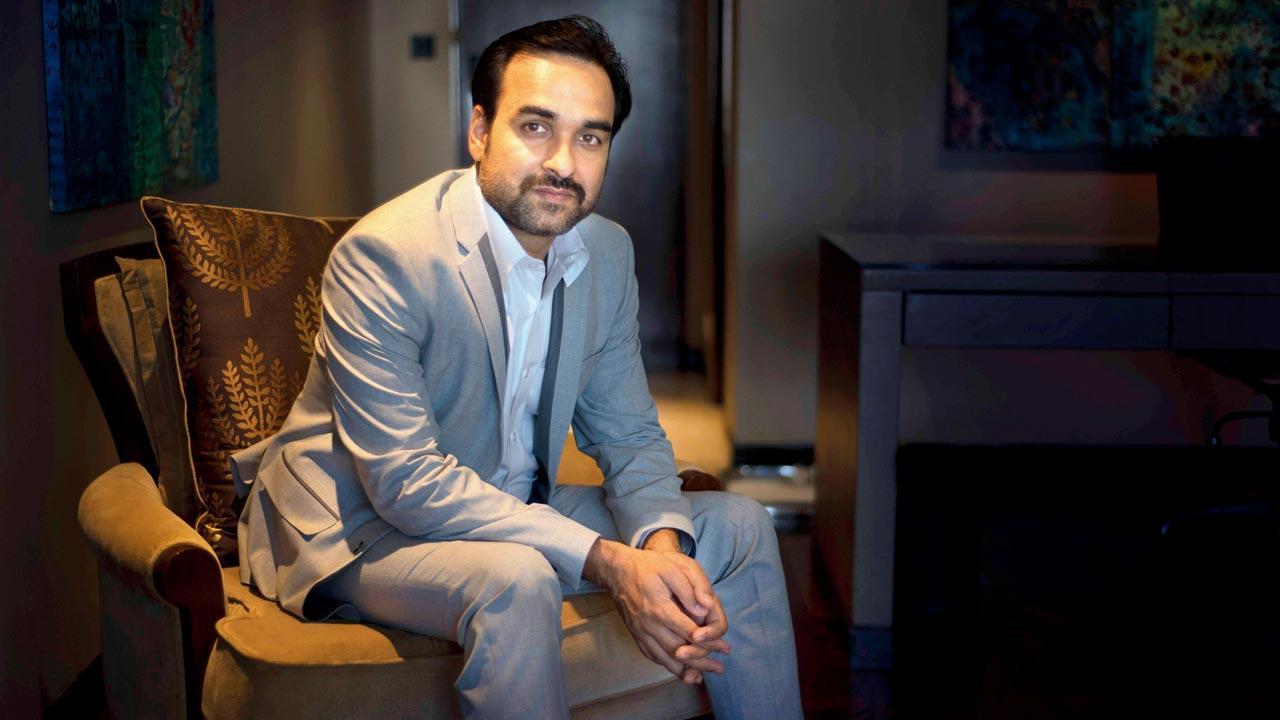
Playing a crucial role in Kriti Sanon-starrer 'Mimi', Pankaj Tripathi says he is flattered by audience notion that he is brought on board to shoulder star-led films
Mohar Basu (MID-DAY; July 20, 2021)
His repertoire is as eclectic as it is robust, making one wonder what Pankaj Tripathi seeks in a script. The actor says he has a simple ask from every project — he is merely looking for “good company”. Once that is met, he can be lured in by his character. 'Mimi', led by Kriti Sanon, was one of those films that ticked both boxes. “In this film, Laxman Utekar [director] was the [driving] factor. We bonded over our similar backgrounds; he comes from rural Maharashtra, and I, from Bihar. Kriti was another draw. Bareilly Ki Barfi [2017] was the start of a different vein of films for her. She has matured vastly as an actor since,” begins Tripathi.
The comedy sees Sanon as a small-town dancer who agrees to become a surrogate mother for a couple, but the journey isn’t without hilarious twists. Quiz him if the small-town sub-genre has been over-exploited, and Tripathi disagrees with the generalisation. “How can a film be gauged by its landscape? The story matters more than the milieu. Small-town stories aren’t a formula. If [a maker] feels that setting a story in an old house with a loud dadi and chachis will sell a film, that won’t happen. Today, the audience will reject bad stories.”
The trailer of the Jio Cinema offering was lapped up by the audience, with a fan cheekily tweeting, ‘Someone check on Pankaj Tripathi. He must be tired of shouldering the weight of so many films.’ The statement may not be too far from the truth — the actor has often elevated films by his able performances. “I take pride in being a dependable actor. I am flattered. But doing eight films a year and shooting for 350 days had drained me. The lockdown made me realise the need for weekly offs and my own inability to perform consistently for 30 days a month. I want my makers and the audience to trust me, and for that to continue, I have to be consistent.”
I was initially terrible at auditions; filmmakers were right in rejecting me-Kriti Sanon
8:15 AM

Onkar Kulkarni (BOMBAY TIMES; May 23, 2021)
Uprooting herself from her overprotected life in Delhi, more than seven years ago, Kriti Sanon landed in Mumbai to chase her Bollywood dreams. There were many within her close circle who dissuaded her from taking that big leap of faith, but Kriti went ahead and followed her passion. Today, when she looks back, she can’t believe that she has packed in so much in the years that have gone by. In a conversation with Bombay Times, the actress opens up about what made it possible to make Bollywood her home, her evolution as an actor and the facets of her personality she unravelled along the way. Excerpts:
The year 2021 began on a positive note for you as you were busy shooting for films like Bhediya and Bachchan Pandey. Then, the second wave of Coronavirus hit the country and everything came to a halt again…
Yes, this year had definitely started off well. I was back on film sets, something that really excites me. I shot for Bhediya, Bachchan Pandey and had even started working on Adipurush. The second wave hit all of us like a tsunami. I feel, at this point, nothing is more important than getting the situation of COVID under control.
Personally, how has the lockdown of 2021 been for you? You, too, had tested positive in December 2020. This time around, there seems to be more panic and fear...
Last year, it was all about dealing with the ambiguity around COVID-19, as the virus was new to us. This time around, we are dealing with a far more fatal situation.
It’s quite a scary phase. I asked my parents to come to Mumbai from Delhi, because I wanted them around. I knew I would be more at peace if we were all in the same house. While last year people got busy cooking and working out, this year, people have been helping others with resources. Even I have been trying to help as many people as I possibly can. A lot of my relatives have been down with COVID, too. While on the one hand, I am doing my best to help people, on the other hand, I am also utilizing this time to prep up for my movies. I am going through the dialogues and preparing for the next schedule of Adipurush, which is being directed by Om Raut. I am also looking forward to Ganapath, for which I have to train for the action portions. I am gearing up for the phase when the restrictions will be eased, and shootings will be back on track.
Looking back at your seven-year journey in Bollywood, does it feel like a dream?
This journey has been extremely special, something that I never dreamed of. I come from a simple, middle-class family — my mom is a professor and dad is a chartered accountant. I am an engineer, and I had never thought that acting would be my profession. And here I am today, realising that acting is one thing that gets me excited. It gives me satisfaction, peace and is something that keeps me going. Initially, my relatives and friends told me that Bollywood is too big a dream to pursue and there are too many people who are struggling and want to be in this industry. So, I do feel fortunate to get opportunities to come this far and live my dream.
Back then, when you had just stepped into the industry, were you worried about being accepted by the people here? Was Bollywood welcoming enough?
I don’t think I was ever working towards getting accepted in Bollywood. What I really wanted was to get opportunities to be able to do films and work with directors of my choice. Yes, you do need people who believe in you, and I am lucky to have people like Sajid Nadiadwala, Dinesh Vijan, Ashwiny Iyer Tiwari, Nitesh Tiwari and Ashutosh Gowariker who showed faith in me and that only motivated me to do better. I got the feeling of being accepted right from the beginning, but it took me some time to find my place in the industry. I was new to the city, came from a non-filmy background and knew nobody here. I did feel like a bit of a loner in these filmy parties, which sometimes I still do. Frankly, as you keep working, doing more films and meeting more people, you start feeling like you are part of the industry. However, reaching this far wasn’t easy. I went for a lot of auditions before I got Heropanti, and I must say I was initially terrible at it (auditions). So, I don’t think it was wrong of them (casting directors/filmmakers) to reject me.
The rejections and the failures that you face make you stronger. I believe you learn a lot more from your failure than success. Success gives you a lot of confidence to move ahead and take risks. The appreciation I got for films like Bareilly Ki Barfi, Luka Chuppi or Panipat gave me the confidence to take up roles that were a little different, which people didn’t expect me to do. But my failures made me realise that I shouldn’t be afraid and that I can overcome even a situation like this as well. I have been a learner and have constantly evolved, which is probably why I have reached where I am today.
So, how different is the Kriti Sanon of 2021 vis-à-vis the day you started off in showbiz?
As a person, I feel I have opened up a lot. I was far more stubborn about my opinions, but now I am a lot more open-minded. I have lived a very protective life, so I was more of a black and white person, but now, I see more greys. The past years have also been a journey of self-discovery. As an actor, I have understood my craft and my process better. During Heropanti, I had absolutely no idea about the process of filmmaking, and today, here I am approaching my scenes differently. I think at a deeper level now and find a lot more layers in my characters. It is exciting to be still discovering your process and I wish that I continue to do that.
----------------------------
The actor, who completes seven years in Bollywood, calls it a learning experience and a journey of self discovery
Juhi Chakraborty (HINDUSTAN TIMES; May 23, 2021)
It was seven years ago, on this very day, when Kriti Sanon made her Bollywood debut with Heropanti, and since then, she has shown versatility through her choice of films. From the big actioner Dilwale (2015) to slice of life Bareilly Ki Barfi (2017), from quirky comedy Luka Chuppi (2019) to historical drama Panipat (2019), the actor calls the past seven years “a learning experience” and a journey of self discovery.
She elaborates, “I discovered my own process as an actor and it has been an extremely fulfilling journey. I’m blessed and fortunate to have got so many different kinds of opportunities that have made me grow as an actor.”
Looking back, Sanon, 30, confesses being “completely clueless” on the sets of Heropanti. “From not knowing my camera angles or how filmmaking actually happens to being fascinated by it... I’ve always been a thinker and have had the urge and excitement to learn. That has helped me all these years to grow and evolve,” she says.
While Sanon has become more confident with each of her films, she admits it has been quite a learning to not just polish her craft but also understand herself as a person.
“In these seven years, I remember figuring out my process almost by hit and trial, and seeing what works for me and what does not. I discovered one more thing about myself that it’s nice when you don’t know it all. I don’t know it all and I don’t want to know it all. I’m still discovering the process,” she muses.
The present year may be marred with the second wave of the pandemic, but Sanon has a packed and exciting line-up ahead including pan-India mythology film Adipurush, horror film Bhediya, which she recently shot in Arunachal Pradesh, Mimi, action film Ganapath, Bachchan Pandey and Hum Do Hamare Do.
While she’s pleased with her new slate of films, the actor admits there’s something that she’d have wanted to do differently in the last seven years.
“I have no regrets about the films that I’ve been a part of. I’ve learnt from each one of them — from my successes and my failures. The first three to four years of my career, I was pretty slow. I was being very safe and cautious. I didn’t want to make a wrong move. I was very selective with the projects that I did. I didn’t realise it back then that a film or script doesn’t have to be absolutely perfect. When a script comes to you, it also goes through a journey, and sometimes, things end up getting much better than what is on paper. I’d have probably liked to have done more number of films if I could,” she concludes.

Until Bareilly Ki Barfi released, people would see me as a ‘serious, dramatic actor’-Rajkummar Rao
7:55 AM

Rajkummar Rao says people love to put Hindi film actors in boxes, adds that ‘some kind of a shift’ happened in his career with the 2017 film
Prashant Singh (HINDUSTAN TIMES; October 20, 2020)
Be it his “serious” parts in films such as Shahid (2013) and Newton (2017) or lighter outings in hits such as Kai Po Che! (2013), Bareilly Ki Barfi (BKB; 2017) and Stree (2018), actor Rajkummar Rao has successfully straddled all kinds of roles through his decade-long Bollywood journey. But Rao admits that he was considered a “serious and dramatic” actor till BKB came along.
“People love to put actors in boxes, and are like, ‘If they have done a particular kind of work, then let’s give them more such parts’. Until BKB released, people would see me as a ‘serious, dramatic actor’. But I, as an artiste, never thought, ‘Oh, I am going to do something very different’. I knew that it was a great role for any actor — to portray a dual personality in a beautiful script,” says Rao, whose character Pritam Vidrohi and his humorous undertones became a major talking point for the film.
The actor says it “never occurred” to him that he was “dabbling in comedy space” with the Ashwiny Iyer Tiwari directorial. “But the end result was amazing. The kind of response I got from people was overwhelming, and I really enjoyed that space. Films such as Newton, Trapped (2017) and Shahid take a toll on you, as a person as well as an artiste, but when you have a fun part in a film like BKB, you enjoy those great moments... Comedy-laden parts are all about having fun with your lines on the sets. You have to let it flow, and enjoy,” says the 36-year-old actor.
Like trade pundits, Rao also feels that BKB gave a new twist to his career path. “In a way, some kind of a shift happened in my career with BKB. Then, Stree (2018) came along and lot of things changed... I have constantly learned and grown. As an actor, that’s exactly what you want to do — play completely diverse parts in all your movies,” he says.
With Mimi, it was interesting to discover feelings that I had never experienced in real life-Kriti Sanon
8:28 AM

Kriti Sanon on playing mother and stepping out of her comfort zone
Himesh Mankad (MUMBAI MIRROR; May 11, 2020)
After wrapping up a major chunk of her next film, Mimi, in which she plays a surrogate mother, Kriti Sanon was in the process of shedding the 15 kilos she had gained for the character. Reportedly, the actress was to shoot for a special lavni song in the Dinesh Vijan production. Now that the shoot has been pushed owing to the Coronavirus pandemic-induced lockdown, Kriti is spending the downtime baking cakes and puddings. But despite the sugar rush, as evidenced by her Instagram pictures, she is in perfect shape for the Maharashtrian folk dance number.
What was once considered a risk is slowly becoming an idea worth a shot, and Kriti was excited to play a mother on screen, even though she has been in the Hindi film industry for just six years. “I play a young girl who aspires to become a Bollywood actress. Yes, Mimi has dreams of her own and there is a reason why she agrees to become a surrogate. It’s the most beautiful script I have come across and Mimi was one of those films which I agreed to be a part of in the first narration itself,” the actress reveals.
She goes on to inform that like her, Mimi, too, is not ready for motherhood. “I had my own take on the emotions required to bring out her dilemma, and discussions with Laxman sir (director Laxman Utekar) really helped. It was interesting to discover feelings as an actress that I had never experienced in real life,” Kriti asserts.
The film is a remake of the National Award-winning 2011 Marathi film, Mala Aai Vhhaychy! It also features Pankaj Tripathi and Sai Tamhankar. Mimi was shot in Jaipur and was expected to release around July.
Kriti believes that cinema today is all about good content that excites both the audience and the actors. “Whenever I have stepped out of my comfort zone, it has worked for me big time. Bareilly Ki Barfi was the first time I played a small-town character and it got me a lot of love from the audience. Things changed in a good way after the film’s release. Ditto, Luka Chuppi, which was a risky subject as it was exploring live-in relationships in another small-town set-up, but in a lighter way,” she points out.
So, is she looking for hatke scripts now? “I am looking for scripts that have something meaningful to say and also give me the platform to showcase myself as a performer,” the actress explains.
Next up for Kriti is another film with Dinesh Vijan, Second Innings, which reunites her with her Bareilly Ki Barfi co-star Rajkummar Rao, and also features Dimple Kapadia and Paresh Rawal. She’d have been shooting for the Abhishek Jain directorial by now in Delhi, had it not been for the lockdown. Prod her for more details on the project and she says, “It’s a quirky film about a couple in the process of adopting parents. It will be a great watch as it’s an entertaining story.”
For me, Kangana Ranaut is a fantastic actor and I don’t care what the world has to say about her-Ashwiny Iyer Tiwari
7:59 AM

Rachana Dubey (BOMBAY TIMES; January 18, 2020)
 Director Ashwiny Iyer Tiwari, who won an award each for her first film Nil Battey Sannata and Bareilly Ki Barfi, is geared up for Panga, headlined by Kangana Ranaut, Richa Chadha, Jassie Gill and Neena Gupta. Somewhere between the pre-production work on an upcoming biographical drama and scripting for two other projects, the filmmaker spoke to BT about her equation with her lead actress and why she’s eager to roll out several stories at one go, among other things. Excerpts:
In recent years, the audience has been more drawn towards great stories over star-led fare. While it was a shift that was waiting to happen, it has now put more onus on filmmakers to deliver compelling content with every film...
I don’t give in to pressures. As a technician, I see this going in two directions.
Our country, with all its diversity, encourages a wide variety of films to be made. We’ve seen a steady rise in the number of avenues of content consumption. Directors and writers have become more visible, thanks to social media. The younger audience now makes a note of the kind of work a particular filmmaker puts forth and that helps them decide whether they want to watch their next film or show. They somewhat know what to expect, which can have positive and negative outcomes.
The positive is that there is an audience waiting to consume a filmmaker’s creation. The negative outcome is that as a filmmaker, you may never find the room to experiment. If I try to make something completely different from what I have done so far, even with my best effort, I might not be able to please my audience. They might not accept my experiment. So, it’s a tricky space for filmmakers to manoeuvre. As storytellers, there is a part of our soul in each of our films. While Nil Battey Sannata, Bareilly Ki Barfi and Panga are very different films, they are driven by relationships and pure emotions.
Panga is also by far your most ambitious, large-scaled film...
For me, all my films are like my babies; equally dear to me. Now, whether you have one baby or many, the pain of delivering them and the joy you feel when you see their face for the first time is always the same. Today, when I hear positive feedback for Panga’s trailer, it validates my belief in what I had started out to do. I needed that validation because it’s taken a long time in the making. I wanted to be reassured that the emotions in this film will stay with people for posterity.
It was also reported that you both entered into a legal arrangement which assures no interference in your work from her end. Is that even possible?
It’s so bizarre and false! I don’t know if such a thing even exists. I was so upset when stories like those were doing the rounds because somewhere, it just becomes ingrained in people’s heads and they form their opinions on the basis of such stories. For me, Kangana is a fantastic actor and I don’t care what the world has to say about her. Every relationship works on mutual trust and respect. For me, an actor and a director’s relationship is one that lives beyond a film. It was important that Kangana trusts my instincts and the fact that I will never speak about her behind her back. She trusted me. And so, we could never stop talking to each other and we never communicated through other channels. We’ve been sailing in this boat for two years and any insecurity on either side would have rocked the boat long ago. Also, I believe that a talented individual will have questions and ideas. There’s no room or need for ego here. Yes, as the director, this film is my vision, but my crew and cast partnered with me. Kangana is an intelligent, disciplined girl. Such people are partners, not competitors. If she’s shining as Jaya, it’s our effort that’s being appreciated. Except for the kabaddi scenes, she didn’t even watch her scenes on the monitor. That’s trust, not insecurity, right? On my set, I’ve taken inputs from Rajkummar Rao, Ayushmann Khurrana and Swara Bhasker. So, why not Kangana? If their inputs were not interference, how is hers? This chatter needs to stop.
Your set was full of women known for their strong portrayals on screen — Kangana, Richa Chadha and Neena Gupta. How was the energy off camera?
I really enjoyed what Richa, Kangana and Neena ji did with their combination and individual scenes. They added such value to their characters that I didn’t have to make an effort to break the ice anywhere. I treat my actors like human beings. My equation with them is like a friendship or marriage where we both have to be with each other and make things work. Everyone has flaws but if you adjust and try to understand each other’s point of view, you can find your way with everyone and the process will also be a lot of fun. Actors add so much value to a story. The problem arises when you feel that no one other than yourself can add value to your film. None of my actors made impromptu improvisations without checking with me, and all of them had suggestions. We mutually respected each other’s spaces. I enjoy working in a team and as a team, and that is possible when you don’t let ‘free advice’ colour your thoughts. An egoless, open dialogue always helps.
While you were working on the post-production of Panga, you started work on Narayana and Sudha Murthy’s biographical drama apart from planning a documentary and your first with Ekta Kapoor. That is a lot on your plate…
I see people at the age of 60-65 happily working, so why should I crib about doing things I love? We have one life, and we need to make the most of this time. It’s the sheer joy of uplifting souls through stories that keeps me on my toes. Also, any story, from conceptualising to its release, takes at least nine months. In case of Panga, it’s taken more than two years. There are so many wonderful stories waiting to be told and so much talent that needs to be brought to the fore. You will never find that ideal right time for something that springs from the heart.
Given that your last two films won you awards, and Bareilly Ki Barfi was also a box office success, do you feel the pressure to live up to your own benchmark or even surpass that?
Box office matters to every filmmaker. As a creator, I feel responsible for my producers’ time and money, but I make films for posterity and to make the audience happy. It doesn’t matter if people don’t know or remember me in the future. What matters is that they should remember the characters that were created through my stories.
There were rumours and that Kangana and you didn’t get along too well at the outset. Any truth to that?
It’s nonsense! I didn’t let others’ baggage of thoughts or opinions cloud my vision, especially when it came to Kangana. I remember the day I shared the script with her (April 14, 2018), she gave an instant nod. She was deeply involved with Manikarnika - The Queen Of Jhansi at that time, and had long, tiring days, but she was attentive and receptive to my script. From that day to now, it has only been a pleasure working with someone like her who brings a lot to the table, and at times, far more than what you’d expect. She chases perfection and gets it, too. Kangana and I started off as acquaintances, and today, we are close friends who are transparent with each other.

It’s the right time for an LGBTQ love story-Ayushmann Khurrana
8:04 AM

Ayushmann Khurrana emphasizes the relevance of his upcoming comedy, reveals his next could be a spy film and says his rise has been more steady than meteoric
Akash Bhatnagar (MUMBAI MIRROR; January 8, 2020)
 Ayushmann Khurrana is following up his box-office success of 2019 with another unconventional premise. In debutant director Hitesh Kewalya’s (who had written Part 1) Shubh Mangal Zyada Saavdhan, the actor plays a gay protagonist, a territory few people have explored in Hindi films. “The timing couldn’t be more perfect,” Ayushmann notes, adding, “I believe that India is ready for that character and that kind of cinema. The Supreme Court has legalised same-sex relationships and this is the right time for a love story on the LGBTQ community.”
Ask him what inspires him to seek out unusual stories and the 35-year-old actor says, “Everyone aspires to create a certain space for themselves, and this is mine. It started with Vicky Donor and I am proud to own this space. Whenever someone does a film on taboo or unconventional subjects, people will say, ‘They did a film like Ayushmann’.”
What’s next for him, one wonders, and pat comes the reply, “I am looking forward to being in an action film, which I have never done.” There were reports of him reuniting with his Article 15 director Anubhav Sinha for a spy film. “We are still discussing it and will make an announcement soon,” he says.
Ayushmann received a National Award for Andhadhun last month. Did he think, when he made his debut in 2012, that he’d achieve such a feat? “I was in La La Land after my first film, so I may have believed it. When your first film does well, you think everything will go right. I had a lot of self-confidence and probably a bit of overconfidence as well. But in 2014, I had three unsuccessful films. If someone had told me this then, it would have seemed outlandish. It is at times like this, when you need to recalibrate,” he reflects.
He wouldn’t label his winning streak at the box-office as a meteoric rise. “It was a gradual process in the last three years, starting with Bareilly Ki Barfi and Shubh Mangal Saavdhan. Last year was the best yet, with three different kinds of films doing well. It has been a steady rise. So, it was easy to digest, and I am glad it happened like that,” he explains.
This year, Ayushmann has Gulabo Sitabo with Amitabh Bachchan coming out and he is all praise for his co-star. “He is so intelligent and full of energy even at this age... He comes so prepared that he’ll even know your lines,” the actor raves. He’s also in awe of his wife, Tahira Kashyap, who beat cancer last year. “She is not just a life partner but also a life coach for me. She has inspired me since college days with her creativity and her zest for life. That worked in our favour while battling the illness,” he concludes.
I would love to play a character like Rosamund Pike in Gone Girl or Tabu in Andhadhun-Kriti Sanon
8:59 AM

As she adds two new genres to resume with Panipat and Mimi, Kriti Sanon keen to explore grey roles
Upala KBR (MID-DAY; November 30, 2019)
A look at her slate of upcoming movies — that include a period drama in Panipat, a social comedy in Mimi and an action-drama in Bachchan Pandey — and it is evident that Kriti Sanon is keen to try her hand at every genre. While the actor is enjoying slipping in and out of characters that are far removed from one another, she says that her wish list now includes taking on a grey role. "I have the nice-girl-next-door look, and I have been told that a lot. So, if I get a great script with a not-so-nice character, I will grab it with both hands. I would love to play a character like [that of Rosamund Pike in] Gone Girl [2014] or say, Tabu's character in Andhadhun [2018]. I want to go into a zone that is not expected of me," shares Sanon.
Although she has enjoyed a hit in Housefull 4 recently, Sanon adds that the success of movies like Bareilly Ki Barfi (2017) and Luka Chuppi gives her the confidence to experiment with different roles. "These movies brought in big numbers at the box office and instilled confidence in me. Today, I don't want to be scared that I cannot [pull off a certain role]."
Success changes people’s perception of you and the way they look at you-Rajkummar Rao
8:39 AM

Neha Maheshwri (BOMBAY TIMES; October 19, 2019)
The years of struggle that Rajkummar Rao has seen has helped him shape his career with great maturity and confidence. From playing the second fiddle in several films to becoming a poster boy of content-driven cinema, he has come a long way. Rajkummar talks to BT about how he does not want to limit himself as an actor, how box-office success is not the only thing that drives him, and the life lessons he has learnt from his parents. Excerpts...
Made In China chronicles the journey of Raghu Mehta, a failed businessman aspiring to make it big. You, too, have toiled for years before making a mark in Bollywood. Did that make Raghu’s journey more relatable?
Made In China revolves around Raghu’s journey, from being a nobody to trying to be somebody, and I could totally relate to it. Like me, he, too, doesn’t have a plan B and has a never-give-up attitude. Raghu has struggled a lot with people around him and his extended family is not in favour of him exploring another business idea because he has failed so many times. When I was struggling in Bollywood, I was also told by people to try other mediums. However, I was prepared to face the struggle. I knew that no one would launch me the moment I landed in Mumbai. For two years, people only considered me for character-driven parts. Sometimes, they would either not call me or make me wait, and eventually, they would turn around and tell me that they needed a conventional looking actor with a great physique. However, I didn’t lose hope and had faith that someday, someone would look at me the way I am and cast me. Dibakar Banerjee gave me that opportunity in Love Sex Aur Dhokha (2010). Success changes people’s perception of you and the way they look at you. People have cast aspersions on many actors because they didn’t look conventional. But, these actors proved them wrong and the same people started praising them. This has happened with me as well. Initially, some people thought that I wasn’t cut out for lead roles, but today, they think differently. From then to now, it’s been an exciting ride. I am happy with my career graph, and the way cinema is shifting shapes and people are coming up with great ideas and stories, which are being lapped up by the audience. It’s a great sign for us.
You have been a front-runner for content-driven cinema. Do you ever crave to play the quintessential Bollywood romantic hero?
I am a big fan of the typical Bollywood kind of romance. I love to watch it, but I am not too sure if I can pull it off. Also, I feel that cinema has become more real. Having said that, larger-than-life films are still being made and are doing great numbers at the box office. There should be place for all kinds of films. People will get bored if we keep making only realistic films.
While you had a great run at the box office last year, your films in 2019 (Ek Ladki ko Dekha Toh Aisa Laga and Judgementall Hai Kya) didn’t have a similar impact on the BO…
I knew exactly what went wrong with my films, which didn’t work. There are times, when you make a good film, but it doesn’t work. However, it’s a personal experience which I wouldn’t be able to share. Sometimes, you realise that a film won’t work at an earlier stage itself, but then, it’s not just about the box-office result, but also about enjoying the process, and becoming part of a good film. Failures teach you a lot more than success, as you learn what went wrong and what not to repeat. I try to live in the present and not think too much about the future. I give my all to every character I am playing at that time, and then, I move on to the next project without thinking about what’s going to happen to it.
You had said in an interview that the industry is quick to typecast actors. Currently, you are the go-to actor for content-driven cinema? Do you ever feel that you are being typecast?
I don’t think I have been typecast. There is still a lot of fire inside me and I don’t want to typecast myself ever. I want to surprise my audience by doing as many films as I can and play different parts. I don't want anyone to slot me in any bracket and think that I can only do certain kind of films. I like challenges. I want people to throw any character at me and it is my responsibility to portray it with conviction. A lot of people ask me about my dream role. I don’t have one. Every role I do becomes a dream part for that moment and for that period. Just the dream of becoming a film actor was a big one for me, and I am happy that I am living that dream every day.
You are known to sink in your teeth into every character that you play. You lost seven kilos for Trapped and grew a paunch for Made In China. While it’s considered to be a big deal in Bollywood, in Hollywood, many actors have undergone drastic transformation...
I have always said that it’s part of my job, and I am not doing anything extraordinary. It’s the demand of my character. If I am playing Subhas Chandra Bose, I have to look like him and not someone from Delhi. It’s my responsibility towards my characters that I have to fulfill. But yes, when you undergo a drastic transformation like Joaquin Phoenix did for Joker, people appreciate it. It’s amazing to see an actor put in so much for the character without using prosthetics. I think that’s phenomenal. I also like what Christian Bale and Matthew McConaughey do. I find their work inspiring. They do it because they want to be true to their characters and not for appreciation from people.
For Made In China, I made my tummy a little heavy, because I wanted to look different in the film. I ate a lot of white rice and cheese and also worked out a lot so that the other muscles were intact. It’s fun when you try to do something different and people appreciate it. But eventually, it’s for yourself; it’s a very lonely process that you go through during that time. As an artiste, you do it for yourself. There were times when my director (Mikhil Musale) was happy with a shot, but I wasn’t and I would go in for a retake because I wasn’t satisfied. You repeat the process till you take out something real from within. Primarily, it’s to satiate the artiste in you and then you do it for your co-actors. If that happens truthfully, it will reflect in the film and the audience will see it. One doesn’t know what will work for the audience. How will they connect with you if you are not in the moment? If you are truthful in that very moment to yourself, your craft and your co-actors, the audience will definitely connect with it. You are not breaking the fourth wall and talking to them; they have to believe in what’s happening in that particular scene. Since I am trained in a film school, I understand performances really well. I can tell the difference between a true performance and when someone is faking it.
This film is more of a situational comedy. What’s your view on adult comedies?
It is situational and there are very responsible actors involved in the film. Nothing in it is vulgar and crass. It’s a family entertainer. But as they say, never say never. If the story excites me as an actor, I don’t find it vulgar and crass, if it’s situational and not just about gags, then I won’t mind doing an adult comedy. But that’s not the plan right now.
You have been a part of several heroine-centric films and two-hero projects. After having tasted the kind of success that you have, a lot of actors would refrain from sharing screen space in so many projects…
I did Ek Ladki Ko Dekha Toh Aisa Laga (2019) and Queen (2014); both of them were women-centric stories. I never judge a story on the basis of how my character is shaping the film. The story is paramount, and if my character is impactful and offers me something new and different, I say yes to it. For me, it’s never about playing lead parts, but always about associating with great stories. I love what I do and genuinely feel passionately about my work. It’s as simple as that. I am not doing it to prove a point to anyone. For me, it’s a sacred thing to go on a film set. Insecurity and other things corrupt the environment on the set and then, it reflects in your work. I would never want to feel like that. I have done Bareilly Ki Barfi (2017) and Kai Po Che (2013), so I don’t mind being part of a two-hero or three-hero project. I am very secure as an actor. It’s not that I am going to fight a battle, I am going to do something I really love. I love being on a film set, where everyone is working like one big family.
While you are doing exceptionally well in your career, on the personal front, you suffered two irrevocable losses over the past couple of years when your parents passed away. How have you coped with the loss? Even with all the success, does it get lonely?
I wish my parents were part of this journey and that void will always be there. But apart from that, I am very happy and content with the way work is going and the kind of cinema I am doing. It’s an interesting phase in my life. I do feel lonely. That’s why I am working. When I am working, my mind is busy with a lot of things. But when I am home, travelling, or not doing much, it hits me. Fortunately, I have my loved ones, who keep me grounded and rooted. But I don’t have to put any extra effort to stay grounded, as that’s how I am. With the kind of upbringing my parents have given me, I will always be this way. They have taught me to work hard and be real. They have taught me a lot about honesty and helping others. It’s not difficult to be honest. It’s easier to speak your mind.

Subscribe to:
Posts (Atom)