Showing posts with label Banegi Apni Baat. Show all posts
Showing posts with label Banegi Apni Baat. Show all posts
Rituraj Singh was already popular when Shah Rukh Khan joined Barry John’s theatre group-Varun Badola
8:26 AM
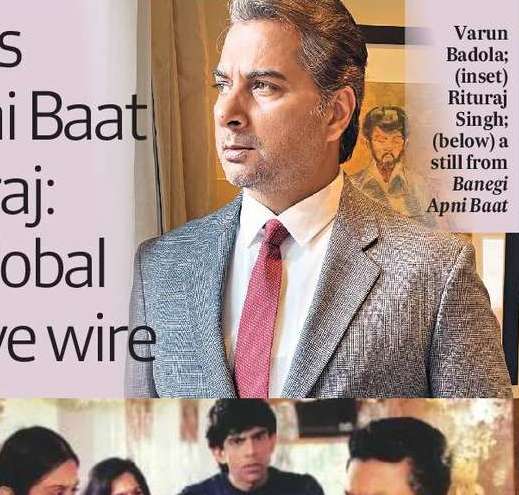
Mimansa Shekhar (HINDUSTAN TIMES; February 22, 2024)
For actor Varun Badola, the news of his Banegi Apni Baat (BAB) fellow actor Rituraj Singh’s death left him in a state of shock as he says Singh was more than just a colleague for him. “Even my wife did not break the news to me. I knew Rituraj as more than a co-actor. It’s shocking, too close for comfort,” says Badola, who received the tragic news a little late as he was travelling.
“I have seen Rituraj’s popularity and stardom. Sometimes, when someone departs, your world suddenly shrinks for unknown reasons,” adds Badola remembering Singh, who died of a cardiac arrest on February 20.
Though Badola and Singh appeared in separate tracks of the cult ’90s show, he got introduced to Singh post his stint in BAB. “It was a landmark show and Rituraj was the hero. We met at its after-parties and he was a huge [star] at that time. His stardom wasn’t restricted to TV. He was a global person, quite a live wire and one of the most promising actors who entered the industry at that time,” recalls Badola, 50.
Surprisingly, the actor’s favourite performance of Singh was from his theatre days. “Rituraj was already popular when (actor) Shah Rukh Khan joined Barry John’s theatre group. He did an English play titled Lend Me A Tenor. It was pretty flawless, and he was brilliant in it,” Badola concludes.
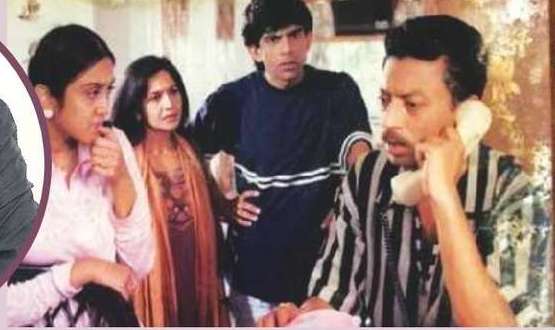
Rituraj Singh had just entered the industry, yet he was already doing so much. We all looked up to him-Vaquar Shaikh
8:12 AM

Close friend Vaquar Shaikh remembers his time with late Anupamaa actor
Letty Mariam Abraham (MID-DAY; February 21, 2024)
“I am sure everyone will remember his bright smile,” reminisces Vaquar Shaikh about actor Rituraj Singh, 59, who passed away early Tuesday morning after a heart attack. The two began their association from 1993 with the show, Banegi Apni Baat.
“He was much senior to me when I joined Banegi Apni Baat. He was already a star, and we were besotted by him and his performance. Here was a guy, who had just entered the industry, yet he was already doing game shows, movies, and TV shows. We all looked up to him,” says Shaikh, adding that it was not just his performance, but the way Singh conducted himself among his peers and juniors that won hearts.
“He never let me feel like a newbie on set. I remember having friendly banter and rehearsing lines on set with him. Ritz was always up for [rehearsals], and often gave us tips on how to perform. He was an extremely knowledgeable guy. Ask him about cinema, politics, the camera, acting, method acting, or anything happening in the world, he was well-updated. He had the gift of the gab, was spontaneous, and full of energy.”
However, what Shaikh admired the most about his close friend was that despite more than three deacdes in the industry, Singh continued to challenge himself and take on diverse roles, earning appreciation for his ability to stay relevant in an evolving industry.
“When he crossed his 50s, the kind of work he kept doing, especially in the last five-six years, is mind-blowing. He managed to adapt and stay relevant. He transformed himself to fit different age categories. It’s difficult for senior actors to get noticed. So many actors fade away with time, but he was always doing something or the other. It is so unreal to talk about him in the past tense,” mourns Shaikh, who played his younger brother in Rupali Ganguly-starrer Anupamaa.
Singh’s illustrious career included interesting roles, like popular TV shows Tehkikaat, Kutumb, Jyoti, Beintehaa, and most recently, Anupamaa. He was also seen in film and web series, including Made in Heaven, Indian Police Force, and Yaariyan 2.
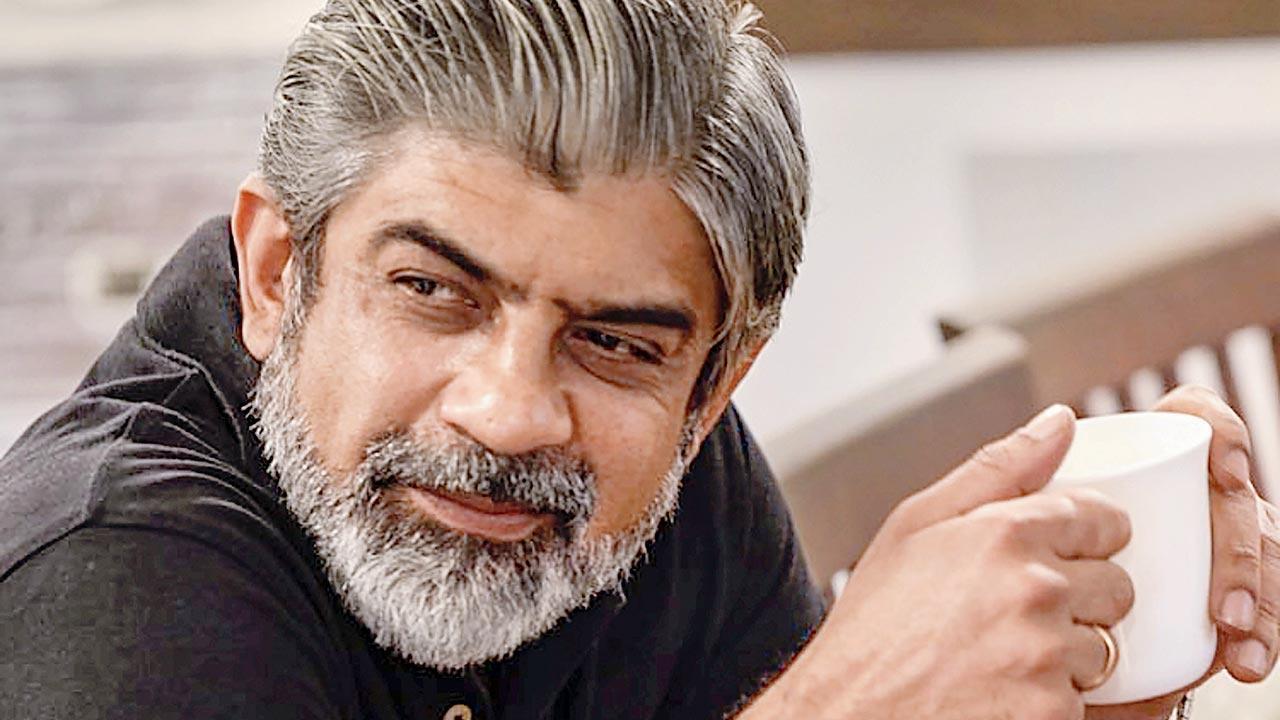
A walk to remember: Charting Irrfan Khan’s long, tough journey to the audience's heart
8:07 AM

Irrfan Khan during a film shoot at Madh Island in 2008
Charting Irrfan Khan’s long, tough journey to the audience’s heart, which began with a footnote of a role on the small screen and the quest for a voice
Chandrima Pal (MUMBAI MIRROR; April 30, 2020)
Fans, followers and devotees of Irrfan will remember him for his inherently natural way before the camera, his easy body language and distinctive dialogue delivery. But it was not as though the actor woke up one morning and found his voice. ‘That’ voice.
Long before this Khan became the anointed king of indie cinema and took on meaty roles in big budget productions, he struggled to find a niche. There were the odds—he was lanky, not good-looking in the conventional sense, and yet to discover how best to use his eloquent eyes. However, he had a certain charisma and could turn the tackiest frame into something half-decent.
While Bollywood of the ’80s and ’90s certainly did not have room for an actor such as him (except Mira Nair’s Salaam Bombay, which was hardly Bollywood, even though it was in Hindi), television seemed to be a tad more generous. Irrfan began with a footnote of a role in Bharat Ek Khoj, based on Pandit Jawaharlal Nehru’s seminal book, The Discovery of India. Epics and costume dramas were the order of the day, and Doordarshan was constantly throwing up opportunities for talented actors to eventually get a toe-hold in the industry and do work that they could be proud of. Irrfan was one of them. As Senapati Bhadrashal in Dr Chandraprakash Dwivedi’s 47-part epic Chanakya, Irrfan was not quite impressive. But the show gathered enough accolades and viewership to set him off.
Over the years, the actor hopped from one costume and period-drama to another, switching channels and mouthing dialogues that evidently came to him with certain difficulty. Whether it was the character of Rudra in DD’s take on Sharatchandra Chattopadhyay’s Sreekant (top-lined by Farooq Shaikh) or as the twin brothers Badrinath and Somenath in Neerja Guleri’s Chandrakanta on Sony, Irrfan looked ill-at-ease. It was no better in Sanjha Chulha, where he played a chillum-smoking sadhu dressed in a saffron sarong and dreadlocks.
It was not until he found himself in a realistic context, with dialogues he could sculpt according to his strength, that he began to make his presence felt. And it, kind of, came together for him when his wife, Sutapa Sikdar, wrote the dialogues for Banegi Apni Baat. The popular show, produced by Deeya and Tony Singh, captured the imagination of the generation that was comfortable talking about extramarital affairs, pre-marital sex, teenage crush and parent-child communication gaps. It was inspired by American coming-of-age TV dramas and it throbbed with a desi heart. Irrfan, who was initially reluctant to take on the role, was persuaded by his wife to audition for it. He played a father who starts off with a turbulent relationship with his kids, and eventually discovers his gentler, more sensitive side. The role and the show gave him an opportunity to flex his acting muscles for the first time.
BAB—as it was known—primed Irrfan for more roles in urban, contemporary settings, a universe where he thrived. In Sparsh, directed by Ravi Rai, who ruled the television industry at that time, he was definitely in his element as a man who negotiates a complex marriage and separations. It had just the right dose of reality, with a touch of drama, in an instantly recognizable setting that brought out Irrfan’s finest performance until then. Even then, he was still way down in the pecking order, with his peers such as Kunickaa Sadanand and Mahesh Thakur, bagging top honours.
By the time Ek Shaam Ki Mulaqat happened on Star Bestsellers, Irrfan was on fire. In the story about a married man who finds himself attracted to his eccentric land-lady, he gave us a taste of what was in the offing. The role was a serendipitous coming together of all that would define Irrfan Khan, the actor, on the big screen. He was gentle, funny, charismatic and extremely watchable. Most importantly, he played the lead. In the scenes where he preps his room hurriedly in anticipation of the woman’s arrival and his misreading of her ‘signals,’ Irrfan strikes gold.
Unlike the other Khan, who transitioned from television to the big screen as well, Irrfan did the entire arc. He worked hard to find his voice, that timbre, that would eventually set him apart from the others. And he was not apologetic for the calluses under his feet that spoke of his long, tough walk to his audience’s heart, where he would remain forever.

I want to work for as long as I can-Kalpana Iyer
8:19 AM

Two decades after leaving to work in Dubai, “Rambha Ho” girl Kalpana Iyer appealed for decent, substantial roles on the social media
Roshmila Bhattacharya (MUMBAI MIRROR; August 5, 2019)
 Back in the eighties she turned “Hari Om Hari” into a disco beat, then, lip-synced to Usha Uthup’s distinctive, husky voice in the Bappi Lahiri-composed “Rambha Ho Ho” for Armaan to book a place in our collective memory as one of Bollywood’s hottest sirens. A former Miss India who went on to represent the country in the Miss World pageant and made it to the semi-finals, Kalpana Iyer featured in many more special appearance chartbusters, from Disco Dancer’s “Koi Yahan Nache Nache” to Raja Hindustani’s “Pardesi Pardesi”. Towards the end of 1999, she moved to Dubai.
For almost two decades, Kalpana disappeared from the public eye, surprising everyone on Saturday when she resurfaced on Instagram with a post, asking for work. It was not a desperate plea, rather it was a respectful appeal to friends to come through for her. “I have worked for almost my entire life and most of you know me so a CV, I believe, is not really needed for I feel that it would be self-glorification on my part,” she pointed out, proceeding to state in simple terms that she was looking for a job as she wishes to continue working for as long as she can. “I am eager and willing and sincere so please consider this as an appeal to lead my life with dignity,” she reiterated.
When Mirror reached out to her in Dubai, the veteran actress was her usual upbeat, feisty self, pointing out that she had voluntarily left India and Bollywood at the turn of the century even though the offers were still coming in , mostly for TV. “It is not as if I only wanted to do films. But after shows like Banegi Apni Baat, Junoon and Dillagi, the work that was coming my way was not exciting in terms of screen time and substance. Mazaa nahin aa raha tha,” rues Kalpana, who started her career with Rajshri Films’ Manokaamnaa in 1980, a love triangle featuring Shail Chaturvedi, Urmila Bhatt and her as the glamorous London-based fiancée of the hero. Incidentally, her last film before the hiatus was also a Rajshri production—Sooraj Barjatya’s star-studded family drama, Hum Saath Saath Hain, which she describes as a “sweet, decent role” and even though it wasn’t too long, she admits she had a lot of fun on the sets with co-stars Kunika and Jayshree T.
Soon after, a dear friend who was in the hospitality business, invited her to work in his restaurant as a manager and Kalpana migrated to Dubai “I hadn’t expected to stay away for so long. But I liked it there, and though I had a strict boss, I enjoyed the work. Since my family was with me, 19 years passed by in a flash. Around four years ago, the friend closed down his business, but I managed to land a job at another restaurant. Unfortunately, I lost that one too in June. Now, even though I am done with all my responsibilities and have no majboori, I don’t want to take it easy yet. I want to work for as long as I can, I want to stay young at heart,” asserts the sixty-plus lady.
She acknowledges that she’s been away for almost 20 years and since she was not desperate enough to issue any denials and clarifications, many of her former producers were led to believe that she was no longer open to acting and would never return to Mumbai. “There is no reason for me to quit showbiz. I am who I am today thanks to Bollywood and Mumbai. My doors have always been open, so has my heart, but kaam toh hona chahiye, na?” she reasons.
Urged by friends who have been telling her for a while now that it’s time to return home, Kalpana put out the Instagram post and is encouraged by the overwhelming response it has received. “Since I don’t live in Mumbai, this was the best way to catch the public eye,” she says.
In 2017, National Award-winning actress Neena Gupta, then 62, had shared a beautiful picture of hers on the social media with the caption, “I live in Mumbai and working as a good actor looking for good parts to play.” She was rewarded with a strong role in Badhaai Ho as a woman on the wrong side of 40s with two sons in their 20s, who suddenly discovers that she is pregnant again. It bagged her the Filmfare Critics Award for Best Actress. “I want roles like that, roles that are decent in terms of footage and have substance. The budget is not important, nor the platform. Apart from films, there’s a lot happening in television and on the digital media too, I am open to any kind of work. Things are far more professional today, a system is in place, the younger lot is enthusiastic. These are good times for actresses, for women, even those who are over 60. It’s a truly good space to be in so I thought, why not give it a try. Working is my passion, I feel alive and happy when I am busy. After all these years, it’s hard to sit at home with my feet up,” she asserts.
In April 2018, Kalpana had been invited to the launch of Filmfare Middle-East. The editor, Manju Ramanan, had promised that they had a surprise in store for the actress. She did turn up but had hurt her knee badly and was on her way out early when she was persuaded to return to her seat. “Usha (Uthup) invited me to the stage and greeted me with so much grace and warmth, showered me with so much love,” she flashbacks to that evening. You remind her that she had gone “Bang Bang” too with Usha didi and she laughs, “I’ve sung and danced at stage shows before too but that act was not planned. It just happened.”
Any calls from Bappi Lahiri after that impromptu performance? “No, but he knows if he has something for me, I am waiting,” she avers. So, in this age of remixes and remakes can we hope to see her grooving to “Rambha Ho” again? “These days the girls are so slim and trim. If the audience is okay with a plumper Kalpana doing a 'Rambha Ho' I’m game,” she quips.
Quiz her on career highpoints, and she says every single film was an enjoyable experience. “I knew no one, I had no godfather, yet the film industry was good to me, and I am not being diplomatic here. I truly have no complaints,” she asserts.
Kalpana has always been around for her family. But doesn’t she wish she had got married and had a family of her own? “I live with my younger sister. Her son is my son too. My other sister has two kids and they are my own. I have no regrets. It’s been a beautiful life,” she concludes on a high.

Kalpana Iyer in Pyaara Dushman’s ‘Hari Om Hari’; In Raja Hindustani’s ‘Pardesi’
Don’t give a damn about people who are out to slot your cinema-Jal director
8:18 AM
Director Girish Malik’s debut film, Jal, has won most critics over.
The filmmaker speaks to Kareena Gianan i about why it took him 15 years
to make the film and on refusing to be slotted in the ‘masala’ or ‘arty’
camps of directors
Kareena Gianani (MID-DAY; April 13, 2014)
When he was a child, director Girish Malik was “a monkey on a tin roof ” in the eyes of his father, jumping from one thing to another. In a family which prided itself on churning out competitive IAS officers by the dozen, Malik was the non-conformist simply by the virtue of indecision. He loved too many things at the same time and was passionate about gymnastics when his father, a teacher with an MA in Mathematics, would have preferred a cricket- loving progeny.
Malik is no less a dreamer today. He walks in to the suburban hotel we decide to meet at, and, within minutes, the conversation steers to twists of faith and about how the smallest of stories can change the world in seconds.
Having said that, Malik is a fan of big things — he likes working with big ideas, sweeping landscapes and layered stories. It seems fitting then, that his directorial debut, Jal, is shot in perhaps the most polychromatic terrain in the country — Rann Of Kutch. The film is about water paucity and the ways in which the lives of a water diviner can cross with a Russian ornithologist.
Malik smiles when asked about why it took him 15 years to get Jal to the theatres. “I shot for the film for three-and-a-half years, but I had been thinking of it for over a decade. I got the original idea after travelling across the length and breadth of this country but I was acting, directing and writing for television then.” After the saas-bahu onslaught on Indian television, Malik decided it was time to hang up his boots. After writing and directing acclaimed shows such as Rishtey, Banegi Apni Baat and Parampara, family dramas, Malik decided, were best left to others. “That’s when I began thinking of Jal seriously, but was again swept in the tide of directing advertising commercials.” Here, for special effect, Malik lowers his voice and, in a baritone, utters the punch line of a medical drug commercial.
“Jal is about issues of water paucity, but I have not set out to preach,” he clarifies, as if he has been asked this frequently. Malik says he believes in cinema which is critical, provoking and (he doesn’t use ‘but’) thoroughly entertaining. It’s not the ‘arty’ versus ‘ masala’ camp for him, and this very decision, he feels, has been a tricky burden to carry.
Last year, Jal toured several international festivals and earned much respect. The highest praise for the film came at the Busan International Film Festival, where it was India’s sole entry. “In spite of the praise, I don’t think we have shaken off preconceived notions about what our cinema ‘should be’. Abroad, some people feel the film is not European enough (why should it be?); in India, some felt it wasn’t for the masses and would do well only internationally. My reply to these cinemagoers is - why do you need so much validation? Why don’t you decide it for yourself?”
Filming Jal, says Malik, was the most exhausting decision of his life yet, but something he is eager to repeat. “I don’t mean to be dramatic, but I’d be emotionally bruised at the end of every day over the past three- and-a-half- years. While I was shooting, I was struggling for funds, and later, publicising and releasing the film proved immensely difficult. I’d be smiling and chatting away with people, but my mind just wouldn’t focus. I am glad it is over, and now I can approach future projects with some important experience I gained over Jal.” Which would be? “Don’t give a damn about people who are out to slot your cinema. Create your own genre and never, ever let them tell you it is not possible,” smiles Malik.
Kareena Gianani (MID-DAY; April 13, 2014)
When he was a child, director Girish Malik was “a monkey on a tin roof ” in the eyes of his father, jumping from one thing to another. In a family which prided itself on churning out competitive IAS officers by the dozen, Malik was the non-conformist simply by the virtue of indecision. He loved too many things at the same time and was passionate about gymnastics when his father, a teacher with an MA in Mathematics, would have preferred a cricket- loving progeny.
Malik is no less a dreamer today. He walks in to the suburban hotel we decide to meet at, and, within minutes, the conversation steers to twists of faith and about how the smallest of stories can change the world in seconds.
Having said that, Malik is a fan of big things — he likes working with big ideas, sweeping landscapes and layered stories. It seems fitting then, that his directorial debut, Jal, is shot in perhaps the most polychromatic terrain in the country — Rann Of Kutch. The film is about water paucity and the ways in which the lives of a water diviner can cross with a Russian ornithologist.
Malik smiles when asked about why it took him 15 years to get Jal to the theatres. “I shot for the film for three-and-a-half years, but I had been thinking of it for over a decade. I got the original idea after travelling across the length and breadth of this country but I was acting, directing and writing for television then.” After the saas-bahu onslaught on Indian television, Malik decided it was time to hang up his boots. After writing and directing acclaimed shows such as Rishtey, Banegi Apni Baat and Parampara, family dramas, Malik decided, were best left to others. “That’s when I began thinking of Jal seriously, but was again swept in the tide of directing advertising commercials.” Here, for special effect, Malik lowers his voice and, in a baritone, utters the punch line of a medical drug commercial.
“Jal is about issues of water paucity, but I have not set out to preach,” he clarifies, as if he has been asked this frequently. Malik says he believes in cinema which is critical, provoking and (he doesn’t use ‘but’) thoroughly entertaining. It’s not the ‘arty’ versus ‘ masala’ camp for him, and this very decision, he feels, has been a tricky burden to carry.
Last year, Jal toured several international festivals and earned much respect. The highest praise for the film came at the Busan International Film Festival, where it was India’s sole entry. “In spite of the praise, I don’t think we have shaken off preconceived notions about what our cinema ‘should be’. Abroad, some people feel the film is not European enough (why should it be?); in India, some felt it wasn’t for the masses and would do well only internationally. My reply to these cinemagoers is - why do you need so much validation? Why don’t you decide it for yourself?”
Filming Jal, says Malik, was the most exhausting decision of his life yet, but something he is eager to repeat. “I don’t mean to be dramatic, but I’d be emotionally bruised at the end of every day over the past three- and-a-half- years. While I was shooting, I was struggling for funds, and later, publicising and releasing the film proved immensely difficult. I’d be smiling and chatting away with people, but my mind just wouldn’t focus. I am glad it is over, and now I can approach future projects with some important experience I gained over Jal.” Which would be? “Don’t give a damn about people who are out to slot your cinema. Create your own genre and never, ever let them tell you it is not possible,” smiles Malik.
Subscribe to:
Posts (Atom)