Showing posts with label BBC. Show all posts
Showing posts with label BBC. Show all posts
I don’t want to think, ‘Am I showing Fawad Khan the way audiences want to see him?’-Asim Abbasi
2:26 PM
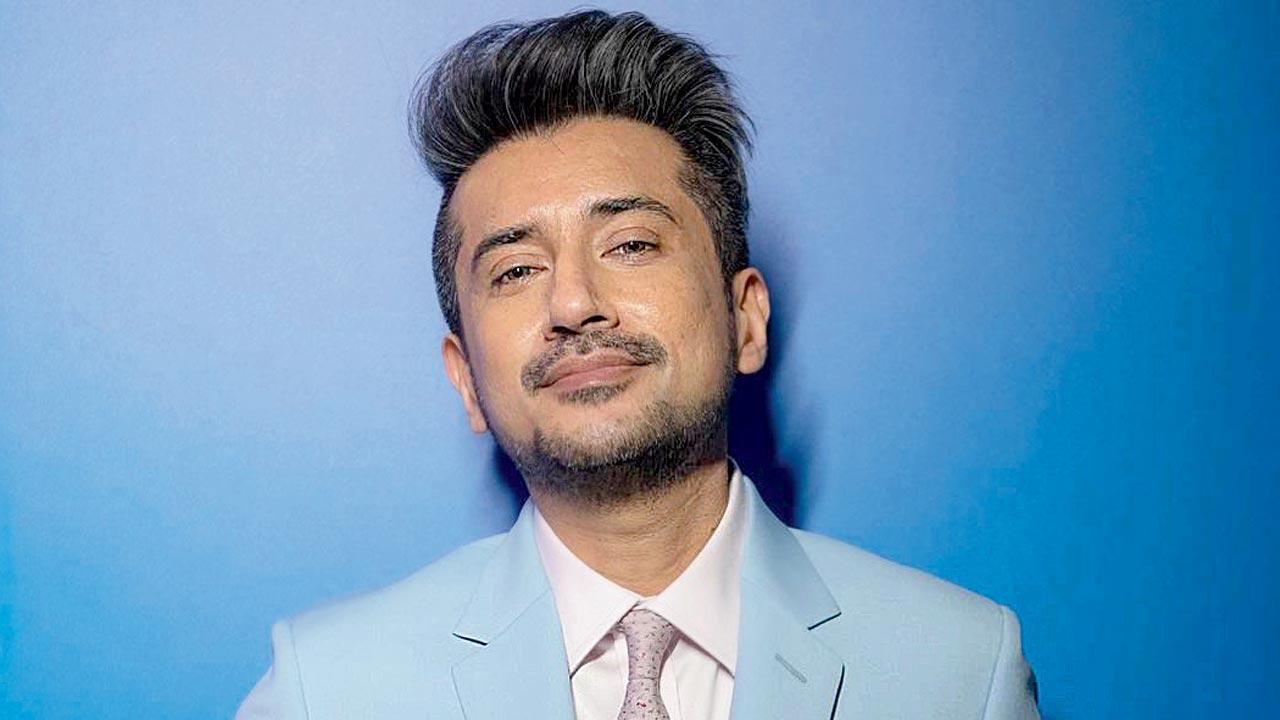
Deeming Barzakh as his most personal work to date, Pakistani director Abbasi on how the series explores otherworldly love and toxic masculinity
Mohar Basu (MID-DAY; July 7, 2024)
In Asim Abbasi’s world of creativity, there is space for stories of magic realism as well as children’s adventure. The Pakistani filmmaker recently directed an episode of BBC’s screen adaptation of Enid Blyton’s much-loved children’s book series, The Famous Five.
“It’s my second project in the UK. I had to pick it up because the books and Enid Blyton are a big part of my children’s lives. It was fun, murder mystery, and kids saved the day sort of a story. It’s so different from what I direct,” starts the filmmaker.
It is surely at odds with Barzakh, Abbasi’s upcoming series. The Fawad Khan and Sanam Saeed-starrer is an expansive world rooted in shamanism, as it revolves around a 76-year reclusive man who invites his children and grandchildren to celebrate his union with the spirit of his true love.
“Barzakh means a state of limbo. It’s a metaphor for the series’ supernatural theme. But even the humans in the series are in limbo. They haven’t dealt with their past and are unable to move forward. I wanted to take forward the idea of toxic masculinity from Churails [2020]. Now, it’s from the gaze of the men who carry these toxic traits,” he explains.
Making the show is also his way of moving forward. “On a personal level, this show is my closure. I had written Cake [2018] as a response to my father’s ageing. I was halfway through Churails when I lost him. Barzakh is me trying to deal with him leaving. This is my most personal work.”
The show is shot in Hunza Valley, which is called the Land of Nowhere. The director admits to being indulgent with this story.
“People had to hold me back because we had to write a finite number of hours. It’s hard to structure such a story. I believe the characters speak to me, and then I tweak the original story depending on that.”
Abbasi is working with his favourites Khan and Saeed, but he maintains that their casting was influenced by the story. “When I am writing, I don’t have an actor’s face. The market pressure and bringing [stars] together is not allowed into my domain. I don’t want to think, ‘Am I showing Fawad the way audiences want to see him? Am I filming Sanam right?’ I don’t want to do any disservice to the story.”
When I was 15-16, I'd made enough money to be able to buy the smallest bag of Gucci-Jacqueline Fernandez
9:55 AM

As told to Avinash Lohana (MUMBAI MIRROR; June 4, 2018)
I did my first modelling assignment at age five for a shop that sold baby clothes but started out as a professional model when I was around 12. I grew up in the small island country of Bahrain and my sister had started doing ramp shows — at the time, modelling was more like a hobby. As kids, we were earning good pocket money, which we were very happy about and never bothered our parents for anything.
But I’d always had this dream of becoming an actress and it lingered in my mind for a while; I had figured it was too far-fetched, and never pursued it. When I had the opportunity to go to the University of Sydney, I took up Mass Communications and set my modelling aspirations aside. At the university, I took up political science and law as I wanted to pursue broadcast journalism and my dream was to be a part of the BBC.
After completing the two-year course, I did my internship in Sri Lanka where I collaborated with my aunt and worked on a television show called No War Zone for a leading network. I got to interview some interesting people, work on the production side and broadcast for a business program that aired as late as 11 pm (laughs). It was fun, we would mainly do vox pops, work on the edit but the main stuff was done by my senior colleagues and I would assist them.
We would report to work at 10 am, sit in the edit meet to discuss stories of the week, after which our group leader would assign us work. I really enjoyed it as we were a part of the group that wanted to know what was going on in our country. Our lunch breaks were great fun too as we would all gather around to eat, and I would bring homemade food cooked by my grandma. After that we would either get out for assignments, work on creatives or do research but most of the times we would just google nonsense. I remember doing that once while the Cannes Film Festival was on and seeing what Ash (Aishwarya Rai) was wearing. At that time, I had no idea about Bollywood.
I did that for about two years. The intention behind becoming a journalist was to tell the truth to the public and spread positivity. But there were times when I would get so disappointed seeing something or reading certain articles, I still wonder why people need to bring others down.
Meanwhile, travelling would eat up a huge chunk of my salary, even though I lived quite close to my office. I made no money as a journalist as I was interning at the time but in Bahrain, when I was about 15-16, I’d made enough money from a couple of ramp shows in a year to be able to walk into a Gucci store and buy the smallest bag on display. I still have it. It was the cheapest one in the store, but it was the first designer label I ever bought. I also bought a pair of earrings for my mom.
I continued to model in Sri Lanka while also interning as a journalist. The modelling industry wasn’t huge there at the time and ramp walks offering decent money were rare to come by. Things changed for me when I won Miss Sri Lanka Universe. I started getting modelling assignments in India and it paved way for a lot of travel and good money. I couldn’t believe I was getting paid so much for one show (laughs).
Also, early on in my modelling career, I started getting film offers. Honestly, I didn’t expect much until I got a call for Sujoy Ghosh’s Aladin which also had Mr Amitabh Bachchan, the biggest superstar in one of the largest film industries in the world. It may have been different from what I initially dreamt of — which is Hollywood — but I didn’t want to let the opportunity get away. Now, I am in love with what I do.
When I look back, it was just following my heart that brought me here. That’s why I feel it’s important for parents to let their kids do what they want to so long as they work hard and become the best at it. I feel blessed that my parents always supported me.
Radhika Apte, Usha Jadhav open up on sexual abuse in a BBC documentary
7:56 AM

MID-DAY (April 25, 2018)
Radhika Apte has spoken out about sexual harassment in the Indian film industry in a new documentary, which also sees her chronicle why victims are too scared to come forward. In a BBC World News report, to be aired this weekend, Apte opens up on the culture of silence in Bollywood, mainly because its stars are so revered.
“Some people are regarded as Gods. They are so powerful that people just don’t think that my voice is going to matter, or people think that if I speak, probably my career is going to get ruined,” Apte tells BBC’s Rajini Vaidyanathan in Bollywood’s Dark Secret.
Asked what she thought about the #MeToo campaign against harassment in Hollywood, the Pad Man actor added, “The way the women, and the men, of course, came together and decided that as a team we are not going to let this happen, I wish that could happen here.”
Marathi award-winning actor Usha Jadhav, also a part of the documentary, reveals that it is common for powerful men in the industry to demand sexual favours. Describing one conversation, she says that she was told she would need to give something in return for the opportunity she had been given. “I said something on the lines of, ‘What? I don’t have money’. He said, ‘No, no, no, no. It’s not about money, it’s about you sleeping with, maybe it can be a producer, maybe it can be a director, it can be both too,” she said.
Vaidyanathan has also spoken to actors who have faced unwanted advances, as well as stars, who believe a dark secret lies behind Bollywood’s glamour. The documentary also interviews an aspiring actor, 25, who left her small village to chase her Bollywood dream, but says she was molested on a number of occasions, including the first time she met a casting agent. “He started telling me that for an actress, you should be happy to have sex as and, when possible, and embrace your sexuality,” she is quoted stating in the documentary.
“He touched me wherever he wanted, he kissed me wherever he wanted and I was shocked. He put his hand inside my clothes so I asked him to stop and he said: Do you know what, if you really want to work in this industry I don’t think you’ve got the right attitude,” she added.
The documentary will be aired around the world on Saturday and Sunday.

Subscribe to:
Posts (Atom)