Showing posts with label Atul Mongia. Show all posts
Showing posts with label Atul Mongia. Show all posts
We knew Zeenat Aman's health challenges; we handpicked scenes, calculated screen time-Priyanka Ghose
10:25 AM
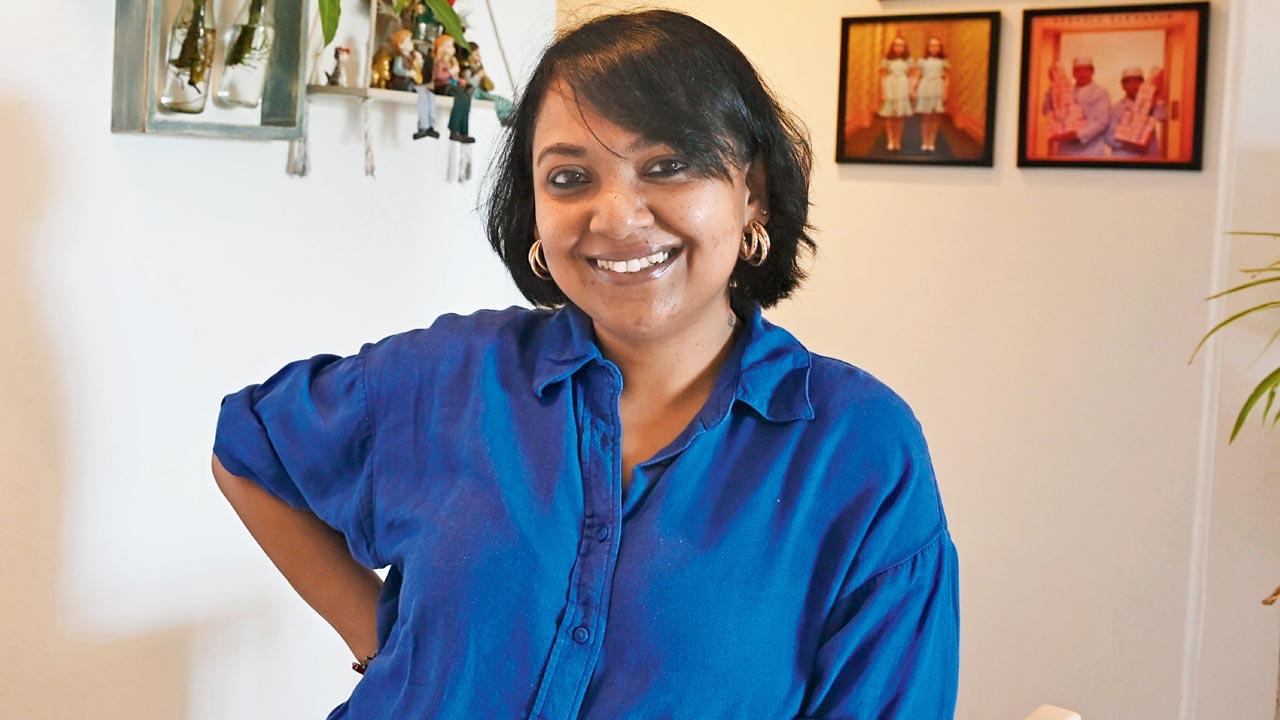
Director Priyanka Ghose discusses Zeenat Aman’s limited screen time, and why Ishaan Khatter and Bhumi Pednekar’s casting was the right choice for The Royals
Letty Mariam Abraham (MID-DAY; May 14, 2025)
It wasn’t Ishaan Khatter and Bhumi Pednekar, the new pairing, or the curiosity surrounding royal lives that drew us to creators Rangita Pritish Nandy and Ishita Pritish Nandy’s latest show, The Royals. It was to see how yesteryear actor Zeenat Aman marks her comeback on the screen. However, when we confessed that to director Priyanka Ghose, she clarified that they had every intention for the senior actor to have more scenes.
When we said we only began rooting for Khatter and Pednekar’s love story after episode six, she said, “That was by design. I knew that by then people will want them to get back together.”
The Netflix eight-episode series follows the clash between an entitled prince and a tech startup entrepreneur amid a contemporary fairytale setting. In conversation with mid-day, she discussed the casting choices and why she had to hand over direction to Nupur Asthana later. Excerpts from the interview.
Zeenat Aman was the biggest pull to watch The Royals. While it was a cameo, why did it feel that she was under utilized?
When you’re writing a script, writers shouldn’t be limited by restraints. The minute you get to execution level, you know the challenges. You’re aware that you’ll get an actor only for a limited time and shoot only so much. As a director, you have to be clear on what to cut and what to keep. We had written and wanted more of Maajisa, but by the time we cast Zeenat ma’am, we knew her health challenges. We had spoken to her and her management, and learnt that her health would permit her only a few days. So, I worked backwards. We handpicked the scenes and calculated how much screen time to give her. I knew the key scenes she had to be part of, even in the royal ensemble during the charity fashion show. Her scenes with Sakshi [Tanwar] ma’am were non-negotiable — we needed the emotional arc. In the royal gathering, there were earlier scenes for her, but since she couldn’t shoot more days, I had to remove her from them. I shot the polo scenes for three days and the fashion show for two. It was difficult to have Zeenat ma’am sit through all that. I had to finish her parts all at once. The next day, I would shoot the opposite axis to avoid her angle. The intention was more, but the reality differed. Still, we did our best to include Maajisa in the right proportions across the season.
When did Nupur Asthana come on board as a director?
We brought in Nupur to direct episodes four and seven, which we shot last. The schedule had shifted because when we were to shoot in the mahals, it was peak wedding season in January and February. The dates shifted, and by the time we got to episodes four and seven, I wasn’t available. Rangita and I actively went out looking for a director to take over. Nupur had little to shoot in Rajasthan because her episodes were set in Mumbai and Madurai. Even the royal ball was shot in Mumbai. It broke my heart — I had done all the homework — but I had already committed to another project.
How many palaces were used in the show?
That’s like giving away secrets [she laughs]! Across six episodes, the entire schedule was in Rajasthan, then a short one in Goa for the opening episode, and some bits in Mumbai like the Gastronomics competition. I did three rounds of location recces. I picked different palaces because one palace doesn’t offer everything. We needed a bat-pooping corner, a dancing hall, darbar hall, exteriors, a swimming pool, and a polo ground. I went out with my production designer — incidentally, my sister Payal Ghose. The challenge was to make different locations seamlessly look like one palace. Even when we got access, we were only given empty barren halls. Payal dressed them up from scratch. Yuvanath Singh’s [Milind Soman] room was a giant open hall with no artwork or bathroom. Everything was constructed on-site by Payal and her team, including painting the walls.
How much of the state of royal estates shown is true?
Each royal family from different provinces is positioned differently — financially, socially, or politically. On our recce trips, I had met some royals. Through those interactions, I realized every family’s trajectory is different. They might be holding onto a title from the past, but some of them are very affluent doing well after foraying into fashion, polo, politics and other fields. We showed different shades inspired by them.
How did you convince Sakshi Tanwar to play such a controversial role?
I knew of Sakshi ma’am through casting coach Atul Mongia, who directed her in Mai [2022] and spoke highly of her. I had to convince her of Padmaja’s arc across the season. This was new to her, and she was skeptical, but that was the challenge she took as an artiste. She was also going through a personal crisis, but I saw a hungry artiste wanting to prove herself. In three days, she found her rhythm. Watching her scenes with Ishaan on camera was a joy.
Ishaan was the epitome of thirst trap in this series. How did you blend his emotional and sexy sides?
Ishaan in real life is a sexy, endearing, sensitive man — that was easy to portray. I was surprised no one had tapped into that before. He made Aviraaj far more likeable than he is on paper. If you just read the script, he’s a brat who behaves badly — during the will-reading and post a one-night stand. No one would root for him. But Ishaan brought more to the table. Yes, the ‘eye-candyness’ helps. His shirtless scenes didn’t feel forced and he is comfortable in his skin. I never used an inch of body make-up on him. He carried the trauma of the crown taking his father away and ran from it. Ishaan brought those layers effortlessly.
Was it intentional to show the leading lady as a knight in shining armour instead of a damsel in distress?
Yes, that arc was always in the story — Sophia is the one pulling the royal family out of its misery. Full marks to the women creators who thought of the female character in a wholesome way.
Sophia is ambitious, but also impulsive. Was that due to Bhumi playing the part?
Her impulsiveness was on paper. We leaned into it knowing Bhumi could pull it off without making it overbearing. With any other actor, I’d be skeptical. In India, we don’t easily accept authoritative women. But Bhumi has softness and vulnerability. Sophia is flawed, and only Bhumi could make her likeable. Sophia is Bhumi in real life.
Love Sex Aur Dhokha happened to me the way Farhan Akhtar lands a film in Luck by Chance-Nushrat Bharucha
7:52 AM

As told to Akash Bhatnagar (MUMBAI MIRROR; January 31, 2020)
Love Sex Aur Dhokha (LSD) happened to me the way Farhan Akhtar’s character lands his first film in Luck by Chance. I had auditioned for the film, but someone else got the part. However, the girl who was initially cast as Shruti dropped out very close to the shoot and they needed someone quickly, someone who would not only resemble the character but was also available. They called asking if I was still willing to do the film and I said “yes”. After seeing me at the office, Atul Mongia, my performance supervisor, told Dibakar (Banerjee, director) that there was something about me that even I wasn’t aware of, but which would work for them. He asserted that I would be a “revelation”. I had no clue that they were unsure about me initially.
Since I was a last-minute addition, I got only 10 days for a workshop while the rest of the cast got a month or two to prep. In those 10 days, all Dibakar wanted me to understand was which part of the title I represented, and that the definition of love wasn’t the same for all of us. My first shot was my introduction scene, when I go to audition for Rahul, the amateur film director played by Anshuman Jha. Even though Shruti ends up falling in love and eloping with him, only to become a victim of honour-killing, Dibakar wanted me to act like I am disinterested in him. That surprised me, but he explained that it was his way of portraying romance in that scene. If I did it my way, it would have come across like a Shah Rukh Khan love story, which LSD wasn’t.
Since in the film, it was my first time facing a movie camera, Dibakar wanted me to be white-faced, like I’d seen a ghost, with a forced smile. He pointed out that camera is very daunting for some people and he wanted me to look pale and scared. During the workshop, he made me emote each scene differently to set a template.
My character is a part of a gang of students making a small-budget documentary. I was the heroine of the film within the film. We started off with the song “Mohabbat Bollywood Style”. Everybody was on the set on the first day, as it was a wide-angle shot. It felt like a mela to me. I had only met five-six people during the workshop, so seeing so many people at once in Film City studio was intimidating. I felt lost in the crowds, too nervous to ask anyone if I should get on the bus and stand or sit there. Eventually we were told to climb atop a bus and just “freak out”. There was no set choreography, it was just mad dancing to ’90s music on a 360-degree stage.
I didn’t have to really act because I had no idea where the camera was and who was filming me. That was the most daunting yet interesting part of LSD. In my case, the camera was handheld as the boy I’m in love with is also the director of the film we are shooting. So, if he moved his hand even slightly, I was out of the frame and you could only hear my voice. Even if I was giving my best shot, I didn’t know if the camera was capturing it.
Since my first day was so hectic, the rest of the shoot seemed comparatively easier. It was like I was thrown into the fire on my first day itself. LSD was a great experience and I learned to perform internally, not just for the camera. It was like going to an acting school for me.
That first call that all aspiring outsider actors wait for, came and it was the happiest day of my life-Rajkummar Rao
8:30 AM

As told to Akash Bhatnagar (MUMBAI MIRROR; October 22, 2019)
 I was visiting FTII (Film and Television Institute of India) when I came across an ad in Pune Times. Dibakar Banerjee was planning a digital film and looking to cast newcomers. Being a fan of his work and given that the characters of his earlier films were based out of Delhi, I was optimistic and on my return to Mumbai, I started looking for the casting director, who turned out to be Atul Mongia. I didn’t have his number, so I went on Facebook, checked his account and found that one of my seniors was a mutual friend. I got Atul’s number from him and mailed my pictures. When I didn’t hear from him, I kept calling till, fed up, he agreed to get me an audition.
Neha (Chauhan, actress), who eventually became my co-actor, was his assistant and briefed me for the audition. She told me the character was a cool dude from Delhi who was full of himself. Instantly, I envisaged him as a guy in tight Tees and turned up for the audition dressed in one. Atul took one look at me and asked me to change into something normal. I immediately knew that I’d blown my chance, but Atul told me to give it a shot since I was there anyway.
In two days, I got a call saying Dibakar had liked my tape. There were three more rounds of auditions. Eventually, that first call that all aspiring outsider actors wait for, came and it was the happiest day of my life. Love, Sex Aur Dhokha (LSD) had three stories and I was part of the second, the one in the supermarket. To come to this city and get a chance to work with Dibakar and Ekta (Kapoor, producer) in your first film was a dream come true.
I was a little muscular then and Dibakar asked me to lose some weight. Atul took workshops with all the actors for two-three weeks. I was also working on my own, building my character’s background, hoping to prove my worth. My first shot was in a real location, a supermarket in Dadar. I was all prepped and excited that my acting dream was coming true, but I was nervous too, since everyone, including my producer Priya Sreedharan, were there.
My first shot was actually the first shot of my story in the film with me trying to fix the CCTV cameras in the store. My character, Adarsh, is a street-smart guy, always ready to make a quick buck. It was a very tight close-up and I remember Dibakar reminding me of the TV antennas on the rooftops back in Delhi. Whenever there was a network disturbance, we’d climb up and adjust it, shouting, “Aaya? Nahi aaya? Achcha ab aaya?” while fixing it. That is what we tried to emulate when I go up to fix the cameras. The shot was pretty nostalgic.
Since my story was played out from the point of view of a CCTV camera, whole scenes were shot in one go, with no cuts in between. As an actor, it gave me the scope to explore my character’s emotional graph and improvise while we went along. I’m so glad I started with this film, though to be honest, it wasn’t as if I had too many options to toy with. But after its release, many filmmakers saw me as an actor and people still talk about LSD.
I don’t want to be replaceable-Yami Gautam
9:38 PM

Deepali Singh (DNA; December 28, 2018)
A few years ago, before the release of Vicky Donor, we had met Yami Gautam for a chat. The debutante not only offered us a cup of coffee but also ensured that our photographer standing outside the café, scouting for a location to shoot her pictures, had one too. Such gestures always leave a lasting impression. When we reminded her of the same recently, she laughed and said, “Would you like a cup of coffee? What about your photographer?”
In her own words, she’s the ‘quintessential girl-next-door’. So, when one heard her say the line, ‘Zyada naatak kiya na, toh tere akhrot tere moonh se baahar nikal doongi’, in the trailer of Uri: The Surgical Strike, one couldn’t help but ask how she felt mouthing it.
The actress, who plays an intelligence officer working in the National Security Agency (NSA) in the Aditya Dhar-directorial, said with a laugh, “It didn’t feel like a big deal because I was just doing my job. The director wanted to keep it as real and authentic as possible. I didn’t know this dialogue will catch on so much. I saw some memes that people are sharing and they are quite funny.” She spoke to After Hrs about why the film means so much to her. Excerpts...
What are the kind of reactions you have received for the trailer of Uri?
The reactions have been positive. What’s special about Uri is the fact that the response that we are getting, be it from the industry or people or the media, is all heartfelt. Someone asked me, ‘How are you managing to look and sound so upbeat after a long day of promotions?’ Honestly, this is the only thing that keeps us going. I’m excited only because I’m proud to talk about Uri.
How was it to work with Vicky Kaushal?
There’s no doubt that he’s a fantastic actor, but being a good performer and being a good co-actor can be two different things. He’s both. There are some co-stars who, you know are watching out for you. You can trust them without feeling fear or inhibitions. For instance, if there is a scene where he has done well and I felt I haven’t, I would expect him to say, ‘Yami, do you want to do it this way?’ That’s what action and reaction is. He’s really spontaneous, but he comes well-prepared, too.
We haven’t had many women playing intelligence officers in Hindi films. What sort of preparation went into the role?
I didn’t have any references for my character. When we were doing workshops with Atul Mongia, I asked him what I could do. He told me that he can suggest movies where women have played intelligence officers, which honestly, are not many. But he added — you wouldn’t get it from anywhere but within yourself.
When you get such a role, you always get into that mode where you think you’re going to deliver a dialogue in a certain way or play that character in a particular manner, but you don’t have to do anything artificial — especially in NSA. They have to be the most believable people. It was about understanding the layers of the character. I might be saying a line but there is a whole range of complex emotions inside my head. How do you hold it? Holding it and yet expressing, is something I learnt while filming Uri.
Looking at your recent films, including Batti Gul Meter Chalu (BGMC), it seems like you have been picking up content-driven roles...
Absolutely. I want to be seen in films or play characters where you can see only me. I don’t want to be replaceable. Though that may not be the case in every instance, that’s my attempt. It might take more time, but that’s alright. The only way I can give a voice to my choice is through the kind of projects I do. If your film doesn’t do well, especially when you’re trying to make it on your own, opportunities may get a little restricted. Whatever choices you make will be out of the options that you have at that point of time. You should do what appeals to your sensibilities and you feel is going to help you stay relevant. You have to find your own space. If it takes a longer time and a lot of effort, that’s alright.
Is that why you did BGMC?
In the film, I played a character, that people had not seen me before. I want to do roles that challenge me as an actor and take me out of my comfort zone.
Does the length of your role matter?
Of course, you want to be on screen as much as possible. But when your vision is bigger, then these things seem inconsequential. People may question it saying, ‘Arey, why did she do such a small role?’ I don’t have an image. I’m the quintessential girl-next-door and will never run away from it. But as an actor, I need to add dimensions to myself.
The only release you had this year was BGMC. Were you disappointed when it didn’t do well?
I wasn’t heavily disappointed because I was already shooting Uri, which is a very special film for me. It’s when you don’t give your 100 per cent to the film or don’t have a good time working on it that leaves a bitter taste in your mouth but that wasn’t the case. I had a great time working with Shree sir (director Shree Narayan Singh) and Shahid Kapoor. When I saw the film at a private screening, I was kind of prepared in my heart for that kind of response, so I wasn’t exactly shocked.
What’s in the pipeline?
I am reading something. As I said, the attempt is to do something different again.
On a film set, where there is so much chaos, I find inner peace-Sanya Malhotra
8:25 AM

Rachit Gupta (BOMBAY TIMES; September 23, 2018)
It's not every day that actresses slap, kick and hit each other on a film set. But that’s exactly what Sanya Malhotra had to do in Vishal Bhardwaj’s upcoming film, Pataakha. While she didn’t have the proverbial catfight with costar Radhika Madan, she did have to claw and gnaw her way into a feisty and challenging role. In a chat with BT, Sanya talks about the unique experience of working in a no-holds-barred movie. She reveals that acting was her dream profession and being in front of the camera is the only thing that gives her inner peace. Excerpts...
Vishal Bhardwaj is one of the most acclaimed directors in Bollywood, and most accomplished actors aspire to work with him. So, how does it feel to get this rare opportunity, so early on in your career?
It’s definitely a privilege, but I wouldn’t call it luck, because I don’t believe in that concept. There’s a new trend where people make a positivity journal, so on the same lines, the team that manages my professional commitments told me to write down the names of all the directors who I want to work with. I wrote Vishal ji’s name first on that list. His films and music have always inspired me. I remember watching Haider (2014) and for 15 minutes into the end credits, I could not get up from the chair. That’s when I asked myself, ‘Main kab actor banungi aur kab mujhe Vishal Bhardwaj jaise director ke saath kaam karne ka mauka milega’?
 While it may be a dream come true to work with him, does his reputation and aura ever get intimidating, especially for a new actor like you?
I believe that an actor and director should share a strong bond. Theirs should be a creative relationship and their bonding and understanding should be such that an actor should not hesitate from sharing his/her inputs on every shot. Having said that, I used to be scared of Vishal sir. During the initial days of the shoot, I would abstain from putting forth my point of view, fearing what he would say. It’s not like he had some intimidating aura around him, but mujhe aisa lagta tha ki Vishal ji jaise kalakaar meri kyun sunenge? I once dreamt that I went up to sir and asked him a few doubts about a scene, and he snapped back with, ‘Yeh bekaar ke sawaal matt poochha karo!’ (laughs!).
The trailer of Pataakha features you and Radhika Madan, who plays your on-screen sister, swearing and bashing up each other. How difficult was it for you to get into the skin of your character, Chhutki?
We attended several workshops with Atul Mongia (casting director) and prepped a lot for this film. I’ve had to work very hard to play Chhutki. Main man se Chhutki banne ko tayyar thi, lekin tann se nahi. While I am an introvert and a shy person, Chhutki is not. I wanted to play the role, but at the same time, I was hesitant and my inhibitions were stopping me. The workshops and the way Vishal sir and his entire team guided us, helped me to get into the skin of my character.
You said that as a person, you have a lot of inhibitions. As an actor, what does it take for you to drop these inhibitions, because at some level, they can affect your performance, right?
I think I stop being myself in front of the camera. Off camera, I may be an anxious and nervous girl, but once the camera starts rolling, I become a different person. I try really hard to not let Sanya come out when I play any character. Playing Chhutki has been a liberating experience, because the role did not give me a chance to be timid or socially awkward. I just had to be that boisterous, moohfat and feisty girl. It actually helped me get rid of a lot of my inhibitions as an actor.
Coming back to Pataakha,the film features two warring sisters, which is something we don’t traditionally see in our movies. You have an elder sister, too. Tell us about your equation with her during your growing-up years...
People may think that two sisters are always on the same page and that they share a great rapport, but I did not have that sort of an equation with my sister, Shagun. While growing up, I would hate her. We used to fight like cats and dogs, pull each other’s hair out, slap and scratch each other. My sister is just three years older than me, but I never understood her, and I could never relate to her. In fact, I used to feel that I will never be able to like her. But when I came to Mumbai, I started missing her. After so many years, I’ve finally become fond of my sister. I am pretty sure that the bittersweet relationship between Chhutki and Badki in Pataakha will resonate with sisters like us.
Your roles have helped you learn languages other than Hindi. Do you have a knack for picking up languages?
I’ve worked in another film, Photograph, where I play a Gujarati girl. It’s not like I’m consciously picking parts with wacky accents; it’s just happening in the most organic and natural way. Picking up the Rajasthani accent for this film wasn’t too much of a challenge, because it is quite similar to Haryanvi that I learnt for Dangal. It’s a lot of fun to work with these accents. The voice modulation and dialogue delivery become very creative. In fact, I wouldn’t mind signing up for a film where I play a Maharashtrian character, because I now want to learn Marathi (laughs!). I love the sound of
languages like Marathi and Bengali. Your debut film broke box-office records around the world. Does that put pressure on you while selecting projects? Also, do you anticipate the same kind of success for all your movies?
It does not work like that. After Dangal, I was waiting for Photograph to start. People used to ask me why I hadn’t signed my next film. They used to say, ‘Oh, but Fatima (Sana Sheikh, her co-star from Dangal) has already signed her next big film’. At that point, I realised that I had two options. I could either react to these talks and jump into a film for the sake of it, or I could wait and really soak in the feeling that I was living my dream. I have always wanted to be an actor. I like to enjoy every single day of my life, because I am living my childhood dream. I don’t like to push myself, because I am not that kind of person. I want to really appreciate the work I do. I don’t want to race ahead of anyone, nor do I want to succeed in a hurry. Acting is the only thing that makes me happy and calm. On a film set, where there is so much chaos, I find inner peace. I am content with where I am.

I was branded ‘Busy Bee’ as I could multi-task effortlessly-Nushrat Bharucha
10:04 AM

As told to Sanyukta Iyer (MUMBAI MIRROR; May 8, 2018)
I’ve always lived in a joint family and growing up, I was really close to my father’s sister. My aunt was a journalist working with a daily newspaper before she married an art director and joined one of India’s leading fashion magazines. I’ve been a part of her journey since the beginning, met her media friends when they came home. I was fascinated by her world and how it gave me a new perspective on culture and society. I too wanted to become a journalist, and cover the crime beat. I dreamt of being on the field all day and reporting live from conflict zones. In college, I even opted for a bachelor’s degree in mass media, with journalism and advertising as my subjects of specialisation, but destiny had other plans.
From day two, I was involved with the backstage production of college plays and in my first year, was organising many events. I was branded ‘Busy Bee’ as I could multi-task effortlessly. I put together contingents for inter-college fests, found in-house talent for fashion shows and dance competitions and even sourced directors and choreographers for events. I believed I would make a great show-runner and eventually become a producer.
For one such event in 2009, I managed to get a leading face wash brand as a sponsor for a talent contest. They wanted to scout for a “fresh face”, offering the lure of a gift hamper for the winner. They auditioned for five days and on the day of the finale, I was called on stage and literally pushed out of wings as they announced that I was their ‘fresh face’.
I hated facing a camera or a crowd. I had always suffered from stage fright and thought my role was behind-the-scenes. But to my surprise, I bagged a couple of ads after that college win and even a small feature film.
In 2010, I got a call from casting director Atul Mongia’s office. Nervous about my first audition, I asked my best friend to accompany me. I was given a scene which required me to cry on cue. I apologized for being foolish enough to believe I could be an actor and began to cry in earnest, not realizing that the camera was rolling. And before I knew it, I was at a workshop with Dibakar (Banerjee), prepping up for Love Sex Aur Dhokha.
Dibakar is a smart and talented filmmaker and though I was clueless, the way he approached my character Shruti opened my mind to a new world. I fell in love with the craft and realized I only wanted to be in front of the camera.
Between LSD and Pyaar Ka Punchnama, I went for every audition in the city — film, TV, ads — but never to an acting school. They were my daily class, with a new brief and character every day, played out on different sets to different audiences. They helped me hone my skills and made me a better actor.
Today, when I am on set, I’m not just an actress but also a backseat production designer and assistant director. You can never take the producer out of me, but since acting takes so much of my time, I’ll have to wait a while to wear the producer’s hat.

Nushrat with friends in college
Subscribe to:
Posts (Atom)