Showing posts with label Atal Bihari Vajpayee. Show all posts
Showing posts with label Atal Bihari Vajpayee. Show all posts
Dissent and dialogue are not acts of disrespect; they are essential to a healthy society-Shabana Azmi
4:55 PM

Renuka Vyavahare (BOMBAY TIMES; July 25, 2026)
Shabana Azmi is cut from a different cloth. At 75, while much of the film industry remained silent or issued carefully worded, "neutral" statements, she chose to travel to Jantar Mantar in solidarity with the student movement led by the CJP, demanding accountability from the education minister and those in power. The students remain resolute, vowing to continue their nationwide agitation until their demands are met. Back from Delhi, Azmi spoke to Bombay Times while recovering from an asthma attack triggered by tear gas during the protest. In a candid conversation, she reflects on why she felt compelled to stand with the students, what she witnessed on the ground, and why she believes silence is no longer an option. Excerpts…
At 75, you travelled all the way to Delhi to stand with the students, age and health issues not withstanding. What compelled you to take that decision?
The sheer injustice of it. Students of our country are peacefully demanding a dialogue for educational reforms. They seek an overhauling of the educational system and accountability for the several lapses in key entrance exams over the years leading to despair to the point of suicide. Why can’t you listen to them? We need to build their hope, not crush their spirit. The prolonged hunger strike by the students and Sonam Wangchuk whose deteriorating health we were all witness to deeply concerned me. Can you imagine the pain of their parents who made huge personal sacrifices to assure a better future for their children?
What was that particular moment that made you feel, "Enough is enough"?
The complete indifference of the ruling party to initiate a dialogue. Sonam Wangchuk is a respected scientist and environmentalist whose work on climate change is applauded across the world. Yet, attempts were made to discredit him through canards and insinuations. The students, too, were branded anti-national and accused of being stooges of "foreign powers." That was the tipping point for me.
You've often been labelled 'anti-national' for speaking out, yet you've never stopped raising your voice. What gives you the courage to continue despite the personal attacks?
These are attempts to obfuscate the real issue and replace dialogue. And we take pride in being the world’s largest democracy?
India has witnessed many protests over the years, but this movement seems to have united people across generations and, for many, broken the collective fear of speaking up. Why do you think it has resonated so deeply with people across the country?
Because we all know that the youth are the future of our country. Increasingly, young couples are choosing not to have children because they cannot guarantee them a secure or hopeful future. That should worry all of us. I remember a university student saying during a debate many years ago, "Humko azaadi aadhi raat ko mili thi, aur savera aaj tak nahin hua." ("We got Independence at midnight, but dawn has still not arrived.") Those words stayed with me. In fact, I used that line to open my maiden speech in the Rajya Sabha. Atal Bihari Vajpayee ji appreciated it, you can verify it in the records. He did not treat it as a personal insult or an attack on his government. It resonated with him because he understood the larger sentiment behind it and responded like a true statesman. They were leaders of a different mettle. It saddens me to see how far we've drifted from that spirit today, where every criticism is viewed through the lens of hostility instead of being seen as an opportunity for dialogue and introspection.
Many believe we as a nation are conditioned from childhood to equate obedience with respect, whether at home, in school or at work. The people who don't question authority are often rewarded. Do you think this culture of silence and unquestioning compliance has become one of our biggest societal challenges?
I don't think it can be generalized like that. I would leave that to experts in the field. Speaking for myself, I was raised until the age of nine in Red Flag Hall, the commune of the Communist Party of India (CPI) in Mumbai. It was a remarkable space where discussions on social justice, women's empowerment and India's composite culture were part of everyday life. Progressive writers, poets, artists and political thinkers came together there, and our parents believed that art should be an instrument of social change. My brother Baba and I absorbed these values almost by osmosis. We were encouraged to ask questions, voice our opinions and speak up whenever we felt strongly about something, even if it meant disagreeing with others. That environment taught us that dissent and dialogue are not acts of disrespect; they are essential to a healthy society.
The day of the Parliament march shocked the nation. Videos showed unarmed students, including young women, being beaten, while later claims suggested the crowd had turned violent. You were in the middle of it. What did you witness firsthand, and what would you want the nation to know about what really happened?
Prakash Raj and I had been helped into a police truck by the protesters. I had to lie down for a while to catch my breath after one of the activists rushed to pull me up because the police had entered the area, triggering a stampede. Looking through the truck's grills, I narrowly escaped being hit by a large stone that was hurled towards it. Soon after, the tear gas and lathi charge began. The police were furious because they claimed that a shoe had been thrown at one of their colleagues. Now, who can verify that? It is their word against the students. What is beyond dispute, however, is that there is a clear protocol the police are mandated to follow while dispersing a gathering they deem "unlawful." It is fair to assume that those protocols were not strictly followed. I personally witnessed young boys and girls, many of them barely out of their teens, badly injured and bleeding because of the lathi charge. When I sat down in the mud with the protesters, I saw students who had themselves been injured rushing to shield and protect me instead of tending to their own wounds. One young man told me, "Ek lathi khaane ke baad lathi ka darr nikal jaata hai." ("Once you've been hit by a baton, the fear of it disappears.") A 15-year-old boy said, "Had I not joined this protest, I would never have been able to look myself in the mirror." My respect and salaam to these young people. Their courage, compassion and conviction showed us the way.
Many people are now unfollowing celebrities and actors who chose to remain silent, arguing that silence in the face of injustice amounts to complicity. It seems people are rethinking who they want to look up to and consider role models. Even the formulaic statements now trickling in, many feel they sound pre-planned and follow a familiar template rather than expressing genuine conviction. All this has only added to the public's frustration. What's your take on this?
Every artist has to make that decision for themselves. I don’t think it’s fair to judge people for speaking out, and I don’t think it’s fair to judge those who choose not to. Everyone weighs the consequences differently. What is important is that we don’t lose sight of the real issue. The conversation should remain focused on the concerns raised by the students and on how those concerns are addressed, rather than on whether individual celebrities have commented. Artists can amplify conversations, but they are not a substitute for institutions or democratic processes. Lasting educational reform and the protection of democratic rights come through public engagement, civic participation and accountable governance. It is encouraging that many members of the film industry have chosen to speak this time. The issues affecting young people because they are our future and we are all stake holders.
Satire should be witty not insulting-Shekhar Suman
4:27 PM

Abhimanyu Mathur (HINDUSTAN TIMES; May 21, 2026)
Actor Shekhar who introduced the late-night talk show format in 1997 with Movers and Shakers, is back in the space nearly three decades later. On Friday, he welcomed Union Minister Nitin Gadkari as his first guest on his YouTube series Shekhar Tonite. The episode saw him deliver some sharp jibes at everyone from PM Narendra Modi to MP Raghav Chadha.
Fearless Humour Still Defines Him
“I’ve been known for being fearless and that I will maintain that, otherwise I wouldn’t have done the show, ” he says, adding that satire works best when it is intelligent, witty, and not intended to insult. “If you just do it with the intention of bullying, insulting, or humiliating people, they’re bound to take umbrage. But if you do it in a manner which seems rational, logical, where it’s witty, then they take it with a pinch of salt and with a sense of humour,” shares Shekhar.
‘The ultimate compliment’
Back in the ‘90s, Shekar’s mimicry of then-Prime Minister Atal Bihari Vajpayee on his talk show gained popularity. Now, he reveals that Vajpayee himself appreciated the bit. “When (the former PM) met me (at a wedding), he stopped the entire motorcade and got out of the car. He hugged me and said, ‘I record your show, and I watch it every day. When you take off on me, you do my impersonations. I laugh the loudest. Don’t ever stop the show’,” the actor recalls.
He adds, “I should have just hung my boots that day because an actor cannot go beyond that. This is the ultimate compliment that an actor can get. Here was this statesman who had the courage to say this. Otherwise, most of them feel offended.”
‘Someone will always be offended’
Shekhar feels that the show will be ‘like a litmus test’, especially now, when social media can amplify reaction, parody, and satire. “We will have to play it by the ear. (But) there will always be some people who will be offended no matter which way you do it and how you do it,” he says.
We’ve received Pakistani artistes with open arms but it’s never reciprocated-Javed Akhtar
3:28 PM
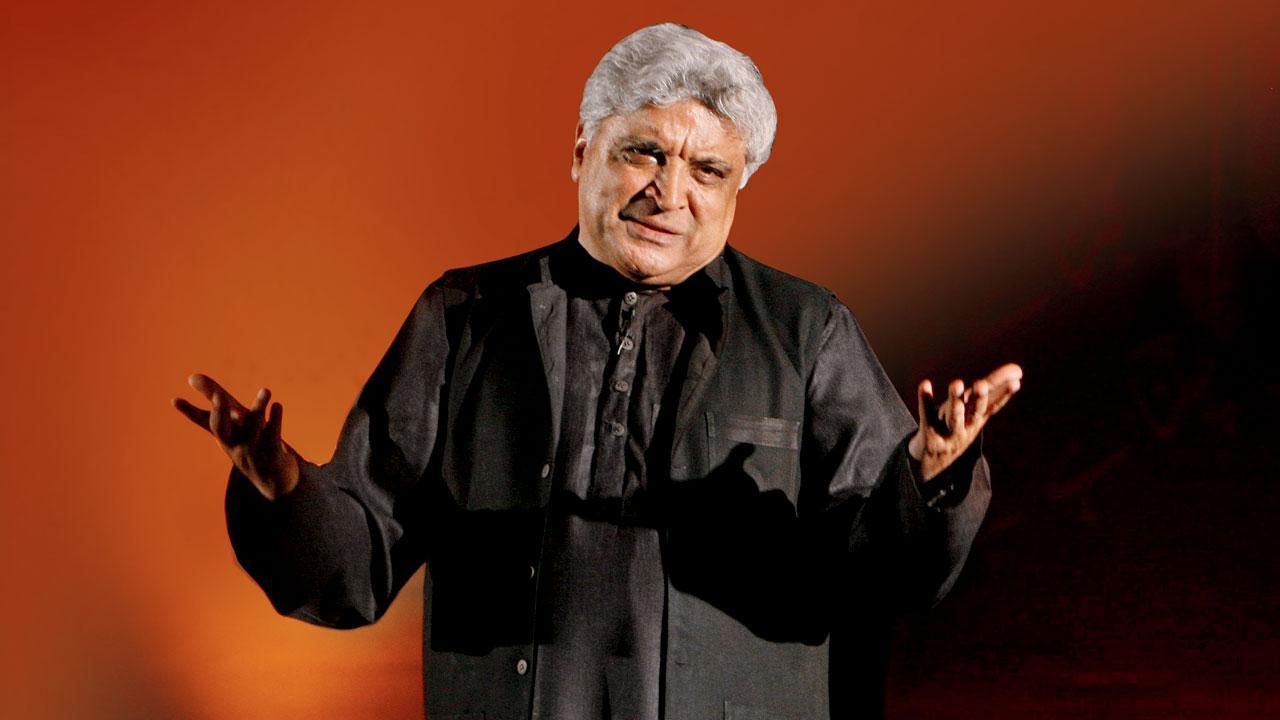
Javed Akhtar speaks on whether Pakistani artistes should work in India
BOMBAY TIMES (May 1, 2025)
In the aftermath of the Pahalgam terror attack, the debate over Pakistani artistes working in India has reignited. When asked at a recent event in Delhi whether Pakistani artistes should be allowed to work in India, Javed Akhtar said, “This could be thought about in better times, and hopefully, after some years some sense will prevail. And there’ll be a better attitude towards India from the establishment of Pakistan. And then this can be considered. But at the moment, this question should not be asked. Not possible.”
‘THE KIND OF RESPECT PAKISTANI ARTISTES GET HERE IS NEVER RECIPROCATED THERE’
Discussing the great reception Indians have always given Pakistani artistes, Akhtar referred to Faiz Ahmed Faiz. “He was the poet of the subcontinent, a poet of peace and love. When he came to India, during Mr Atal Bihari Vajpayee’s Prime Ministership, he was treated like a state head. The kind of respect he was given by the government and the way they looked after him and so on, I’m afraid, this has never been reciprocated. In the 60s and 70s, Lata Mangeshkar was, hands down, the most popular Indian in Pakistan. But why was there not a single performance of hers in Pakistan? We have received their artiste with open arms but it was never reciprocated by the establishment.” he said. PTI
‘If we block Pakistani artistes, who are we pleasing in Pakistan – the army and the fundamentalists’
Talking about a ban on artistes, he added, “If we block Pakistani artistes in India, who are we pleasing in Pakistan – the army and the fundamentalists. This is what they want – a tall wall between the countries so the Pakistani should not be able to see what kind of freedom, what kind of privilege every citizen of India enjoys. They want the distance because that suits them. This kind of bonhomie that we are working with Pakistanis doesn’t suit them at all.”
I don’t want to know my movie’s collections-Pankaj Tripathi
8:34 AM

Choosing his films based on their intent over commercial returns, Pankaj discusses how Vajpayee’s biopic Main Atal Hoon has been a soul-searching project for him
Mohar Basu (MID-DAY; January 20, 2024)
Main Atal Hoon is one of those rare films wherein Pankaj Tripathi was initially unsure whether he could do justice to the role. Portraying the late Prime Minister Atal Bihari Vajpayee, after all, is a big responsibility. So, what made him give his nod to the biopic? Intent, he says.
“The man’s intent supersedes everything else about him. He believed in democracy. Since he was a writer-poet, everything was approached with empathy. He could oppose someone, but there was never any bad blood. He was loved by everyone, and the core of such a man is important to know in today’s divisive times,” states the actor.
The producers and director Ravi Jadhav have often said that they wouldn’t have made Main Atal Hoon if Tripathi turned down the role. The actor admits the film required him to do soul-searching. He didn’t take up any other project, as he was fully invested in understanding the leader.
“You can’t mimic such a glorious man. So, I met my drama school teachers to understand how to go about this. The film gives you an insight into who he was, how he thought and why he did what he did. Main Atal Hoon is not a fictional tale, you need to be loyal to who he was. There is an added responsibility because a national leader’s vast life is being put into a two-hour film.”
In the past, he has shouldered films as the leading man, including the hit OMG 2 (2023) and Kadak Singh (2023). Tell him it’s his mainstream hero moment, and he says he cares little for such terminologies.
“I’m grateful for the love and accolades we got for OMG 2. But fame, commerce and love are by-products that may or may not come one’s way. What matters to me is the sincerity with which I do a film. I don’t want to know my movie’s collections. Its presence doesn’t give me joy, and its absence doesn’t dishearten me either. I’m an actor and all I know how to do well is act.”
Up next, Tripathi has two films and Criminal Justice 4; but before that, a well-deserved vacation. “I am feeling a sense of fatigue that can be rectified only by taking off and exploring the world. Now, I will take two weeks off, and after Criminal Justice is completed, I hope I can take some time off to restore work-life balance.”
We were clear that had Pankaj Tripathi said no, we would’ve dropped Main Atal Hoon-Rishi Virmani
8:34 AM
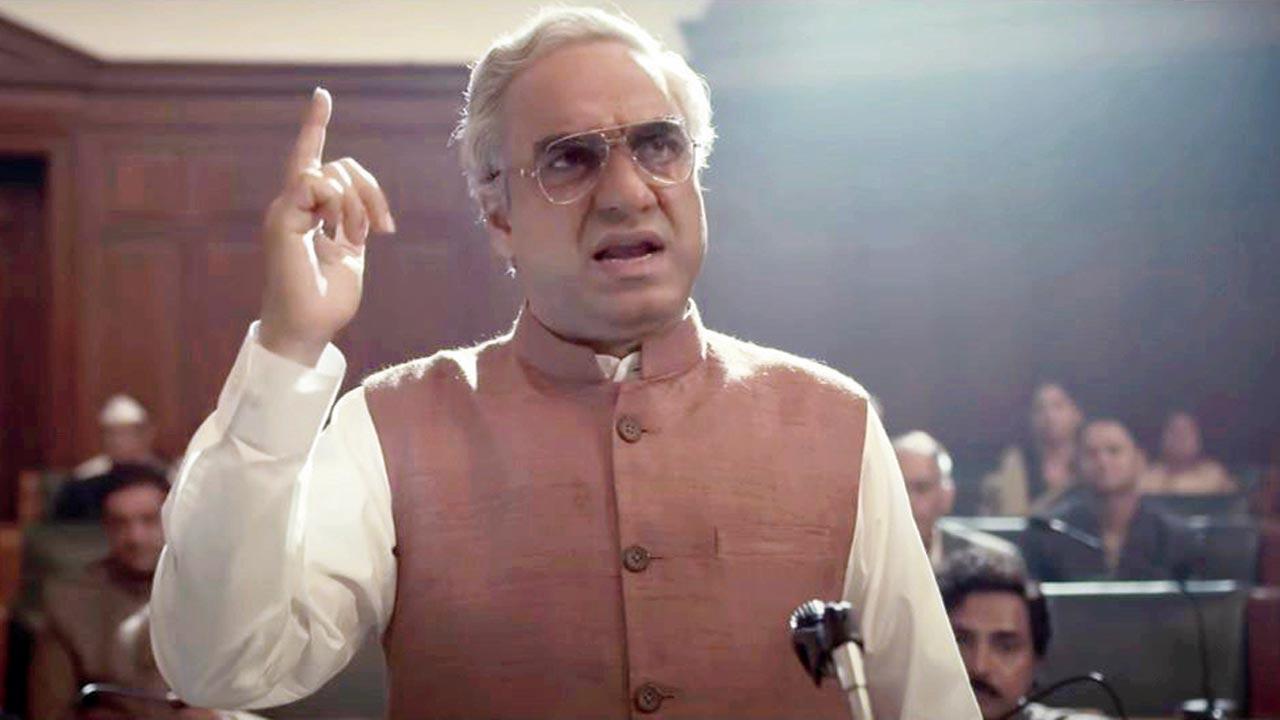
Main Atal Hoon writer says only Tripathi embodies Vajpayee’s grace; discusses making a fitting biopic for late PM who put people first, on his 99th birthday
Mohar Basu (MID-DAY; December 25, 2023)
It’s not easy to encapsulate late Prime Minister Atal Bihari Vajpayee’s lifetime of work in a movie. Equally difficult was finding someone who could bring the much-loved politician’s warmth to the screen. On Vajpayee’s 99th birth anniversary today, writer Rishi Virmani recalls how director Ravi Jadhav and he pitched Main Atal Hoon to Pankaj Tripathi by narrating only the film’s first half-hour.
“Main Atal Hoon couldn’t have been a dry political movie. It had to be witty, entertaining and hopeful. In my first meeting with Pankaj sir, I was supposed to give him a narration till the interval point. But since the film was difficult to write, it took me time to [crack the script]. On the day of the meeting, I had only the first 30 minutes of the film. I went to his place, feeling like a student who didn’t do his homework. But by the time we ended the narration, the flavour was spot-on and Pankaj sir was happy,” he grins.
At a time when the world is torn between left- and right-wing politics, making a leader’s biopic can be tricky. But Virmani says the idea is to show the statesman who prioritised public welfare over everything else. “He wasn’t here to rule, win elections or be a Prime Minister. He was a fiery man, who was aware that this democracy must prioritize people over every other interest. He wanted to make a generational impact.”
The writer adds that the director thoroughly researched Vajpayee’s life, showing it not from the prism of right-wing politics, but from a place of empathy. “Ravi sir understood that the subject had to be handled with care. Ravi sir and Pankaj sir have depicted the story responsibly. Vajpayee stood for larger politics—the country’s ruling party is temporary, but the country and its people should be the top [priority].”
A sharp statesman and a talented poet, Vajpayee had the most important job in the country, but wore his responsibility with humility. Tripathi was the only actor who could have pulled it off, says Virmani.
“We were clear that had Pankaj sir said no, we would’ve dropped the film. Mr Vajpayee had a relaxed energy that only he could capture. What unites them is their grace and dignity. Pankaj sir is also a mass hero; look at his work in Mirzapur and Criminal Justice. He has mass appeal and the film projects him in that light.”
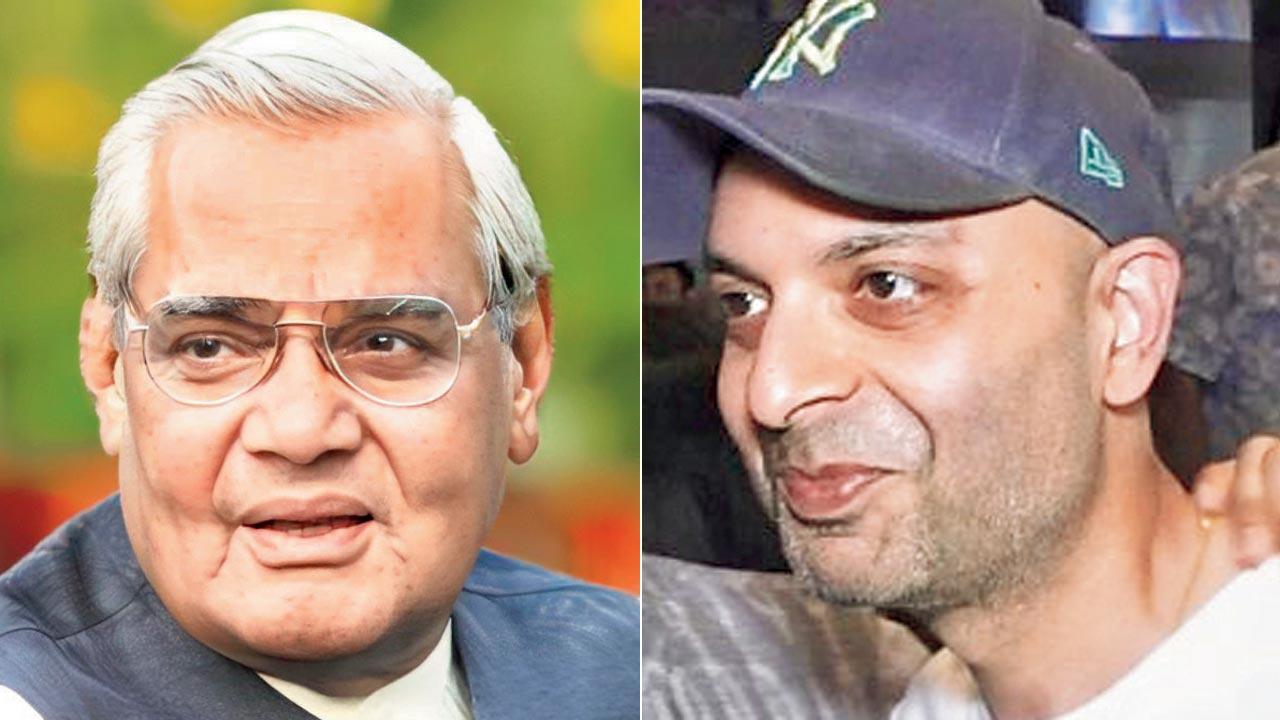
Main Atal Hoon is one of those movies that made me a better human being-Pankaj Tripathi
8:27 AM

Describing late PM Atal Bihari Vajpayee as man of ‘integrity and discipline’, Pankaj says playing him in Main Atal Hoon has made him a better person
Mohar Basu (MID-DAY; August 25, 2023)
Until Main Atal Hoon came his way, Pankaj Tripathi saw former Prime Minister Atal Bihari Vajpayee as a wise statesman and people’s leader. It’s only when he stepped into the titular role for the biopic that he discovered the man behind the politician. The actor, who recently wrapped up Ravi Jadhav’s directorial venture, shares that he did not take up any other project during the shoot.
“Before [beginning work on] this film, I watched all of Atal ji’s big interviews, and read books on him. It feels like I know so much that I can also write a book about him. For the 75 days that I was shooting, I did nothing else, not even an ad film shoot. I didn’t want to leave my character’s zone. After pack-up, I would read his poems, most of which he had written around his birthday on December 25. His mindspace was important to bring into the film,” says the actor.
Rarely does an actor get a role that brings about a shift in him. This was one such character for Tripathi, who counts the film among his most important projects.
“Atal ji was a man of integrity and discipline. [The film depicts] his brilliant journey—a man from a simple [background] who paved his way to become one of the country’s most loved prime ministers. He was a big believer of democracy. Reading about his life has changed me as a person. During research, I spent hours studying his beliefs and values. I can safely say that it’s one of those movies that made me a better human being.”
Atal Bihari Vajpayee used poetry to convey state of mind-Pankaj Tripathi
11:38 AM

Bringing Vajpayee’s story to the screen with Main Atal Hoon, Pankaj on how the late PM’s love for literature struck a chord with him
Hiren Kotwani (MID-DAY; June 23, 2023)
Half the battle is won for Pankaj Tripathi, whose look as Atal Bihari Vajpayee in Main Atal Hoon has been appreciated. It is the other half, of convincingly becoming the former Prime Minister of India on screen, which will be a daunting feat. That’s why the actor dove headlong into six weeks of prep before kicking off Ravi Jadhav’s directorial venture.
Tripathi is currently shooting for the biopic in Lucknow. Before he stepped into the shoes of the statesman, the National Award-winning director gave him extensive reading material—chronicling Vajpayee’s early years, his rise as a politician, and interests beyond politics—that formed the foundation for Tripathi’s act. The actor also watched the former PM’s interviews, speeches and rallies to study his dialect and mannerisms.
“Pankaj’s idea was to imbibe Vajpayee-ji’s traits and characteristics to be able to portray him with honesty. At the same time, he had to ensure that it did not come across as a caricature. A month of extensive prep was followed by a special two-week workshop with the director,” says a source.
While Vajpayee was admired for his statesmanship, it was the politician’s artistic streak that struck a chord with Tripathi. The former Prime Minister harboured a deep love for literature, and had authored several poems in his lifetime.
“During my research, I also read about Atal-ji as a poet who had immense love for language and literature, apart from the politics and diplomacy that he is so widely known for. He used poetry intelligently to convey his state of mind. I could relate to that because good poetry, especially in Hindi, has a deep effect on me too. It was nice to know that there are poems and poets we liked in common,” says the actor.
Pankaj Tripathi to essay the role of Atal Bihari Vajpayee in a biopic
8:22 AM

THE TIMES OF INDIA (November 20, 2022)
Pankaj Tripathi has been roped in to portray the lead role in former Indian Prime Minister Atal Bihari Vajpayee’s upcoming biopic. Taking to social media, the actor shared a post which he captioned in Hindi, “Bharat zameen ka tukda nahi, jeeta jaagta rashtrpurush hai!, ye panktiyan likhne waali mahaan neta Shree Atal Bihari Vajpayee ji ki bhumika mujhe bade parde pr sakaar karne ka awsar mil raha hai, ye main apne saubhagya manta hun. #ATAL jald hi (sic).”
Titled Main Rahoon Ya Na Rahoon Ye Desh Rehna Chahiye - Atal, the film is based on a book adaptation. It will be produced by Sandeep Singh and Vinod Bhanushali.
The movie will go on floors in 2023 and is slated to hit the theatres next year on the occasion of Christmas, which marks the 99th birth anniversary of Atal Bihari Vajpayee.
I’m the guy whose professional obituaries have been surfacing since 2004, but I am still here, unbreakable-Vivek Oberoi
9:53 PM

Rachana Dubey (BOMBAY TIMES; April 8, 2019)
Vivek Anand Oberoi has been in the news since December last year, ever since it was announced that he would headline the cast of Prime Minister Narendra Modi’s biopic, titled PM Narendra Modi. In January, posters of the film featuring Vivek as PM Modi were launched in over 20 languages. All of these, including the teaser and trailer that were unveiled in the subsequent months, collectively drew more criticism than appreciation for the film. Recently, the movie was even dragged to court and accused of being ‘propaganda material’. Today is a crucial day for the film’s makers, as a petition against it is expected to be heard in the Supreme Court. In the meanwhile, according to a statement given by the producers, its release date has now been moved to April 11 from April 5. Vivek spoke to Bombay Times about his journey which has been anything but a cakewalk...
Bank Chor, Krrish 3 and Great Grand Masti were some of your last films that released between 2016 and 17. With PM Narendra Modi slated for release this week, and with all the controversies surrounding it, are you anxious?
More than anything else, I’m eager for the audience to watch this film. We’ve put in our heart and soul into it and the journey has been incredible. It was almost impossible, but we finished the film with its scale intact, in 38 days. We travelled from the hot landscape of Kutch to the freezing terrain of Harsil (Uttarakhand). This film was more difficult and taxing for me than all the 45 films I’ve done in my 18-year-long career.
It's learnt that you were being considered to play PM Modi for another biopic, much before this film was made. Why didn’t that project happen?
It wasn’t one project. A lot of people thought of making a film on Modi ji, including me. In my case, it started when I attended the swearing-in ceremony in 2014. Everyone believed his story amazing, but Sandeep Ssingh (producer) was the only one to say it with conviction, ‘Main bana raha hoon, aap aaiye’. Omung Kumar was approached to direct, but he wasn’t sure at the outset. I told him that he shouldn’t shy away from what he’s good at, which is making biopics. It will be interesting to see what his take on the subject is because he is politically insulated. For Omung, it was about unravelling the layers of a man’s personality. I am politically astute and I understand it. I was involved with student politics and during my student years, I was also a GS in the university.
What is it that really drives you to give the nod to a project such as this biopic?
I am on two extremes. When I am working on a film, I am committed and I give it my all. Cold and hot weather and a demanding scene don’t deter me, but I only take up a project when I am inspired enough. It’s not for the money or the thrill of adding another film to my CV. Like I took up Lucifer in Malayalam, knowing that it’s a tough language to speak. But my reason for doing it was that I didn’t want to miss a chance to reunite with Mohanlal (they worked in Company, 2002). I was also warned against trying new media (web series). I was told I would end up getting written-off completely, but here I am. I didn’t sink.
Your career started with a bang with Saathiya and Company. You were touted to be one of the most promising actors in the early 2000s. Interesting roles and intense performances also won you accolades. Given this, your career graph has not been as extensive as it could have been. Do you feel you could have given more to the industry and received more from it?
I’m the guy whose professional obituaries have been surfacing since 2004. Due or no due, the fact is that I am still here, unbreakable. I have worked in six languages and won around 20 awards and I still get some great work to do. Instead of being in the rat-race, and running to the finishing line, I am spending time watching my kids grow. Acting gives me joy, but so does playing football in the garden with my son and lighting up my daughter’s dollhouse with her. I am on crazy schedule even now, but I don’t miss a chance to feed my bachchas and break bread with my wife and parents. I believe in maintaining work-life balance. Each day makes me feel like a winner and gives me a sense of fulfillment. I’ve often been asked about not getting my due in the industry. On the contrary, I am blessed with so much that I don’t see life in a unidimensional manner. I have a happy family and I choose the work I do. I am Destiny’s child because there’s nothing that hasn’t happened to shut me down and I'm still going strong. This is my life and I have accepted it with a smile. What else can I do? Crying is not an option, woh sab screen pe theek hai.
Shortly after you attended the PM’s swearing-in ceremony, people made memes of your look at the event with comments about how you even made it there...
(Laughs!) Yes, I remember that. It still makes me smile. In 2004, people said how did I make it to the film industry, in 2014, people asked how did I make it to the PM’s swearing-in ceremony, and in 2019, they are asking how did I get the role. Someday, there will be a biopic on me if people keep asking these questions, which I don’t mind.
But how did you really make it to PM Modi’s swearing-in ceremony?
I don’t like to wear my relationships on my sleeves. I built a beautiful equation with Mr Modi when he was the Chief Minister (CM) of Gujarat. I’ve personally seen him work, and people don’t realise this but after Atal Bihari Vajpayee, he’s the only leader I campaigned for.
So, at some point, you do plan to get into politics?
I don’t know where life will take me, but for now, you will see me as a full-fledged politician for two hours on screen.
Are you in awe of PM Modi?
I am not a bhakt for sure. For me, it was a question of whether Modi ji's story inspires enough. It does. To me, even Dhirubhai Ambani’s story is just as inspirational. I am excited about this film because it tells every chaiwala and chowkidar that you too can become the PM.
It’s often said that getting too close to a subject could hamper your objectivity. In your case, you knew PM Modi very well. Didn’t that become a deterrent at any point?
One approach is to adapt the physicality of the person you’re playing. Omung and Sandeep ensured that I don’t caricature Modi ji. We were clear that the spirit of the man needs to be captured and portrayed. I did that when I played Maya Dolas in Shootout At Lokhandwala (2007). The man had curly hair, but it looked funny when I wore a wig to match his appearance. He also had a thick Marathi accent. Eventually, we decided to go without all of this and just focus on the kind of person Maya was. I studied him in great detail —his criminal history and met the cops who had shot him. The idea was to bring out that high he was riding on in the short span of his life.
Your film has been in the eye of controversies since inception. Even its release date has been moved twice. Did you anticipate that you might have to fight so many battles for this film to see the light of the day?
Yes, one knew that this might happen. Our legal team had warned us, but I could never understand why so many people (referring to political leaders) are scared of this film releasing. And if a film is so powerful, then people in politics should make films instead of campaigning and doing any other work in their constituencies. It’s great for cinema. If that theory was true, every election season would have a flurry of films. I think we’re giving too much importance to this issue. People will watch the film and decide whether it’s good or bad. Making films can never help anyone win elections. If someone thinks it is propaganda, let them prove it.
Biopics in India are often blamed for white-washing their subjects. Your film is being accused of it even before release.
Let them blame us, but we have never given that a thought. I’ve made this film for the mass audience. I’m told that Richard Attenborough was also accused of white-washing Mahatma Gandhi in Gandhi. The film is considered to be iconic. Uske aage hamari film ki kya haisiyat hai?
In a two-hour film, how much of Modi’s life have you really covered? Does your film also touch upon the Gujarat riots, which took place in 2002?
We’ve covered a great spectrum. Omung has done tremendous justice in his effort to bring out as much of Modi ji’s life as possible in a short screen time of about two hours. There’s everything right up to his swearing-in ceremony. It’s his trials and tribulations that make the film inspirational.
Lastly, will we get to see Narendra Modi in the film?
We tried incorporating a portion at the end but it didn’t work. There is enough Modi in me, but not the real Modi ji in the film.

Atal Bihar Vajpayee gave me a warm hug after hearing 'suraj ko main nigal gaya'-Prasoon Joshi
7:15 AM

BOMBAY TIMES (August 18, 2018)
"You may become an ex-PM but never an ex-Poet,” Atal ji apparently quipped at one time. It’s simplistic to separate the poet and the politician of his persona. The fact is that they walked in tandem. Both poetry and politics were an indelible part of his consciousness. He was not a recluse poet. He may have enjoyed his moments of solitude but he kept his poetry connected with the spirit of the times.
Many people say that the Poet dominates his Politician, but that would be a uni-dimensional assumption. He is much more than a Poet, much more than a Politician. In fact, he strongly believed that poets and writers would only enrich politics.

Somehow, I have felt that the hope in his poetry has a unique tenor, a kind of a responsible hope. He may not have, as an individual, felt particularly hopeful at a given time, but he felt responsible to transmit hope, for the larger good. He would have written poems like a poet would, but in many places, one can see the reflections of the political responsibilities he carried, he was mindful that he was talking to the nation.
Let’s not forget he could not be like an activist poet or point fingers at the system or tarnish the power structure. He also was the power, he was also the system. And this aspect put him in a tight spot. But I have always believed that such are the unique vantage points of life, such are the authentic voices which reflect a complex artistic life tenor.
So, if there is a dilemma, a contradiction, a tension found in his thought, it makes Atal ji’s poetry a lot more unique.
I was fortunate enough to have spent time with him, hearing him recite some of his work, and also more fortunate to have him recite words written by me in speeches on some key events. His warm hug post hearing the words: “suraj ko main nigal gaya” (I swallowed the sun) in my song Roobaroo (Rang De Basanti), is one my most cherished memories.
To carry the tradition of hope forward, I instinctively penned down some thoughts as a tribute, based on one of my personal favourite poems written by Atalji –

Sanjay Raut to produce a biopic on George Fernandes
8:01 AM

Makarand Gadgil (MUMBAI MIRROR; June 17, 2018)
While addressing a rally in Mumbai in 1972, as the state faced its worst drought of the century, socialist leader George Fernandes took a newspaper clipping out of his kurta’s pocket and read it out. The news was about a state cabinet minister celebrating the birthday of his dog. In an instant the mood at the rally changed and the air rent with anti-government slogans.
Those were the days of acute shortages and a well-oiled black market. Getting a kilo of wheat or sugar or a litre of kerosene from a ration shop used to be a Herculean task for ordinary folk. Fernandes knew what was hurting the people and he had mastered the art of turning such pain into explosive anger. This and many such events from Fernandes’s long and eventful political life – spanning his days as Mumbai’s most influential union leader who could bring the city to a grinding halt whenever he so wished to becoming one of the most important cogs in the Atal Bihari Vajpayee-led NDA government – will be brought alive on screen in a biopic to be produced by Shiv Sena leader and the executive editor of the party’s mouthpiece Saamna Sanjay Raut. The biopic is likely to hit the screens in 2021.
The very fact that a Sena leader is producing a movie on Fernandes’s life should ensure a good opening weekend. Fernandes was one of the Sena founder late Bal Thackeray’s most trenchant critics. In fact, clashes between Fernandes’s Bombay Labour Union and Sena’s workers were frequent. Sena in those days was running a campaign accusing south Indians cornering all jobs in Mumbai and Fernandes’s labour union represented employees of all Udupi restaurants – a majority of them south Indians.
Raut, however, reveals that while Sena and Thackeray were political rivals, behind the scenes they shared a warm regard for each other’s views. Raut further said: “Fernandes was on cordial terms with Thackeray’s father social reformist Prabodhankar Thackeray. So, Balasaheb’s and Fernandes’s knowledge of each other’s work went a long way back.”
Raut recalls during the release of a photobiography of Bal Thackeray in 2005 in the presence of leaders like Atal Bihari Vajpayee and Sharad Pawar, it was only Fernandes who addressed Thackeray as ‘Bal’ from the dais.
Raut believes that if any one person other than Thakeray has influenced his life it is Fernandes. “The biopic is my tribute to him,” he said,
Raut said that while people may not have any striking memories of Fernandes as a Union minister -- though he was single-handedly responsible for making Konkan Railway a reality --his life as a union leader in Mumbai is well documented. “From mid-fifties to Emergency --when Mumbai was a hotbed of union politics – will be the focal point of my movie.”
Jaya Jaitely, long-time companion of Fernandes and a Samata Party leader, however, warned that it will be wrong to restrict the biopic to Fernandes’s days in Mumbai. “George was much more than that and all facets of his life should be brought out in film like they were brought in ‘Gandhi’ by Richard Attenborough.”
Raut, who is currently working on a biopic of Thackeray, said the script for the movie on Fernandes is ready. “I have written the script. As soon as we wrap up work of Balasaheb Thackeray’s biopic, I will start working on this one. In the meantime, I am trying to identify a team to work on the project,” he said.
Raut has not yet finalised the film’s title, but ‘Bandh’ sounds like a good one. After all, it was Fernandes who added this term to Mumbai’s lexicon.

It is nice to be written off so that you can come back stronger with a vengeance-John Abraham
8:05 AM

After a two-year lull since his last outing hit screens, John Abraham finds himself flooded with films. In an interview with Sunday mid-day, he talks about returning stronger every time he's "written-off"
Sonil Dedhia (MID-DAY; May 20, 2018)
It has been two years since John Abraham last appeared on screen in an out-and-out actioner. Awaiting the release of his production, Parmanu: The Story Of Pokhran, John confesses he's going to be seen in an avatar that's distinct from the commercial ventures he's been part of. He talks to mid-day about working on the venture, and dealing with criticism every time his films tank at the box office. Edited excerpts from the interview:
Your last, Force 2, hit screens two years ago. Have you consciously picked fewer projects over the years?
The idea was to select the right kind of subjects; case in point being Madras Café. People feel, that has been my best performance, and that is because I lived the film for a long time. I was convinced about it, and it brought out the best in me. Similarly, Parmanu is a special subject. When we narrated it to studios [to get co-producers on board] they said they hadn't come across such an interesting subject in the past few years. I didn't want to rush and sign something. I'd rather wait for a credible film. I have never been in a hurry, and have been relaxed about my work.
Suddenly, your calendar looks full. Is it an interesting phase in your career as you have four films (Parmanu, Satyameva Jayate, RAW and a film on the Batla House encounter) lined up.
It is exciting. I am enjoying my work. I signed these films over a period of time. I will soon complete Satyameva Jayate, after which, I have a two-month-long schedule of RAW. I didn't plan to do so many films at one time. I didn't sign them together. Sometimes, when I count the number of films that I am doing, I get nervous, but at the end of the day, I feel content. Currently, I am in a secure space.
Did you always want to come on board as producer on Parmanu?
Yes, I knew on the first day itself that I'd like to produce this film. Abhishek [Sharma, director] and I wanted to work together for a long time. He came to me and said, 'Let's make a comedy.' But I asked him if he had another idea too. He told me he had a 10-page idea. When I read it, it played out in my head. I decided to develop the script under my production. My team worked on it.
You have only a two-week window to promote your films. Postponing it would have given you sufficient time to promote it better. Was that not crucial?
When the verdict [against former co-producer KriAaj Entertainment] came out on May 10, I told Abhishek that we would release the film on May 25, and launch the trailer on May 11, as it was the same day that the nuclear test took place 20 years ago. The film will pick up due to [positive] word of mouth, we didn't think of postponing it. Every Indian will be proud of it as this incident made everyone take India seriously. We have tried to stick to reality, and have not taken commercial liberties.
You will also showcase real footage in the film. Did you have to take special permissions to do so?
We researched with the entire cadre that has been through this in real life. We met people who discussed the issue with our then Prime Minister, Atal Bihari Vajpayee. We narrated our script to them [his office], and they even made corrections to it. I also met Arun Jaitley, who was the defence minister when we started shooting the film, because we were shooting in Pokhran, and needed special permissions to fly drones there. We had to get a go-ahead from the Border Security Force, which we obtained. We applied for permission three months in advance and everyone was co-operative.
The kind of films that you act in are different from those you produce. Is that a conscious decision?
I turned producer because I wanted to be part of a certain kind of cinema. But, as an actor, I was hungry to do hardcore commercial cinema. My next film, Satyameva Jayate, is purely a commercial film. The idea behind running this production house was not to drive it with my star presence. If a film requires Tiger Shroff, Varun Dhawan, Rajkummar Rao or anybody else, I wouldn't have any qualms in approaching them.
How do you take to criticism?
My obituary is written every year [laughs]. [It seems] everyone has the right to have an opinion about my film. There has always been a phase in my career where, when one of my films works, the next two won't. But, I have survived for 15 years now. It is nice to be written off so that you can come back stronger with a vengeance!
You take pride in being known as an action hero.
I've always said that action is something I enjoy doing. I have always had a fascination for the genre and, coupled with my love for fitness, this genre comes naturally to me. At the same time, I try and bring a variety of it and don't like to be repetitive. Being tough is not always about bullying others. It is about being protective and that is what I am all about. I am the most non-violent guy you would meet [smiles].
Madhur Bhandarkar outraged after Censors ask for 12 cuts & 2 disclaimers in Indu Sarkar
8:25 AM

National Award-winning filmmaker outraged after the censor board’s Examining Committee ordered 12 cuts and two disclaimers in his upcoming film that is set against the Emergency.
Roshmila Bhattacharya (MUMBAI MIRROR; July 11, 2017)
Madhur Bhandarkar is in
shock after coming out of a Censor Board screening which has handed his
upcoming drama set against the backdrop of the Emergency 12 cuts and two
disclaimers. “It’s absurd that names of political leaders like Atal
Bihari Vajpayee, Morarji Desai and Lal Krishna Advani that appear in a
newspaper that someone is reading doesn’t pass muster, nor does that of
Jayaprakash Narayan even when it’s just part of a slogan being shouted.
Nor for that matter do references to political terms like ‘Akali’,
‘Communist’ and the organisation RSS. It’s really disappointing. But
what’s really mind-boggling is that even Kishore Kumar’s name (the
singer’s songs were banned on All India Radio on Doordarshan because the
he refused to perform at a Congress rally in Mumbai at the time) needs
to be dropped!” exclaims the National Award-winning filmmaker, adding
that before submitting the print to the censors, following discussions
with friends from several political parties post the trailer release, he
had already carried out voluntary censorship, making several changes in
names and content because he did not want to upset or offend anyone.
What’s taken him by surprise is that lines like “Ab iss desh mein Gandhi ke maayne badal chuke hain” and “Bharat ki ek beti ne desh ko bandi banaya hua hai” which have been playing in the trailer on television, the social media and in the theatres since June 16, now appear in the list of lines to be deleted before the film can be released. Also, words like ‘IB’, ‘Section Officer’ and even ‘PM’ have been blacklisted. “What parameters are they following? What yardstick?” rages the disbelieving filmmaker who is also being questioned on his dedication to the “unsung heroes who fought for democracy during Emergency”. He has been asked to remove it and add two disclaimers.
The film has been in the eye of a storm since last month when members of the Congress party released a poster in Allahabad, demanding that the state government ban the film and stated that they would not let it open in city theatres.
The agitation spilled over to other states too. In a letter addressed to the Cine Circuit Association and the Cine Grah Sanchalan in Indore, Congress party workers demanded a ban in the Madhya Pradesh capital too and threatened to vandalise theatres, burn effigies of Bhandarkar and Anupam Kher, holding theatre owners responsible for any violence.
Earlier, Congress spokesperson Jyotiraditya Scindia had said, “The organisation and the individual who is behind the film is known to us. We totally condemn the false depictions in the film.” In his reply, Madhur has asked the party to let the CBFC take a call.
Today, he finds himself fighting on two fronts for what he points out is primarily a work of fiction which is simply set against a political backdrop. Reminding himself that ‘freedom of expression’ is his Constitutional right, he promises to fight this “arbitrary” censor diktat without relenting. “I will go to the Revising Committee and then the Tribunal. I’m deeply disappointed,” Bhandarkar asserts.
We tried calling CBFC chairperson Pahlaj Nihalani and even texted him but he remained unavailable for comment.
The lopsided cultural exchange makes us uncomfortable-Javed Akhtar
8:13 AM

Javed Akhtar on the unofficial ban on Pakistani artistes in Bollywood
Subhash K Jha (DNA; October 5, 2016)
Poet-writer-thinker-activist Javed Akhtar is concerned
about the escalated tension between India and Pakistan and the ensuing
call for a ban on the Pakistani presence in Bollywood.
He says, “The situation is indeed serious and requires drastic measures. Look around you, what one constantly gets to see are terror attacks. Be it in Pathankot, Mumbai or Uri… we always find Pakistan’s name being linked to terror in our nation.”
He sees the necessity for cultural exchanges between the two countries, but adds, “India has always been most gracious and welcoming of Pakistani artistes. Whether it is singers, writers or poets, we’ve always shown them the utmost warmth.” He recalls Pakistan’s pre-eminent poet Faiz Ahmed Faiz’s visit to India. “He was treated by Prime Minister Atal Bihari Vajpayee like a head of the state. But this sort of hospitality and privilege has not been given to an Indian artiste in Pakistan, not even to Lata Mangeshkar!”
Javed wonders why Lata has never been able to visit the neighbouring country. “They adore her in Pakistan. Why has she never been able to visit Pakistan for even one concert? It’s because it is very difficult for the establishment in Pakistan to accept that an Indian singer could be so popular in Pakistan.”
He feels the cultural relations between the two countries have always been lopsided. “And now, at this time when the relations between the two countries have hit a new ebb, the lopsided cultural exchange between the two countries makes us Indians uncomfortable. More and more Indians are questioning our open-arm policy to Pakistani visitors when all we get are terror attacks in exchange.”
But, he also adds, “We must draw a distinction between the Pakistani establishment and the public. The Pakistani public loves Indian entertainers, be it actors or singers. If there are no public performances by Indian artistes in Pakistan, is it the public that is responsible? Or is it the establishment? Not at all! Given half a chance, the Pakistani public would warmly invite Indian artistes. But the establishment would not allow it. Poets like Ali Sardar Jafri, Kaifi Azmi and writer K A Abbas were warmly welcomed in Pakistan by the public. But their government-sponsored radio and television channels did not feature even a brief interview with them.”
However, the poet exonerates artistes on both sides. “Artistes in Pakistan and India are equally innocent. Their presence in either country should not be politicised. If Pakistani artistes are stopped from coming to India, the fundamentalists there and the Pakistani army would be very happy. This is exactly what they want.”
Regarding the silence of the Pakistani artistes over the terror attacks, Javed argues, “I would understand Indian sentiments getting hurt if Pakistani artistes had tried to defend the attack on Uri or any other terror attack. But their silence doesn’t mean approval. It’s just caution about the safety and well-being of their families back home.”
Javed and his wife Shabana Azmi have paid many visits to Pakistan in the past. Says the poet, “I don’t think the Pakistani awaam is against India and Indians. Hopefully, tension between the two nations will be defused soon. Look at Europe. They were so splintered at one time. Until April 1945, they were bombing one another. Now they use one currency almost everywhere in Europe.”
When told how singer Asha Bhosle was abused by some Pakistanis when she tweeted, ‘Jai Hind’ Javed retorts, “I will tweet my ‘Jai Hind’. It’s my birthright to praise my country.”
Nawaz Sharif sir, I love you for loving my hero Dilip Kumar-Mahesh Bhatt
7:46 AM

In a first-person account, Mahesh Bhatt recounts a memorable meeting between former Pak PM Nawaz Sharif and Dilip Kumar
Mahesh Bhatt (MUMBAI MIRROR; December 17, 2015)
 Don't ask me why, but when I saw the image of
Dilip saab (Dilip Kumar) receiving the Padma Vibhushan Award from the
hand of Sri Rajnath Singh, Union Home Minister, in the presence of his
proud wife, Sairaji, and a beaming Devendra Fadnavis, Maharashtra Chief
Minister, along with the Governor of Maharashtra, Sri Vidya Sagar Rao, I
was reminded of what the thespian had said to me after I had conducted a
memorable interview with the legend in Bradford, way back in 2004
during the famous Bite The Mango Film
Festival.
Dilip saab had decided to ignore the Shiv Sena's diktat, and keep the Nishaan-E-Imtiaz, Pakistan's highest civilian award bestowed upon him by Islamabad, for his contribution to better Indo-Pak understanding. He was able to brave the opposition at home, and take all those people who were questioning his allegiance to this country head on, because of the support of the then Prime Minister Atal Bihari Vajpayee, who had declared without mincing his words, that there was no doubt about Dilip Kumar's patriotism and commitment to the nation. Dilip saab had categorically mentioned in his letter to the Prime Minister that he was ready to return this prestigious award if Vajpayee felt that doing so would serve the national interest. It is Atal Bihari Vajpayee who needs to be thanked for firmly standing behind this King of Kings and making a historic trip possible. 'We stars are used to being revered by all kinds of people, but what happened in Pakistan when I went to receive the award is something that you have to hear Mahesh,' Dilip saab said to me.
Dilip saab was supposed to meet Nawaz Sharif, who was also the Prime Minister of Pakistan at that time. As is customary, he had contacted the office of the PM to find out what time they should arrive there, to enable to smoothly sail through the security in order to be on time to meet the PM. 'What I was then told humbled me,' said Dilip saab. 'Imagine my surprise when I was informed by his office that it was not me who was to come to the PM's office, but that the PM was coming to meet me!' Nawaz Sharif then arrived to meet Dilip Kumar with his entourage, and sat down for over an hour, with the humility and childlike eagerness of a true fan of the thespian.
This self-effacing attribute of PM Nawaz Sharif left me awestruck. It dawned on me that simple human gestures of leaders of state resonate far beyond the work that they may do in their official capacity. By honouring this great actor who has been the reference point for the Hindi film industry for the last sixty years, Nawaz Sharif had come closer to those millions of people who have cried, laughed and applauded this great actor in the darkness of auditoriums all over the world.
'Sir, I love you for loving my hero,' I said to Nawaz Sharif when I had gone to meet him in his palatial house on the outskirts of Lahore, as part of a peace delegation a few years ago. With a warm smile he said to me 'Why don't you bring Dilip saab here and you too join us and spend at least a month with us and enjoy our hospitality', he offered graciously. He was not in power then. It is his love for his icon that made Nawaz Sharif declare Dilip saab's house in Qissa Khwani Bazaar, Peshawar, where he was born, a national heritage property. This was indeed the highest tribute that any actor could have received from the head of State of a country that is so much a part of our shared heritage and yet looked upon with animosity by those who propagate the politics of hate.
I recall that on that historic occasion, Sairaji, with tears of joy in her eyes, had said, 'It would be wonderful if our Government too would acknowledge his contribution.' The thirsty know that real thirst draws out water from a parched and empty sky. The prayer which had emanated from Sairaji's heart has found its answer today. PM Narendra Modi has warmed the hearts of millions of Indians all over the world by sending his emissaries to Dilip saab's abode, to give him his much-deserved award. Too little too late? No way. Better late than never! Thank you, Mr. Modi for loving our hero.
I could step in as FTII interim chairman till the committee finds someone suitable-Shatrughan Sinha
8:42 AM

For someone who has always advocated friendship across party lines, Shatrughan Sinha now has an army of adversaries within the BJP. The Bihari Babu opens up about his disaffections
Shreevatsa Nevatia (MUMBAI MIRROR; September 6, 2015)
Shatrughan Sinha's three elder brothers were named Ram, Lakhan and Bharat. The actor-politician's two sons are called Luv and Kush. It seems only fitting that his Juhu home was given the name Ramayan. During a one-and-a-half-hour freewheeling chat with Mirror, that aptness only seemed to exaggerate itself. Speaking candidly about his political disaffection, the BJP Patna Sahib MP insisted that he was "not sulking like Kaikeyi", and that none of recent pronouncements — most notably his support for 25 suspended Congress parliamentarians — had crossed his party's "lakshman rekha".
Importantly, the events of the Ramayana are precipitated by the exile of its protagonist. Similarly, the trajectory of Sinha's recent narrative arch is marked by an alienation of its own. Since late July, Prime Minister Narendra Modi has visited Bihar on four different occasions and has made nearly half a dozen fiery speeches in a prelude to assembly elections in November. Sinha, though, was only present for the PM's address at Patna's Bihar Veterinary College on July 25. For some observers, his absence from larger rallies has been conspicuous. The MP says he now wants to set the record straight. "I wasn't called anywhere else, so I didn't go. I only attend a function when I am invited. People casually say that I am too big a man and that I have airs. I speak to the media to clear the air."
A popular local leader who had won 55 per cent of the votes in his Lok Sabha constituency only last year, Sinha confesses that while he doesn't feel left out, he does at times think he is being "deliberately ignored". He speaks of workers who flock to his door, wanting him to appear at the next rally. "What they don't understand is that if I turn up, I will be the centre of attention. The media will want to know what I am doing there. My name or face is not on any banner. I do feel hurt, but then I just say, 'God, forgive them. They know not what they do.'"
At a time when Bihar is the focus of the nation's attention, the more interesting headlines are being made by the original Bihari babu's insistence on a perennial frankness. While the MP's predicament can perhaps elicit some sympathy, his detractors often argue that 'Shotgun' Sinha unwittingly shoots himself in the foot with a brand of politics that gives him the freedom to refer to Nitish Kumar as Bihar's "guardian" and Lalu Prasad Yadav as a "lovable man". Dismissing charges of opportunism, Sinha advocates a "sportsman's spirit" and says that "our opponents are not our enemies." It is difficult to say if the chick of his discontent came before the egg of his bipartisanship, but Sinha tries hard to prove that they are not connected.

Where foe is friend
Seemingly one to refrain from boasting, the 69-year-old Sinha takes obvious pride in the fact that he has worked with several generations of directors in the film industry, everyone from Prithviraj Kapoor to David Dhawan. His most acute nostalgia, though, seems reserved for political stalwarts like Jayaprakash Narayan — "He used to be amazed that a film star from Bombay could speak to him in Bhojpuri." He remembers campaigning for Atal Bihari Vajpayee in 1984, and makes little attempt to disguise emotion when talking about LK Advani. "He is my friend, philosopher, guide, guru and ultimate leader," he confesses. In an attempt to explain his political education, Sinha recounts how Advani had attended the funeral of EMS Namboodiripad just days after taking oath as home minister in 1998. "Namboodiripad was a communist, but that didn't matter, and that's the ethic I imbibed."
When Sinha lost his mother Shyama Devi in April 2002, he again saw party lines being wholly blurred. "Lalu Prasad Yadav was the first to be my side and the last to leave. He woke up his wife, the then chief minister Rabri Devi, in the middle of the night to ensure that my mother gets a state funeral. If my personal relation with him is based on the tenets of friendship, how is that wrong?" Sinha is quick to make mention of the Prime Minister's presence at the weddings of Digvijay Singh's son and Lalu Prasad's daughter. "Does this mean the PM is changing parties?" he asks. "What is right for Paul must also be right for Peter. Narrow minded people blow these issues out of proportion."
Not all of Sinha's political rendezvous, however, seem to fall under the kosher 'courtesy call' category. On July 25, when Narendra Modi launched a scathing attack on the Bihar chief minister and his DNA, Sinha was seen leaving Nitish Kumar's Patna residence. Rumours of the former Union health minister going rogue were rife. Clarifying his proximity to his party's arch rival, Sinha says, "If I have to talk about the growth and development of the state or my constituency, my attitude towards the chief minister can certainly not be confrontational. I've always believed in consensus."
On August 6, Sinha again displayed his predilection for a consensus when he called on Arvind Kejriwal. As an alumnus of Pune's Film and Television Institute of India (FTII), the actor felt impelled to act and was convinced by protesting students that the Delhi chief minister might have a solution to their impasse. Kejriwal proposed to Sinha the setting up of a temporary institute in Delhi for striking FTII students. The institute, he said, could later be made permanent. Sinha says, "Though I liked the idea, I realised that if I start a confrontation with the Centre about this, my actions won't just be anti-party, they will be anti-government. But I have still made my own attempts." Though he refers to appointed chairman Gajendra Chauhan as a "kind, respectful and affectionate man", Sinha adds, "He should empathise with the students who have been on strike for over 80 days now and voluntarily resign. I could step in as an interim chairman till the committee finds someone suitable."
The enemy within
Atal Bihari Vajpayee had once told a younger Sinha that not all his enemies will come from opposing benches. "He had told me that I will also have to worry about those on the inside." After hearing reports that disciplinary reaction would be taken against him post elections in Bihar, the Patna Sahib MP responded with a succinct tweet. Adding the caveat that he did not want to comment on news that was unofficial, he quoted Newton - "Every action has an equal and opposite reaction." Sinha says, "I was waiting for a clarification to be issued. When that didn't happen, I thought Newton's third law would be an apt reminder for everyone." The hostility couldn't possibly be more palpable.
When pressed about his fractured ties with the party, Sinha's reply remains categorical. "The BJP is the first and will inshallah be the last party I join. I am not against my party. I just want to hold up a mirror." In his assumed role as a conscience keeper, Sinha refers to a section of BJP's spokespeople as a "procession of sycophants". He adds, "They did such aggressive marketing for the BJP and the Modi sarkar that they then became the target of their own aggression in the Delhi assembly polls."
Sinha asserts that he did not intend to make mischief when he suggested that the BJP should have declared NDA-ally Ram Vilas Paswan as its chief ministerial candidate weeks before the poll code of conduct came into play. "The people have a right to know who their chief minister is going to be. There are others too. There's Kirti Azad, Shahnawaz Hussain, CP Thakur and Sushil Kumar Modi, who I like to call SuMo. I am not in the race. I have neither the ambition nor the time. That story is over." There has been much speculation that Sinha's prolonged 'sulk' is a consequence of him being denied a ministerial berth at the Centre. He rubbishes this claim, but not without elan. "That is the PM's prerogative. If not today, he'll make me a minister tomorrow. Acche din aane waale hain, right?"
To Sinha's left, there sits a framed photograph of him and the prime minister sharing a laugh. The adjectives he uses for Narendra Modi are familiar — "dashing, dynamic, an action hero" — but the veteran actor and politician believes that the PM's agenda isn't being pushed enough by people on the ground. "Shatrughan Sinha, Salman Khan and Aamir Khan have all stood with brooms in the name of Swachh Bharat, but what have we as a nation really done to help?" Branding the PM's allocation of Rs 1.25 lakh crore to Bihar as a "better late than never package", Sinha does appeal for greater democracy. "Rather than sycophants, if we were allowed to speak to the PM as colleagues, this package could have been announced earlier and the Opposition wouldn't end up complaining."
Yashwant Sinha had famously said that all those in the BJP who were above the age of 75 were declared brain dead on May 26, 2014. Shatrughan Sinha laughs and says that by that measure, he still has a good few years left in him. His tenacity, however, has clearly not stopped him from contemplating alternatives to the status quo. "I could stand as an independent candidate. I will get the support of many people and parties. I can write and teach. I can give speeches. I can act." Writing, strangely, is already something that Sinha has already taken out time for. His autobiography releases this December. "In the book, I talk about how fond Indira Gandhi was of me. I have even gone to the extent of saying that had Mrs Gandhi been alive I could have been in the Congress now."
In proverbial slang, calling 'shotgun' refers to the privilege of being able to sit in a car's passenger seat. Shotgun Sinha, though, seems insistent on holding his own steering wheel and hurtling ahead.

Subscribe to:
Posts (Atom)