Showing posts with label Assam. Show all posts
Showing posts with label Assam. Show all posts
Salman Khan joins hands with NGO to rehabilitate the displaced in Assam; pledges to set up 500 houses
4:15 PM

Upala KBR (MID-DAY; August 6, 2026)
On July 28, mid-day reported that Salman Khan’s foundation Being Human tied up with his fan clubs in Assam to distribute food among the affected as the state battled its worst flood in six decades (Stars and fans unite for Assam, July 28). Now, the actor and his team have begun the second phase of relief measures.
Khan has joined forces with the non-profit organisation, Global Sikhs, to rehabilitate the displaced. So far, they have built 220 semi-permanent houses in Nepali Khuti, which has been the worst hit village.
While rehabilitation was always part of Khan’s three-pronged plan, he accelerated it last week when he saw reels of Randeep Hooda carrying out on-ground relief operations. Apparently, the superstar got in touch with Hooda through a common friend.
“Randeep told Salman that under Global Sikhs’ relief efforts, 70 of them were working together. He also shared what they needed at the moment. Amarpreet Singh, the founder of Global Sikhs, told Salman that they were planning to build semi-permanent homes, made of bamboo and tin shed, that would be flood-proof and that each would cost between Rs 35,000 and Rs 40,000. Salman immediately joined hands with the foundation, and together they pledged to set up 500 houses,” said a source.
When mid-day reached out to Singh, he revealed that the rehabilitation process is being executed under the two foundations’ joint project, Aashiana.
He shared, “Salman Khan spoke to us a few days ago and said, ‘Aap log fikar mat karo’. Right now, Sivasagar is the worst affected and its epicentre is Nepali Khuti. In the first phase of building, 220 houses have been completed, and we’re distributing it per family. We can build eight to 10 houses a day.”
Salman Khan steps up to aid Assam flood victims with relief drive
9:21 AM

As Assam battles one of its worst floods, Salman Khan teams up with his fan club in the state to distribute food; Bhumi Pednekkar provides ration and hygiene kits
Upala KBR, Mohar Basu (MID-DAY; July 28, 2026)
Devastation and destruction have gripped Assam over the past 10 days, as the state has been battling one of its worst floods in recent years. In the wake of the floods, members of the Hindi film industry have begun mobilising relief efforts on the ground. mid-day has learnt that Salman Khan, who has been shooting Vamshi Paidipally’s yet-untitled next in Mumbai, has been coordinating with his fan club in Assam to distribute food and essential supplies to the state’s worst-hit areas.
A source close to the actor told mid-day, “He connected with the Salman Khan Fan Club [SKFC] Assam and planned a phased process to aid the affected.”
In the first phase of the initiative, Khan’s NGO Being Human has joined forces with the SKFC Assam to distribute ready-to-eat food packets in Sivasagar, from Guwahati.
“Each packet consists of biscuits, jaggery, poha, puffed rice, bread, cheese, and jam. Salman’s priority is to make sure families have enough food to last for at least three days until the situation improves,” added the source.
They are also distributing sanitary pads, mosquito coils, drinking water, and water purification tablets.
The second phase, to be started next week, will focus on distribution of ration kits and medicines. In the final phase, Being Human will undertake the responsibility of reconstructing schools and hospitals in severely affected areas.
Actor Bhumi Pednekkar has also extended support by partnering with Bharat Disaster Relief Foundation (BDRF), which is currently providing ration kits, hygiene kits, drinking water, and other essential supplies to families in Sivasagar.
A source said, “When Bhumi found out that BDRF was driving relief efforts in Assam, she partnered with the non-profit organization.”
I hope more people speak about the Assam floods-Bhumi Pednekar
10:18 AM

Rishabh Suri (HINDUSTAN TIMES; July 26, 2027)
With the Assam flood toll at 62 and over 7 lakh people still affected, actor Bhumi Satish Pednekkar has urged citizens to support relief and rehabilitation efforts in the state. Bhumi shared a video on Instagram appealing for donations of food, mattresses, sanitation supplies and other essentials.
Speaking to us, she says, “At this point, large parts of the country have come together for a unified voice. A lot of other important things across the country are not getting a platform, and one of those things is the Assam floods.”
The actor says she became aware of the scale of the crisis after being contacted by someone involved in relief work. “That’s when I realized how disastrous the entire situation is... dead bodies are floating… and the amount of cattle that has been swept away in the flood.”
Calling for citizen-led support, she adds, “Of course we have our Army on ground, and the government is doing what they can do. But I really appeal to all citizens… the way they came together last year for the Punjab floods via citizen-led initiatives, people going on boats to distribute food, we need to come together for this too.”
Lights, camera, North-east: With UP-Bihar setting wearing thin, filmmakers are exploring new landscapes
11:26 PM

With UP-Bihar setting wearing thin, filmmakers are exploring new landscapes but can they move away from old tropes?
Mohua Das (THE TIMES OF INDIA; January 4, 2026)
For years, Bollywood’s favourite ‘badlands’ lay along the UP-Bihar belt of dusty highways and men with guns and grudges. Now, that compass is swinging North-East, once barely on the mainstream filming map.
In just three years, the region has become the backdrop for Hindi cinema and streaming’s biggest crime and thriller titles. Filmmakers are digging into folklore, cross-border politics, forest corridors, trafficking routes and scenarios where drug deals are struck, ministers beheaded, borders breached, and relationships tested. Basically, a fresh set of tensions and terrain for filmmakers to tap.
‘Anek’ director Anubhav Sinha’s conversations with his Tai Chi teacher from Nagaland led him to explore the churn caused by the stalled 2015 Naga Peace Accord to questions of identity. Varun Dhawan-starrer ‘Bhediya’ draws from Arunachal’s shape-shifting werewolf lore, Kangna Ranaut’s ‘Emergency’ was shot across Assam, including Kaziranga and Karbi Anglong, and ‘Fighter’ staged key action scenes at the Tezpur Air Force Station.
And then came the OTT surge. ‘Jaanbaaz Hindustan Ke’ shot in Meghalaya’s dense Tura jungles, ‘Paatal Lok 2’ filmed deep across Kohima using Nagamese and local actors. ‘The Family Man 3’ was set in hill and border towns like Kohima, Khonoma, Jakhama, and Jotsoma.
If you ask Simanta Shekhar, chair of the Assam State Film Finance and Development Corporation, this shift was enabled by the building of key infrastructure like roads and airports. The region is also not the tinderbox many outsiders still imagine. “There is less instability and crime indices are low, and people roam till midnight.” He adds, “Almost all the north-eastern states have a woman-centric society, which is reassuring to cast and crew who tend to ask, ‘kitna safe hai?’”
James Handique, the go-to line producer who facilitates shoots in the region, agrees. “People haven’t faced any tensions during shoots,” he says. Only Manipur, with unpredictable shutdowns, remains sensitive.
Where the region still lags is logistics. “Accommodation, availability of equipment and transport often decide whether a production stays or shifts mid-shoot to Thailand or Malaysia which have similar terrain,” explains Handique, adding that govts are now expanding homestays, developing community tourism projects, improving roads and investing in film infrastructure. “Compared to 2011, a lot has changed,” he says, but flying in 300 people from Mumbai is still pricier than shooting in Bangkok.
It’s why, for decades, Handique’s memories of filming in the region were limited to “a few sequences of the film ‘Koyla’ in Arunachal”. Oddly enough, it was reality TV that broke the ice.
“When MTV Roadies rolled into Nagaland, Assam and Arunachal around 2011-12 with a large crew and long schedule, they were amazed. They discovered three distinct visual worlds. Sikkim and Arunachal with snow-capped mountains, Assam with the Brahmaputra plains and rice fields, and Meghalaya with its caves and waterfalls.”
The big wave arrived after the pandemic, when the UP-Bihar template had been stretched thin. The NorthEast — visually spectacular, culturally layered — became an obvious next frontier.
When filmmakers dwell on the region’s darker side, Simanta doesn’t object, as long as the storytelling is fair. “They can show it, but in a positive way of how it’s tackled,” he says. Handique says that The Family Man 3’s depiction of Nagaland as a corridor for narcotics moving from Myanmar “is not factually wrong at all”. If done responsibly, he says, it “can bring the right kind of attention and awareness.”
States have sharpened their pitch. Assam’s new film policy — awaiting cabinet approval — promises “lucrative subsidy” and faster permissions. To help writers explore the region’s hidden histories and tales, Handique says a new writers’ room is forming. “I’ve handpicked regional writers and experts and connected them to national creative teams.”
Folklorist and Guwahati University professor Meghna Choudhury — part of this writers’ bench — hopes filmmakers begin noticing more than “forests, insurgency and inaccessibility”. Locals ensure that the nuances are captured right. For instance, filmmaker Tiakumzuk Aier doubled up as dialect coach, teaching Nagamese and fixing “small details” like names and pronunciation. His troupe from Dreamz Unlimited — among Nagaland’s biggest YouTube channels — turned up in force.
Aier himself appears as a cop in ‘Paatal Lok’ and a Naga minister in ‘The Family Man’. The unit, Handique says, had a crew of 2,000 per day, “out of which 200-300 were locals which gave them experience and training”. Anungla Longkumer joined ‘Paatal Lok 2’ as cultural consultant and was involved in things like scanning the script to making sure costumes of Naga tribes were in the right style and colours. On set, she had authority to remove anything that might “hurt the sentiments” of their communities.
She now wants writers to look beyond familiar tropes. “The region is far more than the headhunter or warrior tribe stereotype.”
Fans queue up from 3 am as Zubeen Garg's last film opens to packed houses with 4:25 am show
2:53 PM

Mukut Das (THE TIMES OF INDIA; November 1, 2025)
Guwahati: Assamese cinema witnessed an unprecedented spectacle Friday as queues began forming outside theatres across the state at 3 am for the release of cultural icon Zubeen Garg's last film, Roi Roi Binale. By 4:25 am, halls were packed for the pre-dawn shows of what has become a musical catharsis for millions seeking closure since the artiste's death just over a month ago.
Many arrived carrying flowers to shower on Zubeen the moment he appeared on screen as a blind singer in what he had proudly promoted as "Assam's first-ever musical". Emotions soared as his personal favourite and biggest hit, Mayabini, reverberated through theatres before the opening credits rolled. Some cried; others screamed his name.
Rajesh Bhuyan, who co-directed the film with Zubeen, said Roi Roi Binale had turned into something far greater than cinema. "This is the first time in Assam's history that a film is being screened before sunrise. And why not? Zubeen's final act doesn't just entertain - it heals," he said.
The title track, already topping charts, is a recreation of the song from Zubeen's 1998 album Sobdo. "Through the film and its music, we wanted to evoke hope after pain," Bhuyan added.
Zubeen's wife Garima, sister Palme Borthakur and other family members watched the film in a Guwahati theatre in the evening, leaving a seat symbolically vacant between Garima and Palme.
CM Himanta Biswa Sarma said he would watch the film later to avoid crowding theatres. "We'll request Jonaki Hall in Guwahati to organize a special screening," he said. The BJP-led cabinet has decided to hand over the state's GST share from Roi Roi Binale to the Kalaguru Artiste Foundation, set up by Zubeen for the welfare of the underprivileged. "There's no provision for tax exemption, so the GST collected will be transferred to his foundation," Sarma added.
With tickets for all shows over the next week sold out, Roi Roi Binale is on course to shatter Assamese box-office records. Most theatres are screening up to seven shows a day. Fans outside Assam await its release in select cities.
Zubeen died in Singapore on September 19, plunging Assam into collective mourning.
Zubeen Garg’s loss is big...an irreplaceable voice-Papon
9:23 AM

Riya Sharma (BOMBAY TIMES; September 21, 2025)
Papon had known Zubeen Garg for 30 years. Papon was in first year of college when he met the already established Zubeen in Assam. With the passing away of one of the biggest stars of Assam, Papon tries to put his feelings into words as he says, “I still don’t know what to say…it is one of the biggest losses for the Assamese community across the world.”
‘I CAN’T BELIEVE HE IS GONE’
It will take time to process it. The moment I heard it, I was in disbelief… you know, he had gone through this (seizures) two-three times earlier as well, so I thought he would come out of it this time as well. I made some calls, then I just switched off the phone because I knew my phone would flood with messages and calls and that would take me away from what I was feeling.
It’s just so hard to accept that someone you’ve known for 30 years, from just after your teenage days, someone you’ve spent so many evenings with, laughed with, hung out with… suddenly he’s gone. You sit and these memories start coming back. Delhi days, … staying in that tiny house with friends, and Zubeen would come and stay with me, and we’d hang out, do all the little things boys do. I’d push and pull him awake in the mornings and make breakfast for him. And now all of that is flashing in front of me.
‘While he was an established star, he also was a proud friend’
My parents were established figures in the music industry. I discovered myself in Delhi, away from the pressure of being the son of such celebrated parents.
I think I met him for the first time when I was in my first year of college. He was a young star, his career started very young. When I was at the studios with my parents for their recording, he would be there, and he would come to greet my parents. Slowly we became friends and then he would call me at the studio he would hang out mostly. It was like his adda.
This was probably 1997-1998, and he would ask me to sing low (notes) and boast to people about me and my singing style. While he was an established star, he also was a proud friend. We created songs together… Even now when we used to meet, we would mostly talk about light stuff, we wouldn’t discuss life or philosophy. We both would just laugh. We would meet seldom now but whenever we would meet, it was like the old times, same energy. Once when we met, he said we should do a TV interview together, that would be fun. Reh gaya hai bas woh .
‘I want to go for the last rites’
I might fly soon. I don’t want to meet too many people; I just want to be there... He was one in a million. He was born special; he lived life on his own terms. He lived like a king, and that is rare today.
‘We can’t imagine another voice like his in Assam’
Musically, he has left a big void. He has sung thousands and thousands of songs. His voice was everywhere in Assam. Voices like his are not there anymore. Bigger than life. Big picture, which carries the emotions of so many. These are voices which define a period in life. As of now we can’t imagine another voice like his in Assam.
I would it take at least six months to get Abhishek Banerjee on board for Stolen-Gaurav Dhingra
8:36 AM
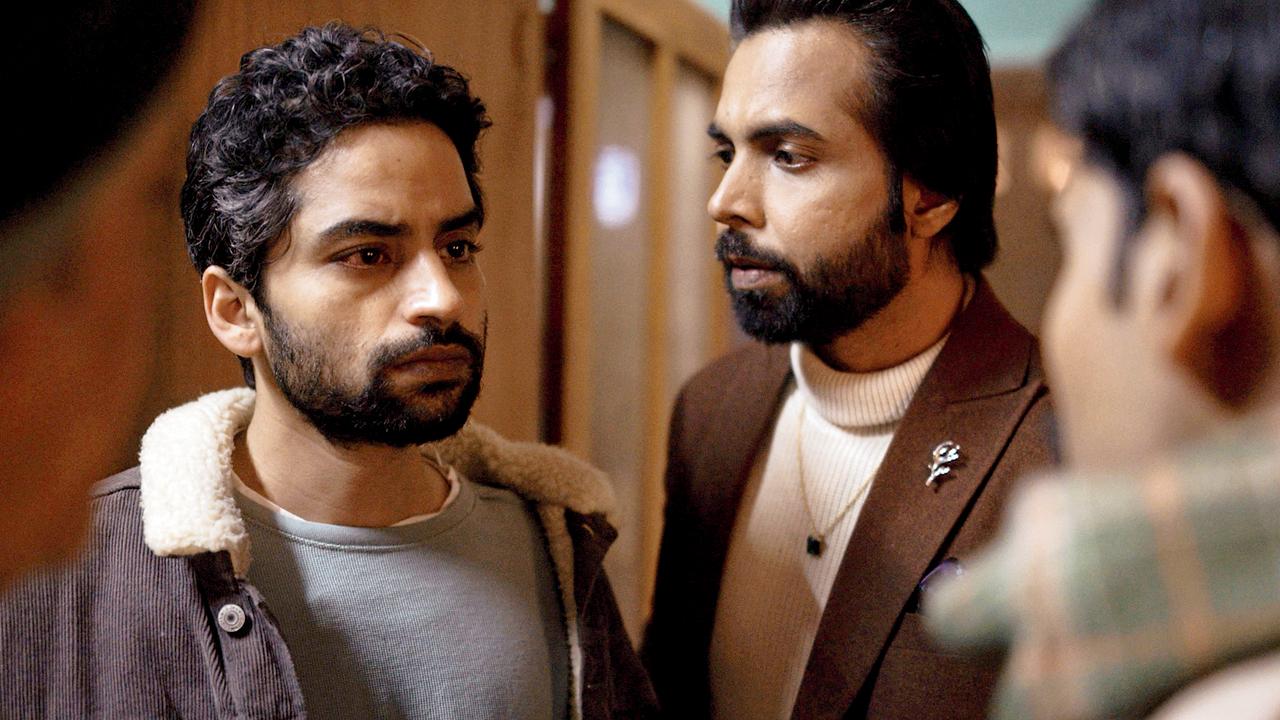
Co-writer and producer Gaurav Dhingra discusses how he got Abhishek Banerjee for Stolen in three days
Priyanka Sharma (MID-DAY; June 1, 2025)
Actor Abhishek Banerjee-led thriller, Stolen, is finally arriving home following its acclaimed international film festival run. But the film’s origin can be traced back to 2019, when debutant director Karan Tejpal shared with producer Gaurav Dhingra a story about two boys who were mistaken to be child lifters.
“Karan showed me some videos of two Assamese boys from Mumbai, who had gone fishing in Karbi Anglong, in Assam. They were mistaken to be child lifters, and then lynched [by a mob]. Karan wanted to explore the idea and shoot it in one take. That got me excited,” says Dhingra, who has also co-written the film.
At the same time, the producer was working on a separate series about missing children in India. “While this was going on, one of the stories we found, for the series we were doing, was about missing children being picked up from a bus station. Both the Karbi Anglong and the child lifting stories merged, and gave birth to Stolen,” he says, adding that it took them almost two years to write the script.
The time spent, however, was worth it as every actor they approached gave their nod after reading the first draft itself. Banerjee’s confirmation came in three days, shares Dhingra.
“We had just seen Paatal Lok. I felt Abhishek had a lot of range. He read the script the very next day. Usually, you need to give a lot of narrations. I was shocked because I thought it would take at least six months. But Abhishek said he wanted to take a day to read it again and respond. Two days later, he said he wanted to do it. It was that simple,” he shares.
Heaping praise on the actor, Dhingra says, “Abhishek is fantastic. We couldn’t ask for a better person.”
Another rarity that has happened with Stolen is the coming together of four top Bollywood filmmakers — Anurag Kashyap, Vikramaditya Motwane, Kiran Rao, and Nikkhil Advani — as executive producers. How difficult was this feat to achieve? Dhingra says he actually didn’t have to do anything.
“Everything is in the power of the material. We did a screening in Mumbai, and called some friends from the industry. Nikkhil and Vikram saw the film and were blown away. They asked me what I needed. I said that I was trying to sell the film. But then the industry was down. Later, Anurag called me, and said that he had heard much about the film and wanted to see it. Kiran, who saw it last, [was someone] I knew [as an assistant director] from Swades [2004], and Mangal Pandey [2005]. Earlier this year, I brought them together to present the film so that the audience sees their credibility and makes the film bigger. I’m so grateful. It’s extremely rare that such level of filmmakers come together to push a film.”

Gaurav Dhingra, Kiran Rao, Nikkhil Advani, Anurag Kashyap, Vikramaditya Motwane
Amazon’s exclusion of North-east Indian content feels offensive and reeks of regional racism-Sam Bhattacharjee
3:52 PM
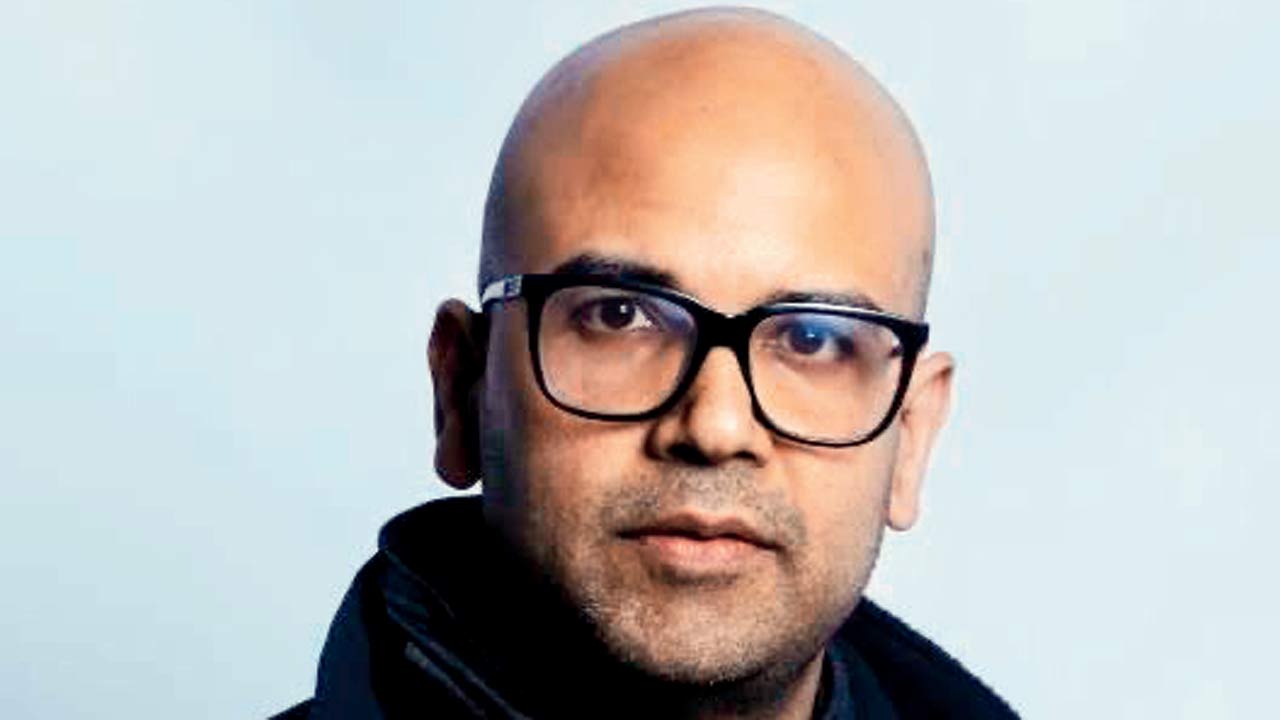
Sikaar maker rues that Prime Video furthering marginalization of North-east after platform turns down offer to stream the Assamese film, citing that it is focused on movies in other Indian languages
Mohar Basu (MID-DAY; September 12, 2024)
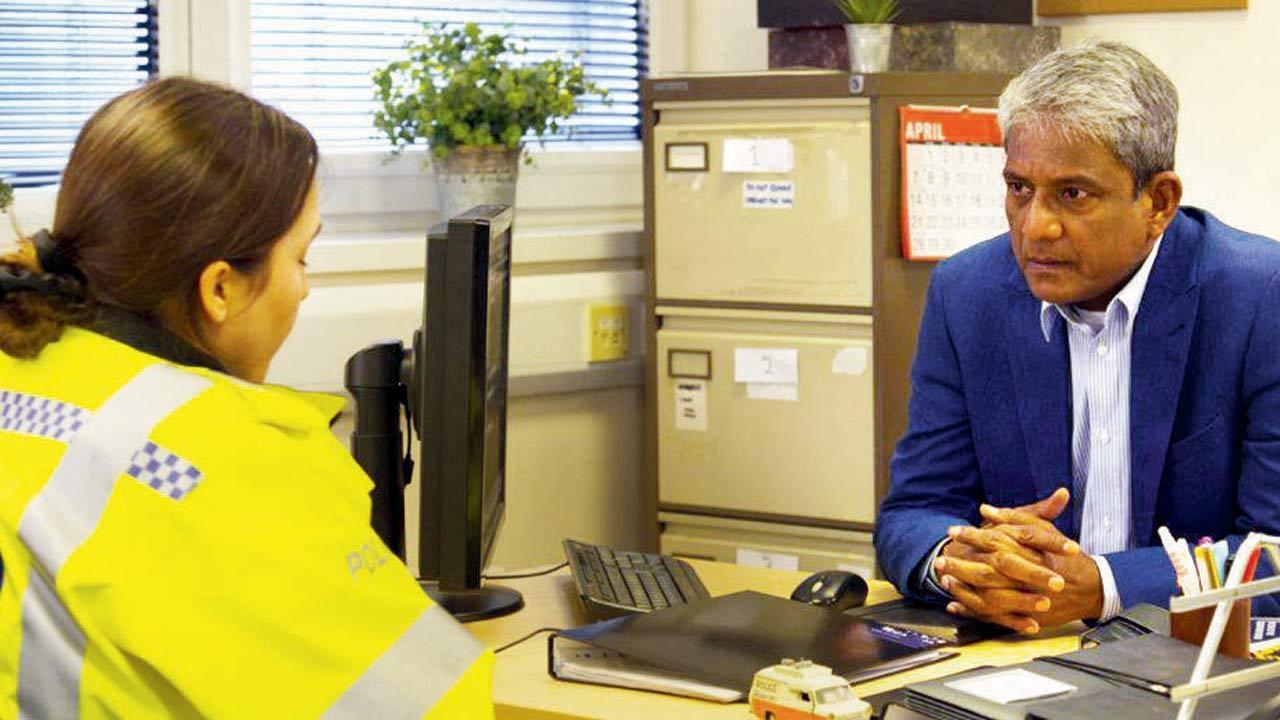
On the one hand, Rima Das’ Assamese film Village Rockstars 2 is gearing up to compete for the Kim Jiseok Award at Busan International Film Festival 2024. On the other hand, closer home, there seem to be no takers for Assamese movies. A case in point being Sikaar, starring Adil Hussain, Zubeen Garg, and Urmila Mahanta.
When producer Sam Bhattacharjee approached Prime Video India three weeks ago to be the movie’s streaming partner, the suits at the platform turned down the offer. In an email sent to the makers, the streaming giant revealed that its focus for the 2025-26 slate is limited to mainstream films in Hindi, Tamil, Telugu, Malayalam, Bengali, Marathi, Punjabi, and Gujarati. Strangely, it excludes Assamese language productions from consideration for its roster.
To the makers, this exclusion feels like another instance of cultural and linguistic marginalization that people in North-east India face. Director Debangkar Borgohain, whose drama will hit the theatres on September 20, criticizes the move. “We faced mass visa rejections [for the UK] for our cast and crew when Sikaar was being made. Now, with streaming giants ignoring our language, it feels like we’re being denied our right to be part of India’s cultural landscape,” says Borgohain.
At a time when the audience is transcending the language barrier to enjoy movies from different parts of the country and the world, Prime Video’s library currently appears lacking in Assamese feature films.
To Bhattacharjee, it raises questions about inclusivity, as he says, “Amazon may deliver products to the North-eastern states, but their content selection process for Amazon Prime Video is questionable, especially when they don’t even consider screeners. While OTT platforms have their policies, Amazon’s exclusion of North-east Indian content feels offensive and reeks of regional racism. The issue of linguistic demarcation within India continues to fuel debates, especially when foreign-owned companies like Amazon make business decisions that appear to deepen the divide.”
mid-day reached out to Amazon Prime Video’s representatives for a comment. Despite multiple reminders, they did not respond till press time.
Having access to some of India’s best pilots was an incredible privilege-Akshay Oberoi
8:49 AM
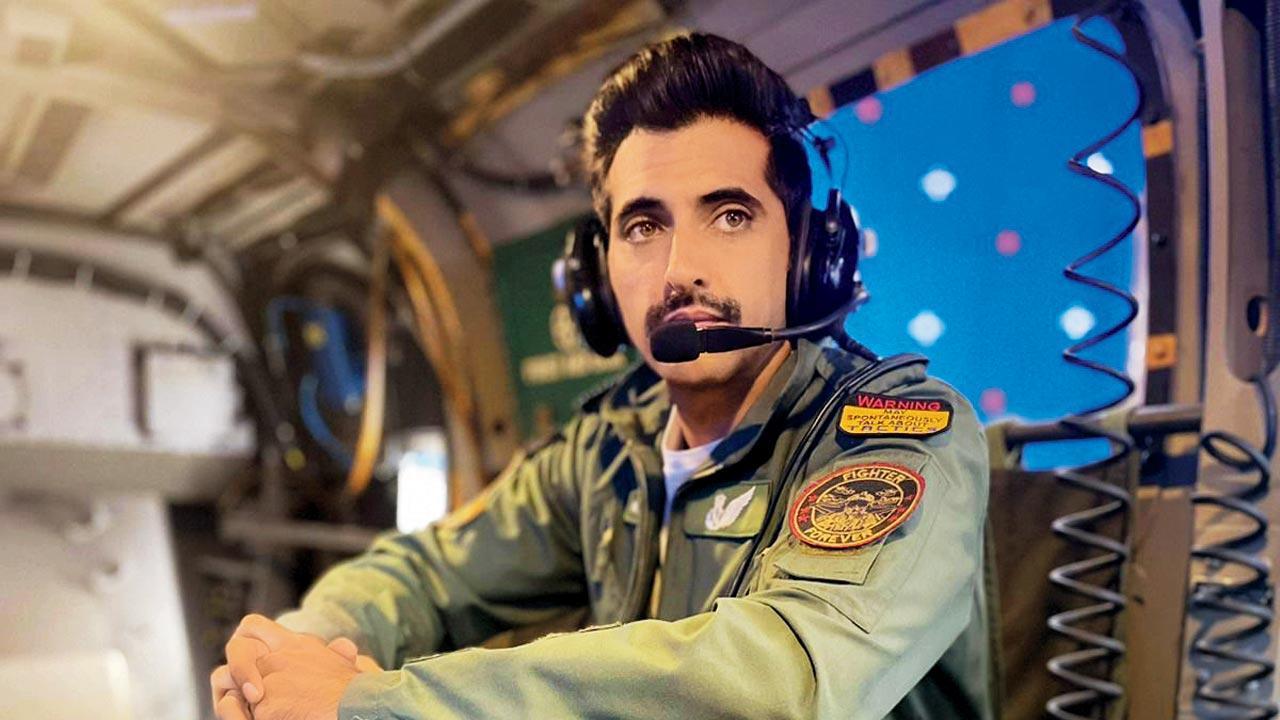
Akshay, who plays squadron leader in Fighter, on learning protocols from pilots at a specially organised camp in Tezpur Air Force Station
Mohar Basu (MID-DAY; January 26, 2024)
When director Siddharth Anand conceptualized Fighter, he wanted to ensure that the principal cast was adequately prepped before they stepped into the world of the aerial action thriller. Since the Hrithik Roshan, Deepika Padukone and Anil Kapoor-starrer is centred on a few Indian Air Force (IAF) pilots, the director shot a portion of the film at the Tezpur Air Force Station in Assam, thus lending it authenticity. Not only that, in late 2022, the production team also organised a special camp with the real-life pilots at the air force base that would aid the actors in their prep for the movie.
Akshay Oberoi, who plays a squadron leader in the recent release, says the few days spent with some of India’s finest pilots gave him enough material to enhance his character of Basheer Khan aka Bash. Though it wasn’t a formal training camp, the sessions allowed the actors to delve into different aspects of the profession.
“I was curious and wanted to be well-prepared with regard to my character. Having access to some of India’s best pilots was an incredible privilege, and I made sure not to let that opportunity go to waste. We asked them about their manner of speaking, the significance of different badges on their uniforms, and protocols. All [this knowledge] has an emotional impact, and it is necessary to learn the psyche of the person you play,” says the actor.
Zoya Akhtar just wanted to follow around three boys, no hair/make-up for Zindagi Na Milegi Dobara-Reema Kagti
8:36 AM
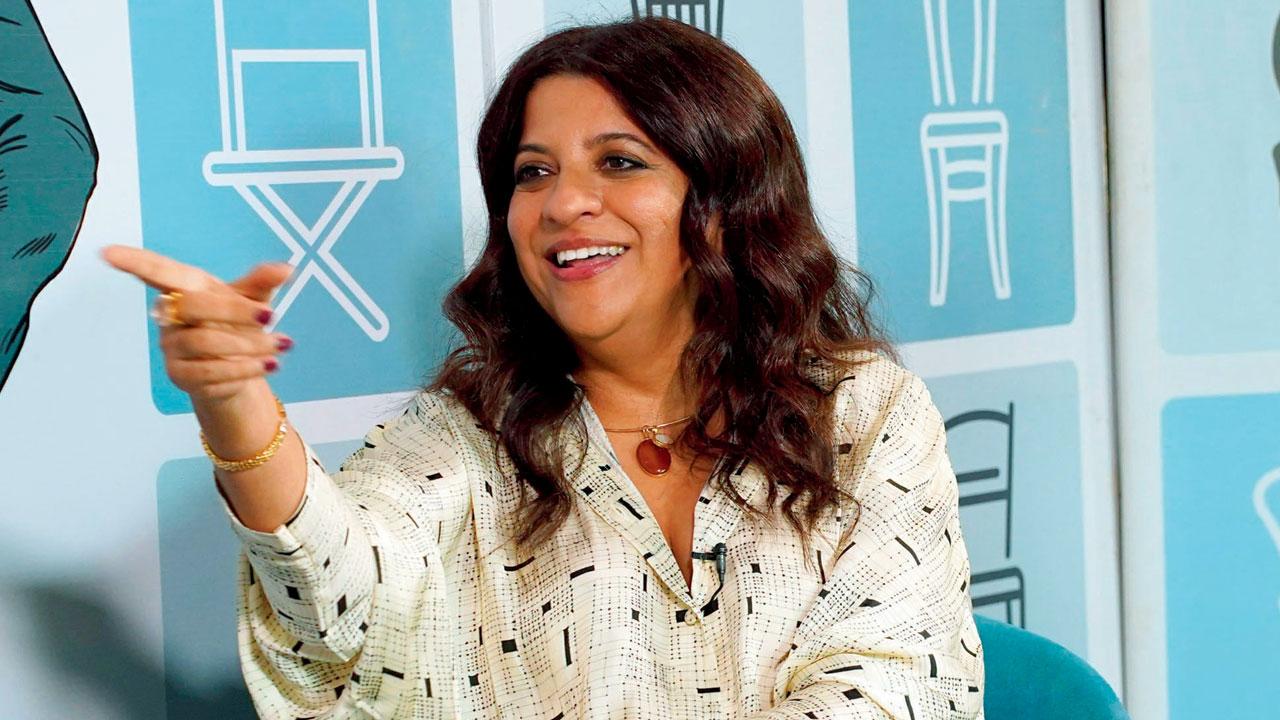
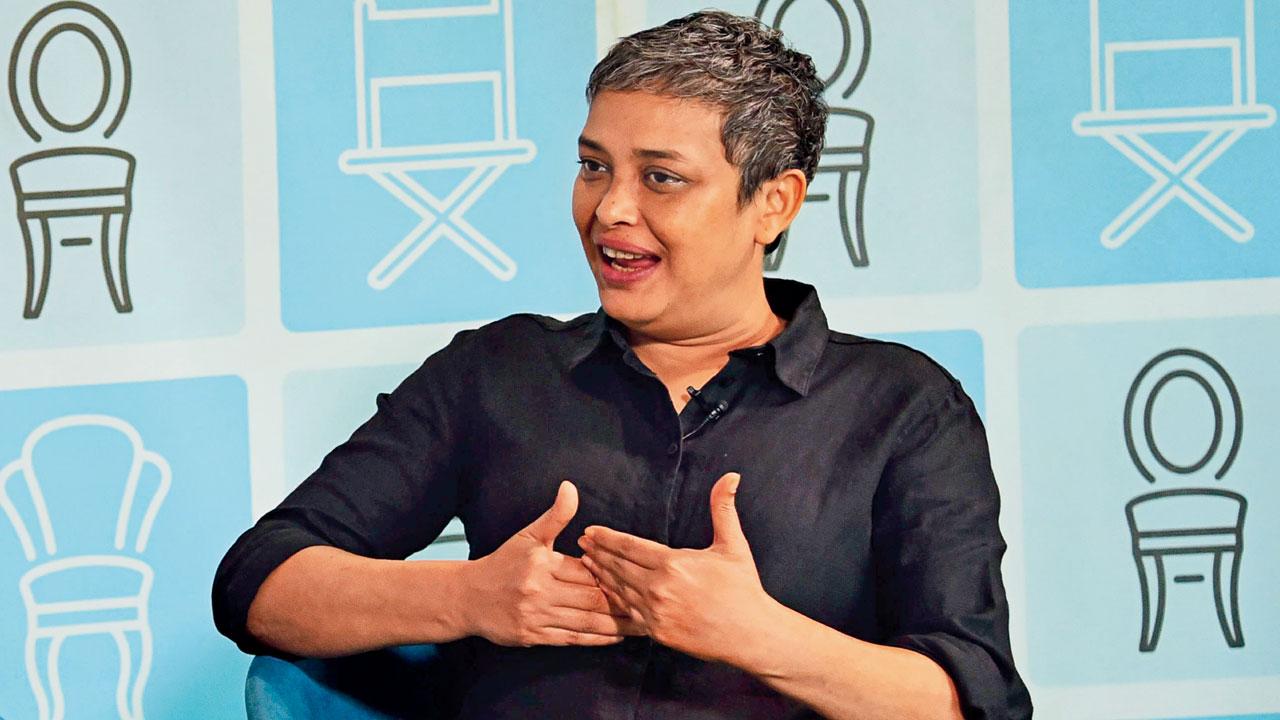
Bollywood’s top screenwriter plus producer duo, Reema Kagti, Zoya Akhtar, decode the craft behind their art
Mayank Shekhar (MID-DAY; January 20, 2024)
Made In Heaven, that’s wrapped two seasons on Prime Video—surely, you’ve seen it already—is an episodic series. In the sense that ensemble characters and stories change, with each episode, while the leads remain the same.
That is, Tara (Sobhita Dhulipala) and Karan (Arjun Mathur), who are BFFs/soulmates, single, sharing life together—also business and creative partners, at a wedding planning firm. Which involves stressful planning and production, some scripting, and creativity, too. Not very different from filmmaking itself.
It’s only while watching the show’s second season that it occurred to me—hey, these two protagonists could be inspired by the life of the screenwriting plus producer duo, Reema Kagti, Zoya Akhtar, who are behind the show themselves; no?
“No. Well, work-wise, yes. But not [so much] socially,” Zoya argues, when I bring this up. Although Reema concedes, “When we were discussing [the show, with co-writer], Alankrita [Shrivastava], this did come up—if we have set the people on ourselves. Definitely the friendship, where they are also kinda soulmates. Not that Zoya and I are soulmates.”
They are “professional soulmates,” they concur. So, the social lives are largely separate? “We do have the same gang, when we hang out. But let’s just put it this way: Zoya is extremely social. I’m absolutely anti-social,” Reema laughs.
The two have remained friends and colleagues for over two-and-half decades. Starting out as assistant directors (ADs) on Kaizad Gustad’s Bombay Boys (1998). And with a combined filmography of over 10 films/shows as credited writers on the screen, since.
Yet, while we know enough about Zoya’s background, famously daughter of writers Javed Akhtar and Honey Irani—we barely know anything about Reema.
I’ve scoured the Internet, before meeting them. It hasn’t helped much. Most of her video interviews online are with Zoya. Reema’s calmingly chilled, securely quiet. Which sufficiently explains the “anti-social” self-description, doesn’t it?
Reema says she grew up in Assam. Went to a boarding school, Loreto Convent, in Shillong, Meghalaya: “Back then, there were hardly any good schools in Assam, so it was common for parents to send their kids off to boarding schools. Unlike in bigger cities, where only the naughty kids got sent!”
She was admittedly a naughty kid, though: “I used to make my parents’ lives hell. But they were supportive.” Not as much for her filmmaking ambitions, initially.
“I think my father had this very 1980s, ’90s notion of Bollywood. He was very disappointed [with my career choice]. It’s only when I got him to watch Lagaan, that I was an AD on, that he said, okay—if this is the kind of films you want to make.”
Reema’s father was an engineer at an oil company, before leasing out a 350-acre land to farm, “four hours’ drive from China”. The umbilical cord with her home-state remains.
“You can’t really outgrow your roots. My cook is Assamese. I eat Assamese food. My family is back in Assam.” Reema had moved to Bombay for college, at Sophia, and thereafter a course in social communications at the media school, Sophia Polytechnic.
“At some point, I bumped into Zoya. We liked the same kinda films, had a lotta common ground, we began writing small stuff together” she trails off.
To be more precise, this was during the auditions for Bombay Boys (1998), where Reema was already an AD. Zoya had dropped in for the same position.
Zoya had been an AD on Dev Benegal’s Split Wide Open (1999), after returning from a diploma in filmmaking from New York University (NYU). She had assisted in the costume department on Mira Nair’s Kama Sutra (1996), before NYU.
“Only, the director, Kaizad, was keen to test Zoya for Tara Deshpande’s part in Bombay Boys,” Reema recalls. She was staffing the audition. Right after which, Zoya told Reema, “I’m the world’s worst actor!” Reema replied, “Listen, I don’t think you’re getting this job either!” Well, she got the job she wanted.
Which was as a freelance AD, the rotating culture of which only spawned in Bollywood in the late ’90s, early ’00s: “We were moving into a phase of sync-sound on the sets, shoots getting wrapped in a single schedule. To pull that off, you needed a more structured system. Unlike before, when films would take years to finish, and everyone just hung around in offices—there would be 12 ADs, and everybody did everything,” Zoya says.
Reema had earlier worked on Rajat Kapoor’s directorial debut, Private Detective: Two Plus Two Plus One (1997): “That was my film school. I got to dabble in all departments of filmmaking.” But there was one thing both Zoya and her were clear about—they were not going to assist only one person, throughout, which was, at the time, the common practice.
Zoya says, “I don’t know how we had the guts to take that call. Back then, ADs were associated with particular filmmakers, or even production houses, when it came to advertising. There was a ‘chhaap’ [creative trademark] of that director, that remained with you, even once you left them and went your own way.”
Sensing a trap, neither wished to mirror particular mentors. Writing and directing their own movie was the end-goal, anyway. They got to work on multiple sets, when they did; and wrote their own scripts, when they didn’t. It was around this time they decided to script a short film together.
Zoya remembers, “We almost killed each other—let’s do this, let’s not do that, etc. Later, I wrote Luck By Chance (2009). Reema started writing Honeymoon Travels Pvt Ltd (2007). We gave our scripts to each other for feedback. She finished the portions I got stuck at. Likewise, me with Honeymoon. While we hadn’t credited each other, we were on each other’s films. Because this worked out so well—plugging holes in either script—after that, we just wrote together. Talaash (2012) was the first script we developed [as a team], from scratch.” Zindagi Na Milegi Dobara (ZNMD, 2011), arguably the finest Bollywood entertainer in the ’10s decade, was their second.
It’s not like the creative bickering, if you may, has stopped, or receded. Zoya admits, “People around have just got used to it in our office.”
Reema laughs, “This one time [producer] Ritesh [Sidhwani] told us, you should just not work with each other anymore. During ZNMD, [Zoya’s mom] Honey aunty got a call from the neighbours—something is going on in your house; please, it’s really scary, people are shouting!”
The art of their conflict management is pretty simple, though: “Show up at work. If we are writing, it’s 10 am. No muse is gonna come. If nothing is happening, we just do other things, watch movies, just chat, gossip… Also, you should never be afraid of scrapping what you’ve done, and starting all over again,” Zoya says.
With Reema, it’s even simpler: “If you’re stuck with an idea, and neither is able to resolve it, let it stay—move on to other things. Later, you return to those ideas, and the better argument, once it stays with you, eventually wins. It works well, if you have the story first.” They’re sure of the story’s end, beforehand; working themselves backwards.
In terms of agreeing to disagree, between them, the one who’s directing the film, gets the final say: “Otherwise, we will never stop arguing.”
For instance, in the Netflix original, The Archies (2023), Reema wasn’t convinced about the placement of a song that would break the narrative: “But once I saw the way Zoya had outdone herself with the visualization, I knew she was right. It is my favourite song.”
In terms of success stories among screenwriting pairs, none beat Salim-Javed in Bollywood still. As in, script starring Salim Khan and Javed Akhtar, in the opening credits. The latter, of course, being Zoya’s father.
Only lately has Javed begun to decode how the partnership worked, having kept mum, since it broke up at the turn of the ’70s decade.
It’s clear now that Salim was the scenarist and the plot-guy, while Javed was the man of words. For instance, as Javed has mentioned before, the greatest twist in Chandra Barot’s Don (1978)—the fake don reveals, inside the jail, that he’s not the real one.
Wherein, the cops don’t believe him still. But his consiglieres, for inmates, instantly do. The dilemma worsening for the protagonist—he’s stuck between both lots, who’re gonna kill him, regardless. Now, that was Salim’s idea!
But, say, the Don’s line, “Mujhe do tarah ki ladkiyan pasand nahi aati. Ek woh, jo mere pass aane mein bahut der lagayein. Aur ek woh jo bahut jaldi aa jayein. (I don’t like women who take too long or too little time to attract).” Now, that’s decidedly Javed!
It’d be great to hear Zoya-Reema similarly break down their own scripts. Firstly, Zoya exclaims, “This comparison is freaking me out. Nothing of the sort [of Salim-Javed] had happened before, or will happen again. They were 22 blockbusters down. Let’s not put us in the same sentence!”
“[That said], our strengths are very different. We talk, talk, talk. We align on themes, characters, story, and what the film is about. Then, Reema is very strong and succinct with structure and screenplay. She gets to the point. I tend to soak.”
Reema couldn’t agree more, “The editing! You give Zoya a 100-page script, she’ll send you back 120 pages. I’m, like—what have you edited, you’ve added! But she’s better at nuances, layering, characters. And dialogues, of course.”
“Zoya feels all my characters sound like me! But she can be lazy. Zoya will refuse to write the first draft of the screenplay, once the events have been fleshed out. So, on the dialogues, I just make everyone sound like me. Because I know she will fix it!”
Zoya adds, “I get lazy, yes, but once Reema does the barebones, I take it, and juice it. I write the dialogues in English. If you want to shoot the film in English, the screenplay is completely ready.”
“Then, it goes to one of my family members—brother, Farhan (ZNMD, Dil Dhadakne Do, The Archies); father, Javed (Luck By Chance), or Vijay Mourya (Gully Boy)… They know what I want, putting it into the syntax that works best in Hindi.”
The Archies, in that sense, for the way the audiences would have watched it globally, is closest to the original screenplay with English dialogues then? “The person subtitling might approach it differently, but the English draft is the template for it,” Reema says.
While writing, per se, is a solitary job—it’s in the parleys between each other, bringing out personal experiences and influences—that the Zoya-Reema script essentially comes together.
I ask Zoya to quote examples, where there’s fully Reema in a script, that she’s directed. She points to Alia Bhatt’s part in Gully Boy (2019): “Safeena was the character, from Dharavi, in a script, that Reema had written for her movie. That film didn’t happen. But I fell in love with her. I asked her if I can just take Safeena. Yeah, why not! We supplanted and then adapted her to fit into the world of Gully Boy.”
For something more specific, in terms of moments, Zoya cites, “The scene in ZNMD, with Laila (Katrina Kaif) chasing Arjun (Hrithik Roshan) down on the bike, and kissing him! The point of the film was to follow your dreams; live in the now. Reema said Laila needed to do something [to capture that essence]. She can’t just say it. Let’s have her kissing him outside, and let her leave!”
This ready-to-film screenplay cooked between partners is also how Salim-Javed operated, staying within the realm of screenwriting still—a reason some ’70s directors fell off the crevice, once Salim-Javed were unable to send them bound scripts any longer.
For Zoya-Reema, it’s merely the end of a process: “A big hurrah moment,” as Zoya puts it. The actual movie can’t film itself. How’re they different as directors from thereon, I ask Reema, who has, thus far, directed Honeymoon, Talaash, Gold (2018), two seasons of Made In Heaven, the series, Dahaad, and the feature, Supermen Of Malegaon, that’s on its way.
She says, “Zoya visually references a lot. I tend to arrive at the visual world, after recce-ing [locations].” Zoya agrees, “It is, after all, a visual medium. I like to find a visual tone, seeing the film from before, and start recce-ing it, accordingly; to lift it off the page.”
Zoya, evidently, has her clear list of dos and don’ts as well. For instance, she was certain before the filming of Gully Boy, set in the slums, that there will be none of Bombay’s tarpaulin-blue throughout the film: “I just don’t like the colour.”
Likewise, with The Archies, the setting would be dreamy, hence, visually, story-book like: “full framing, wide-lensing, classical shots, like 1950s-60s photography.” With Dil Dhadakne Do: “mainly mid-shots and long shots, because the picture is from the POV of Pluto, the family dog.”
Besides screenwriting and direction, there’s the graduating aspect to their creative careers, which is as producing partners. Gully Boy was the first film with Zoya-Reema’s film company, Tiger Baby.
The name, by the way comes from “the nickname that Anurag [Kashyap] and all” gave Zoya: “It’s my spirit animal!” Left to Reema, the company would’ve been called Balls of a Brass Monkey: “Zoya is like, don’t be ridiculous! Also, Tiger Baby is fierce and feminine. It has a nice ring to it.”
Even as producers, the two couldn’t be as complimentarily separate from each other. As Zoya deciphers, “I’m the one meeting with the actors, Reema doesn’t wanna go anywhere. She’s better with budgets, and numbers. But both of us are into mentoring scripts. She’s better at creative packaging and producing. I handle the Tiger Baby social media.” Reema sighs, “I can barely do mine.”
An upcoming production of Tiger Baby is a documentary on Salim-Javed.
If you were to strain yourself to find connecting dots, if not a larger link, between each of Zoya-Reema scripts, it might be the fact of alternating worlds, perhaps.
Say, in the OTT space, their two releases in 2023 were Made In Heaven S02, and Dahaad (both on Prime Video). One is set around the blingy world of posh, New Delhi weddings.
The other is a police-procedural in the rugged terrains of Rajasthan, following missing women, and a serial killer on the loose.
Likewise, with films, The Archies, on Netflix—with “idealism for its point”, in the near-perfect, imaginary world, mimicking the American comic book, in 1960s India—comes after Gully Boy, that went deep into Mumbai’s underclasses. Which, in turn, came after Dil Dhadakne Do, dealing with importantly familial, but First World issues.
Zoya-Reema obviously don’t see it this way: “We just follow the world our characters live in. It’s about being authentic to the world you’re trying to create,” Reema says.
Zoya adds, “We are avid readers and movie watchers, fans of various kinds of filmmakers, not fixated on a genre. For instance, I’m actively looking for something in the big crime/underworld space. It’s exciting to be scared [trying new things]. I’ll be bored waking up for work, otherwise.”
The ideas, of course, can come from anywhere, Reema argues: “Supermen Of Malegaon was a documentary. Gully Boy came from a music video. With ZNMD, it was road trips taken [by us]. We’d also gone on a Europe tour, with Zoya and a bunch of friends. Zoya just wanted to follow around three boys, no hair/make-up, for ZNMD. Of course, it didn’t end up that way.”
One of those inspiring trips was when Reema, a “broke AD”, was in Goa, having spent all her money, with none left for a bus-ticket back to Bombay. She hitched “a car-ride with the sister of a friend. Throughout, [the host was] cautious of a plastic bag in the backseat, because it had an expensive vase, or something. We named that bag, Priscilla.”
This is how Bagwati in ZNMD came into the scene. Only, Reema hadn’t even heard of a Birkin: “What’s that Berk, Berk, whatever. When Zoya told me about it—I’m like, why would someone pay lakhs for a bag? I wanted [the motif] to be something breakable in the film. Zoya’s the director. I had to go with her!”
With ZNMD, Zoya says she was looking at a low-budget, easy-peasy production, given she had just got off a huge ensemble cast debut, Luck by Chance.
Which was about an actor getting a shoe-in to showbiz. The Archies, in that sense, is her coming full circle, since the film launched seven debutants. If she was to make Luck by Chance, how different would it be, a decade-and-half later, give how much entertainment as an industry itself has changed since?
“If I have to revisit, rewrite, I don’t know what [Luck By Chance] will be. But, thematically, it’ll still be about success, and failure. That’s what the film is about—how do you define success, and failure? Is your self-worth determining both? The rest is backdrop.”
A widely shared clip online, from Luck By Chance, is superstar Shah Rukh Khan’s (SRK) cameo in it, where he gives life’s lessons to the lead character (Farhan Akhtar). Given The Archies marked the acting debut of SRK’s daughter, Suhana, I wonder if Zoya ever got SRK over to the set, for a Chak De India type pep-talk, to a full team of debutants? “No. That is supposed to be my job!”
That pep-talk in Luck By Chance was essentially about never leaving behind those who’ve known you from before success/stardom—when it appears that you’ve probably moved ahead. Zoya says, “Shah Rukh, as a person, typifies that.” In terms of rallying the OG troops around her, so does she.
Zoya sorta admits, “I do like working with the same crew. Because they’re great at their job. There is trust, and a sync of aesthetics. Which is not to say I won’t work with someone new.
“Suzanne [Caplan Merwanji] was the set-decorator, when I was a production assistant, on Kama Sutra. [Editor] Anand Subaya and I went to school together; [costume designer] Arjun Bhasin, [hair stylist] Avan Contractor… So many around me have been friends since teens and tweens.”
“There’s Ritesh [Sidhwani], Farhan… Also, then, I enjoy going to work. I work a lot. I don’t want life passing me by, while I’m isolated, working 13-14 hours, a day. The friends are there.”
Friendships also being a recurring theme in Zoya-Reema scripts, if you casually glean through them. They could claim a friend-verse of their own. Starting out, Zoya-Reema worked as ADs on Farhan’s Dil Chahta Hai (DCH, 2001). Both believe Farhan, their former boss, to be the more methodical director, sharp with his final edits, even while on set.
Together, with DCH, and ZNMD, Netflix placed three hoardings in Mumbai, before the film Kho Gaye Hum Kahan (KGHK) dropped on the platform—terming them movies that defined friendship for their respective decades. I kinda agree.
Tiger Baby’s KGHK, directed by debutant Arjun Varain Singh, is probably the only Zoya-Reema script that neither has filmed. It peeks into the life of GenZ, through three buddies (Ananya Panday, Adarsh Gourav, Siddhant Chaturvedi), who also somewhat embark on a professional partnership together.
This is not a love triangle. It’s about friends, who are also family. They are not seeking healthy romance, but fulfilling companionship.
You sense that mental intimacy with the male-female leads over two seasons of Made In Heaven as well. I reckon, that’s the future of relationships. Zoya-Reema get that. Better than others.
One day I aspire to do a film that will be shown at Cannes-Sara Ali Khan
9:37 AM

Raima Ganguly (BOMBAY TIMES; May 28, 2023)
Sara Ali Khan, who recently returned from Cannes, spoke to us about her experience, why she likes to stay true to her roots and her travel plans in the future. Excerpts:
ON BEING COMPARED TO HER DAADI AT CANNES
Sara says, “As a girl, I am modern, I have studied abroad, but my roots, my heart, and my soul is completely Indian. I think as I was representing my nation to millions of people worldwide, on a global forum at Cannes, it was crucial to bring forward what I represent. My look was a modern twist to a very traditional attire that is inherent to the Indian woman’s identity. The deconstructed saree look was the best take I could have on that. I think there was something extra special about this look, especially because many made a humbling comparison of me with my daadi.”
Sara says, “One day I aspire to do a film that will be shown at Cannes. But in the meantime, I’m a proud Indian actor and I’m a woman. I talk about the importance of women in cinema and behind the camera, and in front of the camera. If I had to describe Sara with three adjectives, they would be woman, actor and Indian. I went there to represent all these. If in the bargain anybody said it’s a statement that I’m making, it’s a compliment to me. But that was not the intention.”
ON HER TRAVEL PLANS
A self confessed travel junkie, Sara says, “I want to go backpacking around the north-east region of our country. The farthest I have been towards the east is Kolkata, and Assam only once. I really want to visit Meghalaya, Nagaland and Arunachal Pradesh. That’s the next thing on my bucket list. Norway and the northern lights are also very high on my bucket list, I would love to visit soon.”
She, who recently tried puchka in Kolkata, shares, “I firmly believe in being fully present in the moment, especially when I am travelling. I like all kinds of food, to be honest. I like the idea of living like a local wherever I go be it in terms of food or aesthetics.”
Hrithik Roshan underwent simulator training in Assam’s Tezpur Airbase for Fighter
8:31 AM
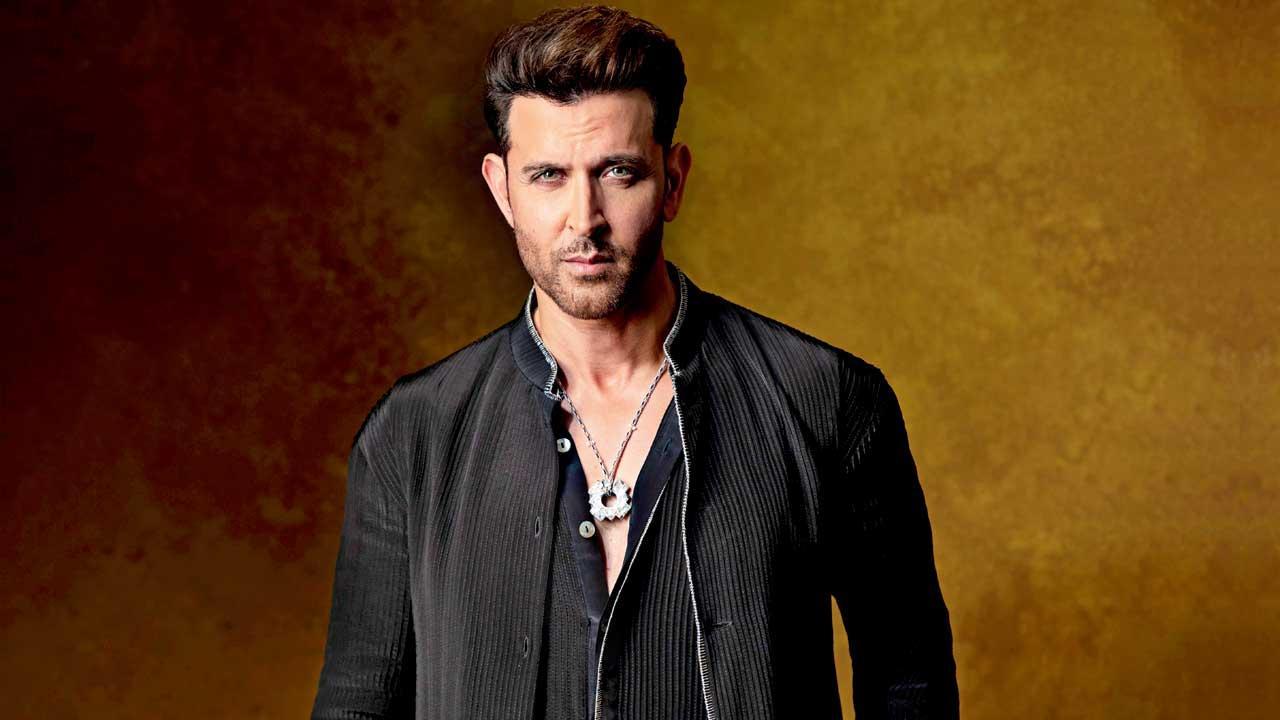
Sources say Hrithik underwent simulator training in Assam’s Tezpur Airbase to convincingly play fighter pilot in next
Priyanka Sharma (MID-DAY; April 5, 2023)
Hrithik Roshan’s fans have a unanimous grouse — that they don’t see him on screen as frequently as they’d like to. But the actor doesn’t believe in rushing his projects; instead, methodically prepping for each role. His next, Fighter, is no exception. mid-day has learnt that Roshan underwent simulator training to convincingly play a fighter pilot in director Siddharth Anand’s aerial action thriller that is currently in the making.
The movie, also starring Deepika Padukone and Anil Kapoor, traces the protagonist’s journey from being a young cadet to becoming India’s best fighter pilot. Insiders say that considering a chunk of the movie depicts Roshan handling fighter jets, the actor learnt the basics of the mechanism involved in flying one.
“He began his training last November at the Tezpur Airbase in Assam, before kicking off the first schedule. Hrithik chose to practise on a simulator in the airbase, learning about the automated process, the buttons and their functions to be able to confidently present himself on screen. With the three schedules so far having been shot intermittently, he has utilised the time to practice and brush up on his knowledge,” says a source.
The actor’s thorough prep for roles is well-known. While he learnt sword fighting and horse-riding for Jodhaa Akbar (2008), he enrolled in a course of scuba diving for Zindagi Na Milegi Dobara (2011). This time, his prep extended to other aspects of the role as well.
“While visiting the airbase in Assam and the Indian Air Force Academy in Dundigal, Hrithik spent time with the pilots and cadets to observe their demeanour and disciplined attitude. In Fighter, a scene sees his character in the boxing ring. He trained for days to get his stance right for the sequence,” adds the source.
The January 2024 release marks Roshan’s third collaboration with the director after Bang Bang (2014) and War (2019).
Hrithik Roshan to kick off Fighter's shoot in Assam on November 18
8:27 AM
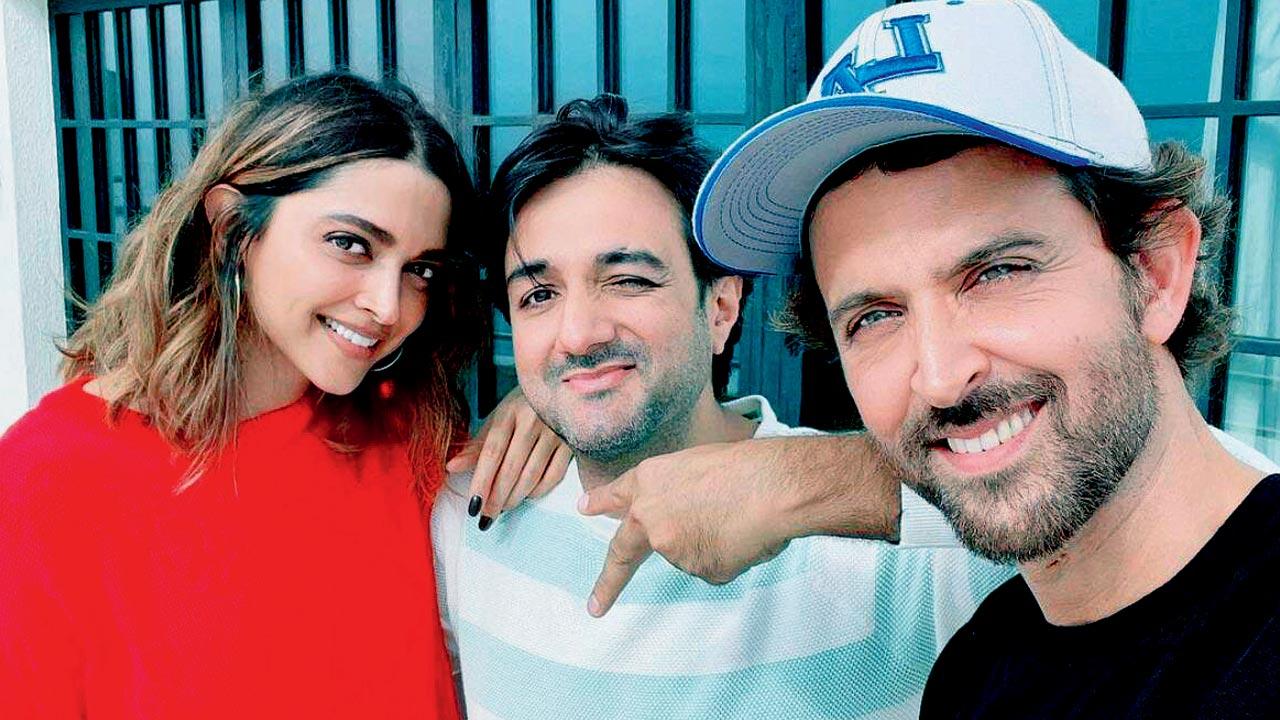
Sources say Roshan to kick off Fighter shoot in north-eastern state on November 18; Anil and Deepika to join unit for 10-day schedule
Priyanka Sharma (MID-DAY; November 14, 2022)
As the grungy gangster of Vikram Vedha, Hrithik Roshan displayed his fighting skills on the streets of Lucknow. Now, he has chosen a far more ambitious backdrop to showcase his action prowess — the sky. Over a year since its announcement, the actor is set to kick off the aerial action thriller, Fighter. Sources tell mid-day that come November 18, director Siddharth Anand will call action on the film in Assam.
“Hrithik is scheduled to leave for Assam today. The director has charted out a 10-day schedule in the north-eastern state. The leading man will be joined by co-stars Deepika Padukone and Anil Kapoor directly at the air force station that has been chosen as the site of the shoot,” reveals a source.
Fighter marks Roshan’s first collaboration with Kapoor and Padukone. While the two leads will be seen as Indian Air Force pilots, sources suggest that the senior actor essays the role of Roshan’s mentor. The leading man is known to painstakingly prep for his movies. Fighter is no exception. The first schedule is preceded by an intense three-month regimen that Roshan undertook to attain a lean physique for the actioner.
The source adds, “The actor began his physical prep in August, and now sports a lithe frame. Along with trainer Kris Gethin, he had set November 9 as his deadline, and has achieved his fitness goal well in time.”
While the first schedule will be wrapped up by November-end, it won’t be until 2023 that the unit will resume work on the movie. Reason — Pathaan. The director will dedicate December, and January 2023 to his passion project, which marks Shah Rukh Khan’s return to the big screen after over four years. It is only after the espionage thriller hits the marquee on January 25 that Anand will focus again on the Roshan-starrer.
Fighter marks the director’s third collaboration with his leads — while Roshan and he delivered hits in Bang Bang (2014) and War (2019), Anand teamed up with Padukone for Bachna Ae Haseeno (2008) and the upcoming Pathaan.
I attended Cannes Film Festival as the cultural ambassador of Assam-Papon
8:16 AM

Papon, who was invited as a cultural ambassador of Assam at the Cannes, was representing the state’s culture and cinema at India Pavilion
Niharika Lal (BOMBAY TIMES; June 7, 2022)
Papon, who attended the 75th Cannes Film Festival recently, says he was proud to discuss his upcoming films and to promote filming in Assam. Talking to us, Papon says that in recent years, Assamese filmmakers have been making films on unconventional subjects in modest budget and these films are not just being praised in the country but at international film festivals, too. He says, “I attended Cannes Film Festival as the cultural ambassador of Assam. I was asked by the Ministry of Culture to represent the state’s culture and the country at India Pavilion.”
‘NOW, FILMMAKERS WANT TO SHOOT MORE FILMS IN ASSAM’
Papon, who has also ventured into filmmaking and has been working on two films from the last four years, stresses on the need for more stories, shoots in Assam. He says, “These films are still work-in-progress and are being directed by my friend Parasher Baruah. These films will showcase Assamese heritage, culture and nature. Filmmakers at Cannes, who saw the teaser, were quite impressed with locations and said that it looked like ‘an interesting palette of unexplored beauty’. And that they would love to come and shoot their film in Assam, too.”
At the festival, Papon was part of a discussion to promote filming in Assam. On the topic, he says, “In recent years, the number of film shoots in Assam has gone up. Not just Indian but international projects have also come to the state, and films and web series have been shot here. We discussed the state film policy that has been updated to encourage filmmakers to come and shoot in Assam.”
‘ASSAMESE FILMS TRAVEL BEYOND THE STATE AND GARNER APPRECIATION WORLDWIDE’
This year, Boomba Ride was among those five films that I&B Ministry had selected for a screening at Cannes. Papon says that Assamese cinema has undergone a transformation in recent years. He says, “Assamese films have been able to travel beyond the boundaries of the state and have garnered appreciation worldwide. Films such as Boomba Ride to Village Rockstars are encouraging young filmmakers, who are already making very interesting cinema in Assam. Assamese cinema history is very interesting. For instance, films made on a tight budget such as Local Utpat have done well in theatres.”
Talking about his learnings from the Cannes Film Festival, he said, “It is all about networking and understanding how the exchange of cinema happens across different parts of the world. The important thing is to reach out to international producers or filmmakers and promote your film. This doesn’t happen over night, it takes a lot of effort and Cannes is a great place to meet the film community to understand how and why some films make it there.
Every year, we dread the fact that there will be floods in Assam and we prepare to overcome them-Papon
8:41 AM

Rishabh Suri (HINDUSTAN TIMES; May 29, 2022)
Singer Papon was at the 75th Cannes Film Festival, representing northeast India, and stressed about the floods back home in Assam at the same time. Connecting with us from France, he shares that the destruction caused is “very disturbing”.
“We’ve been experiencing floods since childhood. This happens every year. So every year, we dread the fact that there will be floods and we prepare to overcome them,” says the 46-year-old, adding that his family is stuck, too. “While I’m in France, my family is in Assam, dealing with the water that has flooded our house,” he tells us.
While the Yeh Hausle (83; 2021) singer grapples with the personal crisis, representing the country on a global level is something he feels deeply about. Papon says, “This year, India being the Country of Honour at the Cannes is an opportunity through which the Indian government is aggressively making efforts to get a foothold, and understand its space, in world cinema. I was invited to represent Assam, be the bridge to exchange ideas, and more importantly, to try and bring film tourism to Assam. It was an honour to be asked to represent the state and the country at Cannes.”
It wasn’t only music though, that he got to talk about at the event, as he shares that he is producing two films over the past four years. “Both are in progress, but the teasers of my films were presented at the Indian Pavilion. I got a lot of encouragement from the people who saw the footage. I am weaving the films with music and representing the heritage, culture, fabrics and beliefs of the land. One movie is called The Mystical Brahmaputra - A Musical Story and the other is called Land of Sacred Beats,” he shares.
Almost 70 to 80 per cent of the actors in Anek are from the north east-Ayushmann Khurrana
8:01 AM
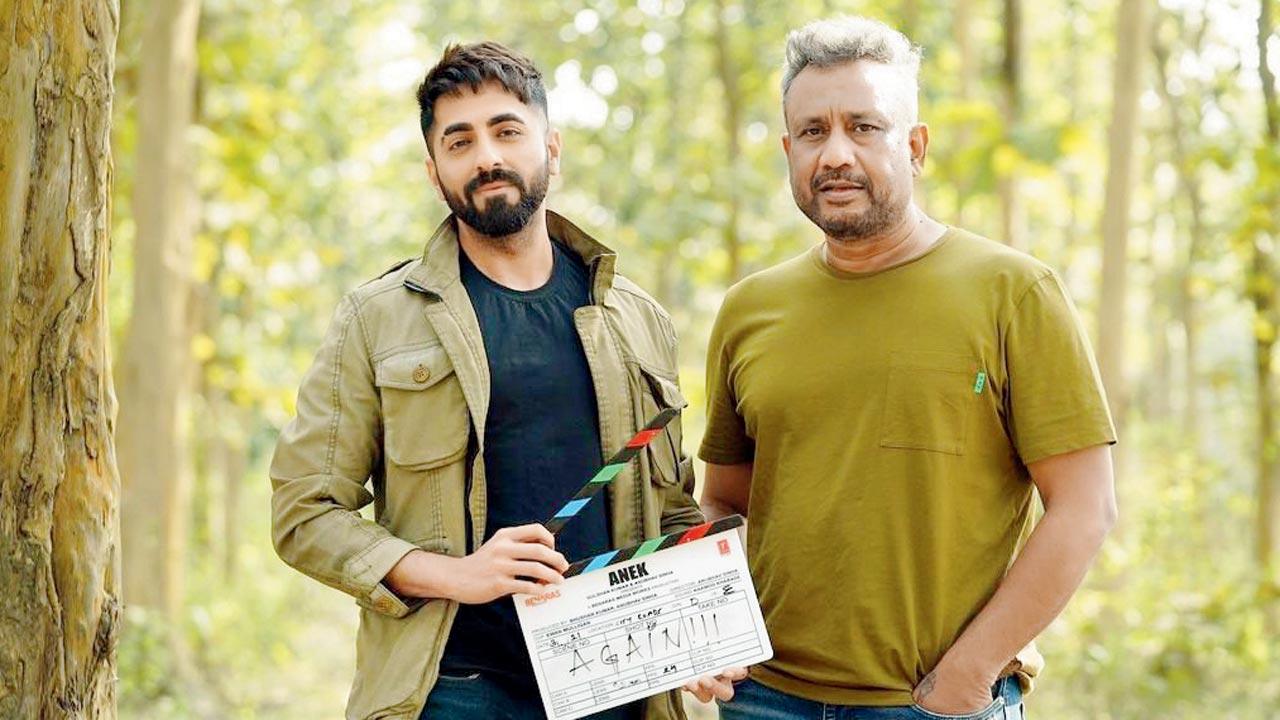
With Anek depicting discrimination against people from the region, Ayushmann says inclusive attitude towards the community will strengthen our country
Uma Ramasubramanian (MID-DAY; May 25, 2022)
Last year, when the country was hailing weightlifter Mirabai Chanu’s silver medal win at the Tokyo Olympics, Ankita Konwar had called out the Indian population’s hypocrisy, pointing out how people usually subject north-east Indians to discrimination and harassment. The otherisation of the community runs deep, festered by our society’s ignorance and apathy. Fortunately, filmmaker Anubhav Sinha and actor Ayushmann Khurrana are taking a step in the right direction with Anek that brings the geopolitical issues of north-east India to the big screen.
The drama has a singular intent — to encourage inclusivity. The actor states, “We generalise the region as north-east, but people there don’t like to be called so. They are proud of their community, their states, and their languages. We don’t get to know much about them because the media has not covered them. Whenever they [go] to other parts of the country, they are discriminated against and suffer racial abuses. We need to make them feel one with the country. We cannot ignore the region that is far more progressive than the mainland. Including them will help the country become more progressive.”
Anek was shot primarily across Assam and Meghalaya. It gave Khurrana the opportunity to get acquainted with diverse communities, their customs and traditions. “The people in Meghalaya carry forward their mothers’ names; most of the shopkeepers are women while the men take care of children at home. It’s among [the few matrilineal] societies in our country,” he marvels.
When telling a story about north-east India, it would only be right that actors from the region give voice to their experiences and hardships. The director roped in Andrea Kevichusa and Loitongbam Dorendra to play pivotal parts in the drama. Proud that the film places importance on representation, Khurrana says, “Almost 70 to 80 per cent of the actors are from the north-east, with the protagonist [Kevichusa] from Nagaland. I have realised that the story needs to be told by those who have suffered it.”
The actor agrees that an attitudinal shift in our society is necessary, and wants to give momentum to the cause through his work. “I will always say something through my art. I am not confrontational as a person, but as an artiste, I am extremely confrontational.”
It would be better if I turn out to be a successful actor like Alia Bhatt someday, says her lookalike Celesti Bairagey
8:01 AM

Anjuri Nayar Singh (HINDUSTAN TIMES; February 9, 2022)
With acting as her passion, social media influencer Celesti Bairagey’s facial similarity with actor Alia Bhatt was first spotted when the former’s friends pointed it out.
Bairagey, who hails from Assam, says, “Alia is one the most successful and loved actors in Bollywood, and one of my favourites. Recently, when one of my videos went viral on social media, it was then that my family also said, ‘You have some resemblance in looks with Alia Bhatt.’ They said, it was a great thing that I resemble her, but it would be even better if I turn out to be a successful actor like her someday.”
Bairagey confesses that she would love to get into acting and feature in Bollywood films. “It’s always been something I have loved. My favourite actor in Bollywood is Tiger Shroff, and it would be an honour if I get a chance to share screen space with him someday,” she says.
The 22-year-old, who lives with her parents and younger brother, recalls her journey to social media fame. Bairagey shares, “I signed up on Instagram in November 2020, and started making reels around February last year. My brother, Mridutpol, and best friend, Neeha, encouraged me to start an Instagram account.”
While going for Badhaai Do auditions, two boys shouted ‘corona’ at me and I started crying-Chum Darang
8:29 AM

Riya Sharma (BOMBAY TIMES; February 8, 2022)
She will be seen playing Bhumi Pednekar’s love interest in Junglee Pictures’ Badhaai Do and though Chum Darang is thrilled about this opportunity, she says that Bollywood was never the plan. “I wanted to act, but I thought people would laugh if I told them about this,” says Chum, who hails from Pasighat, Arunachal Pradesh. She originally planned to run a café in her hometown, but decided to try her hand at acting.
The actress, who is managed by Times Talent, shares that her friends and family back home are as thrilled as her about the film. “We don’t have theatres in my hometown so they are planning to go to Assam and will be travelling for three hours to see me on the big screen,” she shares. In a chat with us, Chum talks about how Badhaai Do happened and why actors from the northeast are afraid of being typecast in certain roles.
‘BOLLYWOOD WAS NEVER THE PLAN’
Chum is currently enjoying the phenomenal response that the fim’s trailer has got. “Life before Badhaai Do was normal and right now, I am getting a lot of attention and I am thrilled. It feels like my life is changing, it is going towards a beautiful journey.”
She says that though she wanted to act, she never considered it seriously. “I have taken part in a few pageants, but have not really done any modelling assignments. I come from a small town and if I had told anyone that I wanted to be an actor, they would have laughed. We watch TV and films, but we don’t think about joining the industry, especially in small towns like mine. I thought I had it in me, but I never told anyone that I wanted to act. Three years back, I also started running my café, so sticking to that was the original plan. I had thought of giving this (acting) a try and it worked,” she shares.
‘I HAVE LEARNT TO BE HARDWORKING FROM BHUMI AND RAJKUMMAR’
Sharing the screen with actors like Rajkummar Rao and Bhumi Pednekar, who have been appreciated for the kind of roles they play, has been exciting as well as a learning experience for Chum. “They both are so down to earth and work really hard. I know they are experienced, they know so much but during the shoot, they sat down, listened to the director and worked accordingly. I learnt to be hardworking and grounded from them, the respect they have for other actors on set was another thing that I learnt from them,” she says.
Chum accepts that it has been challenging to play Bhumi’s love interest in the film but says that she had no inhibitions about the character. “I saw this casting ad on FB and I randomly texted the team and went for my auditions and it just happened. The character that I am playing, she is such a fun girl and the tag of playing Bhumi’s love interest did not really bother me. It was a challenge to play a role like that but I had no inhibitions. I listened to my director (Harshavardhan Kulkarni) and understood what the team wanted. And I would like to believe that I completed this challenge well,” she adds.
‘ACTORS FROM THE NORTHEAST ARE GIVEN CERTAIN KIND OF ROLES AND THAT IS ALWAYS CONCERNING’
The actress shares that before Badhaai Do, she was also offered roles that stereotyped actors from the northeast. “I was offered such roles, like that of a spa employee, and I was scared that if I agreed to do them, I would be typecast. And this is what actors from the northeast fear. Not just in movies, but in day-to-day life as well, things are not easy. When I was called for my audition for Badhaai Do and this was in March 2020, on my way to the venue, two boys shouted ‘corona’ at me and I started crying. For my audition, I had to do a scene that required me to shout and I could actually do it really well because of that incident. Incidents like this are disheartening, but I also think that things are changing now,” she shares.
She adds that movie crews and producers should be more accepting of people from diverse backgrounds to have an inclusive system in place. “We are a diverse country, film crews, TV teams should include people from all backgrounds. Actors from different regions should be given chance, that’s how people will also become more accepting. I think Badhaai Do might be a game changer in that aspect,” says Chum.
Raghav Juyal called ‘racist’ for comments in viral video; issues clarification
8:05 AM

BOMBAY TIMES (November 17, 2021)
Actor, dancer and TV show host Raghav Juyal was recently trolled online for a video clip that went viral from Dance Deewane 3, where he was seen talking in gibberish Chinese to a contestant from Assam. In the video clip, Raghav is seen introducing a young participant from Guwahati, Gunjan Sinha, in “Chinese” gibberish, using words like ‘momo’ and ‘chowmein’. Many people called Raghav racist for his behaviour.
The dancer-actor took to social media to narrate his side of the story. In a video that he posted online, he said, “I want to tell people what happened before this particular clipping. People should watch the entire show and then judge the clip. It won’t be fair to pull out that particular clip and judge it for my mental health and also for those who know me. The little girl, Gunjan, who is from Guwahati in Assam, was a part of the show. We often ask kids about their hobbies and talents. She said my talent is that I can talk in Chinese, by which she meant gibberish. We would laugh hearing it as kids often speak such things. Everyone clapped and asked her to speak in Chinese. She spoke, and from there, it continued. Staying on that track, I called out to her in that manner during the last episode. It was a creative that was running through the show. If you see the episodes you will understand it and won’t call me racist based on one clip.”
He further added, “I am very connected to the North East. I have family in Sikkim, Arunachal Pradesh, and some very close friends in Nagaland with whom I am have grown up. I am someone who presents things in a politically correct manner and take a stand for what is right. In fact, I get hate for that. I am sorry if anyone is hurt by it. Before making a clip viral, I want everyone to see those episodes to know the story behind it.”
Raghav also shared another video where Gunjan was seen telling judge Madhuri Dixit Nene that she likes to speak Chinese and then the host shares some light moments with the participant by conversing with her in the gibberish.

People must report those fleecing them to the cops or on social media-Bhumi Pednekar
7:57 AM

Rachana Dubey (BOMBAY TIMES; May 21, 2021)
The last few months have seen a lot of citizens across the country step up as COVID Samaritans, who have reached out to those battling the Coronavirus. Several actors have turned COVID warriors, too, helping out people in various ways. Bhumi Pednekar, along with her team of volunteers, has been actively working towards providing help and support to people in these times.
“The last few weeks have been nothing short of heartbreaking for the volunteers and me. When I got into it, I didn’t realise that things could be so devastating. Speaking to families in despair and trying to calm them down when they’re crying for help is extremely difficult. I’ve felt that most people seek hospitalization either as soon as they test positive or when the condition has gone completely downhill. It’s that gap in the middle when they need to make the decision and move. We’ve also received so many SOS calls for ICU beds. There’s a dearth of oxygen supply in the North belt. As volunteers, we have all had to find ways to join the missing dots and get aid for the patient in need. There are so many small things that have to be taken care of, between getting a patient from his or her home to the hospital.”
Bhumi, who has also dealt with COVID cases within her extended family and close friend circles in Delhi and Mumbai in recent weeks, says, “The last one month has been one of the most life-changing periods of my life.”
While social media and WhatsApp groups of volunteers have been helpful in getting resources to those in need, sadly, it has also thrown up several cases where patients and even volunteers have been fleeced by those claiming to have access to medical supplies.
Bring this up, and Bhumi says, “I am a part of several volunteer groups. At a personal level, all of us have all dealt with COVID-led tragedies while helping a friend, a close family member or even someone from our extended families. At such a time, people are vulnerable; their mind tends to be clouded. It’s difficult to judge whether you’re making the right choice or not. It’s human to go through that.”
She further adds, “Oxygen cylinders and concentrators are being held up by people, and that is creating a wide gap between demand and supply; this is something I know because I have my ears to the ground. People who need it are not getting it easily. You need to report the people who are fleecing you to the cops and on social media with their phone numbers, so that others don’t fall prey to them. Another reason why I’m raising an alarm here is that all these help and support groups functioning across the country are citizen-led, and I don’t want volunteers to be exploited and fleeced when all they’re trying to do is help. It’s a scary scenario.”
The actress plans to intensify her movement, taking it to rural areas and smaller cities where social media platforms are not used as much. Bhumi elaborates, “We’re taking one day at a time. None of us had the time to sit back and think ahead. The situation exploded before we knew. I’ve had a lot of support from students in Delhi and Maharashtra in these weeks. We are now mobilising more citizen and student groups in West Bengal, Assam, Andhra Pradesh, Tamil Nadu, Rajasthan, and somehow, also penetrate the rural pockets, which need attention. Social media, so far, has been our greatest ally, our war room, so to say. The best part is that this movement of citizens across the country does not depend on any one person leading it. It’s run with kind intentions and collective strengths of people, which won’t fizzle out any time soon.”

Subscribe to:
Posts (Atom)