Showing posts with label Ashwath Bhatt. Show all posts
Showing posts with label Ashwath Bhatt. Show all posts
Ashwath Bhatt assaulted by robber in Istanbul
8:03 AM

Niharika Lal (BOMBAY TIMES; August 7, 2024)
Ashwath Bhatt, who is currently in Istanbul on a short vacation, faced a harrowing experience when he was attacked by a robber. On Sunday evening, while walking towards the popular tourist location, Galata Tower, in the Beyoglu district, he was assaulted by a gang.
Ashwath says that despite warnings from friends about the risks of pickpockets in Istanbul, he did not foresee such a violent encounter.
Ashwath recalled, "I was walking towards Galata Tower when a man approached me. He had a chain in his hand, and before I could fully comprehend what was happening, he hit me on the back with it. In retrospect, it was likely a gang working in tandem, trying to snatch my bag."
However, Ashwath resisted, catching the attacker off-guard. "For a second, I was so shocked - what’s happening? But I think they weren’t expecting me to resist and put up a fight. While he was trying to snatch my bag, a cab driver stopped and intervened. The robber said something in Turkish and then fled. The cab driver saw my wound and immediately told me to go to the police."
Ashwath says, "It’s unfortunate that such a thing happened, especially in such a touristy area. People often advise not to get involved and not to report to the police. That word 'unnecessary' troubles me. People watch films and think Turkey is all romantic, but if we don’t report crime, these incidents will only increase. Everybody warned me about pickpockets, but this was beyond anything I had imagined. I’ve been to the Middle East, Egypt, and so many parts of Europe, and nothing like this has ever happened to me."
When Ashwath approached a patrol car, the officers asked him to report the incident to the tourist police, who then directed him to another police station. A complaint was yet to be registered till the time of going to press.
I’m quite okay with being underrated, because our industry is full of overrated people-Ashwath Bhatt
8:27 AM
Niharika Lal (BOMBAY TIMES; March 4, 2023)
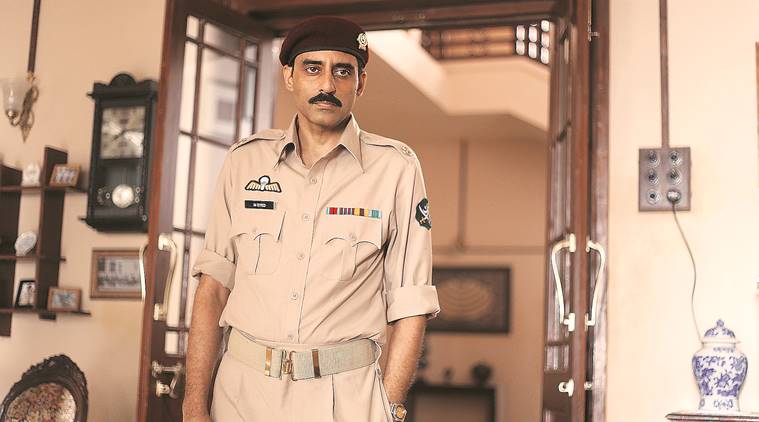
Ashwath Bhatt, who recently played the role of former Pakistan president General Muhammad Zia-ul-Haq in Mission Majnu, says that throughout his career, he has made a conscious effort to ensure that each of his roles is different from the other. Ashwath says that he doesn’t mind being called an underrated actor, but what he finds hurtful is that actors in a star-obsessed system often do not receive enough recognition or publicity, and even have to fight for credits. And so, whenever he sees someone finally getting the recognition they deserve, he feels it is divine justice for at least one such actor.
‘AN ACTOR’S JOB IS TO DELIVER THE DIRECTOR’S VISION’
Sharing an example of how he gets into a character, Ashwath says, “I’m playing a role in a film that is yet to come out, and before every scene I would start singing a song that transports me into that character’s world. Similarly, for my role in Raazi, I worked on finding answers (to questions) like ‘how would he look when he’s in family gatherings? How would he react? How would he address his father?’ These are small things. And one is fortunate when one has a director like Meghna Gulzar, who is a very tough taskmaster. I’m really lucky that all directors I have worked with, like Mira Nair and Vishal Bhardwaj, would come prepared with all their notes.”
What happens when the director is not as clear as Meghna? He says, “If the other person doesn’t know his job or is not clear about something, then you find a way to save yourself.”
‘I DON’T CARE ABOUT SCREEN TIME’
Ashwath says that when it comes to choosing films, he is more concerned about whether the role excites him rather than the screen time. He says, “Every time a role is offered to me – and they go into great descriptions – I always ask a basic question, ‘Yeh batao ki main kar kya raha hoon iss film mein?’ If you look at reputed awards like Golden Globes or the Academy Awards, you will find many examples of actors receiving awards for very short screen time. So screen time doesn’t bother me. But every part I take, there has to be something that triggers me to do it. There has to be something that clicks in my mind.”
‘OUR INDUSTRY IS STAR DRIVEN. IT WAS TRUE 15 YEARS BACK AND IT IS TRUE NOW’
Nawazuddin Siddiqui told us back in 2012, “Big films mein aisi soch hai ki ‘this man doesn’t have star status, toh isko paisa na diya jaaye’.” Has anything changed since then?
Ashwath says, “Our industry is star driven, and you have to accept this fact. You cannot deny this. It was true 15 years back and it is true now. Actors who put in huge amounts of efforts, who lift the film and bring credibility to stars are the most neglected lot.”
Talking about the nepotism debate, Ashwath says, “Everybody wants to promote their own kids, so what’s wrong with that? Suppose I give my life to the film industry and my kid wants to be an actor, I wouldn’t want them to go through all the struggles I have gone through. Aisa nahi hai ki kissi ko chance nahi mil raha. But what hurts is when talent is not promoted by production houses. They don’t even acknowledge (some actors) and that is something which is not nice. If you are promoting your child, then you must also promote those actors who are uplifting your child’s performance.”
‘I WAS NEVER IN THE RAT RACE’
Ashwath says that when he read that film critics described him as a highly underrated actor in Mission Majnu, he thought, ‘Thank God! I’m not overrated’. “I’m quite okay with being underrated, because our industry is full of overrated people. Somewhere, you have to find your own calmness, your own space and nothing is gonna come out of bitterness. I believe you just keep doing your job. Things will happen in their own time. I was never in this rat race,” he says.
Does that mean Ashwath is not in search of stardom? He says, “It would not hurt me if stardom comes to me. Well, stardom is (pauses)...if you nourish a tree then some or the other day, fruits will appear. ”
Ashwath says that his journey has been very challenging and enjoyable. “I won’t say satisfying, because the day I get satisfied is the day I will die. It’s been a beautiful journey. However, there’s still a lot to come. As an artiste, I’m hungry.”
Actors such as Shefali Shah, Jaideep Ahlawat and Pratik Gandhi became huge stars because of OTT, and Ashwath says that he genuinely feels happy for actors who get their due after putting in decades of hard work.
“It is cathartic for me, and I say, ‘Yaar, inko mila na, great! Inko milna chahiye’. Everything is not in your hands and that’s the nature of this job. One part can change your life. One song can change your life.”
‘FILMS WHERE ENTIRE CAST GET PUBLICITY ARE AN EXCEPTION’
Ashwath says, “In 90% films, the whole publicity is given to only two people, who are the leads. Of course, films like Raazi, Pink, Jolly LLB and Badhaai Ho are also there – where the entire cast gets publicity – but that is an exception. Everybody is not hungry for money, but every actor is hungry for recognition. Every artiste needs appreciation. It nourishes them. But we’re not even given proper credit. People tell me, ‘you got your fee, now move on’, but it is about respect and nothing else.”
Jammu & Kashmir film body to vet scripts before giving permission to shoot; filmmakers dissect the policy
7:57 AM
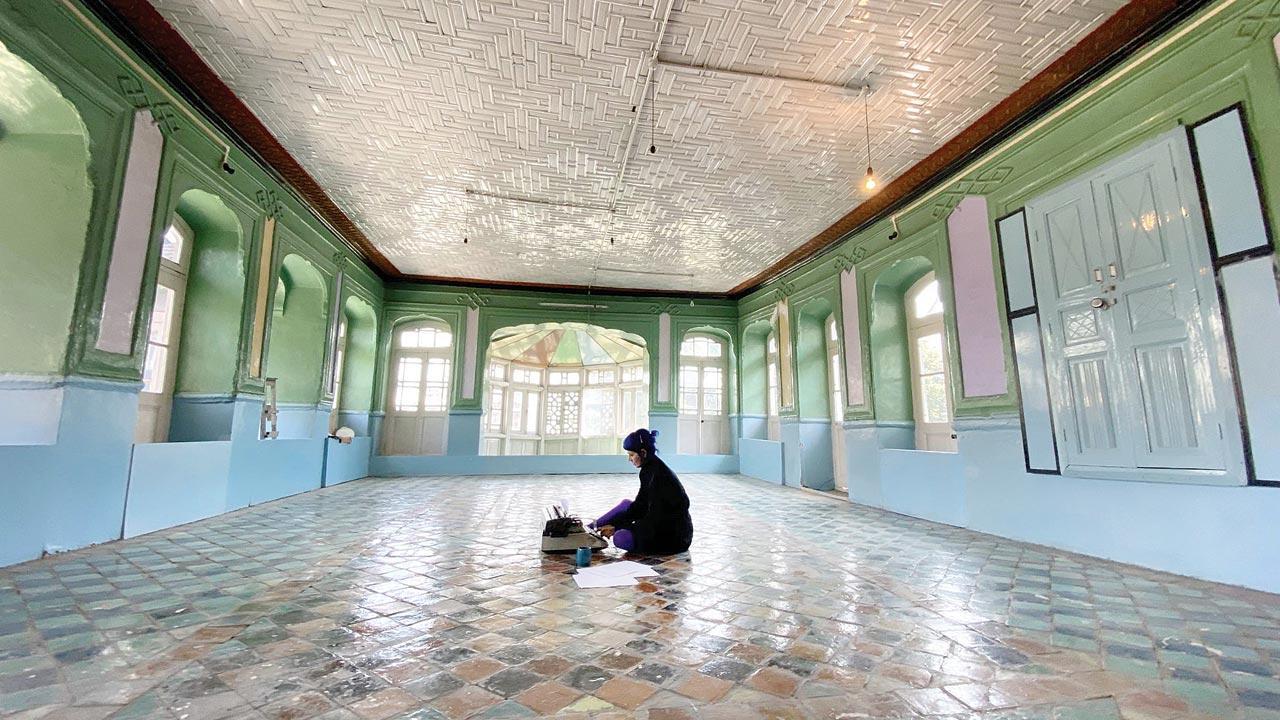
A still from Janaan, a music video which was a collaboration between hairstylist-filmmaker Sapna Moti Bhavnani and Kashmiri folk musician Noor Mohammad. The song was shot in the Valley
As the J&K film body releases a set of policies that include vetting scripts before giving permission to shoot in the Valley, filmmakers dissect the implications of the move
Anju Maskeri (MID-DAY; August 22, 2021)
Last September, hairstylist and filmmaker Sapna Moti Bhavnani visited Kashmir to assist a local Sufi musician, Noor Mohammad, with his music video. “He wanted me to star in it. It was such a soulful Kashmiri song that I decided to co-produce it,” says Bhavnani, who divides her time between Mumbai and Kamshet. The track, titled Janaan, promoted by Zee Music, has received 2.4 million hits in the last nine months. During her stay in the valley last year, Bhavnani also visited Baramulla, reportedly one of the volatile areas in the state, to give a talk “on being a hajaam”. “Many people on Twitter, including locals, told me not to go [to Baramulla] , but I went ahead and it was a great session. Kashmir embraced me like I was one of its own.” Buoyed by her experience, she planned a “horror” movie set in the Valley for which a script is ready. But, for that, Bhavnani will now need a green signal from the state.
In a recent move, two years after the reading down of Article 370, the Lieutenant Governor of Jammu and Kashmir, Manoj Sinha, announced a new “film policy” for the Union Territory. The Jammu and Kashmir Film Development Council’s (KFDC) website states that the synopsis and script of a film, complete with dialogues, will have to be submitted by a filmmaker who is seeking shooting approvals and availing subsidies. The website clarifies that the “script will be evaluated by an expert from a panel constituted by the Union Territory of the Jammu and Kashmir Film Cell. It adds that security arrangements for “approved filmmakers” will be made free of cost.
Incidentally, the Uttar Pradesh government too, has posted similar rules on the website of Film Bandhu, Uttar Pradesh, where filmmakers seeking shooting approvals in the northern state are required to get their scripts and dialogues vetted by the authorities. The requirement earlier applied only if the filmmaker was seeking subsidies.
Bhavnani is baffled by the development. “I don’t see the logic,” she says. “The state wanting to vet your script and decide whether you’re showing them in a good or bad light goes against all forms of artistic freedom, which is all that filmmakers really want.”
Her decision to shoot the film in Kashmir stems from her need to capture its ethereal landscape, which she says lends itself to her narrative. “My characters have nothing to do with Kashmir or Kashmiris. I’m simply keen to use the Valley as a location. And to be honest, the state could really do with more tourism at this point. The pandemic has worsened an already bad economy.”
Director Aijaz Khan who made Hamid, a cinematic adaptation of the play Phone No. 786 by Mohammed Amin Bhat, seconds Bhavnani’s opinion. “When we have a Censor Board to vet commercial films after they have been completed, why do we need to get the script evaluated at the start just to get permission to shoot? There’s no need for state intervention at this stage. I think it’s not fair at all,”
Khan, whose 2018 film about seven-year-old Hamid went on to win a National Award in 2019. It’s the story of a boy, whose carpenter father disappears. After he learns that 786 is God’s number, he decides to dial so that God can connect him with his father.
Khan was mulling on filming a trilogy on Kashmir, but is now rethinking his decision. Bhavnani believes the move will sting indie filmmakers more than their commercial counterparts because they have a host of other hurdles to surmount, including arranging finances and finding a platform to release their films.
What’s welcome, however, says Khan, is the introduction of the single window clearance mechanism by the KFDC, which will ensure filmmakers don’t need to run from pillar to post to secure permissions. “This, I think, is wonderful because I remember how much my crew and I had to run around while shooting Hamid. We had to figure out with the local line producers whether a certain area is safe to shoot. Before shooting in Badarkot, Tangmarg, we checked whether any riots had taken place, because the situation can worsen quite quickly there. The other good thing they’ve done is made provisions for resources and equipment for outdoor filming.”
According to filmmaker Shyam Kishore, it’s documentary filmmakers who will be the worst hit. “Docus are rooted in reality and you want to get as close to facts as possible, whether past or present, so this policy could make it harder for non-fiction storytellers.”
In 2017, Kishore shot a documentary in Pahalgam with his Kashmiri Pandit actor friends, Ashwath Bhatt and Amit Wanchoo. “The story is about two Kashmiri Pandits, Bhatt and Wanchoo — one who was part of the mass exodus of the community in 1990, and the other who chose to stay back in the Valley.” He also points to certain “grey areas’ in the newly-introduced policies such as the mention of grants being provided for films produced to patronise One Nation, Best Nation (Ek Bharat Shresth Bharat), on the website.
This statement is open to interpretation, he thinks. “Does this mean you need to pander to the government’s ideology? And what if your idea of ek Bharat is different from theirs? It’s tricky.”
He says some restrictions such as making certain locations out of bounds for filmmakers, are understandable and even necessary to maintain the sanctity of the place. “The KFDC has created an exhaustive list of shooting locations accessible to filmmakers. I’ve seen the websites of both the UP and Jharkhand governments, which also have a similar film policy, and they are not as thorough and detailed. The KFDC also assures a revert within the shortest time [two to four weeks after submitting the complete application on the Single Window Portal].”
The Government of Jammu and Kashmir will now promote the establishment of film studios and processing laboratories until a fully active film city is established in the state, and encourage owners to reopen closed cinemas.
Mushtaaque Ali Ahmed is one of the leading filmmakers and festivals directors from the Valley. Supportive of the new policy, he feels vetting is a minor quibble if you look at the overall picture. “What I feel is that they [the authorities] want Kashmir to be portrayed in a positive way and not as a state battling unrest. Therefore, the idea is to eliminate any idea that perpetuates this at the very outset.” He, however, admits that filmmakers will need to be mindful of the subjects they take on.
“Yes, controversial subjects such as militancy or extra-judicial killings might be tough subjects to tackle now.”
It was heartbreaking to see nurses working with IV drips attached to them-Ashwath Bhatt
7:55 AM

Ashwath Bhatt, whose mother was hospitalised after testing COVID positive, has been helping arrange oxygen concentrators for COVID patients
Niharika Lal (BOMBAY TIMES; May 27, 2021)

‘I FELT IT WAS A MIRACLE THAT MY MOTHER GOT A HOSPITAL BED WHEN SHE CONTRACTED COVID’
Ashwath’s father wasn’t able to get a hospital bed when he tested positive, and was treated at home, while his mother was admitted to a hospital in Indirapuram, Ghaziabad. The actor tells us, “Unn 15-20 din mein maine khud dekha ki COVID wards mein kya chal raha hai. It was heartbreaking to see nurses working with IV drips attached to them. The cleaning staff was exhausted because of long working hours. They told me, ‘Hum log ghar jaate hain toh gharwaalon se door rehte hain.’ I saw many people lying in the hospital’s parking lot, and relatives crying for their family members. Almost every day, I helped people carry bodies to the ambulance. People were wailing, ‘Bhaiyya, mere papa ko bacha lo.’ That traumatised me. My soul is bruised, to be honest, after seeing all this. I used to think, ‘My mother managed to get hospitalised, yeh toh miracle hai.’ I could feel their pain as I was also in their situation, trying for oxygen. I was looking to arrange oxygen for my mother and when I went to see the oxygen langar at Indirapuram, I told them, ‘Let me help you with oxygen.’ Through a friend, I organised oxygen multiple times for the langar. My mother’s life was saved by the oxygen concentrator and I know how helpful they are.”
Ashwath adds that this was when he decided to import more oxygen concentrators to save more lives, and has now set up a fundraiser, Theatre Garage COVID Relief.
The actor says that the mental toll of the pandemic is being severely underestimated. He shares, “The impact of COVID on mental health is real. I’ve experienced it. I was in trauma, there were so many days when I was driving and would suddenly start crying. One of my friends, who is a neurosurgeon, told me these are symptoms of PTSD (post traumatic stress disorder).”
‘IF YOU WANT TO HELP, DON’T JUST FORWARD NUMBERS — VERIFY THEM’
Ashwath has collaborated with theatre groups and volunteers across the country who are working on ground to deliver aid and medical supplies. He says, “Everyone has their own mechanism to deal with pain. My mechanism has always been to go beyond my personal pain as I feel by doing this and helping others cope with their pain, it helps you, too. I’ve seen people lose their loved ones, and I felt if I could do anything to help save even one person’s life, then why not? Insaan ko optimistic rehna chahiye. My mother told me, ‘Insaan ko haar nahi maan leni chahiye. Now I have oxygen and medical assistance, jao aur jaakar logon ki jaan bachao.’ I do believe it’s my duty to help people.”
He adds, “The scale of scarcity in rural areas is unimaginable. From what I am hearing from friends working there, it is a complete breakdown of the medical system. I have been responding to distress calls from rural areas of UP, Bihar, West Bengal and Jharkhand for oxygen and medical aid. So many theatre artists are also calling from different places, saying, 'Bhaiyya humari help kar do. Hum artiste log hain aur humare pass kuch nahi hai, koi paisa nahi hai'. I felt so helpless because I had no concentrators. I spoke to over 20 oxygen concentrator dealers and someone quoted Rs. 60k, someone said between Rs. 1.5-2 lakh.”
Talking about his initiative, Ashwath shares, “My drawing room seems to have turned into a warehouse, which also functions as our control room. We have five-six members working as a team here to check quality of supplies, maintain an excel sheet of requirements from different cities, and so on. My friends across the world are donating and sending aid — we have around 10 people in Germany and four-five in the US. Another friends’ group is working for meal delivery.”
He adds, “When I was looking for oxygen for my mother, people forwarded me over 150 numbers. I couldn’t call on even one number as I was dealing with many other things. So at that time, verified leads were crucial. If you want to help, don’t just forward numbers — call them, verify and then send.”
‘WE NEED TO FIGHT MISINFORMATION’
Ashwath says, “Along with COVID, we need to fight misinformation. Yeh bhi sunne mein aaya ki ‘coronavirus ameeron ki bimari hai.’ When I was in Mumbai in February and I asked my househelp to follow protocols, she said, ‘Bhaiyya, aap darte bahut hain.’ Mera Mumbai mein kitne logon ne mazak banaya ki ‘Aap andar bhi mask pehen ke baithe ho? Hum toh bahar bhi nahi lagate.’ People in India are treating masks the way they treat helmets and seat belts — they wear it only because of the fear of policemen. Unhe apni safety ka khayal nahi hai.”
He adds, “I have a team of doctors who are working with me, and a doctor told me, ‘I don’t understand why people are delaying treatment. If you have symptoms, don’t wait for an RT-PCR test report, and start treatment as if you are positive, unless proved otherwise.’ People are already delaying their treatment. They don’t go for weeks thinking ‘main theek ho jaunga’, and the delay in treatment is costing us lives.”

Politics aside, helping Kashmiri students is just a human thing-Rahul Dholakia and Ashwath Bhatt
7:51 AM

As communication services in Kashmir continue to be restricted, director Rahul Dholakia, who filmed Lamhaa there, and actor Ashwath Bhatt, a Kashmiri himself, try to reach out to students facing financial difficulties on account of being disconnected from their families in the Valley
Rachana Dubey (BOMBAY TIMES; August 29, 2019)
‘WE ARE ALL CONTRIBUTING TO FLOOD VICTIMS IN OUR STATE, WHY IS KASHMIR ANY DIFFERENT?’
Filmmaker Rahul Dholakia recently took to Twitter with a message — “#Kashmiris who are living in various parts of the country and can’t reach their homes in the valley — if there is anyway we can help, please connect. You looked after us when we made movies there, now it’s our turn #insaniyat #ourownpeople.” Dholakia, who once researched for his film Lamhaa by interacting with students in Kashmir, tells us, “I wrote on social media and I do believe it has created some impact, there are many people who are raising money. A lot more effort needs to be made. I have been doing my part. I think whoever wants to help, can.”

 Stressing on the necessity to rebuild trust, Dholakia says, “When I visited the Valley (to research for Lamhaa), I met many students. There is a generation out there that has grown up listening to the sound of AK47s. They have big trust issues. Let’s rebuild trust. And the only way to build trust is to stand up for a brother in trouble, in need, and that too without them asking for it. Aren’t we all contributing to flood victims in our state? So why is Kashmir any different? We need to do something, and do it now.”
Does he think educational institutions can help Kashmiri students in need? “I have heard of cases of ragging where some Kashmiri students were asked about their stand on Article 370! That’s very low and insensitive. We need to create an environment of trust and it needs to be built right from our schools and colleges. We can’t humiliate people or make callous comments about them. This is not the time to ask them to prove their loyalty, this is the time for us to show our loyalty.”
----------------------------------

Abhimanyu Mathur (BOMBAY TIMES; August 29, 2019)
Film and theatre actor Ashwath Bhatt was born in Srinagar and lived there during his childhood years before his family had to migrate to Delhi during the Kashmiri Pandit exodus some three decades ago. Now, when Kashimiri students outside the Valley are facing cash crunch due to shutdown of communication lines in J&K, Ashwath has been trying to help them by setting up a fund which can loan them money to sustain for now. “I want to help these kids because I have faced hardships too. I know what it is like to have no money for sustenance. And these kids are from my community. They are Kashmiris too,” says Ashwath on his motivation to set up a fund for the students.
 The actor, who has also shot for films like Raazi and Haider in Kashmir, says that he has now partnered with several Kashmiris living in Delhi, Bengaluru, and other cities to reach out to such students. He says, “This is the time of real-time communication. With mobiles and internet, we are used to being in touch with our families 24x7. But now, many Kashmiris studying in other parts of India are facing shortage of money. Because of the lack of internet connectivity in many parts of the Valley, their families have been unable to send them money. What people don’t get is that Srinagar is not all of Kashmir. There are places like Kupwara, Pulwama, Shopian, and Handwara, where the communication channels are still not fully up. Kisi ko exam fees bharni hai, someone needs to pay his rent because the landlord is pressurising him, but paise nahin hain. We are reaching out to these students and trying to help them by loaning them the amount they need right now.”
Ashwath says that he initially feared the students might be facing other issues like bullying and harassment, too, but was pleasantly surprised to find that isn’t the case. He tells us, “I was initially worried if these kids might be facing bullying of some kind, too, but thankfully, none of them reported anything like this. They say ki inko koi pareshan nahin kar raha. Bas paise ki kami hai. There was one odd case of a girl facing some issue but that was sorted out easily.”
So far, Ashwath has helped around 20 students to pay for rent and fees, and he hopes to reach out to more as word spreads. However, he has faced reluctance on the part of several students to accept this aid. He explains, “These are kids from well-off backgrounds. They have never faced shortage of money like this before. They are hesitant to ask for help. Kuchh bachche kehte hain ki sharam aa rahi hai paise maangne mein. I say, ‘I’m like your elder brother. Just take this as a loan, not a gift. When you get money from your family, return it. Mann ho toh interest bhi de dena’. I want them to still feel dignified while going through this.”
Other difficulties remain, too. Ashwath says, “I am going through the proper legal channels that exist for fundraising and donations. But since I don’t have any FCRA registration (Foreign Contribution Regulation Act that governs foreign contribution to NGOs and other welfare organisations), I cannot accept money from people abroad. A lot of friends living overseas have showed interest in donating, but I ask them to request their friends living in India to donate on their behalf. As of now, I cannot accept their help. I hope somebody can help me overcome this problem so that we can help more students going ahead.”
Theatre helped me overcome the trauma of losing my home in Kashmir-Ashwath Bhatt
9:44 PM

Soumya Vajpayee (BOMBAY TIMES; May 22, 2019)
He has spent 25 years doing theatre, but Ashwath Bhatt’s love for the medium increases by the day. “My life revolves around theatre. It’s like oxygen to me. Today, when I look back, theatre was actually a therapy for me, because it helped me overcome the trauma of losing my home in Kashmir. It’s a passion, and it’s given me a reason to live,” says the actor, who is looking forward to the first staging of his play, Ek Mulaqat Manto Se, in Mumbai.
The actor, who conceived the play apart from acting in it, is highly influenced by Saadat Hasan Manto’s life and his works. Talking about his love for the legendary writer, Ashwath says, “I started reading Manto in 1997, and that’s when I decided that I wanted to do a play on Manto. When I did Thanda Gosht (a story by Manto), many senior artistes from the industry said, ‘Why Manto? Kuch aur karo na.’ But I was adamant. The more I read Manto, the more I related with his writing and wanted to talk about those aspects of his personality that people were not aware of. Many plays were made on his stories, but nobody did something on his life. For me, working on the subject (Manto) is a life-long mission. If people watch my play, Ek Mulaqat Manto Se, and go out and read about Manto, then the purpose of doing the play is fulfilled.”
Besides theatre, Ashwath has also been part of Hindi films like Raazi (2018) and Kesari (2019), among others. Ask him if he noticed any positive change in his career trajectory after Raazi, and the actor says, “Though I’ve done theatre for over two decades, people didn’t know me. Raazi brought me a lot of recognition as an actor. Having said that, I’m certain that even if I do more films, I won’t do the same kind of roles, because I like to try out different things.”
When asked which medium he enjoys more as an actor, Ashwath seems to find it tough to choose one over the other. “I enjoy both (cinema as well as theatre), because each of these mediums have their own challenges. In theatre, you need concentration for a longer period of time and you are seen in totality. But cinema is more of a technical medium, where you need to understand the grammar of the camera. Many theatre artistes find it difficult to get adjusted to the camera and the repetition of the scenes, etc. Theatre is like a lab; it keeps you fresh. Honestly, films pay for my theatre work. Main Manto ka shagird hoon isliye sab kuch saaf-saaf bol deta hoon (laughs!),” he says.

Despite the exodus, my relations with the people in Kashmir are unchanged-Raazi actor Ashwath Bhatt
7:41 AM

Anshul Chaturvedi (BOMBAY TIMES; May 24, 2018)
Long before Raazi’s ‘humanising the enemy’ narrative was accepted by the audience, one of its actors, Ashwath Bhatt, who left Kashmir in the exodus of 1990, had learnt that understanding the other side is far bigger for your own growth than hating it. He tells us how doing theatre and working with students from conflict zones like Syria and Palestine has put his own community’s suffering in perspective, and why when he visits Kashmir today, he talks of inclusiveness and not conflict.
You belong to Kashmir. How different is the Kashmir of the 1970s,what we see in Raazi, from how things are today?
I just came from the Valley recently. Ten days, I was in the Valley for an event which was to bring communities together. I have been very vocal and I told people — main Kashmir mein bolta hoon, Delhi mein bhi bolta hoon, aur London mein bhi; I don’t change my tone.
Unlike the Valley’s politicians ...
Yes, they come to Delhi and say one thing and go back to Kashmir and say something else. They say one thing in Kulgam and one thing in Pattan and one thing in Baramulla. I said to people there that two things concern me a lot as far as Kashmir goes. First, if there has to be reconciliation, there has to be truth. And truth of both sides, not one way. Har cheez ke do pehloo hote hain jeevan mein. Yeh shayad mujhe theatre ne sikhaya hai ki har character black and white nahi hai. Grey bhi hai life mein kuch. So, I talk a lot about it — truth and reconciliation. The second thing I said is, what am I giving to my next generation? One generation is already gone. Chhote-chhote bachchon ki buses par pathar maar rahe hain log. Kaun sensible, samajhdar aadmi bachchon ki bus par pathar maarega? Mujhe yeh bahut hurt karta hai. Koi bhi mazhab ka ho, bachcha hai, usko main pathar maar raha hoon. It makes me uncomfortable and destroys me mentally. Toh yeh maine Kashmir mein kaha, ki yeh do cheezein soch lena aap, jo kar rahe hain hum log. Yes, I want to be in my hometown, I want people to come, whosoever wants to go and whosoever wants to live wherever. But the second thing is, what are you giving to the next generation? Main Kashmir 2006 se jaa raha hoon. Main England se aaya and then I have been regularly going for research; I wrote a film, Lamhaa, and at different points, I had different encounters. Main Hizb ke militant se le kar ek chhote se ex-militant tak sabse mila hoon. I am making a documentary as well. It’s called The Other Half Of Paradise.

Yes. Mujhe uss par bhi gaaliyan padi. ‘Kashmiri Pandit hote hue tumne Kashmiri Panditon ko koi Ready line nahi falood di’ was a point of view. Maine kaha, yaar, tum meri integrity par question mat karo na yaar. Main koi balancing act wala aadmi nahi hoon. Aise toh Vishal Bhardwaj se bhi yeh sawal poocha gaya tha Haider (right) ke time par. Vishal ji se meri baat hui thi. He said, ‘Ashwath, isme kitne point of view hain Kashmir ke. Aap ek film mein har cheez cover nahi kar sakte ho. Mera yeh apna point of view hai’.
Kya hai ki sachai kadwi hai Kashmir ki. Koi sachai na sunna chahta hai, na bolna chahta hai. Agar hum sach bolenge toh sab cheezein theek ho jayengi, lekin sach itna kadwa hai ki koi sunna hi nahi chahta hai.
Aap kisi se baat bhi karte hain imaandari se and you want to help people, woh kehte hain aap kis agency se hain? Arre bhai main kisi agency se nahi hoon, na main press ka hoon. There is a trust deficit now in Kashmir.
You were slammed for Lamhaa’s writing, but not for playing a Pakistani officer who is normal, relatable?
No, now I think the audience has grown. Maturity aayi hai. Ab unko lagta hai acting kar raha hai yeh. When Anupam Kher can play a character that is almost Geelani, what’s wrong with me playing a Pakistani Major?
I did Phantom also with Kabir Khan. I asked him in the first meeting, what is your vision. He said look Ashwath, everybody is doing their job. RAW is doing its job and ISI is doing its job and I want to show ki uss job ke dauran yeh kahaani chalti hai — the killing of Hafiz Saeed — joh movie mein dikhaate hain. Maine kaha khwaab achha hai. Film mein hi poora kar lijiye. Lekin jab woh film aayi, kya hua usme? They (ISI) create havoc in half of the subcontinent and we treat them like idiots. In films, we show that they don’t have brains. They’re not idiots.
You’re suggesting we tend to create this artificial structure of a mindless, random entity on the other side — just the thing Meghna is not doing in Raazi, right?
Yes, because we make everyone we don’t like a demon. It doesn’t work like that. Everybody is human. We also have skeletons in our cupboard. If you look at films, jab Kargil hua toh suddenly you had patriotic films, with ‘Doodh maangoge toh kheer denge, Kashmir maangoge toh cheer denge’, because that catered to people. Gadar hua toh hand pump nikaal kar Pakistan ko aapne hila diya. It doesn’t happen like that.
I’ve researched a lot for Raazi. I saw Pakistani Army videos because koi reference hai hi nahi uske alawa. Fortunately, I must be the only actor — or a rare actor — who had dinner in a Pakistani cantt. I was a guest of DG Lahore Shabbir Ahmad sahab (Director General of Parks and Horticulture Authority, Lahore, between 2003 and 2006) in 2004. I was working with a German (theatre) company at that time and we were supposed to tour South Asia. Uski recce ke liye main aaya tha. My passport says I’m not supposed to go there but I’m sitting there with Shabbir Ahmad sahab. Shayad kismat mein tha ki ek din Pakistan Army ka Major play karoonga.
Also, the way Meghna has dealt with Raazi, it’s very human. Sehmat went as a spy but she didn’t intend to harm anyone. She intends to get things done for her own watan. She is told ki ek din tumhe zaroorat pad jaaye aur kisi ko maarna pade... But then, what is driving her is that it’s all for the nation. By the end, she is totally heartbroken; she is gone, only alive physically. So, it’s not the story of India-Pakistan but of a human being, the lowest denominator.
You’re not edgy when talking about Kashmir, despite being uprooted at the age of 15. Has it been this way from that point of time itself?
I have mellowed down. I still have huge anger because my only question was what is my fault that my mother cries 24 hours a day? Neend mein bhi aansoo nikal rahe hote thay. What’s her fault? She has not hurt anybody, harmed anyone. But I’m not angry. I’m not saying sympathise with anybody. Lekin ek cheez hai empathy, jo bahut zaroori hai life mein. That can be for anyone.
M K Raina, Vir Munshi and I were discussing the other day in Kashmir ki artist chahiye. Moti Lal Kemmu ji (noted playwright and Kunal Kemmu’s grandfather) also passed away recently. Woh guru thay hamare. Unka bhi yahi concern tha till his death — ki artist paida hona chahiye community mein. Jis community mein artist marr jayega, uss community mein kuch nahi bacha. Writers nahi paida honge, thinkers nahi paida honge, painters, sculptors — we need people who have diverse backgrounds. For me, what is more important is aapne language bachaya apna? Who was stopping you from saving your language? Who was stopping you from saving your culture, or telling your children — the next generation — ki beta, Kashmiri mein thoda-bahut baat kar lo.
How are your associations with the Valley today, your earlier neighbours, associates?
Mere saare relations waise hi hain. Aaj bhi unhi Musalmaan gharon mein jaata hoon. Unko mama tab bhi bolta tha, aaj bhi bolta hoon, unki beti ko main behen bolta hoon. Gaya toh hospital se doctor le kar gaya unke liye. Raazi ke time par main gaya toh unko le kar gaya. Jinhone mera ghar jalaya main unse bhi mila, chai bhi pi unke saath baith kar. Our old neighbours told me that our carpet is in another neighbour’s house — uss par namaaz padhta hai woh. My father said a very amazing line, he said ki uss aadmi ko sochna hai ki kya uss kaleen pe woh jo namaaz padhega, woh qubool hogi?
Hamare yahan duniya aati thi — India se, baahar se bhi because my grandfather was a big name — Dwarka Nath Bhatt. He had so much faith that he said sabka ghar jalaa sakte hain, mera nahi jalaa sakte. But yeh jo saari cheezein hain... mujhe yahi lagta hai ghoom-phir kar ki shukr karo hum Syria mein nahi hain iss samay. Aap Iraq mein nahi ho. ‘Hamare saath ye hua’ — khatm karo yeh narrative. Inclusive banaiye na.

Kashmiris are doing well in the film industry; genes help-Raazi actor Ashwath Bhatt
9:46 AM

Ashwath Bhatt, who plays a Pakistani Army man in Raazi, on his journey from the Valley to B’wood and working with filmmakers ranging from Meghna Gulzar and Rahul Dholakia to Mira Nair and AR Rahman
Anil Raina (MUMBAI MIRROR; May 23, 2018)
Ashwath Bhatt’s performance as Pakistani army officer Mehboob Syed in Junglee Pictures and Dharma Productions’ espionage-thriller Raazi is getting him plenty of appreciation, and the actor admits that even he is surprised by all the love that is pouring in. “All credit goes to Meghna ji (director Meghna Gulzar). She wanted a certain stillness… thehrav in the character and I simply surrendered to her vision,” asserts the Kashmiri local who admits to having visited Pakistan many times. “And my interactions with people across the border have always been warm and cordial. They are simple, normal people who, like us, are suffering because of the politics of hate and fanaticism.”
As someone from the Valley, what’s his take on the portrayal of Kashmiris in the film, we ask, and he points out that they are inherently very emotional people and that is evident in the film too which is about putting the country ahead of personal interests. “Sehmat’s story is of sacrifice and her struggle with guilt about all that she has to do while on a mission. At the end of the day we are all humans and what we do affects us. Alia was brilliant as Sehmat, she’s so warm and affectionate that I never felt I was working with a big star,” he says.
A former acting teacher in the UK, Ashwath is now firmly entrenched in Bollywood with significant roles in films like Karan Johar’s Kesari and Nadita Das’s Manto. “I’m playing one of the two main antagonists, Gul Badshah Khan, in Kesari which is based on the Battle of Saragarhi. As far as Manto goes, in theatre circles I’m known for my solo show, Ek Mulaqat Manto Se, which I have been performing for the last 17 years. That’s how Nandita heard of me. The Manto family, whom I know closely, also recommended me to her but I was travelling to Germany then so things didn’t work out but during the film’s last schedule, Nandita called me again asking me to play Prosecutor Qasmi and I agreed,” informs Ashwath, happy to be part of his favourite writer’s biopic. Prod him on his favourite Manto stories and pat comes the reply, “Khol Do and Thanda Gosht. Also, his short story collection, Manto Ke Afsane.”
Ashwath grew up listening to Sufi music and watching films. During his college days in Srinagar, he started dabbling in theatre against the wishes of his family who would have been happier if, like other youngsters, he pursued a career in medicine and engineering. But the only thing on his mind was cinema and he’s been working non-stop for the last 22 years both in India and abroad, acting, directing, teaching and researching. “It’s been an exciting journey so far. Films bring you quick fame and global recognition, but you are as good as your last release so one should stay grounded and not let the ego take wings,” he adds.
He was brought into the film industry by Rahul Dholakia and writing for his Lamhaa, Ashwath admits, was an intense and somewhat traumatic process as it brought back dark memories of the Valley. “Unfortunately, the film didn’t turn out the way we had envisaged but the questions we raised are still relevant,” he says.
He’s done around 15 films so far, including Oscar winning director Danis Tanovic’s Tigers, Dipesh Jain’s Indo-German co-production, In The Shadows, and Mira Nair’s A Reluctant Fundamentalist. Talking about Mira he says, “She has always been very generous in her praise and I really like the way she calmly allows you to figure out the scene before giving you her inputs. Sometimes she doesn’t say anything at all, just smiles and says, ‘Bilkul sahi kiya.’ I love her cinema.”
Next up is AR Rahman’s home production 99 Songs, in which Ashwath is playing a politician for the first time. “It is a very nice part and I just couldn’t believe I was with Rahman saab,” he says. How difficult is it for a Kashmiri to make it in Bollywood, you wonder and he says, “The same as everyone else. If you have talent and persistence with a bit of luck, films will come to you. Kashmiris are actually doing very well in the industry, genes help.”
Subscribe to:
Posts (Atom)