Showing posts with label Ashok Kumar. Show all posts
Showing posts with label Ashok Kumar. Show all posts
Chalte Chalte...Pakeezah finds her way back to the big screen
11:02 AM

Niharika Lal (BOMBAY TIMES; September 3, 2026)
The film survived a studio fire, a separation and two deaths along the way. Pakeezah, a film that Kamal Amrohi began shooting in 1956 as a tribute to the beauty of his wife, Meena Kumari — then a rising star, saw its fair share of hurdles in its journey till release. When the film finally arrived in 1972, Meena, who had become a huge star by then, passed away within weeks of its release.
This week, Pakeezah begins another chapter in its long journey. The Film Heritage Foundation’s new 4K restoration of Pakeezah will premiere at Festival Lumière in Lyon, France, before heading to the 70th BFI London Film Festival, scheduled from October 7 to 18. The London festival announced its lineup on Wednesday. The fest describes it as “one of the last great classical musicals of Indian cinema, the visually opulent and emotionally tragic Pakeezah is a Byzantine story of star-crossed lovers.”
FHF director Shivendra Singh Dungarpur, who restored the film, tells us, “The restoration of Pakeezah took two years. It has been one of the most exciting yet one of the most challenging restorations I have worked on." Even cinema experts consider it one of the most moving and most extravagant productions in Indian film history. We take a look at the iconic film's arduous journey to restoration.
I have lived with ‘Pakeezah’ almost as long as I have lived with its creator: Meena Kumari
In an interview to Star and Style just a few days after the release of the film, Meena Kumari said, "Pakeezah is the beloved, which has been born of this filmmaker’s imagination nearly two decades ago. ‘Pakeezah’ is the vision which has haunted his soul for as long as I can remember. . . I have lived with ‘Pakeezah’ almost as long as I have lived with its creator . . . For Kamal Saheb, the filmmaker, it was to be his life’s work, his raison d’etre... But both of us went back eventually, and we finished this film together – he as its creator and I as its physical, spiritual and visual embodiment.”
Meena Kumari will remain the greatest artiste the Indian screen has ever known: Ashok Kumar
In an interview to the same magazine, Ashok Kumar, who played the role of Nawab Shahabuddin, said, "Pakeezah kept me in touch with two of the biggest talents which the Indian screen will ever know – the poet-director Kamal Amrohi, and Meena Kumari, my co-star in Pakeezah and so many earlier films. She is, and will remain, probably the greatest artiste the Indian screen has ever known."
'Fire, heartbreak, separation and deaths - the 15-year making of a classic'
Pakeezah took fifteen agonizing years to make, from 1956 to its release on February 4, 1972 - plagued by a switch to colour, a studio fire, casting delays, and went over budget due to Kamal Amrohi's determination for perfectionism in each frame
The star Meena Kumari and Kamal Amrohi separated in 1964, leaving it abandoned as she struggled with alcoholism and cirrhosis. When her friends Sunil Dutt and Nargis saw the rushes, they convinced her to finish it in 1969. Along the way, German cinematographer Josef Wirsching and composer Ghulam Mohammed both died before seeing it completed.
It was released to critical acclaim; the film became a box office hit, but Meena Kumari died just weeks later. Cinema experts say that the film was released at a moment when cinema was moving away from the refined, Urdu-inflected literary style and studio aesthetic of the 1950s and 1960s toward more modern, urban, and action-oriented storytelling.
Late British film critic and historian Derek Malcolm described Pakeezah as one of the most extraordinary musical melodramas ever made.
Restoration process:
The restoration team found that Pakeezah’s original negative was almost melted and unusable, but recovered an interpositive, a CinemaScope print and a colour reversal internegative (CRI) from archival sources. With no surviving original camera negative or principal crew to consult, the team used original shooting stills and memories of Kamal Amrohi’s children, Tajdar and Rukhsaar Amrohi, to help recreate the film’s colours.
The surviving elements had scratches, mould, fading, grain, halos, vinegar syndrome and colour inconsistencies, requiring extensive digital restoration and colour correction.
The sound was restored in 5.1 using the film’s sound negative and a release print, while the restoration sought to maintain consistency across the different surviving picture elements.
Pakeezah was restored in 4K by Film Heritage Foundation at L’Immagine Ritrovata laboratory, in association with Bilal Amrohi of Lionheart Cinema.
We couldn’t have asked for a better showcase for the restored Pakeezah than the Festival Lumiere in Lyon, the birthplace of cinema: Shivendra Singh Dungarpur, Director, FHF
Ever since I forayed into the world of film restoration, it has been my dream to restore Pakeezah. I first watched the film as a child, with my grandmother, in a cinema in Dumraon, Bihar, and it has stayed with me since.
The restoration took two years and was among the hardest I've worked on. When I went to inspect the original camera negative and saw that it had almost melted, my heart sank. In my mind, I could see each frame like a painting saturated with colours, the opulent sets and the luminous beauty of Meena Kumari and the songs of Ghulam Mohammed were ringing in my ears as if it was yesterday, but not a single cast or crew member survived from the film and I wondered how I would be able to restore Kamal Amrohi’s original vision with what I had to work with.
We couldn’t have asked for a better showcase for the restored Pakeezah than the Festival Lumiere in Lyon, the birthplace of cinema, which is helmed by Thierry Frémaux, Director of the Festival Lumière and the Cannes Film Festival.
The screening in France will be followed by the UK premiere at the London Film Festival at a gala screening at the BFI IMAX.
I wish my father were alive to see his creation restored and reborn for the world to see fifty four years after it released: Rukhsar Amrohi
"Pakeezah was my father’s obsession, his dream, his oxygen that gave meaning to his life. He nurtured the film for over fifteen years like a child till it was fully matured and ready to be presented to the world. As a thirteen year-old, I witnessed the countless sacrifices my father made and the relentless dedication and perfectionism in the face of almost insurmountable challenges to make his vision a reality. I have preserved every bit of his legacy that remains in Amroha, but for years, I felt that my father’s legacy as a great master of cinema had been forgotten.
I only wish my father were alive to see his creation restored and reborn for the world to see fifty four years after it released. I cannot wait to see the restored film back on the big screen and I will be travelling to London to present the film.
New generations will see the unforgettable Meena Kumari and enjoy the beauty of the film: Tajdar Amrohi
I was at the grand premiere of Pakeezah in 1972 with my father and Choti Ammi (Meena Kumari) and the film cans arrived at Maratha Mandir in a palanquin. I never imagined that I would be presenting the restored film with my family at the gala premiere in London fifty fouryears later.
I would like to thank Shivendra Singh Dungarpur and Film Heritage Foundation for restoring the film with so much passion and meticulous care and for bringing my father and his greatest work back to life so that new generations will see the unforgettable Meena Kumari and enjoy the beauty of the film.
I remember when I was a child, my father was deep into the making of Pakeezah. Everything in our lives revolved around Pakeezah. My father had put in everything he had in the film and whenever we asked him for anything as children, his response would always be, “After Pakeezah” Pakeezah was his life’s mission. I have so many memories of the film as I would regularly visit the sets on Floor No. 3 at Filmistan where much of the film was shot. The film has influenced generations of filmmakers and even today I am sometimes asked how did he achieve some of the shots.
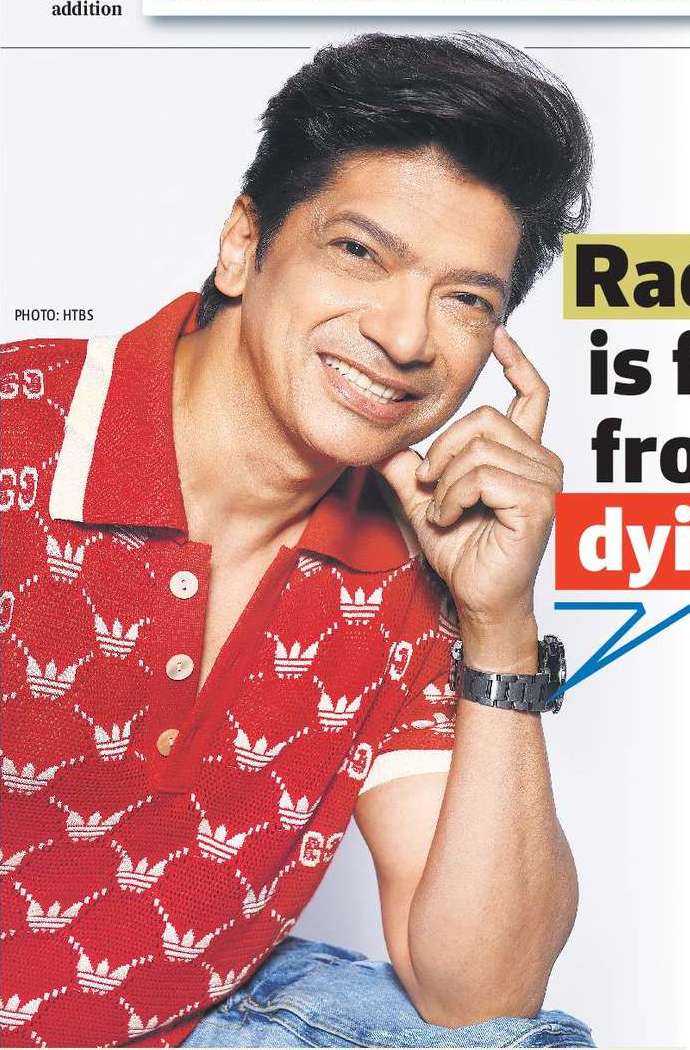
Radio is far from dying-Shaan
10:21 AM
Akash Bhatnagar (HINDUSTAN TIMES; March 10, 2024)
In his illustrious career of over two decades, Shaan has time and again proven his mettle across fields — be it singing, composing, writing or hosting. Adding another feather to his cap, he is now turning RJ with Fever FM’s Crazy For Kishore.
“It’s a blessing that people approach me to try new things and I get these opportunities. If I had just stuck to playback, I would probably have retired or quit,” he tells us.
By trying his hand at a medium that is often misunderstood as outdated, the 51-year-old is proving this label is far from true: “On the contrary, the consumption of audio has gone up in a big way. People today want to use all their senses and multitask. The wonderful thing that radio brings is a sense of surprise, and no other medium can give you that. So, radio is far from dying.”
The singer is glad that through his show, he is getting the chance to honour the legendary Kishore Kumar. When asked how “crazy” he truly was for the late singer growing up, he responds, “Were? I still am and will always be. My connection with him is getting stronger with this show, as I got to know many stories about him that I didn’t before.”
When prodded to dish out one such Kishore da anecdote, Shaan reveals, “When he was very young and Ashok Kumar (late director) sahab was shooting with Madhubala ji (late actor), he hid on the set with a mask on to scare her. She came out screaming from there, and this was their first encounter. Later, they became man and wife.”
39 Years of Hum Log: "The show had a soul, it connected with everyone"
9:02 AM

Divya Kaushik (BOMBAY TIMES; August 9, 2023)
Known for its relatable content and simplistic approach, India’s first soap opera, Hum Log, completed 39 years recently. The actors who were part of the series reflect on how the show connected with Indian families and made them household names.
HUM LOG WAS A GAME-CHANGER FOR ME: AASIF SHEIKH
Aasif Sheikh fondly recalls the day when he went for the audition for a small part in Hum Log. The actor, who made his acting debut as Prince Ajay Singh in the show, recalls, “I had just finished school and joined theatre when I got to know about this show. Back then, the concept of a TV soap was like a dream for every actor. I was so nervous during the audition that I thought there was no way I could get it, but in the evening, I got a call that I had to go for rehearsals at Himachal Bhawan, and my character will be in the show for three episodes. And those three episodes extended to 60-70! As an actor, Hum Log was a great learning experience, I would say that it was a game-changer for me.
THE SHOW TOUCHED PEOPLE’S HEARTS: KAMIYA MULHOTRA
Hum Log was Kamiya Mulhotra’s first acting assignment and it was offered to her by the show’s writer Manohar Shyam Joshi, who also wrote Buniyaad. She says, “I had completed my schooling and expressed my desire to pursue an acting course to my parents. One day, my mother was going to meet a writer at a coffee house in CP and asked me to come along. The writer was Manohar Shyam Joshi. He asked me what I was doing, and I told him that I wanted to be an actor. He just looked at me and asked me, ‘main Indian TV ka pehla soap opera likh raha hu, tum kaam karogi?’ I was overjoyed. That’s how I started my acting career.”
IT WAS A REFLECTION OF SOCIETY AND ITS ISSUES BACK THEN: SEEMA PAHWA
Seema Pahwa, who played the character of Badki in Hum Log, says that she had her first taste of fame after the show. “The best part of that show was its honest and simplistic approach. It was a reflection of society and its issues back then, aur jis sachchai aur imaandaari se woh dikhaya gaya tha woh logo ko aaj bhi yaad hai. Hum uss show se pehli baar star bane thay. For the first time, people wanted to get clicked with us, take our autographs wherever we went. The kind of popularity we got was no less than what any film star would get in that era.”
She adds, “Those two years were a turning point in my life, behatareen din thay woh. Even today, for everyone who has watched Hum Log, I am still Badki. My kids asked me one day ki aapka naam Badki tha kya.”
NO ONE COULD MATCH HUM LOG’S CONTENT TILL TODAY: ABHINAV CHATURVEDI
Abhinav Chaturvedi, who played Nanhe in the show, says, “The best part of the show was its content, which no one could match till today. The show appealed to people of all age groups. It was everyone’s story and that is why people cancelled appointments, and parties were not hosted at that time just because they wanted to watch Hum Log. In fact, the cinema business was affected a great deal because people refused to go to 6 pm and 9 pm shows on Tuesdays and Saturdays as they wanted to watch Hum Log,” he adds.
Did You Know?
- Hum Log was created on the lines of a Mexican TV series, Ven Conmigo (1975), using the education-entertainment methodology.
- It was shot in Delhi and Gurgaon.
- Special cars were arranged for Sushma Seth and Vinod Nagpal, who were senior actors on the show, while the rest of the cast used to travel in a van to the shooting location in Gurgaon.
- Each episode concluded with a message from Ashok Kumar (below), who reportedly received more than 400,000 letters from young viewers requesting him to convince their parents to let them marry the partner of their choice.
- As per reports, Ashok Kumar would wear sunglasses while shooting the epilogue, because he didn’t want the audience to know that he was reading from the teleprompter.
When Kishore Kumar's biopic gave Soumik Sen the idea for Jubilee
8:23 AM
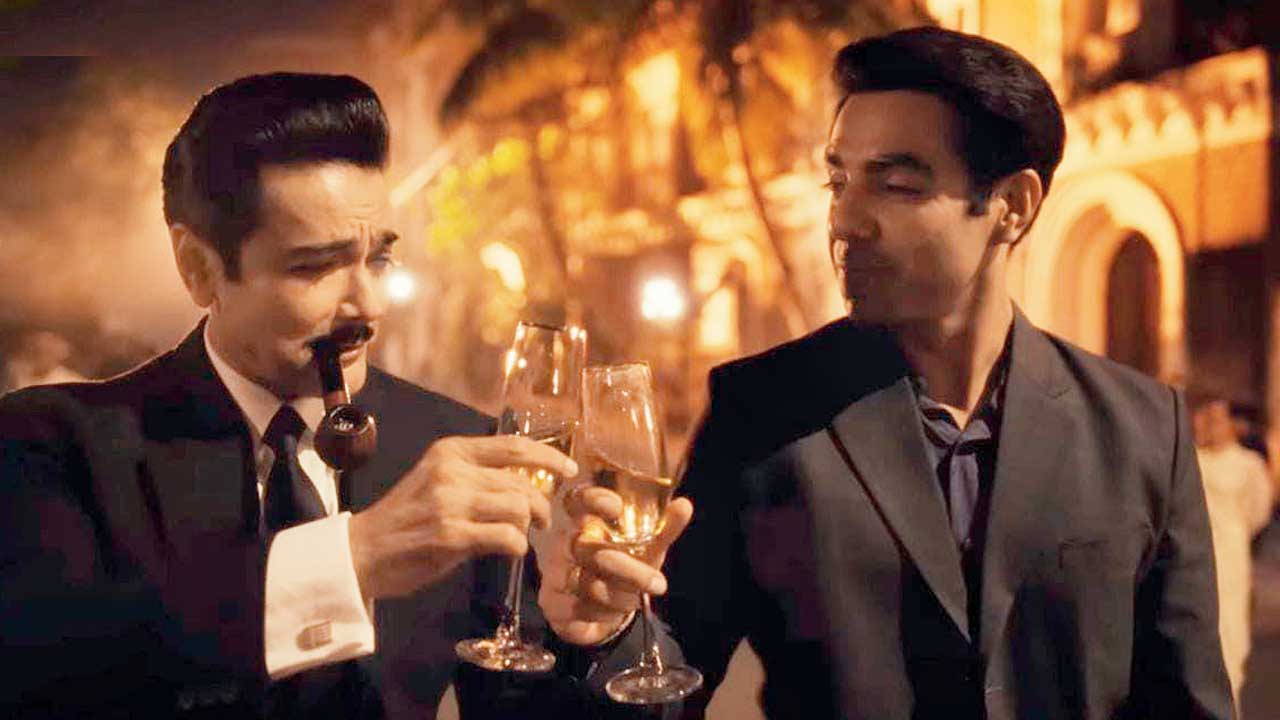
Jubilee co-creator reveals how scripting of Kishore Kumar biopic led him to explore ’50s film industry that forms the series' crux
Hiren Kotwani (MID-DAY; April 7, 2023)
Their love for cinema has seen many filmmakers tell stories set in the Indian film industry. Vikramaditya Motwane and co-creator Soumik Sen take a stab at it with Jubilee, Amazon Prime Video’s marquee series that stars Prosenjit Chatterjee, Aditi Rao Hydari, Aparshakti Khurana and Wamiqa Gabbi. Sen surprises us when he says that the period drama has its roots in the Kishore Kumar biopic that he was scripting for Anurag Basu, and was to star Ranbir Kapoor.
“While working on the Kishore Kumar biopic, my research extended to R D Burman, the music of those times and the era before that. In the process, I went through old magazines that gave insight into the functioning of the film industry,” recounts Sen.
It led him, along with Motwane and Atul Sabharwal, to create a fictional tale set in the Hindi film industry of the ’50s and ’60s. Jubilee studies love, power and burning ambitions set against the backdrop of the studio system.
Reminiscing the time actors like Ashok Kumar and Dilip Kumar opted out of studios, Sen shares, “Actors went their independent way when [their star power] became the reason for commerce.”
He adds that the studio system eventually gave way to the star system. “Whenever a new actor is given a break, he likes to associate with a certain production house — like Rajesh Khanna did with Shakti Samanta Productions, or Amitabh Bachchan did with Prakash Mehra.”
While Sen is awaiting the audience’s reaction to the series, we prod him about the fate of the Kumar biopic. “Kishore da’s family would be in the best position to share any details about it,” he says.
Main serious roles kyun karoon? Even when I’m at a funeral, people will look at me and laugh-Johny Lever
8:15 AM
Yvonne Jacob (BOMBAY TIMES; February 10, 2023)
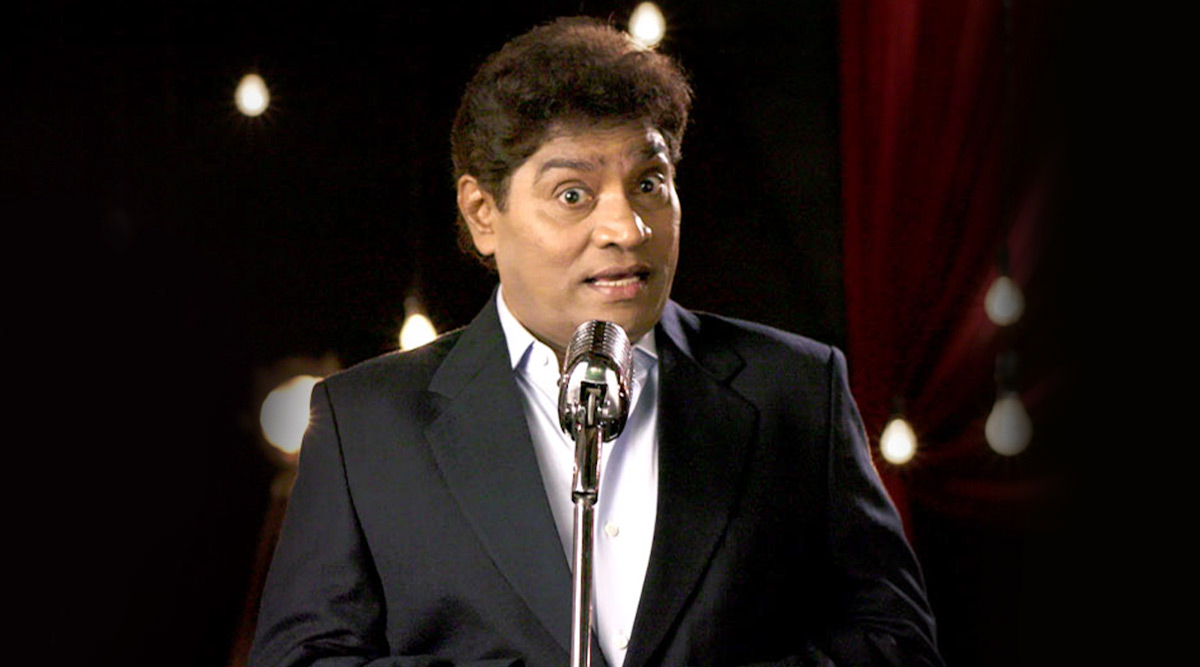
When Johny Lever is on stage, there’s never a dull moment. This was on display during his recent interaction at the Pune International Film Festival (PIFF) where he conducted a masterclass on the topic of ‘Humour in cinema’.
Speaking about his journey, Lever said, “Comedy is something that cannot be taught. It can be improved with practice, but if you’ve got it in you, it will come out naturally.”
From stage shows to acting in over 400 films, Lever’s name has become synonymous with comedy. However, he shared that acting was challenging. “I didn’t have knowledge about acting. I wouldn’t understand how to give actions or reactions because it requires you to get into the character. That was a challenge for me. I mimicked actors like Ashok Kumar, Jeevan and Jagdeep, but the transition to acting was difficult and I struggled for 12 years to get that right,” he said.
Recalling a time when he was trying to do a scene for director K Balachander’s film, Lever shared, “During the scene, K Balachander asked, ‘Yeh kaun hai?’. That gave me sleepless nights. So, I tried to learn and now when I’m called for films and someone asks who the writer is, people say ‘Writer kyun? Johny Lever hai na. Woh kar lega.’ But yes, there were times when I would go on the set and start acting and people would tell me ki bhaiya camera toh idhar hai.”
Lever said he considers Charlie Chaplin as his godfather and the late comedian Johnny Walker as a man with profound knowledge. Lever also added that comedy was a serious business and not everyone can do it. “But nowadays directors and writers lack the discipline and compromise on content. One cannot just make people laugh at trivial things. Comedy must be ingrained in a person and comedians are born with it. Reacting to other actors’ is an important trait for comedians on screen and that’s something I learned through observation during shoots,” said Lever.
Finally, talking about why he prefers to stick to comedy, he said, “Main serious roles kyun karoon? Even when I’m at a funeral, people will look at me and laugh.”
Stardust's first season inspired by the lives of Devika Rani, Himanshu Rai and Ashok Kumar?
8:16 AM

(From left) Aditi Rao Hydari; Aparshakti Khurana and Prosenjit
As Aditi, Prosenjit and Aparshakti wrap up Motwane’s web series Stardust, sources say first season inspired by the lives of Devika Rani, Himanshu Rai and Ashok Kumar
Upala KBR (MID-DAY; March 11, 2022)
Who better than the astute Vikramaditya Motwane to take us to the Bollywood of yore? With his ambitious web series, Stardust, the filmmaker has harked back to the ’40s, tracing the evolution, rivalries and changing work culture of the Hindi film industry over the subsequent decades. Bengali superstar Prosenjit, Aditi Rao Hydari, Aparshakti Khurana and Wamiqa Gabbi lead the proceedings. While it is known that the Amazon Prime Video web series is inspired by true events, it is now heard that the first season borrows a few elements from the lives of Devika Rani, her producer-husband Himanshu Rai and actor Ashok Kumar.
A trade source reveals that the upcoming first season will focus on the 1940s, when Hindi cinema was flourishing under the studio system. “The show, though rooted in real-life events, offers a fictional take on them. Prosenjit and Aditi’s parts are said to be modelled on Himanshu Rai and Devika Rani, while Aparshakti’s role is inspired by Ashok Kumar. Prosenjit’s character is depicted as one of the pioneers of Indian cinema. The story delves into how the Hindi film industry’s first studio was founded in the 1930s by a star couple, who end up making a superstar out of a Kolkata boy,” says the source.
Rai and Rani had founded Bombay Talkies in 1934. The studio went on to produce many films, even serving as the launchpad of several stars including Dilip Kumar, Leela Chitnis and Madhubala.
While Motwane had taken his labour of love on floors last March, the shoot had to be halted due to the second wave of the pandemic. The team, which had resumed work late last year, finally called it a wrap on the project in February. The source adds, “The nine episodes were shot in a start-to-finish schedule in Mumbai over the past three months. The subsequent seasons will delve into the lives and times of the stars of the following decades.”
When mid-day reached out to Prosenjit, he said, “I am doing a special project with Vikramaditya Motwane. It was wonderful working with Aditi and Aparshakti. That’s all I can say.”
Equally reluctant to talk about the project, Hydari said, “Motwane is a director I wanted to work with, for long.”
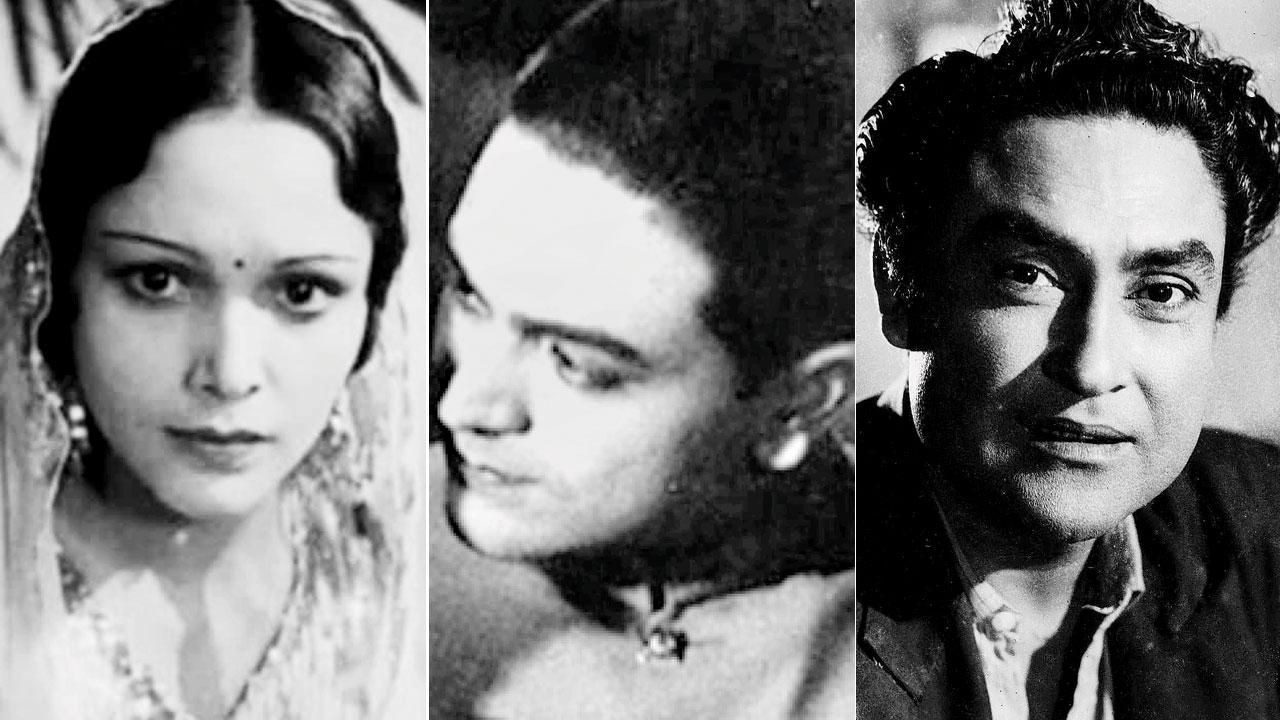
Rani, Rai and Kumar
A lot of people actually imitate Kishore Bhanushali rather than the real Dev Anand-Geetika Narang Abbasi
8:30 AM
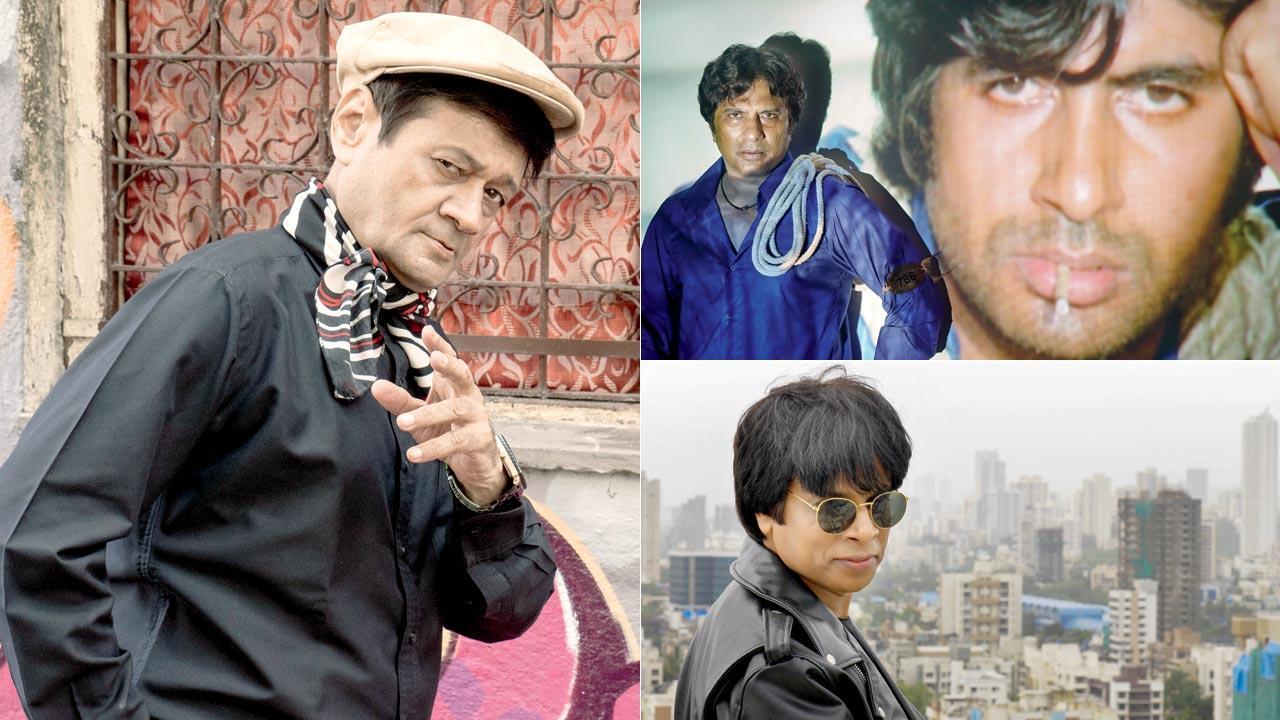
Abbasi’s film is about Kishore Bhanushali, a Dev Anand lookalike, Firoz Khan who imitates Amitabh Bachchan and Prashant Walde, a Shah Rukh Khan replica
A documentary on the lives of movie star lookalikes delves into questions of identity, attention and the conviction required to sustain in a notoriously difficult industry
Sucheta Chakraborty (MID-DAY; January 16, 2022)
Geetika Narang Abbasi has always been a fan of Hindi films and songs and had wondered why in spite of Hindi cinema’s enormous cultural impact around the world, there aren’t enough films made on the films. “We don’t even have documentaries on our major stars,” points out the director, whose last documentary was the 2012 Much Ado about Knotting about the matchmaking industry in India. While watching the film Apartment some years ago, she spotted Kishore Bhanushali, a Dev Anand lookalike, and the idea of making a film on these imitation artistes, who were once very popular, took hold. “There was a time when one saw these people during stage shows, in Lehren, in film magazines and advertisements. I wondered where they were now.”
Abbasi’s new documentary Urf, which will premiere at the International Film Festival Rotterdam later this month, takes a peek into the lives and stories of these doubles, combining the director’s interests in Hindi cinema and questions of identity.
Apart from Bhanushali, Abbasi interviews two other performers in the film: Firoz Khan who imitates Amitabh Bachchan, and Prashant Walde, a Shah Rukh Khan replica. Apart from the connection that she shared with each of these actors, there were several reasons says Abbasi for choosing them among the many star lookalikes she met. She had loved Bhanushali’s work in films like Dil. What was also interesting, she shares, was the observation that he made in her film that to impersonate Ashok Kumar, he chose not to copy Kumar directly but to imbibe Johnny Lever’s impersonation of the actor.
“Similarly, a lot of people who imitate Dev Anand actually imitate Kishore [Bhanushali] rather than the real Dev Anand,” says Abbasi. Again, what struck her about Khan was his choice of career given that he didn’t resemble Bachchan at all. “For most of the lookalikes, their careers happened by destiny rather than choice when people started comparing them to the stars,” she observes.
Khan, however, impressed by Bachchan’s persona, started impersonating him and came to Mumbai from Budaun to showcase his talent. On the other hand, Walde, who works as Shah Rukh Khan’s body double in films and advertisements is the one in closest proximity to the star. Moreover, Abbasi relates that his romance with his wife is a lot like the fabled one between Shah Rukh and his wife Gauri.
“Prashant’s wife was a huge fan of SRK and used to pray that she would get to marry him and says in the film that she forgot to clarify that she meant the original SRK,” laughs Abbasi. Further, the three imitated stars of three different generations, their relationships with their careers, too, vary in accordance. “While Kishore looks at his life, career and journey objectively, Firoz and Prashant can’t dissociate themselves from the stars.”
What also surprised the Gurgaon-based Abbasi about these artistes was the normalcy of their lives, even as she saw them seamlessly switching between their real selves and the stars they impersonate. “They are often seen as cheap copies of the movie stars and mocked by people. I was conscious of the fact that this needed to be their story, that I should not be judgemental and that they should not come across as laughing stocks,” she insists, her aim being to present the reality of their lives with utmost honesty.
At the same time, she also realised in due course that there is a make-believe world that such performers have to create around themselves, a world made up of an unshakeable faith in themselves as artistes and a belief in the industry that will eventually lead them somewhere. “They have a lot of conviction in what they do and that was a huge learning lesson for me as well. It is not important to get validation from others,” says Abbasi.
Simultaneously, working on the film also brought her closer to people who struggle as performers in Mumbai, their idea of their place in it often bordering on delusion. “But these people have really adapted to the industry and are surviving because of their conviction in themselves and their faith in cinema.”
Geetika Narang Abbasi

Roshmila Bhattacharya’s book Matinee Men is filled with RARE trivia about Shah Rukh, Salman, Aamir Khan, John Abraham, Dev Anand etc
3:04 PM

Roshmila Bhattacharya, who headed the entertainment section at Mumbai Mirror for 7 years, is now back with her second book, Matinee Man. Her first book, Bad Man, released in July 2019 and was a biography on Gulshan Grover and traced his journey in cinema. In Matinee Man, however, she attempts to go beneath the glam, glory and greasepaint, to find the men behind these demi-Gods we have been watching live out different characters in reel life.
Roshmila Bhattacharya has a career spanning three decades and has worked with all the leading media houses like The Times of India, The Indian Express, Zee and Hindustan Times. As part of her work, she has got multiple chances to interact with and interview several screen idols of Bollywood. In Matinee Man, she her focused on 13 actors – Ashok Kumar, Dilip Kumar, Dev Anand, Shammi Kapoor, Dharmendra, Amitabh Bachchan, Farooq Sheikh, Mithun Chakraborty, John Abraham, Aamir Khan, Shah Rukh Khan, Salman Khan and Irrfan Khan. Through the memories of moments spent with them, and conversations with family and colleagues, she brings us interesting trivia, like their unique talents that not many known about.
Some of the fascinating and never-before-known trivia that she covered in the book are as follows:
1. Ashok Kumar made more than three hundred painting and when M F Husain saw his horses, he told the actor that these were not the strokes of an amateur artist.
2. Dev Anand was mistaken for a real guide during the shooting of his American-Indian co-production, Guide, in Udaipur by a group of American tourists. And instead of getting affronted, the evergreen star simply whizzed off with them in a motor boat, returning to the shoot after giving them a guided tour
3. John Abraham, an economics graduate with a Masters in management, would get frustrated when people treated him like a “clothes hanger” during his modelling days even though he reads Frank Kafka and is very knowledgeable about world affairs. Even after he entered the movies, the focus was only on his looks, body and sexuality. But being a marketing guy, he decided to position himself this way, till he got the power to do the kind of films he wanted. He admits that the studio that distributed Vicky Donor were appalled that he was making a film during the shoot of which curious bystanders in Delhi would ask its director, Shoojit Sircar, “Yeh donor ka matlab kya hai?” Today, John is not just an action hero in commercial blockbusters, from Dhoom to Satyameva Jayate, he has an impressive library of off-beat films like Kabul Express, Water, New York and No Smoking as an actor and Vicky Donor, Madras Café, Parmanu and Batla House as a producer.
4. Ashok Kumar loved dogs and had around twenty at various times. Interestingly, he named then after dictators like Stalin, Brutus, Chiang Kai-shek and Hitler!
5. A young boy while watching the Dilip Kumar film Shabnam told himself that when he became an actor, he would call himself Manoj after the film's character. We know him as Manoj Kumar today.
6. The world knows him as 'He-man' whose dhai kilo ka haath can make the bad man disappear from the face of the earth on screen. But Dharmendra prefers the tag 'Darling D'.
7. It was the last day of shooting of The Tashkent Files. During the tea break, Mithun Chakraborty called his director and told him, "There's a question I've waited to ask. You took me for a reason, have I passed your test?" Vivek Ranjan Agnihotri couldn't believe a 3-times National Award winner was asking him this!
8. Dadamoni as Ashok Kumar was fondly called refused to be the chief guest at his daughter, Bharti’s college function. Why? For that you have to read the book and you will know much more
There have been plenty of books on cinema. What makes Matinee Men different is that it’s intensely personal in its approach, anecdotal in its narrative and is all about many untold stories… About men, movies and journeys.
An actor, they say, lives a hundred lives. He wakes up every morning, wears a different face and sets out to make the world his stage. This book tells you how he feels wearing these faces, and more importantly, without them. If you are a Bollywood buff and love your stars, it promises that you will get to know them better.
AMAZON LINK TO BUY MATINEE MEN:
https://amzn.to/3oYEyLO
Roshmila Bhattacharya has a career spanning three decades and has worked with all the leading media houses like The Times of India, The Indian Express, Zee and Hindustan Times. As part of her work, she has got multiple chances to interact with and interview several screen idols of Bollywood. In Matinee Man, she her focused on 13 actors – Ashok Kumar, Dilip Kumar, Dev Anand, Shammi Kapoor, Dharmendra, Amitabh Bachchan, Farooq Sheikh, Mithun Chakraborty, John Abraham, Aamir Khan, Shah Rukh Khan, Salman Khan and Irrfan Khan. Through the memories of moments spent with them, and conversations with family and colleagues, she brings us interesting trivia, like their unique talents that not many known about.
Some of the fascinating and never-before-known trivia that she covered in the book are as follows:
1. Ashok Kumar made more than three hundred painting and when M F Husain saw his horses, he told the actor that these were not the strokes of an amateur artist.
2. Dev Anand was mistaken for a real guide during the shooting of his American-Indian co-production, Guide, in Udaipur by a group of American tourists. And instead of getting affronted, the evergreen star simply whizzed off with them in a motor boat, returning to the shoot after giving them a guided tour
3. John Abraham, an economics graduate with a Masters in management, would get frustrated when people treated him like a “clothes hanger” during his modelling days even though he reads Frank Kafka and is very knowledgeable about world affairs. Even after he entered the movies, the focus was only on his looks, body and sexuality. But being a marketing guy, he decided to position himself this way, till he got the power to do the kind of films he wanted. He admits that the studio that distributed Vicky Donor were appalled that he was making a film during the shoot of which curious bystanders in Delhi would ask its director, Shoojit Sircar, “Yeh donor ka matlab kya hai?” Today, John is not just an action hero in commercial blockbusters, from Dhoom to Satyameva Jayate, he has an impressive library of off-beat films like Kabul Express, Water, New York and No Smoking as an actor and Vicky Donor, Madras Café, Parmanu and Batla House as a producer.
4. Ashok Kumar loved dogs and had around twenty at various times. Interestingly, he named then after dictators like Stalin, Brutus, Chiang Kai-shek and Hitler!
5. A young boy while watching the Dilip Kumar film Shabnam told himself that when he became an actor, he would call himself Manoj after the film's character. We know him as Manoj Kumar today.
6. The world knows him as 'He-man' whose dhai kilo ka haath can make the bad man disappear from the face of the earth on screen. But Dharmendra prefers the tag 'Darling D'.
7. It was the last day of shooting of The Tashkent Files. During the tea break, Mithun Chakraborty called his director and told him, "There's a question I've waited to ask. You took me for a reason, have I passed your test?" Vivek Ranjan Agnihotri couldn't believe a 3-times National Award winner was asking him this!
8. Dadamoni as Ashok Kumar was fondly called refused to be the chief guest at his daughter, Bharti’s college function. Why? For that you have to read the book and you will know much more
There have been plenty of books on cinema. What makes Matinee Men different is that it’s intensely personal in its approach, anecdotal in its narrative and is all about many untold stories… About men, movies and journeys.
An actor, they say, lives a hundred lives. He wakes up every morning, wears a different face and sets out to make the world his stage. This book tells you how he feels wearing these faces, and more importantly, without them. If you are a Bollywood buff and love your stars, it promises that you will get to know them better.
AMAZON LINK TO BUY MATINEE MEN:
https://amzn.to/3oYEyLO

All time runners in Kolkata: Sholay ranks 2nd, Hum Aapke Hai Koun 4th
9:02 AM

Box Office India Trade Network
Kolkata which was the biggest centres for Hindi films till the mid 60's has seen 81 films hit the jubilee mark. Mumbai took over as the biggest centre in the mid 60's and then in the multiplex era it has been Delhi which has become the biggest. These are genuine jubilees in Kolkata where films ran for 25 weeks on four shows a day. There will be some films which got there on matinee shows but that is not a real jubilee. Also there are some films which were pushed on matinee shows for a few weeks by distributors to claim a jubilee but it was just a distributor thing to show his producer they managed a jubilee. These have not been included.
Kolkata was not like Mumbai where every other film was pushed to a jubilee as the perception came from Mumbai for the industry at that time and also Kolkata mostly released weeks or even months after Mumbai so there was never pressure from the producer as pressure of a jubilee was where the early release was. The greatest Hindi film ever SHOLAY released in Kolkata more than 2 months after its initial release in Mumbai and Ahmedabad.
The longest running film ever in Kokata is the 1943 film KISMET which ran for 184 weeks at Roxy though looking at the whole picture in Kolkata in the last 100 years or so then the biggest BLOCKBUSTER of the city has to be BOBBY. The film ran for 52 weeks in the main cinema Metro and then had silver jubilees in a further 3 cinemas which is history not just for Kolkata but for all India. Four genuine silver jubilees in a city without matinee shows and none of the theatres running on deficits.. The last film to get a jubilee in Kolkata was KAHO NAA PYAAR HAI way back in 2000 while the last golden jubilee film was HUM AAPKE HAIN KOUN in 1994 which had a huge 69 week run and another week to make it 70 but those were matinee shows.
The one thing that the list shows is the huge success of love stories in the city. All the great love stories of Hindi cinema are there like KAHO NAA PYAAR HAI, DIL TO PAGAL HAI, DILWALE DULHANIA LE JAYENGE, MAINE PYAR KIYA, QAYAMAT SE QAYAMAT TAK, RAM TERI GANGA MAILI, BETAAB, EK DUUJE KE LIYE, LOVE STORY, ARADHANA, JUNGLEE and the grandest of them all SANGAM and BOBBY. The list is full of love stories and its not just these films mentioned but others as well and this also explains why Shah Rukh Khan has remained the biggest star in Kolkata for the last 25 years. Even though the last years have not been so great he is still the biggest star in the city due to the romantic image which was built in the late 90's.
Dharmendra has the most jubilees in Kolkata with 3 golden jubilees and 5 silver jubilees and that is a case with most cities across India but the biggest stars of the city have been Ashok Kumar, Rajesh Khanna and Shah Rukh Khan. We are talking just the city which is now practically the West Bengal circuit for Hindi films though earlier Hindi films had a good following across West Bengal. Ashok Kumar was a local favorite while Rajesh Khanna and Shah Rukh Khan are probably the biggest romantic stars in history and its this genre which scores big in Kolkata.
The list of jubilees in Kolkata are as follows and the last released film is named first if the films have run for the same numbers weeks though if a film is in more than one cinema than that gets precedence. There is one huge grosser which is omitted and that is MUGHAL-E-AZAM but that film had 24 cinema release in Kolkata which is mad considering it started with 4 in Mumbai and 6 in Delhi. MUGHAL-E-AZAM fell short of a jubilee due to an insane release in Kolkata though despite being a big grosser, its footfalls will still not be among the top 25 in Kolkata though in the whole of West Bengal it would be easily be among the top ten ever. The years are not the release years but when the respective jubilee was celebrated. Also the cinema where it was a jubilee is in brackets. Paradise which is still the leading single screen in the city has the most jubilees with 15 and BARSAAT (released in 1949) being the longest runner in paradise with a 100 week run.
1. Kismet (1947) - 184 weeks (Roxy)
2. Sholay (1977) - 103 weeks (Jyoti)
3. Barsaat (1951) - 100 weeks (Paradise)
4. Hum Aapke Hain Koun (1995) - 69 weeks (Hind)
5. Bandhan (1941) - 57 weeks (Paradise)
6. Shikar (1969) - 56 weeks (Regal)
7. Bhabhi (1958) - 54 weeks (Paradise)
8. Bobby (1974) - 52 weeks (Metro). The film also ran for 25 weeks in 3 more cinemas, Gem, Menoka and Darpan. Probably the biggest BLOCKBUSTER ever in Kolkata.
9. Aradhana (1970) - 51 weeks (Lotus)
- Junglee (1962) - 51 weeks (Roxy)
11. Sangam (1965) - 50 weeks (Orient). The film also ran for 25 weeks in Priya and Darpan
-- Basant (1943) - 50 weeks (Roxy). The film also ran for 25 weeks at Majestic.
-- Yaadon Ki Baraat (1974) - 50 weeks - (Hind)
14. Jis Desh Mein Ganga Behti Hai (1961) - 42 weeks (Paradise)
15. Muqaddar Ka Sikandar (1979) - 41 weeks (Moonlight)
16. Azaad (1956) - 40 weeks (Paradise)
17. Nagin (1955) - 38 weeks (Hind)
-- Achhut Kanya (1937) - 38 weeks (Paradise)
19. Betaab (1984) - 36 weeks (Jyoti)
- Geet Gata Chal (1976) - 36 weeks (Lotus)
21. Nadiya Ke Paar (1983) -35 weeks (Lotus)
22. Dilwale Dulhania Le Jayenge (1996) - 34 weeks (Metro 25 weeks plus 9 weeks at Paradise)
23. Hum Kisise Kum Nahin (1978) - 33 weeks (New Cinema)
24. Ram Teri Ganga Maili (1986) - 32 weeks (Majestic)
25. Ek Duuje Ke Liye (1982) - 31 weeks (Jyoti)
26. Qayamat Se Qayamat Tak (1988) - 30 weeks (Paradise)
-- Dushman (1972) - 30 weeks (Moonlight)
-- Shaadi (1942) - 30 weeks (Jyoti)
29. Satyam Shivam Sundaram (1979) - 29 weeks (Metro)
-- Chaudvin Ka Chand (1960) - 29 weeks (Orient)
31. Anarkali (1953) - 28 weeks (Society). The film also ran for 25 weeks at Purnasee.
-- Love Story (1981) - 28 weeks (Lighthouse)
-- Anurag (1973) - 28 weeks (Jyoti)
-- Ziddi (1964) - 28 weeks (Jyoti)
-- Grihasthi (1948) - 28 weeks (Majestic)
-- Shehnai (1948) - 28 weeks (Paradise)
37. Nikaah (1983) - 27 weeks (Paradise)
-- Ajanabee (1975) - 27 weeks (Jyoti)
-- Zanjeer (1973) - 27 weeks (Opera)
-- Hare Rama Hare Krishna (1972) - 27 weeks (Lotus)
-- Sasural (1961) - 27 weeks (Hind)
-- Naya Daur (1958) - 27 weeks (Majestic)
-- Pyaasa (1957) - 27 weeks (Janata)
-- Actress (1949) - 27 weeks (Paradise)
-- Zeenat (1946) - 27 weeks (Majestic)
-- Kangan (1940) - 27 weeks (Paradise)
-- Bhabhi (1939) - 27 weeks (Paradise)
48. Kaho Naa... Pyaar Hai (2000) - 26 weeks (Hind)
-- Maine Pyaar Kiya (1990) - 26 weeks (Elite)
-- Trishul (1979) - 26 weeks (Majestic)
-- Samjhauta (1974) - 26 weeks (Lotus)
-- Jugnu (1974) - 26 weeks (New Cinema)
-- Amar Prem (1972) - 26 weeks (Paradise)
-- Arzoo (1966) - 26 weeks (Hind)
-- Madhumati (1959) - 26 weeks (Janata)
-- Gumashta (1951) - 26 weeks (Majestic)
-- Chandralekha (1949) - 26 weeks (Orient)
58. Haathi Mera Saathi (1971) - 25 weeks (Regal). The film also celebrated 25 weeks at Priya and Mitra
-- Jai Santoshi Maa (1976) - 25 weeks (Kalika). The film also had a 87 week run in noon shows at Ganesh
-- Dil To Pagal Hai (1998) - 25 weeks (Metro)
-- Sharaabi (1985) - 25 weeks (Majestic)
-- Laawaris (1982) - 25 weeks (Majestic)
-- Naseeb (1981) - 25 weeks (Hind)
-- Kranti (1981) - 25 weeks (Gem)
-- Noorie (1979) - 25 weeks (Majestic)
-- Julie (1975) - 25 weeks (Paradise)
-- Deewaar (1975) 25 weeks (Majestic)
-- Pran Jaaye Par Vachan Na Jaye (1974) - 25 weeks (Regal)
-- Prem Nagar (1974) - 25 weeks (Paradise)
-- Seeta Aur Geeta (1973) - 25 weeks (Hind)
-- Naya Zamana (1971) - 25 weeks (Lotus)
-- Johny Mera Naam (1971) - 25 weeks (Moonlight)
-- Sharafat (1970) - 25 weeks (Moonlight)
-- Milan (1969) - 25 weeks (Hind)
-- Aankhen (1969) - 25 weeks (Moonlight)
-- Khandan (1965) - 25 weeks (Roxy)
-- Jab Pyar Kisise Hota Hai (1961) - 25 weeks (Society)
-- Ganga Jamuna (1961) - 25 weeks (Majestic)
-- Jhanak Jhanak Payal Baje (1955) - 25 weeks (Orient)
-- Lal Haveli (1944) - 25 weeks (Majestic)
-- Punarmilan (1940) - 25 weeks (Jyoti)
I bent down and spontaneously dropped a kiss on Suchitra Sen's back-Dharmendra
8:07 AM

Roshmila Bhattacharya (MUMBAI MIRROR; April 9, 2020)
 I was just a schoolgirl when I saw Bimal Roy’s 1955 tragic love story, Devdas, for the first time on Doordarshan. And like so many others, was mesmerised by his Parvati. Even in black and white, Suchitra Sen’s luminous beauty shone through, lighting up the frame when Dilip Kumar as Devdas, livid at being rejected by his Paro for a letter he’s long since regretted writing, says through gritted teeth, “Yeh roop tumhara... itna roop achcha nahin hai.” Then, to put a chand-like daag on her chiselled features to dent her haughty pride, he lashes out with his stick, “Aao tumhare chehre pe aisa hi daag bana de.” As it catches her on the forehead, spilling blood, his face reflects not just his anger, but also his pain and torment.
This scene has stayed with me for decades and it didn’t come as a surprise to learn that Tollygunge’s Mrs Sen had landed the role on the rebound, after Meena Kumari had reluctantly turned it down. She gave her nod because it was the first Sarat Chandra Chattopadhyay story offered to her and for its director. It is said that when they were shooting in Mumbai, visitors crowded into Mohan Studio to catch a glimpse of the famous beauty and Bengal’s rising star. No one went away disappointed even though the lady herself stayed aloof and untouched by the adoration.
On Suchitra Sen’s 89th birth anniversary (she entered the world on April 6, 1931), I reached out to Dharmendra, who is at his farm, following the Coronavirus outbreak. The duo had worked together in Asit Sen’s 1966 film Mamta. A Hindi remake of his 1963 Bengali film, Uttar Falguni, it featured her in a double role, as the beautiful Devyani who, after a hellish marriage, becomes the dancing girl Panna Bai, and her lookalike daughter Suparna, whom she is ready to protect with her life. Ashok Kumar played Monish Rai, the man the mother has always loved even after she lost him, while Dharamji was cast as the barrister, Indraneel, who woos the daughter.
“Suchitra was a picture of beauty and after seeing her in Devdas, I had been dreaming of working with her. It is said that when you want something dil se, the universe conspires to give it to you,” Dharamji informs over the wire, and one can almost picture him smile.
They shot the film in New Theatres, a Kolkata studio, and in Darjeeling. Dharamji shares that when they were in the hill station, after ‘pack-up’ he would sometimes go for a drive with his leading lady and her sister. “In the darkness, I couldn’t see the ravines flanking the narrow mountain roads on either side. But the next morning, she would point them out to me, saying, ‘Look Dharam, you were zooming down this road like a racing car driver last night,’ and we would laugh. We had some good times together on that film. Mamta, for all its intensity on screen, was so much fun, like a picnic,” he laughs, recalling that his heroine had always told him that she loved his smile.
Dharamji’s recollections of the desi Garbo are very different from public perception of Suchitra Sen, as a lady who always stood apart in the studios, and after she stepped out of the spotlight, was consciously never seen in public again. “She was a lovely lady and a very mature actress,” he avers.
Prod him on his favourite scene and he zeroes in on the one where Ashok Kumar, from afar, points him out to the older Suchitra as the man he has picked for her daughter. “It was a romantic moment between the younger couple where we are unaware of being watched. However, I knew, I had to somehow convey to the mother that I am in love with Suparna. Suchitra was wearing a sari, the blouse cut low at the back, and as the camera rolled, I bent down and spontaneously dropped a kiss on her back. It wasn’t in the script, but when we saw the shot later, everyone agreed that my unrehearsed gesture added a lot to the scene and it was retained,” Dharmendra reminisces, adding that he had hoped to do many more films with one of his favourite heroines, but she preferred to anchor herself to Bengali cinema and the only other Hindi film she did was Gulzar’s Aandhi in 1975 with Sanjeev Kumar.
However, Dharmendra stayed in touch and they often spoke on the phone. And once, when he was in the City of Joy for the opening of a lab, he dropped by her residence. “Hema (Malini) was with me on the occasion and it was wonderful meeting her again. For me, Kolkata will always be associated with Rabindranath Tagore… and Suchitra Sen,” he says emotionally, admitting that they had lost touch in the last few years of her life. “I had heard that she wasn’t keeping well and I wondered about her, wishing I could go visit. But, by then, she wasn’t keen on having visitors and I respected her need for privacy. When I learnt that she was gone, I was shattered. It was like I had lost a family member.”
For me, Dharamji is as much a talented actor as he is a brilliant poet. Every time we chat, he leaves me with one of his couplets. Does he have a piece of poetry he’d like to dedicate to her on her birth anniversary, I wonder. Pat comes the reply, “Padte hi unpar, Jhuk jaati thi meri nazar, Iss darr se ki nazar na lag jaaye unhe meri nazar se…”
One look at Iftekhar and the cop saluted him, letting us off, the penalty forgotten-Hina
8:18 AM

Roshmila Bhattacharya (MUMBAI MIRROR; March 5, 2020)
For millennials, the name Iftekhar may not ring a bell, but for me he was the ‘inspector uncle’ of my growing up years at the movies. While Sayedna Iftekhar Ahmed Sharif may well have played a smuggler, Mulk Raj Daavar, in Deewar, and the notorious Black Cobra masquerading as Inspector Bhupinder Singh in Rishi Kapoor and Neetu Singh’s romantic thriller Khel Khel Mein, in my memories, he’s always on the right side of the law. I remember him as Zanjeer’s Police Commissioner Singh who takes Amitabh Bachchan’s Vijay to task for getting “personal” with criminals and Don’s DSP D’Silva whose brainwave it is to pick up another Bachchanesque Vijay, this one a simpleton slumdweller, and pass him off as a mafia boss who was gunned down during a chase. He wore the vardi with distinguished panache, bringing dignity to his many cop roles in Hindi films, and according to his wife, Hina, was even accepted as one of them by the cops.
Hina ji recalled that once they were stopped by a havildar when they mistakenly drove into a ‘No Entry’ lane. “But one look at Iftekhar and the cop saluted him, letting us off, the penalty forgotten,” she had laughed when I met her decades ago.
Interestingly, despite looking so convincing in a uniform, Iftekhar saab himself never aspired to join the force. He started off in his father’s firm in Kanpur, disinterestedly waded through some more office jobs, before he was spotted singing at a function in Kolkata by composer Kamal Dasgupta who not only recorded two songs with him for a private album, but even recommended him for an acting role in the 1944 film, Taqrar, which flagged off a career in the movies that continued for half-a-century.
Three years later, communal riots uprooted him from the City of Joy and brought him to Mumbai while the Partition separated him from his family who migrated to Pakistan. A period of struggle followed, during which both Iftekhar saab and his wife were too proud to ask for money, even from their own families. The roles kept coming, be it that of a gardener in Patanga, an Air Force officer in Sangam, a doctor in Cha Cha Cha or a public prosecutor in Shaheed. And then there was a string of police inspector roles, in films like Shree 420, Guide, and Teesri Manzil. But it was the cop turn in Ittefaq in ’69 that marked a turning point in his career.
Ashok Kumar had recommended Iftekhar saab, who he had known since his Bombay Talkies days, to his producer-friend B R Chopra, for the suspense thriller directed by his brother Yash. Though he was a decade older, Dadamoni and Iftekhar saab were inseparable and would jabber away in French. In fact, it was his buddy, a Lucknow School of Arts alumnus, who got him hooked to painting when Dadamoni was ailing and laid up in bed, to distract him. “One day a beautiful painting of a horse arrived from Dadamoni with a note, saying, ‘To my guru who put the brush in my hand for the first time,’” flashbacked Hina ji. In ’64, Iftekhar saab had painted the title credits for Kishore Kumar’s Door Gagan Ki Chhaon Mein.
He was an honest man and a conscientious actor whose heart broke when his daughter Saeeda was diagnosed with cancer. “For five years he watched Saeeda… the tension and depression killed him. At night he would cry silently into his pillow,” Hina ji sighed.
Six days after his daughter passed away, on February 7, 1995, Iftekhar saab was rushed to the hospital. He recovered enough to bring in his 75th birthday on February 22, but the next day, suffered a paralytic stroke. On March 4, he took his last curtain call, dreaming of the kebabs and paaya his Hina would cook for him. He had met her when she was 16 and had broken off his engagement to marry the pretty Jewish girl who had come into his building in Kolkata and entered his life following a Japanese air raid. Once they were married, they were never apart. Till his daughter called him away… For me, there will never be a better ‘inspector uncle’.
Once Kishore Kumar was sure of the person, he never faulted-Vijay Desai
8:25 AM

Roshmila Bhattacharya (MUMBAI MIRROR; October 12, 2019)
October 13 is a bittersweet day for me. It’s one of my long-time favourites Ashok Kumar’s 108th birth anniversary, but it was on this day, too, that he lost his beloved youngest brother, Kishore Kumar. In fact, his wife Leena Chandavarkar had recounted how Kishore da had coaxed his elder brother, who was still mourning his wife Shobha’s demise and was in no mood to celebrate the day, to drop by on his way back from a shoot. He spent the day planning a surprise party for his Dadamoni. Kishore da’s son, Amit Kumar, away on a foreign tour, was expected to be back that day and his other brother, Anoop Kumar, had also promised to come over, as had Danny Denzongpa, with whom he wanted to discuss a film. A little after 4 pm, while laughing and joking with Leena ji, he suffered a heart attack and by the time his guests started arriving, Kishore da was gone.
“I got a call from Bappi da (Lahiri, singer-composer) telling me, ‘Dada chale gaye’. I rushed to his Juhu bungalow, only Leena ji and their son Sumit were there at the time, and then drove with his body to his native place Khandwa, where his last rites were performed,” recounts Vijay Desai, the manager of Melody Makers, the orchestra which had accompanied the legendary singer even on tours abroad, playing with him for almost a decade.
The media-shy gentleman still remembers the crowds lining the road through the night, paying their respects to their favourite singer as the ambulance carrying him whizzed past. “In Khandwa, his body was placed on the stage for the final darshan, and while patting it down, I discovered a bundle of Rs 10,000 notes tucked in the pocket of his kurta, which I promptly handed over to Leena ji,” says Desai.
Their journey began on February 12, 1982, when Siddharth Kak, along with the Music Directors’ Association, organised the musical extravaganza Mortal Man, Immortal Melodies at Mumbai’s Shanmukhananda Hall to celebrate the 50th anniversary of sound in Indian cinema. It featured singers across five decades and was a glorious reunion for two legends - Noor Jehan, on a rare trip from Pakistan, and Lata Mangeshkar. Also present were veterans like GM Durrani, Surendra Nath, Rajkumari, Ashok Kumar, Hemant Kumar, Talat Mahmood and Mahendra Kapoor, along with the younger brigade. The day after the show, the manager of Melody Makers was surprised to receive a call from a person who introduced himself as Kishore Kumar Ganguly. He initially dismissed it as a prank call but when Desai realised it was Kishore da for real, he rushed across to his bungalow as asked.
The orchestra had been founded in 1961 by Ashokkumar Saraf, Pramodkumar Saraf, Subashchandra Kulkarni and Surendra Akolkar to collect funds for the flood-affected in Pune. It boasted of some fine musicians and singers like Sudesh Bhosle. “Impressed with our performance at the event, Kishore da politely asked if the orchestra would like to be associated with him and without asking anyone, I gave the nod,” Desai narrates, saying after that they played at most of his stage performances, including concerts abroad in the US, Canada, UK, West Indies and the UAE. “One day, he called to ask why the orchestra was leaving him. I pointed out to him that I’d asked him if he had any shows scheduled for the month and when he had said there were none, I had sought permission to play with another party. But if he didn’t like it, we would turn down the latter to which he replied, ‘No, no, keep your commitment par mujhe kabhi chhodna nahin.’ And till his untimely demise, Melody Makers were with him.”
There have been stories in plenty about the eccentric singer and while Desai admits that like any artiste he was moody, he refutes rumours that Kishore da was kanjoos. “He would casually ask how much he owed someone, then, tell the person he’d pay up in a day or two and quietly write down the amount. The next few days, he would feign memory loss and keep asking how much was due. If the person, thinking he had forgotten, upped the rate, Kishore da would pay the original dues, telling the person not to return to him in future. It was his way of judging someone’s integrity and once he was sure of the person, he never faulted. He was a real gentleman whose mind was focussed on his music 24x7 and whose only aim was to make people happy. At concerts he always sang what the public demanded,” asserts Desai, adding, “There never was, and never will be a genius like Kishore Kumar whose name and chartbusters even today, 32 years after he passed away, bring a smile to faces.”
Did Mahatma Gandhi have anything to do with music?
8:02 AM

On his 150th birth anniversary, authors of two new books on the Mahatma discuss how cinema and music of the time, drew inspiration from him
Jane Borges (MID-DAY; September 29, 2019)
 As historian, Lakshmi Subramanian has always been curious about the peculiar—researching odd-ball stories, where previously unrelated facts come together to create a whole. Her new book, Singing Gandhi's India: Music and Sonic Nationalism (Roli Books), is an exercise in that direction. Yet, when she was first approached to write a book on Mahatma Gandhi and music, Subramanian recalls her response as being a "resounding no". "My initial reluctance was partly informed by a sense that Gandhi would have had very little and substantive to say about music per se; and about the complex public history that music threw up in the 20th century. Equally, I was convinced that Gandhi would have unproblematically endorsed the bhajan as it had emerged as a form of marking an exclusive Hindu identity," she shares, in an email interview.
 London-based journalist Sanjay Suri (right)'s tryst with the Mahatma in his new book, A Gandhian Affair: India's Curious Portrayal of Love in Cinema (HarperCollins India), was more organic. "I did not set out to research Gandhi," he admits. The book, he says, grew out of watching hundreds of Hindi films over many years. "Gandhi just kept popping out of them."
Where biographies and academic texts have been forever been engaged with examining Gandhi, the leader, and his role in pre-independent India, close on the heels of his 150th birth anniversary, Subramanian and Suri have explored how he culturally influenced the nation.
A Song For The Community
It was only after Sumbramanian, a professor at the Humanities and Social Sciences faculty of BITS Pilani in Goa, decided to engage with Gandhi's relationship with music that she realised "that not only had he a lot to say about sound and its use in politics, he was curious and inquisitive and inconsistent making his writings a treasure trove for a student of history".
In the book, she writes of how Gandhi was moved, when he first heard 'Vande Mataram' [written by Bankim Chandra Chatterjee] in 1915 in Madras. "You have sung that beautiful national song, on hearing which all of us sprang to our feet. The poet has lavished all the adjectives we could possibly do to describe Mother India," he told the assembly.
Gandhi, she says, saw music as one of the many tools to infuse a feeling of community. "I think Christian singing made a deep impact on Gandhi and the idea of a congregation had definite appeal. This was evident in his experiences in England, and while in South Africa, congregational singing became a form of political communication. The idea was to feel a oneness that went beyond narrow self-interest and work around a moral basis for political action. Prayer, music and spinning were all tools of individual self-regeneration and community building," says Subramanian, who read his collected works in great detail to contextualise her research. Her work also helped quell any misgivings about Gandhi propagating religious music. "At no point did he equate the Hindu religion with music of a particular kind; nor did he espouse the cause of devotional singing in public as an essential feature of the Hindu religion."
Subramanian, however, admits that Gandhi, unlike his contemporary Rabindranath Tagore whose contribution to music nationalism was immense, was not a "rasika". "He did not appreciate the technicalities or even profoundness of the classical traditions in India, but as an inquisitive person responding to debates and public discussions was not unaware of the emerging discourse on music reform and revival. He responded to the emotional dimensions of music and certainly insisted on a trained teacher for his ashram experiments," she says, adding, "He listened to music with great attention and was convinced that it had the power to move millions and to still them into contemplation."

The hero (Dev Anand) of Kala Pani (1958) finally declares satyagraha as his way of securing justice
A Moral Code For Cinema
Suri, on the other hand, discusses how Gandhi's values and virtues were so deeply enmeshed in the Indian psyche that the heroes of Hindi cinema—at least till late into the 1970s—sub-consciously replicated his virtuosity. They did it in two ways, he says. "One, and always, at pivotal points through the scripted story path of the hero. These are the decisive moments when choices have to be made. Those turn out always to be moral choices of a kind—rejection of wealth and a turning away from sex. It's these moral values that turn the plot, and which then give this phase of cinema that feeling of sameness. The hero is always confronted with those temptations, and it is the rejection of both that establishes him as heroic. Those are the very two temptations that Gandhi, the man most sought to overcome," says Suri, who has previously authored, 1984: The Anti-Sikh Violence and After.
He adds, "Secondly, countless invocations to Gandhi himself surface—images of Gandhi show up in one scene or another particularly when the moment of truth comes. These images didn't just happen, in this carefully crafted business of set by set, scene by scene."
According to Suri, Gandhi was far too complex a figure and his experiments in life were both controversial and fascinating. But cinema didn't grapple with any of that. "The Gandhi brought into this cinema is a man identified by a few broad strokes: the one who turned away in his personal life from wealth and sex, the vegetarian who believed in non-violence and who found strength enough through that bare simplicity to take on the greatest power on earth and to dislodge it."
The Hindi film, he feels, that first broke out from this Gandhian narrative was B R Chopra's Ek Hi Raasta (1956). "The hero [Sunil Dutt] is a junior manager killed by a corrupt employee. So she [his wife, played by Meena Kumari] marries his rich boss [Ashok Kumar], and repeats the love song she had sung with the first hero on his bicycle with the second hero in his long American convertible, the kind that ran only in studios. Through a look at the top 10 films of every year from 1948 to 1959, this was the only striking exception to the dominant pattern," says Suri, adding, "We would have to wait for Manmohan Singh to come along for the hero to come into wealth without guilt." While the fascination with Gandhi seemed to have petered out by the late 1980s, Gandhi is once again resurrected in Lage Raho Munna Bhai (2006), where he literally becomes the alter ego of the protagonist, Sanjay Dutt, getting him to propagate the now famous, Gandhigiri.
Did Gandhi ever reciprocate this adulation bestowed to him by cinema? "From what is known, Gandhi seemed to have thought very little of it. But in the invocations to him that followed, in the resurfacing portraits and dialogues, in the binding spell his ideals would have on the hero, Gandhi found a career in Bollywood far from his own world."

Shammi Kapoor, the hero of China Town (1962) is led away from romancing to the path of seeking justice under the watchful eyes of Gandhi. Pic courtesy/A Gandhian Affair by Sanjay Suri, HarperCollins India

The innocent man, played by Raj Kapoor, on the run in Jaagte Raho (1956), finds refuge at last under the blessings of Gandhi
Now, Lillete Dubey brings Devika Rani on stage
8:09 AM

Ira Dubey is the First Lady of Indian Cinema in a play, produced and directed by her mother with Joy Sengupta as Devika’s husband Himanshu Rai; opens in Mumbai on September 7
Roshmila Bhattacharya (MUMBAI MIRROR; July 24, 2019)
 On September 7, Lillete Dubey will bring in her birthday with a new stage production, Devika Rani: Goddess Of The Silver Screen. The actress is directing daughter Ira Dubey who plays the First Lady of Indian Cinema with Joy Sengupta as her debonair filmmaker-husband Himanshu Rai. The play opens at the Tata Theatre in Mumbai, after an inaugural performance in Pune on August 31.
Though Lillete has done many plays based on world literature, the primary aim of her theatre company has been to give a platform to original Indian writing, be it Vijay Tendulkar, Mahesh Dattani or more recently Twinkle Khanna whose short story, Salaam, Noni Apa, from her book, The Legend of Lakshmi Prasad, was adapted by her for the stage. Having already experimented with a play on Gauhar, the singer from Kolkata who popularised Hindustani classical music, Lillete was not in the mood for another biopic. But then, she ran into an old college friend, Kishwar Desai, who was also on the jury of the Montreal English Theatre Awards (META) and confided that along with a book on the 1919 Jallianwala Bagh massacre, she was also writing on the cinema of Devika Rani and Himanshu Rai based on five years of research and several unpublished letters. Instantly excited, Lillete asked her if she’d also like to write it as a play and Kishwar was quick to agree.
“It’s not an already made script which guarantees a safe and successful run. After seven-eight drafts, we’ve finally decided what we want to tell. While we will start with and touch on films with women-centric topics, like Achhut Kannya, the play is not a filmography for the archives. It’s a personal story of a woman who was the grand-niece of Rabindranath Tagore, who’d been educated in London, and who broke the glass ceiling 80 years ago to enter a profession which did not draw women from respectable families then,” she points out. Lillete adds that the winner of the Padma Shri and Dadasaheb Phalke award, did not only act in movies, with her husband she set up and ran India’s first listed studio, Bombay Talkies, which introduced legends like Ashok Kumar and Dilip Kumar. “It’s a fascinating story which unfolds against the backdrop of the Second World War with the studio employing many Germans.”
And will the journey also touch on the big ‘scandal’ of the ’30s, when Devika Rani eloped with co-star Najam-ul-Hasan during the filming of Jeevan Naiya which landed lab assistant Kumudlal Ganguly, rechristened Ashok Kumar, his break as an actor? “Oh yes, and also the reason she returned home, one of them being adultery which was a punishable offence then and she could have been jailed,” she says.
Quiz her on her choice of Ira to play the titular role and Lillete reasons her daughter is a talented actress who speaks flawless English and can be both feisty and vulnerable—demure bride and dragon lady—on stage.
For Ira a biopic is always exciting, particularly one that goes back in time. “In Devika’s case, we know what she looked like and have seen her films so there’s a lot of research involved in getting the way she walked, spoke and dressed right. At the same time, one doesn’t want to make a caricature of a real person. The challenge is to capture her spirit so people believe that this is Devika Rani,” she maintains.
Her director mother points out that Ira is slim, petite and can carry a tune well and for that instant, will convince you it’s Devika Rani sitting on the branch with Ashok Kumar and crooning, “Main Ban Ki Chidiya”. “She’s the right age given the role spans from 18 to 36,” adds Lillete, informing that the play ends with the actress-filmmaker’s retirement from showbiz to marry Russian painter Svetoslav Roerich and move to Himachal where she made documentaries on wildlife, before settling down in Bangalore, where she died at the age of 85, a Garbo-like figure.
Talented Joy, for her, is also apt for his part. “He has the right look to play Himanshu, who was 16 years older than his wife, and shares a great working relationship with Ira. We also have him speaking Bangla in a few scenes,” she smiles, revealing that Kishwar has written the play with almost 50 characters with each actor playing at least three different characters. Pia Benegal is doing the costumes.
A working birthday is not everyone’s cup of cheers, but after three years, it’s become a norm for her. “It means there’s time yet before I have to start thinking of hanging up my boots or should that be sandals,” laughs Lillete, equally kicked about her real-life role of a grandmother to daughter Neha’s 10-month twins. “For the first time in my life I am experiencing pure love. These babies are mine only to spoil and indulge,” she signs off with a smile.
Kedarnath release stalled in 7 districts of Uttarakhand; makers say film doesn’t promote any hidden agenda
8:29 AM

Rachana Dubey (BOMBAY TIMES; December 8, 2018)
A ban has been imposed on the screening of the film Kedarnath in seven districts of Uttarakhand, in view of protests by Hindu outfits, a senior official said on Friday. Citing a difficult law-and-order situation ahead, the District Magistrates concerned have asked for the screenings of the film to be suspended. The districts where Kedarnath has been banned include Dehradun, Haridwar, Nainital, Udham Singh Nagar, Pauri, Tehri and Almora, ADG (Law and Order) Ashok Kumar said. Religious outfits have taken offence to the Hindu-Muslim love story in the film that features Sushant Singh Rajput and debutante Sara Ali Khan, and is directed by Abhishek Kapoor. Some of the groups felt that it promoted the idea of love jihad and hence, must be banned across the state.
On Thursday, the Uttarakhand High Court dismissed a public interest litigation seeking a ban on the movie. “Don’t see the movie if you don’t like it. We are not the Censor Board. We are a democracy and everyone is free to exercise their rights. State shall ensure law and order is maintained,” the bench said.
However, according to an order passed by one of the district magistrates, the reason to stall the screenings stems from the fact that there have been several demonstrations, people have been doing dharnas and narebaazi outside cinema halls, posters of the film were recently torn off cinema buildings by protestors and all these incidents could snowball into a bigger security threat if the film is screened.
Remembering Ashok Kumar aka Dadamoni, the man with a delightful chuckle
8:11 AM
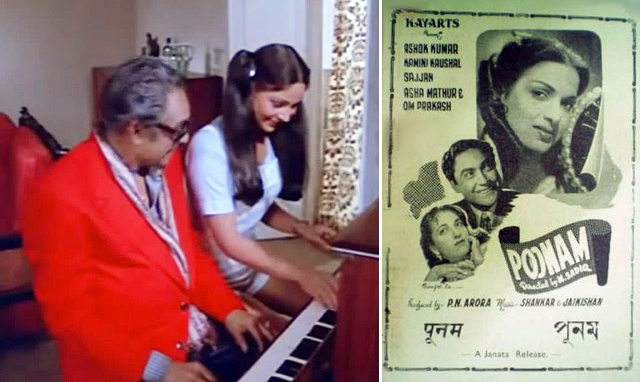
Dadamoni, Rati Agnihotri in a still from Shaukeen; poster of Poonam (below)
Roshmila Bhattacharya (MUMBAI MIRROR; October 11, 2018)
I met him for the first time as a wide-eyed 22-year-old trainee journalist. And even as I was stuttering over the “Sir”, he cut in to say gently, “Call me Dadamoni.” With that one word he steadied my skittish nerves and I made a friend for life. Since our birthdays were a day apart, Ashok Kumar who’d have turned 107 on October 13, would always insist that he was younger than me which, going by the twinkle in his eyes and his Puckish humour, he was.
Rati Agnihotri, the giggly PYT of Basu Chatterjee’s Shaukeen whom the three old men — Ashok Kumar, Utpal Dutt and AK Hangal — compete with each other to impress, agrees with me, saying his chuckle was the most delightful sound she’d heard. “And the hilarious anecdotes Kishore da (Kishore Kumar) and Dadamoni would narrate had us clutching our sides with uncontrollable laughter. He was tailor-made for that role, except he wasn’t lecherous, he was one of the nicest persons I’ve met,” asserts the actress.
Another co-star, Kamini Kaushal, flashbacks to one of her earlier films, Poonam, which had Dadamoni as the much older hero, mesmerised by her singing. She narrates how she’d met him for the first time when he’d come to her college, Kinnaird in Lahore, to attend a cultural programme organised for the war relief fund as the chief guest. “I was a final year honours student in English literature, spirited, fun-loving and uninhibited. After my solo dance performance, I was standing in the row right behind him, and to catch his attention, I stealthily pulled his hair from behind,” the nonagenarian actress shares.
Kamini ji adds that when they started working together in Poonam, she asked him if he remembered her from that incident, and he nodded with a laugh, “Of course I do, you naughty girl.” That set the tone of their relationship. “I was a kid and he was years older, but we were buddies,” she smiles fondly at the memory.
For Rati, Dadamoni was someone she could talk to about anything and everything. “He was learned and honest. Given how young and inexperienced I was then, his anecdotes from his life’s journey were like Aesop’s Fables for me,” she asserts.
Rati goes on to recall how during the shooting of a song for Tawaif, she had admitted to him that the 18-hour workdays, 24x7, for months on end, were taking their toll, leaving her drained and susceptible to infections. Dadamoni who had studied homeopathy, immediately prescribed some little white pills which her parents got from a pharmacy in Princess Street. “They worked miracles,” the actress marvels years later.
That wasn’t the end of his lessons. During the shooting of B R Chopra’s social drama, there were times when Rati would get a little anxious because this character with her body language and colourful vocabulary, was very out of character for the young girl. “I would nervously ask Dadamoni how to do a particular scene Chopra uncle had briefed me on. He would tell me reassuringly, ‘Beta, tum jaise kar rahi ho, sahi hai.’ This gave me the confidence to play the role naturally, without trying to force myself to become someone I wasn’t,” she says.
Today, when I look back to our conversations, I realise I got my share of Aesop’s Fables too, between chuckles, which still echo in my ears.
Kishore Kumar sometimes would insist he’d sing only if the producer stood on a table and danced-Bharti Jaffrey
7:48 AM

Roshmila Bhattacharya (MUMBAI MIRROR; August 2, 2018)
One of my biggest regrets is that I never got to meet Kishore Kumar, so, every year, on his birth anniversary, August 4, I meet him through memories of family and friends. This year, I reached out to Bharati, Ashok Kumar’s eldest daughter, who started out by telling me that because of the 18-year age difference between her father and him, her Kishore Kaka was more of a friend than an uncle who had lived with them since he was 10 and was a part of the ‘golpo’ sessions her baba hosted for the kids between 9 to 10 pm.

During their story-telling sessions, Kishore would sit on her piano and give live music, which was peppy, sad or scary depending on what Dadamoni (that was how everyone including Kishore addressed Ashok Kumar) was narrating. The piano had been gifted to Bharati by her father in 1946 to learn Mozart and Beethoven like any cultured Bengali girl. It soon became a favourite with Kishore too who composed many songs on it. It has now been handed down to her grandson, Anooradha Patel and Kanwaljit’s son, Siddharth Singh, the new musician in the family.
Bharati’s favourites from her Kaka’s repertoire are Kudrat’s “Hamein Tumse Pyar Kitna” and “Ei Je Hethay Kunjo Chayay Sopno Modhur Mohe” from his Bengali film, Lokochuri. She points out that the brothers shared a love for music, Dadamoni having sung 48 songs by her count, and Kishore borrowing two of them, including Padosan’s iconic “Ek Chatur Naar” which his brother had sung in 1941 in Jhoola while bathing. “Earlier, in 1936, baba had crooned 'Koi Humdum Na Raha, Koi Sahara Naa Raha' for Jeevan Naiya, his first film as a hero. A quarter of a century later, Kishore Kaka sang the song in his home production Jhumroo,” Bharati informs, remembering many jugalbandis between the duo with a smile. For the film fraternity though the brothers were poles apart. While Ashok Kumar was disciplined and respectful to his filmmakers, his younger brother was a brat and Dadamoni got a lot of complaints about Kishore’s crazy demands, like insisting he’d sing only if the producer stood on a table and danced. “Baba would call and sternly ask for a meeting. When Kishore Kaka arrived, baba would ask him how he could say all these things without batting an eyelid. ‘Mujhse kyun nahin hota?’ he would grouse,” Bharati says.
She goes on to recall how her uncle with a straight face had once told the interior decorator who was demanding an exorbitant sum to do up his Juhu bungalow, that he wanted a swimming pool in the living room and instead of chairs, guests would sit in boats that bobbed around and chat. “The man never returned. He also refused to pay BMC tax because the kachcha road outside his residence was full of potholes and his rickety little car was in danger of stalling. He paid up only after they repaired the road,” she says, adding that the problem continues.
Kishore, she reveals, had a passion for horror films, even C-grade ones, and Bharati reveals they grew up on the Draculas and Frankensteins of the world. After Door Gagan Ke Chaon Mein, he wanted to make a horror film too but like many of his projects, it fizzled out. On the day he passed away, he’d been watching the 1954 American-Western, River Of No Return. While it was playing he had an idea and asked his nephew Deb Mukherji to ask Danny Denzongpa to meet him. “Kishore Kumar and Danny, it will be a great film!” he asserted. A few hours later, he succumbed to a heart attack. It was Dadamoni’s 76th birthday.
“I met him for the last time at my mother’s funeral. After all the rites were over, he came up to baba who was in tears and asked, ‘Kya karoon?’ Baba asked him to sing a song and he chose Piya Ka Ghar’s ;Yeh Jeevan Hai, Iss Jeevan Ka, Yehi Hai, Yehi Hai, Yehi Hai Rang Roop'. That’s the last time I heard my Kishore Kaka sing,” Bharati says.
I’d like to blackmail the Coen brothers so that they give me one of their scripts to make-Abhinay Deo
8:14 AM

Renuka Vyavahare (BOMBAY TIMES; April 5, 2018)
He swears by the Coen brothers, and just like the acclaimed Hollywood filmmakers, he too has a few quirks. There are two things that put him off — badly made chai and people mistaking his name for Abhinav. The man has acting in his genes; his parents Ramesh and Seema Deo are veteran Marathi and Hindi film actors. Yet, Abhinay was always fascinated by the art of storytelling. In an interesting conversation with BT over a cup of invigorating chai (just the way he likes it), the director talks about his forthcoming black comedy, Blackmail, starring Irrfan, and also tells us why Bollywood needs to take a leap and make more genre-bending cinema. Read on…
Your parents Ramesh and Seema Deo and brother Ajinkya, are actors. Were you never drawn to acting?
Yes, aai, baba and my brother are into acting, but how many members of the family should do the same thing? (laughs!) From the start, I was inclined towards directing as facing the camera never appealed to me. What matters to me is how I can tell a story differently. I wrote my first screenplay at the age of 14 and I did it hoping I could direct it. My writing was always directorially driven. I remember taking the script to my father. He told me, “First finish your studies and come to me when you are 21.” Education was always a priority at home, but it was never just about getting a degree or a job.
It was about knowing and exploring things beyond the surface. They never stopped us from doing what our heart wanted and that killed our desire to rebel. I am an architect first, then an ad filmmaker and then a filmmaker. My brother is a computer engineer. We are academically qualified, and only after we completed our studies we decided to enter the film industry. I guess it’s a very Maharashtrian way of life. I must have accompanied my father to a film set not more than 6-7 times. My parents weren’t really in favour of taking me along on the set.
Coming from a home where your parents were both renowned actors, did you interact with actors from those times?
The atmosphere at home was very simple. My parents weren’t as social or starry. They consciously kept us away from the limelight or filmy parties, but I have fond memories of dadamoni (Ashok Kumar sahab) coming over and having varan bhaat with tup (ghee) in our house. I was little but I also remember Rajesh Khanna visiting us and chatting with my father for long hours in the afternoon. He used to smoke cigarettes and I was very fascinated by his tin of cigarettes and the way he smoked them on our terrace. It was all very informal. Even if we met stars we never met them in the capacity of Bollywood actors. We met them as family. I don’t remember any fancy parties at home like the ones we see today.
Delhi Belly put you on the map. It set a benchmark for dark comedies in India but that genre largely continues to be untapped. Blackmail comes six years after Delhi Belly and it’s a dark comedy, too.
I love that genre. I have grown up with a quirky sense of humour myself and I am a huge fan of the Coen brothers. Their stories are inspired by true events, their characters are realistic and yet their films are so quirky. That is exactly the genre that Blackmail and Delhi Belly are set in too. You are laughing at someone else’s misfortune. Having said that I also love other genres like action, which is why I made the television series 24, Force 2 and Game. Conceptually, I don’t like to repeat the same thing again. I want to explore newer territories and keep coming back to what I love the most. With Blackmail, I feel like I am coming back to the genre I love the most.
Filmmakers who make comedies always stress on the fact that making people laugh is tough business. More so, when you are making a black comedy, it has to be intelligent and funny. Your films also have a good dose of toilet humour. It can be hilarious, but tricky too…
Yes, I enjoy the kind of toilet humour I use in my movies, but I am aware that the writing needs to be clever, not crude. It is a delicate genre. You need to handle it cleverly because if you cross the line then it becomes slapstick. The minute it becomes slapstick, it’s anybody’s game. To do it subtly is the challenge. Dark humour, particularly, is the most difficult to pull off. Slapstick is relatively easy to write or perform. To keep a straight face, do less but show more and make people laugh without doing much is challenging.
Blackmail seems like a zany take on infidelity...
The story is part real and part fiction. The premise is real, but of course, it’s a fictionalised tale of a straightforward middle-class guy, who discovers that his wife is sleeping with someone else. Think about the common man’s predicament. Can he beat up his wife’s lover or the wife? No. So he gets smart. He has an EMI problem so he decides to blackmail his wife’s lover and kill two birds with the same stone. It’s a quirky way of handling a very grim, realistic problem.
An actor like Irrfan must have added his own quirkiness to a story like this?
Irrfan was my first choice. I wanted somebody to look like an aam aadmi and who can act like he doesn’t have the balls to tackle his boss, his own wife or her lover. He is a zindagi se haara hua aadmi. The character needed someone who can deliver with the least amount of lines and expressions on what’s going on inside him, and there was no one better than Irrfan who could pull it off.
While working with Irrfan, did you have the slightest inkling of his illness?
No. Even he didn’t! Nobody knew. It’s so unfortunate. My heart goes out to him and his family. They are fighting this battle well. They are incredibly strong and amazing people. I am sure they will win this fight and will be back soon. I met Irrfan before he left for his treatment. I showed him the film and he loved it. What he has managed to do with the writing is spectacular.
If you had a chance to blackmail someone for a day, who would be that be and why?
I’d blackmail the Coen brothers so that they give me one of their scripts to direct! They can sue me after that but this is what I would love to do (laughs!). You keep thinking about their films long after you’ve watched them and they make you smile. Burn After Reading for instance, was insanely funny and an actor like Brad Pitt played a daft role. Matt Damon does so many crazy cameos too. He does an Ocean’s series and then a Bourne film, where he is the lead star. More Indian actors should be open to doing such stuff.
Do you think Indian actors have a long way to go before they give preference to great scripts over their screen time in a film?
Unfortunately yes. I would appeal to all the Bollywood actors that for every two commercial films you do, do one for yourself or for the craft or the story. What they don’t realise is that the so called ‘mass audience’ that we try and cater to is slowly converting. They want better ideas and better films. Imagine a film like Pad Man releasing 25 years ago. It would not even hit the theatres. Actors like Akshay Kumar and Aamir Khan take risks. Ajay Devgn is pushing the envelope as well. An actor is as good as the audience and an audience is as good as the actor. You can’t wait for the audience to get smarter and then do something different. You need to start the trend. If it wasn’t for genre bending films like Jaane Bhi Do Yaaro and Dil Chahta Hai and, we would still be making the same kind of cinema today.
Have you ever thought about directing your parents?
My father is 90 and mother is 80, I really hope that one day I’ll be able to direct them and make a film on their love story. That’s been on my mind for a while.

Sharmila Tagore's bikini scene was cut during a screening on Doordarshan-Shakti Samanta
7:39 AM

Madhubala in Howrah Bridge; Shakti Samanta; Sharmila Tagore in a still from An Evening in Paris
Roshmila Bhattacharya (MUMBAI MIRROR; January 18, 2018)
I met Shakti Samanta just once, at his office in Natraj Studio, and over a couple of hours, I discovered that the stories behind his jubilees were just as fascinating. Tall, with an almost expressionless face, Shaktida, as he was fondly called, though in his 80s and by his own admission not keeping well, still reminded me of a cop. He surprised me by revealing he’d play some bit roles as an inspector, before going on to direct Inspector, featuring Ashok Kumar as the inspector this time, chasing after a car, like he’d done before.
Interestingly, it was a car that resulted in the crime-thriller, Howrah Bridge, whose song, “Aaiye Meherbaan” showcased Madhubala in a glamorous avatar as club singer Edna. It also had Helen doing a “Mera Naam Chin Chin Chu” but for me it was Madhubala’s showgirl oomph that made this Howrah Bridge unforgettable.
Soon after Sheroo, Shaktida was in hospital after crashing his car, with three broken ribs, when in two weeks of forced bed-rest, he came up with the idea of Howrah Bridge which launched his banner. He contacted Ashok Kumar as soon as he came out of hospital. The actor was game, even interceding with Madhubala’s father on his behalf. She shot for his film at the same time as K Asif’s Mughal-E-Azam. “Even as she swayed to 'Aaiye Meherbaan' in a short dress she’d be doing a 'Pyar Kiya To Darna Kya' at Badshah Akbar’s court later in the day,” Shaktida informed, his impassive face breaking into a rare grin.
The following year, Madhubala returned to the screen in his second production, Insan Jaag Utha, this time building a dam with Sunil Dutt. A hat-trick followed with Jaali Note but this time his partner reneged on their verbal agreement and Shaktida laughed that the film lived up to its title even in real life. His fourth film, Barood, was set in a coal mine, but Kishore Kumar who went on to marry Madubala, pointed out that she wouldn’t be able to shoot in a mine with her heart condition. So, Shaktida started Naughty Boy, a comedy with Kishore and Madhubala but after around 10 reels, she was too ill to shoot and he had to reshoot the film with Kishore and Kalpana. He ended up losing money again.
Kashmir Ki Kali put him back in the hit list. It introduced Sharmila Tagore, who’d impressed in Satyajit Ray’s Apur Sansar and Devi, to Bollywood and soon the entire nation was singing, “Yeh Chand Sa Roshan Chehra... Yeh Jheel Si Neeli Aankhen” along with Shammi Kapoor who choreographed the song himself. It didn’t matter that her eyes weren’t aquamarine, her dimples floored everyone.
Sharmila went on to do his Saawan Ki Ghata, but the film that turned her into a fashionista was An Evening In Paris. Sharmila, he confided, had been prepared to wear a bikini for the film — she even posed for a Filmfare cover in a two-piece — but Shaktida didn’t want to take on the censors, and settled for a more conservative swim-suit. “Despite this it was deemed vulgar by Mandi House officials four decades later, and the scene was cut during a screening on Doordarshan,” he shared.
More eyes rolled when Sharmila turned up in Aradhana, with Rajesh Khanna seducing her with “Roop Tera Mastana” then, calling her “ma”. The film made Rajesh Khanna the ‘Phenomenon’ and bagged Sharmila the Filmfare Award for Best Actress, silencing all detractors. Shaktida also bagged the Black Lady for Best Film.
The actor-director jodi would have collaborated on Kati Patang too, but Sharmila was expecting Saif then and had to reluctantly refuse. But she returned to do Amar Prem. This time however, they did not take home any awards because the film was a remake of a Bengali film and despite all the changes Shaktida incorporated was deemed ineligible. No one cried despite the disappointment because as Rajesh Khanna’s character says through the film, “Pushpa, I hate tears...”, Shaktida hated tears too. But he was back to claim more awards with Anurag and Amanuush.
The stories would have gone on had Shakti still been around. He’d have been 92 now, and going by our last conversation, still brimming with ideas. Devdas in 2002, with Prosenjit, he admitted had been a “mistake” but he’d been toying with another Sarat Chandra story. Which one? I’ll never know.
Subscribe to:
Posts (Atom)