Showing posts with label Ashish Pherwani. Show all posts
Showing posts with label Ashish Pherwani. Show all posts
Paid music streaming hits the right note as free users fade
9:50 AM

After a sluggish phase, the number of paid subscribers rise 37% to 14 m in 2025: Report
Rajesh N Naidu (THE ECONOMIC TIMES; April 13, 2026)
Mumbai: After a prolonged slowdown triggered by the shutdown of two audio streaming platforms and consumer reluctance to pay for music, India's music streaming industry is seeing a revival, with the number of paid subscribers rising 37% to 14 million in 2025 from 10.5 million in 2024, according to the latest FICCI-EY media and entertainment report.
Affordable subscription plans, bundling deals with telecom operators, closure of some radio stations and rising investments in live events are expected to accelerate growth further. Streamers, music labels, industry experts and independent consultants told ET the paid subscriber base could expand to 50 million to 75 million in the coming years.
Removing free features on their platforms has boosted the paid subscriber base of streamers, sector experts said. Features such as rewinding songs, downloading songs for offline listening, unlimited skipping and selecting a song of one's choice are no longer free on streaming platforms.
"Cutting down on free features has boosted the paid subscriber base of music audio streamers," said Ashish Pherwani, leader, media and entertainment sector, EY.
Multi-format listener journeys and technology have lifted streamers' paid subscriber base, executives said.
"The growth in paid subscriber base is fuelled by a unique multi-format journey. Fans discover artists through Shorts. Then, they engage with long-form videos, ultimately transitioning to YouTube Music for dedicated listening. This evolution is further accelerated by AI-driven personalization," said Gunjan Soni, managing director, India, YouTube.
Highly affordable subscription packages have added to the growing paid subscriber base, streamers said.
"Indian listeners have realised the value of ad-free music at a reasonable price," a JioSaavn spokesperson said. In October 2025, JioSaavn launched an annual subscription plan of Rs. 399, providing access to its full catalogue, ad-free music and unlimited downloads.
In recent years, streamers have also been following a hyper-localized strategy by offering discounted subscription packages, similar to mobile recharge plans, targeting listeners of regional language songs.
"There is a rising demand for high-quality regional content. To support this demand, we have prioritized affordability with the launch of YouTube Premium Lite (Rs. 89 per month) in India. By offering this lower-priced tier, we are making the ad-free experience more accessible," said Soni of YouTube India.
Increasing acceptance of digital payments has also boosted paid subscriber growth, music labels said.
"Improved payment ecosystems have significantly boosted the paid subscriber base. This drives better monetization and provides deeper engagement with audiences across diverse markets," said Sujal Parekh, business head, Zee Music Company.
Superior audio quality-high fidelity (24-bit lossless) and immersive sound (Dolby Atmos)-as well as support for artists have increased the paid subscriber base, independent music business professionals said.
"Today, listeners pay for superior audio quality. They also show artist loyalty by buying subscriptions," said Aditya Kalia, an independent music consultant.
Lastly, sector experts believe live events will be a crucial differentiator for streamers in the long run, given the limited scope for growth in subscription and advertising revenue.
OTT platforms script new strategies to cut costs
3:56 PM

Industry is embracing financial discipline through content production benchmarking, say execs
Javed Farooqui (THE ECONOMIC TIMES; June 12, 2025)
India's OTT industry is entering a phase of financial discipline, with leading platforms such as Netflix, Amazon Prime Video, JioHotstar and ZEE5 undertaking content production benchmarking exercises to manage costs and bring in fiscal prudence, industry executives said.
Platforms have engaged consultant majors like EY, PWC and Deloitte to create content cost benchmarks - to help them allocate resources for various projects more effectively with a clear reference point to assess production costs in comparison with shows of similar scale on other platforms.
"The move reflects a shift towards profitability and operational efficiency, as platforms look to streamline workflows, reduce wastage, and align with global best practices," said a media executive aware of the development.
The cost optimization push comes amid a spike in production expenses of OTT content and increased focus on profitability in a competitive market where subscribers are sensitive about charges and the number of advertisements.
"The rising costs of OTT episodic content - which is created in shorter seasons compared to longer-running television shows - combined with a focus on profitability by OTT platforms as they mature out from the growth phase, has led to increased cost-consciousness," said Ashish Pherwani, media and entertainment leader at EY India.
According to a Media Partners Asia report, the streaming industry in India spent over $2 billion on originals between 2018 and 2024. It is projected to spend another $2.2 billion between 2025 and 2028.
Previously driven by aggressive growth targets, the industry is now focusing on structured spending to ensure sustainable growth without compromising on storytelling quality, executives said.
The CEO of a leading media company said the industry has been conducting production audits for years to ensure that content budgets are spent judiciously and wastage is minimized.
"Production benchmarking, on the other hand, has been prompted by the realization that companies need to reduce losses and move towards profitability by optimizing content spending, which remains the largest cost component for streamers," he said requesting anonymity.
Amit Goenka, president - digital businesses and platforms at Zee Entertainment, said the company has always been judicious with its content investments.
"When international players entered the market, they approached large production houses that quoted fixed prices and began creating content. Now, these players are looking to optimize costs," he said. "They're asking critical questions: how much is going to talent, how much to line production, and how much to VFX... They're asking for detailed breakups."
Goenka said the presence of big stars in OTT shows should be justified by their value to the script. "If the story holds its own, why would I pay crores to an actor just for being there?" he said.
A media analyst noted that India's OTT industry, still at a relatively nascent stage, is maturing, and these exercises reflect a concerted effort to bring order to rising production costs. "India doesn't yet have a gold standard for what it costs to produce a streaming show," the analyst said. "With boards of entertainment companies asking tougher questions, it has become essential for the industry to develop such a framework."
Stage's set for live shows to outshine the silver screen
8:19 AM
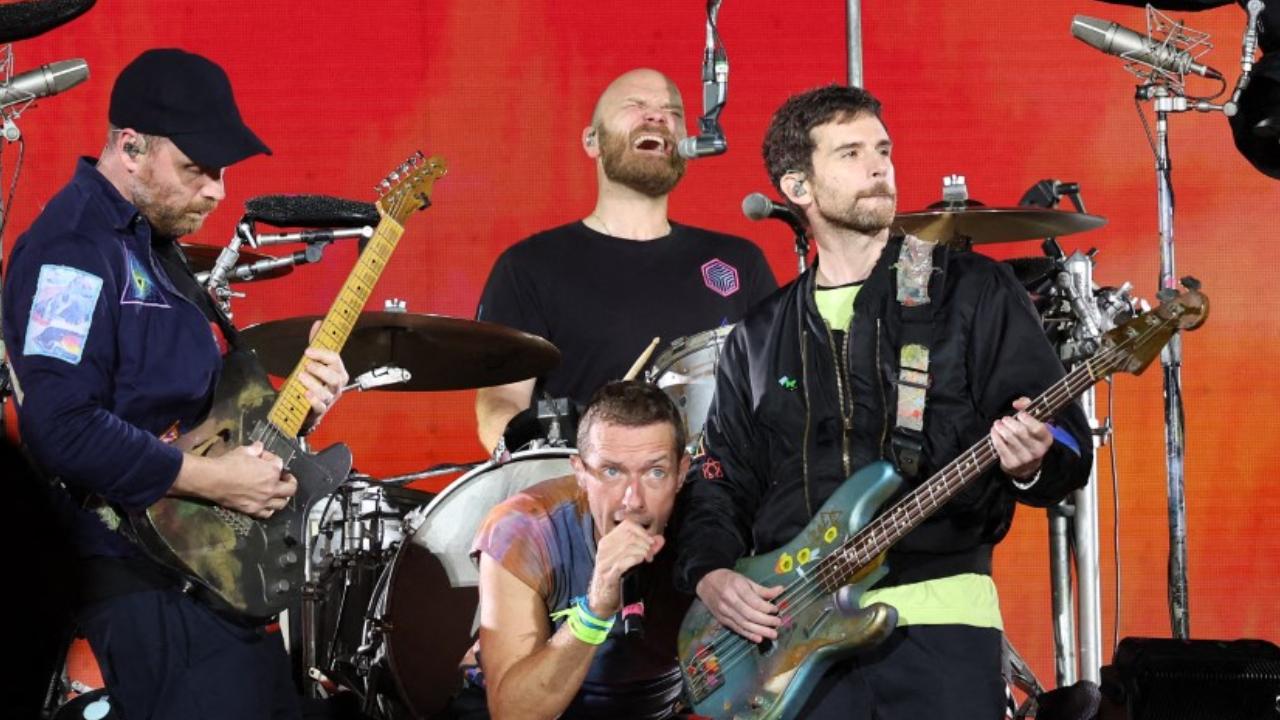
Live events poised to be the fastest-growing category in entertainment biz in 3 years, driven by demand for niche experiences
Rajesh N Naidu (THE ECONOMIC TIMES; April 15, 2025)
Mumbai: Live events are poised to emerge as the fastest-growing entertainment category over the next three years, with revenues projected to grow at 18.2% compounded annually to Rs. 16,700 crore, outpacing filmed entertainment, which is estimated to grow at a modest 4.3% to Rs. 21,300 crore, according to the latest FICCI-EY Media and Entertainment report.
Filmed entertainment includes box office, satellite and digital rights, international theatricals, and in-cinema advertising.
A key factor fuelling demand for live events is the emergence of ticket booking platforms, making the economics of live events favourable for organizers in recent years.
"Availability of ticket-booking websites has brought about a big change. Today, a live event derives 60-70% of its total revenues from tickets and food & beverages (select locations). Sponsorship contributes, on average, 30-40% to total revenues of events," said Lalitt Gattani, cofounder, Showcraft Productions, which organises musical concerts and political events.
An estimated 30,687 live events took place across 319 cities in 2024, marking an 18% growth over the previous year. Revenues from ticket sales surged 40-50% last year, while sponsorship revenues jumped 30% in the same period.
Live event is an umbrella term used for defining business-to-consumer (B2C) and business-to-business (B2B) events. These include sports, musical concerts, political and religious events, comedy shows, weddings, musical plays, and managed corporate events. Sports and musical concerts attract larger audiences in B2C events, according to event organizers.
"Today, audiences seek premium entertainment experiences which are at par with global standards. This reflects a shift in their expectations. They are ready to invest in unique, high-quality events," said Anil Makhija, chief operating officer for live entertainment and venues at BookMyShow.
Digital or social media penetration also contributed significantly to creating demand for live events. Various social media platforms are giving the much-needed information required for exploring and discovering artists and their works.
"Today, we live in a global digital world. Audiences are exposed to artists across geographies. Audiences aged between 12 to 25 are tastemakers as they explore and identify artists. These artists discovered by tastemakers are followed by audiences who are taste followers," explained Tarsame Mittal, a musical entrepreneur who has managed more than 60 artists, including Arijit Singh, Badshah and Vishal-Shekhar.
Live events require Rs. 5-30 crore in investments on average, generating returns of about 30%, according to event organizers. Of late, the emergence of a favourable demographic for live events with 40-50 million affluent homes and easier access to purchasing tickets through digital platforms has helped grow this market.
"Live events such as musical concerts offer premium, aspirational and assured-quality experiences, which enable higher monetary commitment. This is a great attraction about them," said Ashish Pherwani, leader, media & entertainment sector, EY India.
Screen fatigue such as mobiles, laptops, and televisions has also become another key contributor to growing attendance at live shows. Event organizers say audiences are looking for more 'real' experiences instead of the mind-numbing virtual world experience.
OTT platforms may spend less on entertainment shows amid focus on margins
8:08 AM

Javed Farooqui (THE ECONOMIC TIMES; April 18, 2024)
Over-the-top (OTT) platforms are likely to ease spending on entertainment content due to hectic merger and acquisition (M&A) activity in the media sector, impacting commissioning of fresh content amid stagnation in subscriber growth and a renewed focus on profitability after years of unbridled investment, say experts.
Experts believe that OTT entertainment content spending will continue to be driven by streaming giants Netflix and Amazon Prime Video as Indian media companies are either recalibrating their content strategy or going slow on greenlighting new shows due to M&A activities.
According to Media Partners Asia (MPA) research, online video contribution to total content investments including TV and films has nearly tripled since the pandemic with total video content investments touching $5.8 billion in 2023.
"We estimate a slight fall of 5% in 2024. Some of the key factors are the sluggishness in the SVOD (subscription video on demand) market, move towards profitability, and attempt at TV plus content cost models," said Ashish Pherwani, Media & Entertainment Leader, EY India.
According to the latest FICCI-EY report on the entertainment sector, online video content investment in 2023 stood at Rs 12,500 crore ($1.4 billion), with live sports comprising nearly 51% of the spending and the remaining 49% on originals and films.
Sony LIV content head Saugata Mukherjee said there will be a correction on the number of Hindi originals produced by OTT platforms. "There was a sudden glut of shows all across; I feel that will come down. And more of the same will no longer work," he added.
The Sony Pictures Networks India-owned streaming platform is scaling up original content offerings in non-Hindi languages such as Telugu, Tamil, Malayalam, Marathi, and Bangla. "We will also continue to expand our unscripted and premium television content pipeline," Mukherjee said.
The FICCI-EY report noted that 48% of all OTT titles produced were in Hindi, compared to 52% in other Indian languages. In 2023, streaming platforms produced a staggering 3,000 hours of original content.
“Given the flurry of M&A activities among major networks in the industry, the commissioning of new projects has taken a backseat over the last 4-6 months," noted MPA VP Mihir Shah.
The first half of 2024 will be dominated by live sports and elections, with entertainment likely to take a backseat.
"It will likely take some time for the entertainment industry to regain momentum, primarily hinging on the rebound of the advertising market and consumer sentiment in the second half of this year," Shah said, adding that streaming video is poised to match linear TV's content investments in the next five years.
Production companies anticipate a challenging year in 2024 due to a decrease in OTT content investment.
"In light of recent content experiments, it's no surprise to witness the anticipated consolidation across OTTs, a trend that transcends mergers alone. While pull content—defined by its creator, cast, and scale, garnering subscribers—remains steady, the landscape for push content—new, niche, and esoteric—is poised for significant reduction," said Friday Filmworks CEO Devendra Deshpande.
He emphasized that there is a need for precise content curation to adapt to changing audience preferences and industry demands.
Banijay Asia chief operating officer of Scripted Division Rajesh Chadha, however, believes that overall content spends might not go down even as OTT platforms rationalize costs.
"We are observing a trend of rationalization in the market where there may be more shows per platform but with lower costs per unit for creators. While there might be fewer marquee shows each year, overall spending is expected to grow, albeit marginally," he said.
With Netflix and Prime Video unveiling their biggest-ever content slates for the Indian market, Nitin Menon, NV Capital Founder, feels that content spending by the streaming giants will not plateau any time soon.
"The fact that Netflix and Prime Video continue to add subscribers globally and their valuations continue to skyrocket makes it unlikely that they will reduce their OTT spends in India."
Not BOGO, Free Tickets, loyalty schemes but content behind blockbuster theatre footfall
2:30 PM

Such offers work for certain section of audience and provide limited incremental benefits: Experts
Rajesh Naidu (THE ECONOMIC TIMES; April 9, 2024)
ET Intelligence Group: At a time when upcoming elections and ongoing Indian Premier League (IPL) dominate public discourse and mindshare, multiplexes have roped in banks to lure audiences to theatres. As many as 78 credit cards of various banks have rolled out attractive offers on movie tickets such as buy one get one (BOGO) free ticket, discount up to a certain ticket price, providing a fixed number of free tickets in a month, cash back on tickets, or pre-paid cards that offer tickets at cheap rates on weekdays.
So, are these offers boosting footfalls in theatres?
Sector experts are of the view that such strategies provide limited incremental benefits. Any significant improvement in footfalls and food and beverages (F&B) sales will depend on the popularity of the film, they said. "Loyalty programmes can work for a certain section of audience and fill up shows on weekdays where occupancy rates are typically lower," said Ashish Pherwani, leader, media and entertainment sector, at EY. "But the content must resonate with audiences. Only then will these initiatives provide incremental benefits."
He said, "BOGO free ticket offers help improve occupancy as well as increase food and beverage revenues. But it can be used only for certain films or time bands."
Karan Taurani, senior vice-president at Elara Capital, said BOGO offer is likely to contribute 12-13% to total revenues generated by Hindi films. "But audiences avail these offers only if the content is good in theatres," he said.
"A few mid-budget films have worked in the March 2024 quarter. This is perhaps the first time when a few films have worked in a quarter and offers on tickets have added to footfalls," Taurani said.
According to analysts' estimates, loyalty programmes and other offers on tickets boost occupancy in theatres on weekdays by 16-20%.
Music industry hits a high note with Rs. 12,000 crore revenue
2:21 PM

Over 20,000 songs created by 40k musicians help achieve this mark
Javed Farooqui (THE ECONOMIC TIMES; December 5, 2023)
Mumbai: The Indian music industry generated Rs. 12,000 crore in revenue last year involving more than 40,000 music creators, says an EY report titled ‘The music creator economy: The Rise of Music Publishing in India’. However, India’s global revenue ranking still trails other developed markets, the report stated.
At Rs. 12,000 crore, the report noted that the music industry contributes around 6% of the media and entertainment industry revenue. It added that music is integral to streaming, films, television, radio, gaming, and social media.
Music revenue from streaming and broadcast stood at Rs. 5,692 crores and Rs. 4,350 crores, respectively. Filmed entertainment and concerts & events contributed Rs. 1,200 crores and
Rs. 805 crores, respectively, to the overall music revenues.
Rs. 805 crores, respectively, to the overall music revenues.
The report added that the recorded music revenues of labels crossed Rs. 2,500 crores in 2022 and are projected to touch Rs. 3,600 crores in 2024. It noted that the music publishing revenue will touch Rs. 845 crores in 2022–23 and is expected to touch Rs. 1,690 crores by 2026–27.
Ashish Pherwani, Partner, Media & Entertainment, EY India, said the music segment’s sound recording revenues have been driven by both local and international labels for a long time.
He added that music publishing revenues remain much smaller, given the differing views on its applicability, litigation, and low awareness.
Of the Rs. 845 crores revenue earned in 2022–23, almost Rs. 525 crores of the music publishing revenue came from the Indian Performing Rights Society (IPRS), which pays royalties to music creators by collecting license fees on their behalf from music users.
About Rs. 320 crores of music publishing revenue was earned by the music publishers directly. “The IPRS has over 13,500 authors as its members and continues to grow its revenues as more music users comply with publishing requirements,” Pherwani noted.
According to the report, Indian songs are among the most popular in the world, holding seven spots on the Top Ten YouTube Global Charts for 2022.
The Indian music market is highly inclined towards film music, with 70% of music consumption and 75–80% of recorded music revenue being driven by film music. While India’s music business is governed primarily by the Copyright Act, divergent court decisions have resulted in differing viewpoints on its applicability and/or its quantum, the report stated.
This divergence in implementation, it added, has resulted in low compliance with the Copyright Act.
Paying OTT users in India could be fewer than 10%, reveals EY survey
8:52 AM

EY SURVEY: Proportion of paid users in India is still in single digits with many people sharing account passwords
Rajesh N Naidu & Gaurav Laghate (THE ECONOMIC TIMES; April 28, 2022)
Mumbai: Video streaming or over-the-top (OTT) platforms have shown a strong traction in consumer growth over the past few years. However, the proportion of paid subscribers has remained in single digits reflecting the impact of sharing of account passwords and content piracy. A recent sector report by EY points out that less than 10% of the total 50.3 crore Indian OTT consumers actually pay for these services.
“The number of OTT consumers is probably much higher than the number of subscriptions; like how a newspaper is consumed by several people in a family or around a tea stall in smaller towns,” said Ashish Pherwani, leader, media & entertainment sector, EY (Ernst & Young) in the report.
Danish Khan, EVP and business head, Sony LIV and SET at Sony Pictures Networks India, feels that there is a lot of potential for growth in paid subscribers. “One has to look at both — the direct-to-consumer (D2C) subscriptions, which are around 20-25 million at present, as well as a large B2B segment, which is offered as bundled service along with telecom or other bundled offers.”
He added that the B2B has grown significantly and is around 40-45 million. A low percentage of paid subscribers can be attributed to sharing of passwords with family and friends. The EY report estimates that on average a paid subscription was used by 3-3. 5 people in 2021. “Our estimate of 40 million OTT households could have a potential reach of up to 120-140 million people, or even more,” mentioned the report.
Khan of Sony LIV counts piracy as the biggest challenge for the OTT platforms. “As an industry we must come together and find a solution since piracy is hurting the entire industry. We are not too worried about password sharing, as it helps in increasing sampling and will increase our base in near future.”
Khan added that concurrency and number of device-based pricing will help platforms to convert the password sharing users to become direct subscribers.
According to Ameya Naik, founder, Fantasy Events, an event management company, piracy is not just restricted to films or songs in India. “The hunger for OTT content is rising. This has alerted people who are into creating pirated versions of OTT content given the increasing market size,” Naik said.
He added that the advent of applications through which viewers can access OTT content have impacted subscriptions thereby prompting streaming platforms to consider introducing advertisements in their offerings in a bid to seek a viable source of revenues.
Subscribe to:
Posts (Atom)