Showing posts with label Aseem Arora. Show all posts
Showing posts with label Aseem Arora. Show all posts
I already have a prequel in mind for Jasmeet of The Buckingham Murders. It’s an origin story-Hansal Mehta
8:35 AM
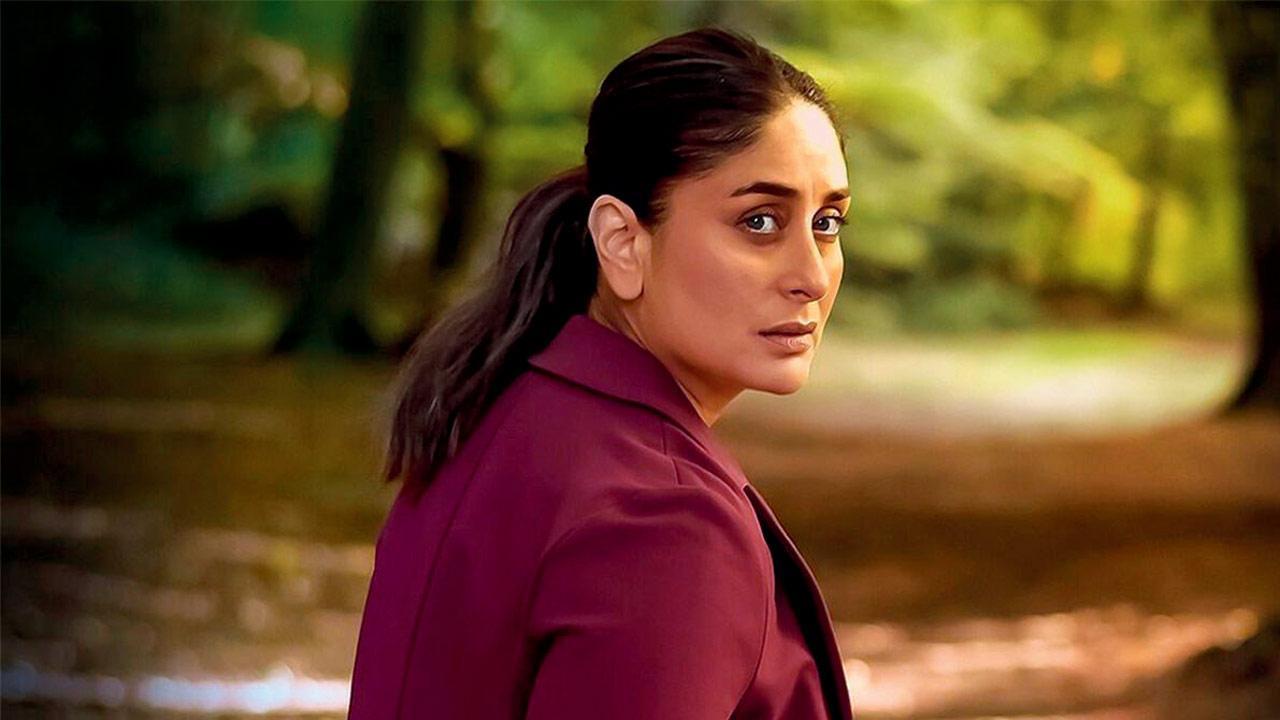
Impressed by Kareena’s ability to bring a lightness of touch to her roles, director Hansal hopes to reunite with her on The Buckingham Murders’ origin story
Upala KBR (MID-DAY; September 17, 2024)
From the time Kareena Kapoor Khan and Hansal Mehta announced their collaboration, one wondered what the marriage of the two cinematic sensibilities would look like—she, the face of blockbusters, and he, the voice behind hard-hitting stories. Now, the result is for all to see. The Buckingham Murders (TBM) is a moody thriller that is as much a story of a mother’s loss as it is a whodunit.
We begin our conversation with the director, asking if he has thought of a sequel to TBM. A story where Kareena’s detective Jasmeet Bhamra takes on another case, perhaps? “The reports of TBM are encouraging. So, maybe we can come together again. I already have a prequel in mind for Jasmeet. It’s an origin story of how she became who she is today,” says Mehta.
So, will it see the trio of Mehta, Kareena and Ektaa R Kapoor reunite? “Of course. They own the IP.”
IP or not, the director would love to team up with the actor-producer duo again. Shooting the gritty thriller with them was a deeply satisfying affair, he says.
One would think that convincing Kareena for the film was tough, but Mehta says, “Ektaa introduced me to Kareena. She was on board the moment she read the film’s treatment. It was a delight to work with her. Kareena is an instinctive actor, who doesn’t take her talent too seriously. That’s why there is a lightness of touch when she performs. It’s a complicated part, but she did it with sensitivity.”
Making it a Hinglish affair was a leap of faith on the makers’ part. While they ran the risk of alienating a section of the audience, on the upside, they remained true to its UK setting.
“The original story that Aseem Arora had written was set in the UK. I was clear that if the story is set there, it has to be truthful to its world. Often, we make Hindi movies in the UK where all the characters are speaking in Hindi. It feels fake to me. I wanted the experience to be authentic and Ektaa agreed with me.”
From Shahid (2012) to Aligarh (2015), from Scam 1992: The Harshad Mehta Story (2020) to Scoop (2023), Mehta’s filmography is built on a foundation of brave stories. But the director admits there is something missing from his résumé. “I keep telling my writers to give me a love story. It’s an unfulfilled desire to make an epic love story—something like Doctor Zhivago [1965].”

12th Fail actor Vikrant Massey begins shooting for The Sabarmati Report
8:27 AM
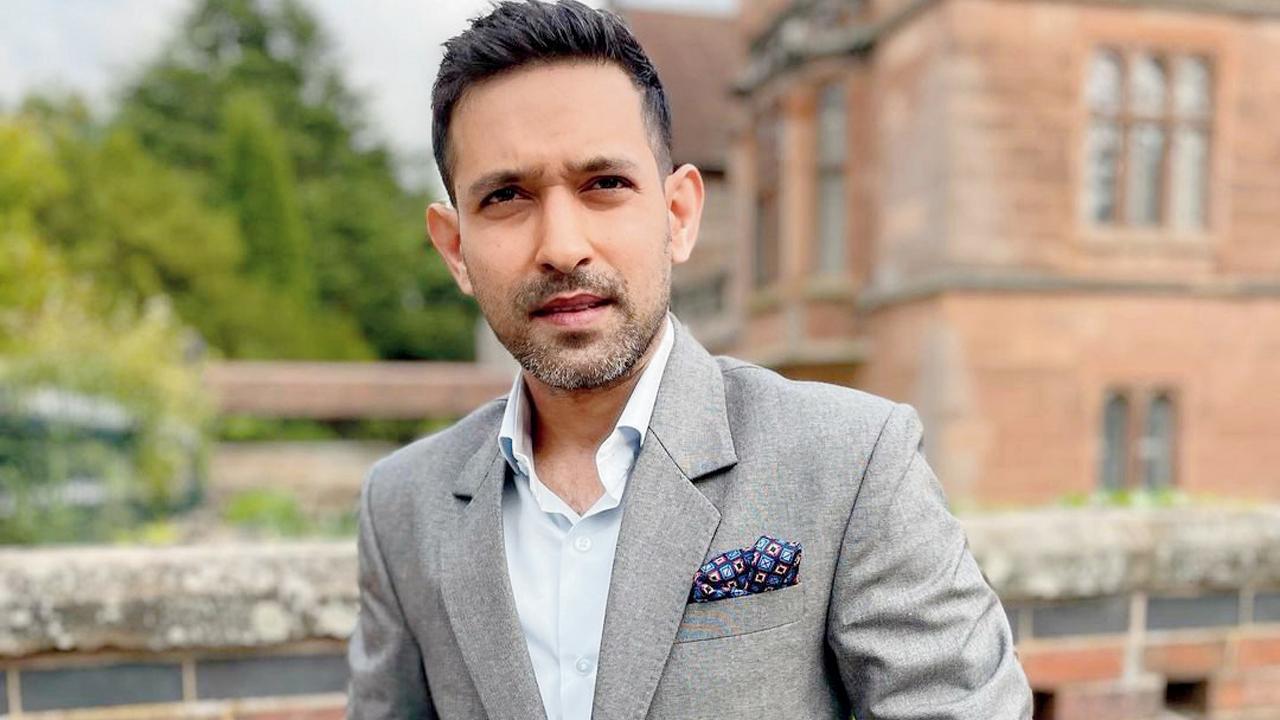
Sources say 12th Fail star Vikrant has begun shooting for The Sabarmati Report, which sees him as journalist investigating 2002 Godhra train burning case
Upala KBR (MID-DAY; January 16, 2024)
What would be a fitting film to continue Vikrant Massey’s golden run after 12th Fail (2023)? Vidhu Vinod Chopra’s directorial venture, one of the finest Indian movies of 2023 and a sleeper hit, is a tough act to follow. But it looks like Massey has found another powerful story, this time with producer Ektaa R Kapoor. The duo have teamed up for a political thriller titled The Sabarmati Report.
Beginning with the real-life episode of the burning of the Sabarmati Express in 2002, the movie then focuses on two journalists who investigate the incident and the cause of the fire. While Massey and Raashii Khanna play the reporters, we hear Ridhi Dogra—recently seen in Jawan (2023)—portrays a negative role.
On February 27, 2002, 59 Hindu pilgrims returning from Ayodhya were killed in a fire in the four coaches of the Sabarmati Express near the Godhra railway station in Gujarat. The incident led to one of the worst communal riots in Gujarat.
A source from the creative team reveals, “While The Sabarmati Report is based on the burning of the Sabarmati Express, the makers have completely stayed away from the Gujarat riots. Ektaa and director Ranjan Chandel, who previously helmed the acclaimed Grahan [2021], want to treat the subject with utmost sensitivity. When co-producer Amul Mohan and writer Aseem Arora first narrated the story to Ektaa, she was moved and told them that it was the best political thriller she had come across in years. Aseem’s story is loosely based on real-life incidents. It plays out over a decade, from 2002 to 2012.”
We hear Chandel took the film on floors in Ahmedabad on December 17 last year. The director has charted out a start-to-finish schedule.
“It was always planned as a 36-day schedule. Currently, the film is being shot near Madh Island, where life-size trains and the Godhra railway station have been recreated by art director Rajat Poddarr and his production design team. Chandel has chosen Amlendu Choudhury to serve as the director of photography.”
When people ask you about your family members, how can you feel divided?-Gulzar
7:57 AM

Roshmilla Bhattacharya (MUMBAI MIRROR; April 14, 2014)
 Lakeerain
hain to rehne do
Lakeerain
hain to rehne doKissi ne rooth kar gusse mein shayad kheench di thi
Aao ab inhiko banayen paala
Aur kabaddi khelte hain
Lakeerein hain to rehne do…
These words, penned and recited by Gulzar, are the starting point for Vijay Raaz’s directorial debut Kya Dilli Kya Lahore, a story that takes place in the course of a day and revolves around two characters—a Pakistani soldier played by Vijay Raaz who is sent to retrieve a secret file from an Indian chowky on the border and a cook of the Indian army, a role enacted by Manu Rishi, who is the only one left behind there.
They start out trading insults, determined not to be friends, till their common language, culture and music fosters an emotional bond that transcends hostility fostered by politics.
When Aseem Arora came up with the story, the film’s young team, including producer Karan Arora, decided that they needed a mentor and turned to Gulzar.
It was the film’s composer Sandesh Shandilya who introduced them to the veteran wordsmith. Gulzar loved the concept. “And when they returned with the screenplay, I asked them to show me the finished film,” says the 79-year-old poet-writer-lyricist who’s just been honoured with the prestigious Dadasaheb Phalke Award.
He was so impressed with the first edit that he agreed to come on board as the ‘face’ of the film. And 13 years after Hu Tu Tu, his name features in the credits of a film, not just as writer and lyricist, but also as the official presenter.
“There’s no commercial involvement. Vijay has made a beautiful film which I felt could help promote the peace initiative I was associated with, Aman Ki Asha. If I can lend my name to promoting peace between the two countries, I have no objections,” Gulzar asserts.
The film’s mahurat took place on the Wagah Border, a place familiar to Gulzar. He’s made several trips there on August 14, with his friend Kuldeep Nayyar, to light a candle for Hind-Pak peace. “The film is part of this mission,” he asserts, adding that when he sees Wasim Akram with Sunil Gavaskar in the commentary box during a cricket match, it makes him extremely emotional.
A year-and-a-half ago, Gulzar returned to Pakistan 70 years after he’d left his home there as an eight-year-old, to find that the familiar alleys hadn’t changed. The elders he had left behind not only recognised him, but even inquired after his elder brother, sisters and even his uncle.
“When people ask you about your family members, how can you feel divided?” he asks. “Your daughter gets married and takes on a new surname but do you stop loving her or her husband and children? Hindustan and Pakistan may be two countries today, but the familial feeling hasn’t changed.”
He recalls that whenever he is abroad, in the UK or the US, Pakistani cabbies refuse to accept money from him. And once when he was chatting with his children during a drive in Hindi, Urdu and English, the Pakistani driver listening to them quietly, finally asking him, “Don’t you speak your mother tongue Punjabi at home?” Moved by the remark, Gulzar tried to pay the man his fare but he waved it away saying, “Call me tomorrow again and jaate jaate drop by at my place for a glass of lassi.” It’s these feelings that the film seeks to encapsulate through the story of two commoners from either side of the border. And the emotion flows through Gulzar’s pen on to a song in the film. He writes,
“Kisse lambe ne lakeeran de
(There is a long story behind these lines of partition) Goli naal gal karde (They talk with bullets now)
Bol chubhde ne veeran de
(Even our brother’s voice hurts us now)
Kahani maadi hai lakeeran di
(The story of these lines is not a good one)
Mitti vich lahu ralleya
(There is blood on the soil now)
Jaan jaandi hai fakeeran di
(In between all this, humans are suffering).
Subscribe to:
Posts (Atom)