Showing posts with label Arijit Singh. Show all posts
Showing posts with label Arijit Singh. Show all posts
The industry seems to put you in a box and then overuse it-Madhubanti Bagchi
9:06 AM

(L-R) The singer with Usha Uthup. Pics/Instagram, Youtube
Priyanka Sharma (MID-DAY; July 13, 2026)
It’s not common for a singer to bring out a chartbuster even as their last song is dominating everyone’s playlists. But that’s the kind of run Madhubanti Bagchi is enjoying at the moment. Her latest track, Jab Talak, from Cocktail 2 continues to make waves even as Shararat from Dhurandhar (2025) as well as her other numbers released years ago continue to be popular.
“It’s a fulfilling feeling for sure,” she tells mid-day, as she sits down for a chat about the industry’s tendency to pigeon-hole artistes and preserving her art in a business that over-relies on a few voices. Excerpts from the interview.
How did Jab Talak happen?
Jab Talak was recorded after the film’s first teaser was dropped. I am happy with the way the female part was composed. Pritam da is a magician. Who doesn’t want to work with him? It’s a dream for any artiste to sing a song composed by him.
It’s the latest addition to your streak of hits that began with Aaj Ki Raat. After that song’s success, you must have been flooded with offers of similar songs. How tough was it to avoid that trap?
It wasn’t difficult to say no to such offers. The industry seems to put you in a box and then overuse it as much as possible until you do something else. Then they will put you in another box. Before Aaj Ki Raat, my Heeramandi song [Nazariya Ki Maari] came and everybody saw me as a classical singer. When Aaj Ki Raat released, people jumped from ‘She is a classical singer’ to ‘She sings dance numbers’. As artistes, we have to think about the narrative we are going to set for the audience. Why would I restrict myself to [one genre]?
Arijit Singh often mentioned that there was an overuse of his voice. Is there a way out of the industry’s over-reliance on a few voices?
Arijit da’s problem is of a different scale altogether because he is so versatile. He is one of those artistes who plays a character when he sings. There was no other male singer [dominating the scene] since he arrived. Also, Bollywood music industry is male-dominated. An album will have five male songs, and at best two female-led songs. So, for 13-14 years, an industry is producing 90 per cent male songs, of which Arijit da is the only one singing. There will obviously be fatigue because he doesn’t have anybody to share that load with. Now, it’s time for the industry to find not another Arijit Singh, but five-six singers. His space cannot be taken up by one person.
How do you balance the independent artiste and playback singer in you?
First and foremost, I am a playback singer. My non-film journey started much later. As a playback singer when I sit with a composer, I like getting into the details of the song and character. For instance, if you have an outspoken character, the song’s rendition will be different from that of a shy character. But when I’m doing a non-film song, I’m being myself. These are stories from my own life. As a non-film artiste, there is no purdah between my audience and me.
No to remixes, but yes to ‘Ramba Ho’
Madhubanti Bagchi is admittedly “scared” of remixes, but she voiced the ‘Ramba Ho’ recreation for ‘Dhurandhar’ (2025). It earned appreciation not only from listeners, but also from Usha Uthup, who had sung the original.
“After the song released, I was stressed and wanted some kind of validation from Usha ma’am. So, I called her and sent her the song. Later, we made a video on the song. That reel went viral,” recalled Bagchi.
A R Rahman reacts as Tamasha's Agar Tum Saath Ho becomes most streamed Indian song
9:59 AM

With ‘Agar Tum Saath Ho’ becoming the most streamed Indian song since last week, A R Rahman recalls toiling through four scores to arrive at the ‘Tamasha’ track
Priyanka Sharma (MID-DAY; April 16, 2026)
Is it the power of the melody, two timeless voices, or the universal experience of heartbreak? What makes Agar Tum Saath Ho from Tamasha (2015) relevant over a decade after it first released? Since last week, the poignant ballad from Imtiaz Ali’s movie has claimed the top spot as the most streamed Indian song on Spotify. When mid-day reached out to its composer A R Rahman, he recalled that the song came to him after several attempts.
“It’s a song people can universally relate to because we all go through problems and need a shoulder to lean on. ‘Lean on me’ was the brief. We had to go through the process three times to get there. Once we got the song, we knew we had something special,” he told mid-day. The composer added that getting “iconic voices” like Alka Yagnik and Arijit Singh to sing the track added to its magic.
In Tamasha, Agar Tum Saath Ho comes at a critical point — after their break-up, as Deepika Padukone’s Tara tells Ranbir Kapoor’s Ved to confront his inner turmoil, he breaks down and walks away.
Interestingly, Ali had shot the emotional sequence on a different track. The musician recounted that the three initially created tracks felt out of sync. “Initially, I felt the melody was light-hearted. The second one was more classical. So, I felt we should do something, which is universal and simple. We finally got it right [the fourth time],” Rahman shared.
With Arijit Singh, it’s only about the art, not about the clothes you wear-Nikhita Gandhi
10:16 AM

Torna Chakraborty (BOMBAY TIMES; April 11, 2026)
Nikhita Gandhi, who recently enjoyed an afternoon hike around Rabindra Sarobar with us over a chilled bhaanr of lassi, also wanted to spend some time with the friendly strays in the lake’s vicinity. But every single one of them seemed to be cooling off in some shaded corner, away from the scorching sun. We too settled down in a cool, breezy spot to have a candid chat about her three dogs and the unconditional love they offer every day, and why she feels that adopting Indies is important.
‘Please rescue and adopt, preferably Indies’
Nikhita revealed that her journey as a pet parent began with a rescue dog, who she co-parented with friends in Mumbai. For someone constantly on the move, the Qafirana singer admits that being a pet parent comes with its own challenges.
“It’s a huge responsibility. I practically live in airports, but I make sure there are people to take care of them at home. We make sure that they’re never alone,” she says, adding, “Spending time with them feels therapeutic, especially when you have a bad day. They can sense it. There’s so much love in the house because of them.”
A strong advocate for adoption, she hates the bias against Indies. “All three of my dogs are Indies. Please rescue and adopt them. I believe in giving them a home. They bring immense love, comfort, and healing that changes your life,” she adds.
‘Kolkata will always mould me as an artist’
Nikhita calls herself a Benjabi (Bengali + Punjabi) and swears by how the city continues to play an important role in her journey.
“Kolkata is an artistic city. There’s an ease here, a cultural acceptance of the arts that allows you to dream freely. That will always mould the artist I continuously evolve into,” she said.
From learning Odissi as a child to training in Hindustani classical music, her foundation is unmistakably rooted in the city. The singer never misses her bhar-er chaa, even though she is a coffee person, the city somehow manages to break that habit. Growing up in Lake Gardens, her ritual was to take a stroll by the lake. She also acknowledged the strong presence of Bengalis in the music industry and said she never felt disconnected from the city.
“I have bumped into so many Bengalis in the music industry. We have been singing and dancing since childhood. So it’s a very natural course to enter the arts and to enter the music industry.”
‘With Arijit, it’s always about the art’
Nikhita’s latest track with Arijit Singh is trending, and that too after he decided to step away from playback singing.
Speaking about her association with the singer, she says, “My first song with Arijit was Raabta from Agent Vinod, and since then, we’ve been part of so many popular tracks such as Ullu Ka Pattha from Jagga Jasoos, Aavan Jaavan from War 2, and more. With him, it’s only about the art – not about the clothes you wear, or your branding – just the art. It’s a very beautiful thing for me – that I get to be a part of his legacy, and that he’s such an important part of mine.”
----------------------------------------------
I feel the bias against Indie dogs is akin to racism. It’s like you’re discriminating against our own breed of dogs
Personal life is personal and it should not be made public-Kumar Sanu
8:54 AM

Tanvi Trivedi (MUMBAI MIRROR; April 4, 2026)
Veteran playback singer Kumar Sanu earlier this year secured a significant legal victory in a defamation suit filed against his ex-wife Rita Bhattacharya. In January, the Bombay High Court restrained from giving any contentious interviews about him, bringing relief to the singer after a prolonged legal battle.
Speaking about the judgement, Sanu expressed a sense of closure and emphasized the importance of maintaining dignity in personal matters. “We have decided that no one will throw mud at each other. Personal life is personal and it should not be made public. I don’t feel anyone has the right to defame someone just like that,” he said.
Highlighting the emotional toll of such allegations, the singer added, “Whatever I am today, I struggled for 40 years to reach this place. I made my name. If someone tries to defame me in a minute, that is not right. That’s why I went to court,” he stated.
On the professional front, Sanu remains content with his journey in the music industry. He is glad to see his classic songs resonate with younger audiences. “It’s wonderful to see those songs being performed on television shows. The younger generation is rediscovering them, and we should be happy that our music is still being played even after 40 years,” he said.
The singer continues to be busy with recordings, live performances and focusing on his official YouTube channel. “The biggest thing is that my channel releases two new songs every month. That keeps me very busy,” he shared.
‘Retirement is a Personal Choice’
Sanu also commented on reports surrounding Arijit Singh potentially stepping back from the spotlight. Calling it a personal decision, he said, “That is his choice. This is not the age of retirement, but whatever decision he has taken, it takes a lot of courage.”
Some can afford to take retirement, some cannot-Swanand Kirkire
9:59 AM

Yashika Mathur (HINDUSTAN TIMES; March 9, 2026)
National Award-winning lyricist and actor Swanand Kirkire, who is making a foray into screenwriting for a web series, has weighed in on Arijit Singh’s decision to retire from playback singing.
“If he goes away, finding a replacement will be tough for the industry,” the 55-year-old tells us, adding, “I hope Arijit comes back. Only he knows the reason. He hasn’t spoken to me about it.”
However, Kirkire admits, “Every industry has its saturation point. Some can afford to take retirement, some cannot.”
Kirkire himself has also felt a certain stagnation in his career, which encouraged him to chart new territory. He will debut as a screenwriter with web series, Bandwaale, created with composer Ankur Tewari.
“We were tired of the mundane work that we were doing and wanted to do something on our own. The fact that we both come from a musical background makes it obvious that our thoughts emerged from a place of music,” he explains.
Without revealing too much, Kirkire shares, “The idea emerged as a story of a brass band, but eventually grew into themes of ‘old and new’. Accordingly, the story started changing shape.”
When music isn't just about the note but about 'notes', too
9:38 AM

Music is emerging as a valuable asset class with singers and composers launching their own labels to make more in royalty payments
Rajesh N Naidu (THE ECONOMIC TIMES; February 27, 2026)
Mumbai: In a shift mirroring a long-established trend in Western markets, a growing number of Indian composers and singers are launching their own music labels, signalling that music is increasingly being viewed as an asset class by both artists and investors, executives at independent labels, music licensing platforms and industry analysts said.
Most recently, Tamil composer Anirudh Ravichander launched Albuquerque Records, his own music label.
Over the past six to seven years, at least eight prominent artists have set up similar ventures, including Salim Merchant, A R Rahman, Badshah, Armaan Malik, Sanjay Leela Bhansali and Arijit Singh. The move reflects a broader push by artists to retain control over intellectual property and capture a larger share of long-term revenue streams.
“Over the past four to five years, India’s music industry ecosystem has become fairer and more transparent. Singers and composers have realized that music has genuinely become a very valuable asset class which they can monetize in different ways,” explained Gaurav Dagaonkar, co-founder and CEO of Hoopr, a leading platform for music licensing.
A favourable revenue structure involved in functioning as a label is a key reason why artists are launching their own labels.
“It is a great time to be an independent artist. Today, seven out of the top ten songs on audio streaming platform Spotify are non-film songs, which shows the growing importance of independent artists in the music ecosystem. By launching a label, an artist gets the share of labels in royalties. They also own perpetual rights to their creations. This is a much better deal for them,” said Shivansh Jindal, CEO, Merchant Records, a label launched by music composer duo Salim-Sulaiman.
Apart from streaming, publishing, licensing platforms, YouTube and other digital avenues, music labels earn revenues from royalties (from audio streamers as well). The revenue structure of royalty payment is as follows: 50% goes to labels, and the remaining 50% of royalty revenues is equally shared by composers and lyricists. Singers earn revenues from payments either by composers or labels and from concerts. So, when composers or singers launch their own labels, they earn 50% of the royalties earned by labels, in addition to their own share of earnings.
Increasingly, labels fetch attractive valuations in the long run, music licensing players said.
“Today, private equity investors and HNIs are interested in music assets. They want to now invest in intellectual property. And music is good for long-term monetization," shared a CEO of a leading platform for music licensing. "Also, labels, when acquired by private equity investors, can generate 10 to 25 times returns on investments. Emerging labels are good candidates for acquisition by large labels as well,” he added.
“Beyond the acquisition of music IPs, these strategic investors have realized that music assets provide almost consistent revenues from various digital avenues available in the music ecosystem. One must also bear in mind investing in labels can be a way of portfolio diversification for these investors,” he explained.
In launching one’s own label, artists gain creative freedom under their own labels. “A label frees artists from the constraints of film music. They can create music the way they want to. Independent artists also nurture new talent through their labels. So, in a way, they give back to the industry what they have rightfully earned through their labels,” said Aditya Kalia, an independent music business professional.
The Journey to Launching Music Labels:
- On average, singers generally earn between 2 lakhs to 10 lakhs a song
- Singers earn from concerts—a strong revenue source.
- Royalty Revenue Structure: 50%--labels, 25%--composers, 25%--lyricists
- In launching labels, composers gain more than singers as their share goes up to 75% in royalties.
- Singers gain 50% of royalties in launching labels apart from perpetual rights to creations
- Globally, more composers than singers launch labels.
- Film Music fraught with uncertainty as stories do not demand songs and films flop
- Young artists reinvest money earned from concerts and digital avenues to launch labels
Arijit Singh doesn’t want to be remembered only as a singer-Mohit Suri
10:32 AM
Renuka Vyavahare (BOMBAY TIMES; February 16, 2026)
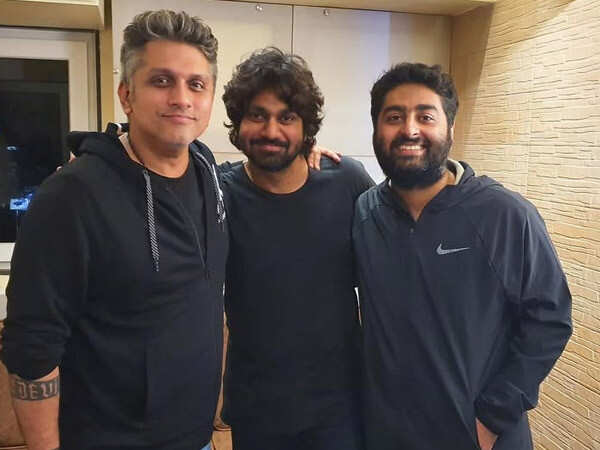
At 38, Arijit Singh recently stunned fans and the Hindi film industry by announcing his retirement from playback singing. While several have expressed what they feel about Arijit’s choice, we spoke to Mohit Suri, whose films have consistently featured quintessential Arijit Singh songs, dating back to Aashiqui 2 and the iconic Tum Hi Ho. Composed by Mithoon, the song launched Arijit into stardom 13 years ago and defined his voice as synonymous with love and heartbreak. Suri last worked with him on Dhun from Saiyaara.
‘SUCCESS WAS ACTUALLY DELAYED FOR ARIJIT’
On Arijit’s retirement from playback singing, Mohit said the decision didn’t surprise him. “I sensed it. He had reached a stage where he wanted to do more and not box himself into just one identity. You can’t limit his creativity. He doesn’t want to be remembered only as Arijit, the singer,” he said.
On a personal note, Mohit admits he is deeply disappointed, saying that a part of him feels like it has ended with the announcement.
He explains, “I don’t think Indian music can exist without Arijit. People see this as a full stop, but he’s not done yet. I’ve known him since he was Pritam da’s assistant. People think he was just fortunate, but that’s not true. He didn’t let himself break, and success was actually delayed for him. He’s an artiste who will never stop creating. Even if Arijit the singer slows down, he’ll be far more valuable to music and cinema. Once he sets his mind to something, he achieves it.”
‘HE SANG ALL KINDS OF SONGS, WE CHOSE TO HIGHLIGHT ONLY HIS HEARTBREAK NUMBERS’
As Arijit dominated Bollywood music for over a decade, speculation grew about sidelined singers, alleged monopolies and his association with “sad songs.” Mohit, however, says Arijit’s biggest strength became a limitation imposed by others.
“Your best work often becomes the monkey on your back. Arijit sang all kinds of songs — we chose to highlight his heartbreak numbers,” he says, pointing to upbeat tracks like Ullu Ka Pattha and Galti Se Mistake from Jagga Jasoos as proof of his range. “We boxed him into Tum Hi Ho or Channa Mereya kind of songs.”
Dismissing favouritism and lobbying claims, Mohit is categorical. “Arijit never insisted on singing a song. In fact, he often pushed for the scratch singer to be retained, saying the song didn’t need him. That’s how secure he is — and many singers got breaks because of that.”
‘NO ONE CAN REPLACE ARIJIT SINGH, YET NEW VOICES WILL FIND THEIR WAY’
On a parting note, we ask if Arijit’s voice could ever be replaced. “Everyone is special. I was deeply attached to KK sir, but while making Aashiqui 2, I realized I couldn’t use the same voice I associated with Emraan Hashmi for Aditya Roy Kapur. We found a new voice and that was Arijit.”
He adds that with Saiyaara, he introduced Faheem Abdullah for Ahaan Panday, showing that every generation finds its own voice. “That’s the way life works. New singers must find their space, just as Arijit once did. There cannot be another Arijit Singh. We depend on him emotionally, knowing he will nail it — but if he doesn’t make way, new talent won’t emerge. He is truly one of a kind. And yes, I’ll speak to him once he reads this.”
I am sure Arijit Singh must have made this decision after giving it good thought-Javed Ali
8:55 AM
Dnyaneshwari Katkar (BOMBAY TIMES; February 8, 2026)
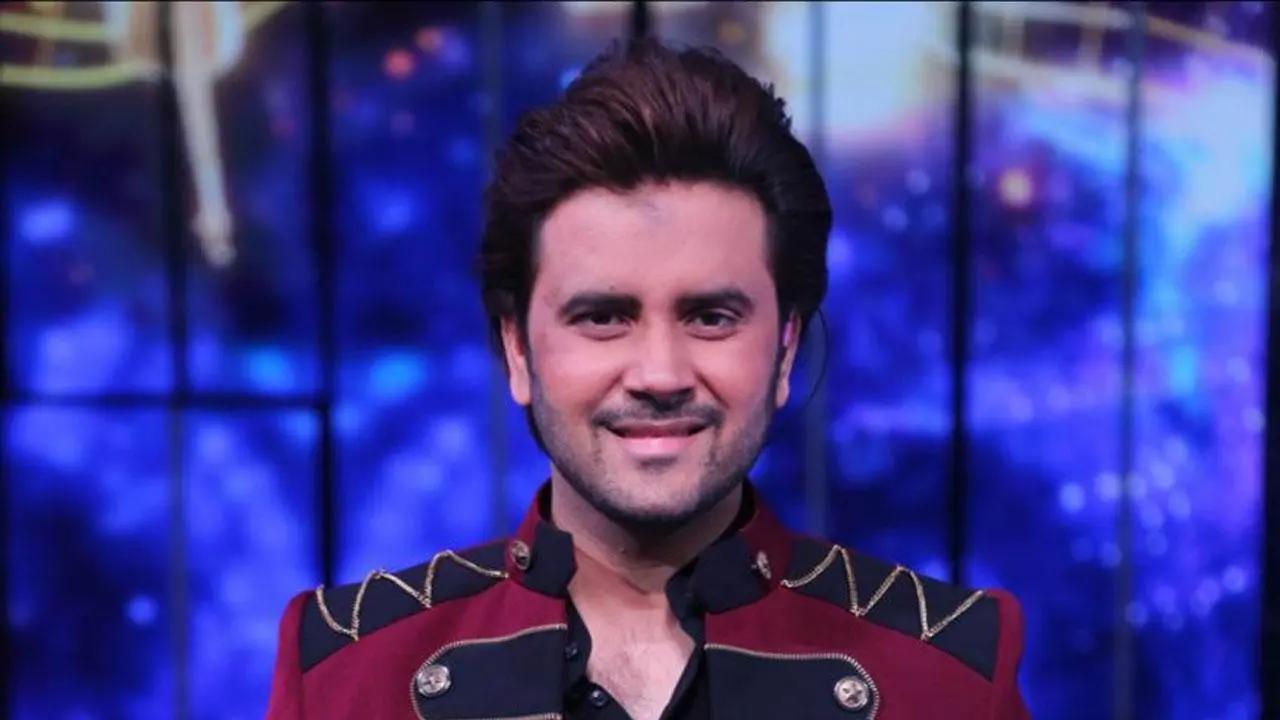
Javed Ali has been constantly travelling for his concerts in the last couple of weeks. But there’s a sense of calm and focus when he meets us for a chat. The singer slips between anecdotes and musings, occasionally humming a phrase to make a point, as he talks to us about making choices and how to keep things interesting for himself and the listeners.
‘I DON’T BELONG TO A PARTICULAR GENRE’
The first listen matters more than the banner or the buzz around a film for Javed. “This instinct has kept me anchored,” he says. From the soft romance of Jashn-e-Bahaara, Tum Tak and Saudebaazi, to the playful energy of Tinku Jiya, Nagaada Nagaada, Kajra Re, and the spiritual depth of Arziyaan and Kun Faya Kun, the singer’s discography is varied. “I don’t belong to a particular genre. For me it’s all about versatility,” he adds.
‘ARIJIT IS ONE OF MY FAVOURITE SINGERS’
The conversation inevitably turns to the current playback landscape and the singers defining it. When Arijit Singh’s name comes up, Javed speaks with both admiration and caution about the singer’s decision to step back from playback singing.
“I am sure Arijit must have made this decision after giving it good thought. I don’t think this is something he decided on a whim, especially at the peak of his career.”
The Kun Faya Kun singer adds, “I don’t really think he should have done this. He is a brilliant singer and one of my favourites. I’m sure his fans everywhere must be disappointed.”
On hook steps and social media
Bringing up the song Aashiqon Ki Colony from the upcoming O'Romeo as an example of how songs travel today, Javed shares, “The song has gone viral. At the same time, I feel that the virality is not just about the audio. One of the big reasons that song has become so popular is Shahid Kapoor’s hook step.”
The visual, he acknowledges, can push a song into people’s feeds, and from there into their playlists. “There are benefits to songs trending on Instagram because they reach more people,” he says. But he draws a line at letting it define creativity. “I don’t think artists should take a lot of pressure for that, though. A song has to work beyond a 30-second reel,” he adds.
On AI’s appropriate use in music
Javed says that technology, if wielded appropriately, isn’t a threat, but an advantage. For him, AI in music is a new space to explore. “When AI is used properly, like the way Sonu Nigam did by bringing Rafi sahab’s voice alive for a duet recently, it can be a great tool for music. I will probably do something like that too,” he says.
Aamir Khan visits Arijit Singh’s Jiaganj home after singer’s retirement announcement
10:24 AM

Ruman Ganguly (BOMBAY TIMES; February 4, 2026)
Aamir Khan’s quiet Kolkata visit has set the industry buzzing. The actor arrived on Sunday and reportedly headed straight to singer Arijit Singh’s residence in Jiaganj for a private meeting. This comes at the heels of Arijit’s announcement about stepping away from playback singing after completing his pending commitments this year.
While details of the interaction remain confidential, the timing has triggered speculation of a possible collaboration or a significant personal-professional exchange. Khan currently has multiple projects in the pipeline, including the Dadasaheb Phalke biopic, Ek Din with son Junaid, and Lahore, 1947.
A source close to the singer said, “Aamir usually prefers to be present during playback recordings for his films. Arijit typically records in the evening, as that’s when he feels his voice is at its best.” Khan is reportedly staying at a property in Berhampore.
The insider added, “Aamir met Arijit briefly on Sunday and their meeting was held on Monday. Chatter is that Arijit is singing for Aamir’s next project, and that is the reason for the visit.” Sources also say Aamir carried paan for Arijit on his visit.
We imagined how Aamir and Arijit’s time together might have unfolded, sharing unhurried moments set against the calm backdrop of Jiaganj.
"There can be no music without Arijit Singh": Bollywood responds to singer’s retirement
10:46 AM

For more than a decade, one voice soundtracked Bollywood’s biggest emotions. Now, as Arijit Singh steps away from playback singing, composers, collaborators, and labels reckon with a future without their safest musical bet
Mohar Basu, Priyanka Sharma, Upala KBR (MID-DAY; February 1, 2026)
“There can be no music without Arijit Singh," an emotional Mohit Suri told mid-day, reacting to news that sent Indian music lovers into collective shock. On Tuesday night, in an Instagram post, the two-time National Award-winning singer announced his retirement from playback singing. "There is not one reason behind this. I have been trying to do this since a long time. Finally, I have gathered the right courage. One of the reasons were simple, I get bored pretty quick, that’s why I keep changing arrangements of the same songs and perform them on stage," he wrote.
The voice that became an era
For more than a decade, Arijit was Bollywood's go-to guy for any track in any genre. When a film needed longing, his voice delivered it. When a love story or heartbreak had to feel intimate, his timbre did the work before the lyrics even began. By the mid-2010s, Bollywood leaned heavily on Arijit. Across Hindi and multiple regional industries — including Bengali, Marathi and Telugu — he has recorded over 800 songs, including alternate versions and live-session recordings. Few playback singers in recent decades have occupied that much sonic space.
His dominance carried serious commercial weight. Industry experts estimate his net worth in the range of Rs. 414 crore (roughly $50 million), built on recording fees, tours, streaming royalties and brand associations. Annual earnings reportedly touched Rs. 70 crore in recent years.
Days before announcing his exit, Arijit released Maatrubhumi for Salman Khan’s Battle Of Galwan. A stunned Himesh Reshammiya, who composed the song, told mid-day, "I have always said that Arijit Singh understands the soul of the music composer and the melody; he is fabulous. I wish he changes his stand on not singing for films, love him both as an artiste and a human being."
While he may not take up fresh playback gigs, Arijit still has a few recorded songs lined up for 2026. One of them is Hum Toh Tere Hi Liye The from O'Romeo, composed by Vishal Bhardwaj with lyrics by Gulzar. Another is Sunhari Kirne from Gandhi Talks, composed by AR Rahman.
While he might not be taking up any fresh playback gigs, Singh still has a few recorded songs set to release in 2026. One of them is Hum Toh Tere Hi Liye The from O’Romeo, composed by Vishal Bhardwaj with lyrics by Gulzar, a romantic track filmed on Shahid Kapoor and Triptii Dimri. Another is “Sunhari Kirne” from Gandhi Talks, composed by A.R. Rahman, which is one of the year’s most musically anticipated soundtracks.
Industry confronts a void
A top suit at Sony Music, tells mid-day, on condition of anonymity, “This changes the ground beneath us more than people realize. For years, when a film album came in and there was one song, the one the trailer would lean on the one streaming platforms would push and the first question in the room was always, ‘Can we get Arijit?’ I speak for producers and insiders when I say there was built-in trust. People outside think this is just about replacing one voice with another. It’s not that simple because that's a once-in-a-generation artist. He became the sound of modern Hindi film. When that disappears, you’re filling a big void. And that’s scary when crores are riding on streaming numbers. There’s also habit to undo. Directors, actors, even lyricists were subconsciously writing for how his voice would feel. Without that anchor, the room will be quieter. Everyone second-guesses more. We’ll discover new singers, of course. But it will be hard to replace that voice.”
Industry veterans understand Singh's decision. Mahesh Bhatt, with whom Singh did a large volume of his early work, told mid-day, "I remember the first time I saw Arijit Singh very clearly. It was at the music launch of Aashiqui 2 at Super Sound in Khar—the old place, full of dust, wires, and hope. His name was announced and he was called to the stage to sing Tum Hi Ho. A shy, self-effacing young man walked up, almost apologetically, with no sense of entitlement. He didn’t claim the song; he offered it. And in that moment, something entered the bloodstream of the nation. That song didn’t just become popular, it became personal. What made Arijit Arijit was never just his voice. It was his refusal to perform himself. His singing carried no ego, no demand to be noticed. He stepped aside and let emotion speak. So when someone asks me if I would miss his voice, life has taught me to answer this way: I have learned to say goodbye to people I love without removing them from my heart. Chaplin once said something to that effect, and it has stayed with me. Even if Arijit chooses silence, his voice will not leave us. And I don’t believe he is turning away from music—only from noise. If he sings only for himself now, that is not withdrawal. That is an artist exercising his deepest privilege. Voices like his don’t vanish. They remain long after the song ends."
Inside the mind of a restless artist
Aashiqui 2 director Suri, with whose words we started, gave us an insight into his long-time collaborator's psyche. Singh first fame with the film he made and even in his last hit Saiyaara, Singh had a large role to play Suri tells us.
"I don't remember a time when he wasn't creating something. Before playback, he was an assistant. In some early music sessions of my career, I remember Arijit clicking pictures of Pritam and me at the studio. He would spend a lot of money buying a expensive camera and then tell us, these pictures are for us to remember history. Of course, I am going to miss him a lot but that said, I also understand his decision.
We all evolve as creative people in our journey and step up to find the next phase of our lives and careers. This isn't a man who will be content with himself. He has the itch of an artist. Anyone who has worked with him tell you he would give different iterations, will sit and understand the story of the film and fit his voice to suit the story. I remember during Hamari Adhuri Kahani, we did three versions of the title track. He asked me how does it end and I told him, it ends tragically. He said there needs to be defeat in the voice then. He was such an important collaborator for any director or music composer. But even at that, he was still working on someone else's vision.
May be he wants to create his own vision for himself. He is also such an immensely secure artist, pure artist as they say. There have been times he has been called in to sing a song, he has heard the scratch and said, 'Please retain what you have, I can't do what they've done'. We did Saiyaara's songs across timezones - I was in Japan and he was in Murshidabad. But after the film, his response for the movie was such an honest take. He loved the film more than Aashiqui 2 which gave him his big break. He has evolved into an artist who values the art more than himself. Wherever he goes from here and whatever he does, he will create music because for the close to two decades I have known him, I have never known him without music. That bond will be inseparable."
Not an ending, but a reset
Of course, rumours are rife that Singh has moved to filmmaking and is currently shooting a movie in Shantiniketan that he and his wife Koel have written. The jungle-adventure project features Shora Siddiqui and Arijit’s son, with Nawazuddin Siddiqui. Lyricists Siddharth-Garima, who have collaborated with Singh on several hit numbers, are working on his upcoming directorial. Garima tells mid day that they weren’t shocked by Singh’s decision.
“We met him multiple times in the last one year. We saw it coming because there is a very different kind of burnout that an artist can suffer from in the Hindi film industry,” Garima says, adding that when an artiste is made to repeat his or her previous work, it takes a toll.
“When people repetitively ask you to do the same things or sing similar things, it could get to you. We were seeing that point somewhere. He sings with a lot of sincerity even now. We've seen him record and he would take 100 takes for a line in a song. His process is something else. I'm sure that process tires him out. A burnout is very easy in this industry because you have to work tirelessly and endlessly.”
To Garima, there’s also an expectation from the industry that every song should be sung by Singh. He has enjoyed a monopoly of sorts in Bollywood playback singing for over 15 years now. But it’s not something that the sits right with the singer himself, “When Alia Bhatt just came in, everyone was thinking of scripts in which Alia would play the lead. That's how it is here. Everyone makes songs here, mostly thinking, ‘Arijit gaayega’. The first time you make a really melodious number, you are already imagining how it would sound in Arijit's voice? But the kind of person that he is, he comes from a very just background. He's not the kind of person who will think, ‘Sirf main hi main hoon.’ He thinks this shouldn’t happen and there should be more people who should get a chance,” Garima says, to which Siddharth adds that Singh is “a very secure artiste”.
“People talking about him creating a monopoly has never bothered him. In fact, that is a fuel. He's enabling diversity with this decision. We have that equation with him where we make him listen to every song that we record,” the lyricist says.
Singh has lent his voice to several songs written by Siddharth-Garima, including the chartbusters Yeh Laal Ishq (Goliyon Ki Raas Leela: Ram Leela) and Satranga (Animal). Naturally, it’s a huge loss for them as collaborators.
“Sanjay Leela Bhansali always says that he values a written word and believes a singer's job is to communicate to the listener the voice in those words. that voice. When I say, ‘Yeh laal ishq, yeh malaal ishq,’ how does that line reach you? It's a singer's job entirely. And more often than not, we notice in recording rooms, singers are not really singing, not feeling the line enough. Arijit will take it to that point. That's what his contribution has been. He brings his own imagination to the song.”
So, what does Hindi film music look like without his voice, we ask the duo. “The songs that he's already sung are there as his legacy. But the music scene in Bollywood would change. And it would be a huge change. Of course, it comes as a shock to many people. But I feel this is a natural progression. There’s always space for new people. There won’t be another Arijit but there will be more people, who will get a chance. People will start thinking imaginatively,” she says. And this is something even Singh wants from the industry, shares the lyricist.
“What really irritates him is the fact that people are not thinking imaginatively enough. They are just relying on a set pattern that if we have Arijit, we will get X number of listeners. I think that has put him off from the entire scenario that oh, you want a guarantee hit song, you want him to sing that song. What about experimenting? What about thinking outside the box? It’s great for an artiste to take a step back and take into account that what’s happening around him is not okay. There was no reason for him to say that I'm not going to sing Bollywood songs anymore, but he's an extremely honest and honest person to have taken that step,” Garima shares.
But even as fans express their disappointment over the singer’s decision, Garima is sure Singh will make a comeback sometime in future. “I feel there will at some point be a comeback, like how Sonu (Nigam) ji was ruling the charts in the 90s. And then of course, there was a phase in which he faded out and then now he's back fully. So I feel before that would happen, Arijit has taken the wise call of saying, ‘Okay. Let me not create a monotony with my voice right now.’ Let people yearn for it and then probably he'll make a comeback. I'm hoping he would someday,” she smiles.
But there won’t be dearth of Singh’s music, as he is set to launch his own label. “He is going to keep making independent music. So we are going to hear him a lot more on, his own label and all of that. And not many people know but he is a very m good composer. We've written to some of his compositions. You will see him in a different light,” Siddharth says.
Retirement first step in Arijit Singh's new journey; singer builds an indie life from small-town Bengal
10:35 AM

Retirement from Bollywood is just the first step in Arijit Singh's new journey, as he builds an indie life from small-town Bengal
Shamayita Chakraborty (MUMBAI MIRROR; February 1, 2026)
Heshel—a small restaurant serving fish-chicken-dal-rice meals at budget-friendly prices—is an unlikely place to come looking for Arijit Singh. The eatery sits bang on the side of a busy road in Jiaganj, a sleepy riverside town about 240 km from Kolkata, that’s stitched together by narrow, winding lanes, old houses and tea stalls. Jiaganj is far, far away from the glitter of Bollywood parties, where gossip mingles over tinkling glasses of Chardonnay.
But earlier this week, as the world woke up to one of India's most prolific playback singers announcing his sudden retirement, and social media chatter filled with laments and why-nows, the only place to look for the reclusive, enigmatic Arijit was here, in Jiaganj.
Far away from the madding, maddening crowd of Hindi cinema. Heshel is an eatery run by Arijit’s father, Kakkar Singh. The regular clients, mostly students and local workers quietly enjoying their midday meals on a sleepy Saturday afternoon, seem oblivious to Kakkar’s famous progeny, who can often be seen riding around Jiaganj on his scooty. Kakkar, his brother and his son can be found at the eatery at any time, running the business without any fuss.
“His father just took a ferry to cross the river to go to Azimganj,” says Premnath Chowdhury, a sailor of Shibtala Ghat by the Bhagirathi river.
Jiaganj’s most famous “ordinary man”
“Arijit and his family walk around the town just like we do. His sons go to local schools. He rides his scooty, enjoys tea from roadside shacks and smiles, nods and talks when he sees known faces. Isn’t that normal?” asks Premnath, who plays football at a local field that is maintained by Arijit and his friends.
Evidently, Arijit takes his gigantic fame really lightly. His four-storey house is located in the middle of a narrow alley. This is his new house. He grew up in another house just behind the new one.
“He bought another house between his old and new house and joined all the houses to have a free and private passageway—just like his mother wanted it to be,” said Shampa Kundu, his mother’s childhood friend.
Arijit runs errands on his scooty. He runs an NGO, Tatwamasi Foundation, under which he has established an arts residency space, ‘Aditi Sur Sadanalaya’, named after his mother. He is also building a hospital. He is always there for the local people—his neighbours and friends. And he makes music from the not-so-spacious lanes of this town. Mumbai musicians who want to work with him must visit him in this town in Murshidabad, the town where it all began. But there is no hotel here. That means anyone who wants a glimpse of the musician has to stay overnight some 30 km away.
Where the music began
Arijit was a four-year-old when his mother took him to his Gurukul—the Hazari-bari of Debipur. He started his music training under Rajendra Prasad Hazari and his brothers Dhirendra Prasad Hazari and Birendra Prasad Hazari.
Dhirendra taught him tabla, while the other two brothers trained him in vocals. The house that taught music to hundreds of children now stands still on a field. The gurus are all gone but Arijit never forgets to pay tribute to his gurumas, Kalpana and Swagata—wives of Rajendra and Dhirendra, who welcome us with a broad smile.
“He calls us dida (grandmother). Before Shomu (almost everyone in Jiaganj refers to Arijit as Shomu), it was his mother Aditi and her sister Papri who used to learn music here and in the school, Murchhana. When he joined, he was the cutest,” recalls Swagata, adding, “He was calm and polite, without an iota of mischief. My husband always pointed out that he had an outstanding ability to capture music. Arijit is gifted.” Recently, at a classical concert hosted by the musician, Arijit felicitated his gurumas. Humble is that one word that defines Shomu largely,” says Kalpana.
“He is an extraordinarily talented human being and yet lives a humble life. His clothes, house, vehicle—everything is like ordinary people. His quirks are, perhaps, less ordinary: he has christened each guitar he owns. One is named Jhora, then there are Jhuma and Sanjbhati and so on. He visits us like he used to. Maybe not as often, but the warmth is still there.”
His gurus have a deep influence in Arijit’s life. Rajendra passed away when Arijit was performing in Fame Gurukul. “My husband saw his success. It was like seeing his son conquering the world. His pride was enormous,” remembers Swagata.
Shampa’s sister and Arijit went to Murchhana together. “He was so small then that he could not reach the harmonium blower. My sister used to help,” remembers Shampa fondly. “Aditi and I went to the same school, literally grew up together. Shomu grew up around us. But I am not sure if Shomu will be happy to see me talking about him. He is a private man and doesn’t like to talk about himself,” she says.
A fiercely private person
That is the general feeling you get from his friends. Everyone talks about him proudly but no one wants to be quoted in a newspaper article. “He does not like to talk about himself,” says Shampa. “We all love him so fondly that we cannot stop talking about him,” she adds.
Ever since Arijit announced his retirement from playback music, the town has filled up with journalists and photographers. Like Arijit, Jiaganj also takes fame lightly. Earlier, locals played badminton with Salim Merchant, silently welcomed Badshah sans the fanaticism, and waved politely at Grammy-winning Ed Sheeran when he travels with Arijit on his scooty. Perhaps because of this chilled out attitude of the town, Arijit could manage to live the life he wanted to.
Singer Ujjaini Mukherjee is a friend of Arijit. Both of them began their journey in Mumbai decades ago. “We, the Bengali musicians, used to live together and jam together whenever possible. We were teenagers then. He first taught me that one can sing, arrange and produce their own music,” she recalls.
“One day he made me sing a Rabindrasangeet, recorded it and within hours made a fabulous piece,” she remembers. According to Ujjaini, Arijit has never been an extroverted person.
“He used to take time to open up. But he had a very strong sense of boundaries. I remember I visited him in Jiaganj once. A local lad came forward to take a selfie. He stopped him and firmly said, ‘Some other time. You see me all the time’. And the boy stopped. I think it is because of his clear sense of boundaries, he could actually manage to live a sane, normal life despite his insane stardom,” she says.
Enormous fandom
Arijit experiences stardom that very few people do. A fan, under the condition of anonymity, said, “Initially, he discouraged any fan club. Till today, we don’t have any registered fan club. But there are fans across India and abroad. We often travel to his concerts. No one from Arijit’s team gets involved in it. We did a reunion once at an Ahmedabad concert. If Arijit sees any of us from the stage he acknowledges.”
Is it normal for a celebrity of Arijit’s stature to live a life of a plebeian? Well, is it even normal for an artiste to retire from playback – the most lucrative performance for a musician—in their prime? That’s Arijit Singh for us. He could give up the comfort of Mumbai at his peak then and settle down in Jiagunj. He could bid adieu to playback singing in Bollywood now and invest in independent music. And it is equally effortless for him to live an ‘uncelebrity-like’ life in Jiaganj—away from the glitz of the film industry.
People who know Arijit closely say such decisions are well thought out. He is very sure of what he wants to do. Arijit is a through-and-through artiste. His music will flow as it always has. ‘A lot is in store,’ he promises. But what does it really mean to retire from playback music? For a musician, especially a singer, a lot depends on live shows. More hit numbers mean more popularity and hence, demand for shows. Bollywood playback ensures a few nationwide hit numbers every year. When one stops doing playback, the number of hits may just dip. But numbers don’t seem to define him.
According to composer Joy Sarkar, Arijit will have a lot more to offer than a few playback songs. “One of the problems in the Indian music scene is that it is largely defined by film music. Let’s not forget, the history of Indian music is thousands of years old, while the journey of film music started less than a century ago. I know Arijit as a musician, not just a singer. He will create magic,” adds Joy.
I’m deeply curious to see how Arijit Singh views the world through music-Raja Kumari
8:08 AM

Raja Kumari reacts to Arijit Singh stepping away from playback singing
Debarati S Sen (MUMBAI MIRROR; January 30, 2026)
In a revelation that has stunned fans and the Indian film music industry alike, playback singer Arijit Singh announced that he will no longer take on new Bollywood playback singing assignments.
The announcement came through a heartfelt note on his official Instagram account, where he thanked listeners for years of unwavering love and support. Calling his journey “wonderful,” he wrote, “I am calling it off.”
Reacting to the news, singer and rapper Raja Kumari reflected on the decision with admiration and warmth. “I think there comes a time in every artiste’s life when they crave the freedom to express themselves authentically,” she told Mumbai Mirror.
“Being one of the most prolific playback singers of our time, Arijit has given us countless classics that have become the soundtrack of our lives. Yet, those songs didn’t always offer insight into his personal world or how he views life,” she added.
Recalling her collaboration with Arijit on Pagglait, Raja Kumari shared, “He was the first music director who pushed me to sing in Hindi. It was during the pandemic, so all our communication happened through WhatsApp voice notes. He was incredibly patient and kind. He saw something in me that I hadn’t yet seen in myself, and that belief continues to inspire me to grow as an artiste.”
She concluded by expressing anticipation for his next creative phase. “I’m personally very curious to know how Arijit views the world through music. Perhaps his words and perspectives are exactly what the world needs right now. I’ve always been a fan, and I truly can’t wait to witness this next chapter whenever he’s ready to share his art with us,” she said.
Arijit Singh retires from playback singing
9:53 AM

Singer posts update on social media as fans react in shock
MUMBAI MIRROR (January 28, 2026)
“I am calling it off, it was a wonderful journey,” said Arijit Singh on Tuesday, announcing that he will not be taking up any new assignments as a playback singer, a decision that sent shockwaves across the industry and his fan base alike.
In a message shared on his social media pages, Singh said he has decided to step away from playback singing, a move that comes at the peak of his career as one of the most popular and indemand voices in Hindi cinema. “Hello, Happy New Year to all. I want to thank you all for giving me so much love all these years as listeners. I am happy to announce that I am not going to be taking any new assignments as a playback vocalist from now on. I am calling it off. It was a wonderful journey,” he wrote.
The 38-year-old, however, clarified that he would continue to make music independently and complete existing commitments. “God has been really kind to me. I am a fan of good music and in future will be learning more and do more on my own as a small little artist. Thanks again for all your support. I still must finish some pending commitments, will finish them. So you might get some releases this year. Just to be clear that I won't stop making music,” he added.
The announcement was met with disbelief. “Too soon sir, can't be real,” wrote one user. Another said, “This cannot be true.”
Singh's rise in the Indian music industry has been nothing short of meteoric. He started out as a contestant on reality show “Fame Gurukul” in 2005 and made his playback debut in 2011 with “Phir Mohabbat” from the Emraan Hashmi-starrer Murder 2.
He broke into the big league with the soulful hit “Tum Hi Ho” from “Aashiqui 2” in 2013. The success of the song made him a household name. After that, Singh quickly became the voice of many moods, be it love, heartbreak or happiness. He went on to deliver a string of chartbusters such as “Channa Mereya”, “Agar Tum Saath Ho”, “Raabta”, “Kesariya”, “Gerua”, “Ae Dil Hai Mushkil” and “Chaleya”. Over the years, he has lent his voice to nearly all of Hindi cinema's leading stars – from superstars Salman Khan and Shah Rukh Khan to actors like Ranbir Kapoor and Ranveer Singh.
Singh recorded songs in multiple Indian languages, including Hindi, Bengali, Tamil, Telugu, Malayalam and Marathi, and collaborated with leading composers and filmmakers. His work earned him numerous Filmfare Awards, including multiple Best Male Playback Singer honours. In July, Singh edged past global pop stars Taylor Swift and Ed Sheeran to emerge the most followed artist on music streaming platform Spotify with 151 million followers.
"Meri pasaliyan tooti thi": Salman Khan’s jibe after A R Murugadoss accuses him of being tardy
9:25 AM

HINDUSTAN TIMES (October 14, 2025)
Salman Khan threw shade at Sikandar director AR Murugadoss over his remarks about the challenges of working with the actor.
During a Weekend Ka Vaar episode on Bigg Boss 19, Salman was asked to name any films he regrets doing. The 59-year-old actor cited Suryavanshi and Nishchay (both from 1992). But when nudged to mention a more recent title, Salman said, “Log kehte hain Sikandar, par main nahi manta; uska plot bahut acha tha.”
Referencing Murugadoss’s claims of Salman arriving on set at 9 pm and being difficult to work with, the actor continued, “Lekin kya hai na, main set pe raat ke 9 baje pahuchta tha, toh usme gadbad ho gayi. Meri pasaliyan tooti thi, isliye jo hamare director sahab hain unhone ye kaha.”
He then took a dig at the director’s latest film, Madharaasi, starring Sivakarthikeyan, sarcastically noting that the lead actor was reportedly on set by 6 am, but the film still failed to deliver: “Bahut badi film hai aur utni hi badi… Sikandar se badi blockbuster.”
Despite a massive Rs. 80 crore budget, Madharaasi earned only Rs. 98.48 crore. Meanwhile, Sikandar flopped at the box office, earning just Rs. 103.45 crore against its Rs. 200 crore budget, and was widely panned as one of Salman’s weakest films.
‘Kaam mila kya bhai?’
On the same episode, Salman also responded to filmmaker Abhinav Kashyap’s allegations, saying, “Ek Dabangg insaan hai. Mere saath Aamir (Khan, actor) ko bhi lapet liya. Pichle Weekend Ka Vaar pe maine bola tha, ‘Kaam karo yaar, nobody’s interested.’ Aaj wapas poochna chahta hoon, ‘Kaam mila kya bhai?’” While acknowledging that Abhinav’s remarks hurt him, Salman maintained that he is a talented filmmaker who should focus on his work.
The actor then spoke about the rumours of a long-standing feud with singer Arijit Singh, dismissing it as a mere misunderstanding: “Arijit aur main bahut achhe dost hain. That misunderstanding had happened from my side. After that, he even sang songs for me in Tiger 3, and now in Battle Of Galwan.”
My unconventional voice became my biggest strength-Madhubanti Bagchi
10:23 AM

Following up her smash hit ‘Aaj Ki Raat’ with the latest song from ‘Thamma’, Madhubanti Bagchi on breaking into the industry with an unusual voice and dance numbers
Priyanka Sharma (MID-DAY; October 13, 2025)
When Tamannaah Bhatia dazzled in Aaj Ki Raat from Stree 2 (2024), it promised a resurgence of special dance numbers. The popular song also guaranteed something else — the breakthrough of a unique voice, Madhubanti Bagchi. Even though she had been singing Hindi film songs since 2019, it took Sachin-Jigar’s composition to mark her arrival. Now that she has reunited with the composers for Tum Mere Na Huye, a dance song in Thamma, mid-day speaks to her about new fame, fear of typecasting, and the challenge of having an unusual voice. Excerpts from the interview.
Tum Mere Na Huye marks another collaboration with composers Sachin-Jigar. What was their brief for the song?
They wanted the song to be intimate yet cinematic, something that would not just complement the narrative of Thamma, but also stand strong as an individual piece of music. Sachin-Jigar added their signature depth to the composition, ensuring that every note had its own space to breathe. For me, the challenge and joy were to bring that vision alive vocally.
Your collaboration with them is turning out to be solid — first Aaj Ki Raat, now the Thamma song.
Working with Sachin-Jigar has always been a creatively fulfilling experience. Aaj Ki Raat gave us a chance to explore a high-energy, dynamic sound. With the Thamma track, we ventured into a space that is far more emotional. That contrast speaks volumes about their versatility. What I admire most is how they bring out the best in every singer. They know exactly how to guide you, yet give you the freedom to interpret and make the song your own. With them, it never feels transactional, it feels like a true collaboration.
You’ve emerged as one of the most sought-after voices in Hindi cinema. How validating has it been to experience this rise?
It feels gratifying and quite humbling. Every singer dreams of their voice reaching millions, but when filmmakers and composers of such calibre trust you repeatedly, it becomes the highest form of validation. What excites me most is the diversity. I’ve lent my voice to some of the most popular leading ladies of today. To adapt my singing to bring alive their emotions on screen has been a challenge as well as a joy.
Your rise is also special because your voice is unconventional for Hindi playback. Was it difficult to get the big break?
It’s true that my voice is different from the usual palette in Hindi playback. Breaking in wasn’t instant, there were moments of doubt. But I always focused on staying true to my sound rather than fitting into a mould. What helped was finding the right collaborators — composers like Sachin-Jigar, Pritam da, and Amit Trivedi, and filmmakers like Sanjay Leela Bhansali, who were willing to experiment and give my voice space to tell the story authentically. Once that alignment happened, things started clicking. In the end, I feel fortunate that what initially seemed unconventional became my biggest strength.
Having voiced dance numbers one after another, do you fear getting typecast?
I’ve had several dance numbers, but each one has its own personality. At the same time, I actively seek out projects that challenge me vocally. I have sung in Heeramandi [2024] and Coke Studio. Rather than fearing typecasting, I focus on growth and experimentation.
Your singing influences in Hindi cinema?
Begum Akhtar for her depth and mastery in ghazals, Lata Mangeshkar and Asha Bhosle for their range and timeless appeal and Arijit Singh for redefining contemporary playback with his emotive singing.
Whenever I sing, I imagine an 18 or 20 year old singing-Shaan
4:21 PM

Priyanka Sharma (MID-DAY; September 15, 2025)
How does one keep the passion for their art alive over a 26-year singing career? With riyaaz, dedication, and the knowledge that the craft is almost like a lover you can’t stay away from, chuckles Shaan. In a free-wheeling chat with mid-day, the singer — who voiced Bam Bam Bhole in Sikandar and is looking forward to his upcoming song from Farhan Akhtar’s 120 Bahadur — opens up about holding on to the magic of one’s voice despite ageing, and his secret to sounding young, year on year. Excerpts from the interview.
Is it tough to keep a 26-year relationship with music alive?
Love happens first, and then it turns into a profession. What comes first will stay till the end. Obviously, there will be a point when the voice may not be how it should be. But in terms of appreciating and having an ear for music, that will always stay. For me and any singer, it can be frustrating [to be at a point] when we’re alive and not able to sing. It’s like being estranged from your lover. We have a crazy, ek tarfa pyaar with our voice.
With love comes commitment that an artiste has to their craft. After all these years, is it difficult to be disciplined and adhere to your riyaaz?
Honestly, my riyaaz has increased because after a certain point, the voice gets delicate. I started doing more riyaaz after my 40s. Until I met my guruji, my riyaaz was erratic. Sitting down, practising a bandish or doing a sargam — all that started only after 30. But by the time I got to 40, I could see a slight [change in my voice]. I could also see a lot of my seniors sounding older. I wouldn’t want that to happen with my voice. So, the only way I could postpone it was by doing riyaaz.
What do you feel is the key to your voice sounding young?
I feel young. Whenever I sing, I imagine an 18- or 20-year-old singing. Also, I often get youthful songs. If I were told that I would be singing for a mature, aged person, I would modulate my voice that way. But mostly, our romantic heroes are young. Even if they’re in their 50s or 60s, it’s important to sound young for them (laughs).
As a ’90s kid, I grew up listening to you, Sonu Nigam and many other voices, each of which was distinct. Today, it gets difficult to differentiate one singer from another, except Arijit Singh. Is it the demand today that voices sound similar?
It’s the Arijit effect; everyone wants to sound like him. Arijit is an intelligent singer. So, sometimes he surprises you with a different tonality. His voice is so popular with the [decision makers] in the industry that they think, ‘If we can’t get Arijit, at least let us get someone who sounds like him’. A singer doesn’t have much choice.
Also, aspiring singers, who have been listening to Arijit and Atif [Aslam] for 10-15 years, will think that if they sound like them, they will probably get a job. I had a similar situation when I started out. They would ask me, ‘Are you Kishore Kumar or Mohammed Rafi?’ They were two strong schools of singing. Udit ji [Narayan] had a touch of Rafi saab’s style of singing, and [Kumar] Sanu da was from the Kishore Kumar school.
So, what did you do?
I came from Hindi pop and there was no precedent to it. There was no one who was doing pop for me to copy. So, I was an original voice.
Arijit Singh becomes first Indian to headline UK stadium but show cut short at 10.30pm
8:51 AM
HINDUSTAN TIMES (September 9, 2025)
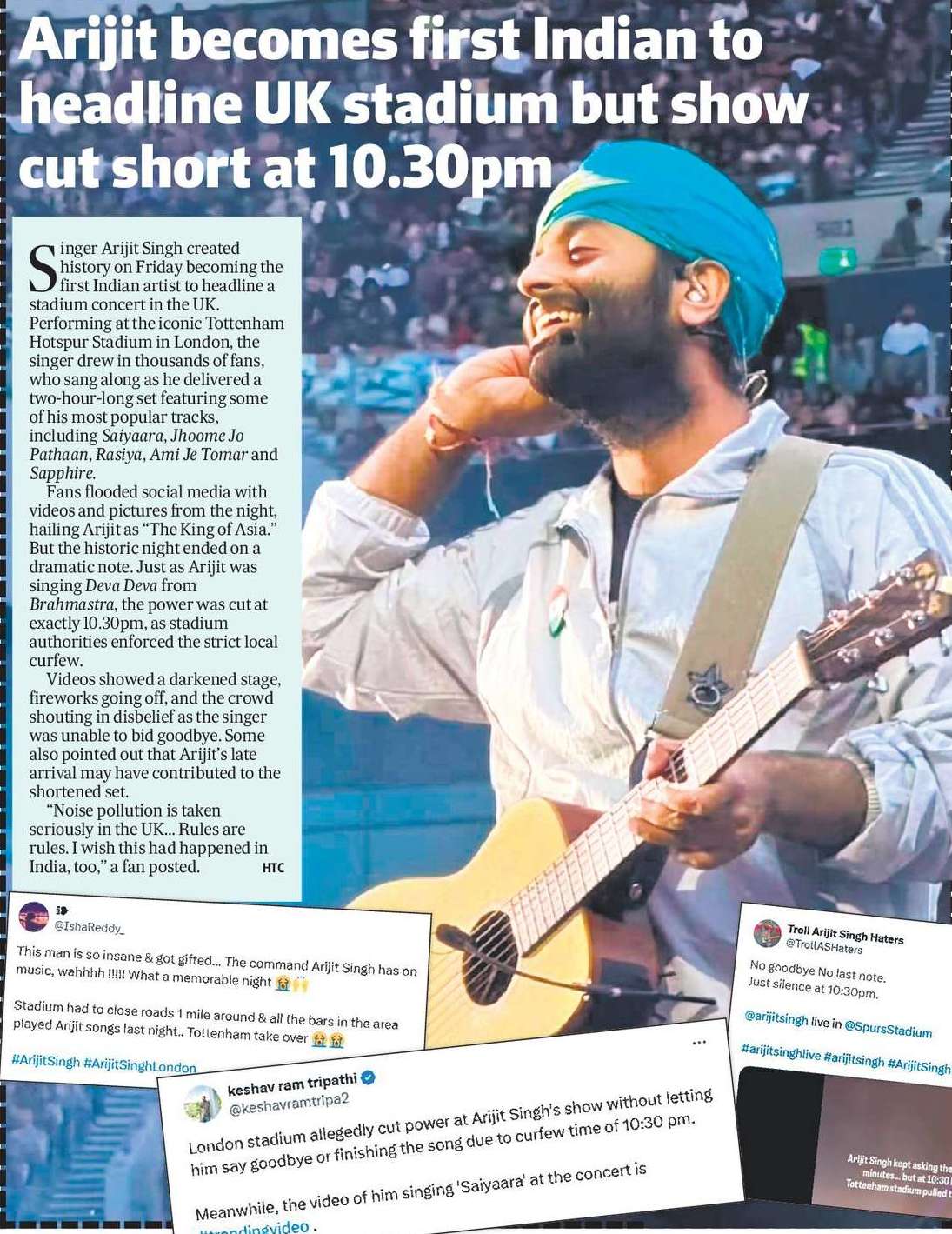
Singer Arijit Singh created history on Friday becoming the first Indian artist to headline a stadium concert in the UK. Performing at the iconic Tottenham Hotspur Stadium in London, the singer drew in thousands of fans, who sang along as he delivered a two-hour-long set featuring some of his most popular tracks, including Saiyaara, Jhoome Jo Pathaan, Rasiya, Ami Je Tomar and Sapphire.
Fans flooded social media with videos and pictures from the night, hailing Arijit as “The King of Asia.” But the historic night ended on a dramatic note. Just as Arijit was singing Deva Deva from Brahmastra, the power was cut at exactly 10.30pm, as stadium authorities enforced the strict local curfew.
Videos showed a darkened stage, fireworks going off, and the crowd shouting in disbelief as the singer was unable to bid goodbye. Some also pointed out that Arijit’s late arrival may have contributed to the shortened set.
“Noise pollution is taken seriously in the UK... Rules are rules. I wish this had happened in India, too,” a fan posted.
Amaal Mallik on his post about cutting ties with his family: "The post has brought the family closer"
2:45 PM

Vinay MR Mishra (BOMBAY TIMES; May 16, 2025)
Under the spotlight and in front of a roaring Bangalore crowd, Amaal Mallik took the stage - his first as a solo concert - and left the audience humming. “It’s the best feeling on earth. You feel like a superhero,” he says, the thrill still palpable in his voice. For years, Mallik has been the man behind the curtain—a “Batman in the cave,” as he puts it—crafting hits in the shadows while letting others take the mic. “The love that fans have poured into me over the last ten years—I’m giving it back,” he says.
Fresh off the adrenaline high of his solo concert, Amaal joins us from Bangalore over a call—his first interview in months, and the first since his candid, much-talked-about post earlier this year, where he revealed stepping away from his family. What follows is a conversation as raw as it is revealing.
'I am a prime example of how to be indie within Bollywood'
Talking about performing so rarely, Amaal shares, "If you try to figure out the artistry that I am made of it is of a musician who likes to be at home, likes to wear his headphones, sitting on his pair of shorts, making good music. I am a prime example of how to be indie within Bollywood. My attitude and soul are very indie."
The shift from behind-the-scenes producer to on-stage performer wasn’t an easy one for Mallik. “I used to play the keys, and my brother Armaan would sing,” he recalls of his earlier performances. “I would never even try to sing until I was 15 or 16. Singing is something I never took any formal classes for.”
Even now, Mallik, who has sung over 10 songs, is still honing his craft, admitting that he’s not quite where he wants to be vocally. “Singing is something I never took any formal classes for. When you're performing on stage, you do get to know that it's a different art and a different ball game. I can safely say I’m 60-70% on pitch, but that 30% is something I want to train. I’m trying to learn Hindustani classical, not heavily, but at least the basics and the light classical that I can,” the Sooraj Dooba Hai composer shares.
'I think musically I may have healed and helped them'
During the current political situation multiple singers, including Shreya Ghoshal, Usha Uthup, and Arijit Singh, canceled their concerts. Amaal, however, decided to go ahead with his show. "I was fully convinced that we should not (go ahead with it), because if there's a safety issue. Till I think 2 am or 3 am, it was a no go anyway. We had all been told that's almost not going to happen. But then the ceasefire was announced and the security in the southern part of India is safer. Also, on a professional level I had to do it as I was already paid. Obviously the country comes first. I wouldn’t want to sabotage anyone’s security. Shreya and Arjit Singh's concerts were called off because they are much bigger artist and they rake much bigger crowd. They cannot take that chance to take the risk. I think musically I may have healed and helped them," he explains.
'The post brought the family closer'
Earlier this year, Amaal made headlines when he shared a post announcing his decision to cut ties with his family, including his brother, singer, Armaan Mallik and his father, composer Daboo Malik. For the first time, Amaal opens up about the post and reveals the state of his family. “It was something I had been keeping in for a long time,” he admits.
“Every kid, I think, goes through repressed feelings. I've been like the soldier who marches on. I felt a little light talking about it. But I know on social media people have this feeling that you cannot talk about your family. But sometimes even family doesn't manage to realize what you're going through because we're all so busy in spite of being connected. I think Armaan, me, mom, and dad, are like the fantastic four. But there are things that maybe I don't know that Armaan's going through. Possibly he might hide. All of us go through that. I think it was important for me to let it out; even for my fans, for a lot of people, expecting out of me - 'Why is he not sending songs?' I just spoke what my inner voice wanted to say. My parents also understood it. It actually brought us closer as a family. They were obviously a little hurt, but they understood that our son is going through so much and we don't get time to understand that sentiment. But it's been much more precious and beautiful after that. I know there have been critics, saying that I have thrown your family under a bus and all, but I think my family got closer after that. We're stronger and happier about these discussions,” he shares.
He adds, "Being depressed can have many facets to it. It's not just a career thing. My dad told me something very beautiful: 'People say parents are God, but we are also just humans. Mistakes happen. We are also first time bringing someone into this world. We're also learning.’ My relationship with Arman is so precious to the world and to us. Nothing can change that."
He also shares, "No two people's trajectory - personal or professional can be the same. God has been kind that both have had like a bazooka start in this industry. Very rarely from a family, two swords come in and, take over an empire. We've done that as youngsters, however, sometimes my parents would feel that my way of approaching projects, or how I work, or how I speak, or how I opinionate should be just as correct as Armaan's. It may not work like that. We are two different people like chalk and cheese. That is a beautiful part of being human. So, these things have to be understood. Eventually we all have understood that about each other."
'I am not AI Mallik, I am Amaal Mallik'
So all is well with the Malliks? The Ami Je Tomar 3.0 composer replies, "Yeah. It is all sorted. There's no stress. There never. There never will be any stress like that. This family is too close to get into stress.”
He adds, "Armaan's just laughing. He's like, 'I'm just stuck here. I'm being tagged in everything the minute you tweet'. That is his only complaint. Otherwise, I think me coming out and speaking has made my fans also realize why I'm not putting 20 songs a year and also the industry to understand that I'm not AI. And I'm not AI Malik. I'm Amaal Mallik. I am now taking a little bit of a stand for my health and eating home food. It's not happened for 14 years. I've lived and slept in studios. It's all added to this feeling. This post is like a meltdown for a human being. Now I think back on path and replenishing, trying my best.”
Amaal Mallik recently opened up about his battle with clinical depression, blaming his family for his struggles in a now-deleted Instagram post. Amid the buzz, an old interview with his mother has resurfaced, where she spoke about leaving her teaching career to support his and Armaan Malik's musical dreams.
'I was somewhere beginning to give up on myself'
Does he feel that the post was impulsive? He replies, "It's been years of things on my mind and in my heart, a lot of things from my career. Everything just came to me at a point. The only way I could put it out was through that. It was not impulsive. It may have happened in an impulse, but it's a collection of emotions over years. Everyone's not talking to just get some limelight or some front page. There are things which we feel. But the kind of love and the kind of support that I got from within my family, from my fans, and from people around me, made me feel that at least I am important enough to not give up on myself. That is what that post did for me. I was somewhere beginning to give up on myself. I don't want to do that."
'I am finding myself'
For Amaal the next chapter isn’t just about music—it’s about reclaiming his life, his family, and his truth. "Right now, I am finding myself. In finding yourself, the music arrives. I'm not sitting down recording songs back to back, I'm not making a bank. Not pushing too hard towards just creating, I am absorbing," he concludes.
Censorship just for the sake of moral policing is wrong-Ila Arun
8:36 AM

Mihir Bhanage (THE TIMES OF INDIA; December 13, 2024)
For over 40 years, Ila Arun has been captivating the audience with her music and acting. While for many, it’s songs like Choli Ke Peeche, Ghagra and Gutur Gutur that come to mind the moment you hear her name, Ila says that acting on stage is her first love. In the city recently to stage two of her plays – Miracle on Matunga Street and Yeh Raaste Hain Pyaar Ke – the actress and singer spoke to us about doing consecutive shows, the need for original music compositions today, and censorship.
‘Want theatre to be a thriving business’
It’s no secret that despite being a powerhouse of talent, theatre is a financially struggling medium. That prompted the question of whether theatre will turn into a commercially viable medium or will it end up being a passionate artiste’s space, eventually.
To this, Ila replied, “It’s high time theatre became a thriving and commercially strong business. There are very few people like us who are passionately pursuing it today. Asking for support has almost become like begging but it shouldn’t have to be that way. Theatre is a living art as is classical music, and both have to be supported wholeheartedly.”
Calling for the involvement of the corporate sector in theatre, Ila added, “The theatre community is so big in India and it’s an age-old tradition. But theatre can’t sustain with just passion. It needs financial backing, and I think corporates should come forward to adopt different theatre groups for the same. This will not only help the art form but also a large number of artistes that are dependent on theatre for livelihood. I think there’s potential to put Indian theatre on par with professional groups in the UK and US. But for that to happen, there needs to be strong financial backing on priority. Theatre can’t bloom or survive without two things — monetary support and freedom of expression.”
‘Sahitya samaj ka darpan hai’
The actress-singer is no stranger to censorship or moral policing. On the topic of recent instances of singers like Diljit Dosanjh and Karan Aujla being accused of glorifying drugs and alcohol through their songs, Ila said it’s important to find a middle ground. “I can’t speak for other singers, but I am on neither extreme when it comes to this issue. As artistes, we need to be responsible about what we cater to society, but it’s equally true that art or literature is a reflection of society. Sahitya samaj ka darpan hai. That said, it saddens me to see youngsters getting carried away by some songs. You don’t need to lose your senses to enjoy a piece of music. Enjoy responsibly,” shared Ila.
‘We can’t escape censorship and at times, it’s necessary’
The actress shared that her autobiography, Parde Ke Peechey, has answers to a lot of questions she encountered over the years. When asked about censorship, Ila said it’s something that’s always been around. “We can’t escape censorship and at times, it’s necessary if someone is trying to harm or mislead people. But if it’s being done just for sensationalizing or the sake or moral policing, then censorship is wrong. When we submit scripts of our plays to the relevant censor body, I have sometimes challenged them when changes were suggested. I think you need to read the entire script to understand what it’s trying to say rather than fixating on one controversial line or scene in it,” she said.
‘Nobody has the time to compose original tunes today’
With remakes of old Hindi songs becoming increasingly common in new projects, Ila shared that it’s an unfortunate development. She added, “In the name of recreation, nobody has the time to compose original tunes or write sensible lyrics. Personally, I feel new compositions should not be ignored. Taking inspiration is different. Everybody is inspired by something – Kalyanji bhai was inspired by folk songs, Naushad was inspired by classical music, even Bappi da was inspired by international music. But inspiration is entirely different from lifting or recreating a song. No wonder old melodies are still young and alive in the hearts of music lovers.”
Asked about her favourite new-age artistes, Ila said, “Mujhe toh Arijit (Singh) hi pasand hai bhai. Jo cheez mujhe chhooti nahi, woh mein sunti nahi. If nothing else, I listen to my songs only.”
On theatre giving her more scope to experiment & explore
Following her portrayal of Maham Anga in Jodhaa Akbar, Ila said she started getting only vamp roles. “I never accepted them. A film is someone else’s brainchild and there’s a lot of commercial aspects involved. But theatre gives me full scope to explore and experiment. It is a better place to showcase your skills because on stage, you are the queen or master of your own creation,” she shared.
-------------------------------------------------------------
In OTT projects, the script is the star. I have also been part of some challenging subjects in the space. I played a transgender in Haddi and was the only female actor who was playing a trans person. I enjoy OTT and have a lot of expectations from it
-------------------------------------------------------------
Many artistes are shying away from doing theatre nowadays because it’s difficult for them to meet expenses with what they earn through it, especially in a big city
Bombay High Court curbs 8 online platforms from copying Arijit Singh’s voice with AI tools
8:59 AM

THE TIMES OF INDIA (August 1, 2024)
Mumbai: Granting relief to singer-composer Arijit Singh, Bombay High Court said that AI tools generating content using a celebrity’s voice, image or other attributes without consent violate his or her “personality rights”.
Celebrities are particularly vulnerable to unauthorized generation of content through AI tools, HC said.
Hearing Singh’s petition, Justice R I Chagla, in his interim order on July 26, restrained eight online platforms from using his “personality rights”, and directed them to remove all such content and also voice conversion tools.
Singh had moved HC claiming that these platforms provide AI tools to synthesize artificial sound recordings by mimicking his voice, mannerisms and other attributes. Singh has consciously refrained from any kind of brand endorsement or gross commercialization of his personality traits for the past several years, his lawyer Hiren Kamod said.
HC agreed that Singh should be given interim relief. “What shocks the conscience of this court is the manner in which celebrities, particularly performers such as the present plaintiff, are vulnerable to being targeted by unauthorized generative AI content,” the judge said.
The freedom of speech and expression allows for critique and commentary but does not grant the licence to exploit a celebrity’s persona for commercial gain, Justice Chagla said. “Making AI tools available that enable the conversion of any voice into that of a celebrity without his/her permission constitutes a violation of the celebrity’s personality rights,” he added. Such tools facilitate “unauthorized appropriation and manipulation” of a celebrity’s voice, a key component of their personal identity, Justice Chagla said. Further, such use of AI technology also undermines celebrities’ ability to prevent “deceptive uses of their identity,” the HC said.
“Prima facie, I am of the view that the plaintiff ’s personality traits including his name, voice, photograph/ caricature, image, likeness, persona and other attributes of his personality are protectable elements of his personality rights,” Justice Chagla said.
Subscribe to:
Posts (Atom)