Showing posts with label Ardeshir Irani. Show all posts
Showing posts with label Ardeshir Irani. Show all posts
Raj Kapoor to Ranbir Kapoor, the India-Iran reel connection lives on
8:34 AM

‘Subah-o-Shaam’ was the first official Indo-Iranian project to be shot in Iran
Tehran was among the first global stopovers for Hindi cinema. Even as that bond survived the revolution and censorship, Iranian auteurs found a devoted audience in India
Shruti Sonal (THE TIMES OF INDIA; June 29, 2025)
When a 20-something Sreemoyee Singh was first introduced to Iranian films as part of her film studies program at Kolkata’s Jadavpur University, she had no idea that one day, she’d roam the streets of Tehran, with a camera in her hand and legendary filmmaker Jafar Panahi by her side. Or that seven years after first landing in the country, her documentary would be screened globally — from film festivals like Berlinale to packed auditoriums in Delhi.
“I wanted to see for myself how artists could live in a place where they were heavily censored and yet tell their stories,” says Singh. That curiosity led her to Iran in 2015 — after four years of planning, enrolling in a PhD, saving every rupee, and learning Farsi. The result was ‘And, Towards Happy Alleys’, a love letter to Iranian poetry and cinema, also chronicling the fight of women for their rights, especially their resistance to the mandatory hijab.
Farsi helped, but Singh says her Indian identity opened many doors in Iran, where love for Hindi cinema has persisted despite the strict film censorship.
“From taxi drivers to govt officials, many had memories of watching films like ‘Sangam’ and ‘Sholay’ in theatres while they were growing up. Younger fans would invite me to watch parties, as local TV channels showed films of Shah Rukh Khan on Sundays,” she adds.
A FORGOTTEN GOLDEN ERA
While stories of Amitabh Bachchan being mobbed in Egypt and SRK’s fame in Germany are well-known, Iran was in many ways the first global stopover for Bollywood, says veteran film critic Ajit Rai. “From the 1950s to 1979 was the golden period for Hindi cinema in Iran. Raj Kapoor’s ‘Sangam’ ran in Tehran theatres for three years, while ‘Sholay’ and ‘Mother India’ also ran successfully for a whole year,” Rai says.
Surprisingly, this cultural bridge was built by industrialists. As Rai details in his book ‘Hindujas and Bollywood’, Parmanand Deepchand Hinduja opened an office in Tehran in 1919, and later his sons brought Hindi films to entertain Indians working there, as well as to promote Indian culture. In 1955, they released ‘Shree 420’ in Iran with Persian subtitles. Raj Kapoor even attended the premiere. Soon, Hindi films began replacing Hollywood ones in theatres. Adjustments were made for local sensibilities: ‘Durgesh Nandini’ became ‘Farman-e-Akbar’. ‘Guide’ was retitled ‘Rahnuma’.
Poet-professor Akhlaque Khan ‘Ahan’ of JNU’s Persian Studies department says the crossover worked because of shared language and values. “Bollywood films and songs had a long history of using farsi words like dil, deewana, shayad etc. Epics like Laila Majnu, Rustom and Sohrab, and Razia Sultana are popular in both countries, while themes of honour and family are also common,” says Khan.
FILMI CROSSOVERS
It wasn’t just Hindi films making their way to Iran, but also a few Indian filmmakers. In 1933, Ardeshir Irani — credited with directing India’s first film with sound ‘Alam Ara’ — produced and directed the first Persian talkie, ‘Dokhtar-e-Lor’. The script was written by Iranian film writer-director Abdolhossein Sepanta who also acted in the film.
Many years later, Tapi Chanakya directed the 1972 film ‘Subah-o-Shaam’, which was the first official Indo-Iranian project to be shot in Iran. Two years later, another joint production called ‘International Crook’ (titled as ‘Kala Bazaar’ in Hindi) was released, directed by Pachhi and starring Dharmendra, Feroz Khan and Saira Banu.
THE CURTAIN FALLS, AND RISES
The Islamic Revolution of 1979 brought an end to this exchange as public screenings more or less came to a halt, and dance, song, and ‘vulgarity’ was looked down upon. In their place arose state-sanctioned cinema, glorifying the revolution and war with Iraq. Though they rarely got a domestic release, the circulation of bootleg copies and secret film clubs kept the love for cinema alive among Iranians.
Against this backdrop, there also emerged a new wave of Iranian filmmakers like Panahi, Abbas Kiarostami, Majid Majidi and Mohammad Rasoulof who won acclaim abroad though they faced travel bans and even jail time at home. Panahi’s ‘This Is Not A Film’ was smuggled out of Iran on a USB stick buried inside a cake. Rasoulof’s Oscar-nominated ‘The Seed Of The Sacred Fig’ was conceived in prison, directed secretly from his sofa, and finished in exile.
Though they may not have got screenings at home, Iranian filmmakers have been part of most major Indian film festivals winning fans for their refined visual language. In 2022, filmmaker Mahnaz Mohammadi sent a lock of her hair to the International Film Festival of Kerala because she could not come in person to receive an award.
There have been some joint collaborations too, with ‘Salaam Mumbai’ directed by Ghorban Mohammadpour, starring Iran’s Mohammad Reza Golzar and India’s Dia Mirza in the leading roles. A year later, ‘Beyond The Clouds,’ a Hindi drama film written and directed by Iranian legend Majid Majidi, starring Ishaan Khatter, was released. Last year, ‘Jamal Kudu’, a Persian song from the 1970s went viral after it featured in the Bollywood film ‘Animal’.
SECRET SCREENINGS
Back in Iran, the soft corner for Bollywood persists. Khan says, “A few years ago, I went to a friend’s home in northern Iran. Her mother told me that she wants to see some of the old films like ‘Sangam’ and demanded that I get DVDs on my next visit.”
During another trip to the country, the poet-professor was surprised when he found locals glued to a dubbed version of Dharmendra’s ‘Hamla’ on a long bus journey from Tehran to Ishafan. Even contemporary films get dubbed in Persian and are pirated into the country, Khan adds, noting that he also found a channel dedicated to Indian films in Persian.
A book printed by the ministry of culture in 1982 that this reporter found stocked in Delhi-based Iran Cultural House library also spoke of Indian cinema in a favourable light. “It should be a matter of grave concern to us that we should feel more at home with the cultures of a consumer society cunningly represented to us through glossy vehicles such as Elizabeth Taylor and John Wayne, than with the more humane traditions we encounter in films by first rate directors from Japan, India or Algeria.”
Lina*, an Iranian married to an Indian, says Bollywood fandom continues through small private screenings attended by young women like her. Inside the dark theatres, fans mouth dialogues, hum the songs that they know by heart, and even try to copy the hook steps in dance sequences. “Many people in Iran are still crazy about Bollywood. They just can’t talk about them openly,” she says over email.
*Name changed on request
Ardeshir Irani didn’t just reshape Hindi cinema; he gave birth to it-Narendra Panjwani
2:40 PM
Sharmila Ganesan (MUMBAI MIRROR; December 1, 2024)
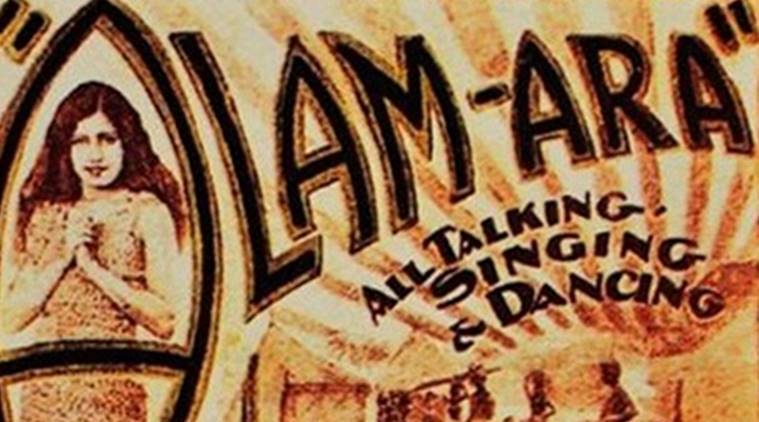
Almost three decades before Prithviraj Kapoor furrowed his royal brow in disapproval of his son’s love as Emperor Akbar in the 1960 Hindi blockbuster 'Mughal-E-Azam', the actor was often seen loitering outside the gates of a large, beige film studio in South Bombay, hoping to win the approval of one 'Khan Sahib'. The year was 1929, and Kapoor was just one of many junior artists trying to catch the eye of Khan Bahadur Ardeshir Irani—the Parsi owner of Imperial Studios, which would go on to produce India’s first feature-length sound film, 'Alam Ara', in 1931.
Had even a single print of this landmark hit survived today, you would likely hear Kapoor delivering his first onscreen Urdu and Hindi lines as the warrior Adil, decades before he would famously speak in Urdu as Emperor Akbar. “If Hindustani—a hybrid language combining Urdu and Hindi—is still alive today, it is only because of cinema and Ardeshir Irani,” proclaimed film historian Narendra Panjwani during a recent talk about the legendary 'father of Indian talkies.'
Titled 'Getting To Know Ardeshir Irani', the session, held by the Mumbai Research Centre at the Asiatic Society of Mumbai’s Durbar Hall on November 8, saw Panjwani delve into the lesser-known aspects of the filmmaker’s career. Irani, who chose to make India’s first talkie in Hindustani, is credited with breaking new ground.
"Despite a 50-year local legacy of Parsi theatre—mostly performed in Hindustani—no one had thought of making a movie in Hindustani until Irani,” mused Panjwani. “Hindi became the official language of India in 1947, but Irani’s mother tongue was Farsi,” he added, highlighting the complexity of Irani's linguistic choices.
Born into a Parsi family in the 1880s, Irani grew up in Bombay and initially worked as a school teacher and kerosene inspector. His journey into cinema began somewhat serendipitously. After buying a lottery ticket every evening, he finally won in 1909, and a slide shown during the talk displayed a young Irani standing outside his music shop in 1910 Bombay. Irani's foray into the film industry involved both the film exhibition business and various partnerships in film ventures. In the mid-1920s, he co-founded Imperial Studios with Abdulally Esoofally, with whom he had spent the World War I years soaking in Hollywood films.
Even as Irani’s granddaughter, Rashna Talati—who remembers her grandfather as a well-built, intimidating figure who “swore like a sailor”—snapped a photo of a slide showing the filmmaker’s early years, Panjwani debunked several persistent myths about Irani’s legacy. "He never went to England or America," asserted Panjwani, debunking the popular belief that Irani travelled to England for 15 days to study sound recording. "In fact, he never left Bombay," said Panjwani, referring to the claims on Irani’s Wikipedia page.
Another misconception Panjwani corrected was that Irani studied film at Sir JJ College of Art. "He did not. There were no film schools in India at the time,” said Panjwani. According to him, Irani first encountered a talking movie camera through a magazine advertisement and immediately sent a postcard to the American company requesting the camera. In response, they sent him the equipment along with Wilford Deming, a Hollywood expert, who charged Irani Rs 100 a day—a princely sum at the time—to teach him how to use it.
Shot entirely on a corner plot next to the railway tracks in Grant Road—between 12:30 am and 4:30 am, when local trains were not running—Alam Ara opened with the bold proclamation: “All Living, Breathing 100 per cent Talking Peak Drama, Essence of Romance, Brains and Talents Unheard of Under One Banner,” according to a 2022 magazine report. The film became a massive success, running four shows a day for eight weeks in Mumbai. A March 23, 1931, report in The Times of India praised the film's voice synchronization as "syllable perfect," noting that it had "effectively disposed of Hollywood's pet theory that it is necessary to spend millions of dollars on building super-perfect studios."
“Contemporaries were shocked by the success,” said Panjwani, pointing out that no one had expected Hindustani to transcend linguistic borders across India. The success of 'Alam Ara' not only prompted filmmakers to move away from mythological tales but also inspired a shift towards social and historical narratives. Panjwani highlighted that between 1931 and 1936, 95% of all talkie films made in India were in Hindustani.
"Irani didn’t just reshape Hindi cinema—he gave birth to it,” said Panjwani. Today, all that remains of 'Alam Ara' are faded stills, posters, and the stories of old-timers who recall the crowds that surged at cinemas and the black-market ticket sales.
Little-known nuggets of Irani's oeuvre--such as the fact that he produced India’s first Persian-language sound film at Imperial Studios and India’s first color film, 'Kisan Kanya', in 1937-- animated the session. One front-row attendee was especially delighted to learn that Irani had also directed several women-centric films, including the 1927 silent feature 'The Wild Cat Of Bombay'.
Subscribe to:
Posts (Atom)