Showing posts with label Arati Kadav interview. Show all posts
Showing posts with label Arati Kadav interview. Show all posts
This is 3rd time I’ve worked on a project fo 2 years; then it just went nowhere-Arati Kadav
10:32 PM
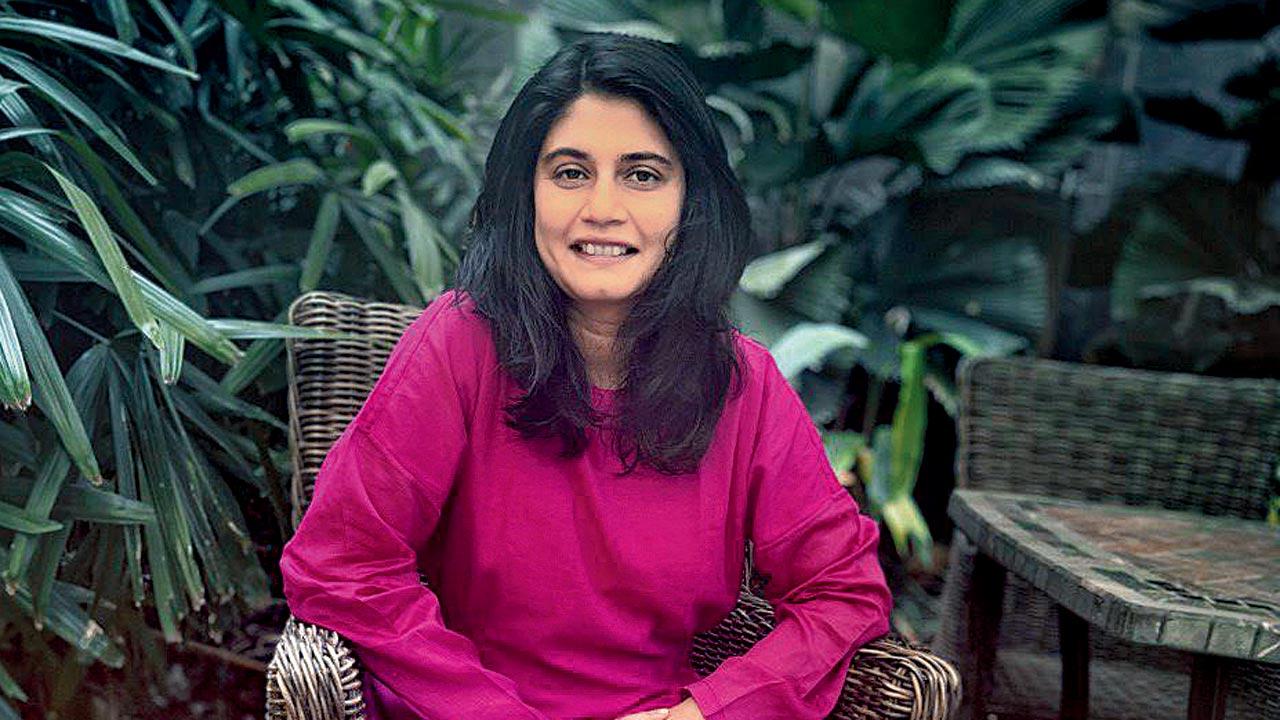
Admitting the struggle to find backing for sci-fi projects has taken its toll, director Arati Kadav on why she is choosing to go independent
Mohar Basu (MID-DAY; August 24, 2025)
She began with boundless energy and optimism, but director Arati Kadav — known for one of 2025’s most-discussed films Mrs — is now weary of an industry she says is risk-averse. Her dream? To make a big, mainstream sci-fi film. After Cargo (2019) starring Vikrant Massey and Shweta Tripathi, she followed it up with the award-winning short The Astronaut And His Parrot (2022) with Ali Fazal. In 2023, she began her third sci-fi feature, only to watch it stuck in limbo. Having invested years and even relinquished intellectual property, Kadav declared in a tweet: “I have decided I will never write sci-fi for any Indian producer anymore.”
Over a call, Kadav told mid-day the repeated cycle of investing years of passion and energy into projects that stall has pushed her to step away from collaborating with mainstream producers.
She said, "I’ve been very passionate about science fiction. This is the third time I’ve worked on a project for almost two years, and then it just went nowhere. It becomes very defeating, you know? Back-to-back, you pour yourself into something because you’re passionate about it. I want to make a big mainstream sci-fi film, a blockbuster that everyone can watch. A film my parents would be proud of, kids would be fascinated by, young people would say 'wow, that’s cool'. And every time I get a chance, I work very hard, but then something or the other happens and the project collapses. This is the third time I’ve worked on a sci-fi concept for over a year, almost two years. And in the process, you even give away your IP sometimes because you’re working in collaboration. Then the projects just sit in limbo. You’re left wondering, what was all that for? It’s very frustrating. That’s where that tweet came from."
Kadav describes the system as structurally incapable of nurturing sci-fi projects. She points to an industry that prioritizes what looks “safe on paper” over innovation or imagination, leaving little space for creators to experiment with ambitious concepts.
"Working with a production house is not an easy process. It becomes laborious because I have to constantly take them along with me -- explain, justify, listen to feedback, argue my point. It’s exhausting. And after all that, they still don’t get it. I really believe you can make good mainstream, funny, accessible science fiction. Cargo itself was mainstream sci-fi. But something happens in the process of putting a project together—it just doesn’t come alive. I don’t know why, even after years of work, decks, meetings, sitting with them endlessly. I also feel it’s the market’s risk-taking ability. Because there isn’t money, there isn't the bandwidth to take risks. Everybody just wants to rehash what’s been done. I think the industry has become so risk-averse. It’s like a content pipeline madness—people only care about what looks safe on paper, not about what audiences might actually like. Producers are picking projects that are 'safe on paper'.”
Won't the success of Mrs embolden stakeholders? "I still have the energy of a child for this genre. I can wake up in the middle of the night and start working on sci-fi. But all the sci-fi I’ve made so far has been self-funded. And it’s not like I had money. I was literally broke, but still funding those stories because of my passion. At some point, though, you need financing. Good science fiction requires decent budgets, not something an individual can bear alone. You need producers and organizations to come together. That’s why my frustration burst out. I am exhausted."
Even the much-hyped entry of OTT platforms, she says, has failed to deliver on the promise of risk-taking. While streamers initially appeared to widen the spectrum of stories being told, they too have increasingly gravitated towards formula-driven content, leaving science fiction out of the mainstream conversation.
"There was hope OTTs would broaden the landscape. But they haven’t delivered on that hope. Yes, there’s a slightly wider set of stories being told, and one should be grateful. But it’s not as wide as we thought. They’re also going back to safe formulas -- cop dramas, family sagas and comedy shows. They’re not innovating as much as expected. Also, when I was younger, I had that innocence and passion. I remember how I made Cargo. I stayed at it. But later, you start balancing things, and you slip into a kind of survival mode with your profession. In that mode, you can’t really attempt these kinds of experiments anymore. When you’re starting out, there are a lot of illusions—nobody is expecting anything from you, so you feel free to innovate and try new things. But later, you begin to play it safe. You start saying, ‘I want the safety of this much budget, I want the security of that much backing’, and that safety takes over."
Unfortunate that so many women related to Richa's struggle in Mrs-Arati Kadav
9:32 AM

Niharika Lal (BOMBAY TIMES; March 8, 2025)
“There is no exaggeration,” says director Arati Kadav about her film Mrs, adding that the casualness of misogyny and patriarchy – not just from men but also other women – is shown in the film exactly as it is. The film, starring Sanya Malhotra in the lead role, highlights the story of an average Indian family that doesn’t realise the burden of invisible labour women carry every single day. From ‘ghar ka khana’ to ‘silbatte ki chutney’ – phrases used casually, and even fondly – Arati points out how loaded they actually are.
Both Sanya and Arati say that working on the film made them realise how they also have taken their mothers’ invisible workload for granted. “I told my mom, if I calculate the labour you put in making chips at home, instead of buying chips, suddenly that Rs. 200 will seem like nothing. But this labour is invisible because we’re conditioned not to see it,” Arati says.
Since its release, the film has sparked a debate, as many women have found the casual misogyny shown in the film very real and triggering. Arati says that women from all age groups have told her how deeply they related to the story, but it wasn’t a surprise to her – because this was a film where the research started from her own home.
With Mrs, an adaptation of Malayalam film The Great Indian Kitchen, Arati’s thought was simple: Society and families need to stop treating women like a ‘function’ – homemaker, cook, caretaker – and start seeing them as individuals with their own dreams, their own identities.
THIS IS A VERY IMPORTANT STORY, KYUNKI YE GHAR›GHAR KI KAHANI HAI: ARATI
Arati says that the research for this film started from her own home before speaking to other women. “When Sanya and I came to Delhi, we had conversations with many women. It was such a cathartic experience. There was one woman who was from an extremely privileged household. She was a housewife, same age as Sanya’s character, going through the same journey. When I heard her story, I got goosebumps. I realized then that this story had to be told with honesty, sincerity, and love, because it is the story of so many women. You can’t be casual about it. Mujhe lagta hai ye bahut important story hai kyunki ye ghar-ghar ki kahani hai. In the entire film, the camera is only in the kitchen and rarely anywhere else.”
The director says that she wanted to make it a very personal story of a girl who has ambitions, which are being crushed. “In the film, she actually makes an effort to impress. She has the excitement of a fresh-faced girl in a new job. Gradually, her morale deflates. My idea was that if a woman is respected for who she is, she will also be a good provider in the house.”
THE TEAM BROUGHT THEIR PERSONAL EXPERIENCES TO THE FILM: SANYA
Sanya adds that Arati and she interviewed many women for the film, which is why many find it so relatable. “A friend of mine, who has faced similar challenges, was gracious enough to share her therapy notes with me. Arati and Anu (Anu Singh Choudhary, writer of the film) worked on this script for almost a year, bringing their own personal experiences to it. That’s why the story resonates with so many women. I have heard people say to my mother, ‘Pura din toh ghar pe hi baithe rehti ho. Kya hi hota hai kaam ghar ka?’ I have seen Richa in my mother, my sister, and my married friends. I have not personally experienced her struggles, but of course, when you’re playing such a character, you have to have empathy. I think I have a natural empathy for women going through similar struggles. It breaks my heart, but at the same time, I’m hopeful that a film like this will bring some change. People will become more aware of these everyday struggles that often go unnoticed.”
‘LADKI KO KHANA BANANA NAHI SIKHAYA?’ THIS IS SUCH A COMMON LINE: SANYA
Sanya says how serving the family is an “everyday reality for so many women – waking up early, cooking for the entire family, going to work, and then coming home to cook again.” “Our mothers have been doing everything selflessly for so long. Now, when I see my mother, she’s tired of stepping into the kitchen. And she feels bad about it because we put our mothers on a pedestal – ‘Maa ke khaane ki toh baat hi kuch aur hoti hai.’ In the film, Richa’s husband tells her mother, ‘Agar aapne nahi sikhaya toh meri maa ise khana banana sikha degi.’ This is such a common thing to hear – not just in the film, I have heard it around me. ‘Ladki ko khana banana nahi aata? Aapne sikhaya nahi?’ Yes, cooking is a life skill – but everyone should know it. Not just women.”
Arati adds, “Even I am guilty of treating my mother like a function. We grew up without understanding this invisible workload our mothers carried day in and day out, quietly, with no day off. It is important that we don’t look at women as a function – doing laundry, keeping the home in order. We see the father as someone bringing value to society and not the mother. But the truth is, women bring immense value – to those fathers, to the families and the society. Women also need to realize that they are individuals who deserve their own passions, hobbies, and dreams – and not just keep serving others. We can’t change everything with one film, but at least we can start a conversation through Mrs.”
“The broken kitchen pipeline in the film is a metaphor for how broken the whole system is. The helper says that ‘puri pipeline badalni padegi, ye leakage local nahi hai.’ It was a metaphor for ye patriarchy puri badalni padegi. It’s not an individual problem where just fixing her husband will solve everything. A much bigger change is needed. You can introduce policy changes, a token Women’s Day celebration, but all of that is superficial. The real change has to be in attitude and mindset. Everyone has to sit together, break the system, and remake it,” says Arati
I wanted to map subtle heartbreaks throughout the story: Arati
Arati says that when she was discussing the film with a friend, he spoke about how “marriage is sometimes a series of subtle heartbreaks.”
Arati wanted to map these heartbreaks throughout the story. “I thought, let me start it with chai. On the first day after their wedding, the husband pours half of his tea into another cup and offers it to her. The next day, she takes out a teacup for herself (hoping for the same treatment), but he just leaves with his own cup. We have mapped such small moments across the film – the moments that turn Richa from a young, new bride into a person who has lost her smile.”
“It’s like a horror show in a dollhouse. Everything looks pretty from the outside. People say, ‘Ye toh kitna perfect hai. Kya problem hai meri beti ko?’ Even the mother (in the film) says, ‘Tumhare saath jaake sorry bol dete hain, itna achha ghar hai.’ She also moves from a smaller house to a bigger house, to the man of her dreams. So, what is the problem? The problem is so internal and so psychological that no one can see it, no one can understand it,” says Arati
The social media debate that Mrs sparked
The film triggered an intense discussion on social media – from some accusing it of damaging ‘family values’ to others praising it for holding up a mirror to the society and the deep conditioning that normalizes inequality in homes
-----------------------------------------------
People associate pride with women doing free labour. They try to give scientific reasons jo humne iss film mein daalne ki koshish ki hai. Silbatte se chutney nahi hai toh enzymes nahi hote, masala ghar mein grind hota hai toh chemical free hai - Arati Kadav
Instead of seeking inspiration from the West, we need to draw from Indian folklore, says Cargo director Arati Kadav
9:00 AM

Cargo director Arati Kadav on why Bollywood needs to quit seeking inspiration from the West
Shaheen Parkar (MID-DAY; September 13, 2020)
 It was a long wait for Arati Kadav's sci-fi film Cargo to see the light of day. The Vikrant Massey and Shweta Tripathi Sharma-starrer premièred at the MAMI film festival in 2019 and did the festival rounds. "Had it not been for the pandemic, Cargo would have been screened at several more festivals," says Kadav, adding, "Now that it has dropped on Netflix, it will travel to many more homes."
The writer-director admits that for a first-time filmmaker a theatrical release "would add to your resume, but given the prevailing circumstance, this is the best option". Obsessed with the sci-fi genre, Kadav says she couldn't think of any other subject to make her debut. "Science fiction comes naturally to me. For the last eight years, I have been writing and making short films on it," says the filmmaker.
Streaming on Netflix since September 9, Cargo revolves around a demon, who works on a spaceship to aid the transition services post death along with an astronaut. "A spaceship comes close to the Earth every day and the dead are carried like cargo to an after-life. They have to go through immigration, give up their identity, get their memories erased and give up worldly possessions to begin a new life," explains Kadav.
Though sci-fi films are the biggest grossers in Hollywood, Bollywood still shies away from the genre. "I hope more producers back sci-fi projects. Due to the special effects, the budget of the film shoots up, which makes most producers stay away," reasons Kadav, adding that the benchmark for Indian sci-fi subjects still remains around Hollywood inspired films about superheroes. "Instead of seeking inspiration from the West, we need to draw from Indian folklore. There are enough subjects to draw inspiration from and to weave a tale about the other worlds." The filmmaker is already working on two more scripts around the same subject.
I had an attraction towards the Yamraj myth-Arati Kadav
9:09 AM

Arati Kadav on why she made the switch from engineer to sci-fi filmmaker and why death isn't permanent
Aastha Atray Banan (MID-DAY; March 8, 2020)
"My name is Aarti only, but when I was younger, I made up my mind that I wanted to change the spelling," says Arati Kadav, the director of the sci-fi movie Cargo. She may look unsuspectingly docile, but it's this rebellious streak that perhaps led the IIT Kanpur graduate, who once worked at Microsoft in Seattle, to become a filmmaker. Cargo, which premiered at MAMI last year, is about life on Pushpak 634A, where a demon works for the Post Death Transition services, and with the help of a female astronaut, gets dead people ready to be recycled for rebirth.
Though the plot of Cargo sounds complicated, it was with the simple stories of Panchatantra and Indian mythology that Kadav, who grew up in Nagpur, first was introduced to science fiction. "I used to write short stories about fantasy—all things magic came naturally to me. Also, my family was crazy about computers. We got one early on. So, there was a good mix of fantasy and technology," says the daughter of an engineer and a teacher.
It was in Seattle that she got a video camera, and started making short videos by herself, while also studying about Martin Scorsese. And so, when she got back to India, she enrolled at Mumbai's Whistling Woods for a course in filmmaking. Her first film there, about a grey coloured man living in a colourful world, was what got her hooked. "He buys himself a colorful robot, who is enamoured by his greyness. The film was appreciated in the school, and I got a big kick making it, seeing my vision come alive. And then I knew, this was a high I wanted to keep feeling."
It may be Western sci-fi (Philip K Dick, Ray Bradbury and the likes) that has shaped most people's view of the genre, but Kadav is a fan of Eastern sci-fi, which she feels she could relate to more as well as an Indian. One example is Ted Chaing's Arrival, which eventually made it to the big screen. "The original, The Story Of My Life, is the most beautiful story ever. When I read it I wanted to die of jealousy. Sci-fi doesn't need to be larger than life. It can be simple, nuanced and yet very profound. There is a Spanish author, who is a champion of the unreliable narrator—a character whose version of events doesn't seem to be complete or accurate. Isn't Indian folklore like that as well? Kuch bhi ho sakta hai."
Before Cargo, which is going to travel to other film festivals ahead of its OTT debut, Kadav dabbled in making ads and music videos. But, after Cargo, there is no looking back. "So India has the coolest sci-fi in shape of its own mythology. Like Mahabharat. But, every generation can impact these stories. I had an attraction towards the Yamraj myth. But I wanted to make the afterlife concept more interesting. So after you die, you come to the spaceship, which is like an immigration counter, before you get rebirth." As she gets ready for audiences to start watching it and passing verdict, she says she has a message to go with it, too. "I think what I really wanted to say was that if a life ends, there are still traces of us left behind. Nothing gets over forever. Secondly, forever is not about living on and on. Forever could just be a moment. For instance, when you are looking at a beautiful flower. It could just be that."
Subscribe to:
Posts (Atom)