Showing posts with label Arati Kadav. Show all posts
Showing posts with label Arati Kadav. Show all posts
Universal Music India acquires a stake in Excel Entertainment; can corporate investments ever be married to creativity?
9:45 AM

Akshita Maheshwari (MID-DAY; January 25, 2026)
In December last year, when we first heard rumours of Netflix acquiring Warner Bros, the thinkpieces came thick and fast. People said this was the final nail in the coffin for theatrical films, the moment algorithms would officially replace auteurs, and boardrooms would decide not just what gets made, but what kind of stories are even worth telling. A streaming giant swallowing one of Hollywood’s oldest studios seemed to confirm everyone’s worst fears, that cinema would finally become content, IP would matter more than ideas, and risk, originality, and the mid-budget film would be the first casualties.
Closer at home, Universal Music India (UMI) just acquired a 30 per cent stake in Farhan Akhtar and Ritesh Sidhwani’s production house, Excel Entertainment. This comes after Saregama Music invested in Bhansali Productions in December last year, and vaccine billionaire Adar Poonawalla acquired a 50 per cent stake in Dharma Productions in 2024. When corporate deals that haven’t even gone through in the West cause such a stir, is there any panic of a corporate takeover of the movies at home?
Managing director at Mukta Arts production house, Rahul Puri, says, “Giants have always existed in the business. Mukta was one of the first companies that went public and raised money from the equity markets. Then you had PNC [Pritish Nandy Communications], Balaji [Telefilms], Tips [Industries] in those early days. Even when there was a corporate interest, companies — like the [Aditya] Birla Group with Applause — tended to build organically. They didn’t necessarily partner with anyone because they had enough capital to come in and attract talent.”
He adds, “Now the mindset has changed. Corporate houses have recognized the value that creators and production houses bring. They bring a network of talent and relationships, and our business is very much about those networks.”
The style of filmmaking too has changed today. Going to the cinema is a theatrical event, reserved only for big-ticket spectacles.
“Whether it’s action films with big sequences or films on a large canvas with international travel, budgets are much bigger,” says Puri, “There’s also the ambition to make Indian films competitive globally, so quality has to go up, which affects production costs. Corporate investment is a way to de-risk producers while also giving them capital to be able to make these large projects.”
Among the three deals mentioned, interestingly, two of them happen with music labels entering films. In Indian cinema, music and films have always shared a special relationship, in business and in bed. Even bad films could rely on a banger album to be able to succeed. Before phones and social media, music was the first taste of a film, and often the biggest factor that invites the audience in.
“Unfortunately though in India, music is perceived as free. We never want to pay for music. Since the piracy boom, music has been seen as an add-on to everything else,” says Rajdeep Anand, who works in music licensing, “With UMI and Saregama getting into films, music will finally get its due.”
For Anand too, the deal is like music to his ears. “The older model was that someone would come up with a movie and a set of songs, and then labels would bid for it. But now, everything in Excel’s future that relates to music will go through UMI. Universal doesn’t have to worry about any other player coming in. If I already know my slate for the next five to ten years — what’s coming on OTT, what’s coming in theatres — I can spend time developing new talent and strategically placing which singer gets attached to which project. It gives artistes a platform even before they start off,” he explains, “Look at something like Mismatched (2020-26), Kho Gaye Hum Kahan (2023), or Gehraiyaan (2022), or something as big as Dhurandhar (2025) — they could take much bigger bets with their music. Excel has always had a great ear for music, so I am hopeful that this collaboration will bring music to the forefront.”
Puri also adds, “It is also a play to give music labels a strong flow of content separate from their traditional business, which is essentially just music distribution. They’re taking advantage of a dynamic content monetization space.”
Filmmaker Arati Kadav, whom you may recognize from Mrs (2025), shares why she thinks corporates are investing in films. “First of all, there is always the charm of being associated with the film industry,” she says, “We hear of many films making Rs 100 or Rs 200 crore, but we confuse revenue for profit. Even if a film makes Rs 100 crore, the production cost has gone up so much that the profit we earn is very less.”
Puri argues that big-ticket films might actually help with cash flow. “If a film like Dhurandhar [Jio Studios] does really well, that money can flow into smaller films. Big stars can’t make infinite films, so the surplus has to go somewhere. Ideally, into more creative films.”
Kadav also agrees, “Corporates coming in might actually impart some autonomy to production houses. For example, Dharma [Productions] could make the beautiful film, Homebound (2025) because they had the backing of Adar Poonawalla.”
We ask, what if algorithms start to dictate storytelling? She says, “Unfortunately, the climate has already become like that. Algorithms are dictating the shape of our stories already. Actors are chosen by follower counts. The world has become like that, regardless of corporations. At least if a producer with a good sensibility gets corporate money and support, and if they have good convincing power, they might actually be able to break out of that.”
Although Puri, Kadav, and Anand make this sound like a sweet deal, there are still sceptics who worry that this might mean a death for their creative vision. Filmmaker Aditya Kripalani shares his concerns, “Within corporations, you have a whole board of people and their aim is to not lose their job. I’m not saying they are wrong. But for them, the peak point of their life is to keep that job at the platform,” he says, “If I’m at a platform, it’s easy for me to have a checklist: Did it go to Cannes? Does it have a star? What numbers has that star’s previous film done? Once I have that checklist, my head will not roll if I take the film. But if I say ‘I like the film’ and the film doesn’t work, my head will roll.”
Kripalani calls back to when Netflix co-CEO Ted Sandoros said that he thinks Sacred Games (2018-19) may not have been the best choice to open in the Indian market; he would have liked to go with something more “populist”. “Exactly, there you go,” says Kripalani, “For me, the 100 per cent corporatization is when a platform makes a film. Because then the creative individual — which is the director — has no power. They are hired hands, no matter how big that director is.”
Eros International, a music giant, produced Raanjhanaa (2013), while Aanand L Rai directed it. When the film was re-released, Eros could change the ending of the film with AI, without the director’s consent, completely changing the meaning of the film. Rai was then dragged in a copyright infringement lawsuit by Eros for making Tere Ishk Mein (2025) too similar to Raanjhanaa.
An important loss in the race to corporatization is the mid-budget film. “The '1-crore films, we used to call them,” says Kripalani. According to him, movies will now split into big-ticket spectacles or OTT releases. The traditional trajectory for a director to get a big-budget would be to start with AD-ing, get to mid-budget, and then big-budget event films. With corporatization, we may just be witnessing the death of a mid-budget hit.
“In the 1990s, you used to get 2 to 3 such films a year each from Ram Gopal Varma, from Dharma [Productions], from Yash Raj [Films]. Even Munna Bhai MBBS (2003), Rock On!! (2008), Dil Chahta Hai (2001) were all mid-budget films. A film made for a certain budget with a known face, these are gone,” he says, “In the last couple of years, you have seen Superboys Of Malegaon (2024), Laapataa Ladies (2024), and maybe one or two more — there’s a handful of this kind of film that I can name.”
“I think the people who are in the biggest problem are the mid-level people. New people — like a crazy YouTuber making great content — can still get picked up. And if you’re already an established [Martin] Scorsese or [Christopher] Nolan, you’re okay,” says Kripalani, “But the people who have made five to eight films and are in the middle of their career. There is no platform left for them.”
But what do we lose when we lose mid-budget films? “We lose stories with depth. They may not deal with dark subjects, but they touch you deeply — family dynamics, interpersonal relationships,” says Kripalani, “The indie space deals with the darker sides of society. Big films are just popcorn films, which is fine. Now you’ll get either mindless spectacle or very dark films. When was the last time you got something like Dil Chahta Hai? That middle space is disappearing.”
From Kanu Behl to Chaitanya Tamhane, filmmakers are challenging a system that decides what India can and cannot watch
9:52 AM

Jane Borges (MUMBAI MIRROR; November 23, 2025)
“It’s taken me over nine years, a large chunk of my life and a lot of blood, sweat, toil and tears to make Agra,” filmmaker Kanu Behl shares over a phone call, “I couldn’t have let this go.” Agra, which won Best Indie Film at the Indian Film Festival of Melbourne and premiered at the Cannes Directors’ Fortnight to critical acclaim, is a psychological drama, exploring sexuality and loneliness. Earlier this week, after being given severely limited screenings for his film—only 70 screens across the country—the filmmaker took to social media to call out the “long-standing systemic pattern affecting all independent films in India”: the denial of theatrical access.
His post immediately found support within the community, with 46 filmmakers, including Chaitanya Tamhane, Payal Kapadia, Shaunak Sen, Vasan Bala, co-signing a statement demanding fair access for independent films.
“The group is expanding as we speak,” Behl told Mirror, “We are now in the process of forming a body that will come together to talk about our collective rights.”
Reel dreams, real struggle
Directors Alankrita Shrivastava and Arati Kadav, co-signees to the statement, say their solidarity stems from having experienced similar helplessness. Shrivastava remembers the difficulty she faced in getting a theatrical release for her film Turning 30 (2011), a romantic comedy, starring Gul Panag, revolving around an ad executive who gets dumped and has her ideas stolen before her 30th birthday.
“We got screens in certain places where the film honestly did not have any resonance, whereas we needed more screens in places where the film was doing well,” she says.
For Kadav, who found OTT fame with Mrs (2023) — a remake of the Malayalam film, The Great Indian Kitchen — bootstrapping her career had been the norm for the longest time. Her sci-fi fantasy film Cargo (2019), starring Vikrant Massey and Shweta Tripathi, set aboard a spaceship where souls of the deceased arrive before they are prepared for reincarnation, went to over 25 festivals, including the Miami International Science Fiction Film Festival (MiSciFi).
“Though it was lapped up by everyone outside India, I struggled with distribution for about one-and-a-half years. I had put in a lot of money into this project, and felt quite dejected,” she says.
While the film didn’t get a theatrical release — Kadav says she understands “theatrical reservations for some festival films”, though the need of the hour is to find “incentives for them”—it was eventually picked up by Netflix where it had a decent five-year run. Having the backing of an industry powerhouse like Anurag Kashyap, who was among Cargo’s many co-producers helped. “I got lucky,” Kadav admits.
Showtime comes at a price
The fight at the ground level for independent films is getting harder with each passing year, says Kimaya Hemdev, director and head of acquisition at Star Entertainment Pvt Ltd. “Companies that were once only theatre owners have now also become distributors. So, you’re competing with a distributor who also has the bargaining power of a theatre,” she explains.
When producers, distributors and exhibitors are the same people, it creates a monopoly—one where, she says, “there’s a clear preference for the films they distribute, especially studio movies.”
Quality time slots and cinemas are carved out for the big studio films, which are also exonerated from paying a Virtual Print Fee —a charge producers pay to exhibitors to help cover the costs of converting to digital cinema projectors — which Hemdev says is anywhere between Rs 25,000-Rs 50,000 per screen, per show, and can be prohibitive for independent filmmakers. If a film had to run for a week with a single show daily, it would translate to Rs 3.5 lakh approx.
Audience is king
The long-held argument that there’s no audience for independent films, Behl says, is “fallacious”. “On Tuesday night, when I finally got a show [for Agra] at PVR Citi Mall in Andheri, there were 119 people who came to watch it,” he says.
According to Shrivastava, what’s happening right now is neither fair to independent films, nor the audience. “If the audience can’t access these films, how will they ever get a taste of another kind of cinema?”
Vishek Chauhan, CEO of Rupbani Cinemas, Purnia, Bihar, says that ultimately, “the programming power lies only with the audience.” He stresses that no exhibitor in their right mind would deliberately refuse a good film that promises viewership, because theatres operate as businesses and decisions depend on demand and viability. He finds it unfair to pin the blame solely on exhibitors.
Theatrical success, he says, is no longer the only metric of a film’s performance. The majority of the viewers consume films at home on OTT or television, with theatre earnings form only “12–20 per cent of a film’s overall pie.” Therefore, he says, forcing exhibitors to run films with low turnout “jeopardizes other films that could do better.”
Kerala files
Down South, in the Malayalam film industry, filmmakers working with novel scripts have tried to negotiate the system to reach the right kind of viewers. A case in point is the 2023 National Award-winning drama Aattam, written and directed by Anand Ekarshi, which turns the spotlight on a theatre group whose sole actress faces sexual assault by one of the men. According to him, “shooting and making the film is actually the easiest part; releasing the film is the toughest.”
As an early business strategy, Ekarshi raised funds to make a 10-minute pilot of his film to show producers. “The idea was to give them a glimpse of the script, understand the characters, and see what the actors could pull off.” Joy Movie Productions came on board soon after. Aattam, despite its experimental nature, turned into commercial project. It was made on a shoestring budget of Rs 3 crore, of which Rs 80 lakh was dedicated solely to marketing—the movie enjoyed a successful theatrical run and bagged a prime OTT release.
Meanwhile, the theatre run of Prasanth Vijay’s Ithiri Neram, a romantic drama starring Zarin Shihab and Roshan Mathew, earlier this month in Kerala has been hard-won. Vijay has made two critically acclaimed films before, Athisayangalude Venal and Daayam, funded by a school friend and his wife respectively, which didn’t make it to theatres. He tried to cut the risks with Ithiri Neram by getting a producer — Jomon Jacob of Mankind Cinemas and four others — who shared his sensibility. “Even after the film was made, it took a while to find the right distributor,” he says.
“But I waited, because I wanted the film to reach the last mile, even if it were fewer theatres.” The goal was also to be able to get a good OTT platform for wider reach. The film opened in 60 theatres in the first week of November and continues to reach newer audiences.
The fact that the Kerala state government has taken up initiatives to support the arts, has also come to the aid of filmmakers. Debutante filmmaker Sivaranjini J won a Rs 1.5 crore woman’s empowerment programme grant for her film, Victoria in 2022 — there is no such equivalent grant in Maharashtra for women. The production was taken care of by the Kerala State Film Development Corporation and the movie, when it releases next week, will be shown across eight government-run theatres in major cities. A government grant comes with its own set of challenges with filmmakers having to deal with red-tapeism and mounds of paperwork. “But it gives you a good start,” she admits.
Meenakshi Shedde, Senior Programming Advisor-South Asia at the Toronto International Film Festival (TIFF) and South Asia Delegate to the Berlin Film Festival for 27 years, says that in contrast with Bollywood, Kerala has a very strong grassroots film movement.
“Even the rice farmers know their cinema, and that’s unthinkable in most parts of the country,” she says, adding “that the International Film Festival of Kerala and film societies have played a huge role in shaping their taste”.
Alternative script
Internationally, independent American production house A24 has been backing indie and artistically driven films in its attempt to push high-quality cinema. Closer home, Manish Mundra, filmmaker and founder-producer, Drishyam Films has emerged as an unlikely champion of independent films — Masaan (2015) and Newton (2017) are part of the success story.
“For things to change, everyone must play a part. Producers and distributors cannot do it alone. Audiences need to show up for these films, and the government needs to recognize that cinema is a cultural resource. We need more single screens, art-house theatres and community spaces across the country, and not just urban and expensive multiplexes focused on mainstream releases,” Mundra says.
Shedde believes that independent filmmakers should also tap into movements taking place within cities like Mumbai, that provide platforms to showcase good, quality cinema. “Film Heritage Foundation and VHS [Versova Homage Screenings], for instance, regularly screen indie productions and also get audiences for these screenings.” She stresses the need for filmmakers to think more about “how to help create an audience for their films as well.
Karan Talwar, filmmaker and co-founder of Harkat Studios, has for the last decade been building an alternative community-driven space for independent and experimental films. “Harkat now screens nine to 10 films a month under our independent calendar, with guest curators and rotating themes,” he says. They operate on a 50-50 box-office sharing model, to help filmmakers earn revenue.
“We are seeing a massive uptick of people who want to come in for these screenings,” he says, adding. He believes that the one way to fight this system is to make new inroads and find new friends.
Nothing in the system is designed to nurture our stories-Arati Kadav
10:13 AM

Arati Kadav, Kanu Behl, Aditya Kripalani
As 46 filmmakers sign a joint letter demanding equitable screens, Kanu Behl and Arati Kadav discuss forming a body to secure minimum rights for indie cinema after years of being stifled by theatres and OTT
Mohar Basu, Priyanka Sharma (MID-DAY; November 19, 2025)
Change is what Kanu Behl urged for, as he spoke to mid-day last week after his film Agra was allotted only 70 screens across the country (I will quit filmmaking, Nov 15). Within days, his appeal has transformed into an industry-wide call for action. On November 17, 46 independent filmmakers across India signed a joint letter asking multiplex chains to give their films a fair shot by providing them equitable showtimes, transparency in how the screens are allotted, and urged OTT platforms for acquisition parity. The signatories include acclaimed voices such as Nandita Das, Chaitanya Tamhane, Cannes Grand Prix-winning director Payal Kapadia, Orizzonti Award winner Anuparna Roy, National Film Award winner Rima Das, Arati Kadav, Vasan Bala, and many more.
The first step
Behl reveals that the idea of a joint statement sprung from his conversation with a bunch of filmmakers right after Agra’s release. After all, each of their films, at one point or the other, had been snubbed the way Agra was. “So, we felt it was high time we came together and spoke about this in one voice,” he tells mid-day.
The letter appeals the industry to make space for independent films. It points out the irony of how countless indie movies have been celebrated at renowned film festivals — Cannes, Venice, and Busan — but fail to reach the Indian audience. It highlights that small films face limited screenings, morning or weekday-only slots, and cancellations even.
A wave of reactions
The letter has received an overwhelming support from the industry, with actors, filmmakers, and writers spreading the word through their social media accounts. The reaction itself is telling, notes Behl. “If there is such a huge public outcry, it’s because every single person in the town feels stifled in one way or another.”
Echoing the sentiment is Mrs director Kadav. She voices what every indie filmmaker feels when she says, “Nothing in the system is designed to nurture our stories! Indie filmmakers spend five, six years shaping a film, and when it’s finally ready, there is barely any space for it — not in theatres, not even on OTT, which was supposed to be the great equaliser! We’re constantly told to make what ‘works’, but what about what the artiste needs to say?”
Filmmaker-writer-editor Sumit Purohit, another signatory on the statement, believes solidarity in the industry needs to go beyond words.
“Everyone needs to actively support and promote independent voices. Especially actors and filmmakers who began their journeys with indie films and have gone on to do bigger work. They can make a huge difference by backing new, smaller films. If they cannot always be part of them as cast, they can still support as producers, executive producers, presenters, or by helping the films find funding,” he says.
Actionable change
Kadav terms the letter as “just the beginning”. The plan ahead is to make a filmmakers’ guild. Behl elaborates, “We are developing a collective of filmmakers, which will become an official body and will have a larger conversation about securing minimum rights for this kind of cinema.”
Main Actor Nahi Hoon director Aditya Kripalani highlights that a formal body will give filmmakers far stronger leverage than fighting these battles alone. It will also provide a streamlined approach to champion each other’s work. He cites an example from Hollywood to show how a community of filmmakers can bring the change they want to see. “Agnès Varda, Martin Scorsese, Francis Ford Coppola, Brian De Palma, and so many others were friends who backed each other’s films and ambitions. The same is true of the three Mexican auteurs — Alfonso Cuarón, [Alejandro Gonzalez] Iñárritu and [Guillermo] del Toro.”
Et tu, OTT!
Streamers, once considered the harbinger of a new wave of storytelling, have also been called out in the letter. It questions why OTT platforms consider a movie’s theatrical performance as a prerequisite for acquisition. Here, Kripalani points out that OTT has perhaps benefited the most from indie talent. “They find all their directors for their series from indie films — be it Avinash Arun [who directed Paatal Lok], Devashish [Makhija] who is now making Gandhari, or Vasan,” he shares, before making an appeal. “What would help us is if OTT platforms can keep aside some budget every year for indie films. Even if it’s one-tenth of the big films, it’s enough.”
This is 3rd time I’ve worked on a project fo 2 years; then it just went nowhere-Arati Kadav
10:32 PM
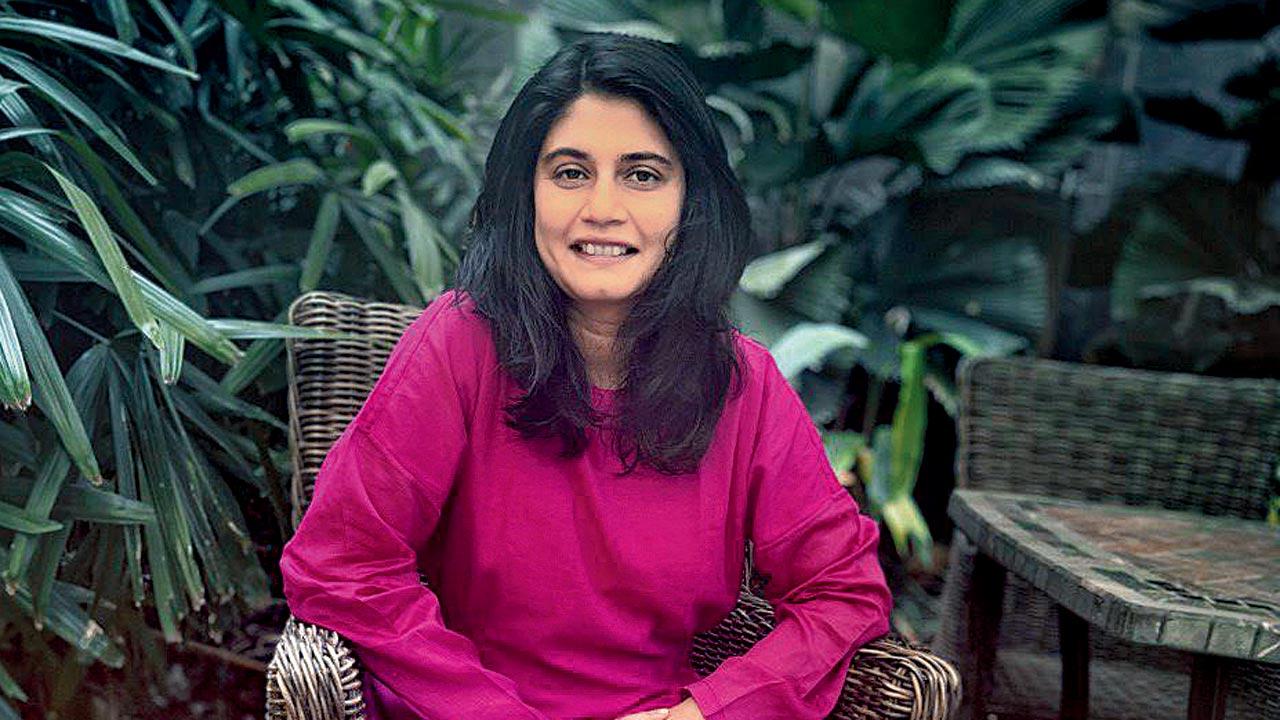
Admitting the struggle to find backing for sci-fi projects has taken its toll, director Arati Kadav on why she is choosing to go independent
Mohar Basu (MID-DAY; August 24, 2025)
She began with boundless energy and optimism, but director Arati Kadav — known for one of 2025’s most-discussed films Mrs — is now weary of an industry she says is risk-averse. Her dream? To make a big, mainstream sci-fi film. After Cargo (2019) starring Vikrant Massey and Shweta Tripathi, she followed it up with the award-winning short The Astronaut And His Parrot (2022) with Ali Fazal. In 2023, she began her third sci-fi feature, only to watch it stuck in limbo. Having invested years and even relinquished intellectual property, Kadav declared in a tweet: “I have decided I will never write sci-fi for any Indian producer anymore.”
Over a call, Kadav told mid-day the repeated cycle of investing years of passion and energy into projects that stall has pushed her to step away from collaborating with mainstream producers.
She said, "I’ve been very passionate about science fiction. This is the third time I’ve worked on a project for almost two years, and then it just went nowhere. It becomes very defeating, you know? Back-to-back, you pour yourself into something because you’re passionate about it. I want to make a big mainstream sci-fi film, a blockbuster that everyone can watch. A film my parents would be proud of, kids would be fascinated by, young people would say 'wow, that’s cool'. And every time I get a chance, I work very hard, but then something or the other happens and the project collapses. This is the third time I’ve worked on a sci-fi concept for over a year, almost two years. And in the process, you even give away your IP sometimes because you’re working in collaboration. Then the projects just sit in limbo. You’re left wondering, what was all that for? It’s very frustrating. That’s where that tweet came from."
Kadav describes the system as structurally incapable of nurturing sci-fi projects. She points to an industry that prioritizes what looks “safe on paper” over innovation or imagination, leaving little space for creators to experiment with ambitious concepts.
"Working with a production house is not an easy process. It becomes laborious because I have to constantly take them along with me -- explain, justify, listen to feedback, argue my point. It’s exhausting. And after all that, they still don’t get it. I really believe you can make good mainstream, funny, accessible science fiction. Cargo itself was mainstream sci-fi. But something happens in the process of putting a project together—it just doesn’t come alive. I don’t know why, even after years of work, decks, meetings, sitting with them endlessly. I also feel it’s the market’s risk-taking ability. Because there isn’t money, there isn't the bandwidth to take risks. Everybody just wants to rehash what’s been done. I think the industry has become so risk-averse. It’s like a content pipeline madness—people only care about what looks safe on paper, not about what audiences might actually like. Producers are picking projects that are 'safe on paper'.”
Won't the success of Mrs embolden stakeholders? "I still have the energy of a child for this genre. I can wake up in the middle of the night and start working on sci-fi. But all the sci-fi I’ve made so far has been self-funded. And it’s not like I had money. I was literally broke, but still funding those stories because of my passion. At some point, though, you need financing. Good science fiction requires decent budgets, not something an individual can bear alone. You need producers and organizations to come together. That’s why my frustration burst out. I am exhausted."
Even the much-hyped entry of OTT platforms, she says, has failed to deliver on the promise of risk-taking. While streamers initially appeared to widen the spectrum of stories being told, they too have increasingly gravitated towards formula-driven content, leaving science fiction out of the mainstream conversation.
"There was hope OTTs would broaden the landscape. But they haven’t delivered on that hope. Yes, there’s a slightly wider set of stories being told, and one should be grateful. But it’s not as wide as we thought. They’re also going back to safe formulas -- cop dramas, family sagas and comedy shows. They’re not innovating as much as expected. Also, when I was younger, I had that innocence and passion. I remember how I made Cargo. I stayed at it. But later, you start balancing things, and you slip into a kind of survival mode with your profession. In that mode, you can’t really attempt these kinds of experiments anymore. When you’re starting out, there are a lot of illusions—nobody is expecting anything from you, so you feel free to innovate and try new things. But later, you begin to play it safe. You start saying, ‘I want the safety of this much budget, I want the security of that much backing’, and that safety takes over."
Separate washrooms, basic commute and safer sets: What women in Bollywood are fighting for in 2025
10:53 AM
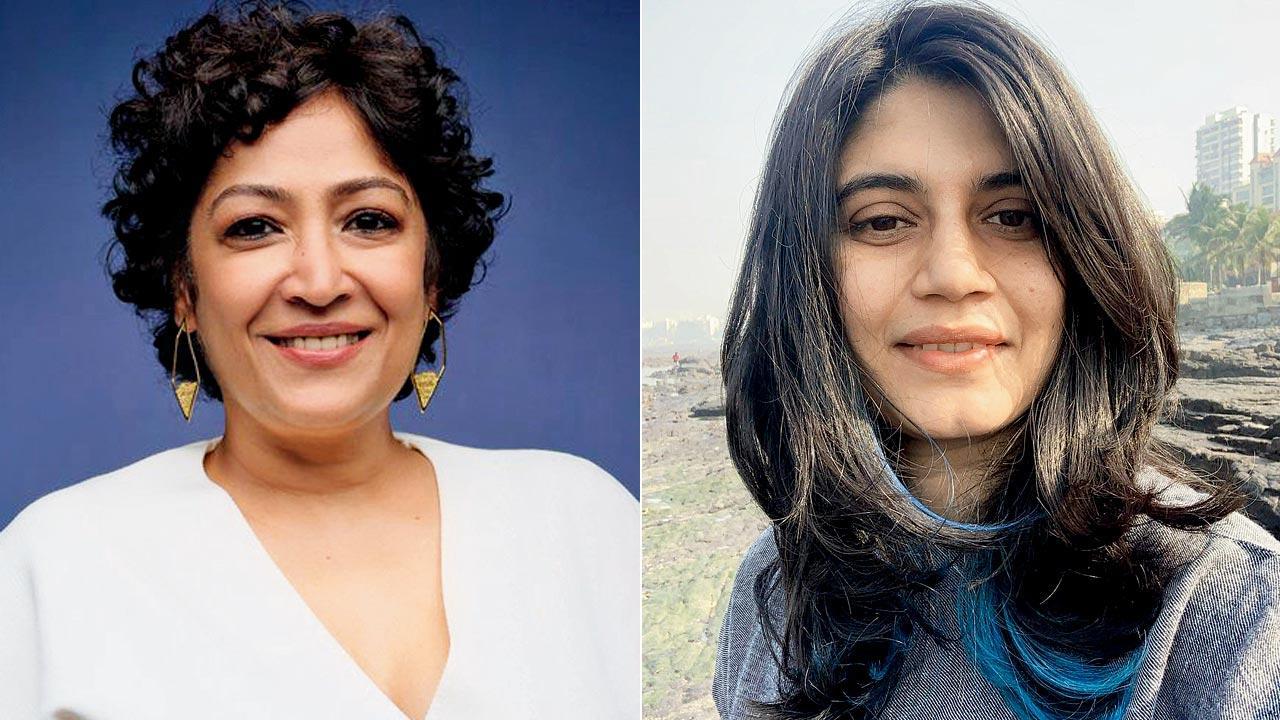
Deepa Bhatia and Arati Kadav
On Women’s Day, director Arati Kadav, editor Deepa Bhatia, and other female professionals urge for better hygiene on sets, safe transportation and better work practices in the Hindi film industry
Komal RJ Panchal, Priyanka Sharma (MID-DAY; March 8, 2025)
The world celebrates Women’s Day today. But what is a celebration if it’s not preceded by change? In the past few years, Bollywood has witnessed positive change as there has been increased representation of women on and off camera. But it’s a long road ahead to equality, finds out mid-day as we talk to women in different streams of filmmaking, including direction, editing, writing, cinematography and stunts.
Why are basics elusive? Mrs director Arati Kadav highlights that even in 2025, women on set often don’t have access to basic amenities like hygienic washrooms. “When I started out, there was one washroom for all the HoDs. I protested that I didn’t want to share washrooms with men. You have to ask for something that I thought was a given. If you are a director, you will probably have a better working condition. But if you’re a female AD or an assistant in any department, there are no special provisions made for you. Since I was given a separate washroom [as a director], I encouraged women crew members to use mine,” complains Kadav.
Senior cinematographer Neha Parti Matiyani, who has worked on titles like My Name Is Khan, Humpty Sharma Ki Dulhania and Netflix' upcoming show Royals, says she has seen a lot change over 20 years of her career but it’s sad something as basic as hygiene is still an issue on smaller productions.
“Sadly enough it is the same problems that existed when I started. Which was, luckily I worked with production houses which took care of issues like bathrooms for women. But across the board, if you are not on a ‘A’ grade production, then bathrooms for women is still a problem," she says.
This is not restricted to sets. Leading editor Deepa Bhatia, who recently worked on Yo Yo Honey Singh: Famous, shares that offices of studios and production houses too are lacking on the sanitation front. “Editors complain of poor sanitation maintained in the bathrooms,” she says.
Cinematographer Pranjal Picha, who has assisted on films like Mere Husband Ki Biwi and Khel Khel Mein (2024), says it takes just two simple words to bring about a change. "All a woman needs is a separate 'ONLY FEMALE' door on set and not just only on the shoot days but also on prep days, during set ups and lighting. So no matter how big or small budget the project is, if you have women working on sets, it be actors, juniors, technicians or crew, make sure they don’t have to ask for it, just give it already," she says.
Work Hours
Screenwriter Kalyani Pandit points out that work timing is another issue. Apparently, many male writers like working late into the night. She notes, “When a woman joins the writers’ room, they try to keep the discussions [and writing sessions] during the day. But it’s made out to be such an inconvenience. If you’re adjusting, toh jata kyun rahe ho?” she asks.
Safety concerns
Every day, thousands of women go to work to what’s called Bollywood. And every day, the fight stars way before they reach and long after they leave the workplace, even in 2025. Kadav stresses on a systemic change when it comes to women travelling to and from sets. “Sometimes, the pack-up happens at 1 or 2 am. The expectation is that the women in the crew will figure it out with their male colleagues. Sometimes, shoots happen in obscure locations, deep inside Film City. Those at the executive level should think about how women will come to set at early hours and leave so late.”
Bhatia echoes Kadav’s sentiment, noting that the physical safety of women working late at nights is not discussed enough. “Editing involves late working hours. [The production houses] don’t think about how the women are reaching home. I have a small WhatsApp group where whenever a member leaves, they drop a text, saying, ‘This is the rickshaw/cab number,’ and on reaching home, they leave another text. Simple things like making sure that people reach home safely [should be looked into]. Also, one needs to consider that when associates, assistant editors or even the editors are the last people to leave the establishment, is the right kind of staff present? I remember an incident where an office boy misbehaved with a woman in the team, and we had to get him out. So, we should ask: Is it safe when she is the last person leaving the studio or the office?”
Oddly, safety concerns also cost women opportunities. Pandit says, “I have heard how for outdoor shoots, productions try to avoid taking women citing safety concerns. This hampers opportunities for women.”
Genres have genders?
We have more women-centric stories on screen, and more women screenwriters. While that is a reason for celebration, the discrimination is evident in the smallest things, says Pandit, who has written the dialogues of 2023 Marathi film Unaad.
“Female writers aren’t even offered horror or stories with ‘angry-young-man’ characters. They come to women writers for female-centric stories. The mindset is still that women are better at writing slice-of-life stories. she rues, adding that there are also times when producers hire a female writer only for tokenism. “I have seen cases where even for a female-centric story, they will hire men and just one woman just to show diversity in the writer’s room.”
A female writer's fight is not just for rightful inclusion, but also to be heard. Pandit shares how creative heads often favour the opinion of a male writer over his female counterpart, even if the latter holds expertise over the subject.
"No matter if I am more experienced than my male contemporary or I have more personal experience of the subject that the story revolves around, if a man is speaking in a meeting, his opinion gets more weightage than what I say. Because, unfortunately, internalized patriarchy is also an issue, I have seen that even if there's a female creative producer in a meeting, she will pay more heed to my male co-writer or male director. In one such case, where my co-writer didn't have such a mindset, I found a solution to get my point across. I would tell him, 'You share my idea, because it will get approved if you say it. It won't if I share it.' This really bothers me. It comes down to how many battles can you fight? You know finally, the credit will be shared by both the writers, so you let go of what happens in a meeting."
30 women came together to form Indian Women Cinematographers Collective (IWCC) in 2016. It has grown to 200 members today, but Matiyani, its founding member, says there has been much growth in people’s attitude towards hiring female cinematographers. “To get independent work it is still a bit difficult for people who started out after us and the problem remains the same that women have to prove themselves versus people, who would take a chance on a male DoP starting out. That hasn't changed very much. So whatever the change, that's not substantial enough.”
Picha spells the reason. “People somewhere still have a mindset that men can do better as cinematographers than women because it’s a technical and a physical job."
The silver lining
There have been positive changes over the last few years. Make-up artist Hrida Advani, whose work includes The Sky Is Pink (2019) and Mirzapur, notes that production houses now view make-up as an integral part of storytelling, making them feel more included on set. “It has been a long journey from being addressed as ‘parlour wali’ to a ‘professional artist’,” she says.
Stunt artist Geeta Tandon, having a 17-year experience that includes huge productions like Chennai Express, The Family Man and Citadel: Honey Bunny, acknowledges that work for stuntwomen is more than ever, and in a healthy environment.
“I have more work than ever and there is more action to do. Female stunt women are taken more seriously now. Earlier there was a notion that men could also do stunts for female actors but now these opportunities are exclusively offered to stunt-women. There is either a vanity van or AC tents for women action staff. If we are in locations like Ladakh, where these things are not possible, we are given rooms with toilets and other facilities. Earlier, when I would be on my period, I used to feel shy to ask for a break to change my sanitary pad. My clothes would get stained, but I would be asked to do one more shot. Now I can ask for breaks, and use the washroom as and when required. This is the best time to be in this profession as more and more women-led actioners are being made.”
Pandit mentions that there’s a shift in the industry culture since the MeToo movement that broke out in 2018 and had many women in Bollywood sharing accounts of sexual harassment at workplace. “There’s a difference between pre and post-MeToo. There’s definitely more awareness, not just from individual men but also from whoever is the final authority, like the producers. They also are watchful about the behaviour of other men on sets. Some comments, which would have been passed as healthy flirting, teasing or pulling someone’s leg aren’t welcomed by the authority. It’s probably just to save themselves. But that’s still a silver lining for the immediate future. So, maybe their mindset hasn’t changed, but they fear accountability so they are careful. There’s certain alertness exhibited by production houses and studios. I have seen people being fired for inappropriate comments. That’s the advantage of corporate culture. It does takes away the agency of creatives, but it makes one legally strong.”
An executive working in the development team of a mid-scale production house, on the condition of anonymity, says having women in leadership position has made a huge difference for working conditions for women in the industry. "We are an all women team, and you can feel the change. There's more comfort, empathy and understanding. A lot of the issues that my peers face, I don't because I have women in senior positions.”
But a systemic change is what will cause a permanent shift, believes Bhatia, who still witnesses “clannish” behaviour from men.
“I still worry about the sexually inappropriate conduct that’s placed in a very passive, quiet sort of way from people in power, it could be director, producer or someone lower down the picking order. There are still sexually inappropriate remarks. The clannish behaviour of men on sets concerns me. So, while we talk about sexual harassment, are people understanding what constitutes that? There needs to be a better system to report sexual harassment. We have our contracts that they tell us there won’t be any inappropriate behaviour from any HoD or anyone else. But some orientation sessions are needed for teams. Do we take the 100 people on set and say this is not acceptable or similarly to the post-production team? I have been editing for 20-25 years. In the last two years, after the lovely burst of women in post-production, I am actually noticing a dip in applications. I just gave a shoutout for the staff I needed for a project and I found the ratio skewing towards men. There are hardly any girls applying. I keep asking myself why is that happening. That’s something one needs to think about.”
Unfortunate that so many women related to Richa's struggle in Mrs-Arati Kadav
9:32 AM

Niharika Lal (BOMBAY TIMES; March 8, 2025)
“There is no exaggeration,” says director Arati Kadav about her film Mrs, adding that the casualness of misogyny and patriarchy – not just from men but also other women – is shown in the film exactly as it is. The film, starring Sanya Malhotra in the lead role, highlights the story of an average Indian family that doesn’t realise the burden of invisible labour women carry every single day. From ‘ghar ka khana’ to ‘silbatte ki chutney’ – phrases used casually, and even fondly – Arati points out how loaded they actually are.
Both Sanya and Arati say that working on the film made them realise how they also have taken their mothers’ invisible workload for granted. “I told my mom, if I calculate the labour you put in making chips at home, instead of buying chips, suddenly that Rs. 200 will seem like nothing. But this labour is invisible because we’re conditioned not to see it,” Arati says.
Since its release, the film has sparked a debate, as many women have found the casual misogyny shown in the film very real and triggering. Arati says that women from all age groups have told her how deeply they related to the story, but it wasn’t a surprise to her – because this was a film where the research started from her own home.
With Mrs, an adaptation of Malayalam film The Great Indian Kitchen, Arati’s thought was simple: Society and families need to stop treating women like a ‘function’ – homemaker, cook, caretaker – and start seeing them as individuals with their own dreams, their own identities.
THIS IS A VERY IMPORTANT STORY, KYUNKI YE GHAR›GHAR KI KAHANI HAI: ARATI
Arati says that the research for this film started from her own home before speaking to other women. “When Sanya and I came to Delhi, we had conversations with many women. It was such a cathartic experience. There was one woman who was from an extremely privileged household. She was a housewife, same age as Sanya’s character, going through the same journey. When I heard her story, I got goosebumps. I realized then that this story had to be told with honesty, sincerity, and love, because it is the story of so many women. You can’t be casual about it. Mujhe lagta hai ye bahut important story hai kyunki ye ghar-ghar ki kahani hai. In the entire film, the camera is only in the kitchen and rarely anywhere else.”
The director says that she wanted to make it a very personal story of a girl who has ambitions, which are being crushed. “In the film, she actually makes an effort to impress. She has the excitement of a fresh-faced girl in a new job. Gradually, her morale deflates. My idea was that if a woman is respected for who she is, she will also be a good provider in the house.”
THE TEAM BROUGHT THEIR PERSONAL EXPERIENCES TO THE FILM: SANYA
Sanya adds that Arati and she interviewed many women for the film, which is why many find it so relatable. “A friend of mine, who has faced similar challenges, was gracious enough to share her therapy notes with me. Arati and Anu (Anu Singh Choudhary, writer of the film) worked on this script for almost a year, bringing their own personal experiences to it. That’s why the story resonates with so many women. I have heard people say to my mother, ‘Pura din toh ghar pe hi baithe rehti ho. Kya hi hota hai kaam ghar ka?’ I have seen Richa in my mother, my sister, and my married friends. I have not personally experienced her struggles, but of course, when you’re playing such a character, you have to have empathy. I think I have a natural empathy for women going through similar struggles. It breaks my heart, but at the same time, I’m hopeful that a film like this will bring some change. People will become more aware of these everyday struggles that often go unnoticed.”
‘LADKI KO KHANA BANANA NAHI SIKHAYA?’ THIS IS SUCH A COMMON LINE: SANYA
Sanya says how serving the family is an “everyday reality for so many women – waking up early, cooking for the entire family, going to work, and then coming home to cook again.” “Our mothers have been doing everything selflessly for so long. Now, when I see my mother, she’s tired of stepping into the kitchen. And she feels bad about it because we put our mothers on a pedestal – ‘Maa ke khaane ki toh baat hi kuch aur hoti hai.’ In the film, Richa’s husband tells her mother, ‘Agar aapne nahi sikhaya toh meri maa ise khana banana sikha degi.’ This is such a common thing to hear – not just in the film, I have heard it around me. ‘Ladki ko khana banana nahi aata? Aapne sikhaya nahi?’ Yes, cooking is a life skill – but everyone should know it. Not just women.”
Arati adds, “Even I am guilty of treating my mother like a function. We grew up without understanding this invisible workload our mothers carried day in and day out, quietly, with no day off. It is important that we don’t look at women as a function – doing laundry, keeping the home in order. We see the father as someone bringing value to society and not the mother. But the truth is, women bring immense value – to those fathers, to the families and the society. Women also need to realize that they are individuals who deserve their own passions, hobbies, and dreams – and not just keep serving others. We can’t change everything with one film, but at least we can start a conversation through Mrs.”
“The broken kitchen pipeline in the film is a metaphor for how broken the whole system is. The helper says that ‘puri pipeline badalni padegi, ye leakage local nahi hai.’ It was a metaphor for ye patriarchy puri badalni padegi. It’s not an individual problem where just fixing her husband will solve everything. A much bigger change is needed. You can introduce policy changes, a token Women’s Day celebration, but all of that is superficial. The real change has to be in attitude and mindset. Everyone has to sit together, break the system, and remake it,” says Arati
I wanted to map subtle heartbreaks throughout the story: Arati
Arati says that when she was discussing the film with a friend, he spoke about how “marriage is sometimes a series of subtle heartbreaks.”
Arati wanted to map these heartbreaks throughout the story. “I thought, let me start it with chai. On the first day after their wedding, the husband pours half of his tea into another cup and offers it to her. The next day, she takes out a teacup for herself (hoping for the same treatment), but he just leaves with his own cup. We have mapped such small moments across the film – the moments that turn Richa from a young, new bride into a person who has lost her smile.”
“It’s like a horror show in a dollhouse. Everything looks pretty from the outside. People say, ‘Ye toh kitna perfect hai. Kya problem hai meri beti ko?’ Even the mother (in the film) says, ‘Tumhare saath jaake sorry bol dete hain, itna achha ghar hai.’ She also moves from a smaller house to a bigger house, to the man of her dreams. So, what is the problem? The problem is so internal and so psychological that no one can see it, no one can understand it,” says Arati
The social media debate that Mrs sparked
The film triggered an intense discussion on social media – from some accusing it of damaging ‘family values’ to others praising it for holding up a mirror to the society and the deep conditioning that normalizes inequality in homes
-----------------------------------------------
People associate pride with women doing free labour. They try to give scientific reasons jo humne iss film mein daalne ki koshish ki hai. Silbatte se chutney nahi hai toh enzymes nahi hote, masala ghar mein grind hota hai toh chemical free hai - Arati Kadav
I don’t believe this is toxic feminism in Mrs. We didn’t depict men as evil-Arati Kadav
9:17 AM
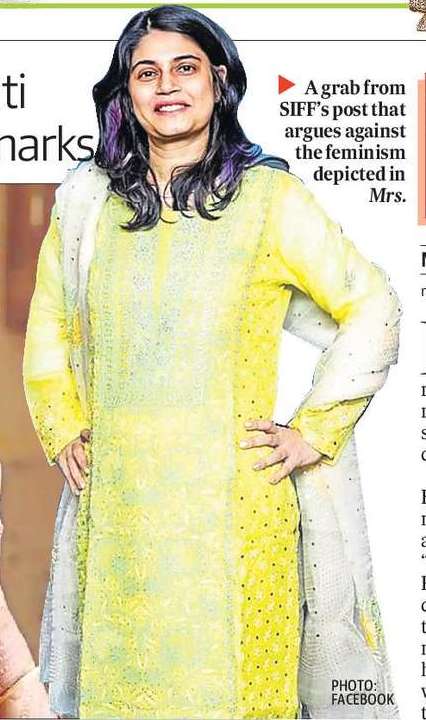
Mugdha Kapoor (HINDUSTAN TIMES; February 21, 2025)
Filmmaker Arati Kadav feels “extremely grateful and happily surprised by the response” her film Mrs. has been receiving. However, the film’s success hasn’t been without controversy.
Recently, the Save Indian Family Foundation (SIFF), a men’s rights organisation, accused the film of spreading “toxic feminist propaganda.”
Responding to the same, Arati clarifies: “I don’t believe this is toxic feminism. We didn’t depict men as evil. We [only] showed how men are often blind to women’s struggles, unaware of their humanity. Even my own mum faced this,” adding, “We’ve become so accustomed to treating women as ‘functions’ rather than full, independent humans.”
When informed about SIFF’s post on X, comparing men who work gruelling hours at “construction sites” with “happy young women” who cook at home, Arati responds: “The difference is that they (men in these jobs) are paid for their labour. If men feel exploited in those jobs, that’s certainly not right, but it doesn’t diminish the issues women face. It’s similar to saying ‘white lives matter’ in response to ‘black lives matter’ — when both are valid. But they shouldn’t be used to dismiss each other.”
Sanya Malhotra-starrer Mrs selected for Indian Film Festival of Melbourne
9:00 AM
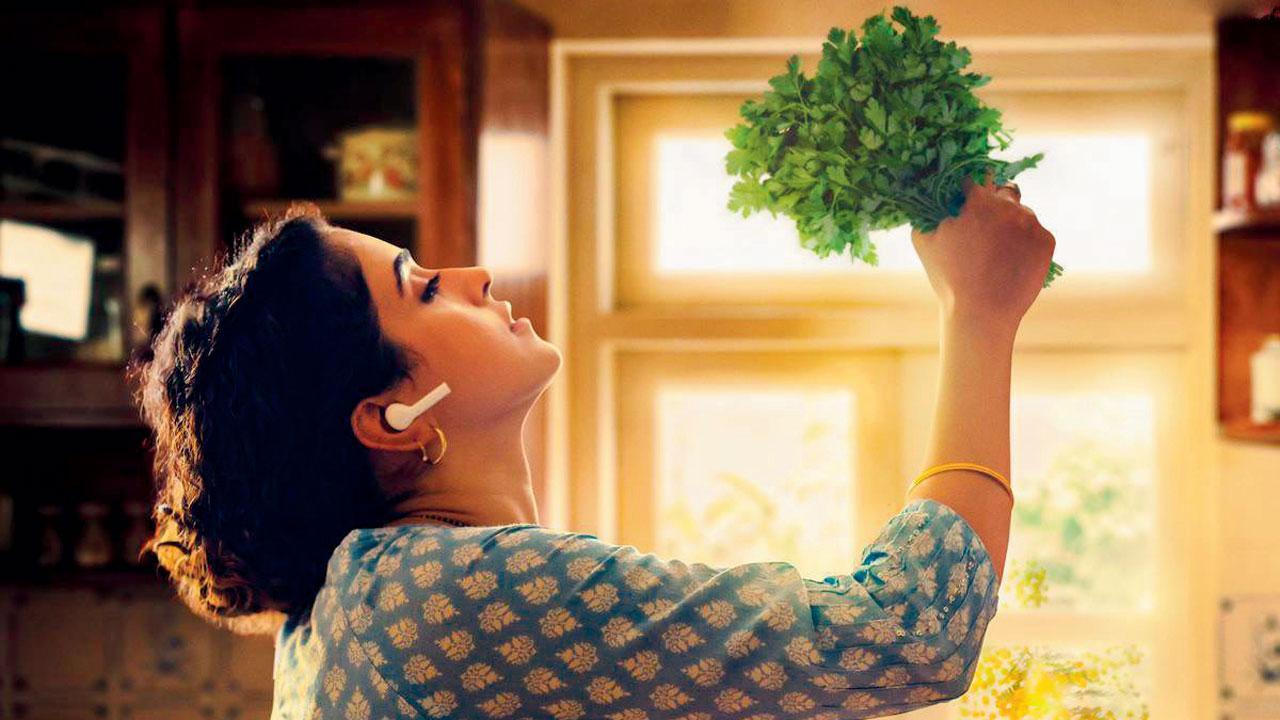
Mohar Basu (MID-DAY; July 15, 2024)
Over the past nine months, it has been one film festival after another for Sanya Malhotra’s Mrs. Last November, Arati Kadav’s directorial venture premièred at the Tallinn Black Nights Film Festival, followed by screenings at the Palm Springs International Film Festival and the New York Indian Film Festival.
Now, the Indian Film Festival of Melbourne 2024 (IFFM) has chosen it as one of its centre-piece movies. The drama will be screened on August 23, with both the leading lady and director Kadav in attendance.
An adaptation of the Malayalam film, The Great Indian Kitchen (2021), Mrs delves into the life of Richa, a dance teacher whose life is suddenly confined to the kitchen when she marries into a conservative family.
Malhotra, who has earned the Best Actress nomination at IFFM 2024 for the film, says, “Mrs is special to me as it explores the complex journey of a woman trying to find her own voice amid society’s expectations. Working with Arati Kadav and the entire team has been a profound experience. The IFFM has always celebrated diverse narratives, and I am grateful for the opportunity to be a part of it.”
While the Jio Studios offering—also starring Kanwaljit Singh and Nishant Dahiya— delves into the emotional intricacies of a woman’s life, Kadav credits her leading lady for enriching the material further. She says, “Sanya’s performance brings depth to the character, making it a powerful narrative.”
Every father, brother, son needs to watch this film to understand how the pressure of Mrs works in the real world-Sanya Malhotra
8:32 AM
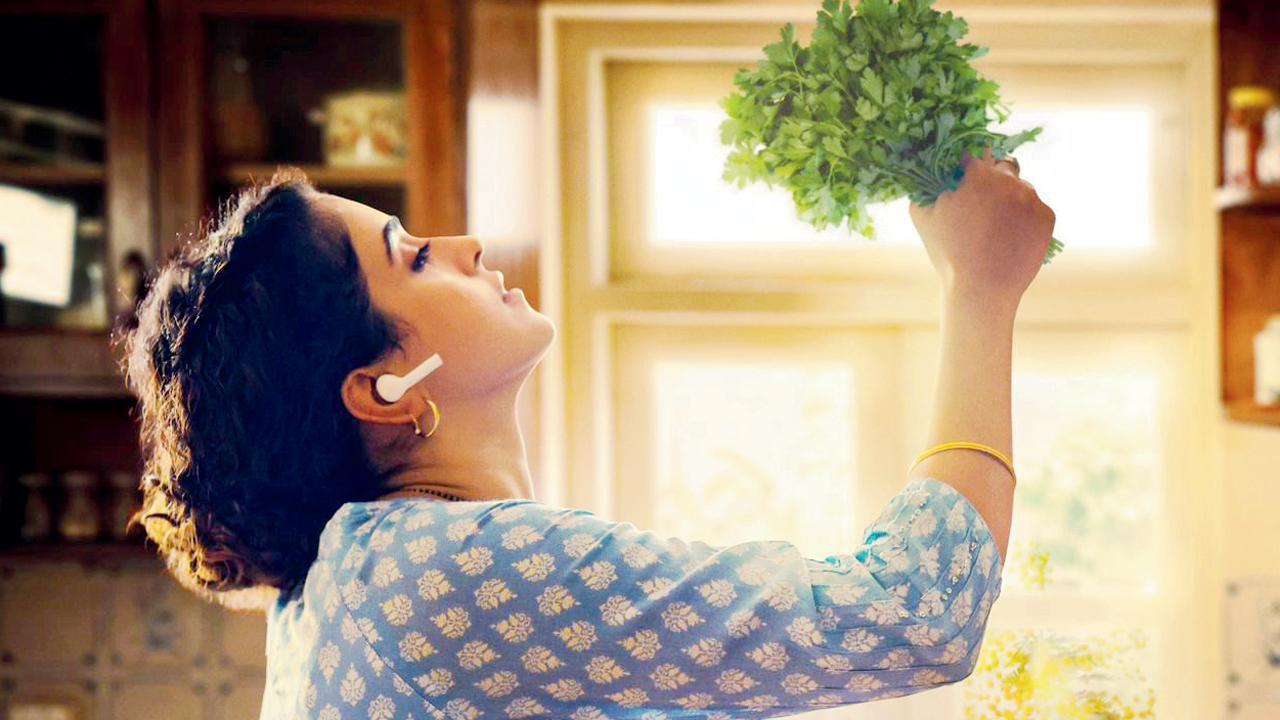
With Mrs set to be screened at Palm Springs Film Festival next week, Sanya says movie’s theme of challenging patriarchy will resonate with women around the globe
Mohar Basu (MID-DAY; January 4, 2024)
Before it hits theatres in India, Mrs is doing the rounds of international film festivals. The Sanya Malhotra-starrer, which had its world première at the Tallinn Black Nights Film Festival, is set to be screened at the Palm Springs International Film Festival 2024 in California on January 10. Mrs might be rooted in a traditional Indian setting as it tells the story of Richa, a dancer whose life is suddenly confined to the kitchen after she is married into a conservative family. But through the movie, director Arati Kadav challenges a universal issue—patriarchy.
Malhotra is confident that women the world over will identify with her character. “Mrs is a relatable film at its core. It showcases the reality of many women, which I hope will resonate across the globe. This film will inspire, move and spark conversations about the challenges faced by women,” says the actor, who is joined by Nishant Dahiya and Kanwaljit Singh in the movie.
For producer and co-writer Harman Baweja, it’s a matter of pride that the Jio Studios movie—an adaptation of the acclaimed Malayalam film, The Great Indian Kitchen (2021)—will be screened at the film festival.
He says, “The minute you add the tag Mrs, a lot changes for the woman; she goes from leading a carefree life to someone who has a plethora of expectations and responsibilities on her. Often, these expectations come at the cost of her own desires. Finding the right balance is the key to her happiness. This film [shows] how a woman has to fight to acquire that balance. I feel every father, brother, son needs to watch this film to understand how the pressure of Mrs works in the real world.”
Every woman feels it’s her duty to cook for family, says Mrs director Arati Kadav
8:39 AM
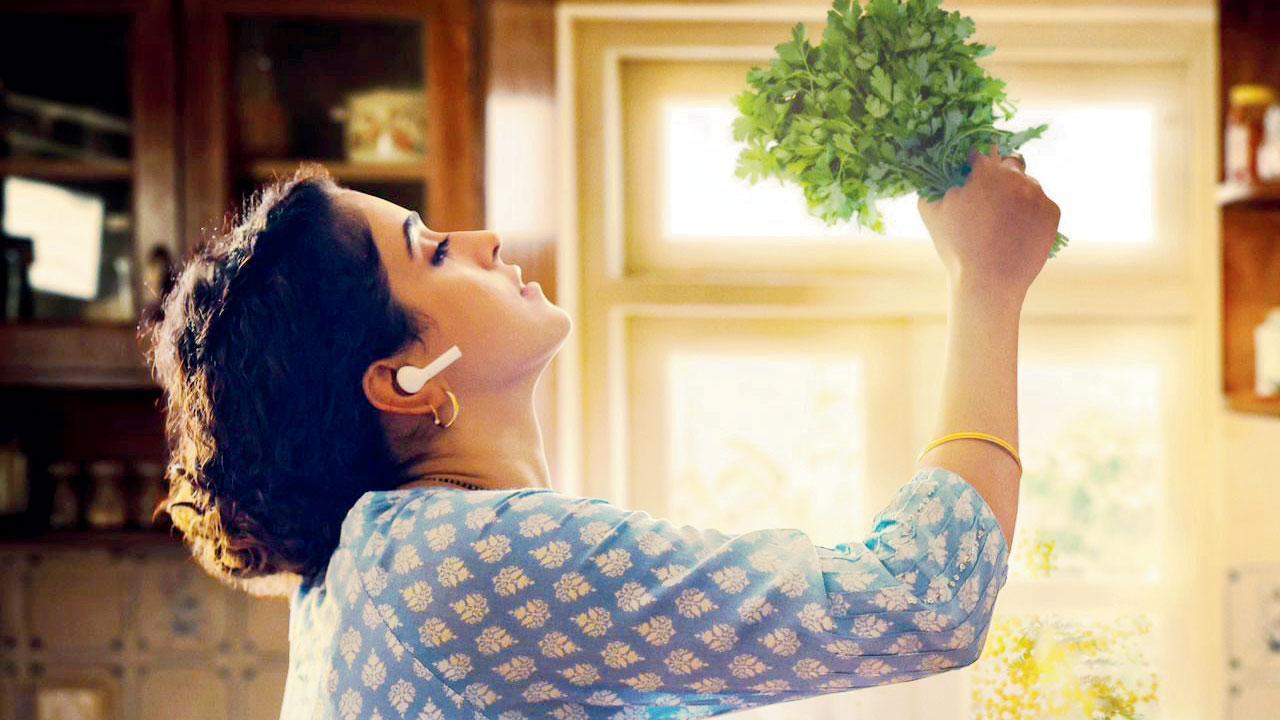
With Sanya-led Mrs set to première at Tallin film festival, director Arati aims to challenge gender roles by telling the story of a homemaker
Mohar Basu (MID-DAY; November 8, 2023)
Traditional gender roles have always bothered Arati Kadav. So, when she got the chance to shatter them through the film, Mrs, the director jumped at the opportunity. Now, the Sanya Malhotra-starrer is set to have its world première at the Tallinn Black Nights Film Festival on November 17. The drama has also secured a spot in the Critics’ Picks category at the ongoing festival.
To the director, this honour reaffirms her faith in the powerful story that was brought forth by The Great Indian Kitchen (2021). With their adaptation of the Malayalam film, Malhotra and Kadav hope to take the theme of challenging patriarchy to a wider audience, as they tell the story of Richa, an aspiring dancer who finds her life confined to the kitchen after she marries into a conservative family.
“Since a young age, when I looked around, I realized that every woman felt that it is her duty to cook and feed her family. Even working women had internalized this double shift as a sense of duty,” laments the director.
In her protagonist Richa, Kadav found the everywoman, complete with her struggles and strength. “When I started researching and hearing personal stories of young homemakers, I realised that through one story, we were representing the lived experience of so many of them. I have always believed cinema is a medium that can spark conversations and [bring] change. I have made Mrs, hoping that it does that in some way. Sanya brought a beating heart and soul to the character.” The Jio Studios offering also stars Nishant Dahiya and Kanwaljit Singh.
The role is a fitting addition to Malhotra’s filmography. In her seven-year career so far, the actor has embodied spirited women—from the determined wrestler in Dangal (2016) to the young widow who discovers herself in Pagglait (2021). Overjoyed that Mrs is selected for the renowned festival, she says,
“This film is close to my heart, as it is a reminder that women have the strength to shatter patriarchal norms. My character’s determination as an aspiring dancer in the face of patriarchal expectations reflects women’s resilience. I hope this film sparks important conversations as we present it on such a prestigious platform.”

Angad Bedi exits from Sanya Malhotra-starrer The Great Indian Kitchen
8:20 AM
Priyanka Sharma (MID-DAY; December 13, 2022)
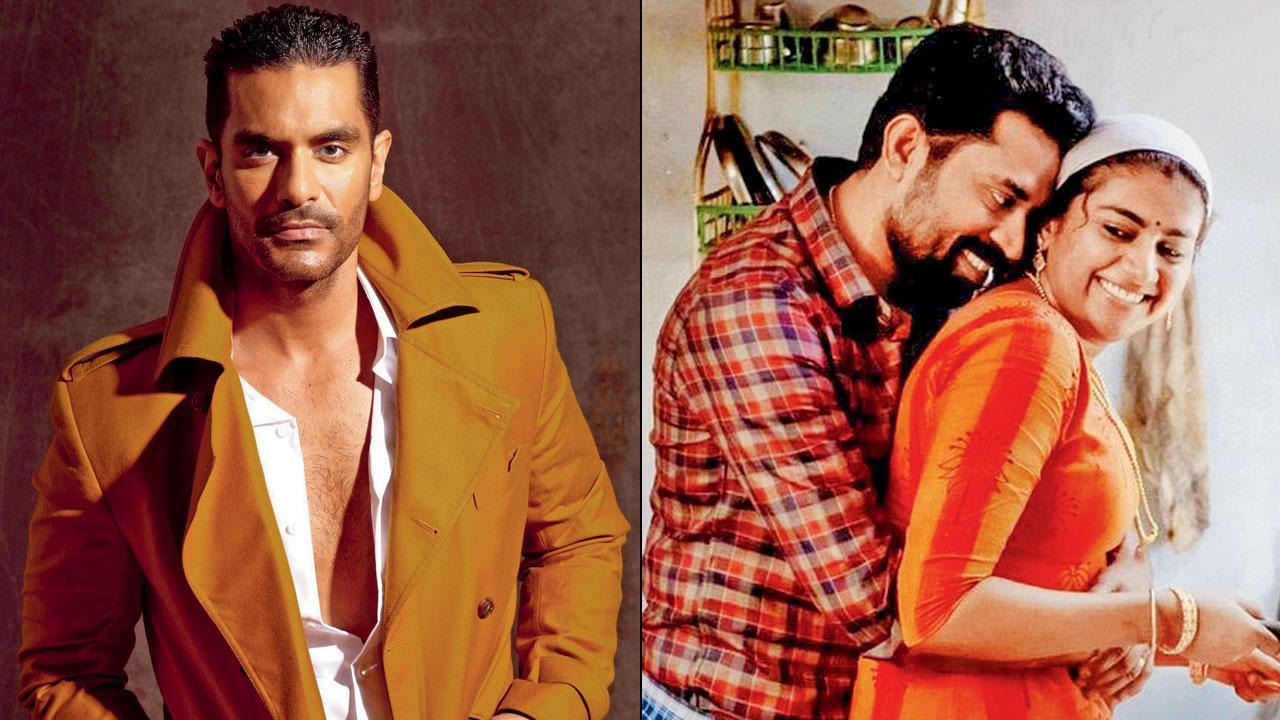
In March, Angad Bedi was roped in opposite Sanya Malhotra for the Hindi adaptation of the acclaimed Malayalam film, 'The Great Indian Kitchen' (2021). The actor was to step into the shoes of Suraj Venjaramoodu to play a patriarchal husband who expects his wife to be submissive and confined to the kitchen. However, the latest on the remake’s front is that Bedi has exited the project due to date issues.
If things had gone as initially planned, the actor would have joined the second schedule of Arati Kadav’s directorial venture in January. “It is a great script, and Angad wanted to be a part of the film. He had started prepping for the role. But the dates clashed with those of his yet-untitled love story opposite Barkha Singh. Since he had already committed to the Jio Studios’ production, the actor decided to honour it and pulled out of the remake,” says a source.
While Bedi is shooting for the love story in Delhi, Kadav has locked a new face to keep 'The Great Indian Kitchen' remake’s shooting schedule on track. The Malayalam original, starring Nimisha Sajayan as a new bride, was widely praised for its feminist theme.
Remake of The Great Indian Kitchen, starring Sanya Malhotra, goes on floors today
8:21 AM

Uma Ramasubramanian (MID-DAY; October 10, 2022)
In February, it was announced that Sanya Malhotra will lead the Hindi remake of the much-acclaimed Malayalam film, 'The Great Indian Kitchen' (2021). Eight months on, Arati Kadav, who previously helmed Cargo (2020), is ready to go behind the camera for the drama. mid-day has learnt that the film will go on floors today in Bhandup.
A source reveals, “A major chunk of the Malayalam film played out in the interiors of the house, particularly the kitchen as the protagonist is seen devoting hours, making meals for the family. With the adaptation being imagined in the same vein, a set of a house has been built at Limelight Studio in Bhandup, where Arati has lined up a 15-day schedule.”
Written and directed by Jeo Baby, The Great Indian Kitchen had a quiet OTT release last year. The movie soon captured the audience’s attention with its honest depiction of a newly-married woman who slaves away all day long in the kitchen, thus showing the suppression and inequality that women have to deal with in our patriarchal society.
For the Hindi adaptation backed by Harman Baweja, Malhotra steps into the shoes of Nimisha Sajayan, while Angad Bedi plays the dominating husband, essayed by Suraj Venjaramoodu in the original.
Arati Kadav wins Best Director award at Fantasia International Film fest for her short film The Astronaut And His Parrot
3:03 PM
Mohar Basu (MID-DAY; July 28, 2022)
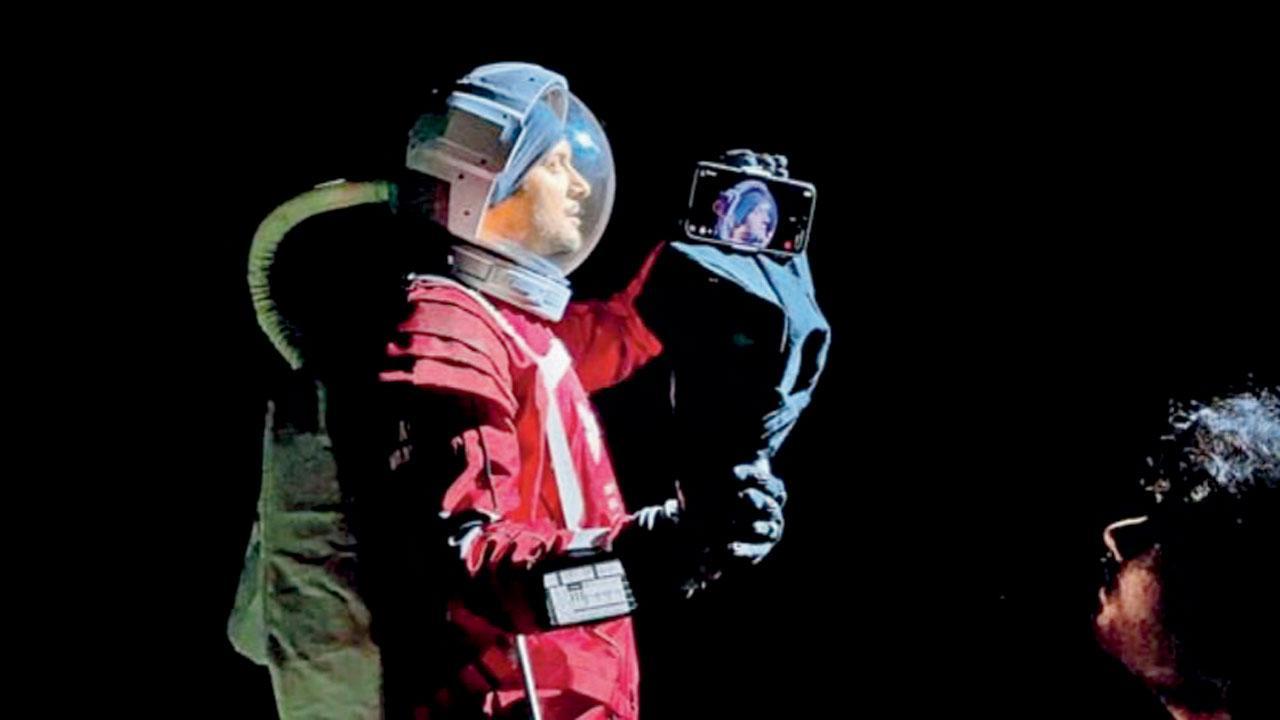
Out of the box may be a term loosely used by many Hindi film directors, but there isn’t a more fitting way to describe Arati Kadav’s creations. A prime example is her latest short film, The Astronaut And His Parrot, which revolves around a space explorer who, in his final moments in space, desperately tries to send messages to his daughter. The signals, however, are received by a parrot in a fortune teller’s stall. The sci-fi film, fronted by Ali Fazal, has earned Kadav the best director award at the Fantasia International Short Film Competition in Canada.
Kadav is pleasantly surprised by the win. “[The victory] is significant for an Indian sci-fi movie. I am thankful to Ali Fazal, who gave his 100 per cent to the film, and to the wonderful team. Our goal has always been to make a convincing sci-fi film with maximum on-camera effects, and to use VFX with precision. My team’s passion to create a great movie can be seen in the [final product],” she says.
The award comes as a reinforcement for Kadav who, growing up in Nagpur, hoped to become a filmmaker. She worked as a software developer in the US before switching gears to pursue her first love — movies. Her debut feature, Cargo (2019), received praise on its release.
Asked about her release plans for The Astronaut And His Parrot, she says, “I am doing the festival rounds, and am in talks with a few platforms, including one that distributes films in the US.”
She is also helming the Hindi remake of the Malayalam gem, The Great Indian Kitchen (2021).
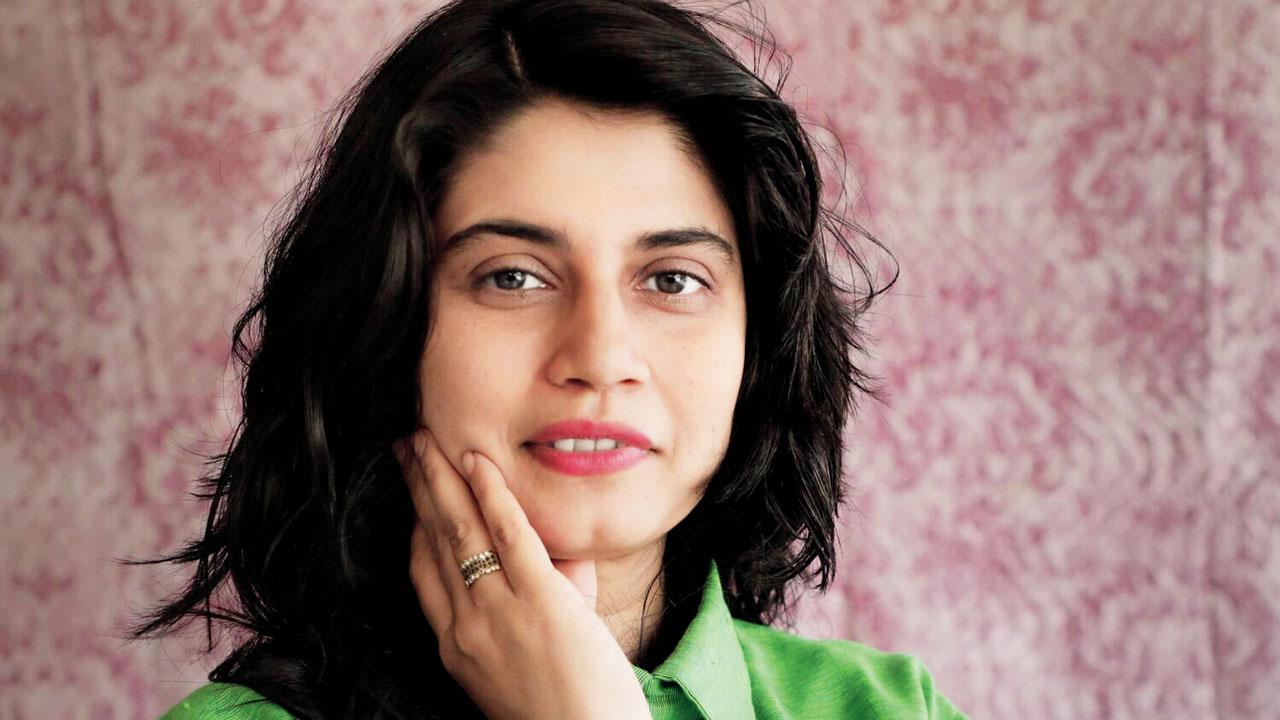
I was living with Imposter Syndrome for three years-Sanya Malhotra
8:23 AM

Sanya, who has a promising line-up in Kathal and The Great Indian Kitchen remake, discusses overcoming self-doubt after Pagglait
Mohar Basu (MID-DAY; June 7, 2022)
One would imagine that Sanya Malhotra was on top of the world after her Pagglait (2021) won glowing reviews and the audiences’ love last year. Yet, the reality was different. The actor was struggling to give herself due credit. “Of the five-and-a-half years I have worked in Bollywood, I was living with Imposter Syndrome for three years. I believed I didn’t deserve the opportunities coming my way, and that my work wasn’t good. I was harsh on myself,” she recounts.
It was only months after Pagglait’s release that Malhotra could channel the validation in a positive way. “Now, when I sit back and reflect on it, I am able to finally give myself my due. Yes, I have worked hard, and I deserve the work I am getting.”
Armed with the newfound self-love, the actor has reunited with Pagglait producers Guneet Monga and Ekta Kapoor for Kathal. Set in a small town, Yashowardhan Mishra’s directorial venture revolves around a local politician whose prized jackfruits go missing and Malhotra’s police officer character has to solve the bizarre case.
“When you wear the khaki uniform, you have to be responsible — not as an actor alone, but the writing has to be right, too. The credit for this film goes to its writing. Hindi films tend to dramatise cops. But in reality, they are human. Yasho has highlighted that in his script. When you say something through comedy, people understand it easily. I am looking for stories that have a subtle message. I want to pick up characters that inspire me and other young women.”
Up next, she has the remake of The Great Indian Kitchen (2021). Adapting a celebrated film comes with its pressures, but the actor is excited. “When I first saw the film, I remember thinking I wish I were a part of it. It is crazy that Arati Kadav [director] decided to cast me in the remake.”
Harman Baweja’s The Great Indian Kitchen remake to be headlined by Sanya Malhotra
8:17 AM

HINDUSTAN TIMES (February 23, 2022)
The anticipation around the Hindi remake of the Malayalam film The Great Indian Kitchen (2021) is already high. Now coming in is the news that would leave cinema lovers across the nation super excited — actor Sanya Malhotra has joined the cast!
Creator-producer Harman Baweja has been thrilled to work on the project ever since the acclaimed Malayalam film released last year. And he has finally roped in Malhotra to headline the challenging narrative, with acclaimed director Arati Kadav at the helm.
Malhotra says, “As soon as I read the script of The Great Indian Kitchen remake, I knew I had to be a part of this world. The entire universe of the project is so powerful that it engulfs you. I am super excited to collaborate with Harman and Arati.”
Talking about the project, Baweja shares, “The message of the film is something that stays with you long after it. The challenge was to adapt it for the pan-India audience while maintaining the right balance of an entertaining yet thought-provoking film, a conversation starter. I feel very lucky to begin this journey with two powerhouse women — Sanya Malhotra and Arati Kadav.”
In a similar vein, Kadav says, “It is a proud moment for me to be associated with The Great Indian Kitchen remake as a director. Every filmmaker waits for a defining script like this. I have always been an admirer of Sanya’s work, and I truly look forward to making a beautiful film with such a wonderful team.”
While more details around the rest of the cast and the project are still under wraps, it will be exciting to watch the magic of Baweja Studios’ next, the highly anticipated The Great Indian Kitchen, produced by Harman Baweja and filmmaker Vicky Bahri.
Meanwhile, Baweja is also gearing up for the big-scale rescue mission film, Captain India, with producer Ronnie Screwvala and filmmaker Hansal Mehta, starring actor Kartik Aaryan.
Bollywood opens its door to mythologies once again
8:16 AM

Titas Chowdhury (HINDUSTAN TIMES; October 18, 2021)
Bollywood’s love for mythology dates back to several decades. But soon, actioners and love stories took precedence. But the next few years will witness a plethora of mythology features such as Ram Setu, Adipurush, Ramayana, Brahmastra, Chanakya, Mahaveer Karna, Sita: The Incarnation and Draupadi.
However, these films often come under scrutiny for deviating from the original idea. Kriti Sanon, who will be essaying the role of Janaki in Adipurush believes that playing such a part “comes with a certain responsibility”. “I’ve to keep a check on how much you can play as an actor as there’s a certain boundary that you cannot cross. We’ve to adhere to facts and not end up hurting sentiments,” she says.
Manoj Muntashir, who has penned the dialogues for Sita: The Reincarnation, Adipurush and Chanakya, asserts that filmmakers “need to capitalise on our epics”. Ask him about what kept them away from this genre over the past few years and he explains, “All of a sudden, India has woken up to its legacy. Baahubali broke many grounds.”
In 2019, Arati Kadav wrote and directed Cargo, a science-fiction rooted in Indian mythology. Agreeing with Muntashir, she says, “Mythologies are a goldmine we’re sitting on and we’ve to just tap into them.” So, is the trend here to stay? “Mythology films can give even the top sci-fi films a run for their money. If we rehash what the millennial generation has seen and already dismissed, we won’t be able to win them. Also mythology films involve high-grade VFX and massive production scale.”
Trade analyst, Taran Adarsh resonates with her thoughts, but he believes A-list actors headlining these projects “is a positive sign”. “If big stars are cast, that will take care of the budget aspect, too. But if you make a good mythological film, there’s a huge audience wanting to watch it. Jai Santoshi Maa (1975) didn’t have stars and it was low-cost film but it became huge,” he says.

Sci-fi genre in India: Much fanfare but why so sparse?
8:03 AM

Juhi Chakraborty (HINDUSTAN TIMES; September 28, 2020)
When we think of the sci-fi genre, our mind immediately starts listing the several Hollywood films and series that are made every year. But when it comes to home grown content, one really has to think hard. Yes, there have been films such as the Krrish franchise, Robot franchise, Ra.One (2011) and regional language films such as Tik Tik Tik (2018) and 24 (2016), but the genre never really took off in India.
“From my experience, the benchmark for sci-fi are indeed these big-budget Hollywood films, and their scale actually acts as a stumbling block, as it is tough for local producers to put that kind of money in any home-grown story. Also the Hollywood narratives (superheroes, futuristic world), do not culturally fit in the Indian context, and the early films were tacky imitations of these stories. So, their failure was seen as the genre’s failure,” says filmmaker Arati Kadav, whose debut sci-fi film, Cargo, has been getting rave reviews.
Shailender Vyas, who directed sci-fi web series JL50, agrees that in India, there are not enough home grown sci-fi genre films. “India is very rich when it comes to scientific conclusions. Yet, in the past few years, we have been rejecting logical science treating it as foreign trend. Somewhere, we, too, fail to project this genre,” says Vyas.
Actors are also embracing this genre wholeheartedly now. Actor Shweta Tripathi Sharma, who stars in Cargo, says, “Some films should be seen on the big screen and Cargo is one such film. In theatres, it would have been just magical. But nonetheless, it is a new way forward, and I think, it will pave way for a lot of other filmmakers to get into this genre now more than ever before.”

Instead of seeking inspiration from the West, we need to draw from Indian folklore, says Cargo director Arati Kadav
9:00 AM

Cargo director Arati Kadav on why Bollywood needs to quit seeking inspiration from the West
Shaheen Parkar (MID-DAY; September 13, 2020)
 It was a long wait for Arati Kadav's sci-fi film Cargo to see the light of day. The Vikrant Massey and Shweta Tripathi Sharma-starrer premièred at the MAMI film festival in 2019 and did the festival rounds. "Had it not been for the pandemic, Cargo would have been screened at several more festivals," says Kadav, adding, "Now that it has dropped on Netflix, it will travel to many more homes."
The writer-director admits that for a first-time filmmaker a theatrical release "would add to your resume, but given the prevailing circumstance, this is the best option". Obsessed with the sci-fi genre, Kadav says she couldn't think of any other subject to make her debut. "Science fiction comes naturally to me. For the last eight years, I have been writing and making short films on it," says the filmmaker.
Streaming on Netflix since September 9, Cargo revolves around a demon, who works on a spaceship to aid the transition services post death along with an astronaut. "A spaceship comes close to the Earth every day and the dead are carried like cargo to an after-life. They have to go through immigration, give up their identity, get their memories erased and give up worldly possessions to begin a new life," explains Kadav.
Though sci-fi films are the biggest grossers in Hollywood, Bollywood still shies away from the genre. "I hope more producers back sci-fi projects. Due to the special effects, the budget of the film shoots up, which makes most producers stay away," reasons Kadav, adding that the benchmark for Indian sci-fi subjects still remains around Hollywood inspired films about superheroes. "Instead of seeking inspiration from the West, we need to draw from Indian folklore. There are enough subjects to draw inspiration from and to weave a tale about the other worlds." The filmmaker is already working on two more scripts around the same subject.
Shweta Tripathi and I are hopeless romantics-SlowCheeta
8:22 AM

Loved-up couple under quarantine, actor Shweta Tripathi and singer SlowCheeta, talk about their new ready-to-devour projects
Aastha Atray Banan (MID-DAY; August 30, 2020)
Shweta Tripathi and SlowCheeta, aka Chaitnya Sharma, realised early in the Coronavirus lockdown that social media trends weren't to be followed. "I tried to make the fancy coffee everybody was making online, and Chaitnya got sick after having it. So, we decided not to try anything trendy, just keep ourselves happy," the actor tells us over the phone.
Well, it would make sense, as the couple has enough to keep themselves busy. SlowCheeta has just released his three-track rap EP, and Tripathi will be back with Mirzapur's season 2, which is set to release in October. Before that, sci-fi movie Cargo releases on September 9. "We even shot all of the Voot series The Gone Game, in the house! I shot Shweta, and we were working all day long. So, it's been a productive time," says SlowCheeta, as Tripathi adds, "It was very different, as we are very vocal about each other's work, and when he said, he liked a scene, I was over the moon. The highlight of this phase has been spending time with my husband. Otherwise, when I return from a shoot, he's usually leaving for one."
SlowCheeta's EP presents the view of an upper middle-class man dealing with his set of problems. In a world where we are accustomed to recognizing rap as a "gully" sound, his take is refreshing. The melodies are catchy, his voice ear candy, and the lyrics speak of challenges he faced when growing up. "The three songs are about asking the listener to come share my journey. Rap has risen from the streets, but street or skyscraper, we all have our problems."
Tripathi, on the other hand, is the unsuspecting cutie on screen who can handle intense roles with ease. Most recently, she was the most palatable character on Netflix dud Raat Akeli Hai. But what viewers are looking forward to is Cargo, which director Arati Kadav had described to this writer in an interview in March as "a movie about life on Pushpak 634A, where a demon works for the Post Death Transition services, and with the help of a female astronaut, gets dead people ready to be recycled for rebirth". "Everything Arati does is not of this world, and that itself is exciting. I also love working with first-time directors, who bring great energy on set. Every little detail is looked into. We are competing with shows from all over the world. If you don't like it, switch it off. The audience has a lot of say now about what content works."
While work has slowly begun to take everyone out of home, the couple wishes they can spend more time with each other.
SlowCheeta says, "We are hopeless romantics. And we have so much to talk about all the time. The spectrum of conversation can get strangely widespread. A simple, 'how was your day?' question can set off an interesting chat. We love that."
Richa Chadha shoots for Arati Kadav's science-fiction film at home
8:21 AM

Director hopes it doesn’t become the new normal
Ankita Chaurasia (MUMBAI MIRROR; July 20, 2020)
 The Coronavirus-induced lockdown may have put the world under house arrest, but writer-director Arati Kadav instructed her actors on camera angles, lights and scene composition from her living room to shoot a film drawn from the pandemic on their mobile phones. “The plight of the migrants reminded me of how dinosaurs had been wiped off within seconds of the Big Bang even while other species survived,” she points out. Titled 55 Km/Sec, the sci-fi film imagines another apocalypse brought about by a speeding meteor and narrates it through the lens of a woman in love.
When she was approached to play the protagonist, Richa Chadha didn’t think twice. “We are creative people, how long will we sit without practicing our primary skills?” says the actress, who did her own makeup and styling, set up the camera and used the lapel mic of her musician-brother for the shoot. The family and roomies of the actors were their crew.
Arati wanted a particular colour palette for every character and during her online recce of everyone’s house, she hit her brief uncannily. The team coordinated remotely on daily video calls with the director making extensive storyboards to show how she wanted the scene to pan out, while another screen served as a monitor for her to ‘okay’ the shots.
Richa admits it was a challenge to do the emotional scenes involving co-star Mrinal Dutt without him being physically present. But she is happy they were able to create something thought-provoking and beautiful in these grim times.
The film, which will require extensive VFX and CGI work, is currently in post-production. “Since everyone has shot individually, the challenge is to make it all look seamless,” says Aarti, who wants to do the rounds of the festivals with the film. She also hopes that shooting from home on phones doesn’t become the new normal as it takes away from the filmmaking experience.
Subscribe to:
Posts (Atom)