Showing posts with label Apurva Asrani interview. Show all posts
Showing posts with label Apurva Asrani interview. Show all posts
Apurva Asrani on homophobic attack: "It wasn’t just about one man’s hate"
8:00 AM

Vinay MR Mishra (BOMBAY TIMES; June 24, 2025)
Apurva Asrani recently put up an Instagram post in which he wrote about a distressing homophobic incident that happened at his north Goa residence. In the post, he mentioned how a drunk neighbour hurled slurs at him and his partner Neeraj (Kadamboor) over a parking dispute. “He called Neeraj and me dirty homos, freaks, hijras – and stormed around the complex hurling slurs at us... trying to shame us for being gay,” Apurva wrote on Instagram.
When the couple reported the incident to their housing association, the initial response was tepid. “There were people who said, ‘Oh, this shouldn't have happened,’ but very quickly, the conversation moved on to pool timings,” the Made In Heaven editor told us.
He further added, "If a woman said she was harassed it would have been a very different response. Some neighbors said, ‘Just settle it, man to man’. I realized people don't actually understand that we are not just two neighbors fighting. This is somebody who is taking on centuries of oppression, slur, and taking that as the backing and threaten us. I am a National Award-winning filmmaker, I have bought this house with my good, and hard-earned money. I should not be feeling like this. If I am feeling like this, what will be happening to the younger kids who haven't got this kind of privilege. We want him evicted."
The couple demanded action — both from the housing association and from the landlord of the offender, who stays in the UK. “The homeowner has just responded saying, that they have issued him a two week notice for eviction. But he's requesting for more time. Now, it came back to us – Should we show mercy? Or should we stand our ground? However, I stand for so many like us. The number of times I have been evicted from housing societies just because I'm gay. It used to be horrible. I thought one day I'll buy my home, and it won't happen. I think today it's time for a homophobe to be evicted. So, I hope he actually does get out within two weeks,” he shared.
He added, "I've realized that more than being homophobic or apathetic, people are just ignorant. They don't understand the vulnerability. You're living almost living in sin with another man. All these things are used against you. If we want change, we can't just be victims sitting there saying, you've all wronged us. I was very upset. I felt very vulnerable till I took decisive action. The moment I began acting on this, I don't feel that sense of disappointment."
I have been very uncomfortable with the term queer-Apurva Asrani
9:11 AM
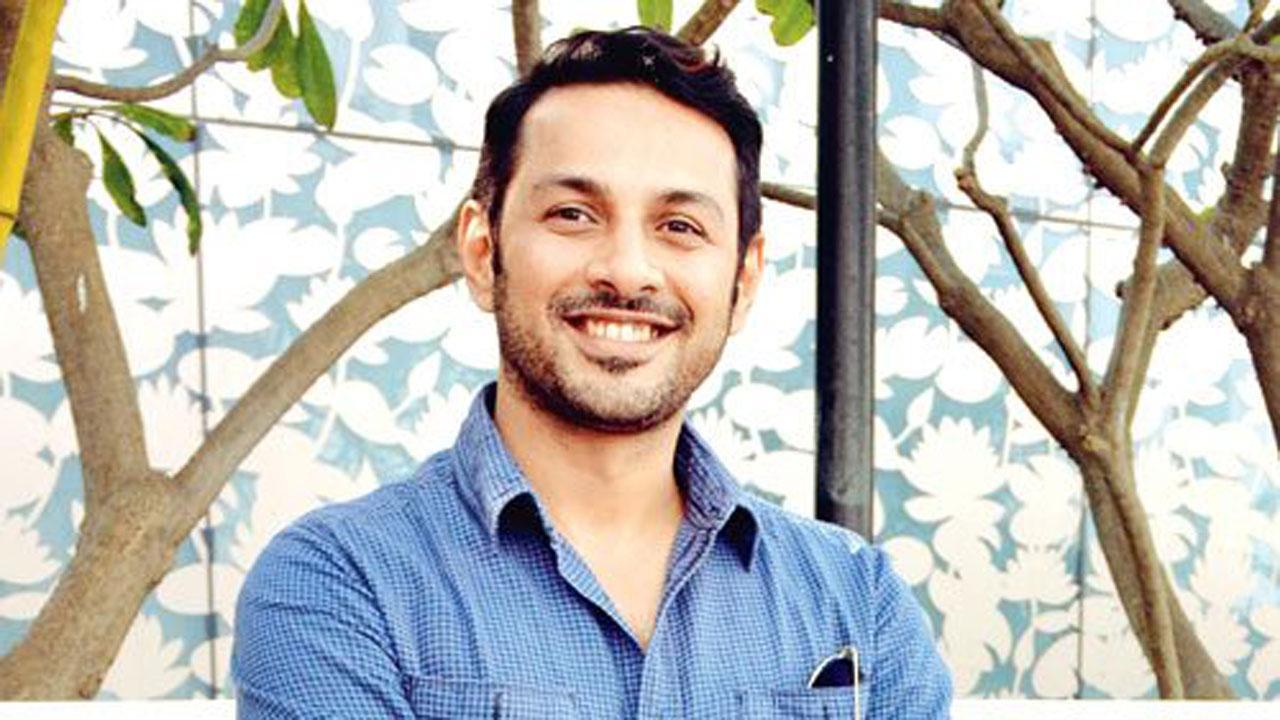
With his social media series Rangila Rupya, writer Apurva Asrani spotlights the LGBTQiA community’s spending power and demands better returns — no rainbow-washing allowed
Mohar Basu (MID-DAY; June 8, 2025)
In 2018, the Supreme Court decriminalised Section 377. So, no one could be put behind bars for being gay. But then what? Decriminalisation was only the first fight. The demand for respect and equal rights is still ongoing. While the Pride flag is often used by brands to show support — especially during the Pride Month — basic rights are still denied.
“I have been very uncomfortable with the term queer,” starts off screenwriter, editor Apurva Asrani, when we get on a call with him to discuss his new social media series, Rangila Rupya, that reflects the economic influence and voter power of the LGBTQiA+ community and his desire for a movement that solely reflects the community’s struggle in India.
“When people called me to their queer festivals, I used to write to them saying, if you call it queer, I’m not coming because it’s not our term. It’s a term that is derogatory for us. I feel we need to find out what our own LGBTQiA+ history is and own up to that.”
He credits the West for rioting for their rights, and for the likes of Harvey Milk — the first openly gay man to be elected to public office in California — for standing up against the establishment. The word queer, which was once derogatory, the West turned it into power, but Asrani feels, “There’s no power in the word ‘Queer’ in India. It’s not our word. It’s not something that comes from our society. This is not at all to take away from that extremely brave movement there.” While he believes it gave them courage, he also feels it is somehow unfair to those who fought the battle in India.
He explains, “Our fight is different. Our fight has been legal, in courts, through think tanks, through the media. So our movement needs to be defined. That’s my effort.”
After his reel, titled Are we truly queer? went viral, Asrani realized others shared his discomfort. So, he decided to bell the cat. The screenwriter believes that the dialogue needs to change after 10 years. The people from the LGBTQiA+ community still can’t marry, inherit property, or claim the body when a spouse passes away. Or get insurance together. Yet they are important for the vote bank and the economy, but remain on the periphery.
“Anything that needs to be systemically put into people has to be converted into a law. That was where I think Rangila Rupya was born. A rangila person is someone who believes in different voices that can coexist. In the video, I say 135 million people, but there are so many who are still in closets. We are spending money on holidays, restaurants, and food. Now, there is a lot of economic power that lies in the hands of this community — around two lakh crores and growing. If businesses want that money, they better respect us, or we’ll take our money elsewhere.”
He’s now building a verified list of Rangila-friendly businesses. “We’re making it clear: we are watching you.”
Citing the cancellation of Jainil Mehta’s dance show, titled Samaaj, on April 26 at the Madhyavarti auditorium of Jawahar Kala Kendra due to pressure, Asrani shares that he wouldn’t invest in cities or brands that don’t respect the Rangila-people.
“I’m happy to see some brands like Lalit Group of Hotels and Godrej walking the talk. When I hear about incidents like Jainil’s cancellation, it baffles me because it’s bad business sense — you lose good business, and disrespect art and culture.”
After watching Badhaai Do, I thought, how did they know about my story of coming out?-Apurva Asrani
8:16 AM
Saptaparna Biswas (BOMBAY TIMES; February 28, 2022)
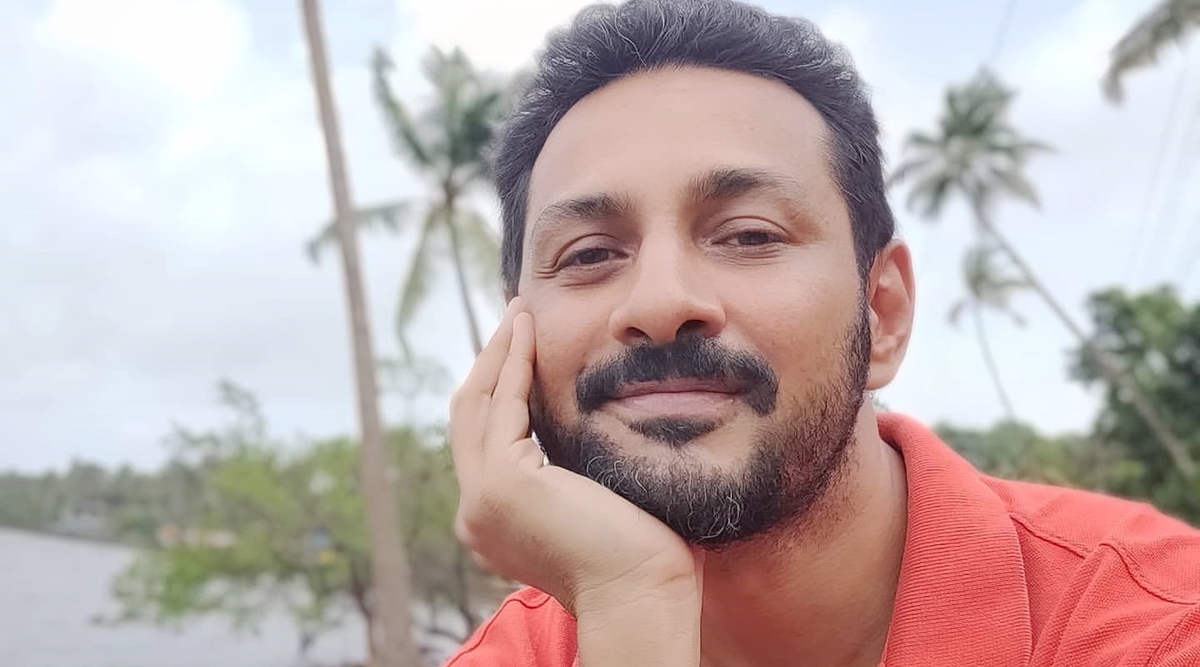
When writer-editor Apurva Asrani, a prominent voice in the LGBTQIA+ community and someone who is out and proud, went to watch Badhaai Do recently, all he expected was just another mainstream film touching upon the community. But he was pleasantly surprised by the story, and was reminded of his personal struggles with coming out while watching it. Moved by the relatable portrayals, Apurva penned a note of appreciation for the Junglee Pictures’ film. In a chat with us, Apurva spoke about how such films help get rid of tokenism and make real conversations happen. Excerpts:
‘HOW DID THEY KNOW ABOUT MY STRUGGLES SO WELL?’
While there have been many other films portraying the struggles of the queer community lately, Apurva says the portrayals in Badhaai Do are closest to real-life struggles of queer persons. He shares, “I went to the cinema hall expecting yet another commercial film which doesn’t really capture the heart and soul of the LGBTQIA+ struggle. But, what struck me was that the writers have truly understood the journey of the community and have got the nuances in portrayal of the characters right.”
The film also got him to recollect his personal experiences. “I was genuinely touched by the depth of emotions in the same-sex relationship explored in Badhaai Do. I was like ‘How did they know what happened with me?, How did they know about my heartbreak?, How did they know about my story of coming out, and my yearning to be a parent?’ The film reflects the thoughts and feelings of the queer community so well, and for that, it deserves all the love coming its way,” says Apurva.
‘IT IS HARD TO RETAIN THE ESSENCE OF STRUGGLES IN AN ENTERTAINING FORMAT’
Apurva feels that as long as stories are written sensitively, the audience will relate to them. “I’m not of the opinion that you essentially need LGBTQIA+ actors to essay these roles, because actors can and should be able to play any character. What you need is queer representation in the writing team to be able to bring genuineness to the story and expression. I feel Badhaai Do achieved that,” he says, adding, “Rajkummar Rao and Bhumi Pednekar have no doubt done a phenomenal job. They’ve added so much magic, and they’re so brave in their portrayals. But I really want to compliment the writers for bringing the conversation in such an entertaining format for family audiences and a larger population while keeping the heart of the struggle very much alive. It’s a difficult thing to achieve. Because so far we have either talked of the predicament or made light of it – to attain a balanced portrayal is a hard job.”
Apurva also emphasises on the importance of having such films in mainstream viewing so audiences get an idea about diversity of the members of the queer community.
‘MAINSTREAM FILMS HAVE THE POTENTIAL TO IMPACT PEOPLE IN RURAL BELTS TOO’
While many OTT shows and films have managed to strike up conversations about queer love and relationships, Apurva feels that with relatable characters and a theatrical experience, mainstream films can make a larger impact in terms of sensitization. “Just the fact that this is the kind of film that your family would watch together gives you a common ground to strike up conversation. That’s a very big deal. I worked as an editor on the show Made In Heaven, and the show encouraged people to have dinner time conversations around love and same-sex relationships. Badhaai Do has the potential of doing this in cinemas pan-India, in the rural and regional belts where parents and kids can watch it comfortably and have discussions around the topic. Today, if a young person wants to come out of the closet, they have these references to start with. Rajkummar and Bhumi’s characters elicit respect, right till the end of the film. They have a job, they have a role in their families – it brings LGBTQIA+ characters in the family construct, and into the mainstream social fabric. A film like Badhaai Do engages the community – and then you know that the makers’ hearts are in the right place,” says Apurva, on a concluding note.
The timing of Chhattisgarh verdict, coinciding with Criminal Justice winning this international honour, was just crazy-Apurva Asrani
8:29 AM

Naina Arora (HINDUSTAN TIMES; August 31, 2021)
For writer Apurva Asrani, starting a “conversation in society” through his work is of utmost importance. Recently, the show written by him, Criminal Justice: Behind Closed Doors, bagged the Best Asian Drama Series award at ContentAsia Awards 2021. But the recognition has come at a time when the Chhattisgarh High Court ruled that ‘sexual act with one’s wife is not rape, even if forced’.
This has put the spotlight back on marital abuse in India. “The timing of the verdict, coinciding with our show winning this international honour, was just crazy. On one hand, the civilised world is moving towards undoing the evils of domestic abuse, and on the other, Indian courts are giving men a free hand to rape their wives. Many women and men are under the misconception that control is equal to love. It’s in fact the opposite. Let’s raise our voice against the awful Chattisgarh verdict,” he says.
“I’m blessed to find collaborators who feel deep empathy towards such stories. My film Shahid (2012) talks about minorities wrongly imprisoned under draconian laws, fighting for justice. Then Aligarh (2016) made the case for a teacher who happened to be homosexual, fighting for his right to privacy. Made In Heaven, where I worked as an editor, took that conversation into an urban space,” he adds.
Asrani shares how women reaching out to him on social media is his greatest reward. “Women of all ages watched the show and sent me messages about their domestic situation,” he says, adding, “One woman begged me to save her from an abusive husband. I was shaken till I connected her to an NGO.”
So, how important is it to create content such as this? “I wept the day I learned Criminal Justice Behind Closed Doors was a big OTT hit. Not just because every artiste strives for recognition, but it also meant households were ready to talk about what happens behind closed doors,” he adds.

I didn’t sleep for nights fearing that a cop would show up at the door and shame my parents-Apurva Asrani
8:15 AM

Rishabh Deb (BOMBAY TIMES; June 15, 2021)
For film editor and writer Apurva Asrani, 2020-21 has been a challenging phase. He lost several friends to COVID-19, and his 14-year-old relationship with partner Siddhant Pillai came to an end. Despite all the events that unfolded in the span of a year, he is taking things in his stride and trying to cope. He finds solace in writing new stories, taking long walks on the pristine beaches of Goa, playing with his cats and bonding with family. In a Pride Month special interview, we catch up with the Aligarh writer and editor and speak about self-love, coping with loss and more. Excerpts:
‘FOCUSING ON SELF-LOVE AND BONDING WITH FAMILY’
Mental health and self-care are his top priority and Apurva, who has moved in with his family after decades, is focussing on himself now. He says, “It’s been a difficult time for everyone since COVID-19 struck. I have lost friends, friends have lost loved ones, many are out of work… everyone I know is coping and surviving somehow. Most things are fine for me by the grace of god. Yes, my 14-year relationship ended during this period. But I am taking it in my stride.”
“Writing gives me a lot of clarity and peace. Bonding with my family, my cats, and playing online games; that’s how I am taking care of my mental health,” says the National Award winner. Sharing certain habits that he picked up during the lockdown to take care of himself, Apurva adds, “I have learnt that sometimes not doing anything and chilling is also okay. Living with my parents, for the first time in decades, allowing myself to cry when I’m down, meditating every day, finding joy, reconnecting with old friends that I had lost touch with; these are some of the things that I started doing in the recent past, things that I would normally not do.”
‘GETTING USED TO BEING SINGLE AFTER 14 YEARS’
Though Apurva and Siddhant parted ways, they continue to share mutual respect. “We may have gone separate ways, but he will always be a valuable part of my life,” shares Apurva, adding, “I haven’t been single in 14 years. Just getting used to the fact that I don’t need to seek someone’s approval before making a decision is something new.” After the two parted ways, Apurva moved in with his parents and is spending a lot of time with them. “There are times I miss the companionship, but I also recognise this as a time when I can rebuild myself into a better, more evolved person. My work gets a lot more attention. I am also taking care of my fitness and diet,” he says.
‘TIMES HAVE CHANGED SINCE I CAME OUT’
Apurva, who came out as gay back in 1998, says that life has changed for him ever since he came out. “Honestly, I have celebrated freedom from Section 377 every single day since the 2018 judgement. Earlier, Pride Month used to be more of a protest and visibility month for me. Now, it’s about having discussions with other LGBTQIA+ folks about how we can make life better for ourselves. We are no longer outliers, we are now looking to integrate in the mainstream and carve a legitimate, respectable place for ourselves,” says Apurva.
On how the scenario has changed in the last two decades for people from the community, he shares, “Circa 1998, you hardly read the word gay in the media unless it was referring to a joke, a crime or HIV. There were no respectable gay movies made in India. A little later they started underground parties where you could meet others like yourself, but these parties were fraught with uncertainty because they often got busted by cops. There was this one party I was at, where five police vans filled with armed cops swarmed down on us as if we were terrorists. They then lined us up and made a news cameraman film us. We were detained, our addresses taken, and they threatened to ‘out’ us to our parents. I didn’t sleep for nights fearing that a cop would show up at the door and shame my parents. It is one of the reasons that I began a sort of gay rights advocacy. I knew we deserved respect. The world has changed so much now, more so for the urban people, but at some level also for all LGBTQIA+ folk. We have so many movies, shows, openly gay celebrities, industrialists and even sportspeople to draw inspiration from. There are events, parties, and forums. I’m glad I’m still young enough to enjoy this time.”
‘REPRESENTATION IN CINEMA AND SHOWBIZ HAS EVOLVED’
While a hearing on the pleas regarding recognition of same-sex marriage in India is awaited, Apurva feels that it’s a basic right that should be respected. He quips, “Whether one believes in the institution of marriage or not, all LGBTQIA+ citizens should have the same right to marriage as their heterosexual brethren. By denying us this right, the constitution is not being respected.” And what about him getting married? “I would ask my mother to find a suitable boy to arrange my marriage,” he laughs.
Speaking about queer representation in Indian cinema, Apurva says the industry is doing well on that front. “In just the last five years, we have seen so much quality queer content. Margarita With A Straw, Aligarh, Kapoor & Sons, Made In Heaven, LOEV, Ek Ladki Ko Dekha Toh Aisa Laga, Shubh Mangal Zyada Saavdhan etc; each one is so different from the other and all cater to diverse audiences. We are doing well. In the West, they were at this juncture many years ago, which is why their content today normalises LGBTQIA+ folk. We, as a decriminalised community, are barely three years old. We still have the angst of our closeted lives to purge. We are still building our identity. And our content reflects that,” he opines.
‘NEED MORE AWARENESS ABOUT COUNSELLING’
Highlighting the plight of the community amid the pandemic where many have had to return to their parental homes and deal with families that do not respect their orientation, Apurva says, “Plus, the respite that they may have found by meeting, interacting with people from the LGBTQIA+ community has come to a standstill and they are stuck with people they need to pretend for. It might be a lonely time for them and the implications on their mental health might be far-reaching. We need more awareness about counselling and therapy in the future.

I’m crying because I am happy. We are finally telling our stories-Apurva Asrani
8:42 AM

Film editor and screenwriter Apurva Asrani tracks the Hindi film industry’s transformative journey of coming out of the closet
Apurva Asrani (MUMBAI MIRROR; September 8, 2019)
Growing up in India in the 1980s, I remember stealing my father’s stash of Debonair magazines, rummaging through pages filled with nude women, and trying to find that image of a buff man. Often, he was in the same frame as the woman, and in my head, I would replace her face with that of another man, and pretend they were a gay couple. This was the best I could do as there was absolutely no imagery anywhere that alluded to homosexual existence.
The first time I saw a gay man on screen was in 1993 — in the hard-hitting film Philadelphia, where a cute Tom Hanks was in love with a dishy Antonio Banderas. After searching in the dark for 15 years, I was relieved to finally find an image which I could aspire to. This was around the same time that three brave young men — Ashok Row Kavi, Vivek Anand and Suhail Abbasi — were bringing out India’s first gay magazine, Bombay Dost. The representation in India had begun.
If you had told the 15-year-old me, about 26 years on, that I would be attending Mumbai’s own LGBTQ film festival — celebrating its tenth anniversary, and showcasing 160 LGBTQ-themed films — I would not have believed you.
Some 43 countries (with a maximum number of entries from India) sent in films for the four-day event that took place last June across the city’s most iconic theatres — Liberty Cinema and Metro INOX. Kashish’s opening night saw over 1,000 LGBTQ Indians proudly walk its glittering red carpet; Section 377 had been shown its place, and we were no longer criminals in the eyes of the law. It is heartening that the youth of today, who find themselves struggling with their sexuality, have a plethora of LGBTQ imagery to refer to, and need not feel isolated like people of my generation did. In the last few years alone, Indian audiences have been exposed to a diverse spread of queer cinema.
 The script of Aligarh (left), a film I worked on, was born out of a desperate need to end the lampooning of gay men in mainstream cinema. While we owe much of our early identity to Riyad Wadia’s Bomgay (1996), Mahesh Dattani’s Mango Souffle (2002) and Sridhar Rangayan’s Gulabi Aaina (2003), we were aware that these films weren’t co-opted into the mainstream. This may be partly because they were ahead of their time, and partly because society perceived them as ‘by’ and ‘for’ the community. BomGay, arguably the first gay film from India, reflected the angst of the repressed urban homosexual, and I remember being too afraid to watch the scenes of sodomy in a movie hall.
 Onir’s sensitive My Brother Nikhil (2005; right) was probably the first film about a gay man that captured the attention of the mainstream. The film, starring Sanjay Suri, Purab Kohli and Juhi Chawla, did for Indian gay men, what Fire (1996; left below) — starring Shabana Azmi and Nandita Das — perhaps had done for lesbian women. It paved the way for sensitive LGBTQ representation in Indian cinema. Alas, the doors that opened with My Brother Nikhil were shut tight with big-budget padlocks when Dostana (2007) — Tarun Mansukhani and Karan Johar’s gay parody — hit the theatres.
 While there were many who were thankful that Dostana brought the idea of being gay to family audiences, I was severely critical of how the film used the subject only for laughs, and remained homophobic till the very end. Films like Raja Babu, Mast Kalandar, Humshakals and Pyar Kiya Toh Darna Kya had also lampooned gay men in the past, the difference (and saving grace) here was that Dostana alluded to the possibility of a mainstream gay couple — well, almost. Karan Johar followed this up with Student Of The Year (2012), where Rishi Kapoor played a closeted school principal who lusts after a male teacher. “There’s so much more to gay men than just being over the top or sexual,” I wrote in a blog after Dostana released.
The biggest challenge with Aligarh was to write a character who, despite being in a sexual relationship with another man, refused to wear the many tags of sexuality. He belonged to a generation where the words ‘gay’ and ‘queer’ did not exist, a place where Professor Siras has to beg society to leave him to define himself. This was neither an activist film, nor did it ask for homosexuals to be treated specially. Instead, it asked for Professor Siras to be seen as a human being — and to award him the same constitutional right to life and privacy as anyone else.
Aligarh’s Siras is a private man, an award-winning poet, a man of letters, a respected academic, but most importantly, he is a man who treats others with respect. Siras never lusts after the handsome young male reporter interviewing him in his bedroom, and always conducts himself with dignity. That the brilliant Manoj Bajpayee broke Bollywood’s longstanding tradition of a mainstream actor refusing to “play gay” adds much value to the film.
Watching Aligarh with my father — who has struggled to make sense of my sexuality — was a surreal experience. He watched it with tears in his eyes, and identified with the loneliness of a senior citizen. I saw that Siras’ sexuality never got in the way of his empathy. At that moment, I knew Aligarh would achieve what it had set out to.
What surprised me though, is that Aligarh did not meet with strong opposition from either society or the censor board. While theatres screening Fire were vandalised in 1996, the CBFC had banned Gulabi Aaina in 2003, calling it ‘vulgar and offensive’, the times seem to have changed when Aligarh ‘came out’ of the censorship closet. While they muted the words ‘gay’ and ‘homosexual’ for its TV telecast, the film hit the cinemas without any major cuts. Even the kiss between Siras and the male rickshaw puller was retained without objection. And besides the city of Aligarh, where its mayor had banned the film, Aligarh ran all over India, for almost four weeks.
Incidentally, the last five years have seen a number of LGBTQ-related films play in cinemas. Shonali Bose’s terrific Margarita With A Straw (2015) saw Kalki Koechlin play a girl with cerebral palsy discovering her bisexuality. Karan Johar and Shakun Batra’s Kapoor & Sons (2016) brought us our first celluloid gay sex symbol — played gracefully by Fawad Khan.
Sudhanshu Saria’s urban gay love story LOEV (2017) focused on the emotional and sexual complexities between two friends; Sridhar Rangayan’s Evening Shadows (2018) told the emotional story of a mother coming to terms with her son’s sexuality; and Shelly Chopra Dhar’s Ek Ladki Ko Dekha To Asia Laga (2019) featured Bollywood star Sonam Kapoor as a small-town lesbian girl coming out to her traditional family.
The biggest leap in LGBTQ representation, however, has been in the digital space with Sacred Games (2018) and Made In Heaven (2019). Sacred Games by Anurag Kashyap and Vikramaditya Motwane, featured a trans character named Kukoo, played wonderfully by Kubbra Sait. Kukoo is an attractive dancer, a strong, self-respecting woman, in love with the leading character played by Nawazuddin Siddique, and also happens to have a penis. Made In Heaven by Zoya Akhtar and Reema Kagti is a current favourite with gay and straight people alike. It features Arjun Mathur in the lead, playing a Delhi wedding planner who gets in trouble with the law after he is filmed in his bedroom having sex with another man.
While the track bears an uncanny resemblance to Professor Siras’ in Aligarh, it is the writing and treatment that sets it apart. Arjun’s character Karan doesn’t wear his sexuality on his sleeve, yet he is seen as a ‘top’ who indulges in ‘no strings attached’ sexual relationships. And while I am grateful that the show normalises gay sex, Karan’s sexuality is never his identity. He is a bloody good wedding planner, a great friend, and a man who displays an astute sense of right and wrong.
I was privileged to have worked as an editor on Made In Heaven, cutting the episodes of Zoya Akhtar and show-runner Nitya Mehra. I suspect they brought me in because they wanted a gay man at the cutting table, to help them check on Karan’s character. The incredible response to the show is proof that characters like Karan are now seen as a legitimate part of society.
Before they began shooting, I was asked to read the scripts of Made In Heaven and offer feedback. I remember finishing reading them around midnight, and then bursting into tears. When my partner awoke to see me crying, he asked if the story made me sad. I turned to him and said, “No, I’m crying because I am happy. We are finally telling our stories.”
The writer is a National Award and Filmfare Award winning film editor and a Screen Award winning screenwriter. A version of this article appeared in Rainbow Reflections — An Anthology of LGBTQ Narratives in Indian Cinema, published by KASHISH Arts Foundation
Ram Gopal Varma would peep through the glass on the door to see what I was doing-Apurva Asrani
8:40 AM

Roshmila Bhattacharya (MUMBAI MIRROR; July 6, 2019)
 In the mid-90s, a teenager, landed the opportunity of cutting the promos of Sanjay Leela Bhansali’s Khamoshi: The Musical and Ram Gopal Varma’s Daud. The latter was still being filmed and fascinated with the shots, Apurva Asrani put a lot of work into the trailer. The maverick filmmaker was impressed and started seeking his feedback during the editing of his road movie. “Ramu ji is the most chilled-out guy I know and we share a passion for cinema. Those days everyone was editing on Steenbeck, only Mani Ratnam had cut Iruvar on Avid and one day, when Ramu ji told me he was planning a film on the underworld, a subject grabbing headlines with stories about extortion and attempted assassination in Bollywood, I urged him to consider Avid. He replied, ‘You can do what you want since you will be editing the film,’ and just like that Satya landed in my lap,” recounts Apurva who at 20 bagged the Filmfare Award for Best Editing.
Flashbacking to the experience, he informs that RGV would sit in during the editing and tap the editor on the shoulder when he wanted a cut. But Apurva likes to interpret the material his way, so having forged a bond with him, he gently suggested that the filmmaker give him the chance to edit alone. “It was difficult for him to stay out, and after about two hours, I’d look up to find Ramu ji on his toes, peeping through the glass on the door to see what I was doing. I’d post an assistant at the door and he’d then call me out for lunch, sneaking back in with me,” he laughs, adding that if he surprised or shocked him, RGV would clap his hands with childlike glee.
Vishal Bhardwaj, who along with Sandeep Chowta, worked on the score, got signed after RGV heard the songs of a little-remembered film called Jahan Tum Le Chalo, which was composed by VB with lyrics by Gulzar. Apurva recalls that RGV who had a great ear kept playing the songs in his car and liked one in particular, “Thak Gayi Ho To.”
Manoj Bajpayee who’d only done a small role in Daud, became synonymous with Bhiku Mhatre, the performance fetching him the National Award for Best Supporting Actor. Apurva who’d pick him up on his way to RGV’s office on his Kinetic Honda, remembers Manoj as a down-to-earth man driven to prove himself. “There was a healthy rivalry between J D Chakravarthy and him since Ramu ji’s Satya was from the South and spoke the same language as him, while Chakravarthy was wary of the ‘find of the decade’,” laughs Apurva who was friends with both actors and marvels at the fact that despite their differing acting styles they gelled beautifully.
Chakravarthy believed in prep and for his death scene, Apurva recalls finding the terrace of the house where they were shot, littered with cigarette butts. The actor who didn’t smoke or drink had puffed away till the cigarettes left him coughing, his eyes bloodshot. Manoj on the other hand was very spontaneous and Apurva narrates how for the scene where he returns from jail with Satya, he improvised on the spot, turning suddenly to slap his jealous, griping wife, played by Shefali Shah with whom he shared great vibes. “She gave it right back and instantly he was a child again, laughing and flirting with her. None of this was in the script,” he says, pointing out that even for other actors like Urmila Matondkar, Makrand Despande, Saurabh Shukla, and Anurag Kashyap (who wrote the film with Saurabh) and him, working with the genius RGV on a make-or-break film like Satya created a family bond. The team would hang out at their director’s home after pack-up, sipping vodka and discussing the film.
Among them was American cinematographer Gerard Hooper who, on his first visit to India, saw the Maximum City through different eyes. With fellow DoP Mazhar Kamran, he took lots of atmospheric shots which Apurva peiced together as the backdrop of Inspector Khandilkar’s narration as Satya steps off the train, turning Mumbai into a character. From the roofs of buildings in Chowpatty, they also took amazing shots of the Ganpati immersion and Apurva cut a montage watching which RGV suggested to Anurag they set Bhau’s (Govind Namdeo) death scene during the Visarjan. “They built smaller replicas of a few idols and recreated the festival with lesser people at a different time. I matched these scenes with the earlier shots, Satya was my first lesson as an editor,” he smiles. signs off.
Heterosexual couples get respect by default. Even we want that-Apurva Asrani
8:28 AM

Renuka Vyavahare (BOMBAY TIMES; September 9, 2018)
In a heartfelt conversation with Bombay Times, Apurva Asrani, the award-winning editor and screenwriter of Aligarh, opens up on what it takes for a homosexual man to come out publicly and the storms that he must brave. He thinks, however, that the landmark Supreme Court judgement on September 6 will go a long way in empowering the LGBTQIA community. Excerpts...
COMING OUT
The day I came out to my parents, the biggest burden of my life was lifted. I was 20 at the time and I knew that this would cause them pain, but I also knew deep down that they truly love me, and will accept me eventually. People have said to me, ‘You come from a fairly well off, urban, educated family and so, coming out couldn’t have been so bad,’ but that’s not true. When I came out to my folks, my dad was so hurt, he didn’t talk to me for over two years. My mother was crushed, too. She said that the trauma reminded her of the time when her father was diagnosed with cancer. And my parents are well educated, city-bred people, who have travelled the world. So, acceptance has nothing to do with education.
BATTLING SOCIETAL PREJUDICE & FINDING ACCEPTANCE
Today, my mother tags me on every update that she shares about the Section 377 verdict with celebratory emojis. My father forwards me well-written opinion pieces about the case on WhatsApp. But it took years for my parents to stop being embarrassed about my sexuality and to accept me as I am. At the age of 20, when I got into my first long-term relationship (that lasted eight years), I could see my parents’ discomfort. Though he was a nice guy, they didn’t want me to discuss him with their friends and extended family. They have grown up in a society, which believes that the right way forward is marriage and children. They have looked forward to the fulfillment of that dream their whole lives — a beautiful daughter-in-law and cute grandchildren. So, when their son told them that he is gay, that dream came crashing down. Having said that, we have to be sensitive to their feelings and worries — about who will look after their son when they are gone.
So, we need to show them that a society is possible where their gay son can have a committed, long-term relationship with another man. A loving bond that extends to include the families of their partners, something close to what they call marriage (of course, we must define our own concepts of longterm partnerships). They need to see that this is not some fleeting, carnal encounter that will last a few days. They need to see that this is love.
Today, my parents enjoy a great bond with my partner Sid, as I do with his parents. We have been together for 11 years, our families have gone on vacations together, and they see us both as their own children. We are there for each other in times of need. And we are not alone, we know of several gay couples who enjoy the blessings of their parents. It is possible.
‘WHY SHOULD HETEROSEXUAL PEOPLE FLAUNT THEIR RELATIONSHIP AND NOT HOMOSEXUALS?’
For too long, we have lived in a democracy that is unevenly applied. Because of what I do with another consenting adult in my private space, the law has been able to call me a criminal. So, my heterosexual brother, for example, has different rights from me. He can fall in love with a person of his choice, get into a recognized union with her and then choose to adopt a child. I do not have any of those rights. If my brother chooses to stand for public office, he can, while I, till a few days ago, wouldn’t be able to, because my sexuality deemed me a criminal. Why should heterosexual people be allowed to flaunt their relationships and not homosexuals? My best friend can publicly hold her husband’s hand, rest her head on his shoulder, and even give him a kiss on his lips at a restaurant. But if my partner and I were to try that, we’d raise eyebrows, evoke discomfort, and maybe even get told off for it. I have been evicted from a housing society when they discovered that I lived with another man.
I refuse to accept this inequality. I am a citizen of this country and today, its highest court has given me a clean chit to live as I am. If you have a problem with two people being in love, and you want to stop us from being happy, there is something wrong with the way you think. It’s called bigotry and our Constitution doesn’t support that anymore. Heterosexual couples get respect by default. Even we want that.
THE SPECTRUM OF SEXUALITY
If you’ve seen Aligarh, there’s a dialogue where professor Siras says that he doesn’t understand what the word ‘gay’ is; it didn’t exist when he was growing up. He was once married to a woman, has recently been in a relationship with a man; but he doesn’t see it as a problem. He says that he is old and lonely and all he wants is someone to share the night with. Why should the sex of that person be an issue for the society? Or should an old man forego his need for companionship, and suffer alone, just to please society?
Today, the spectrum of sexuality has extended far beyond the word ‘homosexual’ and it includes terms like gay, lesbian, bisexual, transgender and queer. While it does seem inconvenient to understand so many terms in ‘LGBTQIA’, it indicates that one’s sexuality cannot be slotted into a ‘one size fits all’. People should be allowed to explore and figure out for themselves where they stand. As long as sex is consensual and between two adults, no one should have a problem with it.
NEW PHASE, NEW BEGINNINGS
I have immense respect for those who have worn their sexuality on their sleeve. It took immense courage for some of us to be like that when the world tried to ignore our existence. We needed to be flamboyant, dramatic and loud so that our voice was heard. But now, we have the world’s attention. On September 6, 2018, the Supreme Court awarded us not just long-overdue recognition, it also issued an apology for the suffering we went through while justice was delayed. It gave us respect. So, now, it is time for us to respect ourselves, to live our lives with dignity. We must ask ourselves; do we want to call attention to our ‘differentness’, or do we want to integrate? Do we want to become part of a society that we have stood outside of, or do we still want to rebel? It is time to build healthy communities that will stand as our support structures. To enter diverse fields and industries where we can become leaders. Leaders who don’t fear their ‘closeted’ secrets being called-out. An LGBTQIA person isn’t some deviant sexual being that lurks in darkened alleys, strutting his/her stuff. We are by and large, a conscientious and loving bunch. Having being denied our right for so long, we know what it is to be marginalised, discriminated against. We are therefore sensitive to the pain of others.
We are important members of a civil society. We are artistes, media people, doctors, engineers, politicians, hoteliers and accountants. We are even leaders of religious cults. We are a hard-working lot, most of us childless, who put in long hours at work, and strive for great results. Many of us stand as pillars of society and are dedicated to loving our country. We know that we contribute to India’s economy and we demand respect for that. Our sexual preference has absolutely no bearing on how we perform our duties, and nobody has the right to question us about who we kissed and how we loved. As Chief Justice Dipak Misra, while delivering the landmark 377 judgement said, ‘I am what I am. So, take me as I am’.

I needed a break from the city so that I could heal my mind-Apurva Asrani
8:00 AM

Apurva Asrani, writer-editor of Shahid and Aligarh, was struck by facial paralysis five months ago and is now on a break
Roshmila Bhattacharya (MUMBAI MIRROR; June 23, 2018)
He’s been working non-stop since 2011— editing eight films and scripting three screenplays. His repertoire includes films like Satya, Shahid, Citylights,Waiting, Aligarh and Simran. Last year, Apurva Asrani saw through the biggest controversy of his career, vis-à-vis Simran. Then, five months ago, he suddenly woke up with Bell’s Palsy, a type of facial paralysis. “It was stress induced. I couldn’t shut one eye or eat without food dribbling from the side of my mouth. It was frightening! Luckily I found doctors who helped me recover most of my face, but I needed a break from the city so that I could heal my mind too,” he says.
Apurva spent his 40th birthday in the quieter part of Goa and fell in love with a neighbourhood with more trees than people. “After 11 years of being together, my partner Siddhant Pillai and I decided to gift ourselves a shot at this life. A writer can live anywhere with good internet and Sid works in music, so this place is a godsend. We are a 45-minute flight away from Mumbai and can hop across for meetings and creative sessions easily,” he reasons. He loves Mumbai for its ‘live-and-let-live’ mindset, the freedom to be who you are and to do what you want. “What I don’t miss is the concrete and the traffic. When you waste hours stuck in jams, you try and make up for lost time during the rest of the day. Everything is hurried, you don’t live a quality life.”
The Mumbai he grew up in wasn’t so congested and one had time to unwind. He sighs that today, when you get home from work, you’ll think 100 times to make a plan with someone living a few kilometres away. “If you make a late night of it, you start the next day under-slept and in a rush. It is unhealthy to work so hard without decompressing,” he warns, adding that at the village the only time the road is blocked is when a herd of 20 cows decides to sit down for an afternoon chill. “But they respond better to honks than Mumbai cows do,” he chuckles. “There’s time for exercise, good food, beach walks, bike rides, night outs and I still put in regular writing hours.”
Were his health issues brought on by the break of a 20-year working relationship with filmmaker Hansal Mehta and the controversy over writing credits with Kangana Ranaut on Simran? Apurva admits that while the fight did cause a lot of distress, it was his decision to go to battle. “If I’d accepted the status quo, I’d still be at parties with them and working on their next films. More than standing up against Hansal, I stood up to something that is wrong in our star-driven system; something he may also be a victim of. It came with collateral damage, but I wanted to set a precedent for other writers,” he asserts.
He informs that around that time his father needed a kidney to survive. Since waiting lists are painfully long, his mother decided to donate one of her kidneys. “All this happened after the post about Kangana and the writing credits went viral. So, while the papers were filled with malicious accusations, my brother and I waited outside the ICU praying for our parents to survive. I felt crushed emotionally,” he recollects. “But I can’t blame anyone else for my personal issues. In retrospect, I think Hansal was doing what he thought best to protect his film, but he should know I took up the fight to protect the same film.”
A year later, while working on his garden patch and his third oil painting, Apurva is also writing two screenplays. One is for a filmmaker who wants to do something out of the box. “The other is for myself. A producer who’s signed me to direct is patiently waiting for me to finish it. I’m mining from my own life so there’s a lot of introspection and rejected drafts. I’m in no rush. I don’t need to prove anything to anyone anymore,” says the National Award and Filmfare Award winner.
What about editing? “I wouldn’t give it up for anything, but it’s very hectic when you work as a ‘cutter and joiner’ with a director tapping on your shoulder. I’m happiest collaborating on films where the director wants my creative interpretation. Hansal Mehta, Nila Madhab Panda and Ram Gopal Varma have spoiled me like that,” he says.
How have his parents, brother, dog and partner reacted to the shift? He informs that while his parents, who’ve made a good recovery from the transplant, miss him, they know he’s a short flight away. “My brother is relieved to see me getting better. My dog is old and the busy Mumbai pavements used to be tough to navigate. He’s loving the long walks and the extra attention here. Sid is with me through thick and thin. We take each day as it comes without projecting too far into the future. I am grateful for the wealth of these relationships,” he says emotionally.
And colleagues? “The number of creative people who’ve moved to quieter places is staggering, so everyone is used to such shifts. Writers are famous for going into spells of hibernation to create new work, but we emerge dutifully for calls, meetings and deadlines,” he laughs.
The last six months have changed Apurva as a person. From being a social animal he can now go through days without meeting anyone. He took a workshop in a film school in Chennai recently and the dean rewarded him with a treasure trove of world cinema. “I watch these films without interruption, then, spend hours thinking about them. I’m also having more meaningful conversations here that aren’t time bound; that’s when you get to hear the best stories. It is valuable stuff for a writer,” he says.
It’s best to break away before the love turns sour-Apurva Asrani
8:09 AM

National Award-winning director Hansal Mehta’s frequent collaborator, editor-writer Apurva Asrani, admits that it’s time to say goodbye
Roshmila Bhattacharya (MUMBAI MIRROR; May 9, 2017)
Manoj Bajpayee introduced them in 1998. Apurva Asrani had just edited Satya and Manoj asked him to cut the promos of Dil Pe Mat Le Yaar with him in the lead and Hansal as the director. In 2001, when Apurva won a National Award for Best Editor, they collaborated again on Chhal, a stylised gangster film.
Over 16 years, they have worked together on many projects, including the National Awardwinning Shahid and the acclaimed Aligarh. But just when everyone thought this partnership would withstand every storm, comes the news that the Kangana Ranaut-starrer Simran could mark the end of a creatively stimulating journey. The ripples were felt when Hansal informed Mirror (April 26) that his leading lady would be getting writing credit for Simran with Apurva, followed by a tweet reinforcing this, “Kangana has collaborated on story and dialogue as clarified earlier.” That prompts the first query:
Apurva, is your partnership with Hansal Mehta on course or under threat?
I think all partnerships reach a saturation point and it’s best to break away before the love turns sour. Hansal and I have stood together during very challenging times. But today, the challenges are fewer, the ambitions are greater and he is a name to reckon with. I have also found my voice as a storyteller, and it’s time to explore new collaborations.
 Have there been any serious disagreements in the past?
We have fought, walked out, slammed doors, raised voices, but known that it was because we both loved the film. There was always trust behind the fights, and that helped us shape more honest products. I’m not a “yes” man, I’m not doing the job for a salary, for me it’s about honest filmmaking, and that always brought us back together, before it was too late.
In the past has there ever been a need for an actor to embellish your scripts?
Of course. I’d be disappointed if we got actors who just parroted their lines and went home. I write screenplays with space for the actor to find himself in it. In Shahid, where I was additional screenplay writer with Sameer Singh, Raj (Rajkummar Rao) improvised a lot. It was fun to discover his new layers on the edit. Aligarh was taken to new heights because of what Bajpayee brought to it. He added lines and suggested scenes which I was happy to incorporate. These are secure, generous actors who have the utmost respect for the script. They know that they are improvising on original material that someone painstakingly created over a year or two. They know that true stories and real people from the writer’s life have been poured into the script. They understand the meaning of team work.
During Simran why were you not in the US during the shoot? Were you connected with Hansal through skype or mail?
Usually, if I’m editing a film, I stay away from the set so I can be objective when the material comes to me. But on Simran I was keen to be on set. It is a big film and I wanted to be there for Hansal as an extra pair of hands. I kept reaching out to him, but he said it was all under control.
Just how close are you to this script?
I gave two years of my life to write Simran. I refused directors I adore because I was giving the film my 100 per cent. I feel invested because Praful (Kangana’s character in Simran) is an oddball character like me. When I moved abroad at 21 to study, I dressed funny and spoke in an odd accent. I was a misfit but wanted to fit in. Praful comes from that space. She likes to gamble with life. That comes from my brother, Ricky, who assisted me on the script. He can play Poker for hours, clean the table with a straight face. Praful is a divorcee, yet doesn’t let a patriarchal society hold her back. That comes from my sister Malvika. Then, there’s graph Kangana has found to make Praful her own. She is a mix of so many interesting people from our worlds.
Since you are also the editor how much has the original script changed to justify ‘additional story and dialogue credit’ for Kangana? Was it too intense and needed to be lightened up?
The story and screenplay are almost exactly what I registered with the Film Writers’ Association (FWA). Hansal had sent me a news article about a woman in the US who had crossed the line of the law. I loved it, but I didn’t want us to make another dark and gritty film after Aligarh. So we stripped the original story of its baggage and found the playfulness in it. I love storytelling through songs, have produced and directed the Tera Mera Pyar videos for Kumar Sanu and Shreya Ghoshal. I’ve written four songs.
About the additional dialogue credit, Kangana totally deserves it. She improvised on many of the dialogues and did a remarkable job. She has brought a Chaplinesque performance style to my scenes reminiscent of Sridevi in her prime. When I saw in the rushes how she had interpreted her character and influenced the other actors, I was sure that she would make a terrific director one day.
I’d often joke with Hansal that you can’t call Kangana a co-writer as she has never actually collaborated with the writer. Her improvisations happened on set, so she deserves to be called a co-director.
Was Hansal under any kind of pressure to sacrifice you?
A lot of pressures come with making a big film, and sadly, some loyal people are written off as collateral damage. We just have to move on and wait for our turn.
Should you feel you are being short-changed will you seek legal help?
Everything is on paper and crystal clear. Scripts have been registered and additional credits signed off. Now we just need to hold hands one last time to see our baby through. I have faith that Simran will do very well.
Is this tiff permanent? Would you partner with another director or is it time to go solo?
A tiff makes it sound bitter and I want no bitterness to surround our lovely film. We have parted ways after six beautiful collaborations. I now look forward to writing for others and also directing my own material.
Just how important a role has Hansal played in your film journey and vice versa?
He is an indelible part of my journey. I will always hold Shahid and Aligarh as milestone films in my career. It is because he believed in me that I started writing again. About my contribution to his journey, he’d be the best person to answer that. But I will add that I’ve stood by him like a rock when things were tough or uncertain.
Is there a possibility of a reconciliation?
There is some hurt over the way things were announced without consulting me. I didn’t know that Hansal had promised Kangana part of the writing credit till I had finished the edit. By the time I got to know, the announcement had been made. About a reconciliation, never say never. But I’m about to go on the sets as a director soon, I’d rather put all my energies into that. I wish Hansal all the best. I’m sure when Simran is a success, we will have a drink to celebrate.
We've robbed Professor Siras of his dignity again-Apurva Asrani
8:12 AM

Apurva Asrani, writer-editor of Aligarh reacts to its truncated telecast on national TV during which intimate scenes were cut and the word homosexual was muted
Roshmila Bhattacharya (MUMBAI MIRROR; September 13, 2016)
 On Sunday, Hansal Mehta's
biopic, Aligarh, which has Manoj Bajpayee playing the late Professor
Shrinivas Ramchandra Siras who taught Marathi at Aligarh Muslim
University and was sacked from his position of Reader and Chair of
Modern Indian Languages due to his sexual orientation, was telecast on
Zee's &TV at 8.30 pm with all the intimate scenes between Manoj's
Siras and his homosexual lover in the film chopped off. Even a
love-making scene between a heterosexual couple was deleted. To add
insult to injury, words and phrases like 'gair mard', 'lower caste
Muslim' and even 'homosexual' were muted out.
On Sunday, Hansal Mehta's
biopic, Aligarh, which has Manoj Bajpayee playing the late Professor
Shrinivas Ramchandra Siras who taught Marathi at Aligarh Muslim
University and was sacked from his position of Reader and Chair of
Modern Indian Languages due to his sexual orientation, was telecast on
Zee's &TV at 8.30 pm with all the intimate scenes between Manoj's
Siras and his homosexual lover in the film chopped off. Even a
love-making scene between a heterosexual couple was deleted. To add
insult to injury, words and phrases like 'gair mard', 'lower caste
Muslim' and even 'homosexual' were muted out.The film's writer and editor, Apurva Asrani, is saddened by this butchery of a sensitive film. And while he was grateful and glad to see his film getting a prime-time slot on national television, he was also disappointed by the apologetic telecast. "It hurt that any reference to my community and sexuality was muted out. It was a slap on our faces and reiterated the fact that at the end of the day we don't exist," he sighs.
Apurva points out that while content on streaming sites like Netflix goes through less meddling, satellite channels are under the purview of certain broadcasting laws. They were informed months ago that there would be certain cuts and were forced to submit to them because satellite rights bring vital revenue for a small film like Aligarh. "We chose to implement the cuts ourselves, or they would have been done by someone else. We tried to carry them out sensitively, and even had some reduced," he informs.
One may recall that Hansal Mehta had taken on the censors for giving an 'A 'certificate to the trailer of Aligarh and there were few issues during the censoring of the film too. "By the time we reached the TV censor list, we were exhausted from fighting and we did the job, so that our producers didn't suffer," he reminisces.
Yet, when viewing the film in its entirety, Apurva was distraught. "We had made this film to restore the dignity of Professor Siras, but by muting out information about his sexuality, we have robbed him of his dignity again," he rues.
Apurva points out that in our country, homosexuality is considered a malaise which needs to be treated without naming it. Even Prime Minister Narendra Modi in his heartfelt message while condoning the Orlando attacks in a US gay club did not use the word 'homosexual'.
While muting it on the screen, the explanation often given is that it is not considered appropriate for viewing by children. Apurva argues that if they can be told that they came from mummy and daddy, why can't they be educated about alternate sexuality as well? What if the child needs someone to talk to about his own sexuality? Communication over confusion is what he advocates.
"I won't be short-sighted and blame the Central Board of Film Certification (CBFC), one particular person or its members. They are people like us representing society and our society is confused about alternate sexuality. But I want people to know that it has existed over millennia, and our scriptures acknowledge alternate sexualities with dignity," he reasons.
Apurva blames the outdated Victorian values left behind by the British for this confusion. "When they came to India, they found the natives sexually liberated and were horrified. They worked for over 200 years to tame us morally. Today, the British have moved on, they talk openly about alternative sexuality and accept it, but India still lives in the year 1835!" he grouses.
He however accepts that some things have changed for the better. For instance a film like Aligarh can be made with mainstream actors today. It releases in cinemas without being butchered by censors. It plays on prime-time National TV within seven months of release. "This is progress. And it's because of our sustained efforts that we have come so far and we can't let go now. We need to discuss sexuality openly and condone the hypocrisy which shrouds this issue," he signs off.
I think we are less homophobic now-Hansal Mehta
7:53 AM

Director Hansal Mehta on Indian society’s growing acceptance to ‘taboos’ during his recent visit to mid- day’s office with his film team
MID-DAY (February 22, 2016)
The timing couldn’t have been better. The month of February began with the Supreme Court referring a batch of curative petitions against archaic laws criminalising consensual sexual acts of Lesbian, Gay, Bisexual and Transgender (LGBT) adults in private, and will end with the release of a film on this ‘taboo’ topic. The team of Hansal Mehta’s Aligarh, based on life of a university professor who was suspended from job for his sexual orientation, is confident about opening up a healthy discussion on the regressive Section 377 of the Indian Penal Code. In a freewheeling chat with hitlist, Hansal along with his film’s writer Apurva Asrani and actors Manoj Bajpayee and Rajkummar Rao talk about the upside and downside of making a film like Aligarh, issues with the Censor Board and exploring non- mainstream cinema…
Aligarh is finally getting a release. It’s a good sign that such unconventional movies…
Hansal: … It is not “finally” getting a release. It was intended to be released in February. Last year, the movie calendar was packed till December. The film was always with Eros and there was never an issue with distribution. In a nutshell, there was no struggle to release the film.
Do you feel it’s a privilege of sorts that a film on a sensitive topic like homosexuality found studio backing?
Hansal: Getting studio support was easy. They heard the story and didn’t treat it as something not mainstream because it isn’t so. I have spent a major part of my career making mainstream films and know that one needs to engage with the audience. You cannot make films in isolation. And I think they understood that.
But the subject is still considered as a taboo…
Hansal: I think we have been conditioned to consider it a taboo.
Don’t you agree that we, as a society, are still homophobic?
Hansal: I think we are less homophobic now. There is definitely a divide and the problem is that we are not talking about it. This film aims to spark off a healthy debate.
Apurva, what challenges did you face while writing the story?
Apurva: The struggle was somewhere in our heads. You meet a person who is homosexual and when you sit down with him/her, you realise you can talk to them about normal things like teacoffee or each other’s families. So, you know that it is all in your head. There was no such struggle, except what the Censor Board might think of it.
Hansal: They messed with our trailer citing that homosexuality is unconstitutional. This has hampered our promotional campaign. We could have reached a large number of people if our trailer was certified U/A. We were not fighting for the film’s certification in the first place. I came out of the Censor Board and never spoke about it. But when our trailer was rated as ‘A’, I got really angry.
Don’t you think your war of words with Board chief Pahlaj Nihalani over the certification helped create more curiosity around the film?
Hansal: That is incidental. I want the trailer and not us to be seen.
Apurva: Many people are not on social media. How will the trailer reach them?
Hansal, you have always got yourself in trouble with the Censor Board…
Hansal: Actually, I have had less trouble. The Censor Board has always picked really silly issues with my films. I don’t know why they always find me to expose their intellect. In Shahid (2013), they removed Shivaji Maharaj’s name! Even in this film, they asked for a cut that is downright silly. In one of the scenes, Manoj is shown sleeping in court and they felt it was contempt of court. So, I fought with them and they said reduce the (duration of) sleeping. How do I reduce the sleeping?
There are many more things done in court…
Hansal: Sunny Deol has made a career out of it (everyone laughs).
What kind of research went into making the film and what kind of debates are you expecting to open up after its release?
Apurva: The day we screened the film in Delhi for Shashi Tharoor, the Supreme Court took the decision to refer Section 377 to a higher bench. So, our film has got associated with the debate. But the research went beyond 377; it focused on the character’s life and the injustice that happened in a higher education institute that’s supposed to nurture progressive ideas among students.
Hansal: The fight is beyond 377. Someone barges into your room with a camera and you get into trouble! Article 21 of the Indian Constitution says you are entitled to right to privacy and dignity.
Manoj, did you have second thoughts about doing a film on such a sensitive subject?
Manoj: Not even for a second. Taking up the role was not difficult because I have many homosexual friends. My education has been such that I wasn’t taught to judge someone by their sexuality. Looking at the script, I realised that his life was engrossing. This was a great opportunity for me to do completely opposite of whatever I have done so far, thanks to Hansal. No other director would have come to me with the role after I played Sardar Khan in Gangs Of Wasseypur (2012).
What do you think of Rajkummar, who has been taking up unconventional roles?
Manoj: What I like about him is he won’t compromise when it comes to role selection. He is stubborn about what he wants. He has loads of options to choose from and make money and be happy. Kudos to him for saying no to money and yes to good roles.
Did you have that vision at his age?
Manoj: Yes. After Bhiku (his role in Satya), I was flooded with offers. I used to stay in a two-bedroom house then and people used to wait to meet me with scripts. Some were ready with bags full of cash as signing amount. To say no to that kind of money after many years of no money and no food was tough. People used to say that I consider myself as Amitabh Bachchan. So, I was only making enemies.
So, Rajkummar, is it becoming difficult for you to say no to filmmakers because then your equation with them will change?
Rajkummar: I don’t have to prove anything to anybody. I fell in love with the craft of acting and want to give my best. That’s my achievement. I am not in any rat race. There’s no insecurity if someone my age is making more money and is more famous. I am happy with my work and my journey. I will explore different things in my own way. I won’t copy and be part of a herd.
So are you also making enemies?
Rajkummar: It’s tough to say no. People come up with scripts they are confident about, but if I think I don’t fit the role, I say no. Some take it personally.

In Aligarh, we refrained from any sort of gimmicks-Apurva Asrani
7:42 AM

Apurva Asrani (MUMBAI MIRROR; January 20, 2015)
There are probably 10,000
hours of editing that I put in between my debut film Satya (1998) and my
upcoming film Aligarh (2016). Both films couldn't be more far apart in
their editing styles.
 Satya was a noir exploration of the underworld
menace of the 1990's. Stylistically it was a frenetic; almost breathless
film, with multiple characters, lots of background music and terrific
action. Aligarh is based on the true story of a senior college professor
who was caught while having consensual sex with another man. I would
like to call it a meditative film that explores the inner world of a man
condemned by society. Its background music is sparse and its drama
lurks stealthily within the situation.
Satya was a noir exploration of the underworld
menace of the 1990's. Stylistically it was a frenetic; almost breathless
film, with multiple characters, lots of background music and terrific
action. Aligarh is based on the true story of a senior college professor
who was caught while having consensual sex with another man. I would
like to call it a meditative film that explores the inner world of a man
condemned by society. Its background music is sparse and its drama
lurks stealthily within the situation.
People often confuse editing with 'pace'. This misunderstanding is irksome to say the least. Sadly, it also extends to award juries, who often narrow their consideration to only thrillers and action films. According to me, those are the easier films to cut. The challenging ones are the comedies and the dramas where timing, emotion and character must be finely tuned on the editing table. Aligarh is one such drama.
What made editing it all the more challenging was that I have also written the screenplay and dialogues of the film. The research and development process had been so intense that I found myself grappling with the freshly arrived rushes.
It was fine when I saw scenes filmed exactly as I had written them, but had panic attacks when the director Hansal Mehta and his he sets of actors changed or reinterpreted a scene. I soon began to feel that I might be too 'attached' to the material and suggested to Hansal that we should consider another editor for the film. But Hansal, in his usual reassuring manner, told me to take a short break and approach the material afresh. So I edited another film while he continued filming Aligarh. After I had been able to 'smell the coffee beans' on the other project, I returned to the edit of Aligarh and saw the rushes anew.
As an editor, I try to follow a golden rule; I refer to the script only twice. Once, when deciding whether to do the film, and the other after I have finished editing the first cut. This is because I believe the rush material to be the new script. It is updated and `'live' as opposed to the out-dated pages of the original script. The new script includes actors interpretations, ad-libbed dialogues and even out-takes that could bring an unexpected layer. As I watched the rushes of Aligarh afresh, I realised that I could now view them more objectively. I was able to see how Hansal and his brilliant actors, Manoj Bajpayee and Rajkummar Rao, had interpreted the scenes in their own unique manner. I could now see more layers and nuances than I had seen earlier. In character-driven narratives especially, it is essential that the film's rhythm stays true to the energy of the protagonist.
Aligarh's Siras is a quiet man in his '60s. He is unhurried in his actions, he savours simple things and has no desire for conflict. The rhythm of Aligarh, therefore, is deeply influenced by the way Manoj Bajpayee played the Marathi teacher, Siras. Ironically, Manoj had also influenced the editing pattern of my debut film, Satya. His hot-headed Bhiku Mhatre had lent his jumpy, nervous energy to my style, resulting in jump cuts, dissolves and other attention grabbing transitions.
In Aligarh, Hansal and I were quite sure that we didn't want to create drama on the surface by employing fast cuts and shocking twists. The subject itself was extremely potent and there was enough inner drama in the performances of Manoj and Rajkummar. Therefore, we refrained from any sort of gimmicks. I guess it has taken me 10,000 hours of editing to find a new cinematic grammar.
Aligarh almost feels like a first film for me and I'm very excited to see it with the world on the big screen next month.
(Apurva Asrani is the editor of the upcoming Aligarh. He has also written the screenplay and dialogues)
Satya was a noir exploration of the underworld
menace of the 1990's. Stylistically it was a frenetic; almost breathless
film, with multiple characters, lots of background music and terrific
action. Aligarh is based on the true story of a senior college professor
who was caught while having consensual sex with another man. I would
like to call it a meditative film that explores the inner world of a man
condemned by society. Its background music is sparse and its drama
lurks stealthily within the situation.People often confuse editing with 'pace'. This misunderstanding is irksome to say the least. Sadly, it also extends to award juries, who often narrow their consideration to only thrillers and action films. According to me, those are the easier films to cut. The challenging ones are the comedies and the dramas where timing, emotion and character must be finely tuned on the editing table. Aligarh is one such drama.
What made editing it all the more challenging was that I have also written the screenplay and dialogues of the film. The research and development process had been so intense that I found myself grappling with the freshly arrived rushes.
It was fine when I saw scenes filmed exactly as I had written them, but had panic attacks when the director Hansal Mehta and his he sets of actors changed or reinterpreted a scene. I soon began to feel that I might be too 'attached' to the material and suggested to Hansal that we should consider another editor for the film. But Hansal, in his usual reassuring manner, told me to take a short break and approach the material afresh. So I edited another film while he continued filming Aligarh. After I had been able to 'smell the coffee beans' on the other project, I returned to the edit of Aligarh and saw the rushes anew.
As an editor, I try to follow a golden rule; I refer to the script only twice. Once, when deciding whether to do the film, and the other after I have finished editing the first cut. This is because I believe the rush material to be the new script. It is updated and `'live' as opposed to the out-dated pages of the original script. The new script includes actors interpretations, ad-libbed dialogues and even out-takes that could bring an unexpected layer. As I watched the rushes of Aligarh afresh, I realised that I could now view them more objectively. I was able to see how Hansal and his brilliant actors, Manoj Bajpayee and Rajkummar Rao, had interpreted the scenes in their own unique manner. I could now see more layers and nuances than I had seen earlier. In character-driven narratives especially, it is essential that the film's rhythm stays true to the energy of the protagonist.
Aligarh's Siras is a quiet man in his '60s. He is unhurried in his actions, he savours simple things and has no desire for conflict. The rhythm of Aligarh, therefore, is deeply influenced by the way Manoj Bajpayee played the Marathi teacher, Siras. Ironically, Manoj had also influenced the editing pattern of my debut film, Satya. His hot-headed Bhiku Mhatre had lent his jumpy, nervous energy to my style, resulting in jump cuts, dissolves and other attention grabbing transitions.
In Aligarh, Hansal and I were quite sure that we didn't want to create drama on the surface by employing fast cuts and shocking twists. The subject itself was extremely potent and there was enough inner drama in the performances of Manoj and Rajkummar. Therefore, we refrained from any sort of gimmicks. I guess it has taken me 10,000 hours of editing to find a new cinematic grammar.
Aligarh almost feels like a first film for me and I'm very excited to see it with the world on the big screen next month.
(Apurva Asrani is the editor of the upcoming Aligarh. He has also written the screenplay and dialogues)
Subscribe to:
Posts (Atom)