Showing posts with label Apurva Asrani. Show all posts
Showing posts with label Apurva Asrani. Show all posts
The middle-of-the-road, independent film is gone-Apurva Asrani
8:46 AM

Stating that ‘The Pact’ was born from his relationship with his late father, editor and writer Apurva Asrani says it was crucial to turn producer with it
Mohar Basu (MID-DAY; January 20, 2026)
It has been five years since Apurva Asrani’s last work, Criminal Justice: Behind Closed Doors (2020), was released. In the interim, the writer and editor wrote three series that have yet to see the light of day. More importantly, that pause coincided with a personal loss — he lost his father in 2023. Asrani’s upcoming short film, The Pact, was born from that grief.
“I had known my father as a strong, strict, larger-than-life personality. Vulnerability wasn’t part of his language,” started the writer, when we got on a call with him.
“As I saw him become dependent — say, when I had to lift him and take him to the washroom — I realized he believed his vulnerability was a burden on the family. I kept trying to talk to him, but I didn’t have the wisdom to offer comfort. I loved him dearly, but I was also afraid of him. That generation believed discipline and distance mattered. I wished we had found a language, but men usually don’t.”
Led by Parambrata Chattopadhyay, The Pact tells the story of a man confronting his memories as he revisits his late father’s home. The title comes from a real incident.
Asrani shared, “Once, my father had hit me. Later, he felt immense guilt. He took me out for ice cream, apologized profusely, and said, ‘Let’s not be trapped by father-son roles. Let’s be friends.’ That moment told me he was trying. I held on to that vulnerability.”
While Lakshmi R Iyer took the directorial reins, Asrani decided to turn producer with the short film. “When a story is this personal, a lot can be lost in translation. Producing allowed me to protect it,” he explained.
The result is a meditative film, miles away from the over-the-top movies that are dominating the scene today. Asrani, who broke out with Satya (1998), rued that such films have no space anymore.
“The middle-of-the-road, independent film is gone. I’ve survived because of these films — Satya, Shahid [2013], and Aligarh [2016]. They’re stories about real people, universal struggles. Today, you’re either making an arthouse film that only plays at festivals, or you’re expected to deliver a big, marketable product. There is no space for stories about real people anymore. Whenever the industry chooses commerce over storytelling, it pushes storytellers to tell their stories independently.”
Censorship is a silly exercise in pretend power-Roshan Sethi
9:56 AM

Hacking of ‘Indian’ from the film ‘A Nice Indian Boy’ prompts filmmaker Roshan Sethi to question the censor board’s arbitrary power-wielding
Amarabati Bhattacharyya (MUMBAI MIRROR; October 28, 2025)
America-based filmmaker Roshan Sethi’s rom-com A Nice Indian Boy has become yet another victim of the Central Board of Film Certification’s (CBFC) crude erasure. The film, based on Madhuri Shekar’s play of the same name, is a queer love story between Naveen, an Indian-American doctor, and Jay, a white man. Before the film was released in Indian cinemas on October 17, the censor board demanded that ‘Indian’ be dropped from the film’s title, seemingly to separate the nation from the core theme of the film.
The film’s distributor, Pictureworks, in an Instagram post revealed that they were compelled to remove ‘Indian’ owing to the “censorship rules” in India. “Remember when the Aligarh mayor wanted Aligarh [2025] banned because she thought a gay protagonist made her city look bad? Seems like the CBFC now fears that calling a gay man ‘A Nice Indian Boy’ might make the whole country gay,” tweeted Aligarh’s writer and editor Apurva Asrani, reacting to the incident.
Following Mirror’s October 25 report on Indian cinema’s battle with the censor board, Sethi spoke on the arbitrariness of these alterations. “I think censorship is historically always very dumb, and doesn’t really work. This title change achieves nothing. Anyone who wants to watch the unaltered film via other means can and will. I suspect all of the people who watched the film already knew its real title. A censorship board composed of people who believe they know what’s best for the public is a silly exercise in pretend power, and the best thing we can do is to repeatedly puncture the appearance of that power,” he said.
“Queer love has existed in every country since the beginning of human history, and will continue existing until the end regardless of how anyone feels about it. It’s a basic, dependably re-occurring facet of human biology. Same with most things considered controversial or worthy of censorship. The pronouncements of largely older men in dusty rooms have always historically been proven to be irrelevant because they are trying to stop something that cannot be stopped,” he added.
Long list
In the past many Indian film titles have been renamed for a variety of reasons: Sanjay Leela Bhansali’s Padmavati was renamed Padmaavat (2018) after mobs took to the streets and protested claiming that the film inaccurately portrayed the Rajput queen and disrespected their culture.
Malayalam film Oru Bharatha Sarkar Ulpannam was renamed as Oru Sarkar Ulpannam (2024) as the censor board commanded that the film would be certified only if ‘Bharatha’ is removed from the name. Other hacked titles include Janaki v/s State of Kerala releasing as Janaki V v/s State of Kerala (2025), when the CBFC objected to the use of a Hindu deity’s name, or Cheat India (2019), which was renamed Why Cheat India.
Another instance
Another film stuck in certification limbo is Honey Trehan’s Punjab '95, for over a year. A biopic that centres on the life of Jaswant Singh Khalra, the human-rights activist who uncovered extrajudicial killings and mass cremations during Punjab’s militancy era in the late 1980s–1990s, the film was slated for a release in India in February but is yet to come out.
CBFC demanded over 120 cuts to the film, reportedly including core aspects such as removal of the name “Jaswant Singh Khalra”, deletion of real-locations, and removal of key historical references. The teaser and trailer for the film have reportedly been blocked or removed in India and the title itself was reportedly changed from an earlier working title — Ghalughara to Punjab ’95 — allegedly under CBFC pressure. The director and protagonist, Diljit Dosanjh, refused to associate with the film if it releases in India with the cuts.
Speaking to Mumbai Mirror, Trehan reveals that he was asked to withdraw the film’s censorship case from the high court and has been asked not to fight for the film’s release anymore. “Censorship should not exist at all. The CBFC is meant to be a certification board, not a censor board. Once the film is released, if anybody has a problem with the film, they can definitely go to court but the CBFC is wielding powers beyond its jurisdiction. CBFC has become more like a self-proclaimed court,” he said.
“They have been given extra power by the ruling government, for whom the CBFC is a backdoor entry into controlling the film industry — particularly films that don’t match their narrative. CBFC is an independent body, why is the government interfering?”
Apurva Asrani on homophobic attack: "It wasn’t just about one man’s hate"
8:00 AM

Vinay MR Mishra (BOMBAY TIMES; June 24, 2025)
Apurva Asrani recently put up an Instagram post in which he wrote about a distressing homophobic incident that happened at his north Goa residence. In the post, he mentioned how a drunk neighbour hurled slurs at him and his partner Neeraj (Kadamboor) over a parking dispute. “He called Neeraj and me dirty homos, freaks, hijras – and stormed around the complex hurling slurs at us... trying to shame us for being gay,” Apurva wrote on Instagram.
When the couple reported the incident to their housing association, the initial response was tepid. “There were people who said, ‘Oh, this shouldn't have happened,’ but very quickly, the conversation moved on to pool timings,” the Made In Heaven editor told us.
He further added, "If a woman said she was harassed it would have been a very different response. Some neighbors said, ‘Just settle it, man to man’. I realized people don't actually understand that we are not just two neighbors fighting. This is somebody who is taking on centuries of oppression, slur, and taking that as the backing and threaten us. I am a National Award-winning filmmaker, I have bought this house with my good, and hard-earned money. I should not be feeling like this. If I am feeling like this, what will be happening to the younger kids who haven't got this kind of privilege. We want him evicted."
The couple demanded action — both from the housing association and from the landlord of the offender, who stays in the UK. “The homeowner has just responded saying, that they have issued him a two week notice for eviction. But he's requesting for more time. Now, it came back to us – Should we show mercy? Or should we stand our ground? However, I stand for so many like us. The number of times I have been evicted from housing societies just because I'm gay. It used to be horrible. I thought one day I'll buy my home, and it won't happen. I think today it's time for a homophobe to be evicted. So, I hope he actually does get out within two weeks,” he shared.
He added, "I've realized that more than being homophobic or apathetic, people are just ignorant. They don't understand the vulnerability. You're living almost living in sin with another man. All these things are used against you. If we want change, we can't just be victims sitting there saying, you've all wronged us. I was very upset. I felt very vulnerable till I took decisive action. The moment I began acting on this, I don't feel that sense of disappointment."
I have been very uncomfortable with the term queer-Apurva Asrani
9:11 AM
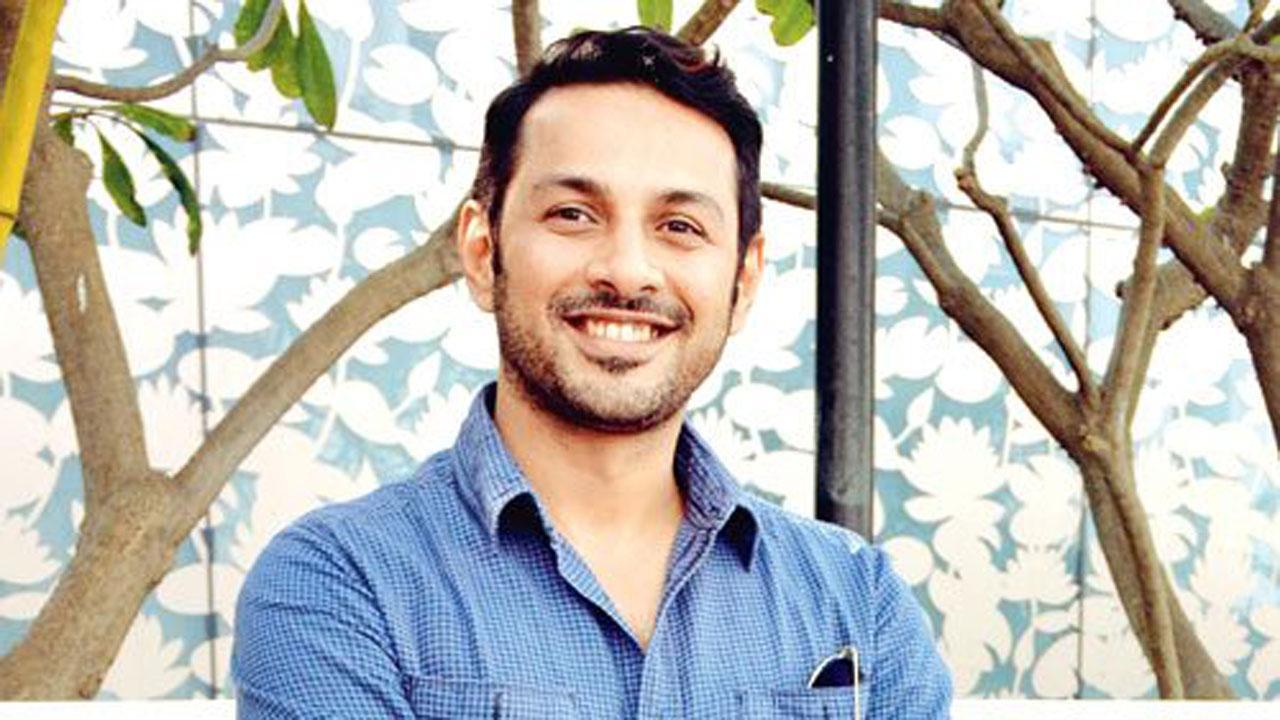
With his social media series Rangila Rupya, writer Apurva Asrani spotlights the LGBTQiA community’s spending power and demands better returns — no rainbow-washing allowed
Mohar Basu (MID-DAY; June 8, 2025)
In 2018, the Supreme Court decriminalised Section 377. So, no one could be put behind bars for being gay. But then what? Decriminalisation was only the first fight. The demand for respect and equal rights is still ongoing. While the Pride flag is often used by brands to show support — especially during the Pride Month — basic rights are still denied.
“I have been very uncomfortable with the term queer,” starts off screenwriter, editor Apurva Asrani, when we get on a call with him to discuss his new social media series, Rangila Rupya, that reflects the economic influence and voter power of the LGBTQiA+ community and his desire for a movement that solely reflects the community’s struggle in India.
“When people called me to their queer festivals, I used to write to them saying, if you call it queer, I’m not coming because it’s not our term. It’s a term that is derogatory for us. I feel we need to find out what our own LGBTQiA+ history is and own up to that.”
He credits the West for rioting for their rights, and for the likes of Harvey Milk — the first openly gay man to be elected to public office in California — for standing up against the establishment. The word queer, which was once derogatory, the West turned it into power, but Asrani feels, “There’s no power in the word ‘Queer’ in India. It’s not our word. It’s not something that comes from our society. This is not at all to take away from that extremely brave movement there.” While he believes it gave them courage, he also feels it is somehow unfair to those who fought the battle in India.
He explains, “Our fight is different. Our fight has been legal, in courts, through think tanks, through the media. So our movement needs to be defined. That’s my effort.”
After his reel, titled Are we truly queer? went viral, Asrani realized others shared his discomfort. So, he decided to bell the cat. The screenwriter believes that the dialogue needs to change after 10 years. The people from the LGBTQiA+ community still can’t marry, inherit property, or claim the body when a spouse passes away. Or get insurance together. Yet they are important for the vote bank and the economy, but remain on the periphery.
“Anything that needs to be systemically put into people has to be converted into a law. That was where I think Rangila Rupya was born. A rangila person is someone who believes in different voices that can coexist. In the video, I say 135 million people, but there are so many who are still in closets. We are spending money on holidays, restaurants, and food. Now, there is a lot of economic power that lies in the hands of this community — around two lakh crores and growing. If businesses want that money, they better respect us, or we’ll take our money elsewhere.”
He’s now building a verified list of Rangila-friendly businesses. “We’re making it clear: we are watching you.”
Citing the cancellation of Jainil Mehta’s dance show, titled Samaaj, on April 26 at the Madhyavarti auditorium of Jawahar Kala Kendra due to pressure, Asrani shares that he wouldn’t invest in cities or brands that don’t respect the Rangila-people.
“I’m happy to see some brands like Lalit Group of Hotels and Godrej walking the talk. When I hear about incidents like Jainil’s cancellation, it baffles me because it’s bad business sense — you lose good business, and disrespect art and culture.”
My opinions need deeper research and follow-ups that Twitter’s ‘fastest finger first’ culture doesn’t permit-Apurva Asrani
9:31 AM
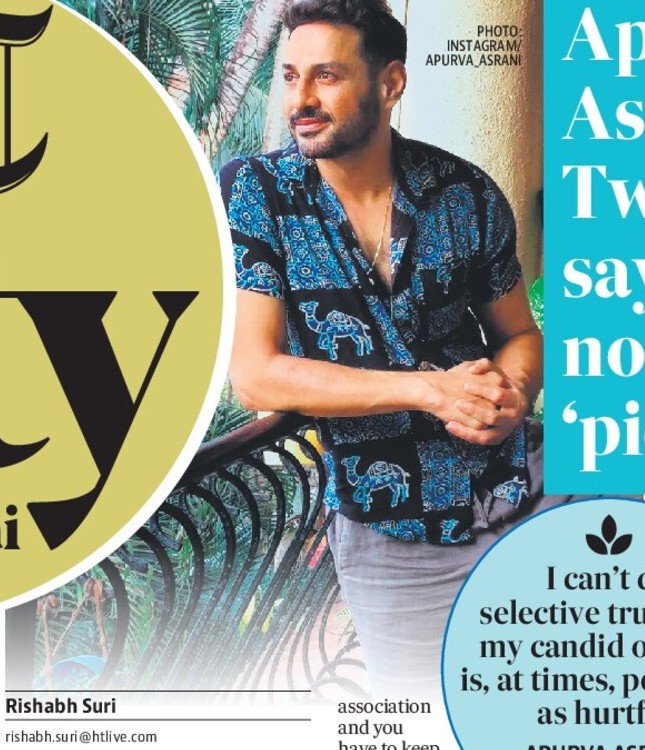
Rishabh Suri (HINDUSTAN TIMES; June 25, 2023)
After quitting Facebook three years ago, Apurva Asrani has now got off Twitter. In his last tweet before deleting his account, the screenwriter cited rising pressure to conform as the reason.
“I find that Twitter is increasingly polarized into black or white. Various groups demand exclusive membership and you have to pick a side. Truth is often compromised to maintain association and you have to keep mum about certain opinions that don’t gel well with your support group,” Asrani tells us.
Not that the 45-year-old, who has written acclaimed projects such as the 2015 film Aligarh and the OTT series Criminal Justice: Behind Closed Doors, is scared of expressing himself or of backlash.
“I can’t do selective truth and my candid opinion is, at times, perceived as hurtful. It’s not that I fear upsetting people — you can’t please everyone all the time. As a conscientious writer, my opinions need deeper research and follow-ups that Twitter’s ‘fastest finger first’ culture doesn’t permit,” explains the writer, who has decided to reserve his “views for a film, series or an article”.
Asrani, who’s now only on Instagram, adds, “Our society is going through a churning that is reflected on Twitter. Also, more than anything, I need time and distance to nurture my soul and to incubate important stories that I want to tell.”
Adipurush makers to change controversial dialogues; even in the past, scenes have been re-shot or removed
9:05 AM
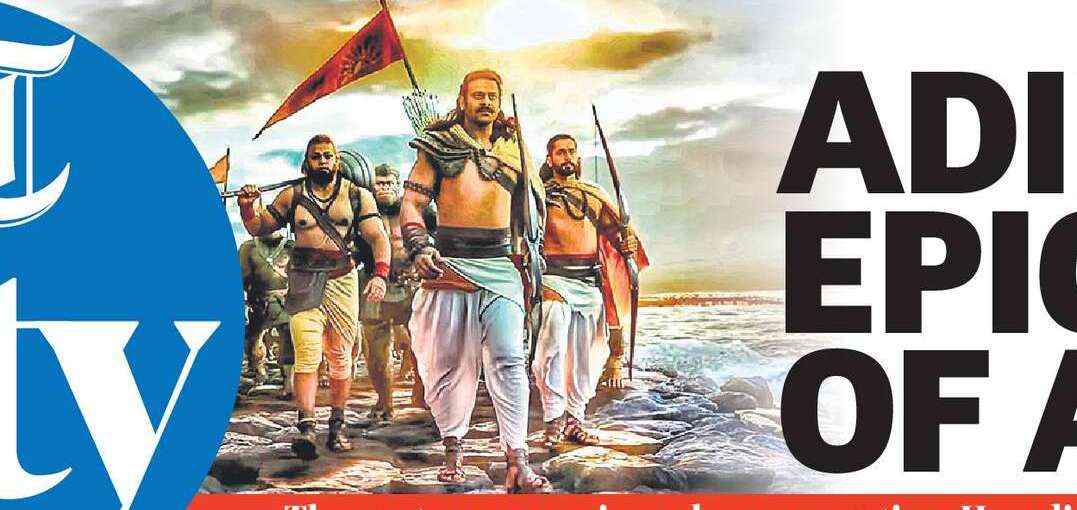
Modifications post release aren’t common, but scenes have been re-shot or removed, and songs have been dropped, too, in the past
Niharika Lal (HINDUSTAN TIMES; June 20, 2023)
Adipurush dialogue writer Manoj Muntashir Shukla believes it’s a case of just five lines. “I wrote more than 4,000 lines as dialogues in Adipurush, some sentiments got hurt on five of those lines,” he wrote on social media.
The jury is still out on whether it’s five lines or more, but the fact remains that the dialogues of Adipurush have sparked caustic reactions from audiences, politicians and film critics alike ever since its release last weekend.
The film has been widely panned for showing divine characters – especially Hanuman – speak lines that the film’s makers call colloquial, but many film-watchers have found to be crass. Bowing to the pressure, the film’s team announced on Sunday that the dialogues would be altered, “valuing the input of the public and the audience”. The makers said that they are “revisiting the said dialogues, and the same will reflect in the theatres in the next few days.”
However, such moves of altering scenes and dialogues post a movie’s release are not unprecedented. Over the years, filmmakers from Guru Dutt and Bimal Roy to Sooraj Barjatya have sought post-release changes in dialogues and songs for various reasons.
ADIPURUSH DIALOGUES THAT HAVE DRAWN FLAK
“Jo hamari beheno ko haath lagayenge unki lanka laga denge”
“Teri bua ka bageecha hai kya jo hawa khane chala aaya?”
“Kapda tere baap ka, tel tere baap ka, aag bhi tere baap ki toh jalegi bhi tere baap ki”
“Aap apne kaal ke liye kaaleen bichha rahe hain”
“Mere ek sapole ne tumhare sheshnaag ko lamba kar diya, abhi toh pura pitara bhara para hai”
WE WILL REVISE SOME OF THE DIALOGUES: MANOJ MUNTASHIR
I wrote more than 4,000 lines as dialogues in Adipurush, some sentiments got hurt on five of those lines. In those hundreds of lines, where Shri Ram was glorified, Maa Sita’s chastity was described, I was hoping to receive praise for them, which I don’t know why I did not get. For me, there is nothing greater than your feelings. I can give countless arguments in favour of my dialogues, but this will not lessen your pain. I and the producer-director of the film have decided that we will revise some of the dialogues which are hurting you and they will be added to the film this week
– Manoj Muntashir Shukla, dialogue writer of Adipurush, on social media
WHY MAKERS CHANGE FILMS POST RELEASE
While there are no recent examples, films that saw post release changes include those that were banned in some states or where the makers have made fresh edits, voluntarily. For example, Prakash Jha agreed to some changes in his film Aarakshan on the eve of its release after Uttar Pradesh and Punjab banned it over controversial scenes and dialogues. Whenever a film makes any changes, it has to get the approval of the CBFC. Sometimes, these changes are also made for the film’s satellite or streaming rights.
NINE MINUTES OF DABANGG 3 (2019) WERE CUT
The makers of Dabangg 3 announced after the release of the film that they voluntarily removed certain scenes from the film’s title track, Hud Hud Dabangg. The film was trimmed by nine minutes. As per reports, about eight minutes were edited from the first half, which included a song, Awara, featuring Salman Khan and Saiee Manjrekar. Another song Naina Lade was also shortened. The film faced controversy when several groups objected to a sequence in the title song that featured saffron-clad sadhus dancing with guitars.
FILMMAKERS SOMETIMES VOLUNTARILY SEEK MODIFICATIONS AFTER CERTIFICATION: CBFC OFFICIAL
Elaborating on the topic, a CBFC official says, “It is not uncommon for filmmakers – especially in the case of well-known directors and big-budget films – to revise dialogues and scenes. Many filmmakers voluntarily seek modifications after certification. On an average, we receive eight to ten requests from filmmakers across languages. While the film retains the original certificate in the cinemas, any updated modifications are endorsed on back of the certificate.”
SONGS WERE CUT FROM HUM AAPKE HAI KOUN! (1994)
The initial reaction to Hum Aapke Hai Koun! after the industry screening was not very positive. The film, which has a running time of 3hr 26 mins, was even longer. In a recent documentary, the film’s maker, Sooraj Barjatya, said, “For Hum Aapke Hain Koun!, we had a screening and that show was a disaster. However, Adi (Aditya Chopra) told me, ‘Dhai gaane katoge toh nikal jayegi’. And honestly, it was on my mind for the last five months. He pinpointed the exact two-and-a-half songs, which I removed the next day (sic).”
GURU DUTT, BIMAL ROY ALSO CHANGED FILMS POST RELEASE
Film archivist and historian Shivendra Singh Dungarpur shares that it was quite common in the ’50s and ’70s for filmmakers like Guru Dutt and Bimal Roy to modify their films if they felt the audience was not connecting with the story. Dutt reportedly reshot scenes of Pyaasa after the release and also removed a song. When Dutt visited a cinema showing Sahib Biwi Aur Ghulam, he decided to reshoot the climax after seeing the disappointed audience but later changed his mind and didn’t change it. However, he did remove Meena Kumari’s song Sahil Ki Taraf and some dialogues. Similarly, Bimal Roy also changed some parts of Devdas post-release.
---------------------------------------
"Meghnad is reduced to look like a cheap WWE wrestler with tattoos all over his body and made to mouth chindi dialogues. 'Beta teri jali', how can these words ever fit Ramayan? Was he a tapori character?"
-Mukesh Khanna, who played Bhishma Pitamah in B R Chopra's Mahabharat
---------------------------------------
"In my understanding, the issue is not of VFX, but of characters'' representation. Mool bhawna ko barkarar rakhna chahiye tha"
- Arun Govil, who played the role of Ram in Ramanand Sagar's Ramayan
---------------------------------------
The controversy raises a larger question: How did a film that seemingly ridicules deities receive clearance from the Central Board of Film Certification (CBFC) without any objection?
Syeda Eba Fatima (HINDUSTAN TIMES; June 20, 2023)
The uproar surrounding Adipurush shows no signs of abating. From objectionable dialogue to problematic scenes and inappropriate character representations, audiences remain dissatisfied with the movie’s content. In a shocking turn of events, on Monday, the Kshatriya Karni Sena, during a press conference in Madhya Pradesh, gave death threats to writer Manoj Muntashir and director Om Raut. Amid outrage, Nepal banned all Hindi films in its capital Kathmandu and the tourist town of Pokhara.
INDUSTRY INSIDERS SPEAK
PAHLAJ NIHALANI
The producer and former chairman, CBFC, slams the censor board saying, “It’s filled with random officers, clearing movies without objections; chairman is not available to look after the operation. In the absence of a proper system, a film like this getting a certificate is obvious.”
KOMAL NAHTA
The trade expert calls it a “grave error” on the part of the writers, and he agrees that the censor also seems to have overlooked it. “Revising them now won’t change the fate of the film because there are more issues than just these few lines.”
TARAN ADARSH
The trade analyst says that while watching the film, he wondered how the censor could clear the movie considering the makers had made a clear mockery of religion. “However, CBFC comes into the picture much later. The onus is on the director and writer, and for me, they are to blame,” he adds.
APURVA ASRANI
The filmmaker says, “If you don’t like a film, don’t recommend it. If you don’t like its message, counter it with another story. But there are people keen to watch Adipurush. Also, if the makers are being threatened or pressured, we should stand by them in the name of free speech.”
ARUN GOVIL
The actor, who is famous for playing Lord Ram in TV show Ramayan, says, “Makers are revising the dialogue because they don’t want people to react further. Par jin logon ne film already dekh li hai, woh dobara dekhne toh jayenge nahin.”
DIPIKA CHIKHLIA TOPIWALA
“The damage is already done. How such a film was cleared by the censor board is surely something to think about,” says Chikhlia, who played Sita, in the same iconic TV show.
MUKESH KHANNA
“The problem is not only those five lines... What will you do about costumes, like Raavan made into Khilji or Hanuman made to look like a cartoon? Aur censor ko kya knowledge nahi hai hamare dharam ki?” questions Khanna, who shot to fame as Bhishma in the TV show, Mahabharat.
MAKERS ARE SAYING...
The makers of Adipurush, on Sunday, decided to change a few controversial dialogues (see box). Dialogue writer Manoj Muntashir said, “I can give countless arguments in favour of my dialogues, but this will not reduce [anyone’s] pain. I and the producer-director have decided that some of the dialogues which are hurting you, we’ll revise them. They’ll be added to the film this week.”
As the controversy continues to gain steam, Muntashir has sought protection from Mumbai Police. Meanwhile, in an interview with Zee News, he said that he trusted director Om Raut during the making of the film, and requested that any questions pertaining to the story and screenplay be directed to Raut.
“We have not shown the entire Ramayana; it is extracted from one corner of the epic, Yuddha Kand. The only questions that remain are about the dialogues. The producers and I have announced that those dialogues would be changed.”
I want queer characters to be treated like regular characters, say acclaimed storytellers from the LGBTQIA+ community
9:50 AM
Syeda Eba Fatima (HINDUSTAN TIMES; June 19, 2023(
APURVA ASRANI
Filmmaker Apurva Asrani, who wrote the story and dialogue for Aligarh (2015), says, “I want the othering to stop. I want queer characters to be treated like regular characters in the films so that people can identify with them and that’s what I am trying to do.”
He’s glad to see so many projects being made with queer characters, but is quick to point out that even now, a lot of homophobic people want to slot you a certain way. “I’m pitching ideas to a lot of platforms and production houses. But the moment I try and convey that we are done with tragic stories, they begin to send notes [such as on the lines of] ‘Can you add more conversion therapy?’ That narrative needs to change,” he explains.
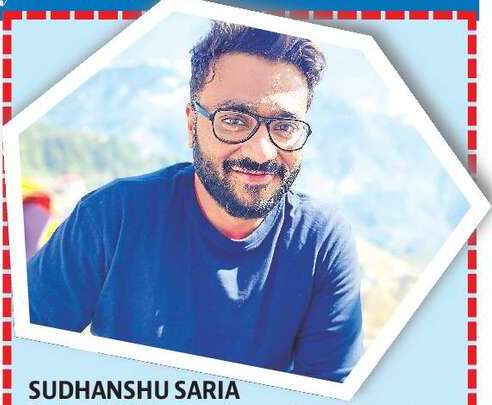
SUDHANSHU SARIA
The Loev (2015) director, who recently saw the premiere of his latest project TAPS, another queer short, at Kashish Film Festival, says: “Good, bad, beautiful, ugly, heroic or flawed — I’m just interested in accurate representations of the queer community, and there’s no agenda beyond that.” The filmmaker also points out how despite the few opportunities people get to tell these stories, ”every attempt is a huge win” and that for queer characters to truly become part of mainstream cinema, it is “essential that filmmakers feel connected to queer life and are comfortable representing it”.
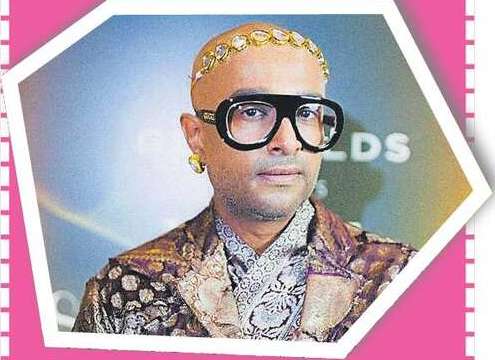
FARAZ ARIF ANSARI
The Sisak (2017) director strives to open up larger conversations that are mainstream and yet “intimate, sublime and sensitive”. Talking about their film Sheer Qorma (2021), the filmmaker says, “It does not have anyone standing on the rooftop, holding pride flags and yelling out to the world. It was relevant without being loud and crass.” Ansari adds, “Most narratives (by filmmakers who don’t identify on the queer spectrum) are a result of research and not lived experience, and so they always fall short to bring out authenticity.”

MOZEZ SINGH
His 2022 medical drama Human, headlined by Shefali Shah and Kirti Kulhari, has an underlying story on queer relationships, and Singh wants to continue to depict the “normalcy of the whole LGBTQIA+ experience”. He says, “In stories onscreen, the queer community is often depicted in a completely different narrative. I want to show that we are all same... even queer people are humans.” The director, however, is happy that queer characters have steadily increased in number. “They increasingly have prominent roles in projects, sometimes even the lead. It goes to show that queer characterization is being treated in the mainstream in a normal way,” he notes.
The film industry is more inclusive than many professions-Hansal Mehta
8:16 AM
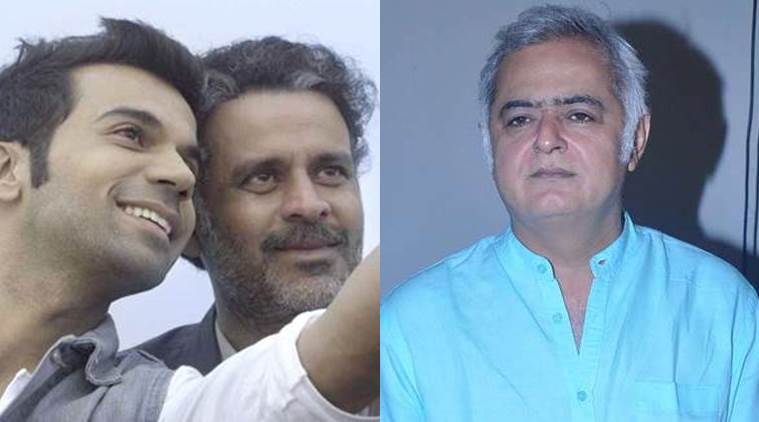
Filmmaker Hansal Mehta says the film industry has embraced the queer community with far more sensitivity than it gets credit for
As told to Renuka Vyavahare (BOMBAY TIMES; June 14, 2023)
There is an improvement in the depiction of queer characters on screen. As this generation is getting more woke, there is more understanding. People are cautious about not being insensitive. While there is a long way to go in bridging the gap given the discrimination the LGBTQIA+ community has suffered in the past, there are steps being taken. Our film industry has embraced the queer community with far more sensitivity than it gets credit for. It is far more inclusive than many other industries and professions.
For stronger queer representation, we need to work on our casting choices and the stories we tell. They need to be more mainstream. The short film (Baai) I made for Modern Love Mumbai, I chose to tell that story because it had a lot of sensitivity, and it represented the community with a lot of love and empathy. Baai focuses on the love story of Manzar (Pratik Gandhi) and Rajveer (Ranveer Brar).
I wanted to treat it like a regular love story as opposed to being seen as a gay love story. It had songs, family drama, familial opposition...all the tropes of a mainstream Hindi film or a heterosexual love story. Stories are stories. They are not driven by someone’s sexual orientation.
‘YOU LEARN THROUGH YOUR STORIES’
You learn through your stories, and exploring them makes you more empathetic. Aligarh played a huge part in my life in building that empathy. I made Aligarh because Apurva Asrani was a part of it as a writer and editor. The writing was nuanced. Manoj’s performance and Apurva’s script gave me a better understanding of why we need to evolve as a society. When you look at queer stories told around the world, they have gone beyond the ones we tell here. We are still dealing with queer problems and are bogged down by societal attitude.
‘PUT YOUR MONEY WHERE YOUR MOUTH IS’
If a studio or streaming platform allows me, I will cast actors from the queer community for relevant roles. However, representation through stories is far more important to me. An actor is an actor, and the best actor should get the job. Aligarh without Manoj Bajpayee won’t be Aligarh. Can you imagine anyone but Tom Hanks in Philadelphia? Our mainstream actors still turn down such parts. You cannot be inclusive in real life and exclusive in choosing your characters. Put your money where your mouth is.
‘POPULAR STORIES WILL BRING MORE QUEER REPRESENTATION’
When I made Baai, some people from the community rightly caused a furore about the absence of gay actors playing gay parts. Ultimately the idea was to get this story to be seen by maximum people and cast the best actors for those roles, so I got Pratik Gandhi. Should there be more actors from the community playing queer roles? Yes, of course, but let’s take one step at a time. As you make the stories more popular, there will be more queer representation.
Writing fees in India is nowhere close to the value that a script brings to a film-Anjum Rajabali
8:28 AM

The Writers Guild of America’s action has led to the resurgence of concerns among writers in India
Rishabh Suri (HINDUSTAN TIMES; May 13, 2023)
The Writers Guild of America’s strike against Hollywood studios demanding higher pay and fairer deals, among other asks, has entered its second week. The guild is seeking a 25% hike in writer-producer minimums, for a total of 31% in the first year of the contract, reported Variety.
As a result of the strike, which has been supported by big names, including filmmaker Christopher Nolan, several projects have been impacted. The strike has revived the pay parity concern among Indian writers, too, who have time and again voiced their apprehension regarding writers’ issues.
Anjum Rajabali, who wrote Ghulam (1998) and co-wrote the screenplay of Raajneeti (2010), says, “While their strike doesn’t have a direct bearing on the Indian situation, it has brought into focus the unfair treatment that writers receive. Writing fees in India is nowhere close to the value that a script brings to a film. New and young writers are distressed as they feel exploited. The contracts that producers and studios offer are grossly one-sided.”
Lack of industry support
Writer Apurva Asrani feels that support from big actors and directors is imperative for a writers’ strike to bear fruit. The Criminal Justice: Behind Closed Doors (2020) writer says, “In the US, you have Christopher Nolan and Game Of Thrones co-creator George R R Martin supporting writers. In India, actors and directors are paid way higher than writers. So, no one really wants to change the status quo.”
Gangs Of Wasseypur (2012) writer Zeishan Quadri says there’s a lack of unity among writers in India: “There is no organized way here. Also, there’s no one to guide the writers.”
Will the exploitation stop?
Mitesh Shah, co-writer for the films Helicopter Eela (2018) and Tumbbad (2020), points out that the Screenwriters Association (SWA) “has been talking about all this for a long time”.
He adds, “But I haven’t received as many calls as I am getting now, after the US writers’ strike. Barring a few industry people, there has been very little support. I know a few writers who sold their scripts for as little as Rs. 50,000 or Rs. 1 lakh, while it should be at least Rs. 12 lakhs.”
Veiled Eros cinema structure sparks fears for Art Deco precinct; BMC asks Twitter users to calm down
8:23 AM
Bella Jaisinghani & Richa Pinto | TNN (THE TIMES OF INDIA; April 30, 2023)
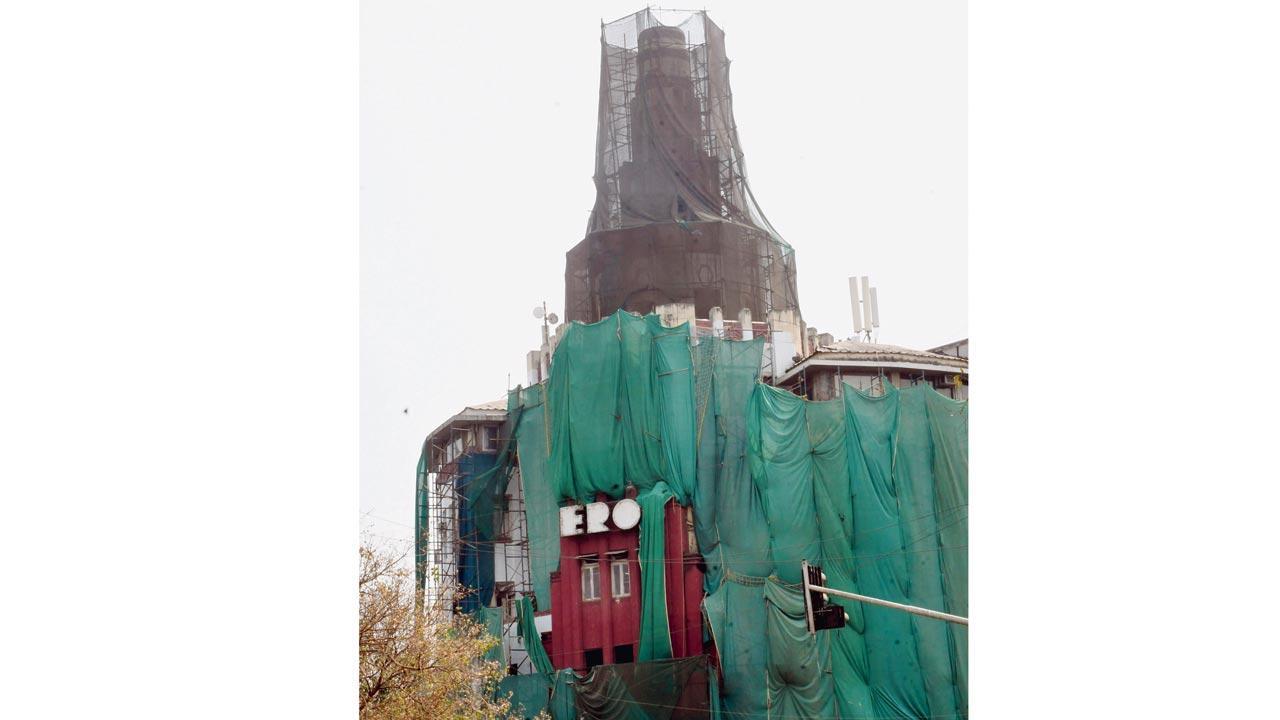
Mumbai: The hearts of heritage watchers fluttered with anxiety Saturday after pictures emerged of the iconic Eros Cinema in Churchgate veiled behind a big green curtain. The iconic single screen cinema which has been a pillar of the city’s Art Deco heritage since 1938 is engulfed by speculation over whether any proposed renovation will deprive it of its unique character.
More horrifying was the prospect of demolition that was discussed on social media, although the fact that Eros is located in a heritage precinct precludes that possibility. The Cambata family that owns Eros is settled abroad and was not immediately available for comment.
Film maker Apurva Asrani tweeted, “Heartbreaking to see Eros Theatre being torn down. This South Bombay Art Deco landmark, built in 1938, was where I bunked college to go to. It’s where I went on my first date & where my first film ‘Satya’ released in ‘98. Sad that Mumbai can’t preserve its heritage buildings.”
A BMC official, who was formerly with A ward, admitted that there was a proposal to revamp Eros Cinema. Earlier reports had said the theatre was being refurbished with new use and part theatre. The plan was to convert the 1,200-seater theatre to 300 seats. The interiors would be altered which would change the character of the theatre. But the external facade would be preserved.
Assistant municipal commissioner of A ward Shivdas Gurav said that in the last two days the ward has cleared debris that was lying behind the theatre after locals objected. “This debris belonged to a garage that was lying in the premises which had not been picked up and locals had complained about it. We only cleared that,” he said.
In 2019, citizen stakeholders who took the lead for south Mumbai’s Victorian Gothic and Art Deco Ensembles being inscribed in the UNESCO World Heritage Sites list in 2018 had raised concern over the condition and future of Esplanade Mansion and Eros Cinema in the precinct.
They had said efforts should be made for the preservation of Eros Cinema and other structures which face threats from extensive internal change.
The fact is that single screen theatres have fallen on hard times with the arrival of multiplexes and online streaming platforms. Revenues are scarce and many iconic theatres have had to shut down. Prime real estate fetches higher revenues once commercialized.
------------------------------
BMC asks Twitter users to calm down; says facade is undergoing restoration
MID-DAY (April 30, 2023)
While Twitter was abuzz with rumours about the iconic Eros Theatre in Churchgate being pulled down, BMC officials on Saturday told mid-day that the building was only undergoing restoration.
Eros Theatres stopped operations in 2017, following in the fate of many single screen cinema halls in the city.
When contacted, Aparna Bhatte, deputy municipal architect of BMC, said, “As per my knowledge, the building is not being pulled down. It’s undergoing repairs and restoration since 2018-19.”
On Saturday, following rumours about the building being torn down to make way for a mall, social media users began to shares their memories of visiting the iconic south Mumbai theatre. Filmmakers Vivek Ranjan Agnihotri and Apurva Asrani, and comedian-actor Vir Das were among those who took to Twitter.
Speaking with mid-day, a BMC official said: “Are those tweeting photos and spreading rumours even taking any effort to confirm what’s happening? One tweet follows another, and people just blindly follow these without any confirmation.”
A campaign was run against Priyanka Chopra in 2012-Apurva Asrani
8:40 AM

Apurva Asrani feels Priyanka’s accomplishments are a win for those fighting the movie mafia
Syeda Eba Fatima (HINDUSTAN TIMES; April 2, 2023)
Filmmaker Apurva Asrani extended his support to Priyanka Chopra Jonas after the actor revealed that she “left Bollywood” because of her “beef with some people in the industry”.
Now, in an exclusive interview with us, Asrani shares how some families in the industry have an edge in the business because they have been around for generations: “They have their favourites and have every right to work with the ones they like. The problem is when they gang up to oust an actor or a technician from not just their movie but from the entire ecosystem.”
The National Award-winning film editor goes on, “Then these egos call other egos and tell them not to work with this person. They then use the media to run campaigns to discredit this person. Blind articles are written with damaging accusations... All this can be very damaging to a hardworking talent, especially one who doesn’t have a father or uncle in the film business.”
But Asrani points out how “ones like (actor) Kartik Aaryan thrived in spite of the vicious campaigns against him, thanks to social media, which allows you to directly connect with the audiences”.
The Aligarh (2016) writer points out how a similar “campaign was run against Jonas in 2012”, and she was cornered. “She had given the world two big hits — Barfi! and Agneepath — in just one year, but the front page of a city newspaper carried a headline saying that no hero wanted to work with her. They weren’t giving her her due; she wasn’t able to grow as an actor and a star,” says Asrani, adding that’s the reason a win for Jonas is a “win for all of the people who aren’t giving up the fight against a largely corrupt system”.
Before Jonas, according to Asrani, another actor who became the target of the influentials was late Sushant Singh Rajput: “Director Abhishek Kapoor has used a very apt term to describe what was done to Sushant: a systematic dismantling of a fragile mind. It’s where they use the entire system to slowly ignore and isolate you.”
He, however, believes there are several producers today who play fairly because they are not from dynasties and sincerely seek out talent over sycophancy.
After watching Badhaai Do, I thought, how did they know about my story of coming out?-Apurva Asrani
8:16 AM
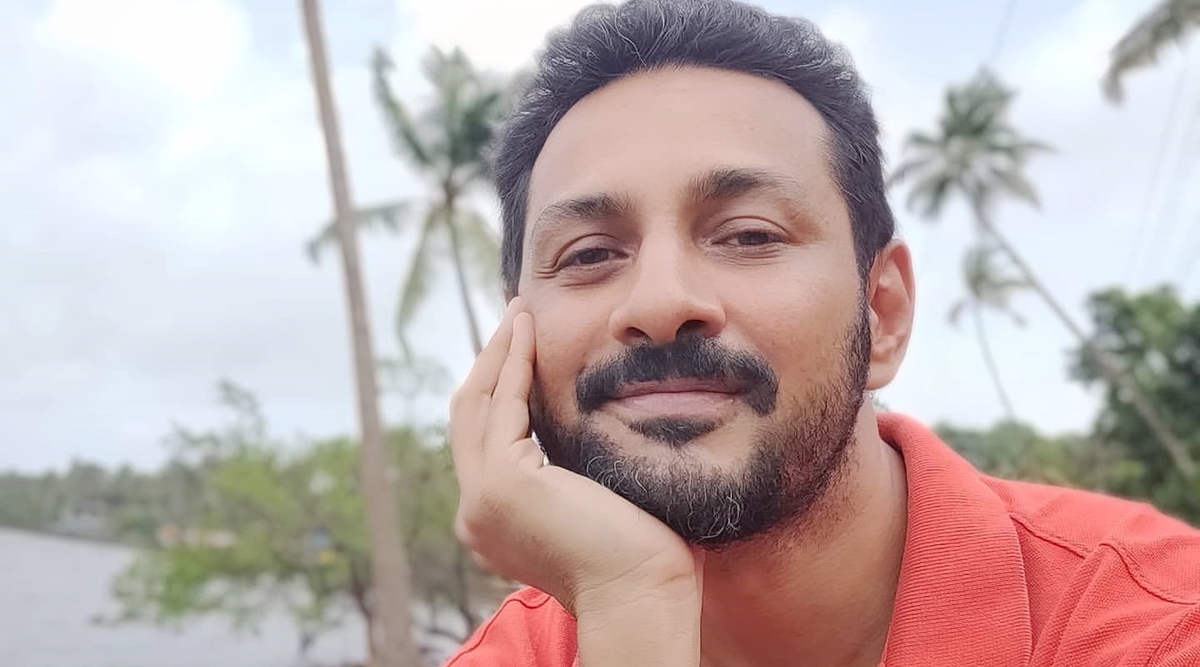
Saptaparna Biswas (BOMBAY TIMES; February 28, 2022)
When writer-editor Apurva Asrani, a prominent voice in the LGBTQIA+ community and someone who is out and proud, went to watch Badhaai Do recently, all he expected was just another mainstream film touching upon the community. But he was pleasantly surprised by the story, and was reminded of his personal struggles with coming out while watching it. Moved by the relatable portrayals, Apurva penned a note of appreciation for the Junglee Pictures’ film. In a chat with us, Apurva spoke about how such films help get rid of tokenism and make real conversations happen. Excerpts:
‘HOW DID THEY KNOW ABOUT MY STRUGGLES SO WELL?’
While there have been many other films portraying the struggles of the queer community lately, Apurva says the portrayals in Badhaai Do are closest to real-life struggles of queer persons. He shares, “I went to the cinema hall expecting yet another commercial film which doesn’t really capture the heart and soul of the LGBTQIA+ struggle. But, what struck me was that the writers have truly understood the journey of the community and have got the nuances in portrayal of the characters right.”
The film also got him to recollect his personal experiences. “I was genuinely touched by the depth of emotions in the same-sex relationship explored in Badhaai Do. I was like ‘How did they know what happened with me?, How did they know about my heartbreak?, How did they know about my story of coming out, and my yearning to be a parent?’ The film reflects the thoughts and feelings of the queer community so well, and for that, it deserves all the love coming its way,” says Apurva.
‘IT IS HARD TO RETAIN THE ESSENCE OF STRUGGLES IN AN ENTERTAINING FORMAT’
Apurva feels that as long as stories are written sensitively, the audience will relate to them. “I’m not of the opinion that you essentially need LGBTQIA+ actors to essay these roles, because actors can and should be able to play any character. What you need is queer representation in the writing team to be able to bring genuineness to the story and expression. I feel Badhaai Do achieved that,” he says, adding, “Rajkummar Rao and Bhumi Pednekar have no doubt done a phenomenal job. They’ve added so much magic, and they’re so brave in their portrayals. But I really want to compliment the writers for bringing the conversation in such an entertaining format for family audiences and a larger population while keeping the heart of the struggle very much alive. It’s a difficult thing to achieve. Because so far we have either talked of the predicament or made light of it – to attain a balanced portrayal is a hard job.”
Apurva also emphasises on the importance of having such films in mainstream viewing so audiences get an idea about diversity of the members of the queer community.
‘MAINSTREAM FILMS HAVE THE POTENTIAL TO IMPACT PEOPLE IN RURAL BELTS TOO’
While many OTT shows and films have managed to strike up conversations about queer love and relationships, Apurva feels that with relatable characters and a theatrical experience, mainstream films can make a larger impact in terms of sensitization. “Just the fact that this is the kind of film that your family would watch together gives you a common ground to strike up conversation. That’s a very big deal. I worked as an editor on the show Made In Heaven, and the show encouraged people to have dinner time conversations around love and same-sex relationships. Badhaai Do has the potential of doing this in cinemas pan-India, in the rural and regional belts where parents and kids can watch it comfortably and have discussions around the topic. Today, if a young person wants to come out of the closet, they have these references to start with. Rajkummar and Bhumi’s characters elicit respect, right till the end of the film. They have a job, they have a role in their families – it brings LGBTQIA+ characters in the family construct, and into the mainstream social fabric. A film like Badhaai Do engages the community – and then you know that the makers’ hearts are in the right place,” says Apurva, on a concluding note.
Is Bollywood ‘trans’itioning? Filmmakers and writers weigh in on who should have the right of way to tell marginalized stories
8:21 AM
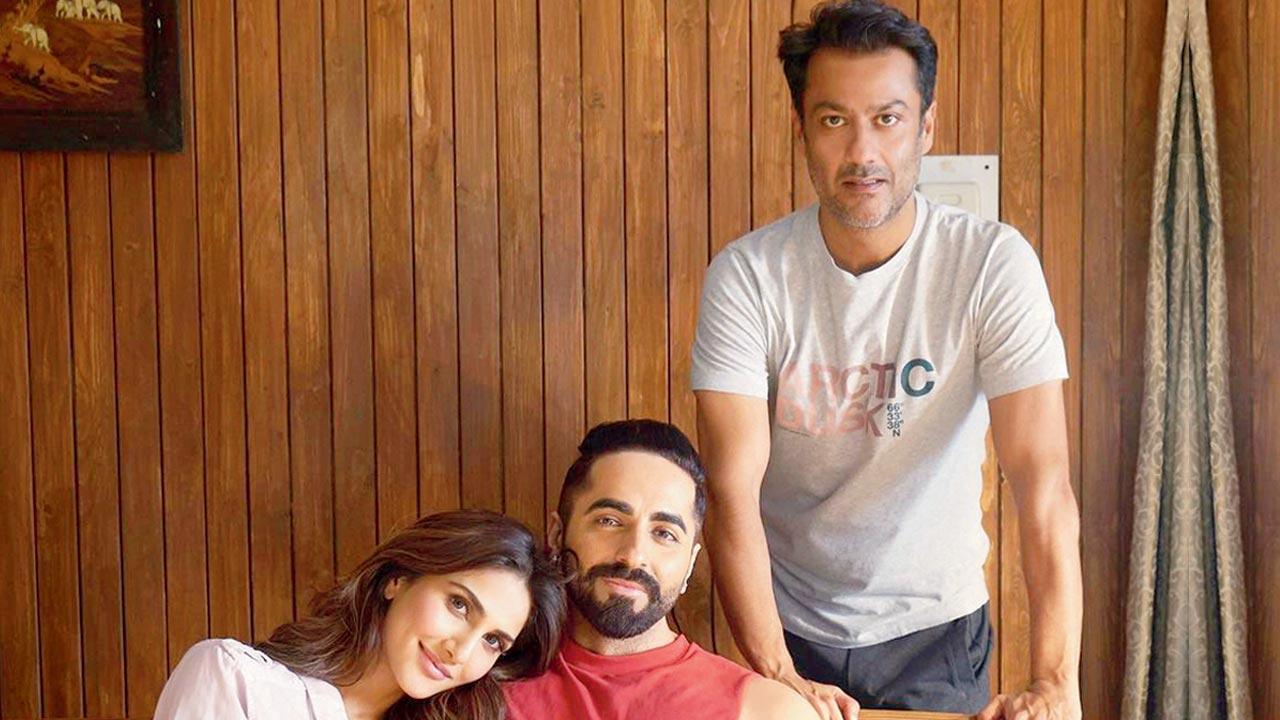
Even as films are making room for the LGBTQiA+ experience, filmmakers and writers weigh in on who should have the right of way to tell marginalized stories
Nidhi Lodaya (MID-DAY; February 13, 2022)
When the Ayushmann Khurrana and Vaani Kapoor-starrer Chandigarh Kare Aashiqui released in December last year, it garnered a lot of interest for its sensitive portrayal of a difficult subject. The film revolves around Manu (Khurrana), a cisgender male bodybuilder in Chandigarh, who falls in love with Maanvi (Kapoor), a Zumba instructor, only to later find out that she is transfeminine, a person who was assigned male at birth, identifies with a female gender identity and chooses to transition to womanhood.
Supratik Sen, who co-wrote the film with Tushar Paranjape, says, “Since we don’t belong to the [LGBTQiA+] community, it was very important for us to really know that world, so that we don’t say anything, which is emotionally unauthentic.”
But filmmaker and editor Apurva Asrani, who co-wrote and edited Shahid (2013), identifies as a homosexual, feels that “representation is key” to create an authentic experience.
Mrittika ‘Mou’ Sarin, a queer screenwriter, storyteller and producer, shares the sentiment. “When a queer person writes these scripts, it allows room for a more nuanced portrayal of experiences that only queer people go through.”
For instance, the feeling of hurt from micro-aggression or when someone doesn’t take your identity into consideration, or the fear of coming out, and shame that one experiences, when not being able to live their identity. “These are situations that straight people haven’t been in and can’t always fully comprehend,” she explains.
Despite their apprehensions, both Sarin and Asrani believe that straight people can write scripts, but “research and collaboration” is a must. “You need to speak with queer or transgendered people about their experiences. It’s also important to never assume that you know everything about the character. Take their feedback at every stage,” Sarin adds.
Paranjape and Sen tried to be as thorough as possible. They initially got the idea from Simran Sahni, a friend of the film’s director, Abhishek Kapoor. Sahni has two trans daughters who were born male and transitioned to female. “Getting the facts right and not undermining the struggle of Maanvi was an important part of the process,” says Paranjape.
Sen explains that the idea of writing is to inhabit different worlds and characters—what’s important, though, is to get the nuances right. To make sure that the experience didn’t feel detached or superficial, Sen and his co-writer consulted a few people from the community, one of whom was Sahni’s daughter Seher.
“We heard their stories, what they had been through and got a glimpse into their lifestyle,” says Sen. Other experts included psychiatrists and doctors. Asrani suggests a writing programme, Likho! by The Humsafar Trust, an NGO for the community.
Asrani says what’s often lacking is “deep empathy for the community”. In Bollywood, the trans experience has never really been done justice to. They are usually portrayed as sex workers, evil people, or made fun of. “The mainstream, for decades, has ridiculed and vilified the LGBTQiA+ community. Our movies ‘othered’ them,” points out Asrani.
Chandigarh Kare Aashiqui was a step forward as it had a trans woman character in the lead. If the makers faced flak, it was for having a cisgender actor play a trans role. Only recently, Vijay Raaz’s portrayal of a trans woman in Gangubai Kathiawadi sparked a debate online. Akshay Kumar too, was seen in a trans role in Laxmii (2020).
Paranjape and Sen agree that casting a trans person would have lent their character Maanvi more heft, but they also say that trans actors should not be the only ones playing such roles. “But, the film industry has still not reached a point, where they’ll cast trans actors in trans roles, let alone cis roles. [Unfortunately] at this point, the pendulum is swinging all the way in favour of cis people. This doesn’t mean we need to do this forever,’’ adds Sarin.
Such criticism was missing in the 1990s, when renowned actors like Sadashiv Amrapurkar and Paresh Rawal were seen in trans roles. Asrani says, “At that time, there was a lot of ignorance about the community. But, the world has shrunk with the Internet. Now, nobody will be able to get away with the nonsense they pedaled back in the day.” But instead of insisting that a trans person play a trans role, Asrani says he’d rather have a trans person on the writing team.
According to Sen, what is noteworthy is that Bollywood is no longer shying away from telling stories that are more inclusive. Also, having a popular face playing these roles helps bring more visibility to the issue. “It can get your message across to a larger audience; Bollywood has that kind of impact and reach,” he says. “It [the film] shouldn’t be in your face, otherwise you can lose some of your audience. The aim is to gently educate people, while entertaining them.”
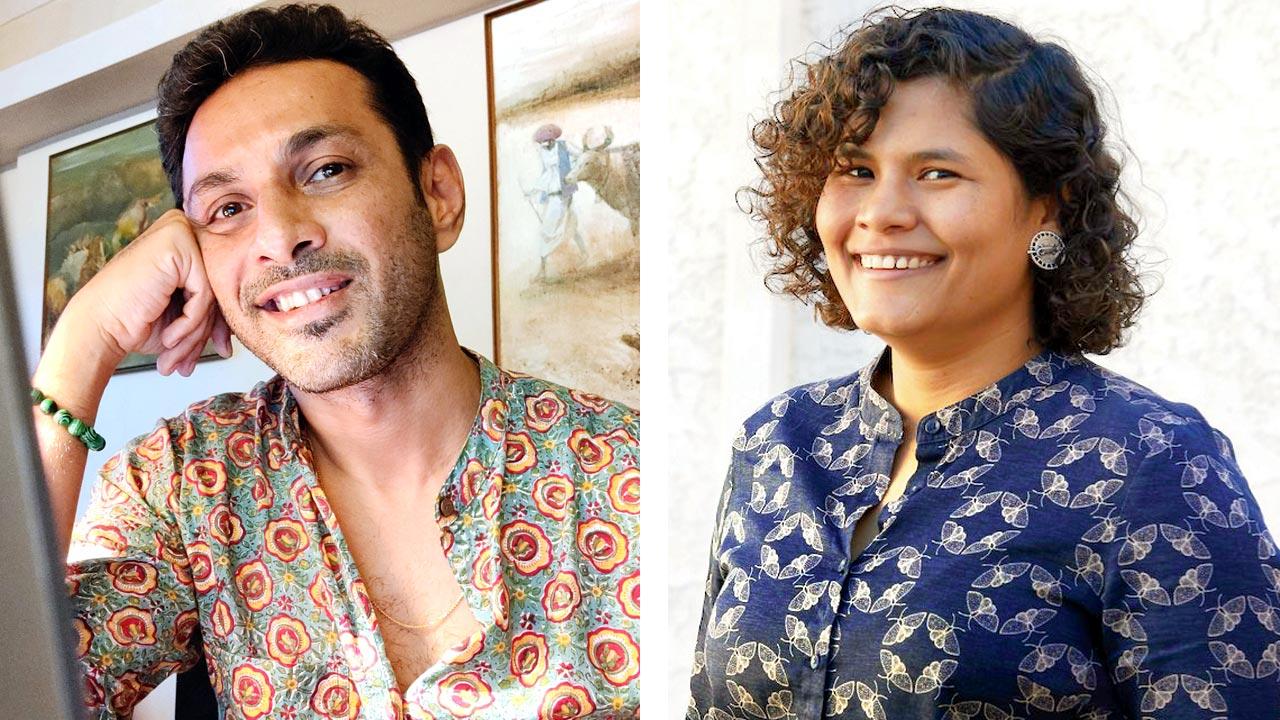
Apurva Asrani and Mrittika ‘Mou’ Sarin
The timing of Chhattisgarh verdict, coinciding with Criminal Justice winning this international honour, was just crazy-Apurva Asrani
8:29 AM

Naina Arora (HINDUSTAN TIMES; August 31, 2021)
For writer Apurva Asrani, starting a “conversation in society” through his work is of utmost importance. Recently, the show written by him, Criminal Justice: Behind Closed Doors, bagged the Best Asian Drama Series award at ContentAsia Awards 2021. But the recognition has come at a time when the Chhattisgarh High Court ruled that ‘sexual act with one’s wife is not rape, even if forced’.
This has put the spotlight back on marital abuse in India. “The timing of the verdict, coinciding with our show winning this international honour, was just crazy. On one hand, the civilised world is moving towards undoing the evils of domestic abuse, and on the other, Indian courts are giving men a free hand to rape their wives. Many women and men are under the misconception that control is equal to love. It’s in fact the opposite. Let’s raise our voice against the awful Chattisgarh verdict,” he says.
“I’m blessed to find collaborators who feel deep empathy towards such stories. My film Shahid (2012) talks about minorities wrongly imprisoned under draconian laws, fighting for justice. Then Aligarh (2016) made the case for a teacher who happened to be homosexual, fighting for his right to privacy. Made In Heaven, where I worked as an editor, took that conversation into an urban space,” he adds.
Asrani shares how women reaching out to him on social media is his greatest reward. “Women of all ages watched the show and sent me messages about their domestic situation,” he says, adding, “One woman begged me to save her from an abusive husband. I was shaken till I connected her to an NGO.”
So, how important is it to create content such as this? “I wept the day I learned Criminal Justice Behind Closed Doors was a big OTT hit. Not just because every artiste strives for recognition, but it also meant households were ready to talk about what happens behind closed doors,” he adds.

I didn’t sleep for nights fearing that a cop would show up at the door and shame my parents-Apurva Asrani
8:15 AM

Rishabh Deb (BOMBAY TIMES; June 15, 2021)
For film editor and writer Apurva Asrani, 2020-21 has been a challenging phase. He lost several friends to COVID-19, and his 14-year-old relationship with partner Siddhant Pillai came to an end. Despite all the events that unfolded in the span of a year, he is taking things in his stride and trying to cope. He finds solace in writing new stories, taking long walks on the pristine beaches of Goa, playing with his cats and bonding with family. In a Pride Month special interview, we catch up with the Aligarh writer and editor and speak about self-love, coping with loss and more. Excerpts:
‘FOCUSING ON SELF-LOVE AND BONDING WITH FAMILY’
Mental health and self-care are his top priority and Apurva, who has moved in with his family after decades, is focussing on himself now. He says, “It’s been a difficult time for everyone since COVID-19 struck. I have lost friends, friends have lost loved ones, many are out of work… everyone I know is coping and surviving somehow. Most things are fine for me by the grace of god. Yes, my 14-year relationship ended during this period. But I am taking it in my stride.”
“Writing gives me a lot of clarity and peace. Bonding with my family, my cats, and playing online games; that’s how I am taking care of my mental health,” says the National Award winner. Sharing certain habits that he picked up during the lockdown to take care of himself, Apurva adds, “I have learnt that sometimes not doing anything and chilling is also okay. Living with my parents, for the first time in decades, allowing myself to cry when I’m down, meditating every day, finding joy, reconnecting with old friends that I had lost touch with; these are some of the things that I started doing in the recent past, things that I would normally not do.”
‘GETTING USED TO BEING SINGLE AFTER 14 YEARS’
Though Apurva and Siddhant parted ways, they continue to share mutual respect. “We may have gone separate ways, but he will always be a valuable part of my life,” shares Apurva, adding, “I haven’t been single in 14 years. Just getting used to the fact that I don’t need to seek someone’s approval before making a decision is something new.” After the two parted ways, Apurva moved in with his parents and is spending a lot of time with them. “There are times I miss the companionship, but I also recognise this as a time when I can rebuild myself into a better, more evolved person. My work gets a lot more attention. I am also taking care of my fitness and diet,” he says.
‘TIMES HAVE CHANGED SINCE I CAME OUT’
Apurva, who came out as gay back in 1998, says that life has changed for him ever since he came out. “Honestly, I have celebrated freedom from Section 377 every single day since the 2018 judgement. Earlier, Pride Month used to be more of a protest and visibility month for me. Now, it’s about having discussions with other LGBTQIA+ folks about how we can make life better for ourselves. We are no longer outliers, we are now looking to integrate in the mainstream and carve a legitimate, respectable place for ourselves,” says Apurva.
On how the scenario has changed in the last two decades for people from the community, he shares, “Circa 1998, you hardly read the word gay in the media unless it was referring to a joke, a crime or HIV. There were no respectable gay movies made in India. A little later they started underground parties where you could meet others like yourself, but these parties were fraught with uncertainty because they often got busted by cops. There was this one party I was at, where five police vans filled with armed cops swarmed down on us as if we were terrorists. They then lined us up and made a news cameraman film us. We were detained, our addresses taken, and they threatened to ‘out’ us to our parents. I didn’t sleep for nights fearing that a cop would show up at the door and shame my parents. It is one of the reasons that I began a sort of gay rights advocacy. I knew we deserved respect. The world has changed so much now, more so for the urban people, but at some level also for all LGBTQIA+ folk. We have so many movies, shows, openly gay celebrities, industrialists and even sportspeople to draw inspiration from. There are events, parties, and forums. I’m glad I’m still young enough to enjoy this time.”
‘REPRESENTATION IN CINEMA AND SHOWBIZ HAS EVOLVED’
While a hearing on the pleas regarding recognition of same-sex marriage in India is awaited, Apurva feels that it’s a basic right that should be respected. He quips, “Whether one believes in the institution of marriage or not, all LGBTQIA+ citizens should have the same right to marriage as their heterosexual brethren. By denying us this right, the constitution is not being respected.” And what about him getting married? “I would ask my mother to find a suitable boy to arrange my marriage,” he laughs.
Speaking about queer representation in Indian cinema, Apurva says the industry is doing well on that front. “In just the last five years, we have seen so much quality queer content. Margarita With A Straw, Aligarh, Kapoor & Sons, Made In Heaven, LOEV, Ek Ladki Ko Dekha Toh Aisa Laga, Shubh Mangal Zyada Saavdhan etc; each one is so different from the other and all cater to diverse audiences. We are doing well. In the West, they were at this juncture many years ago, which is why their content today normalises LGBTQIA+ folk. We, as a decriminalised community, are barely three years old. We still have the angst of our closeted lives to purge. We are still building our identity. And our content reflects that,” he opines.
‘NEED MORE AWARENESS ABOUT COUNSELLING’
Highlighting the plight of the community amid the pandemic where many have had to return to their parental homes and deal with families that do not respect their orientation, Apurva says, “Plus, the respite that they may have found by meeting, interacting with people from the LGBTQIA+ community has come to a standstill and they are stuck with people they need to pretend for. It might be a lonely time for them and the implications on their mental health might be far-reaching. We need more awareness about counselling and therapy in the future.

Sushant Singh Rajput's friends and industry colleagues weigh in on if anything has changed in the last one year
8:31 AM

This day last year, actor Sushant Singh Rajput died a sudden, unfortunate death. Even as tributes continue to pour in, his death has spurred talks around mental health and the insider-outsider debate in Bollywood. His friends and industry colleagues weigh in on if anything has changed in the last one year
HINDUSTAN TIMES (June 14, 2021)

Rashami Desai, Actor
Sushant was a strong and hardworking person, and uski barabari kisise nahin ho sakti. Ever since Sushant’s death, a lot of people have come forward and admitted that they need help. They are talking openly about mental health, what it means and trying to create awareness about it. Moreover, since the last one year, there is a lot that has happened in the world and in the entertainment industry - from uncertain future, to lack of jobs, no money, health issues etc. People have started understanding why communication is important. Yet, we have a long way to go. People need to understand what mental health issue is. We have to learn that self-love is important too.

Apurva Asrani, writer
If you’re putting out a story against someone’s character, then it’s important that you verify your facts and have the courage to name the subject at least. Sushant was called a skirt chaser, an alcoholic, unprofessional and arrogant in blind items that described him but didn’t name him. He was even accused of molesting a co-actor in one blind piece, but there were no complaints, allegations or proof of any of this in the real world. Yet the damage was done, and he had to stay up several nights, desperately defending himself to the world. I hope this never happens to anyone again. I am also closely watching the new media narratives about Kartik Aaryan and noticing that things are being said about him without any verification from him.

Adhyayan Suman, Actor
It was a good thing that so much came out, there were so many inequalities in the industry. Sushant’s death brought out so many thing prevalent in the industry, but I am not sure if anything has changed. But my counter to this is, how much change has it brought? Have deserving people started getting work? Has it become easier for them? I don’t think directors have started taking calls of nobodies. I don’t want to name a filmmaker, he came to me during the pandemic last year, and said ‘I love you as an artist, there is no chance I am not going to give you work’. It’s been then and now, he is not answering my calls. It’s unfortunate. I am not sure anything has changed.

Gulshan Devaiah, Actor
People have unrealistic expectations about Bollywood. It’s a cut-throat business. There is a severe lack of professionalism at different levels and there’s an unsaid hierarchy. This is no meritocracy. Very few people understand the nature of this business and that’s where all the trouble lies. Sushant was a bright star and had a fantastic career. I wish I had his career. Conversations on camps and lobbies have increased. A lot of people felt empowered to share what they feel about this business, may be out of vengeance, motivation or to just shake things up. It’s undeniable that his unfortunate demise has given many people the courage to speak out. What we’ve also realised is that there are power structures and they are fighting to destroy and decimate each other.

Samir Soni, Actor
At the end of the day, we are talking about show business. It will be about profit maximization. Whoever is investing money wants to make more money. A lot of people say ‘merit counts’. That way, Naseeruddin Shah and Late Om Puri should have been the highest paid actors in the country. Market decides that. If I were to make a film and had enough money, I wouldn’t play the central character, I know people will crowd theatres to watch someone more saleable. Talks around such things have come up in the past year. Everyone’s heart goes out. To me personally, Sushant is a success story.

Dheeraj Dhoopar, Actor
Whatever happened last year was a very sad thing, and we all should understand one thing that actors are also human and have emotions, who have our professional targets and commitments. There are times when people just start judging actors or mocking them when we post something on social media, without thinking that there may be a reason behind it. The world should be less judgmental and more understanding. When it comes to the culture of blind items, I cannot say ke kitna change hua hai, but at least people have started talking about it and calling it out, which is a good thing.

Amol Parashar, Actor
There were conversations about the inner lives of young actors, the pressures they live with on a daily basis and the demons they fight away from the public eye. A lot of friends and well-wishers reached out to me as they must have for every young actor out there. In a few days though, the conversations became convoluted, and instead of sympathising with his colleagues and friends who were dealing with the loss, some sections of the media turned it into a headless witchhunt. Hope we can bring back some empathy into our conversations about young people’s internal struggles especially in an industry that keeps you on your toes all the time.
------------------------------
Fans keep SSR’s legacy alive

Susanta Ray, wax sculptor from Asansol, West Bengal
Both my daughter and I were huge fans of Sushant Singh Rajput. I liked him because he is my namesake and also he was a great actor and we’re both artists. I felt some sort of connect with him because of that. When I heard the news of his death I was shocked, I just could not believe and I then decided that I have to honour him in some way. That is when I decided to make his full length wax statue. There is no wax statue of Sushant anywhere in the world. This is a very popular attraction at my museum and people from all over come, especially so many of his fans, to get a picture clicked with the statue. This is my tribute to Sushant and something that is going to always remain special for me.
Shivangi, administrator of a fan club
Emotionally, it has been the toughest time. But I thought of starting something in his name to honour him. He has always been a big-hearted person and as his fans, we need to carry that forward. So, I started this initiative wherein I have been making stuff and selling them. Earnings from the drive are being used to feed the needy. I have distributed food items among the homeless. Many fans of SSR have helped us in this initiative, they have contributed regularly. For now, we want to continue our efforts.
------------------------------
Dr Harish Shetty, Psychiatrist
The entertainment industry has been open-minded about mental health for many years now. Younger professionals seek help when needed but sadly, there is a lot of stigma about it. In the last one year, since Sushant’s death, I feel the visual media has neutralised this advantage by irresponsible reporting. In the TRP war, mental health awareness suffered and caused a lot of pain to those who were already under treatment for depression. As a mental health professional, I think, the focus on mental health since Sushant’s death can be described as the darkest period of the mental health movement.
Lesbian love stories are blossoming on screen
8:33 AM

It’s been 25 years since Deepa Mehta made Fire, India’s first mainstream same-sex story. But it’s only now that queer women are getting their space on screen
Sonam Joshi (BOMBAY TIMES; April 4, 2021)
A female bank employee finds herself irresistibly drawn to a woman who sings jazz at a pub in Mumbai. A closeted student confesses to her best friend that she’s finally found someone she likes — another girl on their campus in Jaipur. Two women, a gym trainer and a film star, walk down the aisle in Udaipur in the presence of friends. A married woman begins a clandestine affair with her late colleague’s widow in Delhi. A queer woman and non-binary person seek acceptance from their families.
These storylines from recent films (Sheer Qorma) and web shows (Bombay Begums, Mismatched, Four More Shots Please! and The Married Woman) show how much screen portrayals of queer women have evolved, reflecting not just the hurdles of same-sex relationships but also the fun, the romance and heck, even the ordinariness of it all. Not surprising since many of them have LGBTQ writers and filmmakers at the helm.
Director Faraz Arif Ansari, whose latest film Sheer Qorma stars Swara Bhasker and Divya Dutta as a couple, recalls being asked why they chose to make a film about queer men and not women during a screening of their debut Sisak. “It got me thinking ‘Where are the queer women?” says Ansari, who is non-binary. Ansari adds that the film hopes “to open a deeper dialogue about love and acceptance, especially in South Asian communities across the world”.
Shohini Ghosh, media professor at Jamia Millia Islamia, says it’s just the beginning and as the idea of same-sex love becomes more acceptable in society, queer sexuality will become more visible on screen. “I think the exciting process has begun and will continue,” she says, giving the example of the 2019 queer romance Ek Ladki Ko Dekha Toh Aisa Laga. “When the star body, in this case Sonam Kapoor’s, embraces queer sexuality it becomes a powerful statement in itself,” she says. “It is a delight to see a whole new generation of women, like Bani J and Lisa Ray for example, who are comfortable and uninhibited about playing queer roles.”
So why has it taken so long, though there were subtle hints at lesbian love in Dedh Ishqiya? After all, it’s been 25 years since Fire introduced a lesbian love story to mainstream audiences for the first time in 1996. Writer Apurva Asrani, who has worked on Aligarh and Made In Heaven which had queer men in lead roles, says that it simply boils down to the fact that the dominant voice continues to be that of men. “Women’s voices are muffled in our society, so even within the LGBTQ scene and pride marches, the representation for women is lesser than that of men,” he says. “Maybe that’s why we haven’t had many stories out there.”
Ansari says that when they reached out to producers for Sheer Qorma, they were told to change the lead characters of the queer woman and non-binary individual to men. “I was even told to cast ‘hot, muscular, fair men’ and I would have the required investment,” they say. “Misogyny is real and runs deeper than you and I can imagine.”
But some of that’s changing, and Ghosh credits the blossoming of queer romance to the hard work of activists. “In the early 1990s, none of us would have guessed that queer sexuality would find such wide acceptance. To a very great extent the activism of the LGBTQI community has been responsible for this.”
Gazal Dhaliwal, a trans woman who wrote Ek Ladki Ko Dekha Toh Aisa Laga and Mismatched, says the reading down of section 377 in 2018 has given creators more freedom. “Earlier, there was an inhibition because the very act of loving someone from the same sex was a crime but that is not there anymore. I see more people coming out and owning their identities so there are more stories both on and off screen.”
There has also been a rise in the number of queer women like Dhaliwal in the television and film industries. Dhaliwal says it is important to give space to queer creators to tell their stories, and create nuanced characters rather than caricatures. For instance, while adapting a rom-com novel into the Netflix series Mismatched, she consciously stayed away from clichés. “We wanted to flip the cliche of the female lead’s gay male best friend by having a male protagonist with a female gay best friend,” she says. “She’s also a regular girl-next-door who falls in love with a character who isn’t gay.”
Asrani feels it’s important to have queer creators if you want to tell a story sensitively. “Otherwise it is like mansplaining,” says Asrani, adding that “the Hindi film industry is one of the gayest and also very closeted film industries and to find queer writers and filmmakers is actually very easy.”
Sulagna Chatterjee, 24, is a queer screenwriter who has penned slice-of-life same-sex romances such as Firsts on YouTube and the forthcoming short film Feels Like Ishq on Netflix. “I wanted to tell love stories that our community can relate to,” she says. “Growing up, I barely had such content. There were stories of discrimination, pain and the hard side of accepting our sexuality but we deserve to have our sappy romances to watch with our partners too.”
Firsts follows the relationship of a young lesbian couple who move in together soon after they start dating, and explores the themes of coming out and being in a relationship for the first time. “Many queer women said it was an inside joke, since we are known to jump into relationships,” she says. Feels Like Ishq is also about navigating romance and youth. “Often sexuality is used as a plot point to drive the story, but queer people have lives that are not just defined by their sexuality,” she says.
However, filmmaker Onir, whose next film We Are celebrates gay, lesbian, trans and bisexual love stories, feels that on-screen representation still amounts to tokenism “which keeps a heteronormative audience comfortable”. Ansari agrees. “The whole increase in queer content has not really been about representation but about cishet people (a heterosexual person who identifies as the gender they were born with) using their inauthentic, tokenism to tell queer narratives.” Ansari says it’s time to put the spotlight on queer makers. “Let us tell our stories. Like I keep saying, move, cis!”
Chatterjee says even LGBTQ stories need to go a step further. “We need to talk about gender fluidity, asexuality, trans lives. Our spectrum shouldn’t be about just men loving men and women loving women.”
I felt challenged by the rigorous workshop for Despatch-Manoj Bajpayee
8:01 AM
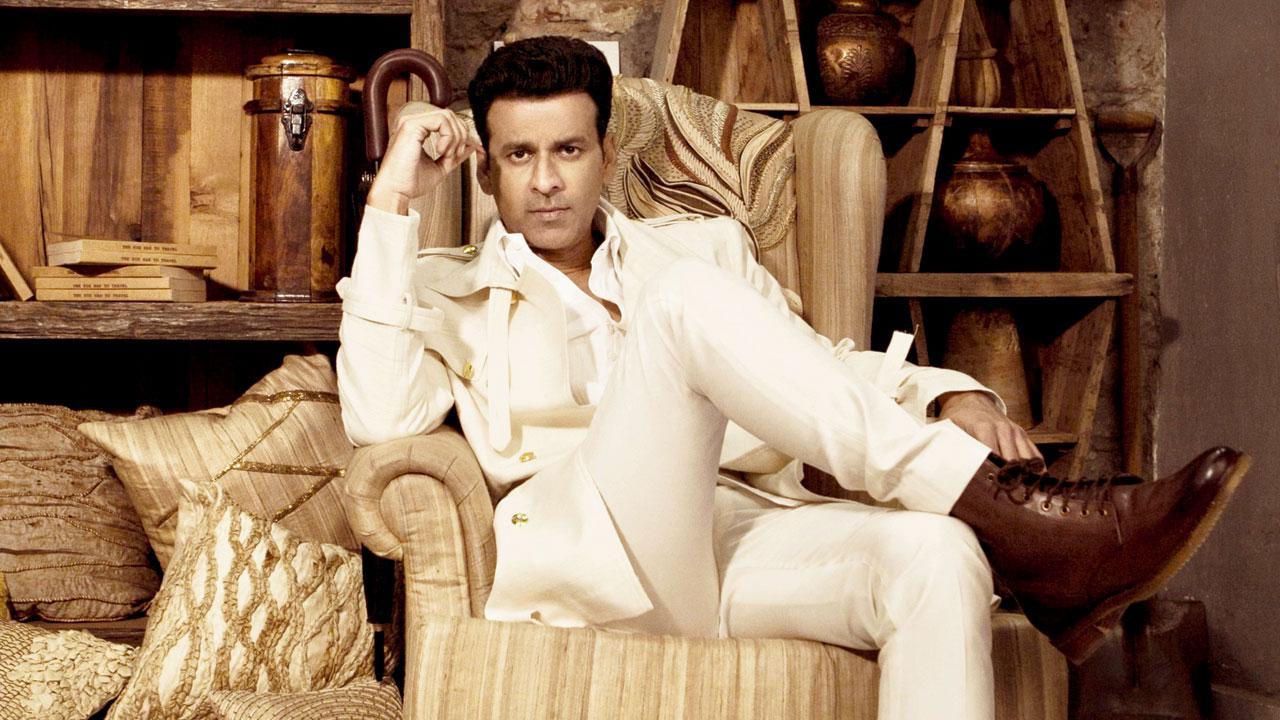
Manoj recounts his three-week prep in isolation before kicking off shoot for Kanu Behl's Despatch
Mohar Basu (MID-DAY; March 10, 2021)
Manoj Bajpayee dabbled in digital content long before it became a rage. It's hardly surprising then that he has greelit another direct-to-web film, Despatch, directed by Kanu Behl. Buzz is that the actor went on a digital detox, prepping in isolation for three weeks before he began shooting for the film last months.
Refusing to discuss the film's premise, Bajpayee says that he opted for strenous prep as the subject demanded it. "Despite years of conducting workshops in acting institutes and participating in hundreds of them, I felt challenged by the rigorous workshop for this film," he says.
In 2020, he juggled both medium - where Mrs Serial Killer was a Netflix film, Suraj Pe Mangal Bhari became the first Bollywood film to hit screens post the Coronavirus pandemic. The actor says that Despatch's digital premiere doesn't alter his approach to the subject. "Every film I have shot recently will premiere on web though the initial agenda of each movie was to target a theatrical release. But theatres are taking their own time to regain normalcy. OTT platforms are running parallel to theatres and shouldn't be pitted against them. The purpose is to reach as many as possible collectively."
Manoj Bajpayee will also produce and star in long-time collaborator Apurva Asrani's directorial debut. "To me, he is family. I am waiting for him to call me once his final draft is ready."
It is fulfilling as a woman to take up roles like Criminal Justice: Behind Closed Doors-Anupria Goenka
8:05 AM

With a Best Supporting Actor (Series) nomination in mid-day and Radio City Hitlist OTT Awards under her belt, Anupria Goenka says Criminal Justice 2 has started a much-needed discussion on marital rape
Letty Mariam Abraham (MID-DAY; February 3, 2021)
Criminal Justice: Behind Closed Doors bravely brought to light the different forms of abuse against women. If it tackled marital rape through Kirti Kulhari’s track, the series, through Anupria Goenka’s character, depicted how emotional abuse and childhood trauma can leave a deep impact on the strongest of us. Goenka shone bright in the second edition as her Nikhat Hussain evolved into a clever and compassionate lawyer.
Thrilled to be nominated in the Best Supporting Actor (Series) at the mid-day and Radio City Hitlist OTT Awards, she gives credit to Apurva Asrani’s nuanced writing. “He brought a string of successful women and showed how patriarchy hit us all. He showed how even a liberal man like Madhav Mishra falls prey to it, without realising it,” she says. As part of prep, she spoke to female lawyers to understand their approach towards cases involving women.
In the past few years, Goenka has bagged pivotal roles in Tiger Zinda Hai (2017) and War (2019). But the Disney+ Hotstar series remains the closest to her heart. “It is fulfilling as a woman to take up such roles. [Domestic abuse] is not only prevalent in Tier-2 or Tier-3 cities, but also in urban set-ups. We hoped that our project would bring about some change or start a discussion at least. I realised the show’s [power] after I received messages from survivors [who could relate to it].”
Did you know?
Nikhat’s character doesn’t feature in the original British series.
Cast your vote for the Hitlist OTT Awards
0 Anupriya Goenka has been nominated for Best Supporting Actor (Series) for Criminal Justice: Behind Closed Doors.
The other nominees are:
- Maanvi Gagroo: Four More Shots Please 2 (Amazon Prime Video)
- Neena Gupta: Masaba Masaba (Netflix)
- Rasika Dugal: Mirzapur 2 (Amazon Prime Video)
- Sheeba Chaddha: Bandish Bandits (Amazon Prime Video)
- Tabu: A Suitable Boy (Netflix)
- Log on to www.hitlistottawards.com to cast your vote.
- You can also vote via SMS. Send HITLIST <space> category name <space> your choice (a/b/c as on the website) to 57575.
- Voting lines close on February 9.
Tandav bows down; is censorship the way forward for OTT?
8:35 AM

Industry insiders feel it isn’t right to censor digital content, add makers must avoid hurting sentiments
Rishabh Suri (HINDUSTAN TIMES; January 21, 2021)
Censorship: this word, of late, has been creating headlines. First, it was films, now, it seems to be OTT content as well. The latest instance is Tandav, the web show starring Saif Ali Khan in the lead and set against the backdrop of Indian politics. One scene that drew ire shows actor Mohd Zeeshan Ayyub playing a modern-day Lord Shiva in a college play. Netizens have alleged it hurts religious sentiments. Another scene involves characters played by Anuup Sonii and Sandhya Mridul, talking about caste. The outrage forced the makers to issue a statement, agreeing to “implement changes”. Does this point towards censorship being the way forward for OTT?
Actor-filmmaker Renuka Shahane, who directed the film Tribhanga recently, is against censorship, but says, “You can’t curtail any kind of outrage that happens these days. But I have to say that as makers...one should not put out anything that hurts anybody’s religious sentiments.”
In the recent past, shows such as A Suitable Boy and Ashram too have been accused of hurting sentiments. Vani Tripathi Tikoo, Central Board of Film Certification (CBFC) member, says she has often argued that the lens of film certification should not be used for OTT. “Theatre viewing is a collective exercise, and watching OTT more personalised. But in Coronavirus times, families have been sitting and watching them together,” she says.
Adding while we shouldn’t be censoring, she says, “Some countries have a code and industry standard for digital content. You can’t dissociate from that responsibility in a hyper sensitive democracy like India.”
Telling the story in the right way is what people are emphasising on. Joining the list is Apurva Asrani, who’s written films such as Aligarh (2015), Shahid (2013) and the latest season of the web show Criminal Justice. He says, “In a democracy, you should be able to tell your story. Someone with another point of view has the right to counter that with a story told in a similar format.”
Pritish Nandy, producer of the show Four More Shots Please! says when the state backs a point of view, generally “most people fall in line”. He elaborates, “It does not mean what they are doing is right, it means people do not want to face the consequences of taking on the might of the state. If India wants to compete in that challenging, creative space, it must learn to do with minimal censorship.”

Subscribe to:
Posts (Atom)