Showing posts with label Apoorva Mehta. Show all posts
Showing posts with label Apoorva Mehta. Show all posts
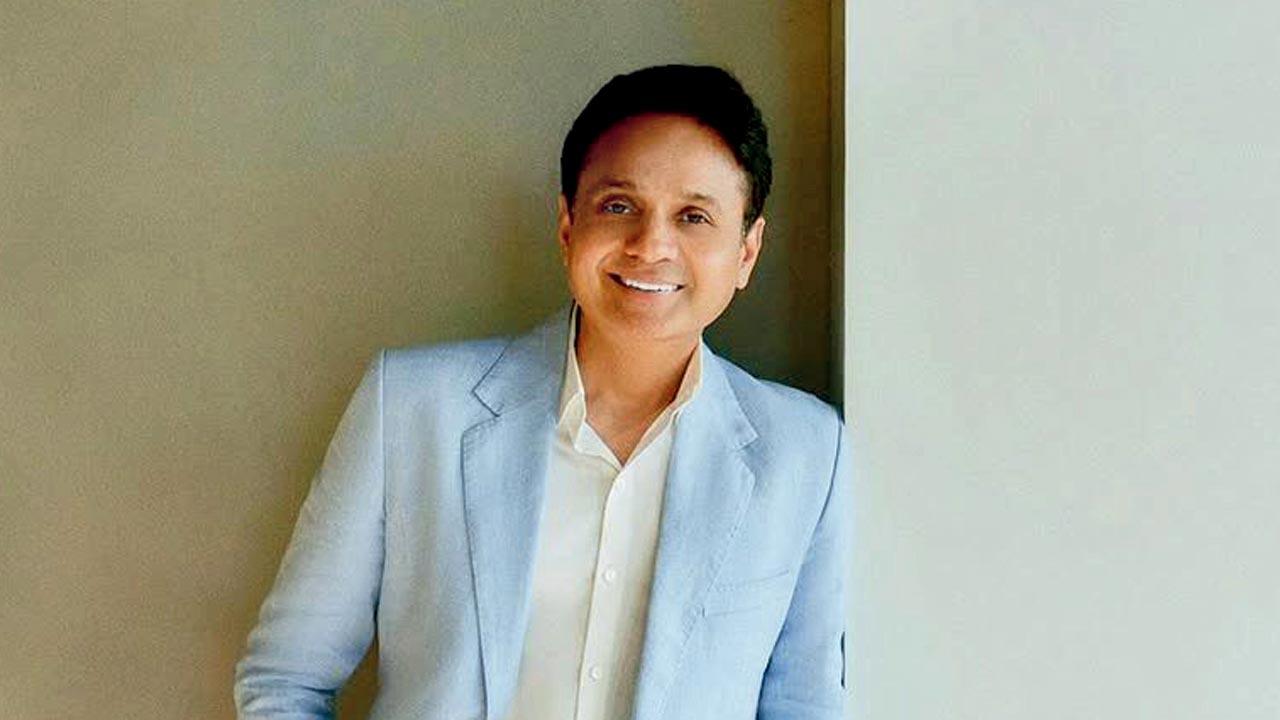
Apoorva Mehta opens up about Homebound Oscar campaign strategy: "We plan to go all out in January"
10:15 AM
Priyanka Sharma (MID-DAY; December 18, 2025)
Just a little past midnight on Wednesday, the team of Homebound in India received a news alert worth losing sleep over. Director Neeraj Ghaywan’s friendship drama, which was among the 86 contenders for the Best International Feature Film at the 98th Academy Awards, had secured a spot in the shortlist of 15. When mid-day reached out to Apoorva Mehta, co-producer of the Ishaan Khatter and Vishal Jethwa-starrer, he said that it is both a moment of celebration as well as the time to chart out the campaign’s next phase before the final five nominees are announced on January 22.
Before the voting lines close on January 15, participating voters — that consist of members of the Academy of Motion Picture Arts and Sciences — will view all shortlisted films before choosing the final five.
The key, Mehta said, is to tap the new voters who haven’t participated yet. “You have many new voters. So, the key is to make the film more visible to them; have more people see the film and hopefully they will spread the word,” he said.
In the first leg of the Oscar campaign that began from November, producers Karan Johar and Mehta held screenings in Los Angeles, New York, and London, while also hiring award consultants to raise awareness about the film. It’s time to do more of the same. Despite the four-week window, things will gain momentum only in the last two weeks, stated Mehta.
“Nobody [the competitors] will do anything this week because the holidays will start soon. We plan to go all out in the first two weeks of January. [Our strategy] will be a mix of screenings, PR, press, and advertorials. We will again travel to Los Angeles and New York with Homebound. Nobody can tell you how many registered voters watched it in the last month. You don’t even know who is registered [to vote] in the international category. So you have to depend on publicists [for that].”
An aggressive Oscar campaign needs a robust budget. When asked about assigning budget for the next leg, he said, “That’s what we’re working on now.”
Dharma Productions takes full control of talent JV after split with Cornerstone
9:02 AM

Javed Farooqui (THE ECONOMIC TIMES; December 12, 2025)
Mumbai: Dharma Cornerstone Agency, the joint venture between Karan Johar’s Dharma Productions and Bunty Sajdeh’s Cornerstone Sport and Entertainment, has been restructured, with the two partners opting to pursue independent strategies, according to people aware of the development. The split has been amicable, they said.
As part of the restructuring, Dharma is buying out Cornerstone’s 45% partnership interest in the talent management LLP. With this acquisition of Cornerstone’s entire contribution and economic rights, Dharma will assume full control and ownership of the limited liability partnership, the people said.
Financial terms of the arrangement weren’t available.
The agency represents actors including Janhvi Kapoor, Sara Ali Khan and Tiger Shroff. The talent roster currently housed under the venture is expected to remain with Dharma, which will continue to manage ongoing and upcoming engagements, the people said.
ET could not independently confirm details of the internal arrangements with artists.
The joint venture reported a turnover of Rs 110 crore for FY25, compared with Rs 77 crore in FY24. Net profit at Rs 12 crore was marginally lower than the Rs 14 crore the previous year.
The venture was set up in 2020 with the objective of supporting emerging and established talent by combining Dharma’s content and production ecosystem with Cornerstone’s expertise in talent representation. With full ownership of the agency, Dharma is expected to build a more integrated talent strategy that aligns management, training and development with its film and digital content pipeline, industry executives said.
Dharma Productions chief executive Apoorva Mehta and Cornerstone’s Sajdeh declined to comment.
Executives tracking the sector said consolidation within the talent vertical can enable tighter alignment across casting, long-term career planning and brand strategy at a time when the creator economy and influencer-led IP continue to expand.
Cornerstone will continue to operate independently through Cornerstone Sport and Entertainment, the people said. The company plans to scale its presence across sports, entertainment and digital talent. It manages K L Rahul, Sidhant Chaturvedi, Sania Mirza and Manu Bhaker among others.
People familiar with the matter said the split is cordial and reflects the strategic priorities of both entities as they refine their long-term plans. The people they manage have been informed of the development and Dharma is expected to continue honouring existing contracts and commitments, they said.
The restructuring comes at a time when India’s entertainment landscape is undergoing rapid transformation driven by streaming expansion, social media, and the growth of sports-led intellectual property. The move positions both Dharma and Cornerstone to respond more effectively to emerging commercial opportunities.
The development also coincides with a broader internal consolidation at Dharma. Dharmatic Entertainment, its digital arm, has been merged into the parent entity following Adar Poonawalla’s acquisition of a 50% stake in Dharma for Rs 1,000 crore. The merger, effective April 1, 2025, was aimed at streamlining operations and preparing the studio for its next growth phase.
Explained: What the Rs 1000 crore deal means for Karan Johar and Adar Poonawalla
8:47 AM
Arijit Barman and Javed Farooqui (THE ECONOMIC TIMES; October 22, 2024)
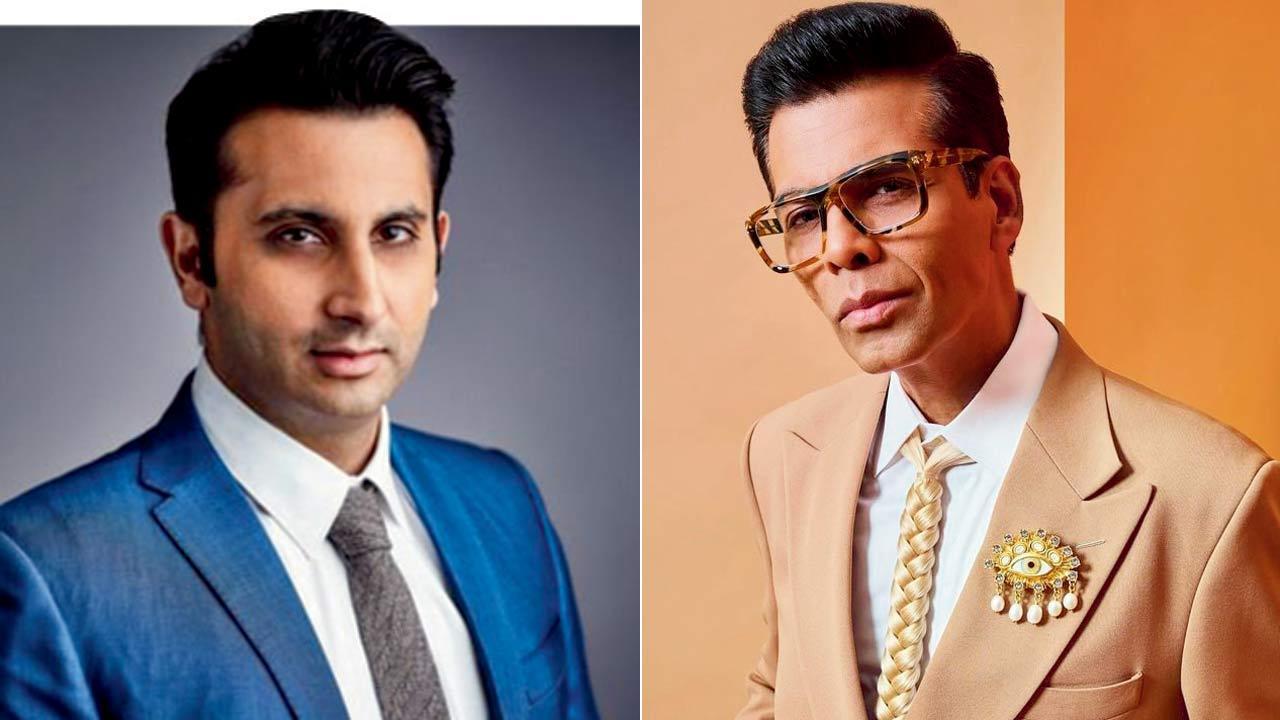
Billionaire vaccine maker Adar Adar Poonawalla, CEO of the Serum Institute of India, is picking up a 50% stake in Dharma Productions and Dharmatic Entertainment, for Rs 1000 crore, valuing Karan Johar’s film and television production and distribution flagship at Rs 2000 crore, further underpinning the ongoing flurry of consolidation in the entertainment industry.
ET broke the story online on Monday morning, ahead of a formal announcement.
Poonawalla’s is making this investment in his private capacity through Serene Productions. Dharma will retain the residual stake with Johar continuing to remain as the creative spearhead of the company, as Executive Chairman. Apoorva Mehta remains the Chief Executive Officer.
Dharma is owned 90.7% by Karan Johar and 9.24% by his mother, Hiroo.
“I do foresee consolidation in this industry. Internationally, we've seen a lot of consolidation due to new content creation methods and distribution channels,” Poonawalla told ET. “With the evolving landscape of content production and distribution, I see significant potential for such partnerships both internationally and nationally.”
The key factor that led to stitching together this alliance is Johar retaining creative control while partnering with a deep pocket family he is familiar with. The Poonawalla investment will help the production house with enough financial muscle to navigate the fast-changing demands of digitally savvy consumers who are often digital natives. The investment will also boost Dharma’s efforts to double down on content for new platforms and formats while continuing to deliver interesting stories for a global audience.
“This partnership will help us create more verticals within the organization and allow us to take creative chances. This gives us the bandwidth to expand Dharmatic Entertainment and create much more in the digital domain,” added Johar. “It also allows us to capture a lot of value in the value chain which comes with owning IP and catalogue – we have already been doing that and hope to double down on it with this capital.”
Film production is a volatile business with earnings linked to box office successes of films. Major Hindi film production houses, including Dharma, have been cautious in greenlighting new projects due to the unpredictable nature of the box office, which also impacts the value of streaming and satellite rights, ET had reported on October 14.
Johar said, the company’s attempts will be to increase the value and create more content. “We aim to produce a higher volume of films with this partnership compared to what we're currently doing. With shrinking audiences and an overreliance on streaming rights, Johar feels a strategic business shift is already underway. “Mid-budget films are the backbone of the film industry's economics, and we need to explore this segment further, alongside our tentpole productions, to create a more diverse and sustainable portfolio of films,” he said.
CHANGING DYNAMICS
The industry is experiencing major upheavals due to shifting consumer preferences, influenced by exposure to global content and the increasing dominance of on-demand consumption in urban areas. Additionally, the economic model is strained, with star salaries often consuming up to 70% of a film’s budget. Consolidation on the demand side, with the emergence of large broadcasters, streaming platforms, and multiplexes, is also putting pressure on content companies like Dharma. Satellite rights, once a steady revenue stream, have plummeted to historic lows, and the value of streaming deals, which was funding movie costs in many cases, is being corrected, further straining the economics of the film business.
In the theatrical space, multiplexes now dictate a film’s success, contributing an estimated 60–70% of Hindi films' box office revenue, while single-screen theaters continue to struggle. Post-COVID, many viewers prefer to wait 8–10 weeks to watch films on OTT platforms, leading to reduced footfall in cinemas.
Some industry players are already contemplating profit share model or box office linked payouts to offset rising star costs. “It's essential not to overload our above-the-line costs. While we respect actors' talent and craft and want to pay what's fair, all artists must understand the current challenges in the entertainment industry. There's enough potential in big films for everyone to gain,” said Johar.
Dharma has been actively seeking investments for a while and had engaged in talks with several large conglomerates and industrialists like Sanjiv Goenka’s Saregama, a company they already have business ties to become part of a cash-rich conglomerate. Some discussions with Reliance Industries and Jio Cinema also did take place.
Raine Group was the advisor to the deal.
Dharma Productions posted a nearly fourfold surge in revenue to Rs 1,040 crore in FY23, from Rs 276 crore the previous year. Net profit, however, fell 59% to Rs 11 crore due to a 4.5-times rise in expenses at Rs 1,028 crore, according to the company's latest available financial data accessed from Tofler. In FY23, the company earned Rs 656 crore from distribution rights, Rs 140 crore from digital, Rs 83 crore from satellite rights, and Rs 75 crore from music. This compares with earnings of with earnings of Rs 19 crore, Rs 167 crore, Rs 34 crore, and Rs 21 crore from these streams, respectively, in FY22.
HITS & FLOPS
Founded by Johar’s father Yash Johar in 1976, with its first venture starring Amitabh Bachchan in a film called Dostana, Dharma has been led by Johar and his team since his father passed away. Johar directed his first movie at 25, ‘Kuch Kuch Hota Hai’, and has gone on to produce close to 50 Bollywood including hits like 'Kabhi Khushi Kabhie Gham, Yeh Jawaani Hai Deewani, 2 States, Kapoor & Sons and Dear Zindagi’. Seen as a launch pad for several young actors, many from well-known film families like Allia Bhatt, Varun Dhawan, Janhvi Kapoor, Ishaan Khatter and Ananya Pandey among others. In 2018, the company launched Dharmatic Entertainment to diversify and create original content for global streaming platforms and has worked with global OTT platforms like Netflix and Amazon Prime to create and produce shows like “The Fabulous Lives of Bollywood Wives”, “Call Me Bae”. From blockbuster films Johar was also among the first of his peers to migrate to multi-media himself, becoming a chat show host for the popular Koffee with Karan show.
----------------------------------
Dark horse vaccine baron beats biggies for a 50 per cent stake in marquee Bollywood production house
Priyanka Sharma (MID-DAY; October 22, 2024)
Serum Institute of India CEO Adar Poonawalla-led Serene Productions on Monday said it will pick up a 50 per cent stake in Karan Johar’s Dharma Productions and Dharmatic Entertainment for Rs 1,000 crore.
The past few months had witnessed speculation in the entertainment industry that Karan Johar was planning to sell a stake of Dharma Productions. Saregama and Reliance were said to be frontrunners.
With this deal, Poonawalla—the CEO of Serum Institute of India (SII), and Chairman of Poonawalla Fincorp—is foraying into entertainment through his Serene Productions.
The deal, which sees Karan retaining his position as the Executive Chairman and Apoorva Mehta as the CEO, is being viewed as a win-win for both parties. In terms of numbers prima facie, this deal values Dharma— which includes its digital arm, Dharmatic Entertainment—at Rs 2,000 crore. Sources say it is an optimistic valuation.
An insider says, “Karan has got a good valuation. Technically, Dharma’s revenue fell by 50 per cent in the last financial year. In 2022-2023, its revenue was said to be at Rs 1,000 crore. Brahmāstra: Part One—Shiva [2022] was a major contributor to the profit. However, in 2023-24, even though the company witnessed a spike in its digital and music earnings, its total revenue had a 50 per cent drop as it did not have a blockbuster. But Adar has invested in the company, looking at its equity and Karan’s creative might. A part of the Rs 1,000-crore investment will be directed to the original investors—Karan and his mother Hiroo Johar—while the remaining will be allocated towards production.”
For Poonawalla, who has long been friends with Karan, it is a strategic investment as it gives him a significant stake in the media industry. Another source breaks it down, “For Adar Poonawalla, it’s a great diversification after dominating the pharmaceutical and financial sectors. This move will bring corporate culture into the corridors of Dharma. All the heavy lifting that Karan and Apoorva had been doing, in terms of cost management, will now be delegated.”
As is the norm with such deals, the company is expected to undergo restructuring. “Some of Adar’s people will take key positions at Dharma, and there will be a lot of lay-offs,” says another source.
It is understood that the roles will be clearly divided in the 50-50 partnership. Decades after his filmmaker-father Yash Johar founded Dharma in 1976, Karan took the company to new heights with his vision. He not only helmed many blockbusters—from Kuch Kuch Hota Hai (1998) to Student Of The Year (2012)—but also backed many directors, becoming something of Bollywood’s big daddy.
“Now, Karan will spearhead the company’s creative operations and lead it from the front. Adar wants to stay away from the creative aspect. So, everything related to films will be handled by Karan, including the star fees and the budget on which a film is to be mounted. Adar will look at the operational aspects, probably telling him how much money can be spent on the workforce, how much bonus to be given, and so on.”
The equal partnership that Poonawalla’s deal afforded was one of the reasons why Karan inked the deal. In contrast, Saregama, owned by Sanjeev Goenka, and Reliance Industries were reportedly in the bidding war to buy a majority stake in Dharma.
A source reveals, “Saregama was willing to acquire the stake for Rs. 800 crore. Adar outbid both the players. But another crucial reason is that neither of those giants would have gone into a 50-50 partnership. It has been seen historically that Reliance eventually acquires the companies it buys stakes in.” The partnership is being viewed as a huge boost for the Hindi film industry, which has been struggling since theatres reopened after the pandemic-induced shutdown.
When pharma meets films
- Adar Poonawalla is the CEO of Serum Institute of India, the world’s largest vaccine-producing company in terms of volume, which produced Covishield in India. He is also the Chairman of Poonawalla Fincorp.
- The Rs 1,000-crore investment in Dharma Productions marks the pharma tycoon’s foray into the entertainment industry with Serene Productions.
- In the 50-50 partnership, Karan Johar will retain his Executive Chairman position and spearhead the creative operations. Apoorva Mehta will continue as the CEO.
- Part of the investment will be directed to the original investors—Karan and his mother Hiroo Johar—while the remaining will be allocated towards production.
- Saregama and Reliance Industries were said to be in the bidding war to buy a majority stake in Dharma.
The OTT business is really the IPL of content-Sameer Nair
8:25 AM
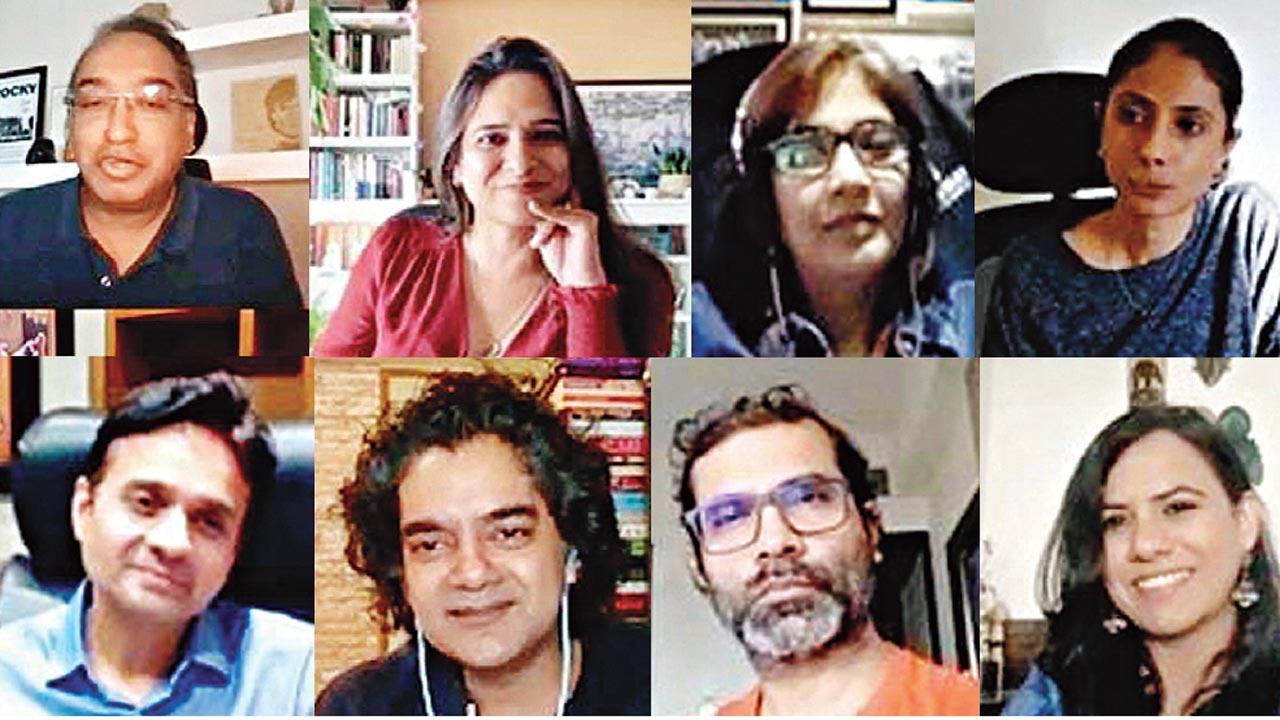
(Clockwise from top) Sameer Nair, CEO, Applause Entertainment; Nimisha Pandey, Chief Content Officer, Hindi Originals — Zee5; Madhu Bhojwani, partner, Emmay Entertainment; Pratiksha Rao, Director — films and licensing, India, Netflix; Aparna Purohit, Head, India originals, Amazon Prime Video; Arunabh Kumar, Founder TVF; Mayank Shekhar, Entertainment Editor, mid-day; Apoorva Mehta, CEO, Dharma Productions and Dharmatic
In the OTT head honchos’ huddle, ahead of Hitlist Awards, India’s top content bosses delve on the changing scene
Mayank Shekhar (MID-DAY; February 25, 2022)
Not that you can time this—a day before the Hitlist Awards’ OTT head honchos’ huddle took place over a zoom call, with India’s top content bosses, Netflix founder Reed Hastings dropped a truth bomb elsewhere.
Of all major markets, Reeds reckoned, Netflix was yet to convincingly crack India. Social media handles took off thereafter, throwing up suggestions on what Netflix must do, where it had gone wrong — a swarm of SWOT analyses, if you may.
Sameer Nair (Applause Entertainment) feels this is like offering boxing lessons to Mike Tyson, going through a purple patch: “Netflix are the leaders of how streaming business is done. And India has always been a complicated, hungry, but value-conscious market, that’s also tasted blood during the pandemic. Even cable TV is pathetically cheap at $3 a month here. Everywhere else, it’s $20-30. Satellite TV has 200 million viewers, OTT platforms are at 30-40 million. We talk of ‘cutting the (cable) cord’ — why bother; it’s just there!”
Pratiksha Rao (Netflix India), on the other hand, takes this barrage of unsolicited, social-media advice rather sportingly, terming it a “huge privilege that people think of brand Netflix as passionately. We see ourselves as creative enablers, partners for as diverse stories as we can, to also make them travel globally,” besides offering global (original) content on the platform itself.
To be fair, as per estimates, Netflix holds about 5 per cent of the Indian OTT market; its revenue-share stands close to 30 per cent. There are, currently, about 75 OTT platforms in India. And of the 225 fresh shows streamed in 2021, 170 of them were in Hindi alone. A certain level of segmentation has obviously taken place in an industry that’s at best about five years old.
Nimisha Pandey (Zee5) reveals her platform delivered 40 pieces of original content (series/films) in 2021: “We plan to focus more on quality.”
Aparna Purohit (Amazon Prime Video) agrees her mandate isn’t quantity either. Given that the streaming service is part of an overall shopping mall. “The pressure is to put out something that constantly raises the bar—becomes part of cultural zeitgeist, water-cooler conversations; whether that’s Paatal Lok or Mirzapur. That’s not easy pressure; even as we placed 18 shows and 50 films across languages (in 2021).”
With its own captive subscriber/audience base, the OTT can be deemed as the new star-system for Indian entertainment. They unilaterally green-light scripts—for films, and shows that are shot like cinema. And, in return, receive both immense love and instant criticism for the choices they make.
Speaking of the star-system, which is directly related to theatrical entertainment—whatever happened to Bollywood, as it were, that took a beating from both Hollywood (Spider-Man), and down South (Pushpa, which collected Rs 80 crore among Hindi audiences alone)?
A contention behind this threat to Bollywood being that most of Mumbai’s top, traditional producers have turned into vendors for OTT platforms in the process.
Apoorva Mehta (Dharma Productions, which pretty much equals Bollywood) reasons, “Theatrical is the cornerstone, that’s where the heart lies. The South is filling a gap. Very few Hindi filmmakers, like Rohit Shetty, are great with delivering scale plus entertainment.”
The other unsung aspect of the nascent, theatrical dominance of the South in Hindi markets, as Arunabh Kumar (TVF) points out, is serious upgrade in the quality of Hindi dubbing, subtitling and translation—something that wasn’t adequately appreciated for Allu Arjun’s Pushpa.
Of course television, more so OTT platforms, and Internet access in general, have had a role to play with audiences sampling cinema/content/stardom from all over, other Indian languages included.
As for his own Hindi films, Mehta says he had to make do with the war-tentpole Shershaah (2021) on Amazon Prime Video (APV), because they had held on to it for over a year since the pandemic: “We couldn’t miss out on August 15.” Also, one’s not sure anymore what the response to a mid-range production like Gehraiyaan (also on APV) would be in a theatre: “There’s a skew towards larger than life, experiential entertainment.”
What’s the unlearning, when film studios enter the streaming fray? How are the OTT and film industries different? Bollywood producer Madhu Bhojwani (Emmay Entertainment), who delivered 10 OTT titles in 2021 (including Empire and Mumbai Diaries 26/11) likens the two financial worlds to farming and hunting. Wherein the OTT industry promises a predictable return on an input cost: “There is a cap on how much you can make.”
“The up-side, even once you dilute stakes on the intellectual property of a film,” depends on performance in theatres: “Films are like the races.”
The other changing dynamic between the two industries is again, of course, the star-system itself. Lead actors in Bollywood are notorious for cornering as paycheck a bulk of the film’s budget. Do they matter on OTTs anymore?
TVF’s Kumar says streaming platforms are democratic, in the sense that they don’t grade content on your device, based on who’s in it. The library is near infinite (for a lifetime anyway). Unlike network television, where you can only watch a show at a time; and theatres, that can only play a certain number of films.
Can’t deny the initial buzz, though, that a show/film on an OTT is likely to generate, given a legacy star in it. Rao from Netflix is clear, “The script and the creator’s vision are most important in assessing a project, yes. There is still a commercial value attached to the power of big talents, who have built a filmography and fan base, over years. While they have to deliver that value, they also have to be used the right way, as we’ve done in the US. [Conversely], you can have a [Malayalam super-hero film] Minnal Murali that generates its own fandom. The film didn’t have a big star. But [Tavino Thomas] became a national heartthrob after.”
The equivalent of the box-office, the barometer for cinema stardom, isn’t clicks on OTT platforms, as Pandey from Zee5 points out: “The click is just a vanity metric. Sampling does no good. Once you have clicked—how long you have stuck with the content matters more in the long run.”
And this is why, according to APV’s Purohit, “There is no rush. You don’t have to prove a success of a film or series over a weekend [unlike box-office]. The audience surprises us eventually.”
The reason OTT platforms are seen as parallel to the film industry, rather than television—despite the disproportionate size of screen—is clearly for the budgets involved. And indeed the cross-pollination of talents that have taken place over the past half a decade.
Unlike the US, that moved towards limited edition, quality series back in the late 1990s, Indian network TV continued to appeal to mass markets, chiefly with long-running soap operas, with little incentive to do much else. “This is India’s HBO moment,” Nair from Applause, reckons.
Having been part of all three worlds, how does Nair perceive these industries separately? He says, “There are various ways to describe it. One that I find useful is to take the movie business as playing for the national cricket team—11 players from a billion plus. Fiction on TV is domestic cricket. Those in it hope to make it from thereon. The OTT business is really the IPL of content—involves both domestic and international players, with quality on display; everybody gets their moment under the sun.”
In the food-chain on the Internet, there is in fact another competitive level, below the IPL of content. Which is where TVF’s Kumar progressed from, on a free-for-all YouTube, making spoofs and branded content—starting out with a sketch called Rowdies in 2012, peaking with Kota Factory, the second season of which made it to Netflix.
In 2022, Kumar asserts, “The lot on YouTube from a decade ago are presently subscribers of OTT platforms. That’s the cascading effect. Likewise, there’s a whole new world of 18-year-olds consuming short videos on YouTube now, that we also make content for—being the only collective from the old lot that continues to.”
This content economy is also a creator economy. Everyone is an aspirant, with an idea for a feature, short, or series; displaying talents all-day, online. Many of whom, we figure, might be interested in a conversation with these OTT bosses.
All of whom suggest their inboxes are open for new ideas. Kumar however warns the idea alone is hardly as important as the rigour and effort behind detailing a plan that ought to be 5,000 pages, minimum: “An idea means nothing. I’d value discipline over talent, any day.”
There’s also the ‘bible’, which Zee5’s Pandey defines as an elaborate presentation of sorts that captures the treatment of an idea/story, sometimes visuals included.
Whether it’s a bible or story synopsis, what’s essential, says Rao for Netflix, is “if you’re able get out, what’s in your head. Focus on explaining the story, and its emotions. Instead of saying, this is the ‘best’, or it’s India’s version of xyz!” In case you were searching for a favoured genre to sell, APV’s Purohit makes it public: she is actively on the lookout for young adult fiction.
A safe area, no doubt. Given OTT is no more quite the brave new world it used to be, only until a year back—what with the government putting in place an indisputably draconian censorship law, skewed towards accepting complaints from any viewer of an OTT platform, to be acted upon by a three-tier crime and punishment system.
Bhojwani is part of the government’s second-tier committee, that comprises industry folk and members of civil society—the first is the OTT platform itself; the third tier involves multiple Union ministries.
Bhojwani says, “Since this grievance-redress council was put in place, a lot of complaints have come in. But it’s been okay, working, so far.” So far, being the essential rider. Mehta at Dharma is taking no chances, getting scripts vetted by legal teams, desisting from anything that spells potential trouble.
Although Nair—who recently got away with Danish Sait’s smart political satire, Humble Politician Nograj—reasons, you gotta do, what you gotta do: “Creators both reflect and hold mirror to society—telling stories you’re not meant to; finding ways to. All great art progresses on these fundamentals. A danger bigger than censorship, is self censorship.”
There is a moment of silence at this point from the OTT platform bosses in this huddle. Well. Understandably so.
One pick of 2021
Sameer Nair: Jerry Seinfeld’s stand-up special, 23 Hours To Kill (Netflix)
Madhu Bhojwani: Mini-series, Dopesick (Disney+ Hotstar)
Apoorva Mehta: German multi-part series, Dark (Netflix)
Nimisha Pandey: TVF series Aspirants (YouTube)
Arunabh Kumar: English-Japanese thriller film, Kate (Netflix)
Aparna Purohit: Cop investigative series, Mare of Easttown (Disney+ Hotstar)
Pratiksha Rao: The Morning Show, Season 2 (Apple TV)
Cast your vote for the Hitlist OTT Awards
Log on to www.radiocity.in/hitlistawards to cast your vote.
You can also vote via SMS. Send HITLIST <space> category name <space> your choice (a/b/c as on the website) to 57575.
Voting lines close on March 18.
Images: Shershaah trailer launched amid Kargil Vijay Diwas celebrations
7:59 AM

BOMBAY TIMES (July 27, 2021)
Amazon Prime Video launched the trailer of the much-awaited Amazon Original movie Shershaah in Kargil at the Kargil Vijay Diwas celebrations as a tribute to Param Vir Chakra-awardee Captain Vikram Batra and the Indian Armed Forces. The annual celebrations held to honour the heroes of the Kargil War (1999) served as the ideal stage to unveil the trailer of the film. The event was attended by Sidharth Malhotra, Kiara Advani, director Vishnu Varadhan, producers Karan Johar and Apoorva Mehta, and Vijay Subramaniam, Director and Head, Content, Amazon Prime Video. The film is jointly produced by Dharma Productions and Kaash Entertainment and will premiere globally on Amazon Prime Video on August 12 across 240 countries and territories.
Shershaah, which is inspired by a true story, features Sidharth in the title role. The trailer of the film celebrates the bravery and gallant spirit of Captain Vikram Batra (PVC) and honours his sacrifice during the Kargil War. It is the story of a soldier who not only became an inspiration, but also a legend for generations to come. Staying true to his codename, ‘Shershaah’, Captain Batra fought till his last breath in one of the toughest mountain warfare missions.
Vijay Subramaniam says, “Shershaah is our effort to bring to life the remarkable story of a braveheart who led one of the most difficult mountain warfare in history and fought valiantly to bring victory to India during the Kargil War. There would’ve been no better place for us to unveil the trailer for Shershaah than in the honourable company of the Indian Army and no better occasion than the celebrations marking India’s victory in the Kargil War. We are thrilled to partner with Dharma Productions and Kaash Entertainment for bringing this captivating story to our viewers in India and abroad.”
Karan Johar adds, “I feel privileged to be able to bring this momentous film, which celebrates the valour of Kargil War Hero, Captain Vikram Batra. My heart is filled with respect, it is an honour to unveil the trailer of our film amidst the Indian Armed Forces at the Kargil Vijay Diwas celebrations in Kargil. We are thrilled to have Shershaah premiere on Amazon Prime Video to a global audience.”


Vishal Batra, Shabbir Boxwalla, Vishnu Varadhan, Sidharth Malhotra, Chief of Defence Staff — General Bipin Rawat, Vijay Subramaniam, Kiara Advani, Apoorva Mehta, General Officer Commanding-In-Chief, Northern Command — General YK Joshi, and Karan Johar
Sushant Singh Rajput case: Kangana, Dharma Productions CEO summoned; Mahesh Bhatt to record statement next
5:40 PM

BOMBAY TIMES (July 27, 2020)

“Mahesh Bhatt’s statement will be taken. Kangana Ranaut has also been summoned. Whoever is needed, we will summon,” Deshmukh told the media. On being asked if Johar himself would be summoned, the minister replied, “Karan Johar’s manager has been summoned, and if needed we will summon Karan Johar as well.” News reports later verified it was Mehta, CEO of Johar’s production house, who had been summoned recently. The statement of Johar’s manager, Reshma Shetty, has been recorded earlier.
Sushant Singh Rajput and Jacqueline Fernandez starrer Drive might be released in Israel
7:24 PM

Bharati K Dubey (DNA; January 25, 2018)
Dharma Productions is probably the first Bollywood production house to shoot in Israel. They have shot their upcoming film Drive, directed by Tarun Mansukhani, which stars Sushant Singh Rajput and Jacqueline Fernandez in the Middle East country. Dharma CEO Apoorva Mehta speaks about Israel and his plan to have a theatrical release there.
What prompted you to shoot Drive in Israel?
I believe we are the first production house to film there. The narrative of Drive needed a certain portion to be shot abroad. Our director Tarun was looking for a location that offered all the cinematic trappings in one place — a scenic city scape, frisky beaches and location that was a blend of cultural heritage and the affluence of modern city. Our executive producer was in touch with the Tourism minister, who told her that we could look for Israel as an option.
There are reports that you will shoot Brahmastra there as well...
No, we are not going back to shoot for Brahmastra, but we are working with one person residing in Israel. He is Ido Portal, a holistic movement specialist, who is helping us with the styling for Brahmastra. We shot a dance-and-song sequence, which turned out to be a wonderful experience. We were very impressed with the way things were planned and laid out for us, so everything went off smoothly.
But do Bollywood films release in Israel?
There was a time when films did release in Israel. I remember meeting the distributor, but I think mostly the releases were on TV. Israel is a small territory and they are still not ready for it.
Do you intend to have a theatrical release of Drive?
There is a thought to release Drive in cinemas in Israel. We will definitely work around it, if we have somebody who can support us there. We will work with the Consul General and the Tourism Minister.
Film industry to appeal to Tamil Nadu Govt to review tax on non-Tamil films
9:40 PM

Bharati Dubey & Subhash K Jha (DNA; October 2, 2017)
The Hindi film industry is going through tough times, reeling under the impact of fewer hits and big-budget films failing. Amidst this, the Tamil Nadu government has slapped local body tax on the Hindi films. As per the new notification, non-Tamil films need to pay 20 per cent local body tax from this week. The film industry is unwilling to accept this burden, and plans to make a representation to the TN government. The concern is that other states will follow suit, further damaging the industry that has had a terrible year at the BO. Distributor Ramesh Sippy says, “Today, TN has levied this tax and if we don’t object, other states like Rajasthan, Bengal and Andhra Pradesh will do the same. We don’t need to look at the value but as a principle, we cannot allow this to happen to us.’’
High tax rate
Producer Ramesh Taurani says, “What has happened is unfair to us and we’ll be making a representation to the TN government soon.’’ Hindi film industry is already paying an entertainment tax of 48 per cent and an additional 28 per cent of GST. Kulmeet Makkar, CEO, Indian Film and Television Producers Guild says, “The additional tax would mean that audiences in Chennai will now have to pay 53.6 per cent as an effective gross tax on tickets for non-Tamil films. How can an industry survive with tax at this rate? Unless the state government wants to ensure that either the TN film industry is forced to shut down or the attempt is to make sure the audience in Chennai is deprived of films in other languages.’’ Apoorva Mehta, CEO, Dharma Production, adds, “I think this is not correct because the idea of GST was that it would be the one and only tax that’ll prevail. The film industry is already going through pressures in terms of the number of films that are doing well, this is only going to burden the whole business of films and everyone involved. This is something that needs to be avoided completely.”
A meeting soon
President of the South Indian Film Chamber of Commerce, L Suresh, said that Tamil films have to pay 10 per cent local body tax and they’re upset with the government, too. He said, “We are convening a meeting on Wednesday to request the government to withdraw this notification.’’
Will hamper footfalls
While the film industry plans to make a representation, some film trade people say that TN is not a big territory and one should not bother as it’s only five per cent business, and films with big star cast run in cinemas in that state. Unless they’re dubbed, the business is not big. T P Aggarwal says, “South Indian states had a cap on ticket pricing and it was affordable to everyone, but after additional taxation, the rates will go up and affect footfalls. As an industry, we’ll come together and fight against this. If we don’t resist, other states will also do the same. As it is, films are not doing well, and now, the local body taxation.”
Films that will suffer
“The Hindi industry must take a cue from this and put ideas together for its own benefit and protection. We’ve seen that governments do little to protect or promote us; it’s time we looked after ourselves and made sure governments did too,” stresses Anubhav Sinha. Films up for release in the coming months — Golmaal Again, Secret Superstar, Tiger Zinda Hai and Padmavati — will be affected.
Shailendra Singh: United we stand, divided we fall. This move makes this even truer. Why use entertainment as a political agenda? Sad new low in political strategy.
Nishikant Kamat: It is unfortunate... art should be above languages and provinces. It might instigate other states to emulate.
Sheetal Talwar: It’s protectionism at its best. Whereas Tamil cinema has its strength in the quality and style of storytelling, there is no reason that English, Hindi and Telugu cinema should not be given equal opportunity in a state where cinema and cinema viewing is a religion.
What makes Tanishk Bagchi Bollywood's go-to guy for recreated versions of '90s hits?
7:29 AM

Avinash Lohana (MUMBAI MIRROR; August 4, 2017)
 The last seven months in Bollywood have been marked by a distinctive
onslaught of remixes of ’90s hits. Shaad Ali recycled A R Rahman’s
foot-tapping composition “Humma Humma” from mentor mani ratnam’s 1995
film Bombay for his Aditya Roy Kapur-Shraddha Kapoor love story OK Jaanu
in January. It was followed by Badrinath Ki Dulhania, which saw Varun
Dhawan and Alia Bhatt borrow tunes and moves from Sanjay Dutt and
Madhuri Dixit’s “Tamma Tamma”. Come March, Abbas-Mustan’s
romance-thriller Machine which launched the former’s son Mustafa, threw
it back to Mohra’s “Mast Mast”. Then, there are upcoming films like
Lucknow Central, Tumhari Sulu, Baadshaho and Poster Boys falling in step
with Monsoon Wedding’s folksy “Kaavan Kaavan”, Sridevi’s iconic “Hawa
Hawaii”, Nusrat Fateh Ali Khan’s ghazal-qawwali “Mere Rashke Qamar” and
Daler Mehndi’s “Kudiyan Shehar Diyan” from Arjun Pandit respectively.
And the name that binds them all together single-handedly is Tanishk
Baagchi.
The last seven months in Bollywood have been marked by a distinctive
onslaught of remixes of ’90s hits. Shaad Ali recycled A R Rahman’s
foot-tapping composition “Humma Humma” from mentor mani ratnam’s 1995
film Bombay for his Aditya Roy Kapur-Shraddha Kapoor love story OK Jaanu
in January. It was followed by Badrinath Ki Dulhania, which saw Varun
Dhawan and Alia Bhatt borrow tunes and moves from Sanjay Dutt and
Madhuri Dixit’s “Tamma Tamma”. Come March, Abbas-Mustan’s
romance-thriller Machine which launched the former’s son Mustafa, threw
it back to Mohra’s “Mast Mast”. Then, there are upcoming films like
Lucknow Central, Tumhari Sulu, Baadshaho and Poster Boys falling in step
with Monsoon Wedding’s folksy “Kaavan Kaavan”, Sridevi’s iconic “Hawa
Hawaii”, Nusrat Fateh Ali Khan’s ghazal-qawwali “Mere Rashke Qamar” and
Daler Mehndi’s “Kudiyan Shehar Diyan” from Arjun Pandit respectively.
And the name that binds them all together single-handedly is Tanishk
Baagchi.Speaking to Mirror earlier (June 6) the 30-year-old composer had been disarmingly evasive as he argued that remixes have been around for a long time, pointing to Shefali Zariwala’s “Kaanta Lagaa”. But Apoorva Mehta, CEO of Dharma Productions which produced OK Jaanu and Badrinath Ki Dulhania, says that recreations come with the pressure of expectations. “But Tanishk’s compositions are fresh, with a vibe that connects with the youth, and simultaneously are a perfect tribute to the original,” he explains.
Shabbir Ahmed, who has worked with the music director on “Tu Cheez Badi Hai Mast Mast” as an additional lyrics writer, raves about his passion and sound quality. “He catches the right musical notes and dances in his seat to get the feel of his tune,” Shabbir laughs at the memory.
Nikkhil Advani, the producer of Lucknow Central, who went a step further and got Tanishk to further remix Arjunna Harjaie’s recreated version of “Kaavan Kaavan” for promotions, had been so confident about the composer’s talent, that he’d been recommending him all over town even before he hit pay dirt. “I think filmmakers are reaching out to him because he has executed so many recreations successfully,” Nikkhil reasons, adding that Tanishk’s original stuff is just as fantastic. He’s just heard two tracks Tanishk scored for Lucknow Central and two more for Baazaar, including “Kem Cho, Majama” for Saif Ali Khan who plays a Gujarati stock broker in the film. “He is not only extremely knowledgeable about music but the way he approaches a song, whether recreated or original, is unique,” Nikkhil avers.
Surprisingly, Tanishk himself isn’t too kicked about recreations. T-Series head honcho Bhushan Kumar who offered him “Mere Rashke Qamar”, also agrees that they should be collaborating more on original music. “But we are here to entertain and it’s a public demand we are fulfilling. I’ve explained to him that he is not just remixing an original track but recreating it. He works really hard on these compositions, changing the tune and even the antaras but retaining the original feel. He is doing a great job,” applauds Bhushan.
Abbas who knew Tanishk even before he entered the film industry says Mustaan and he have several of the youngster’s original compositions. “Since he was doing the entire Machine album we also asked him to recreate “Tu Cheez Badi”. We believe these recreations are making the originals even more popular. Tanishk will compose even for our next which we are currently scripting,” promises the man in white. For his sake we hope that this time he will be allowed to give his own mast mast tunes.
Baahubali to re-release a week before sequel
8:12 AM

Sonil Dedhia (MID-DAY; March 17, 2017)
Fans of SS Rajamouli's Bahubali franchise have been on the tenterhooks after part 1 (2015) ended on a note of supense. However, the sequel's trailer, which was launched yesterday, promises to unlock the mystery to the past year's biggest question —why Kattappa killed Bahubali.
Cashing in on the hype around the second instalment, the makers have decided to re-release part one, a week before the sequel hits screens on April 28. This will be a relief to those who can only vaguely recall the plot of the 2015 film. Confirming the news, Rajamouli said, "I believe very few people missed it ([part 1) but re-releasing the film will pull everyone back into the narrative. We collectively arrived at the decision that it will be great idea to go ahead with a pan-India release."
The South blockbuster was among the most successful outings of the year, even making Rs 600 crore at the box office worldwide. Film co-producer Shobu Yarlagadda says, "The combined budget of both films is Rs 400-450 crore. We didn't earn profits for part one, but are sure of making a lot of money with the second film, which will compensate for the previous outing."
Meanwhile, the sequel's trailer was leaked online hours before the official launch. Apoorva Mehta, CEO-Dharma Productions, promoters of Bahubali 2, said, "It is disappointing and undermines the efforts of the producers, cast and crew. But, it's heartening to see Bahubali fans post messages online, assuring us that they will not promote the leaked content.''
Ae Dil Hai Mushkil release in jeopardy as 4 states shun the film; MNS adamant
3:15 PM

Fearing MNS attack, single screen theatres in four states decide to shun Karan Johar’s Diwali release starring Pak actor Fawad Khan
Bharati Dubey (MID-DAY; October 15, 2016)
In fresh trouble for Karan Johar’s Ae Dil Hai Mushkil, the Cinema Owners and Exhibitors Association of India (COEAI) has decided to suspend the screening of the Diwali release as well as all other upcoming films featuring Pakistani faces. This follows the Maharashtra Navnirman Sena (MNS)’s demand for ban on artistes from across the border in the wake of the Uri attacks.
The decision effectively means Ae Dil... will not be shown in nearly 400 single screen theatres across Maharashtra, Gujarat, parts of Karnataka and Goa. That’s about 25 per cent of revenue loss for the film, trade pundit Amod Mehra estimates.
What’s more, with such hurdles, the multi-starrer’s box office competition — Ajay Devgn’s Shivaay — stands to benefit in terms of screens as well as business. “Shivaay is more of a single screen film, and with Ae Dil… denied a release, Devgn’s film will get all four shows.’’
Nitin Datar, president of COEAI, says, “We have not banned, but only suspended the release of films starring Pak actors. We will rethink our decision once our relationship with Pakistan is normal.”
Justifying the suspension, association member Sharad Doshi, who owns the city-based Central Plaza, says, “This is the smallest contribution we can make to the national cause.”
At this point, it isn’t clear if multiplex owners will follow suit. Devang Sampat of Cinepolis says, “We haven’t received any letter or intimation from the MNS or any association about such a decision. So, I would not like to comment now.”
The Film and Television Producers Guild of India led by Mukesh Bhatt blames it on fear psychosis among single screen theatre owners. “They have taken this call [not to screen the film] fearing damage to their property. We would request the government in power to assure protection. An Indian citizen [Johar] has made a film following all legalities, and it is his fundamental right to do business. The government needs to protect makers like him or else this country will be in a state of anarchy. An international studio is backing the film. If this climate of hate continues, will they invest in Indian films in future? The Prime Minister’s Make In India vision will be in jeopardy,” adds Bhatt.
Meanwhile, the Central Board of Film Certification (CBFC) has cleared Ae Dil with a U/A certificate. Board chief Pahlaj Nihalani, interestingly, is on KJo’s side. “Once the CBFC certifies a film, no association has the right to ban it. I feel films that have already been shot should not be targeted.”
Sounding optimistic about a trouble-free date with movie buffs in theatres, Apoorva Mehta, CEO, Dharma Productions, says, “We are gearing up for its release on October 28. Diwali is all about love and Ae Dil is all about spreading love.
MNS, however, is in no mood to allow the makers to breathe easy. Stressing that multiplex owners in Mumbai have also been warned against screening Ae Dil, the party’s cine wing president Ameya Khopkar says, “If they don’t comply, we will stop the release in our style. We all know their buildings are made of costly glass.”
Inputs by Mohar Basu and Sonil Dedhia
Whether I'm heterosexual, bisexual or homosexual is not something I'll talk about-Karan Johar
8:12 AM

Karan Johar on film, friends, relations, God, karma & more...
Sarita A Tanwar (DNA; January 13, 2015)
Karan Johar has the warmest hug in the film industry.
He opens his arms and envelopes you in his warmth and holds you for a
few seconds. Nothing perfunctory about it. He also has the sharpest
tongue. I have seen people running away from KJo at parties lest they
are at the receiving end of his biting humour. Especially after two
glasses of wine. But no one minds. He is what he is, and he is loved and
hated in equal measures for that. He has more friends than enemies in
the industry. You might think that is so because he is one of the most
sought-after producers and directors, but you would be wrong. He makes
the effort. He is a friend to even people he is not friends with. He
reaches out to people when they need him, even before they can ask. I
believe he gets that from his father, Yash Johar, who remains one of the industry’s
best loved persons. KJo is the guy who has everything — fame, success,
wealth, friends... Yet, when I ask him how often he is happy, he says,
“Very rarely.” Over coffee from Costa, we chat about everything from his
plans for his production house Dharma to his thoughts on karma. Read
on…
You are having more fun in your 40s than in your 30s, or so it seems. True?
The 30s were initially tough for me. I lost my dad when I was 32, so it took me five-six years to find my feet. I had this big dream that I had to make my company go beyond my own name. I wanted Dharma Productions to resonate as a brand and that was definitely happening, but not to the extent I wanted it to.
Was that always the plan? I thought you always just wanted to direct.
When I lost my dad the first thought was, ‘Maybe I should just direct for outside productions and shut our own production company.’ I didn’t know how to handle finance and funds. I had been so mollycoddled and sheltered by dad, who took care of everything. But I think we have the inherent resilience in us that we don’t credit ourselves enough for. I think my upbringing was strong enough. I still remember the moment, four days after dad passed away I was in my office and a man walked in and said, ‘I am your chartered accountant.’ We had not met and I realised how little I knew about the running of this office.
What made you change your mind about shutting shop?
(After a long pause) Let me tell you something… I haven’t said this to anyone before… It’s very strange that you brought it up but there was a gentleman whose name I won’t mention, who was a very dear friend of my father, a very very well-known man. This respected gentleman called me and said “Can I come and meet you?” He is senior, so I said I would go see him but he said, ‘l need to come.’ He came. He handed over a letter that my dad had left for me. He said “Karan, this is not emotional, this is practical and pragmatic.” It was an emotional letter but had all the details about what I needed to do in terms of monies, the account numbers, people I should trust, people I should not trust. People who I should let go of within the organisation, people who I should get in touch with, etc. That letter became my Bible and eventually Apoorva’s (Mehta, his childhood friend and CEO) Bible and we kind of lived by it for the next few years. That’s something that I didn’t even tell my mother because I knew she would read it and get completely emotional. After reading that letter, I realised that my father actually had a vision for this company and I decided that no matter what, I will fulfill his dream.
And you produced your first film...
Yes, with Kaal, which we had planned when my father was alive. I was all set to shelve it but I told Apoorva, ‘Let’s make it. Let’s learn from our mistakes, it’s a small film, let’s go with it.” We made many mistakes with the production of that film — not putting aside how bad the film was. Creatively, of course, it was a terrible film. But I went with it, only because I said, ‘Let me make my mistakes in this one and then the ambition grew. I wanted to make this company the production house of this country. Because the last line of dad’s letter got to me. It said: ‘I am sure you will make Dharma Productions and I am leaving it in the best hands ever’. And he ended it with ‘I love you more than you know.’ I still have that letter with me. It’s my only religion, the only religious text I have. It’s my Hanuman Chalisa, it’s my Bhagvad Gita, it’s my father’s blessing, it’s everything. That’s why I stand tall today. No matter what obstacle, he’s the only man I talk to.
You don’t talk to God?
There is no God I go to. I stopped everything after dad passed away. I don’t go to any temple anymore because six months before that, (when his dad was unwell) you are so weak and vulnerable that you listen to everyone and do everything from feeding cows to chanting mantras to doing pujas, to visiting every temple, and meeting every possible spiritual consultant in the world. I did everything but nothing worked because the one who has to go, will go.
So what do you believe in?
I believe in this Universe, I believe in energy, and above all I believe in humanity, that is my religion. I am good to my loved ones, great to people who I work with. I am wonderful with the biggest love of my life — my mother — and I feel I do the right and the fair thing and that’s my religion. I don’t oppose your faith. Please don’t impose yours on me either, that’s my principle. I found a great amount of resonance in PK. I was like ‘Well done’ because someone is saying it on a larger scale. I have no problem with people who do it but I don’t do it, puja-paat. Do you know I walked into my new house on April 9, I chose the date on my own. I believe in the astrology of signs. I believe that there is a right time for something. I consult a lady called Lizia for numerology. I asked her which date and time I should enter the house and we moved in that day. There was no puja. On 18, 2 States released and it was a big hit and that was my sign. It’s a great house, and it has a great vibe. I don’t need to do a havan or a puja to make myself happy in that home. Home is where your heart is and if your heart is pure and clean, there is no environment that will not be clean.
So are sort of an atheist?
I gave up religion a long time ago. But I am not an atheist. I am somewhere trying to find my feet. I don’t understand spirituality. I don’t know what these words like ‘energy’ and ‘karma’, that are being constantly thrown at us, mean. When people say I am a spiritual person, they don’t even know what they are talking about. I have nothing against all the human gurus that exist, but dude! Nobody can teach me how to live my life. I have a good mother. I mean, I am really sorry, I have no problem with your faith, but all this seems like a big sham to me.
So coming back to the question. Are you enjoying your 40s more?
I am not having more fun, I am a lot more liberated now than I was in my 30s. I was carrying the baggage of responsibility. Today, I am living up to the responsibility. When I turned 40, I threw the biggest party. I said: I ain’t getting married, so I will have something like a wedding party. I will have a red carpet and I am going to call the industry that I grew up in, and the industry that has given me so much love, so I threw this big bash. I wore a Tom Ford suit — my favourite designer — and I posed with my mother before that when I went inside and I felt like right out of the Great Gatsby on my head. I was really excited about my own 40th birthday. This is the closest that can be to a wedding reception, so I said to people, ‘Come and give me expensive presents, because I have spent so much money on so many people’s weddings and birthdays. (laughs) Half the money I spent on their weddings has gone into alimony'. It’s such a waste, I have stopped giving wedding presents to people. I’ll see if they last otherwise why I should contribute to their alimony?
Any films of 2014 that you wish you had produced/directed?
None. Happy with what I saw. Like I loved, loved, loved Queen. Enjoyed PK thoroughly, big fan of Raju Hirani, loved so much of Haider. But no film that I felt like, I actually don’t get that feeling when I see other people’s films because when I see a great film invariably it’s a film that I can’t make that’s why I find it greater.
Why couldn’t you have produced PK?
Oh, I would have loved to produce, of course. I’ll do anything to have Rajkumar Hirani’s name in my repertoire, as a producer. I love him. I think he is possibly the country’s finest. But I am happy he did it for Vinod Chopra. His loyalty and allegiance to the production house is something I respect tremendously. Also, that’s the one thing I expect from the kids I have launched as directors.
Do you expect people –— actors and directors — who you launched to only work with you?
Sometimes I do, but I realise that expectation is something that I have grown to kind of, what do I say about expectations.. they only lead to disappointments, so I have learned not to expect anything from anyone.
You must have a contract that restricts them to doing their initial few projects with your production, right?
I have a three-film contract with the actors and directors, but if tomorrow somebody doesn’t want to, I’ll never stop them. I don’t have expectations from anyone. I gave that up. I service all my relationships, but I don’t expect that back. That to me is spirituality. I feel more spiritual because over the years I have mastered the art of expecting nothing from anyone because I think everyone is here for themselves and there is nothing wrong with that. It’s their life… Sometimes if they feel there is a better opportunity elsewhere they take it. Who will stand by me, who will not, time will tell. Right now, I am not cynical or cryptic, I am just a little more real about the level of loyalty in relationships. I am also a little wary. Though I try very hard to protect my emotions — because I realise eventually I am too sensitive, almost hyper sensitive, always fragile and I don’t want to be that because to be 42 years old and fragile is just not the way to be…
You are what you are…
Having said that, the flip side of me is that I am always there for people. I don’t think I am capable of letting down a human being and I say that with a lot of strength and a lot of assurance. The only thing I am adamant about is my character because I think I am capable of standing tall, I am capable of delivering on an emotional level, but I am not sure about people. I am not strategic about relationships. How do you strategise relationships and then those relationships will never last anyway if they are a result of strategy.
In recent years you have become friends with Aamir Khan...
Yes, Aamir is the last person I got close to and we had a chat and I told Aamir, ‘I picked up the vibe that you don’t like me.’ I feel in my life that’s rare because I am more or less liked. You can not know me but not liking me is an extreme reaction to have about me unless we have had a professional issue. If you don’t like my kind of cinema, I don’t have any problem with that. My thing is: If you don’t like my cinema I can’t hate you, its your opinion and you are a cinegoer and you have the right. I am a filmmaker and I don’t like a lot of my work, dude so it doesn’t matter what others think, I’ll pinpoint my own fault and tell you ‘isme yeh galat thi, isme woh galat hai.’ I remember Rensil (D’Silva) said to me, ‘Anurag is the right choice for dialogue but unfortunately you hate him.’ I was like, ‘I don’t hate him. He had a problem with me, I retaliated back in print. That’s it.’ I said, ‘If you think he is right, please call him.’ Anurag was shocked. He asked me, ‘You want to work with me?’ I said ‘Ya, I have no problem, you are great for the job.’ You don’t like my movies, you can’t really hate me, right? I loved Dev D, I absolutely loved Black Friday, I love Anurag’s work and then he grew to develop an equation with me down to directing me. Then he said, ‘I was wrong about you.’
Do most people get you wrong?
To be very honest, my projection is sometimes a result of my talk show. You know they think I am this fancy, high society, snooty person, I am none of those things. That’s the talk show. You bring on a certain sense of humour, a certain level of irreverence. Your character is not defined like that. At the end of the day there is lot more that I can offer. There’s a lot more to me than what is being projected on television. Like Karan Malhotra, director of Agneepath, when he came to meet me, he thought that I would reject him. Later on, when we got close he told me, ‘I thought you will reject me because I don’t wear nice clothes.’ And I was like, ‘What kind of a monster do you think I am? I am like not at all. Yes, you don’t dress very well, but that doesn’t mean anything.’
How did that rumour start?
I think it’s because of Nikhil Advani, when he first came to meet me, he was wearing a cotton kurta. I said, ‘You are making a commercial film, you can’t wear a kurta and come, this vibe has to go. You are making Kuch Kuch Hota Hai, and not some parallel cinema, so please wear a shirt. I don’t want my first AD to look like he has jhola company vibe.’
At the AIB roast, that you hosted recently there were many jokes on your orientation. Was that your way of coming out?
I am certainly not answering this question, with a validation. See, there is a lot of conjecture about my sexuality and I have no problems about what people conjecture. I will never speak about my personal life. Whether I am heterosexual, bisexual, homosexual or asexual is not something I choose to talk about. Twitter is full of nonsense about my orientation. I get all kinds of hate tweets, love tweets, blasphemous tweets, objectionable, and controversial tweets, and that is what the AIB roast was all about. Obviously, the tweets come from people’s impression and perception of me, I have no problem with that. I can take a joke on myself. I would never insult somebody else, but if somebody chooses to kind of make a joke, I don’t think it is insulting. It’s the kind of level of humour that the show has. Would I do the same to somebody else? Perhaps not, but I can take it in my stride, I have no problem. I never ever blow up about it. There were so many funny things, so I will laugh, of course...
Anyone else in your position would not have allowed it. That you did is pretty cool.
I take my relationships seriously, I don’t take my status seriously and that is something I say with conviction. I take my work very seriously. If somebody is insulting to me about my work, my film, I will be horrified. You can make jokes about it, but if someone seriously attacks my work or my achievements, I will not allow it. Someone attacks my family, I will not allow that. Somebody attacks a relationship of mine that is intense, attacks it viciously and vindictively, I will not stand for it. As for your perception of my orientation or my personality, go ahead and do it. I am a public figure, I am open to this kind of chatter.
What was your reaction when Ranveer Singh planted his lips on yours?
I was shocked because I wasn’t expecting it and I was like, ‘Oh My God and I was like did that just happen in front of 4,000 people!’ Then I realised that Ranveer’s reputation precedes him. So, I said to myself this is another mad thing he has done. I had no problem, but I just wish he had warned me so I probably would not have been as shocked. But to his credit he had mentioned that he was going to kiss me, but I thought he was joking. I thought who is going to go through with it. Later I realised Ranveer Singh is mad enough to go through with it.
That’s true but his madness is real. Not an act.
I think the word for him is unabashed and unapologetic, I’d like to one day meet Ranveer on a calm mode, I wonder how that Ranveer will be.
What was your mom’s reaction, who was sitting in the front row?
Silence. We haven’t discussed it. It’s like the day never happened. It came, it went, it did not conquer.
Do you regret hosting the show in hindsight?
No, I don’t live a life of regret. There is a thought behind everything I do. Impulse is something that comes with my instinct so my instinct is my impulse. I don’t regret a single film I made, or a single relationship — even if it’s broken. Regret is not part of my dictionary. I don’t regret anything because you could go right and wrong. If you go back in time, would I do it differently? I don’t know. But today I don’t regret it. I have been told a lot of things, there is a flip side to that. Many people had advised me don’t do Koffee With Karan..
Aditya Chopra was one..
I don’t want to mention names, but there were a lot of people who said don’t do that or do this. Sometimes things work out, sometimes they don’t, and it’s life and my instinct and I go with it. I am not somebody who is very opinion based. I don’t ask people for theirs.
Karan Johar to direct Aishwarya Rai Bachchan, Ranbir Kapoor, Anushka Sharma in Ae Dil Hai Mushkil
7:34 AM

Priya Gupta (BOMBAY TIMES; December 1, 2014)
Some people are super special. Whatever they do becomes the talk of the town. The extremely talented Karan Johar clearly falls in this category. There is speculation every time he just produces a film, but in a film that he will be directing, the amount of speculation is at another level. While Karan has not responded to any speculation so far, for the very first time, he shares details of his next directorial venture Ae Dil Hai Mushkil starring Ranbir Kapoor, Anushka Sharma and Aishwarya Rai Bachchan.Excerpts:
How did Ae Dil Hai Mushkil happen?
I had developed a film for over a year-and-a-half that needed another 3-5 months of screenplay work. That film is still going to be made and I will make it immediately after Ae Dil Hai Mushkil. That film is tough and a challenging narrative and is about a husband, wife and a daughter and I have already cast the husband. But when I went to New York, this film suddenly came to me. I think it is about getting out of Mumbai.I wrote it in just 30 days. I have never done that before. One day, I was chatting with my friend Apoorva Mehta on the phone, telling him that I am writing this and I am writing that. We had a long hour-and-a-half chat and suddenly after that, he says, 'But Karan, you have the screenplay.' And I said, 'Yes, actually I do.' I had not written a word anywhere. I rushed back to the hotel room and just made some notes, so that I didn't forget it. I had decided that I had to make it. I never write down a thing on paper as it's always in my head. I had two ADs with me there, to research my other husband-wife film. I called them and said, 'Change your plan. I am going to do that later. For now, get your dictaphone out.' And I narrated the film in detail to the both of them and from what they recorded, they put it down as a screenplay. When they say that a film is born within you and it comes right out, it's true. I landed back in India a day before Diwali. And I spoke to all three of them one after the other (Aishwarya, Ranbir and Anushka) and they were all on. All three of them sat on the same spot of my house and I now consider it my lucky corner.
Why Ranbir Kapoor and Anushka Sharma?
I had got to know Ranbir and Anushka really well while shooting Bombay Velvet. And I saw their chemistry. Bombay Velvet had tapped into an unusual part of their chemistry. This film will tap into another unusual part of their chemistry.
How come Aishwarya and you have not worked before?
I have always wanted to work with Aishwarya. She and I have missed working with each other on several opportunities. I had first offered her Kuch Kuch Hota Hai and at that time, she was doing Jeans. There was a juncture when I thought Kajol would not do Kabhi Khushi Kabhie Gham as she had just got married. But I remember Kajol and I had this emotional moment. She did the film and I landed up not calling Aishwarya. Then at one juncture, I wanted to cast her in Kabhi Alvida Naa Kehna and things didn't work. It's been a hit-and-miss scenario with her literally. This time we hit it, literally. And it's a very special role.
Which role did you want to cast Aishwarya for in Kuch Kuch Hota Hai?
I had gone to her for Rani's role. There was a series of girls I had gone to. Rani, ironically in that film, was Aditya Chopra's suggestion. And the only girl who had called me back to say that she can't do the film was Aishwarya, barring Tina who had met me and said I can't do it. I offered the role to 7 other heroines, but none of them called me back. My maid came and told me, 'Aishwarya Rai ka phone hai.' I got so excited that somebody had called me back. She said, 'Karan, I was really excited and really liked your script and would have done it, but I am shooting in 7 continents for Jeans, so can't do it.“ I thought it was really gracious of her to have called. I told her I want to thank you. The fact that you are not doing it does not make me as sad as the fact that you have called me has made me happy. And then Adi Chopra called me the next day saying, 'Have you seen the promo of Raja Ki Aayegi Baraat and have you seen this girl?' And then I went and signed Rani Mukerji.
Tell us about Ae Dil Hai Mushkil?
Love is the theme and conflict of my next directorial endeavor. When I worked with Ranbir and Anushka in Bombay Velvet, I knew their pairing and undeniable chemistry warranted another film and I am extremely excited to direct them. Ae Dil Hai Mushkil also fulfills my big dream to work with Aishwarya Rai Bachchan. It is possibly her most unusual and contemporary character and I can't wait to work with her. It is too early to talk about the film, but for now, all I want to say is that it is not a conventional love story or love triangle. It's a film that dwells deeply on relationships, heartbreaks and how love completes you, defines you and yet leaves you wanting for more. I have never had, in my entire career, a film that has come to me so fast, so organically and so from within.
The music in Dharma films is always a hit. On top of that, this one will be directed by you. Have you finalised the music director?
This is a very musical film and I have finalised Pritam.
Have you closed on the release date?
June 3, 2016.
Where will the film be shot?
In New York, London, Paris and parts of it in Delhi.
What are your feelings at this point in time?
I am excited as hell like a child in a candy store. I am reaching in the morning, bubbling with energy. Sometimes it doesn't matter if your film has taken three years to write or 30 days, it is actually the excitement for the level of material and I am very excited.
Randeep Hooda allots just a day for Ungli promotions; Emraan Hashmi backs out of event at last minute?
7:46 AM

Sonali Joshi Pitale (MID-DAY; November 19, 2014)
Randeep Hooda, who will be next seen in Karan Johar’s Ungli, had reportedly agreed to allot seven days to the film promotions but has now gone back on his word, suggest sources.
An industry insider says, “The production house had sent him a detailed marketing plan. They had sought a week from Randeep to be part of some city tours and media interactions. Though he had initially agreed to the plan, he has done a U-turn now by allotting just one day to the promotions.” The source suggests that the multi-starrer’s release date was announced after the production house encountered a few roadblocks and delays. Consequently, the actors are barely available to promote the film as they are busy with other projects.
Another source denies Randeep having promised to allot a week for the film’s publicity and that he was busy with horse racing events in Delhi. “He had asked for the marketing plan and realised that he could give only a day to the promotions. But he will try to cover as many activities as possible. Moreover, he is not the person who goes over- thetop with film promotions,” the source reasons.
Randeep’s spokesperson also dismissed the buzz about Randeep keeping away from the promotions. “He is very happy with the way his role in Ungli has shaped up. He has given as much time as possible to promote the film. He had committed to certain things that clash with the promotions. The production house was informed about the same in advance and they did not have a problem,” the spokesperson says.
Apoorva Mehta, CEO of Dharma Productions, says: “These stories about Randeep are completely unfounded and will be put to rest once all interviews and promotion activities are broadcast across all media. In the coming days, you will see the star cast promoting the film extensively.”
In the meanwhile…
Emraan Hashmi, who has allotted limited dates to promote Ungli, is said to have backed out of an event at the last minute. A source says, “The makers of the film had organised an event on Monday evening with auto drivers. However, the actor pulled out of it saying that he was unwell. But he was shooting for Hamari Adhuri Kahani till afternoon.”
A source close to the actor says Emraan was genuinely sick as he has been continuously shooting in South Africa and India without any rest. “Work has taken a toll on him and he is down with fever. But, he completed his shoot in the morning and was preparing for the promotions when he started feeling giddy. So, he had to cancel the event,” the source adds. However, the next day, Emraan turned up for a media interaction.

Ungli's promotional song peppered with homosexual content?
7:59 AM

Sonali Joshi Pitale (MID-DAY; November 12, 2014)
The makers of Ungli recently shot for a promotional song with Emraan Hashmi and a bevy of international models.
Now we hear the number has some sexually suggestive scenes with the female models seducing each other. A source says, “The song called Ungli Pe Nachalein has the models dancing with Emraan and cosying up to one another. Some of the steps are quite bold. The models are even shown to be sharing a kiss for a couple of seconds. So far, no one has gone so bold in their promotional songs.” The source adds that the film is centered on a group of rebellious youngsters goes against the system to support some social causes. “It has nothing to do with the LGBT community. But the storyline was such that we decided to include the song,” the source explains.
It is said that the scenes may not be highlighted in the song, at least for the television promos. Apoorva Mehta, CEO of Dharma Productions, says, “In keeping with the film’s fun element, we decided to tap into Emraan’s sensual side. He is the only actor how could have pulled this off tastefully.”
In the meanwhile…
Rumour mills suggest that Randeep Hooda, Kangana Ranaut, Neil Bhoopalam and Angad Bedi are also part of Ungli but not all of them are promoting it.
A source says, “When the film’s release date was announced, most of them had moved on to other projects.
The decision to release the film this month was also conveyed to them late and they could not make time for the promotional activities.”
So far, only Emraan Hashmi and Shraddha Kapoor, who has done an item number, have been part of the marketing plan. “Kangana and Randeep were not informed about the promotions. Kangana is currently working on two projects. Moreover, her role in the film is short,” the source adds.
The film’s spokesperson says, “Everyone is cooperative and some have gone out of their way to adjust their respective schedules for promoting Ungli.”
Censor Board axes Alia-Varun kiss from Humpty Sharma Ki Dulhania trailer?
12:45 PM

Bharati Dubey (MID-DAY; May 23, 2014)
Even before Narendra Modi takes oath as India's next
Prime Minister, the Central Board of Film Certification (CBFC) has
become overcautious about certifying films.
On Wednesday, the promo of Karan Johar's 'Humpty Sharma Ki Dulhania' was slated to be certified by the CBFC. After viewing the promo, the censor board decided to ask the makers to delete a smooching sequence between lead pair Alia Bhatt and Varun Dhawan.
A source from the board says that Karan Johar's team questioned the board's suggestion. "Karan Johar's team argued that in the recent past, several films featuring smooching scenes — including his latest film, '2 States' — have attracted no such instructions. But the board was not okay with the close up shots of the kissing scene between the actors. They have, however, allowed a long shot," says the source.
The source also says that regional boards across the country have been asked to watch out for excessive skin show, intimate scenes and risqué content in new films. This is said to indicate that CBFC is currently adopting a wait and watch strategy before the new central government’s outlook on such films becomes crystal clear.
It maybe recalled here that Mithlesh Tripathi, the national convenor of BJP's art and culture cell, had recently said that they plan to support movies that are rich in cultural values and have a strong Indian flavour to them. "Many films are released every week, but they are hardly able to portray Indian art and culture. Our attempt will be to showcase Indian social values through movies," he had said.
Apoorva Mehta, CEO of Dharma Productions, confirmed the news. He said, "Yes, the censor board has asked us to delete the kissing scene and we have done the needful respecting its concerns."
On Wednesday, the promo of Karan Johar's 'Humpty Sharma Ki Dulhania' was slated to be certified by the CBFC. After viewing the promo, the censor board decided to ask the makers to delete a smooching sequence between lead pair Alia Bhatt and Varun Dhawan.
A source from the board says that Karan Johar's team questioned the board's suggestion. "Karan Johar's team argued that in the recent past, several films featuring smooching scenes — including his latest film, '2 States' — have attracted no such instructions. But the board was not okay with the close up shots of the kissing scene between the actors. They have, however, allowed a long shot," says the source.
The source also says that regional boards across the country have been asked to watch out for excessive skin show, intimate scenes and risqué content in new films. This is said to indicate that CBFC is currently adopting a wait and watch strategy before the new central government’s outlook on such films becomes crystal clear.
It maybe recalled here that Mithlesh Tripathi, the national convenor of BJP's art and culture cell, had recently said that they plan to support movies that are rich in cultural values and have a strong Indian flavour to them. "Many films are released every week, but they are hardly able to portray Indian art and culture. Our attempt will be to showcase Indian social values through movies," he had said.
Apoorva Mehta, CEO of Dharma Productions, confirmed the news. He said, "Yes, the censor board has asked us to delete the kissing scene and we have done the needful respecting its concerns."
Subscribe to:
Posts (Atom)